EP0572122A2 - C-terminale modifizierte osteogene Wachstumpolypeptide - Google Patents
C-terminale modifizierte osteogene Wachstumpolypeptide Download PDFInfo
- Publication number
- EP0572122A2 EP0572122A2 EP93303420A EP93303420A EP0572122A2 EP 0572122 A2 EP0572122 A2 EP 0572122A2 EP 93303420 A EP93303420 A EP 93303420A EP 93303420 A EP93303420 A EP 93303420A EP 0572122 A2 EP0572122 A2 EP 0572122A2
- Authority
- EP
- European Patent Office
- Prior art keywords
- polypeptide
- ogp
- osteogenic growth
- immunoreactive
- osteogenic
- Prior art date
- Legal status (The legal status is an assumption and is not a legal conclusion. Google has not performed a legal analysis and makes no representation as to the accuracy of the status listed.)
- Withdrawn
Links
Images





Classifications
-
- C—CHEMISTRY; METALLURGY
- C07—ORGANIC CHEMISTRY
- C07K—PEPTIDES
- C07K14/00—Peptides having more than 20 amino acids; Gastrins; Somatostatins; Melanotropins; Derivatives thereof
- C07K14/435—Peptides having more than 20 amino acids; Gastrins; Somatostatins; Melanotropins; Derivatives thereof from animals; from humans
- C07K14/475—Growth factors; Growth regulators
- C07K14/51—Bone morphogenetic factor; Osteogenins; Osteogenic factor; Bone-inducing factor
-
- A—HUMAN NECESSITIES
- A61—MEDICAL OR VETERINARY SCIENCE; HYGIENE
- A61K—PREPARATIONS FOR MEDICAL, DENTAL OR TOILETRY PURPOSES
- A61K38/00—Medicinal preparations containing peptides
Definitions
- the invention relates to polypeptides capable of competing out osteogenic growth polypeptides from their complexes with osteogenic growth polypeptide-binding proteins as well as their therapeutic and diagnostic applications.
- Synthetic osteogenic growth polypeptide identical in structure with the native molecule, has been shown to be a potent stimulator of proliferation of osteoblastic and fibroblastic cells in vitro .
- This synthetic polypeptide also stimulates osteoblastic cell alkaline phosphatase activity.
- the synthetic osteogenic growth polypeptide increases bone formation and trabecular bone mass.
- osteogenic growth polypeptide - binding protein/s may protect the osteogenic growth polypeptide against proteolytic degradation, thus regulating its active level.
- binding protein with high affinity to the peptide is of great concern when immunochemical assays are performed [Daughaday, W.H., et al . (1986) J. Lab. Clin. Med. 109 :355]. Binding proteins can block the epitope against which the antibodies are directed, so that only a portion of the peptide factor is measured [Daughaday, W.H., et al .
- Quantitative determination of the total immunoreactive osteogenic growth polypeptide in body fluids, as well as the steady state osteogenic growth polypeptide and the binding capacity of the osteogenic growth polypeptide-binding proteins may be of diagnostic and therapeutic importance in several pathological conditions, particularly conditions involving abnormal bone formation. In addition, such quantitative determination is of analytical importance in studies on the biology of the osteogenic growth polypeptide.
- the total immunoreactive osteogenic growth polypeptide can only be quantified if the complex is disintegrated, or if the osteogenic growth polypeptide is competed out of its complex with the osteogenic growth polypeptide - binding protein/s.
- Chemically or otherwise induced disintegration of the complex may affect the immunological, and possibly other, properties of the osteogenic growth polypeptide, which may prevent quantitative determination by known immunochemical techniques. Therefore, competitive release of the osteogenic growth polypeptide from its complex with the osteogenic growth polypeptide - binding proteins would appear to be preferred.
- the present invention indeed relates to compounds which are capable of competing out the osteogenic growth polypeptide from its complex with osteogenic growth polypeptide - binding proteins without interfering with the quantitative determination of the total immunoreactive osteogenic growth polypeptide by immunochemical techniques.
- the invention relates to polypeptides which bind to naturally occurring OGPBPs and do not bind to antibodies directed against OGP or sOGP, the OGPBPs being proteins which bind to the N-terminal region of OGP and to its analogues.
- the invention also relates to methods of releasing OGP from its complex with an OGPBP by contacting the complex with a polypeptide of the invention, under suitable conditions, whereby the irOGP is competed out of said complex, without interference with quantitative determination of the total irOGP by immunochemical techniques.
- the invention relates to a method of quantitatively determining total irOGP in biological fluids and tissues, comprising the steps of reacting a sample of a biological fluid or tissue extract containing OGP and OGPBP/s with a polypeptide of the invention, incubating the reaction mixture with an antibody directed against OGP, and calculating the amount of total irOGP which was present in the sample from the amount of free or bound antibody as measured by respectively suitable immunoassay techniques.
- polypeptides of the invention and the methods employing the same may be used for diagnostic and analytical purposes.
- the invention relates to a method for the determination of the binding capacity of OGPBP/s quantitatively determining the total amount of irOGP in an aliquot of a sample of a biological fluid or a tissue extract by the method of the invention, incubating other aliquots of said sample each with a gradually increasing concentration of sOGP and quantitatively determining the amount of irOGP therein by immunoassay techniques and calculating the binding capacity of the OGPBP/s in said sample by subtracting, for each of the said aliquots, the amount of irOGP from the sums of the total irOGP determined and the amount of sOGP added, wherein the maximal value obtained among said aliquots by said calculation represents the binding capacity of the OGPBP which was present in said sample.
- the invention relates to pharmaceutical compositions containing as active ingredient a polypeptide of the invention, in a pharmaceutically acceptable carrier.
- the polypeptides of the invention and the pharmaceutical compositions containing them may be used for treatment of various pathological conditions, particularly conditions involving abnormal bone formation.
- OGP is a 14-residue polypeptide identified from regenerating bone marrow which has been shown to stimulate the proliferation and alkaline phosphatase activity of osteoblastic and fibroblastic cells in vitro and to increase bone formation and trabecular bone mass in rats when injected in vivo .
- the amino acid sequence of OGP is as follows:
- OGP is a subject of European Patent Applications Nos.89201608.0 and 90301862.0.
- OGP forms a complex with OGPBP(s) with a role for the OGP N-terminal region in the complex formation and that C-terminal modified synthetic OGP analogues fully retain the binding properties of OGP to the OGPBP, but at the same time fail to react with anti-OGP antibody preparations, and furthermore, that the OGPBP complex also fails to react with the anti-OGP antibody preparations.
- sOGP analogues modified at their C-terminal region can be used to competitively release the total irOGP from OGP-OGPBP complexes, for analytical and diagnostic purposes, without interfering with the quantitative detemination of the total irOGP by immunochemical techniques.
- these novel synthetic modified OGP analogues can also have therapeutic applications, elevating the level of available OGP by competing it out from its complex with the OGPBPs.
- the present invention relates to a polypeptide which binds to a naturally occurring OGPBP and does not bind to an antibody directed against said naturally occurring OGP or sOGP, said OGPBPS being proteins which bind to the N-terminal region of OGP and to analogues thereof.
- polypeptides of the invention bind to the OGPBPs through their N-terminal region.
- the polypeptides of the invention are modified OGPs, the modification being in the C-terminal region, to prevent binding of the polypeptide to an antibody directed against OGP or sOGP. More preferably, the said antibody binds to only the C-terminal region of OGP.
- Particularly preferred polypeptides according to the invention bind to OGPBPs and do not bind to an antibody directed against OGP, said antibody binding to [Ac-Cys0-(NEM)]OGP-NH2 (wherein NEM signifies N-ethyl maleimide) but does not bind to [Cys15(NEM)]OGP-NH2 and [Tyr10(3-I)]OGP.
- polypeptides of the present invention are capable of competing out the OGP from its complex with OGPBPs without interfering with the quantitative determination of the total irOGP by immunochemical techniques.
- OGP forms a complex with OGPBP(s) with a role for the OGP N-terminal region in the complex formation
- C-terminal modified synthetic OGP analogues fully retain the binding properties of OGP to the OGPBP, but at the same time fail to react with a polyclonal rabbit anti-OGP antibody preparation
- the OGPBP complex also fails to react with the anti-OGP antibody preparation.
- novel msOGP analogues particularly those modified at their C-terminal region, at sufficient concentrations, can thus be used to competitively release the total irOGP from OGP-OGPBP complex(es), for analytical and diagnostic purposes, without interfering with the quantitative determination of the total irOGP by immunochemical techniques.
- the invention also relates to a method of releasing irOGP or naturally occurring analogues thereof from a complex with an OGPBP, by reacting the complex with a polypeptide of the invention, whereby the irOGP or its analogue is competed out of the complex by the polypeptide of the invention, while the immunoreactivity of the OGP or its analogue is preserved.
- the invention relates to a method of quantitatively determining the total irOGP content in a biological fluid or tissue, comprising the steps of (a) reacting a sample of said biological fluid or tissue extract with a polypeptide of the invention under suitable reaction conditions; (b) subsequently incubating the reaction mixture obtained in step (a) with an antibody directed against OGP under suitable incubation conditions; and (c) calculating the total amount of irOGP which was present in said sample from the amount of free or bound antibody as measured by respectively suitable immunoassay techniques.
- Preferred antibodies for step (b) are those prepared by using OGP or sOGP conjugated to a carrier via its N-terminal region.
- Various known immunoassay techniques can be employed for step (c). These include, for example, ELISA, RIA and fluorescent immunoassay. Specific immunoassay techniques, as known in the art, may be chosen for direct determination, i.e. determination of the bound antibody, or indirect determination, i.e. determination of the free antibody.
- the method of quantitatively determining total irOGP content in biological fluids or tissues enables to determine the binding capacity of the OGPBPs present in the biological fluid or tissue.
- Total irOGP in a an aliquot of a sample of the biological fluid or tissue extract is determined according to the method of the invention. Increasing concentrations of sOGP are incubated with further aliquots of said sample and the irOGP is measured by immunoassay techniques.
- the methods of the invention thus enable to effectively and reliably determine differentially the steady state irOGP, the total irOGP and the binding capacity of OGPBPs in biological fluids, such as serum and urine, and tissues, such as bone cells.
- biological fluids such as serum and urine
- tissues such as bone cells.
- These measurements provide highly sensitive means for the diagnosis of various pathological conditions, particularly conditions involving abnormal bone formation, and more particularly metabolic bone disease such as osteoporosis, hyperpara-thyroidism, osteomalacia, rickets and renal osteodystrophy.
- the quantitative measurements according to the invention can also be used for the early detection of osteogenic metastases, characteristic of prostate carcinoma.
- the differential determinations of the steady state irOGP, total irOGP and the binding capacity of OGPBP can also provide indications for the application of different treatment modalities, as well as monitoring the effect of the elected treatment modalities.
- the determination of said parameters can be useful in evaluating the viability of bone marrow and the prognosis of bone marrow transplants.
- the determination of the steady state and total irOGP can also be applied to laboratory experiments where the biology of OGP is studied, in particular the screening of chromatography fractions and determination of OGP content in tissue culture media.
- the said measurements can also be applied to the study of the OGP binding to its receptor, in particular the role of the OGPBP in the interaction between OGP and the receptor at the experimental level, and also at therapeutic levels.
- novel synthetic modified OGP analogues can also have therapeutic applications, elevating the level of available OGP by competing it out from its complex with OGPBP.
- the invention thus also relates to pharmaceutical compositions containing as active ingredient a polypeptide of the invention in a pharmaceutically acceptable carrier.
- OGPBPs In the various body tissues or fluids at least a part, and possibly a major part, of biologically active OGP is complexed with OGPBPs, in which form it is inactive.
- the polypeptides of the invention and the pharmaceutical compositions containing the same can be used therapeutically for the competitive release of OGP from the OGP-OGPBP complex, thus increasing the levels of effective available OGP in the body.
- This application of the polypeptides of the invention and the pharmaceutical compositions containing them can be particularly useful for the fine tuning of OGP levels in pathological conditions characterized by increased binding capacity of the OGPBPS.
- the polypeptides of the invention can also be therapeutically applied in pathological conditions involving a decrease in OGP or OGPBP levels.
- a therapeutic dose of a polypeptide of the invention will, of course vary with the group of patients (age, sex, etc.), the nature of the condition to be treated and with the particular polypeptide employed and its route of administration. In any case the therapeutic dose will be determined by the attending physician, who may be assisted by results of the quantitative determinations of the steady state and total irOGP and binding capacity of the OGPBP, as described above.
- Any suitable route of administration may be employed for providing a mammal, especially a human, with an effective dosage of a polypeptide of this invention.
- Intravenous administration may be preferred.
- compositions of the invention can be prepared in dosage units forms.
- the dosage forms may also include sustained release devices.
- the compositions may be prepared by any of the methods well-known in the art of pharmacy.
- compositions of the invention comprise as active ingredient a polypeptide of this invention in a pharmaceutically acceptable carrier, exipient or stabilizer, and optionally other therapeutic constituents.
- Acceptable carriers, exipients or stabilizers are non-toxic to recipients at the dosages and concentrations employed, and inculde buffers, such as phosphate buffered saline and like physiologically acceptable buffers, and more generally all suitable carriers, exipients and stabilizers known in the art.
- t-Boc-Gly OCH2-Pam resin, N-Boc protected amino acid derivatives, N,N-dicyclohexylcarbodiimide (DCC), 1-hydroxy-benzotriazole (HOBt), diisopropyl-ethylamine (DIEA), tri-fluoroacetic acid (TFA), N,N-dimethylformamide (DMF) and dichloromethane (DCM) were obtained from Applied Biosystems Inc. (Foster City, CA). Hydrogen fluoride (HF) was purchased from Matheson (secacuse, NJ), Boc-3-I-Tyr-(BZ1)-OH from Bachem (Torrance, CA), p-cresol from Aldrich Chemical Co.
- HF Hydrogen fluoride
- N-ethylmaleimide was from sigma Chemical Co. (St. Louis, MO). Polyacrylamide, N,N,N',N'-tetramethylenediamine (TEMED) and ammonium persulfate (APS) were from BioRad Laboratories (Richmond, CA). Na[125I] was from Nuclear Research Center (Negev, Israel). Iodogen was from Pierce (Pierce Chemical Company, Rockford, IL). Sabra mice were from the breeding facility of the Hebrew University School of Medicine.
- sOGP was synthesized by the solid phase method of Merrifield [Merrifiled, (1969)Adv. Enzymol. 32 :221]) using an Applied Biosystems Model 430A Automated Peptide Synthesizer (Applied Biosystems Inc. Foster City CA). The synthesis was carried out on 0.5 mmol t-Boc-Gly-OCH2-Pam resin (1% cross-linked, 0.78 mmol/g). The amino acid derivatives were protected on the ⁇ -amino function by t-butyloxycarbonyl (Boc) groups.
- Deprotection of the blocked amino-terminus was by treatment with 60% TFA in DCM. Side chains were deprotected and the peptide was cleaved from the resin (2.7 g resin-bound peptide) using the HF procedure where a mixture of 4 ml anisole and 36 ml liquid HF was used for 75 min at 0°C. The crude synthetic peptide was partially purified on a Sephadex G15F 3 x 35 cm column, eluted with 50% (v/v) aqueous acetic acid.
- [Cys15(NEM )]OGP-NH2 is a synthetic OGP analogue extended at the C-terminal with Cys[S-2-(N-ethylsuccinyl)]-carboxamide.
- 100 mg of [Cys15]OGP-NH2 obtained after the HF procedure were dissolved in 2 ml of 0.5 M PBS, pH 7.0, containing 100 mg N-ethyl maleimide and 0.6 ml dimethylformamide and allowed to stir at room temperature for 1 h.
- the reaction mixture was diluted with 3 ml of 0.1% TFA in water and filtered through a 0.45 ⁇ m pore size millipore membrane.
- the crude [Cys15(NEM)]OGP-NH2 thus obtained was purified by loading this solution onto a preparative HPLC Vydac Protein C18 reverse phase column employing a linear gradient 2 1 0-40% acetonitrile at a flow rate of 100 ml/min (Fig. 1a).
- This analogue was prepared by extending the sOGP N-terminus with acetyl-Cys[S-(N-ethylsuccinyl)]-carboxamide using a similar procedure described above for [Cys15(NEM)]OGP-NH2.
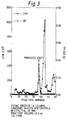
- Radioiodination of sOGP was carried out in 70 ⁇ l reaction mixture containing 25 ⁇ g sOGP, 5 ⁇ g Iodogen and 2 mCi Na[125I] in 100 mM phosphate buffer, pH 7,5. The mixture was left for 5 min at room temperature and the iodination stopped by adding 200 ⁇ l water. The unreacted iodide was removed using a reverse phase SEP-PAK C18 cartridge (Waters Associates, Milford, MA) (Fig 2). The Na[125I] was washed out with 100 mM phosphate buffer pH 7.5.
- the radioiodinated peptide was eluted with 50% acetonitrile/0.1% TFA in aqueous solution, resulting in a single sharp peak of radioactivity (Fig. 2). Fractions comprising this peak were pooled and concentrated by evaporation in a SpeedVac dryer (Savant Instruments Inc., Farmingdale, NY). Further purification was carried out on HPLC reverse phase Vydac C4 column eluted with 30 ml 16-23% acetonitrile gradient at a flow rate of 1 ml/min. The position of the purified peak was determined by a test run of 5 ⁇ l aliquot to which 0.25 ⁇ g was added.
- [Tyr10(3-125I)]sOGP 105 cpm/ml, was incubated for 30 min at 37°C with 1:50 dilution in PBS of fresh serum obtained from 300 g male Sabra rats or volunteer human donors. The incubation was carried out in the absence of unlabeled peptides or in the presence of 0.0625- 6.25 nmol/ml sOGP, rOGP, [Ac-Cys0(NEM)]-OGP, or [Cys15(NEM)]OGP-NH2. The bound and unbound [Tyr10(3-125I)]OGP were separated using a cathodic native PAGE system, run in a Biorad Minigel apparatus.
- the separating gel consisted of 15% polyacrylamide, suspended in 0.1 M phosphate buffer pH 6.0 containing 13% glycerol, 0.1% TEMED and 0.1% APS.
- the stacking gel consisted of 4% polyacrylamide, 0.03 M phosphate buffer pH 6.8 containing 0.1% TEMED and 0.1% APS.
- Cathodic electrophoresis was carried out in 1 mM phosphate buffer pH 6.0, at 100 volt for 30 min followed by 3 h at 150 volt. The gels were dried and autoradiographed by exposure to Agfa Curix RP-2 film at -70°C.
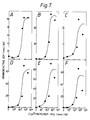
- [Tyr10(3-125I)]OGP was competed out from the [Tyr10(3-125I)]OGP-OGPBP complex, dose dependently, by cold sOGP with maximal displacement occurring at sOGP concentrations higher than 300 nmol/ml undiluted serum (as shown for rat serum in Fig. 4).
- the displacement effect was mimicked by [Cys15(NEM)]OGP-NH2.
- [Ac-Cys0(NEM)]-OGP failed to displace the radioiodinated peptide from the [Tyr10(3-125I)]OGP-OGPBP complex (Fig. 4), indicating a role for the OGP N-terminal region in the OGP-OGPBP complex formation.
- the proteinous nature of the OGPBP was demonstrated by inhibition of the complex formation following trypsin or thermolysin digestion prior to the incubation with [Tyr10(3-125I)]sOGP.
- Bradykinin, substance P, parathyroid hormone (PTH) (1-34), BSA (Cat No. A-7030), Tween 20, p-nitrophenyl phosphate (Sigma 104) and diethanolamine buffer pH 9.6, were purchased from Sigma Chemical Co. (St. Louis, MO). Histone H4 (HH4) was from Boehringer Mannheim, Germany). Microtiter plates were from Dynatech (Denkendorf, Germany). Goat alkaline phosphatase conjugated anti-rabbit IgG (heavy and light chains) were obtained from BioMakor (Rehovot, Israel). Tissue ingredients were purchased from Biological Industries (Beith Haemek, Israel). 16 mm multiwell dishes were from Nunc (Nunc, Roskilde, Denmark).
- Anti-OGP antiserum was generated in rabbits in the standard manner using maleimido modified KLH which was conjugated with either [Ac-Cys0]OGP or [Cys15]OGP-NH2, as before [Lerner et al . (1981) Proc. Natl. Acad. Sci. USA 78 :3403].
- the IgG fraction was collected from the antiserum by ammonium sulfate fractionation.
- Dynatech microtiter plates were coated with 100 ⁇ l of 10 ⁇ g/ml sOGP in 0.5 M sodium carbonate buffer pH 9.5, overnight at 4°C. The wells were washed with 200 ⁇ l PBS (x3). Blocking of unreacted sites on the plastic well bottom was carried out by incubation of 1% gelatine in PBS at 37°C for 1 h. Rinsing with PBS (3 x 200 ⁇ l) was followed by 2 h incubation with the anti-OGP IgG preparation (diluted 1:300 with reference to the original rabbit anti-serum) at room temperature.
- binding capacity of the OGPBP in sera and tissue culture media was determined by adding increasing concentrations of sOGP to-, and measurement of irOGP in-, aliquots of the respective test samples.
- C57 black female mice weighing 15-20 g were subjected to a single, 900 rad, total body x-ray irradiation. Blood was drawn from the heart 5, 10 and 12 days after irradiation, from 5 animals at each time period. In addition, blood was similarly obtained from an untreated group of 5 animals designated time group "0". Total and steady state irOGP levels in the blood samples were determined as above.
- mice C57 black female mice weighing 15-20 g were divided into the following treatment groups, each consisting of 5 animals:
- Group 1 received sOGP, as a solution in PBS, 5 ng/mouse/day, intravenously for 9 days.
- the animals were subjected to a single 900 rad total body x-ray irradiation.
- the animals were given a syngeneic marrow transplant, consisting of 106 unselected cells. The animals were killed 10 days after transplantation and blood was drawn as above for total and steady state irOGP determination.
- total marrow and spleen cellularity were assessed by direct cell counts in respective cell suspensions.
- Group 2 received the same treatment. However, the administration of exogenous sOGP was stopped after the first three daily injections.
- Group 3 animals served as controls, sham injected with peptide-free PBS for 9 days.
- Table B shows that highest levels of both steady state and total irOGP were found in the medium from cultures of transformed osteogenic ROS 17/2.8 cells. Lowest levels were found in medium from fibroblastic NIH 3T3 cultures with the medium from the osteogenic MC 3T3 E1 cell cultures showing intermediate levels. The binding capacity of the OGPBP in the medium from NIH 3T3 cell cultures was approximately twice as that of media from ROS 17/2.8 or MC 3T3 E1 cells. The steady state levels in all three cultures showed a progressive increase throughout the 48 h experiment period. The level of the total irOGP increased during the first 24 h and decreased thereafter when the cultures reached confluency. This inverse relationship between the steady state and total levels of irOGP indicates a decrease in the binding capacity of the OGPBP.
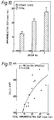
- Fig. 8 shows a marked increase in steady state and total irOGP levels in rat serum during the first ten days of post-ablation marrow regeneration in the tibia. From day 10 to day 12 there was a dramatic drop of the total irOGP to normal with the steady state levels of approximately half the pre-ablation level, indicting an increase in the binding capacity of the serum OGPBP.
- Fig. 9 shows that 12 days after total body irradiation in mice there was a parallel increase in steady state and total serum irOGP. In irradiated mice that received a marrow transplant, the steady state and total serum OGP responded to daily administered exogenous sOGP by an increase that correlated positively with the length of period of administration (Fig. 10) In the same animals there was a strong and highly significant correlation between the total irOGP and the cellular content of the spleen (Fig. 11). The marrow cellularity did not reveal such a correlation.
Landscapes
- Health & Medical Sciences (AREA)
- Chemical & Material Sciences (AREA)
- Organic Chemistry (AREA)
- Life Sciences & Earth Sciences (AREA)
- Biophysics (AREA)
- Gastroenterology & Hepatology (AREA)
- Zoology (AREA)
- Biochemistry (AREA)
- Toxicology (AREA)
- General Health & Medical Sciences (AREA)
- Genetics & Genomics (AREA)
- Medicinal Chemistry (AREA)
- Molecular Biology (AREA)
- Proteomics, Peptides & Aminoacids (AREA)
- Orthopedic Medicine & Surgery (AREA)
- Peptides Or Proteins (AREA)
- Medicines That Contain Protein Lipid Enzymes And Other Medicines (AREA)
Applications Claiming Priority (2)
| Application Number | Priority Date | Filing Date | Title |
|---|---|---|---|
| IL101747A IL101747A0 (en) | 1992-04-30 | 1992-04-30 | C-terminal modified osteogenic growth polypeptides |
| IL101747 | 1992-04-30 |
Publications (2)
| Publication Number | Publication Date |
|---|---|
| EP0572122A2 true EP0572122A2 (de) | 1993-12-01 |
| EP0572122A3 EP0572122A3 (de) | 1994-11-17 |
Family
ID=11063589
Family Applications (1)
| Application Number | Title | Priority Date | Filing Date |
|---|---|---|---|
| EP19930303420 Withdrawn EP0572122A3 (de) | 1992-04-30 | 1993-04-30 | C-terminale modifizierte osteogene Wachstumpolypeptide. |
Country Status (2)
| Country | Link |
|---|---|
| EP (1) | EP0572122A3 (de) |
| IL (1) | IL101747A0 (de) |
Cited By (2)
| Publication number | Priority date | Publication date | Assignee | Title |
|---|---|---|---|---|
| WO1994020529A1 (en) * | 1993-03-04 | 1994-09-15 | Yissum Research Development Company | Osteogenic growth oligopeptides and pharmaceutical compositions containing them |
| WO1997032594A1 (en) * | 1996-03-10 | 1997-09-12 | Yissum Research Development Company Of The Hebrew University Of Jerusalem | Synthetic peptides and pseudopeptides having osteogenic activity and pharmaceutical compositions containing the same |
Family Cites Families (2)
| Publication number | Priority date | Publication date | Assignee | Title |
|---|---|---|---|---|
| EP0349048A3 (de) * | 1988-06-27 | 1990-07-11 | Yissum Research Development Company Of The Hebrew University Of Jerusalem | Osteogenische Wachstumsfaktoren, die aus Knochenmark gewonnen werden |
| EP0384731B1 (de) * | 1989-02-23 | 1996-12-18 | Yissum Research Development Company Of The Hebrew University Of Jerusalem | Osteogenische Wachstumfaktoren, die aus sich regenerierendem Knochenmark identifiziert werden |
-
1992
- 1992-04-30 IL IL101747A patent/IL101747A0/xx unknown
-
1993
- 1993-04-30 EP EP19930303420 patent/EP0572122A3/de not_active Withdrawn
Cited By (5)
| Publication number | Priority date | Publication date | Assignee | Title |
|---|---|---|---|---|
| WO1994020529A1 (en) * | 1993-03-04 | 1994-09-15 | Yissum Research Development Company | Osteogenic growth oligopeptides and pharmaceutical compositions containing them |
| US5814610A (en) * | 1993-03-04 | 1998-09-29 | Yissum Research Development Company Of The Hebrew University Of Jerusalem | Osteogenic growth oligopeptides and pharmaceutical compositions containing them |
| WO1997032594A1 (en) * | 1996-03-10 | 1997-09-12 | Yissum Research Development Company Of The Hebrew University Of Jerusalem | Synthetic peptides and pseudopeptides having osteogenic activity and pharmaceutical compositions containing the same |
| US6479460B1 (en) | 1996-03-10 | 2002-11-12 | Yissum Research Development Company Of The Hebrew University Of Jerusalem | Synthetic peptides and pseudopeptides having osteogenic activity and pharmaceutical compositions containing the same |
| US7189692B2 (en) | 1996-03-10 | 2007-03-13 | Yissum Research Development Company Of The Hebrew University Of Jerusalem | Synthetic peptides and pseudopeptides having osteogenic activity and pharmaceutical compositions containing the same |
Also Published As
| Publication number | Publication date |
|---|---|
| IL101747A0 (en) | 1992-12-30 |
| EP0572122A3 (de) | 1994-11-17 |
Similar Documents
| Publication | Publication Date | Title |
|---|---|---|
| Speeckaert et al. | Biological and clinical aspects of the vitamin D binding protein (Gc-globulin) and its polymorphism | |
| Marin-Grez et al. | Atrial natriuretic peptide causes pre-glomerular vasodilatation and post-glomerular vasoconstriction in rat kidney | |
| Kahn | Membrane receptors for polypeptide hormones | |
| US6200953B1 (en) | Relaxin analogs and derivatives compositions | |
| JP2598801B2 (ja) | 悪性‐PTHrPの液性過カルシウム血症において活性なタンパク | |
| AU701699B2 (en) | Improved cyclic CRF antagonists | |
| Harper et al. | Reductive methylation of lysine residues in acidic fibroblast growth factor: effect on mitogenic activity and heparin affinity | |
| ROSENBLATT et al. | Identification of a receptor-binding region in parathyroid hormone | |
| JP2002523424A (ja) | 新規な抗糖尿病ペプチド | |
| Lemarchand-Beraud et al. | Triiodothyronine and thyroxine nuclear receptors in lymphocytes from normal, hyper-and hypothyroid subjects | |
| US5106834A (en) | Linear free-sulfhydryl-containing oligopeptide derivatives as antihypertensive agents | |
| Mora et al. | Biodistribution of synthetic thymosin β4 in the serum, urine, and major organs of mice | |
| Lertora et al. | Studies on a radioimmunoassay for human erythropoietin | |
| JPH09501921A (ja) | 表面受容体活性のクラスimhc変調 | |
| ROSENFELD et al. | Somatomedin receptors: structure, function, and regulation | |
| MACISAAC et al. | Ontogeny of parathyroid hormone-related protein in the ovine parathyroid gland | |
| Eysselein et al. | Biological activity of canine intestinal cholecystokinin-58 | |
| ROSENBLATT et al. | Human parathyroid hormone: synthesis and chemical, biological, and immunological evaluation of the carboxyl-terminal region | |
| Reissmann et al. | Highly selective bradykinin agonists and antagonists with replacement of proline residues by N-methyl-D-and L-phenylalanine | |
| US4634682A (en) | Radioimmunoassays for the serum thymic factor (FTS) | |
| Morrow et al. | The insulinotropic region of gastric inhibitory polypeptide; fragment analysis suggests the bioactive site lies between residues 19 and 30 | |
| EP0572122A2 (de) | C-terminale modifizierte osteogene Wachstumpolypeptide | |
| EP0667916B1 (de) | CRF Bindungsproteine | |
| Schneyer et al. | Identification of a receptor binding region on the beta subunit of human follicle-stimulating hormone | |
| JP2002522355A (ja) | 新規な混合アミリン活性化合物 |
Legal Events
| Date | Code | Title | Description |
|---|---|---|---|
| PUAI | Public reference made under article 153(3) epc to a published international application that has entered the european phase |
Free format text: ORIGINAL CODE: 0009012 |
|
| AK | Designated contracting states |
Kind code of ref document: A2 Designated state(s): AT BE CH DE DK ES FR GB GR IE IT LI LU MC NL PT SE |
|
| PUAL | Search report despatched |
Free format text: ORIGINAL CODE: 0009013 |
|
| AK | Designated contracting states |
Kind code of ref document: A3 Designated state(s): AT BE CH DE DK ES FR GB GR IE IT LI LU MC NL PT SE |
|
| 17P | Request for examination filed |
Effective date: 19950406 |
|
| STAA | Information on the status of an ep patent application or granted ep patent |
Free format text: STATUS: THE APPLICATION IS DEEMED TO BE WITHDRAWN |
|
| 18D | Application deemed to be withdrawn |
Effective date: 19961101 |