EP0578210A2 - Structure polymériques poreuses, méthode pour les préparer au moyen d'une séparation de phases induite par la chaleur - Google Patents
Structure polymériques poreuses, méthode pour les préparer au moyen d'une séparation de phases induite par la chaleur Download PDFInfo
- Publication number
- EP0578210A2 EP0578210A2 EP93110802A EP93110802A EP0578210A2 EP 0578210 A2 EP0578210 A2 EP 0578210A2 EP 93110802 A EP93110802 A EP 93110802A EP 93110802 A EP93110802 A EP 93110802A EP 0578210 A2 EP0578210 A2 EP 0578210A2
- Authority
- EP
- European Patent Office
- Prior art keywords
- process according
- porous polymeric
- polymeric structure
- structure made
- polymer
- Prior art date
- Legal status (The legal status is an assumption and is not a legal conclusion. Google has not performed a legal analysis and makes no representation as to the accuracy of the status listed.)
- Granted
Links
- 238000005191 phase separation Methods 0.000 title abstract description 20
- 238000004519 manufacturing process Methods 0.000 title description 4
- 238000000034 method Methods 0.000 claims abstract description 82
- 239000000243 solution Substances 0.000 claims abstract description 71
- 239000011557 critical solution Substances 0.000 claims abstract description 8
- 230000001747 exhibiting effect Effects 0.000 claims abstract description 6
- 229920000642 polymer Polymers 0.000 claims description 65
- 239000002904 solvent Substances 0.000 claims description 51
- 239000012528 membrane Substances 0.000 claims description 33
- 239000011148 porous material Substances 0.000 claims description 23
- 230000035699 permeability Effects 0.000 claims description 17
- XLYOFNOQVPJJNP-UHFFFAOYSA-N water Substances O XLYOFNOQVPJJNP-UHFFFAOYSA-N 0.000 claims description 14
- 238000010438 heat treatment Methods 0.000 claims description 11
- 239000004695 Polyether sulfone Substances 0.000 claims description 10
- 229920006393 polyether sulfone Polymers 0.000 claims description 10
- 239000012456 homogeneous solution Substances 0.000 claims description 9
- 239000007788 liquid Substances 0.000 claims description 8
- 238000001471 micro-filtration Methods 0.000 claims description 6
- 229920000233 poly(alkylene oxides) Polymers 0.000 claims description 5
- 229920002492 poly(sulfone) Polymers 0.000 claims description 5
- 239000004697 Polyetherimide Substances 0.000 claims description 4
- 238000000605 extraction Methods 0.000 claims description 4
- 230000002209 hydrophobic effect Effects 0.000 claims description 4
- 229920001601 polyetherimide Polymers 0.000 claims description 4
- 239000000758 substrate Substances 0.000 claims description 4
- 239000012510 hollow fiber Substances 0.000 claims description 3
- 125000000956 methoxy group Chemical group [H]C([H])([H])O* 0.000 claims description 3
- 239000000020 Nitrocellulose Substances 0.000 claims description 2
- 239000002033 PVDF binder Substances 0.000 claims description 2
- 239000004952 Polyamide Substances 0.000 claims description 2
- 239000004642 Polyimide Substances 0.000 claims description 2
- FJWGYAHXMCUOOM-QHOUIDNNSA-N [(2s,3r,4s,5r,6r)-2-[(2r,3r,4s,5r,6s)-4,5-dinitrooxy-2-(nitrooxymethyl)-6-[(2r,3r,4s,5r,6s)-4,5,6-trinitrooxy-2-(nitrooxymethyl)oxan-3-yl]oxyoxan-3-yl]oxy-3,5-dinitrooxy-6-(nitrooxymethyl)oxan-4-yl] nitrate Chemical group O([C@@H]1O[C@@H]([C@H]([C@H](O[N+]([O-])=O)[C@H]1O[N+]([O-])=O)O[C@H]1[C@@H]([C@@H](O[N+]([O-])=O)[C@H](O[N+]([O-])=O)[C@@H](CO[N+]([O-])=O)O1)O[N+]([O-])=O)CO[N+](=O)[O-])[C@@H]1[C@@H](CO[N+]([O-])=O)O[C@@H](O[N+]([O-])=O)[C@H](O[N+]([O-])=O)[C@H]1O[N+]([O-])=O FJWGYAHXMCUOOM-QHOUIDNNSA-N 0.000 claims description 2
- 229920002301 cellulose acetate Polymers 0.000 claims description 2
- 238000001035 drying Methods 0.000 claims description 2
- 238000001704 evaporation Methods 0.000 claims description 2
- 229920001220 nitrocellulos Polymers 0.000 claims description 2
- 229920002647 polyamide Polymers 0.000 claims description 2
- 229920001721 polyimide Polymers 0.000 claims description 2
- 229920000098 polyolefin Polymers 0.000 claims description 2
- 229920002981 polyvinylidene fluoride Polymers 0.000 claims description 2
- RTZKZFJDLAIYFH-UHFFFAOYSA-N Diethyl ether Chemical compound CCOCC RTZKZFJDLAIYFH-UHFFFAOYSA-N 0.000 claims 8
- 239000000470 constituent Substances 0.000 claims 1
- 229920002239 polyacrylonitrile Polymers 0.000 claims 1
- 239000004417 polycarbonate Substances 0.000 claims 1
- 229920000515 polycarbonate Polymers 0.000 claims 1
- SECXISVLQFMRJM-UHFFFAOYSA-N N-Methylpyrrolidone Chemical compound CN1CCCC1=O SECXISVLQFMRJM-UHFFFAOYSA-N 0.000 description 16
- 238000005266 casting Methods 0.000 description 13
- 238000007654 immersion Methods 0.000 description 12
- 239000003570 air Substances 0.000 description 11
- 239000000203 mixture Substances 0.000 description 8
- 239000000654 additive Substances 0.000 description 7
- ZUHZGEOKBKGPSW-UHFFFAOYSA-N tetraglyme Chemical group COCCOCCOCCOCCOC ZUHZGEOKBKGPSW-UHFFFAOYSA-N 0.000 description 7
- KFZMGEQAYNKOFK-UHFFFAOYSA-N Isopropanol Chemical compound CC(C)O KFZMGEQAYNKOFK-UHFFFAOYSA-N 0.000 description 6
- MTHSVFCYNBDYFN-UHFFFAOYSA-N diethylene glycol Chemical compound OCCOCCO MTHSVFCYNBDYFN-UHFFFAOYSA-N 0.000 description 5
- 229920001477 hydrophilic polymer Polymers 0.000 description 5
- 238000001556 precipitation Methods 0.000 description 5
- 238000002145 thermally induced phase separation Methods 0.000 description 5
- 238000012546 transfer Methods 0.000 description 5
- 229920004695 VICTREX™ PEEK Polymers 0.000 description 4
- 230000000996 additive effect Effects 0.000 description 4
- 239000012530 fluid Substances 0.000 description 4
- 239000000523 sample Substances 0.000 description 4
- 238000000108 ultra-filtration Methods 0.000 description 4
- ZWEHNKRNPOVVGH-UHFFFAOYSA-N 2-Butanone Chemical compound CCC(C)=O ZWEHNKRNPOVVGH-UHFFFAOYSA-N 0.000 description 3
- XEKOWRVHYACXOJ-UHFFFAOYSA-N Ethyl acetate Chemical compound CCOC(C)=O XEKOWRVHYACXOJ-UHFFFAOYSA-N 0.000 description 3
- ZMXDDKWLCZADIW-UHFFFAOYSA-N N,N-Dimethylformamide Chemical compound CN(C)C=O ZMXDDKWLCZADIW-UHFFFAOYSA-N 0.000 description 3
- XAGFODPZIPBFFR-UHFFFAOYSA-N aluminium Chemical compound [Al] XAGFODPZIPBFFR-UHFFFAOYSA-N 0.000 description 3
- 229910052782 aluminium Inorganic materials 0.000 description 3
- 150000002170 ethers Chemical class 0.000 description 3
- 238000009472 formulation Methods 0.000 description 3
- 239000007789 gas Substances 0.000 description 3
- 229920001600 hydrophobic polymer Polymers 0.000 description 3
- 238000002156 mixing Methods 0.000 description 3
- 239000003960 organic solvent Substances 0.000 description 3
- CSCPPACGZOOCGX-UHFFFAOYSA-N Acetone Chemical compound CC(C)=O CSCPPACGZOOCGX-UHFFFAOYSA-N 0.000 description 2
- UWHCKJMYHZGTIT-UHFFFAOYSA-N Tetraethylene glycol, Natural products OCCOCCOCCOCCO UWHCKJMYHZGTIT-UHFFFAOYSA-N 0.000 description 2
- 229920004747 ULTEM® 1000 Polymers 0.000 description 2
- 238000004587 chromatography analysis Methods 0.000 description 2
- 239000013068 control sample Substances 0.000 description 2
- 230000003111 delayed effect Effects 0.000 description 2
- 150000005218 dimethyl ethers Chemical class 0.000 description 2
- 238000002474 experimental method Methods 0.000 description 2
- 239000013505 freshwater Substances 0.000 description 2
- 229920002521 macromolecule Polymers 0.000 description 2
- 239000000463 material Substances 0.000 description 2
- 239000002245 particle Substances 0.000 description 2
- -1 polyacryonitriles Polymers 0.000 description 2
- 229920002959 polymer blend Polymers 0.000 description 2
- 238000001223 reverse osmosis Methods 0.000 description 2
- ZIBGPFATKBEMQZ-UHFFFAOYSA-N triethylene glycol Chemical compound OCCOCCOCCO ZIBGPFATKBEMQZ-UHFFFAOYSA-N 0.000 description 2
- LCZVSXRMYJUNFX-UHFFFAOYSA-N 2-[2-(2-hydroxypropoxy)propoxy]propan-1-ol Chemical compound CC(O)COC(C)COC(C)CO LCZVSXRMYJUNFX-UHFFFAOYSA-N 0.000 description 1
- IAYPIBMASNFSPL-UHFFFAOYSA-N Ethylene oxide Chemical group C1CO1 IAYPIBMASNFSPL-UHFFFAOYSA-N 0.000 description 1
- FXHOOIRPVKKKFG-UHFFFAOYSA-N N,N-Dimethylacetamide Chemical compound CN(C)C(C)=O FXHOOIRPVKKKFG-UHFFFAOYSA-N 0.000 description 1
- 239000002202 Polyethylene glycol Substances 0.000 description 1
- XBDQKXXYIPTUBI-UHFFFAOYSA-M Propionate Chemical compound CCC([O-])=O XBDQKXXYIPTUBI-UHFFFAOYSA-M 0.000 description 1
- KXKVLQRXCPHEJC-UHFFFAOYSA-N acetic acid trimethyl ester Natural products COC(C)=O KXKVLQRXCPHEJC-UHFFFAOYSA-N 0.000 description 1
- 150000001298 alcohols Chemical class 0.000 description 1
- 239000012080 ambient air Substances 0.000 description 1
- 230000009286 beneficial effect Effects 0.000 description 1
- 239000000969 carrier Substances 0.000 description 1
- 239000011248 coating agent Substances 0.000 description 1
- 238000000576 coating method Methods 0.000 description 1
- 150000001875 compounds Chemical class 0.000 description 1
- 238000001816 cooling Methods 0.000 description 1
- 238000004821 distillation Methods 0.000 description 1
- 230000000694 effects Effects 0.000 description 1
- 150000002148 esters Chemical class 0.000 description 1
- 229940093499 ethyl acetate Drugs 0.000 description 1
- 235000019439 ethyl acetate Nutrition 0.000 description 1
- 230000008020 evaporation Effects 0.000 description 1
- 238000001914 filtration Methods 0.000 description 1
- 239000011521 glass Substances 0.000 description 1
- 230000003100 immobilizing effect Effects 0.000 description 1
- 150000002500 ions Chemical class 0.000 description 1
- 150000002576 ketones Chemical class 0.000 description 1
- 238000005259 measurement Methods 0.000 description 1
- QJGQUHMNIGDVPM-UHFFFAOYSA-N nitrogen group Chemical group [N] QJGQUHMNIGDVPM-UHFFFAOYSA-N 0.000 description 1
- 238000012856 packing Methods 0.000 description 1
- 239000004033 plastic Substances 0.000 description 1
- 229920003023 plastic Polymers 0.000 description 1
- 229920001223 polyethylene glycol Polymers 0.000 description 1
- 238000002360 preparation method Methods 0.000 description 1
- 238000004886 process control Methods 0.000 description 1
- 230000002035 prolonged effect Effects 0.000 description 1
- 102000004169 proteins and genes Human genes 0.000 description 1
- 108090000623 proteins and genes Proteins 0.000 description 1
- 238000001878 scanning electron micrograph Methods 0.000 description 1
- 239000007787 solid Substances 0.000 description 1
- 125000006850 spacer group Chemical group 0.000 description 1
- 238000009987 spinning Methods 0.000 description 1
- 239000000126 substance Substances 0.000 description 1
- 238000009736 wetting Methods 0.000 description 1
Images

Classifications
-
- C—CHEMISTRY; METALLURGY
- C08—ORGANIC MACROMOLECULAR COMPOUNDS; THEIR PREPARATION OR CHEMICAL WORKING-UP; COMPOSITIONS BASED THEREON
- C08J—WORKING-UP; GENERAL PROCESSES OF COMPOUNDING; AFTER-TREATMENT NOT COVERED BY SUBCLASSES C08B, C08C, C08F, C08G or C08H
- C08J9/00—Working-up of macromolecular substances to porous or cellular articles or materials; After-treatment thereof
- C08J9/22—After-treatment of expandable particles; Forming foamed products
- C08J9/228—Forming foamed products
-
- B—PERFORMING OPERATIONS; TRANSPORTING
- B01—PHYSICAL OR CHEMICAL PROCESSES OR APPARATUS IN GENERAL
- B01D—SEPARATION
- B01D67/00—Processes specially adapted for manufacturing semi-permeable membranes for separation processes or apparatus
- B01D67/0002—Organic membrane manufacture
- B01D67/0009—Organic membrane manufacture by phase separation, sol-gel transition, evaporation or solvent quenching
- B01D67/0018—Thermally induced processes [TIPS]
-
- B—PERFORMING OPERATIONS; TRANSPORTING
- B01—PHYSICAL OR CHEMICAL PROCESSES OR APPARATUS IN GENERAL
- B01D—SEPARATION
- B01D67/00—Processes specially adapted for manufacturing semi-permeable membranes for separation processes or apparatus
- B01D67/0002—Organic membrane manufacture
- B01D67/0023—Organic membrane manufacture by inducing porosity into non porous precursor membranes
- B01D67/003—Organic membrane manufacture by inducing porosity into non porous precursor membranes by selective elimination of components, e.g. by leaching
-
- C—CHEMISTRY; METALLURGY
- C08—ORGANIC MACROMOLECULAR COMPOUNDS; THEIR PREPARATION OR CHEMICAL WORKING-UP; COMPOSITIONS BASED THEREON
- C08J—WORKING-UP; GENERAL PROCESSES OF COMPOUNDING; AFTER-TREATMENT NOT COVERED BY SUBCLASSES C08B, C08C, C08F, C08G or C08H
- C08J9/00—Working-up of macromolecular substances to porous or cellular articles or materials; After-treatment thereof
- C08J9/28—Working-up of macromolecular substances to porous or cellular articles or materials; After-treatment thereof by elimination of a liquid phase from a macromolecular composition or article, e.g. drying of coagulum
-
- B—PERFORMING OPERATIONS; TRANSPORTING
- B01—PHYSICAL OR CHEMICAL PROCESSES OR APPARATUS IN GENERAL
- B01D—SEPARATION
- B01D2323/00—Details relating to membrane preparation
- B01D2323/12—Specific ratios of components used
-
- C—CHEMISTRY; METALLURGY
- C08—ORGANIC MACROMOLECULAR COMPOUNDS; THEIR PREPARATION OR CHEMICAL WORKING-UP; COMPOSITIONS BASED THEREON
- C08J—WORKING-UP; GENERAL PROCESSES OF COMPOUNDING; AFTER-TREATMENT NOT COVERED BY SUBCLASSES C08B, C08C, C08F, C08G or C08H
- C08J2201/00—Foams characterised by the foaming process
- C08J2201/04—Foams characterised by the foaming process characterised by the elimination of a liquid or solid component, e.g. precipitation, leaching out, evaporation
- C08J2201/05—Elimination by evaporation or heat degradation of a liquid phase
- C08J2201/0502—Elimination by evaporation or heat degradation of a liquid phase the liquid phase being organic
-
- C—CHEMISTRY; METALLURGY
- C08—ORGANIC MACROMOLECULAR COMPOUNDS; THEIR PREPARATION OR CHEMICAL WORKING-UP; COMPOSITIONS BASED THEREON
- C08J—WORKING-UP; GENERAL PROCESSES OF COMPOUNDING; AFTER-TREATMENT NOT COVERED BY SUBCLASSES C08B, C08C, C08F, C08G or C08H
- C08J2201/00—Foams characterised by the foaming process
- C08J2201/04—Foams characterised by the foaming process characterised by the elimination of a liquid or solid component, e.g. precipitation, leaching out, evaporation
- C08J2201/052—Inducing phase separation by thermal treatment, e.g. cooling a solution
-
- C—CHEMISTRY; METALLURGY
- C08—ORGANIC MACROMOLECULAR COMPOUNDS; THEIR PREPARATION OR CHEMICAL WORKING-UP; COMPOSITIONS BASED THEREON
- C08J—WORKING-UP; GENERAL PROCESSES OF COMPOUNDING; AFTER-TREATMENT NOT COVERED BY SUBCLASSES C08B, C08C, C08F, C08G or C08H
- C08J2201/00—Foams characterised by the foaming process
- C08J2201/04—Foams characterised by the foaming process characterised by the elimination of a liquid or solid component, e.g. precipitation, leaching out, evaporation
- C08J2201/054—Precipitating the polymer by adding a non-solvent or a different solvent
- C08J2201/0542—Precipitating the polymer by adding a non-solvent or a different solvent from an organic solvent-based polymer composition
Definitions
- the present invention relates to porous polymeric structures.
- Such structures are widely used as substrates in various applications such as, for example, packings in chromatography, carriers for immobilizing bioreactive components in bioreactor applications, media in extraction or distillation processes, filtration media, etc. More specifically, especially when formed into thin layers of various shapes, such polymeric structures are used as membrane filters which have wide applications, for example in pharmaceutical, electronics and biotechnology industries.
- Porous polymeric structures are known in the art. These structures are generally classified according to their effective pore size or according to their retentivity i.e., the sizes of particles that are not able to pass through the pores of the porous polymeric structure. Thus, for example, the structures used as filters are classified as reverse osmosis filters or ultrafilters if they retain dissolved matter such as ions, molecules or macromolecules, while they are classified as microporous structures or microfilters if they pass dissolved matter and retain only undissolved particles.
- the dividing line between microfilters and ultrafilters in terms of pore size is not defined clearly but it is generally agreed to be between 0.01 and 0.05 micrometers.
- a microporous structure or a microfilter typically has pore size in the range between about 0.05 and 10 micrometers.
- Most porous structures used as substrates in chromatography or bioseparations require free passage of macromolecules and therefore, typically are microporous structures.
- porous polymeric structures used as membrane filters have also been classified according to the pore size difference in their two surfaces, i.e. as isotropic or symmetric when the two surfaces have similar pore size, and anisotropic or asymmetric when the two surfaces have different pore size.
- the porous polymeric membrane filters may also be classified as supported or unsupported. In a supported membrane, the actual membrane is attached to a strong sheet material of negligible retentivity and permeability.
- the porous polymeric structures have also been classified as hydrophilic or hydrophobic.
- hydrophilic structures When the hydrophilic structures are brought into contact with water, they will spontaneously wet, i.e. water will displace the air from the pores of the structure without the application of any external force.
- a positive pressure is required to intrude water into the pores of hydrophobic structures to displace the air.
- Permeability is defined as the bulk velocity of the fluid flowing through the porous structure at a unit pressure difference across the porous structure.
- a commonly used unit of permeability is liter/(m2 ⁇ hr ⁇ bar).
- the most common fluids used to measure the permeability are air or water.
- the bubble point and the mean bubble point also called mean pore flow pressure, are defined in ASTM method F316-86.
- the bubble point is the pressure of a gas that is required to displace a liquid from the largest pore of the porous structure.
- the mean bubble point is the pressure at which the liquid was displaced from such portion of all the pores that the gas flow rate is equal to one half of the gas flow rate through the dry porous structure at the same pressure.
- phase separation processes There are several processes for the preparation of porous polymeric structures. Most common processes are based on phase separation of a polymer solution. In such processes, the composition or temperature of a polymer solution is changed in such a way that it becomes thermodynamically unstable and separates into two phases. One of the phases, containing most of the solvent components, is then removed and the other phase, containing most of the polymer, becomes the porous structure.
- phase separation processes are usually classified into three categories: 1) vapor-induced phase separation (VIPS), also called “dry casting” or “air casting”, 2) liquid-induced phase separation (LIPS), mostly referred to as “immersion casting” or “wet casting”, and 3) thermally induced phase separation (TIPS), frequently called “melt casting”.
- VIPS vapor-induced phase separation
- LIPS liquid-induced phase separation
- TIPS thermally induced phase separation
- VIPS and LIPS processes rely on mass transfer between the components of the cast polymer solution and the precipitant medium present in vapor or liquid state, respectively. TIPS is controlled by temperature change of the polymer solution.
- the VIPS process has an inherent disadvantage of low mass transfer rate so that the required residence time in the casting machine is long, resulting in a trade-off between long machines with high capital investment or low process rates.
- the LIPS process is run at relatively higher rates, since the mass transfer between the polymer solution and a liquid precipitant is higher.
- the TIPS processes for making microporous structures are based on the well known and described observation that phase separation can be induced by cooling a homogeneous polymer solution.
- US Patent No. 4,274,498 describes a method of making microporous structures using a TIPS process.
- polymer solutions phase separate upon heating has been described as general polymer solution behavior much later (P.I. Freeman and J.S. Rowlinson, Polymer , 1, 20, (1960)).
- Such polymer solutions that exhibit phase separation upon heating can be characterized by a cloud point temperature, defined as a temperature at which the solution becomes cloudy due to the phase separation.
- a minimum on the curve of cloud point temperature as a function of polymer concentration is referred to as lower critical solution temperature(LCST).
- Japanese Patent Application No. 63-97666 describes a special type of a polymer solution exhibiting LCST behavior.
- This type of solution is composed of four components: a hydrophobic polymer, a hydrophilic polymer compatible with the hydrophobic polymer, a solvent which is capable of dissolving both polymers and an additive which is miscible with the solvent and the hydrophilic polymer, but is a non-solvent for the hydrophobic polymer.
- a hydrophobic polymer a hydrophilic polymer compatible with the hydrophobic polymer
- a solvent which is capable of dissolving both polymers
- an additive which is miscible with the solvent and the hydrophilic polymer
- ultrafiltration membranes made from a polysulfone solution with LCST behavior may be changed if the solution is brought to temperature above its cloud point.
- these membranes are described as protein retentive, having a dense skin characterized by pores much smaller than those typical in microporous membranes. This dense skin is typical in ultrafiltration membranes made without any heat-induced phase separation.
- the temperature increase in this method is used as a secondary phenomenon, only to modify the process of making ultrafiltration membranes that is well known in the art.
- the present invention relates to porous polymeric structures and a process of making such structures by heat-induced phase separation. More particularly, the present invention relates to a process utilizing the thermal behavior of certain polymer solutions characterized by the presence of lower critical solution temperature (LCST) to induce phase separation by temperature increase.
- LCST lower critical solution temperature
- the process for making the porous polymer structures comprises preparing a homogeneous solution of at least one polymer in a solvent system, said solvent system consisting of at least one component which is a solvent for the polymer, said homogeneous solution exhibiting a lower critical solution temperature; forming the polymeric solution into a desired shape; heating the shaped polymeric solution sufficiently so that it phase separates and becomes cloudy; and removing the components of the solvent system.
- the homogoeneous solution may optionally contain one or more components which are non-solvents for said polymer.
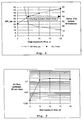
- Figure 1 shows the isopropanol bubble points of porous polymeric membrane samples made using the heat-induced phase separation process of this invention before immersion in the precipitation bath.
- these samples have pore sizes in the microporous range.
- s heat exposure times
- this sample has pore size significantly smaller and outside of the microporous range.
- Corresponding values of casting solution temperature before immersion in the precipitation bath are shown plotted against the second ordinate.
- Figure 2 shows the air permeability of porous polymeric membrane samples made using the heat-induced phase separation process of this invention before immersion in the precipitation bath.
- the permeability is expressed as flow rate of air (in standard cubic feet per minute--scfm) through a 25 mm disk of membrane at a pressure of 1 pound per square inch.
- These samples have air permeabilities common for microporous polymeric structures of comparable thickness.
- concentration ratio of polyethersulfone to N-methyl-2-pyrrolidone is 3/7 and is constant for all the solutions.
- Figure 4 shows the cloud point values for solutions of polyetherimide Ultem 1000 dissolved in N-methyl-2-pyrrolidone, containing various amounts of the additive tetraethylene glycol dimethyl ether.
- concentration ratio of polyetherimide to N-methyl-2-pyrrolidone is 3/7 and is constant for all the solutions.
- the present invention comprises a process for preparing porous polymeric structures where polymeric structures are prepared utilizing the thermal behavior of certain polymer solutions which is characterized by the presence of lower critical solution temperature.
- the LCST of polymer solutions and blends is a known phenomenon.
- the LCST is utilized to induce phase separation by temperature increase.
- the process of the present invention comprises: preparing a homogeneous solution of at least one polymer in a solvent system, said solvent system consisting of at least one component which is a solvent for the polymer, said homogeneous solution exhibiting a lower critical solution temperature; forming the polymeric solution into a desired shape; heating the shaped polymeric solution sufficiently so that it phase separates and becomes cloudy; and removing the components of the solvent system.
- the homogoeneous solution may optionally contain one or more components which are non-solvents for said polymer.
- the solution is prepared by conventional means, mixing together the polymer with the components of the solvent system.
- polymers suitable for solutions exhibiting LCST behavior include polyvinylidene fluoride, cellulose acetate, cellulose nitrate, polyamides, polysulfones, polyacryonitriles, polyimides, polyolefines and the like.
- nitrogen-containing solvents such as dimethylacetamide, dimethylformamide, N-methyl-2-pyrrolidone, etc.
- ketones such as acetone, methylethylketone, etc.
- esters such as methylacetate, ethylacetate, etc., or other commonly known solvents.
- the solvent might itself be polymeric in nature and in that case the polymer solution can be a polymer blend with or without other components present.
- Examples of the components of the solvent system which are a non-solvent for the polymer are water, alcohols, ethers, oligoalkyleneoxides and ethers of oligoalkyleneoxides, polyalkyleneoxides and their ethers.
- a particularly useful group of compounds suitable as a component of the solvent system are oligoalkyleneoxides of the general formula H-[O-(CH2) x -(CH(CH3)) y ] z -OH and their mono- and dimethylethers, the dimethyl ethers having the general formula CH3-[O-(CH2) x -(CH(CH3)) y ] z -OCH3 where x is 1 to 4, y is 0 or 1 and z is 1 to 8.
- a component of the solvent system is a solvent or a non-solvent for the polymer depends on the particular polymer, so that the same component in one formulation can serve as a solvent and in another formulation as a non-solvent and vice-versa, depending on the selected polymer.
- the resulting homogeneous solution is formed into the desired shape by techniques such as casting, coating, spinning, extruding, etc., which are known in the art.
- the shaped solution can be in any form such as a block or a cylinder, a flat sheet, a hollow tube, solid or hollow fiber.
- the shaped solution is heated until phase separation occurs, marked by cloudiness of the solution.
- the heating step may occur before or during the step of forming the polymer solution into shape.
- the components of the solvent system are thereafter removed by methods such as evaporation or extraction and the like.
- the conditions of the removal process may further affect the later stages of phase separation and influence the properties of the polymeric porous structure.
- a preferred method for removing the components of the solvent system involves immersing the shaped phase-separated polymeric solution in one or more liquid baths comprising at least one non-solvent for the polymer, the non-solvent being miscible with at least one component of the solvent system.
- the porous polymeric structure may then be optionally subjected to additional extraction or drying.
- the resulting polymeric structure has pores typically in the range of 0.05 to 10 micrometers and exhibits typically high fluid permeability. If the porous polymeric structure is made of polyethersulfone in a thin form, such as is customary in making microfiltration membranes, it can be made with a symmetric pore structure and it will, as described bellow, exhibit typically a water permeability exceeding 10,000 l/(m2 ⁇ hr ⁇ bar).
- a polymer solution has been made from 12 parts of polyethersulfone Victrex 5200P, (ICI Advanced Materials Business Group, Wilmington, DE), 60 parts of triethylene glycol (Aldrich Chemical, Milwaukee, WI) and 28 parts of N-methyl-2-pyrrolidone (GAF).
- the solution was homogeneous at room temperature and exhibited a cloud point at 40°C. It has been cast onto a 1/32 inch thick aluminum plate using 300 micrometer spacers and a casting rod. The plate was immediately placed on a heated surface kept at approximately 90 °C. The temperature of the solution in this stage was estimated by measuring the surface temperature of the aluminum plate as a function of time on the heater plate in a separate experiment.
- the residence time of the casting solution on the heated surface was varied in repeated casting experiments to values exceeding the time required to reach the cloud point temperature of this casting solution.
- the cloud point temperature was exceeded, heat-induced phase separation occurred and the cast polymer solution film became cloudy.
- the film was immersed for 3 minutes into a water bath kept at room temperature, washed in excess of fresh water and dried. The dry membranes did not wet with water.
- Control membranes were cast without the heating step with immediate immersion and with delayed immersion for a period of time equivalent to the times of heating of the rest of the samples. No difference in properties of control samples made with immediate and delayed immersion was observed, indicating that prolonged ambient air exposure alone does not create the effect described in this invention.
- the control samples exhibited a bubble point higher than the maximum of the measurement range (Fig.
- a polymer solution was made from 3 parts of polyethersulfone Victrex 5200 (ICI, Wilmington, DE) and 7 parts of N-methyl-2-pyrrolidone (GAF). The solution was divided into several portions and various amounts of non-solvents were added, the separate portions were then mixed at room temperature until they became homogeneous.
- the cloud points of the solutions were measured by placing sealed glass containers containing the solutions into a temperature controlled bath and slowly raising the temperature of the bath.
- Fig. 3 shows the measured cloud points for the following non-solvent additives: 2EG - diethylene glycol, 3EG - triethylene glycol, 3PG - tripropylene glycol, 4EG - tetraethylene glycol, 4EGDME - tetraethylene glycol dimethyl ether.
- This example demonstrates the range of non-solvent additives suitable for making polymer solutions with LCST behavior.
- a solution was made by mixing 3 parts of polyetherimide Ultem 1000 (GE Plastics, Pittsfield, MA) with 7 parts of N-methyl-2-pyrrolidone at 70°C. The homogeneous solution was cooled to room temperature, divided into several parts, to which then various amounts of a non-solvent additive, tetraethylene glycol dimethyl ether, were added. The separate solutions were mixed until they became homogeneous and cloud points were measured in a constant temperature bath as in Example 2.
- Fig. 4 shows the cloud point curve as a function of the amount of the non-solvent additive.
- a solution was made by mixing 90 parts of polyethylene glycol containing an average number of ethylene oxide units between 8 and 9, with 10 parts of polyethersulfone Victrex 5200. A homogeneous solution was obtained, containing only the blend of the two polymers. The cloud point of this solution was 65°C.
- the solution was cast onto aluminum plates as in Example 1. One plate was then placed on a heated surface for 30 seconds. The temperature of the solution after this time, measured as in Example 1, was 90°C. The other plate was kept at ambient temperature for 30s. Both plates were then immersed for 3 minutes in a water bath kept at 68°C, then taken out, the polymeric porous films were washed in excess of fresh water and dried.
Landscapes
- Chemical & Material Sciences (AREA)
- Engineering & Computer Science (AREA)
- Chemical Kinetics & Catalysis (AREA)
- Manufacturing & Machinery (AREA)
- Medicinal Chemistry (AREA)
- Health & Medical Sciences (AREA)
- Materials Engineering (AREA)
- Polymers & Plastics (AREA)
- Organic Chemistry (AREA)
- Physics & Mathematics (AREA)
- Thermal Sciences (AREA)
- Dispersion Chemistry (AREA)
- Separation Using Semi-Permeable Membranes (AREA)
- Manufacture Of Porous Articles, And Recovery And Treatment Of Waste Products (AREA)
Applications Claiming Priority (2)
| Application Number | Priority Date | Filing Date | Title |
|---|---|---|---|
| US07/909,904 US5444097A (en) | 1992-07-07 | 1992-07-07 | Porous polymeric structures and a method of making such structures by means of heat-induced phase separation |
| US909904 | 1992-07-07 |
Publications (3)
| Publication Number | Publication Date |
|---|---|
| EP0578210A2 true EP0578210A2 (fr) | 1994-01-12 |
| EP0578210A3 EP0578210A3 (fr) | 1994-02-23 |
| EP0578210B1 EP0578210B1 (fr) | 1998-12-30 |
Family
ID=25428014
Family Applications (1)
| Application Number | Title | Priority Date | Filing Date |
|---|---|---|---|
| EP93110802A Expired - Lifetime EP0578210B1 (fr) | 1992-07-07 | 1993-07-06 | Structure polymériques poreuses, méthode pour les préparer au moyen d'une séparation de phases induite par la chaleur |
Country Status (5)
| Country | Link |
|---|---|
| US (1) | US5444097A (fr) |
| EP (1) | EP0578210B1 (fr) |
| JP (1) | JPH06166116A (fr) |
| KR (1) | KR940005729A (fr) |
| DE (1) | DE69322817T2 (fr) |
Cited By (7)
| Publication number | Priority date | Publication date | Assignee | Title |
|---|---|---|---|---|
| EP0710698A3 (fr) * | 1994-11-02 | 1997-05-21 | Rohm & Haas | Procédé de préparation de structures polymériques poreuses |
| WO2001048063A1 (fr) * | 1999-12-23 | 2001-07-05 | Accentus Plc | Membrane microporeuse |
| WO2001089673A3 (fr) * | 2000-05-24 | 2002-06-20 | Millipore Corp | Procede pour former des structures multicouches |
| US7229665B2 (en) | 2001-05-22 | 2007-06-12 | Millipore Corporation | Process of forming multilayered structures |
| EP2644261A1 (fr) * | 2012-03-30 | 2013-10-02 | Pall Corporation | Membrane polymère à pores de grande dimension et à densité de pores définie |
| EP2698194A1 (fr) * | 2012-08-16 | 2014-02-19 | Pall Corporation | Membrane à fibres de taille multiples |
| CN109621742A (zh) * | 2019-01-09 | 2019-04-16 | 宁波大学 | 一种偏氟乙烯共聚物树脂制备多孔膜的方法 |
Families Citing this family (59)
| Publication number | Priority date | Publication date | Assignee | Title |
|---|---|---|---|---|
| MY112945A (en) * | 1994-12-20 | 2001-10-31 | Ibm | Electronic devices comprising dielectric foamed polymers |
| US5726211A (en) * | 1996-03-21 | 1998-03-10 | International Business Machines Corporation | Process for making a foamed elastometric polymer |
| US5804607A (en) * | 1996-03-21 | 1998-09-08 | International Business Machines Corporation | Process for making a foamed elastomeric polymer |
| US6045899A (en) * | 1996-12-12 | 2000-04-04 | Usf Filtration & Separations Group, Inc. | Highly assymetric, hydrophilic, microfiltration membranes having large pore diameters |
| US6056529A (en) * | 1998-02-11 | 2000-05-02 | Cuno, Inc. | Systems for producing a plurality of different microporous phase inversion membrane each having any one of a plurality of different pore sizes from a single master dope batch |
| US6264044B1 (en) | 1997-04-11 | 2001-07-24 | Cuno, Inc. | Reinforced, three zone microporous membrane |
| US6280791B1 (en) | 1997-04-11 | 2001-08-28 | Cuno, Inc. | Process of making a three-region reinforced microporous filtration membrane |
| US6413070B1 (en) * | 1997-04-11 | 2002-07-02 | Cuno Incorporated | System for manufacturing reinforced three-zone microporous membrane |
| US5886059A (en) * | 1997-07-08 | 1999-03-23 | Memtec America Corporation | Highly asymmetric polyethersulfone filtration membranes |
| US7108791B2 (en) * | 1999-09-14 | 2006-09-19 | Millipore Corporation | High-resolution virus removal methodology and filtration capsule useful therefor |
| US6994811B2 (en) * | 2001-05-22 | 2006-02-07 | Millipore Corporation | Method of manufacturing membranes and the resulting membranes |
| EP1410838B1 (fr) * | 2000-05-24 | 2007-03-28 | Millipore Corporation | Méthode de fabrication de membranes et membranes résultantes |
| WO2001089672A1 (fr) * | 2000-05-24 | 2001-11-29 | Millipore Corporation | Procede de fabrication de membranes et membranes qui en resultent |
| US7942274B2 (en) | 2000-05-24 | 2011-05-17 | Millipore Corporation | High-throughput asymmetric membrane |
| US20020179521A1 (en) * | 2000-06-05 | 2002-12-05 | Paul C. Thomas | Expansion resistant filter cartridge |
| US6565530B2 (en) | 2001-02-28 | 2003-05-20 | Scimed Life Systems, Inc. | Immobilizing objects in the body |
| JP2003001074A (ja) * | 2001-06-25 | 2003-01-07 | Daicel Chem Ind Ltd | セルロース誘導体多孔質膜及びその製造法 |
| WO2003078947A2 (fr) * | 2002-03-15 | 2003-09-25 | The Penn State Research Foundation | Procede de regulation de la sensibilite thermique de polymeres en solution |
| US7560024B2 (en) | 2002-05-14 | 2009-07-14 | Millipore Corporation | Method and system for controlling pore size of microporous phase inversion membranes |
| US7081208B2 (en) * | 2002-12-16 | 2006-07-25 | International Business Machines Corporation | Method to build a microfilter |
| JP4623626B2 (ja) * | 2004-01-30 | 2011-02-02 | 日東電工株式会社 | 多孔質膜およびその製造方法 |
| US20080004205A1 (en) | 2006-06-30 | 2008-01-03 | Millipore Corporation | Ultrafiltration membranes and methods of making |
| JP4748655B2 (ja) | 2004-06-25 | 2011-08-17 | ミリポア・コーポレイション | 限外濾過膜および製造方法 |
| US7901763B2 (en) * | 2006-12-22 | 2011-03-08 | E.I. Du Pont De Nemours And Company | Porous infusible polymer parts |
| US7842214B2 (en) * | 2007-03-28 | 2010-11-30 | 3M Innovative Properties Company | Process for forming microporous membranes |
| JP5277471B2 (ja) * | 2007-10-19 | 2013-08-28 | 川崎重工業株式会社 | ポリエーテルスルホンからなる分離膜、その製造方法および製膜原液 |
| US8800783B2 (en) * | 2008-09-30 | 2014-08-12 | Unitika Ltd. | Polyamide hollow fiber membrane, and production method thereof |
| JP2011001434A (ja) * | 2009-06-17 | 2011-01-06 | Ube Industries Ltd | ポリイミド多孔質体の製造方法、及びポリイミド多孔質体 |
| JP5717107B2 (ja) * | 2010-05-07 | 2015-05-13 | 国立大学法人大阪大学 | ポリアクリロニトリル多孔質体 |
| US20130264277A1 (en) | 2012-04-04 | 2013-10-10 | Pall Corporation | Antimicrobial filter |
| US9808770B2 (en) | 2013-05-14 | 2017-11-07 | Pall Corporation | High throughput membrane with channels |
| US20140339164A1 (en) | 2013-05-14 | 2014-11-20 | Pall Corporation | High throughput membrane |
| US20140339165A1 (en) | 2013-05-14 | 2014-11-20 | Pall Corporation | High throughput membrane with rough surface |
| JP6127845B2 (ja) * | 2013-09-06 | 2017-05-17 | 宇部興産株式会社 | ポリイミド前駆体溶液、多孔質膜又は被覆物の製造方法、ポリイミド多孔質膜、及び被覆物 |
| US10294267B2 (en) | 2013-12-04 | 2019-05-21 | Pall Corporation | Membrane with surface channels |
| US20150190760A1 (en) | 2014-01-06 | 2015-07-09 | Pall Corporation | Membrane with plurality of charges |
| US9561473B2 (en) | 2014-02-28 | 2017-02-07 | Pall Corporation | Charged hollow fiber membrane having hexagonal voids |
| US9446355B2 (en) | 2014-02-28 | 2016-09-20 | Pall Corporation | Porous polymeric membrane with high void volume |
| US9302228B2 (en) | 2014-02-28 | 2016-04-05 | Pall Corporation | Charged porous polymeric membrane with high void volume |
| US9610548B2 (en) | 2014-02-28 | 2017-04-04 | Pall Corporation | Composite porous polymeric membrane with high void volume |
| US9764292B2 (en) | 2014-02-28 | 2017-09-19 | Pall Corporation | Porous polymeric membrane with high void volume |
| US20150246320A1 (en) | 2014-02-28 | 2015-09-03 | Pall Corporation | Porous polymeric membrane with high void volume |
| US9776142B2 (en) | 2014-02-28 | 2017-10-03 | Pall Corporation | Porous polymeric membrane with high void volume |
| US9737860B2 (en) | 2014-02-28 | 2017-08-22 | Pall Corporation | Hollow fiber membrane having hexagonal voids |
| US9260569B2 (en) | 2014-06-30 | 2016-02-16 | Pall Corporation | Hydrophilic block copolymers and method of preparation thereof (III) |
| US9394407B2 (en) | 2014-06-30 | 2016-07-19 | Pall Corporation | Hydrophilic block copolymers and membranes prepared therefrom (I) |
| US9718924B2 (en) | 2014-06-30 | 2017-08-01 | Pall Corporation | Hydrophilic block copolymers and membranes prepared therefrom (II) |
| US9303133B2 (en) | 2014-06-30 | 2016-04-05 | Pall Corporation | Hydrophilic membranes and method of preparation thereof (IV) |
| US9469737B2 (en) | 2014-08-20 | 2016-10-18 | Pall Corporation | Robust polymeric membrane |
| US9724649B2 (en) | 2015-06-25 | 2017-08-08 | Pall Corporation | Self-wetting porous membranes (I) |
| US10239023B2 (en) | 2015-06-25 | 2019-03-26 | Pall Corporation | Self-wetting porous membranes (II) |
| EP3938085A4 (fr) | 2019-03-15 | 2022-12-07 | Entegris, Inc. | Fibre creuse composite et procédés et produits associés |
| US20210147628A1 (en) | 2019-11-19 | 2021-05-20 | Kyoto University | Hydrophilic polyimide, membranes prepared therefrom, and uses thereof |
| WO2021101987A1 (fr) | 2019-11-21 | 2021-05-27 | Emd Millipore Corporation | Membranes hydrophiles |
| US12447442B2 (en) | 2019-11-21 | 2025-10-21 | Emd Millipore Corporation | Microfiltration membrane |
| JP7823174B2 (ja) | 2021-08-19 | 2026-03-03 | メルク パテント ゲーエムベーハー | pH誘起相分離による食用架橋多孔質中空繊維及び膜の製造方法並びにその使用 |
| WO2023120549A1 (fr) | 2021-12-23 | 2023-06-29 | 株式会社アイ.エス.テイ | Film de polyimide poreux et son procédé de production |
| EP4397397A1 (fr) | 2023-01-04 | 2024-07-10 | Novamem AG | Procédé de fabrication d'une structure polymère microporeuse |
| CN119548997A (zh) * | 2024-11-26 | 2025-03-04 | 天津工业大学 | 一种多孔聚合物膜的制备方法 |
Family Cites Families (10)
| Publication number | Priority date | Publication date | Assignee | Title |
|---|---|---|---|---|
| US3812224A (en) * | 1969-05-05 | 1974-05-21 | Polysar Ltd | Process for the production of porous polymeric materials |
| DE3205289C2 (de) * | 1982-02-15 | 1984-10-31 | Akzo Gmbh, 5600 Wuppertal | Verfahren zur Herstellung von porösen Körpern mit einstellbarem Gesamtporenvolumen, einstellbarer Porengröße und einstellbarer Porenwandung |
| SE446505B (sv) * | 1982-11-16 | 1986-09-22 | Gambro Dialysatoren | Membran samt sett att framstella detta |
| AU593866B2 (en) * | 1985-12-23 | 1990-02-22 | Pall Corporation | Microporous membrane and method of making the same |
| JP2505428B2 (ja) * | 1986-10-15 | 1996-06-12 | 東レ株式会社 | 低温溶解型原液およびその製造法 |
| JPS6397202A (ja) * | 1986-10-15 | 1988-04-27 | Toray Ind Inc | ポリエ−テルスルホン系樹脂半透膜およびその製造方法 |
| JPS63111907A (ja) * | 1986-10-28 | 1988-05-17 | Daicel Chem Ind Ltd | 乾燥分離膜の製造方法 |
| JPH01247435A (ja) * | 1988-03-28 | 1989-10-03 | Sekisui Chem Co Ltd | 多孔体の製造方法 |
| NL8901090A (nl) * | 1989-04-28 | 1990-11-16 | X Flow Bv | Werkwijze voor het vervaardigen van een microporeus membraan en een dergelijk membraan. |
| WO1991017204A1 (fr) * | 1990-05-09 | 1991-11-14 | Memtec Limited | Membrane de polyfluorure de vinylidene |
-
1992
- 1992-07-07 US US07/909,904 patent/US5444097A/en not_active Expired - Lifetime
-
1993
- 1993-07-06 KR KR1019930012620A patent/KR940005729A/ko not_active Withdrawn
- 1993-07-06 JP JP5191611A patent/JPH06166116A/ja active Pending
- 1993-07-06 EP EP93110802A patent/EP0578210B1/fr not_active Expired - Lifetime
- 1993-07-06 DE DE69322817T patent/DE69322817T2/de not_active Expired - Lifetime
Cited By (20)
| Publication number | Priority date | Publication date | Assignee | Title |
|---|---|---|---|---|
| EP0710698A3 (fr) * | 1994-11-02 | 1997-05-21 | Rohm & Haas | Procédé de préparation de structures polymériques poreuses |
| WO2001048063A1 (fr) * | 1999-12-23 | 2001-07-05 | Accentus Plc | Membrane microporeuse |
| US8292090B2 (en) | 2000-05-24 | 2012-10-23 | Emd Millipore Corporation | Process of forming multilayered structures |
| US7743929B2 (en) | 2000-05-24 | 2010-06-29 | Millipore Corporation | Process of forming multilayered structures |
| US7891500B2 (en) | 2000-05-24 | 2011-02-22 | Millipore Corporation | Process of forming multilayered structures |
| US8061532B2 (en) | 2000-05-24 | 2011-11-22 | Millipore Corporation | Process of forming multilayered structures |
| US8123992B2 (en) | 2000-05-24 | 2012-02-28 | Millipore Corporation | Process of forming multilayered structures |
| US8181792B2 (en) | 2000-05-24 | 2012-05-22 | Emd Millipore Corporation | Process of forming multilayered structures |
| US8292091B2 (en) | 2000-05-24 | 2012-10-23 | Emd Millipore Corporation | Process of forming multilayered structures |
| WO2001089673A3 (fr) * | 2000-05-24 | 2002-06-20 | Millipore Corp | Procede pour former des structures multicouches |
| US7229665B2 (en) | 2001-05-22 | 2007-06-12 | Millipore Corporation | Process of forming multilayered structures |
| EP2644261A1 (fr) * | 2012-03-30 | 2013-10-02 | Pall Corporation | Membrane polymère à pores de grande dimension et à densité de pores définie |
| CN103357282A (zh) * | 2012-03-30 | 2013-10-23 | 帕尔公司 | 大孔聚合物膜 |
| US9248414B2 (en) | 2012-03-30 | 2016-02-02 | Pall Corporation | Large pore polymeric membrane |
| CN103357282B (zh) * | 2012-03-30 | 2016-06-22 | 帕尔公司 | 大孔聚合物膜 |
| EP2698194A1 (fr) * | 2012-08-16 | 2014-02-19 | Pall Corporation | Membrane à fibres de taille multiples |
| CN103657431A (zh) * | 2012-08-16 | 2014-03-26 | 帕尔公司 | 具有多尺寸纤维的膜 |
| CN103657431B (zh) * | 2012-08-16 | 2017-04-12 | 帕尔公司 | 具有多尺寸纤维的膜 |
| CN109621742A (zh) * | 2019-01-09 | 2019-04-16 | 宁波大学 | 一种偏氟乙烯共聚物树脂制备多孔膜的方法 |
| CN109621742B (zh) * | 2019-01-09 | 2021-10-22 | 宁波大学 | 一种偏氟乙烯共聚物树脂制备多孔膜的方法 |
Also Published As
| Publication number | Publication date |
|---|---|
| KR940005729A (ko) | 1994-03-22 |
| DE69322817T2 (de) | 1999-06-10 |
| JPH06166116A (ja) | 1994-06-14 |
| US5444097A (en) | 1995-08-22 |
| EP0578210A3 (fr) | 1994-02-23 |
| EP0578210B1 (fr) | 1998-12-30 |
| DE69322817D1 (de) | 1999-02-11 |
Similar Documents
| Publication | Publication Date | Title |
|---|---|---|
| EP0578210B1 (fr) | Structure polymériques poreuses, méthode pour les préparer au moyen d'une séparation de phases induite par la chaleur | |
| EP1007195B1 (fr) | Membranes de filtration en polyethersulfone hautement asymetriques | |
| US5178765A (en) | Hydrophilic membranes prepared from polyethersulfone/poly-2-oxazoline/polyvinylpyrrolidone blend | |
| US4964990A (en) | Filtration membranes and method of making the same | |
| US3852388A (en) | Preparation of asymmetric polymer membranes | |
| EP1842581B1 (fr) | Procédé de préparation de membranes d'ultrafiltration hautement asymetriques | |
| JP2747194B2 (ja) | インテグリティー試験の可能な湿潤−乾燥可逆性限外濾過膜およびその試験法 | |
| US6183640B1 (en) | Highly asymmetric anionic membranes | |
| US6056903A (en) | Preparation of polyethersulfone membranes | |
| US5277812A (en) | Inter-penetrating network charge modified microporous membrane | |
| US5108607A (en) | Filtration membranes and method of making the same | |
| US4806291A (en) | Process for preparing microporous polyvinylidene fluoride membranes | |
| US6258272B1 (en) | Internal hydrophilic membranes from blended anionic copolymers | |
| EP3088073A1 (fr) | Séparateur pour traitement de l'eau sec à base de polyamide fortement fonctionnel et son procédé de fabrication | |
| US4159251A (en) | Ultrafiltration membranes based on heteroaromatic polymers | |
| KR900002095B1 (ko) | 다공질막의 제조방법 | |
| US4775703A (en) | Process for preparing microporous polyvinylidene fluoride membranes | |
| Khan et al. | Synthesis and characterization of low molecular weight cut off ultrafiltration membranes from cellulose propionate polymer | |
| KR20220145147A (ko) | 다공성 불소계 분리막 및 이의 제조 방법 | |
| EP1925357A2 (fr) | Procédé de fabrication de membranes asymétriques élastomères à partir de polymères hydrophobes | |
| EP1149624B1 (fr) | Membranes anioniques hautement asymmetriques | |
| CA1184715A (fr) | Membrane poreuse a base de sulfone de polymere, et methode de production connexe | |
| EP1149625B1 (fr) | Membranes totalement hydrophiles à partir de mélanges de copolymères anioniques | |
| Kusumocahyo et al. | Effect of Additive on Microstructure, Hydrophilicity and Ultrafiltration Performance of Polyethylene Terephthalate Membranes | |
| KR20250131018A (ko) | 높은 표면기공도 및 내부 나노기공 층을 갖는 바이러스 제거용 분리막 및 이의 제조 방법 |
Legal Events
| Date | Code | Title | Description |
|---|---|---|---|
| PUAI | Public reference made under article 153(3) epc to a published international application that has entered the european phase |
Free format text: ORIGINAL CODE: 0009012 |
|
| PUAL | Search report despatched |
Free format text: ORIGINAL CODE: 0009013 |
|
| AK | Designated contracting states |
Kind code of ref document: A2 Designated state(s): DE FR GB |
|
| AK | Designated contracting states |
Kind code of ref document: A3 Designated state(s): DE FR GB |
|
| 17P | Request for examination filed |
Effective date: 19940408 |
|
| 17Q | First examination report despatched |
Effective date: 19960223 |
|
| GRAG | Despatch of communication of intention to grant |
Free format text: ORIGINAL CODE: EPIDOS AGRA |
|
| GRAG | Despatch of communication of intention to grant |
Free format text: ORIGINAL CODE: EPIDOS AGRA |
|
| GRAH | Despatch of communication of intention to grant a patent |
Free format text: ORIGINAL CODE: EPIDOS IGRA |
|
| GRAH | Despatch of communication of intention to grant a patent |
Free format text: ORIGINAL CODE: EPIDOS IGRA |
|
| GRAA | (expected) grant |
Free format text: ORIGINAL CODE: 0009210 |
|
| AK | Designated contracting states |
Kind code of ref document: B1 Designated state(s): DE FR GB |
|
| REF | Corresponds to: |
Ref document number: 69322817 Country of ref document: DE Date of ref document: 19990211 |
|
| ET | Fr: translation filed | ||
| PLBE | No opposition filed within time limit |
Free format text: ORIGINAL CODE: 0009261 |
|
| STAA | Information on the status of an ep patent application or granted ep patent |
Free format text: STATUS: NO OPPOSITION FILED WITHIN TIME LIMIT |
|
| 26N | No opposition filed | ||
| REG | Reference to a national code |
Ref country code: GB Ref legal event code: IF02 |
|
| REG | Reference to a national code |
Ref country code: FR Ref legal event code: CD Owner name: EMD MILLIPORE CORPORATION Effective date: 20120327 |
|
| REG | Reference to a national code |
Ref country code: DE Ref legal event code: R082 Ref document number: 69322817 Country of ref document: DE Representative=s name: HENKEL, BREUER & PARTNER, DE |
|
| REG | Reference to a national code |
Ref country code: DE Ref legal event code: R082 Ref document number: 69322817 Country of ref document: DE Representative=s name: PATENTANWAELTE HENKEL, BREUER & PARTNER, DE Effective date: 20120613 Ref country code: DE Ref legal event code: R081 Ref document number: 69322817 Country of ref document: DE Owner name: EMD MILLIPORE CORPORATION, US Free format text: FORMER OWNER: MILLIPORE CORP., BEDFORD, US Effective date: 20120613 |
|
| PGFP | Annual fee paid to national office [announced via postgrant information from national office to epo] |
Ref country code: GB Payment date: 20120725 Year of fee payment: 20 |
|
| PGFP | Annual fee paid to national office [announced via postgrant information from national office to epo] |
Ref country code: FR Payment date: 20120731 Year of fee payment: 20 Ref country code: DE Payment date: 20120727 Year of fee payment: 20 |
|
| REG | Reference to a national code |
Ref country code: DE Ref legal event code: R071 Ref document number: 69322817 Country of ref document: DE |
|
| REG | Reference to a national code |
Ref country code: GB Ref legal event code: PE20 Expiry date: 20130705 |
|
| PG25 | Lapsed in a contracting state [announced via postgrant information from national office to epo] |
Ref country code: DE Free format text: LAPSE BECAUSE OF EXPIRATION OF PROTECTION Effective date: 20130709 |
|
| PG25 | Lapsed in a contracting state [announced via postgrant information from national office to epo] |
Ref country code: GB Free format text: LAPSE BECAUSE OF EXPIRATION OF PROTECTION Effective date: 20130705 |