EP0579331A1 - Trockenes, analytisches Element und Methode zur kolorimetrischen Bestimmung von Lithiumionen - Google Patents
Trockenes, analytisches Element und Methode zur kolorimetrischen Bestimmung von Lithiumionen Download PDFInfo
- Publication number
- EP0579331A1 EP0579331A1 EP93202064A EP93202064A EP0579331A1 EP 0579331 A1 EP0579331 A1 EP 0579331A1 EP 93202064 A EP93202064 A EP 93202064A EP 93202064 A EP93202064 A EP 93202064A EP 0579331 A1 EP0579331 A1 EP 0579331A1
- Authority
- EP
- European Patent Office
- Prior art keywords
- lithium ion
- reagent
- layer
- carbon atoms
- crown
- Prior art date
- Legal status (The legal status is an assumption and is not a legal conclusion. Google has not performed a legal analysis and makes no representation as to the accuracy of the status listed.)
- Granted
Links
Images

Classifications
-
- G—PHYSICS
- G01—MEASURING; TESTING
- G01N—INVESTIGATING OR ANALYSING MATERIALS BY DETERMINING THEIR CHEMICAL OR PHYSICAL PROPERTIES
- G01N33/00—Investigating or analysing materials by specific methods not covered by groups G01N1/00 - G01N31/00
- G01N33/48—Biological material, e.g. blood, urine; Haemocytometers
- G01N33/50—Chemical analysis of biological material, e.g. blood, urine; Testing involving biospecific ligand binding methods; Immunological testing
- G01N33/52—Use of compounds or compositions for colorimetric, spectrophotometric or fluorometric investigation, e.g. use of reagent paper and including single- and multilayer analytical elements
- G01N33/525—Multi-layer analytical elements
- G01N33/526—Multi-layer analytical elements the element being adapted for a specific analyte
-
- G—PHYSICS
- G01—MEASURING; TESTING
- G01N—INVESTIGATING OR ANALYSING MATERIALS BY DETERMINING THEIR CHEMICAL OR PHYSICAL PROPERTIES
- G01N33/00—Investigating or analysing materials by specific methods not covered by groups G01N1/00 - G01N31/00
- G01N33/48—Biological material, e.g. blood, urine; Haemocytometers
- G01N33/50—Chemical analysis of biological material, e.g. blood, urine; Testing involving biospecific ligand binding methods; Immunological testing
- G01N33/84—Chemical analysis of biological material, e.g. blood, urine; Testing involving biospecific ligand binding methods; Immunological testing involving inorganic compounds or pH
Definitions
- the present invention relates to clinical chemistry.
- it relates to a multilayer analytical element and method for its use in the colorimetric determination of lithium ion in aqueous specimens, such as biological fluids.
- Lithium in the form of lithium carbonate, is administered to manic-depressive patients.
- the therapeutic range of lithium ion in plasma is quite narrow, and thus it is very important to accurately monitor the level of lithium ion in such patients because of the toxic side effects that appear when it exceeds the therapeutic level.
- Such determinations are generally made in the presence of a number of other ions, such as sodium and potassium ions, in the test specimen.
- EP-A-0 516 227 More recently, a dry multilayer analytical element for a colorimetric lithium ion assay is described in EP-A-0 516 227.
- the important advance provided by the invention in that application is the use of certain 14-crown-4-ether derivative dyes in certain reagent layers of the elements to overcome problems with interferents. Such dyes are described in considerable detail in EP-A-0 516 227.
- One embodiment of the multilayer element described above has a first reagent layer containing the 14-crown-4-ether derivative dye and an aromatic coupler solvent, such as 2,4-di-n-pentylphenol.
- the element also contains a second reagent layer, a subbing layer and an outermost porous spreading layer. Coupler solvent is in the first reagent layer only.
- This invention also provides a method for the determination of lithium ion which comprises:
- the present invention provides a dry analytical element for the effective and specific detection of lithium ion in a relatively short period of time using a colorimetric signal producing chemistry. Background rate of dye development is reduced with the present invention. Thus, the time for evaluating the colorimetric signal can be lengthened without losing precision, thereby providing the advantage of more accurate determination of lithium ion concentration in a narrow therapeutic range.
- This improvement is achieved by incorporating an aromatic phenol organic solvent in both the first and second reagent layers which are both below the porous spreading layer.
- the previous element contained an organic solvent in the bottom reagent layer only. Putting it into both reagent layers unexpectedly improved the precision, by reducing the background rate of dye development. Further advantage is achieved by having a perfluoroalkyl surfactant in at least the second reagent layer as defined herein.
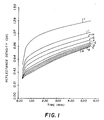
- FIGURE 1 is a graphical plot of reflectance density (D R ) versus time (minutes) resulting from assay of lithium ion using a Control element and several calibrator fluids as described in Example 5 below.
- FIGURE 2 is a graphical plot of reflectance density (D R ) versus time (minutes) resulting from assay of lithium ion using an element of this invention and several calibrator fluids as described in Example 5 below.
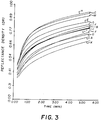
- FIGURE 3 is a graphical plot of reflectance density(D R ) versus time (minutes) resulting from assay of lithium ion using a Control element as described in Example 6 below.
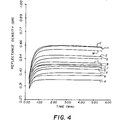
- FIGURE 4 is a graphical plot of reflectance density(D R ) versus time (minutes) resulting from assay of lithium ion using an element of this invention as described in Example 6 below.
- the element of this invention can be used to determine (that is, detect either the presence, amount or both) lithium ion in biological fluids of animals or humans, but preferably in humans.
- biological fluids include, but are not limited to, whole blood, plasma, sera, lymph, bile, urine, semen, cerebral spinal fluid, spinal fluid, sputum, perspiration, synovial fluid, lacrimal fluid and stool specimens as well as other biological fluids readily apparent to one skilled in the art.
- Fluid preparations of tissues can also be assayed.
- human serum is assayed with this invention.
- the dry element of this invention has an inert support with two reagent layers and a porous spreading layer disposed thereon.
- the support is generally dimensionally stable, inert to chemical reaction and preferably transparent (that is, radiation transmissive for wavelengths between 200 and 900 nm).
- transparent supports can be used if the mode of detection is reflectance spectroscopy instead of transmission spectroscopy.
- Useful supports are well known in the art, and include but are not limited to polyesters, papers, metal foils and polystyrene, polycarbonates and cellulose esters.
- the porous spreading zone is prepared from any of the known materials used for such zones as described, for example in US-A-4,292,272, US-A-3,992,158, US-A-4,258,001, US-A-4,430,436 and JP 57(1982)-101760.
- Preferred spreading zones are those described in US-A-3,992,158 as "blush polymer" zones. Such zones can be formed on a supporting material by dissolving a polymer in a mixture of two organic liquids, one of which is a lower boiling, good solvent for the polymer and other being a high boiling, non-solvent or poor solvent for the polymer. Within the porous zone can be incorporated particulate materials of various sizes to enhance the void volume.
- the elements have at least two other layers which can contain one or more reagents needed for the assay.
- a layer can also be a second porous spreading layer, if desired. All of the layers are generally in fluid contact with each other, meaning that fluids, reagents and reagent products can pass or be transported between superposed regions of adjacent layers, unless of course, a reagent is immobilized in some manner so it will not migrate within or without a layer.
- the reagent layers can be composed of one or more binder materials [such as gelatin and other colloidal materials, hydrophilic polymers such as poly(vinyl alcohol), acrylamide polymers, vinylpyrrolidone polymers and others known in the art] in which reagents are incorporated.
- binder materials such as gelatin and other colloidal materials, hydrophilic polymers such as poly(vinyl alcohol), acrylamide polymers, vinylpyrrolidone polymers and others known in the art
- a 14-crown-4-ether derivative which is reactive with lithium ion to provide a colorimetric signal.
- a signal can be a shift in absorbance from invisible to visible (to the human eye), visible to invisible, or from one visible wavelength to another.
- a number of such derivatives are known in the art, for example JP 62/72683, JP 62/56485 and EP-A-0 516 227.
- the preferred derivatives are those represented by the structure (II): wherein R3 is substituted or unsubstituted alkyl of 1 to 15 carbon atoms (for example, methyl, ethyl, isopropyl, n-butyl, t -butyl, pentyl, hexyl, octyl, decyl, dodecyl, 3-ethyl-5-methyloctyl, benzyl and benzyl substituted with one or more lower alkyl groups such as methyl, ethyl and isopropyl).
- R3 is substituted or unsubstituted alkyl of 1 to 15 carbon atoms (for example, methyl, ethyl, isopropyl, n-butyl, t -butyl, pentyl, hexyl, octyl, decyl, dodecyl, 3-ethyl-5-methylocty
- R4 is hydrogen, nitro, methylsulfonyl, N-alkylsulfamoyl or N,N-dialkylsulfamoyl wherein the alkyl is substituted or unsubstituted and has 1 to 20 carbon atoms (such as methyl, ethyl, isopropyl, hexyl, benzyl, decyl, dodecyl, octadecyl and eicosyl).
- R5 is substituted or unsubstituted alkyl of 1 to 10 carbon atoms (for example, methyl, ethyl, isopropyl, isobutyl, n-butyl, heptyl and decyl), and X is N or CH.
- More preferred compounds of structure (II) are those wherein R3 is methyl, benzyl or dodecyl, R4 is hydrogen, nitro, methylsulfonyl or sulfamoyl, R5 is methyl or heptyl and X is CH.
- R1 and R2 are independently alkyl of 1 to 20 carbon atoms (such as methyl, ethyl, isopropyl, n-butyl, t -butyl, n-pentyl, t -pentyl, hexyl, octyl, decyl, dodecyl and eicosyl) or acyl of 2 to 20 carbon atoms (such as acetyl, propionyl, valeryl and butyryl).
- R1 and R2 is alkyl, and the groups are in the 2- and 4-positions in relation to the hydroxy group.
- R1 and R2 are independently alkyl of 1 to 10 carbon atoms, or acyl of 3 to 6 carbon atoms.
- Representative aromatic phenol organic solvents include those described in Research Disclosure , March, 1978, pages 23-24, and US-A-2,835,579.
- Particularly useful solvents include 2,4-di-n-pentylphenol, 2,4-di- t -pentylphenol, 2-n-octyl-4-pentylphenol, 2-n-nonyl-4-n-pentylphenol, 2-methyl-4-n-decylphenol, 2-n-decyl-4-methylphenol, 2-methyl-4-n-octadecylphenol and 2-n-valeryl-4-n-pentylphenol.
- Other useful solvents would be readily apparent to one skilled in the art. Most preferred is 2,4-di-n-pentylphenol.
- a second reagent layer is disposed on the first reagent layer.
- the two layers can be immediately adjacent, or separated by a thin subbing layer (described below) as long as the reagents and fluid can readily move between the layers.
- this second reagent layer is an aromatic phenol organic solvent which also is defined by structure (I).
- the solvents in the two reagent layers can be the same or different, but preferably, they are the same compound.
- a mixture of aromatic phenol organic solvents can be used in either layer if desired.
- the porous spreading layer is separated from the two reagent layers with a hydrophilic subbing layer composed of one or more suitable hydrophilic binder materials.
- suitable hydrophilic binder materials include, but are not limited to gelatin and other colloidal materials, polymers of vinyl pyrrolidone, vinyl alcohol, acrylamide, N-alkyl-substituted acrylamide (such as N-isopropylacrylamide), including copolymers thereof, and other materials readily apparent to one skilled in the art.
- the pH of at least 9 in the element is maintained during an assay for lithium ion by one or more suitable buffers.
- the buffer is incorporated into one or more layers other than the two reagent layers, and preferably, it is in the hydrophilic subbing layer.
- Useful buffers include, but are not limited to, 3-(cyclohexylamino)-1-propanesulfonic acid, 4-aminobutyric acid, phosphate and arginine.
- the pH is maintained at 10 or above with the upper limit being 14.
- perfluoroalkyl surfactants in at least the second reagent layer.
- a surfactant is placed in both reagent layers.
- Such surfactants can be anionic, cationic, nonionic or amphoteric in nature. They have one or more fluorocarbon moieties in the molecule, each of which has one or more hydrogen atoms replaced by a fluorine atom. Each fluorocarbon moiety has at least 4 carbon atoms, and can be saturated or unsaturated.
- each moiety are predominantly straight chain groups having no more than one or two small branches (for example, methyl or ethyl, fluorinated or unfluorinated).
- the moieties can be connected together by an organic backbone which is linear or branched.
- that moiety can be branched or linear.
- each fluorocarbon moiety has from 4 to 16 carbon atoms, from 8 to 33 fluorine atoms, and a ratio of fluorine atoms to carbon atoms of at least 2:1.
- surfactants are as follows:
- Nonionic Surfactants :
- Perfluoroalkylpoly (ethylene oxide) alcohols for example, commercially available as ZONYL TM FSN from DuPont, or as FLUOWET TM OT from American Hoechst, or ethoxylated perfluoroalkyl materials such as SURFLON TM 145 from Asahi Glass (also known as "surfactant F-35").
- Perfluoroalkyl quaternary ammonium salts for example, commercially available as FLUORAD TM FC 135 from 3M Corporation, as LODYNE TM 106 from Ciba-Geigy, or as ZONYL TM FSC from DuPont.
- Perfluoroalkyl betaines for example, commercially available as SURFLON TM S-132 from Asahi Glass Co., or as ZONYL TM FSK from DuPont.
- Fluoroalkylsulfates for example commercially available as FLUORTENSID TM FT-248 from Bayer, or as FLUOWET TM SB from American Hoechst, or fluoroalkylalkylenethioalkylenecarboxylates, for example commercially available as ZONYL TM FSA from DuPont.
- Preferred perfluoroalkyl surfactants include the perfluoroalkyl betaines (such as SURFLON TM S-132 amphoteric surfactant) and the ethoxylated perfluoroalkyl surfactants (such as SURFLON TM S-145).
- the amount of useful perfluoroalkyl surfactant in each reagent layer is generally at least 0.005 g/m2 with an amount of from 0.005 to 0.2 g/m2 being preferred.
- the amounts of critical reagents can be readily determined by a skilled worker also. However, the amounts may be within the range of from 0.05 to 2, and preferably from 0.2 to 0.8 g/m2, of the 14-crown-4-ether derivative.
- the organic solvent in the first reagent layer may be present in an amount of from 0.5 to 10, and preferably from 2 to 6, g/m2.
- the organic solvent in the second reagent layer may be present in an amount of from 0.5 to 12, and preferably from 2 to 6, g/m2. All amounts are dry weight.
- the assay of this invention can be manual or automated.
- the element is used by physically contacting it with the test specimen (for example from 1 to 200 ⁇ l) suspected of containing lithium ion under ambient conditions (although other temperatures can be used).
- the specimen and reagents become mixed within the layers of the element and any lithium ion complexes with the 14-crown-4-ether derivative to produce a spectrophotometric change as described above.
- Contact can be achieved in any suitable manner, for example by dipping or immersing the element into the specimen or preferably, by spotting the specimen onto the element by hand, machine or suitable dispensing means.
- the element After specimen application, the element is exposed to any conditioning, such as incubation, heating or otherwise, that may be desirable to quicken or otherwise facilitate obtaining a test result.
- any conditioning such as incubation, heating or otherwise, that may be desirable to quicken or otherwise facilitate obtaining a test result.
- a spectrophotometric measurement is made. This measurement can be made using suitable reflection or transmission spectrophotometric equipment and procedures as a measure of lithium ion concentration in the test sample.
- the spectrophotometric change is generally measured at a wavelength which is within the range of from 400 to 700 nm, with measurement at a wavelength of from 450 to 650 nm being preferred.
- the use of other complexing compounds may require measurement at other wavelengths as one skilled in the art could readily ascertain.
- Example 2 An element similar to that of Example 1 was used to detect lithium ion in a serum specimen and compared to the performance of a Control element which was like it except 2,4-di-n-pentylphenol was omitted from the second reagent layer.
- the element of this invention was like that of Example 1 except: the polyurethane coverage was 3 g/m2, TRITONTM X-100 nonionic surfactant was used in place of TRITONTM X-405 nonionic surfactant, each component of the subbing layer was at 4 g/m2, SURFLONTM 145 surfactant was used at 0.01 g/m2 instead of SURFLONTM 132, the amount of 2,4-di-n-pentylphenol in the second reagent layer was 4 g/m2, and 0.6 g/m2 of Compound 2 was used.
- Serum samples (10 ⁇ l) containing varying amounts (0.27 to 10.59 mmolar) of lithium ion were spotted onto the spreading layer of individual elements. After incubation for about 48 seconds at 37°C, the reflectance density (D R ) was measured at 600 nm using a standard recording reflectance densitometer. The lithium ion concentrations obtained from these reflectance densities were compared to the predicted concentrations for the various amounts of analyte in the serum samples. Additional densities were measured after about 130 seconds (from specimen spotting) and after about 290 seconds.
- Tables II, III and IV below show the reflectance densities measured at 48, 130 and 290 seconds, respectively, for both Control and Example 1 elements.
- the data include the standard of deviation (S.D.) at each concentration.
- the standard of deviation is a parameter which indicates the variation from a mean generated from several repeated determinations. It is indicative of precision since a high precision would have a low standard of deviation.
- the data provided in the 0.27 to 3.71 mmolar concentration is most important since this is the most useful range for determination of lithium ion concentration in patients.
- D n Reflectance Density
- This example shows a comparison of calibration curves generated at various concentrations (0.27-10.59 mmolar) of lithium ion using an element of this invention and a Control element which is outside the scope of this invention.
- the element of this invention was that shown in Example 1 and the Control element was similarly prepared except that the organic solvent was omitted from the second reagent layer.
- the procedure for determining reflectance density was like that described in Example 2.
- FIGS. 1 and 2 show the calibration curves for various analyte concentrations over time for the assays using the Control (FIG. 1) and invention (FIG. 2), respectively.
- the amounts of lithium ion concentration used in these assays were (as defined in the FIGURES): Fluid A: water (no lithium ions), Fluid B: 0.27 mmolar, Fluid C: 0.53 mmolar, Fluid D: 0.79 mmolar, Fluid E: 1.02 mmolar, Fluid F: 1.52 mmolar, Fluid G: 2.50 mmolar, Fluid H: 3.72 mmolar, Fluid I: 3.72 mmolar, and Fluid J: 5.00 mmolar.
- This example demonstrates the importance of having perfluoroalkyl surfactants in the second reagent layer with the organic solvent to stabilize the suspension of solvent in the coating formulation.
- Example 1 The element of Example 1 was used to assay samples of various fluids containing various amounts (0- 2.4 mmolar) of lithium ion.
- a Control element was similarly prepared except that the SURFLON TM 132 surfactant was replaced in both reagent layers with ALKANOL TM XC nonionic surfactant (0.02 g/m2). The results are illustrated in FIGURES 3 (Control) and 4 (Invention).
- Fluid A Pool of patient samples, 0.05 mmolar lithium ion
- Fluid B Pool of patient samples, 0.9 mmolar lithium ion
- Fluid C Pool of patient samples, 2.4 mmolar lithium ion
- Fluid D 0.55 mmolar lithium ion
- Fluid E 1.6 mmolar lithium ion
- Fluid F Pool of patient samples, 0.23 mmolar lithium ion
- Fluid G Pool of patient samples, 1.05 mmolar lithium ion
- Fluid H Pool of patient samples, 2.47 mmolar lithium ion
- Fluid I Control fluid, 0.71 mmolar lithium ion
- Fluid J Control fluid, 0.82 mmolar lithium ion
- Fluid K Pool of patient samples, no lithium ion
- Fluid L Pool of patient samples, 0.89 mmolar lithium ion
- Fluid M Pool of patient samples, 2.36 mmolar lithium ion.
- the element of this invention showed a reduced rate of background dye development (that is, dye development from sources other than lithium ion) compared to the Control element.
Landscapes
- Health & Medical Sciences (AREA)
- Life Sciences & Earth Sciences (AREA)
- Engineering & Computer Science (AREA)
- Hematology (AREA)
- Immunology (AREA)
- Chemical & Material Sciences (AREA)
- Molecular Biology (AREA)
- Biomedical Technology (AREA)
- Urology & Nephrology (AREA)
- Food Science & Technology (AREA)
- Biochemistry (AREA)
- Cell Biology (AREA)
- Biotechnology (AREA)
- Medicinal Chemistry (AREA)
- Physics & Mathematics (AREA)
- Analytical Chemistry (AREA)
- Microbiology (AREA)
- General Health & Medical Sciences (AREA)
- General Physics & Mathematics (AREA)
- Pathology (AREA)
- Inorganic Chemistry (AREA)
- Investigating Or Analyzing Non-Biological Materials By The Use Of Chemical Means (AREA)
- Investigating Or Analysing Biological Materials (AREA)
- Investigating Or Analysing Materials By The Use Of Chemical Reactions (AREA)
Applications Claiming Priority (2)
| Application Number | Priority Date | Filing Date | Title |
|---|---|---|---|
| US91624892A | 1992-07-17 | 1992-07-17 | |
| US916248 | 1992-07-17 |
Publications (2)
| Publication Number | Publication Date |
|---|---|
| EP0579331A1 true EP0579331A1 (de) | 1994-01-19 |
| EP0579331B1 EP0579331B1 (de) | 1999-05-12 |
Family
ID=25436946
Family Applications (1)
| Application Number | Title | Priority Date | Filing Date |
|---|---|---|---|
| EP93202064A Expired - Lifetime EP0579331B1 (de) | 1992-07-17 | 1993-07-13 | Trockenes, analytisches Element und Methode zur kolorimetrischen Bestimmung von Lithiumionen |
Country Status (6)
| Country | Link |
|---|---|
| EP (1) | EP0579331B1 (de) |
| JP (1) | JP2927647B2 (de) |
| AT (1) | ATE180059T1 (de) |
| DE (1) | DE69324855T2 (de) |
| DK (1) | DK0579331T3 (de) |
| SG (1) | SG54239A1 (de) |
Cited By (2)
| Publication number | Priority date | Publication date | Assignee | Title |
|---|---|---|---|---|
| EP0826677A1 (de) * | 1996-08-15 | 1998-03-04 | Johnson & Johnson Clinical Diagnostics, Inc. | Calcium spezifische Diaza-18-kron-6-äther Chromoionophore |
| US7241623B2 (en) | 2000-05-26 | 2007-07-10 | Seba Diagnostics Pty. Ltd. | Lithium detection in liquid biological samples and reagents therefor |
Families Citing this family (1)
| Publication number | Priority date | Publication date | Assignee | Title |
|---|---|---|---|---|
| DE102008018180A1 (de) * | 2008-04-02 | 2009-10-15 | Hansgrohe Ag | Verfahren zum Nachweis von perfluorierten Tensiden |
Citations (3)
| Publication number | Priority date | Publication date | Assignee | Title |
|---|---|---|---|---|
| US2835579A (en) * | 1955-08-31 | 1958-05-20 | Eastman Kodak Co | N-alkyl and acylphenol coupler solvents for color photography |
| EP0516227A2 (de) * | 1991-05-28 | 1992-12-02 | Johnson & Johnson Clinical Diagnostics, Inc. | Trockenes, analytisches Element zum Nachweis von Lithium |
| EP0516226A1 (de) * | 1991-05-28 | 1992-12-02 | Eastman Kodak Company | 14-Krone-6-Etherderivate |
-
1993
- 1993-07-13 SG SG1996005464A patent/SG54239A1/en unknown
- 1993-07-13 DK DK93202064T patent/DK0579331T3/da active
- 1993-07-13 AT AT93202064T patent/ATE180059T1/de not_active IP Right Cessation
- 1993-07-13 EP EP93202064A patent/EP0579331B1/de not_active Expired - Lifetime
- 1993-07-13 DE DE69324855T patent/DE69324855T2/de not_active Expired - Lifetime
- 1993-07-15 JP JP5175066A patent/JP2927647B2/ja not_active Expired - Fee Related
Patent Citations (3)
| Publication number | Priority date | Publication date | Assignee | Title |
|---|---|---|---|---|
| US2835579A (en) * | 1955-08-31 | 1958-05-20 | Eastman Kodak Co | N-alkyl and acylphenol coupler solvents for color photography |
| EP0516227A2 (de) * | 1991-05-28 | 1992-12-02 | Johnson & Johnson Clinical Diagnostics, Inc. | Trockenes, analytisches Element zum Nachweis von Lithium |
| EP0516226A1 (de) * | 1991-05-28 | 1992-12-02 | Eastman Kodak Company | 14-Krone-6-Etherderivate |
Cited By (2)
| Publication number | Priority date | Publication date | Assignee | Title |
|---|---|---|---|---|
| EP0826677A1 (de) * | 1996-08-15 | 1998-03-04 | Johnson & Johnson Clinical Diagnostics, Inc. | Calcium spezifische Diaza-18-kron-6-äther Chromoionophore |
| US7241623B2 (en) | 2000-05-26 | 2007-07-10 | Seba Diagnostics Pty. Ltd. | Lithium detection in liquid biological samples and reagents therefor |
Also Published As
| Publication number | Publication date |
|---|---|
| JP2927647B2 (ja) | 1999-07-28 |
| SG54239A1 (en) | 1998-11-16 |
| DK0579331T3 (da) | 1999-11-01 |
| ATE180059T1 (de) | 1999-05-15 |
| DE69324855D1 (de) | 1999-06-17 |
| DE69324855T2 (de) | 1999-11-04 |
| JPH06186228A (ja) | 1994-07-08 |
| EP0579331B1 (de) | 1999-05-12 |
Similar Documents
| Publication | Publication Date | Title |
|---|---|---|
| CA1114723A (en) | Glucose detection system free from fluoride-ion interference | |
| EP0158506B1 (de) | Verfahren und Apparat zur Bestimmung einer nachzuweisenden Substanz, Verfahren zur Eichung eines solchen Apparates | |
| EP0463524B1 (de) | Zusammensetzung und Verfahren zur Bestimmung von Ketonkörpern | |
| EP0654659B1 (de) | Testvorrichtung mit definiertem Volumen | |
| US5308767A (en) | Method for control or calibration in a chemical analytical determination | |
| US5326707A (en) | Composition and device for urinary protein assay and method of using the same | |
| EP0071934A1 (de) | Verfahren zur Herstellung eines farbstabilisierten chromogenen Testelements | |
| EP0044775B1 (de) | Eine Reaktionszone und eine Reagenszone enthaltendes, trockenes, analytisches Element | |
| US5320969A (en) | Method, composition and device for the semiquantitative determination of specific gravity of a test sample | |
| US5510245A (en) | Composition and method of assaying for ketone bodies | |
| US4786605A (en) | Analytical method and element for protein assay | |
| EP0159638B1 (de) | Mehrschichtiges analytisches Element und Verfahren zur Bestimmung von Analyten | |
| EP0158993B1 (de) | Analytisches Element mit verbesserter Ausbreitzone und Verfahren zu dessen Verwendung | |
| US4803159A (en) | Analytical element and method for determination of total lacate dehydrogenase | |
| EP0482528B1 (de) | Trockenanalytisches Element zur Analyse von Eisenionen | |
| EP0207392B1 (de) | Mehrschichtiges Testmittel für Ionen | |
| EP0028123A1 (de) | Spektrophotometrisches Verfahren zur Bestimmung von Gesamtbilirubin | |
| EP0579331B1 (de) | Trockenes, analytisches Element und Methode zur kolorimetrischen Bestimmung von Lithiumionen | |
| EP0266216B1 (de) | Kontroll oder Kalibrierungslösungen für Flüssigkeitsanalyse | |
| EP0158507B1 (de) | Reagenzzusammensetzung, trockenes Element und Verfahren zur Bestimmung des Gesamt-Bilirubins | |
| EP0952451A1 (de) | Trockene analytische Elemente zur Bestimmung von Protein | |
| EP0533283B1 (de) | Bestimmungsverfahren für Serum-Cholinesterase-Aktivität | |
| EP0781852A1 (de) | Integrales vielschichtiges analytisches element zur bestimmung von sulfatkonjugierter gallensäure | |
| US5429931A (en) | Multilayer analytical element containing crosslinked binder and method for the determination of ethanol | |
| US5416004A (en) | Multilayer analytical element containing primary amine buffer and method for the determination of ethanol |
Legal Events
| Date | Code | Title | Description |
|---|---|---|---|
| PUAI | Public reference made under article 153(3) epc to a published international application that has entered the european phase |
Free format text: ORIGINAL CODE: 0009012 |
|
| AK | Designated contracting states |
Kind code of ref document: A1 Designated state(s): AT BE CH DE DK FR GB IE IT LI LU NL SE |
|
| 17P | Request for examination filed |
Effective date: 19940622 |
|
| RAP1 | Party data changed (applicant data changed or rights of an application transferred) |
Owner name: CLINICAL DIAGNOSTIC SYSTEMS, INC. |
|
| RAP1 | Party data changed (applicant data changed or rights of an application transferred) |
Owner name: JOHNSON & JOHNSON CLINICAL DIAGNOSTICS, INC. |
|
| 17Q | First examination report despatched |
Effective date: 19970521 |
|
| GRAG | Despatch of communication of intention to grant |
Free format text: ORIGINAL CODE: EPIDOS AGRA |
|
| GRAG | Despatch of communication of intention to grant |
Free format text: ORIGINAL CODE: EPIDOS AGRA |
|
| GRAH | Despatch of communication of intention to grant a patent |
Free format text: ORIGINAL CODE: EPIDOS IGRA |
|
| GRAH | Despatch of communication of intention to grant a patent |
Free format text: ORIGINAL CODE: EPIDOS IGRA |
|
| GRAA | (expected) grant |
Free format text: ORIGINAL CODE: 0009210 |
|
| AK | Designated contracting states |
Kind code of ref document: B1 Designated state(s): AT BE CH DE DK FR GB IE IT LI LU NL SE |
|
| REF | Corresponds to: |
Ref document number: 180059 Country of ref document: AT Date of ref document: 19990515 Kind code of ref document: T |
|
| REG | Reference to a national code |
Ref country code: CH Ref legal event code: NV Representative=s name: E. BLUM & CO. PATENTANWAELTE Ref country code: CH Ref legal event code: EP |
|
| ITF | It: translation for a ep patent filed | ||
| REG | Reference to a national code |
Ref country code: IE Ref legal event code: FG4D |
|
| REF | Corresponds to: |
Ref document number: 69324855 Country of ref document: DE Date of ref document: 19990617 |
|
| ET | Fr: translation filed | ||
| REG | Reference to a national code |
Ref country code: DK Ref legal event code: T3 |
|
| PLBE | No opposition filed within time limit |
Free format text: ORIGINAL CODE: 0009261 |
|
| 26N | No opposition filed | ||
| PGFP | Annual fee paid to national office [announced via postgrant information from national office to epo] |
Ref country code: CH Payment date: 20010713 Year of fee payment: 9 |
|
| REG | Reference to a national code |
Ref country code: GB Ref legal event code: IF02 |
|
| PG25 | Lapsed in a contracting state [announced via postgrant information from national office to epo] |
Ref country code: LI Free format text: LAPSE BECAUSE OF NON-PAYMENT OF DUE FEES Effective date: 20020731 Ref country code: CH Free format text: LAPSE BECAUSE OF NON-PAYMENT OF DUE FEES Effective date: 20020731 |
|
| REG | Reference to a national code |
Ref country code: CH Ref legal event code: PL |
|
| PGFP | Annual fee paid to national office [announced via postgrant information from national office to epo] |
Ref country code: NL Payment date: 20040704 Year of fee payment: 12 |
|
| PGFP | Annual fee paid to national office [announced via postgrant information from national office to epo] |
Ref country code: SE Payment date: 20040706 Year of fee payment: 12 |
|
| PGFP | Annual fee paid to national office [announced via postgrant information from national office to epo] |
Ref country code: LU Payment date: 20040714 Year of fee payment: 12 Ref country code: IE Payment date: 20040714 Year of fee payment: 12 |
|
| PGFP | Annual fee paid to national office [announced via postgrant information from national office to epo] |
Ref country code: AT Payment date: 20050622 Year of fee payment: 13 |
|
| PG25 | Lapsed in a contracting state [announced via postgrant information from national office to epo] |
Ref country code: IT Free format text: LAPSE BECAUSE OF NON-PAYMENT OF DUE FEES Effective date: 20050713 Ref country code: IE Free format text: LAPSE BECAUSE OF NON-PAYMENT OF DUE FEES Effective date: 20050713 |
|
| PG25 | Lapsed in a contracting state [announced via postgrant information from national office to epo] |
Ref country code: SE Free format text: LAPSE BECAUSE OF NON-PAYMENT OF DUE FEES Effective date: 20050714 |
|
| PGFP | Annual fee paid to national office [announced via postgrant information from national office to epo] |
Ref country code: BE Payment date: 20050916 Year of fee payment: 13 |
|
| PG25 | Lapsed in a contracting state [announced via postgrant information from national office to epo] |
Ref country code: NL Free format text: LAPSE BECAUSE OF NON-PAYMENT OF DUE FEES Effective date: 20060201 |
|
| EUG | Se: european patent has lapsed | ||
| NLV4 | Nl: lapsed or anulled due to non-payment of the annual fee |
Effective date: 20060201 |
|
| REG | Reference to a national code |
Ref country code: IE Ref legal event code: MM4A |
|
| PG25 | Lapsed in a contracting state [announced via postgrant information from national office to epo] |
Ref country code: AT Free format text: LAPSE BECAUSE OF NON-PAYMENT OF DUE FEES Effective date: 20060713 |
|
| PG25 | Lapsed in a contracting state [announced via postgrant information from national office to epo] |
Ref country code: BE Free format text: LAPSE BECAUSE OF NON-PAYMENT OF DUE FEES Effective date: 20060731 |
|
| BERE | Be: lapsed |
Owner name: *JOHNSON & JOHNSON CLINICAL DIAGNOSTICS INC. Effective date: 20060731 |
|
| PGFP | Annual fee paid to national office [announced via postgrant information from national office to epo] |
Ref country code: FR Payment date: 20100805 Year of fee payment: 18 Ref country code: DE Payment date: 20100707 Year of fee payment: 18 |
|
| PGFP | Annual fee paid to national office [announced via postgrant information from national office to epo] |
Ref country code: GB Payment date: 20100707 Year of fee payment: 18 |
|
| PGFP | Annual fee paid to national office [announced via postgrant information from national office to epo] |
Ref country code: DK Payment date: 20100712 Year of fee payment: 18 |
|
| REG | Reference to a national code |
Ref country code: DK Ref legal event code: EBP |
|
| GBPC | Gb: european patent ceased through non-payment of renewal fee |
Effective date: 20110713 |
|
| REG | Reference to a national code |
Ref country code: FR Ref legal event code: ST Effective date: 20120330 |
|
| PG25 | Lapsed in a contracting state [announced via postgrant information from national office to epo] |
Ref country code: DE Free format text: LAPSE BECAUSE OF NON-PAYMENT OF DUE FEES Effective date: 20120201 Ref country code: FR Free format text: LAPSE BECAUSE OF NON-PAYMENT OF DUE FEES Effective date: 20110801 |
|
| REG | Reference to a national code |
Ref country code: DE Ref legal event code: R119 Ref document number: 69324855 Country of ref document: DE Effective date: 20120201 |
|
| PG25 | Lapsed in a contracting state [announced via postgrant information from national office to epo] |
Ref country code: GB Free format text: LAPSE BECAUSE OF NON-PAYMENT OF DUE FEES Effective date: 20110713 |
|
| PG25 | Lapsed in a contracting state [announced via postgrant information from national office to epo] |
Ref country code: DK Free format text: LAPSE BECAUSE OF NON-PAYMENT OF DUE FEES Effective date: 20110731 |