EP0580888A1 - Steuerverfahren für ein Prüfsystem - Google Patents
Steuerverfahren für ein Prüfsystem Download PDFInfo
- Publication number
- EP0580888A1 EP0580888A1 EP92113023A EP92113023A EP0580888A1 EP 0580888 A1 EP0580888 A1 EP 0580888A1 EP 92113023 A EP92113023 A EP 92113023A EP 92113023 A EP92113023 A EP 92113023A EP 0580888 A1 EP0580888 A1 EP 0580888A1
- Authority
- EP
- European Patent Office
- Prior art keywords
- test
- control program
- program module
- tuc
- module
- Prior art date
- Legal status (The legal status is an assumption and is not a legal conclusion. Google has not performed a legal analysis and makes no representation as to the accuracy of the status listed.)
- Granted
Links
Images

Classifications
-
- H—ELECTRICITY
- H04—ELECTRIC COMMUNICATION TECHNIQUE
- H04M—TELEPHONIC COMMUNICATION
- H04M3/00—Automatic or semi-automatic exchanges
- H04M3/22—Arrangements for supervision, monitoring or testing
- H04M3/26—Arrangements for supervision, monitoring or testing with means for applying test signals or for measuring
- H04M3/28—Automatic routine testing ; Fault testing; Installation testing; Test methods, test equipment or test arrangements therefor
- H04M3/30—Automatic routine testing ; Fault testing; Installation testing; Test methods, test equipment or test arrangements therefor for subscriber's lines, for the local loop
-
- H—ELECTRICITY
- H04—ELECTRIC COMMUNICATION TECHNIQUE
- H04Q—SELECTING
- H04Q11/00—Selecting arrangements for multiplex systems
- H04Q11/04—Selecting arrangements for multiplex systems for time-division multiplexing
- H04Q11/0407—Selecting arrangements for multiplex systems for time-division multiplexing using a stored program control
- H04Q11/0414—Details
Definitions
- the invention relates to a device according to the preamble of patent claim 1.
- the incentives can essentially be divided into three types of incentives: Commands / Messages, Peripheral Events and Internal Events. Incentive recognition procedures as well as procedures triggered by incentives are controlled by the operating system of a processor.
- Central control program modules perform test procedures for a participant replacement test, a manual subscriber line test or an automatic test. These central control program modules are implemented in the group processor of a line trunk group.
- the control program modules work according to the principle of a state / incentive machine, ie that the subroutine routines noted in program modules and triggered by incentives perform different tasks depending on the respective program state. In addition to a complex mode of operation of the control program module, additional complex incentive processing and administrative effort are added due to the multiple assignment of an input by test modules of a test unit.
- the central control program module is informed of the input of the subscriber unit to be tested on the subscriber line unit.
- the switching technology is not responsible for the input of the subscriber line unit, but rather the testing technology, with a switching program module type noted in a device memory table being replaced by a test program module type.
- a clear test module assignment due to the multiple assignment of an input by this requires a high, complex administration and control effort.
- complex program module structures are required to initiate a test procedure, for example a subscriber line test from the subscriber line, and to carry out system-integrated test procedures in the case of incentive processing.
- the invention has for its object to provide a control of a test system that allows a reduction in the complex administration and control effort.
- test module control program module that executes test procedures
- the invention has the advantage that all incentives sent or received by the test modules are received, evaluated or forwarded via an internal interface to the central control module, the individual steps for occupying and triggering the hardware required for the test and Software is processed and checked.
- the test module control program module processes incentives from the periphery (eg test modules) from the central controller (internal incentives) and in special situations from the operating system itself. Time-consuming evaluation or determination of the origin of the incentives is not necessary.
- the connection of the test module control program module to the central control module leads to a significant relief in the dynamic loading of the operating system.
- test unit control program module can be viewed as a functional unit and initiated with a few "high-priority" instructions.
- a significant simplification in the processing of incentives is also that the test module control program module can access operating tables of the operating system, which has the advantage that time-consuming initialization measures with the aid of subroutine routines are eliminated.
- new test procedures for internal or external assembly units to be tested can be quickly integrated into the test unit control program module.
- test module control program module is time-monitored by a test unit. This has the advantage that errors within a test cycle are immediately recognized by the central control of a test module and the test process is ended with a defined end state and corresponding messages at a subscriber line test station.
- a further advantageous embodiment of the invention consists in that after the completion of a test routine, the respective program status in the device memory tables of the passive test unit modules is updated. This has the advantage that a dynamic load on the operating system is significantly reduced.
- the incentives are formed by a hardware or software event, e.g. B. Initiation of a test routine from the coordination processor CP.
- the operating system OS reads the responsible program types as well as their states, for example waiting for result, test unit TU, documents or time slot allocation, for processing the incentives recorded from device memory tables DPS.
- the device memory tables DPS each contain data such as. B. Program type and program status of the program associated with the device memory tables DPS such as, for. B. the test module control program module TUC.
- the operating system initiates program-related steps that the incentives read from the test modules FTEM, LMEM, LVMM.
- the operating system turns the device memory tables DPS of the subscriber line unit DLU into the program type and its state read out.
- a program module for example the test module control program module TUC
- an address of a subroutine routine to be executed is talked about via conversion tables based on the data noted in the operating fields to which the operating system OS has access.
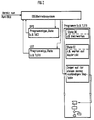
- FIG. 3 shows a schematic representation of an allocation of device memory tables DPS, LST.
- the actual processing of the processing of the mediation-related and test-technical tasks or procedures is carried out by the program modules noted therein. In order to be able to address these in a targeted manner, a number of algorithms must be run through in the operating system.
- the interface between the program module and the group processor operating system essentially form the device memory tables, e.g. LST, DPS and their subdivisions. So e.g. contains the device memory table - DLU port status table - DPS variable data, which can be accessed both by the test module control program module TUC and by the operating system OS, e.g. B.
- a current status (status address) of the test module control program module TUC depending on the events to be expected, e.g. Response from an FTEM test module or response to a time slot assignment noted.
- the device memory table DPS for the subscriber line unit DLU is referred to as the DLU port status table.
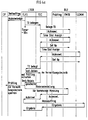
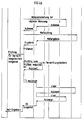
- test module control program module TUC shows a flowchart to illustrate some essential programming steps during a test routine. All essential steps that initiate and carry out the test procedure are carried out by the test module control program module TUC.
- test module control program module TUC all of the test modules combined in the test unit TU, For example, a test module FTEM, a line measuring module for subscriber line modules DLU for a digital subscriber line unit FTEM, LMEM and a level measuring module for a subscriber line module for a digital subscriber line unit LVMM or a function test module of the test unit TU processed incentives.
- test unit 4a / b correspond to a second generation of test modules and replace the test modules FMEM (FMTU), LMEM (LCMM) and LVMM (LCMM) used in a first generation.
- FMEM FMEM
- LCMM LMEM
- LCMM LVMM
- the processes for documenting and triggering the test unit TU run after receipt of the respective incentive from the central control program module TLFI under TUC control.
- the processes for documenting and triggering are no longer monitored by the central control program module TLFI.
- the central control program module TLFI only monitors whether the test module control program module TUC fulfills its tasks with all of the individual steps required for this in a prescribed time.
- the messages coming from the test unit TU are forwarded to the respective subroutine modules by appropriate incentives after preprocessing by the TUC.
- the operating system OS provides the called programs with certain data from the OT table operation tables, which the TUC uses from the start in the executing subroutine modules.
Landscapes
- Engineering & Computer Science (AREA)
- Computer Networks & Wireless Communication (AREA)
- Signal Processing (AREA)
- Monitoring And Testing Of Exchanges (AREA)
- Selective Calling Equipment (AREA)
- Paper (AREA)
- Absorbent Articles And Supports Therefor (AREA)
- Testing And Monitoring For Control Systems (AREA)
- Emergency Protection Circuit Devices (AREA)
- Inorganic Compounds Of Heavy Metals (AREA)
Abstract
Description
- Die Erfindung betrifft eine Einrichtung gemäß Oberbegriff des Patentanspruchs 1.
- Ein funktionssicherer Telekommunikationsanschluß ist eine wichtige Voraussetzung dafür, daß ein Telekommunikationsteilnehmer die Dienste und Dienstmerkmale eines Telekommunikationsnetzes bzw. Telekommunikationssystems zuverlässig nützen kann. Die für eine Prüfung eines Telekommunikationsanschlusses nötigen Hart- und Softwarekomponenten sind in einem elektronischen Wählsystem integriert. Im einzelnen können mit den systemintegrierten elektronischen Hard- und Softwarekomponenten prozessorgesteuert Prüfungen wie z. B. eine Fehlererkennung, Fehlerdiagnose oder Fehlerlokalisierung in einer Teilnehmerschaltung/Teilnehmersatzbaugruppe, einem Teilnehmerendgerät oder einer Teilnehmerleitung durchgeführt werden. Darüberhinaus ermöglicht das Telekommunikationssystem ein automatisches Prüfen eines Telekommunikationsanschlusses, das z. B. über einen Teilnehmeranschluß selbst eingeleitet werden kann. Die oben angeführten systemintegrierten Prüfungen werden zentral durch einen Prozessor gesteuert, der auf einer Anschlußgruppe, die zwischen einem Koppelnetz und einer Teilnehmerleitungseinheit eines Telekommunikationssystems angeordnet ist. Dabei werden eine Vielzahl unterschiedlicher Prozeduren, durch Anreize angestoßen wie beispielsweise:
- Aufnahme von Kommandos von einem Koordinationsprozessor,
- Senden von Meldungen an einen Koordinationsprozessor,
- Prüfzugriff auf einen Prüfling (z.B. Teilnehmeranschluß) schalten,
- Prüfeinrichtung belegen und
- Prüfung durchführen.
- Die Anreize können im wesentlichen in drei Anreiztypen untergliedert werden: Commands/Messages, Peripheral Events und Internal Events. Anreizerkennungsprozeduren sowie durch Anreize angestoßene Prozeduren werden vom Betriebssystem eines Prozessors gesteuert. Durch zentrale Steuerprogrammodule werden jeweils Prüfprozeduren bei einer Teilnehmersatzprüfung, einer manuellen Teilnehmerleitungsprüfung oder einer automatischen Prüfung durchgeführt. Diese zentralen Steuerprogrammodule sind im Gruppenprozessor einer Anschlußgruppe implementiert. Die Steuerprogrammodule arbeiten nach dem Prinzip einer Zustands/Anreiz-Maschine, d. h., daß durch die in Programmodulen vermerkten und durch Anreize angestoßenen Unterprogrammroutinen abhängig vom jeweiligen Programmzustand, unterschiedliche Aufgaben durchgeführt werden. Zu einer komplexen Arbeitsweise des Steuerprogrammoduls kommt, bedingt durch eine Mehrfachbelegung eines Eingangs durch Prüfbaugruppen einer Prüfeinheit, ein zusätzlicher komplexer Anreizverarbeitungssowie Verwaltungsaufwand hinzu. Bei einem Prüfauftrag, angestoßen durch einen Koordinationsprozessor, wird dem zentralen Steuerprogrammodul der Eingang der zu prüfenden Teilnehmereinheit an der Teilnehmerleitungseinheit mitgeteilt. In diesem Zustand ist nicht die Vermittlungstechnik für den Eingang der Teilnehmerleitungseinheit zuständig, sondern die Prüftechnik, wobei ein in einer Gerätespeichertabelle vermerkter vermittlungstechnischer Programmodultyp durch einen Prüfprogrammodultyp ersetzt wird. Eine eindeutige Prüfbaugruppenzuordnung aufgrund der Mehrfachbelegung eines Eingangs durch diese erfordert einen hohen, komplexen Verwaltungs- sowie Steuerungsaufwand. Des weiteren bedarf es komplexer Programmodulstrukturen, um eine Prüfprozedur z.B. eine Teilnehmeranschlußprüfung vom Teilnehmeranschluß aus einzuleiten sowie bei einer Anreizverarbeitung systemintegrierte Prüfprozeduren durchzuführen.
- Der Erfindung liegt die Aufgabe zugrunde, eine Steuerung eines Prüfsystems anzugeben, das eine Reduzierung des komplexen Verwaltungs- und Steuerungsaufwandes gestattet.
- Die Aufgabe wird erfindungsgemäß durch die im Kennzeichen des Patentanspruchs 1 genannten Merkmale gelöst.
Die Erfindung bringt durch ein Prüfprozeduren ausführendes Prüfbaugruppensteuerungs-Programmodul den Vorteil mit, daß alle von den Prüfbaugruppen gesendeten oder ausgehenden Anreize empfängt, auswertet oder über eine interne Schnittstelle zum zentralen Steuermodul weiterleitet, wobei die einzelnen Schritte zum Belegen und Auslösen der zur Prüfung nötigen Hardware sowie Software abgearbeitet und kontrolliert wird. Das Prüfbaugruppensteuerungs-Programmodul verarbeitet dabei Anreize aus der Peripherie (z. B. Prüfbaugruppen) von der zentralen Steuerung (interne Anreize) und in speziellen Situationen vom Betriebssystem selbst. Ein zeitintensives Auswerten oder eine Herkunftsbestimmung der Anreize entfällt. Die Anbindung des Prüfbaugruppensteuerungs-Programmoduls an das zentrale Steuermodul führt zu einer wesentlichen Entlastung bei der dynamischen Beanspruchung des Betriebssystems. Aus der Sicht der zentralen Steuerung kann das Prüfeinheitensteuerungs-Programmodul als eine funktionelle Einheit betrachtet und mit wenigen "hochprioren" Anweisungen angestoßen werden. Eine wesentliche Vereinfachung bei der Bearbeitung von Anreizen ist auch, daß das Prüfbaugruppensteuerungs-Programmodul auf Operationstabellen des Betriebssystems zugreifen kann, was den Vorteil mit sich bringt, daß zeitintensive Initialisierungsmaßnahmen unter Zuhilfenahme von Unterprogrammroutinen entfallen. Darüberhinaus können in das Prüfeinheitensteuerungs-Programmodul schnell neue Prüfprozeduren für zu prüfende interne oder externe angeordnete Baugruppeneinheiten integriert werden. - Eine weitere Ausgestaltung der Erfindung ist, daß das Prüfbaugruppensteuerungs-Programmodul durch eine Prüfeinheit zeitüberwacht ist. Dies bringt den Vorteil mit sich, daß bei Fehlern innerhalb eines Prüfzyklus diese sofort von der zentralen Steuerung eines Prüfmoduls erkannt wird und der Prüfvorgang mit einem definierten Endzustand und entsprechenden Meldungen an einem Teilnehmeranschluß-Prüfplatz beendet wird.
Eine weitere vorteilhafte Ausgestaltung der Erfindung besteht darin, daß nach Abschluß einer Prüfroutine der jeweilige Programmzustand in den Gerätespeichertabellen der passiven Prüfeinheitenbaugruppen aktualisiert wird. Dies bringt den Vorteil mit sich, daß eine dynamische Last des Betriebssystems wesentlich reduziert wird. - Anhand der Zeichnungen soll im folgenden ein Ausführungsbeispiel der Erfindung erläutert werden. Es zeigen
- FIG 1
- eine schematische Darstellung des Prüfsystems,
- FIG 2
- eine schematische Blockdarstellung zur Verarbeitung von Anreizen,
- FIG 3
- eine schematische Darstellung von einer Belegung von Gerätespeichertabellen und
- FIG 4a/b
- ein Ablaufdiagramm zur Veranschaulichung einiger wesentlicher programmtechnischer Schritte während einer Prüfroutine.
- FIG 1 zeigt eine schematische Darstellung eines in einem Telekommunikationssystem integrierten Prüfsystems. Die Prüfung eines Teilnehmeranschlusses TA kann dabei entweder von einem Teilnehmeranschluß-Prüfplatz LWS oder vom Teilnehmeranschluß TA über einen sogenannten Ringback service RBS angestoßen werden. Der Ringback service RBS dient einem Wartungstechniker als automatischer Prüfplatzpartner zum Prüfen von Teilnehmerleitungen TAL und Teilnehmeranschlüssen TAn. Bei einem Ringback service RBS wird die Teilnehmereinrichtung TA durch eine Prüfeinheit TU in der Teilnehmerleitungseinheit DLU belegt (siehe auch FIG 2 sowie dazugehörige Beschreibung). Wird eine Teilnehmeranschlußschaltung/Teilnehmersatzbaugruppe, ein Teilnehmerendgerät oder eine Teilnehmerleitung vom Teilnehmeranschluß-Prüfplatz LWS geprüft, wird durch Eingabe eines Prüfbefehls z.B. START LTEST am Terminal VDU über einen Koordinationsprozessor CP der Verbindungsaufbau zwischen dem Prüfplatz LWS und dem Prüfling hergestellt. Der Koordinationsprozessor CP übergibt den Prüfauftrag an den jeweiligen Gruppenprozessor GP, der auf einer Anschlußbaugruppe LTGB angeordnet ist. Den Verbindungsaufbau zur Prüfeinheit TU steuert ein Gruppenprozessor GP, zu dessen Bereich der zu prüfende Teilnehmeranschluß TA oder Teilnehmerschaltung gehört. Im Gruppenprozessor GP ist dazu ein zentrales Steuerprogrammodul TLFI implementiert. Dieses zentrale Steuerprogrammodul ist anschlußgruppenleitungsorientiert und führt spezielle Umsetzfunktionen für integrierte Teilnehmerleitungsprüfungen durch. Nach einem Verbindungsaufbau zwischen einem zu prüfenden Teilnehmeranschluß oder einer Teilnehmerschaltung und dem Teilnehmeranschluß-Prüfplatz LWS veranlaßt das zentrale Steuerprogrammodul TFLI eine Anbindung des Prüflings über einen Prüfbus an einen Prüfkoppler. Die Prüfeinheit TU hat über den Prüfkoppler Zugriff auf alle Teilnehmeranschlüsse TA an einer Teilnehmerleitungseinheit DLU. Die Steuerung der Prüfeinheit TU wird von einem leitungsorientierten Prüfbaugruppensteuerungs-Programmodul TUC übernommen. Durch das Prüfbaugruppensteuerungs-Programmodul TUC werden die von der Prüfeinheit TU kommenden Meldungen - gegebenenfalls nach einer Vorverarbeitung - mittels Anreizen an die jeweiligen zentralen Steuerprogrammodule, z.B. TLFI oder RBS, weitergereicht. Mit dem Prüfsystem können beispielsweise eine Teilnehmerschaltung/Teilnehmersatz, Teilnehmerleitung TAL sowie ein Teilnehmeranschluß TA geprüft werden. Bei einem Teilnehmersatz, der nachfolgend aufgeführte Funktionen ausführt:
- Versorgung eines Teilnehmeranschlusses mit Betriebsspannung,
- Schutz der Vermittlungseinrichtung vor Überspannung,
- 2/4 und 4/2-Drahtwandlung,
- Digital/Analog- und Analog/Digital-Wandlung,
- Signalisierung zum und vom Telekommunikationsteilnehmer,
- Kodierung,
- Testbusanschaltung
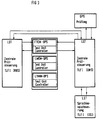
- FIG 2 zeigt eine vereinfachte Blockdarstellung zur Verarbeitung von Anreizen. Die Anreize werden dabei durch ein Hardware- oder Softwareereignis gebildet, z. B. Anstoß einer Prüfroutine vom Koordinationsprozessor CP. Das Betriebssystem OS liest zur Verarbeitung der aufgenommenen Anreize aus Gerätespeichertabellen DPS die zuständigen Programmtypen sowie deren Zustände z.B. Warten auf Ergebnis, Prüfeinheit TU, Belegen oder Zeitschlitzzuweisung.
Die Gerätespeichertabellen DPS enthalten jeweils Daten wie z. B. Programmtyp und Programmzustand des für die mit den Gerätespeichertabellen DPS verknüpften Programms wie, z. B. das Prüfbaugruppensteuerungs-Programmodul TUC. In einem ersten anreizverarbeitenden Schritt werden durch das Betriebssystem programmtechnische Schritte veranlaßt, die die Anreize von den Prüfbaugruppen FTEM, LMEM, LVMM ließt.
In einer nachfolgenden Programmprozedur werden vom Betriebssystem jeweils aus den Gerätespeichertabellen DPS der Teilnehmerleitungseinheit DLU der Programmtyp und dessen Zustand herausgelesen. Nach Ansteuerung eines Programmoduls, beispielsweise des Prüfbaugruppensteuerungs-Programmoduls TUC, wird aufgrund der in Operationsfeldern vermerkten Daten, auf die das Betriebssystem OS Zugriff hat, über Umwertetabellen auf eine Adresse einer auszuführenden Unterprogrammroutine gesprochen. - FIG 3 zeigt eine schematische Darstellung einer Belegung von Gerätespeichertabellen DPS,LST. Die eigentliche Abarbeitung der Verarbeitung der vermittlungstechnischen sowie prüftechnischen Aufgaben oder Prozeduren übernehmen jeweils die darin vermerkten Programmodule. Um diese gezielt ansprechen zu können, sind im Betriebssystem eine Reihe von Algorithmen zu durchlaufen. Die Schnittstelle zwischen dem Programmodul und dem Gruppenprozessor-Betriebssystem bilden im wesentlichen die Gerätespeichertabellen, z.B. LST, DPS sowie dessen Unterteilungen. So z.B. enthält die Gerätespeichertabelle - DLU-Port-Status-Table - DPS variable Daten, auf die sowohl vom Prüfbaugruppensteuerungs-Programmodul TUC als auch vom Betriebssystem OS zugegriffen werden kann, z. B. wird hier ein aktueller Zustand (Zustands-Adresse) vom Prüfbaugruppensteuerungs-Programmodul TUC in Abhängigkeit von den zu erwartenden Ereignissen z.B. Antwort von einer Prüfbaugruppe FTEM oder Antwort auf eine Zeitschlitzzuweisung vermerkt. Die Gerätespeichertabelle DPS für die Teilnehmerleitungseinheit DLU wird als DLU-Port-Status-Table bezeichnet.
- FIG 4a/b zeigt ein Ablaufdiagramm zur Veranschaulichung einiger wesentlicher programmtechnischer Schritte während einer Prüfroutine. Alle wesentlichen den Prüfvorgang einleitenden und durchführenden Schritte werden dabei von dem Prüfbaugruppensteuerungs-Programmodul TUC ausgeführt. Mit dem Prüfbaugruppensteuerungs-Programmodul TUC werden alle von den in der Prüfeinheit TU zusammengefaßten Prüfbaugruppen, z.B. eine Prüfbaugruppe FTEM, eine Leitungsmeßbaugruppe für Teilnehmeranschlußbaugruppen DLU für eine digitale Teilnehmerleitungseinheit FTEM,LMEM sowie eine Pegelmeßbaugruppe für eine Teilnehmeranschlußbaugruppe für eine digitale Teilnehmerleitungseinheit LVMM bzw. einer Funktionsprüfbaugruppe der Prüfeinheit TU gesendeten Anreize verarbeitet. Die in FIG 4a/b aufgeführten Baugruppenmodule FMTU und LCMM entsprechen einer zweiten Generation von Prüfbaugruppen und ersetzen die in einer ersten Generation verwendeten Prüfbaugruppen FMEM (FMTU), LMEM(LCMM) und LVMM (LCMM). Die Abläufe für Belegen und Auslösen der Prüfeinheit TU laufen nach Empfang des jeweiligen Anreizes vom zentralen Steuerprogrammodul TLFI unter TUC-Kontrolle ab. Die Abläufe für Belegen und Auslösen werden nicht mehr vom zentralen Steuerprogrammodul TLFI überwacht. Das zentrale Steuerprogrammodul TLFI überwacht nur noch, ob das Prüfbaugruppensteuerungs-Programmodul TUC die ihm gestellten Aufgaben mit der Gesamtheit der dazu notwendigen Einzelschritte in einer vorgeschriebenen Zeit erfüllt. Während des Betriebes (die Zeit zwischen erfolgter Belegung der Prüfeinheit TU und Beginn des Auslösevorganges) werden die von der Prüfeinheit TU kommenden Meldungen gegebenenfalls nach einer Vorverarbeitung durch das TUC durch entsprechende Anreize an die jeweiligen Unterprogrammodule weitergereicht. Programmtechnisch stellt das Betriebssystem OS den aufgerufenen Programmen bestimmte Daten aus den Operationstabellen OT-Feldern zur Verfügung, welche das TUC von Beginn an in den ausführenden Unterprogrammmodulen verwendet.
Claims (5)
- Steuerverfahren für ein Prüfsystem in einer prozessorgesteuerten Telekommunikationsanlage (K), wobei auf einer Anschlußgruppe (LTG) zentrale Steuerprogrammodule (TLFI, RBS) angeordnet sind, und diese über eine in Prüfbaugruppen (FTEM,LMEM,LVMM) unterteilte Prüfeinheit (TU) mit einem Prüfling (TA,TS,TL...) verbunden ist und Prüfprozeduren ausführt,
dadurch gekennzeichnet,
daß ein leitungsorientiertes Prüfbaugruppensteuerungs-Programmodul (TUC) durch das zentrale Steuerprogrammodul (TFLI,RBS) angestoßen wird,
daß das Prüfbaugruppensteuerungs-Programmodul (TUC) in jeder der zu den Prüfbaugruppen (FTEM,LMEM,LVMM) gehörenden Gerätespeichertabellen (DPS) eingetragen ist und bei Abruf eines eine bestimmte Prüfprozedur ausführenden Programmoduls Daten einer Prüfprozedur bereitgestellt werden und
daß das in der Ausführungsphase befindliche Prüfbaugruppensteuerungs-Programmodul (TUC) nach Abschluß der Prüfroutine den jeweils aktuellen Programmzustand in den Gerätespeichertabellen (DPS) der passiven Prüfbaugruppen aktualisiert. - Steuerverfahren nach Anspruch 1,
dadurch gekennzeichnet,
daß das Prüfbaugruppensteuerungs-Programmodul (TUC) mit den auf der Anschlußbaugruppe (LTG) angeordneten Prüfbaugruppen (FTEM,LMEM,LVMM) kommuniziert und entsprechende Prüfprozeduren einleitet sowie durchführt. - Steuerverfahren nach Anspruch 1,
dadurch gekennzeichnet,
daß das Prüfbaugruppensteuerungsprogrammodul (TUC) durch das zentrale Steuerprogrammodul (TLFI) zeitüberwacht ist. - Steuerverfahren nach Anspruch 1,
dadurch gekennzeichnet,
daß die einzelnen Prüfaufgaben State-Event gesteuert durchgeführt werden. - Steuerverfahren nach Anspruch 1,
dadurch gekennzeichnet,
daß die zur Prüfeinheit (TU) gehörenden Gerätespeichertabellen (DPS) transitive Speicher sind.
Priority Applications (7)
| Application Number | Priority Date | Filing Date | Title |
|---|---|---|---|
| DK92113023T DK0580888T3 (da) | 1992-07-30 | 1992-07-30 | Styremetode til et kontrolsystem |
| DE59209581T DE59209581D1 (de) | 1992-07-30 | 1992-07-30 | Steuerverfahren für ein Prüfsystem |
| AT92113023T ATE174180T1 (de) | 1992-07-30 | 1992-07-30 | Steuerverfahren für ein prüfsystem |
| ES92113023T ES2125876T3 (es) | 1992-07-30 | 1992-07-30 | Procedimiento de control para un sistema de ensayo. |
| EP92113023A EP0580888B1 (de) | 1992-07-30 | 1992-07-30 | Steuerverfahren für ein Prüfsystem |
| US08/093,954 US5504753A (en) | 1992-07-30 | 1993-07-21 | Control method for a testing system |
| GR990400589T GR3029493T3 (en) | 1992-07-30 | 1999-02-25 | Method of preparing a radioactive rhenium complex solution. |
Applications Claiming Priority (1)
| Application Number | Priority Date | Filing Date | Title |
|---|---|---|---|
| EP92113023A EP0580888B1 (de) | 1992-07-30 | 1992-07-30 | Steuerverfahren für ein Prüfsystem |
Publications (2)
| Publication Number | Publication Date |
|---|---|
| EP0580888A1 true EP0580888A1 (de) | 1994-02-02 |
| EP0580888B1 EP0580888B1 (de) | 1998-12-02 |
Family
ID=8209854
Family Applications (1)
| Application Number | Title | Priority Date | Filing Date |
|---|---|---|---|
| EP92113023A Expired - Lifetime EP0580888B1 (de) | 1992-07-30 | 1992-07-30 | Steuerverfahren für ein Prüfsystem |
Country Status (7)
| Country | Link |
|---|---|
| US (1) | US5504753A (de) |
| EP (1) | EP0580888B1 (de) |
| AT (1) | ATE174180T1 (de) |
| DE (1) | DE59209581D1 (de) |
| DK (1) | DK0580888T3 (de) |
| ES (1) | ES2125876T3 (de) |
| GR (1) | GR3029493T3 (de) |
Cited By (2)
| Publication number | Priority date | Publication date | Assignee | Title |
|---|---|---|---|---|
| EP0959631A3 (de) * | 1998-04-09 | 1999-12-15 | ELMEG GmbH & Co. KG Kommunikationstechnik | Telekommunikationseinrichtung |
| WO2000019690A1 (de) * | 1998-09-30 | 2000-04-06 | Siemens Aktiengesellschaft | Verfahren zum prüfen von teilnehmeranschlussleitungen |
Families Citing this family (23)
| Publication number | Priority date | Publication date | Assignee | Title |
|---|---|---|---|---|
| GB9315353D0 (en) * | 1993-07-23 | 1993-09-08 | British Telecomm | Testing telecommunications equipment |
| FI107856B (fi) * | 1994-06-15 | 2001-10-15 | Nokia Networks Oy | Tilaajamultiplekseri, puhelinjärjestelmä, sekä menetelmä tilaajaliitännän kunnon viestittämiseksi puhelinkeskukselle |
| US5659570A (en) * | 1995-01-30 | 1997-08-19 | Harris Corporation | Circuit and method for loopback test and on-hook transmission integrated in a telephone subscriber line interface circuit |
| US6128761A (en) * | 1996-12-13 | 2000-10-03 | Cisco Technology, Inc. | Method and apparatus for G.706 frame alignment and CRC procedure test tool |
| US5901201A (en) * | 1997-05-14 | 1999-05-04 | Bellsouth Corporation | Switch-based line continuity verification method and system |
| US6366644B1 (en) * | 1997-09-15 | 2002-04-02 | Cisco Technology, Inc. | Loop integrity test device and method for digital subscriber line (XDSL) communication |
| JPH11242609A (ja) * | 1998-02-25 | 1999-09-07 | Fujitsu Ltd | バックワイヤリングボード及びその集合装置 |
| US6278728B1 (en) | 1998-03-18 | 2001-08-21 | Cisco Technology, Inc. | Remote XDSL transceiver unit and method of operation |
| IES81009B2 (en) * | 1998-04-17 | 1999-09-22 | Formia Ltd | An electronic test system for microprocessor based boards |
| US6181572B1 (en) | 1998-06-19 | 2001-01-30 | Cisco Technology, Inc. | Digital subscriber line (xDSL) modem having a multi-layer electromagnetic shield and method of manufacture |
| US6239672B1 (en) | 1998-06-29 | 2001-05-29 | Cisco Technology, Inc. | Wall mount filter for a digital subscriber line (xDSL) network and methods of installation and manufacture |
| US6535520B1 (en) | 1998-08-14 | 2003-03-18 | Cisco Technology, Inc. | System and method of operation for managing data communication between physical layer devices and ATM layer devices |
| US6381245B1 (en) | 1998-09-04 | 2002-04-30 | Cisco Technology, Inc. | Method and apparatus for generating parity for communication between a physical layer device and an ATM layer device |
| US6522668B1 (en) | 1998-11-30 | 2003-02-18 | Cisco Technology, Inc. | System and method for special signaling with customer premises equipment |
| US6115226A (en) * | 1998-12-07 | 2000-09-05 | Cisco Technology, Inc. | Apparatus for lightning strike survivability and post-strike operability |
| US5999540A (en) | 1998-12-22 | 1999-12-07 | Cisco Technology, Inc. | Rate adaptive XDSL communication system and method |
| US6553075B1 (en) | 1999-01-12 | 2003-04-22 | Cisco Technology, Inc. | Method and apparatus for determining crosstalk |
| US6658049B1 (en) | 1999-01-12 | 2003-12-02 | Cisco Technology, Inc. | xDSL repeater system and method |
| US6549570B1 (en) | 1999-04-15 | 2003-04-15 | Cisco Technology, Inc. | Apparatus for line state analysis in a telecommunications system |
| US6587543B1 (en) | 2000-08-21 | 2003-07-01 | Sprint Communications Company L.P. | System and method for the automated testing of a telecommunications system |
| CA2358563A1 (en) * | 2001-10-05 | 2003-04-05 | Ibm Canada Limited - Ibm Canada Limitee | Method and system for managing software testing |
| US7260184B1 (en) | 2003-08-25 | 2007-08-21 | Sprint Communications Company L.P. | Test system and method for scheduling and running multiple tests on a single system residing in a single test environment |
| CN104902052A (zh) * | 2015-04-02 | 2015-09-09 | 镇江佳鑫精工设备有限公司 | 一种手机检测装置 |
Family Cites Families (3)
| Publication number | Priority date | Publication date | Assignee | Title |
|---|---|---|---|---|
| US4484030A (en) * | 1982-04-19 | 1984-11-20 | At&T Bell Laboratories | Method and apparatus for identifying faulty communications circuits |
| US4581493A (en) * | 1983-12-07 | 1986-04-08 | Porta Systems Corp. | Line condition reporting system |
| US4611320A (en) * | 1984-05-21 | 1986-09-09 | Siemens Corporate Research And Support, Inc. | Programmable testing analyzer |
-
1992
- 1992-07-30 DE DE59209581T patent/DE59209581D1/de not_active Expired - Fee Related
- 1992-07-30 DK DK92113023T patent/DK0580888T3/da active
- 1992-07-30 AT AT92113023T patent/ATE174180T1/de not_active IP Right Cessation
- 1992-07-30 EP EP92113023A patent/EP0580888B1/de not_active Expired - Lifetime
- 1992-07-30 ES ES92113023T patent/ES2125876T3/es not_active Expired - Lifetime
-
1993
- 1993-07-21 US US08/093,954 patent/US5504753A/en not_active Expired - Fee Related
-
1999
- 1999-02-25 GR GR990400589T patent/GR3029493T3/el unknown
Non-Patent Citations (3)
| Title |
|---|
| IEEE INTERNATIONAL CONFERENCE ON COMMUNICATIONS Bd. 1/3, 23. Juni 1985, CHICAGO(US) Seiten 132 - 136 M.DINARO ET AL 'AN AUTOMATIC SUBSCRIBER TESTING SYSTEM SESSION 6.2' * |
| TELCOM REPORT Bd. 8, Nr. 1, Januar 1985, MUNCHEN DE Seiten 25 - 31 BERT EISL ET AL 'STEUERUNGSKONZEPT DER INTEGRIERTEN PRUFTECHNIK FUR DIE EWSD-PERIPHERIE' * |
| TELCOM REPORT Bd. 8, Nr. 6, November 1985, MUNCHEN DE Seiten 367 - 371 RICHARD SCHLAG ET AL 'AUTOMATISCHE MESSUNG DER BETRIEBSGUTE IM DIGITALVERMITTLUNGSSYSTEM EWSD' * |
Cited By (3)
| Publication number | Priority date | Publication date | Assignee | Title |
|---|---|---|---|---|
| EP0959631A3 (de) * | 1998-04-09 | 1999-12-15 | ELMEG GmbH & Co. KG Kommunikationstechnik | Telekommunikationseinrichtung |
| WO2000019690A1 (de) * | 1998-09-30 | 2000-04-06 | Siemens Aktiengesellschaft | Verfahren zum prüfen von teilnehmeranschlussleitungen |
| US7286952B1 (en) | 1998-09-30 | 2007-10-23 | Siemens Aktiengesellschaft | Method for testing subscriber access lines |
Also Published As
| Publication number | Publication date |
|---|---|
| GR3029493T3 (en) | 1999-05-28 |
| EP0580888B1 (de) | 1998-12-02 |
| ATE174180T1 (de) | 1998-12-15 |
| ES2125876T3 (es) | 1999-03-16 |
| US5504753A (en) | 1996-04-02 |
| DK0580888T3 (da) | 1999-08-16 |
| DE59209581D1 (de) | 1999-01-14 |
Similar Documents
| Publication | Publication Date | Title |
|---|---|---|
| EP0580888B1 (de) | Steuerverfahren für ein Prüfsystem | |
| DE4125389C1 (de) | ||
| EP0111832A1 (de) | Schaltungsanordnung zur Fehlerortung bei einem digitalen Fernmelde-Teilnehmeranschluss | |
| EP0580893B1 (de) | Prüfverfahren zur Teilnehmer-Anschlussprüfung | |
| EP0303870B1 (de) | Modular strukturiertes digitales Kommunikationssystem mit betriebstechnischen und sicherheitstechnischen Komponenten | |
| DE3215672C1 (de) | Anordnung zur automatischen Prüfung von Fernsprechanlagen, insbesondere Fernsprechnebenstellenanlagen | |
| DE4414597C2 (de) | Verfahren zum Laden von Programmen in periphere Baugruppen von programmgesteuerten Kommunikations-Vermittlungsanlagen | |
| DE1965314A1 (de) | Datenverarbeitungsanordnung mit zwei Datenverarbeitungsanlagen,insbesondere fuer dieAbwicklung von Vermittlungsvorgaengen in einer Fernsprechvermittlung | |
| EP0763954B1 (de) | Verfahren zur Auswertung von leistungsmerkmalbezogenen Nachrichten in einer programmgesteuerten Kommunikationseinrichtung | |
| DE3215663C1 (de) | Anordnung zur automatischen Prüfung von Fernsprechanlagen, insbesondere Fernsprechnebenstellenanlagen | |
| EP0603692A1 (de) | Antwortstation zur automatischen Prüfung von an ein Fernmeldenetz angeschlossenen Endgeräten | |
| EP0839425B1 (de) | Funktionalität von endgeräten | |
| DE3432144C2 (de) | ||
| DE3035276C2 (de) | Schaltungsanordnung zur Verbindung von Informationsquellen für Fernmelde-, insbesondere Fernsprechvermittlungsanlagen | |
| DE2753442C2 (de) | Schaltungsanordnung für eine indirekt gesteuerte Vermittlungsanlage, insbesondere Fernsprechvermittlungsanlage | |
| DE2813999C2 (de) | ||
| EP0645922B1 (de) | Verfahren zum Überprüfen der Durchschalteelemente einer Raumstufeneinheit eines Koppelnetzes einer digitalen Zeitmultiplex-Fernmeldevermittlungsanlage | |
| DE3215663C2 (de) | ||
| DE2826062A1 (de) | Indirekt gesteuerte vermittlungsanlage mit zeitkanalverbindungswegen, insbesondere fernsprechvermittlungsanlage | |
| DE3032615C2 (de) | ||
| DE1148275B (de) | Schaltungsanordnung fuer Fernmeldeanlagen, insbesondere Fernsprechanlagen mit Koppelfeldern | |
| EP0162270B1 (de) | Verfahren zur Durchschalteprüfung eines Raummultiplex-Koppelnetzes | |
| EP0624022B1 (de) | Anordnung zur Sprechwegeprüfung in einem Koppelnetz einer digitalen Zeitmultiplex-Fernsprechvermittlungsstelle | |
| DE2310634C3 (de) | Rechnergesteuerte Fernmeldevermittlungsanlage mit Maßnahmen zur Instandsetzung bei Ausfall eines Rechners | |
| CH650372A5 (de) | Verfahren fuer die abwicklung von vermittlungsvorgaengen in fernsprechanlagen, insbesondere fernsprechnebenstellenanlagen. |
Legal Events
| Date | Code | Title | Description |
|---|---|---|---|
| PUAI | Public reference made under article 153(3) epc to a published international application that has entered the european phase |
Free format text: ORIGINAL CODE: 0009012 |
|
| AK | Designated contracting states |
Kind code of ref document: A1 Designated state(s): AT BE CH DE DK ES FR GB GR IT LI LU MC NL PT SE |
|
| RBV | Designated contracting states (corrected) |
Designated state(s): AT BE CH DE DK ES FR GB GR IT LI NL PT SE |
|
| 17P | Request for examination filed |
Effective date: 19940504 |
|
| 17Q | First examination report despatched |
Effective date: 19961107 |
|
| GRAG | Despatch of communication of intention to grant |
Free format text: ORIGINAL CODE: EPIDOS AGRA |
|
| GRAG | Despatch of communication of intention to grant |
Free format text: ORIGINAL CODE: EPIDOS AGRA |
|
| GRAH | Despatch of communication of intention to grant a patent |
Free format text: ORIGINAL CODE: EPIDOS IGRA |
|
| GRAH | Despatch of communication of intention to grant a patent |
Free format text: ORIGINAL CODE: EPIDOS IGRA |
|
| GRAA | (expected) grant |
Free format text: ORIGINAL CODE: 0009210 |
|
| AK | Designated contracting states |
Kind code of ref document: B1 Designated state(s): AT BE CH DE DK ES FR GB GR IT LI NL PT SE |
|
| REF | Corresponds to: |
Ref document number: 174180 Country of ref document: AT Date of ref document: 19981215 Kind code of ref document: T |
|
| REG | Reference to a national code |
Ref country code: CH Ref legal event code: NV Representative=s name: SIEMENS SCHWEIZ AG Ref country code: CH Ref legal event code: EP |
|
| REF | Corresponds to: |
Ref document number: 59209581 Country of ref document: DE Date of ref document: 19990114 |
|
| ET | Fr: translation filed | ||
| GBT | Gb: translation of ep patent filed (gb section 77(6)(a)/1977) |
Effective date: 19990202 |
|
| ITF | It: translation for a ep patent filed | ||
| REG | Reference to a national code |
Ref country code: ES Ref legal event code: FG2A Ref document number: 2125876 Country of ref document: ES Kind code of ref document: T3 |
|
| REG | Reference to a national code |
Ref country code: PT Ref legal event code: SC4A Free format text: AVAILABILITY OF NATIONAL TRANSLATION Effective date: 19990203 |
|
| NLR4 | Nl: receipt of corrected translation in the netherlands language at the initiative of the proprietor of the patent | ||
| REG | Reference to a national code |
Ref country code: DK Ref legal event code: T3 |
|
| PLBE | No opposition filed within time limit |
Free format text: ORIGINAL CODE: 0009261 |
|
| STAA | Information on the status of an ep patent application or granted ep patent |
Free format text: STATUS: NO OPPOSITION FILED WITHIN TIME LIMIT |
|
| 26N | No opposition filed | ||
| PGFP | Annual fee paid to national office [announced via postgrant information from national office to epo] |
Ref country code: CH Payment date: 20011018 Year of fee payment: 10 |
|
| REG | Reference to a national code |
Ref country code: GB Ref legal event code: IF02 |
|
| PGFP | Annual fee paid to national office [announced via postgrant information from national office to epo] |
Ref country code: AT Payment date: 20020619 Year of fee payment: 11 |
|
| PGFP | Annual fee paid to national office [announced via postgrant information from national office to epo] |
Ref country code: GR Payment date: 20020708 Year of fee payment: 11 |
|
| PGFP | Annual fee paid to national office [announced via postgrant information from national office to epo] |
Ref country code: DK Payment date: 20020709 Year of fee payment: 11 |
|
| PGFP | Annual fee paid to national office [announced via postgrant information from national office to epo] |
Ref country code: NL Payment date: 20020715 Year of fee payment: 11 |
|
| PGFP | Annual fee paid to national office [announced via postgrant information from national office to epo] |
Ref country code: BE Payment date: 20020719 Year of fee payment: 11 |
|
| PG25 | Lapsed in a contracting state [announced via postgrant information from national office to epo] |
Ref country code: CH Free format text: LAPSE BECAUSE OF NON-PAYMENT OF DUE FEES Effective date: 20020731 Ref country code: LI Free format text: LAPSE BECAUSE OF NON-PAYMENT OF DUE FEES Effective date: 20020731 |
|
| REG | Reference to a national code |
Ref country code: CH Ref legal event code: PL |
|
| PG25 | Lapsed in a contracting state [announced via postgrant information from national office to epo] |
Ref country code: AT Free format text: LAPSE BECAUSE OF NON-PAYMENT OF DUE FEES Effective date: 20030730 |
|
| PG25 | Lapsed in a contracting state [announced via postgrant information from national office to epo] |
Ref country code: DK Free format text: LAPSE BECAUSE OF NON-PAYMENT OF DUE FEES Effective date: 20030731 Ref country code: BE Free format text: LAPSE BECAUSE OF NON-PAYMENT OF DUE FEES Effective date: 20030731 |
|
| BERE | Be: lapsed |
Owner name: *SIEMENS A.G. Effective date: 20030731 |
|
| PG25 | Lapsed in a contracting state [announced via postgrant information from national office to epo] |
Ref country code: NL Free format text: LAPSE BECAUSE OF NON-PAYMENT OF DUE FEES Effective date: 20040201 |
|
| PG25 | Lapsed in a contracting state [announced via postgrant information from national office to epo] |
Ref country code: GR Free format text: LAPSE BECAUSE OF NON-PAYMENT OF DUE FEES Effective date: 20040205 |
|
| REG | Reference to a national code |
Ref country code: DK Ref legal event code: EBP |
|
| NLV4 | Nl: lapsed or anulled due to non-payment of the annual fee |
Effective date: 20040201 |
|
| PGFP | Annual fee paid to national office [announced via postgrant information from national office to epo] |
Ref country code: PT Payment date: 20040615 Year of fee payment: 13 |
|
| PGFP | Annual fee paid to national office [announced via postgrant information from national office to epo] |
Ref country code: SE Payment date: 20040708 Year of fee payment: 13 |
|
| PGFP | Annual fee paid to national office [announced via postgrant information from national office to epo] |
Ref country code: FR Payment date: 20040716 Year of fee payment: 13 |
|
| PGFP | Annual fee paid to national office [announced via postgrant information from national office to epo] |
Ref country code: GB Payment date: 20050707 Year of fee payment: 14 |
|
| PGFP | Annual fee paid to national office [announced via postgrant information from national office to epo] |
Ref country code: ES Payment date: 20050713 Year of fee payment: 14 |
|
| PG25 | Lapsed in a contracting state [announced via postgrant information from national office to epo] |
Ref country code: SE Free format text: LAPSE BECAUSE OF NON-PAYMENT OF DUE FEES Effective date: 20050731 |
|
| PGFP | Annual fee paid to national office [announced via postgrant information from national office to epo] |
Ref country code: DE Payment date: 20050922 Year of fee payment: 14 |
|
| PG25 | Lapsed in a contracting state [announced via postgrant information from national office to epo] |
Ref country code: PT Free format text: LAPSE BECAUSE OF NON-PAYMENT OF DUE FEES Effective date: 20060130 |
|
| EUG | Se: european patent has lapsed | ||
| PG25 | Lapsed in a contracting state [announced via postgrant information from national office to epo] |
Ref country code: FR Free format text: LAPSE BECAUSE OF NON-PAYMENT OF DUE FEES Effective date: 20060331 |
|
| REG | Reference to a national code |
Ref country code: FR Ref legal event code: ST Effective date: 20060331 |
|
| PG25 | Lapsed in a contracting state [announced via postgrant information from national office to epo] |
Ref country code: GB Free format text: LAPSE BECAUSE OF NON-PAYMENT OF DUE FEES Effective date: 20060730 |
|
| PGFP | Annual fee paid to national office [announced via postgrant information from national office to epo] |
Ref country code: IT Payment date: 20060731 Year of fee payment: 15 |
|
| PG25 | Lapsed in a contracting state [announced via postgrant information from national office to epo] |
Ref country code: DE Free format text: LAPSE BECAUSE OF NON-PAYMENT OF DUE FEES Effective date: 20070201 |
|
| GBPC | Gb: european patent ceased through non-payment of renewal fee |
Effective date: 20060730 |
|
| REG | Reference to a national code |
Ref country code: ES Ref legal event code: FD2A Effective date: 20060731 |
|
| PG25 | Lapsed in a contracting state [announced via postgrant information from national office to epo] |
Ref country code: ES Free format text: LAPSE BECAUSE OF NON-PAYMENT OF DUE FEES Effective date: 20060731 |
|
| PG25 | Lapsed in a contracting state [announced via postgrant information from national office to epo] |
Ref country code: IT Free format text: LAPSE BECAUSE OF NON-PAYMENT OF DUE FEES Effective date: 20070730 |