EP0582450A2 - Anticorps contre récepteur de l'oxytocine et leur production - Google Patents
Anticorps contre récepteur de l'oxytocine et leur production Download PDFInfo
- Publication number
- EP0582450A2 EP0582450A2 EP93306099A EP93306099A EP0582450A2 EP 0582450 A2 EP0582450 A2 EP 0582450A2 EP 93306099 A EP93306099 A EP 93306099A EP 93306099 A EP93306099 A EP 93306099A EP 0582450 A2 EP0582450 A2 EP 0582450A2
- Authority
- EP
- European Patent Office
- Prior art keywords
- oxytocin receptor
- polypeptide
- amino acid
- acid sequence
- oxytocin
- Prior art date
- Legal status (The legal status is an assumption and is not a legal conclusion. Google has not performed a legal analysis and makes no representation as to the accuracy of the status listed.)
- Ceased
Links
Images


Classifications
-
- C—CHEMISTRY; METALLURGY
- C07—ORGANIC CHEMISTRY
- C07K—PEPTIDES
- C07K14/00—Peptides having more than 20 amino acids; Gastrins; Somatostatins; Melanotropins; Derivatives thereof
- C07K14/435—Peptides having more than 20 amino acids; Gastrins; Somatostatins; Melanotropins; Derivatives thereof from animals; from humans
- C07K14/705—Receptors; Cell surface antigens; Cell surface determinants
- C07K14/72—Receptors; Cell surface antigens; Cell surface determinants for hormones
-
- C—CHEMISTRY; METALLURGY
- C07—ORGANIC CHEMISTRY
- C07K—PEPTIDES
- C07K16/00—Immunoglobulins [IG], e.g. monoclonal or polyclonal antibodies
- C07K16/18—Immunoglobulins [IG], e.g. monoclonal or polyclonal antibodies against material from animals or humans
- C07K16/28—Immunoglobulins [IG], e.g. monoclonal or polyclonal antibodies against material from animals or humans against receptors, cell surface antigens or cell surface determinants
- C07K16/2869—Immunoglobulins [IG], e.g. monoclonal or polyclonal antibodies against material from animals or humans against receptors, cell surface antigens or cell surface determinants against hormone receptors
Definitions
- the present invention relates to antibodies against a receptor for a posterior pituitary hormone, oxytocin, and methods for their production.
- oxytocin As a physiological initiator of delivery in numerous species of mammals, including humans, but the mechanism by which oxytocin accelerates contraction of uterine muscle has not yet been clarified in sufficient detail.
- An analysis of the diverse research conducted recently on the mechanism of this action indicates that oxytocin manifests this effect in part by inducing direct contractions of the tunica muscularis of the uterus and in part by increasing the synthesis and release of contractile prostaglandins from the endometrium and deciduous membrane.
- initiation of the process that leads to delivery is considered attributable to increased sensitivity of uterine muscle to oxytocin; i.e. , initiation of the process leading to delivery is partially attributable to an increase in oxytocin receptors in uterine muscle.
- these receptors were presumed to have the sevenfold-membrane-penetration-type secondary structure typical of G-protein-binding-type receptors.
- the development of anti-oxytocin receptor antibodies is desirable for the purification and identification of recombinant oxytocin receptors produced on the basis of these results, as well as for the rapid detection and identification of oxytocin receptors present in oxytocin-receptor-manifesting tissue.
- the object of the present invention is to provide antibodies against oxytocin receptors.
- the present invention is comprised of: anti-oxytocin receptor antibodies against human oxytocin receptors; a hybridoma which produces monoclonal antibodies that have the above-mentioned properties; a method for the preparation of hybridomas that produce antibodies, in which mammals are sensitized using human oxytocin receptor antigen, immunocytes are harvested from said mammals, said immunocytes are caused to fuse with myeloma cells, and the antibodies recognize human oxytocin receptors from said fused cell strain; a method for the production of anti-human oxytocin receptor monoclonal antibodies in which the aforementioned hybridoma is cultured and monoclonal antibodies are harvested from said culture; and a method for the production of anti-human oxytocin receptor polyclonal antibodies in which mammals or chickens are subjected to immune sensitization with human oxytocin receptor antigen and polyclonal antibodies that recognize human oxytocin receptors are harvested from said animals or egg yolks
- the present invention relates to anti-oxytocin receptor antibodies which recognize, as an epitope, a polypeptide or variant thereof that corresponds to the extracellular or intracellular region of an oxytocin receptor.
- the present invention is comprised of: an anti-oxytocin receptor antibody, characterized in that it recognizes a polypeptide corresponding to the extracellular region of an oxytocin receptor, and in that it recognizes, as an epitope, a polypeptide or variant thereof that has all or part of the amino acid sequence represented in Sequence No. 1; and an anti-oxytocin receptor antibody, characterized in that it recognizes a polypeptide corresponding to the intracellular region of an oxytocin receptor, and in that it recognizes, as an epitope, a polypeptide or variant thereof that has all or part of the amino acid sequence represented in Sequence No. 7.
- the present invention is also comprised of: a method of producing an anti-oxytocin receptor antibody comprising the preparation of fused cells from mammalian spleen cells and myeloma cells immunized using, as a hapten, a polypeptide or variant thereof that corresponds to the extracellular region of an oxytocin receptor and has all or part of the amino acid sequence represented in Sequence No. 1, culturing said fused cells, and harvesting anti-oxytocin receptor antibodies which recognize, as an epitope, a polypeptide or variant thereof that corresponds to the extracellular region of the oxytocin receptor and has all or part of the amino acid sequence represented in Sequence No.
- an anti-oxytocin receptor antibody comprising the preparation of mammalian serum or chicken egg yolks immunized using, as a hapten, a polypeptide or variant thereof that corresponds to the extracellular region of an oxytocin receptor and has all or part of the amino acid sequence represented in Sequence No. 1, purifying said prepared solution, and harvesting anti-oxytocin receptor antibodies which recognize, as an epitope, a polypeptide or variant thereof that corresponds to the extracellular region of the oxytocin receptor and has all or part of the amino acid sequence represented in Sequence No.
- an anti-oxytocin receptor antibody comprising the preparation of fused cells from mammalian spleen cells and myeloma cells immunized using, as a hapten, a polypeptide or variant thereof that corresponds to the intracellular region of an oxytocin receptor and has all or part of the amino acid sequence represented in Sequence No. 7, culturing said fused cells, and harvesting anti-oxytocin receptor antibodies which recognize, as an epitope, a polypeptide or variant thereof that corresponds to the intracellular region of the oxytocin receptor and has all or part of the amino acid sequence represented in Sequence No.
- an anti-oxytocin receptor antibody comprising the preparation of mammalian serum or chicken egg yolks immunized using, as a hapten, a polypeptide or variant thereof that corresponds to the intracellular region of an oxytocin receptor and has all or part of the amino acid sequence represented in Sequence No. 7, purifying said prepared solution, and harvesting anti-oxytocin receptor antibodies which recognize, as an epitope, a polypeptide or variant thereof that corresponds to the intracellular region of the oxytocin receptor and has all or part of the amino acid sequence represented in Sequence No. 7.
- the antibodies of the present invention include those which recognize, as an epitope, a polypeptide of the extracellular region of an oxytocin receptor and those which recognize, as an epitope, a polypeptide of the intracellular region of an oxytocin receptor.
- Specific examples of such polypeptides include the polypeptides of the first extracellular region and the third intracellular region.
- any immunogens may be used to produce the antibodies of the present invention, provided that they have a macromolecular carrier bonded to the hapten.
- haptens include polypeptides obtained by chemical synthesis of part of the amino acid sequence of the cDNA translation region of the oxytocin receptors presented by Kimura et al., as mentioned above. These should preferably be polypeptides of the extracellular or intracellular region of said receptors, with polypeptides of the first extracellular region or third intracellular region of said receptors being particularly desirable, and should be polypeptides or variants thereof that have all or part of the amino acid sequences represented in Sequence Nos. 1 or 7.
- one or several amino acid residues of the aforementioned polypeptides may be substituted, deleted, or added.
- any macromolecular carrier is suitable, provided that it enhances the immune response; specific examples of such carriers include keyhole limpet haemocyanin (KLH) and ovalbumin (OVA).
- KLH keyhole limpet haemocyanin
- OVA ovalbumin
- all or part of the aforementioned cDNA may be integrated into an expression vector that has an appropriate promoter, and recombinant protein obtained by inducing expression in E. coli or mammalian cells may be used as an immunogen. Any of these immunogens may be used to prepare hybridomas that produce monoclonal antibodies or to prepare polyclonal antibodies.
- Hybridoma preparation may be carried out by any common method.
- mammals such as mice may be immunized with any of the aforementioned immunogens, spleen cells may be removed from the immunized animals, and these cells may be fused with established myeloma cells.
- a hybridoma producing monoclonal antibodies that have the desired reactivity is then cloned.
- one possible method is to culture the cloned hybridoma on an appropriate culture medium and harvest the monoclonal antibodies from the culture supernatant. Another method is to introduce the aforementioned hybridoma into the peritoneal cavity of the animals and to purify and isolate the antibodies from the ascites fluid that is obtained.
- Production of polyclonal antibodies may also be carried out by a common method, such as by immunizing mice, rabbits, sheep, goats, chickens, etc. with the aforementioned immunogens and purifying the serum of these animals, or in the case of chickens, the egg yolks.
- the antibodies in the aforementioned culture supernatant, ascites fluid, serum, or egg yolk may be concentrated by a common method such as by salting out with ammonium sulphate, or in the case of antibodies in egg yolk, by concentration using the well-known carrageenan treatment method. Purification may be performed using a combination of an appropriate ion-exchange agent and a gel filtration agent, or may be performed by affinity chromatography using protein A, protein G, or the aforementioned antigens as ligands.
- KLH keyhole lipid haemocyanin
- albumin chicken egg grade V
- H2O pure water
- FCA Freund's complete adjuvant
- these spleen cells were fused with the myeloma cells P3X63Ag8U1 (Dainippon Pharmaceutical Co., Ltd.), and cloning was performed using the limiting dilution analysis method. Evaluation of the antibody titre of the cloned cells was performed using the common ELISA method, by adding the hybridoma culture supernatant to a microtiter plate with the aforementioned peptide-OVA combination solidified on it, and then measuring the amount of mouse antibodies binding to the peptide-OVA combination following the reaction.
- a hybridoma producing cloned antibodies that recognize the peptide-OVA combination obtained by this method was cultured in GIT culture medium (Nihon Seiyaku Co., Ltd.), and antibodies were obtained from the culture supernatant through crude purification by ordinary salting out with ammonium sulphate.
- the segment extending from the first BamHI recognition site upstream from the translation region of the plasmid pOTR ( Nature , 356, 526-529, 1992) containing the cDNA encoding the aforementioned human oxytocin receptors to the first PstI recognition site downstream from the translation region was then cut, removed, and made into a smooth terminal by a common method, and a recombinant DNA molecule with this segment introduced at the multi-cloning site of the mammalian cell expression vector pRc/CMV (Invitrogen Corporation, U.S.A.) was introduced into COS1 cells (Dainippon pharmaceutical Co., Ltd.) by the common calcium phosphate method.
- DAB 3,3'-diaminobenzidine tetrahydrochloride
- Figure 1 is a sketch of a micrograph (magnified 100 ⁇ ) of the results of immune staining of COS1 cells with recombinant DNA introduced using the monoclonal antibodies of the present invention
- Figure 2 is a sketch of a micrograph (magnified 100x) of the results of immune staining of COS1 cells without recombinant DNA introduced using the monoclonal antibodies of the present invention.
- the micrograph represented in Figure 1 shows that the COS1 cells that temporarily express oxytocin receptors (1) are stained brown, while the COS1 cells which do not temporarily express oxytocin receptors (2) are not stained (transparent). Moreover, in the micrograph represented in Figure 2, one can see that the COS1 cells which do not express oxytocin receptors (3) are not stained (transparent).
- the hybridoma that produces these antibodies was designated mouse/mouse hybridoma YA-1. This hybridoma YA-1 was deposited on July 28, 1992 with the Fermentation Research Institute of the Agency of Industrial Science and Technology as Bacterial Deposit No. 13095 (FERM P-13095).
- Figures 3 and 4 show that polyclonal antibodies produced in this manner specifically recognize oxytocin receptors.
- the mammalian expression vector pRc/CMV containing the cDNA encoding the human oxytocin receptors obtained in Example 1 was introduced into COS1 cells.
- ordinary immune staining was performed using the aforementioned antibodies (antibody concentration: 10 ⁇ g/ml) and, as was the case in Example 1, the Vectastain ABC Kit (Vector Laboratories).
- Figure 3 is a sketch of a micrograph (magnified 200x) of the results of immune staining of COS1 cells expressing oxytocin receptors using the polyclonal antibodies of the present invention
- Figure 4 is a sketch of a micrograph (magnified 200x) of the results of immune staining of COS1 cells expressing oxytocin receptors using antibodies obtained by immunization with OVA alone.
- the micrograph represented in Figure 3 shows that the COS1 cells expressing oxytocin receptors (4) are stained brown by the antibodies of the present invention, while the micrograph represented in Figure 4 shows that staining does not occur (transparent) with the antibodies obtained by immunization with OVA alone.
- haematoxylin staining of the nuclei (5, 6, and 9) of the COS1 cells produces a blue colour.
- Example 1 Using the peptide-OVA combination prepared in Example 1 as an immunogen, Japanese white rabbits were immunized by the same method as in Example 2, and the serum obtained was subjected to affinity purification using the Protein A sepharose CL-4B column (Pharmacia LKB Biotechnology).
- Human uterine muscle obtained by chance during the ovulation period (in the form of a pathology specimen from a patient who had to undergo a total hysterectomy due to a hysteromyoma) was rapidly frozen to -70° in liquid nitrogen. Frozen sections of this tissue were prepared using a cryostat (Tissue-Tek II (TM) , Miles Co.), and ordinary immunohistological staining was performed. Specifically, fragments adhering to the glass slide were fixed for 10 minutes with acetone, and in order to eliminate their intrinsic peroxidase activity, they were then treated for 30 minutes with methanol containing 0.3% hydrogen peroxide.
- Figure 5 is a sketch of a micrograph (magnified 200x) of the results of immunohistological staining of human endometrial tissue using the polyclonal antibodies of the present invention
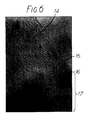
- Figure 6 is a sketch of a micrograph (magnified 200x) of the results of immunohistological staining of antibodies obtained by immunization with OVA alone.
- the micrograph represented in Figure 5 shows that the endometrial epithelial cells (10, 11) were stained brown, while the endometrial interstitium (12) was not stained (transparent). Moreover, one can see from the micrograph represented in Figure 6 that the endometrial epithelial cells (14, 15) were not stained (transparent).
- the antibodies of the present invention consist of those which specifically recognize the extracellular region of an oxytocin receptor and those which specifically recognize the intracellular region of an oxytocin receptor.
- the former antibodies may be used as agents to inhibit the physiological activity of oxytocin in order to block specific binding with respect to oxytocin receptors, for instance, as agents which regulate the time of delivery, i.e. , agents which inhibit labour pains in premature birth.
- the latter antibodies may be used in the same way to inhibit oxytocin activity by blocking binding to G-protein receptors.
- antibodies are prepared that recognize as an epitope the specific sequences shown in any of Sequences No.s 1,2,3,4,5,6 and 7 or parts thereof using methods analagous to those described above in relation to Sequences No.s 1 and 7.
- these antibodies may also be used in the fields of obstetrics and gynaecology as reagents for immune staining of pathological tissues such as from the mammaries, uterine muscle, endometrium, deciduous membrane, amnion, and so forth.
- pathological tissues such as from the mammaries, uterine muscle, endometrium, deciduous membrane, amnion, and so forth.
- proteins which can bind to oxytocin in the hippocampus tissue of rats are known to exist
- these antibodies may also be used in neuroscientific research.
- the antibodies of the present invention can provide a more favourable screening system.
Landscapes
- Health & Medical Sciences (AREA)
- Chemical & Material Sciences (AREA)
- Life Sciences & Earth Sciences (AREA)
- Organic Chemistry (AREA)
- Immunology (AREA)
- General Health & Medical Sciences (AREA)
- Molecular Biology (AREA)
- Endocrinology (AREA)
- Biochemistry (AREA)
- Biophysics (AREA)
- Proteomics, Peptides & Aminoacids (AREA)
- Genetics & Genomics (AREA)
- Medicinal Chemistry (AREA)
- Biomedical Technology (AREA)
- Neurology (AREA)
- Engineering & Computer Science (AREA)
- Cell Biology (AREA)
- Toxicology (AREA)
- Zoology (AREA)
- Gastroenterology & Hepatology (AREA)
- Peptides Or Proteins (AREA)
- Preparation Of Compounds By Using Micro-Organisms (AREA)
Applications Claiming Priority (2)
| Application Number | Priority Date | Filing Date | Title |
|---|---|---|---|
| JP20685492 | 1992-08-03 | ||
| JP206854/92 | 1992-08-03 |
Publications (2)
| Publication Number | Publication Date |
|---|---|
| EP0582450A2 true EP0582450A2 (fr) | 1994-02-09 |
| EP0582450A3 EP0582450A3 (fr) | 1994-11-23 |
Family
ID=16530152
Family Applications (1)
| Application Number | Title | Priority Date | Filing Date |
|---|---|---|---|
| EP19930306099 Ceased EP0582450A3 (fr) | 1992-08-03 | 1993-08-02 | Anticorps contre récepteur de l'oxytocine et leur production. |
Country Status (2)
| Country | Link |
|---|---|
| US (1) | US5541101A (fr) |
| EP (1) | EP0582450A3 (fr) |
Cited By (2)
| Publication number | Priority date | Publication date | Assignee | Title |
|---|---|---|---|---|
| EP1819346A4 (fr) * | 2004-12-09 | 2009-07-15 | Centocor Inc | Antagonistes du recepteur de l'oxytocine et leur utilisation dans le traitement de maladies pulmonaires |
| EP3422008A1 (fr) * | 2010-12-22 | 2019-01-02 | Mcbi Inc. | Nouveaux biomarqueurs de déficience cognitive et procédés permettant de détecter une déficience cognitive au moyen de tels biomarqueurs |
Families Citing this family (2)
| Publication number | Priority date | Publication date | Assignee | Title |
|---|---|---|---|---|
| US20020031513A1 (en) * | 1997-11-24 | 2002-03-14 | Shamir Leibovitz | Method and pharmaceutical composition for inhibiting premature rapture of fetal membranes, ripening of uterine cervix and preterm labor in mammals |
| US10736880B2 (en) | 2015-12-18 | 2020-08-11 | The Board Of Regents Of The University Of Texas Systems | Therapeutics for preterm labor management |
Family Cites Families (2)
| Publication number | Priority date | Publication date | Assignee | Title |
|---|---|---|---|---|
| NZ207394A (en) * | 1983-03-08 | 1987-03-06 | Commw Serum Lab Commission | Detecting or determining sequence of amino acids |
| JP2904993B2 (ja) * | 1991-10-09 | 1999-06-14 | ロート製薬株式会社 | オキシトシン受容体およびこれをコードするdna |
-
1993
- 1993-08-02 EP EP19930306099 patent/EP0582450A3/fr not_active Ceased
- 1993-08-03 US US08/101,041 patent/US5541101A/en not_active Expired - Fee Related
Cited By (3)
| Publication number | Priority date | Publication date | Assignee | Title |
|---|---|---|---|---|
| EP1819346A4 (fr) * | 2004-12-09 | 2009-07-15 | Centocor Inc | Antagonistes du recepteur de l'oxytocine et leur utilisation dans le traitement de maladies pulmonaires |
| EP3422008A1 (fr) * | 2010-12-22 | 2019-01-02 | Mcbi Inc. | Nouveaux biomarqueurs de déficience cognitive et procédés permettant de détecter une déficience cognitive au moyen de tels biomarqueurs |
| US11307208B2 (en) | 2010-12-22 | 2022-04-19 | Mcbi, Inc. | Biomarkers for cognitive impairment and methods for detecting cognitive impairment using such biomarkers |
Also Published As
| Publication number | Publication date |
|---|---|
| EP0582450A3 (fr) | 1994-11-23 |
| US5541101A (en) | 1996-07-30 |
Similar Documents
| Publication | Publication Date | Title |
|---|---|---|
| US8017737B2 (en) | Diagnostic methods for diseases by screening for hepcidin in human or animal tissues, blood or body fluids; monoclonal antibodies specific to human hepcidin and associated uses therefor | |
| US6264953B1 (en) | Method of preparation and use for zona pellucida antigens and antibodies for sterilization and contraception | |
| EP0562123B1 (fr) | Nouvelle substance physiologiquement active appelee l'epimorphine, gene codant pour cette substance, et anticorps de l'epimorphine | |
| US20240317845A1 (en) | Antibody against inhibin and use thereof | |
| EP0582450A2 (fr) | Anticorps contre récepteur de l'oxytocine et leur production | |
| CA2058041A1 (fr) | Anticorps monoclonaux anti-igf-ii | |
| CA2321266A1 (fr) | Anticorps anti-adnase-gamma, et production et utilisation connexes | |
| JP3288716B2 (ja) | ヒト接着分子オクルディン | |
| AU2002224901B2 (en) | Method for diagnosing a tumor in a patient determining the concentration of PIBF | |
| JP4599527B2 (ja) | 細胞膜タンパク質の立体構造を認識する抗体を産生するハイブリドーマの作製方法 | |
| JPH0949836A (ja) | 抗体による蛋白質構造の評価方法 | |
| JP3472664B2 (ja) | 抗繊維芽細胞増殖因子5モノクローナル抗体 | |
| CA2049883A1 (fr) | Anticorps monoclonal reagisant specifiquement avec la perforine humaine | |
| CA2054302A1 (fr) | Agent renfermant un anticorps monoclonal | |
| WO1992006105A1 (fr) | Anticorps et procedes de diagnostic et de traitement du diabete | |
| JP3522877B2 (ja) | 抗チロシナーゼモノクローナル抗体F(ab’)2フラグメント | |
| Wong et al. | Production of a rat pancreatic polypeptide-specific monoclonal antibody and its influence on glucose homeostasis by in vivo immunoneutralization | |
| KR20240115357A (ko) | Ct-26 종양 세포 특이적 항체 | |
| CN114349846A (zh) | 一种人精子膜蛋白or1d2特异性多肽与抗体的制备方法 | |
| JPH06293800A (ja) | 新規生理活性物質エピモルフィン、それをコードする 遺伝子及びエピモルフィンに対する抗体 | |
| CN117285628A (zh) | 抗vista抗体及其应用 | |
| JPH06189786A (ja) | 抗オキシトシン受容体抗体およびその製法 | |
| JPH08280383A (ja) | 細胞核の増殖関連抗原に対するモノクローナル抗体の作製方法 | |
| JPH1084958A (ja) | 抗繊維芽細胞増殖因子6モノクローナル抗体 | |
| JP2004331633A (ja) | モノクローナル抗体及びその作製方法 |
Legal Events
| Date | Code | Title | Description |
|---|---|---|---|
| PUAI | Public reference made under article 153(3) epc to a published international application that has entered the european phase |
Free format text: ORIGINAL CODE: 0009012 |
|
| AK | Designated contracting states |
Kind code of ref document: A2 Designated state(s): BE DE FR GB IT NL |
|
| PUAL | Search report despatched |
Free format text: ORIGINAL CODE: 0009013 |
|
| AK | Designated contracting states |
Kind code of ref document: A3 Designated state(s): BE DE FR GB IT NL |
|
| 17P | Request for examination filed |
Effective date: 19950311 |
|
| 17Q | First examination report despatched |
Effective date: 19970929 |
|
| GRAG | Despatch of communication of intention to grant |
Free format text: ORIGINAL CODE: EPIDOS AGRA |
|
| STAA | Information on the status of an ep patent application or granted ep patent |
Free format text: STATUS: THE APPLICATION HAS BEEN REFUSED |
|
| 18R | Application refused |
Effective date: 19981129 |