EP0584375B1 - Element transposable originaire d'une bacterie du genre brevibacterium - Google Patents
Element transposable originaire d'une bacterie du genre brevibacterium Download PDFInfo
- Publication number
- EP0584375B1 EP0584375B1 EP93905634A EP93905634A EP0584375B1 EP 0584375 B1 EP0584375 B1 EP 0584375B1 EP 93905634 A EP93905634 A EP 93905634A EP 93905634 A EP93905634 A EP 93905634A EP 0584375 B1 EP0584375 B1 EP 0584375B1
- Authority
- EP
- European Patent Office
- Prior art keywords
- sequence
- plasmid
- gene
- dna fragment
- microorganism
- Prior art date
- Legal status (The legal status is an assumption and is not a legal conclusion. Google has not performed a legal analysis and makes no representation as to the accuracy of the status listed.)
- Expired - Lifetime
Links
- 241000186146 Brevibacterium Species 0.000 title claims description 60
- 241000894006 Bacteria Species 0.000 title description 3
- 239000013612 plasmid Substances 0.000 claims description 84
- 108090000623 proteins and genes Proteins 0.000 claims description 82
- 239000012634 fragment Substances 0.000 claims description 42
- 108020004414 DNA Proteins 0.000 claims description 40
- 230000002068 genetic effect Effects 0.000 claims description 39
- 239000013611 chromosomal DNA Substances 0.000 claims description 15
- 108020005091 Replication Origin Proteins 0.000 claims description 11
- 230000006801 homologous recombination Effects 0.000 claims description 7
- 238000002744 homologous recombination Methods 0.000 claims description 7
- 239000003550 marker Substances 0.000 claims description 5
- 102000008579 Transposases Human genes 0.000 claims description 4
- 108010020764 Transposases Proteins 0.000 claims description 4
- 230000000295 complement effect Effects 0.000 claims description 3
- 108090000364 Ligases Proteins 0.000 claims description 2
- 238000007792 addition Methods 0.000 claims description 2
- 238000012217 deletion Methods 0.000 claims description 2
- 230000037430 deletion Effects 0.000 claims description 2
- 238000006467 substitution reaction Methods 0.000 claims description 2
- 244000005700 microbiome Species 0.000 claims 13
- 108091026890 Coding region Proteins 0.000 claims 1
- 102000003960 Ligases Human genes 0.000 claims 1
- 239000003242 anti bacterial agent Substances 0.000 claims 1
- 230000003115 biocidal effect Effects 0.000 claims 1
- 238000003780 insertion Methods 0.000 description 60
- 230000037431 insertion Effects 0.000 description 60
- 238000000034 method Methods 0.000 description 29
- 241000186226 Corynebacterium glutamicum Species 0.000 description 25
- 210000000349 chromosome Anatomy 0.000 description 25
- 238000012546 transfer Methods 0.000 description 24
- 229930027917 kanamycin Natural products 0.000 description 18
- 229960000318 kanamycin Drugs 0.000 description 18
- SBUJHOSQTJFQJX-NOAMYHISSA-N kanamycin Chemical compound O[C@@H]1[C@@H](O)[C@H](O)[C@@H](CN)O[C@@H]1O[C@H]1[C@H](O)[C@@H](O[C@@H]2[C@@H]([C@@H](N)[C@H](O)[C@@H](CO)O2)O)[C@H](N)C[C@@H]1N SBUJHOSQTJFQJX-NOAMYHISSA-N 0.000 description 18
- 229930182823 kanamycin A Natural products 0.000 description 18
- 108091008146 restriction endonucleases Proteins 0.000 description 17
- 239000013600 plasmid vector Substances 0.000 description 16
- 238000005516 engineering process Methods 0.000 description 14
- 150000001413 amino acids Chemical class 0.000 description 12
- 108020004707 nucleic acids Proteins 0.000 description 12
- 102000039446 nucleic acids Human genes 0.000 description 12
- 150000007523 nucleic acids Chemical class 0.000 description 12
- 108010035563 Chloramphenicol O-acetyltransferase Proteins 0.000 description 10
- 230000014509 gene expression Effects 0.000 description 10
- 108010025815 Kanamycin Kinase Proteins 0.000 description 9
- 239000002773 nucleotide Substances 0.000 description 9
- 125000003729 nucleotide group Chemical group 0.000 description 9
- 229920001817 Agar Polymers 0.000 description 8
- FAPWRFPIFSIZLT-UHFFFAOYSA-M Sodium chloride Chemical compound [Na+].[Cl-] FAPWRFPIFSIZLT-UHFFFAOYSA-M 0.000 description 8
- 239000008272 agar Substances 0.000 description 8
- 229960005091 chloramphenicol Drugs 0.000 description 7
- WIIZWVCIJKGZOK-RKDXNWHRSA-N chloramphenicol Chemical compound ClC(Cl)C(=O)N[C@H](CO)[C@H](O)C1=CC=C([N+]([O-])=O)C=C1 WIIZWVCIJKGZOK-RKDXNWHRSA-N 0.000 description 7
- 108091081062 Repeated sequence (DNA) Proteins 0.000 description 6
- 108091028043 Nucleic acid sequence Proteins 0.000 description 5
- 101150055766 cat gene Proteins 0.000 description 5
- BPHPUYQFMNQIOC-NXRLNHOXSA-N isopropyl beta-D-thiogalactopyranoside Chemical compound CC(C)S[C@@H]1O[C@H](CO)[C@H](O)[C@H](O)[C@H]1O BPHPUYQFMNQIOC-NXRLNHOXSA-N 0.000 description 5
- 230000010076 replication Effects 0.000 description 5
- 239000013598 vector Substances 0.000 description 5
- 102000004190 Enzymes Human genes 0.000 description 4
- 108090000790 Enzymes Proteins 0.000 description 4
- WQZGKKKJIJFFOK-GASJEMHNSA-N Glucose Natural products OC[C@H]1OC(O)[C@H](O)[C@@H](O)[C@@H]1O WQZGKKKJIJFFOK-GASJEMHNSA-N 0.000 description 4
- 229940041514 candida albicans extract Drugs 0.000 description 4
- 238000010367 cloning Methods 0.000 description 4
- 238000010276 construction Methods 0.000 description 4
- 238000012258 culturing Methods 0.000 description 4
- 238000001976 enzyme digestion Methods 0.000 description 4
- 239000008103 glucose Substances 0.000 description 4
- 239000011780 sodium chloride Substances 0.000 description 4
- 230000009466 transformation Effects 0.000 description 4
- 239000012137 tryptone Substances 0.000 description 4
- 239000012138 yeast extract Substances 0.000 description 4
- 102000004594 DNA Polymerase I Human genes 0.000 description 3
- 108010017826 DNA Polymerase I Proteins 0.000 description 3
- 241000588724 Escherichia coli Species 0.000 description 3
- 230000015572 biosynthetic process Effects 0.000 description 3
- 238000009395 breeding Methods 0.000 description 3
- 230000001488 breeding effect Effects 0.000 description 3
- 238000011161 development Methods 0.000 description 3
- 238000004519 manufacturing process Methods 0.000 description 3
- XLYOFNOQVPJJNP-UHFFFAOYSA-N water Substances O XLYOFNOQVPJJNP-UHFFFAOYSA-N 0.000 description 3
- 206010059866 Drug resistance Diseases 0.000 description 2
- 229910019142 PO4 Inorganic materials 0.000 description 2
- 238000004458 analytical method Methods 0.000 description 2
- 210000004027 cell Anatomy 0.000 description 2
- 230000001276 controlling effect Effects 0.000 description 2
- 238000010353 genetic engineering Methods 0.000 description 2
- 230000010354 integration Effects 0.000 description 2
- 238000011031 large-scale manufacturing process Methods 0.000 description 2
- 239000010452 phosphate Substances 0.000 description 2
- 238000002360 preparation method Methods 0.000 description 2
- 102000004169 proteins and genes Human genes 0.000 description 2
- 210000001938 protoplast Anatomy 0.000 description 2
- 230000001105 regulatory effect Effects 0.000 description 2
- 238000005204 segregation Methods 0.000 description 2
- 239000000126 substance Substances 0.000 description 2
- 241000193830 Bacillus <bacterium> Species 0.000 description 1
- 241000186216 Corynebacterium Species 0.000 description 1
- 241000186227 Corynebacterium diphtheriae Species 0.000 description 1
- 241000255581 Drosophila <fruit fly, genus> Species 0.000 description 1
- 108700026244 Open Reading Frames Proteins 0.000 description 1
- 240000004808 Saccharomyces cerevisiae Species 0.000 description 1
- 102100036049 T-complex protein 1 subunit gamma Human genes 0.000 description 1
- 240000008042 Zea mays Species 0.000 description 1
- 235000005824 Zea mays ssp. parviglumis Nutrition 0.000 description 1
- 235000002017 Zea mays subsp mays Nutrition 0.000 description 1
- 125000003275 alpha amino acid group Chemical group 0.000 description 1
- 230000001580 bacterial effect Effects 0.000 description 1
- 101150062912 cct3 gene Proteins 0.000 description 1
- 230000002759 chromosomal effect Effects 0.000 description 1
- 235000005822 corn Nutrition 0.000 description 1
- 229940079593 drug Drugs 0.000 description 1
- 239000003814 drug Substances 0.000 description 1
- 238000001962 electrophoresis Methods 0.000 description 1
- 238000004520 electroporation Methods 0.000 description 1
- 238000002474 experimental method Methods 0.000 description 1
- 230000005764 inhibitory process Effects 0.000 description 1
- 238000009877 rendering Methods 0.000 description 1
- 241000894007 species Species 0.000 description 1
- 238000011426 transformation method Methods 0.000 description 1
Images
Classifications
-
- C—CHEMISTRY; METALLURGY
- C12—BIOCHEMISTRY; BEER; SPIRITS; WINE; VINEGAR; MICROBIOLOGY; ENZYMOLOGY; MUTATION OR GENETIC ENGINEERING
- C12N—MICROORGANISMS OR ENZYMES; COMPOSITIONS THEREOF; PROPAGATING, PRESERVING, OR MAINTAINING MICROORGANISMS; MUTATION OR GENETIC ENGINEERING; CULTURE MEDIA
- C12N15/00—Mutation or genetic engineering; DNA or RNA concerning genetic engineering, vectors, e.g. plasmids, or their isolation, preparation or purification; Use of hosts therefor
- C12N15/09—Recombinant DNA-technology
- C12N15/63—Introduction of foreign genetic material using vectors; Vectors; Use of hosts therefor; Regulation of expression
- C12N15/74—Vectors or expression systems specially adapted for prokaryotic hosts other than E. coli, e.g. Lactobacillus, Micromonospora
- C12N15/77—Vectors or expression systems specially adapted for prokaryotic hosts other than E. coli, e.g. Lactobacillus, Micromonospora for Corynebacterium; for Brevibacterium
Definitions
- This invention relates to a DNA fragment containing a mobile genetic element originated from a strain belonging to the genus Brevibacterium and a process for obtaining said DNA fragment, to a plasmid vector constructed using said DNA fragment and a process for transferring a gene into chromosome making use of said vector and to a strain of Brevibacterium obtained by said process, where said mobile genetic element is an essential factor for the chromosome engineering-aided improvement of Brevibacterium strains which are important in the amino acid industry.
- Mobile genetic element is a DNA fragment which can move on the chromosome and its existence is known in a large variety of organisms ranging from procaryotic to eucaryotic organisms, especially in detail in corn, Drosophila, yeast and the like as eucaryotic organisms and Escherichia coli and the like as procaryotic organisms ( Mobile DNA, American Society for Microbiology, Washington D.C. (1989)).
- Japanese Patent Application Laying Open (Kokai) No. 63-24889 discloses a mobile genetic element originated from Corynebacterium diphtheriae
- European Patent Application 0,445,385 A discloses a transposon originated from a bacterium belonging to the genus Corynebacterium.
- Insertion sequence is a DNA fragment having a size of from 760 bp to 2000 bp, with its both termini having inverted repeat sequences and its inner region encoding transposase which is an enzyme necessary for its moving.
- Transposon is a mobile genetic element having a gene which does not take part directly in the transfer, such as a drug resistant gene, and is present in a form in which said gene is interposed between two insertion sequences or inserted into an insertion sequence.
- Some of the currently known mobile genetic elements such as Escherichia coli transposons Tn 10 and Tn 5 and Mu phage, are markedly useful in genetic engineering. Examples of such use include gene disruption in which expression of a chromosomal gene is inhibited by inserting a transposon into the gene, gene expression in which a transposon having a promoter sequence inserted therein is transferred on a chromosome thereby effecting expression of its downstream sequence, and gene transfer in which a new gene is transferred into a chromosome by inserting the new gene into a transposon and effecting its transfer on the chromosome ( Mobile DNA, American Society for Microbiology, Washington D.C. (1989) 879 - 925).
- WO-A-9202627 discloses a mobile genetic element originating from Brevibacterium lactofermentum which can be used for transferring genes into the chromosome of bacteria.
- sequence disclosed in WO-A-9202627 contains an inverted repeat sequence wherein the reversed 3'-side sequence is complementary only to a limited extent to the 5'-side nucleotide sequence.
- An object of the present invention is to obtain a DNA fragment containing a mobile genetic element originated from a strain belonging to the genus Brevibacterium, which is essential for the chromosome engineering-aided improvement of Brevibacterium strains that are important in the amino acid industry. Its another object is to provide a process for obtaining said mobile genetic element and establish a process for transferring a gene into chromosomal DNA making use of said mobile genetic element.
- the inventors of the present invention have conducted intensive studies and, as the results, a DNA fragment containing an active mobile genetic element was obtained from the chromosome of a strain belonging to the genus Brevibacterium and, after cloning, its nucleotide sequence was determined. A gene transfer process was also established making use of said mobile genetic element. Nucleotide sequence duplication was observed on the chromosome at the periphery of a region where said mobile genetic element was inserted (target site), and the presence of an inverted repeat sequence which can be found commonly at the termini of mobile genetic elements of other organisms was also confirmed.
- the present invention relates to a DNA fragment which contains a mobile genetic element originating from a strain belonging to the genus Brevibacterium and comprising an inverted repeat sequence as defined in claim 1.
- the inventors of the present invention have continued intensive studies and found as the results that multiple copies of an exogenous gene can be introduced into the chromosome of a strain belonging to the genus Brevibacterium , by means of homologous recombination making use of an insertion sequence which exists in multiple copies on the chromosomal DNA of the Brevibacterium strain, thus resulting in the accomplishment of the present invention.
- the present invention relates to a process for introducing a gene of Brevibacterium strains, such as a gene encoding an enzyme engaged in an amino acid biosynthesis, into the chromosomal DNA of a strain belonging to the genus Brevibacterium, making use of a plasmid vector containing an insertion sequence of the Brevibacterium strain, and to a Brevibacterium strain obtained by said process. Since the insertion sequence exists in multiple copies on the chromosomal DNA, this is a useful sequence which renders possible multicopy transfer of a useful gene of interest onto the chromosome by its homologous recombination.
- transposon-like sequence was artificially constructed from an insertion sequence in the chromosomal DNA of a strain belonging to the genus Brevibacterium , the transposon-like sequence was capable of showing similar function as a transposon, thus resulting in the accomplishment of the present invention.
- the present invention relates to a process for introducing a gene of Brevibacterium strains, such as an amino acid synthetase gene, into the chromosomal DNA of a strain belonging to the genus Brevibacterium, making use of a plasmid vector containing a transposon-like sequence constructed using an insertion sequence in the chromosomal DNA of the strain of Brevibacterium , and to a Brevibacterium strain obtained by said process.
- a gene of Brevibacterium strains such as an amino acid synthetase gene
- the inventors of the present invention have constructed a sequence having such a structure that a gene unrelated to the transfer action is interposed between two insertion sequences originated from the chromosomal DNA of a strain belonging to the genus Brevibacterium, and found that the thus constructed sequence can exert a transfer action as a transposon, thus resulting in the accomplishment of the present invention.
- the strain belonging to the genus Brevibacterium from which a DNA fragment containing a mobile genetic element is derived is an aerobic gram-positive bacillus as disclosed in Bergey's Manual of Determinative Bacteriology, 8th ed., page 599 (1974).
- a preferred example of the strain is Brevibacterlum lactofermentum AJ2256.
- Introduction of a plasmid into the aforementioned strain of the genus Brevibacterium may be effected by commonly used means such as protoplast transformation (Gene, 39 (1985) 281 - 286), electroporation ( Bio/Technology , 7 (1989) 1067 - 1070) and the like.
- Introduction of a recombinant plasmid having a DNA fragment that contains a mobile genetic element can also be made by the same means.
- Culturing of a transformant thus obtained may be carried out by any of the usually used methods and conditions.
- the mobile genetic element according to the present invention is a DNA fragment which can move on a chromosome.
- both termini of the mobile genetic element are possessed of inverted repeat sequences.
- the DNA fragment of the present invention containing the mobile genetic element originated from a Brevibacterium strain can be obtained in the following manner.
- Transformation is carried out by introducing a plasmid pEC701 into a strain belonging to the genus Brevibacterium.
- a strain transformed with pEC701 can be selected using kanamycin resistance as a marker.
- pEC701 has a structural gene of chloramphenicol acetyltransferase (CAT) which is regulated by tac promoter. Because of this, a pEC701-containing strain of Brevibacterium selected using kanamycin resistance as a marker induces and expresses CAT gene by the addition of IPTG (isopropyl- ⁇ -thiogalactoside) ( Bio/Technology , 6 (1988) 428 - 430). However, a phenomenon of simultaneous growth termination is also known.
- CAT chloramphenicol acetyltransferase
- a strain capable of growing on this medium does not have the ability to induce and express CAT gene by IPTG.
- the cause of this may be due to the insertion of the mobile genetic element into CAT structural gene or into a sequence which controls expression of CAT structural gene such as promoter and terminator.
- the mobile genetic element inserted into the CAT structural gene or expression controlling sequence can be found.
- the DNA fragment of the present invention containing the mobile genetic element originated from a Brevibacterium strain can also be obtained in the following manner.
- Transformation is carried out by introducing a plasmid pEC901 into a strain belonging to the genus Brevibacterium.
- a strain transformed with pEC901 can be selected using kanamycin resistance as a marker.
- the thus selected Brevibacterium strain having the plasmid pEC901 is cultured at 30°C to select a strain capable of expressing chloramphenicol resistance even under a condition of 30°C.
- pEC901 has a gene coding for a temperature sensitive cI repressor and a CAT gene which is regulated by P R P L promoter. Because of this, a pEC901-containing strain of Brevibacterium cannot grow in the presence of chloramphenicol when cultured at 30°C due to the inhibition of the CAT gene expression.
- the mobile genetic element inserted into the cI repressor gene can be found.
- Nucleotide sequence of the thus obtained mobile genetic element can be determined by the usual way such as dideoxy method and the like. By determining the nucleotide sequence, the presence of inverted repeat sequences on its both termini and duplication of sequences as the insertion target, both being known in mobile genetic elements of other biological species, can be observed.
- Nucleotide sequences of two mobile genetic elements obtained by the aforementioned process are shown in the Sequence ID Nos. 1 and 2 in the Sequence Listing attached hereto.
- the sequences shown herein should not necessarily be considered in the strict sense, and their derivatives resulting from addition, deletion or substitution of some bases which do not take part directly in the moving function of the mobile genetic elements may also be included in the inventive mobile genetic elements.
- the process of the present invention for the transfer of a gene into the chromosomal DNA of a strain belonging to the genus Brevibacterium by means of homologous recombination making use of an insertion sequence originated from the Brevibacterium strain is carried out in the following manner.
- an insertion sequence obtained from a strain belonging to the genus Brevibacterium is cloned into a plasmid vector such as a plasmid pHSC4 (French Patent Application 2,667,875A) whose replication function in the Brevibacterium strain is temperature sensitive.
- a plasmid vector such as a plasmid pHSC4 (French Patent Application 2,667,875A) whose replication function in the Brevibacterium strain is temperature sensitive.
- An Escherichia coli strain, AJ12571, containing the plasmid pHSC4 has been deposited as FERM BP-3524 in National Institute of Bioscience and Human Technology, Agency of Industrial Science and Technology, the Ministry of International Tra de and Industry.
- a gene of interest to be introduced into the chromosomal DNA such as a drug resistance gene or a gene encoding an enzyme engaged in an amino acid biosynthesis, is inserted into the insertion sequence-inserted plasmid vector in such a manner that the insertion sequence is not cut off.
- This insertion step is not required when the plasmid vector already contains such a gene. In this instance, insertion of the insertion sequence and the gene to be introduced may be carried out in either order.
- the Brevibacterium strain was transformed with the thus prepared plasmid, insertion of the introduced gene into the chromosome and its high level expression were observed.
- the insertion sequence of the present invention is useful in a process in which useful genes related to the amino acid production and the like are introduced into chromosomes and expressed at a high level thereby effecting large scale production of useful substances such as amino acids and the like.
- transposon-like sequence-aided transfer of a gene into the chromosomal DNA of a strain belonging to the genus Brevibacterium making use of the Brevibacterium strain-originated insertion sequence of the present invention is carried out in the following manner.
- the insertion sequence obtained from the strain of Brevibacterium is cloned into a plasmid vector such as the plasmid pHSC4 whose replication function in the Brevibacterium strain is temperature sensitive.
- a gene which is not concerned in the transfer function of the insertion sequence such as a drug resistance gene or a gene encoding an enzyme engaged in an amino acid biosynthesis, is inserted into the insertion sequence-inserted plasmid vector.
- This insertion step is not required when the plasmid vector already contains such a gene.
- an insertion sequence having almost the same nucleotide sequence as that of the previously introduced insertion sequence is inserted into the thus obtained plasmid containing one insertion sequence and a gene unrelated to the transfer function of the sequence.
- insertion of the second insertion sequence is carried out by selecting a proper cloning site so that the transfer-unrelated gene is interposed between the two insertion sequences.
- a transposon-like sequence is prepared making use of these insertion sequences.
- the two insertion sequences and the gene of interest to be introduced into the chromosome may also be inserted into the plasmid in other orders than the above.
- relative direction of the two insertion sequences is not particularly limited.
- the plasmid vector containing the thus prepared transposon-like sequence is introduced into a strain of Brevibacterium which already contains a plasmid vector as the transfer target of the transposon-like sequence, thereby making a coexisting state of the two plasmids.
- the plasmid vector containing the transposon-like sequence is a plasmid which has a temperature sensitive replication origin. Selective segregation of the plasmid containing the transposon-like sequence can be made by culturing the Brevibacterium strain which simultaneously contains the transposon-like sequence-containing plasmid and the the transfer target plasmid at such a temperature that only the plasmid having the temperature sensitive replication origin cannot be replicated.
- a strain capable of expressing the gene inserted into the transposon-like sequence obtained by culturing the strain simultaneously containing the two plasmids at such a temperature that the plasmid containing the transposon-like sequence cannot be replicated, could be regarded as a strain in which the gene to be introduced is inserted into the chromosomal DNA or the plasmid.
- strains capable of expressing the gene contained in the transposon-like sequence were obtained.
- transposon-like sequence of the present invention is a useful tool by which useful genes related to the amino acid production and the like can be introduced into chromosomes thereby rendering possible large scale production of useful substances such as amino acids and the like.
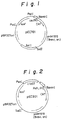
- Fig. 1 is a schematic illustration showing the structure of pEC701.
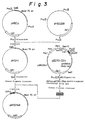
- Fig. 2 is a schematic illustration showing the structure of pEC901.
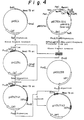
- Fig. 3 is a schematic illustration showing a procedure for the construction of a plasmid pHIS714K for gene transfer use making use of an insertion sequence IS714.
- Brevi TS Ori is a pHSC4-originated temperature sensitive replication origin in Brevibacterium.
- NPT is a neomycin phosphotransferase gene.
- a portion of the sequence of a chloramphenicol resistance gene of pEC701-IS14 origin is adhered to both termini of IS714.
- Fig. 4 is a schematic illustration showing a procedure for the construction of a plasmid pHTN7143 having a transposon-like sequence making use of the insertion sequence IS714.
- Brevi TS Ori is a pHSC4-originated temperature sensitive replication origin in Brevibacterium.
- NPT is a neomycin phosphotransferase gene.
- Plasmid pEC701 was introduced into Brevibacterium lactofermentum AJ2256.
- the resulting strain was cultured overnight at 30°C on a shaker using a CM2G medium (10 g of yeast extract, 10 g of tryptone, 5 g of glucose and 5 g of NaCl dissolved in 1 liter of water) which has been supplemented with 25 ⁇ g/ml of kanamycin, and the thus obtained culture broth was diluted and applied to CM2G agar medium supplemented with 0.2 mM of IPTG and 25 ⁇ g/ml of kanamycin.
- CM2G medium 10 g of yeast extract, 10 g of tryptone, 5 g of glucose and 5 g of NaCl dissolved in 1 liter of water
- Brevibacterium lactofermentum AJ12684 containing the plasmid pEC701-IS14 and Brevibacterium lactofermentum AJ12685 containing the plasmid pEC701-19 have been deposited, respectively as FERM BP-4232 and FERM BP-4233, in National Institute of Bioscience and Human Technology, Agency of Industrial Science and Technology, the Ministry of International Trade and Industry. Nucleotide sequences of both terminal regions of the insertion sequences in these plasmids were determined by the dideoxy method. Nucleotide sequences of IS714 and IS719 are shown in Sequence ID Nos. 1 and 2, respectively. In IS714, a sequence GGCCCTTCCG GTTTT (Sequence ID No.
- Sequence ID No. 10 As a result of the analysis of the nucleotide sequence shown in Sequence ID No. 1, an open reading frame was found. Amino acid sequence of a protein encoded thereby is shown in Sequence ID No. 10. This protein is considered to be transposase.
- Plasmid pEC901 was introduced into Brevibacterium lactofermentum AJ2256.
- the resulting strain was cultured overnight at 30°C on a shaker using CM2G medium (10 g of yeast extract, 10 g of tryptone, 5 g of glucose and 5 g of NaCl dissolved in 1 liter of H 2 O) which has been supplemented with 25 ⁇ g/ml of kanamycin, and the thus obtained culture broth was diluted, applied to CM2G agar medium supplemented with 3 ⁇ g/ml of chloramphenicol and 25 ⁇ g/ml of kanamycin and then cultured at 30°C.
- CM2G medium 10 g of yeast extract, 10 g of tryptone, 5 g of glucose and 5 g of NaCl dissolved in 1 liter of H 2 O
- CM2G medium 10 g of yeast extract, 10 g of tryptone, 5 g of glucose and 5 g of NaCl dissolved in 1 liter
- a strain having a resistance against 25 ⁇ g/ml of kanamycin was selected from the resulting transformants, and a plasmid named pHSK4 was obtained from the strain.
- the plasmid pEC701-IS14 which contains the Brevibacterium lactofermentum AJ2256-originated insertion sequence, IS714, was digested with restriction enzymes Pvu II and Eco RI to obtain an IS714-containing fragment of 1.6 kb.
- the IS714-containing fragment was inserted into a restriction enzyme Sal I site located at a position unrelated to the replication of pHSK4.
- plasmid pHIS714K contains IS714, neomycin phosphotransferase gene and pHSC4-originated sequence of the temperature sensitive replication origin in Brevibacterium.
- pHSK4D was prepared by cloning a 3-deoxy-D-arabinohepturosonate-7-phosphate synthase gene originated from Brevibacterium lactofermentum.
- the thus prepared plasmid pHIS714K was transformed into Brevibacterium lactofermentum AJ2256.
- a transformant thus obtained was cultured overnight at 25°C on a shaker using CM2G medium (10 g of yeast extract, 10 g of tryptone, 5 g of glucose and 5 g of NaCl dissolved in 1 liter of water) which has been supplemented with 25 ⁇ g/ml of kanamycin, and the thus obtained culture broth was diluted, applied to two CM2G agar medium plates respectively supplemented with 150 ⁇ g/ml and 200 ⁇ g/ml of kanamycin and then cultured at 30°C.
- CM2G medium 10 g of yeast extract, 10 g of tryptone, 5 g of glucose and 5 g of NaCl dissolved in 1 liter of water
- Plasmids pHSK4 and pHSK4D were also subjected to transformation and culturing in the same manner. As the results, as shown in Table 1, significantly large number of resistant strains to 150 ⁇ g/ml and 200 ⁇ g/ml of kanamycin were generated from the transformant containing pHIS714K, in comparison with other transformants respectively containing the vector plasmid pHSK4 and the gene transfer vector pHSK4D which does not have the insertion sequence.
- Plasmid pEC701-IS14 which contains the Brevibacterium lactofermentum AJ2256-originated insertion sequence, IS714, was digested with restriction enzymes Pvu II and Eco RI to obtain an IS714-containing fragment of 1.6 kb.
- the IS714-containing fragment was inserted into a restriction enzyme Sal I site located at a position unrelated to the replication of a mutant type plasmid pHSC4 whose replication function has been changed into a temperature sensitive type. Both fragments were treated with Klenow fragment to form blunt ends and then subjected to ligation.
- a small fragment obtained by digesting pHTN7141 with restriction enzyme Pvu II and a large fragment obtained by digesting pHSG298 with restriction enzyme Pvu II were subjected to ligation and introduced into Bretribacterium lactofermentum AJ2256.
- a strain having a resistance against 25 ⁇ g/ml of kanamycin was selected from the resulting transformants to isolate a plasmid named pHTN7143. Details of the above procedure are shown in Fig. 4.
- the plasmid pHTN7143 contains the neomycin phosphotransferase gene interposed between two IS714 sequences and pHSC4-originated sequence of the temperature sensitive replication origin in Brevibacterium.
- the thus prepared plasmid vector pHTN7143 containing the transposon-like sequence was introduced into Brevibacterium lactofermentum AJ2256, thereby allowing it to coexist with the strain's inherent plasmid vector pAJ43 which contains a chloramphenicol acetyltransferase (CAT) gene.
- CAT chloramphenicol acetyltransferase
- Brevibacterium lactofermentum AJ2256 which simultaneously contains plasmids pHTN7143 and pAJ43 was cultured overnight at 25°C on a shaker using CM2G medium (10 g of yeast extract, 10 g of tryptone, 5 g of glucose and 5 g of NaCl dissolved in 1 liter of water) which has been supplemented with 25 ⁇ g/ml of kanamycin and 5 ⁇ g/ml of chloramphenicol, and the thus obtained culture broth was diluted, applied to CM2G agar medium supplemented with 25 ⁇ g/ml of kanamycin and 5 ⁇ g/ml of chloramphenicol and then cultured at 34°C.
- CM2G medium 10 g of yeast extract, 10 g of tryptone, 5 g of glucose and 5 g of NaCl dissolved in 1 liter of water
- CM2G medium 10 g of yeast extract, 10 g of tryptone, 5 g of glucose and 5 g of
- the present invention provides a DNA fragment containing a mobile genetic element originated from a strain belonging to the genus Brevibacterium and a process for transferring a gene into chromosome making use of said DNA fragment. Being discovered for the first time in a Brevibacterium strain, said mobile genetic element has an important meaning for the gene manipulation of Brevibacterium strains.
Landscapes
- Genetics & Genomics (AREA)
- Health & Medical Sciences (AREA)
- Engineering & Computer Science (AREA)
- Life Sciences & Earth Sciences (AREA)
- Chemical & Material Sciences (AREA)
- Wood Science & Technology (AREA)
- Organic Chemistry (AREA)
- Biotechnology (AREA)
- General Engineering & Computer Science (AREA)
- Biomedical Technology (AREA)
- Zoology (AREA)
- Bioinformatics & Cheminformatics (AREA)
- Molecular Biology (AREA)
- Microbiology (AREA)
- Plant Pathology (AREA)
- Physics & Mathematics (AREA)
- Biochemistry (AREA)
- General Health & Medical Sciences (AREA)
- Biophysics (AREA)
- Micro-Organisms Or Cultivation Processes Thereof (AREA)
- Preparation Of Compounds By Using Micro-Organisms (AREA)
Claims (23)
- Fragment d'ADN contenant un élément génétique mobile provenant d'un micro-organisme du genre Brevibacterium et comprenant une séquence répétée inversée constituée par la séquence de bases GGCCCTTCCG GTTTT du côté 5' et par la séquence de bases AAAAACGGAA GAGCC du côté 3' dudit élément ou de la séquence de bases GGCCCTTCCG GTTTT du côté 5' et la séquence de bases AAAACAGGAA GAGCC du côté 3' dudit élément.
- Fragment d'ADN contenant un élément génétique mobile provenant d'un micro-organisme du genre Brevibacterium et comprenant une séquence répétée inversée constituée par l'une quelconque des séquences de bases du côté 5' de la revendication 1 et, du côté 3' dudit élément, par la séquence de bases complémentaire de la séquence de bases inversée du côté 5' ou constitué par l'une quelconque des séquences de bases du côté 3' de la revendication 1 et, du côté 5' dudit élément par la séquence de bases complémentaire de la séquence de bases en 3' inversée.
- Fragment d'ADN selon la revendication 1 ou 2, qui comprend un gène codant pour une transposase.
- Fragment d'ADN selon la revendication 3, qui est porté par le plasmide pEC701-IS14 ou pEC701-IS19, lesdits plasmides se trouvant dans les microorganismes déposés sous le numéro FERM BP-4232 ou FERM BP-4233, respectivement.
- Fragment d'ADN selon la revendication 3 ou 4, dans lequel ledit gène codant pour une transponase possède la séquence de bases de la région codante de la séquence ID N°1 ou de la séquence ID N°2 ou des dérivés résultant de l'addition, la délétion ou la substitution de quelques bases qui ne participent pas directement à la fonction de déplacement de l'élément génétique mobile.
- Fragment d'ADN selon l'une quelconque des revendications 1 à 5, qui comprend un gène à introduire dans un ADN chromosomique d'une souche de Brevibacterium.
- Fragment selon la revendication 6, dans lequel ledit gène à introduire dans un ADN chromosomique code pour une acide aminé synthétase.
- Fragment d'ADN selon l'une quelconque des revendications 1 à 7, qui comprend une origine de réplication d'un micro-organisme du genre Brevibacterium.
- Fragment d'ADN selon la revendication 8, dans lequel ladite origine de réplication est une origine de réplication thermosensible.
- Fragment d'ADN selon l'une quelconque des revendications 1 à 9, qui comprend un gène marqueur de sélection.
- Fragment d'ADN selon la revendication 10, dans lequel ledit gène marqueur de sélection confère une résistance à un antibiotique dirigé contre un micro-organisme.
- Plasmide contenant un fragment d'ADN selon l'une quelconque des revendications 1 à 11.
- Plasmide selon la revendication 12, qui est capable de se répliquer dans un micro-organisme du genre Brevibacterium.
- Plasmide pEC701-IS19, qui se trouve dans le microorganisme portant le numéro de dépôt FERM BP-4233.
- Plasmide pEC701-IS14, qui se trouve dans le microorganisme portant le numéro de dépôt FERM BP-4232.
- Plasmide pHTN7143 qui se trouve dans le microorganisme portant le numéro de dépôt FERM BP-4231.
- Micro-organisme contenant un plasmide conformément à l'une quelconque des revendications 12 à 16.
- Microorganisme portant le numéro de dépôt FERM BP-4231.
- Microorganisme portant le numéro de dépôt FERM BP-4232.
- Microorganisme portant le numéro de dépôt FERM BP-4233.
- Utilisation d'un fragment d'ADN selon l'une quelconque des revendications 1 à 11 ou d'un plasmide selon l'une quelconque des revendications 12 à 16 pour transférer des gènes.
- Utilisation selon la revendication 21, dans laquelle lesdits gènes sont transférés par recombinaison homologue.
- Utilisation selon la revendication 21 ou 22, dans laquelle lesdits gènes sont transférés par transposition.
Applications Claiming Priority (4)
| Application Number | Priority Date | Filing Date | Title |
|---|---|---|---|
| JP5269492 | 1992-03-11 | ||
| JP52694/92 | 1992-03-11 | ||
| JP5269492 | 1992-03-11 | ||
| PCT/JP1993/000300 WO1993018151A1 (fr) | 1992-03-11 | 1993-03-11 | Element transposable originaire d'une bacterie du genre brevibacterium |
Publications (3)
| Publication Number | Publication Date |
|---|---|
| EP0584375A1 EP0584375A1 (fr) | 1994-03-02 |
| EP0584375A4 EP0584375A4 (en) | 1996-07-03 |
| EP0584375B1 true EP0584375B1 (fr) | 2001-12-05 |
Family
ID=12921997
Family Applications (1)
| Application Number | Title | Priority Date | Filing Date |
|---|---|---|---|
| EP93905634A Expired - Lifetime EP0584375B1 (fr) | 1992-03-11 | 1993-03-11 | Element transposable originaire d'une bacterie du genre brevibacterium |
Country Status (4)
| Country | Link |
|---|---|
| US (1) | US5591577A (fr) |
| EP (1) | EP0584375B1 (fr) |
| DE (1) | DE69331255T2 (fr) |
| WO (1) | WO1993018151A1 (fr) |
Families Citing this family (4)
| Publication number | Priority date | Publication date | Assignee | Title |
|---|---|---|---|---|
| FR2736066B1 (fr) * | 1995-06-30 | 1998-11-20 | Ajinomoto Kk | Procede d'amplification d'un gene par transposon artificiel, bacterie coryneforme obtenue par ce procede et procede de production d'un acide amine a l'aide de cette bacterie |
| JP4035855B2 (ja) † | 1996-06-05 | 2008-01-23 | 味の素株式会社 | L−リジンの製造法 |
| US6927046B1 (en) * | 1999-12-30 | 2005-08-09 | Archer-Daniels-Midland Company | Increased lysine production by gene amplification using coryneform bacteria |
| UA100692C2 (ru) | 2007-05-02 | 2013-01-25 | Мериал Лимитед | Днк-плазмиды, имеющие повышенную экспрессию и стабильность |
Family Cites Families (4)
| Publication number | Priority date | Publication date | Assignee | Title |
|---|---|---|---|---|
| EP0215388B1 (fr) * | 1985-09-06 | 1991-12-04 | Ajinomoto Co., Inc. | Vecteur de plasmide et une méthode de régulation d'expression de gène par utilisation de ce vecteur |
| IT1196453B (it) * | 1986-07-04 | 1988-11-16 | Sclavo Spa | Elemento di dna di corynebacterium diphtheriae con proprieta' tipiche di un elemento di inserzione is |
| DE4006637A1 (de) * | 1990-03-03 | 1991-09-05 | Degussa | Transposon, dieses transposon enthaltende testvektoren und verfahren zur mutagenese |
| FR2665711B1 (fr) * | 1990-08-08 | 1993-08-13 | Centre Nat Rech Scient | Integron de corynebacterie, procede de transformation d'une corynebacterie par ledit integron et corynebacterie obtenue. |
-
1993
- 1993-03-11 WO PCT/JP1993/000300 patent/WO1993018151A1/fr not_active Ceased
- 1993-03-11 EP EP93905634A patent/EP0584375B1/fr not_active Expired - Lifetime
- 1993-03-11 US US08/146,010 patent/US5591577A/en not_active Expired - Lifetime
- 1993-03-11 DE DE69331255T patent/DE69331255T2/de not_active Expired - Lifetime
Also Published As
| Publication number | Publication date |
|---|---|
| US5591577A (en) | 1997-01-07 |
| EP0584375A1 (fr) | 1994-03-02 |
| WO1993018151A1 (fr) | 1993-09-16 |
| DE69331255D1 (de) | 2002-01-17 |
| DE69331255T2 (de) | 2002-08-22 |
| EP0584375A4 (en) | 1996-07-03 |
Similar Documents
| Publication | Publication Date | Title |
|---|---|---|
| Martin et al. | Cloning Systems in Amino Acid–Producing Corynebacteria | |
| Oh et al. | Denaturation of circular or linear DNA facilitates targeted integrative transformation of Streptomyces coelicolor A3 (2): possible relevance to other organisms | |
| Simon et al. | A broad host range mobilization system for in vivo genetic engineering: transposon mutagenesis in gram negative bacteria | |
| US6808896B2 (en) | Method for stable chromosomal multi-copy integration of genes | |
| JPH0691827B2 (ja) | 新規ベクタ−プラスミド | |
| EP0629699B1 (fr) | Fragment de DNA ayant une activité de promoteur et provenant de bacteries corynéformes | |
| EP3824089B1 (fr) | Molécules d'acide nucléique comprenant une séquence de codage rpoc variant | |
| Wilkinson et al. | Molecular genetics and the initiation of solventogenesis in Clostridium beijerinckii (formerly Clostridium acetobutylicum) NCIMB 8052 | |
| Germond et al. | A new mobile genetic element in Lactobacillus delbrueckii subsp. bulgaricus | |
| Lin et al. | Transposon Tn916 mutagenesis in Clostridium botulinum | |
| US5591577A (en) | Mobile genetic element originated from brevibacterium strain | |
| RU2099418C1 (ru) | Фрагмент днк, обеспечивающий использование бетаина, рекомбинантная плазмидная днк с фрагментом днк, обеспечивающим использование бетаина, штамм бактерий rhizobium/agrobacterium, предназначенный для стабильного хранения плазмиды с фрагментом днк, способ получения штамма бактерий | |
| Liu et al. | Characterization of dapB, a gene required by Pseudomonas syringae pv. tabaci BR2. 024 for lysine and tabtoxinine-beta-lactam biosynthesis | |
| JP3488924B2 (ja) | ベタインの異化に関して改変された細胞、それらの調製、および特に、代謝産物または酵素の生産のための使用 | |
| Kormanec et al. | The Streptomyces aureofaciens homologue of the whiB gene is essential for sporulation; its expression correlates with the developmental stage | |
| US5516669A (en) | Transposon consisting of a fragment of the R plasmid pCxM82B, test vectors containing this transposon, and methods of mutagenesis | |
| Mateos et al. | Transcriptional analysis and regulatory signals of the hom-thrB cluster of Brevibacterium lactofermentum | |
| EP0187630A2 (fr) | Promoteur de la bêta-galactosidase de streptomyces cloné | |
| US5068189A (en) | Recombinant dna vectors encoding a 4"-o-isovaleryl acylase derived from a carbomycin biosynthetic gene, designated care, for use in streptomyces and other organisms | |
| EP0576050A1 (fr) | Isolation et caractérisation du GENE sfp du bacillus subtilis | |
| EP0215388B1 (fr) | Vecteur de plasmide et une méthode de régulation d'expression de gène par utilisation de ce vecteur | |
| US11549116B2 (en) | Nucleic acid molecules comprising a variant inc coding strand | |
| US7022526B2 (en) | Reducing branching and enhancing fragmentation in culturing filamentous microorganisms | |
| Vosman et al. | Random insertional mutagenesis in Acinetobacter | |
| Srivastava et al. | Characterization of broad host range cryptic plasmid pCR1 from Corynebacterium renale |
Legal Events
| Date | Code | Title | Description |
|---|---|---|---|
| PUAI | Public reference made under article 153(3) epc to a published international application that has entered the european phase |
Free format text: ORIGINAL CODE: 0009012 |
|
| 17P | Request for examination filed |
Effective date: 19931201 |
|
| AK | Designated contracting states |
Kind code of ref document: A1 Designated state(s): DE FR GB IT |
|
| A4 | Supplementary search report drawn up and despatched |
Effective date: 19960517 |
|
| AK | Designated contracting states |
Kind code of ref document: A4 Designated state(s): DE FR GB IT |
|
| 17Q | First examination report despatched |
Effective date: 19990312 |
|
| GRAG | Despatch of communication of intention to grant |
Free format text: ORIGINAL CODE: EPIDOS AGRA |
|
| GRAG | Despatch of communication of intention to grant |
Free format text: ORIGINAL CODE: EPIDOS AGRA |
|
| GRAH | Despatch of communication of intention to grant a patent |
Free format text: ORIGINAL CODE: EPIDOS IGRA |
|
| GRAH | Despatch of communication of intention to grant a patent |
Free format text: ORIGINAL CODE: EPIDOS IGRA |
|
| GRAA | (expected) grant |
Free format text: ORIGINAL CODE: 0009210 |
|
| AK | Designated contracting states |
Kind code of ref document: B1 Designated state(s): DE FR GB IT |
|
| REG | Reference to a national code |
Ref country code: GB Ref legal event code: IF02 |
|
| REF | Corresponds to: |
Ref document number: 69331255 Country of ref document: DE Date of ref document: 20020117 |
|
| PLBE | No opposition filed within time limit |
Free format text: ORIGINAL CODE: 0009261 |
|
| STAA | Information on the status of an ep patent application or granted ep patent |
Free format text: STATUS: NO OPPOSITION FILED WITHIN TIME LIMIT |
|
| 26N | No opposition filed | ||
| PGFP | Annual fee paid to national office [announced via postgrant information from national office to epo] |
Ref country code: FR Payment date: 20120319 Year of fee payment: 20 |
|
| PGFP | Annual fee paid to national office [announced via postgrant information from national office to epo] |
Ref country code: GB Payment date: 20120307 Year of fee payment: 20 Ref country code: IT Payment date: 20120319 Year of fee payment: 20 |
|
| PGFP | Annual fee paid to national office [announced via postgrant information from national office to epo] |
Ref country code: DE Payment date: 20120411 Year of fee payment: 20 |
|
| REG | Reference to a national code |
Ref country code: DE Ref legal event code: R071 Ref document number: 69331255 Country of ref document: DE |
|
| REG | Reference to a national code |
Ref country code: DE Ref legal event code: R071 Ref document number: 69331255 Country of ref document: DE |
|
| REG | Reference to a national code |
Ref country code: GB Ref legal event code: PE20 Expiry date: 20130310 |
|
| PG25 | Lapsed in a contracting state [announced via postgrant information from national office to epo] |
Ref country code: DE Free format text: LAPSE BECAUSE OF EXPIRATION OF PROTECTION Effective date: 20130312 Ref country code: GB Free format text: LAPSE BECAUSE OF EXPIRATION OF PROTECTION Effective date: 20130310 |