EP0585113B1 - Déterminer un analyte en phase gaseuse ou vapeur avec des réactions bio-électrochimiques et supports utilisables - Google Patents
Déterminer un analyte en phase gaseuse ou vapeur avec des réactions bio-électrochimiques et supports utilisables Download PDFInfo
- Publication number
- EP0585113B1 EP0585113B1 EP93306738A EP93306738A EP0585113B1 EP 0585113 B1 EP0585113 B1 EP 0585113B1 EP 93306738 A EP93306738 A EP 93306738A EP 93306738 A EP93306738 A EP 93306738A EP 0585113 B1 EP0585113 B1 EP 0585113B1
- Authority
- EP
- European Patent Office
- Prior art keywords
- analyte
- biological molecule
- electrode
- enzyme
- gel
- Prior art date
- Legal status (The legal status is an assumption and is not a legal conclusion. Google has not performed a legal analysis and makes no representation as to the accuracy of the status listed.)
- Expired - Lifetime
Links
Images




Classifications
-
- G—PHYSICS
- G01—MEASURING; TESTING
- G01N—INVESTIGATING OR ANALYSING MATERIALS BY DETERMINING THEIR CHEMICAL OR PHYSICAL PROPERTIES
- G01N33/00—Investigating or analysing materials by specific methods not covered by groups G01N1/00 - G01N31/00
- G01N33/48—Biological material, e.g. blood, urine; Haemocytometers
- G01N33/50—Chemical analysis of biological material, e.g. blood, urine; Testing involving biospecific ligand binding methods; Immunological testing
- G01N33/53—Immunoassay; Biospecific binding assay; Materials therefor
- G01N33/543—Immunoassay; Biospecific binding assay; Materials therefor with an insoluble carrier for immobilising immunochemicals
- G01N33/54366—Apparatus specially adapted for solid-phase testing
- G01N33/54373—Apparatus specially adapted for solid-phase testing involving physiochemical end-point determination, e.g. wave-guides, FETS, gratings
- G01N33/5438—Electrodes
-
- C—CHEMISTRY; METALLURGY
- C12—BIOCHEMISTRY; BEER; SPIRITS; WINE; VINEGAR; MICROBIOLOGY; ENZYMOLOGY; MUTATION OR GENETIC ENGINEERING
- C12Q—MEASURING OR TESTING PROCESSES INVOLVING ENZYMES, NUCLEIC ACIDS OR MICROORGANISMS; COMPOSITIONS OR TEST PAPERS THEREFOR; PROCESSES OF PREPARING SUCH COMPOSITIONS; CONDITION-RESPONSIVE CONTROL IN MICROBIOLOGICAL OR ENZYMOLOGICAL PROCESSES
- C12Q1/00—Measuring or testing processes involving enzymes, nucleic acids or microorganisms; Compositions therefor; Processes of preparing such compositions
- C12Q1/001—Enzyme electrodes
-
- C—CHEMISTRY; METALLURGY
- C12—BIOCHEMISTRY; BEER; SPIRITS; WINE; VINEGAR; MICROBIOLOGY; ENZYMOLOGY; MUTATION OR GENETIC ENGINEERING
- C12Q—MEASURING OR TESTING PROCESSES INVOLVING ENZYMES, NUCLEIC ACIDS OR MICROORGANISMS; COMPOSITIONS OR TEST PAPERS THEREFOR; PROCESSES OF PREPARING SUCH COMPOSITIONS; CONDITION-RESPONSIVE CONTROL IN MICROBIOLOGICAL OR ENZYMOLOGICAL PROCESSES
- C12Q1/00—Measuring or testing processes involving enzymes, nucleic acids or microorganisms; Compositions therefor; Processes of preparing such compositions
- C12Q1/001—Enzyme electrodes
- C12Q1/002—Electrode membranes
Definitions
- the present invention relates to bioelectrochemical reactions.
- the invention relates to a method for monitoring an analyte using an electrochemical cell to determine the reaction of a gaseous or vapour substrate.
- the invention also relates to novel media for carrying out bioelectrochemical reactions and their use in enzyme electrodes.
- gas sensors for monitoring gaseous analytes
- Conventional gas sensor devices are non-biological and generally employ optical or electrochemical metal oxide semi-conductor devices.
- these types of instruments can in some instances be insensitive and may display relatively poor selectivity for an analyte to be detected in complex mixtures, such as organic vapours.
- a higher level of electronic sophistication may provide some compensation for these drawbacks, this can lead to elevated production costs.
- Amperometric electrochemical gas sensors are also known. They generally operate at lower electrical power than semi-conductor gas sensors and work at room temperature. Again, these sensors may lack selectivity for a particular analyte.
- a non-biological gas sensor is described in DE-A-4032599.
- a three dimensional polyurethane matrix containing an electrolyte and a catalyst is positioned at a test electrode.
- the current generated between the test electrode and a second, counter electrode is dependent upon the partial pressure of the test components.
- non-biological sensors may employ a carefully chosen liquid electrolyte that offers some form of selection for a targeted analyte.
- parameters such as solubility of gases, electrolyte pH, chemical reactions or complex formation between solutes and analyte can be used to favour the dissolution of one form of an analyte species.
- WO88/01299 describes a method and apparatus for detecting chemical compounds in the gaseous phase.
- An enzyme in conjunction with a colour indicator responsive to pH, oxidation, or other chemical input of the compound to be detected in the gas phase is immobilised on an organic or inorganic solid support and dehydrated under controlled conditions. When the enzyme is exposed to a gas containing the substance of interest, the colour change occurs.
- the exemplified solid support for the enzyme is micro-crystalline cellulose.
- this reference does not relate to the use of an electrochemical cell to monitor the reaction and therefore the problem of providing a suitable electrolyte for such monitoring is not encountered.
- an enzymatic toxic gas sensor comprises a buffer reservoir containing a buffer solution which operates to maintain the enzyme in its active state, the enzymes are immobilised by covalent bonding to glass beads.
- the substrate for reaction with the enzyme is provided in the apparatus as a substrate soaked filter paper. In the presence of an analyte which is a toxic gas, the electrochemical reaction of the liquid phase substrate with the enzyme is inhibited.
- electrochemical gas sensors based on liquid electrolyte share the inherent shortcomings of liquid systems: limited shelf life due to solvent evaporation, electrode corrosion and loss of sensor components. Electrode corrosion reactions may generate gases that can damage seals and eventually cause electrolyte leakage.
- the present inventors have found alternative media for monitoring a gaseous or vapour phase analyte using a sensing electrode of an electrochemical cell. These novel media can be used to provide sensors which overcome the problems of the prior art and enable improved stability and longevity of the device.
- the present inventors have found that it is possible to dispense with the contact solvent medium which is used to form the electrolyte/enzyme/electrode interface in present devices.
- the inventors have found novel methods for retaining the electrolyte and biological catalyst at the electrodes and maintaining operability.
- a method for detecting an analyte in the gaseous or vapour phase comprising contacting a gaseous or vapour analyte with a sensing electrode of an electrochemical cell, a biological molecule selected from the group comprising synzymes, antibodies, binding proteins and enzymes being retained at a support at the sensing electrode and the support comprising an electrolyte salt, so that a substrate contacts the biological molecule and reacts, generating an electrical response; and measuring the electrical response of the cell, the response being relatable to the concentration of the analyte and wherein the biological molecule is in the solid or semi-solid phase.
- a method for monitoring bioelectrochemical reactions in the gaseous phase which is useful for detecting inhibitors for the biological molecule but more particularly is also useful for monitoring reactions where the analyte is not a toxin for the bioreceptor or biomimic, and the electrical response detected is due to a reaction occuring, not due to inhibition.
- the electrical response of the cell increases with exposure to an increasing concentration of analyte.
- solution ions, reaction substrate and product can pass in to and out of a material matrix, whether the system uses a porous electrode structure or whether the material matrix encompasses an electrode body.
- the biocatalyst is in contact with freely mobile liquids. This invention enables there to be no bulk solution contact with the biological molecule at the support.
- the solvent medium can therefore be left out altogether, leaving an ionically conducting matrix with active biological component in direct contact with the gaseous or vapour phase. It was found that electrochemical reactions could be effected by gaseous species diffusing to and undergoing reaction at the electrode and that intimate contact of biological components, such as enzymes with the ionic matrix could be achieved so that the electrochemical reaction could be coupled to biochemical reactions of gaseous reactants.
- the biological molecule can be any biological molecule which will bind to a reactant and will produce a detectable electrochemical reaction. It may be a synthetically prepared chemical analogue of a biological receptor for example, synzymes. Other examples of the biological molecule are antibodies, binding proteins and biological catalysts such as enzymes.
- the biological molecule will generally be a biological catalyst such as an enzyme.
- the substrate can be an enzyme-substrate or an enzyme-cofactor.
- the biological molecule is in the solid or semi-solid state. This expression is intended to mean that it is not in the liquid phase, in particular, not in aqueous solution.
- the biological molecule will generally be in a substantially dehydrated state. In order to maintain activity of the biological molecule, it has been found that a hydration shell is needed around the biological molecule. This is necessary to retain the three-dimensional structure of the biological molecule which is essential to maintain its activity. Thus, even though the biological molecule may be substantially dehydrated, it will be sufficiently hydrated to maintain the required degree of hydration to maintain activity, and will not be anhydrous.
- the invention is particularly useful for monitoring reaction in which the substrate for the reaction with the biological molecule is derived from the analyte.
- the analyte is the substrate for the biological molecule.
- the biological molecule catalyses the conversion of an analyte into a product which undergoes an electrochemical reaction directly at the electrode; or that the biological molecule is one which can effect oxidation or reduction of the substrate, possibly with the intervention of a mediator, and is thus involved in the transfer of electrons between the substrate and the electrode; or that the analyte reacts at the support at the electrode with for example an enzyme to produce a substrate for binding with the biological molecule.
- analyte may be an inhibitor or precursor for an inhibitor for the biological molecule.
- hydrogels can be regarded as aqueous electrolyte solutions trapped in a polymeric matrix.
- the impedance exhibited using such media is typically similar to that for trapped aqueous electrolyte solutions.
- Evaporation of the solvent is slowed by the polymer matrix and can be further slowed by the incorporation of hygroscopic materials facilitating ion movement within the gel.
- DE-A-4032599 discussed above where a three-dimensional polymeric matrix of polyurethane is formed and which contains an organic conductor salt.
- a solid or gel electrolyte may also be formed from ionomers and polyelectrolytes which contain anionic (eg -CF 2 SO 3 ) or cationic (eg -R 3 N + ) groups bound to the polymer chain which act as counter ions to small unbound and potentially mobile ions.
- anionic eg -CF 2 SO 3
- cationic eg -R 3 N +
- Nafion is a copolymer of Teflon or polytetrafluoroethylene (PTFE) and polysulphenylfluoride vinyl ether containing sulphonic acid groups chemically bound to a fluorocarbon backbone.
- Solvating polymers may also be used.
- the dry polymer itself has the ability to dissolve certain salts and support ionic mobility.
- Solvating ability is an essential pre-requisite for fast ion conduction in a dry polymer.
- this type of material include poly(propylene oxide) (PPO) with dissolved lithium salts. (see P.J. Smith, Electrochemical Science and Technology of Polymers (1987) p 293 edited by R.G. Linford, Elsevier London.)
- condition at the support medium should be appropriate to maintain activity of the bioreceptor or biomimic.
- solid or gel electrolyte support media such as enzyme-redox mediated gel, hydroxy ethyl cellulose and solid polymer electrolyte enzyme gel may be used in the present invention, they may suffer from problems of either falling ionic conductivity or poor biocompatibility over relatively short periods of time.
- reaction media for bioelectrochemical reactions are utilized which provide an improved media for bioelectrochemical reactions and in particular provide improved media for use at an enzyme electrode for use in a sensor.
- the support medium for the bio-electrochemical reaction comprises a solid or gel matrix electrolyte salt, a biological molecule for the reaction being retained at the support medium and the substrate for the reaction being contactable with the support to produce the reaction.
- the solid or gel media are not based on a polymeric matrix structure and are substantially free of organic polymeric material. They are structures formed by the electrolyte salt itself. The media are thought to be in the form of a semi-solid, semi-crystalline matrix having a substantially stable structure. They are producable by preparing a solution of the electrolyte and drying. Thus, the support structure consists essentially only of electrolyte.
- the media provide significant advantages because the ionically conducting materials are not in solution.
- the reduced water environment increases markedly the thermostability of the biocatalyst at elevated temperatures.
- the media are suitable for use with gaseous or vapour phase reactants and Diffusivities in the gas phase are orders of magnitude higher than in solution and therefore more sensitive and faster monitoring can be achieved using such media.
- the heightened sensitivity enables quantitative apparatus to be produced, the response being related to the molar amount of analyte in the test gas or vapour.
- the media can therefore advantageously be used in sensors, in particular gas sensors.
- Many gaseous analytes display poor solubility in solution which can lead to decreased sensitivity whereas the media utilised in the present invention reduce this problem.
- the electrolyte matrix may be selected for a specific analyte of interest and therefore when used in a sensor, increase device sensitivity.
- gas sensors which rely upon the use of non-liquid electrolytes may not suffer from leaching of sensor components as encountered in conventional liquid phase sensors since the ionically conducting matrix is only contacted by gaseous phase that delivers the analyte to the sensing element.
- the support media utilised in the invention are able to maintain activity of the biological molecule; provide electrical conductivity; and are sufficiently permeable to enable the reactant for the reaction with the biological molecule, to reach the biological molecule and react.
- the novel support media of the present invention are substantially free from water but will contain a low concentration of water which is at least sufficient to maintain the required hydration shell around the biological molecule.
- the matrix will not be anhydrous.
- the matrix is also sufficiently permeable to allow the substrate to contact the biological molecule and react.
- the mass transfer properties through the matrix enable the gas to permeate and contact the biological molecule.
- the permeability to the reactant remains constant or substantially constant.
- the solid or gel matrix can be prepared by firstly forming a solution of the electrolyte salt in a solvent.
- the solution of the salt for preparing the matrix may be in an organic or aqueous solvent which does not deactivate the biological molecule.
- the electrolyte matrix forms. Preferably drying is carried out at room temperature.
- the solution will be a concentrated solution as this reduces the drying time required, although the support media can be prepared using any concentration of solution.
- the solvent can be any solvent which can be evaporated to enable drying to form the solid or gel electrolyte matrix.
- drying is carried out at room temperature.
- a buffer is also included in the solution of electrolyte salt to provide appropriate conditions for the activity of the biological molecule. Any other additive nexessary to maintain the activity of the biological molecule may be incorporated at this stage.
- an enzyme mediator compound and optionally also the biological molecule itself may be incorporated into the solution prior to drying.
- the drying temperature must not be so high as to lose activity of the biological molecule and the solvent must be selected accordingly.
- the drying temperature should be below 37°C, most preferably below 30°C.
- the electrolyte salt may also act as a buffer salt or electron mediator.
- the electrolyte salt may fulfil the dual functions of forming the electrolyte matrix and providing buffer or mediator, respectively.
- the biological molecule may be arranged at the support in an outer layer, for example, by preparing a separate solution of biological molecule which can then be cast onto the pre-prepared solid or gel matrix and dried.
- the biological molecule may even be formed as a lower layer, in contact with the support material which may be formed over the biological molecule.
- the biological molecule is as described above.
- Suitable inorganic salts for forming the solid or gel matrix comprise any inorganic salt which will retain stability and sufficient moisture to provide the required hydration shell for the biological molecule.
- Preferred components comprise buffer salts such as sodium phosphate and salts which may also act as an electron mediator such as potassium ferrocyanide.
- the matrix will be formed from an organic salt electrolyte.
- organic salt electrolyte Particularly preferred are quaternary ammonium salts such as tetraalkylammonium salts, in particular tetrabutylammonium perchlorate, tetrabutylammonium toluene-4-sulphonate, tetrabutylammonium methane sulphonate, tetrabutylammonium phenol borate, tetraethylammonium tetrafluoroborate, tetrabutyl ammonium chloride and tetrabutylammonium iodide.
- These salts are particularly preferred because it has been found that they produce relatively stable matrices which maintain a relatively constant internal water content.
- a particularly preferred salt is tetrabutyl ammonium toluene-4-sulphonate.
- a hygroscopic salt Tetrabutylammonium toluene-4-sulphonate is an example of such a salt.
- a hygroscopic material may also be included in the media.
- suitable hygroscopic salts are lithium salts such as lithium chloride.
- the media may be employed in the determination of an analyte by a sensor, in particular in the gaseous or vapour phase.
- the analyte may be the substrate.
- the biological molecule may catalyse the conversion of the analyte into a product which then undergoes an electrochemical reaction directly at the electrode.
- the biological molecule is one which can effect oxidation or reduction of the substrate, possibly with the intervention of a mediator, and is thus involved in the transfer of electrons between the substrate and the electrode; or that the analyte reacts at the support with, for example an enzyme to produce a reaction product which binds with the bioreceptor or biomimic.
- the analyte may be an inhibitor or may form an inhibitor for the biological molecule.
- the media may also be used for reactions in which a current is applied to produce a reaction within the media.
- Suitable biological molecules for use with the method of the present invention are as described above.
- biological molecules which are inhibited by an analyte or reaction product of an analyte may also be used in particular, where the support comprises a solid or gel matrix of an electrolyte.
- Examples include: sulphite oxidase for detecting sulphur dioxide; polyphenol oxidase for detecting phenolic vapours, an oxygenase enzyme for detecting methane; cytochrome P450 or preferably synthetic analogues, for detecting hydrocarbons such as camphor; nitrate reductase for detecting NOx gases; carbon monoxide oxidoreductase for detecting carbon monoxide; cytochrome oxidase for detecting cyanide; TNT oxidoreductase for detecting TNT; and enzymes which may metabolise the analyte or anitbodies, for example for pesticides may be used.
- a lag phase i.e. time lapse, may occur between exposure of the support media to the gaseous or vapour analyte and the electrochemical response.
- the present inventors have postulated that the structure of the support media may be affected by the analyte itself.
- the rate-limiting step in the reaction of the biological molecule and substrate is the diffusion of the analyte through the matrix which enables contact of the substrate with the biological molecule. That is, generally the sensor should be operated at a voltage more negative than the voltage of the reaction peak being observed.
- the biological molecule is cast in a second stage as an outer layer, the diffusion barrier is reduced.
- the biological molecule in an outer layer cast onto the pre-prepared matrix may have reduced stability due to its relatively more exposed position. Therefore, preferably the biological molecule is formed within the matrix by incorporation into the solution for forming the matrix and the support at the sensing electrode comprising the matrix is preferably formed as a thin layer.
- the biological molecule may be formed in an initial step on or in the electrode structure and covering with a layer of matrix.
- the matrix layer is generally less than lmm thick.
- the matrix layer should have a thickness of no greater than 100 ⁇ m, most preferably no greater than 50 ⁇ m.
- Electrodes are provided by a microvoltammetric electrode. Such an electrode is advantageous because it can alleviate cell resistance to analytically useful levels.
- the rate limiting step may be the rate of catalysis.
- the rate of inhibition will provide the rate limiting step and not the rate of mass transfer.
- FIG. 1 illustrates the interdigitated microband electrode used (supplied by Microsensor Systems, Kentucky, USA) in which 1 and 2 represent the sensing electrode and the combined counter and quasi-reference electrode (CC + QRE) , respectively.
- the interdigitated regions of the electrodes are clearly visible at 3.
- the electrode is supported by quartz 4.
- Example 1 Reaction of gaseous H 2 O 2 with horseradish peroxidase electron mediator gels cast onto an array of interdigitated microband array electrodes.
- the gel that formed from a solution of enzyme, electron mediator and citric acid buffer was utilised as an ionically conducting matrix with incorporated biocatalyst.
- the reduced ohmic drop at the microelectrodes facilitated the monitoring of the biocatalytic electrochemical reaction within the gel matrix.
- the enzyme-mediator gels were prepared as follows. Horseradish peroxidase (2mg) was added to a 100 ⁇ l solution of potassium hexacyanoferrate (II) (0.05 M) in citric acid buffer (0.1 M, pH 6.5). The mixture was vigorously stirred for one minute on a rotator. A volume of 5 ⁇ l of the resulting solution was then deposited onto the microelectrode array section of the gold electrodes and allowed to dry in air at room temperature for 10 minutes. Following this period, the enzyme-mediator solution had formed a gel that was immobile on electrode inversion.
- Horseradish peroxidase (2mg) was added to a 100 ⁇ l solution of potassium hexacyanoferrate (II) (0.05 M) in citric acid buffer (0.1 M, pH 6.5). The mixture was vigorously stirred for one minute on a rotator. A volume of 5 ⁇ l of the resulting solution was then deposited onto the microelectrode array section of the gold electrodes and allowed to dry in air at
- the enzyme-mediator gels were active for approximately 45 minutes at room temperature after which time negligible current increases were recorded; this loss of current probably arose from the reduced ionic conductivity in the gel matrix as a result of solvent loss to the atmosphere.
- Example 2 Reaction of phenol vapours with polyphenol oxidase at a solid polymer electrolyte cast onto an array of interdigitated microband electrodes.
- Nafion a solid polymer electrolyte, Nafion
- Nafion is a copolymer of Teflon or tetrafluorethylene (PTFE) and polysulfonylfluoride vinyl ether containing sulfonic acid groups.
- PTFE tetrafluorethylene
- the sulfonic acid groups are chemically bound to a fluorocarbon backbone.
- the indicator reaction was that of p-cresol vapours with polyphenol oxidase and the subsequent reduction of quinone product at the gold microband working electrodes at a cathodic potential.
- a 0.83 wt. % solution of Nafion in isopropanol was sonicated for 5 minutes.
- a clean microband electrode was then vertically dip coated into this solution for a period of 15 minutes.
- the electrode was immersed to the extent that all the microbands were completely covered by Nafion solution.
- the Nafion coated electrode was placed in a drying cabinet at 72°C for 30 minutes. Following a cooling period of 5 minutes on the bench, the modified electrode was ready for use. Examination of the electrode surface revealed visible interference patterns indicative of an uneven surface coverage of the polymer electrolyte.
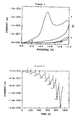
- Figure 4 shows the results of a cyclic voltammogram at 0.2V/s of the modified electrode in air at 18°C. The potential was cycled from +1 V to -1V versus the CC + QRE.
- (A) represents the results with the polyphenol oxidase-Nafion electrode and (B) represents the results obtained with the Nafion only electrode in the presence of p-cresol vapours.
- the potential was cycled from 0V to -1V versus the CC + QRE.
- the clear reduction peak at approximately -0.550 V versus the CC + QRE correspond to the reduction of the quinone product of the enzyme reaction with p-cresol vapour.
- FIG. 6 shows the amperometric trace of Nafion-polyphenol oxidase electrode with approximately 100 second exposures to p-cresol with similar time intervals of no exposure.
- the vertical arrows indicate the start of the periodic exposures.
- the horizontal arrows indicate no exposure.
- the potential of the working electrodes was -0.650 V versus the CC + QRE. Control electrodes devoid of enzyme yielded small current increases on exposure to p-cresol.
- Enzyme-Nafion modified electrodes were only biocatalytically active for approximately 30 minutes.
- the enzyme was presumed to be inactivated by the acidic groups of the Nafion polymer and/or excessive dehydration.
- the Nafion coated electrode continued to maintain ionic conductivity for at least 28 hours at room temperature after initial preparation.
- enzyme gels were not ionically conductive after approximately 25 minutes.
- Example 3 Reaction of phenol vapours with polyphenol oxidase incorporated into a gel of hydroxethyl cellulose cast onto an array of interdigitated microband electrodes.
- Hydroxyethyl cellulose is a water soluble material based on the cellulose polymer structure.
- a gel formed by HEC and Hepes buffer was utilised as a biocompatible ionic matrix.
- the indicator reaction was identical to Example 2.
- a 2.5 % w/v solution of HEC in Hepes buffer (pH 7, 0.1 M) was prepared and stored at 4 °C for 24 hours prior to use.
- An enzyme-HEC polymer solution (1 mg/100 ⁇ l) was prepared and a volume of 5 ⁇ l deposited onto the microband array section of the electrode. After a drying period of 15 minutes, a gel had formed that was immobile on electrode inversion.
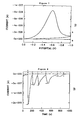
- Figure 7 shows the cyclic voltammogram at 0.005 V/s of (A) hydroxyethyl cellulose-polyphenol oxidase electrode and (B) hydroxyethyl cellulose only electrode in the presence of p-cresol vapours.
- HEC-enzyme gels rapidly lost ionic conductivity after 30 minutes.
- phosphate buffer pH 7, 0.1 M
- amperometric current increases were once again observed indicating active incorporated enzyme.
- HEC-enzyme electrode configuration suffered from reduced ionic conductivity after 30 minutes, presumably as a result of solvent loss to the atmosphere.
- Enzyme-redox mediator gels, hydroxyethyl cellulose and solid polymer electrolyte enzyme gels clearly demonstrated the principle of performing biocatalytic electrochemical reactions in the gas phase.
- the described methods suffered the problems of either low ionic conductivity or biocompatibility over relatively short periods of time.
- the novel support media of this invention which permit extended ionic conductivity and biocompatibility for relatively longer periods are now exemplified.
- the support media of the invention proved unexpectedly good with respect to ionic conductivity and biological compatibility. Other surprising features of the material will also be discussed.
- Example 4 Ionically conducting gels of tetrabutylammonium toluene-4-sulfonate with incorporated polyphenol oxidase cast onto an array of interdigitated microband electrodes for reaction with phenol vapours.
- an ionically conducting gel matrix formed by tetrabutly ammonium toluene-4-sulfonate and sodium phosphate buffer incorporating polyphenol oxidase is described.
- the enzyme proved to be relatively stable for a number of hours within the gel matrix.
- the indicator reaction was identical to that in example 2.
- Tetrabutylammonium toluene-4-sulfonate (TBATS), Toluene-4-sulfonic Tetrabutylammonium salt, (CH 3 CH 2 CH 2 CH 2 ) 4 N(CH 3 C 6 H 4 SO 3 ), M, 413.67, (500 mg) was crushed in a mortar and pestle to form a powder and then placed in a glass bottle containing a 3 ml volume of sodium phosphate buffer (0.1 M, pH 7) and potassium chloride (0.05 M). The mixture was gently heated until the TBATS material was completely dissolved. The mixture was then sonicated for a period of 5 minutes.
- the working potential was set at -0.65 V versus the combined counter and quasi-reference electrodes. Following an initial drying period of 30 minutes after gel casting, the modified electrode was exposed to p-cresol vapours for 100 second intervals with similar time periods of no exposure.
- Figure 10 shows an amperometric trace of (A), the TBATS-polyphenol oxidase gel electrode and (B), the TBATS gel only electrode with 100 second exposures to p-cresol with similar time intervals of no exposure.
- the arrow indicates the start of the exposures.
- the potential of the working electrodes was 0.650 V versus the combined counter and quasi-reference electrodes.
- microarray electrodes were coated with either a TBATS/ water gel or a TBATS/ isopropanol (IPA) gel.
- IPA isopropanol
- the modified electrodes were placed in a transparent petri-dish on the bench at room temperature for a number of weeks.
- TBATS/water and TBATS/IPA cast gels a similar decrease in the ionic currents was seen after 60 days storage. No attempt was made to control temperature, light, humidity etc. The result was considered good with respect to the uncontrolled environmental conditions.
- OT was thought that the hygroscopic propensity of TBATS may have contributed to the electrochemical stability. Following the storage period, the gel had formed a relatively rigid material that was difficult to remove from the electrode surface.
- Example 5 Gaseous H 2 O 2 reaction with horseradish peroxidase and potassium hexacyanoferrate (II) in tetrabutylammonium toluene-4-sulfonate gels cast onto an array of interdigitated microband electrodes.
- the indicator reaction is identical to that described in example 1.
- amperometric trace obtained with the TBATS-enzyme gel described in example 4 displayed a delay in the initial response to p-cresol exposure between 200 - 800 seconds.
- the experiment using phenol instead of p-cresol also displayed this lag.
- the observed "lag phase" was thought to be important and worth investigating further.
- Experiments with a TBATS-water gel loaded with the electron mediator, ferrocene (0.0125 M) was used to investigate the lag phase observed in amperometric determinations. A volume of 1.5 ⁇ l of the TBATS-water-ferrocene solution was deposited onto the microarray section of the electrode.
- Figure 15 illustrates the cyclic voltammograms at 0.2 V/s which were then recorded for a potential of +1V to -1V of TBATS-ferrocene gel electrode after (A) 7 minutes drying at room temperature and (B) 30 minutes drying at room temperature. Cyclic voltammograms were also recorded after 10, 16 and 24 minute intervals but the results are not illustrated.
- Figure 16 shows a succession of cyclic voltammograms recorded approximately every 200 seconds at 0, 200, 800, 1800, and 2200 seconds. Letters indicate approximate times of recorded voltammograms (A) initial voltammogram after 30 minutes drying time; (B) after 200 s; (C) after 800 s; (D) after 1800 s; and (E) after 2200 s.
- TBATS gel The precise structure of the TBATS gel was unknown to us but we anticipate an ordered matrix consisting of cationic and anionic groups of tetrabutylammonium and toluene-4-sulfonate ions respectively, interdispersed with water molecules.
- TBATS material was dissolved in isopropanol and then cast onto the electrode surface and placed in a drying cabinet at 72°C for 30 minutes. Following a further 5 minute drying period at room temperature, the TBATS gel was covered by a 5 ⁇ l volume of polyphenol oxidase-sodium phosphate buffer solution (1 mg/100 ⁇ l) and allowed to air dry for 15 minutes. When the electrode was exposed to p-cresol vapours, an immediate current increase was recorded. This is illustrated by Figure 17 which shows an amperometric trace of TBATS solvent cast polyphenol oxidase electrode at -0.65V. The solid arrow indicates the start of exposure to p-cresol.
Landscapes
- Chemical & Material Sciences (AREA)
- Life Sciences & Earth Sciences (AREA)
- Health & Medical Sciences (AREA)
- Engineering & Computer Science (AREA)
- Immunology (AREA)
- Organic Chemistry (AREA)
- Zoology (AREA)
- Wood Science & Technology (AREA)
- Proteomics, Peptides & Aminoacids (AREA)
- Molecular Biology (AREA)
- Microbiology (AREA)
- Biochemistry (AREA)
- Biotechnology (AREA)
- General Health & Medical Sciences (AREA)
- Physics & Mathematics (AREA)
- Analytical Chemistry (AREA)
- Hematology (AREA)
- General Engineering & Computer Science (AREA)
- Genetics & Genomics (AREA)
- Bioinformatics & Cheminformatics (AREA)
- Biophysics (AREA)
- Urology & Nephrology (AREA)
- Biomedical Technology (AREA)
- Food Science & Technology (AREA)
- Cell Biology (AREA)
- Pathology (AREA)
- Medicinal Chemistry (AREA)
- General Physics & Mathematics (AREA)
- Apparatus Associated With Microorganisms And Enzymes (AREA)
- Measuring Or Testing Involving Enzymes Or Micro-Organisms (AREA)
- Sampling And Sample Adjustment (AREA)
- Immobilizing And Processing Of Enzymes And Microorganisms (AREA)
Claims (9)
- Procédé pour détecter un analyte en phase gazeuse ou vapeur comprenant la mise en contact d'un analyte sous forme gazeuse ou vapeur avec une électrode de détection d'une pile électrochimique, une molécule biologique, choisie dans le groupe comprenant les synzymes, les anticorps, les protéines de fixation et les enzymes, étant retenue sur un support au niveau de l'électrode de détection, le support comprenant un sel électrolyte, de façon qu'un substrat vienne au contact de la molécule biologique et réagisse, générant une réponse électrique ; et la mesure de la réponse électrique de la pile, la réponse pouvant être en rapport avec la concentration de l'analyte, et dans lequel la molécule biologique est dans un état solide ou semi-solide.
- Procédé selon la revendication 1, dans lequel la molécule biologique est dans un état sensiblement déshydraté et le substrat dérive de l'analyte.
- Procédé selon la revendication 1 ou la revendication 2, dans lequel le support comprend une matrice solide ou en gel d'un sel électrolyte.
- Procédé selon la revendication 3, dans lequel l'électrolyte est un sel organique.
- Procédé selon la revendication 4, dans lequel le sel organique comprend un sel de tétraalkylammonium.
- Procédé selon la revendication 5, dans lequel le sel de tétraalkylammonium est choisi parmi le perchlorate de tétrabutylammonium, le toluène-4-sulfonate de tétrabutylammonium, le méthanesulfonate de tétrabutylammonium, le phénolborate de tétrabutylammonium, le tétrafluoroborate de tétraéthylammonium, le chlorure de tétrabutylammonium et l'iodure de tétrabutylammonium.
- Procédé selon l'une quelconque des revendications précédentes, dans lequel la réponse augmente avec l'exposition à une concentration croissante d'analyte.
- Procédé selon l'une quelconque des revendications précédentes, dans lequel la molécule biologique est une enzyme pour réaction redox.
- Procédé selon l'une quelconque des revendications précédentes, dans lequel l'analyte est le substrat.
Applications Claiming Priority (2)
| Application Number | Priority Date | Filing Date | Title |
|---|---|---|---|
| GB9218376 | 1992-08-28 | ||
| GB929218376A GB9218376D0 (en) | 1992-08-28 | 1992-08-28 | Media for biocatalytic electrochemical reactions in the gaseous phase |
Publications (3)
| Publication Number | Publication Date |
|---|---|
| EP0585113A2 EP0585113A2 (fr) | 1994-03-02 |
| EP0585113A3 EP0585113A3 (fr) | 1995-04-19 |
| EP0585113B1 true EP0585113B1 (fr) | 1999-12-15 |
Family
ID=10721143
Family Applications (1)
| Application Number | Title | Priority Date | Filing Date |
|---|---|---|---|
| EP93306738A Expired - Lifetime EP0585113B1 (fr) | 1992-08-28 | 1993-08-25 | Déterminer un analyte en phase gaseuse ou vapeur avec des réactions bio-électrochimiques et supports utilisables |
Country Status (8)
| Country | Link |
|---|---|
| US (1) | US5521101A (fr) |
| EP (1) | EP0585113B1 (fr) |
| JP (2) | JPH07260737A (fr) |
| CA (1) | CA2104928A1 (fr) |
| DE (1) | DE69327277T2 (fr) |
| ES (1) | ES2138996T3 (fr) |
| GB (1) | GB9218376D0 (fr) |
| ZA (1) | ZA936313B (fr) |
Cited By (2)
| Publication number | Priority date | Publication date | Assignee | Title |
|---|---|---|---|---|
| US7276146B2 (en) | 2001-11-16 | 2007-10-02 | Roche Diagnostics Operations, Inc. | Electrodes, methods, apparatuses comprising micro-electrode arrays |
| US7276147B2 (en) | 2001-11-16 | 2007-10-02 | Roche Diagnostics Operations, Inc. | Method for determining the concentration of an analyte in a liquid sample using small volume samples and fast test times |
Families Citing this family (47)
| Publication number | Priority date | Publication date | Assignee | Title |
|---|---|---|---|---|
| US6001556A (en) * | 1992-11-13 | 1999-12-14 | The Regents Of The University Of California | Polymeric assay film for direct colorimetric detection |
| US6395561B1 (en) | 1992-11-13 | 2002-05-28 | Regents Of The University Of California | Polymeric assay film for direct colorimetric detection |
| US6022748A (en) * | 1997-08-29 | 2000-02-08 | Sandia Corporation - New Mexico Regents Of The University Of California | Sol-gel matrices for direct colorimetric detection of analytes |
| US6660484B2 (en) | 1992-11-13 | 2003-12-09 | Regents Of The University Of California | Colorimetric glycopolythiophene biosensors |
| KR970001146B1 (ko) * | 1993-07-16 | 1997-01-29 | 엘지전자 주식회사 | 가스측정용 바이오센서 및 그 제조방법 |
| GB2290382A (en) * | 1994-03-25 | 1995-12-20 | Univ Cranfield | Electrochemical measurement and reactions in highly-resistive solvents |
| US6103217A (en) * | 1994-08-11 | 2000-08-15 | The Regents Of The University Of California | Polymeric assemblies for sensitive colorimetric assays |
| US6080423A (en) | 1994-08-11 | 2000-06-27 | Regents Of The University Of California | Three dimensional colorimetric assay assemblies |
| GB9424125D0 (en) * | 1994-11-23 | 1995-01-18 | Univ Cranfield | Electrochemical sensor and novel media for bioelectrochemical reactions |
| SE510733C2 (sv) | 1995-01-03 | 1999-06-21 | Chemel Ab | Kemisk sensor baserad på utbytbar igenkänningskomponent samt användning därav |
| EA000409B1 (ru) | 1995-02-13 | 1999-06-24 | Дзе Регентс Оф Дзе Юниверсити Оф Калифорния | Трехмерный колориметрический набор проб |
| EP0965033A1 (fr) | 1997-03-03 | 1999-12-22 | The Regents of the University of California | Detection directe de biocatalyseurs par procede colorimetrique |
| ES2293728T3 (es) | 1998-06-29 | 2008-03-16 | THE PROCTER & GAMBLE COMPANY | Articulo de tratamiento desechable que tiene un sistema sensible. |
| US6501002B1 (en) | 1999-06-29 | 2002-12-31 | The Proctor & Gamble Company | Disposable surface wipe article having a waste contamination sensor |
| CN1481441A (zh) * | 2000-10-20 | 2004-03-10 | 斯坦福大学受托管理委员会 | 根据瞬时电信号表征样品中分子间相互作用和运动的方法和设备 |
| US20070026440A1 (en) * | 2001-04-06 | 2007-02-01 | Broderick Patricia A | Identification, diagnosis, and treatment of neuropathologies, neurotoxicities, tumors, and brain and spinal cord injuries using electrodes with microvoltammetry |
| AU2002303295B2 (en) | 2001-04-06 | 2006-11-30 | Univ New York | Diagnosis and treatment of neural disease and injury using microvoltammetry |
| ES2315407T3 (es) * | 2001-05-29 | 2009-04-01 | Panasonic Corporation | Biosensor. |
| EP1423091A4 (fr) * | 2001-08-10 | 2005-07-20 | Univ California | Detection sensible et rapide d'organismes pathogenes et de toxines a l'aide de lipides polymeres fluorescents |
| US9017544B2 (en) | 2002-10-04 | 2015-04-28 | Roche Diagnostics Operations, Inc. | Determining blood glucose in a small volume sample receiving cavity and in a short time period |
| US7638228B2 (en) * | 2002-11-27 | 2009-12-29 | Saint Louis University | Enzyme immobilization for use in biofuel cells and sensors |
| US7399400B2 (en) | 2003-09-30 | 2008-07-15 | Nano-Proprietary, Inc. | Nanobiosensor and carbon nanotube thin film transistors |
| US8859151B2 (en) * | 2003-11-05 | 2014-10-14 | St. Louis University | Immobilized enzymes in biocathodes |
| US7244345B1 (en) * | 2003-11-19 | 2007-07-17 | Medis Technologies Ltd. | Electrochemical method and sensor for the detection of traces of explosives |
| GB0328784D0 (en) * | 2003-12-11 | 2004-01-14 | Univ Wales Bangor | Improvements in & relating to biosensors |
| US7709134B2 (en) * | 2004-03-15 | 2010-05-04 | St. Louis University | Microfluidic biofuel cell |
| JP5307316B2 (ja) * | 2004-08-23 | 2013-10-02 | ソニー株式会社 | 燃料電池、燃料電池の使用方法、燃料電池用カソード電極、電子機器、電極反応利用装置および電極反応利用装置用電極 |
| US7785785B2 (en) * | 2004-11-12 | 2010-08-31 | The Board Of Trustees Of The Leland Stanford Junior University | Charge perturbation detection system for DNA and other molecules |
| EP1946397A4 (fr) * | 2005-11-02 | 2009-12-02 | Univ St Louis | Enzymes immobilisees dans des polysaccharides modifies de maniere hydrophobe |
| CA2627650A1 (fr) * | 2005-11-02 | 2007-07-26 | St. Louis University | Transfert direct d'electrons a l'aide d'enzymes dans des bioanodes, des biocathodes et des piles a biocombustible |
| DE102006014714B3 (de) * | 2006-03-30 | 2007-05-16 | Draegerwerk Ag | Elektrochemischer Sensor aufweisend eine Mediator-Verbindung |
| DE102006014715B3 (de) * | 2006-03-30 | 2007-06-06 | Drägerwerk AG | Elektrochemischer Sensor aufweisend eine Mediator-Verbindung mit einem Festkörper |
| WO2008082694A2 (fr) * | 2006-07-14 | 2008-07-10 | Akermin, Inc. | Organelles de bioanodes, de biocathodes et de cellules à biocarburant |
| CA2668685A1 (fr) * | 2006-11-06 | 2008-05-15 | Akermin, Inc. | Ensembles empilages de bioanodes et de biocathodes |
| US20100187108A1 (en) * | 2007-06-20 | 2010-07-29 | Toru Matsumoto | Gas-component measurement device |
| DE102008024769B4 (de) | 2008-05-23 | 2014-01-30 | Eads Deutschland Gmbh | Vorrichtung und Verfahren zum Erfassen von Spurengasen |
| US8507255B2 (en) * | 2009-11-24 | 2013-08-13 | Foster-Miller, Inc. | Coating system comprising synzyme for degradation of threat agents |
| US10444180B1 (en) * | 2011-07-22 | 2019-10-15 | United States Of America As Represented By The Administrator Of National Aeronautics And Space Administration | Polymer electrolyte-based sensors |
| US12188893B2 (en) | 2016-08-30 | 2025-01-07 | Analog Devices International Unlimited Company | Electrochemical sensor, and a method of forming an electrochemical sensor |
| US10620151B2 (en) | 2016-08-30 | 2020-04-14 | Analog Devices Global | Electrochemical sensor, and a method of forming an electrochemical sensor |
| US11268927B2 (en) | 2016-08-30 | 2022-03-08 | Analog Devices International Unlimited Company | Electrochemical sensor, and a method of forming an electrochemical sensor |
| US11846626B2 (en) | 2017-11-09 | 2023-12-19 | Battelle Savannah River Alliance, Llc | Electrochemical detection of microbial stress |
| US11022579B2 (en) | 2018-02-05 | 2021-06-01 | Analog Devices International Unlimited Company | Retaining cap |
| BR112020023538A2 (pt) * | 2018-05-22 | 2021-05-04 | Katherine Konstantin Sizov | biossensor de receptor de etileno |
| CA3187430A1 (fr) * | 2020-06-17 | 2021-12-23 | President And Fellows Of Harvard College | Systemes et procedes de formation de motifs et de cartographie electrochimique spatiale de cellules |
| CN112255286B (zh) * | 2020-08-11 | 2022-10-28 | 江苏大学 | 一种集成仿生的栽培基质离子浓度在线检测装置及方法 |
| CN114777951B (zh) * | 2022-03-25 | 2026-03-31 | 杭州电子科技大学 | 一种针对杏仁果脯干燥温度的检测方法 |
Family Cites Families (18)
| Publication number | Priority date | Publication date | Assignee | Title |
|---|---|---|---|---|
| DE2436261B2 (de) * | 1974-07-27 | 1976-11-25 | Bayer Ag, 5090 Leverkusen | Elektrochemische gasdetektoren |
| US4020830A (en) * | 1975-03-12 | 1977-05-03 | The University Of Utah | Selective chemical sensitive FET transducers |
| US4581336A (en) * | 1982-04-26 | 1986-04-08 | Uop Inc. | Surface-modified electrodes |
| US4655880A (en) * | 1983-08-01 | 1987-04-07 | Case Western Reserve University | Apparatus and method for sensing species, substances and substrates using oxidase |
| US4517291A (en) * | 1983-08-15 | 1985-05-14 | E. I. Du Pont De Nemours And Company | Biological detection process using polymer-coated electrodes |
| US4525704A (en) * | 1983-11-09 | 1985-06-25 | Allied Corporation | Enzymatic toxic gas sensor |
| US4744954A (en) * | 1986-07-11 | 1988-05-17 | Allied-Signal Inc. | Amperometric gas sensor containing a solid electrolyte |
| WO1988001299A1 (fr) * | 1986-08-11 | 1988-02-25 | Massachusetts Institute Of Technology | Procede et appareil de detection de composes gazeux |
| US4894253A (en) * | 1986-08-12 | 1990-01-16 | University Of Cincinnati | Method for production of coated electrode |
| EP0284518B1 (fr) * | 1987-03-27 | 1992-10-07 | Isao Karube | Biocapteur miniaturisé avec électrode à oxygène miniaturisée ainsi que son procédé de fabrication |
| US4830939B1 (en) * | 1987-10-30 | 1996-10-08 | Mhb Joint Venture | Radiation cured solid electrolytes and electrochemical devices employing the same |
| US5091299A (en) * | 1987-11-13 | 1992-02-25 | Turner Anthony P F | An enzyme electrode for use in organic solvents |
| JPH03502240A (ja) * | 1987-11-13 | 1991-05-23 | クランフィールド インスティテュート オブ テクノロジー | 有機溶媒中での生体電気化学反応 |
| US5205920A (en) * | 1989-03-03 | 1993-04-27 | Noboru Oyama | Enzyme sensor and method of manufacturing the same |
| EP0429076B1 (fr) * | 1989-11-24 | 1996-01-31 | Matsushita Electric Industrial Co., Ltd. | Préparation d'un biosenseur |
| US5082550A (en) * | 1989-12-11 | 1992-01-21 | The United States Of America As Represented By The Department Of Energy | Enzyme electrochemical sensor electrode and method of making it |
| DE4032599A1 (de) * | 1990-10-13 | 1992-04-16 | Bayer Ag | Elektrochemischer gassensor mit polyurethan-gelelektrolyten |
| US5200334A (en) * | 1991-08-13 | 1993-04-06 | The Regents Of The University Of California | Sol-gel encapsulated enzyme |
-
1992
- 1992-08-28 GB GB929218376A patent/GB9218376D0/en active Pending
-
1993
- 1993-08-25 EP EP93306738A patent/EP0585113B1/fr not_active Expired - Lifetime
- 1993-08-25 ES ES93306738T patent/ES2138996T3/es not_active Expired - Lifetime
- 1993-08-25 DE DE69327277T patent/DE69327277T2/de not_active Expired - Fee Related
- 1993-08-26 US US08/112,670 patent/US5521101A/en not_active Expired - Fee Related
- 1993-08-26 CA CA002104928A patent/CA2104928A1/fr not_active Abandoned
- 1993-08-27 ZA ZA936313A patent/ZA936313B/xx unknown
- 1993-08-30 JP JP5239019A patent/JPH07260737A/ja active Pending
-
2002
- 2002-07-08 JP JP2002198427A patent/JP2003098142A/ja active Pending
Cited By (2)
| Publication number | Priority date | Publication date | Assignee | Title |
|---|---|---|---|---|
| US7276146B2 (en) | 2001-11-16 | 2007-10-02 | Roche Diagnostics Operations, Inc. | Electrodes, methods, apparatuses comprising micro-electrode arrays |
| US7276147B2 (en) | 2001-11-16 | 2007-10-02 | Roche Diagnostics Operations, Inc. | Method for determining the concentration of an analyte in a liquid sample using small volume samples and fast test times |
Also Published As
| Publication number | Publication date |
|---|---|
| ES2138996T3 (es) | 2000-02-01 |
| EP0585113A2 (fr) | 1994-03-02 |
| US5521101A (en) | 1996-05-28 |
| ZA936313B (en) | 1994-08-27 |
| CA2104928A1 (fr) | 1994-03-01 |
| DE69327277D1 (de) | 2000-01-20 |
| GB9218376D0 (en) | 1992-10-14 |
| JP2003098142A (ja) | 2003-04-03 |
| DE69327277T2 (de) | 2000-04-13 |
| EP0585113A3 (fr) | 1995-04-19 |
| JPH07260737A (ja) | 1995-10-13 |
Similar Documents
| Publication | Publication Date | Title |
|---|---|---|
| US5521101A (en) | Monitoring bioelectrochemical reactions and novel media for bioelectrochemical reactions | |
| Miao et al. | Amperometric hydrogen peroxide biosensor based on immobilization of peroxidase in chitosan matrix crosslinked with glutaraldehyde | |
| Malitesta et al. | Glucose fast-response amperometric sensor based on glucose oxidase immobilized in an electropolymerized poly (o-phenylenediamine) film | |
| Ghica et al. | A glucose biosensor using methyl viologen redox mediator on carbon film electrodes | |
| Motonaka et al. | Determination of cholesterol and cholesterol ester with novel enzyme microsensors | |
| Scheller et al. | Biosensors | |
| Yu et al. | Mediator-free phenol sensor based on titania sol–gel encapsulation matrix for immobilization of tyrosinase by a vapor deposition method | |
| Gilmartin et al. | Novel, reagentless, amperometric biosensor for uric acid based on a chemically modified screen-printed carbon electrode coated with cellulose acetate and uricase | |
| Centonze et al. | Interference-free glucose sensor based on glucose-oxidase immobilized in an overoxidized non-conducting polypyrrole film | |
| Yang et al. | Covalent immobilization of an enzyme (glucose oxidase) onto a carbon sol–gel silicate composite surface as a biosensing platform | |
| Serafín et al. | Electrochemical biosensor for creatinine based on the immobilization of creatininase, creatinase and sarcosine oxidase onto a ferrocene/horseradish peroxidase/gold nanoparticles/multi-walled carbon nanotubes/Teflon composite electrode | |
| AU2008336264A1 (en) | Electrochemical nanocomposite biosensor system | |
| JPS63131057A (ja) | 酵素センサ | |
| JPH0136062B2 (fr) | ||
| JPS6239900B2 (fr) | ||
| Wilkins et al. | A quantitative determination of organophosphate pesticides in organic solvents | |
| EP2518156B1 (fr) | Dispositif d'analyse | |
| Alexander et al. | Enzyme Inhibition Assays with an Amperometric Glucose Biosensor Based on a Thiolate Self‐Assembled Monolayer | |
| Pariente et al. | Enzyme support systems for biosensor applications based on gold-coated nylon meshes | |
| Trojanowicz et al. | Bilayer lipid membrane glucose biosensors with improved stability and sensitivity | |
| Barsan et al. | Design and application of a flow cell for carbon-film based electrochemical enzyme biosensors | |
| Komaba et al. | Biological determination of Ag (I) ion and arginine by using the composite film of electroinactive polypyrrole and polyion complex | |
| Bartlett et al. | Electrochemical immobilization of enzymes. Part VI. Microelectrodes for the detection of L-lactate based on flavocytochrome b 2 immobilized in a poly (phenol) film | |
| Mieliauskiene et al. | Amperometric determination of acetate with a tri-enzyme based sensor | |
| Gülce et al. | Polyvinylferrocenium immobilized enzyme electrode for choline analysis |
Legal Events
| Date | Code | Title | Description |
|---|---|---|---|
| PUAI | Public reference made under article 153(3) epc to a published international application that has entered the european phase |
Free format text: ORIGINAL CODE: 0009012 |
|
| AK | Designated contracting states |
Kind code of ref document: A2 Designated state(s): CH DE ES FR GB IT LI NL |
|
| PUAL | Search report despatched |
Free format text: ORIGINAL CODE: 0009013 |
|
| AK | Designated contracting states |
Kind code of ref document: A3 Designated state(s): CH DE ES FR GB IT LI NL |
|
| 17P | Request for examination filed |
Effective date: 19951006 |
|
| 17Q | First examination report despatched |
Effective date: 19980407 |
|
| GRAG | Despatch of communication of intention to grant |
Free format text: ORIGINAL CODE: EPIDOS AGRA |
|
| GRAG | Despatch of communication of intention to grant |
Free format text: ORIGINAL CODE: EPIDOS AGRA |
|
| GRAH | Despatch of communication of intention to grant a patent |
Free format text: ORIGINAL CODE: EPIDOS IGRA |
|
| RAP1 | Party data changed (applicant data changed or rights of an application transferred) |
Owner name: CRANFIELD UNIVERSITY |
|
| GRAH | Despatch of communication of intention to grant a patent |
Free format text: ORIGINAL CODE: EPIDOS IGRA |
|
| GRAA | (expected) grant |
Free format text: ORIGINAL CODE: 0009210 |
|
| AK | Designated contracting states |
Kind code of ref document: B1 Designated state(s): CH DE ES FR GB IT LI NL |
|
| REG | Reference to a national code |
Ref country code: CH Ref legal event code: EP |
|
| RIN1 | Information on inventor provided before grant (corrected) |
Inventor name: TURNER, ANTHONY PETER FRANCIS Inventor name: SAINI, SELWAYAN |
|
| REG | Reference to a national code |
Ref country code: CH Ref legal event code: NV Representative=s name: ISLER & PEDRAZZINI AG |
|
| REF | Corresponds to: |
Ref document number: 69327277 Country of ref document: DE Date of ref document: 20000120 |
|
| REG | Reference to a national code |
Ref country code: ES Ref legal event code: FG2A Ref document number: 2138996 Country of ref document: ES Kind code of ref document: T3 |
|
| ITF | It: translation for a ep patent filed | ||
| ET | Fr: translation filed | ||
| PLBE | No opposition filed within time limit |
Free format text: ORIGINAL CODE: 0009261 |
|
| STAA | Information on the status of an ep patent application or granted ep patent |
Free format text: STATUS: NO OPPOSITION FILED WITHIN TIME LIMIT |
|
| 26N | No opposition filed | ||
| PGFP | Annual fee paid to national office [announced via postgrant information from national office to epo] |
Ref country code: FR Payment date: 20010825 Year of fee payment: 9 |
|
| PGFP | Annual fee paid to national office [announced via postgrant information from national office to epo] |
Ref country code: DE Payment date: 20010828 Year of fee payment: 9 |
|
| PGFP | Annual fee paid to national office [announced via postgrant information from national office to epo] |
Ref country code: NL Payment date: 20010830 Year of fee payment: 9 |
|
| PGFP | Annual fee paid to national office [announced via postgrant information from national office to epo] |
Ref country code: ES Payment date: 20010920 Year of fee payment: 9 |
|
| PGFP | Annual fee paid to national office [announced via postgrant information from national office to epo] |
Ref country code: CH Payment date: 20010930 Year of fee payment: 9 |
|
| REG | Reference to a national code |
Ref country code: GB Ref legal event code: IF02 |
|
| PG25 | Lapsed in a contracting state [announced via postgrant information from national office to epo] |
Ref country code: ES Free format text: LAPSE BECAUSE OF NON-PAYMENT OF DUE FEES Effective date: 20020826 |
|
| PG25 | Lapsed in a contracting state [announced via postgrant information from national office to epo] |
Ref country code: LI Free format text: LAPSE BECAUSE OF NON-PAYMENT OF DUE FEES Effective date: 20020831 Ref country code: CH Free format text: LAPSE BECAUSE OF NON-PAYMENT OF DUE FEES Effective date: 20020831 |
|
| PG25 | Lapsed in a contracting state [announced via postgrant information from national office to epo] |
Ref country code: NL Free format text: LAPSE BECAUSE OF NON-PAYMENT OF DUE FEES Effective date: 20030301 Ref country code: DE Free format text: LAPSE BECAUSE OF NON-PAYMENT OF DUE FEES Effective date: 20030301 |
|
| REG | Reference to a national code |
Ref country code: CH Ref legal event code: PL |
|
| PG25 | Lapsed in a contracting state [announced via postgrant information from national office to epo] |
Ref country code: FR Free format text: LAPSE BECAUSE OF NON-PAYMENT OF DUE FEES Effective date: 20030430 |
|
| NLV4 | Nl: lapsed or anulled due to non-payment of the annual fee |
Effective date: 20030301 |
|
| REG | Reference to a national code |
Ref country code: FR Ref legal event code: ST |
|
| REG | Reference to a national code |
Ref country code: ES Ref legal event code: FD2A Effective date: 20030912 |
|
| PG25 | Lapsed in a contracting state [announced via postgrant information from national office to epo] |
Ref country code: IT Free format text: LAPSE BECAUSE OF NON-PAYMENT OF DUE FEES;WARNING: LAPSES OF ITALIAN PATENTS WITH EFFECTIVE DATE BEFORE 2007 MAY HAVE OCCURRED AT ANY TIME BEFORE 2007. THE CORRECT EFFECTIVE DATE MAY BE DIFFERENT FROM THE ONE RECORDED. Effective date: 20050825 |
|
| PGFP | Annual fee paid to national office [announced via postgrant information from national office to epo] |
Ref country code: GB Payment date: 20080903 Year of fee payment: 16 |
|
| GBPC | Gb: european patent ceased through non-payment of renewal fee |
Effective date: 20090825 |
|
| PG25 | Lapsed in a contracting state [announced via postgrant information from national office to epo] |
Ref country code: GB Free format text: LAPSE BECAUSE OF NON-PAYMENT OF DUE FEES Effective date: 20090825 |