EP0585554A1 - Procédé de préparer une plant transgène qui exprime la protéine antivirale de phytolacca - Google Patents
Procédé de préparer une plant transgène qui exprime la protéine antivirale de phytolacca Download PDFInfo
- Publication number
- EP0585554A1 EP0585554A1 EP93110445A EP93110445A EP0585554A1 EP 0585554 A1 EP0585554 A1 EP 0585554A1 EP 93110445 A EP93110445 A EP 93110445A EP 93110445 A EP93110445 A EP 93110445A EP 0585554 A1 EP0585554 A1 EP 0585554A1
- Authority
- EP
- European Patent Office
- Prior art keywords
- pap
- antiviral protein
- isolated
- pjrm100
- dna
- Prior art date
- Legal status (The legal status is an assumption and is not a legal conclusion. Google has not performed a legal analysis and makes no representation as to the accuracy of the status listed.)
- Granted
Links
- 241000196324 Embryophyta Species 0.000 title claims abstract description 26
- 108090000623 proteins and genes Proteins 0.000 title claims abstract description 25
- 102000004169 proteins and genes Human genes 0.000 title claims abstract description 21
- 230000000840 anti-viral effect Effects 0.000 title claims abstract description 16
- 238000004519 manufacturing process Methods 0.000 title claims abstract description 6
- 241000219506 Phytolacca Species 0.000 title claims description 6
- 230000009261 transgenic effect Effects 0.000 title abstract description 21
- 235000002637 Nicotiana tabacum Nutrition 0.000 claims description 30
- 241000208125 Nicotiana Species 0.000 claims description 22
- 238000000034 method Methods 0.000 claims description 19
- 241000589155 Agrobacterium tumefaciens Species 0.000 claims description 8
- 108020004511 Recombinant DNA Proteins 0.000 claims 5
- 101150073131 PAP gene Proteins 0.000 abstract description 24
- 239000002299 complementary DNA Substances 0.000 abstract description 14
- 240000007643 Phytolacca americana Species 0.000 abstract description 13
- 235000009074 Phytolacca americana Nutrition 0.000 abstract description 13
- 239000013598 vector Substances 0.000 abstract description 11
- 230000014509 gene expression Effects 0.000 abstract description 10
- 241000700605 Viruses Species 0.000 abstract description 7
- 239000003443 antiviral agent Substances 0.000 abstract description 2
- 230000001131 transforming effect Effects 0.000 abstract description 2
- 102100034937 Poly(A) RNA polymerase, mitochondrial Human genes 0.000 description 30
- 108020004414 DNA Proteins 0.000 description 16
- 239000012634 fragment Substances 0.000 description 16
- 238000003556 assay Methods 0.000 description 9
- 244000061176 Nicotiana tabacum Species 0.000 description 8
- 239000013604 expression vector Substances 0.000 description 8
- 238000002105 Southern blotting Methods 0.000 description 7
- 210000004027 cell Anatomy 0.000 description 7
- 108020004999 messenger RNA Proteins 0.000 description 7
- 239000000523 sample Substances 0.000 description 6
- 230000009466 transformation Effects 0.000 description 6
- 229920001817 Agar Polymers 0.000 description 5
- 108090000829 Ribosome Inactivating Proteins Proteins 0.000 description 5
- 239000008272 agar Substances 0.000 description 5
- 239000011543 agarose gel Substances 0.000 description 5
- 230000000951 immunodiffusion Effects 0.000 description 5
- 238000011534 incubation Methods 0.000 description 5
- 108091032973 (ribonucleotides)n+m Proteins 0.000 description 4
- 239000002585 base Substances 0.000 description 4
- 230000015572 biosynthetic process Effects 0.000 description 4
- 238000009396 hybridization Methods 0.000 description 4
- 239000000243 solution Substances 0.000 description 4
- 102100024365 Arf-GAP domain and FG repeat-containing protein 1 Human genes 0.000 description 3
- UXVMQQNJUSDDNG-UHFFFAOYSA-L Calcium chloride Chemical compound [Cl-].[Cl-].[Ca+2] UXVMQQNJUSDDNG-UHFFFAOYSA-L 0.000 description 3
- 102000012410 DNA Ligases Human genes 0.000 description 3
- 108010061982 DNA Ligases Proteins 0.000 description 3
- WSFSSNUMVMOOMR-UHFFFAOYSA-N Formaldehyde Chemical compound O=C WSFSSNUMVMOOMR-UHFFFAOYSA-N 0.000 description 3
- NWBJYWHLCVSVIJ-UHFFFAOYSA-N N-benzyladenine Chemical compound N=1C=NC=2NC=NC=2C=1NCC1=CC=CC=C1 NWBJYWHLCVSVIJ-UHFFFAOYSA-N 0.000 description 3
- 238000000636 Northern blotting Methods 0.000 description 3
- 108091028043 Nucleic acid sequence Proteins 0.000 description 3
- 239000001110 calcium chloride Substances 0.000 description 3
- 229910001628 calcium chloride Inorganic materials 0.000 description 3
- 235000011148 calcium chloride Nutrition 0.000 description 3
- FPPNZSSZRUTDAP-UWFZAAFLSA-N carbenicillin Chemical compound N([C@H]1[C@H]2SC([C@@H](N2C1=O)C(O)=O)(C)C)C(=O)C(C(O)=O)C1=CC=CC=C1 FPPNZSSZRUTDAP-UWFZAAFLSA-N 0.000 description 3
- 229960003669 carbenicillin Drugs 0.000 description 3
- 238000012217 deletion Methods 0.000 description 3
- 230000037430 deletion Effects 0.000 description 3
- 230000006698 induction Effects 0.000 description 3
- 229930027917 kanamycin Natural products 0.000 description 3
- SBUJHOSQTJFQJX-NOAMYHISSA-N kanamycin Chemical compound O[C@@H]1[C@@H](O)[C@H](O)[C@@H](CN)O[C@@H]1O[C@H]1[C@H](O)[C@@H](O[C@@H]2[C@@H]([C@@H](N)[C@H](O)[C@@H](CO)O2)O)[C@H](N)C[C@@H]1N SBUJHOSQTJFQJX-NOAMYHISSA-N 0.000 description 3
- 229960000318 kanamycin Drugs 0.000 description 3
- 229930182823 kanamycin A Natural products 0.000 description 3
- 239000002609 medium Substances 0.000 description 3
- 239000013612 plasmid Substances 0.000 description 3
- 238000003259 recombinant expression Methods 0.000 description 3
- 239000006152 selective media Substances 0.000 description 3
- 229920000936 Agarose Polymers 0.000 description 2
- 241000589158 Agrobacterium Species 0.000 description 2
- IJGRMHOSHXDMSA-UHFFFAOYSA-N Atomic nitrogen Chemical compound N#N IJGRMHOSHXDMSA-UHFFFAOYSA-N 0.000 description 2
- 241000894006 Bacteria Species 0.000 description 2
- 230000006820 DNA synthesis Effects 0.000 description 2
- 241000588724 Escherichia coli Species 0.000 description 2
- LFQSCWFLJHTTHZ-UHFFFAOYSA-N Ethanol Chemical compound CCO LFQSCWFLJHTTHZ-UHFFFAOYSA-N 0.000 description 2
- 241000283973 Oryctolagus cuniculus Species 0.000 description 2
- 239000002671 adjuvant Substances 0.000 description 2
- 238000000246 agarose gel electrophoresis Methods 0.000 description 2
- 239000003513 alkali Substances 0.000 description 2
- 238000004458 analytical method Methods 0.000 description 2
- 239000008280 blood Substances 0.000 description 2
- 210000004369 blood Anatomy 0.000 description 2
- 230000010307 cell transformation Effects 0.000 description 2
- 238000005119 centrifugation Methods 0.000 description 2
- 238000004440 column chromatography Methods 0.000 description 2
- SUYVUBYJARFZHO-RRKCRQDMSA-N dATP Chemical compound C1=NC=2C(N)=NC=NC=2N1[C@H]1C[C@H](O)[C@@H](COP(O)(=O)OP(O)(=O)OP(O)(O)=O)O1 SUYVUBYJARFZHO-RRKCRQDMSA-N 0.000 description 2
- SUYVUBYJARFZHO-UHFFFAOYSA-N dATP Natural products C1=NC=2C(N)=NC=NC=2N1C1CC(O)C(COP(O)(=O)OP(O)(=O)OP(O)(O)=O)O1 SUYVUBYJARFZHO-UHFFFAOYSA-N 0.000 description 2
- 238000004925 denaturation Methods 0.000 description 2
- 230000036425 denaturation Effects 0.000 description 2
- 230000008021 deposition Effects 0.000 description 2
- 108010052305 exodeoxyribonuclease III Proteins 0.000 description 2
- 238000002474 experimental method Methods 0.000 description 2
- 238000001727 in vivo Methods 0.000 description 2
- 238000003780 insertion Methods 0.000 description 2
- 230000037431 insertion Effects 0.000 description 2
- KWGKDLIKAYFUFQ-UHFFFAOYSA-M lithium chloride Chemical compound [Li+].[Cl-] KWGKDLIKAYFUFQ-UHFFFAOYSA-M 0.000 description 2
- 239000000203 mixture Substances 0.000 description 2
- 238000004806 packaging method and process Methods 0.000 description 2
- 244000052769 pathogen Species 0.000 description 2
- 230000001717 pathogenic effect Effects 0.000 description 2
- 230000008488 polyadenylation Effects 0.000 description 2
- 229920001184 polypeptide Polymers 0.000 description 2
- 238000002360 preparation method Methods 0.000 description 2
- 108090000765 processed proteins & peptides Proteins 0.000 description 2
- 102000004196 processed proteins & peptides Human genes 0.000 description 2
- 108091008146 restriction endonucleases Proteins 0.000 description 2
- 239000007787 solid Substances 0.000 description 2
- 239000006228 supernatant Substances 0.000 description 2
- 238000003786 synthesis reaction Methods 0.000 description 2
- 210000001519 tissue Anatomy 0.000 description 2
- 238000013518 transcription Methods 0.000 description 2
- 230000035897 transcription Effects 0.000 description 2
- 238000013519 translation Methods 0.000 description 2
- 230000014621 translational initiation Effects 0.000 description 2
- PRPINYUDVPFIRX-UHFFFAOYSA-N 1-naphthaleneacetic acid Chemical compound C1=CC=C2C(CC(=O)O)=CC=CC2=C1 PRPINYUDVPFIRX-UHFFFAOYSA-N 0.000 description 1
- WONRDHPFOHAWOG-UHFFFAOYSA-N 2-chloronaphthalen-1-ol Chemical compound C1=CC=C2C(O)=C(Cl)C=CC2=C1 WONRDHPFOHAWOG-UHFFFAOYSA-N 0.000 description 1
- 108090000669 Annexin A4 Proteins 0.000 description 1
- 108090000672 Annexin A5 Proteins 0.000 description 1
- 108091003079 Bovine Serum Albumin Proteins 0.000 description 1
- 101710158575 Cap-specific mRNA (nucleoside-2'-O-)-methyltransferase Proteins 0.000 description 1
- 108010014303 DNA-directed DNA polymerase Proteins 0.000 description 1
- 102000016928 DNA-directed DNA polymerase Human genes 0.000 description 1
- 102000004190 Enzymes Human genes 0.000 description 1
- 108090000790 Enzymes Proteins 0.000 description 1
- 241000233866 Fungi Species 0.000 description 1
- 108700007698 Genetic Terminator Regions Proteins 0.000 description 1
- 102100034343 Integrase Human genes 0.000 description 1
- 241001465754 Metazoa Species 0.000 description 1
- 108700005084 Multigene Family Proteins 0.000 description 1
- 101710163270 Nuclease Proteins 0.000 description 1
- 108700026244 Open Reading Frames Proteins 0.000 description 1
- 108010076504 Protein Sorting Signals Proteins 0.000 description 1
- 102100031108 Pyroglutamyl-peptidase 1 Human genes 0.000 description 1
- 108091034057 RNA (poly(A)) Proteins 0.000 description 1
- 238000002123 RNA extraction Methods 0.000 description 1
- 108010092799 RNA-directed DNA polymerase Proteins 0.000 description 1
- 108010039491 Ricin Proteins 0.000 description 1
- 239000012506 Sephacryl® Substances 0.000 description 1
- 102100028088 Thyrotropin-releasing hormone-degrading ectoenzyme Human genes 0.000 description 1
- 108010021119 Trichosanthin Proteins 0.000 description 1
- 230000006978 adaptation Effects 0.000 description 1
- 125000003275 alpha amino acid group Chemical group 0.000 description 1
- 125000000539 amino acid group Chemical group 0.000 description 1
- 108010058966 bacteriophage T7 induced DNA polymerase Proteins 0.000 description 1
- 239000007844 bleaching agent Substances 0.000 description 1
- 230000037396 body weight Effects 0.000 description 1
- 229940098773 bovine serum albumin Drugs 0.000 description 1
- 239000007853 buffer solution Substances 0.000 description 1
- 238000004113 cell culture Methods 0.000 description 1
- 108091092328 cellular RNA Proteins 0.000 description 1
- 230000001413 cellular effect Effects 0.000 description 1
- 239000001913 cellulose Substances 0.000 description 1
- 229920002678 cellulose Polymers 0.000 description 1
- 238000006243 chemical reaction Methods 0.000 description 1
- 238000010276 construction Methods 0.000 description 1
- 239000000287 crude extract Substances 0.000 description 1
- 210000000172 cytosol Anatomy 0.000 description 1
- 230000008260 defense mechanism Effects 0.000 description 1
- 238000011161 development Methods 0.000 description 1
- 239000012153 distilled water Substances 0.000 description 1
- 230000000694 effects Effects 0.000 description 1
- 238000001962 electrophoresis Methods 0.000 description 1
- 230000003028 elevating effect Effects 0.000 description 1
- 239000000284 extract Substances 0.000 description 1
- 238000005194 fractionation Methods 0.000 description 1
- 238000000338 in vitro Methods 0.000 description 1
- 230000002779 inactivation Effects 0.000 description 1
- 208000015181 infectious disease Diseases 0.000 description 1
- 230000001524 infective effect Effects 0.000 description 1
- 238000002955 isolation Methods 0.000 description 1
- 230000003902 lesion Effects 0.000 description 1
- 239000007788 liquid Substances 0.000 description 1
- 238000011068 loading method Methods 0.000 description 1
- 230000007246 mechanism Effects 0.000 description 1
- 244000005700 microbiome Species 0.000 description 1
- 238000010369 molecular cloning Methods 0.000 description 1
- 239000006870 ms-medium Substances 0.000 description 1
- 229910052757 nitrogen Inorganic materials 0.000 description 1
- 108010058731 nopaline synthase Proteins 0.000 description 1
- 239000002773 nucleotide Substances 0.000 description 1
- 125000003729 nucleotide group Chemical group 0.000 description 1
- 102000013415 peroxidase activity proteins Human genes 0.000 description 1
- 108040007629 peroxidase activity proteins Proteins 0.000 description 1
- 239000008055 phosphate buffer solution Substances 0.000 description 1
- 238000007747 plating Methods 0.000 description 1
- 239000011148 porous material Substances 0.000 description 1
- 239000002244 precipitate Substances 0.000 description 1
- 230000004044 response Effects 0.000 description 1
- 238000002473 ribonucleic acid immunoprecipitation Methods 0.000 description 1
- 210000004708 ribosome subunit Anatomy 0.000 description 1
- 238000012216 screening Methods 0.000 description 1
- 238000004062 sedimentation Methods 0.000 description 1
- 238000012360 testing method Methods 0.000 description 1
- 238000010257 thawing Methods 0.000 description 1
- 238000012546 transfer Methods 0.000 description 1
- 238000011144 upstream manufacturing Methods 0.000 description 1
- 230000003612 virological effect Effects 0.000 description 1
- XLYOFNOQVPJJNP-UHFFFAOYSA-N water Chemical compound O XLYOFNOQVPJJNP-UHFFFAOYSA-N 0.000 description 1
Images


Classifications
-
- C—CHEMISTRY; METALLURGY
- C07—ORGANIC CHEMISTRY
- C07K—PEPTIDES
- C07K14/00—Peptides having more than 20 amino acids; Gastrins; Somatostatins; Melanotropins; Derivatives thereof
- C07K14/415—Peptides having more than 20 amino acids; Gastrins; Somatostatins; Melanotropins; Derivatives thereof from plants
-
- C—CHEMISTRY; METALLURGY
- C12—BIOCHEMISTRY; BEER; SPIRITS; WINE; VINEGAR; MICROBIOLOGY; ENZYMOLOGY; MUTATION OR GENETIC ENGINEERING
- C12N—MICROORGANISMS OR ENZYMES; COMPOSITIONS THEREOF; PROPAGATING, PRESERVING, OR MAINTAINING MICROORGANISMS; MUTATION OR GENETIC ENGINEERING; CULTURE MEDIA
- C12N15/00—Mutation or genetic engineering; DNA or RNA concerning genetic engineering, vectors, e.g. plasmids, or their isolation, preparation or purification; Use of hosts therefor
- C12N15/09—Recombinant DNA-technology
- C12N15/11—DNA or RNA fragments; Modified forms thereof; Non-coding nucleic acids having a biological activity
-
- C—CHEMISTRY; METALLURGY
- C12—BIOCHEMISTRY; BEER; SPIRITS; WINE; VINEGAR; MICROBIOLOGY; ENZYMOLOGY; MUTATION OR GENETIC ENGINEERING
- C12N—MICROORGANISMS OR ENZYMES; COMPOSITIONS THEREOF; PROPAGATING, PRESERVING, OR MAINTAINING MICROORGANISMS; MUTATION OR GENETIC ENGINEERING; CULTURE MEDIA
- C12N15/00—Mutation or genetic engineering; DNA or RNA concerning genetic engineering, vectors, e.g. plasmids, or their isolation, preparation or purification; Use of hosts therefor
- C12N15/09—Recombinant DNA-technology
- C12N15/63—Introduction of foreign genetic material using vectors; Vectors; Use of hosts therefor; Regulation of expression
- C12N15/79—Vectors or expression systems specially adapted for eukaryotic hosts
- C12N15/82—Vectors or expression systems specially adapted for eukaryotic hosts for plant cells, e.g. plant artificial chromosomes (PACs)
-
- C—CHEMISTRY; METALLURGY
- C12—BIOCHEMISTRY; BEER; SPIRITS; WINE; VINEGAR; MICROBIOLOGY; ENZYMOLOGY; MUTATION OR GENETIC ENGINEERING
- C12N—MICROORGANISMS OR ENZYMES; COMPOSITIONS THEREOF; PROPAGATING, PRESERVING, OR MAINTAINING MICROORGANISMS; MUTATION OR GENETIC ENGINEERING; CULTURE MEDIA
- C12N15/00—Mutation or genetic engineering; DNA or RNA concerning genetic engineering, vectors, e.g. plasmids, or their isolation, preparation or purification; Use of hosts therefor
- C12N15/09—Recombinant DNA-technology
- C12N15/63—Introduction of foreign genetic material using vectors; Vectors; Use of hosts therefor; Regulation of expression
- C12N15/79—Vectors or expression systems specially adapted for eukaryotic hosts
- C12N15/82—Vectors or expression systems specially adapted for eukaryotic hosts for plant cells, e.g. plant artificial chromosomes (PACs)
- C12N15/8241—Phenotypically and genetically modified plants via recombinant DNA technology
- C12N15/8261—Phenotypically and genetically modified plants via recombinant DNA technology with agronomic (input) traits, e.g. crop yield
- C12N15/8271—Phenotypically and genetically modified plants via recombinant DNA technology with agronomic (input) traits, e.g. crop yield for stress resistance, e.g. heavy metal resistance
- C12N15/8279—Phenotypically and genetically modified plants via recombinant DNA technology with agronomic (input) traits, e.g. crop yield for stress resistance, e.g. heavy metal resistance for biotic stress resistance, pathogen resistance, disease resistance
- C12N15/8283—Phenotypically and genetically modified plants via recombinant DNA technology with agronomic (input) traits, e.g. crop yield for stress resistance, e.g. heavy metal resistance for biotic stress resistance, pathogen resistance, disease resistance for virus resistance
Definitions
- the present invention relates to an expression vector for antiviral protein, more specifically, a recombinant expression vector for phytolacca antiviral protein isolated from Phytolacca americana L. and a process for preparing a transgenic plant transformed thereof.
- plants cannot escape from the applied pathogens because of their immobility, they must be able to defend themselves by direct or indirect response to the pathogenic challenge; and, most plants appear to undertake some general defense mechanism to protect themselves against applied pathogens, e.g., fungi, bacteria and virus.
- PAP is manufactured in recombinant expression vector.
- a primary object of the present invention is, therefore, to provide a novel recombinant vector containing PAP gene isolated from cDNA library of the Phytolacca americana L.
- Another objects of the present invention are to provide a process for preparing PAP, an antiviral protein, from transgenic plant cell transformed with said recombinant vector, and to provide a method of elevating the plant's resistance for infective virus.
- the present inventors developed a recombinant expression vector pJRM100 containing PAP gene isolated from cDNA library of Phytolacca americana L. and a transgenic plant transformed thereof by employing a mediator, Agrobacterium tumefaciens.
- PAP gene To isolate PAP gene, the inventors purified total cellular mRNA from leaves of Phytolacca americana L. obtained in Korea and constructed cDNA library thereof. PAP gene is selected by immunoscreening method employing anti-PAP antibody; and, deletion mutant is prepared from the isolated PAP gene using Erase-a-Base system(Promega, U.S.A.). DNA sequence of PAP genome is determined in accordance with Sanger's dideoxy chain termination method[ see : Sanger, F., Science, 214:1205-1210(1981)].
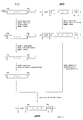
- pJRM100 for the expression of PAP is constructed by ligating BamHI fragments to a binary vector pBI121(Clonetech, Lot #6019-2). Said novel recombinant vector, pJRM100, is deposited with the Korean Collection for Type Culture(KCTC), an international depository authority(IDA) on August 7, 1992 as deposition No. KCTC 0052BP.
- Agrobacterium tumefaciens LBA 4404 a mediator for plant cell transformation is transformed with the pJRM100 and transformation of plant cell with said organism is followed.
- Shoot is induced on MS selective medium containing 200mg/ml kanamycin and 500mg/ml carbenicillin; and root is induced from said shoot. Plant thus obtained is transferred to pot for continuous growth.
- Immunodiffusion assay is employed to investigate the PAP gene expression; and, Southern and Northern blot methods are employed to investigate proper insertion and transcription of PAP gene, respectively. Resistance of transgenic plant for viral infectivity is tested by local leision assay.
- Example 1 Isolation of PAP genome.
- PAP was isolated in pure culture in accordance with Irvin's method[ see : J.D. Irvin, et al., Arch. Biochem. Biophys., 169: 522-528(1975)]. 480 ⁇ g of PAP was dissolved in PBS solution and combined with Freund's complete adjuvant with a ratio of 1:1 (v/v), and mixture thereof was administrated to a rabbit ( ⁇ 3kg of body weight) intramuscularly. After 3 weeks, antibody formation was detected in a small amount of blood collected from the rabbit, and 750 ⁇ g of PAP was combined with Freund's complete adjuvant for boosting with a ration of 1:1(v/v).
- Plasma fraction was fractionated from blood by centrifugation; and Protein-A agarose column chromatography was employed to isolate anti-plasma. Immunodiffusion assay and electrophoresis technique were employed to determine antibody formation and homogeniety of isolated PAP, respectively. Purified PAP antibody was stored at -70°C and employed to isolate PAP gene from cDNA library.
- 1st strand DNA was synthesized from template mRNA employing M-MuLV reverse transcriptase; and, 2nd strand DNA synthesis by E.coli DNA polymerase was followed.
- Synthesized cDNA linked to EcoRI adaptor was subjected to the fractionation by Sephacryl S-400 spun column in accordance with molecular size of cDNA. Fractionated cDNA was ligated to Uni-Zap XR vector(Stratagene Co., U.K.), and in vitro packaging using packaging extract was followed. Immunodiffusion assay employing anti-PAP antibody was carried out to isolate PAP gene from cDNA library thus prepared. Competent E.
- coli XLl-Blue was infected with phage on petri dish, to form plaque of 2 x 10⁴ pfu. Said bacteria was incubated at 37°C for 15min, and incubation at 42°C for 3.5 hours was followed after plating with 3ml of top agarose. Then, plate was covered with Hybond-N+(Amersham) and further incubated for 5 hours. After serial incubation, Hybond-N+ was blocked with bovine serum albumin and 5mg/ml of anti-PAP antibody was combined. After the removal of free anti-PAP antibody which was not bound with PAP, peroxidase conjugated 2nd antibody was reacted with anti-PAP antibody; and, antigen-antibody complexes thus formed were detected by chloronaphthol treatment.
- Plasmids were isolated from the 4 colonies thus selected by alkali denaturation method [ see : Maniatis et al., Molecular Cloning: A Laboratory Manual, pp 368-369, Cold Spring Harbor Laboratory (1982)], and colonies harboring PAP gene were screened by restriction enzyme excision method.
- plasmids from 2 clones were isolated, and PAP cDNA insert was sequenced by dideoxy chain termination method.
- DNA was purified from microorganisms harboring PAP gene. DNA thus purified was digested with SacII and BamHI and deletion was made by intermittent ExoIII excision reaction using Erase-a-Base system(Promega, USA). Deleted DNA was ligated by T4 DNA ligase and transformation with competent XL1-BLUE cell prepared by CaCl2 solution was followed. Deletion mutant fractionated by molecular size was employed to determine DNA sequence.
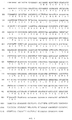
- PAP genome comprises 1195bp of one open reading frame; and cDNA insert of PAP codes 313 of amino acid residues, 22 residues of which functions as signal peptide.
- Polyadenylation signal(AATAAA) which is ubiquitous in mRNA of most plants and animals, appears to be located in the upstream of 17bp from the polyadenylation site.
- RIP Abrin A, Luffina, MAP, Ricin A., Trichosanthin and SO6
- PAP gene Ile-Gln-Met-Val-Ser-Glu-Ala-Arg-Phe-Lys-Tyr-Ile
- Southern blot analysis was carried out to locate PAP gene in Phytolacca americana as follows: total DNA was isolated from Phytolacca americana, digested with HindIII and EcoRI and fragments produced thereof were electrophoresed on 0.8(v/w)% agarose gel. DNA was transferred to Hybond-N+ and subjected to hybridization employing 0.52kb EcoRI fragment of PAP cDNA insert as probe. In this connection, probe was prepared by nick translation kit(Promega, U.S.A.) and labelled with ⁇ -32P dATP.
- Northern blot analysis was carried out as follows: poly(A) mRNA isolated from Phytolacca americana was electrophoresed on 1(v/w)% agarose gel containing 10(v/v)% formaldehyde. RNA thus fractionated was transferred to Hybond-N+ and subjected to hybridization using 0.52kb EcoRI fragment already employed in the above Southern blot analysis.
- Example 2 Manipulation of 5' and 3' site of PAP genome.
- PAP gene was double restricted with SacII and BamHI; and ExoIII treatment at 30°C for 10sec was followed. About 30bp deleted DNA was produced by S1 nuclease treatment, ligated to BamHI linker by T4 DNA ligase. DNA fragment thus obtained was transformed with competent XL1-BLUE; and sequenced to select colony produced and to locate terminator sequence in a precise manner. Deleted DNA was selected and employed for further experiment.
- Example 3 Manipulation of binary vector pBI121 and preparation of expression vector pJRM100.
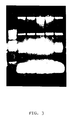
- FIG. 3 shows agarose gel electrophoresis pattern of pJRM100 digested with HindIII and XhoI(lane 1: ⁇ DNA digested with HindIII).
- Example 4 Transformation of plant cell by Agrobacterium mediator.
- Freeze-thawing method was employed to transform Agrobacterium tumefaciens LBA 4404 with pJRM100 prepared in Example 3, where PAP gene expression is controlled under CaMV promotor.
- plasmid DNA was isolated from the Agrobacterium by quick-screening method[ see : Stanton B.G. et al., Plant Molecular Biology Manual, Kluwer, Academic Publishers (1988)] and digested with BamHI.
- Agrobacterium tumefaciens LBA 4404 transformed with pJRM100 was deposited with Korean Collection for Type Culture (KCTC) on August 7, 1992 as deposition No. KCTC 0052BP; and claimed in the invention.
- Nicotiana tabacum NC2326 and Nicotiana tabacum xanthi prepared as followings, were employed in the present invention as host organism: tobacco seed was treated with 70(v/v)% ethanol for 5min and 50(v/v)% bleaching agent for 20min respectively, then washed with distilled water 3 times and incubated on MS basic medium; and leaves grown for 1 month in incubator were chopped up in a proper size and employed as objectives for transformation.
- Agrobacterium tumefaciens LBA 4404 transformed with pJRM100(KCTC 0052BP), a mediator for plant cell transformation was incubated on shaking incubator at 28°C, 200rpm for 18hrs. After cell culture, said cells were harvested, emulsified with MS medium to the concentration of 1 to 2 x 10³ cells/ml and used for tobacco plant transformation.
- Transformation of tobacco leaf fragments with Agrobacterium tumefaciens LBA 4404 harvoring pJRM100 were made by contacting each other for 30min; and transformant thereofs were incubated on MS solid medium comprising 1.0mg/1 BAP(benzylamino purine) and 0.1mg/1 NAA( ⁇ -Naphthalene acetic acid) at 26°C for 48hrs under dark condition. Then, incubation on MS selective medium comprising 1.0mg/1 BAP, 100mg/ kanamycin and 500mg/1 carbenicillin was followed to induce shoot.
- Incubation was made at 26°C, 300lux and daylight length was provided intermittently in 16hrs cycle; and, shoot induced therefrom was further incubated for generations, i.e., it was seeded from generation to generation every 2 weeks, under the same condition as leaf fragment incubation.
- Example 5 Determination of PAP expression in transgenic tobacco.
- Example 6 Southern blot analysis of transgenic tobacco.
- Figure 6 illustrates said results: lane 1 is BamHI digested DNA from non-transformed tobacco; lane 2, 3 and 4 are BamHI digested DNA from transformed tobacco; lane 5 is BamHI treated pJRM100, where the same band as lanes 2, 3 and 4 were determined.
- Example 7 Northern blot analys of transgenic tobacco.
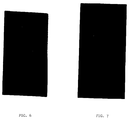
- Figure 7 illustrates said results, where no band was determined in non-transformed control(A) while one band was determined in transformed tobacco.
- Example 8 Local leision assay of transgenic tobacco.
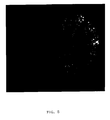
- Lyophilized TMV-infected tissue(ATCC PV226) obtained from ATCC was chopped up, dissolved in phosphate buffer solution and centrifuged. Supernatant thus obtained, was formulated for virus innoculation; and administrated on test plants under 4 to 6 leaves stage. After innoculation, local leision assay was carried out for 7 days in growth chamber.
- Figure 8 illustrates the said results, wherein plaque was formed in transformed tobacco(A), while no plaque was detected in non-transformed tobacco.
- the present invention provides a process for preparing a transgenic plant producing antiviral protein by transforming with recombinant vector for antiviral protein expression, which contains a PAP gene isolated from Phytolacca americana cDNA library and a vector for foreign protein expression.
- Virus-resistant plant and antiviral agent produced therefrom can also be developed in accordance with the present invention.
Landscapes
- Health & Medical Sciences (AREA)
- Life Sciences & Earth Sciences (AREA)
- Genetics & Genomics (AREA)
- Engineering & Computer Science (AREA)
- Chemical & Material Sciences (AREA)
- Organic Chemistry (AREA)
- Biomedical Technology (AREA)
- Molecular Biology (AREA)
- Biotechnology (AREA)
- General Engineering & Computer Science (AREA)
- Wood Science & Technology (AREA)
- Bioinformatics & Cheminformatics (AREA)
- Zoology (AREA)
- Biophysics (AREA)
- Biochemistry (AREA)
- General Health & Medical Sciences (AREA)
- Microbiology (AREA)
- Plant Pathology (AREA)
- Physics & Mathematics (AREA)
- Cell Biology (AREA)
- Virology (AREA)
- Botany (AREA)
- Gastroenterology & Hepatology (AREA)
- Medicinal Chemistry (AREA)
- Proteomics, Peptides & Aminoacids (AREA)
- Breeding Of Plants And Reproduction By Means Of Culturing (AREA)
- Preparation Of Compounds By Using Micro-Organisms (AREA)
- Micro-Organisms Or Cultivation Processes Thereof (AREA)
Applications Claiming Priority (2)
| Application Number | Priority Date | Filing Date | Title |
|---|---|---|---|
| KR9214895 | 1992-08-16 | ||
| KR1019920014895A KR950012900B1 (ko) | 1992-08-19 | 1992-08-19 | 항바이러스성 단백질 발현벡터와 이것으로 형질전환된 식물체의 제조방법 |
Publications (2)
| Publication Number | Publication Date |
|---|---|
| EP0585554A1 true EP0585554A1 (fr) | 1994-03-09 |
| EP0585554B1 EP0585554B1 (fr) | 1996-11-20 |
Family
ID=19338171
Family Applications (1)
| Application Number | Title | Priority Date | Filing Date |
|---|---|---|---|
| EP93110445A Expired - Lifetime EP0585554B1 (fr) | 1992-08-16 | 1993-06-30 | Procédé de préparer une plant transgène qui exprime la protéine antivirale de phytolacca |
Country Status (4)
| Country | Link |
|---|---|
| EP (1) | EP0585554B1 (fr) |
| JP (1) | JP2522151B2 (fr) |
| KR (1) | KR950012900B1 (fr) |
| DE (1) | DE69306067T2 (fr) |
Cited By (2)
| Publication number | Priority date | Publication date | Assignee | Title |
|---|---|---|---|---|
| EP0707069A3 (fr) * | 1994-07-21 | 1996-05-29 | Jinro Ltd | |
| EP0808902A3 (fr) * | 1996-05-22 | 1998-02-04 | Jinro Limited | Gènes codant pour des protéines antivirales de Phytolacca insularis Nakai et des microorganismes exprimant ces protéines |
Families Citing this family (2)
| Publication number | Priority date | Publication date | Assignee | Title |
|---|---|---|---|---|
| US6608241B1 (en) * | 1985-10-29 | 2003-08-19 | Monsanto Technology Llc | Protection of plants against viral infection |
| KR100448189B1 (ko) | 2001-11-19 | 2004-09-10 | 삼성전자주식회사 | 컴퓨터 |
Citations (2)
| Publication number | Priority date | Publication date | Assignee | Title |
|---|---|---|---|---|
| US4921841A (en) * | 1982-12-14 | 1990-05-01 | Obrig Thomas G | Immunoaffinity purification of phytolaccin proteins and their use in treating Herpes Simplex virus type II |
| EP0437320A1 (fr) * | 1990-01-10 | 1991-07-17 | Korea Institute Of Science And Technology | ADN recombinant et son utilisation lors de la production d'insuline humaine |
-
1992
- 1992-08-19 KR KR1019920014895A patent/KR950012900B1/ko not_active Expired - Fee Related
-
1993
- 1993-04-30 JP JP5128222A patent/JP2522151B2/ja not_active Expired - Lifetime
- 1993-06-30 DE DE69306067T patent/DE69306067T2/de not_active Expired - Fee Related
- 1993-06-30 EP EP93110445A patent/EP0585554B1/fr not_active Expired - Lifetime
Patent Citations (2)
| Publication number | Priority date | Publication date | Assignee | Title |
|---|---|---|---|---|
| US4921841A (en) * | 1982-12-14 | 1990-05-01 | Obrig Thomas G | Immunoaffinity purification of phytolaccin proteins and their use in treating Herpes Simplex virus type II |
| EP0437320A1 (fr) * | 1990-01-10 | 1991-07-17 | Korea Institute Of Science And Technology | ADN recombinant et son utilisation lors de la production d'insuline humaine |
Non-Patent Citations (2)
| Title |
|---|
| PLANT MOLECULAR BIOLOGY vol. 17, 1991, pages 609 - 614 Q. LIN ET AL.; 'Isolation and characterisation of a cDNA clone encoding the anti-viral protein from Phytolacca americana' * |
| PROCEEDINGS OF THE NATIONAL ACADEMY OF SCIENCES OF THE USA vol. 83, 1986, pages 5053 - 5056 M.P. READY ET AL.; 'Extracellular localization of pokeweed antiviral protein' * |
Cited By (2)
| Publication number | Priority date | Publication date | Assignee | Title |
|---|---|---|---|---|
| EP0707069A3 (fr) * | 1994-07-21 | 1996-05-29 | Jinro Ltd | |
| EP0808902A3 (fr) * | 1996-05-22 | 1998-02-04 | Jinro Limited | Gènes codant pour des protéines antivirales de Phytolacca insularis Nakai et des microorganismes exprimant ces protéines |
Also Published As
| Publication number | Publication date |
|---|---|
| DE69306067T2 (de) | 1997-06-12 |
| EP0585554B1 (fr) | 1996-11-20 |
| KR940004056A (ko) | 1994-03-14 |
| DE69306067D1 (de) | 1997-01-02 |
| KR950012900B1 (ko) | 1995-10-23 |
| JP2522151B2 (ja) | 1996-08-07 |
| JPH0678775A (ja) | 1994-03-22 |
Similar Documents
| Publication | Publication Date | Title |
|---|---|---|
| KR0154872B1 (ko) | 발아하는 식물종자의 아크로박테리움 매개된 형질전환 | |
| US5656466A (en) | Process for preparing virus-resistant transgenic plant | |
| EP0430972A1 (fr) | Surexpression de phytochrome dans des vegetaux transgeniques | |
| US5633155A (en) | Expression vector for phytolacca antiviral protein and process for preparing transgenic plant transformed therewith | |
| CN108192920B (zh) | 一种利用ndr1基因提高植物抗病性的方法 | |
| JPH03112488A (ja) | 調節dna配列 | |
| CN111574606B (zh) | 小麦抗病与抽穗调控基因TaCOK及其相关生物材料与应用 | |
| JP2002525033A (ja) | 植物に疾患抵抗性を付与するPi−ta遺伝子 | |
| EP0585554B1 (fr) | Procédé de préparer une plant transgène qui exprime la protéine antivirale de phytolacca | |
| RU2125606C1 (ru) | Способ получения резистентного к вирусу трансгенного растения | |
| CN107663231B (zh) | 本氏烟tmp14蛋白及其在抗植物病毒中的应用 | |
| CN113528538B (zh) | 黄瓜CsSTK基因、蛋白、表达载体及应用 | |
| US5914448A (en) | Process for the preparation of antiviral plant transformed with lactoferrin gene | |
| JP4228072B2 (ja) | アビジンをコードする人工合成遺伝子 | |
| US5648234A (en) | Expression vector for Phytolacca antiviral protein | |
| KR100508501B1 (ko) | 식물체에서 발현된 푸말라 바이러스의 뉴클레오캡시드단백질을 포함하는 신증후출혈열 진단 키트 | |
| KR100508499B1 (ko) | 식물체에서 발현된 한탄 바이러스의 뉴클레오캡시드단백질을 포함하는 신증후출혈열 진단 키트 | |
| CN121450702A (zh) | Rwr6蛋白及其相关生物材料在培育抗病植物品种中的应用 | |
| KR100508500B1 (ko) | 식물체에서 발현된 신 놈브레 바이러스의 뉴클레오캡시드단백질을 포함하는 신증후출혈열 진단 키트 | |
| CN121472301A (zh) | 一种提高植物抗病性的方法 | |
| Catranis | Transgenic hybrid poplar expressing genes encoding antimicrobial peptides | |
| US20050198708A1 (en) | Plant protein disulfide isomerase | |
| KR20050010178A (ko) | 식물체에서 발현된 서울 바이러스의 뉴클레오캡시드단백질을 포함하는 신증후출혈열 진단 키트 | |
| KR20050010175A (ko) | 식물체에서 발현된 사스 코로나 바이러스의뉴클레오캡시드 단백질을 포함하는 중증급성호흡기증후군진단 키트 |
Legal Events
| Date | Code | Title | Description |
|---|---|---|---|
| PUAI | Public reference made under article 153(3) epc to a published international application that has entered the european phase |
Free format text: ORIGINAL CODE: 0009012 |
|
| AK | Designated contracting states |
Kind code of ref document: A1 Designated state(s): DE GB NL |
|
| 17P | Request for examination filed |
Effective date: 19940504 |
|
| 17Q | First examination report despatched |
Effective date: 19950505 |
|
| GRAG | Despatch of communication of intention to grant |
Free format text: ORIGINAL CODE: EPIDOS AGRA |
|
| GRAH | Despatch of communication of intention to grant a patent |
Free format text: ORIGINAL CODE: EPIDOS IGRA |
|
| GRAH | Despatch of communication of intention to grant a patent |
Free format text: ORIGINAL CODE: EPIDOS IGRA |
|
| GRAA | (expected) grant |
Free format text: ORIGINAL CODE: 0009210 |
|
| AK | Designated contracting states |
Kind code of ref document: B1 Designated state(s): DE GB NL |
|
| REF | Corresponds to: |
Ref document number: 69306067 Country of ref document: DE Date of ref document: 19970102 |
|
| PGFP | Annual fee paid to national office [announced via postgrant information from national office to epo] |
Ref country code: GB Payment date: 19970623 Year of fee payment: 5 |
|
| PGFP | Annual fee paid to national office [announced via postgrant information from national office to epo] |
Ref country code: DE Payment date: 19970627 Year of fee payment: 5 |
|
| PGFP | Annual fee paid to national office [announced via postgrant information from national office to epo] |
Ref country code: NL Payment date: 19970630 Year of fee payment: 5 |
|
| PLBE | No opposition filed within time limit |
Free format text: ORIGINAL CODE: 0009261 |
|
| STAA | Information on the status of an ep patent application or granted ep patent |
Free format text: STATUS: NO OPPOSITION FILED WITHIN TIME LIMIT |
|
| 26N | No opposition filed | ||
| PG25 | Lapsed in a contracting state [announced via postgrant information from national office to epo] |
Ref country code: GB Free format text: LAPSE BECAUSE OF NON-PAYMENT OF DUE FEES Effective date: 19980630 |
|
| PG25 | Lapsed in a contracting state [announced via postgrant information from national office to epo] |
Ref country code: NL Free format text: LAPSE BECAUSE OF NON-PAYMENT OF DUE FEES Effective date: 19990101 |
|
| GBPC | Gb: european patent ceased through non-payment of renewal fee |
Effective date: 19980630 |
|
| NLV4 | Nl: lapsed or anulled due to non-payment of the annual fee |
Effective date: 19990101 |
|
| PG25 | Lapsed in a contracting state [announced via postgrant information from national office to epo] |
Ref country code: DE Free format text: LAPSE BECAUSE OF NON-PAYMENT OF DUE FEES Effective date: 19990401 |