EP0591914B1 - Retrovirus aus der HIV-Gruppe und dessen Verwendung - Google Patents
Retrovirus aus der HIV-Gruppe und dessen Verwendung Download PDFInfo
- Publication number
- EP0591914B1 EP0591914B1 EP93116058A EP93116058A EP0591914B1 EP 0591914 B1 EP0591914 B1 EP 0591914B1 EP 93116058 A EP93116058 A EP 93116058A EP 93116058 A EP93116058 A EP 93116058A EP 0591914 B1 EP0591914 B1 EP 0591914B1
- Authority
- EP
- European Patent Office
- Prior art keywords
- hiv
- sequence
- virus
- antigen
- dna
- Prior art date
- Legal status (The legal status is an assumption and is not a legal conclusion. Google has not performed a legal analysis and makes no representation as to the accuracy of the status listed.)
- Expired - Lifetime
Links
Images



Classifications
-
- G—PHYSICS
- G01—MEASURING; TESTING
- G01N—INVESTIGATING OR ANALYSING MATERIALS BY DETERMINING THEIR CHEMICAL OR PHYSICAL PROPERTIES
- G01N33/00—Investigating or analysing materials by specific methods not covered by groups G01N1/00 - G01N31/00
- G01N33/48—Biological material, e.g. blood, urine; Haemocytometers
- G01N33/50—Chemical analysis of biological material, e.g. blood, urine; Testing involving biospecific ligand binding methods; Immunological testing
- G01N33/53—Immunoassay; Biospecific binding assay; Materials therefor
- G01N33/569—Immunoassay; Biospecific binding assay; Materials therefor for microorganisms, e.g. protozoa, bacteria, viruses
- G01N33/56983—Viruses
- G01N33/56988—HIV or HTLV
-
- A—HUMAN NECESSITIES
- A61—MEDICAL OR VETERINARY SCIENCE; HYGIENE
- A61P—SPECIFIC THERAPEUTIC ACTIVITY OF CHEMICAL COMPOUNDS OR MEDICINAL PREPARATIONS
- A61P31/00—Antiinfectives, i.e. antibiotics, antiseptics, chemotherapeutics
- A61P31/12—Antivirals
-
- A—HUMAN NECESSITIES
- A61—MEDICAL OR VETERINARY SCIENCE; HYGIENE
- A61P—SPECIFIC THERAPEUTIC ACTIVITY OF CHEMICAL COMPOUNDS OR MEDICINAL PREPARATIONS
- A61P31/00—Antiinfectives, i.e. antibiotics, antiseptics, chemotherapeutics
- A61P31/12—Antivirals
- A61P31/14—Antivirals for RNA viruses
- A61P31/18—Antivirals for RNA viruses for HIV
-
- C—CHEMISTRY; METALLURGY
- C07—ORGANIC CHEMISTRY
- C07K—PEPTIDES
- C07K14/00—Peptides having more than 20 amino acids; Gastrins; Somatostatins; Melanotropins; Derivatives thereof
- C07K14/005—Peptides having more than 20 amino acids; Gastrins; Somatostatins; Melanotropins; Derivatives thereof from viruses
-
- C—CHEMISTRY; METALLURGY
- C12—BIOCHEMISTRY; BEER; SPIRITS; WINE; VINEGAR; MICROBIOLOGY; ENZYMOLOGY; MUTATION OR GENETIC ENGINEERING
- C12Q—MEASURING OR TESTING PROCESSES INVOLVING ENZYMES, NUCLEIC ACIDS OR MICROORGANISMS; COMPOSITIONS OR TEST PAPERS THEREFOR; PROCESSES OF PREPARING SUCH COMPOSITIONS; CONDITION-RESPONSIVE CONTROL IN MICROBIOLOGICAL OR ENZYMOLOGICAL PROCESSES
- C12Q1/00—Measuring or testing processes involving enzymes, nucleic acids or microorganisms; Compositions therefor; Processes of preparing such compositions
- C12Q1/70—Measuring or testing processes involving enzymes, nucleic acids or microorganisms; Compositions therefor; Processes of preparing such compositions involving virus or bacteriophage
- C12Q1/701—Specific hybridization probes
- C12Q1/702—Specific hybridization probes for retroviruses
- C12Q1/703—Viruses associated with AIDS
-
- A—HUMAN NECESSITIES
- A61—MEDICAL OR VETERINARY SCIENCE; HYGIENE
- A61K—PREPARATIONS FOR MEDICAL, DENTAL OR TOILETRY PURPOSES
- A61K39/00—Medicinal preparations containing antigens or antibodies
-
- C—CHEMISTRY; METALLURGY
- C12—BIOCHEMISTRY; BEER; SPIRITS; WINE; VINEGAR; MICROBIOLOGY; ENZYMOLOGY; MUTATION OR GENETIC ENGINEERING
- C12N—MICROORGANISMS OR ENZYMES; COMPOSITIONS THEREOF; PROPAGATING, PRESERVING, OR MAINTAINING MICROORGANISMS; MUTATION OR GENETIC ENGINEERING; CULTURE MEDIA
- C12N2740/00—Reverse transcribing RNA viruses
- C12N2740/00011—Details
- C12N2740/10011—Retroviridae
- C12N2740/16011—Human Immunodeficiency Virus, HIV
- C12N2740/16021—Viruses as such, e.g. new isolates, mutants or their genomic sequences
-
- C—CHEMISTRY; METALLURGY
- C12—BIOCHEMISTRY; BEER; SPIRITS; WINE; VINEGAR; MICROBIOLOGY; ENZYMOLOGY; MUTATION OR GENETIC ENGINEERING
- C12N—MICROORGANISMS OR ENZYMES; COMPOSITIONS THEREOF; PROPAGATING, PRESERVING, OR MAINTAINING MICROORGANISMS; MUTATION OR GENETIC ENGINEERING; CULTURE MEDIA
- C12N2740/00—Reverse transcribing RNA viruses
- C12N2740/00011—Details
- C12N2740/10011—Retroviridae
- C12N2740/16011—Human Immunodeficiency Virus, HIV
- C12N2740/16022—New viral proteins or individual genes, new structural or functional aspects of known viral proteins or genes
-
- C—CHEMISTRY; METALLURGY
- C12—BIOCHEMISTRY; BEER; SPIRITS; WINE; VINEGAR; MICROBIOLOGY; ENZYMOLOGY; MUTATION OR GENETIC ENGINEERING
- C12N—MICROORGANISMS OR ENZYMES; COMPOSITIONS THEREOF; PROPAGATING, PRESERVING, OR MAINTAINING MICROORGANISMS; MUTATION OR GENETIC ENGINEERING; CULTURE MEDIA
- C12N2740/00—Reverse transcribing RNA viruses
- C12N2740/00011—Details
- C12N2740/10011—Retroviridae
- C12N2740/16011—Human Immunodeficiency Virus, HIV
- C12N2740/16111—Human Immunodeficiency Virus, HIV concerning HIV env
- C12N2740/16122—New viral proteins or individual genes, new structural or functional aspects of known viral proteins or genes
-
- C—CHEMISTRY; METALLURGY
- C12—BIOCHEMISTRY; BEER; SPIRITS; WINE; VINEGAR; MICROBIOLOGY; ENZYMOLOGY; MUTATION OR GENETIC ENGINEERING
- C12N—MICROORGANISMS OR ENZYMES; COMPOSITIONS THEREOF; PROPAGATING, PRESERVING, OR MAINTAINING MICROORGANISMS; MUTATION OR GENETIC ENGINEERING; CULTURE MEDIA
- C12N2740/00—Reverse transcribing RNA viruses
- C12N2740/00011—Details
- C12N2740/10011—Retroviridae
- C12N2740/16011—Human Immunodeficiency Virus, HIV
- C12N2740/16211—Human Immunodeficiency Virus, HIV concerning HIV gagpol
- C12N2740/16222—New viral proteins or individual genes, new structural or functional aspects of known viral proteins or genes
Definitions
- the present invention relates to a new retrovirus from the HIV group and variants or parts thereof, which the essential properties of the virus included. Is described a method of growing the retrovirus. The invention relates continue to recover and use this retrovirus the virus, its parts or extracts for medical purposes and for diagnostics.
- Retrovirus from the HIV group is a in certain cases such evidence is possible.
- MVP-5180/91 Human immunodeficiency virus
- This retrovirus originates geographically a region in Africa that is between West Africa with endemic HIV-2 and HIV-1 viral infections and East Central Africa with almost exclusive HIV-1 spread is localized.
- object the present invention is a new HIV group retrovirus, which is designated as MVP-5180/91 and its Variants and derived DNA sequences and test kits that amino acid sequences or partial sequences derived therefrom contain.
- the retrovirus MVP-5180/91 was developed by the European Collection of Animal Cell Cultures (ECACC) under number V 920 92 318 according to the terms of the Budapest Treaty deposited.
- the MVP-5180/91 grows in the following cell lines HUT 78, Jurkat cells, C8166 cells and MT-2 cells. Isolation and multiplication of viruses is described in the book "Viral Quantitation in HIV Infection, Editor Jean-Marie Andrieu, John Libbey Eurotext, 1991 "in detail described. The working methods described there are by Reference to the subject matter of the disclosure of the present Registration made.
- the virus according to the invention has one magnesium-dependent reverse transcriptase, but not is dependent on manganese. This represents another commonality to the Viruses represent HIV-1 and HIV-2.
- RNA is located inside the virus a conical core made up of protein subunits composed of the designation p 24 (p for protein) carry.
- This inner core is surrounded by a protein shell, which is composed of the protein p 17 (outer core) and of is surrounded by a glycoprotein shell, which, in addition to lipids, consists of of the host cell, the transmembrane protein gp 41, and that Contains coat protein 120 (gp 120).
- This gp 120 can then be used with the Host cell CD-4 receptors bind.
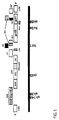
- RNA of the HIV virus - simplified shown - the following gene areas: At both ends so-called long terminal repeats (LTR), and the following Gene ranges gag, pol, env and nef.
- LTR long terminal repeats
- the gene gag codes under other for the core (core) proteins, p 24 and p 17, the gene pol coded i.a. for the reverse transcriptase, the RNAse H and the integrase and the env gene encode for the Glycoproteins gp 41 and gp 120 of the virus envelope.
- the gene nef encodes a protein with regulatory function.
- a schematic arrangement of the genome of retroviruses of the HIV type is shown in Figure 1.
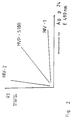
- HIV-1 and HIV-2 are among others possible by testing viral antigen is made with a monoclonal antibody that is commercially available as Test kit is available from Abbott (HIVAG-1 Monoclonal), and against which (HIV-1) p 24 is directed. It is known that the level of reverse transcriptase in the HIV-1 virus types and HIV-2 is about the same. So if you dilute it of the disrupted viruses the absorbance (E 490 nm), obtained by the antigen-antibody reaction against the activity of reverse transcriptase, then receives you get a graphic that corresponds approximately to Figure 2.
- PCR polymerase chain reaction
- the Reverse transcriptase of the MVP-5180/91 a molecular weight that is between about 3 and about 7 kilodaltons smaller than that of reverse transcriptase from HIV-1 or HIV-2.
- the Reverse transcriptase from MPV-5180 thus shows Molecular weight that is between about 4,500 daltons and is about 5,500 daltons smaller than reverse transcriptase of HIV-1 or HIV-2.
- the virus is made from a correspondingly large amount of culture (about 1 l) precipitated and taken up in phosphate buffered saline. Then pelleting is carried out by a (20%) Sucrose pillow.
- the virus pellet can be in 6 M Guanidinium chloride in 20 mM dithiothreitol and 0.5% nonidet P 40 can be suspended. CsCl except for one Concentration of 2 molar added and that the solution containing broken virus is placed on a Cesium chloride cushion applied. Then the viral RNA pelleted by centrifugation, dissolved, with phenol extracted and precipitated with ethanol and lithium chloride.
- the present invention furthermore relates to such Viruses that have a homology of more than 66%, preferably 75% and particularly preferably have 85% partial sequences the nucleotide sequence shown in Table 3, at least Are 50, preferably 100 nucleotides long. This corresponds to one Length of the peptides of at least 16 and preferably at least 33 amino acids.
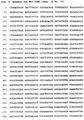
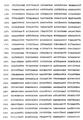
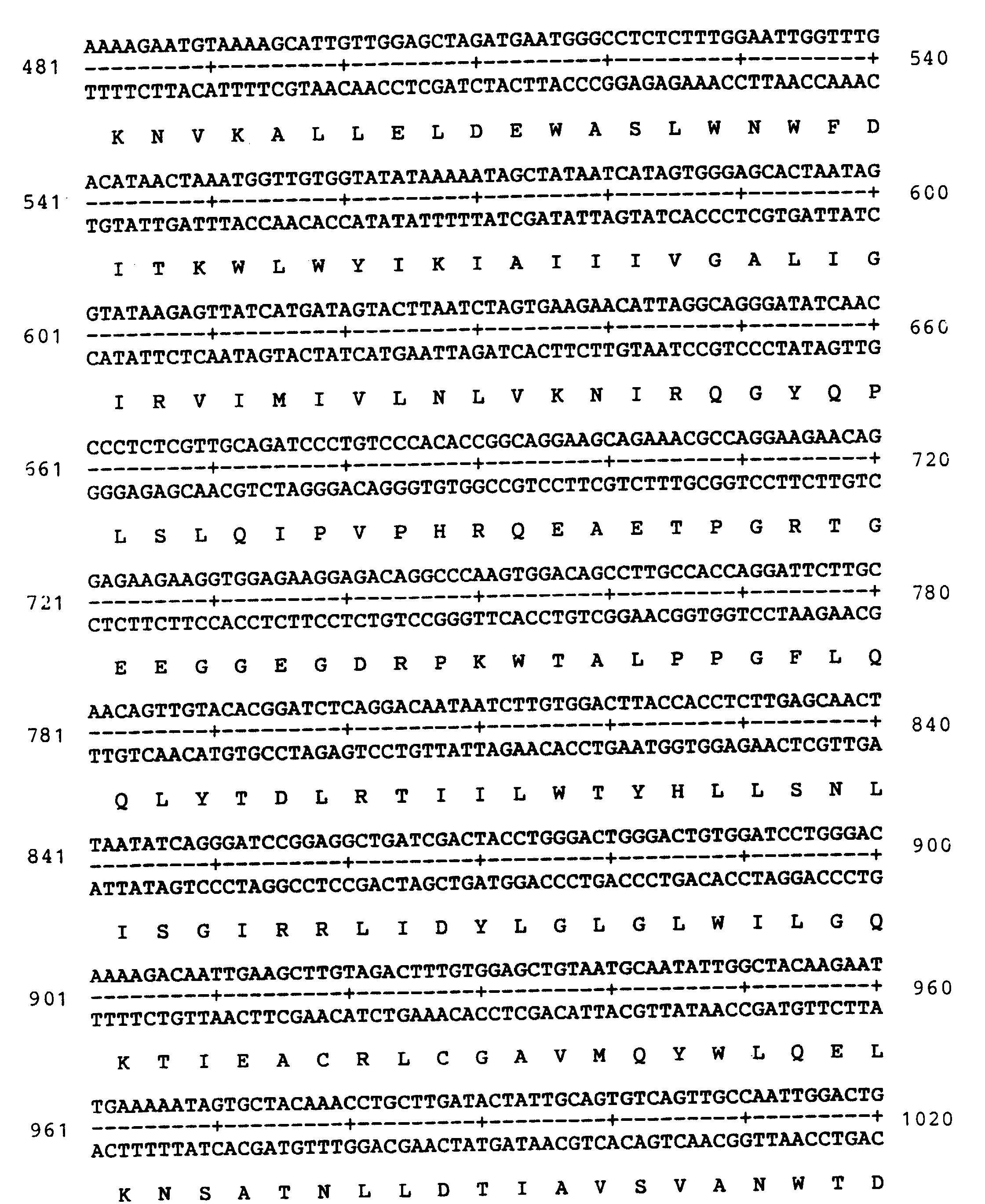
- the (almost) complete sequence, given as the DNA sequence of the Virus according to the invention is shown in FIG. 4.
- object The present invention includes viruses that have the sequence 4 and variants thereof that have a high 4 and homology to the sequence diagnostic use of proteins derived therefrom, Polypeptides and oligopeptides.
- the antigens or peptides can be relatively short Have partial sequences of an amino acid sequence, which are in Table 3 is reproduced or can be derived from Figure 4.
- This Amino acid sequence is at least 6 amino acids, preferred at least 10 and particularly preferably at least 15 amino acids long. These peptides cannot only be produced with the help of recombinant technology but also synthetic Methods.
- a suitable manufacturing route is Solid phase synthesis from the Merrifield type. Another description this technique and others known in the art Methods can be found in the literature, e.g. M. Bodansky, et al., Peptide Synthesis, John Weeley & Sons, 2nd edition 1976.
- a serum sample is taken of the investigator matched with the protein chains of one or more proteins or glycoproteins (which in eukaryotic cell lines can be expressed) or parts of which are from MVP-5180/91.
- Preferred test methods include immunofluorescence or immunoenzymatic Test procedures (e.g. Elisa, Immunoblot).
- antigen derived from MVP-5180/91 or a variant thereof can be bound to the walls of microtiter plates.
- the dosage used depends essentially on the test system and the treatment of the microtiter plates.
- serum or serum dilutions which come from the person to be examined, are added to the holes in the microtiter plates.
- specific immune complexes are detected by antibodies which bind specifically to human immunoglobulins and which have previously been linked with an enzyme, for example horseradish peroxidase, alkaline phosphatase etc. or with enzyme-labeled antigen.
- viruses according to the invention can convert a colorless substrate into a strongly colored product and the presence of specific anti-HIV antibodies can then be read from the strength of the color.
- Another possibility of using the virus according to the invention in test systems is the use in Western blots. Even if the production of vaccines against immunodeficiency disorders proves to be extremely difficult, this virus or parts thereof, ie immunodominant epitopes and inducers of cellular immunity, or genetically engineered antigens can also be used for the development and production of vaccines.
- the immunodeficiency virus MVP-5180/91 was isolated from the blood of a patient with signs of immunodeficiency.
- peripheral mononuclear cells peripheral blood lymphocytes, PBL
- peripheral lymphocytes from the blood PBL
- the usual medium RPMI 1640 with 10% fetal calf serum was used for this.
- the culture conditions are described in Landay A. et al., J. Inf. Dis., 161 (1990) pp. 706-710. The formation of giant cells was then observed under the microscope.
- HIV viruses The production of HIV viruses was determined by determining the p24 antigen using Abbott's commercially available test. Another test to determine the growth of the virus was the test using particle-bound reverse transcriptase (Eberle J., Seibl R., J. Virol. Methods 40, 1992, pp. 347-356). The growth of the viruses was determined once or twice a week based on the enzymatic activities in the culture supernatant in order to monitor the virus production. New donor lymphocytes were added once a week.
- Example 2 further Western blots carried out.
- the results are in the attached Figure 3 shown.
- This Filter strips were made with the sera from various Patients were incubated and then the specific ones Antibodies made visible by a color reaction.
- the right half the figure shows a virus isolated from a German donor (MVP-899), which is an HIV-1 virus.
- Figure 3 clearly shows that sera from German Patients with the immunodeficiency virus according to the invention in Western blot with the gp 41 is very weak. Sera African patients react with the immunodeficiency virus according to the invention very strong. Figure 3 therefore makes it clear that using the immunodeficiency virus according to the invention such immunodeficiency infections can be demonstrated when using of an HIV-1 or HIV-2 virus is only questionable, so not deliver clearly positive results.
- This Evidence can be far-reaching diagnostic Have meaning because in cases where only questionable Results are achieved in the Western blot, not with definite certainty can be established whether it is an infection with an immunodeficiency virus. But if with the help of the immunodeficiency virus according to the invention such questionable results of infection with be assigned to a virus of the type according to the invention then this presents a significant diagnostic Progress.
- Genomic DNA from MVP-5180/91 infected HUT 78 cells were isolated using standard methods.
- PCR polymerase chain reaction
- 5 ⁇ l genomic DNA from MVP-5180/91 infected HUT 78 cells in a 100 ⁇ l reaction mixture Pipette 0.25 mM dNTP, 1 ⁇ M each of Primer 1 and Primer 2, 10 mM Tris HCl pH 8.3, 50 mM KCl, 1.5 mM MgCl 2 , 0.001% gelatin, 2.5 units Taq polymerase (Perkin Elmer) and amplified according to the following temperature program: 1st initial denaturation: 3 '95 ° C, 2nd amplification: 90''94 ° C, 60''56 ° C
- the primers used for the PCR and the nucleotide sequencing were synthesized on the 8750 oligonucleotide synthesizer from Biosearch (Seq. ID No. 35 + 36).
- the amplified DNA was over a 3% "Nusieve” agarose gel (Biozyme), the amplified Cut out fragment and apply the same volume Buffer (1xTBE (0.09 M TrisBorat, 0.002 M EDTA pH8.0) transferred.
- Buffer (1xTBE 0.09 M TrisBorat, 0.002 M EDTA pH8.0
- the pelleted DNA was dried taken up in water and after the photometric Determination of the DNA concentration at 260 nm in Spectrophotometer (Beckman) using the Sanger method (F. Sanger, Proc. Natl.Adac.Sci., 74: 5463, 1977) sequenced. Instead of sequencing with Klenow DNA Polymerase, the sequencing reaction was performed using a kit by Applied Biosystems ("Taq Dye Deoxy Terminator Cycle Sequencing ", order no .: 401150). As a primer were in separate sequencing reactions primer 1 or Primer 2 (1 ⁇ M each) used. The analysis of the Sequencing reaction was done on the DNA sequencer 373A (Applied Biosystems) according to the specifications of Device manufacturer.
- nucleotide sequence of the amplified DNA region and the amino acid sequence derived therefrom is shown in Table 1 (Sequ. ID No. 37-39).
- nucleotide sequence from Table 1 has one 66% homology to a chimpanzee isolate.
- About HIV 1 isolates is MVP 5180/91 in the investigated DNA sequence at best 64% homologous.
- DNA is about HIV 2 isolates from Table 1 to 56% homolog.
- Primate isolates SIV: Simian Immunodeficiency Virus
- the homology is 61.5%.
- the amino acid region of the MVP-5180/91 coat protein (Table 1) could be serodiagnostically important due to the overlap with the immunodiagnostically important region from gp 41. This would be particularly the case if antisera from HIV-infected patients did not react positively with any of the commercially available antibody screening tests. In these cases, an infection with an MVP-5180/91 closely related virus could be present.
- Genomic DNA from MVP-5180/91 infected HUT78 cells were isolated as described.
- PCR polymerase chain reaction
- the 5 'region of gp 41 (N-terminus) and the 3' sequence of gp 120 were amplified by means of "inverse PCR".
- 100 ⁇ l of a genomic DNA preparation (218 ⁇ g / ml) from MVP-5180/91-infected HUT78 cells in a final volume of 200 ⁇ l was digested with 10 units of the restriction endonuclease Sau3a for 1 hour at 37 ° C.
- the DNA was then phenolized and precipitated with sodium acetate (final concentration 300 mM) and 2.5 volumes of ethanol for 10 min at -70 ° C., centrifuged in the Eppendorf centrifuge and the pellet dried and in 890 ⁇ l distilled water. resuspended.
- the primers 163env, 168i and 169i have been removed from the determined partial sequence of the HIV isolate MVP-5180 selected (Example 4).
- the amplified DNA was over a 3% "Nusieve” agarose gel (Biozyme), the amplified fragment cut out and with the same volume of buffer (1xTBE (0.09 M TrisBorat, 0.002 M EDTA, pH 8.0)) was added. After Incubate the DNA agarose mixture for 10 minutes at 70 ° C and subsequent phenol extraction, the DNA was extracted from the aqueous phase by adding 1/10 vol 3M NaAc, pH 5.5 and 2 vol ethanol at -20 ° C 15 'and then in pelleted in an Eppendorf centrifuge (13000rpm, 10 ', 4 ° C).
- nucleotide sequence found from Table 3 was found on homologous sequences in the GENEBANK database (release 72, June 1992) with the help of the GCG computer program (Genetic Computer Group, Inc. Wisconsin USA, version 7.1, March 1992) examined. In this database most of the are up July 1992 known nucleotide sequences from Immunodeficiency viruses of human origin and isolates Primates included.
- the nucleotide sequence from Table 3 has at best one 62% homology to an HIV 1 isolate.
- the peptide of amino acid 584-618 of the HIV 1 coat protein region is of particular serodiagnostic interest (numbering according to Wain Hobson et al., Cell 40: 9-17, 1985; Gnann et al., J. Inf. Dis. 156: 261-267, 1987; Norrby et al., Nature, 329: 248-250, 1987).
- Corresponding amino acid regions from the envelope proteins of HIV 2 and SIV are also preserved immunodiagnostically (Gnann et al., Science, pp. 1346-1349, 1987).
- Peptides from this coat protein range of HIV 1 and HIV 2 are used as solid phase antigens in many commercially available HIV 1/2 antibody screening tests. Approximately 99% of the anti-HIV 1 and anti-HIV 2 positive sera can be detected with it.
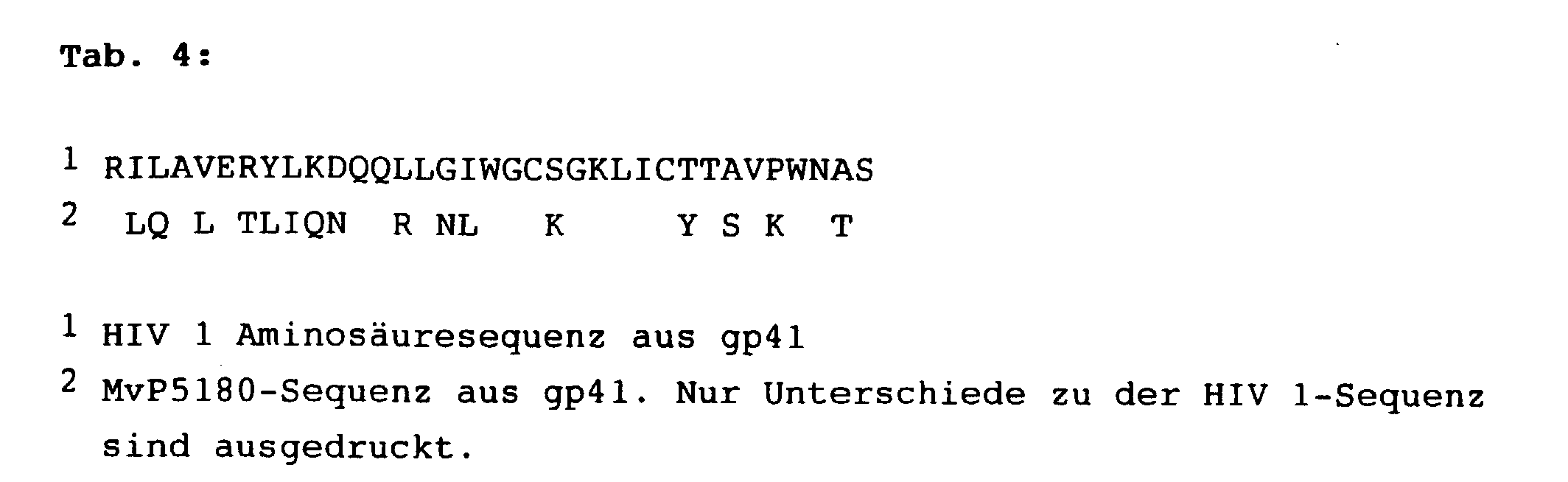
- the corresponding amino acid region of the MVP-5180/91 coat protein (Table 4) as well as the entire gp 41 of this isolate could be of serodiagnostic importance, in particular if antisera from HIV-infected patients are weak or at all in commercially available antibody screening tests would not respond. In these cases, an infection with an MVP-5180/91 closely related virus could be present.
- the peptide obtained using the information from MvP 5180 the amino acid sequence has: RLQALETLIQNQQRLNLWGCKGKLICYTSVKWNTS.
- the present invention therefore also relates to diagnostic use of peptides that are recombinant or can be produced synthetically and the above Have sequence or partial sequence, the partial sequences at least 6 consecutive amino acids, preferably 9 and particularly preferably have 12 consecutive amino acids.
- Genomic DNA from MvP5180 infected HUT78 cells was isolated as described. 300 ⁇ g of this DNA was incubated in a volume of 770 ⁇ l with 0.24 U of the restriction enzyme Sau3A for 45 min.
- the DNA that was only partially cut was then size-fractionated using a 0.7% agarose gel (low melting agarose, Nusieve) and fragments between 10 and 21 kb were cut out.
- the agarose was melted at 70 ° C. for 10 min and the same volume of buffer (1 ⁇ TBE, 0.2 M NaCl) was added.
- phenol and one chloroform extraction followed the precipitation of the DNA by adding 1/10 vol 3 M sodium acetate solution (pH 5.9) and 2.5 vol ethanol at -70 ° C for 10 min.
- the precipitated DNA was centrifuged off, dried and dissolved in water at a concentration of 1 ⁇ g / ⁇ l.
- the yield of size-fractionated DNA was approximately 60 ⁇ g.
- the "Random Primed DNA Labeling Kit” from Boehringer Mannheim (No. 713 023) was used for the labeling.
- the PCR product which was obtained as described in Example 3 with the primers sk68 and envb was labeled. 1 ⁇ g of this DNA was denatured by boiling for 2 x 5 min and then cooling in ice water. 50 mCi [ ⁇ - 32 P] -dCTP (NEN, no .: NEX-053H) were added for labeling. Other additives were pipetted according to the manufacturer's instructions. After an incubation of 30 minutes at 37 ° C., the now radioactively labeled DNA was precipitated.
- the filters were placed in 15 ml hybridization solution (50% formamide, 0.5% SDS, 5 x SSPE, 5 x Denhardt's solution and 0.1 mg / ml salmon sperm DNA) per filter at 42 ° C with shaking 2-3 h incubated.
- the [ 32 P] -labeled DNA samples were denatured for 2-5 min at 100 ° C, cooled on ice, added to the prehybridization solution and hybridized at 42 ° C for 12 hours.
- the filters were then washed at 60 ° C. first with 2 x SSC / 0.1% SDS, then with 0.2 x SSC / 0.1% SDS.
- the phage DNA was then precipitated, cut with the restriction enzyme EcoRI and the EcoRI fragments obtained therefrom were subcloned into the vector Bluescript KS - (Strategene, no .: 212208). A total of 4 clones were obtained: Plasmid Beginning The End pSP1 1 1785 pSP2 1786 5833 pSP3 5834 7415 pSP4 7660 9793
- the missing piece between base 7416 and 7659 was obtained by PCR with primers 157 (CCA TAA TAT TCA GCA GAA CTA G) and 226 (GCT GAT TCT GTA TAA GGG).
- the phage DNA of the clone was used as the DNA template.
- the conditions for the PCR were: 1.) Initial denaturation: 94 ° C, 3 min, 2.) Amplification: 1.5 min 94 ° C, 1 min 56 ° C and 1 min 72 ° C for 30 cycles.
- the DNA was sequenced as described in Example 4. Both the strand and the counter strand were sequenced from the entire genome.
- the gag sequence was cloned from the LTR ("long terminal repeat", LTR1 primer) of the left end of the MvP 5180 genome overlapping into the pol (polymerase gene, pol3.5i primer).
- the cloning strategy is shown schematically in FIG. 5.
- the PCR reactions were carried out with the ug DNA primers, the sequences of which were derived from the HIV-1 consensus sequence.
- the sequencing was carried out using the dideoxy chain termination method.
- the sequence coding for the MvP 5180 gag gene extends from nucleotide 817 (A of the ATG start codon) to nucleotide 2300 (A of the last codon) (Sequ. ID No. 47-53).
- the DNA sequence obtained in the PCR technique was the in Figure 4 compared DNA sequence shown.
- a Comparison of the two DNA sequences is shown in FIG. 6 shown. It was found that the Nucleotides differ from each other in about 2%, although it does is the same virus. 6 represents the top line represents the DNA sequence shown in Fig. 4 and the bottom line represents the one with PCR technique DNA sequence obtained.
- amino acid sequence was determined using the PCR technique determined protein gag the amino acid sequence of the Fig. 4 derived corresponding protein juxtaposed. There was a difference in the Amino acid of about 2.2% determined. The comparison is in Fig. 7 shown, the lower line each Represents amino acid sequence by using the PCR technique sequence obtained was derived.
- the homology values in% given in Table 9 mean that when the sequence according to FIG. 4 is compared with a sequence of another virus at most one of the above corresponding percentage of the sequence indicated may be different.
Landscapes
- Health & Medical Sciences (AREA)
- Life Sciences & Earth Sciences (AREA)
- Chemical & Material Sciences (AREA)
- Virology (AREA)
- Organic Chemistry (AREA)
- Immunology (AREA)
- Engineering & Computer Science (AREA)
- Molecular Biology (AREA)
- General Health & Medical Sciences (AREA)
- Biochemistry (AREA)
- Medicinal Chemistry (AREA)
- Proteomics, Peptides & Aminoacids (AREA)
- AIDS & HIV (AREA)
- Hematology (AREA)
- Zoology (AREA)
- Wood Science & Technology (AREA)
- Genetics & Genomics (AREA)
- Biophysics (AREA)
- Analytical Chemistry (AREA)
- Physics & Mathematics (AREA)
- Urology & Nephrology (AREA)
- Biomedical Technology (AREA)
- Biotechnology (AREA)
- Microbiology (AREA)
- Tropical Medicine & Parasitology (AREA)
- Communicable Diseases (AREA)
- General Physics & Mathematics (AREA)
- Food Science & Technology (AREA)
- Nuclear Medicine, Radiotherapy & Molecular Imaging (AREA)
- Pharmacology & Pharmacy (AREA)
- Oncology (AREA)
- Chemical Kinetics & Catalysis (AREA)
- Pathology (AREA)
- Gastroenterology & Hepatology (AREA)
- Cell Biology (AREA)
- General Chemical & Material Sciences (AREA)
- Animal Behavior & Ethology (AREA)
- Veterinary Medicine (AREA)
- Public Health (AREA)
- Bioinformatics & Cheminformatics (AREA)
Description


Auch wenn die Herstellung von Impfstoffen gegen Immunschwächeerkrankungen sich als äußerst schwierig erweist, kann doch auch dieses Virus bzw. Teile davon, d.h. immundominante Epitope und Induktoren der zellulären Immunität, oder gentechnologisch hergestellte Antigene zur Entwicklung und Herstellung von Impfstoffen verwendet werden.
| Virustyp | deutsche Seren | afrikanische Seren |
| HIV-1, Virus isoliert von deutschem Patienten | starke Reaktion | starke Reaktion mit gp 41 |
| MVP-5180/91 | keine bis schwache Reaktion mit gp 41 | starke Reaktion |


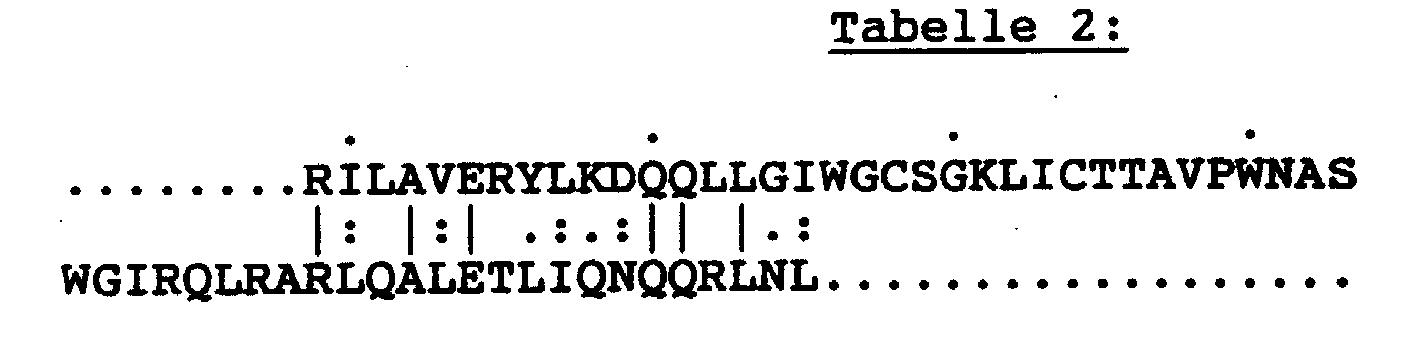



Cell 40:9-17, 1985; Gnann et al., J. Inf. Dis. 156:261-267, 1987; Norrby et al., Nature, 329:248-250, 1987). Korrespondierende Aminosäurebereiche aus den Hüllproteinen von HIV 2 und SIV sind ebenfalls immundiagnostisch konserviert (Gnann et al., Science, S. 1346-1349, 1987). So werden Peptide aus diesem Hüllproteinbereich von HIV 1 und HIV 2 in vielen kommerziell erhältlichen HIV 1/2 Antikörper-Screeningtests als Festphasenantigene eingesetzt. Ungefähr 99 % der Anti-HIV 1 und Anti-HIV 2 positiven Seren können damit erfaßt werden.
300 µg dieser DNA wurde in einem Volumen von 770 µl mit 0,24 U des Restriktionsenzyms Sau3A für 45 min inkubiert.
Die Ausbeute an größenfraktionierter DNA betrug etwa 60 µg. 5 µg dieser DNA wurden mit 1 U Alkalische Phosphatase im entsprechenden Puffer für 20 min bei 37°C inkubiert. Durch Abspaltung des 5'-terminalen Phosphatrestes wurden so multiple Insertionen von größenfraktionierter DNA vermindert. Die Phosphatasebehandlung wurde durch Phenolisierung gestoppt, die DNA wie oben gefällt und zusammen mit 1 µg des Vektors (2 DASH, BamHI geschnitten, Stratagene Nr.: 247611) in 6 µl Gesamtvolumen mit 2 Weiss-Units Lambda T4 Ligase für 12 Stunden bei 15°C ligiert. Nach erfolgter Ligation wurde die DNA mit Hilfe eines Verpackungskits (Gigapack II Gold, Stratagene Nr.: 247611) genau nach Angaben des Herstellers in Phagenhüllen verpackt.
Zur Vorhybridisierung wurden die Filter in 15 ml Hybridisierungslösung (50 % Formamid, 0,5 % SDS, 5 x SSPE, 5 x Denhardt's Lösung und 0,1 mg/ml Lachssperma-DNA) pro Filter bei 42°C unter Schütteln 2-3 h inkubiert. Die [32P]-markierten DNA-Proben wurden 2-5 min bei 100°C denaturiert, auf Eis abgekühlt, der Vorhybridisierungslösung zugesetzt und 12 Stunden bei 42°C hybridisiert. Anschließend wurden die Filter bei 60°C zunächst mit 2 x SSC/0,1 % SDS, dann mit 0,2 x SSC/0,1 % SDS gewaschen. Nach Trocknen der Filter wurden Hybridisierungssignale mit Hilfe des Röntgenfilms X-OMAT™AR (Kodak) detektiert.
Die Plaques, denen ein Signal zugeordnet werden konnte, wurden nach Elution in SM-Puffer in weiteren Verdünnungsschritten vereinzelt.
Der unten beschriebene Klon konnte nach dem Screening von 2 x 10⁶ Plaques identifiziert werden.
| Plasmid | Beginn | Ende |
| pSP1 | 1 | 1785 |
| pSP2 | 1786 | 5833 |
| pSP3 | 5834 | 7415 |
| pSP4 | 7660 | 9793 |
Die Sequenzierung der DNA erfolgte wie in Beispiel 4 beschrieben. Vom gesamten Genom wurde sowohl der Strang- als auch der Gegenstrang sequenziert. Bei allen EcoRI Schnittstellen wurde durch PCR mit Phagen-DNA des Klons als DNA-Template verifiziert, daß es sich an den Subklonübergängen jeweils um singuläre EcoRI-Schnittstellen handelt.
| Die Lage der Gene der Virusproteine GAG, POL und ENV in der Gesamtsequenz von MvP5180 | ||
| Gen | Start | Stop |
| GAG | 817 | 2310 |
| POL | 2073 | 5153 |
| ENV | 6260 | 8887 |
| Homologiewerte der Aminosäuresequenz von GAG, POL und ENV des MvP5180/91-Isolates | ||||||||
| GAG | SIVcpz | 70,2% | HIV1u | 69,9% | HIV2d | 53,6% | SIV1a | 55,1% |
| 83,6% | 81,2% | 71,3% | 71,3% | |||||
| POL | SIVcpz | 78,0% | HIV1u | 76,1% | HIV2d | 57,2% | SIVgb | 57,7% |
| 88,0% | 86,8% | 71,9% | 74,6% | |||||
| ENV | SIVcpz | 53,4% | HIV1h | 50,9% | HIV2d | 34,4% | SIVat | 34,4% |
| 67,1% | 67,2% | 58,7% | 57,8% |
Weiter wurde die Datenbank mit "Wordsearch" und "Gap" auf Nukleotidebene durchsucht. Die Homologiewerte für die jeweils besten "matches" sind in Tabelle 7 zusammengefaßt.
| Homologiewerte der Nukleotidsequenz von MvP5180/91 | ||||
| HIV1 | HIV2 | |||
| gag | HIVelicg | 70,24 % | HIV2bihz | 60,0 % |
| pol | HIVmal | 75,0 % | HIV2cam2 | 62,9 % |
| env | HIVsimi84 | 59,7 % | HIV2gha | 49,8 % |
Die PCR Reaktionen wurden mit den u.g. DNA Primern, deren Sequenzen von der HIV-1 Konsensus-Sequenz abgeleitet wurden, durchgeführt. Die Sequenzierungen erfolgten mit Hilfe der Dideoxykettenabbruchmethode.
Die für das MvP 5180 gag Gen kodierende Sequenz erstreckt sich von Nukleotid 817 (A des ATG Startkodons) bis Nukleotid 2300 (A des letzten Kodons) (Sequ. ID No. 47-53).

| Genort | abweichende Nukleotide | Zahl der Nukleotide | % Homologie (genähert) |
| LTR | 207 | 630 | HIV-1 67 % |
| 308 | HIV-2 51 % | ||
| 115 | ANT 70 82 % | ||
| GAG | 448 | 1501 | HIV-1 70 % |
| 570 | HIV-2 62 % | ||
| POL | 763 | 3010 | HIV-1 74 % |
| 1011 | HIV-2 66 % | ||
| VIF | 183 | 578 | HIV-1 68 % |
| 338 | HIV-2 42 % | ||
| ENV | 1196 | 2534 | HIV-1 53 % |
| 1289 | HIV-2 49 % | ||
| NEF | 285 | 621 | HIV-1 54 % |
| 342 | HIV-2 45 % | ||
| total | 3082 | 8874 | HIV-1 65 % |
| 3858 | HIV-2 56 % |
| Homologie bezogen auf Genorte, ausgedrückt als maximale Unterschiede | |||
| Genort | Unterschiede | bevorzugte Unterschiede | besonders bevorzugte Unterschiede |
| LTR | 17 % | 15 % | 10 % |
| GAG | 29 % | 28 % | 14 % |
| POL | 25 % | 24 % | 12 % |
| VIF | 31 % | 30 % | 15 % |
| ENV | 46 % | 45 % | 22 % |
| NEF | 16 % | 12 % | 10 % |
Die V3-Schlaufe ist dann in Aminosäuren-Ebene aufgezeichnet und mit dem IIIB Virus jetzt LAI und dem ersten HIV-2 Isolat (ROD) verglichen. Einzelne Aminosäuren an der Cystin-Brücke sind konserviert. Während die Krone von HIV-1 GPGR oder GPGQ ist und die von HIV-2 GHVF ist die Krone des MvP5180/91 gebildet aus den Aminosäuren GPMR. Das Motiv mit dem Methionin ist bisher nicht beschrieben worden und unterstreicht die Individualität des MvP 5180/91.


| Patientenseren | MvP 5180-EIA | HIV-1 + HIV-2 EIA |
| CAM-A | 2.886 | 1.623 |
| CAM-B | 1.102 | 0.386 |
| Patientenserum | MvP 5180-EIA | HIV-1 + HIV-2 EIA |
| 93-1000 | > 2.5 | 1.495 |
| 93-1001 | 0.692 | 0.314 |
Claims (16)
- Immunschwäche-Virus der HIV-Gruppe das bei der European Collection of Animal Cell Cultures (ECACC) unter der Nr. V 920 92 318 mit der Bezeichnung MVP-5180/91 hinterlegt wurde, sowie Varianten des Virus, wobei eine Variante eine Sequenz aufweist, die der Tabelle 3 entspricht oder zu dieser Sequenz homolog ist, wobei die Homologie mehr als 66 % bezogen auf die Nukleotidsequenz beträgt.
- Virus gemäß Anspruch 1, wobei die Homologie mehr als 75 % beträgt.
- Virus gemäß Anspruch 1, wobei die Homologie mehr als 85 % beträgt.
- c-DNA, die komplementär ist zu der RNA oder Teilen davon des bei der European Collection of Animal Cell Cultures (ECACC) unter der Nr. V 920 92 318 hinterlegten Immunschwächevirus MVP-5180/91 oder eines Virus gemäß einem der Ansprüche 1-3, wobei die Teilsequenz mindestens 50 Nucleotide aufweist.
- cDNA gemäß Anspruch 4, wobei die Teilsequenz mindestens 100 Nucleotide aufweist.
- Rekombinante DNA, die cDNA gemäß Anspruch 4 oder 5 enthält.
- Testkit zum Nachweis von Antikörpern gegen Immunschwäche verursachende Viren, die einer unabhängigen Gruppe von HIV-Viren gemäß Anspruch 1 bis 3 angehören, worin ein Antigen eingesetzt wird, das eine Aminosäuresequenz oder Aminosäureteilsequenz aufweist, die von einem derartigen Virus abgeleitet ist und eine Teilsequenz von wenigstens 6 Aminosäuren aufweist.
- Testkit nach Anspruch 7, wobei das Antigen eine Aminosäuresequenz aufweist, die der Tabelle 3 oder einer Teilsequenz davon entspricht, und die Teilsequenz wenigstens 6 Aminosäuren aufweist.
- Testkit nach einem der Ansprüche 7 oder 8, wobei das Antigen die Aminosäuresequenz RLQALETLIQNQQRLNLWGCKGKLICYTSVKWNTS oder eine Teilsequenz davon mit wenigstens 6 aufeinanderfolgenden Aminosäuren aufweist.
- Testkit nach einem der Ansprüche 7 bis 9, wobei das Antigen rekombinant hergestellt wurde.
- Testkit nach einem der Ansprüche 7 bis 9, wobei das Antigen synthetisch hergestellt wurde.
- Testkit gemäß einem der Ansprüche 7 bis 11, das ein Western Blot ist.
- Testkit gemäß einem der Ansprüche 7 bis 11, das ein ELISA-Test oder ein Fluoreszenzantikörper-Nachweistest ist.
- Verwendung eines von einem Virus gemäß einem der Ansprüche 1 bis 3 abgeleiteten Antigens zum Nachweis von derartigen Retroviren, die Immunschwäche verursachen und die einer unabhängigen Gruppe von HIV-Viren gemäß Anspruch 1 angehören.
- Verwendung eines Antigens nach Anspruch 14, wobei das Antigen eine Aminosäuresequenz aufweist, die der Tabelle 3 oder einer Teilsequenz davon entspricht, und die Teilsequenz wenigstens 6 Aminosäuren aufweist.
- Verwendung eines Antigens nach einem der Ansprüche 14 oder 15, wobei das Antigen die Aminosäuresequenz RLQALETLIQNQQRLNLWGCKGKLICYTSVKWNTS oder eine Teilsequenz davon mit wenigstens 6 aufeinanderfolgenden Aminosäuren aufweist.
Priority Applications (1)
| Application Number | Priority Date | Filing Date | Title |
|---|---|---|---|
| EP98114623A EP0890642A3 (de) | 1992-10-06 | 1993-10-05 | Retrovirus aus der HIV-Gruppe und dessen Verwendung |
Applications Claiming Priority (8)
| Application Number | Priority Date | Filing Date | Title |
|---|---|---|---|
| DE4233646 | 1992-10-06 | ||
| DE4233646A DE4233646C2 (de) | 1992-10-06 | 1992-10-06 | Retrovirus aus der HIV-Gruppe und dessen Verwendung |
| DE4235718A DE4235718A1 (de) | 1992-10-22 | 1992-10-22 | Retrovirus aus der HIV-Gruppe und dessen Verwendung |
| DE4235718 | 1992-10-22 | ||
| DE4244541A DE4244541A1 (de) | 1992-12-30 | 1992-12-30 | Retrovirus aus der HIV-Gruppe und dessen Verwendung |
| DE4244541 | 1992-12-30 | ||
| DE4318186A DE4318186C2 (de) | 1993-06-01 | 1993-06-01 | Retrovirus aus der HIV-Gruppe und dessen Verwendung |
| DE4318186 | 1993-06-01 |
Related Child Applications (2)
| Application Number | Title | Priority Date | Filing Date |
|---|---|---|---|
| EP98114623A Division-Into EP0890642A3 (de) | 1992-10-06 | 1993-10-05 | Retrovirus aus der HIV-Gruppe und dessen Verwendung |
| EP98114623A Division EP0890642A3 (de) | 1992-10-06 | 1993-10-05 | Retrovirus aus der HIV-Gruppe und dessen Verwendung |
Publications (4)
| Publication Number | Publication Date |
|---|---|
| EP0591914A2 EP0591914A2 (de) | 1994-04-13 |
| EP0591914A3 EP0591914A3 (en) | 1994-08-10 |
| EP0591914B1 true EP0591914B1 (de) | 1998-12-09 |
| EP0591914B2 EP0591914B2 (de) | 2010-02-10 |
Family
ID=27435590
Family Applications (2)
| Application Number | Title | Priority Date | Filing Date |
|---|---|---|---|
| EP98114623A Withdrawn EP0890642A3 (de) | 1992-10-06 | 1993-10-05 | Retrovirus aus der HIV-Gruppe und dessen Verwendung |
| EP93116058A Expired - Lifetime EP0591914B2 (de) | 1992-10-06 | 1993-10-05 | Retrovirus aus der HIV-Gruppe und dessen Verwendung |
Family Applications Before (1)
| Application Number | Title | Priority Date | Filing Date |
|---|---|---|---|
| EP98114623A Withdrawn EP0890642A3 (de) | 1992-10-06 | 1993-10-05 | Retrovirus aus der HIV-Gruppe und dessen Verwendung |
Country Status (9)
| Country | Link |
|---|---|
| US (12) | US5840480A (de) |
| EP (2) | EP0890642A3 (de) |
| JP (4) | JP3277045B2 (de) |
| AT (1) | ATE174382T1 (de) |
| AU (1) | AU677225B2 (de) |
| CA (1) | CA2107732C (de) |
| DE (1) | DE59309207D1 (de) |
| DK (1) | DK0591914T4 (de) |
| ES (1) | ES2126620T5 (de) |
Cited By (2)
| Publication number | Priority date | Publication date | Assignee | Title |
|---|---|---|---|---|
| EP0891982A2 (de) | 1992-03-06 | 1999-01-20 | Innogenetics N.V. | HIV-Peptide |
| US7723040B2 (en) | 1999-07-09 | 2010-05-25 | Gen-Probe Incorporated | Detection of HIV-1 by nucleic acid amplification |
Families Citing this family (62)
| Publication number | Priority date | Publication date | Assignee | Title |
|---|---|---|---|---|
| US6589734B1 (en) | 1989-07-11 | 2003-07-08 | Gen-Probe Incorporated | Detection of HIV |
| US5856088A (en) * | 1989-07-11 | 1999-01-05 | Gen-Probe Incorporated | Detection of human immunodeficiency virus type 1 |
| ATE174382T1 (de) * | 1992-10-06 | 1998-12-15 | Dade Behring Marburg Gmbh | Retrovirus aus der hiv-gruppe und dessen verwendung |
| KR100325554B1 (ko) | 1993-03-26 | 2002-11-02 | 젠-프로브 인코포레이티드 | 사람의면역결핍 바이러스타입1의검출 |
| DE4405810A1 (de) | 1994-02-23 | 1995-08-24 | Behringwerke Ag | Von einem Retrovirus aus der HIV-Gruppe abgeleitete Peptide und deren Verwendung |
| GB9410044D0 (en) * | 1994-05-19 | 1994-07-06 | Int Murex Tech Corp | Assay |
| FR2731225B1 (fr) * | 1995-03-03 | 2003-10-31 | Pasteur Institut | Peptides de glycoproteine transmembranaire d'enveloppe et de proteine de capside du retrovirus humain du type hiv-1 et peptides presentant avec eux une parente immunologique |
| ATE374253T1 (de) | 1994-10-20 | 2007-10-15 | Pasteur Institut | Nukleotiden-sequenzen aus retroviren-antigenen hiv-i gruppe (oder untergruppe) o |
| FR2726006B1 (fr) * | 1994-10-20 | 1996-12-27 | Pasteur Institut | Sequences nucleotidiques codant des antigenes d'un retrovirus du type vih-1 groupe o |
| DE19505262C2 (de) * | 1995-02-16 | 1998-06-18 | Behring Diagnostics Gmbh | Retrovirus aus der HIV-Gruppe und dessen Verwendung |
| US6548635B1 (en) * | 1995-02-16 | 2003-04-15 | Dade Behring Marburg Gmbh | Retrovirus from the HIV type O and its use (MVP-2901/94) |
| US5599662A (en) * | 1995-02-17 | 1997-02-04 | Hoffmann-La Roche Inc. | Oliconucleotide primers and probes for the detection of HIV-1 |
| WO1996027012A1 (en) * | 1995-03-02 | 1996-09-06 | Akzo Nobel N.V. | Specific hiv-1 group o antigens |
| DE69632535T2 (de) * | 1995-06-07 | 2005-06-02 | Abbott Laboratories, Abbott Park | Peptide zur detektion von hiv-1 |
| US5733732A (en) * | 1996-01-03 | 1998-03-31 | University Of Iowa Research Foundation | Methods for detecting primary adhalinopathy |
| BR9704637A (pt) * | 1996-01-26 | 1998-06-09 | Innogenetics Nv | Processo para deteção de mutações induzidas por droga no gene de transcrição reversa |
| DE19644248A1 (de) * | 1996-10-24 | 1998-04-30 | Boehringer Mannheim Gmbh | Primer und Probes zum Nachweis von HIV |
| CA2285384C (en) | 1997-03-28 | 2012-10-16 | Epitope, Inc. | Simultaneous collection of dna and non-nucleic analytes from oral fluids |
| CZ300927B6 (cs) | 1997-04-09 | 2009-09-16 | Bio-Rad Pasteur | Syntetický peptid monomerního typu, prostredek, který ho obsahuje, zpusob imunologické in vitro kvantifikace a diagnostický kit pro použití v biologických testech pro identifikaci infekcí zpusobených viry HIV |
| US6846905B2 (en) | 1997-08-15 | 2005-01-25 | Abbott Laboratories | Antigen constructs useful in the detection and differentiation of antibodies to HIV |
| US5922533A (en) * | 1997-08-15 | 1999-07-13 | Abbott Laboratories | Rapid assay for simultaneous detection and differentiation of antibodies to HIV groups |
| DE19737442C2 (de) * | 1997-08-22 | 1999-06-24 | Olfert Landt Tib Molbiol Synth | Proteinumhüllte Polyribonukleinsäuren, ein Verfahren zu ihrer Herstellung und ihre Verwendung |
| US6228128B1 (en) | 1997-11-10 | 2001-05-08 | Charlotte Johansen | Antimicrobial activity of laccases |
| AU2345399A (en) * | 1998-01-28 | 1999-08-16 | Universal Health-Watch, Inc. | Divergent hiv-1 peptides |
| CA2288869A1 (en) * | 1998-03-04 | 1999-09-10 | Mary Ann Childs | Rapid confirmatory test for microbial infections |
| WO1999062945A2 (en) * | 1998-06-05 | 1999-12-09 | Peptide Solutions, Inc. | Peptide antigens for detection of hiv, hcv and other microbial infections |
| CA2290217C (en) * | 1998-11-30 | 2010-01-12 | Ortho-Clinical Diagnostics, Inc. | Peptides for the detection of hiv-1 group o |
| US6303293B1 (en) | 1999-02-02 | 2001-10-16 | Ortho-Clinical Diagnostics, Inc. | Oligonucleotide reverse transcription primers for efficient detection of HIV-1 and HIV-2 and methods of use thereof |
| AU784679B2 (en) * | 1999-12-23 | 2006-05-25 | International Aids Vaccine Initiative | Improvements in or relating to immune responses to HIV |
| WO2001057245A2 (en) * | 2000-02-04 | 2001-08-09 | K.U.Leuven Research & Development | Hiv-1 resistance assay |
| US6582920B2 (en) | 2000-09-01 | 2003-06-24 | Gen-Probe Incorporated | Amplification of HIV-1 RT sequences for detection of sequences associated with drug-resistance mutations |
| JP2002125687A (ja) * | 2000-10-30 | 2002-05-08 | Tosoh Corp | Hiv−1検出のためのオリゴヌクレオチドおよび検出法 |
| EP2251442B9 (de) * | 2003-12-19 | 2012-04-25 | Gen-Probe Incorporated | Zusammensetzungen, Verfahren und Kits zum Nachweis der Nukleinsäuren von HIV-1 und HIV-2 |
| US7935479B2 (en) | 2004-07-19 | 2011-05-03 | Cell Biosciences, Inc. | Methods and devices for analyte detection |
| US7846676B2 (en) * | 2004-07-19 | 2010-12-07 | Cell Biosciences, Inc. | Methods and devices for analyte detection |
| US20060292558A1 (en) * | 2004-07-19 | 2006-12-28 | Cell Biosciences Inc. | Methods and apparatus for protein assay diagnostics |
| EP1776581B1 (de) * | 2004-07-19 | 2015-05-06 | ProteinSimple | Verfahren zum Nachweis von Proteinen |
| WO2007035864A2 (en) | 2005-09-20 | 2007-03-29 | Cell Biosciences, Inc. | Electrophoresis standards, methods and kits |
| CA2637600A1 (en) | 2006-01-17 | 2007-07-26 | Health Research, Inc. | Heteroduplex tracking assay |
| US20080086118A1 (en) * | 2006-05-17 | 2008-04-10 | Applied Harmonics Corporation | Apparatus and method for diode-pumped laser ablation of soft tissue |
| US20080017512A1 (en) * | 2006-07-24 | 2008-01-24 | Bordunov Andrei V | Coatings for capillaries capable of capturing analytes |
| GB0701253D0 (en) | 2007-01-23 | 2007-02-28 | Diagnostics For The Real World | Nucleic acid amplification and testing |
| US10107782B2 (en) | 2008-01-25 | 2018-10-23 | ProteinSimple | Method to perform limited two dimensional separation of proteins and other biologicals |
| JPWO2009122591A1 (ja) * | 2008-04-04 | 2011-07-28 | 国立大学法人 琉球大学 | ウイルス抗原及びウイルス抗体を一度に検出可能なウイルス抗原及びウイルス抗体の検出キット、並びにウイルス抗原及びウイルス抗体の検出方法 |
| JPWO2009122592A1 (ja) * | 2008-04-04 | 2011-07-28 | 国立大学法人 琉球大学 | 常温保存可能な試薬を備えたウイルス抗原及びウイルス抗体の検出キット、並びにウイルス抗原及びウイルス抗体の検出方法 |
| US20090258342A1 (en) * | 2008-04-09 | 2009-10-15 | Intelligent Medical Devices, Inc. | Optimized probes and primers and methods of using same for the detection, quantification and grouping of hiv-1 |
| CN102625851A (zh) * | 2009-07-07 | 2012-08-01 | 新加坡科技研究局 | 人免疫缺陷病毒1型(hiv)检测方法及其试剂盒 |
| AU2011230619C1 (en) | 2010-03-25 | 2016-06-23 | Oregon Health & Science University | CMV glycoproteins and recombinant vectors |
| BR112012026095A2 (pt) | 2010-04-14 | 2015-09-15 | Emd Millipore Corp | métodos de produção de estoques de vírus de alta pureza e altos títulos e métodos de uso dos mesmos. |
| EP2707496A1 (de) | 2011-05-11 | 2014-03-19 | Diagon Kft. | Verfahren zur schnellen bestimmung von viren mittels nukleinsäurebasierter molekulardiagnostik und kit hierfür |
| HUE037408T2 (hu) | 2011-06-10 | 2018-08-28 | Univ Oregon Health & Science | CMV glikoproteinek és rekombináns vektorok |
| CA2789539A1 (en) | 2011-09-12 | 2013-03-12 | International Aids Vaccine Initiative | Immunoselection of recombinant vesicular stomatitis virus expressing hiv-1 proteins by broadly neutralizing antibodies |
| US9402894B2 (en) | 2011-10-27 | 2016-08-02 | International Aids Vaccine Initiative | Viral particles derived from an enveloped virus |
| WO2013155634A1 (en) | 2012-04-19 | 2013-10-24 | Jiaqi Wu | Dual wavelength isoelectric focusing for determining drug load in antibody drug conjugates |
| ES2631608T3 (es) | 2012-06-27 | 2017-09-01 | International Aids Vaccine Initiative | Variante de la glicoproteína Env del VIH-1 |
| EP2848937A1 (de) | 2013-09-05 | 2015-03-18 | International Aids Vaccine Initiative | Verfahren zur Identifizierung neuartiger HIV-1-Immunogene |
| US9766206B2 (en) | 2013-09-27 | 2017-09-19 | ProteinSimple | Apparatus, systems, and methods for capillary electrophoresis |
| US10058604B2 (en) | 2013-10-07 | 2018-08-28 | International Aids Vaccine Initiative | Soluble HIV-1 envelope glycoprotein trimers |
| EP3069730A3 (de) | 2015-03-20 | 2017-03-15 | International Aids Vaccine Initiative | Lösliche hiv-1-hüllglykoproteintrimere |
| US9931394B2 (en) | 2015-03-23 | 2018-04-03 | International Aids Vaccine Initiative | Soluble HIV-1 envelope glycoprotein trimers |
| WO2016172465A1 (en) * | 2015-04-24 | 2016-10-27 | The Johns Hopkins University | Compositions and methods related to characterizing proviral reservoirs |
| CN116064923A (zh) * | 2022-01-27 | 2023-05-05 | 圣湘生物科技股份有限公司 | 检测hiv-1的组合物、试剂盒、方法及其用途 |
Family Cites Families (26)
| Publication number | Priority date | Publication date | Assignee | Title |
|---|---|---|---|---|
| US5705612A (en) * | 1984-10-18 | 1998-01-06 | Institut Pasteur And Centre National De La Recherche Scientifique | NEF peptide encoded by human immunodefiency virus type 1 (HIV-1) |
| CA1341423C (en) * | 1984-10-31 | 2003-03-04 | Paul A. Luciw | Recombinant proteins of viruses associated with lymphadenopathy syndrome and/or acquired immune deficiency syndrome |
| US4683202A (en) * | 1985-03-28 | 1987-07-28 | Cetus Corporation | Process for amplifying nucleic acid sequences |
| US4683195A (en) * | 1986-01-30 | 1987-07-28 | Cetus Corporation | Process for amplifying, detecting, and/or-cloning nucleic acid sequences |
| US4629783A (en) * | 1985-04-29 | 1986-12-16 | Genetic Systems Corporation | Synthetic antigen for the detection of AIDS-related disease |
| US4803156A (en) * | 1985-09-11 | 1989-02-07 | New York Blood Center | Peptide-beta-lactamase conjugates for enzyme-linked immunoassays |
| EP0239425B1 (de) * | 1986-01-22 | 1989-11-02 | Institut Pasteur | Zum Hervorrufen von AIDS geeigneter Retrovirus vom Typ HIV-2, sowie seine Antigen- und Nukleinsäure-Bestandteile |
| US5079342A (en) * | 1986-01-22 | 1992-01-07 | Institut Pasteur | Cloned DNA sequences related to the entire genomic RNA of human immunodeficiency virus II (HIV-2), polypeptides encoded by these DNA sequences and use of these DNA clones and polypeptides in diagnostic kits |
| US7115363B1 (en) * | 1986-01-22 | 2006-10-03 | Institut Pasteur | Retrovirus capable of causing AIDS, means and methods for detecting it in vitro |
| US5034511A (en) * | 1987-04-13 | 1991-07-23 | Institut Pasteur | Variant of LAV viruses |
| US5030714A (en) * | 1986-06-23 | 1991-07-09 | Institut Pasteur | Variant of LAV viruses |
| US5030449A (en) * | 1988-07-21 | 1991-07-09 | The United States Of America As Represented By The Secretary Of The Department Of Health And Human Services | Synthetic vaccine against AIDS virus |
| US5141867A (en) * | 1987-02-02 | 1992-08-25 | E. I. Du Pont De Nemours And Company | Nucleotide sequence encoding a human immunodeficiency virus antigen |
| AU614521B2 (en) * | 1987-04-16 | 1991-09-05 | Johnson & Johnson | Stlv-iii-related polypeptides, diagnostic systems and assay methods |
| US5013548A (en) * | 1987-09-08 | 1991-05-07 | Duke University | Production of antibodies to HIV |
| US5019510A (en) * | 1987-10-28 | 1991-05-28 | Institut Pasteur | Isolation, molecular cloning and sequencing of an HIV-1 isolate from a Gabonese donor |
| US5312737A (en) * | 1988-03-11 | 1994-05-17 | Abbott Laboratories | CKS method of HCV protein synthesis |
| DE3853422T2 (de) * | 1988-06-09 | 1995-10-26 | Innogenetics Nv | HIV-3-Retrovirus und seine Verwendung. |
| US5223423A (en) * | 1989-03-31 | 1993-06-29 | United States Of America | Characterization of replication competent human immunodeficiency type 2 proviral clone hiv-2sbl/isy |
| DE4002636A1 (de) * | 1990-01-30 | 1991-08-01 | Boehringer Mannheim Gmbh | Expression von hiv1- und 2-polypeptiden und deren verwendung |
| US5013458A (en) * | 1990-04-06 | 1991-05-07 | Rdp Company | Process and apparatus for pathogen reduction in waste |
| ES2115622T5 (es) * | 1990-10-17 | 2003-03-16 | Us Health | Clones moleculares de hiv-1 y usos de los mismos. |
| FR2676071B1 (fr) * | 1991-05-02 | 1994-11-18 | Transgene Sa | Nouveau variant gp160 non-clivable, soluble, de forme hybride. |
| ATE174382T1 (de) * | 1992-10-06 | 1998-12-15 | Dade Behring Marburg Gmbh | Retrovirus aus der hiv-gruppe und dessen verwendung |
| US5304046A (en) * | 1993-06-14 | 1994-04-19 | Yang Gene Huang | Fluid transport device |
| DE4405810A1 (de) * | 1994-02-23 | 1995-08-24 | Behringwerke Ag | Von einem Retrovirus aus der HIV-Gruppe abgeleitete Peptide und deren Verwendung |
-
1993
- 1993-10-05 AT AT93116058T patent/ATE174382T1/de active
- 1993-10-05 JP JP24960593A patent/JP3277045B2/ja not_active Expired - Lifetime
- 1993-10-05 AU AU48800/93A patent/AU677225B2/en not_active Expired
- 1993-10-05 CA CA002107732A patent/CA2107732C/en not_active Expired - Lifetime
- 1993-10-05 DK DK93116058.4T patent/DK0591914T4/da active
- 1993-10-05 ES ES93116058T patent/ES2126620T5/es not_active Expired - Lifetime
- 1993-10-05 EP EP98114623A patent/EP0890642A3/de not_active Withdrawn
- 1993-10-05 DE DE59309207T patent/DE59309207D1/de not_active Expired - Lifetime
- 1993-10-05 EP EP93116058A patent/EP0591914B2/de not_active Expired - Lifetime
-
1995
- 1995-06-06 US US08/468,059 patent/US5840480A/en not_active Expired - Lifetime
- 1995-06-06 US US08/470,202 patent/US5759770A/en not_active Expired - Lifetime
- 1995-06-06 US US08/471,770 patent/US5770427A/en not_active Expired - Lifetime
-
1998
- 1998-07-02 US US09/109,916 patent/US6277561B1/en not_active Expired - Lifetime
-
2000
- 2000-02-23 JP JP2000045662A patent/JP4113318B2/ja not_active Expired - Lifetime
-
2001
- 2001-06-22 US US09/886,156 patent/US6528626B2/en not_active Expired - Fee Related
- 2001-06-22 US US09/886,149 patent/US6531137B2/en not_active Expired - Fee Related
- 2001-06-22 US US09/886,159 patent/US6551824B2/en not_active Expired - Fee Related
- 2001-06-22 US US09/886,150 patent/US6531587B2/en not_active Expired - Fee Related
-
2002
- 2002-12-23 US US10/326,090 patent/US6773915B2/en not_active Expired - Fee Related
-
2004
- 2004-01-23 JP JP2004015239A patent/JP3854604B2/ja not_active Expired - Lifetime
- 2004-04-22 US US10/829,442 patent/US20050053920A1/en not_active Abandoned
-
2006
- 2006-04-04 JP JP2006103080A patent/JP4029107B2/ja not_active Expired - Lifetime
- 2006-12-06 US US11/634,254 patent/US20070105219A1/en not_active Abandoned
- 2006-12-06 US US11/634,155 patent/US20070264627A1/en not_active Abandoned
Cited By (2)
| Publication number | Priority date | Publication date | Assignee | Title |
|---|---|---|---|---|
| EP0891982A2 (de) | 1992-03-06 | 1999-01-20 | Innogenetics N.V. | HIV-Peptide |
| US7723040B2 (en) | 1999-07-09 | 2010-05-25 | Gen-Probe Incorporated | Detection of HIV-1 by nucleic acid amplification |
Also Published As
Similar Documents
| Publication | Publication Date | Title |
|---|---|---|
| EP0591914B1 (de) | Retrovirus aus der HIV-Gruppe und dessen Verwendung | |
| EP0673948B1 (de) | Von einem Retrovirus aus der HIV-Gruppe abgeleitete Peptide und deren Verwendung | |
| DE3588251T2 (de) | DNS-Fragmente des GAG-Gens von LAV | |
| DE3783282T2 (de) | Varianten von lav-viren, deren dns- und proteinkomponenten und deren verwendung, insbesondere zu diagnostischen zwecken und zur herstellung von immunogenen zusammensetzungen. | |
| DE3855947T2 (de) | Peptide mit den immunologischen Eigenschaften von HIV-2 | |
| DE3752319T2 (de) | Prozess zur rekombinanten Herstellung von HIV-2 - Proteinen sowie Zellen, die HIV-2 - Proteine exprimiert | |
| DE68929467T2 (de) | HIV-2 Varianten | |
| EP0495896B1 (de) | Vakzine zum schutz vor hiv-virusinfektionen, verfahren zu ihrer herstellung und ihre verwendung als diagnostikum und immuntherapeutikum | |
| DE3587697T2 (de) | Klonierung und Expression von HTLV-III DNS. | |
| DE3853422T2 (de) | HIV-3-Retrovirus und seine Verwendung. | |
| DE69535601T3 (de) | Nukleotiden-sequenzen aus retroviren-antigenen hiv-i gruppe (oder untergruppe) o | |
| EP0727483B1 (de) | Retrovirus aus der HIV-Gruppe und dessen Verwendung | |
| DE69028951T2 (de) | Oligonukleotiden-Sequenzen zur Amplifizierung von HIV-2 und SIV Retrovirusgenomen, ihre Verwendung zur In-vitro-Diagnostik von durch diese Viren verursachten Infektionen | |
| DE69124215T2 (de) | Primaten-lentivirus impfstoffe | |
| DE69333636T2 (de) | Nukleotid- und Peptidsequenzen des Immunschwächevirus der Katze, Isolat WO und Anwendungen der Sequenzen in der Diagnostik und zur Verhinderung der Infektion | |
| DE4318186C2 (de) | Retrovirus aus der HIV-Gruppe und dessen Verwendung | |
| DE3789525T2 (de) | Das F-Protein vom AIDS-Virus enthaltender Impfstoff. | |
| DE4233646C2 (de) | Retrovirus aus der HIV-Gruppe und dessen Verwendung | |
| DE4244541A1 (de) | Retrovirus aus der HIV-Gruppe und dessen Verwendung | |
| DE69009066T2 (de) | SIV cpz-ant Retrovirus und seine Anwendungen. | |
| DE4235718A1 (de) | Retrovirus aus der HIV-Gruppe und dessen Verwendung | |
| WO1998052969A1 (de) | Verfahren zum nachweis von hiv-antikörpern und dazu verwendete antigene | |
| DE3727137A1 (de) | Herstellung von antigenen des human immunodeficiency virus typ 1 sowie deren verwendung als diagnostisches mittel und therapeutikum | |
| DE3724016A1 (de) | Methoden fuer die gentechnologische produktion von antigenen sowie deren nutzung in einem neuen ansatz fuer bestaetigungsteste fuer antikoerper am beispiel des humanen immundefizienz-virus (hiv) | |
| DE68925202T2 (de) | HIV-2-EHO-Retrovirus-Proteine und -Glycoproteine, Antikörper gegen sie, Verwendung für diagnostische Zwecke |
Legal Events
| Date | Code | Title | Description |
|---|---|---|---|
| PUAI | Public reference made under article 153(3) epc to a published international application that has entered the european phase |
Free format text: ORIGINAL CODE: 0009012 |
|
| AK | Designated contracting states |
Kind code of ref document: A2 Designated state(s): AT BE CH DE DK ES FR GB IT LI LU NL PT SE |
|
| PUAL | Search report despatched |
Free format text: ORIGINAL CODE: 0009013 |
|
| AK | Designated contracting states |
Kind code of ref document: A3 Designated state(s): AT BE CH DE DK ES FR GB IT LI LU NL PT SE |
|
| 17P | Request for examination filed |
Effective date: 19941011 |
|
| 17Q | First examination report despatched |
Effective date: 19950125 |
|
| RAP1 | Party data changed (applicant data changed or rights of an application transferred) |
Owner name: BEHRING DIAGNOSTICS GMBH |
|
| RAP1 | Party data changed (applicant data changed or rights of an application transferred) |
Owner name: DADE BEHRING MARBURG GMBH |
|
| GRAG | Despatch of communication of intention to grant |
Free format text: ORIGINAL CODE: EPIDOS AGRA |
|
| GRAG | Despatch of communication of intention to grant |
Free format text: ORIGINAL CODE: EPIDOS AGRA |
|
| GRAH | Despatch of communication of intention to grant a patent |
Free format text: ORIGINAL CODE: EPIDOS IGRA |
|
| GRAH | Despatch of communication of intention to grant a patent |
Free format text: ORIGINAL CODE: EPIDOS IGRA |
|
| GRAA | (expected) grant |
Free format text: ORIGINAL CODE: 0009210 |
|
| AK | Designated contracting states |
Kind code of ref document: B1 Designated state(s): AT BE CH DE DK ES FR GB IT LI LU NL PT SE |
|
| REF | Corresponds to: |
Ref document number: 174382 Country of ref document: AT Date of ref document: 19981215 Kind code of ref document: T |
|
| REG | Reference to a national code |
Ref country code: CH Ref legal event code: EP |
|
| REG | Reference to a national code |
Ref country code: CH Ref legal event code: NV Representative=s name: PATENTANWALTSBUERO EDER AG |
|
| REF | Corresponds to: |
Ref document number: 59309207 Country of ref document: DE Date of ref document: 19990121 |
|
| ITF | It: translation for a ep patent filed | ||
| ET | Fr: translation filed | ||
| GBT | Gb: translation of ep patent filed (gb section 77(6)(a)/1977) |
Effective date: 19990225 |
|
| REG | Reference to a national code |
Ref country code: ES Ref legal event code: FG2A Ref document number: 2126620 Country of ref document: ES Kind code of ref document: T3 |
|
| REG | Reference to a national code |
Ref country code: PT Ref legal event code: SC4A Free format text: AVAILABILITY OF NATIONAL TRANSLATION Effective date: 19990305 |
|
| K2C3 | Correction of patent specification (complete document) published |
Effective date: 19981209 |
|
| REG | Reference to a national code |
Ref country code: DK Ref legal event code: T3 |
|
| PLBQ | Unpublished change to opponent data |
Free format text: ORIGINAL CODE: EPIDOS OPPO |
|
| PLBQ | Unpublished change to opponent data |
Free format text: ORIGINAL CODE: EPIDOS OPPO |
|
| PLBI | Opposition filed |
Free format text: ORIGINAL CODE: 0009260 |
|
| PLAB | Opposition data, opponent's data or that of the opponent's representative modified |
Free format text: ORIGINAL CODE: 0009299OPPO |
|
| 26 | Opposition filed |
Opponent name: BIOTEST AG Effective date: 19990909 Opponent name: DIPL. ING. H. HORSTMANN GMBH Effective date: 19990909 Opponent name: ORTHO CLINICAL DIAGNOSTICS, INC. Effective date: 19990909 Opponent name: PASTEUR SANOFI DIAGNOSTICS Effective date: 19990909 Opponent name: INSTITUT PASTEUR Effective date: 19990909 Opponent name: CHIRON CORPORATION Effective date: 19990909 |
|
| PLBF | Reply of patent proprietor to notice(s) of opposition |
Free format text: ORIGINAL CODE: EPIDOS OBSO |
|
| R26 | Opposition filed (corrected) |
Opponent name: CHIRON CORPORATION * 19990909 INSTITUT PASTEUR * 1 Effective date: 19990909 |
|
| NLR1 | Nl: opposition has been filed with the epo |
Opponent name: BIOTEST AG Opponent name: DIPL. ING. H. HORSTMANN GMBH Opponent name: ORTHO CLINICAL DIAGNOSTICS, INC. Opponent name: PASTEUR SANOFI DIAGNOSTICS Opponent name: INSTITUT PASTEUR Opponent name: CHIRON CORPORATION |
|
| PLBF | Reply of patent proprietor to notice(s) of opposition |
Free format text: ORIGINAL CODE: EPIDOS OBSO |
|
| PLBF | Reply of patent proprietor to notice(s) of opposition |
Free format text: ORIGINAL CODE: EPIDOS OBSO |
|
| PLBF | Reply of patent proprietor to notice(s) of opposition |
Free format text: ORIGINAL CODE: EPIDOS OBSO |
|
| PLBF | Reply of patent proprietor to notice(s) of opposition |
Free format text: ORIGINAL CODE: EPIDOS OBSO |
|
| REG | Reference to a national code |
Ref country code: GB Ref legal event code: IF02 |
|
| PLAB | Opposition data, opponent's data or that of the opponent's representative modified |
Free format text: ORIGINAL CODE: 0009299OPPO |
|
| R26 | Opposition filed (corrected) |
Opponent name: BIOTEST AG Effective date: 19990909 Opponent name: ORTHO CLINICAL DIAGNOSTICS, INC. Effective date: 19990909 Opponent name: BIO-RAD PASTEUR Effective date: 19990909 Opponent name: INSTITUT PASTEUR Effective date: 19990909 Opponent name: CHIRON CORPORATION Effective date: 19990909 |
|
| NLR1 | Nl: opposition has been filed with the epo |
Opponent name: BIOTEST AG Opponent name: ORTHO CLINICAL DIAGNOSTICS, INC. Opponent name: BIO-RAD PASTEUR Opponent name: INSTITUT PASTEUR Opponent name: CHIRON CORPORATION |
|
| PLBP | Opposition withdrawn |
Free format text: ORIGINAL CODE: 0009264 |
|
| APBP | Date of receipt of notice of appeal recorded |
Free format text: ORIGINAL CODE: EPIDOSNNOA2O |
|
| APBP | Date of receipt of notice of appeal recorded |
Free format text: ORIGINAL CODE: EPIDOSNNOA2O |
|
| APBP | Date of receipt of notice of appeal recorded |
Free format text: ORIGINAL CODE: EPIDOSNNOA2O |
|
| APBP | Date of receipt of notice of appeal recorded |
Free format text: ORIGINAL CODE: EPIDOSNNOA2O |
|
| APBQ | Date of receipt of statement of grounds of appeal recorded |
Free format text: ORIGINAL CODE: EPIDOSNNOA3O |
|
| APBQ | Date of receipt of statement of grounds of appeal recorded |
Free format text: ORIGINAL CODE: EPIDOSNNOA3O |
|
| RIC2 | Information provided on ipc code assigned after grant |
Ipc: 7G 01N 33/68 B Ipc: 7C 12Q 1/68 B Ipc: 7G 01N 33/569 B Ipc: 7C 07K 15/00 B Ipc: 7C 12N 15/48 B Ipc: 7C 12N 7/00 A |
|
| APAA | Appeal reference recorded |
Free format text: ORIGINAL CODE: EPIDOS REFN |
|
| APAH | Appeal reference modified |
Free format text: ORIGINAL CODE: EPIDOSCREFNO |
|
| PLAB | Opposition data, opponent's data or that of the opponent's representative modified |
Free format text: ORIGINAL CODE: 0009299OPPO |
|
| R26 | Opposition filed (corrected) |
Opponent name: BIOTEST AG Effective date: 19990909 Opponent name: BIO-RAD PASTEUR Effective date: 19990909 Opponent name: INSTITUT PASTEUR Effective date: 19990909 |
|
| NLR1 | Nl: opposition has been filed with the epo |
Opponent name: BIOTEST AG Opponent name: BIO-RAD PASTEUR Opponent name: INSTITUT PASTEUR |
|
| PLAB | Opposition data, opponent's data or that of the opponent's representative modified |
Free format text: ORIGINAL CODE: 0009299OPPO |
|
| RAP2 | Party data changed (patent owner data changed or rights of a patent transferred) |
Owner name: SIEMENS HEALTHCARE DIAGNOSTICS PRODUCTS GMBH |
|
| NLT2 | Nl: modifications (of names), taken from the european patent patent bulletin |
Owner name: SIEMENS HEALTHCARE DIAGNOSTICS PRODUCTS GMBH Effective date: 20081015 |
|
| REG | Reference to a national code |
Ref country code: CH Ref legal event code: PFA Owner name: SIEMENS HEALTHCARE DIAGNOSTICS PRODUCTS GMBH Free format text: DADE BEHRING MARBURG GMBH#POSTFACH 11 49#35001 MARBURG (DE) -TRANSFER TO- SIEMENS HEALTHCARE DIAGNOSTICS PRODUCTS GMBH#EMIL-VON-BEHRING-STRASSE 76#35041 MARBURG (DE) Ref country code: CH Ref legal event code: NV Representative=s name: SIEMENS SCHWEIZ AG |
|
| NLT1 | Nl: modifications of names registered in virtue of documents presented to the patent office pursuant to art. 16 a, paragraph 1 |
Owner name: SIEMENS HEALTHCARE DIAGNOSTICS PRODUCTS GMBH |
|
| APBU | Appeal procedure closed |
Free format text: ORIGINAL CODE: EPIDOSNNOA9O |
|
| REG | Reference to a national code |
Ref country code: FR Ref legal event code: CD |
|
| PUAH | Patent maintained in amended form |
Free format text: ORIGINAL CODE: 0009272 |
|
| STAA | Information on the status of an ep patent application or granted ep patent |
Free format text: STATUS: PATENT MAINTAINED AS AMENDED |
|
| 27A | Patent maintained in amended form |
Effective date: 20100210 |
|
| AK | Designated contracting states |
Kind code of ref document: B2 Designated state(s): AT BE CH DE DK ES FR GB IT LI LU NL PT SE |
|
| REG | Reference to a national code |
Ref country code: CH Ref legal event code: AEN Free format text: AUFRECHTERHALTUNG DES PATENTES IN GEAENDERTER FORM |
|
| NLR2 | Nl: decision of opposition |
Effective date: 20100210 |
|
| REG | Reference to a national code |
Ref country code: NL Ref legal event code: T3 |
|
| REG | Reference to a national code |
Ref country code: SE Ref legal event code: RPEO |
|
| REG | Reference to a national code |
Ref country code: ES Ref legal event code: DC2A Date of ref document: 20100408 Kind code of ref document: T5 |
|
| REG | Reference to a national code |
Ref country code: DK Ref legal event code: T4 |
|
| PGFP | Annual fee paid to national office [announced via postgrant information from national office to epo] |
Ref country code: LU Payment date: 20121024 Year of fee payment: 20 |
|
| PGFP | Annual fee paid to national office [announced via postgrant information from national office to epo] |
Ref country code: DK Payment date: 20121025 Year of fee payment: 20 |
|
| PGFP | Annual fee paid to national office [announced via postgrant information from national office to epo] |
Ref country code: FR Payment date: 20121113 Year of fee payment: 20 Ref country code: CH Payment date: 20121024 Year of fee payment: 20 Ref country code: DE Payment date: 20120928 Year of fee payment: 20 Ref country code: BE Payment date: 20121022 Year of fee payment: 20 |
|
| PGFP | Annual fee paid to national office [announced via postgrant information from national office to epo] |
Ref country code: PT Payment date: 20120405 Year of fee payment: 20 Ref country code: IT Payment date: 20121024 Year of fee payment: 20 Ref country code: SE Payment date: 20121024 Year of fee payment: 20 Ref country code: GB Payment date: 20121023 Year of fee payment: 20 Ref country code: ES Payment date: 20121023 Year of fee payment: 20 |
|
| PGFP | Annual fee paid to national office [announced via postgrant information from national office to epo] |
Ref country code: AT Payment date: 20121022 Year of fee payment: 20 Ref country code: NL Payment date: 20121018 Year of fee payment: 20 |
|
| REG | Reference to a national code |
Ref country code: DE Ref legal event code: R071 Ref document number: 59309207 Country of ref document: DE |
|
| REG | Reference to a national code |
Ref country code: DK Ref legal event code: EUP Effective date: 20131005 Ref country code: DK Ref legal event code: EUP |
|
| REG | Reference to a national code |
Ref country code: DE Ref legal event code: R071 Ref document number: 59309207 Country of ref document: DE |
|
| REG | Reference to a national code |
Ref country code: CH Ref legal event code: PL Ref country code: PT Ref legal event code: MM4A Free format text: MAXIMUM VALIDITY LIMIT REACHED Effective date: 20131005 |
|
| REG | Reference to a national code |
Ref country code: NL Ref legal event code: V4 Effective date: 20131005 |
|
| REG | Reference to a national code |
Ref country code: GB Ref legal event code: PE20 Expiry date: 20131004 |
|
| BE20 | Be: patent expired |
Owner name: SIEMENS HEALTHCARE DIAGNOSTICS PRODUCTS G.M.B.H. Effective date: 20131005 |
|
| REG | Reference to a national code |
Ref country code: AT Ref legal event code: MK07 Ref document number: 174382 Country of ref document: AT Kind code of ref document: T Effective date: 20131005 |
|
| REG | Reference to a national code |
Ref country code: SE Ref legal event code: EUG |
|
| REG | Reference to a national code |
Ref country code: ES Ref legal event code: FD2A Effective date: 20131219 |
|
| PG25 | Lapsed in a contracting state [announced via postgrant information from national office to epo] |
Ref country code: PT Free format text: LAPSE BECAUSE OF EXPIRATION OF PROTECTION Effective date: 20131015 Ref country code: DE Free format text: LAPSE BECAUSE OF EXPIRATION OF PROTECTION Effective date: 20131008 Ref country code: GB Free format text: LAPSE BECAUSE OF EXPIRATION OF PROTECTION Effective date: 20131004 |
|
| PG25 | Lapsed in a contracting state [announced via postgrant information from national office to epo] |
Ref country code: ES Free format text: LAPSE BECAUSE OF EXPIRATION OF PROTECTION Effective date: 20131006 |