EP0591921A2 - Lern und Erkennungsmachine - Google Patents
Lern und Erkennungsmachine Download PDFInfo
- Publication number
- EP0591921A2 EP0591921A2 EP93116071A EP93116071A EP0591921A2 EP 0591921 A2 EP0591921 A2 EP 0591921A2 EP 93116071 A EP93116071 A EP 93116071A EP 93116071 A EP93116071 A EP 93116071A EP 0591921 A2 EP0591921 A2 EP 0591921A2
- Authority
- EP
- European Patent Office
- Prior art keywords
- section
- learning
- category
- group
- output
- Prior art date
- Legal status (The legal status is an assumption and is not a legal conclusion. Google has not performed a legal analysis and makes no representation as to the accuracy of the status listed.)
- Granted
Links
Images











Classifications
-
- G—PHYSICS
- G06—COMPUTING OR CALCULATING; COUNTING
- G06N—COMPUTING ARRANGEMENTS BASED ON SPECIFIC COMPUTATIONAL MODELS
- G06N3/00—Computing arrangements based on biological models
- G06N3/02—Neural networks
- G06N3/08—Learning methods
-
- G—PHYSICS
- G06—COMPUTING OR CALCULATING; COUNTING
- G06N—COMPUTING ARRANGEMENTS BASED ON SPECIFIC COMPUTATIONAL MODELS
- G06N3/00—Computing arrangements based on biological models
- G06N3/02—Neural networks
- G06N3/04—Architecture, e.g. interconnection topology
- G06N3/0495—Quantised networks; Sparse networks; Compressed networks
-
- G—PHYSICS
- G06—COMPUTING OR CALCULATING; COUNTING
- G06N—COMPUTING ARRANGEMENTS BASED ON SPECIFIC COMPUTATIONAL MODELS
- G06N3/00—Computing arrangements based on biological models
- G06N3/02—Neural networks
- G06N3/04—Architecture, e.g. interconnection topology
- G06N3/0499—Feedforward networks
-
- G—PHYSICS
- G06—COMPUTING OR CALCULATING; COUNTING
- G06N—COMPUTING ARRANGEMENTS BASED ON SPECIFIC COMPUTATIONAL MODELS
- G06N3/00—Computing arrangements based on biological models
- G06N3/02—Neural networks
- G06N3/08—Learning methods
- G06N3/082—Learning methods modifying the architecture, e.g. adding, deleting or silencing nodes or connections
-
- G—PHYSICS
- G06—COMPUTING OR CALCULATING; COUNTING
- G06N—COMPUTING ARRANGEMENTS BASED ON SPECIFIC COMPUTATIONAL MODELS
- G06N3/00—Computing arrangements based on biological models
- G06N3/02—Neural networks
- G06N3/08—Learning methods
- G06N3/09—Supervised learning
-
- G—PHYSICS
- G06—COMPUTING OR CALCULATING; COUNTING
- G06V—IMAGE OR VIDEO RECOGNITION OR UNDERSTANDING
- G06V30/00—Character recognition; Recognising digital ink; Document-oriented image-based pattern recognition
- G06V30/10—Character recognition
- G06V30/24—Character recognition characterised by the processing or recognition method
- G06V30/242—Division of the character sequences into groups prior to recognition; Selection of dictionaries
Definitions
- the present invention relates to a machine for learning and recognizing input pattern data.
- a prior art example of a pattern recognition machine for recognizing input data by implementing major classification on the input pattern data to select a category group to which the input data belongs and then by implementing fine classification in the selected category group is described, for example, in "Large Scale Neural Network 'CombNET-II'" Journal of the Institute of Electronics and Communication Engineers of Japan D-11, Vol. J75-D-11, No. 3 pp.545-553.
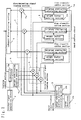
- Fig. 1 illustrates a structure of the prior art pattern recognition machine, wherein a major classification section 101 coarsely classifies an input pattern signal into each category group. Fine classification sections 102 finely classify the input pattern signal into each category within the each category group. Some categories of one category group often overlap with some categories of another category group.
- a group selecting section 103 selects a plurality of category groups from the output values (hereinafter referred to as fidelity) of the major classification section 101.
- a fine classification section selecting section 104 selects the fine classification section 102 into which the input pattern signal is inputted based on the group selection information obtained from the group selecting section 103.
- An discriminating section 105 discriminates the input pattern signal from the fidelity of the category group selected in the group selecting section 103 and the output values of the fine classification section 102.
- Input sections 106 in the major classification section 101 input the input pattern signal and multi-input/one-output(hereinafter referred to as multinput-output) signal processing sections 107 calculate the fidelity of each category group to the input pattern signal.
- Input sections 108 in the fine classification section 102 input the input pattern signal output from the fine classification section selecting section 104.
- Multiinput-output signal processing sections 109 multiply the outputs of the under layer input sections 108 connected thereto or of the multiinput-output signal processing section 109 with weight factors which represent a degree of connection between them, respectively, and output the sum thereof after implementing threshold processing thereon.
- a degree of similarity to each category in the category group of the input pattern signal is found by connecting the plurality of multiinput-output signal processing sections in a network so as to have a layer structure, to have no connection mutually within each layer and to propagate signals only to the upper layers.
- a maximum value selecting section 110 selects the maximum value among outputs of the plurality of multiinput-output signal processing sections in the upper most layer.
- Similarity calculating sections 111 in the discriminating section 105 calculate a similarity of each category from the fidelity of the category group selected by the group selecting section 103 and the output value of the fine classification section 102 corresponding to the category group.
- a category discriminating section 112 discriminates the input pattern signal by finding the maximum value of each category obtained from the similarity calculating sections 111.
- the input sections 106 are prepared by n pieces equally to the number of feature data of the pattern data and each feature data x i is input respectively to the corresponding input section 106.
- Each multiinput-output signal processing section 107 in the major classification section 101 multiplies an input x j of the input section 106 connected thereto with a weight factor v ij (1 ⁇ i ⁇ m r , m r is the number of category groups, 1 ⁇ j ⁇ n) which represents a degree of their connection, calculates the sum of them, divides the sum by the product of norms
- (3) where, X * V i ⁇ j(x j * v ij )
- ( ⁇ x j 2) 1/2
- ( ⁇ v ij 2) 1/2
- ⁇ j represents the sum of j.
- the weight factor vector V i is designed beforehand so that a predetermined multiinput-output signal processing section generates the maximum output to a similar input pattern signal.
- such weight factor vector V i is designed by the following method.
- Vc whose sim (X, VV i ) is largest (this case is called that X matches to Vc in optimum) is found to approach Vc to X every time when the input pattern signal X for designing weight factor vector is input.
- an area which the weight factor vector covers is divided into two.
- V i which matches in optimum to all the input pattern signals for designing weight factor vector is found and is checked if it has changed from the previous one. If there has been a change, the V i is modified. At this time, the weight factor vector is divided similarly to the case in the first process. This process is repeated until the modification and division of the weight factor vector end.
- the input pattern signal is coarsely classified into a plurality of category groups by thus designing the weight factor vector.
- the output value of each of the multiinput-output signal processing sections 107 is output to the group selecting section 103 as a fidelity of each category group to the input pattern signal X.
- the group selecting section 103 selects an arbitrary number of category groups in an order from those having a large fidelity obtained in the major classification section 101 and outputs group selection information indicating which category groups have been selected and corresponding fidelities.
- the fine classification section selecting section 104 selects the fine classification sections 102 to which the input pattern signal is input based on the group selection information obtained from the group selecting section 103 and outputs the input pattern signal to those fine classification sections 102.
- the input pattern signal X is input to the input sections 108.
- the input sections 108 are prepared by n equally to the number of feature data of the pattern signal, and each feature data x i is input to corresponding input section 108, respectively.
- Each multiinput-output signal processing sections 109 in the fine classification section 102 multiplies the output of the underlayer input section 108 connected thereto or of the multiinput-output signal processing section 109 with the weight factor which represents a degree of their connection, respectively, transform the sum thereof by a threshold function and then outputs the resultant value to the upper layer.
- the multiinput-output signal processing sections 109 in the most upper layer in each fine classification section 102 are set to be the same number with the number of categories of pattern data contained in each category group and each of the multiinput-output signal processing sections 109 in the upper most layer corresponds to each of those categories.
- the maximum value selecting section 110 selects the maximum value among the output values of each of the multiinput-output signal processing sections 109 in the upper most layer and outputs the category that corresponds to the multiinput-output signal processing section 109 and the maximum output value thereof.
- each multiinput-output signal processing section 109 has been learned beforehand so that the multiinput-output signal processing section 109 in the upper most layer which corresponds to each category generates the maximum output for the input pattern signal having such category in the category group.
- Back-Propagating Errors In concrete, such a weight factor learning method is implemented by a learning algorithm called Back-Propagating Errors.
- the Back-Propagating Errors has been proposed, for example, by D. E. Rumelhart, G. E. Hinton and R.J. Williams in "Learning Representations by Back-Propagating Errors", Nature, vol. 323, pp. 533-536, Oct. 9, 1986.
- a pattern signal X for learning weight factor is input to the input sections 108 of the fine classification section 102.
- each of the multiinput-output signal processing sections 109 multiplies the output of the underlayer input sections 108 respectively connected thereto or of the multiinput-output signal processing section 109 with the weight factor which represents a degree of their connection, respectively, transform the sum thereof by a threshold function and then outputs the resultant value to the upper layer.
- the error E may be reduced by repeating the update of weight factor based on such Expression (5) every time when a pattern signals for learning is input. When the error E becomes sufficiently small, the learning is finished assuming that the output signal has sufficiently come close to the desired value.
- Such weight factor learning method allows each multiinput-output signal processing section 109 in the upper most layer which corresponds to each category to generate the maximum output for the input pattern signal having such category in the category group. Accordingly, the category of the input pattern signal may be recognized in each category group or in each fine classification section by selecting one that generates the maximum output among the plurality of multiinput-output signal processing sections 109 in the upper most layer by the maximum value selecting section 110.
- the similarity calculating sections 111 first calculate the similarity of each category obtained in the fine classification section 102 from the fidelity of the category group selected by the group selecting section 103 and the output value of the fine classification section 102 that corresponds to that category group, using Expression 6, and output those similarities to the category discriminating section 112.
- Similarity (Fidelity) a (Output value) b (6)
- a and b are real constants.
- the category discriminating section 112 compares the similarities of each category obtained from the similarity calculating sections 111 and outputs the category that corresponds to the similarity which is largest among them as a discrimination result.
- the learning of each fine classification section is carried out totally independently in the single fine classification section without considering a degree of belonging of the input pattern signal to the category group, i.e. a group belongingness, so that recognition accuracy of an input pattern situated at the boundary between category groups is degraded.
- the learning and recognition machine of the present invention comprises: a major classification section for calculating a group belongingness which indicates a degree how close an input pattern signal belongs to a category group composed of a set of similar categories, a plurality of fine classification sections having a in-group similarity calculating section for calculating an in-group similarity which indicates a degree how close the input pattern signal belongs to a category in each category group and a weight factor updating section for updating weight factors of the in-group similarity calculating section; a discrimination signal loading section for weighting the in-group similarity by the group belongingness; a category discriminating section for comparing the weighted in-group similarity output from the discrimination signal loading section; a teacher signal generating section for generating a teacher signal necessary for learning; a learning control section for outputting learning control signal for controlling weights of the in-group similarity calculating section based on the teacher signal output from the teacher signal generating section and based on the output of the discrimination signal loading section or of the category discriminating section; and a learning control signal loading
- pattern signals generally input to a learning and recognition machine, there are a time series pattern such as voice and a spatial pattern such as character and image, and any pattern signal may be processed in the present invention.
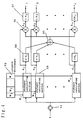
- Fig. 2 is a block diagram showing a first preferred embodiment of a learning and recognition machine of the present invention.
- each of fine classification sections 1 comprises an in-group similarity calculating section 1a for calculating an in-group similarity which represents a degree of resemblance of an input pattern signal to each category contained in a category group and a weight factor updating section 1b for updating a weight factor of the in-group similarity calculating section 1a in accordance to the outputs of the in-group similarity calculating section 1a and of a learning control signal loading section 6 which is described later.
- a major classification section 2 calculates a group belongingness which represents a degree of belonging of the input pattern signal to each category group which comprises similar patterns.
- a group dictionary 2a stores a plurality of group reference pattern signals which represent category groups.
- a group reference pattern similarity calculating section 2b calculates a group belongingness using the group reference pattern signals from the group dictionary 2a.
- a discriminating signal loading section 7 weights the in-group similarity obtained in the fine classification section 1 by the group belongingness calculated in the major classification section 2.
- multipliers 7a multiply the group belongingness calculated in the major classification section 2 with the in-group similarity obtained from the fine classification section 1.
- a category discriminating section 3 discriminates the category of the input pattern signal by selecting a plurality of output values of the multipliers 7a which is large per each category, by calculating the sum of those output values (category similarity) and then by finding the maximum value from the category similarity.
- a teacher signal generating section 4 generates a teacher signal.
- a comparator 5b compares the output of the teacher signal generating section 4 with the output of the category discriminating section 3 and a weight modification control section 5a outputs 1 to the fine classification section in which the both do not agree and the category of the input pattern signal exists and 0 when the both agree, as a direction signal for implementing learning based on the comparison result of the comparator 5b.
- a learning control signal loading section 6 weights the direction signal output from the learning control section 5 by the group belongingness.
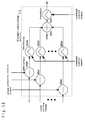
- Fig. 3 is a block diagram showing one preferred embodiment of a structure of the major classification section 2.
- the group dictionary 2a stores a plurality of group reference pattern signals which represent category groups comprising a set of similar patterns.
- the group reference pattern similarity calculating section 2b calculates the group belongingness using the group reference pattern signals from the group dictionary 2a.
- An input section 21 inputs an input pattern signal.
- Each distance calculating section 22 calculates distances between all the group reference pattern signals and the input pattern signal.
- Each dividers 23 calculates the inverse number of the output of the distance calculating section 22.
- An adder 24 finds the sum of the output of each divider 23.
- Each multiplier 25 multiplies the output of the adder 24 with the output of the distance calculating section 22.
- Each divider 26 calculates the inverse number of the output of the multiplier 25.
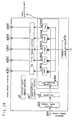
- Fig. 4 is a block diagram showing a first embodiment of the similarity calculating section 1a in the fine classification section 1.
- an input section 31 inputs an input pattern signal.
- a category dictionary 32 stores a plurality of category reference pattern signals which indicates a central value of each category group of the input pattern signal.
- Each distance calculating section 33 calculates distances between all the category reference pattern signals and the input pattern signal.
- Each divider 34 calculates the inverse number of the output of the distance calculating section 33.
- An adder 35 finds the sum of outputs of each divider 34.
- Each multiplier 36 multiplies the output of the adder 35 with the output of the distance calculating section 33.
- Each divider 37 calculates the inverse number of the output of the multiplier 36.
- the input section 21 outputs the input pattern signal X to r distance calculating sections 22.
- Each of the distance calculating sections 22 reads group reference pattern signal V i (1 ⁇ i ⁇ r; r is the number of group reference pattern signals or the number of category groups) which represent each category groups stored in the group dictionary 2a, calculates a distance d i between X and V i shown in Expression (8) and outputs the result respectively to the corresponding dividers 23 and multipliers 25.
- f is a real number that satisfies f > 1.
- d i
- Each divider 23 calculates the inverse number of the distance d i and outputs the result to the adder 24.
- the adder 24 calculates the sum of the outputs of all the dividers 23 and outputs the result to r multipliers 25.
- Each multiplier 25 multiplies the output of the corresponding distance calculating section 22 with that of the adder 24 and inputs the result to the corresponding divider 26.
- Each divider 26 calculates the inverse number of the output of the corresponding multiplier 25.
- the output of each divider 26 is output finally from the major classification section 2 as a group belongingness ⁇ i (1 ⁇ i ⁇ r) of each category group to the input pattern signal X.
- the group reference pattern signal representing each category group stored in the group dictionary 2a is designed beforehand by using a conventional cluster ring method such as K average algorithm described in "Pattern Information Processing” by Shin Nagao, The Institute of Electronics and Communication Engineers of Japan, Corona Publishing Co. and Isodata algorithm or LBG algorithm described in "An Algorithm for Vector Quantizer Design” by Y. Linde, A. Buzo and R.M. Gray, IEEE Trans. Commun., COM-28, 1, pp. 84-95, Jan. 1980.
- K average algorithm described in "Pattern Information Processing” by Shin Nagao, The Institute of Electronics and Communication Engineers of Japan, Corona Publishing Co. and Isodata algorithm or LBG algorithm described in "An Algorithm for Vector Quantizer Design” by Y. Linde, A. Buzo and R.M. Gray, IEEE Trans. Commun., COM-28, 1, pp. 84-95, Jan. 1980.
- All pattern signals may be divided into several subsets of similar pattern signals (category groups) by thus designing the group reference pattern signals.
- Isodata algorithm and LBG algorithm are basically almost the same with this K average algorithm.
- each fine classification section 1 outputs the input pattern signal X to c distance calculating sections 33.
- Each of the distance calculating sections 33 reads the category reference pattern signal (weight factor) W j (1 ⁇ j ⁇ c; c is the number of category reference pattern signals) which indicates the central value of each category stored in the category discriminating section 32, calculates a distance d j between X and W j shown in Expression (11) and outputs the result thereof respectively to the corresponding dividers 34 and multipliers 36.
- d j
- Each divider 34 calculates the inverse number of the distance d j and outputs the result to the adder 35.
- the adder 35 calculates the sum of the outputs of all the dividers 34 and outputs the result to c multipliers 36.
- Each multiplier 36 multiplies the output of the corresponding distance calculating section 33 with that of the adder 35 and inputs the result to the corresponding divider 37.
- Each divider 37 calculates the inverse number of the output of the corresponding multiplier 36.
- the output of each divider 37 is output finally from the fine classification section 1 as an in-group similarity vector of each category to the input pattern signal X ( ⁇ 1, ⁇ 2, ... ⁇ c ) to the discrimination signal loading section 7.
- the multiplier 7a multiplies group belongingness ⁇ i of the i-th category group calculated in the major classification section 2 with the in-group similarity vector ( ⁇ 1, ⁇ 2, ... ⁇ c ) obtained from the fine classification section 1 which corresponds to the category group and outputs the result thereof to the category discriminating section 3.
- the category discriminating section 3 classifies the output values of all the multipliers 7a together per each category and selects a plurality of output values which are large.
- the method for selecting a plurality of output values of the multipliers 7a per each category may be one that selects the output values of the multipliers 7a which are above a certain threshold value.
- the learning control section 5 Based on the comparison result of the output value of the discrimination signal loading section 7 with the teacher signal, the learning control section 5 outputs, as a direction signal E for implementing learning, "1" to the fine classification section in which the both do not agree and the category of the input pattern signal exists and "0" when they agree.
- the learning control signal loading section 6 multiplies a direction signal E p (direction signal to the p-th fine classification Section) with the group belongingness by the multiplier 6a as shown in Expression (14) and outputs the result thereof to the weight factor updating section 1b of the corresponding fine classification section 1.
- the weight factor updating section 1b updates the category reference pattern signal (weight factor) of the in-group similarity calculating section 1a from the output of the in-group similarity calculating section 1a and that of the learning control signal loading section 6 by using a method for example similar to a learning algorithm called Learning Vector Quantization (LVQ).
- LVQ Learning Vector Quantization
- E' p E p * ⁇ p (14)
- E' p represents a loaded learning control signal to the p-th fine classification section
- E p a learning control signal to the p-th category
- ⁇ p a group similarity to the fine classification section to which the loaded learning control signal is input.
- the Learning Vector Quantization will be briefly explained exemplifying the p-th fine classification section below.
- the initial value of the category reference pattern signal W j is prepared beforehand from the pattern signal for designing the category dictionary composed of a set of input pattern signals contained in each category group by a method arbitrary selected or by the conventional cluster ring method such as the K average algorithm described in the explanation of the design of the group dictionary 2a, and the following steps are executed to each fine classification section every time when the input pattern signal X is input.
- This learning and recognition machine can recognize the input pattern by repeating the aforementioned learning operations until all the discrimination results to the input pattern signal X agree to its category.
- the weight of each fine classification section is modified based on the learning control signal weighted by the group belongingness output by the major classification Section, so that the fine classification sections in which the category to which the input pattern signal belongs exists learn in a coordinated manner and it is possible to improve a recognition rate of a pattern situated at the boundary of the category groups.
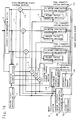
- Fig. 5 illustrates a second preferred embodiment of the learning and recognition machine of the present invention, wherein a group selecting section and an input signal selecting section are included.
- the fine classification section 1, the in-group similarity calculating section 1a, the weight factor updating section 1b, the major classification section 2, the group dictionary 2a, the category discriminating section 3, the teacher signal generating section 4, the learning control section 5, the learning control signal loading section 6, the discrimination signal loading section 7 and the multipliers 6a and 7a operate in the same manner with those described in the first embodiment.
- the group selecting section 8 selects a plurality of category groups based on group belongingness output by the major classification section 2 and the input signal selecting section 9 selects a fine classification section to which an input pattern signal is input based on the selection result of the group selecting section 8.
- the group selecting section 8 selects a category group whose group belongingness is large (for example, selects a category group having a large group belongingness exceeding a threshold value) and outputs the result thereof to the input signal selecting section 9. It also outputs group belongingness of only those selected category group to the learning control signal loading section 6 and the discrimination signal loading section 7.
- recognition and learning of the fine classification section are implemented only for the category group having a large group belongingness selected by the group selecting section 8, so that learning and recognition can be implemented effectively in high speed.
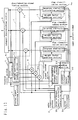
- Fig. 6 illustrates a third preferred embodiment of the learning and recognition machine of the present invention, wherein a limited group selecting section 8a and a group belongingness switching section 11 are included.
- the fine classification sections 1, the in-group similarity calculating section 1a, the weight factor updating section 1b, the major classification section 2, the group dictionary 2a, the category discriminating section 3, the teacher signal generating section 4, the learning Control section 5, the learning control signal loading section 6, the discrimination signal loading section 7, the multipliers 6a and 7a, the group selecting section 8 and the input signal selecting section 9 operate in the same manner with those described in the second embodiment.
- a category information memory section 10 stores information of categories belonging to each fine classification section 1 and the limited group selecting section 8a finds the fine classification section in which the category of the input pattern signal exists during learning based on the memory contents of the category information memory section 10 and selects at least one group belongingness having a larger value in the fine classification section, thereby allowing to prevent an inconvenience which is otherwise caused when the group belongingness of the fine classification section in which the category of the input pattern signal does not exist is happen to be large.
- the group belongingness switching section 11 switches the output of the group selecting section 8 and that of the limited group selecting section 8a and outputs to the learning control signal loading section 6.
- the group belongingness switching section 11 switches the group belongingness so that the group belongingness of the group selecting section 8 is output to the learning control signal loading section 6 during initial learning and the group belongingness of the limited group selecting section 8a is output to the learning control signal loading section 6 during supplemental learning.
- the present embodiment allows supplemental learning of the unlearned pattern because the limited group selecting section 8a selectively outputs the group belongingness to the fine classification section in which the category of the input pattern signal exists. Furthermore, because only the fine classification section which is related to the input pattern signal learns, the supplemental learning hardly influences the whole learning and recognition machine, realizing supplemental learning which hardly influences performance of recognition of patterns already learned.
- Fig. 7 illustrates a fourth preferred embodiment of the learning and recognition machine of the present invention, wherein a group belongingness loading section 12 is included.
- the fine classification sections 1, the in-group similarity calculating section 1a, the weight factor updating section 1b, the major classification Section 2, the group dictionary 2a, the category discriminating section 3, the teacher signal generating section 4, the learning control section 5, the learning control signal loading section 6, the discrimination signal loading section 7, the multipliers 6a and 7a, and the category information memory section 10 operate in the same manner with those described in the third embodiment.
- the group belongingness loading section 12 weights the output of the major classification section 2 based on the memory content of the category information memory section 10.
- Fig. 8 is a block diagram showing one preferred embodiment of the group belongingness loading section 12.
- a loading section 91 weights outputs of the major classification section 2.
- a load adjusting section 92 selects a category group in which the category of the input pattern exists by information of the category belonging to each fine classification section memorized in the category information memory section 10 and adjusts a load of the loading section 92 so that a group belongingness of the category group becomes large.
- the group belongingness loading section 12 weights the group belongingness while adjusting the load so that the group belongingness of the fine classification section in which the category of the input pattern exists becomes large based on the memory content of the category information memory section 10.
- the group belongingness loading section 12 increases the group belongingness to the fine classification section in which the category of the input pattern signal exists, learning of the fine classification section which is related to the input pattern signal is emphasized, allowing effective supplemental learning of an unlearned pattern.
- Fig. 9 illustrates a fifth preferred embodiment of the learning and recognition machine of the present invention, wherein a category adding section 13 is included.
- the fine classification sections 1, the in-group similarity calculating section 1a, the weight factor updating section 1b, the major classification section 2, the group dictionary 2a, the category discriminating section 3, the teacher signal generating section 4, the learning control section 5, the learning control signal loading section 6, the discrimination signal loading section 7, the multipliers 6a and 7a and the category information memory section 10 operate in the same manner with those described in the third embodiment.
- the category adding section 13 adds a means for calculating in-group similarity for a new category to the fine classification sections 1 and the category information memory section 10 stores category information belonging to each fine classification section 1.
- the category adding section 13 compares the category information of the category information memory section 10 with the teacher signal output from the teacher signal generating section 4 and causes a category to which the input pattern signal to be learned belongs to belong the fine classification section when it does not belong to the fine classification section derived from a result of the major classification section. That is, it adds to the fine classification sections a means for calculating in-group similarity to the category to which the input pattern signal belongs. This arrangement will be explained referring to Fig. 4 which illustrates the in-group similarity calculating section 1a of the fine classification section.
- the input pattern signal currently input is added to the category dictionary of the in-group similarity calculating section 1a in the object fine classification section and new distance calculating section 33, category discriminating section 34, category discriminating section 35, multipliers 36 and 37 for the added category are provided.
- new category information is stored in the category information memory section 10.
- the category adding section 13 adds a means for calculating in-group similarity to new category to the fine classification section, so that a new pattern having such large fluctuation that disallows to correctly classify in the major classification section may be effectively learned supplementally.
- Fig. 10 illustrates a sixth preferred embodiment of the learning and recognition machine,of the present invention, wherein a belongingness dependent category adding control section 14 is included.
- the fine classification sections 1, the in-group similarity calculating section 1a, the weight factor updating section 1b, the major classification section 2, the group dictionary 2a, the category discriminating section 3, the teacher signal generating section 4, the learning control section 5, the learning control signal loading section 6, the discrimination signal loading section 7, the multipliers 6a and 7a, the category information memory section 10 and the category adding section 13 operate in the same manner with those described in the fifth embodiment.
- the belongingness dependent category adding control section 14 switches whether the category adding section 13 should add category or not per fine classification section in accordance to the value of group belongingness output by the major classification section 2. For example, no category is added when values of the group belongingness are almost equal among each of the fine classification sections.
- Fig. 11 illustrates one preferred embodiment of the belongingness dependent category adding control section 14 used in the learning and recognition machine of the present invention.
- a maximum value detector 14a detects the maximum value of a plurality of input group belongingness signals
- a memory section 14b stores values of group belongingness which are criteria for adding category
- a comparator 14c compares the maximum value of the group belongingness detected by the maximum value detector 14a with the group belongingness which is the criterion stored in the memory section 14b
- a category adding directing section 14d outputs a direction signal to add category when the maximum value of the group belongingness exceeds the criterion group belongingness based on the comparison result of the comparator 14c.
- the recognition operation is the same with that described in the first embodiment of the learning and recognition machine.
- the learning operation is the same with that described in the fifth embodiment of the learning and recognition machine
- the belongingness dependent category adding control section 14 controls the category adding section 13 so that, when a category to which an input pattern signal to be learned belongs does not belong to a fine classification section that is to learn, the category adding section 13 adds categories not to all the object fine classification sections all the time, but only when the group belongingness of the category group belonging to the object fine classification section exceeds a predetermined criterion. It is also possible to select only a portion of fine classification sections having larger group belongingness as objects to which category is added.
- the present embodiment allows effective supplemental learning by switching so that categories are added only when a category deviates significantly from the classification criterion of the major classification section 2 and learning by means of modification of weight of the in-group similarity calculating section is carried out in other cases.
- Fig. 12 illustrates a seventh preferred embodiment of the learning and recognition machine of the present invention, wherein an error dependent category adding control section 15 is included.
- the fine classification sections 1, the in-group similarity calculating section 1a, the weight factor updating section 1b, the major classification section 2, the group dictionary 2a, the category discriminating section 3, the teacher signal generating section 4, the learning control section 5, the learning control signal loading section 6, the discrimination signal loading section 7, the multipliers 6a and 7a, the category information memory section 10 and the category adding section 13 operate in the same manner with those described in the fifth embodiment.
- the learning control section 5 comprises an error calculator 5c and weight modification control section 5a and the error dependent category adding control section 15 switches whether the category should be added or not in accordance to the value of learning control signal output by the learning control section 5.
- Fig. 13 illustrates one preferred embodiment of the error dependent category adding control section 15 used in the learning and recognition machine of the present invention.
- a memory section 15a stores values of error which are criteria for adding category
- a comparator 15b compares error signals with the value of error which is the criterion stored in the memory section 15a and a category adding directing section 15c outputs a direction signal to add category when the error signal exceeds the criterion error value based on the comparison result of the comparator 15c.
- Fig. 14 is a block diagram showing a second preferred embodiment of the in-group similarity calculating section 1a.
- input sections 41 input an input pattern signal.
- Multi-input/output signal processing sections 42 multiply the output of the underlayer input sections 41 connected thereto or of the multiinput-output signal processing section 42 with the weight factor which represents a degree of their connection, respectively, and outputs the sum thereof after implementing a threshold processing thereon.
- a similarity which is a degree of resemblance of each category in the category group to the input pattern signal is found by connecting the plurality of multi input-output signal processing sections in a network so as to have a layer structure and to propagate signals only to the upper layers.
- Fig. 15 is a block diagram showing a structure of the multiinput-output signal processing section 42 of the second embodiment of the similarity calculating section.
- input sections 51 input input pattern signals.
- a weight factor memory section 52 stores weight factors for weighting a plurality of input signals from the input sections 51.
- Multipliers 53 multiply the weight factor in the weight factor memory section 52 with the input signal from the input sections 51.
- An adder 54 sums the output values of all the multipliers 53.
- a threshold value processing section 55 limits the output value of the adder 54 into a value of certain range.
- an input pattern signal X is input to the input sections 41 in the fine classification section 1 similarly to the case in the first embodiment.
- the input sections 41 are prepared by N equally to the number of feature data of the pattern data and each feature data x i is input respectively to a corresponding input section 41.
- Each of the multiinput-output signal processing sections 42 multiplies the output of the underlayer input section 41 connected thereto as shown in Fig. 14 or that of the multiinput-output signal processing section 42 with a weight factor W ij which represents a degree of their connection stored in the weight factor memory section 52 by the multiplier 53, calculates the sum of outputs of each multiplier 53 by the adder 54, transforms the result by the threshold processing section 55 and then outputs the output value to the upper layer.
- Fig. 16 is a chart showing input/output characteristics of the threshold value processing section 55.
- the input/output characteristics of the threshold value processing section 55 may be a threshold function other than above.
- the multiinput-output signal processing sections 42 in the upper most layer are set to be the same number with the number of categories of the input pattern signal included in each category group and each of them corresponds to each of those categories. That is, the output of the each of the multiinput-output signal processing sections 42 in the upper most layer is output to the discrimination signal loading section 7 as a similarity which is a degree of resemblance of each category in the category group to the input pattern signal.
- the recognition operation is the same with that described in the first embodiment of the learning and recognition machine.
- the weight modification control section 5a outputs the error calculated in the error calculator 5c to the learning control signal loading section 6 as a learning control signal.
- E' ip indicates a loaded learning control signal
- E i a learning control signal to the i-th category
- ⁇ p a group similarity to the fine classification section p to which the loaded learning control signal is input.
- the error dependent category adding control section 15 controls the category adding section 13 so that, when a category to which an input pattern signal to be learned belongs does not belong to a fine classification section that is to learn, the category adding section 13 adds categories not to all the object fine classification sections all the time, but only when the the value of the learning control signal exceeds a predetermined criterion.
- the method for modifying weights it is possible to handle outputs of the learning control signal loading section 6 as error signals and to update the weights in the direction to reduce the error using the aforementioned back-propagating errors method.
- the present embodiment allows effective supplemental learning by switching so that categories are added only when a category deviates significantly from the discrimination criterion of the present learning and recognition machine and learning by means of modification of weight of the in-group similarity calculating section is carried out in other cases.
- the error dependent category adding control section 15 may be used together with the belongingness dependent category adding control section 14 described above.
- Fig. 17 illustrates an eighth preferred embodiment of the learning and recognition machine of the present invention, wherein a belongingness control section 15 is included.
- the fine classification sections 1, the in-group similarity calculating section 1a, the weight factor updating section 1b, the major classification section 2, the group dictionary 2a, the category discriminating section 3, the teacher signal generating section 4, the learning control section 5, the learning control signal loading section 6, the discrimination signal loading section 7, the multipliers 6a and 7a, the category information memory section 10, the category adding section 13 and the error dependent category adding control section 15 operate in the same manner with those described in the seventh embodiment.
- the learning control section 5 operates the same manner with that shown in Fig.
- a learning monitor section 16a monitors a variation of errors of an error calculating section 5c and a number of times for inputting learning patterns and a constant control section 16b changes the value of constant used for the calculation of the distant calculating section 22 of the major classification section 2 based on the monitor result of the learning monitor section 16a.
- Fig. 18 illustrates one preferred embodiment of the distance calculating section used in the major classification section of the present invention.
- Subtracters 22a0 - 22a n calculate a difference of a group reference pattern signal and the input pattern signal
- involuters 22b0 - 22b n calculate the powers of the output of the subtracters
- an adder 22c calculates the sum of the outputs of the involuters
- an involuters 22d calculates the power of the output of the adder.
- the recognition operation is the same with that described in the first embodiment of the learning and recognition machine.
- the belongingness control section 16 calculates group belongingness so that a small number of category groups have a relatively large group belongingness and changes the method for calculating group belongingness as the learning progresses so that more category groups have a relatively large group belongingness.
- the progress of the learning is monitored by the learning monitor section 16a.
- the learning monitor section 16a directs the constant control section 16b to modify the constant when the number of patterns input exceeds a predetermined criterion or when variation of errors is lower than a predetermined criterion based on the output of the error calculating section 5c.
- the constant control section 16b Upon receiving the direction from the learning monitor section 16a, the constant control section 16b increases exponents of involution of the involuters 22b0 - 22b n of the distance calculating section 22 and sets that of the involuter 22d to the inverse number of the involuters 22b0 - 22b n .
- this may be realized by changing f. That is, in the initial period of learning, the group belongingness has a large value only for one category group and other category groups have relatively small values by giving to f a value that is very close to 1. By increasing the value of f as the learning progresses, a plurality of category groups comes to have a relatively large group belongingness.
- Fig. 19 is a block diagram showing a third preferred embodiment of the in-group similarity calculating section 1a.
- similarity of 2 sets of input pattern signals (first feature data and second feature data) to three categories is calculated.
- a plurality of route selecting units n are combined to construct branch structures and one branch structure comprises a layer structure of two layers.
- the under layer is composed of route selecting units n11 - n12 and the upper layer is composed of learning and recognition units q31 - q33.
- Feature data to be discriminated is input to a signal input section of each route selecting unit and a teacher signal is input to the teacher signal input section.
- Fig. 20 shows one preferred embodiment of the route selecting unit used for the third embodiment of the in-group similarity calculating section 1a.
- a signal input section n1 inputs an input signal to be recognized to a quantizer n2 via a signal input terminal n1a.
- the quantizer n2 quantizes the signal input and outputs the result thereof to route loading section n3b.
- a route input section n3a inputs a route signal input via a route input terminal n3a0 to the route loading section n3b.
- Route output terminals n3e1 through n3e5 are linked each other when the route selecting units or the learning and recognition units are combined hierarchically.
- the route loading section n3b comprises loads n3b01 through n3b05 and a load setting section n3b0 that sets the value of load to the loads n3b01 through 3b05 in accordance to the result of quantization.
- the load setting section n3b0 sets the load value to a load that corresponds to each quantization level based on the result of quantization of the input signal by the quantizer n2. That is, the load setting section n3b0 allocates values of each load based on the quantization result.
- the loads n3b01 through n3b05 weight the route signal input from the route input section and the route output section n3e outputs the weighted route signal to the route output terminals n3e1 through n3e5.
- a quantization control section n4 changes a quantizing range of the quantizer n2 and the number of loads to which the load values are allocated by the route setting section n3b0 based on the internal state of the route selecting units stored in an internal state memory section n5. That is, not all the loads contained in the route loading section n3b are used, and the quantization control section n4 changes the necessary number based on the memory content of the internal state memory section n5 as necessary.
- Fig. 21 shows one preferred embodiment of the learning and recognition unit used in the third embodiment of the in-group similarity calculating section 1a of the present invention.
- the learning and recognition unit q comprises a teacher signal input section q1, a route input section q3a, a route loading section q3b, loads q3b01 through q3b010 for weighting input values of the route input section q3a, a learning machine q3b1 for modifying the coupling load and an adder q3c for adding outputs of weighted loads.
- the learning machine q3b1 determines values of the loads q3b01 through 3b050 based on the output of the learning and recognition units and the input value from the teacher signal input section q1.
- Each route selecting unit quantizes those feature data by the quantizer n2 and based on the quantized value, the load setting section q3b0 sets a load value that corresponds to respective data based on the quantized level. A plurality of routes are thus selected in one route selecting unit and a value which is multiplied with the load value is sent to the upper layer.
- the internal state memory section n5 holds the statistic of feature data inputted as internal state and updates the memory content every time when feature data is input.
- the quantization control section n4 increases the number of loads and routes used in the route loading section n3b to allow to select a more accurate route when feature data inputted in the past vary significantly.
- the quantization control section n4 modifies the quantization criterion of the quantizer n2, conforming to the increase of the routes in the route loading section n3b.
- a teacher input signal indicating to which category the signal of the object to be recognized belongs among three categories to be classified is input to the teacher signal input terminal q1a of the learning and recognition unit q in the upper layer. That is "1" is input to a learning and recognition unit which is desired to output the largest value among the learning and recognition units q31 through q33 and "0" is input to the other learning and recognition units.
- the aforementioned back-propagating errors method and the like may be used as a weight modification method.
- Each route selecting unit quantizes those feature data by the quantizer n2 and based on the quantized value
- the load setting section q3b0 sets the load value that corresponds to feature data based on the quantized value.
- One route is thus selected during recognition and a value obtained by multiplying the route signal with the load value is sent to the input terminals of the learning and recognition units q31 through q33 in the upper layer.
- the learning and recognition units in the upper most layer multiplies the input value with the coupling load and outputs a value found by summing by the adder. At this time, a category that is presented by the learning and recognition unit which outputs the largest value among a plurality of learning and recognition units is the recognition result. Further, no load nor threshold value are modified during recognition. Thus the learning and recognition machine can classify and discriminate the object to be recognized based on the input feature data of the object.
- Fig. 22 illustrates a ninth preferred embodiment of the learning and recognition machine of the present invention, wherein a quantization criterion memory section and a quantization criterion control section are included.
- the fine classification sections 1, the in-group similarity calculating section 1a, the weight factor updating section 1b, the major classification section 2, the group dictionary 2a, the category discriminating section 3, the teacher signal generating section 4, the learning control section 5, the learning control signal loading section 6, the discrimination signal loading section 7, the multipliers 6a and 7a, the category information memory section 10 and the category adding section 13 operate in the same manner with those described in the seventh embodiment.
- the group reference pattern similarity calculating section 2b of the major classification section 2 is constructed in the same manner with that shown in Fig.
- the quantization criterion memory section 17 stores constants which are used by the quantization control section n4 of the in-group similarity calculating section 1a to compare with memory content of the internal state memory section n5.
- the quantization criterion control section 18 changes the constants stored in the quantization criterion memory section 17.
- Fig. 23 is a block diagram showing a first preferred embodiment of the quantization criterion control section used in the ninth embodiment of the learning and recognition machine of the present invention.
- an error monitor section 18b monitors error signals output by the error calculating section 5c and detects a reduction of errors or reduction of variation of errors.
- a quantization constant control section 18a changes the constant stored in the quantization criterion memory section 17 based on the result detected in the error monitor section 18b.
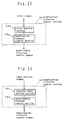
- Fig. 24 is a block diagram showing a second preferred embodiment of the quantization criterion control section used in the ninth embodiment of the learning and recognition machine.
- a learning times monitor section 18c monitors the number of times of inputs of input pattern signals inputted.
- the quantization constant control section 18a changes the constant stored in the quantization criterion memory section 17 based on the number of learning times detected in the learning times monitor section 18c.
- Fig. 25 is a block diagram showing a third preferred embodiment of the quantization criterion control section used in the ninth embodiment of the learning and recognition machine.
- a category adding monitor section 18d monitors the category adding operation of the category adding section 13.
- the quantization constant control section 18a changes the constant stored in the quantization criterion memory section 17 when the category adding monitor section 18d detects the addition of category.
- the operation of the learning and recognition machine structured as described above will be explained.
- the recognition operation is the same with that described in the seventh embodiment of the learning and recognition machine.
- the quantization criterion control section 18 changes the comparison criterion used by the quantization control section n4 per each fine classification section so that detail route selection may be implemented in the route loading section n3b of each fine classification section when an error is large, a number of learning times is small, or a category adding operation is carried out.
- effective learning and supplemental learning may be performed in each fine classification section by changing the route selection accuracy in each fine classification section in accordance to error signals, the number of learning times and category adding operations.
Landscapes
- Engineering & Computer Science (AREA)
- Physics & Mathematics (AREA)
- Theoretical Computer Science (AREA)
- General Physics & Mathematics (AREA)
- General Health & Medical Sciences (AREA)
- General Engineering & Computer Science (AREA)
- Biophysics (AREA)
- Computational Linguistics (AREA)
- Data Mining & Analysis (AREA)
- Evolutionary Computation (AREA)
- Artificial Intelligence (AREA)
- Molecular Biology (AREA)
- Computing Systems (AREA)
- Biomedical Technology (AREA)
- Life Sciences & Earth Sciences (AREA)
- Mathematical Physics (AREA)
- Software Systems (AREA)
- Health & Medical Sciences (AREA)
- Computer Vision & Pattern Recognition (AREA)
- Multimedia (AREA)
- Image Analysis (AREA)
- Character Discrimination (AREA)
Applications Claiming Priority (2)
| Application Number | Priority Date | Filing Date | Title |
|---|---|---|---|
| JP267663/92 | 1992-10-06 | ||
| JP26766392 | 1992-10-06 |
Publications (3)
| Publication Number | Publication Date |
|---|---|
| EP0591921A2 true EP0591921A2 (de) | 1994-04-13 |
| EP0591921A3 EP0591921A3 (de) | 1994-11-23 |
| EP0591921B1 EP0591921B1 (de) | 1998-12-30 |
Family
ID=17447811
Family Applications (1)
| Application Number | Title | Priority Date | Filing Date |
|---|---|---|---|
| EP93116071A Expired - Lifetime EP0591921B1 (de) | 1992-10-06 | 1993-10-05 | Lern und Erkennungsmaschine |
Country Status (3)
| Country | Link |
|---|---|
| US (1) | US5479570A (de) |
| EP (1) | EP0591921B1 (de) |
| DE (1) | DE69322828T2 (de) |
Cited By (1)
| Publication number | Priority date | Publication date | Assignee | Title |
|---|---|---|---|---|
| EP0726531A1 (de) * | 1995-02-09 | 1996-08-14 | AT&T Corp. | Hypothesenlernmaschinenanlage und Verfahren |
Families Citing this family (36)
| Publication number | Priority date | Publication date | Assignee | Title |
|---|---|---|---|---|
| US5729623A (en) * | 1993-10-18 | 1998-03-17 | Glory Kogyo Kabushiki Kaisha | Pattern recognition apparatus and method of optimizing mask for pattern recognition according to genetic algorithm |
| US5602938A (en) * | 1994-05-20 | 1997-02-11 | Nippon Telegraph And Telephone Corporation | Method of generating dictionary for pattern recognition and pattern recognition method using the same |
| JP2690027B2 (ja) * | 1994-10-05 | 1997-12-10 | 株式会社エイ・ティ・アール音声翻訳通信研究所 | パターン認識方法及び装置 |
| US5966701A (en) * | 1995-06-21 | 1999-10-12 | Matsushita Electric Industrial Co., Ltd. | Recognition and judgement apparatus having various learning functions |
| US5802207A (en) * | 1995-06-30 | 1998-09-01 | Industrial Technology Research Institute | System and process for constructing optimized prototypes for pattern recognition using competitive classification learning |
| US6026177A (en) * | 1995-08-29 | 2000-02-15 | The Hong Kong University Of Science & Technology | Method for identifying a sequence of alphanumeric characters |
| JPH10143613A (ja) * | 1996-10-30 | 1998-05-29 | Hewlett Packard Co <Hp> | パタン認識方法 |
| JPH11126259A (ja) | 1997-06-02 | 1999-05-11 | Matsushita Electric Ind Co Ltd | 画像検出方法、画像検出装置、画像処理方法、画像処理装置、及び媒体 |
| US6608944B1 (en) * | 1997-07-28 | 2003-08-19 | Lucent Technologies Inc. | Value based scoring for optical character recognition |
| US6054710A (en) * | 1997-12-18 | 2000-04-25 | Cypress Semiconductor Corp. | Method and apparatus for obtaining two- or three-dimensional information from scanning electron microscopy |
| US5978494A (en) * | 1998-03-04 | 1999-11-02 | Sensar, Inc. | Method of selecting the best enroll image for personal identification |
| US6256618B1 (en) | 1998-04-23 | 2001-07-03 | Christopher Spooner | Computer architecture using self-manipulating trees |
| WO2000055811A1 (en) * | 1999-03-12 | 2000-09-21 | Sony Corporation | Data processor, data processing method, and recorded medium |
| US6470336B1 (en) * | 1999-08-25 | 2002-10-22 | Matsushita Electric Industrial Co., Ltd. | Document image search device and recording medium having document search program stored thereon |
| KR100370220B1 (ko) * | 2000-12-27 | 2003-02-12 | 삼성전자 주식회사 | 직선 기반의 영상 정합 방법 |
| JP2003228706A (ja) * | 2002-02-05 | 2003-08-15 | Fuji Xerox Co Ltd | データ分類装置 |
| JP2003256443A (ja) * | 2002-03-05 | 2003-09-12 | Fuji Xerox Co Ltd | データ分類装置 |
| US7249116B2 (en) * | 2002-04-08 | 2007-07-24 | Fiske Software, Llc | Machine learning |
| EP1376484A1 (de) * | 2002-06-25 | 2004-01-02 | Mars Incorporated | Verfahren und Vorrichtung zur Signalverarbeitung in der Geldprüfung |
| US7233692B2 (en) | 2002-11-14 | 2007-06-19 | Lockheed Martin Corporation | Method and computer program product for identifying output classes with multi-modal dispersion in feature space and incorporating multi-modal structure into a pattern recognition system |
| US8019705B2 (en) * | 2003-03-24 | 2011-09-13 | Fiske Software, LLC. | Register and active element machines: commands, programs, simulators and translators |
| US20040254902A1 (en) * | 2003-06-11 | 2004-12-16 | Von Klleeck David Lawrence | Second Opinion Selection System |
| US20050136242A1 (en) * | 2003-12-22 | 2005-06-23 | Kimberly-Clark Worldwide, Inc. | Porous substrates having one side treated at a higher concentration and methods of treating porous substrates |
| JP4697670B2 (ja) * | 2005-01-05 | 2011-06-08 | 日本電気株式会社 | 識別用データ学習システム、学習装置、識別装置及び学習方法 |
| US20120287304A1 (en) * | 2009-12-28 | 2012-11-15 | Cyber Ai Entertainment Inc. | Image recognition system |
| US9152779B2 (en) | 2011-01-16 | 2015-10-06 | Michael Stephen Fiske | Protecting codes, keys and user credentials with identity and patterns |
| US10268843B2 (en) | 2011-12-06 | 2019-04-23 | AEMEA Inc. | Non-deterministic secure active element machine |
| JP5214762B2 (ja) | 2011-03-25 | 2013-06-19 | 株式会社東芝 | 認識装置、方法及びプログラム |
| CA2741202A1 (en) | 2011-05-27 | 2012-11-27 | Hydro-Quebec | Dynamic clustering of transient signals |
| CN106160725B (zh) * | 2015-04-10 | 2019-08-23 | 扬智科技股份有限公司 | 输出电路与侦测负载是否连接于对应于输出电路的连接端口的方法 |
| KR101887267B1 (ko) * | 2016-08-24 | 2018-08-09 | 한국과학기술원 | 부분구조 학습기법과 영상데이터를 이용한 신경망 학습 방법 및 장치 |
| DE102018200878B3 (de) * | 2018-01-19 | 2019-02-21 | Zf Friedrichshafen Ag | Detektion von Gefahrengeräuschen |
| US10763808B2 (en) * | 2018-10-01 | 2020-09-01 | Keithley Instruments, Llc | Source measure unit with guard drive circuit |
| US10867210B2 (en) * | 2018-12-21 | 2020-12-15 | Waymo Llc | Neural networks for coarse- and fine-object classifications |
| KR102644380B1 (ko) * | 2019-03-28 | 2024-03-07 | 현대자동차주식회사 | 볼트 축력 예측 방법 |
| US11100270B1 (en) | 2019-06-21 | 2021-08-24 | Synopsys, Inc. | Pattern based die connector assignment using machine learning image recognition |
Family Cites Families (7)
| Publication number | Priority date | Publication date | Assignee | Title |
|---|---|---|---|---|
| JPH02165388A (ja) * | 1988-12-20 | 1990-06-26 | Toshiba Corp | パターン認識方式 |
| JP2940933B2 (ja) * | 1989-05-20 | 1999-08-25 | 株式会社リコー | パターン認識方式 |
| EP0457325B1 (de) * | 1990-05-16 | 1997-09-03 | Matsushita Electric Industrial Co., Ltd. | Erkennungseinheit und Gerät zur Erkennung und Beurteilung in dem die Einheit verwendet ist |
| US5309525A (en) * | 1990-06-14 | 1994-05-03 | Canon Kabushiki Kaisha | Image processing apparatus using neural network |
| DE4100500A1 (de) * | 1991-01-10 | 1992-07-16 | Bodenseewerk Geraetetech | Signalverarbeitungsanordnung zur klassifizierung von objekten aufgrund der signale von sensoren |
| US5239594A (en) * | 1991-02-12 | 1993-08-24 | Mitsubishi Denki Kabushiki Kaisha | Self-organizing pattern classification neural network system |
| US5263097A (en) * | 1991-07-24 | 1993-11-16 | Texas Instruments Incorporated | Parameter normalized features for classification procedures, systems and methods |
-
1993
- 1993-10-04 US US08/130,851 patent/US5479570A/en not_active Expired - Fee Related
- 1993-10-05 EP EP93116071A patent/EP0591921B1/de not_active Expired - Lifetime
- 1993-10-05 DE DE69322828T patent/DE69322828T2/de not_active Expired - Fee Related
Cited By (1)
| Publication number | Priority date | Publication date | Assignee | Title |
|---|---|---|---|---|
| EP0726531A1 (de) * | 1995-02-09 | 1996-08-14 | AT&T Corp. | Hypothesenlernmaschinenanlage und Verfahren |
Also Published As
| Publication number | Publication date |
|---|---|
| EP0591921B1 (de) | 1998-12-30 |
| DE69322828T2 (de) | 1999-05-20 |
| US5479570A (en) | 1995-12-26 |
| EP0591921A3 (de) | 1994-11-23 |
| DE69322828D1 (de) | 1999-02-11 |
Similar Documents
| Publication | Publication Date | Title |
|---|---|---|
| EP0591921B1 (de) | Lern und Erkennungsmaschine | |
| US5546503A (en) | Apparatus for configuring neural network and pattern recognition apparatus using neural network | |
| Uykan et al. | Analysis of input-output clustering for determining centers of RBFN | |
| KR100351480B1 (ko) | 패시트분류형신경망 | |
| US5485547A (en) | Recognition unit and recognizing and judging apparatus employing same | |
| US5845051A (en) | Learning method for multilayer perceptron neural network with N-bit data representation | |
| EP0384709A2 (de) | Lernmaschine | |
| US5966701A (en) | Recognition and judgement apparatus having various learning functions | |
| JP2779119B2 (ja) | 学習認識装置 | |
| JP3337597B2 (ja) | 学習型認識判断装置 | |
| JP2001142867A (ja) | 学習型認識判断装置 | |
| JP2924442B2 (ja) | パターン認識装置 | |
| JP2993862B2 (ja) | 信号認識方法、信号認識装置、信号認識装置の学習方法及び信号認識装置の学習装置 | |
| EP0520446B1 (de) | Erkennungs- und Beurteilungsgerät | |
| EP0567983B1 (de) | Lernende Wellenformerkennungseinrichtung | |
| JP3344873B2 (ja) | 学習型認識判断装置 | |
| JPH10187651A (ja) | 学習型認識判断装置 | |
| JPH0991266A (ja) | 学習型認識判断装置 | |
| US5329594A (en) | Recognizing and judging apparatus | |
| US5542005A (en) | Recognition unit and recognition apparatus | |
| Zhu et al. | An FPGA implementation of Kak's instantaneously-trained, Fast-Classification neural networks | |
| Khotanzad et al. | Non-parametric prediction of AR processes using neural networks | |
| JPH09325950A (ja) | 学習型認識判断装置 | |
| JP2776265B2 (ja) | 単位認識ユニット及び学習型認識判断装置 | |
| JP3440187B2 (ja) | 光学的文字読取装置 |
Legal Events
| Date | Code | Title | Description |
|---|---|---|---|
| PUAI | Public reference made under article 153(3) epc to a published international application that has entered the european phase |
Free format text: ORIGINAL CODE: 0009012 |
|
| AK | Designated contracting states |
Kind code of ref document: A2 Designated state(s): DE FR GB |
|
| PUAL | Search report despatched |
Free format text: ORIGINAL CODE: 0009013 |
|
| AK | Designated contracting states |
Kind code of ref document: A3 Designated state(s): DE FR GB |
|
| 17P | Request for examination filed |
Effective date: 19950303 |
|
| GRAG | Despatch of communication of intention to grant |
Free format text: ORIGINAL CODE: EPIDOS AGRA |
|
| 17Q | First examination report despatched |
Effective date: 19980216 |
|
| GRAG | Despatch of communication of intention to grant |
Free format text: ORIGINAL CODE: EPIDOS AGRA |
|
| GRAH | Despatch of communication of intention to grant a patent |
Free format text: ORIGINAL CODE: EPIDOS IGRA |
|
| GRAH | Despatch of communication of intention to grant a patent |
Free format text: ORIGINAL CODE: EPIDOS IGRA |
|
| GRAA | (expected) grant |
Free format text: ORIGINAL CODE: 0009210 |
|
| AK | Designated contracting states |
Kind code of ref document: B1 Designated state(s): DE FR GB |
|
| REF | Corresponds to: |
Ref document number: 69322828 Country of ref document: DE Date of ref document: 19990211 |
|
| ET | Fr: translation filed | ||
| PLBE | No opposition filed within time limit |
Free format text: ORIGINAL CODE: 0009261 |
|
| STAA | Information on the status of an ep patent application or granted ep patent |
Free format text: STATUS: NO OPPOSITION FILED WITHIN TIME LIMIT |
|
| 26N | No opposition filed | ||
| REG | Reference to a national code |
Ref country code: GB Ref legal event code: IF02 |
|
| PGFP | Annual fee paid to national office [announced via postgrant information from national office to epo] |
Ref country code: GB Payment date: 20021002 Year of fee payment: 10 |
|
| PGFP | Annual fee paid to national office [announced via postgrant information from national office to epo] |
Ref country code: FR Payment date: 20021008 Year of fee payment: 10 |
|
| PGFP | Annual fee paid to national office [announced via postgrant information from national office to epo] |
Ref country code: DE Payment date: 20021011 Year of fee payment: 10 |
|
| PG25 | Lapsed in a contracting state [announced via postgrant information from national office to epo] |
Ref country code: GB Free format text: LAPSE BECAUSE OF NON-PAYMENT OF DUE FEES Effective date: 20031005 |
|
| PG25 | Lapsed in a contracting state [announced via postgrant information from national office to epo] |
Ref country code: DE Free format text: LAPSE BECAUSE OF NON-PAYMENT OF DUE FEES Effective date: 20040501 |
|
| GBPC | Gb: european patent ceased through non-payment of renewal fee |
Effective date: 20031005 |
|
| PG25 | Lapsed in a contracting state [announced via postgrant information from national office to epo] |
Ref country code: FR Free format text: LAPSE BECAUSE OF NON-PAYMENT OF DUE FEES Effective date: 20040630 |
|
| REG | Reference to a national code |
Ref country code: FR Ref legal event code: ST |