EP0591940A2 - Bus de réseau multimédia - Google Patents
Bus de réseau multimédia Download PDFInfo
- Publication number
- EP0591940A2 EP0591940A2 EP93116147A EP93116147A EP0591940A2 EP 0591940 A2 EP0591940 A2 EP 0591940A2 EP 93116147 A EP93116147 A EP 93116147A EP 93116147 A EP93116147 A EP 93116147A EP 0591940 A2 EP0591940 A2 EP 0591940A2
- Authority
- EP
- European Patent Office
- Prior art keywords
- type
- packet
- transmissions
- information
- mmnc
- Prior art date
- Legal status (The legal status is an assumption and is not a legal conclusion. Google has not performed a legal analysis and makes no representation as to the accuracy of the status listed.)
- Withdrawn
Links
Images








Classifications
-
- H—ELECTRICITY
- H04—ELECTRIC COMMUNICATION TECHNIQUE
- H04Q—SELECTING
- H04Q11/00—Selecting arrangements for multiplex systems
- H04Q11/04—Selecting arrangements for multiplex systems for time-division multiplexing
- H04Q11/0428—Integrated services digital network, i.e. systems for transmission of different types of digitised signals, e.g. speech, data, telecentral, television signals
- H04Q11/0478—Provisions for broadband connections
-
- H—ELECTRICITY
- H04—ELECTRIC COMMUNICATION TECHNIQUE
- H04L—TRANSMISSION OF DIGITAL INFORMATION, e.g. TELEGRAPHIC COMMUNICATION
- H04L12/00—Data switching networks
- H04L12/64—Hybrid switching systems
- H04L12/6418—Hybrid transport
-
- H—ELECTRICITY
- H04—ELECTRIC COMMUNICATION TECHNIQUE
- H04J—MULTIPLEX COMMUNICATION
- H04J2203/00—Aspects of optical multiplex systems other than those covered by H04J14/05 and H04J14/07
- H04J2203/0001—Provisions for broadband connections in integrated services digital network using frames of the Optical Transport Network [OTN] or using synchronous transfer mode [STM], e.g. SONET, SDH
- H04J2203/0046—User Network Interface
- H04J2203/0048—Network termination, e.g. NT1, NT2, PBX
-
- H—ELECTRICITY
- H04—ELECTRIC COMMUNICATION TECHNIQUE
- H04L—TRANSMISSION OF DIGITAL INFORMATION, e.g. TELEGRAPHIC COMMUNICATION
- H04L12/00—Data switching networks
- H04L12/54—Store-and-forward switching systems
- H04L12/56—Packet switching systems
- H04L12/5601—Transfer mode dependent, e.g. ATM
- H04L2012/5614—User Network Interface
- H04L2012/5615—Network termination, e.g. NT1, NT2, PBX
-
- H—ELECTRICITY
- H04—ELECTRIC COMMUNICATION TECHNIQUE
- H04L—TRANSMISSION OF DIGITAL INFORMATION, e.g. TELEGRAPHIC COMMUNICATION
- H04L12/00—Data switching networks
- H04L12/54—Store-and-forward switching systems
- H04L12/56—Packet switching systems
- H04L12/5601—Transfer mode dependent, e.g. ATM
- H04L2012/5629—Admission control
- H04L2012/563—Signalling, e.g. protocols, reference model
-
- H—ELECTRICITY
- H04—ELECTRIC COMMUNICATION TECHNIQUE
- H04L—TRANSMISSION OF DIGITAL INFORMATION, e.g. TELEGRAPHIC COMMUNICATION
- H04L12/00—Data switching networks
- H04L12/64—Hybrid switching systems
- H04L12/6418—Hybrid transport
- H04L2012/6424—Access arrangements
- H04L2012/6427—Subscriber Access Module; Concentrator; Group equipment
-
- H—ELECTRICITY
- H04—ELECTRIC COMMUNICATION TECHNIQUE
- H04L—TRANSMISSION OF DIGITAL INFORMATION, e.g. TELEGRAPHIC COMMUNICATION
- H04L12/00—Data switching networks
- H04L12/64—Hybrid switching systems
- H04L12/6418—Hybrid transport
- H04L2012/6432—Topology
- H04L2012/6437—Ring
-
- H—ELECTRICITY
- H04—ELECTRIC COMMUNICATION TECHNIQUE
- H04L—TRANSMISSION OF DIGITAL INFORMATION, e.g. TELEGRAPHIC COMMUNICATION
- H04L12/00—Data switching networks
- H04L12/64—Hybrid switching systems
- H04L12/6418—Hybrid transport
- H04L2012/6445—Admission control
- H04L2012/6448—Medium Access Control [MAC]
- H04L2012/6451—Deterministic, e.g. Token, DQDB
-
- H—ELECTRICITY
- H04—ELECTRIC COMMUNICATION TECHNIQUE
- H04L—TRANSMISSION OF DIGITAL INFORMATION, e.g. TELEGRAPHIC COMMUNICATION
- H04L12/00—Data switching networks
- H04L12/64—Hybrid switching systems
- H04L12/6418—Hybrid transport
- H04L2012/6445—Admission control
- H04L2012/6456—Channel and bandwidth allocation
-
- H—ELECTRICITY
- H04—ELECTRIC COMMUNICATION TECHNIQUE
- H04L—TRANSMISSION OF DIGITAL INFORMATION, e.g. TELEGRAPHIC COMMUNICATION
- H04L12/00—Data switching networks
- H04L12/64—Hybrid switching systems
- H04L12/6418—Hybrid transport
- H04L2012/6486—Signalling Protocols
Definitions
- This invention relates to the area of transmitting different types of data between a high speed network and a plurality of local area networks. More specifically, the invention relates to a method and apparatus designed for use in multi-media applications requiring a varying mix of isochronous data and packet data transfers.
- moving image, voice and data must be transmitted simultaneously. To do this in a cost effective manner presents some difficulty since each type of data has different traffic characteristics and requirements. For example, real-time, isochronous information (such as moving images and voice) requires a controlled delay time limit. That is, such data must be considered high priority and guaranteed network bandwidth to insure a consistent and constant communication channel.
- Asynchronous data (such as graphics or documents) can tolerate fluctuating delay times and can be sent in packet format. Essentially, this lower priority data not require a constant channel. However, care must be taken to insure some channel resources are assigned to asynchronous transmission, in order to avoid the such data being totally shut out by the higher priority isochronous transmissions.
- U.S. Patent 4,698,802 "Combined Circuit and Packet Switching System", by Goke, et al., (herein referred to as Goke) provides one solution for this facet of the overall problem. That patent discloses a bus which can be used for transmission between a high speed network and a single user. Goke uses a time slot scheme in which the packet data is assigned a certain minimum number of time slots. Thus, packet data is never totally blocked. Further, Goke's scheme is dynamic in that it permits packet traffic to use all time slots not currently being used by isochronous traffic. However, Goke's scheme does not provide for multiple isochronous channels.
- the method and apparatus also provide for effective communication between the users connected to the apparatus, without requiring use of the high speed communication network.
- the invention comprises a multi-media network bus (MMN-Bus) and Controller (MMNC) which serves as a distribution medium between a single high-speed network and multiple user network interfaces (UNIs).
- MSN-Bus multi-media network bus
- MMNC Controller
- the MMNC allocates multiple isochronous channels and packet channels for distribution to the users over the MMN-Bus.
- the MMNC sends information in standard time segments or master cycles. Each master cycle is initiated by a start signal. Following the start signal, a series of control blocks is sent. The first type of control block is used for communication from the MMNC to each UNI. There is one block of such control block sent for each UNI connected to the MMN-Bus. The second type of control block is used for transmissions from each UNI to the MMNC. Again, one block of such control data is sent for each UNI connected to the MMN-Bus. Both types of control blocks are used for call setup, call acknowledgement, channel allocation and call end.
- the MMNC sends the address either of itself or the address of a UNI. (This address is sent continuously until the end of the transmission of the related packet.) Subsequently, a start packet signal is sent which indicates the beginning of the packet transmission by the unit whose address was sent. Each packet contains a destination address. Each UNI and the MMNC check the destination address against their own address: if it matches, the device receives the packet. An end packet signal indicates the end of the transmission of the first packet.
- the MMNC suspends the transfer, sending the suspend signal. This suspend signal continues to be sent through the next cycle until the completion of the isochronous channel transfers.
- the address signals are also sent continuously during the control data and isochronous channel transfers.
- the MMNC deserts, that is, ceases sending the suspend signal and sends a start packet signal. The packet data transmission then starts, picking up at the point at which it was suspended.
- the MMN-Bus provides isochronous channels to guarantee that appropriate bandwidth is dedicated to video, voice and other types of isochronous data.
- the isochronous channels are given priority on the bus over any packet transfers.
- this invention can provide for transmission of any number (and, in fact, a varying number) of isochronous channels.
- the suspend feature guarantees the required bandwidth for isochronous channels because it prevents blocking of isochronous traffic by packet traffic and permits allocation of different isochronous channels and bandwidth as required.
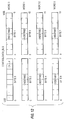
- FIG. 2 is a representation of the MMN-Bus Master Cycle.
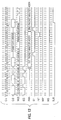
- FIG. 3 is a representation of the MMN-Bus timing.
- FIG. 4 is a representation of the C_State and U_states and their interrelations.
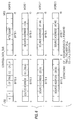
- FIG. 5 is a representation of the MMNC-to-UNI generic control format.
- FIGs. 6-8 are representations of the control formats for various C_States.
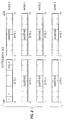
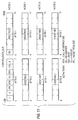
- FIG. 9 is a representation of the UNI-to-MMNC generic control formats.
- FIGs. 10-12 are representations of the control formats for various U_States.
- FIG. 1 illustrates an apparatus to distribute high-speed isochronous and packet data to a set of users over multiple user network interfaces (UNIs).
- the Multi-Media Network Bus (MMN-Bus) shown in FIG. 1 serves as a distribution medium between a single high-speed network and multiple UNIs.
- the MMN-Bus can provide local communication services to the local users.
- Such local communications, or LAN-type services, are provided on the MMN-Bus independent of the backbone network.
- Local Communications permit UNIs that are associated with a single MMN- Bus to communicate with each other. Simultaneously, remote communications occur over the MMN-Bus, through the backbone network interface, and across the network to the receiving backbone network interface.
- MMNC MMN-Bus Controller
- BNI backbone network interface
- the apparatus and method will be described with relation to a 100Mbps Fiber Distributed Data Interface (FDDI)-II backbone network and a 64-100Mpbs Ethernet UNIS.
- the FDDI defines a LAN using a fiber optic transmission medium.
- the extended version of FDDI (FDDI-II) provides packet oriented services and an additional connection oriented service).
- the band width of an FDDI-II ring can be subdivided into up to 16 wideband channels for the connection oriented service, each channel having a capacity of 6.144 Mbit/s each.
- a fixed frame structure is used for that purpose. Every 125 microseconds a new frame is inserted by a station called a bus master.
- a clock pulse is sent over the line in order to synchronize transfers.
- FIG. 1 shows the MMN-Bus, the BNI and multiple UNIs.
- the MMN-Bus in the preferred embodiment, operates on the same master cycle as the FDDI-II network, 125 microseconds.
- FIG. 2 illustrates the master cycle. Referring to FIG. 2, the master cycle is divided into n MMNC->UNI control bands, (one for each UNI active on the MMN-Bus where n is between 1 and 64), n isochronous channel bands (one for each of the isochronous channels required by the transmission), and a band for Packet Data.
- the master cycle follows the same procedure as previously described.
- the MMNC will assert SP (FIG. 15, 1520) and deassert SUS (FIG. 15, 1530). This indicates to the suspended packet master and the suspended packet receiver, that the packet data transfer is resuming. The transfer starts at the point where it was suspended. The header, destination address, source address and length fields are not retransmitted.
- the third packet master indicates to the MMNC that additional packets are pending by asserting MR*,active low.
- the third packet master has additional packets to transfer, it should again assert MR*.
- the third packet master asserts MR* indicating that additional packets are pending. If the MMNC has not serviced all previously received packet requests, the MMNC will not assert MG (FIG 16, 1610). However, the MMNC places the packet request in the queue for later service. The third packet master relinquishes control of the bus at the completion of the current packet transfer. THE MMNC then grants access to the fourth packet master. If the next request in the packet queue is the one asserted by the third packet master when it asserted MR*, the MMNC will assert the third packet master's address is the one asserted by the third packet master when it asserted MR*, the MMNC will assert the third packet master's address (FIG. 16, 1620), and that UNI will begin its packet transfer at that point. Note that MG is not asserted. (FIG. 16, 1630).
- the above invention provides the capability for full bandwidth utilization independent of traffic mix. If a high amount of isochronous bandwidth is required, the MMN-Bus provides sufficient bandwidth to contain all of the FDDI- II bandwidth, plus allow all the additional bandwidth for packet data transfers between local UNI connections. For the 16-bit bus, the additional bandwidth is 12 Mbps. For a 64 bit-bus, the additional bandwidth for packet bandwidth is 600 Mbps. IF little or no isochronous bandwidth is required, the MMN-Bus allows the full bandwidth to be used for packet data transfers.
- the preamble, starting delimiter and frame check sequence are stripped off by most Ethernet controller chips. Hence, little additional protocol manipulation is needed for local transfers.
- the BNI card will need to convert FDDI frames to Ethernet frames and vice versa.
- bus with 16 D/D bits buses with 32 or 64 S/D bits, or other configurations knows to the art may be used.
- the format of the control information and the clock rates used may be varied to create alternate embodiments.
Landscapes
- Engineering & Computer Science (AREA)
- Computer Networks & Wireless Communication (AREA)
- Signal Processing (AREA)
- Small-Scale Networks (AREA)
- Time-Division Multiplex Systems (AREA)
- Communication Control (AREA)
Applications Claiming Priority (2)
| Application Number | Priority Date | Filing Date | Title |
|---|---|---|---|
| US07/958,415 US5436898A (en) | 1992-10-08 | 1992-10-08 | Multi-media network bus |
| US958415 | 1992-10-08 |
Publications (2)
| Publication Number | Publication Date |
|---|---|
| EP0591940A2 true EP0591940A2 (fr) | 1994-04-13 |
| EP0591940A3 EP0591940A3 (en) | 1994-09-07 |
Family
ID=25500931
Family Applications (1)
| Application Number | Title | Priority Date | Filing Date |
|---|---|---|---|
| EP19930116147 Withdrawn EP0591940A3 (en) | 1992-10-08 | 1993-10-06 | Multi-media network bus |
Country Status (3)
| Country | Link |
|---|---|
| US (1) | US5436898A (fr) |
| EP (1) | EP0591940A3 (fr) |
| JP (1) | JP2516315B2 (fr) |
Cited By (5)
| Publication number | Priority date | Publication date | Assignee | Title |
|---|---|---|---|---|
| WO1997001909A1 (fr) * | 1995-06-29 | 1997-01-16 | Telefonaktiebolaget Lm Ericsson (Publ) | Serveur d'etablissement de communications |
| WO1997001910A1 (fr) * | 1995-06-29 | 1997-01-16 | Telefonaktiebolaget Lm Ericsson (Publ) | Serveur d'etablissement de communications |
| US5623488A (en) * | 1995-06-29 | 1997-04-22 | Telefonaktiebolaget Lm Ericsson | Call set-up server |
| WO1998002999A1 (fr) * | 1996-07-17 | 1998-01-22 | British Telecommunications Public Limited Company | Reseau d'unites de traitement |
| EP0738061A3 (fr) * | 1995-04-13 | 2000-01-05 | Telia Ab | Dispositif dans un système de communication |
Families Citing this family (20)
| Publication number | Priority date | Publication date | Assignee | Title |
|---|---|---|---|---|
| JP2871469B2 (ja) * | 1994-07-19 | 1999-03-17 | 日本電気株式会社 | Atm網構成管理方法 |
| US5953350A (en) * | 1995-03-13 | 1999-09-14 | Selsius Systems, Inc. | Multimedia client for multimedia/hybrid network |
| US5832499A (en) * | 1996-07-10 | 1998-11-03 | Survivors Of The Shoah Visual History Foundation | Digital library system |
| US5813014A (en) | 1996-07-10 | 1998-09-22 | Survivors Of The Shoah Visual History Foundation | Method and apparatus for management of multimedia assets |
| US6104714A (en) * | 1996-09-26 | 2000-08-15 | International Business Machines Corporation | Method and apparatus for allowing communication in an isochronous traffic of asynchronous transfer mode (ATM) cells in a ring network |
| US5892772A (en) * | 1997-04-15 | 1999-04-06 | Lockheed Martin Corporation | Spatial reuse by means of dual homing on a ring network |
| US7284187B1 (en) * | 1997-05-30 | 2007-10-16 | Aol Llc, A Delaware Limited Liability Company | Encapsulated document and format system |
| US6289466B1 (en) * | 1997-06-11 | 2001-09-11 | Compaq Computer Corporation | Usage of monitor bezel buttons to control and indicate multimedia functions |
| US6268845B1 (en) | 1997-06-11 | 2001-07-31 | Compaq Computer Corporation | Bezel button controls over USB |
| US6614781B1 (en) | 1998-11-20 | 2003-09-02 | Level 3 Communications, Inc. | Voice over data telecommunications network architecture |
| US6442169B1 (en) | 1998-11-20 | 2002-08-27 | Level 3 Communications, Inc. | System and method for bypassing data from egress facilities |
| US7130315B1 (en) | 1999-09-10 | 2006-10-31 | Sony Corporation | Method of and apparatus for utilizing extended AV/C command and response frames including transaction label and common result/error code |
| US7159039B1 (en) * | 2000-02-28 | 2007-01-02 | Verizon Laboratories Inc. | Systems and methods for providing in-band and out-band message processing |
| US7324635B2 (en) * | 2000-05-04 | 2008-01-29 | Telemaze Llc | Branch calling and caller ID based call routing telephone features |
| US6581071B1 (en) | 2000-09-12 | 2003-06-17 | Survivors Of The Shoah Visual History Foundation | Surveying system and method |
| US6574638B1 (en) | 2000-09-12 | 2003-06-03 | Survivors Of The Shoah Visual History Foundation | Method and apparatus for cataloguing multimedia data using surveying data |
| US7003604B2 (en) * | 2001-10-04 | 2006-02-21 | Sony Corporation | Method of and apparatus for cancelling a pending AV/C notify command |
| US6944704B2 (en) * | 2001-10-04 | 2005-09-13 | Sony Corporation | Method and apparatus for utilizing extended AV/C command frames including status inquiry, notify inquiry and control inquiry command types |
| US7385970B1 (en) * | 2001-12-07 | 2008-06-10 | Redback Networks, Inc. | Method and apparatus for balancing bandwidth among multiple ports of a network element |
| US7542463B2 (en) * | 2004-09-24 | 2009-06-02 | Cisco Technology, Inc. | Communicating packets along a control channel and a media channel |
Family Cites Families (10)
| Publication number | Priority date | Publication date | Assignee | Title |
|---|---|---|---|---|
| NL8300033A (nl) * | 1983-01-06 | 1984-08-01 | Philips Nv | Werkwijze voor het overdragen van digitale informatie over een transmissiering. |
| EP0214352B1 (fr) * | 1985-08-13 | 1990-10-24 | International Business Machines Corporation | Méthode et système de transport adaptatif pour la commutation circuit/paquet |
| EP0227852B1 (fr) * | 1985-12-23 | 1990-08-29 | International Business Machines Corporation | Système local de communication pour services intégrés basé sur un moyen de transmission à structure de boucle avec utilisation d'un jeton |
| US4698802A (en) * | 1986-03-07 | 1987-10-06 | American Telephone And Telegraph Company And At&T Information Systems Inc. | Combined circuit and packet switching system |
| US4731785A (en) * | 1986-06-20 | 1988-03-15 | American Telephone And Telegraph Company | Combined circuit switch and packet switching system |
| EP0258514B1 (fr) * | 1986-08-27 | 1992-05-06 | International Business Machines Corporation | Appareil pour allocation optimal de bande passante entre les fentes temporelles en mode circuit et le flot de données en mode paquet dans un réseau de communication |
| DE3777797D1 (de) * | 1987-01-28 | 1992-04-30 | Ibm | Vorrichtung zur vermittlung zwischen kanaelen fuer synchronen nachrichtenverkehr und zur vermittlung von asynchronen datenpaketen. |
| JP2761872B2 (ja) * | 1987-03-20 | 1998-06-04 | 株式会社日立製作所 | 多元情報交換方法及びそのための装置 |
| US4951281A (en) * | 1987-11-30 | 1990-08-21 | Furukawa Electric Co., Ltd. | Multiplex transmission system |
| FR2648646B1 (fr) * | 1989-06-19 | 1991-08-23 | Alcatel Business Systems | Procede et dispositif de gestion d'acces au support de transmission d'un reseau de commutation reparti multiservices |
-
1992
- 1992-10-08 US US07/958,415 patent/US5436898A/en not_active Expired - Fee Related
-
1993
- 1993-09-21 JP JP5234422A patent/JP2516315B2/ja not_active Expired - Lifetime
- 1993-10-06 EP EP19930116147 patent/EP0591940A3/en not_active Withdrawn
Cited By (13)
| Publication number | Priority date | Publication date | Assignee | Title |
|---|---|---|---|---|
| EP0738061A3 (fr) * | 1995-04-13 | 2000-01-05 | Telia Ab | Dispositif dans un système de communication |
| US5710882A (en) * | 1995-06-29 | 1998-01-20 | Telefonaktiebolaget Lm Ericsson | Method and call set up server for setting up a call using a call handling portion and a connection handling portion to handle the call and the connection, respectively |
| US5623488A (en) * | 1995-06-29 | 1997-04-22 | Telefonaktiebolaget Lm Ericsson | Call set-up server |
| WO1997001909A1 (fr) * | 1995-06-29 | 1997-01-16 | Telefonaktiebolaget Lm Ericsson (Publ) | Serveur d'etablissement de communications |
| WO1997001910A1 (fr) * | 1995-06-29 | 1997-01-16 | Telefonaktiebolaget Lm Ericsson (Publ) | Serveur d'etablissement de communications |
| US6108705A (en) * | 1995-06-29 | 2000-08-22 | Telefonaktiebolaget Lm Ericsson | Call set-up server |
| WO1998002999A1 (fr) * | 1996-07-17 | 1998-01-22 | British Telecommunications Public Limited Company | Reseau d'unites de traitement |
| AU712756B2 (en) * | 1996-07-17 | 1999-11-18 | British Telecommunications Public Limited Company | Processing device network |
| US6407996B1 (en) | 1996-07-17 | 2002-06-18 | British Telecommunications Public Limited Company | Processing device network |
| CN1842109A (zh) * | 1996-07-17 | 2006-10-04 | 英国电讯有限公司 | 实现音频电话的方法及中央转换处理器 |
| US7197030B2 (en) | 1996-07-17 | 2007-03-27 | British Telecommunications Public Limited Company | Processing device network |
| CN1492646B (zh) * | 1996-07-17 | 2011-08-10 | 英国电讯有限公司 | 实现音频电话的方法及中央转换处理器 |
| CN1842109B (zh) * | 1996-07-17 | 2013-03-27 | 英国电讯有限公司 | 实现音频电话的方法及中央转换处理器 |
Also Published As
| Publication number | Publication date |
|---|---|
| JP2516315B2 (ja) | 1996-07-24 |
| US5436898A (en) | 1995-07-25 |
| JPH06224920A (ja) | 1994-08-12 |
| EP0591940A3 (en) | 1994-09-07 |
Similar Documents
| Publication | Publication Date | Title |
|---|---|---|
| US5436898A (en) | Multi-media network bus | |
| US5422883A (en) | Call setup and channel allocation for a multi-media network bus | |
| US5699361A (en) | Multimedia channel formulation mechanism | |
| US5452330A (en) | Bus-oriented switching system for asynchronous transfer mode | |
| US20020095684A1 (en) | Methods, systems and computer program products for bandwidth allocation based on throughput guarantees | |
| US6847635B1 (en) | Method to transmit silence compressed voice over IP efficiently in DOCSIS cable networks | |
| US4586175A (en) | Method for operating a packet bus for transmission of asynchronous and pseudo-synchronous signals | |
| CA2162611A1 (fr) | Methode et appareil permettant le transfert synchrone et l'acces en mode paquet pour une multiplicite de services offerts sur un reseau de communication a large bande | |
| EP0596652A1 (fr) | Réseau de transmission de données source isochrones avec structure de trame | |
| JPH1093590A (ja) | 通信システム | |
| JPH06237261A (ja) | データ伝送方法およびインターフェース装置 | |
| US5341373A (en) | Congestion relieving system in a communication system | |
| Mark | Distributed scheduling conflict-free multiple access for local area communication networks | |
| US6243391B1 (en) | Non-polled dynamic slot time allocation protocol | |
| US6108347A (en) | Non-polled dynamic slot time allocation protocol | |
| JPH0630485B2 (ja) | 時分割双方向伝送方式 | |
| US5383186A (en) | Apparatus and method for synchronous traffic bandwidth on a token ring network | |
| Martini | Connection oriented data service in DQDB | |
| Elsaadany et al. | Priority communication schemes on local area networks for multimedia traffic | |
| Kotikalapudi et al. | Adaptive MAC-layer protocol for multiservice digital access via tree and branch communication networks | |
| WO1997043843A1 (fr) | Procede et appareil permettant de reguler le flux de donnees dans un reseau ethernet | |
| JPH09282255A (ja) | 通信システム | |
| JPH03272248A (ja) | 通信システムにおける帯域割り当て方法及び通信システム | |
| JP3512629B2 (ja) | 帯域共用制御回路と帯域制御回路及び通信システム | |
| KR100300216B1 (ko) | 등시 데이터율 보다 낮은 율로 데이터를 등시적으로 전송하는 방법 및 장치 |
Legal Events
| Date | Code | Title | Description |
|---|---|---|---|
| PUAI | Public reference made under article 153(3) epc to a published international application that has entered the european phase |
Free format text: ORIGINAL CODE: 0009012 |
|
| AK | Designated contracting states |
Kind code of ref document: A2 Designated state(s): DE FR GB |
|
| PUAL | Search report despatched |
Free format text: ORIGINAL CODE: 0009013 |
|
| AK | Designated contracting states |
Kind code of ref document: A3 Designated state(s): DE FR GB |
|
| 17P | Request for examination filed |
Effective date: 19940819 |
|
| 17Q | First examination report despatched |
Effective date: 19970114 |
|
| STAA | Information on the status of an ep patent application or granted ep patent |
Free format text: STATUS: THE APPLICATION IS DEEMED TO BE WITHDRAWN |
|
| 18D | Application deemed to be withdrawn |
Effective date: 19970501 |