EP0592836B1 - DNS der Integrationsstelle des menschlichen Adenassoziierten Virus und seine Verwendung - Google Patents
DNS der Integrationsstelle des menschlichen Adenassoziierten Virus und seine Verwendung Download PDFInfo
- Publication number
- EP0592836B1 EP0592836B1 EP93114941A EP93114941A EP0592836B1 EP 0592836 B1 EP0592836 B1 EP 0592836B1 EP 93114941 A EP93114941 A EP 93114941A EP 93114941 A EP93114941 A EP 93114941A EP 0592836 B1 EP0592836 B1 EP 0592836B1
- Authority
- EP
- European Patent Office
- Prior art keywords
- sequence
- sequences
- nucleic acid
- integration site
- virus integration
- Prior art date
- Legal status (The legal status is an assumption and is not a legal conclusion. Google has not performed a legal analysis and makes no representation as to the accuracy of the status listed.)
- Expired - Lifetime
Links
Images


Classifications
-
- C—CHEMISTRY; METALLURGY
- C12—BIOCHEMISTRY; BEER; SPIRITS; WINE; VINEGAR; MICROBIOLOGY; ENZYMOLOGY; MUTATION OR GENETIC ENGINEERING
- C12N—MICROORGANISMS OR ENZYMES; COMPOSITIONS THEREOF; PROPAGATING, PRESERVING, OR MAINTAINING MICROORGANISMS; MUTATION OR GENETIC ENGINEERING; CULTURE MEDIA
- C12N15/00—Mutation or genetic engineering; DNA or RNA concerning genetic engineering, vectors, e.g. plasmids, or their isolation, preparation or purification; Use of hosts therefor
- C12N15/09—Recombinant DNA-technology
- C12N15/63—Introduction of foreign genetic material using vectors; Vectors; Use of hosts therefor; Regulation of expression
- C12N15/79—Vectors or expression systems specially adapted for eukaryotic hosts
- C12N15/85—Vectors or expression systems specially adapted for eukaryotic hosts for animal cells
- C12N15/86—Viral vectors
-
- C—CHEMISTRY; METALLURGY
- C07—ORGANIC CHEMISTRY
- C07K—PEPTIDES
- C07K14/00—Peptides having more than 20 amino acids; Gastrins; Somatostatins; Melanotropins; Derivatives thereof
- C07K14/005—Peptides having more than 20 amino acids; Gastrins; Somatostatins; Melanotropins; Derivatives thereof from viruses
-
- A—HUMAN NECESSITIES
- A61—MEDICAL OR VETERINARY SCIENCE; HYGIENE
- A61K—PREPARATIONS FOR MEDICAL, DENTAL OR TOILETRY PURPOSES
- A61K48/00—Medicinal preparations containing genetic material which is inserted into cells of the living body to treat genetic diseases; Gene therapy
-
- C—CHEMISTRY; METALLURGY
- C12—BIOCHEMISTRY; BEER; SPIRITS; WINE; VINEGAR; MICROBIOLOGY; ENZYMOLOGY; MUTATION OR GENETIC ENGINEERING
- C12N—MICROORGANISMS OR ENZYMES; COMPOSITIONS THEREOF; PROPAGATING, PRESERVING, OR MAINTAINING MICROORGANISMS; MUTATION OR GENETIC ENGINEERING; CULTURE MEDIA
- C12N2750/00—MICROORGANISMS OR ENZYMES; COMPOSITIONS THEREOF; PROPAGATING, PRESERVING, OR MAINTAINING MICROORGANISMS; MUTATION OR GENETIC ENGINEERING; CULTURE MEDIA ssDNA viruses
- C12N2750/00011—Details
- C12N2750/14011—Parvoviridae
- C12N2750/14111—Dependovirus, e.g. adenoassociated viruses
- C12N2750/14122—New viral proteins or individual genes, new structural or functional aspects of known viral proteins or genes
-
- C—CHEMISTRY; METALLURGY
- C12—BIOCHEMISTRY; BEER; SPIRITS; WINE; VINEGAR; MICROBIOLOGY; ENZYMOLOGY; MUTATION OR GENETIC ENGINEERING
- C12N—MICROORGANISMS OR ENZYMES; COMPOSITIONS THEREOF; PROPAGATING, PRESERVING, OR MAINTAINING MICROORGANISMS; MUTATION OR GENETIC ENGINEERING; CULTURE MEDIA
- C12N2750/00—MICROORGANISMS OR ENZYMES; COMPOSITIONS THEREOF; PROPAGATING, PRESERVING, OR MAINTAINING MICROORGANISMS; MUTATION OR GENETIC ENGINEERING; CULTURE MEDIA ssDNA viruses
- C12N2750/00011—Details
- C12N2750/14011—Parvoviridae
- C12N2750/14111—Dependovirus, e.g. adenoassociated viruses
- C12N2750/14141—Use of virus, viral particle or viral elements as a vector
- C12N2750/14143—Use of virus, viral particle or viral elements as a vector viral genome or elements thereof as genetic vector
Definitions
- AAV adeno-associated virus
- the targeting of the viral DNA constitutes a potential advantage for AAV derived vectors for human gene therapy.
- the viral DNA integrates into chromosome 19 (Kotin et al. , 1990) at a site previously localized to position q 13.3 - q ter (Kotin et al. , 1991, Samulski et al.
- AAV recombinants is facilitated because the cloned double-stranded viral DNA is infectious when transfected into cells.
- AAV is non-pathogenic in man and the initially latently infected cells of continuous lines did not display obvious deleterious phenotypic effects in vitro.
- AAV latent infection does not affect phenotype as well as the expression of specific cellular genes (Bantel-Schaal and Stoehr, 1992; Walz and Schlehofer, 1992).
- the present invention provides a cloned, sequenced 4 kb subfragment of AAVS1, including the AAV DNA integration site. Sequence analysis also reveals within this fragment a putative TATA-less promoter with a cyclic AMP response element. consistent with the presence of a promoter, the locus is found to be transcribed in fibroblasts and endothelial cells.
- the present invention provides an isolated nucleic acid fragment containing a sequence corresponding to a human adenoassociated virus (AAV) integration site, or portions thereof which are specific to the integration site sequence.
- AAV adenoassociated virus
- the nucleic acid sequence encoding the integration site can be employed as a probe, in conjunction with gene therapy, to identify successful integration of AAV into a specific chromosome 19 locus.
- the AAV integration site-specific portions can be used as primers in PCR-based detection of targeted integration.
- Also provided by the present invention is a novel structural gene encompassed within the 4 kb fragment comprising the AAV integration site.
- the gene is characterized by the presence of a TATA-less promoter and a cyclic AMP responsive element.
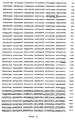
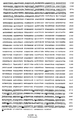
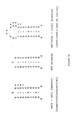
- FIG. 1 A. The sequence of the AAV integration locus, AAVS1, is shown. The transcription factor binding elements are indicated: lowercase for UBF1, italicized for SP1. The octamer for the cAMP response element (CRE) is indicated by a box. Underlined bold typed sequences represent short stretches of homology between donor and acceptor at the observed recombinational junctions. The region corresponding to a partial cDNA is underlined. Arrows indicate chromosome 19 specific minisatellite sequences.
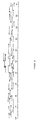
- B The strategy followed to determine the AAVS1 sequence is shown. Bold typed arrows indicate the sequencing strategy applied for a partial cDNA clone.
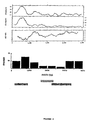
- FIG. 2 A. The relative frequencies of the dinucleotides of GC and CG within the sequence of Figure 1 are shown. The table of these frequencies was obtained using the GCG program Window with a window size of 200 and a shift increment of 6.
- B The frequency of repeat units occurring throughout AAVS1 is shown. The analysis was performed using the Repeat program of the GCG suite with a window size of 13 and a stringency of 12. As a control the same parameters were applied for the analysis of AAVS1 randomized by the GCG program shuffle resulting in a frequency of 3 repeat units/1000 bp (data not shown).
- the hatched box shows the position of the cDNA isolated from a lambda cDNA library.
- the grey boxes indicate the positions of putative protein-coding regions predicted by a coding recognition module (CRM) designed to provide an indication of the coding potential of a sequence (Uberbacher and Mural, 1991).
- CCM coding recognition module
- FIG 3 The recombination junctions are shown.
- A Graphical scheme of the preinsertion site (AAVS1). Letters indicate AAVS1 DNA sequences involved in the recombination process. Numbers designate the recombination junctions.
- B Alignments of the sequences at the recombination junctions are given. The letters correspond to Figure 2A. Underlined regions display sequence homologies between the recombination partners at the junctions. The vertical arrows highlight AAVS1 nucleotides involved in 2 recombination events.
- C Comparison of possible secondary structures at the recombination sites to the AAV hairpin of the terminal repeats are shown. The nucleotide numbers given correspond to Figure 2B and are referred to in the Examples. Asterisks indicate regions of homologies referred to in Figure 3B.
- AASV1 integration site To isolate the AASV1 integration site, a human embryonic lung fibroblast ⁇ phage library is screened using flanking probes earlier described (Kotin and Berns, 1989). A 12 kb insert is identified in a clone which hybridizes to both probes. From this insert, an approximately 8 kb Eco RI fragment is subcloned and partially sequenced. A 4,067 bp region is focused on within this 8 kb fragment ( Figure 1B). This 4 kb region contains at least two major features: (1) the recombinant junctions indicating the site of AAV integration and (2) a novel promoter and gene sequence. The integration site is characterized by the recombination junctions ⁇ approximately 1 kb on either side of the junctions ( Figure 2).
- the novel promoter/gene is characterized by a region of high G+C concentration in nucleotides 1-900, indicating the presence of a CpG island.
- CpG have been previously identified in the literature as being associated with the 5' ends of genes and TATA-less promoters. In fact, this region of the AAVS1 sequence lacks a TATA-like element.
- Other landmarks within the CpG island are SP1-like binding sites, at nucleotides 293-300, 355-375 and 422-433, a CAMP response element at 279-286, and nine upstream binding factor 1 sequences (CGGCC or GGCCG).
- a positive plaque is isolated and the insert cloned and sequenced.
- the cDNA isolated in this manner corresponds to nucleotides 1620-2318 in the genomic sequence.
- the longest open reading frame within the cDNA sequence is 95 residues and a 3' untranslated region, with no polyadenylation site.
- the cDNA or corresponding genomic DNA can be used as probes for further library screening for the full length gene. This evidence further confirms that AAVS1 is transcriptionally active.
- each of the positions of the sequence described above provide useful research tools in the study of the processes involved in nonhomologous recombination.
- the presence of a potential promoter as well as indicator of transcriptional activity of the preinsertion site may lead to an additional targeting cue.
- mammalian targeting sequences have been shown to be transcriptionally active and the altered chromatin structures were thought to have enhancing effects on the frequency of recombination (Lichtenberg et al. , 1987, Schulz et al. , 1987).
- the sequence elements defined above, found within a 4 kb range, are believed to be sufficient to define a unique genomic nucleus that has potential for forming stable structural features.
- the 4 kb nucleic acid sequence, or portions thereof can be employed as an adjunct to the use of AAV as a vector in gene therapy.
- An AAV-based system for targeted integration of exogenous DNA into the cellular genome has certain potential advantages over other methods, e.g. retroviral vectors, for gene therapy.
- the defined site of integration of AAV would likely be preferable to the essentially random integration seen with retroviral DNA.
- the effects on the cell of disrupting a defined locus and how this genomic environment may effect expression of a transgene can be determined empirically, whereas the consequences of random integration are unpredictable and potentially disruptive to normal cellular function.
- AAV has not been shown to be the causative agent of any diseases in humans, unlike retroviruses.
- nucleic acid sequences are useful as probes in identifying successful integration of an AAV vector delivering an exogenous gene of interest. Methods for such use of the probes in question are disclosed in, for example, Kotin and Berns (1989), the contents which are incorporated herein by reference.
- the sequences may also be used as probes for identifying disruptions in this region of the chromosome that may be associated with disease states such as AML.
- the ⁇ EMBL library produced from human embryonic lung fibroblast DNA, W138 (Stratagene) is hybridized to both "right” and "left” flanking probe as previously described (Kotin and Berns, 1989).
- Two overlapping recombinant phages are isolated as positive clones: the first hybridizes to the left flanking probe exclusively and contains approximately 18 kb, the second clone hybridizes to both left and right flanking probes and contains an approximately 12 kb insert.
- An 8.2 kb Eco RI fragment positive to the left and right flanking probe is subcloned into pBluescript (Stratagene). This pRI-A fragment is further subcloned for DNA sequencing (see below).
- Subclones for sequencing are produced either by a shotgun approach using Ava1 or Sau3a or by specifically cloning discrete subfragments generated by digestion with various restriction endonucleases, e.g., PstI or SmaI. Nested deletions are produced by limited digestion with exonuclease III (Pharmacia) as described by the manufacturer.
- the DNA sequence is determined by the dideoxynucleotide termination method (Sanger et al. , 1980) adapted for double-stranded DNA (US Biochemicals, Sequenase kit, 2.0). Single-stranded templates and deaza-dGTP are utilized if required.
- the sequence is 65% G+C with a particularly high G+C concentration from nts 1-900 where the content is 82% G+C. It is this region which matches the requirements for CpG islands (Bird, 1987) in the overall % G+C and the length of the >60% G+C sequence. Furthermore, throughout the sequence determined it is only this region which shows an approximately equal distribution of CpG relative to GpC (Figure 2A). CpG islands have been associated with the 5'-ends of genes and with some TATA-less promoters. Within this CpG island are three tandems of Spl-like binding sites located at nts 293-300; 355-375 and 422-433 ( Figure 1A).
- the chromosome 19 q specific minisatellite sequence previously described is at nt 3660-4021 with an array of ten basic repeat units (Kotin et al. , 1991).
- the middle third of the AAVS1 sequence which has the lowest density of repeats is also the region where several extensive open reading frames are located ( Figure 2B).
- AAVS1 is a novel sequence.
- sequence motifs previously reported as being associated with recombination are present at or near the sites of AAV integration and associated rearrangements
- comparison using 100 nt subfragments of AAVS1 as probes to available databases are made.
- the only sequences exceeding 70% homology (>10 standard deviations above mean) to an AAVS1 probe sequence is within the short terminal repeat region of herpes simplex virus I (HE1CG GenBank).
- RNA from embryonic human foreskin fibroblasts is isolated by the RNAxol Method (Biotex Laboratories, Inc., TX) following the procedure recommended by the manufacturer.
- RNA and 0.2 ⁇ g of the specific primers are heated for 1 minute to 90°C and then rapidly cooled on ice.
- the volume is adjusted 96 ⁇ l with H 2 O, PCR buffer (final concentration: 10 mM Tris-HCl, pH 8.4, 50 mM KCl, 1.5 mM MgCl 2 , 0.01% gelatine) and the four deoxynucleotides triphosphates at 0.25 mM.
- Reverse transcription is started by addition of 40 U of RNasin (Boehringer) and 20 U of Murine Moloney leukemia virus reverse transcriptase. The reaction is carried out at room temperature for 10 minutes and continued at 37°C for 60 minutes.
- a PCR product of approximately 330 bp is generated only when the downstream oligo is used to prime the reverse transcriptase reaction. Priming with only the upstream oligo does not result in a PCR product which indicates that the signal is derived from an RNA molecule and not from contaminating plasmid or genomic DNA. Therefore the sense strand is as written in Figure 1.
- the PCR product is used to screen a ⁇ library of fibroblast cDNA.
- a ⁇ cDNA library produced from human fibroblast RNA (W138, Stratagene) is hybridized to the RT-PCR product described above.
- One recombinant phage is isolated as positive clone.
- a 700 bp insert is subcloned into pBluescript and the sequence is determined according to the strategy shown in Figure 1B.
- the cDNA corresponds to the genomic sequence from 1620 to 2318. This sequence consists of an open reading frame of 95 residues and 3' untranslated sequence as evidenced by the multiple termination codons in each reading frame.
- no polyadenylation site is found within the cDNA clone.
- Rearrangements of the cellular DNA occurs as a result of viral DNA integration as determined by comparing the sequence of the proviral junctions in the one cell line previously characterized (Kotin and Berns, 1989) with the homologous sequence from uninfected cells. These recombinational events are shown in Figure 3.
- the viral-cellular junction referred to as the right flank junction (Kotin and Berns, 1989), corresponds to the cellular sequence from the Bam HI site at 1620 to nt (1144-1147) X AAV nt (154-157), where X designates a site of recombination.
- GGAG At the site of recombination there are 4 nucleotides, GGAG (or the reverse complement), common to both the viral and cellular sequences ( Figure 3B).
- the "left" junction (Kotin and Berns, 1989) is generated by at least two recombinational events: one involving only cellular sequences and another between viral and cellular sequences.
- the latter recombination involves nucleotides 1026-1030 of the cellular sequence and nucleotides 51-55 of the flop conformer of the AAV terminal repeat.
- Five nucleotides (GCTTT or the reverse complement), at the site of a recombination, are common to both the viral and cellular DNAs.
- the recombinational event involving only cellular sequences occurs between positions separated by 2 kb: nucleotides 1141 and 3360. At this site there are four nucleotides common to both strands (GACA or the reverse complement). Therefore, the "left" junction has the following organization (referenced to the sequence in Figure 1A). Bam HI site at nt 2380-(3360-3363) X (1144-1141)-(1030-1026) X AAV nt (51-55). As a consequence of the recombination and inversion involving only the cellular sequences, a structure resembling one cross-arm of the AAV tr is generated (Figure 3C). Furthermore, this hairpin contains a direct repeat of 7 nt.
- nucleotides 1141 and 1147 two recombinational events occur with the central nucleotide #1144 involved in both events. This result suggests that both recombinational events, i.e., cellular-cellular and viral-cellular, occur coordinately. These recombinations present a topological problem requiring a complex model to account for the data.
- TTTAA The five nucleotide sequence, TTTAA, is found at the recombination site at nucleotide 1028-1032.
- the sequence TTTTA is located at nt 3370-3374 within 10 nt of the recombination point at 3360-3363.
- no A+T rich stretch is found at or near nt 1141-1147; the site involved in two recombination events.
- Topo I topoisomerase I
- a highly preferred Topo I cleavage site, CTT is on both substrates at the viral cellular junction, at 1027-1030 and nt 54-51 (as the reverse complement).
- the Topo I cleavage site CTC is present at: the viral-cellular junction involving nt 1144-1146 and AAV nt 157-155; and at the junction between cellular sequence 3360-3362 and 1144-1146.
Landscapes
- Life Sciences & Earth Sciences (AREA)
- Health & Medical Sciences (AREA)
- Genetics & Genomics (AREA)
- Chemical & Material Sciences (AREA)
- Organic Chemistry (AREA)
- Engineering & Computer Science (AREA)
- Wood Science & Technology (AREA)
- Biochemistry (AREA)
- Biotechnology (AREA)
- General Engineering & Computer Science (AREA)
- Molecular Biology (AREA)
- Virology (AREA)
- Bioinformatics & Cheminformatics (AREA)
- General Health & Medical Sciences (AREA)
- Biomedical Technology (AREA)
- Zoology (AREA)
- Biophysics (AREA)
- Physics & Mathematics (AREA)
- Microbiology (AREA)
- Plant Pathology (AREA)
- Gastroenterology & Hepatology (AREA)
- Medicinal Chemistry (AREA)
- Proteomics, Peptides & Aminoacids (AREA)
- Saccharide Compounds (AREA)
- Medicines That Contain Protein Lipid Enzymes And Other Medicines (AREA)
- Micro-Organisms Or Cultivation Processes Thereof (AREA)
- Pharmaceuticals Containing Other Organic And Inorganic Compounds (AREA)
- Peptides Or Proteins (AREA)
- Measuring Or Testing Involving Enzymes Or Micro-Organisms (AREA)
Claims (7)
- Isolierte Nukleinsäure, ausgewählt aus der folgenden Gruppe:(i) Integrationsstelle eines adenoassoziierten Virus, die im Plasmid pRIA-N3 des bei der American Type Culture Collection unter der Zugriffsnummer ATCC 69065 hinterlegten E. coli Stamms DH5α enthalten ist;(ii) Nukleinsäure gemäß SEQ ID No: 1, deren komplementärer Strang mit einer Integrationsstelle eines adenoassoziierten Virus, die im Plasmid pRIA-N3 des bei der American Type Culture Collection unter der Zugriffsnummer ATCC 69065 hinterlegten E. coli Stamms DH5α enthalten ist, hybridisiert.
- Isolierte Integrationsstelle eines adenoassoziierten Virus gemäß den Nukleotiden 1620 bis 2318 der SEQ ID No: 1, wobei die Integrationsstelle im Plasmid pRIA-N3 des bei der American Type Culture Collection unter der Zugriffsnummer ATCC 69065 hinterlegten E. coli Stamms DH5α enthalten ist.
- Isolierte Nukleinsäure, charakterisiert durch:(a) einen TATA-losen Promotor, der im Bereich der Nukleotide 1 bis 900 liegt, wobei der Promotor enthält:(i) drei SP1-artige Bindestellen,(ii) ein auf zyklisches AMP reagierendes Element (cyclic AMP responsive element) der Nukleotidsequenz TGACGTCA, und(iii) mindestens sechs upstream binding factor 1-Sequenzen der Sequenz CGGCC oder der komplementären Sequenz GGCCG,(b) ein transkriptionsaktives Gen,(c) drei Rekombinationsstellen,(d) mindestens drei weitere upstream binding factor 1-Sequenzen und(e) Isolierbarkeit von Chromosom 19.
- Die Nukleinsäure gemäß Anspruch 3, die im Plasmid pRIA-N3 des bei der American Type Culture Collection unter der Zugriffsnummer ATCC 69065 hinterlegten E. coli Stamms DH5α enthalten ist.
- Rekombinanter Vektor, der eine Nukleinsäure gemäß Anspruch 1 oder 2 enthält.
- Primer zur Verwendung bei der Detektion einer Integration eines adenoassoziierten Virus, der eine isolierte Nukleinsäure gemäß Anspruch 1. oder ein Fragment derselben enthält.
- Primer, der aus der folgenden Gruppe ausgewählt ist: RML1, RML2, RML5, RK1, RK2, RK3, KL1, KL2, KL3 und KL4, wie in Tabelle 1 gezeigt.
Applications Claiming Priority (2)
| Application Number | Priority Date | Filing Date | Title |
|---|---|---|---|
| US947127 | 1986-12-29 | ||
| US94712792A | 1992-09-17 | 1992-09-17 |
Publications (2)
| Publication Number | Publication Date |
|---|---|
| EP0592836A1 EP0592836A1 (de) | 1994-04-20 |
| EP0592836B1 true EP0592836B1 (de) | 2002-11-20 |
Family
ID=25485566
Family Applications (1)
| Application Number | Title | Priority Date | Filing Date |
|---|---|---|---|
| EP93114941A Expired - Lifetime EP0592836B1 (de) | 1992-09-17 | 1993-09-16 | DNS der Integrationsstelle des menschlichen Adenassoziierten Virus und seine Verwendung |
Country Status (8)
| Country | Link |
|---|---|
| US (1) | US5580703A (de) |
| EP (1) | EP0592836B1 (de) |
| AT (1) | ATE228168T1 (de) |
| CA (1) | CA2106260A1 (de) |
| DE (1) | DE69332498T2 (de) |
| DK (1) | DK0592836T3 (de) |
| ES (1) | ES2186671T3 (de) |
| PT (1) | PT592836E (de) |
Families Citing this family (21)
| Publication number | Priority date | Publication date | Assignee | Title |
|---|---|---|---|---|
| FR2716893B1 (fr) * | 1994-03-03 | 1996-04-12 | Rhone Poulenc Rorer Sa | Virus recombinants, leur préparation et leur utilisation thérapeutique. |
| US5843742A (en) * | 1994-12-16 | 1998-12-01 | Avigen Incorporated | Adeno-associated derived vector systems for gene delivery and integration into target cells |
| US5773289A (en) * | 1995-06-06 | 1998-06-30 | University Of Pittsburgh | AAV directed targeted integration |
| US6110456A (en) * | 1995-06-07 | 2000-08-29 | Yale University | Oral delivery or adeno-associated viral vectors |
| JPH11514853A (ja) | 1995-09-08 | 1999-12-21 | ジエンザイム コーポレイション | 遺伝子治療のための改良されたaavベクター |
| US6207457B1 (en) | 1995-09-08 | 2001-03-27 | Avigen, Inc. | Targeted nucleotide sequence delivery and integration system |
| WO1997045550A2 (en) * | 1996-05-31 | 1997-12-04 | Baxter International Inc. | Mini-adenoviral vector |
| EP0933997A4 (de) * | 1996-09-06 | 2000-08-16 | Chiron Corp | Verfahren und zusammensetzungen für die leberspezifische verabreichung von therapeutischen molekülen unter verwendung rekombinanter aav vektoren |
| US6403370B1 (en) | 1997-02-10 | 2002-06-11 | Genstar Therapeutics Corporation | Oncolytic/immunogenic complementary-adenoviral vector system |
| WO1998054345A1 (en) * | 1997-05-30 | 1998-12-03 | Baxter International Inc. | Mini-adenoviral vector |
| AUPP249298A0 (en) | 1998-03-20 | 1998-04-23 | Ag-Gene Australia Limited | Synthetic genes and genetic constructs comprising same I |
| CN101818145A (zh) * | 1998-03-20 | 2010-09-01 | 联邦科学和工业研究组织 | 控制基因表达 |
| US6200560B1 (en) | 1998-10-20 | 2001-03-13 | Avigen, Inc. | Adeno-associated virus vectors for expression of factor VIII by target cells |
| US6221349B1 (en) | 1998-10-20 | 2001-04-24 | Avigen, Inc. | Adeno-associated vectors for expression of factor VIII by target cells |
| EP1147196A4 (de) * | 1998-12-08 | 2002-10-16 | Childrens Hosp Medical Center | Polymorphe loci die escherichia coli 0157:h7 von anderen stämmen unterscheiden |
| US6893865B1 (en) * | 1999-04-28 | 2005-05-17 | Targeted Genetics Corporation | Methods, compositions, and cells for encapsidating recombinant vectors in AAV particles |
| US6423885B1 (en) | 1999-08-13 | 2002-07-23 | Commonwealth Scientific And Industrial Research Organization (Csiro) | Methods for obtaining modified phenotypes in plant cells |
| DE19942149A1 (de) * | 1999-09-03 | 2001-03-15 | Daniele Zink | Verfahren zur Expression von exogenen Sequenzen in Säugerzellen |
| AU2003220274A1 (en) * | 2002-03-22 | 2003-10-13 | Munin Corporation | Cloning and characterization of g+c-rich promoter binding protein |
| EP1766021B1 (de) * | 2004-05-20 | 2012-05-09 | AES Chemunex S.A. | Polynukleotide zum nachweis von escherichia coli o157:h7- und escherichia coli o157:nm-verotoxinproduzenten |
| US12383615B2 (en) | 2023-03-23 | 2025-08-12 | Carbon Biosciences, Inc. | Protoparvovirus compositions comprising a protoparvovirus variant VP1 capsid polypeptide and related methods |
-
1993
- 1993-09-15 CA CA002106260A patent/CA2106260A1/en not_active Abandoned
- 1993-09-16 ES ES93114941T patent/ES2186671T3/es not_active Expired - Lifetime
- 1993-09-16 PT PT93114941T patent/PT592836E/pt unknown
- 1993-09-16 DE DE69332498T patent/DE69332498T2/de not_active Expired - Fee Related
- 1993-09-16 DK DK93114941T patent/DK0592836T3/da active
- 1993-09-16 EP EP93114941A patent/EP0592836B1/de not_active Expired - Lifetime
- 1993-09-16 AT AT93114941T patent/ATE228168T1/de not_active IP Right Cessation
-
1994
- 1994-09-20 US US08/308,949 patent/US5580703A/en not_active Expired - Fee Related
Also Published As
| Publication number | Publication date |
|---|---|
| DK0592836T3 (da) | 2003-03-17 |
| ATE228168T1 (de) | 2002-12-15 |
| US5580703A (en) | 1996-12-03 |
| DE69332498D1 (de) | 2003-01-02 |
| CA2106260A1 (en) | 1994-03-18 |
| EP0592836A1 (de) | 1994-04-20 |
| DE69332498T2 (de) | 2003-07-10 |
| PT592836E (pt) | 2003-03-31 |
| ES2186671T3 (es) | 2003-05-16 |
Similar Documents
| Publication | Publication Date | Title |
|---|---|---|
| Kotin et al. | Characterization of a preferred site on human chromosome 19q for integration of adeno‐associated virus DNA by non‐homologous recombination. | |
| EP0592836A1 (de) | DNS der Integrationsstelle des menschlichen Adenassoziierten Virus und seine Verwendung | |
| Jakubczak et al. | Type I (R1) and type II (R2) ribosomal DNA insertions of Drosophila melanogaster are retrotransposable elements closely related to those of Bombyx mori | |
| US5989540A (en) | Modified adeno-associated virus vector capable of expression from a novel promoter | |
| Busslinger et al. | The sequence GGC m CGG is resistant to Msp I cleavage | |
| Wu et al. | Adeno-associated virus vector-mediated transgene integration into neurons and other nondividing cell targets | |
| Schnepp et al. | Genetic fate of recombinant adeno-associated virus vector genomes in muscle | |
| Surosky et al. | Adeno-associated virus Rep proteins target DNA sequences to a unique locus in the human genome | |
| Flotte et al. | Expression of the cystic fibrosis transmembrane conductance regulator from a novel adeno-associated virus promoter. | |
| EP0673415B1 (de) | Rekombinantes virales vektorsystem | |
| Miller et al. | Large-scale analysis of adeno-associated virus vector integration sites in normal human cells | |
| US5869305A (en) | Recombinant viral vector system | |
| Giraud et al. | Recombinant junctions formed by site-specific integration of adeno-associated virus into an episome | |
| Murnane et al. | Recombination events during integration of transfected DNA into normal human cells | |
| Zuliani et al. | A high frequency of length polymorphisms in repeated sequences adjacent to Alu sequences | |
| Leeflang et al. | Phylogenetic evidence for multiple Alu source genes | |
| US6153436A (en) | Method of gene delivery using wildtype adeno associated viral (AAV) vectors with insertions | |
| JP2001500376A (ja) | 組換えaavベクターを使用する治療分子の肝臓特異的送達のための方法および組成物 | |
| Kost et al. | Retrovirus insertion into herpesvirus: characterization of a Marek's disease virus harboring a solo LTR | |
| JP7481755B2 (ja) | 組換えパルボウイルスベクターならびにその作製および使用方法 | |
| Gottlieb et al. | In vitro excision of adeno-associated virus DNA from recombinant plasmids: isolation of an enzyme fraction from HeLa cells that cleaves DNA at poly (G) sequences | |
| Graessmann et al. | Methylation of single sites within the herpes simplex virus tk coding region and the simian virus 40 T-antigen intron causes gene inactivation | |
| Donehower et al. | Identification of a conserved sequence in the non-coding regions of many human genes | |
| CN117778431B (zh) | 一种用于重组腺相关病毒包装的质粒系统及其应用 | |
| Carter | Variant and defective interfering parvoviruses |
Legal Events
| Date | Code | Title | Description |
|---|---|---|---|
| PUAI | Public reference made under article 153(3) epc to a published international application that has entered the european phase |
Free format text: ORIGINAL CODE: 0009012 |
|
| AK | Designated contracting states |
Kind code of ref document: A1 Designated state(s): AT BE CH DE DK ES FR GB GR IE IT LI LU NL PT SE |
|
| RIN1 | Information on inventor provided before grant (corrected) |
Inventor name: LINDON, RALPH MICHAEL Inventor name: BERNS, KENNETH IRA Inventor name: KOTIN, ROBERT MICHAEL |
|
| RIN1 | Information on inventor provided before grant (corrected) |
Inventor name: LINDEN, RALPH MICHAEL Inventor name: BERNS, KENNETH IRA Inventor name: KOTIN, ROBERT MICHAEL |
|
| 17P | Request for examination filed |
Effective date: 19941005 |
|
| 17Q | First examination report despatched |
Effective date: 19981229 |
|
| 18D | Application deemed to be withdrawn |
Effective date: 19990412 |
|
| 18RA | Request filed for re-establishment of rights before grant |
Effective date: 20000303 |
|
| 18RR | Decision to grant the request for re-establishment of rights before grant |
Free format text: 20000718 ANGENOMMEN |
|
| D18D | Application deemed to be withdrawn (deleted) | ||
| RAP1 | Party data changed (applicant data changed or rights of an application transferred) |
Owner name: CORNELL RESEARCH FOUNDATION, INC. Owner name: AMERICAN CYANAMID COMPANY |
|
| REG | Reference to a national code |
Ref country code: DE Ref legal event code: 8570 |
|
| RAP1 | Party data changed (applicant data changed or rights of an application transferred) |
Owner name: CORNELL RESEARCH FOUNDATION, INC. Owner name: AMERICAN CYANAMID COMPANY |
|
| GRAG | Despatch of communication of intention to grant |
Free format text: ORIGINAL CODE: EPIDOS AGRA |
|
| RIC1 | Information provided on ipc code assigned before grant |
Free format text: 7C 12N 15/86 A, 7C 12N 15/35 B, 7C 07K 14/00 B, 7A 61K 48/00 B |
|
| RIC1 | Information provided on ipc code assigned before grant |
Free format text: 7C 12N 15/86 A, 7C 12N 15/35 B, 7C 07K 14/00 B, 7A 61K 48/00 B |
|
| RIC1 | Information provided on ipc code assigned before grant |
Free format text: 7C 12N 15/86 A, 7C 12N 15/35 B, 7C 07K 14/00 B, 7A 61K 48/00 B |
|
| RIN1 | Information on inventor provided before grant (corrected) |
Inventor name: LINDON, RALPH MICHAEL Inventor name: BERNS, KENNETH IRA Inventor name: KOTIN, ROBERT MICHAEL |
|
| GRAG | Despatch of communication of intention to grant |
Free format text: ORIGINAL CODE: EPIDOS AGRA |
|
| GRAG | Despatch of communication of intention to grant |
Free format text: ORIGINAL CODE: EPIDOS AGRA |
|
| GRAH | Despatch of communication of intention to grant a patent |
Free format text: ORIGINAL CODE: EPIDOS IGRA |
|
| GRAH | Despatch of communication of intention to grant a patent |
Free format text: ORIGINAL CODE: EPIDOS IGRA |
|
| GRAA | (expected) grant |
Free format text: ORIGINAL CODE: 0009210 |
|
| RIN1 | Information on inventor provided before grant (corrected) |
Inventor name: LINDEN, RALPH MICHAEL Inventor name: BERNS, KENNETH IRA Inventor name: KOTIN, ROBERT MICHAEL |
|
| AK | Designated contracting states |
Kind code of ref document: B1 Designated state(s): AT BE CH DE DK ES FR GB GR IE IT LI LU NL PT SE |
|
| REF | Corresponds to: |
Ref document number: 228168 Country of ref document: AT Date of ref document: 20021215 Kind code of ref document: T |
|
| REG | Reference to a national code |
Ref country code: GB Ref legal event code: FG4D |
|
| REG | Reference to a national code |
Ref country code: CH Ref legal event code: EP |
|
| REG | Reference to a national code |
Ref country code: IE Ref legal event code: FG4D |
|
| REF | Corresponds to: |
Ref document number: 69332498 Country of ref document: DE Date of ref document: 20030102 |
|
| REG | Reference to a national code |
Ref country code: CH Ref legal event code: NV Representative=s name: A. BRAUN, BRAUN, HERITIER, ESCHMANN AG PATENTANWAE |
|
| REG | Reference to a national code |
Ref country code: GR Ref legal event code: EP Ref document number: 20030400274 Country of ref document: GR |
|
| REG | Reference to a national code |
Ref country code: DK Ref legal event code: T3 |
|
| REG | Reference to a national code |
Ref country code: PT Ref legal event code: SC4A Free format text: AVAILABILITY OF NATIONAL TRANSLATION Effective date: 20030131 |
|
| REG | Reference to a national code |
Ref country code: ES Ref legal event code: FG2A Ref document number: 2186671 Country of ref document: ES Kind code of ref document: T3 |
|
| ET | Fr: translation filed | ||
| PLBE | No opposition filed within time limit |
Free format text: ORIGINAL CODE: 0009261 |
|
| 26N | No opposition filed |
Effective date: 20030821 |
|
| REG | Reference to a national code |
Ref country code: CH Ref legal event code: PFA Owner name: CORNELL RESEARCH FOUNDATION, INC. Free format text: AMERICAN CYANAMID COMPANY#ONE CYANAMID PLAZA#WAYNE NEW JERSEY 07470 (US) $ CORNELL RESEARCH FOUNDATION, INC.#20 THORNWOOD DRIVE, SUITE 105#ITHACA, NY 14850 (US) -TRANSFER TO- CORNELL RESEARCH FOUNDATION, INC.#20 THORNWOOD DRIVE, SUITE 105#ITHACA, NY 14850 (US) $ WYETH HOLDINGS CORPORATION#FIVE GIRALDA FARMS#MADISON, NJ 07940-0874 (US) |
|
| NLT1 | Nl: modifications of names registered in virtue of documents presented to the patent office pursuant to art. 16 a, paragraph 1 |
Owner name: WYETH HOLDINGS CORPORATION Owner name: CORNELL RESEARCH FOUNDATION, INC. |
|
| REG | Reference to a national code |
Ref country code: PT Ref legal event code: PD4A Free format text: WYETH HOLDINGS CORPORATION US Effective date: 20040521 |
|
| PGFP | Annual fee paid to national office [announced via postgrant information from national office to epo] |
Ref country code: NL Payment date: 20040905 Year of fee payment: 12 |
|
| PGFP | Annual fee paid to national office [announced via postgrant information from national office to epo] |
Ref country code: SE Payment date: 20040906 Year of fee payment: 12 |
|
| PGFP | Annual fee paid to national office [announced via postgrant information from national office to epo] |
Ref country code: FR Payment date: 20040908 Year of fee payment: 12 |
|
| PGFP | Annual fee paid to national office [announced via postgrant information from national office to epo] |
Ref country code: DE Payment date: 20040909 Year of fee payment: 12 |
|
| PGFP | Annual fee paid to national office [announced via postgrant information from national office to epo] |
Ref country code: LU Payment date: 20040913 Year of fee payment: 12 Ref country code: IE Payment date: 20040913 Year of fee payment: 12 Ref country code: AT Payment date: 20040913 Year of fee payment: 12 |
|
| PGFP | Annual fee paid to national office [announced via postgrant information from national office to epo] |
Ref country code: GB Payment date: 20040915 Year of fee payment: 12 Ref country code: CH Payment date: 20040915 Year of fee payment: 12 |
|
| PGFP | Annual fee paid to national office [announced via postgrant information from national office to epo] |
Ref country code: PT Payment date: 20040916 Year of fee payment: 12 Ref country code: DK Payment date: 20040916 Year of fee payment: 12 |
|
| PGFP | Annual fee paid to national office [announced via postgrant information from national office to epo] |
Ref country code: ES Payment date: 20040921 Year of fee payment: 12 |
|
| PGFP | Annual fee paid to national office [announced via postgrant information from national office to epo] |
Ref country code: GR Payment date: 20040924 Year of fee payment: 12 |
|
| REG | Reference to a national code |
Ref country code: FR Ref legal event code: CD |
|
| PGFP | Annual fee paid to national office [announced via postgrant information from national office to epo] |
Ref country code: BE Payment date: 20041125 Year of fee payment: 12 |
|
| REG | Reference to a national code |
Ref country code: ES Ref legal event code: PC2A |
|
| PG25 | Lapsed in a contracting state [announced via postgrant information from national office to epo] |
Ref country code: IT Free format text: LAPSE BECAUSE OF NON-PAYMENT OF DUE FEES Effective date: 20050916 Ref country code: IE Free format text: LAPSE BECAUSE OF NON-PAYMENT OF DUE FEES Effective date: 20050916 Ref country code: AT Free format text: LAPSE BECAUSE OF NON-PAYMENT OF DUE FEES Effective date: 20050916 |
|
| PG25 | Lapsed in a contracting state [announced via postgrant information from national office to epo] |
Ref country code: SE Free format text: LAPSE BECAUSE OF NON-PAYMENT OF DUE FEES Effective date: 20050917 Ref country code: ES Free format text: LAPSE BECAUSE OF NON-PAYMENT OF DUE FEES Effective date: 20050917 |
|
| PG25 | Lapsed in a contracting state [announced via postgrant information from national office to epo] |
Ref country code: LU Free format text: LAPSE BECAUSE OF NON-PAYMENT OF DUE FEES Effective date: 20050930 Ref country code: LI Free format text: LAPSE BECAUSE OF NON-PAYMENT OF DUE FEES Effective date: 20050930 Ref country code: DK Free format text: LAPSE BECAUSE OF NON-PAYMENT OF DUE FEES Effective date: 20050930 Ref country code: CH Free format text: LAPSE BECAUSE OF NON-PAYMENT OF DUE FEES Effective date: 20050930 Ref country code: BE Free format text: LAPSE BECAUSE OF NON-PAYMENT OF DUE FEES Effective date: 20050930 |
|
| PG25 | Lapsed in a contracting state [announced via postgrant information from national office to epo] |
Ref country code: PT Free format text: LAPSE BECAUSE OF NON-PAYMENT OF DUE FEES Effective date: 20060316 |
|
| PG25 | Lapsed in a contracting state [announced via postgrant information from national office to epo] |
Ref country code: NL Free format text: LAPSE BECAUSE OF NON-PAYMENT OF DUE FEES Effective date: 20060401 Ref country code: DE Free format text: LAPSE BECAUSE OF NON-PAYMENT OF DUE FEES Effective date: 20060401 |
|
| REG | Reference to a national code |
Ref country code: DK Ref legal event code: EBP |
|
| REG | Reference to a national code |
Ref country code: CH Ref legal event code: PL |
|
| EUG | Se: european patent has lapsed | ||
| GBPC | Gb: european patent ceased through non-payment of renewal fee |
Effective date: 20050916 |
|
| PG25 | Lapsed in a contracting state [announced via postgrant information from national office to epo] |
Ref country code: FR Free format text: LAPSE BECAUSE OF NON-PAYMENT OF DUE FEES Effective date: 20060531 |
|
| REG | Reference to a national code |
Ref country code: PT Ref legal event code: MM4A Effective date: 20060316 |
|
| NLV4 | Nl: lapsed or anulled due to non-payment of the annual fee |
Effective date: 20060401 |
|
| REG | Reference to a national code |
Ref country code: IE Ref legal event code: MM4A |
|
| REG | Reference to a national code |
Ref country code: FR Ref legal event code: ST Effective date: 20060531 |
|
| REG | Reference to a national code |
Ref country code: ES Ref legal event code: FD2A Effective date: 20050917 |
|
| BERE | Be: lapsed |
Owner name: *CORNELL RESEARCH FOUNDATION INC. Effective date: 20050930 Owner name: *WYETH HOLDINGS CORP Effective date: 20050930 |
|
| PG25 | Lapsed in a contracting state [announced via postgrant information from national office to epo] |
Ref country code: GR Free format text: LAPSE BECAUSE OF NON-PAYMENT OF DUE FEES Effective date: 20021120 |