EP0593354A1 - Abfrageoptimierungsverfahren für ein relationelles Datenbankverwaltungssystem - Google Patents
Abfrageoptimierungsverfahren für ein relationelles Datenbankverwaltungssystem Download PDFInfo
- Publication number
- EP0593354A1 EP0593354A1 EP93402510A EP93402510A EP0593354A1 EP 0593354 A1 EP0593354 A1 EP 0593354A1 EP 93402510 A EP93402510 A EP 93402510A EP 93402510 A EP93402510 A EP 93402510A EP 0593354 A1 EP0593354 A1 EP 0593354A1
- Authority
- EP
- European Patent Office
- Prior art keywords
- request
- rdbms
- tree
- query
- execution plan
- Prior art date
- Legal status (The legal status is an assumption and is not a legal conclusion. Google has not performed a legal analysis and makes no representation as to the accuracy of the status listed.)
- Granted
Links
Images



Classifications
-
- G—PHYSICS
- G06—COMPUTING OR CALCULATING; COUNTING
- G06F—ELECTRIC DIGITAL DATA PROCESSING
- G06F16/00—Information retrieval; Database structures therefor; File system structures therefor
- G06F16/20—Information retrieval; Database structures therefor; File system structures therefor of structured data, e.g. relational data
- G06F16/24—Querying
- G06F16/245—Query processing
- G06F16/2453—Query optimisation
- G06F16/24534—Query rewriting; Transformation
- G06F16/24537—Query rewriting; Transformation of operators
-
- G—PHYSICS
- G06—COMPUTING OR CALCULATING; COUNTING
- G06F—ELECTRIC DIGITAL DATA PROCESSING
- G06F16/00—Information retrieval; Database structures therefor; File system structures therefor
- G06F16/20—Information retrieval; Database structures therefor; File system structures therefor of structured data, e.g. relational data
- G06F16/24—Querying
- G06F16/242—Query formulation
- G06F16/2428—Query predicate definition using graphical user interfaces, including menus and forms
-
- G—PHYSICS
- G06—COMPUTING OR CALCULATING; COUNTING
- G06F—ELECTRIC DIGITAL DATA PROCESSING
- G06F16/00—Information retrieval; Database structures therefor; File system structures therefor
- G06F16/20—Information retrieval; Database structures therefor; File system structures therefor of structured data, e.g. relational data
- G06F16/24—Querying
- G06F16/245—Query processing
- G06F16/2453—Query optimisation
- G06F16/24534—Query rewriting; Transformation
- G06F16/24542—Plan optimisation
-
- G—PHYSICS
- G06—COMPUTING OR CALCULATING; COUNTING
- G06F—ELECTRIC DIGITAL DATA PROCESSING
- G06F16/00—Information retrieval; Database structures therefor; File system structures therefor
- G06F16/20—Information retrieval; Database structures therefor; File system structures therefor of structured data, e.g. relational data
- G06F16/24—Querying
- G06F16/245—Query processing
- G06F16/2453—Query optimisation
- G06F16/24534—Query rewriting; Transformation
- G06F16/24547—Optimisations to support specific applications; Extensibility of optimisers
-
- Y—GENERAL TAGGING OF NEW TECHNOLOGICAL DEVELOPMENTS; GENERAL TAGGING OF CROSS-SECTIONAL TECHNOLOGIES SPANNING OVER SEVERAL SECTIONS OF THE IPC; TECHNICAL SUBJECTS COVERED BY FORMER USPC CROSS-REFERENCE ART COLLECTIONS [XRACs] AND DIGESTS
- Y10—TECHNICAL SUBJECTS COVERED BY FORMER USPC
- Y10S—TECHNICAL SUBJECTS COVERED BY FORMER USPC CROSS-REFERENCE ART COLLECTIONS [XRACs] AND DIGESTS
- Y10S707/00—Data processing: database and file management or data structures
- Y10S707/99931—Database or file accessing
- Y10S707/99932—Access augmentation or optimizing
-
- Y—GENERAL TAGGING OF NEW TECHNOLOGICAL DEVELOPMENTS; GENERAL TAGGING OF CROSS-SECTIONAL TECHNOLOGIES SPANNING OVER SEVERAL SECTIONS OF THE IPC; TECHNICAL SUBJECTS COVERED BY FORMER USPC CROSS-REFERENCE ART COLLECTIONS [XRACs] AND DIGESTS
- Y10—TECHNICAL SUBJECTS COVERED BY FORMER USPC
- Y10S—TECHNICAL SUBJECTS COVERED BY FORMER USPC CROSS-REFERENCE ART COLLECTIONS [XRACs] AND DIGESTS
- Y10S707/00—Data processing: database and file management or data structures
- Y10S707/99931—Database or file accessing
- Y10S707/99933—Query processing, i.e. searching
-
- Y—GENERAL TAGGING OF NEW TECHNOLOGICAL DEVELOPMENTS; GENERAL TAGGING OF CROSS-SECTIONAL TECHNOLOGIES SPANNING OVER SEVERAL SECTIONS OF THE IPC; TECHNICAL SUBJECTS COVERED BY FORMER USPC CROSS-REFERENCE ART COLLECTIONS [XRACs] AND DIGESTS
- Y10—TECHNICAL SUBJECTS COVERED BY FORMER USPC
- Y10S—TECHNICAL SUBJECTS COVERED BY FORMER USPC CROSS-REFERENCE ART COLLECTIONS [XRACs] AND DIGESTS
- Y10S707/00—Data processing: database and file management or data structures
- Y10S707/99931—Database or file accessing
- Y10S707/99933—Query processing, i.e. searching
- Y10S707/99934—Query formulation, input preparation, or translation
-
- Y—GENERAL TAGGING OF NEW TECHNOLOGICAL DEVELOPMENTS; GENERAL TAGGING OF CROSS-SECTIONAL TECHNOLOGIES SPANNING OVER SEVERAL SECTIONS OF THE IPC; TECHNICAL SUBJECTS COVERED BY FORMER USPC CROSS-REFERENCE ART COLLECTIONS [XRACs] AND DIGESTS
- Y10—TECHNICAL SUBJECTS COVERED BY FORMER USPC
- Y10S—TECHNICAL SUBJECTS COVERED BY FORMER USPC CROSS-REFERENCE ART COLLECTIONS [XRACs] AND DIGESTS
- Y10S707/00—Data processing: database and file management or data structures
- Y10S707/99931—Database or file accessing
- Y10S707/99933—Query processing, i.e. searching
- Y10S707/99935—Query augmenting and refining, e.g. inexact access
Definitions
- the invention relates to a method of helping to optimize a request from a relational database management system, more commonly designated by its acronym RDBMS. It applies more particularly to the administration of the RDBMS.
- a database can be defined as an integrated set of data modeling a given universe. The data used by various applications are grouped in the same database in order to avoid the problems of duplication of data.
- a database is associated with a conceptual diagram which describes the structure and type of the data it contains and the constraints which must always be checked. The database administrator is responsible for ensuring that these constraints are verified.
- Data administration has three roles. First, it defines the users of the database, giving them a name, a password and a set of privileges or rights to access the data. It also defines the administrator (s), who are the persons empowered to do part or all of the administration of the database. The second role of the administration is to assign the administrator the definition or to make him participate in the definition of the conceptual schema of the database. The administrator therefore defines the diagrams of the various tables and the rules relating to these tables. In his last role, the administrator has the possibility of taking advantage in terms of performance, integrity and security of the conceptual diagram of the database and the RDBMS. It is on this third role that the object of the present invention essentially relates.
- an administrator's role is to optimize the use of RDBMS resources.
- the RDBMS chooses a path for the execution of the request.
- the administrator must analyze the requests made and decide what action to take. Its action can be to change the form of the query and / or to create or delete indexes on the tables concerned. Its decision depends on information indicating whether the current form of the request is sufficient or not, or whether the existing indexes are relevant.
- the indexes are physically independent of the data and can therefore be deleted and created at any time.
- An index is used when accessing data, regardless of who created it.
- a table can have multiple indexes at the same time. A compromise has to be found between the number of indexes and the overhead caused by updating them.
- An index can relate to several columns and in this case it can ensure the uniqueness of the columns used. It also improves the performance of queries whose selection condition involves several columns.
- a query with several predicates can use multiple indexes if they are unique, if the predicates are equal and are defined on the same table. In this case, the partial results from each index are merged to form the final result.
- Some RDBMS can use the properties of indexes and the characteristics of columns to decide which index to take and thus avoid the merge operation. The use or not of an index is decided by the RDBMS optimizer. The decision varies depending on the type of RDBMS.
- the schema of an RDBMS can evolve dynamically. For example, one or more fields can be added to a table, indexes can be created on a table. In this context, it may turn out that the RDBMS does not go through an index that he should use or that he goes through an index that he should not use if, for example, we access more than 10% of the articles. In the latter case the index becomes penalizing. Because of all the possibilities of choice of the RDBMS to establish its plan, it is estimated that the exploitation of resources can vary in a ratio of 1 to 10 000 according to the formula of the request and the choice of indexes.
- the table is written in line mode and can only appear page by page on the screen.
- the analysis of the table is then very complicated and the user ordinarily facilitates it by requesting a printing of the table on paper. It must therefore use all the terminal-specific printing processes. Printing is done page by page, with reminder of the column titles on each page. Consequently, the administrator must decrypt in the coded language the hierarchy of the treatment of the request and reconstruct the plan by analysis of numerous columns and a large number of disordered lines in different pages. This research is therefore long and painful.
- the administrator does not have a global view of the plan, which would ordinarily be too long to obtain and too penalizing compared to the advantage which it would draw from it. However, the administrator must somehow overcome this disadvantage in deciding how to optimize the query.
- the object of the invention is to facilitate the visualization and the interpretation of the execution plan of a request, in order to be able to optimize quickly and at low cost the processing of the request.
- another object of the invention is to provide additional information on the objects of the request.
- Another optional object of the invention is to simply and quickly help a user, even a non-specialist in the query language of the RDBMS, to optimally optimize the execution of the request.
- the subject of the invention is a method of helping to optimize a request from an RDBMS, comprising searching for the execution plan of the request written in the request language of the RDBMS, characterized in that it consists, from this research, to build a tree representative of the execution plan of the query and to represent the tree on a screen.
- This process has the double advantage of offering a graphical representation of the execution plan of the request and of being independent of the RDBMS optimizer and query language. According to a preferred embodiment variant of this method, this optimization aid can even be provided to any user who does not know the query language of the RDBMS.
- RDBMS RDBMS known under the trademark Oracle V6, produced by the company Oracle Corp, using the standardized language SQL (Structured Query Language) and operating on a Unix station , trademark registered by American Telephone and Telephone.
- SQL Structured Query Language
- Unix station trademark registered by American Telephone and Telephone.
- the example illustrated will concern the SELECT type requests of this RDBMS, it being understood that this example is not limiting either to this type in this RDBMS or to the other RDBMSs.
- Oracle's functional architecture is organized into four concentric layers, which are successively from the center: the kernel, the dictionary, the SQL layer and the external layer.
- the first three layers are called fundamental layers.
- the kernel communicates with the database and can connect with other kernels in a distributed database environment.
- One of its essential functions is the optimal execution of queries, thanks to an integrated SQL query optimizer.
- the data dictionary is a metabase. It consists of a set of tables and views which are manipulated using the SQL language. Its content reflects an image of the database at all times and thus gives a dynamic description of the database. It makes it possible to describe in particular the objects of the base (tables, columns, views, index, ...), the privileges and the rights of the users on the various objects.
- the dictionary is used for database administration if the user has administrative privileges. A user is considered to be an administrator if he has DBA privilege. When installing the system, two users are considered administrators: SYS and SYSTEM. Only the SYS administrator has access to the data dictionary tables.
- the SQL layer is the last fundamental layer of Oracle. It plays the role of interface between the core and the tools of the external layer. Thus, any data access operation is expressed in SQL language.
- the external layer is composed of tools facilitating the development of applications and the use of all functionality offered by the three basic layers.
- One of these tools is SQL * Plus, which is a fourth generation interactive interface with the SQL layer. Any SQL command can be launched from SQL * Plus. It allows in particular the configuration of the working environment (length of a line per page, number of lines per page, ...) and the formatting of the results of SQL queries on screen or on paper.
- Another tool is SQL * DBA oriented towards the administration of the database.
- the conventional method of assisting in optimizing a request for an RDBMS comprises finding a plan for executing the request written in the request language of the RDBMS.
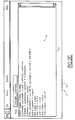
- FIG. 2C presents in a screen window an example of query 10 written in the SQL query language of Oracle.
- the search for the execution plan of query 10 can be done using the SQL * Plus or SQL * DBA tool.
- the tool builds a table representative of the plan chosen by the core of the RDBMS for the execution of the request. This table must be previously created by the user and can be consulted by the SQL selection commands.
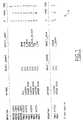
- FIG. 1 illustrates an example, very short for the convenience of the presentation, of a table 11 obtained by page-by-page printing of the corresponding table which was created by the RDBMS at the request of the user.
- Table 11 consists of two pages each recalling the titles of the seven columns representing successively the operations (OPERATION), the options (OPTION), the owner of the object (OBJECT_OWNER), the name of the object (OBJECT_NAME), and for each operation, its number (ID), the number of the operation preceding it (PARE) and its position (POSI) if the operation has sister operations.
- the simple request 10 illustrated in FIG. 2C gives an idea of a table relating to an ordinary request and clearly highlights the serious problem that it poses for the user to optimize the execution of the request.
- the invention presents a solution avoiding the need for a person with very high knowledge of the administration of an RDBMS.
- a search tool called DB * EXPLAIN was created to first offer the user to automatically create the table representative of the execution plan of a query. According to an additional advantage of this tool, the administrator does not have to write a query in SQL language.
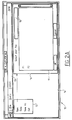
- FIGS. 2A, 2B and 2C illustrate by way of example a welcome screen 12 of the DB * EXPLAIN tool.
- This example was created using OSF / Motif software, registered trademark of Open Software Foundation, Inc in the USA
- Screen 12 contains a menu bar 13 and a dialog window 14.
- the menu bar 13 comprises three main menus File, Query and Explain.
- File menu 15 is shown in Figure 2A and relates to requests contained in files. It presents four options Open, Save, Save As and Exit.
- a selection window 16 appears in the dialog window 14.
- the selection window 16 incorporates in a standardized manner a drop-down list 17 of the current files (F1, F2, ...) containing requests and a block 18 for writing the name of a file to be selected.
- FIG. 2B illustrates by way of example the menu 19 of Query in the welcome screen 12. It incorporates only a Load View option used to open a selection window 20 incorporating a drop-down list 21 of the views contained in the RDBMS dictionary as another source of queries (SYS.DBA_CLUSTERS and SYS.DBA_TABLES views in the example illustrated) and a block 22 for writing the name of a desired view.
- Figure 2B also shows menu 23 of Explain, which only incorporates the Plan option. By clicking on this option, the DB * EXPLAIN tool builds, advantageously in the same way as the SQL * Plus and SQL * DBA tools, a table representative of the execution plan of the query.
- FIG. 2C illustrates an editing window 24 produced in the dialog window 14 for the representation of a request originating from a file selected from the drop-down list 17 or defined in block 18 of the screen illustrated in FIG. 2B , or of the view selected in the drop-down list 21 or defined in block 22 of FIG. 2B.
- FIG. 2C illustrates in the editing window 24 the request 10 which is presented by way of example having selected the view SYS.DBA_CLUSTERS in the list 21 of FIG. 2B.
- This view relates to the clusters of the database and belongs to the SYS administrator. Thanks to the DB * EXPLAIN tool, there is no longer any need to write an already available query.
- This tool therefore offers the major advantage of not having to design and rewrite the query and of avoiding all the risks of error and the ensuing loss of time.
- Another advantage is to be able to directly and easily modify the content of the request which is presented in the editing window 24, thanks to the use, in the embodiment chosen as a preferred example, of the OSF / Motif software. .
- the invention consists in building, from the execution plan of the request 10, a tree for executing the request and in representing the tree on a screen.
- a window 25 contains a tree 26 representative of the execution of the request 10.
- the tree 26 is made of boxes 27 linked together by links 28.
- the construction of links 28 of the tree 26 was made by analysis of the result of the request for the execution plan of the request written in the query language of the RDBMS, this result being table 11 for the RDBMS chosen by way of example.
- the analysis of query 10 has been advantageously done in practice by structures in C language which point to affiliated structures to construct a purely software graph.
- the structure associated with each of the nodes formed by the boxes 27 of the shaft 26 can be simply produced from the table produced by Explain Plan in the following form: typedef struct node_ ⁇ int type; char operation [30]; char options [30]; char object_name [30]; char object_owner [30]; int id; int parent_id; int position; struct node_ * brother; struct node_ * child; ⁇ Node;
- one of the boxes 27 is created in a conventional and easy manner by those skilled in the art using for example a function of the graphic libraries of the OSF / Motif software.
- the boxes 27 and their links 28 were created by analysis of the request 10 in the table 11 representative of the execution plan.
- the window 25 for presenting the tree 26 is advantageously provided by the DB * EXPLAIN tool under the Plan option and accompanied by the name of the view and of the window 24 for editing. of request 10 which have been represented in FIG. 2C.
- the tree 26 can incorporate all or part of the information resulting from the search for the execution plan of the request written in the query language of the RDBMS, such as the information contained in the table 11 of FIG. 1.
- each box 27 bears the name of the operation concerned by this box.
- the operation mentioned in title in a box 27 has characteristics, such as the name of the object and the name of the owner of the object to which the option of the operation applies, we can indicate all or some of these characteristics in the box. All these advantageous options of the invention are contained in the tree 26 represented in FIG. 3.
- the thirteen boxes 27 of the tree 26 there are found the names of the thirteen operations mentioned in table 11, supplemented by the option which runs on a given object, the name of the object and the name of the owner of the object.
- the tree 26 offers the advantage of being easily understood by any user, independently of his knowledge of the query language of the RDBMS, and of providing him with a global vision of the execution plan of the query.
- the user who is in the presence of the tree 26 can therefore decide more easily and quickly on his action to optimize the request that has been made.
- the DB * EXPLAIN tool we have seen that the user could not write the request and easily modify it in the editing window 24 of FIG. 2C. After modification, the administrator can quickly have the new execution tree to realize the effectiveness of its modification.
- the tool offers the additional advantage of keeping the previous tree and thus allowing the administrator to easily and quickly compare the two trees.
- other information than that provided by the analysis of the results of the request for the execution plan can be obtained.
- additional information on certain possible characteristics of an operation For example, it is possible to obtain additional information on certain possible characteristics of an operation.
- the name of the object on which the operation constituting the title of a box 27 and possibly the owner of this object are written are written in a button 29 inserted in the box, so that by clicking on button 29 a user can obtain additional information on this object.
- the search for additional information is made for example by means of an SQL query on the table DBA_TAB_COLUMNS from the Oracle Dictionary.
- This table gives the structure of a table contained in the database of the RDBMS, that is to say the name of the columns with in particular their types and their sizes.
- the additional information can thus be all or part of the descriptive elements of the table mentioned in the box.
- the DB * EXPLAIN tool displays them in an annex window, not shown.
- the additional information can be a histogram, such as that represented in FIG. 4A.
- the information in this histogram was obtained by Oracle's VALIDATE INDEX command.
- Oracle creates a histogram table. From the histogram table, a screen representative of this histogram, such as that illustrated in FIG. 4A, is formed, by means of a small ordinary program for those skilled in the art.
- FIG. 4A the user knows that his index has 340 keys which are not repeated. The user immediately knows that the index chosen is very good.
- FIGS. 4B and 4C respectively illustrate two other examples of histograms which could be obtained thanks to the invention. From the example in FIG. 4B, the user knows that the indexes used are less selective than previously.
- FIG. 4C is a histogram representative of an index which is not very selective, and therefore to be changed.
Landscapes
- Engineering & Computer Science (AREA)
- Theoretical Computer Science (AREA)
- Physics & Mathematics (AREA)
- Computational Linguistics (AREA)
- Data Mining & Analysis (AREA)
- Databases & Information Systems (AREA)
- General Engineering & Computer Science (AREA)
- General Physics & Mathematics (AREA)
- Operations Research (AREA)
- Human Computer Interaction (AREA)
- Mathematical Physics (AREA)
- Information Retrieval, Db Structures And Fs Structures Therefor (AREA)
Applications Claiming Priority (2)
| Application Number | Priority Date | Filing Date | Title |
|---|---|---|---|
| FR9212148A FR2696852B1 (fr) | 1992-10-12 | 1992-10-12 | Procédé d'aide à l'optimisation d'une requête d'un système de gestion de base de données relationnel. |
| FR9212148 | 1992-10-12 |
Publications (2)
| Publication Number | Publication Date |
|---|---|
| EP0593354A1 true EP0593354A1 (de) | 1994-04-20 |
| EP0593354B1 EP0593354B1 (de) | 2000-03-29 |
Family
ID=9434421
Family Applications (1)
| Application Number | Title | Priority Date | Filing Date |
|---|---|---|---|
| EP93402510A Expired - Lifetime EP0593354B1 (de) | 1992-10-12 | 1993-10-11 | Abfrageoptimierungsverfahren für ein relationelles Datenbankverwaltungssystem |
Country Status (5)
| Country | Link |
|---|---|
| US (1) | US5630120A (de) |
| EP (1) | EP0593354B1 (de) |
| JP (1) | JP2510945B2 (de) |
| DE (1) | DE69328227T2 (de) |
| FR (1) | FR2696852B1 (de) |
Families Citing this family (37)
| Publication number | Priority date | Publication date | Assignee | Title |
|---|---|---|---|---|
| US5790116A (en) * | 1989-06-30 | 1998-08-04 | Massachusetts Institute Of Technology | Object-oriented computer user interface |
| US5544352A (en) * | 1993-06-14 | 1996-08-06 | Libertech, Inc. | Method and apparatus for indexing, searching and displaying data |
| US5717913A (en) * | 1995-01-03 | 1998-02-10 | University Of Central Florida | Method for detecting and extracting text data using database schemas |
| US5995728A (en) * | 1995-06-30 | 1999-11-30 | Forman; Ernest H. | Computer implemented method of generating and displaying objectives from pros and cons for evaluating decision alternatives |
| US5710900A (en) * | 1995-10-12 | 1998-01-20 | Ncr Corporation | System and method for generating reports from a computer database |
| US20040019610A1 (en) * | 1996-02-27 | 2004-01-29 | Burns Kevin S. | Portal information delivery system for personal computers and SOHO computer systems |
| US6014137A (en) | 1996-02-27 | 2000-01-11 | Multimedia Adventures | Electronic kiosk authoring system |
| US5787411A (en) * | 1996-03-20 | 1998-07-28 | Microsoft Corporation | Method and apparatus for database filter generation by display selection |
| US5701460A (en) * | 1996-05-23 | 1997-12-23 | Microsoft Corporation | Intelligent joining system for a relational database |
| US5761654A (en) * | 1996-06-05 | 1998-06-02 | Oracle Corporation | Memory structure and method for tuning a database statement using a join-tree data structure representation, including selectivity factors, of a master table and detail table |
| US5895477A (en) * | 1996-09-09 | 1999-04-20 | Design Intelligence, Inc. | Design engine for automatic layout of content |
| US5895476A (en) * | 1996-09-09 | 1999-04-20 | Design Intelligence, Inc. | Design engine for automatic reformatting for design and media |
| US5956737A (en) * | 1996-09-09 | 1999-09-21 | Design Intelligence, Inc. | Design engine for fitting content to a medium |
| US5903902A (en) * | 1996-09-09 | 1999-05-11 | Design Intelligence, Inc. | Design engine with tree and component structure |
| US5765147A (en) * | 1996-11-21 | 1998-06-09 | International Business Machines Corportion | Query rewrite for extended search capabilities |
| JPH10232875A (ja) * | 1997-02-19 | 1998-09-02 | Hitachi Ltd | データベース管理方法および並列データベース管理システム |
| US5905982A (en) * | 1997-04-04 | 1999-05-18 | International Business Machines Corporation | Handling null values in SQL queries over object-oriented data |
| US6278994B1 (en) * | 1997-07-10 | 2001-08-21 | International Business Machines Corporation | Fully integrated architecture for user-defined search |
| US6012064A (en) * | 1997-08-21 | 2000-01-04 | Lucent Technologies Inc. | Maintaining a random sample of a relation in a database in the presence of updates to the relation |
| US5870752A (en) * | 1997-08-21 | 1999-02-09 | Lucent Technologies Inc. | Incremental maintenance of an approximate histogram in a database system |
| US6260044B1 (en) * | 1998-02-04 | 2001-07-10 | Nugenesis Technologies Corporation | Information storage and retrieval system for storing and retrieving the visual form of information from an application in a database |
| US6052689A (en) * | 1998-04-20 | 2000-04-18 | Lucent Technologies, Inc. | Computer method, apparatus and programmed medium for more efficient database management using histograms with a bounded error selectivity estimation |
| US6263345B1 (en) | 1998-09-28 | 2001-07-17 | Compaq Computers, Corporation | Histogram synthesis modeler for a database query optimizer |
| US6330552B1 (en) | 1998-09-28 | 2001-12-11 | Compaq | Database query cost model optimizer |
| US6360214B1 (en) * | 1998-12-16 | 2002-03-19 | Microsoft Corporation | Automatic database statistics creation |
| US6446063B1 (en) | 1999-06-25 | 2002-09-03 | International Business Machines Corporation | Method, system, and program for performing a join operation on a multi column table and satellite tables |
| US6374235B1 (en) | 1999-06-25 | 2002-04-16 | International Business Machines Corporation | Method, system, and program for a join operation on a multi-column table and satellite tables including duplicate values |
| US6397204B1 (en) | 1999-06-25 | 2002-05-28 | International Business Machines Corporation | Method, system, and program for determining the join ordering of tables in a join query |
| US6560593B1 (en) * | 1999-07-20 | 2003-05-06 | Computer Associates Think, Inc. | Method and apparatus for viewing the effect of changes to an index for a database table on an optimization plan for a database query |
| US6850891B1 (en) | 1999-07-23 | 2005-02-01 | Ernest H. Forman | Method and system of converting data and judgements to values or priorities |
| US7734619B2 (en) * | 2005-05-27 | 2010-06-08 | International Business Machines Corporation | Method of presenting lineage diagrams representing query plans |
| US20070033159A1 (en) * | 2005-08-03 | 2007-02-08 | Cherkauer Kevin J | Query plan editor with integrated optimizer |
| US9165040B1 (en) | 2006-10-12 | 2015-10-20 | Google Inc. | Producing a ranking for pages using distances in a web-link graph |
| US8392406B1 (en) | 2008-05-30 | 2013-03-05 | Oracle International Corporation | Determining a height-balanced histogram incrementally |
| US8868546B2 (en) * | 2011-09-15 | 2014-10-21 | Oracle International Corporation | Query explain plan in a distributed data management system |
| US9639587B2 (en) * | 2012-12-13 | 2017-05-02 | Sap Se | Social network analyzer |
| CN111368153B (zh) * | 2020-03-23 | 2023-08-29 | 百度在线网络技术(北京)有限公司 | 搜索方法及装置 |
Family Cites Families (11)
| Publication number | Priority date | Publication date | Assignee | Title |
|---|---|---|---|---|
| US4829427A (en) * | 1984-05-25 | 1989-05-09 | Data General Corporation | Database query code generation and optimization based on the cost of alternate access methods |
| US4769772A (en) * | 1985-02-28 | 1988-09-06 | Honeywell Bull, Inc. | Automated query optimization method using both global and parallel local optimizations for materialization access planning for distributed databases |
| US4774661A (en) * | 1985-11-19 | 1988-09-27 | American Telephone And Telegraph Company, At&T Information Systems | Database management system with active data dictionary |
| US4930071A (en) * | 1987-06-19 | 1990-05-29 | Intellicorp, Inc. | Method for integrating a knowledge-based system with an arbitrary database system |
| JP2760794B2 (ja) * | 1988-01-29 | 1998-06-04 | 株式会社日立製作所 | データベース処理方法および装置 |
| US5065347A (en) * | 1988-08-11 | 1991-11-12 | Xerox Corporation | Hierarchical folders display |
| US5335345A (en) * | 1990-04-11 | 1994-08-02 | Bell Communications Research, Inc. | Dynamic query optimization using partial information |
| US5201046A (en) * | 1990-06-22 | 1993-04-06 | Xidak, Inc. | Relational database management system and method for storing, retrieving and modifying directed graph data structures |
| US5379419A (en) * | 1990-12-07 | 1995-01-03 | Digital Equipment Corporation | Methods and apparatus for accesssing non-relational data files using relational queries |
| FR2696853B1 (fr) * | 1992-10-12 | 1994-12-23 | Bull Sa | Procédé d'aide à l'optimisation d'une requête d'un système de gestion, de base de données relationnel et procédé d'analyse syntaxique en résultant. |
| US5331554A (en) * | 1992-12-10 | 1994-07-19 | Ricoh Corporation | Method and apparatus for semantic pattern matching for text retrieval |
-
1992
- 1992-10-12 FR FR9212148A patent/FR2696852B1/fr not_active Expired - Fee Related
-
1993
- 1993-10-07 JP JP5251797A patent/JP2510945B2/ja not_active Expired - Lifetime
- 1993-10-11 EP EP93402510A patent/EP0593354B1/de not_active Expired - Lifetime
- 1993-10-11 DE DE69328227T patent/DE69328227T2/de not_active Expired - Lifetime
-
1995
- 1995-09-08 US US08/525,072 patent/US5630120A/en not_active Expired - Lifetime
Non-Patent Citations (1)
| Title |
|---|
| BENG CHIN OOI ET AL.: "Extending a DBMS for geographic applications", PROCEEDINGS OF THE FIFTH INTERNATIONAL CONFERENCE ON DATA ENGINEERING, 10 February 1989 (1989-02-10), LOS ANGELES, CALIFORNIA, US, pages 590 - 597, XP000076125 * |
Also Published As
| Publication number | Publication date |
|---|---|
| DE69328227T2 (de) | 2000-09-07 |
| FR2696852B1 (fr) | 1994-12-23 |
| JP2510945B2 (ja) | 1996-06-26 |
| EP0593354B1 (de) | 2000-03-29 |
| JPH06195248A (ja) | 1994-07-15 |
| FR2696852A1 (fr) | 1994-04-15 |
| DE69328227D1 (de) | 2000-05-04 |
| US5630120A (en) | 1997-05-13 |
Similar Documents
| Publication | Publication Date | Title |
|---|---|---|
| EP0593354B1 (de) | Abfrageoptimierungsverfahren für ein relationelles Datenbankverwaltungssystem | |
| EP0593341B1 (de) | Hilfsverfahren zur Abfrageoptimierung eines relationellen Datenbankverwaltungssystems und daraus resultierendes syntaktisches Analyseverfahren | |
| US8099779B2 (en) | Federated management of content repositories | |
| AU768084B2 (en) | Dynamic query model and method | |
| US7039860B1 (en) | Creating web pages category list prior to the list being served to a browser | |
| US8156123B2 (en) | Method and apparatus for processing metadata | |
| US20020067381A1 (en) | Method and apparatus for organizing and processing information using a digital computer | |
| FR2832236A1 (fr) | Interface graphique de portail web semantique | |
| US5953525A (en) | Multi-tier view project window | |
| US20030137536A1 (en) | Method and apparatus for communicating changes from and to a shared associative database using one-way communications techniques | |
| EP1109116A1 (de) | Methode zur visuellen Filterung einer Datenbank | |
| EP1484675A2 (de) | System und Methode für die Generierung von Skripten zum Definieren von Datenbankobjekten | |
| FR2698977A1 (fr) | Système d'information multimédia. | |
| AU6613500A (en) | Multidimensional storage model and method | |
| JP2003533755A (ja) | 複数の個別ファイルをコンパウンドファイルにおいて表示する方法及びシステム | |
| EP1532552A2 (de) | Software-plattform zur referenzierung von websites auf dem internet | |
| US20020089551A1 (en) | Method and apparatus for displaying a thought network from a thought's perspective | |
| EP1260911A1 (de) | Interne Datenstruktur einer Schnittstelle zu einem HTML- oder XML-Dokument | |
| US20040167871A1 (en) | Content mining for virtual content repositories | |
| WO2001009763A1 (fr) | Procede et systeme de creation, de gestion et de consultation de sites web | |
| EP1408428A1 (de) | System und Verfahren in der Verarbeitung und Sichtbarmachung von Suchresultaten, produziert durch eine Index-basierte Suchmachine, ein Schnittstellenmodell und entsprechende Metamodelle | |
| FR2643734A1 (fr) | Procede de gestion de fichiers pour un systeme informatique, et module systeme pour la mise en oeuvre de ce procede | |
| FR2828308A1 (fr) | Systeme de gestion d'une base de donnees topologique | |
| FR2851354A1 (fr) | Formulaire dynamique oriente utilisateur pour la generation de requetes sql maitrisees | |
| FR2780531A1 (fr) | Procede d'administration d'un systeme de traitement de l'information |
Legal Events
| Date | Code | Title | Description |
|---|---|---|---|
| PUAI | Public reference made under article 153(3) epc to a published international application that has entered the european phase |
Free format text: ORIGINAL CODE: 0009012 |
|
| 17P | Request for examination filed |
Effective date: 19940211 |
|
| AK | Designated contracting states |
Kind code of ref document: A1 Designated state(s): DE FR GB IT NL |
|
| 17Q | First examination report despatched |
Effective date: 19970716 |
|
| GRAG | Despatch of communication of intention to grant |
Free format text: ORIGINAL CODE: EPIDOS AGRA |
|
| RIC1 | Information provided on ipc code assigned before grant |
Free format text: 6G 06F 17/30 A |
|
| GRAG | Despatch of communication of intention to grant |
Free format text: ORIGINAL CODE: EPIDOS AGRA |
|
| GRAH | Despatch of communication of intention to grant a patent |
Free format text: ORIGINAL CODE: EPIDOS IGRA |
|
| GRAH | Despatch of communication of intention to grant a patent |
Free format text: ORIGINAL CODE: EPIDOS IGRA |
|
| GRAA | (expected) grant |
Free format text: ORIGINAL CODE: 0009210 |
|
| AK | Designated contracting states |
Kind code of ref document: B1 Designated state(s): DE FR GB IT NL |
|
| PG25 | Lapsed in a contracting state [announced via postgrant information from national office to epo] |
Ref country code: NL Free format text: LAPSE BECAUSE OF FAILURE TO SUBMIT A TRANSLATION OF THE DESCRIPTION OR TO PAY THE FEE WITHIN THE PRESCRIBED TIME-LIMIT Effective date: 20000329 Ref country code: IT Free format text: LAPSE BECAUSE OF FAILURE TO SUBMIT A TRANSLATION OF THE DESCRIPTION OR TO PAY THE FEE WITHIN THE PRE;WARNING: LAPSES OF ITALIAN PATENTS WITH EFFECTIVE DATE BEFORE 2007 MAY HAVE OCCURRED AT ANY TIME BEFORE 2007. THE CORRECT EFFECTIVE DATE MAY BE DIFFERENT FROM THE ONE RECORDED.SCRIBED TIME-LIMIT Effective date: 20000329 |
|
| GBT | Gb: translation of ep patent filed (gb section 77(6)(a)/1977) |
Effective date: 20000329 |
|
| REF | Corresponds to: |
Ref document number: 69328227 Country of ref document: DE Date of ref document: 20000504 |
|
| NLV1 | Nl: lapsed or annulled due to failure to fulfill the requirements of art. 29p and 29m of the patents act | ||
| PLBE | No opposition filed within time limit |
Free format text: ORIGINAL CODE: 0009261 |
|
| STAA | Information on the status of an ep patent application or granted ep patent |
Free format text: STATUS: NO OPPOSITION FILED WITHIN TIME LIMIT |
|
| 26N | No opposition filed | ||
| REG | Reference to a national code |
Ref country code: GB Ref legal event code: IF02 |
|
| PGFP | Annual fee paid to national office [announced via postgrant information from national office to epo] |
Ref country code: GB Payment date: 20120924 Year of fee payment: 20 |
|
| PGFP | Annual fee paid to national office [announced via postgrant information from national office to epo] |
Ref country code: FR Payment date: 20121115 Year of fee payment: 20 Ref country code: DE Payment date: 20120924 Year of fee payment: 20 |
|
| REG | Reference to a national code |
Ref country code: DE Ref legal event code: R071 Ref document number: 69328227 Country of ref document: DE |
|
| REG | Reference to a national code |
Ref country code: GB Ref legal event code: PE20 Expiry date: 20131010 |
|
| PG25 | Lapsed in a contracting state [announced via postgrant information from national office to epo] |
Ref country code: DE Free format text: LAPSE BECAUSE OF EXPIRATION OF PROTECTION Effective date: 20131012 Ref country code: GB Free format text: LAPSE BECAUSE OF EXPIRATION OF PROTECTION Effective date: 20131010 |