EP0593736B1 - Wärmebehandlung und verfahren zum reparieren eines superlegierungskörpers auf kobalt-basis - Google Patents
Wärmebehandlung und verfahren zum reparieren eines superlegierungskörpers auf kobalt-basis Download PDFInfo
- Publication number
- EP0593736B1 EP0593736B1 EP93911137A EP93911137A EP0593736B1 EP 0593736 B1 EP0593736 B1 EP 0593736B1 EP 93911137 A EP93911137 A EP 93911137A EP 93911137 A EP93911137 A EP 93911137A EP 0593736 B1 EP0593736 B1 EP 0593736B1
- Authority
- EP
- European Patent Office
- Prior art keywords
- component
- powder
- melting point
- recited
- hours
- Prior art date
- Legal status (The legal status is an assumption and is not a legal conclusion. Google has not performed a legal analysis and makes no representation as to the accuracy of the status listed.)
- Expired - Lifetime
Links
Images


Classifications
-
- B—PERFORMING OPERATIONS; TRANSPORTING
- B23—MACHINE TOOLS; METAL-WORKING NOT OTHERWISE PROVIDED FOR
- B23P—METAL-WORKING NOT OTHERWISE PROVIDED FOR; COMBINED OPERATIONS; UNIVERSAL MACHINE TOOLS
- B23P6/00—Restoring or reconditioning objects
- B23P6/002—Repairing turbine components, e.g. moving or stationary blades, rotors
-
- B—PERFORMING OPERATIONS; TRANSPORTING
- B23—MACHINE TOOLS; METAL-WORKING NOT OTHERWISE PROVIDED FOR
- B23K—SOLDERING OR UNSOLDERING; WELDING; CLADDING OR PLATING BY SOLDERING OR WELDING; CUTTING BY APPLYING HEAT LOCALLY, e.g. FLAME CUTTING; WORKING BY LASER BEAM
- B23K35/00—Rods, electrodes, materials, or media, for use in soldering, welding, or cutting
- B23K35/22—Rods, electrodes, materials, or media, for use in soldering, welding, or cutting characterised by the composition or nature of the material
- B23K35/24—Selection of soldering or welding materials proper
- B23K35/30—Selection of soldering or welding materials proper with the principal constituent melting at less than 1550°C
- B23K35/3046—Co as the principal constituent
-
- B—PERFORMING OPERATIONS; TRANSPORTING
- B23—MACHINE TOOLS; METAL-WORKING NOT OTHERWISE PROVIDED FOR
- B23P—METAL-WORKING NOT OTHERWISE PROVIDED FOR; COMBINED OPERATIONS; UNIVERSAL MACHINE TOOLS
- B23P6/00—Restoring or reconditioning objects
- B23P6/002—Repairing turbine components, e.g. moving or stationary blades, rotors
- B23P6/007—Repairing turbine components, e.g. moving or stationary blades, rotors using only additive methods, e.g. build-up welding
-
- C—CHEMISTRY; METALLURGY
- C22—METALLURGY; FERROUS OR NON-FERROUS ALLOYS; TREATMENT OF ALLOYS OR NON-FERROUS METALS
- C22F—CHANGING THE PHYSICAL STRUCTURE OF NON-FERROUS METALS AND NON-FERROUS ALLOYS
- C22F1/00—Changing the physical structure of non-ferrous metals or alloys by heat treatment or by hot or cold working
- C22F1/10—Changing the physical structure of non-ferrous metals or alloys by heat treatment or by hot or cold working of nickel or cobalt or alloys based thereon
-
- F—MECHANICAL ENGINEERING; LIGHTING; HEATING; WEAPONS; BLASTING
- F01—MACHINES OR ENGINES IN GENERAL; ENGINE PLANTS IN GENERAL; STEAM ENGINES
- F01D—NON-POSITIVE DISPLACEMENT MACHINES OR ENGINES, e.g. STEAM TURBINES
- F01D5/00—Blades; Blade-carrying members; Heating, heat-insulating, cooling or antivibration means on the blades or the members
- F01D5/005—Repairing methods or devices
Definitions
- the present invention concerns a method of repairing defects in a cobalt-base superalloy gas turbine engine component, said cobalt-base superalloy containing carbides and having a carbide solvus temperature.
- Cobalt-based superalloys are used for various components in gas turbine engines where the components are exposed to high temperatures and pressures for extended periods of time.
- a typical application is the high-pressure turbine vanes, where the temperature of the component can rise to about 1093°C(2000°F). Under these conditions, the component is expected to retain its shape and strength long enough to provide economical operation of the engine without unduly frequent service or replacement requirements.
- cobalt-base superalloy components have been produced by precision casting, which provides a near-net shape component requiring only minimal machining operations to reach final configuration.
- a protective coating is commonly applied.
- Components with adequate properties for the desired applications have been successfully produced with no heat treatment other than the heating cycle incurred as part of the coating process, which is effectively a precipitation neat treatment of the as-cast material.
- a method of repair of this damage which has proved successful entails the use of a mixture of powders in which one of the powders melts at a temperature lower that the melting point of the damaged component and then isothermally solidifies by the diffusion of a melting point depressant into the material of the damaged component.
- the temperature to which the component is exposed during the repair cycle is typically 1121°C-1177°C (2050-2150°F).
- the WO 92/0321 describes a method for repairing metallic or alloy articles comprising; mechanically cleaning the repair area to remove oxides and defects, applying a metallic powder to fill the repair area, heating the repair to effect partial solid state sintering of the metallic powder, applying a layer of alloy having a melting point lower than the metallic powder and the articles being repaired, heating the repair to effect melting of the low melting alloy and liquid phase sintering of the metallic powder at a temperature at which the articles being repaired and the metallic powder remain solid.
- the EP-A-0 024 142 describes a method for repairing a crack in a superalloy article comprising filling a recess with a braze mix consisting of a first portion having the composition of the superalloy article and a second portion comprising a braze material containing a melting point depressant.
- the mix is heated to a first temperature causing the mix to melt but being less than the melting temperature of the superalloy and thereafter subjecting the melt to a second temperature near the first temperature causing diffusion of the melting point depressant out of the melt into the recess wall and thus causing solidification of the melt.
- the repair process on gas turbine engine components involves cleaning in a hydrogen atmosphere at elevated temperature to remove oxides, applying a powder mixture which consists of a first powder having the same general composition as the component and a second powder having the same basic composition and containing in addition a melting point depressant, to the component, heating to a temperature at which the second powder melts, and holding at this temperature until the melting point depressant diffuses into the substrate and the melted powder solidifies.
- the powder is melted and isothermally diffused at 1232°C-1260°C (2250°F to 2300°F) in vacuum or inert atmosphere, which is above the carbide solvus temperature for the alloy, for one to 12 hours, followed by a coating application and diffusion cycle, typically in an argon atmosphere, at 1074°C (1965°F) for 24 hours or 1080°C (1975°F) for four hours.
- a coating application and diffusion cycle typically in an argon atmosphere, at 1074°C (1965°F) for 24 hours or 1080°C (1975°F) for four hours.
- the use of this procedure allows the filling of holes up to a diameter of 1.27 mm (0.050”) and cracks up to 1.0 mm (0.040”), which is significantly greater than in the prior art as evidenced in US-A-4,830,934 to Ferrigno, et al.
- the heat treatment involves heating at a temperature above the alloy's carbide solvus temperature for a period of one to 12 hours to dissolve the complex carbides. This typically is done in the temperature range of 1232°C-1260°C (2250-2300°F).
- a precipitation heat treatment is then performed at 1074°C (1965°F) for about 24 hours or at 1080°C (1975°F) for about four hours. This improves the 1% creep life of the material by approximately 700% at 982°C (1800°F) and by approximately 200% at 1093°C (2000°F), compared to the as cast material with a 1074°C (1965°F) or 1080°C (1975°F) precipitation treatment.
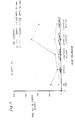
- Figure 1 is a graph showing the 1% creep life for MAR-M 509 for various processing conditions.
- Figure 2 is a graph showing the rupture elongation for MAR-M 509 for various processing conditions.
- Figure 3 is a 20X photomicrograph of the repaired cooling holes in a MAR-M 509 turbine vane with the repair powder placed over the holes in the vane.
- Figure 4 is a 20X photomicrograph of the repaired cooling holes in a MAR-M 509 turbine vane with the repair powder packed into the holes prior to melting and isothermal diffusion.
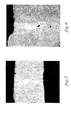
- Figure 5 is a 50X photomicrograph of a repaired crack in a MAR-M 509 turbine vane with the repair powder placed over the crack prior to melting and isothermal diffusion.
- Figure 6 is a 50X photomicrograph of a repaired blind crack in a MAR-M 509 turbine vane with the repair powder placed over the crack prior to melting and isothermal diffusion.
- cobalt-base superalloys for certain applications in a gas turbine engine is highly desirable because the material has good mechanical properties and a significant resistance to the corrosive environment inherently related to the combustion processes occurring in the engine. However, the operating conditions are sufficiently severe that the material requires additional protection, in the form of a protective coating, to provide the service lifetime required.
- the component is formed by investment casting, followed by a minimal amount of machining to bring critical dimensions within the required tolerances.
- the coating applied is typically of the MCrAlY type, where M is selected from the group consisting of iron, nickel, cobalt and certain mixtures thereof, or of the diffusion aluminide type.
- a typical application of the coating includes steps of applying the coating material to the surface of the component, either in the as-cast state or with a previously applied solution heat treatment, and heating for either four hours at 1080°C (1975°F) for the MCrAlY type coating, or for 24 hours at 1074°C (1965°F) for the diffusion aluminide type coating to diffuse the coating layer into the substrate material.
- This diffusion step acts effectively as a precipitation hardening step for the substrate cobalt-base material, in which M 23 C 6 carbide compounds, where M is typically Cr, are formed and distributed around the eutectic phases located in the interdendritic regions.
- the resultant components have mechanical properties, for example 1% creep life at 982°C (1800°F) and 79.3 MPa (11.5 ksi) based on a 4-hour heat treatment at 1080°C (1975°F) of an as-cast sample, which are satisfactory for the applications intended. Similarly treated samples served as the baseline for comparison in all the testing for this invention.
- processes have been developed to repair these worn components by adding material of essentially the composition of the cobalt-base alloy to rebuild the eroded areas of the component, or to fill in the cracks formed as discussed above.
- the component Prior to adding material, the component is cleaned, typically in a combination of vacuum and hydrogen atmosphere cycles, to remove oxides. It has been determined as a part of this work that a hydrogen treatment at 1177°C-1260°C (2150-2300°F) for one to four hours is sufficient to remove the oxides formed at the bottom of cracks formed in engine run components.
- the material added is in the form of a powder mixture whose overall composition is similar to that of the component. As discussed above, a portion of this powder contains a melting point depressant so that this portion melts at a temperature below the melting point of the component material, but then solidifies as the melting point depressant diffuses into the component material.
- the diffusion step of this prior art repair process is typically conducted at 1149°C (2100°F), and is effectively a carbide precipitation step at a higher temperature than the coating cycle of the original manufacturing process.
- the repair process is fully described in US-A- 4,008,844 as discussed above.
- the higher temperature heat treatment results in both a fine dispersion and acicular precipitation of M 23 C 6 carbides around both the fine and coarse eutectic phases located in the interdendritic regions.
- Test samples of MAR-M 509 cobalt-base alloy having a typically known composition of 21,5% Cr; 10,5% Ni; 0,2% Ti; 0,6% C; 7% W; 3,5% Ta; 0,5% Zr balance Co. in the as-cast condition were heated for 12 hours at temperatures of 1232°C, 1246°C and 1260°C (22560°F, 2275°F and 2300°F). This was followed by a thermal cycle of four hours at 1080°C (1975°F) to simulate the diffusion cycle for the thermal barrier coating.
- the 1% creep life was determined at 982°C (1800°F) and 79.3 MPa (11.5 ksi), and at 1093°C (2000°F) and 51.7 MPa (7.5 ksi).
- the results as shown in Fig. 1 show that the 1% creep life peaked in the samples prepared at 1246°C (2275°F) in both cases, with an improvement at the lower test temperature of about 700%, and at the higher test temperature of about 200%, compared to the baseline condition of four hours at 1080°C (1975°F) on as-cast material.
- a portion of a MAR-M 509 gas turbine engine high pressure turbine vane containing cooling holes was prepared, using conventional chemical bath stripping methods, to remove the protective coating. Any remaining oxide scale was then removed by heating for four hours at 1204°C (2200°F) in a hydrogen atmosphere.
- a mixture of 50% by weight MAR-M 509 powder (44 ⁇ m (micron) diameter and finer) and 50% AMS 4783 powder (44 ⁇ m (micron) diameter and finer) was mixed with a binder based on ethyl cellulose, mineral oil and water to form a paste.
- the paste was spread over the cooling holes of one half of the vane, and packed into the cooling holes of the other half of the vane.
- the cooling holes are generally slightly conical, with a maximum diameter of 1.27 mm (0.050").
- the sample was heated for 15 minutes in vacuum at 1240°C (2265°F), cooled to allow placement of additional powder over the cooling holes as necessary, and heated for another five hours in vacuum at 1240°C (2265°F).
- the microstructure of the filler material where the powder was spread over the surface of the sample is shown in Figure 3.
- the MAR-M 509 powder particles are not distributed evenly throughout the length of the hole, but are concentrated at the top of the hole, while the AMS 4783 particles, after melting, have formed a matrix which has flowed down into the hole without carrying a proportionate number of the MAR-M 509 particles along.
- Example II A portion of a MAR-M 509 turbine vane, having several through thickness cracks, was cleaned as described in Example II. Some of the same repair powder paste as used in Example II was placed over the cracks, and the sample was heated for 15 minutes in vacuum at 1240°C (2265°F), cooled, and heated for another five hours in vacuum at 1240°C (2265°F).
- Example II A portion of a MAR-M 509 turbine vane, having a blind crack (a crack not penetrating completely through the thickness of the material) was cleaned as described in Example II. Some of the same repair powder paste as used in Example II was placed over the crack, and the sample was heated for 15 minutes in vacuum at 1240°C (2265°F) cooled, and heated for another five hours in vacuum at 1240°C (2265°F).
- a 1.0mm (0.040") gap between two 3.2mm (0.125”) thick MAR-M 509 plates was packed with the same powder mixture as in Example II.
- the sample was heated for 15 minutes in vacuum at 1240°C (2265°F) with the gap oriented vertically, cooled to add any additional powder necessary, and heated for an additional five hours in vacuum at 1240°C (2265°F).
Landscapes
- Engineering & Computer Science (AREA)
- Mechanical Engineering (AREA)
- Chemical & Material Sciences (AREA)
- Crystallography & Structural Chemistry (AREA)
- Thermal Sciences (AREA)
- Physics & Mathematics (AREA)
- General Engineering & Computer Science (AREA)
- Materials Engineering (AREA)
- Metallurgy (AREA)
- Organic Chemistry (AREA)
- Turbine Rotor Nozzle Sealing (AREA)
- Other Surface Treatments For Metallic Materials (AREA)
- Powder Metallurgy (AREA)
- Solid-Phase Diffusion Into Metallic Material Surfaces (AREA)
- Coating By Spraying Or Casting (AREA)
Claims (10)
- Verfahren zum Reparieren von Fehlerstellen in einer Superlegierungsgasturbinenmotorkomponente auf Cobaltbasis, wobei die Superlegierung auf Cobaltbasis eine durch Fällung härtbare Co Legierung ist und eine Carbidlöslichkeitstemperatur hat, wobei das Verfahren besteht aus:a. zur Verfügung stellen einer Pulvermischung, bestehend aus einem ersten Pulver mit einer Zusammensetzung, die die Zusammensetzung der Komponente ist, und einem zweiten Pulver, dessen Zusammensetzung die gleiche Basis hat wie die Komponente, unterschiedlich von dem ersten Pulver und metallurgisch kompatibel mit der Komponente ist und eine Menge eines Schmelzpunktdrückmittels enthält, wobei das erste Pulver einen Schmelzpunkt hat, und das zweite Pulver einen Schmelzpunkt hat, wobei der Schmelzpunkt des ersten Pulvers den Schmelzpunkt des zweiten Pulvers übersteigt,b. Aufbringen der Pulvermischung auf die Komponente durch Packen oder Füllen in die Fehlerstellen undc. Erhitzen der Komponente im Vakuum oder inerten Atmosphäre bei einer Temperatur größer als der Carbidlöslichkeitstemperatur der Komponente, und welche auch größer als der Schmelzpunkt des zweiten Pulvers aber kleiner als der Schmelzpunkt des ersten Pulvers ist, wobei das zweite Pulver geschmolzen wird und isotherm in die Komponente und das erste Pulver diffundiert wird, auf eine Temperatur innerhalb des Bereichs von 1232°C-1260°C (2250°F-2300°F) für ein bis 12 Stunden, wodurch Kriecheigenschaften der Komponente verbessert werden.
- Verfahren nach Anspruch 1, wobei die Komponente mit einer Geschwindigkeit gleich oder größer als 20°C/Min (35°F/Min) gekühlt wird.
- Verfahren nach Anspruch 1, wobei die Komponente in einer Wasserstoffatmosphäre bei 1177°C-1260°C (2150-2300°F) ein bis vier Stunden vor dem Reparaturverfahren gereinigt wird.
- Verfahren nach Anspruch 1, wobei das zweite Pulver eine Zusammensetzung, bezogen auf das Gewicht, von 19% Cr, 16,5% Ni, 8% Si, 4% W, 0,8% B, 0,4% C, Rest Co hat.
- Verfahren nach Anspruch 1, wobei die Pulvermischung in die Fehlerstellen gepackt wird.
- Verfahren nach Anspruch 1, wobei die Komponente im Vakuum oder inerten Atmosphäre bei 1232°C-1260°C (2250-2300°F) vier bis acht Stunden erhitzt wird.
- Verfahren nach Anspruch 1, wobei die Fehlerstellen Risse mit einer Breite bis zu 1,0 mm (0,040") sind.
- Verfahren nach Anspruch 1, wobei die Fehlerstellen Löcher mit einem Durchmesser bis zu 1,27 mm (0,050") sind.
- Verfahren nach Anspruch 1, einschließend die zusätzlichen Stufen von:a. Aufbringen von MCrAlY Typ Überzug als Schutzüberzug auf die Oberfläche der Komponente undb. Erhitzen der Komponente in Argon bei 1080°C (1975°F) vier Stunden lang.
- Verfahren nach Anspruch 1, einschließend die zusätzlichen Stufen von:a. Aufbringen eines Aluminiumtypüberzugs als Schutzüberzug auf die Oberfläche der Komponente undb. Erhitzen der Komponente in Argon bei 1074°C (1965°F) 24 Stunden lang.
Applications Claiming Priority (3)
| Application Number | Priority Date | Filing Date | Title |
|---|---|---|---|
| US87902292A | 1992-05-06 | 1992-05-06 | |
| US879022 | 1992-05-06 | ||
| PCT/US1993/004326 WO1993022097A1 (en) | 1992-05-06 | 1993-05-06 | Heat treatment and repair of cobalt-base superalloy articles |
Publications (2)
| Publication Number | Publication Date |
|---|---|
| EP0593736A1 EP0593736A1 (de) | 1994-04-27 |
| EP0593736B1 true EP0593736B1 (de) | 2001-03-14 |
Family
ID=25373275
Family Applications (1)
| Application Number | Title | Priority Date | Filing Date |
|---|---|---|---|
| EP93911137A Expired - Lifetime EP0593736B1 (de) | 1992-05-06 | 1993-05-06 | Wärmebehandlung und verfahren zum reparieren eines superlegierungskörpers auf kobalt-basis |
Country Status (6)
| Country | Link |
|---|---|
| US (3) | US5549767A (de) |
| EP (1) | EP0593736B1 (de) |
| JP (1) | JP3032295B2 (de) |
| AT (1) | ATE199671T1 (de) |
| DE (1) | DE69330018T2 (de) |
| WO (1) | WO1993022097A1 (de) |
Cited By (2)
| Publication number | Priority date | Publication date | Assignee | Title |
|---|---|---|---|---|
| RU2449858C1 (ru) * | 2010-11-30 | 2012-05-10 | Федеральное государственное унитарное предприятие "Научно-производственный центр газотурбостроения "Салют" (ФГУП "НПЦ газотурбостроения "Салют") | Способ производства заготовок из жаропрочных порошковых сплавов |
| CN110760769A (zh) * | 2019-10-30 | 2020-02-07 | 西安交通大学 | 单晶镍基高温合金冷变形回复方法 |
Families Citing this family (44)
| Publication number | Priority date | Publication date | Assignee | Title |
|---|---|---|---|---|
| WO1993022097A1 (en) * | 1992-05-06 | 1993-11-11 | United Technologies Corporation | Heat treatment and repair of cobalt-base superalloy articles |
| US5437737A (en) * | 1994-02-07 | 1995-08-01 | United Technologies Corporation | Repair coating for superalloy articles, such as gas turbine engine components |
| US5883314A (en) * | 1996-06-11 | 1999-03-16 | Sievers; George K. | Coating methods, coating products and coated articles |
| WO1997037800A1 (en) * | 1996-04-10 | 1997-10-16 | Tmt Research Development, Inc. | Coating methods, coating products and coated articles |
| US5916518A (en) | 1997-04-08 | 1999-06-29 | Allison Engine Company | Cobalt-base composition |
| US20030032057A1 (en) * | 1997-08-26 | 2003-02-13 | Genentech, Inc. | Secreted and transmembrane polypeptides and nucleic acids encoding the same |
| CA2372911C (en) * | 1999-05-07 | 2015-01-27 | Rolls-Royce Corporation | Cobalt-base composition and method for diffusion braze repair of superalloy articles |
| US6283356B1 (en) * | 1999-05-28 | 2001-09-04 | General Electric Company | Repair of a recess in an article surface |
| US6464128B1 (en) * | 1999-05-28 | 2002-10-15 | General Electric Company | Braze repair of a gas turbine engine stationary shroud |
| US20040124231A1 (en) * | 1999-06-29 | 2004-07-01 | Hasz Wayne Charles | Method for coating a substrate |
| US6451454B1 (en) * | 1999-06-29 | 2002-09-17 | General Electric Company | Turbine engine component having wear coating and method for coating a turbine engine component |
| US6478537B2 (en) | 2001-02-16 | 2002-11-12 | Siemens Westinghouse Power Corporation | Pre-segmented squealer tip for turbine blades |
| US6503349B2 (en) | 2001-05-15 | 2003-01-07 | United Technologies Corporation | Repair of single crystal nickel based superalloy article |
| US7204019B2 (en) | 2001-08-23 | 2007-04-17 | United Technologies Corporation | Method for repairing an apertured gas turbine component |
| US6520401B1 (en) * | 2001-09-06 | 2003-02-18 | Sermatech International, Inc. | Diffusion bonding of gaps |
| US6528178B1 (en) | 2001-12-17 | 2003-03-04 | Siemens Westinghouse Power Corporation | High temperature resistant article with improved protective coating bonding and method of manufacturing same |
| US6726086B2 (en) | 2002-01-24 | 2004-04-27 | Siemens Westinghouse Power Corporation | Liquid phase diffusion bonding to a superalloy component |
| US7416108B2 (en) | 2002-01-24 | 2008-08-26 | Siemens Power Generation, Inc. | High strength diffusion brazing utilizing nano-powders |
| DE10259364A1 (de) * | 2002-12-18 | 2004-07-08 | Siemens Ag | Verfahren zum Entfernen von zumindest einem Oberflächenbereich eines Beuteils |
| US20050003097A1 (en) * | 2003-06-18 | 2005-01-06 | Siemens Westinghouse Power Corporation | Thermal spray of doped thermal barrier coating material |
| EP1522375A1 (de) * | 2003-10-06 | 2005-04-13 | Siemens Aktiengesellschaft | Verfahren zur Herstellung eines Schichtsystems |
| US7361233B2 (en) * | 2003-12-10 | 2008-04-22 | General Electric Company | Methods of hydrogen cleaning of metallic surfaces |
| US20050205415A1 (en) * | 2004-03-19 | 2005-09-22 | Belousov Igor V | Multi-component deposition |
| US20050217110A1 (en) * | 2004-04-06 | 2005-10-06 | Topal Valeriy I | Deposition repair of hollow items |
| US7509735B2 (en) * | 2004-04-22 | 2009-03-31 | Siemens Energy, Inc. | In-frame repairing system of gas turbine components |
| US7404986B2 (en) * | 2004-05-07 | 2008-07-29 | United Technologies Corporation | Multi-component deposition |
| US7244320B2 (en) * | 2004-06-01 | 2007-07-17 | United Technologies Corporation | Methods for repairing gas turbine engine components |
| US7641985B2 (en) * | 2004-06-21 | 2010-01-05 | Siemens Energy, Inc. | Boron free joint for superalloy component |
| US7360678B2 (en) * | 2005-01-27 | 2008-04-22 | United Technologies Corporation | Repair and reclassification of superalloy components |
| SG131799A1 (en) * | 2005-10-18 | 2007-05-28 | United Technologies Corp | Sacrificial coating for fluoride ion cleaning |
| US20080179381A1 (en) * | 2007-01-25 | 2008-07-31 | United Technologies Corporation | Diffusion braze repair of single crystal alloys |
| US8394215B2 (en) * | 2007-03-22 | 2013-03-12 | United Technologies Corporation | Dual process nickel alloy crack repair |
| US20080264444A1 (en) * | 2007-04-30 | 2008-10-30 | United Technologies Corporation | Method for removing carbide-based coatings |
| US7640793B2 (en) * | 2007-09-12 | 2010-01-05 | United Technologies Corporation | Systems and methods for determining airflow parameters of gas turbine engine components |
| US9765622B2 (en) * | 2007-09-12 | 2017-09-19 | United Technologies Corporation | Methods for performing gas turbine engine casing repairs and repaired cases |
| US20090286102A1 (en) * | 2008-05-15 | 2009-11-19 | Tubine Overhaul Services Pte Ltd. | Induced capillary action brazing using metallic foam matrix |
| US8365405B2 (en) * | 2008-08-27 | 2013-02-05 | United Technologies Corp. | Preforms and related methods for repairing abradable seals of gas turbine engines |
| US9056372B2 (en) * | 2010-10-12 | 2015-06-16 | Alstom Technology Ltd | Extending useful life of a cobalt-based gas turbine component |
| WO2014085892A1 (en) * | 2012-12-05 | 2014-06-12 | Liburdi Engineering Limited | Method of cladding and fusion welding of superalloys using composite filler powder |
| US8925792B1 (en) * | 2013-06-14 | 2015-01-06 | General Electric Company | Joining process for superalloys |
| US20150321297A1 (en) * | 2014-05-09 | 2015-11-12 | United Technologies Corporation | Systems and methods for repairing a surface of damaged metal components |
| US20160175991A1 (en) * | 2014-12-19 | 2016-06-23 | General Electric Company | Weld filler for superalloys |
| US10610982B2 (en) | 2015-11-12 | 2020-04-07 | General Electric Company | Weld filler metal for superalloys and methods of making |
| EP3677697A1 (de) * | 2019-01-07 | 2020-07-08 | Siemens Aktiengesellschaft | Co-legierung zur generativen fertigung und verfahren |
Family Cites Families (22)
| Publication number | Priority date | Publication date | Assignee | Title |
|---|---|---|---|---|
| US3667939A (en) * | 1971-12-30 | 1972-06-06 | United Aircraft Corp | High temperature cobalt-base sheet alloy |
| US4003765A (en) * | 1972-05-04 | 1977-01-18 | Creusot-Loire | Heat treatment of cobalt base alloys |
| US3802934A (en) * | 1973-01-12 | 1974-04-09 | Cabot Corp | Precipitation strengthened alloys |
| FR2239537B1 (de) * | 1973-07-30 | 1976-11-12 | Onera (Off Nat Aerospatiale) | |
| US4008844A (en) * | 1975-01-06 | 1977-02-22 | United Technologies Corporation | Method of repairing surface defects using metallic filler material |
| JPS5247515A (en) * | 1975-10-15 | 1977-04-15 | Natl Res Inst For Metals | Heat resistant cobalt based alloy |
| US4078922A (en) * | 1975-12-08 | 1978-03-14 | United Technologies Corporation | Oxidation resistant cobalt base alloy |
| DE2621789C2 (de) * | 1976-05-15 | 1983-10-06 | Fried. Krupp Gmbh, 4300 Essen | Verfahren zur Wärmebehandlung einer Kobalt-Gußlegierung |
| US4152181A (en) * | 1977-12-27 | 1979-05-01 | United Technologies Corporation | Cobalt alloy heat treatment |
| JPS5576038A (en) * | 1978-12-04 | 1980-06-07 | Hitachi Ltd | High strength high toughness cobalt-base alloy |
| US4285459A (en) * | 1979-07-31 | 1981-08-25 | Chromalloy American Corporation | High temperature braze repair of superalloys |
| US4381944A (en) * | 1982-05-28 | 1983-05-03 | General Electric Company | Superalloy article repair method and alloy powder mixture |
| US4938805A (en) * | 1984-12-04 | 1990-07-03 | General Electric Company | Novel cobalt-base superalloy and cast and welded industrial gas turbine components thereof and method |
| US4668265A (en) * | 1985-06-18 | 1987-05-26 | Owens-Corning Fiberglas Corporation | Corrosion resistant cobalt-base alloy and method of making fibers |
| JPS6311638A (ja) * | 1986-03-20 | 1988-01-19 | Hitachi Ltd | 高強度高靭性コバルト基合金及びその製造法 |
| US4726101A (en) * | 1986-09-25 | 1988-02-23 | United Technologies Corporation | Turbine vane nozzle reclassification |
| US4830934A (en) * | 1987-06-01 | 1989-05-16 | General Electric Company | Alloy powder mixture for treating alloys |
| US5086968A (en) * | 1990-01-26 | 1992-02-11 | Sundstrand Corporation | Weld repairable combustor |
| US5156321A (en) * | 1990-08-28 | 1992-10-20 | Liburdi Engineering Limited | Powder metallurgy repair technique |
| JPH04235261A (ja) * | 1991-01-11 | 1992-08-24 | Daido Steel Co Ltd | Co基合金素材の製造方法 |
| WO1993022097A1 (en) * | 1992-05-06 | 1993-11-11 | United Technologies Corporation | Heat treatment and repair of cobalt-base superalloy articles |
| US5437737A (en) * | 1994-02-07 | 1995-08-01 | United Technologies Corporation | Repair coating for superalloy articles, such as gas turbine engine components |
-
1993
- 1993-05-06 WO PCT/US1993/004326 patent/WO1993022097A1/en not_active Ceased
- 1993-05-06 JP JP5519638A patent/JP3032295B2/ja not_active Expired - Fee Related
- 1993-05-06 EP EP93911137A patent/EP0593736B1/de not_active Expired - Lifetime
- 1993-05-06 DE DE69330018T patent/DE69330018T2/de not_active Expired - Fee Related
- 1993-05-06 AT AT93911137T patent/ATE199671T1/de not_active IP Right Cessation
-
1994
- 1994-07-26 US US08/279,989 patent/US5549767A/en not_active Expired - Lifetime
-
1996
- 1996-01-30 US US08/594,340 patent/US5741378A/en not_active Expired - Lifetime
-
1997
- 1997-12-16 US US08/991,842 patent/US5922150A/en not_active Expired - Lifetime
Cited By (2)
| Publication number | Priority date | Publication date | Assignee | Title |
|---|---|---|---|---|
| RU2449858C1 (ru) * | 2010-11-30 | 2012-05-10 | Федеральное государственное унитарное предприятие "Научно-производственный центр газотурбостроения "Салют" (ФГУП "НПЦ газотурбостроения "Салют") | Способ производства заготовок из жаропрочных порошковых сплавов |
| CN110760769A (zh) * | 2019-10-30 | 2020-02-07 | 西安交通大学 | 单晶镍基高温合金冷变形回复方法 |
Also Published As
| Publication number | Publication date |
|---|---|
| US5549767A (en) | 1996-08-27 |
| DE69330018D1 (de) | 2001-04-19 |
| US5741378A (en) | 1998-04-21 |
| ATE199671T1 (de) | 2001-03-15 |
| WO1993022097A1 (en) | 1993-11-11 |
| DE69330018T2 (de) | 2001-06-21 |
| JP3032295B2 (ja) | 2000-04-10 |
| US5922150A (en) | 1999-07-13 |
| EP0593736A1 (de) | 1994-04-27 |
| JPH07500539A (ja) | 1995-01-19 |
Similar Documents
| Publication | Publication Date | Title |
|---|---|---|
| US5549767A (en) | Heat treatment and repair of cobalt base superalloy articles | |
| EP1258312B1 (de) | Verfahren zum Reparieren von Einkristallgegenständen aus Superlegierung auf Nickelbasis | |
| US7416108B2 (en) | High strength diffusion brazing utilizing nano-powders | |
| KR100474467B1 (ko) | 니켈계브레이징재 | |
| CA2385821C (en) | Method for isothermal brazing of single crystal components | |
| EP1226896B1 (de) | Nickel-Basis-Hartlötmaterial und Verfahren zum Reparieren durch Hartlöten | |
| US5806751A (en) | Method of repairing metallic alloy articles, such as gas turbine engine components | |
| CA2286257C (en) | Cobalt-base composition and method for diffusion braze repair of superalloy articles | |
| EP0340300B1 (de) | Pulvermischung aus einer hochtemperaturbeständigen metallegierung zum ausfüllen von löchern und zum reparieren von schadstellen bei gegenständen aus superlegierungen | |
| WO1995035396A1 (en) | Nickel based alloy for repairing substrates | |
| US5598968A (en) | Method for preventing recrystallization after cold working a superalloy article | |
| US20030136811A1 (en) | Liquid phase diffusion bonding to a superalloy component | |
| WO1995021042A2 (en) | Repair coating for superalloy articles, such as gas turbine engine components | |
| WO2019168517A1 (en) | Brazing of superalloy components with hydrogen addition for boron capture | |
| JPH05195186A (ja) | 分散物を含有した保護被膜を有する超合金製品およびそれの製造方法 | |
| EP0340296B1 (de) | Verfahren zur reparatur von schäden in superlegierungen | |
| CA1324242C (en) | Method of repairing damages in superalloys | |
| CA1313596C (en) | High temperature metal alloy mixtures for filling holes and repairing damages in superalloy bodies | |
| Huang et al. | WIDE GAP DIFFUSION BRAZING REPAIR | |
| Sparling et al. | Liburdi Power Metallurgy: New Compositions for High Strength Repairs of Turbine Components | |
| Marijnissen et al. | Braze Repair Possibilities for Hot Section Gas Turbine Parts | |
| Integrity et al. | weta « |
Legal Events
| Date | Code | Title | Description |
|---|---|---|---|
| PUAI | Public reference made under article 153(3) epc to a published international application that has entered the european phase |
Free format text: ORIGINAL CODE: 0009012 |
|
| AK | Designated contracting states |
Kind code of ref document: A1 Designated state(s): AT BE CH DE DK ES FR GB GR IE IT LI LU MC NL PT SE |
|
| 17P | Request for examination filed |
Effective date: 19940325 |
|
| 17Q | First examination report despatched |
Effective date: 19971010 |
|
| GRAG | Despatch of communication of intention to grant |
Free format text: ORIGINAL CODE: EPIDOS AGRA |
|
| GRAG | Despatch of communication of intention to grant |
Free format text: ORIGINAL CODE: EPIDOS AGRA |
|
| GRAH | Despatch of communication of intention to grant a patent |
Free format text: ORIGINAL CODE: EPIDOS IGRA |
|
| GRAH | Despatch of communication of intention to grant a patent |
Free format text: ORIGINAL CODE: EPIDOS IGRA |
|
| GRAA | (expected) grant |
Free format text: ORIGINAL CODE: 0009210 |
|
| AK | Designated contracting states |
Kind code of ref document: B1 Designated state(s): AT BE CH DE DK ES FR GB GR IE IT LI LU MC NL PT SE |
|
| PG25 | Lapsed in a contracting state [announced via postgrant information from national office to epo] |
Ref country code: NL Free format text: LAPSE BECAUSE OF FAILURE TO SUBMIT A TRANSLATION OF THE DESCRIPTION OR TO PAY THE FEE WITHIN THE PRESCRIBED TIME-LIMIT Effective date: 20010314 Ref country code: LI Free format text: LAPSE BECAUSE OF FAILURE TO SUBMIT A TRANSLATION OF THE DESCRIPTION OR TO PAY THE FEE WITHIN THE PRESCRIBED TIME-LIMIT Effective date: 20010314 Ref country code: IT Free format text: LAPSE BECAUSE OF FAILURE TO SUBMIT A TRANSLATION OF THE DESCRIPTION OR TO PAY THE FEE WITHIN THE PRE;WARNING: LAPSES OF ITALIAN PATENTS WITH EFFECTIVE DATE BEFORE 2007 MAY HAVE OCCURRED AT ANY TIME BEFORE 2007. THE CORRECT EFFECTIVE DATE MAY BE DIFFERENT FROM THE ONE RECORDED.SCRIBED TIME-LIMIT Effective date: 20010314 Ref country code: GR Free format text: LAPSE BECAUSE OF NON-PAYMENT OF DUE FEES Effective date: 20010314 Ref country code: CH Free format text: LAPSE BECAUSE OF FAILURE TO SUBMIT A TRANSLATION OF THE DESCRIPTION OR TO PAY THE FEE WITHIN THE PRESCRIBED TIME-LIMIT Effective date: 20010314 Ref country code: BE Free format text: LAPSE BECAUSE OF FAILURE TO SUBMIT A TRANSLATION OF THE DESCRIPTION OR TO PAY THE FEE WITHIN THE PRESCRIBED TIME-LIMIT Effective date: 20010314 Ref country code: AT Free format text: LAPSE BECAUSE OF FAILURE TO SUBMIT A TRANSLATION OF THE DESCRIPTION OR TO PAY THE FEE WITHIN THE PRESCRIBED TIME-LIMIT Effective date: 20010314 |
|
| REF | Corresponds to: |
Ref document number: 199671 Country of ref document: AT Date of ref document: 20010315 Kind code of ref document: T |
|
| REG | Reference to a national code |
Ref country code: CH Ref legal event code: EP |
|
| ET | Fr: translation filed | ||
| REG | Reference to a national code |
Ref country code: IE Ref legal event code: FG4D |
|
| REF | Corresponds to: |
Ref document number: 69330018 Country of ref document: DE Date of ref document: 20010419 |
|
| PG25 | Lapsed in a contracting state [announced via postgrant information from national office to epo] |
Ref country code: LU Free format text: LAPSE BECAUSE OF NON-PAYMENT OF DUE FEES Effective date: 20010506 |
|
| PG25 | Lapsed in a contracting state [announced via postgrant information from national office to epo] |
Ref country code: IE Free format text: LAPSE BECAUSE OF NON-PAYMENT OF DUE FEES Effective date: 20010507 |
|
| PG25 | Lapsed in a contracting state [announced via postgrant information from national office to epo] |
Ref country code: MC Free format text: LAPSE BECAUSE OF NON-PAYMENT OF DUE FEES Effective date: 20010531 |
|
| PG25 | Lapsed in a contracting state [announced via postgrant information from national office to epo] |
Ref country code: SE Free format text: LAPSE BECAUSE OF FAILURE TO SUBMIT A TRANSLATION OF THE DESCRIPTION OR TO PAY THE FEE WITHIN THE PRESCRIBED TIME-LIMIT Effective date: 20010614 Ref country code: DK Free format text: LAPSE BECAUSE OF FAILURE TO SUBMIT A TRANSLATION OF THE DESCRIPTION OR TO PAY THE FEE WITHIN THE PRESCRIBED TIME-LIMIT Effective date: 20010614 |
|
| PG25 | Lapsed in a contracting state [announced via postgrant information from national office to epo] |
Ref country code: PT Free format text: LAPSE BECAUSE OF FAILURE TO SUBMIT A TRANSLATION OF THE DESCRIPTION OR TO PAY THE FEE WITHIN THE PRESCRIBED TIME-LIMIT Effective date: 20010615 |
|
| NLV1 | Nl: lapsed or annulled due to failure to fulfill the requirements of art. 29p and 29m of the patents act | ||
| PG25 | Lapsed in a contracting state [announced via postgrant information from national office to epo] |
Ref country code: ES Free format text: LAPSE BECAUSE OF FAILURE TO SUBMIT A TRANSLATION OF THE DESCRIPTION OR TO PAY THE FEE WITHIN THE PRESCRIBED TIME-LIMIT Effective date: 20010927 |
|
| REG | Reference to a national code |
Ref country code: CH Ref legal event code: PL |
|
| REG | Reference to a national code |
Ref country code: GB Ref legal event code: IF02 |
|
| PLBE | No opposition filed within time limit |
Free format text: ORIGINAL CODE: 0009261 |
|
| STAA | Information on the status of an ep patent application or granted ep patent |
Free format text: STATUS: NO OPPOSITION FILED WITHIN TIME LIMIT |
|
| 26N | No opposition filed | ||
| REG | Reference to a national code |
Ref country code: IE Ref legal event code: MM4A |
|
| PGFP | Annual fee paid to national office [announced via postgrant information from national office to epo] |
Ref country code: FR Payment date: 20090507 Year of fee payment: 17 Ref country code: DE Payment date: 20090529 Year of fee payment: 17 |
|
| PGFP | Annual fee paid to national office [announced via postgrant information from national office to epo] |
Ref country code: GB Payment date: 20090407 Year of fee payment: 17 |
|
| GBPC | Gb: european patent ceased through non-payment of renewal fee |
Effective date: 20100506 |
|
| REG | Reference to a national code |
Ref country code: FR Ref legal event code: ST Effective date: 20110131 |
|
| PG25 | Lapsed in a contracting state [announced via postgrant information from national office to epo] |
Ref country code: DE Free format text: LAPSE BECAUSE OF NON-PAYMENT OF DUE FEES Effective date: 20101201 |
|
| PG25 | Lapsed in a contracting state [announced via postgrant information from national office to epo] |
Ref country code: FR Free format text: LAPSE BECAUSE OF NON-PAYMENT OF DUE FEES Effective date: 20100531 |
|
| PG25 | Lapsed in a contracting state [announced via postgrant information from national office to epo] |
Ref country code: GB Free format text: LAPSE BECAUSE OF NON-PAYMENT OF DUE FEES Effective date: 20100506 |