EP0593794B1 - Isolated mink growth hormone genes, novel recombinant DNA and methods for producing mink growth hormone - Google Patents
Isolated mink growth hormone genes, novel recombinant DNA and methods for producing mink growth hormone Download PDFInfo
- Publication number
- EP0593794B1 EP0593794B1 EP92117726A EP92117726A EP0593794B1 EP 0593794 B1 EP0593794 B1 EP 0593794B1 EP 92117726 A EP92117726 A EP 92117726A EP 92117726 A EP92117726 A EP 92117726A EP 0593794 B1 EP0593794 B1 EP 0593794B1
- Authority
- EP
- European Patent Office
- Prior art keywords
- dna
- growth hormone
- mink
- mink growth
- seq
- Prior art date
- Legal status (The legal status is an assumption and is not a legal conclusion. Google has not performed a legal analysis and makes no representation as to the accuracy of the status listed.)
- Expired - Lifetime
Links
- 102000018997 Growth Hormone Human genes 0.000 title claims description 54
- 108010051696 Growth Hormone Proteins 0.000 title claims description 54
- 239000000122 growth hormone Substances 0.000 title claims description 54
- 241000772415 Neovison vison Species 0.000 title claims description 51
- 108020004511 Recombinant DNA Proteins 0.000 title claims description 23
- 238000000034 method Methods 0.000 title description 27
- 241000588724 Escherichia coli Species 0.000 claims description 25
- 239000001963 growth medium Substances 0.000 claims description 11
- 244000005700 microbiome Species 0.000 claims description 8
- 238000004519 manufacturing process Methods 0.000 claims description 7
- 241000588722 Escherichia Species 0.000 claims description 6
- 108091028043 Nucleic acid sequence Proteins 0.000 claims description 5
- 241000894006 Bacteria Species 0.000 claims description 4
- 238000012258 culturing Methods 0.000 claims description 3
- 108020004414 DNA Proteins 0.000 description 97
- 239000013612 plasmid Substances 0.000 description 27
- FAPWRFPIFSIZLT-UHFFFAOYSA-M Sodium chloride Chemical compound [Na+].[Cl-] FAPWRFPIFSIZLT-UHFFFAOYSA-M 0.000 description 24
- 239000000243 solution Substances 0.000 description 22
- 108091028026 C-DNA Proteins 0.000 description 20
- 239000012634 fragment Substances 0.000 description 20
- XLYOFNOQVPJJNP-UHFFFAOYSA-N water Substances O XLYOFNOQVPJJNP-UHFFFAOYSA-N 0.000 description 20
- 239000000872 buffer Substances 0.000 description 19
- 239000012528 membrane Substances 0.000 description 19
- 239000000203 mixture Substances 0.000 description 19
- 108090000623 proteins and genes Proteins 0.000 description 19
- 206010062767 Hypophysitis Diseases 0.000 description 16
- QKNYBSVHEMOAJP-UHFFFAOYSA-N 2-amino-2-(hydroxymethyl)propane-1,3-diol;hydron;chloride Chemical compound Cl.OCC(N)(CO)CO QKNYBSVHEMOAJP-UHFFFAOYSA-N 0.000 description 14
- 210000003635 pituitary gland Anatomy 0.000 description 13
- LFQSCWFLJHTTHZ-UHFFFAOYSA-N Ethanol Chemical compound CCO LFQSCWFLJHTTHZ-UHFFFAOYSA-N 0.000 description 12
- 239000011780 sodium chloride Substances 0.000 description 12
- 108020004707 nucleic acids Proteins 0.000 description 11
- 102000039446 nucleic acids Human genes 0.000 description 11
- 150000007523 nucleic acids Chemical class 0.000 description 11
- 239000013598 vector Substances 0.000 description 10
- 239000007795 chemical reaction product Substances 0.000 description 9
- 102000004169 proteins and genes Human genes 0.000 description 9
- TWRXJAOTZQYOKJ-UHFFFAOYSA-L Magnesium chloride Chemical compound [Mg+2].[Cl-].[Cl-] TWRXJAOTZQYOKJ-UHFFFAOYSA-L 0.000 description 8
- 239000008346 aqueous phase Substances 0.000 description 8
- 238000009396 hybridization Methods 0.000 description 7
- 238000002415 sodium dodecyl sulfate polyacrylamide gel electrophoresis Methods 0.000 description 7
- 108091032973 (ribonucleotides)n+m Proteins 0.000 description 6
- 239000011543 agarose gel Substances 0.000 description 6
- 230000001580 bacterial effect Effects 0.000 description 6
- 230000029087 digestion Effects 0.000 description 6
- 108091008146 restriction endonucleases Proteins 0.000 description 6
- 241000282339 Mustela Species 0.000 description 5
- 241000700159 Rattus Species 0.000 description 5
- 239000002244 precipitate Substances 0.000 description 5
- GOJUJUVQIVIZAV-UHFFFAOYSA-N 2-amino-4,6-dichloropyrimidine-5-carbaldehyde Chemical group NC1=NC(Cl)=C(C=O)C(Cl)=N1 GOJUJUVQIVIZAV-UHFFFAOYSA-N 0.000 description 4
- 102000053602 DNA Human genes 0.000 description 4
- KCXVZYZYPLLWCC-UHFFFAOYSA-N EDTA Chemical compound OC(=O)CN(CC(O)=O)CCN(CC(O)=O)CC(O)=O KCXVZYZYPLLWCC-UHFFFAOYSA-N 0.000 description 4
- ISWSIDIOOBJBQZ-UHFFFAOYSA-N Phenol Chemical compound OC1=CC=CC=C1 ISWSIDIOOBJBQZ-UHFFFAOYSA-N 0.000 description 4
- 108020004682 Single-Stranded DNA Proteins 0.000 description 4
- 125000003275 alpha amino acid group Chemical group 0.000 description 4
- 229910001629 magnesium chloride Inorganic materials 0.000 description 4
- 239000011541 reaction mixture Substances 0.000 description 4
- 239000000523 sample Substances 0.000 description 4
- 229920006395 saturated elastomer Polymers 0.000 description 4
- 102000012410 DNA Ligases Human genes 0.000 description 3
- 108010061982 DNA Ligases Proteins 0.000 description 3
- ZMXDDKWLCZADIW-UHFFFAOYSA-N N,N-Dimethylformamide Chemical compound CN(C)C=O ZMXDDKWLCZADIW-UHFFFAOYSA-N 0.000 description 3
- 101000868151 Rattus norvegicus Somatotropin Proteins 0.000 description 3
- 239000006180 TBST buffer Substances 0.000 description 3
- 239000007984 Tris EDTA buffer Substances 0.000 description 3
- 150000001413 amino acids Chemical class 0.000 description 3
- AVKUERGKIZMTKX-NJBDSQKTSA-N ampicillin Chemical compound C1([C@@H](N)C(=O)N[C@H]2[C@H]3SC([C@@H](N3C2=O)C(O)=O)(C)C)=CC=CC=C1 AVKUERGKIZMTKX-NJBDSQKTSA-N 0.000 description 3
- 229960000723 ampicillin Drugs 0.000 description 3
- 239000007853 buffer solution Substances 0.000 description 3
- 229940041514 candida albicans extract Drugs 0.000 description 3
- 238000010367 cloning Methods 0.000 description 3
- 238000010276 construction Methods 0.000 description 3
- VHJLVAABSRFDPM-QWWZWVQMSA-N dithiothreitol Chemical compound SC[C@@H](O)[C@H](O)CS VHJLVAABSRFDPM-QWWZWVQMSA-N 0.000 description 3
- 229920000159 gelatin Polymers 0.000 description 3
- 235000019322 gelatine Nutrition 0.000 description 3
- 238000010353 genetic engineering Methods 0.000 description 3
- 238000010369 molecular cloning Methods 0.000 description 3
- 238000002360 preparation method Methods 0.000 description 3
- 239000000047 product Substances 0.000 description 3
- 239000006228 supernatant Substances 0.000 description 3
- 238000001262 western blot Methods 0.000 description 3
- 239000012138 yeast extract Substances 0.000 description 3
- 102000002260 Alkaline Phosphatase Human genes 0.000 description 2
- 108020004774 Alkaline Phosphatase Proteins 0.000 description 2
- NLXLAEXVIDQMFP-UHFFFAOYSA-N Ammonia chloride Chemical compound [NH4+].[Cl-] NLXLAEXVIDQMFP-UHFFFAOYSA-N 0.000 description 2
- IJGRMHOSHXDMSA-UHFFFAOYSA-N Atomic nitrogen Chemical compound N#N IJGRMHOSHXDMSA-UHFFFAOYSA-N 0.000 description 2
- 108091003079 Bovine Serum Albumin Proteins 0.000 description 2
- HEDRZPFGACZZDS-UHFFFAOYSA-N Chloroform Chemical compound ClC(Cl)Cl HEDRZPFGACZZDS-UHFFFAOYSA-N 0.000 description 2
- 238000002965 ELISA Methods 0.000 description 2
- ZHNUHDYFZUAESO-UHFFFAOYSA-N Formamide Chemical compound NC=O ZHNUHDYFZUAESO-UHFFFAOYSA-N 0.000 description 2
- 239000001828 Gelatine Substances 0.000 description 2
- 239000000020 Nitrocellulose Substances 0.000 description 2
- 108010021757 Polynucleotide 5'-Hydroxyl-Kinase Proteins 0.000 description 2
- 102000008422 Polynucleotide 5'-hydroxyl-kinase Human genes 0.000 description 2
- VMHLLURERBWHNL-UHFFFAOYSA-M Sodium acetate Chemical compound [Na+].CC([O-])=O VMHLLURERBWHNL-UHFFFAOYSA-M 0.000 description 2
- 239000002253 acid Substances 0.000 description 2
- 230000037429 base substitution Effects 0.000 description 2
- 230000004071 biological effect Effects 0.000 description 2
- KGBXLFKZBHKPEV-UHFFFAOYSA-N boric acid Chemical compound OB(O)O KGBXLFKZBHKPEV-UHFFFAOYSA-N 0.000 description 2
- 239000004327 boric acid Substances 0.000 description 2
- 229940098773 bovine serum albumin Drugs 0.000 description 2
- 238000006243 chemical reaction Methods 0.000 description 2
- 239000002299 complementary DNA Substances 0.000 description 2
- 238000004925 denaturation Methods 0.000 description 2
- 230000036425 denaturation Effects 0.000 description 2
- 238000001514 detection method Methods 0.000 description 2
- 239000000499 gel Substances 0.000 description 2
- 238000000338 in vitro Methods 0.000 description 2
- 238000011534 incubation Methods 0.000 description 2
- KWGKDLIKAYFUFQ-UHFFFAOYSA-M lithium chloride Chemical compound [Li+].[Cl-] KWGKDLIKAYFUFQ-UHFFFAOYSA-M 0.000 description 2
- 238000002703 mutagenesis Methods 0.000 description 2
- 231100000350 mutagenesis Toxicity 0.000 description 2
- 230000007935 neutral effect Effects 0.000 description 2
- 229920001220 nitrocellulos Polymers 0.000 description 2
- 229920001184 polypeptide Polymers 0.000 description 2
- SCVFZCLFOSHCOH-UHFFFAOYSA-M potassium acetate Chemical compound [K+].CC([O-])=O SCVFZCLFOSHCOH-UHFFFAOYSA-M 0.000 description 2
- 102000004196 processed proteins & peptides Human genes 0.000 description 2
- 108090000765 processed proteins & peptides Proteins 0.000 description 2
- 238000012163 sequencing technique Methods 0.000 description 2
- 239000001632 sodium acetate Substances 0.000 description 2
- 235000017281 sodium acetate Nutrition 0.000 description 2
- 239000001509 sodium citrate Substances 0.000 description 2
- NLJMYIDDQXHKNR-UHFFFAOYSA-K sodium citrate Chemical compound O.O.[Na+].[Na+].[Na+].[O-]C(=O)CC(O)(CC([O-])=O)C([O-])=O NLJMYIDDQXHKNR-UHFFFAOYSA-K 0.000 description 2
- ATHGHQPFGPMSJY-UHFFFAOYSA-N spermidine Chemical compound NCCCCNCCCN ATHGHQPFGPMSJY-UHFFFAOYSA-N 0.000 description 2
- 239000000725 suspension Substances 0.000 description 2
- DGVVWUTYPXICAM-UHFFFAOYSA-N β‐Mercaptoethanol Chemical compound OCCS DGVVWUTYPXICAM-UHFFFAOYSA-N 0.000 description 2
- QRXMUCSWCMTJGU-UHFFFAOYSA-L (5-bromo-4-chloro-1h-indol-3-yl) phosphate Chemical compound C1=C(Br)C(Cl)=C2C(OP([O-])(=O)[O-])=CNC2=C1 QRXMUCSWCMTJGU-UHFFFAOYSA-L 0.000 description 1
- OSBLTNPMIGYQGY-UHFFFAOYSA-N 2-amino-2-(hydroxymethyl)propane-1,3-diol;2-[2-[bis(carboxymethyl)amino]ethyl-(carboxymethyl)amino]acetic acid;boric acid Chemical compound OB(O)O.OCC(N)(CO)CO.OC(=O)CN(CC(O)=O)CCN(CC(O)=O)CC(O)=O OSBLTNPMIGYQGY-UHFFFAOYSA-N 0.000 description 1
- 241000972773 Aulopiformes Species 0.000 description 1
- 241000283707 Capra Species 0.000 description 1
- 241001062872 Cleyera japonica Species 0.000 description 1
- 108020001019 DNA Primers Proteins 0.000 description 1
- 239000003155 DNA primer Substances 0.000 description 1
- 102000004190 Enzymes Human genes 0.000 description 1
- 241001452028 Escherichia coli DH1 Species 0.000 description 1
- 241001131785 Escherichia coli HB101 Species 0.000 description 1
- 229920001917 Ficoll Polymers 0.000 description 1
- 108010010803 Gelatin Proteins 0.000 description 1
- WQZGKKKJIJFFOK-GASJEMHNSA-N Glucose Natural products OC[C@H]1OC(O)[C@H](O)[C@@H](O)[C@@H]1O WQZGKKKJIJFFOK-GASJEMHNSA-N 0.000 description 1
- 239000006142 Luria-Bertani Agar Substances 0.000 description 1
- 241001465754 Metazoa Species 0.000 description 1
- 241001504654 Mustela nivalis Species 0.000 description 1
- 239000004677 Nylon Substances 0.000 description 1
- 108091000080 Phosphotransferase Proteins 0.000 description 1
- 229920001213 Polysorbate 20 Polymers 0.000 description 1
- 239000012564 Q sepharose fast flow resin Substances 0.000 description 1
- 239000008051 TBE buffer Substances 0.000 description 1
- QTBSBXVTEAMEQO-UHFFFAOYSA-N acetic acid Substances CC(O)=O QTBSBXVTEAMEQO-UHFFFAOYSA-N 0.000 description 1
- 239000013543 active substance Substances 0.000 description 1
- 235000019270 ammonium chloride Nutrition 0.000 description 1
- 238000000376 autoradiography Methods 0.000 description 1
- 239000013602 bacteriophage vector Substances 0.000 description 1
- 238000007630 basic procedure Methods 0.000 description 1
- 230000015572 biosynthetic process Effects 0.000 description 1
- 230000000903 blocking effect Effects 0.000 description 1
- 238000005119 centrifugation Methods 0.000 description 1
- 239000003795 chemical substances by application Substances 0.000 description 1
- 230000030609 dephosphorylation Effects 0.000 description 1
- 238000006209 dephosphorylation reaction Methods 0.000 description 1
- 238000000502 dialysis Methods 0.000 description 1
- BNIILDVGGAEEIG-UHFFFAOYSA-L disodium hydrogen phosphate Chemical compound [Na+].[Na+].OP([O-])([O-])=O BNIILDVGGAEEIG-UHFFFAOYSA-L 0.000 description 1
- 238000010828 elution Methods 0.000 description 1
- 238000005516 engineering process Methods 0.000 description 1
- 238000002474 experimental method Methods 0.000 description 1
- 238000000605 extraction Methods 0.000 description 1
- 238000000855 fermentation Methods 0.000 description 1
- 230000004151 fermentation Effects 0.000 description 1
- 239000008273 gelatin Substances 0.000 description 1
- 235000011852 gelatine desserts Nutrition 0.000 description 1
- 239000008103 glucose Substances 0.000 description 1
- 239000005556 hormone Substances 0.000 description 1
- 229940088597 hormone Drugs 0.000 description 1
- 238000002955 isolation Methods 0.000 description 1
- 239000007788 liquid Substances 0.000 description 1
- UEGPKNKPLBYCNK-UHFFFAOYSA-L magnesium acetate Chemical compound [Mg+2].CC([O-])=O.CC([O-])=O UEGPKNKPLBYCNK-UHFFFAOYSA-L 0.000 description 1
- 239000011654 magnesium acetate Substances 0.000 description 1
- 235000011285 magnesium acetate Nutrition 0.000 description 1
- 229940069446 magnesium acetate Drugs 0.000 description 1
- 108020004999 messenger RNA Proteins 0.000 description 1
- 229910000402 monopotassium phosphate Inorganic materials 0.000 description 1
- 235000019796 monopotassium phosphate Nutrition 0.000 description 1
- 230000035772 mutation Effects 0.000 description 1
- JPXMTWWFLBLUCD-UHFFFAOYSA-N nitro blue tetrazolium(2+) Chemical compound COC1=CC(C=2C=C(OC)C(=CC=2)[N+]=2N(N=C(N=2)C=2C=CC=CC=2)C=2C=CC(=CC=2)[N+]([O-])=O)=CC=C1[N+]1=NC(C=2C=CC=CC=2)=NN1C1=CC=C([N+]([O-])=O)C=C1 JPXMTWWFLBLUCD-UHFFFAOYSA-N 0.000 description 1
- 229910052757 nitrogen Inorganic materials 0.000 description 1
- 229920001778 nylon Polymers 0.000 description 1
- 239000012071 phase Substances 0.000 description 1
- PJNZPQUBCPKICU-UHFFFAOYSA-N phosphoric acid;potassium Chemical compound [K].OP(O)(O)=O PJNZPQUBCPKICU-UHFFFAOYSA-N 0.000 description 1
- 102000020233 phosphotransferase Human genes 0.000 description 1
- 239000013600 plasmid vector Substances 0.000 description 1
- 239000000256 polyoxyethylene sorbitan monolaurate Substances 0.000 description 1
- 235000010486 polyoxyethylene sorbitan monolaurate Nutrition 0.000 description 1
- 239000001267 polyvinylpyrrolidone Substances 0.000 description 1
- 229920000036 polyvinylpyrrolidone Polymers 0.000 description 1
- 235000013855 polyvinylpyrrolidone Nutrition 0.000 description 1
- 235000011056 potassium acetate Nutrition 0.000 description 1
- 239000013615 primer Substances 0.000 description 1
- 238000000746 purification Methods 0.000 description 1
- 238000011160 research Methods 0.000 description 1
- 235000019515 salmon Nutrition 0.000 description 1
- 229920006298 saran Polymers 0.000 description 1
- 238000012216 screening Methods 0.000 description 1
- 238000002741 site-directed mutagenesis Methods 0.000 description 1
- 239000002904 solvent Substances 0.000 description 1
- 229940063673 spermidine Drugs 0.000 description 1
- 239000013595 supernatant sample Substances 0.000 description 1
- 238000003786 synthesis reaction Methods 0.000 description 1
- 108700026220 vif Genes Proteins 0.000 description 1
- 125000000391 vinyl group Chemical group [H]C([*])=C([H])[H] 0.000 description 1
- 229920002554 vinyl polymer Polymers 0.000 description 1
- 238000005406 washing Methods 0.000 description 1
Images

Classifications
-
- C—CHEMISTRY; METALLURGY
- C07—ORGANIC CHEMISTRY
- C07K—PEPTIDES
- C07K14/00—Peptides having more than 20 amino acids; Gastrins; Somatostatins; Melanotropins; Derivatives thereof
- C07K14/435—Peptides having more than 20 amino acids; Gastrins; Somatostatins; Melanotropins; Derivatives thereof from animals; from humans
- C07K14/575—Hormones
- C07K14/61—Growth hormone [GH], i.e. somatotropin
-
- A—HUMAN NECESSITIES
- A61—MEDICAL OR VETERINARY SCIENCE; HYGIENE
- A61P—SPECIFIC THERAPEUTIC ACTIVITY OF CHEMICAL COMPOUNDS OR MEDICINAL PREPARATIONS
- A61P43/00—Drugs for specific purposes, not provided for in groups A61P1/00-A61P41/00
Definitions
- the present invention relates to an isolated mink growth hormone gene, a novel recombinant DNA and a method for producing mink growth hormone.
- Mink growth hormone has been conventionally produced by isolation and purification from the pituitary gland of domesticated minks. Mink growth hormone facilitates the growth of minks by administrating the hormone to them and are very useful physiologically active substances.
- the mink growth hormone is derived from minks, the production of the mink growth hormone requires many domesticated animals, a long period of time, labor and cost.
- the present inventors previously provided the growth hormone gene of Dark mink defined by SEQ ID No. 2 in order to produce mink growth hormone by genetic engineering techniques (Japanese Patent Application 315946/1990). However, the Dark mink growth hormone gene was not satisfactory expressed in the transformant.
- the present inventors have extensively investigated genes that efficiently expresses the mink growth hormone and successfully found the method.
- the present invention provides a method for producing mink growth hormone efficiently in a short period of time in which microorganisms belonging to the genus Escherichia and containing a mink-derived-growth-hormone-gene-inserted recombinant DNA are cultured in a culture medium. Therefore, the present invention is industrially very useful.
- the Figures show:
- the present invention provides the mink growth hormone gene, the base sequence of which is defined in SEQ ID No. 1.
- the base sequence of SEQ ID No. 1 comprises the Dark mink growth hormone gene in which a site specific mutation yields a base substitution at the positions, 6 (G ⁇ A), 9 (C ⁇ T), 15 (C ⁇ T), 16 (T ⁇ C), 18 (G ⁇ A), 21 (C ⁇ T), 24 (C ⁇ T), 27 (G ⁇ A), 30 (T ⁇ C), 33 (C ⁇ T), 39 (C ⁇ T), and 42 (G ⁇ T), and to which an ATG sequence is attached.
- the present invention also provides a novel recombinant DNA comprising a vector DNA having a mink growth hormone gene insert.
- the base sequence of the insert is defined in SEQ ID No. 1.
- the present invention further provides a method for producing mink growth hormone in which microorganisms belonging to the genus Escherichia , containing a recombinant DNA and having the ability to produce mink growth hormone, are cultured in a culture medium and recovering mink growth hormone from the culture.
- Sources of genes used in the present invention include the pituitary gland of the weasel family such as Dark mink.
- RNA is prepared from the pituitary gland of the mink by the methods described in Proc.Natl.Acad.Sci.U.S.A. 70 : p3646 and in Laboratory Manual for Genetic Engineering, by Muramatsu, M., p70, (1988).
- c-DNA is synthesized from the m-RNA by the methods described in Mol.Cell.Biol., 2 : p161, (1982) and Gene, 25 : p263, (1983).
- the c-DNA is inserted into a vector DNA such as pUC119 (Takara Shuzo., Ltd) to give various recombinant plasmid DNAs.
- the recombinant plasmid is then used to transform bacteria such as E. coli JM101 (ATCC 33876) to give various transformants by the method described by Suzuki, H. and Yamamoto., T., in "Basic Procedure for Manipulation of Genes" pp8 - 13, (1989).
- the transformants in the c-DNA library constructed using the pUC119 vector are screened for positive transformants containing a 700 bp mink growth hormone c-DNA (hereinafter referred to as "growth hormone c-DNA”) fragment by the colony hybridization selection (Blotting membrane protocol by Amersham., Ltd).
- growth hormone c-DNA 700 bp mink growth hormone c-DNA
- Recombinant DNA having a base sequence that encodes a whole growth hormone gene derived from minks is constructed by digesting or ligating (1) a 650 bp c-DNA fragment (growth hormone gene from which the base sequence encoding amino-terminal 2 amino acids of a mature growth hormone is deleted) obtained by digesting the 700 bp growth hormone c-DNA with restriction enzymes EaeI and BamHI, (2) a promoter (e.g., trp promoter derived from E.
- a promoter e.g., trp promoter derived from E.
- the transformant containing the recombinant DNA described above could not sufficiently express mink growth hormone.
- the present inventors have studied to improve the recombinant DNA in order to express the mink growth hormone efficiently.
- Recombinant DNA is again constructed to improve the expression of the gene as follows.
- the recombinant DNA described above is digested with EcoRI and BamHI.
- the resulting 900 bp DNA fragment containing a promoter and the mink growth hormone gene is linked to EcoRI and BamHI digested plasmid vectors such as pUC119 to give a recombinant DNA.
- the recombinant DNA is used to transform microorganisms belonging to the genu s Escherichia such as E. coli JM101 (ATCC 33876) by the method described in DNA Cloning 1 : pp109 - 135, by Hanahan (1985).
- the transformant is used to prepare single-stranded DNA using pUC119 and M13k07 (Takara Shuzo., Ltd) according to the protocol supplied by the manufacturer.
- Improved recombinant DNA can be obtained by the method described in Oligonucleotide-Directed in vitro Mutagenesis System Version 2 using the single-stranded DNA and synthesized DNA primers.
- the primers are synthesized which do not assume a secondary structure with RNA deduced from the recombinant DNA and which do not alter the amino acid sequence of the mink growth hormone.
- Microorganisms belonging to the genus Escherichia such as E. coli JM101 (ATCC 33876), E. coli DH1 (ATCC 33849), E. coli HB101 (ATCC 33694) are transformed by the method described in DNA Cloning 1 : pp109 - 135, by Hanahan (1985) using the improved recombinant DNA to give transformants.
- an improved mink growth hormone gene is obtained from the improved recombinant DNA and is inserted into vector DNAs such as bacteriophage vectors described in Japanese Patent Application No. 322029/1988 by the method known in the art.
- the resulting recombinant DNA is used to transform E. coli by the method described in Molecular Cloning pp256 - 268, Cold Spring Harbor Laboratory (1982). Transformants are obtained.
- Culture medium can be any culture medium suitable for growing microorganisms belonging to the genus Escherichia and include a culture medium containing compositions such as 1% (w/v)trypton, 0.5% (w/v)yeast extract and 0.5%(w/v) NaCl. Culture can be carried out at 30 - 40 °C for 6 - 12 hours, preferably 37°C for 10 hours. After culture, bacterial cells are harvested from the culture by centrifugation at 8,000 rpm for 10 minutes.
- the bacterial cells are used to separate proteins based on a molecular weight by SDS-PAGE according to the method described by Laemmli in Nature, 227 : p680 (1970).
- the proteins are then analyzed immunologically by Western blotting/ELISA.
- the proteins are analyzed by the method described in Experimental Procedure, Blotting method, pp 212 - 317, Kuchino, Y., Hirai, H., Sakurai, K., (1987), using anti-rat growth hormone antibodies (USB. Co.).
- Mink growth hormone is isolated and purified from the bacterial cells by the method described in Marine.bio., p280 (1989).
- pituitary gland tissue 1 g was obtained from 100 minks (Dark mink of Zaoh mink ranch), which were sacrificed just before the removal of the pituitary gland. The pituitary gland was immediately placed in a liquid nitrogen and stored at -80 °C deep freezer (Sanyo Electric Ltd).
- RNA elution solution 50 mg of the pituitary gland obtained in 1.1 was immersed in 2 ml of an RNA elution solution (50 mM Tris-HCl/pH8.4, 50 mM EDTA, 1% SDS) and was immediately homogenized in a homogenizer (Wheaton Ltd). An equal amount of pre-heated phenol (65°C) saturated with TE buffer (10 mM Tris-HCl/pH7.5, 1 mM EDTA) was added to the homogenate, and the mixture was then transferred to an Eppendorf tube. The tube was incubated with occasional vigorous shaking at 65°C for 15 minutes. The tube was further incubated with shaking for another 10 minutes at 25°C.
- the tube was microfuged (MRX-150, Tomy Seiko Co., Ltd) at 15,000 rpm for 5 minutes to separate the mixture into an aqueous phase and a solvent phase.
- the aqueous phase was extracted. The extraction procedure was repeated two more times.
- an equal amount of chloroform was added to the resulting aqueous phase.
- 1/10 volume of 3M sodium acetate/pH4.8 and two volume of ice cold ethanol were added to the aqueous phase.
- the mixture was kept in freezer at -70°C for more than one hour. The mixture was then centrifuged at 15,000 rpm for 20 minutes.
- the precipitate was washed with 70% cold ethanol, dried and resuspended in 0.3 ml of sterilized water. 0.1 ml of 10 mol lithium chloride was added to the suspension, and the mixture was kept at -4°C overnight. The mixture was then centrifuged at 15,000 rpm for 30 minutes at 4°C. The precipitate was resuspended in 0.3 ml of sterilized water. 0.6 ml of ice cold ethanol was added to the suspension. The mixture was kept at -70°C for one hour and then centrifuged at 15,000 rpm for 15 minutes. The precipitate was dissolved in 0.5 ml of ice cold sterilized water. The solution was centrifuged at 15,000 rpm for 20 minutes at 4°C. The supernatant was saved. 150 ⁇ g of RNA was obtained.
- 700 ng of double-stranded c-DNA was synthesized using 60 ⁇ g of RNA and a Pharmacia kit according to the method described in Gene 25 : p263, (1983).
- the band containing a desired DNA fragment was cut out of the gel and was placed in a dialysis tube. 400 ⁇ l of TBE buffer (90 mM Tris-borate, 2 mM EDTA) was added to the tube. The end of the tube was knotted, and the tube was subjected to electroelution. DNA was eluted out in the buffer in the tube. To the DNA solution, an equal amount of phenol saturated with TE was added. The mixture was mixed, and the aqueous phase was removed. Ethanol was added to the aqueous phase to precipitate DNA. 100 ⁇ l of the DNA was dissolved in 100 ⁇ l of 100 mM Tris-HCl buffer/pH8.0.
- the c-DNA library was screened for mink growth hormone c-DNA according to the colony hybridization selection of the Amersham Hybond Blotting Membrane protocol. The details are described as follows.
- a probe used in the colony hybridization selection were synthesized by a DNA synthesizer (308B, Applied Biosystems Co., ) based on the base sequence of rat growth hormone.
- the 45-base sequence of the probe is defined in SEQ ID No. 5. 200 ng of synthesized DNA, 2 ⁇ l of 10X kination buffer (500 mM Tris-HCl/pH8.0, 100 mM magnesium chloride), 2 ⁇ l of 1 mM spermidine, 1 ⁇ l of 200 mM 2-mercaptoethanol, 10 ⁇ l of ⁇ - 32 P-ATP (3,700KBq), and 4 ⁇ l of sterilized water were combined.
- T4 polynucleotide kinase (Takara Shuzo., Ltd) was added to the mixture.
- the mixture was incubated at 37°C for one hour.
- 0.9 ml of TE buffer was added to the reaction product.
- the mixture was loaded onto a NAP-column (Pharmacia. Inc.) equilibrated with 10 ml of TE buffer. 200 ng of terminally labelled DNA was obtained.
- Recombinant DNA of 1,500 transformants in the c-DNA library to be screened was prepared as follows. The appropriate number of the transformant was spread on a 1.5% LB agar plate (1% trypton, 0.5% yeast extract, 1% sodium chloride) containing 75 ⁇ g/ml of ampicillin and incubated at 37°C overnight. After incubation, Hybond-N, a nylon membrane, was overlaid on the plate. The plate was kept standing for one minutes, and then the membrane was removed. The membrane was placed with the colony side up on a filter paper soaked with a denaturing solution, kept standing for 7 minutes and then put on a paper towel to remove excess water.
- the membrane was then transferred on a filter paper soaked with a neutral solution (0.5 M sodium chloride, 0.5 M Tris-HCl/pH7.2, 1 mM EDTA) and kept standing for 3 minutes. This procedure was repeated using a fresh filter soaked with a neutral solution each time. The membrane was then washed with 2XSSC (0.3 M sodium chloride, 0.03 M sodium citrate), air-dried, baked at 80°C for 2 hours. The recombinant DNA was thus fixed on the membrane.
- a neutral solution 0.5 M sodium chloride, 0.5 M Tris-HCl/pH7.2, 1 mM EDTA
- the membrane was put into a vinyl bag. 5 ml of a hybridization solution (0.9 M sodium chloride, 0.09 M sodium citrate, 0.1% bovine serum albumin, 0.1% Ficoll, 0.1% polyvinylpyrrolidone, 0.5% SDS, 0.1 mg salmon sperm DNA) was added per 100 cm 2 membrane to the bag. Prehybridization was carried out at 65°C for one hour. The hybridization solution was removed and a fresh hybridization solution was added to the bag. 20 ng of labelled DNA was added to the bag, and the bag was incubated at 56°C for 12 hours. After hybridization, the membrane was washed with 2X SSC at 25°C for 15 minutes two times, and with 2X SSC at 55°C for 15 minutes two more times. The membrane was then wrapped with a saran wrap and subjected to autoradiography. After developing the film, a positive colony containing a recombinant DNA was found. The colony was designated as pMGH100.
- Plasmid DNA of pMGH100 was prepared by the method described in Molecular Cloning p86, Cold Spring Harbor Laboratory (1982).
- the plasmid DNA was digested with restriction enzymes, EcoRI and HindIII.
- the reaction product was electrophoresed and the inserted DNA fragment was found to be 700 bp long.
- single or double digestion was carried out on the plasmid DNA using EaeI, EcoRI, HindIII, PvuII, and SmaI.
- the reaction product was electrophoresed through an agarose gel. By analyzing the size of the band, a restriction map of pMGH100 was constructed. The restriction map is shown in Fig. 1.
- Each mink growth hormone c-DNA fragment obtained in 1.5 was cloned into the plasmids, pUC118 and pUC119 (Takara Shuzo., Ltd), digested with the same restriction enzyme or enzymes that generate the same sticky end.
- the plasmid DNA thus constructed was denatured by the alkaline denaturation method described by Sakaki in Vector DNA, p70, Kodansha (1986). After denaturation, sequencing was carried out by the dideoxy chain termination method.
- the base sequence of mink growth hormone c-DNA fragment was determined.
- the base sequence corresponding to a mature growth hormone is shown in SEQ ID No. 2 and the amino acid sequence of the polypeptide encoded by the gene having the base sequence of SEQ ID No.
- SEQ ID No. 3 The amino acid sequence deduced from the base sequence was found to contain the same amino-terminal end obtained from the partial digestion of the polypeptide of purified mink growth hormone (see SEQ ID No. 3). This finding suggested that the base sequence of SEQ ID No. 2 encodes the sequence encompassing the amino-terminal and carboxyl-terminal ends of mature growth hormone.
- a DNA fragment was prepared which contains the mink growth hormone gene missing the base sequence encoding amino-terminal two amino acids. The preparation of the DNA fragment is described as follows.
- Vector DNA was prepared which contains the trp promoter of E. coli.
- 1 ⁇ g of the plasmid pKN206 containing the trp promoter [Agric.Biol.Chem. 50 : pp271 - 279, (1986)] was dissolved in 45 ⁇ l of water.
- 5 ⁇ l of a K buffer solution, 10 units of ClaI (Takara Shuzo., Ltd) and 10 units of BamHI were added to the DNA solution.
- the DNA was digested at 37°C for 2 hours.
- the resulting restriction fragment was electrophoresed through an agarose gel. 500 ng of a 4.2 kb DNA fragment was obtained as described in 1.4.
- the trp promoter of the 4.2 kb DNA fragment lost part of a base sequence between the SD sequence and ATG.
- the base sequences of the DNAs are shown in SEQ ID Nos. 6 and 7.
- the synthesized DNA was purified by Nensorb Prep of Dupont Ltd, and 20 ⁇ g of purified DNA was obtained. The DNA was dissolved in 45 ⁇ l of water.
- 100 ng of the 650 bp DNA fragment containing the mink growth hormone gene that lacks a base sequence encoding amino-terminal 2 amino acids, 500 ng of the DNA vector fragment containing the trp promoter and 50 ng of each of two phosphorylated, synthesized DNA were dissolved in 8 ⁇ l of water.
- 1 ⁇ l of 10 X ligation buffer 200 mM magnesium chloride, 660 mM Tris-HCl/pH7.6, 10 mM ATP, 150 mM dithiothreitol
- 1 ⁇ l (1 unit) of T4 DNA ligase (Takara Shuzo., Ltd) were added to the DNA solution. The reaction mixture was incubated at 16°C for 16 hours.
- E. coli JM101 ATCC 338766
- Plasmid DNA was isolated from the transformant by the method described in Molecular Cloning, p86, Cold Spring Harbor, (1982). Single or double digestion was then carried out on the plasmid DNA using EaeI, BamHI, and PvuII. The digestion product was electrophoresed through a 0.7% agarose gel. A plasmid encoding the trp promoter and the mink growth hormone gene in their entirety was found. The recombinant plasmid was designated as pEXE11 and E. coli containing the plasmid was designated as E. coli JM101 (pEXE11).
- pEXE11 DNA 1 ⁇ g was dissolved in 18 ⁇ l of water. 2 ⁇ l of a K buffer, 10 units of EcoRI and 10 units of BamHI were added to the DNA solution. The DNA was digested at 37°C for 2 hours. 200 ng of a 900 bp DNA fragment encoding the trp promoter and the mink growth hormone gene in their entirety was obtained from the restriction fragments.
- pUC119 DNA (Takara Shuzo., Ltd) was dissolved in 19 ⁇ l of water. 2 ⁇ l of a K buffer, 10 units of EcoRI and 10 units of BamHI were added to the DNA solution. The DNA was digested at 37°C for 2 hours. 900 ng of desired vector DNA was obtained from the digestion product as described in 1.4.
- 5 ⁇ g of single-stranded pEXE11-1 DNA was obtained by the protocol supplied by Takara Shuzo using the E. coli JM101 (pEXE11-1), pUC119 (Takara Shuzo., Ltd) and single-stranded DNA phage M13K07 supplied by Takara Shuzo.
- DNA to be used for site-directed mutagenesis was synthesized by System 1 Plus DNA Synthesizer of Beckman Inc.
- the base sequence of the DNA is shown in SEQ ID No. 8.
- the DNA was purified as described in 1.7 and 20 ⁇ g of purified DNA was obtained. 40 pmol of the DNA was then kinase as described in 1.7.
- Closed circular plasmid DNA was produced by the method described in Oligonucleotide-Directed in vitro Mutagenesis System Version 2 (Amersham Ltd) using 5 ⁇ g of the single-stranded DNA and 4 pmol of the kinased DNA (SEQ ID No. 8).
- the plasmid DNA was used to transform E. coli JM101 (ATCC 33876) as described in 1.5. Plasmid DNA was obtained from the transformant as described in 1.5.
- the recombinant plasmid DNA was designated as pEXE11-2 and the transformant containing the plasmid was designated as E. coli JM101(pEXE11-2).
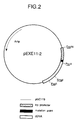
- the restriction map of the pEXE11-2 is shown in Fig. 2.
- 1 mg of recombinant plasmid DNA was obtained by culturing E. coli JM101(pEXE11-2) in 400 ml of a culture medium, as described in 6.1.5. 5 ⁇ g of the plasmid DNA was dissolved in 27 ⁇ l of water. 3 ⁇ l of a K buffer, 10 units of HpaI (Takara Shuzo., Ltd) and 10 units of BamHI (Takara Shuzo., Ltd) were added to the DNA solution. The DNA was digested at 37°C for 2 hours. The reaction product was electrophoresed through an agarose gel. 500 ng of a 700 bp DNA fragment was obtained.
- E. coli JM101(pEXE11-2) was deposited with Fermentation Research Institute, Agency of Industrial Science and technology, and was assigned the accession No. FERM BP-3494.
- E coli JM101(pEXE11-2) was cultured in 10 ml of a TY-amp culture medium [1 %(w/v) bactotrypton, 0.5% (w/v) yeast extract, 0.5% (w/v) NaCl, 50 ⁇ g/ml of ampicillin] at 37°C for 3 hours.
- a TY-amp culture medium [1 %(w/v) bactotrypton, 0.5% (w/v) yeast extract, 0.5% (w/v) NaCl, 50 ⁇ g/ml of ampicillin] at 37°C for 3 hours.
- 1 ml of the culture was inoculated into an M9-amp culture medium [0.6%(w/v) disodium hydrogenphosphate, 0.3% (w/v) potassium dihydrogenphosphate, 0.1 %(w/v) ammonium chloride, 0.05%(w/v) NaCl, 0.2%(w/v) glucose, 0.5%(w/v) casamino acid and 50 ⁇ g/ml of ampicillin] and cultured at 37°C for 3 hours.
- 3-indoleacryl acid was added to a final concentration of 1 ⁇ g/ml.
- the culture was further incubated for 2 hours.
- the culture was then harvested and suspended in 0.5 ml of 100 mM Tris-HCl buffer/pH8.0.
- the bacterial cells were sonicated by Ultrasonicgenerator (Nissei Co.) for 2 minutes while kept on ice.
- the sonicated cells were transferred to an Eppendorf tube.
- the tube was then microfuged at 12,000 rpm for 10 minutes.
- the supernatant was transferred to a fresh Eppendorf tube and the precipitate was suspended in 0.5 ml of 100 mM Tris-HCl buffer/pH8.0. 10 ⁇ l of each fraction was used as a sample for SDS-PAGE.
- the plate of SDS-PAGE was one manufactured by Dai-Ichi Kagaku Yakuhin Co., and SDS-PAGE was carried out by the method recommended by the manufacturer. Proteins were blotted from the gel using a nitrocellulose membrane (Schleicher & Schuell Co.). Western-blotting was carried out using Trans-Blot SD Cell (Bio-Rad Co.) according to the protocol supplied by the manufacturer.
- the nitrocellulose membrane was kept wet, immersed in 30 ml of blocking buffer [3%(w/v) gelatin, 20 mM Tris-HCl/pH7.5, 500 mM sodium chloride] and incubated with shaking at room temperature for one hour.
- the membrane was washed with water, immersed in 15 ml of a primary antibody solution [50 ⁇ l of antiserum to rat growth hormone (USB Co), 1% (w/v) gelatine, 20 mM Tris-HCl/pH7.5, 500 mM sodium chloride] and incubated with shaking at room temperature overnight.
- a primary antibody solution [50 ⁇ l of antiserum to rat growth hormone (USB Co), 1% (w/v) gelatine, 20 mM Tris-HCl/pH7.5, 500 mM sodium chloride]
- the membrane was then washed with water, immersed in 30 ml of TTBS buffer [0.05% (v/v) Tween-20, 20 mM Tris-HCl/pH7.5, 500 mM sodium chloride] and incubated with shaking at room temperature for 10 minutes.
- the membrane was immersed in 30 ml of a secondary antibody solution [10 ⁇ l of affinity purified goat antirabbit IgG(H+L) alkaline phosphatase conjugate human IgG adsorbed (Amersham Ltd), 1 %(w/v)gelatine, 20 mM Tris-HCl/pH7.5, 500 mM sodium chloride] and incubated with shaking at room temperature for one hour.
- the membrane was then washed with water, immersed in 30 ml of TTBS buffer and incubated with shaking at room temperature. This washing procedure using TTBS buffer was repeated twice.
- the membrane was immersed in a mixture of 25 ml of detection buffer (100 mM Tris-HCl/pH8.8, 100 mM sodium chloride, 5 mM magnesium chloride), plus 12.5 ⁇ l of 7.5%(w/v) nitroblue tetrazolium, 70% formamide, 35 ⁇ l of 5%(w/v) 5-bromo-4-chloro-3-indolylphosphate, and dimethylformamide anhyride solution, and incubated with shaking at room temperature for 5 minutes.
- a mink growth hormone protein band having a molecular weight of about 22,000 was found in the lanes of the supernatant and precipitate samples ( E. coli JM101 containing pEXE11-2) while there was no band corresponding to that molecular weight in the control ( E. coli JM101 host without pEXE11-2) lane.
- the presence of the mink growth hormone band in the supernatant sample lane suggested that mink growth hormone is produced in a soluble form.
- the bacterial cells of the present invention produce soluble mink growth hormone within the bacterial cells by culturing the E.coli transformant of the present invention.
- the amino acid sequence of the mink growth hormone is shown in SEQ ID No. 4.
- E. coli JM101(pEXE11-2) was cultured in a TY-amp culture medium at 37°C for 10 hours.
- the culture was treated by the method described in Agric.Biol.Chem. 55 : p1635 (1991) to give solubilized mink growth hormone.
- the mink growth hormone was loaded onto Q-Sepharose fast flow (Pharmacia Ltd) and purified by the protocol supplied by the manufacturer using SDS-PAGE. A single band was obtained.
- the mink growth hormone was tested for biological activity. Rats whose pituitary gland was removed were divided into 4 rats per group and 200 ⁇ g of the mink growth hormone was peritoneally injected per day into a pituitary-gland-removed rat over 10 days. Their weight change was measured and the results are shown in Table 1. Table 1 Weight Sample Control Recombinant Starting weight (average) 49.8g 50.4g Final weight (average) 51.2g 63.2g Increased weight (average) 1.4g 12.8g Control: Pituitary-gland-removed rat + 10 mM boric acid buffer Recombinant: Pituitary-gland-removed rat + Mink growth hormone obtained from E. coli JM101(pEXEI1-2) in 10 mM boric acid buffer
Landscapes
- Health & Medical Sciences (AREA)
- Chemical & Material Sciences (AREA)
- Life Sciences & Earth Sciences (AREA)
- Organic Chemistry (AREA)
- Endocrinology (AREA)
- General Health & Medical Sciences (AREA)
- Medicinal Chemistry (AREA)
- Molecular Biology (AREA)
- Biophysics (AREA)
- Biochemistry (AREA)
- Genetics & Genomics (AREA)
- Gastroenterology & Hepatology (AREA)
- Zoology (AREA)
- Proteomics, Peptides & Aminoacids (AREA)
- Toxicology (AREA)
- Bioinformatics & Cheminformatics (AREA)
- Engineering & Computer Science (AREA)
- Chemical Kinetics & Catalysis (AREA)
- General Chemical & Material Sciences (AREA)
- Nuclear Medicine, Radiotherapy & Molecular Imaging (AREA)
- Pharmacology & Pharmacy (AREA)
- Animal Behavior & Ethology (AREA)
- Public Health (AREA)
- Veterinary Medicine (AREA)
- Preparation Of Compounds By Using Micro-Organisms (AREA)
- Medicines That Contain Protein Lipid Enzymes And Other Medicines (AREA)
- Peptides Or Proteins (AREA)
Priority Applications (5)
| Application Number | Priority Date | Filing Date | Title |
|---|---|---|---|
| JP3192381A JP2859000B2 (ja) | 1991-07-31 | 1991-07-31 | ミンク成長ホルモン遺伝子、新規な組み換え体dna及びミンク成長ホルモンの製造法 |
| CA002079983A CA2079983A1 (en) | 1991-07-31 | 1992-10-06 | Isolated mink growth hormone genes, novel recombinant dna and methods for producing mink growth hormone |
| US07/963,331 US5334511A (en) | 1991-07-31 | 1992-10-16 | Isolated mink growth hormone genes, novel recombinant DNA and methods for producing mink growth hormone |
| DK92117726.7T DK0593794T3 (da) | 1991-07-31 | 1992-10-16 | Isolerede væksthormongener fra mink, hidtil ukendt rekombinant-DNA og fremgangsmåder til fremstilling af væksthormon fra mink |
| EP92117726A EP0593794B1 (en) | 1991-07-31 | 1992-10-16 | Isolated mink growth hormone genes, novel recombinant DNA and methods for producing mink growth hormone |
Applications Claiming Priority (4)
| Application Number | Priority Date | Filing Date | Title |
|---|---|---|---|
| JP3192381A JP2859000B2 (ja) | 1991-07-31 | 1991-07-31 | ミンク成長ホルモン遺伝子、新規な組み換え体dna及びミンク成長ホルモンの製造法 |
| CA002079983A CA2079983A1 (en) | 1991-07-31 | 1992-10-06 | Isolated mink growth hormone genes, novel recombinant dna and methods for producing mink growth hormone |
| US07/963,331 US5334511A (en) | 1991-07-31 | 1992-10-16 | Isolated mink growth hormone genes, novel recombinant DNA and methods for producing mink growth hormone |
| EP92117726A EP0593794B1 (en) | 1991-07-31 | 1992-10-16 | Isolated mink growth hormone genes, novel recombinant DNA and methods for producing mink growth hormone |
Publications (2)
| Publication Number | Publication Date |
|---|---|
| EP0593794A1 EP0593794A1 (en) | 1994-04-27 |
| EP0593794B1 true EP0593794B1 (en) | 1997-02-05 |
Family
ID=27426964
Family Applications (1)
| Application Number | Title | Priority Date | Filing Date |
|---|---|---|---|
| EP92117726A Expired - Lifetime EP0593794B1 (en) | 1991-07-31 | 1992-10-16 | Isolated mink growth hormone genes, novel recombinant DNA and methods for producing mink growth hormone |
Country Status (5)
| Country | Link |
|---|---|
| US (1) | US5334511A (da) |
| EP (1) | EP0593794B1 (da) |
| JP (1) | JP2859000B2 (da) |
| CA (1) | CA2079983A1 (da) |
| DK (1) | DK0593794T3 (da) |
Families Citing this family (1)
| Publication number | Priority date | Publication date | Assignee | Title |
|---|---|---|---|---|
| DE3236353C2 (de) * | 1982-10-01 | 1986-07-17 | Licentia Patent-Verwaltungs-Gmbh, 6000 Frankfurt | Gebläseantrieb, insbesondere für eine Dunstabzugshaube |
Family Cites Families (2)
| Publication number | Priority date | Publication date | Assignee | Title |
|---|---|---|---|---|
| GB8701848D0 (en) * | 1987-01-28 | 1987-03-04 | Celltech Ltd | Polypeptides |
| JPH04187089A (ja) * | 1990-11-22 | 1992-07-03 | Kikkoman Corp | ミンク成長ホルモン遺伝子 |
-
1991
- 1991-07-31 JP JP3192381A patent/JP2859000B2/ja not_active Expired - Fee Related
-
1992
- 1992-10-06 CA CA002079983A patent/CA2079983A1/en not_active Abandoned
- 1992-10-16 US US07/963,331 patent/US5334511A/en not_active Expired - Fee Related
- 1992-10-16 DK DK92117726.7T patent/DK0593794T3/da active
- 1992-10-16 EP EP92117726A patent/EP0593794B1/en not_active Expired - Lifetime
Also Published As
| Publication number | Publication date |
|---|---|
| US5334511A (en) | 1994-08-02 |
| DK0593794T3 (da) | 1997-08-25 |
| EP0593794A1 (en) | 1994-04-27 |
| JPH0530974A (ja) | 1993-02-09 |
| CA2079983A1 (en) | 1994-04-07 |
| JP2859000B2 (ja) | 1999-02-17 |
Similar Documents
| Publication | Publication Date | Title |
|---|---|---|
| US6027720A (en) | G-CSF conjugate | |
| EP0131843B1 (en) | Expression vectors for enhanced production of polypeptides, plasmids containing the vectors, hosts containing the plasmids, products manufactured thereby and related methods | |
| EP0644899B1 (en) | Production of recombinant human lactoferrin | |
| US6130318A (en) | hIL-4 mutant proteins used as antagonists or partial agonists of human interleukin 4 | |
| US5206154A (en) | Method of producing cecropins by microbiological techniques | |
| US5795968A (en) | Polypeptide derivatives of human granulocyte colony stimulating factor | |
| JP2528232B2 (ja) | 組換え蛋白質を活性化する方法 | |
| US5849881A (en) | Production of recombinant lactoferrin and lactoferrin polypeptides using cDNA sequences in various organisms | |
| EP0227110B1 (en) | Human immunoglobulin g fc region protein and production thereof | |
| US5766939A (en) | Production of recombinant lactoferrin and lactoferrin polypeptides using CDNA sequences in various organisms | |
| EP0204527A1 (en) | Removal of the N-terminal methionine from methionylproteins | |
| US5360894A (en) | C/EBP2 gene and recombinant C/EBP2 | |
| EP0593794B1 (en) | Isolated mink growth hormone genes, novel recombinant DNA and methods for producing mink growth hormone | |
| US5194592A (en) | Monoclonal antibodies to novel polypeptide derivatives of human granulocyte colony stimulating factor | |
| JP2506322B2 (ja) | Grf前駆体をコ―ドするdna | |
| EP0234592A1 (en) | Plasmid containing DNA fragment coding for human immunoglobulin G Fc region protein and use thereof for production of said protein | |
| KR100191224B1 (ko) | C말단 아미드화에 관여하는 효소 | |
| EP0514405B1 (en) | Strain ral-4, useful for production of small proteins and peptides | |
| JPH07147979A (ja) | 新規アミノペプチダーゼ | |
| US5359036A (en) | Growth hormone-like glycoproteins | |
| KR100195372B1 (ko) | C말단아미드화에관여하는효소 | |
| JP3003135B2 (ja) | ポリペプチドの発現ベクター及びポリペプチドの製造法 | |
| NO304698B1 (no) | Isolert mink-veksthormongen, rekombinant vektor inneholdende mink-veksthormongenet samt anvendelse av den rekombinante vektor | |
| JPH03130088A (ja) | 組み替えdna法によるポリペプチドの製造法 | |
| CA2103623A1 (en) | Novel recombinant dna, production of mink growth hormone, and a dna fragment used to express mink growth hormone gene and to secrete mink growth hormone |
Legal Events
| Date | Code | Title | Description |
|---|---|---|---|
| PUAI | Public reference made under article 153(3) epc to a published international application that has entered the european phase |
Free format text: ORIGINAL CODE: 0009012 |
|
| AK | Designated contracting states |
Kind code of ref document: A1 Designated state(s): DK SE |
|
| 17P | Request for examination filed |
Effective date: 19940808 |
|
| 17Q | First examination report despatched |
Effective date: 19951222 |
|
| GRAG | Despatch of communication of intention to grant |
Free format text: ORIGINAL CODE: EPIDOS AGRA |
|
| GRAH | Despatch of communication of intention to grant a patent |
Free format text: ORIGINAL CODE: EPIDOS IGRA |
|
| GRAH | Despatch of communication of intention to grant a patent |
Free format text: ORIGINAL CODE: EPIDOS IGRA |
|
| GRAA | (expected) grant |
Free format text: ORIGINAL CODE: 0009210 |
|
| AK | Designated contracting states |
Kind code of ref document: B1 Designated state(s): DK SE |
|
| REG | Reference to a national code |
Ref country code: DK Ref legal event code: T3 |
|
| K2C3 | Correction of patent specification (complete document) published |
Effective date: 19970205 |
|
| PLBE | No opposition filed within time limit |
Free format text: ORIGINAL CODE: 0009261 |
|
| STAA | Information on the status of an ep patent application or granted ep patent |
Free format text: STATUS: NO OPPOSITION FILED WITHIN TIME LIMIT |
|
| 26N | No opposition filed | ||
| PGFP | Annual fee paid to national office [announced via postgrant information from national office to epo] |
Ref country code: SE Payment date: 19991007 Year of fee payment: 8 |
|
| PGFP | Annual fee paid to national office [announced via postgrant information from national office to epo] |
Ref country code: DK Payment date: 19991013 Year of fee payment: 8 |
|
| PG25 | Lapsed in a contracting state [announced via postgrant information from national office to epo] |
Ref country code: DK Free format text: LAPSE BECAUSE OF NON-PAYMENT OF DUE FEES Effective date: 20001016 |
|
| PG25 | Lapsed in a contracting state [announced via postgrant information from national office to epo] |
Ref country code: SE Free format text: THE PATENT HAS BEEN ANNULLED BY A DECISION OF A NATIONAL AUTHORITY Effective date: 20001030 |
|
| REG | Reference to a national code |
Ref country code: DK Ref legal event code: EBP |
|
| EUG | Se: european patent has lapsed |
Ref document number: 92117726.7 |