EP0594244A2 - Kommunikationssystem und Nebenstellenanlage dafür - Google Patents
Kommunikationssystem und Nebenstellenanlage dafür Download PDFInfo
- Publication number
- EP0594244A2 EP0594244A2 EP93202876A EP93202876A EP0594244A2 EP 0594244 A2 EP0594244 A2 EP 0594244A2 EP 93202876 A EP93202876 A EP 93202876A EP 93202876 A EP93202876 A EP 93202876A EP 0594244 A2 EP0594244 A2 EP 0594244A2
- Authority
- EP
- European Patent Office
- Prior art keywords
- isdn
- private branch
- branch exchange
- terminal stations
- supported
- Prior art date
- Legal status (The legal status is an assumption and is not a legal conclusion. Google has not performed a legal analysis and makes no representation as to the accuracy of the status listed.)
- Granted
Links
Images
Classifications
-
- H—ELECTRICITY
- H04—ELECTRIC COMMUNICATION TECHNIQUE
- H04Q—SELECTING
- H04Q11/00—Selecting arrangements for multiplex systems
- H04Q11/04—Selecting arrangements for multiplex systems for time-division multiplexing
- H04Q11/0428—Integrated services digital network, i.e. systems for transmission of different types of digitised signals, e.g. speech, data, telecentral, television signals
- H04Q11/0435—Details
- H04Q11/0457—Connection protocols
-
- H—ELECTRICITY
- H04—ELECTRIC COMMUNICATION TECHNIQUE
- H04Q—SELECTING
- H04Q2213/00—Indexing scheme relating to selecting arrangements in general and for multiplex systems
- H04Q2213/09—Subscriber related equipment; Analog terminal
-
- H—ELECTRICITY
- H04—ELECTRIC COMMUNICATION TECHNIQUE
- H04Q—SELECTING
- H04Q2213/00—Indexing scheme relating to selecting arrangements in general and for multiplex systems
- H04Q2213/22—PBX
-
- H—ELECTRICITY
- H04—ELECTRIC COMMUNICATION TECHNIQUE
- H04Q—SELECTING
- H04Q2213/00—Indexing scheme relating to selecting arrangements in general and for multiplex systems
- H04Q2213/33—Special systems; Special service
-
- H—ELECTRICITY
- H04—ELECTRIC COMMUNICATION TECHNIQUE
- H04Q—SELECTING
- H04Q2213/00—Indexing scheme relating to selecting arrangements in general and for multiplex systems
- H04Q2213/392—Channel allocation - special rules
Definitions
- the invention relates to a communication system based on an integrated services digital network ISDN, comprising a private branch exchange coupled to a public network, the private branch exchange being coupled to a passive bus for connecting ISDN supported terminal stations which communicate with the public network via the private branch exchange, signalling being effected over an ISDN D-channel.
- ISDN integrated services digital network
- the invention likewise relates to a private branch exchange for a communication system based on an integrated services digital network ISDN, the private branch exchange being coupled to a passive bus for connecting ISDN supported terminal stations which can communicate with a public network via the private branch exchange, signalling being effected over an ISDN D-channel.
- a communication system of this type is known from the handbook entitled "Datenkommunikation", D. Conrads, Friedr. Vieweg & Sohn, 1990, pp. 199-219.
- an ISDN Integrated Services Digital Network
- On page 200 of said handbook a system architecture of an ISDN communication system is shown with an ISDN (Integrated Services Digital Network) as a public network, in which communication from one terminal station to the other is effected via local exchanges, and on page 201 there is described that communication between local exchanges and terminal station may be effected via so-termed 2B+D Basic Bate Access, without framing that is, over 2x64 kbit/sec B-channels and a 16 kbit/sec D-channel, or, as described on page 205, if a private branch exchange is linked to the network via so-termed Primary Rate Access, in Europe 30B+D, or at 2.048 Mbit/sec.
- Basic Rate Access may occur between the private branch exchange and terminal stations coupled to the private branch exchange.
- data or speech communication may be effected via ISDN B-channels through so-termed circuit or packet switched connections between subscribers, whereas the D-channel is used, for example, for signalling purposes.
- ISDN terminal stations can also be connected via network interfaces to a conventional public telephone network, a so-termed PSTN (Public Switched Telephone Network), via a private branch exchange.
- PSTN Public Switched Telephone Network
- Customary analog terminal stations are coupled to the S0 interface via what is commonly referred to as a Terminal Adapter.
- the S0 interface may be coupled to a so-termed U interface or U reference point via a Network Termination, from which reference point a connection to the PABX (Private Automatic Branch Exchange) or ISPBX (Integrated Services Private Branch Exchange) may be realised via an existing two-wire line.
- PABX Primary Automatic Branch Exchange
- ISPBX Integrated Services Private Branch Exchange
- ISDN supported terminal stations may also communicate with the ISPBX via an S0 interface by means of a four-wire line. This is shown in Fig. 98, on page 207, of said handbook for connecting, for example, a passive bus to the ISPBX.
- a passive bus is connected to the PABX by a U interface and a two-wire line.
- Various ISDN supported terminal stations a maximum of 8 according to CCITT Recommendations, two terminal stations of which can be active simultaneously via the B-channels, can be connected to the passive bus as this is described on page 204.
- Page 204 further states that only ISDN supported terminal stations can be connected directly to the S0 bus, and that conventional terminal stations such as X.21 or X.25 stations and the like, are to be connected to the S0 bus via a Terminal Adapter in which digitization and signal adjustment is effected.
- Terminal Adapters are often complicated and relatively expensive. Furthermore, an article in Philips Telecommunication and Data Systems Review, Vol.
- a communication system is characterized, in that also incompletely ISDN supported terminal stations can be connected to the passive bus, which stations communicate with the public network via the private branch exchange, the private branch exchange comprising switching means switching, on the basis of messages sent by the terminal stations, between an ISDN standard message handling protocol for the ISDN supported terminal stations and a firm-owned message handling protocol for the incompletely ISDN supported terminal stations.
- the many non-ISDN supported features may be simply utilized, whilst there should be considered that ISDN supported services may often be rendered relatively simply, whereas additional, non-ISDN supported services often require high software development costs.
- the invention is based on the recognition that in conventional, digital private branch exchanges there is a unique relation between B-channel and telephone number, whereas ISDN terminal stations are customarily connected to a passive bus with the common use of a B-channel. Partially adapting feature telephone sets to ISDN renders a simple hardware structure and suitable software structure possible.
- An embodiment of a communication system is characterized, in that communication between the incompletely ISDN supported terminal stations and the private branch exchange is effected via a standard ISDN layer-1 and to a standard ISDN address field via a layer-2, the switching means in the private branch exchange switching to the firm-owned message handling protocol on the basis of an ISDN Terminal Endpoint Identifier in the address field, the Terminal Endpoint Identifier having a predetermined value from a group of values in the incompletely ISDN supported terminal station.
- This achieves a physically equal handling of messages of ISDN supported and incompletely ISDN supported terminal stations, whereas the PABX is capable of supporting non-ISDN supported features when it employs firm-bound software.
- the so-termed control field and data field are distinguished, whereas the so-termed address field and the so-termed CRC (Cyclic Redundancy Check) are of equal structure.
- the TEI is the distinguishing field.
- SAPI Service Access Point Identifier
- TEI Terminal Endpoint Identifier
- the TEI is the distinguishing field.
- one or two TEIs from a group of 0-63 is used for the distinguishing TEIs, because ISDN dynamically assigns higher TEI numbers to ISDN supported terminal stations.
- a further embodiment of a communication system according to the invention is characterized, in that two incompletely ISDN supported terminal stations, or one incompletely ISDN supported terminal station and a maximum of seven ISDN supported terminal stations, or eight ISDN supported terminal stations, can be connected to the passive bus.
- a fixed B-channel is used for an incompletely ISDN supported terminal station and a variable B-channel for an ISDN supported terminal station, whereas in conformity with CCITT Recommendations a maximum of eight terminal stations are connected to the passive bus.
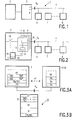
- Fig. 1 shows in a diagram a communication system 1 according to the invention, operating on the basis of an Integrated Services Digital Network ISDN.
- the communication system 1 comprises a private branch exchange 2, a PABX (Private Automatic Branch Exchange), coupled to a public network 3.
- the public network 3 may be a customary public network, a PSTN (Public Switched Telephone Network) and/or an ISDN (Integrated Services Digital Network) comprising digital exchanges.
- the private branch exchange 2 is coupled to a passive bus 4 via a so-termed ISDN S0 interface.
- the private branch exchange 2 being a conventional private branch exchange, the latter comprises an interface 5 for transforming a 4-wire full duplex link into a corresponding 2-wire link, the so-termed U interface.
- the private branch exchange 2 is capable of communicating on ISDN S0 level with an ISDN supported terminal station 6, which communication is performed in an ISDN Basic Rate Access 2B+D multiplexed channel structure, by which channel combined speech and data communication may be effected in various manners.
- the transmission rate on S0 level is 192 kbit/sec, 2x64 kbit/sec for the 2 B-channels, and 16 kbit/sec for the D-channel.
- the ISDN B-channels for which ISDN only provides ISDN layer-1 functions, i.e. transmission, activation and deactivation, supply, and on S0 level provides solutions to bus conflicts in a multipoint connection, are intended for transport of speech data and further data, whereas the ISDN D-channel is initially intended for signalling.
- ISDN provides ISDN layer-1, layer-2 and layer-3 functions. Since a separate channel, the D-channel, is used for signalling in ISDN, it is not only possible for signalling to be effected during a communication connection between subscribers, but, in addition, control information may be exchanged between ISDN units not having a communication link.
- CCIIT ISDN standards Nos. I.412, I.420 for Basic Rate Access, I.430 for a layer-1 specification of Basic Rate Access, I.440, I.441 for layer-2 specification and I.450, I.451 for layer-3 specification.
- an ISDN layer-2 frame comprises a so-termed Terminal Endpoint Identifier in a frame address field, which identifier is either set in a terminal station, or assigned by the exchange if a terminal station 6 connected to the S0 bus 4 wishes to communicate for the first time.
- Terminal Endpoint Identifier can be assigned or withdrawn and a scanning operation performed for Terminal Endpoint Identifiers.
- D. Conrads For further details reference be made to said handbook "Datenkommunikation" D. Conrads.
- a private branch exchange 2 for a communication system 1 is shown to have a plurality of line cards 9, 10, 11 in which for line card 9 the S0 interface is shown, coupled to the passive bus 4.
- the line cards 9, 10 and 11 comprise a processor 12 with a RAM memory 13 and a ROM memory 14.
- the ROM memory 14 may be PROM memory in which operating software for the line card 9 is stored, or also a Flash EPROM memory in which operating software for the line card 9 can be stored from a central processor 15 in the private branch exchange 2, which software also controls switching means 16 in the private branch exchange 2.
- the central processor 15 is also coupled to a RAM memory 17 and a ROM memory 18 for operating software.
- the processor 12 is coupled to a message buffer 19 for buffering layer-1 messages coming from the terminal stations 6, 7 and 8 or intended for the terminal stations 6, 7 and 8, and may determine with the aid of the software on layer-2 level stored in the ROM memory 14 which Terminal Endpoint Identifier is situated in a layer-2 address field. According to the invention the processor 12 determines on the basis hereof whether a standard ISDN layer-2 protocol available in the ROM memory 14 is to be handled, or a layer-2 protocol for an incompletely ISDN supported terminal station 8 which supports a large number of non-ISDN supported features which are expensive in view of software development, such as informative message display, informative signalling by means of LED indicators etc . For a further description of such features, reference be made to said article in PTR, Vol. 48, No. 1, 1990.
- the layer-3 protocol is different for ISDN supported and incompletely ISDN supported terminal stations, that is to say, for the functions relating to the connection set-up.
- Message handling and terminal handling above layer-3 that is to say, message handling on application level, is also different in the way that for firm-owned terminal stations a handling deviating from the ISDN standard is used to support said firm-owned features.
- a dedicated protocol may be used for relatively cheap stations. The invention therefore provides a message handling that depends on the environment, whereas still ISDN supported terminal stations and feature telephone sets or sets cheaper than ISDN supported telephone sets can be connected directly to the S0 bus 4, i.e . the private branch exchange 2 notices which type of terminal station is connected and acts accordingly.
- Fig. 3 shows communication between a private branch exchange 2 and a terminal station 6,7 or 8 in terms of an OSI layer model (Open Systems Interconnection). Respective layers 1, 2 and 3 are shown in the private branch exchange 11p, 12p as common layers for ISDN supported terminal stations and incompletely ISDN supported terminal stations, 12pI and 13pI for ISDN supported terminal stations, and 12pP and 13pP for firm-owned terminal stations, and in the terminal stations 6, 7 or 8 the layers 11e, 12e and 13e.
- a protocol between so-termed peer entities as described, for example, in ISDN I.440 is symbolically shown by way of a dotted line arrow ar.
- call handling ch1 and terminal handling th1 is shown in the private branch exchange 2 and the terminal stations 6, 7 and 8 respectively.
- the line cards 9, 10 and 11 automatically switch to the relevant protocol in the common layer 2, 1p2, on the basis of the Terminal Endpoint Identifier TEI in a message in the message buffer 19.
- Fig. 3B shows a structure of a layer-2 message, which comprises an address field 21 with a SAPI (Service Access Point Identifier) and a TEI (Terminal Endpoint Identifier), which is shared by ISDN supported and incompletely ISDN supported terminal stations. Furthermore, block checks such as CRC b1 and b2 are equal.
- the fields intended for control purposes, a control field CF and a data field DF are different for ISDN supported and incompletely ISDN supported terminal stations, as has been described.
- the control data field DF need not always be present. It should further be observed that in private branch exchanges there is often a fixed relation between B-channel and directory number.
Landscapes
- Engineering & Computer Science (AREA)
- Computer Networks & Wireless Communication (AREA)
- Sub-Exchange Stations And Push- Button Telephones (AREA)
- Exchange Systems With Centralized Control (AREA)
- Telephonic Communication Services (AREA)
- Data Exchanges In Wide-Area Networks (AREA)
Priority Applications (1)
| Application Number | Priority Date | Filing Date | Title |
|---|---|---|---|
| EP93202876A EP0594244B1 (de) | 1992-10-19 | 1993-10-13 | Kommunikationssystem und Nebenstellenanlage dafür |
Applications Claiming Priority (3)
| Application Number | Priority Date | Filing Date | Title |
|---|---|---|---|
| EP92203189 | 1992-10-19 | ||
| EP92203189 | 1992-10-19 | ||
| EP93202876A EP0594244B1 (de) | 1992-10-19 | 1993-10-13 | Kommunikationssystem und Nebenstellenanlage dafür |
Publications (3)
| Publication Number | Publication Date |
|---|---|
| EP0594244A2 true EP0594244A2 (de) | 1994-04-27 |
| EP0594244A3 EP0594244A3 (en) | 1997-04-09 |
| EP0594244B1 EP0594244B1 (de) | 2001-01-10 |
Family
ID=8210976
Family Applications (1)
| Application Number | Title | Priority Date | Filing Date |
|---|---|---|---|
| EP93202876A Expired - Lifetime EP0594244B1 (de) | 1992-10-19 | 1993-10-13 | Kommunikationssystem und Nebenstellenanlage dafür |
Country Status (4)
| Country | Link |
|---|---|
| US (1) | US5450396A (de) |
| EP (1) | EP0594244B1 (de) |
| JP (1) | JPH07312767A (de) |
| DE (1) | DE69329845T2 (de) |
Cited By (1)
| Publication number | Priority date | Publication date | Assignee | Title |
|---|---|---|---|---|
| GB2303021A (en) * | 1995-06-29 | 1997-02-05 | Siemens Ag | Coupling arrangement |
Families Citing this family (17)
| Publication number | Priority date | Publication date | Assignee | Title |
|---|---|---|---|---|
| DE59510279D1 (de) * | 1994-03-16 | 2002-08-22 | Siemens Ag | Verfahren zur Inbetriebnahme einer unterschiedlichen Übertragungswegen zuzuordnenden Schnittstelle in einem programmgesteuerten Kommunikationssystem |
| US5787087A (en) * | 1995-10-11 | 1998-07-28 | Visser; John A. | Method and apparatus for interconnecting a plurality of terminal equipments to the ISDN |
| US5673253A (en) * | 1996-02-29 | 1997-09-30 | Siemens Business Communication Systems | Dynamic allocation of telecommunications resources |
| KR100206465B1 (ko) * | 1996-05-04 | 1999-07-01 | 윤종용 | 사설교환기의 종합정보통신망 접속장치 및 방법 |
| US6044066A (en) | 1996-05-13 | 2000-03-28 | Adtran, Inc. | ISDN terminal equipment-resident mechanism for automatically determining service profile identifiers (SPIDS) for subdivided area code |
| US5715241A (en) * | 1996-05-13 | 1998-02-03 | Adtran, Inc. | ISDN terminal equipment-resident mechanism for determining service profile identifiers and associated telecommunication switch protocol |
| KR980013124A (ko) * | 1996-07-31 | 1998-04-30 | 김광호 | 다수 사설교환시스템의 네트워킹화 방법 |
| KR100281090B1 (ko) * | 1999-02-02 | 2001-01-15 | 서평원 | 프로토콜 메시지 전송 장치 및 그를 이용한 메시지 전송 방법 |
| US7393247B1 (en) | 2005-03-08 | 2008-07-01 | Super Talent Electronics, Inc. | Architectures for external SATA-based flash memory devices |
| US8102662B2 (en) | 2007-07-05 | 2012-01-24 | Super Talent Electronics, Inc. | USB package with bistable sliding mechanism |
| US7021971B2 (en) | 2003-09-11 | 2006-04-04 | Super Talent Electronics, Inc. | Dual-personality extended-USB plug and receptacle with PCI-Express or Serial-At-Attachment extensions |
| US8625270B2 (en) | 1999-08-04 | 2014-01-07 | Super Talent Technology, Corp. | USB flash drive with deploying and retracting functionalities using retractable cover/cap |
| US7836236B2 (en) * | 2004-02-12 | 2010-11-16 | Super Talent Electronics, Inc. | Extended secure-digital (SD) devices and hosts |
| US6854984B1 (en) * | 2003-09-11 | 2005-02-15 | Super Talent Electronics, Inc. | Slim USB connector with spring-engaging depressions, stabilizing dividers and wider end rails for flash-memory drive |
| JP2006019934A (ja) * | 2004-06-30 | 2006-01-19 | Kddi Corp | パケット交換網の呼設定方法 |
| US7104807B1 (en) | 2004-07-09 | 2006-09-12 | Super Talent Electronics, Inc. | Apparatus for an improved peripheral electronic interconnect device |
| US20090190277A1 (en) * | 2007-09-28 | 2009-07-30 | Super Talent Electronics, Inc. | ESD Protection For USB Memory Devices |
Family Cites Families (4)
| Publication number | Priority date | Publication date | Assignee | Title |
|---|---|---|---|---|
| JP2696509B2 (ja) * | 1987-05-13 | 1998-01-14 | 株式会社リコー | データ端末装置の制御方式 |
| US4835769A (en) * | 1988-01-29 | 1989-05-30 | Racal Data Communications Inc. | Passive bus communication for ISDN |
| US5008884A (en) * | 1988-05-10 | 1991-04-16 | Fujitsu Limited | Private automatic branch exchange system with line accessing number adding feature |
| US5278972A (en) * | 1990-11-21 | 1994-01-11 | At&T Bell Laboratories | Communication system for converting ISDN signaling protocol between local and public network having first group of mandatory elements and second group of non-mandatory elements |
-
1993
- 1993-10-13 DE DE69329845T patent/DE69329845T2/de not_active Expired - Fee Related
- 1993-10-13 EP EP93202876A patent/EP0594244B1/de not_active Expired - Lifetime
- 1993-10-18 US US08/138,945 patent/US5450396A/en not_active Expired - Fee Related
- 1993-10-18 JP JP5259865A patent/JPH07312767A/ja active Pending
Cited By (4)
| Publication number | Priority date | Publication date | Assignee | Title |
|---|---|---|---|---|
| GB2303021A (en) * | 1995-06-29 | 1997-02-05 | Siemens Ag | Coupling arrangement |
| US5883896A (en) * | 1995-06-29 | 1999-03-16 | Siemens Aktiengesellschaft | Arrangement for coupling optional auxiliary devices to terminal equipment of private branch exchanges |
| GB2303021B (en) * | 1995-06-29 | 1999-10-06 | Siemens Ag | Coupling arrangement |
| CN1085472C (zh) * | 1995-06-29 | 2002-05-22 | 西门子公司 | 耦合专用小交换机终端设备所选择的辅助设备的电信装置 |
Also Published As
| Publication number | Publication date |
|---|---|
| US5450396A (en) | 1995-09-12 |
| JPH07312767A (ja) | 1995-11-28 |
| DE69329845T2 (de) | 2001-07-19 |
| EP0594244B1 (de) | 2001-01-10 |
| EP0594244A3 (en) | 1997-04-09 |
| DE69329845D1 (de) | 2001-02-15 |
Similar Documents
| Publication | Publication Date | Title |
|---|---|---|
| US5450396A (en) | Communication system and a private branch exchange to be used in such a communication system | |
| US4757526A (en) | Signal transfer arrangement | |
| US5329572A (en) | Dial-up switching and transmission of broadband communication channels through a local exchange | |
| AU719819B2 (en) | Procedure and system for ensuring emergency communication | |
| EP0307401A1 (de) | Verfahren und anordnung für variable betriebssicherheit in einem fernmeldevermittlungssystem. | |
| US6069948A (en) | Procedure and system for ensuring emergency communication | |
| EP0642282A1 (de) | Vorrichtung zur Kommunikation zwischen privaten Fernsprechnetzen und dafür verwendbarer Emulator | |
| WO1997023115A1 (en) | Method and arrangement for establishing bearer capability information | |
| EP0542705A2 (de) | Anordnung zur Anpassung einer Schnittstelle zu einem digitalen Netz | |
| EP0661901B1 (de) | Lokales ISDN Kommunikationssystem | |
| AU723334B2 (en) | Procedure for scanning or disconnecting a module line in a V5.2 access node | |
| US5805570A (en) | Method of simulating an ISDN-BRI central office switch using a single microcomputer | |
| EP1036471B1 (de) | Verfahren zur konzentrierung von teilnehmern in einem telefonnetz | |
| EP0255169A2 (de) | Fernmeldevermittlungsstelle-Einrichtung für Gemeinschaftsanschlüsse mit ISDN-Techniken | |
| JP3081012B2 (ja) | サービス総合ディジタル通信網の加入者領域における装置 | |
| US6466665B1 (en) | Method for concentrating subscribers in a local exchange | |
| ES2213073T3 (es) | Transmision de datos a traves del canal b de isdn entre un terminal y un procesador de conmutacion. | |
| Casaca | Integrated services networks | |
| KR950000678B1 (ko) | 회선/패킷 통합 스위칭 시스템 | |
| Davies et al. | User-network interfaces | |
| Boulter | Digital Signalling in the Local Loop | |
| Szpak | ISDN and the move to integrated communications-an introduction | |
| GB2255876A (en) | Telecommunications system | |
| Bocker | Subscriber Access | |
| KR20010045914A (ko) | 다중화장치에서 종합정보통신망 가입자의 디지털 루프캐리어서비스방법 |
Legal Events
| Date | Code | Title | Description |
|---|---|---|---|
| PUAI | Public reference made under article 153(3) epc to a published international application that has entered the european phase |
Free format text: ORIGINAL CODE: 0009012 |
|
| AK | Designated contracting states |
Kind code of ref document: A2 Designated state(s): DE FR GB IT |
|
| RAP1 | Party data changed (applicant data changed or rights of an application transferred) |
Owner name: N.V. PHILIPS' GLOEILAMPENFABRIEKEN |
|
| PUAL | Search report despatched |
Free format text: ORIGINAL CODE: 0009013 |
|
| AK | Designated contracting states |
Kind code of ref document: A3 Designated state(s): DE FR GB IT |
|
| 17P | Request for examination filed |
Effective date: 19971009 |
|
| RAP3 | Party data changed (applicant data changed or rights of an application transferred) |
Owner name: KONINKLIJKE PHILIPS ELECTRONICS N.V. |
|
| 17Q | First examination report despatched |
Effective date: 19981104 |
|
| GRAG | Despatch of communication of intention to grant |
Free format text: ORIGINAL CODE: EPIDOS AGRA |
|
| GRAG | Despatch of communication of intention to grant |
Free format text: ORIGINAL CODE: EPIDOS AGRA |
|
| GRAH | Despatch of communication of intention to grant a patent |
Free format text: ORIGINAL CODE: EPIDOS IGRA |
|
| GRAH | Despatch of communication of intention to grant a patent |
Free format text: ORIGINAL CODE: EPIDOS IGRA |
|
| GRAA | (expected) grant |
Free format text: ORIGINAL CODE: 0009210 |
|
| AK | Designated contracting states |
Kind code of ref document: B1 Designated state(s): DE FR GB IT |
|
| REF | Corresponds to: |
Ref document number: 69329845 Country of ref document: DE Date of ref document: 20010215 |
|
| ITF | It: translation for a ep patent filed | ||
| ET | Fr: translation filed | ||
| PLBE | No opposition filed within time limit |
Free format text: ORIGINAL CODE: 0009261 |
|
| REG | Reference to a national code |
Ref country code: GB Ref legal event code: IF02 |
|
| 26N | No opposition filed | ||
| REG | Reference to a national code |
Ref country code: GB Ref legal event code: 746 Effective date: 20020911 |
|
| REG | Reference to a national code |
Ref country code: FR Ref legal event code: D6 |
|
| PGFP | Annual fee paid to national office [announced via postgrant information from national office to epo] |
Ref country code: DE Payment date: 20031215 Year of fee payment: 11 |
|
| PGFP | Annual fee paid to national office [announced via postgrant information from national office to epo] |
Ref country code: FR Payment date: 20041027 Year of fee payment: 12 |
|
| PGFP | Annual fee paid to national office [announced via postgrant information from national office to epo] |
Ref country code: GB Payment date: 20041028 Year of fee payment: 12 |
|
| PG25 | Lapsed in a contracting state [announced via postgrant information from national office to epo] |
Ref country code: DE Free format text: LAPSE BECAUSE OF NON-PAYMENT OF DUE FEES Effective date: 20050503 |
|
| PG25 | Lapsed in a contracting state [announced via postgrant information from national office to epo] |
Ref country code: IT Free format text: LAPSE BECAUSE OF NON-PAYMENT OF DUE FEES Effective date: 20051013 Ref country code: GB Free format text: LAPSE BECAUSE OF NON-PAYMENT OF DUE FEES Effective date: 20051013 |
|
| GBPC | Gb: european patent ceased through non-payment of renewal fee |
Effective date: 20051013 |
|
| PG25 | Lapsed in a contracting state [announced via postgrant information from national office to epo] |
Ref country code: FR Free format text: LAPSE BECAUSE OF NON-PAYMENT OF DUE FEES Effective date: 20060630 |
|
| REG | Reference to a national code |
Ref country code: FR Ref legal event code: ST Effective date: 20060630 |