EP0594678B1 - Production de polyalcanoate - Google Patents
Production de polyalcanoate Download PDFInfo
- Publication number
- EP0594678B1 EP0594678B1 EP92914593A EP92914593A EP0594678B1 EP 0594678 B1 EP0594678 B1 EP 0594678B1 EP 92914593 A EP92914593 A EP 92914593A EP 92914593 A EP92914593 A EP 92914593A EP 0594678 B1 EP0594678 B1 EP 0594678B1
- Authority
- EP
- European Patent Office
- Prior art keywords
- designated
- ketothiolase
- genes
- fragment
- pha
- Prior art date
- Legal status (The legal status is an assumption and is not a legal conclusion. Google has not performed a legal analysis and makes no representation as to the accuracy of the status listed.)
- Expired - Lifetime
Links
Images



















Classifications
-
- C—CHEMISTRY; METALLURGY
- C12—BIOCHEMISTRY; BEER; SPIRITS; WINE; VINEGAR; MICROBIOLOGY; ENZYMOLOGY; MUTATION OR GENETIC ENGINEERING
- C12N—MICROORGANISMS OR ENZYMES; COMPOSITIONS THEREOF; PROPAGATING, PRESERVING, OR MAINTAINING MICROORGANISMS; MUTATION OR GENETIC ENGINEERING; CULTURE MEDIA
- C12N9/00—Enzymes; Proenzymes; Compositions thereof; Processes for preparing, activating, inhibiting, separating or purifying enzymes
- C12N9/0004—Oxidoreductases (1.)
- C12N9/0006—Oxidoreductases (1.) acting on CH-OH groups as donors (1.1)
-
- C—CHEMISTRY; METALLURGY
- C12—BIOCHEMISTRY; BEER; SPIRITS; WINE; VINEGAR; MICROBIOLOGY; ENZYMOLOGY; MUTATION OR GENETIC ENGINEERING
- C12N—MICROORGANISMS OR ENZYMES; COMPOSITIONS THEREOF; PROPAGATING, PRESERVING, OR MAINTAINING MICROORGANISMS; MUTATION OR GENETIC ENGINEERING; CULTURE MEDIA
- C12N15/00—Mutation or genetic engineering; DNA or RNA concerning genetic engineering, vectors, e.g. plasmids, or their isolation, preparation or purification; Use of hosts therefor
- C12N15/09—Recombinant DNA-technology
- C12N15/11—DNA or RNA fragments; Modified forms thereof; Non-coding nucleic acids having a biological activity
- C12N15/52—Genes encoding for enzymes or proenzymes
-
- C—CHEMISTRY; METALLURGY
- C12—BIOCHEMISTRY; BEER; SPIRITS; WINE; VINEGAR; MICROBIOLOGY; ENZYMOLOGY; MUTATION OR GENETIC ENGINEERING
- C12N—MICROORGANISMS OR ENZYMES; COMPOSITIONS THEREOF; PROPAGATING, PRESERVING, OR MAINTAINING MICROORGANISMS; MUTATION OR GENETIC ENGINEERING; CULTURE MEDIA
- C12N15/00—Mutation or genetic engineering; DNA or RNA concerning genetic engineering, vectors, e.g. plasmids, or their isolation, preparation or purification; Use of hosts therefor
- C12N15/09—Recombinant DNA-technology
- C12N15/63—Introduction of foreign genetic material using vectors; Vectors; Use of hosts therefor; Regulation of expression
- C12N15/79—Vectors or expression systems specially adapted for eukaryotic hosts
- C12N15/82—Vectors or expression systems specially adapted for eukaryotic hosts for plant cells, e.g. plant artificial chromosomes (PACs)
- C12N15/8241—Phenotypically and genetically modified plants via recombinant DNA technology
- C12N15/8242—Phenotypically and genetically modified plants via recombinant DNA technology with non-agronomic quality (output) traits, e.g. for industrial processing; Value added, non-agronomic traits
- C12N15/8243—Phenotypically and genetically modified plants via recombinant DNA technology with non-agronomic quality (output) traits, e.g. for industrial processing; Value added, non-agronomic traits involving biosynthetic or metabolic pathways, i.e. metabolic engineering, e.g. nicotine, caffeine
-
- C—CHEMISTRY; METALLURGY
- C12—BIOCHEMISTRY; BEER; SPIRITS; WINE; VINEGAR; MICROBIOLOGY; ENZYMOLOGY; MUTATION OR GENETIC ENGINEERING
- C12N—MICROORGANISMS OR ENZYMES; COMPOSITIONS THEREOF; PROPAGATING, PRESERVING, OR MAINTAINING MICROORGANISMS; MUTATION OR GENETIC ENGINEERING; CULTURE MEDIA
- C12N9/00—Enzymes; Proenzymes; Compositions thereof; Processes for preparing, activating, inhibiting, separating or purifying enzymes
- C12N9/10—Transferases (2.)
- C12N9/1025—Acyltransferases (2.3)
- C12N9/1029—Acyltransferases (2.3) transferring groups other than amino-acyl groups (2.3.1)
-
- C—CHEMISTRY; METALLURGY
- C12—BIOCHEMISTRY; BEER; SPIRITS; WINE; VINEGAR; MICROBIOLOGY; ENZYMOLOGY; MUTATION OR GENETIC ENGINEERING
- C12P—FERMENTATION OR ENZYME-USING PROCESSES TO SYNTHESISE A DESIRED CHEMICAL COMPOUND OR COMPOSITION OR TO SEPARATE OPTICAL ISOMERS FROM A RACEMIC MIXTURE
- C12P7/00—Preparation of oxygen-containing organic compounds
- C12P7/62—Carboxylic acid esters
- C12P7/625—Polyesters of hydroxy carboxylic acids
Definitions
- This invention relates to the production of polyhydroxyalkanoate by the culture of microorganisms which produce same.
- Poly-3-hydroxybutyrate is a linear polyester of D(-)-3-hydroxybutyrate. It was first dicovered in Bacillus megaterium in 1925. Polyhydroxybutyrate accumulates in intracellular granules of a wide variety of bacteria. The granules appear to be membrane bound and can be stained with Sudan Black dye. The polymer is produced under conditions of nutrient limitation and acts as a reserve of carbon and energy. The molecular weight of the polyhydroxybutyrate varies from around 50,000 to greater than 1,000,000, depending on the microorganisms involved, the conditions of growth, and the method employed for extraction of the polyhydroxybutyrate. Polyhydroxybutyrate is an ideal carbon reserve as it exists in the cell in a highly reduced state, (it is virtually insoluble), and exerts negligible osmotic pressure.
- Polyhydroxybutyrate and related poly-hydroxyalkanoates such as poly-3-hydroxyvalerate and poly-3-hydroxyoctanoate, are biodegradable thermoplastics of considerable commercial importance.
- polyhydroxyalkanoate as used hereinafter includes copolymers of polyhydroxybutyrate with other polyhydroxyalkanoates such as poly-3-hydroxyvalerate.
- Polyhydroxyalkanoate is biodegradable and is broken down rapidly by soil microorganisms. It is thermoplastic (it melts at 180°C) and can readily be moulded into diverse forms using technology well-established for the other thermoplastics materials such as high-density polyethylene which melts at around the same temperature (190°C). The material is ideal for the production of biodegradable packaging which will degrade in landfill sites and sewage farms.
- the polymer is biocompatible, as well as biodegradable, and is well tolerated by the mammalian, including human, body, its degradation product, 3-hydroxybutyrate, is a normal mammalian metabolite.
- polyhydroxyalkanoate degrades only slowly in the body and its medical uses are limited to those applications where long term degradation is required.
- Polyhydroxyalkanoate produced by the microorganism Alcaligenes eutrophus , is manufactured, as a copolymer with of polyhydroxybutyrate and polhydroxyvalerate, by Imperial Chemical Industries PLC and sold under the Trade mark BIOPOL. It is normally supplied in the form of pellets for thermoprocessing.
- polyhydroxyalkanoate is more expensive to manufacture by existing methods than, say, polyethylene. It is, therefore, desirable that new, more economic production of polyhydroxyalkanoate be provided.
- WO-A-9100917 describes a method for synthesizing polyhydroxyalkanoate. It also describes the isolation of genes encoding the three enzymes ⁇ -ketothiolase, acetyl-Co-A-reductase and PHB polymerase from Zoogloea ramigera , Alcaligenes eutrophus , Nocardia salmonicdur and Pseudomonas oleovorans.
- An object of the present invention is to provide materials and a method for the effecient production of polyhydroxyalkanoate by the provision of further genes for the synthesis thereof.
- gene fragments obtainable by isolation from the bacterium Chromatium vinosum and encoding PHA polymerase as defined in Fig 3 and acetoacetyl CoA reductase as defined in Fig 5 and ⁇ -ketothiolase
- the C.vinosum is of the strain designated D, available to the public from the Deutsche Sammlung für Mikroorganismen under the Accession Number 180.
- the invention also provides a 16.5kb EcoR1 fragment of C.vinosum DNA, designated PP10, as shown hereinafter in Figure 1 or Figure 2, as a being hybridizable to a 5.2kb SmaI/EcoR1 fragment, designated SE52 isolated from Alcaligenes eutrophus and known to contain all three of said genes responsible for expression of PHAs.
- PP10 16.5kb EcoR1 fragment of C.vinosum DNA
- SE52 isolated from Alcaligenes eutrophus and known to contain all three of said genes responsible for expression of PHAs.
- the invention further provides a fragment of the said PP10 fragment, designated SE45, encoding the PRA-synthase and ⁇ -ketothiolase genes and a region, designated SB24, encoding the acetoacetyl CoA reductase gene.
- the invention also provides a recombinant genome of a microorganism, preferably a bacterium or a plant, which contains one or more of said fragments designated PP10, SE45 and region SB24.
- the invention provides a method for the manufacture of PHAs, comprising culturing a bacterium other than Chromatium vinosum having stably incorporated within its genome by transformation one or more genes selected from genes encoding PNR synthases and ⁇ -ketothidase as defined in Fig 3 and Acetoacetyl COA reductase as defined in Fig 5 from Chromatium vinosum .
- biosynthesis of polyhydroxyalkanoate from the substrate, acetyl-COA involves three enzyme-catalysed steps.
- the three enzymes involved are ⁇ -ketothiolase, acetoactyl-CoA-reductase and polyhydroxy-butyrate-synthase, the genes for which have been cloned from Chromatium vinosum.
- the three genes are known to facilitate production of polyhydroxyalkanoates, the reactions involved being represented as follows:.
- Figure 1 is the physical map of the 16.5 kb EcoR1 fragment of Chromatium vinosum DNA, designated PP10. The positions of the restriction sites and positions and names of the sub-fragments are shown. PHA-synthase and ⁇ -ketothiolase genes are located in fragment SE45 and acetoacetyl CoA reductase in region SB24;
- Figure 2 is the map of PP10 showing the positions of the ⁇ -ketothiolase and acetoacetyl CoA reductase genes and of the PHA-synthase gene open reading frames ORF2 and ORF3.
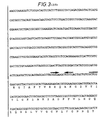
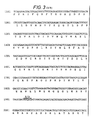
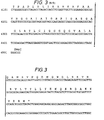
- Figure 3 is the complete nucleotide sequence of fragment SE45.
- the transcriptional start sites and terminators for the ⁇ -ketothiolase gene and for ORF3 and ORF 3 are shown.
- the positions of the "-10" and “-35" sequences are also shown, as are the positions of the putative ribosome binding sites ("s/d”).
- Translational start and stop (*) codon are also marked and the amino acid sequences of the ⁇ -ketothiolase, ORF2 and ORF3 are given.
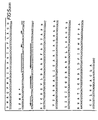
- Figure 4 shows the alignment of the amino acid sequences of Chromatium vinosum ORF3 with PHA polymerase of Alcaligenes eutrophus and PHA polymerases 1 and 2 of Pseudomonas oleovorans.
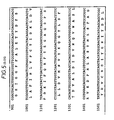
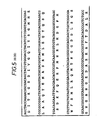
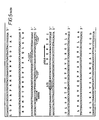
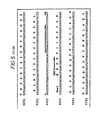
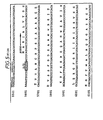
- Figure 5 shows the complete nucleotide sequence of the DNA encoding PHA synthesis genes from Chromatium vinosum .
- the positions of PHA polymerase (phbc), acetoacetyl CoA reductase (phbB) and ketothiolase (phbA) genes are shown, and also the positions of ORF2, ORF4, ORF5 and ORF7.
- Figure 6 shows the alignment of the amino acid sequences of ketothiolases encoded by C.vinsoum (C.v.), A.eutrophus (A.e.), Zoogloea ramigera (Z.r.), Escherichia coli (E.c.), Saccharomyces uvarum (S.u.) and Rattus norvegicus (R.n.)
- Figure 7 shows the alignment of the amino acid sequences of acetoacetyl CoA reductases encoded by C.vinosum (C.v.), A.eutrophus (A.e.) and Z.ramigera (Z.r.)
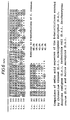
- Figure 8 is a Table (Table 1) showing the heterologous expression in Escherichia coli of DNA fragments from C.vinosum . Activities of PHA biosynthetic enzymes expressed by the different fragments are shown. The levels of PHA accumulated in E.coli transformed with the fragments are also given.
- the organism C.vinosum was a gift from Dr J. Imhoff of the University of Bonn, Germany.
- SE52 SmaI/EcoRI fragment (SE52), which codes for all three PHA biosynthetic genes has previously been isolated from Alcaligenes eutrophus [Schubert et al., J. Bacteriol. 170 (1988)]. This fragment was used to detect PHA biosynthetic genes of C.vinosum. EcoRI restricted genomic DNA of C.vinosum was blotted on to a nylon membrane and hybridized with biotinylated SE52 DNA. One signal appeared, representing a DNA fragment of 16.5 kb.
- a ⁇ L47 gene bank from C.vinosum genomic DNA was prepared and plates with approximately 800 plaques were blotted on to nylon membranes and hybridized with biotinylated SE52 DNA.
- One positive recombinant phage was isolated, which harboured a 16.5 kb EcoRI fragment, which was designated PP10 ( Figure 1).
- PP10 and a 9.4 kb EcoRI/PstI subfragment (EP94) of PP10 With PP10 and a 9.4 kb EcoRI/PstI subfragment (EP94) of PP10, the phenotype of the wild type could be restored in PHA-negative mutants of A.eutrophus.
- fragment EP94 ( Figure 1) was treated with Exonuclease Bal31, ligated to Bluescript SK and transferred to E.coli Xl-1 Blue.
- a clone was isolated which harboured Bluescript SK with a 5.5 kb fragment (B55) and which expressed ⁇ -ketothiolase and NADH-dependent reductase activity. 3146 base pairs of B55 were part of the SE45 fragment. The other part (approximately 2350 base pairs, SB24) has been sequenced applying the primer hopping strategy. The sequence and the position of the reductase gene on SB24 are known.
- the nucleotide sequence of SE45 is shown in Figure 3.
- the fragment size of SE45 is 4506 bp.
- ORF3 The fragment sequence corresponding to the PHB synthase gene is designated as ORF3.
- the determination of synthase activity of deleted plasmids containing SE45 gave evidence that expression of ORF2 is also required for expression of synthase activity.
- ORF2 and ORF3 are transcribed as an operon.
- the determination of the transcription start site of ORF2 was conducted by S1 nuclease mapping. This site occurs at bp 3059 from the 3' end of SE45.
- a putative "-10" site, given as 5'-ACAGAT-3' occurs at bp 3073-3078, and a "-35" site occurs at bp 3092-3099.
- a putative ribosome binding site occurs at bp 3040-3045.
- the translation start codon commences at bp 3030.
- the translation stop codon occurs at bp 1958.
- the putative ribosome binding site of ORF3 occurs at bp 1907-1911.
- the translation start ATG for ORF3 occurs at bp 1899, and the translation stop codon at bp 833.
- Putative transcriptional terminator sites occur at hairpin structures at bp 773-786 and 796-823.
- ORF2 encodes a polypeptide of 358 amino acids with a MW of 40525 da.
- ORF3 encodes a polypeptide of 356 amino acids with a MW of 39739 da.
- the gene size of ORF3 is approximately 30% smaller as compared with the PHA polymerase genes of A.eutrophus and P. oleovorans.
- the alignments of the primary structures of C.vinosum PHA polymerase, A.eutrophus PHA polymerase and P.oleovorans PHA polymerases 1 and 2 are shown in Figure 4.
- ORF3 C.vinosum polymerase is shorter than the other polymerase enzymes, lacking the first 172 amino acids from the NH 2 terminus of the A.eutrophus PHA polymerase, and the first 148 amino acids of the Pseudomonas polymerases.
- the amino acid sequence of ORF3 exhibited an overall homology of 25% to the polymerase of A.eutrophus, with certain discrete regions of conserved sequence.
- ORF2 The amino acid sequence of ORF2 showed no significant homology to other enzymes in the NBRF gene bank.
- ketothiolase and acetoacetyl CoA reductase genes are transcribed in opposite direction to ORF2 and ORF3 ( Figure 2).
- a "-10" site in the identified ketothiolase promoter occurs at bp 3105-3111, and a "-35" site at bp 3082-3086.
- a putative ribosome binding site occurs at bp 3167-3171.
- the translation starts signal occurs at bp 3181.
- the translation stop codon occurs at bp 4361.
- the Chromatium vinosum PHA synthetic genes therefore differ from the PHA synthetic genes of A.eutrophus and P.oleovorans in the following respects:
- ORF4 and ORF5 Two open reading frames (ORF4 and ORF5) appear, and downstream from the reductase gene an ORF7 has been identified ( Figure 5). No additional ORFs were identified in the PHA coding region of A.eutrophus .
Landscapes
- Health & Medical Sciences (AREA)
- Life Sciences & Earth Sciences (AREA)
- Genetics & Genomics (AREA)
- Engineering & Computer Science (AREA)
- Chemical & Material Sciences (AREA)
- Organic Chemistry (AREA)
- Zoology (AREA)
- Wood Science & Technology (AREA)
- Bioinformatics & Cheminformatics (AREA)
- Biotechnology (AREA)
- Biomedical Technology (AREA)
- General Engineering & Computer Science (AREA)
- Molecular Biology (AREA)
- General Health & Medical Sciences (AREA)
- Microbiology (AREA)
- Biochemistry (AREA)
- Biophysics (AREA)
- Plant Pathology (AREA)
- Physics & Mathematics (AREA)
- Medicinal Chemistry (AREA)
- Chemical Kinetics & Catalysis (AREA)
- General Chemical & Material Sciences (AREA)
- Nutrition Science (AREA)
- Cell Biology (AREA)
- Preparation Of Compounds By Using Micro-Organisms (AREA)
- Micro-Organisms Or Cultivation Processes Thereof (AREA)
- Biological Depolymerization Polymers (AREA)
- Polyesters Or Polycarbonates (AREA)
- Breeding Of Plants And Reproduction By Means Of Culturing (AREA)
Claims (12)
- Fragments de gène susceptibles d'être obtenus par isolement à partir de la bactérie chromatium vinosum, lesdits fragments de gène codant pour la polyhydroxyalcanoate (PHA) synthétase et la β-cétothiolase comme définies sur la figure 3 et l'acétoacétyl-CoA réductase comme définie sur la figure 5.
- Fragments de gène selon la revendication 1 dans lesquels Chromatium vinosum est de la souche appelée D, disponible au public auprès de la Deutsche Sammlung für Mikroorganismen sous le numéro d'entrée 180.
- Fragment EcoRI de 16,5 kb d'ADN de Chromatium vinosum, appelé PP10, comme décrit sur la figure 1 ou la figure 2, pouvant être hybridé à un fragment SmaI / EcoRI de 5,2 kb, appelé SE52 isolé à partir de Alcaligenes eutrophus et connus comme contenant les gènes codant pour la PHA-synthétase, l'acétoacétyl-CoA réductase et la β-cétothiolase.
- Fragment du fragment PP10 selon la revendication 3, appelé SE45, codant pour les gênes de la PHA synthétase et de la β-cétothiolase.
- Fragment du fragment PP10 selon la revendication 3, appelé SB24, codant pour le gène de l'acétoacétyl-CoA réductase.
- Génome recombinant qui contient un ou plusieurs des fragments appelés PP10, SE45 et la région SB24 selon les revendications 3, 4 et 5, respectivement.
- Bactérie ayant, incorporé dans son génome, un ou plusieurs des fragments appelés PP10, SE45 et la région SB24 selon les revendications 3, 4 et 5, respectivement.
- Plante ayant, incorporé de manière stable dans son génome par transformation, un ou plusieurs des fragments appelés PP10, SE45 et la région SB24 selon les revendications 3, 4 et 5, respectivement.
- Procédé pour la fabrication de polyhydroxyalcanoates, comprenant la culture d'une bactérie autre que Chromatium vinosum ayant, incorporé de manière stable dans son génome par transformation, un ou plusieurs gènes choisis parmi les gènes codant pour la PHA-synthétase et la β-cétothiolase comme définies sur la figure 3 et l'acétoacétyl-CoA réductase comme définie sur la figure 5 de Chromatium vinosum.
- Gène codant pour la β-cétothiolase ayant la séquence de nucléotides décrite sur la figure 3.
- Gène codant pour la polyhydroxyalcanoate synthétase (phbC) ayant la séquence de nucléotides décrite sur la figure 5.
- Gène codant pour l'acétoacétyl-CoA réductase (phbB) ayant la séquence de nucléotides décrite sur la figure 5.
Applications Claiming Priority (3)
| Application Number | Priority Date | Filing Date | Title |
|---|---|---|---|
| GB9115245 | 1991-07-16 | ||
| GB919115245A GB9115245D0 (en) | 1991-07-16 | 1991-07-16 | Production of polyalkanoate |
| PCT/GB1992/001291 WO1993002194A1 (fr) | 1991-07-16 | 1992-07-15 | Production de polyalcanoate |
Publications (2)
| Publication Number | Publication Date |
|---|---|
| EP0594678A1 EP0594678A1 (fr) | 1994-05-04 |
| EP0594678B1 true EP0594678B1 (fr) | 2003-10-01 |
Family
ID=10698374
Family Applications (1)
| Application Number | Title | Priority Date | Filing Date |
|---|---|---|---|
| EP92914593A Expired - Lifetime EP0594678B1 (fr) | 1991-07-16 | 1992-07-15 | Production de polyalcanoate |
Country Status (9)
| Country | Link |
|---|---|
| US (2) | US6515205B1 (fr) |
| EP (1) | EP0594678B1 (fr) |
| JP (1) | JPH07501926A (fr) |
| AT (1) | ATE251218T1 (fr) |
| AU (1) | AU671595B2 (fr) |
| CA (1) | CA2113432C (fr) |
| DE (1) | DE69233223T2 (fr) |
| GB (1) | GB9115245D0 (fr) |
| WO (1) | WO1993002194A1 (fr) |
Families Citing this family (35)
| Publication number | Priority date | Publication date | Assignee | Title |
|---|---|---|---|---|
| US5245023A (en) | 1987-06-29 | 1993-09-14 | Massachusetts Institute Of Technology | Method for producing novel polyester biopolymers |
| GB9108756D0 (en) * | 1991-04-24 | 1991-06-12 | Ici Plc | Production of polyalkanoate in plants |
| BR9206297A (pt) * | 1991-07-19 | 1995-10-17 | Univ Michigan State | Plantas transgênicas produzindo poli-hidroxialcanoatos |
| US5610041A (en) * | 1991-07-19 | 1997-03-11 | Board Of Trustees Operating Michigan State University | Processes for producing polyhydroxybutyrate and related polyhydroxyalkanoates in the plastids of higher plants |
| US5646167A (en) * | 1993-01-06 | 1997-07-08 | Ciba-Geigy Corporation | Arylsulfonamido-substituted hydroxamix acids |
| RU2144047C1 (ru) * | 1994-01-28 | 2000-01-10 | Дзе Проктер Энд Гэмбл Компани | Биоразлагаемые сополимеры, пластмассовые и впитывающие изделия, содержащие биоразлагаемые сополимеры |
| ZA95627B (en) * | 1994-01-28 | 1995-10-05 | Procter & Gamble | Biodegradable copolymers and plastic articles comprising biodegradable copolymers |
| ID23491A (id) * | 1994-01-28 | 1995-09-07 | Procter & Gamble | Kopolimer-kopolimer yang dapat dibiodegradasi dan baha-bahan plastik yang terdiri dari kopolimer-kopolimer yang dapat dibiodegradasi |
| SG49096A1 (en) * | 1994-01-28 | 1998-05-18 | Procter & Gamble | Biodegradable 3-polyhydtoxybuyrate/3- polyhydroxyhexanoate copolymer films |
| US6083729A (en) * | 1995-10-26 | 2000-07-04 | Metabolix, Inc. | Methods for isolating polyhydroxyalkanoates from plants |
| US6143947A (en) * | 1996-01-29 | 2000-11-07 | The Procter & Gamble Company | Fibers, nonwoven fabrics and absorbent articles comprising a biodegradable polyhydroxyalkanoate comprising 3-hydroxybutyrate and 3-hydroxyhexanoate |
| AU2304097A (en) * | 1996-04-05 | 1997-10-29 | Kieta Holding S.A. | Compositions and methods relating to drug discovery and detection and treatment of gastrointestinal diseases |
| US5750848A (en) * | 1996-08-13 | 1998-05-12 | Monsanto Company | DNA sequence useful for the production of polyhydroxyalkanoates |
| EP1015565B1 (fr) | 1997-09-19 | 2006-04-12 | Metabolix, Inc. | Systemes biologiques utilises pour produire des polymeres de polyhydroxyalcanoate contenant des acides 4-hydroxy |
| AU748733B2 (en) | 1998-01-07 | 2002-06-13 | Metabolix, Inc. | Animal nutrition compositions |
| EP1049784B1 (fr) * | 1998-01-19 | 2005-04-20 | Lg Chemical Ltd. | Genes associes a la biosynthese du polyhydroxyalcanoleate, derivant de l'alcaligenes latus |
| US6586658B1 (en) | 1998-03-06 | 2003-07-01 | Metabolix, Inc. | Modification of fatty acid metabolism in plants |
| ES2339725T3 (es) | 1998-04-08 | 2010-05-24 | Metabolix, Inc. | Metodos para la separacion y purificacion de biopolimeros. |
| US6329183B1 (en) | 1998-08-04 | 2001-12-11 | Metabolix, Inc. | Polyhydroxyalkanoate production from polyols |
| US6160199A (en) * | 1998-12-21 | 2000-12-12 | The Procter & Gamble Company | Absorbent articles comprising biodegradable PHA copolymers |
| US6174990B1 (en) | 1998-12-21 | 2001-01-16 | The Procter & Gamble Company | Films comprising biodegradable PHA copolymers |
| US6077931A (en) * | 1998-12-21 | 2000-06-20 | The Procter & Gamble Company | Biodegradable PHA copolymers |
| BRPI0823327A2 (pt) | 2007-03-16 | 2013-10-22 | Genomatica Inc | Biocatalisadores microbianos que não ocorrem naturalmente e métodos para a biosíntese de ácido 4-hidroxibutanóico e 1,4-butanodiol |
| US7947483B2 (en) | 2007-08-10 | 2011-05-24 | Genomatica, Inc. | Methods and organisms for the growth-coupled production of 1,4-butanediol |
| EP3514242A3 (fr) * | 2008-09-10 | 2019-08-28 | Genomatica, Inc. | Microorganismes pour la production de 1,4-butanediol |
| MY176050A (en) | 2009-04-30 | 2020-07-22 | Genomatica Inc | Organisms for the production of 1,3-butanediol |
| WO2010141920A2 (fr) | 2009-06-04 | 2010-12-09 | Genomatica, Inc. | Micro-organismes pour la production de 1,4-butanediol et procédés afférents |
| LT2438036T (lt) * | 2009-06-04 | 2017-06-26 | Genomatica, Inc. | Fermentacijos sultinio komponentų išskyrimo būdas |
| KR20120083908A (ko) * | 2009-10-13 | 2012-07-26 | 게노마티카 인코포레이티드 | 1,4-부탄다이올, 4-하이드록시부탄알, 4-하이드록시부티릴-coa, 푸트레신 및 관련 화합물의 제조를 위한 미생물 및 관련 방법 |
| US8530210B2 (en) | 2009-11-25 | 2013-09-10 | Genomatica, Inc. | Microorganisms and methods for the coproduction 1,4-butanediol and gamma-butyrolactone |
| KR20120120493A (ko) * | 2009-12-10 | 2012-11-01 | 게노마티카 인코포레이티드 | 합성 가스 또는 기타 가스상 탄소원 및 메탄올을 1,3-부탄디올로 변환하는 방법 및 변환용 유기체 |
| MX2012009134A (es) | 2010-02-11 | 2012-11-30 | Metabolix Inc | Proceso para producir componente monomerico de biomasa de polihidroxialcanoato geneticamente modificado. |
| US8048661B2 (en) * | 2010-02-23 | 2011-11-01 | Genomatica, Inc. | Microbial organisms comprising exogenous nucleic acids encoding reductive TCA pathway enzymes |
| US8445244B2 (en) * | 2010-02-23 | 2013-05-21 | Genomatica, Inc. | Methods for increasing product yields |
| SI2855687T1 (sl) | 2012-06-04 | 2020-09-30 | Genomatica, Inc. | Mikroorganizmi in metode za proizvodnjo 4-hidroksibutirat, 1,4-butandiola in sorodne spojine |
Family Cites Families (2)
| Publication number | Priority date | Publication date | Assignee | Title |
|---|---|---|---|---|
| WO1989000202A2 (fr) | 1987-06-29 | 1989-01-12 | Massachusetts Institute Of Technology | Procede de production de nouveaux biopolymeres de polyester |
| ATE172497T1 (de) * | 1989-07-10 | 1998-11-15 | Massachusetts Inst Technology | Verfahren zur herstellung von polyester- biopolymeren |
-
1991
- 1991-07-16 GB GB919115245A patent/GB9115245D0/en active Pending
-
1992
- 1992-07-15 AU AU23127/92A patent/AU671595B2/en not_active Ceased
- 1992-07-15 DE DE69233223T patent/DE69233223T2/de not_active Expired - Lifetime
- 1992-07-15 AT AT92914593T patent/ATE251218T1/de not_active IP Right Cessation
- 1992-07-15 JP JP5502669A patent/JPH07501926A/ja active Pending
- 1992-07-15 US US08/178,257 patent/US6515205B1/en not_active Expired - Fee Related
- 1992-07-15 CA CA002113432A patent/CA2113432C/fr not_active Expired - Fee Related
- 1992-07-15 WO PCT/GB1992/001291 patent/WO1993002194A1/fr not_active Ceased
- 1992-07-15 EP EP92914593A patent/EP0594678B1/fr not_active Expired - Lifetime
-
2003
- 2003-02-03 US US10/357,521 patent/US20040088751A1/en not_active Abandoned
Also Published As
| Publication number | Publication date |
|---|---|
| WO1993002194A1 (fr) | 1993-02-04 |
| AU2312792A (en) | 1993-02-23 |
| AU671595B2 (en) | 1996-09-05 |
| GB9115245D0 (en) | 1991-08-28 |
| JPH07501926A (ja) | 1995-03-02 |
| EP0594678A1 (fr) | 1994-05-04 |
| DE69233223D1 (de) | 2003-11-06 |
| US6515205B1 (en) | 2003-02-04 |
| DE69233223T2 (de) | 2004-08-26 |
| US20040088751A1 (en) | 2004-05-06 |
| ATE251218T1 (de) | 2003-10-15 |
| CA2113432C (fr) | 2007-10-02 |
| CA2113432A1 (fr) | 1993-02-04 |
Similar Documents
| Publication | Publication Date | Title |
|---|---|---|
| EP0594678B1 (fr) | Production de polyalcanoate | |
| CA2303070C (fr) | Systemes biologiques utilises pour produire des polymeres de polyhydroxyalcanoate contenant des acides 4-hydroxy | |
| McCool et al. | Polyhydroxyalkanoate inclusion body-associated proteins and coding region in Bacillus megaterium | |
| US5371002A (en) | Method of production of poly-beta-hydroxyalkanoate copolymers | |
| JP2001178482A (ja) | 新規なポリエステルバイオポリマー | |
| MXPA01001750A (es) | Productos microbianos transgenicos de polihidroxialcanoato. | |
| EP1172438B1 (fr) | Polyhydroxyalcanoate synthase et gène codant pour cette enzyme | |
| KR100479943B1 (ko) | 폴리하이드록시알카노에이트 합성 효소 및 상기 효소를 코딩하는 유전자 | |
| KR100507127B1 (ko) | 폴리하이드록시알카노에이트 합성 효소 및 상기 효소를 코딩하는 유전자 | |
| US6812013B2 (en) | Polyhydroxyalkanoate synthase and gene encoding the same | |
| US6803219B2 (en) | Polyhydroxyalkanoate synthase and gene encoding the same enzyme | |
| EP1710302B1 (fr) | Systèmes biologiques utilisés pour produire des polymères de polyhydroxyalcanoate contenant des acides 4-hydroxy | |
| US20030077746A1 (en) | Polyhydroxyalkanoate synthase and gene encoding the same enzyme | |
| US6875596B2 (en) | Polyhydroxyalkanoate synthase and gene encoding the same enzyme | |
| WO2006101176A1 (fr) | Microorganisme capable d’accumuler un polyester de poids moleculaire ultra eleve | |
| Lee et al. | Identification and heterologous expression of the polyhydroxyalkanoate biosynthesis genes from Alcaligenes sp. SH-69 | |
| JP2002541759A (ja) | アルカリゲネスラタス由来のポリヒドロキシアルカノエート生合成関連遺伝子 | |
| JP2001275675A (ja) | ポリヒドロキシ酪酸合成系酵素群及び該酵素群をコードする遺伝子 | |
| Rehm et al. | Poly (3-Hydroxybutyrate) Synthesis Genes |
Legal Events
| Date | Code | Title | Description |
|---|---|---|---|
| PUAI | Public reference made under article 153(3) epc to a published international application that has entered the european phase |
Free format text: ORIGINAL CODE: 0009012 |
|
| 17P | Request for examination filed |
Effective date: 19940107 |
|
| AK | Designated contracting states |
Kind code of ref document: A1 Designated state(s): AT BE CH DE DK ES FR GB GR IT LI LU MC NL SE |
|
| RAP1 | Party data changed (applicant data changed or rights of an application transferred) |
Owner name: MONSANTO COMPANY |
|
| 17Q | First examination report despatched |
Effective date: 19980511 |
|
| RAP1 | Party data changed (applicant data changed or rights of an application transferred) |
Owner name: METABOLIX, INC. |
|
| GRAH | Despatch of communication of intention to grant a patent |
Free format text: ORIGINAL CODE: EPIDOS IGRA |
|
| GRAH | Despatch of communication of intention to grant a patent |
Free format text: ORIGINAL CODE: EPIDOS IGRA |
|
| GRAA | (expected) grant |
Free format text: ORIGINAL CODE: 0009210 |
|
| AK | Designated contracting states |
Kind code of ref document: B1 Designated state(s): AT BE CH DE DK ES FR GB GR IT LI LU MC NL SE |
|
| PG25 | Lapsed in a contracting state [announced via postgrant information from national office to epo] |
Ref country code: NL Free format text: LAPSE BECAUSE OF FAILURE TO SUBMIT A TRANSLATION OF THE DESCRIPTION OR TO PAY THE FEE WITHIN THE PRESCRIBED TIME-LIMIT Effective date: 20031001 Ref country code: LI Free format text: LAPSE BECAUSE OF FAILURE TO SUBMIT A TRANSLATION OF THE DESCRIPTION OR TO PAY THE FEE WITHIN THE PRESCRIBED TIME-LIMIT Effective date: 20031001 Ref country code: IT Free format text: LAPSE BECAUSE OF FAILURE TO SUBMIT A TRANSLATION OF THE DESCRIPTION OR TO PAY THE FEE WITHIN THE PRE;WARNING: LAPSES OF ITALIAN PATENTS WITH EFFECTIVE DATE BEFORE 2007 MAY HAVE OCCURRED AT ANY TIME BEFORE 2007. THE CORRECT EFFECTIVE DATE MAY BE DIFFERENT FROM THE ONE RECORDED.SCRIBED TIME-LIMIT Effective date: 20031001 Ref country code: CH Free format text: LAPSE BECAUSE OF FAILURE TO SUBMIT A TRANSLATION OF THE DESCRIPTION OR TO PAY THE FEE WITHIN THE PRESCRIBED TIME-LIMIT Effective date: 20031001 Ref country code: AT Free format text: LAPSE BECAUSE OF FAILURE TO SUBMIT A TRANSLATION OF THE DESCRIPTION OR TO PAY THE FEE WITHIN THE PRESCRIBED TIME-LIMIT Effective date: 20031001 |
|
| REG | Reference to a national code |
Ref country code: GB Ref legal event code: FG4D |
|
| REG | Reference to a national code |
Ref country code: CH Ref legal event code: EP |
|
| REF | Corresponds to: |
Ref document number: 69233223 Country of ref document: DE Date of ref document: 20031106 Kind code of ref document: P |
|
| PG25 | Lapsed in a contracting state [announced via postgrant information from national office to epo] |
Ref country code: SE Free format text: LAPSE BECAUSE OF FAILURE TO SUBMIT A TRANSLATION OF THE DESCRIPTION OR TO PAY THE FEE WITHIN THE PRESCRIBED TIME-LIMIT Effective date: 20040101 Ref country code: GR Free format text: LAPSE BECAUSE OF FAILURE TO SUBMIT A TRANSLATION OF THE DESCRIPTION OR TO PAY THE FEE WITHIN THE PRESCRIBED TIME-LIMIT Effective date: 20040101 Ref country code: DK Free format text: LAPSE BECAUSE OF FAILURE TO SUBMIT A TRANSLATION OF THE DESCRIPTION OR TO PAY THE FEE WITHIN THE PRESCRIBED TIME-LIMIT Effective date: 20040101 |
|
| PG25 | Lapsed in a contracting state [announced via postgrant information from national office to epo] |
Ref country code: ES Free format text: LAPSE BECAUSE OF FAILURE TO SUBMIT A TRANSLATION OF THE DESCRIPTION OR TO PAY THE FEE WITHIN THE PRESCRIBED TIME-LIMIT Effective date: 20040112 |
|
| NLV1 | Nl: lapsed or annulled due to failure to fulfill the requirements of art. 29p and 29m of the patents act | ||
| REG | Reference to a national code |
Ref country code: CH Ref legal event code: PL |
|
| PG25 | Lapsed in a contracting state [announced via postgrant information from national office to epo] |
Ref country code: LU Free format text: LAPSE BECAUSE OF NON-PAYMENT OF DUE FEES Effective date: 20040715 |
|
| ET | Fr: translation filed | ||
| PG25 | Lapsed in a contracting state [announced via postgrant information from national office to epo] |
Ref country code: MC Free format text: LAPSE BECAUSE OF NON-PAYMENT OF DUE FEES Effective date: 20040731 |
|
| PLBE | No opposition filed within time limit |
Free format text: ORIGINAL CODE: 0009261 |
|
| STAA | Information on the status of an ep patent application or granted ep patent |
Free format text: STATUS: NO OPPOSITION FILED WITHIN TIME LIMIT |
|
| 26N | No opposition filed |
Effective date: 20040702 |
|
| PGFP | Annual fee paid to national office [announced via postgrant information from national office to epo] |
Ref country code: FR Payment date: 20090717 Year of fee payment: 18 |
|
| PGFP | Annual fee paid to national office [announced via postgrant information from national office to epo] |
Ref country code: BE Payment date: 20090818 Year of fee payment: 18 |
|
| PGFP | Annual fee paid to national office [announced via postgrant information from national office to epo] |
Ref country code: DE Payment date: 20100728 Year of fee payment: 19 |
|
| PGFP | Annual fee paid to national office [announced via postgrant information from national office to epo] |
Ref country code: GB Payment date: 20100726 Year of fee payment: 19 |
|
| BERE | Be: lapsed |
Owner name: *METABOLIX INC. Effective date: 20100731 |
|
| REG | Reference to a national code |
Ref country code: FR Ref legal event code: ST Effective date: 20110331 |
|
| PG25 | Lapsed in a contracting state [announced via postgrant information from national office to epo] |
Ref country code: FR Free format text: LAPSE BECAUSE OF NON-PAYMENT OF DUE FEES Effective date: 20100802 |
|
| PG25 | Lapsed in a contracting state [announced via postgrant information from national office to epo] |
Ref country code: BE Free format text: LAPSE BECAUSE OF NON-PAYMENT OF DUE FEES Effective date: 20100731 |
|
| GBPC | Gb: european patent ceased through non-payment of renewal fee |
Effective date: 20110715 |
|
| PG25 | Lapsed in a contracting state [announced via postgrant information from national office to epo] |
Ref country code: DE Free format text: LAPSE BECAUSE OF NON-PAYMENT OF DUE FEES Effective date: 20120201 |
|
| REG | Reference to a national code |
Ref country code: DE Ref legal event code: R119 Ref document number: 69233223 Country of ref document: DE Effective date: 20120201 |
|
| PG25 | Lapsed in a contracting state [announced via postgrant information from national office to epo] |
Ref country code: GB Free format text: LAPSE BECAUSE OF NON-PAYMENT OF DUE FEES Effective date: 20110715 |