EP0594865B1 - Piece coulee du type feuillard fin en acier inoxydable austenitique, tole d'acier laminee a froid du type feuillard fin et procede pour leur fabrication - Google Patents
Piece coulee du type feuillard fin en acier inoxydable austenitique, tole d'acier laminee a froid du type feuillard fin et procede pour leur fabrication Download PDFInfo
- Publication number
- EP0594865B1 EP0594865B1 EP93908106A EP93908106A EP0594865B1 EP 0594865 B1 EP0594865 B1 EP 0594865B1 EP 93908106 A EP93908106 A EP 93908106A EP 93908106 A EP93908106 A EP 93908106A EP 0594865 B1 EP0594865 B1 EP 0594865B1
- Authority
- EP
- European Patent Office
- Prior art keywords
- cold
- cast strip
- thin
- surface roughening
- strip
- Prior art date
- Legal status (The legal status is an assumption and is not a legal conclusion. Google has not performed a legal analysis and makes no representation as to the accuracy of the status listed.)
- Revoked
Links
Images




Classifications
-
- B—PERFORMING OPERATIONS; TRANSPORTING
- B22—CASTING; POWDER METALLURGY
- B22D—CASTING OF METALS; CASTING OF OTHER SUBSTANCES BY THE SAME PROCESSES OR DEVICES
- B22D11/00—Continuous casting of metals, i.e. casting in indefinite lengths
- B22D11/06—Continuous casting of metals, i.e. casting in indefinite lengths into moulds with travelling walls, e.g. with rolls, plates, belts, caterpillars
- B22D11/0622—Continuous casting of metals, i.e. casting in indefinite lengths into moulds with travelling walls, e.g. with rolls, plates, belts, caterpillars formed by two casting wheels
-
- C—CHEMISTRY; METALLURGY
- C21—METALLURGY OF IRON
- C21D—MODIFYING THE PHYSICAL STRUCTURE OF FERROUS METALS; GENERAL DEVICES FOR HEAT TREATMENT OF FERROUS OR NON-FERROUS METALS OR ALLOYS; MAKING METAL MALLEABLE, e.g. BY DECARBURISATION OR TEMPERING
- C21D8/00—Modifying the physical properties of ferrous metals or ferrous alloys by deformation combined with, or followed by, heat treatment
- C21D8/02—Modifying the physical properties of ferrous metals or ferrous alloys by deformation combined with, or followed by, heat treatment during manufacturing of plates or strips
-
- Y—GENERAL TAGGING OF NEW TECHNOLOGICAL DEVELOPMENTS; GENERAL TAGGING OF CROSS-SECTIONAL TECHNOLOGIES SPANNING OVER SEVERAL SECTIONS OF THE IPC; TECHNICAL SUBJECTS COVERED BY FORMER USPC CROSS-REFERENCE ART COLLECTIONS [XRACs] AND DIGESTS
- Y10—TECHNICAL SUBJECTS COVERED BY FORMER USPC
- Y10T—TECHNICAL SUBJECTS COVERED BY FORMER US CLASSIFICATION
- Y10T29/00—Metal working
- Y10T29/49—Method of mechanical manufacture
- Y10T29/4998—Combined manufacture including applying or shaping of fluent material
- Y10T29/49988—Metal casting
- Y10T29/49991—Combined with rolling
Definitions
- the present invention relates to a thin cast strip of a stainless steel, having a thickness close to the thickness of a product produced by the so-called "synchronous continuous casting process" that gives rise to no difference in the relative velocity between a cast strip and an inner wall of a mold, and a cold-rolled thin sheet made from the cast strip and techniques for producing the cast strip and product sheet.
- the synchronous continuous casting process is a synchronous continuous casting process that gives rise to no difference in the relative velocity between a cast strip and an inner wall of a mold, such as a twin-roll system, a twin-belt system or a single roll process, as introduced, for example, in feature articles in "TETSU TO HAGANE (Journal of The Iron and Steel Institute of Japan)", 85-A197 to A256.
- the twin-roll continuous casting process which is a synchronous continuous casting process, is a continuous casting process wherein a molten steel is poured into a continuous casting mold comprising a pair of cooling rolls having the same or different diameter and disposed parallel to each other or disposed so as to have an inclined positional relationship and side weirs for sealing both end faces of the cooling rolls to provide solidified shells on the respective circumferential surfaces of both the cooling rolls, which solidified shells are united with each other around the nearest approach point between the two cooling rolls being rotated (the so-called "kissing point") to deliver the solidified shells as an integral thin cast strip.
- a molten steel is poured into a continuous casting mold comprising a pair of cooling rolls having the same or different diameter and disposed parallel to each other or disposed so as to have an inclined positional relationship and side weirs for sealing both end faces of the cooling rolls to provide solidified shells on the respective circumferential surfaces of both the cooling rolls, which solidified shells are united with each other around the nearest approach
- the thin cast strip provided by the twin-roll continuous casting process has a thickness of several mm (usually in the range of from about 1 to 10 mm) and can be cold-rolled without effecting hot rolling to provide a thin sheet product. Therefore, the twin-roll continuous casting process has marked advantages in the production efficiency and cost over a production process (slab casting-hot rolling process) which comprises casting a slab having a thickness exceeding 100 mm by continuous casting using a vibratory mold or the like, hot-rolling the slab and cold-rolling the hot-rolled sheet.
- the thin sheet of an austenitic stainless steel produced by cold rolling is subjected to forming, such as bending, burring, drawing and stretching, and widely used in applications, such as building materials, dinnerware and kitchen fitments. Therefore, the sheet should have an excellent appearance after forming, not to mention excellent formability.
- the materials provided by the conventional hot rolling process had the product characteristics required in the above-described applications.
- the materials produced by the twin-roll continuous casting process gave rise to the following new problems when used in some of the above-described applications.
- the surface roughening occurs in the form of small wavy surface roughening having an average size of about several mm or less in length and 0.5 mm or less in width (hereinafter referred to simply as "type A surface roughening”) and large flow pattern surface roughening having an average size of several hundred mm or less in length and about 3 mm or less in width (hereinafter referred to simply as "type B surface roughening”) either alone or in combination.
- type A surface roughening small wavy surface roughening having an average size of about several mm or less in length and 0.5 mm or less in width
- type B surface roughening large flow pattern surface roughening having an average size of several hundred mm or less in length and about 3 mm or less in width
- the surface roughening phenomenon caused in the forming is different also from "roping" that is a surface roughening phenomenon caused in the cold rolling, so that it is necessary to take new measures to prevent the type A surface roughening and type B surface roughening.
- JP-A-2-133528 and JP-A-2-133522 specify the average ⁇ grain size of the cast strip for the purpose of preventing the roping.
- JP-A-2-19426 describes the refinement of the average ⁇ grain size by recrystallization through intermediate annealing.
- JP-A-3 072 030 discloses a process to manufacture a strip of austenite stainless steel having high ductility, i.e. improved elongation.
- said document deals with the problem in which the segregation is a common segregation of components.
- EP-A-0 378 705 discloses a process for producing than Cr-Ni stainless steel sheet excellent in both surface quality and quality of material.
- the problem treated in said document, i.e. roping, orange peel or uneven gross grains, is related to ⁇ grains.
- An object of the present invention is to provide a thin cast strip of an austenitic stainless steel free from the occurrence of surface roughening in the cold forming by the so-called "synchronous continuous casting process" that gives rise to no difference in the relative velocity between a cast strip and an inner wall of a mold and a cold-rolled thin sheet of the cast strip and processes for producing said thin cast strip and said thin cold-rolled product sheet.
- the present inventors have evaluated, through various types of forming, cold-rolled steel sheets produced by a synchronous continuous casting process, such as a twin-roll continuous casting process, and, as a result, have found that the product sheet after drawing or stretching has a roughened surface along the rolling direction. Further, they have found that the surface roughening caused by forming is attributable to anisotropic texture colonies present in the product sheet and, in the thin cast strip of an austenitic stainless steel produced by the twin-roll continuous casting process or the like, the colonies are caused by coarse columnar ⁇ grains of the cast strip and semi-macro Ni segregation in the vicinity of the center of section of the cast strip.
- the present inventors ride detailed studies of the relationship between the solidified structure in a nonequilibrium state formed by rapid solidification according to the twin-roll continuous casting process and the chemical compositions with a view to finding means for refining ⁇ grains of the cast strip. As a result, they have found that an increase in the ⁇ -Fe cal.
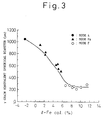
- a solid phase transformation of complete ⁇ ⁇ ⁇ phase can be ensured by regulating the chemical compositions of the molten steel so as to satisfy a requirement that the ⁇ -Fe cal. (%) defined by 3(%Cr + 1.5%Si + %Mo + 0.5%Nb) - 2.8(%Ni + 0.5%Cu + 0.5%Mn + 30%C + 30%N) - 19.8 is 6 or more, so that the coarse columnar ⁇ grains are broken to form an equiaxed solidified structure.
- Fig. 1 is a (230) pole figure for each solidification mode, wherein (A) is for mode F and (3) is or mode FA.
- Fig. 2 is a ⁇ grain shape of a cast strip for each solidification mode, wherein (A) is for mode F and (3) is for mode FA.
- This equiaxed structure corresponds to a weld metal structure called "mode F solidification”.
- the resultant structure corrresponds to "mode A solidification” or “mode FA solidification” containing coarse columnar ⁇ grains.
- mode A solidification or “mode FA solidification” containing coarse columnar ⁇ grains.
- the maximum ⁇ grain diameter of the cast strip is reduced to about 1/5 of that of the mode A solidification structure and about 1/2 to 1/3 of that of the mode FA solidification, so that the type A surface roughening can be remedied to a considerable extent.
- the best method for refining the coarse columnar ⁇ grains is to utilize work strain-recrystallization.
- Means used for this purpose includes (1) recrystallization refinement by double cold rolling and (2) recrystallization refinement by hot rolling by annealing after hot rolling.
- studies have been made on the minimum reduction ratio of cold rolling required for recrystallization refinement in a cold rolling process on the premise that double rolling is effected. This has revealed that, as shown in Fig. 4, a fine recrystallized structure could be provided by subjecting the cast strip to the first cold rolling with a reduction ratio of 10% or more and then annealing the cold-rolled sheet at 1,100°C.
- the temperature necessary for the recrystallization is 800°C or above.
- the maximum grain size of the recrystallized grains before the second cold rolling is preferably 100 ⁇ m or less in terms of the grain equivalent spherical diameter.
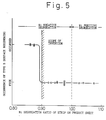
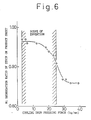
- the present inventors have effected casting of various austenitic stainless steels different from each other in the ⁇ -Fe cal. value by twin-roll casting with the drum pressing force varied, cold-rolled the resultant cast strips into a thin sheet having a thickness of 0.6 mm and effected stretching by a cylinder to observe whether or not the type 3 surface roughening occurred. Further, the Ni segregation in the vicinity of the center of section in the thickness and the width directions of the cast strip and product sheet was examined with an X-ray microanalyzer. The average Ni content of the segregated portion found by the analysis is a value for a portion within a region of 25 ⁇ m in the direction of the thickness and 500 ⁇ m in the direction of the width.
- Fig. 7 shows optical microstructures of a cross-section of 0.6-mm bright-annealed materials of product sheets provided by subjecting cast strips produced under drum pressing forces of 5 kg/mm and 34 kg/mm to single cold rolling. It is apparent that in the product sheet of the present invention (see Fig. 7 (A)), the semi-macrosegregation remaining at the center portion of the sheet thickness is slight and the structure is homogeneous, whereas a semi- macrosegregation having a pitch of several mm remains in the comparative example (see Fig. 7 (B)).
- Fig. 8 schematically illustrates the mechanism of occurrence of type A surface roughening and type B surface roughening, wherein (A) shows a metallic structure before cold rolling, (B) shows a metallic structure after cold rolling, (C) shows a metallic structure after annealing and (D) shows a metallic structure after forming.
- the Ni segregation ratio was limited to 0.90 or more for the purpose of preventing the type B surface roughening.
- the second aspect relates to a cold-rolled sheet produced by cold-rolling the cast strip of the first aspect. Since the Ni segregation ratio of the cold-rolled sheet is not different from that of the cast strip, as with the first aspect, the Ni segregation ratio was limited to 0.90 or more.
- the ⁇ -F cal. (%) and Ni segregation ratio were limited respectively to 6 or more and 0.90 or more for the purpose of preventing the type A surface roughening and type B surface roughening.
- the ⁇ -F cal. (%) value is 6 or more, the solidification mode is changed from mode FA to mode F, so that the coarse columnar ⁇ grains become relatively fine equiaxed ⁇ grains, which contributes to a reduction in the type A surface roughening.
- the fourth aspect relates to a cold-rolled sheet produced by cold-rolling the cast strip of the third aspect.
- the ⁇ -F cal. (%) and Ni segregation ratio were limited respectively to 6 or more and 0.90 or more for the purpose of preventing the type A surface roughening and type B work surface roughening.
- the drum pressing force was limited to 3 to 25 kg/mm for the purpose of preventing the type B surface roughening.
- the drum pressing force when the drum pressing force is less than 3 kg/mm, many center porosities occur, which gives rise to "necking" that starts at the center porosities by stretching.
- the drum pressing force exceeds 25 kg/mm, the Ni segregation ratio becomes less than 0.90, so that the type B surface roughening occurs.
- the ⁇ -F cal. (%) value was limited to 5 or more and the drum pressing force was limited to 3 to 25 kg/mm for the purpose of providing a Ni segregation ratio of 0.90 or more.
- the reason for the limitation of the drum pressing force is the same as that in the fifth aspect.
- the ⁇ -F cal. (%) value was limited to 6 or more and the drum pressing force was limited to 3 to 25 kg/mm for the purpose of providing a Ni segregation ratio of 0.90 or more.
- the reduction ratio of the first cold rolling was limited to 10% or more for the purpose of providing a recrystallized fine structure.
- the reduction ratio is less than 10%, no recrystallized structure can be provided over the whole cast strip thickness region, so that the reduction in the type A surface roughening is unsatisfactory.
- the limitation of the ⁇ -F cal. (%) value for refining the ⁇ grains is not needed.
- the drum pressing force was limited to 3 to 25 kg/mm for the purpose of providing a Ni segregation ratio of 0.90 or more.
- mode F solidification which does not give rise to coarse columnar ⁇ grains, is ensured by regulating the ⁇ -F cal. (%), and the type A surface roughening attributable to the ⁇ grains is prevented by reducing the maximum ⁇ grain size of the cast strip by taking advantage of an equiaxed refined structure.
- double cold rolling with a reduction ratio for first cold rolling of 10% or more is applied when the product is used in applications where a strict surface quality requirement should be satisfied.
- the semi-macrosegregation ratio is brought to 0.90 or more by regulating the drum pressing force in the range of from 3 to 25 kg/mm independently of whether the cold rolling used is single cold rolling or double cold rolling.
- the seventh and eighth aspects are on the premise that the annealing of the cast strip is omitted. However, even though the annealing is effected, the effect of preventing type A and B surface roughening remains unchanged.
- Molten steels of SUS304 with the ⁇ -F cal. (%) value varied in the range of from -2% to 12% were cast by twin-roll casting into strips having a thickness in the range of from 2 to 4.5 mm while applying a cooling drum Dressing force in the range of from 1 to 40 kg/mm.
- the solidified structure of the cast strips was observed, and the cast strips were descaled and then cold-rolled by single cold rolling or double cold rolling into BA products having a thickness of 0.6 mm.
- the resultant thin sheet products were subjected to stretching by 100-mm ⁇ cylinders (punch-stretched height: 10 mm) to evaluate the surface roughening.
- the Ni segregation of the semi-macrosegregated portion of the cast strips and sheet products was analyzed by an X-ray microanalyzer to determine the Ni segregation ratio.
- the Ni segregation ratio was defined as a ratio of the average Ni content value of a portion within a region of 25 ⁇ m in the direction of the thickness and 500 ⁇ m in the direction of the width of the C-section of the semi-macrosegregated portion to the found Ni content of the cast strip or the product. The results are given in Table 1.
- Samples No. 1 to 8 are samples of the cast strip, cold-rolled sheet and processes for producing the cast strip and cold rolled sheet according to the third, fourth, sixth and seventh aspects.
- the ⁇ -F cal. (%) value was regulated within the range specified in the present invention, i.e., 6 or more, to provide a mode F solidifying structure, thereby bringing coarse columnar ⁇ grains to equiaxed ⁇ grains, so that the type A surface roughening was remedied to a level acceptable for general applications.
- the drum pressing force was regulated within the range specified in the present invention, the Ni segregation ratio was 0.90 or more for both the cast strip and product sheet, so that the type B surface roughening was on an acceptable level.
- Samples No. 9 to 15 are examples of the cast strip, cold-rolled sheet and processes for producing the cast strip and cold rolled sheet according to the first, second, fifth and eighth aspects.
- the ⁇ -F cal. (%) value was varied from -2.3 to 8.0%, all the samples exhibited a fine recrystallized structure having a ⁇ grain equivalent maximum spherical diameter of 100 ⁇ m or less by virtue of double cold rolling with a reduction ratio of first cold rolling of 10% or more, so that the type A surface roughening was significantly remedied to the level of the surface roughening of the material produced by the current hot rolling process.
- the drum pressing force was regulated within the range specified in the present invention, the Ni segregation ratio was 0.9 or more for all the cast strips and product sheets, so that the type B surface roughening was on a satisfactory level.
- sample No. 16 since the ⁇ -Fe cal. value was outside the scope of the present invention, the type A surface roughening also occurred. In sample No. 17, since double cold rolling with a reduction ratio of first cold rolling of 30% was applied, the type A surface roughening was on a satisfactory level. In sample Nos. 18 and 19, although the type A surface roughening was on a satisfactory level because the ⁇ -Fe cal. value was within the range specified in the present invention, the drum pressing force was so high that the Ni segregation ratio became 0.90 or less, which gave rise to the type B surface roughening.
- the Ni segregation ratio was 0.90 or more, so that the type B surface roughening was on a satisfactory level. Since, however, the drum pressing force was excessively low, many center porosities occurred, which led to "necking" that started at the center porosities in the forming.
Landscapes
- Chemical & Material Sciences (AREA)
- Engineering & Computer Science (AREA)
- Mechanical Engineering (AREA)
- Physics & Mathematics (AREA)
- Thermal Sciences (AREA)
- Crystallography & Structural Chemistry (AREA)
- Materials Engineering (AREA)
- Metallurgy (AREA)
- Organic Chemistry (AREA)
- Continuous Casting (AREA)
- Heat Treatment Of Sheet Steel (AREA)
- Metal Rolling (AREA)
Claims (5)
- Bande coulée en acier inoxydable austénitique produite par un procédé de coulée en continu synchrone, caractérisée en ce que le taux de ségrégation de Ni au voisinage du centre de section tel que défini par l'équation (1) suivante est contrôlé à une valeur de 0,90 ou plus, et δ-Fcal. (%) tel que défini par l'équation (2) suivante est contrôlé à une valeur de 6 ou plus :
- Tôle laminée à froid sous forme de bande mince en acier inoxydable austénitique produite par laminage à froid d'une bande coulée selon la revendication 1.
- Procédé de production d'une bande mince coulée en acier inoxydable austénitique, comprenant les étapes consistant à produire une bande mince coulée en acier inoxydable austénitique par un procédé de coulée en continu synchrone, caractérisé en ce que l'on applique une force d'appui du tambour dans la plage de 3 à 25 kg/mm par unité de longueur dans le sens de la largeur des tambours de refroidissement au niveau du point de léchage afin de contrôler le taux de ségrégation de Ni au voisinage du centre de section tel que défini par l'équation (1) suivante à une valeur de 0,90 ou plus, et δ-Fcal (%) tel que défini par l'équation (2) suivante est contrôlé à une valeur de 6 ou plus :
- Procédé de production d'une tôle laminée à froid sous forme de bande mince à partir d'une bande coulée produite par un procédé selon la revendication 3, caractérisé en ce que la bande coulée est décalaminée, laminée à froid et enfin soumise à un recuit.
- Procédé de production d'une tôle laminée à froid sous forme de bande mince à partir d'une bande coulée produite par un procédé selon la revendication 3, caractérisé en ce que la bande coulée est décalaminée, laminée à froid avec un rapport de réduction de 10 % ou plus, soumise à un recuit de recristallisation, soumise au deuxième laminage à froid et enfin soumise au recuit final.
Applications Claiming Priority (7)
| Application Number | Priority Date | Filing Date | Title |
|---|---|---|---|
| JP98147/92 | 1992-04-17 | ||
| JP9814792 | 1992-04-17 | ||
| JP9814792 | 1992-04-17 | ||
| JP35280992 | 1992-12-14 | ||
| JP352809/92 | 1992-12-14 | ||
| JP35280992 | 1992-12-14 | ||
| PCT/JP1993/000496 WO1993020966A1 (fr) | 1992-04-17 | 1993-04-16 | Piece coulee du type feuillard fin en acier inoxydable austenitique, tole d'acier laminee a froid du type feuillard fin et procede pour leur fabrication |
Publications (3)
| Publication Number | Publication Date |
|---|---|
| EP0594865A1 EP0594865A1 (fr) | 1994-05-04 |
| EP0594865A4 EP0594865A4 (en) | 1994-06-15 |
| EP0594865B1 true EP0594865B1 (fr) | 1999-09-22 |
Family
ID=26439351
Family Applications (1)
| Application Number | Title | Priority Date | Filing Date |
|---|---|---|---|
| EP93908106A Revoked EP0594865B1 (fr) | 1992-04-17 | 1993-04-16 | Piece coulee du type feuillard fin en acier inoxydable austenitique, tole d'acier laminee a froid du type feuillard fin et procede pour leur fabrication |
Country Status (7)
| Country | Link |
|---|---|
| US (1) | US5467811A (fr) |
| EP (1) | EP0594865B1 (fr) |
| JP (1) | JP3090148B2 (fr) |
| KR (1) | KR960012866B1 (fr) |
| DE (1) | DE69326521T2 (fr) |
| ES (1) | ES2138619T3 (fr) |
| WO (1) | WO1993020966A1 (fr) |
Families Citing this family (10)
| Publication number | Priority date | Publication date | Assignee | Title |
|---|---|---|---|---|
| JP3117638B2 (ja) | 1996-03-28 | 2000-12-18 | 新日本製鐵株式会社 | 薄帯鋳片連続鋳造方法 |
| US5858135A (en) * | 1997-07-29 | 1999-01-12 | Inland Steel Company | Method for cold rolling and annealing strip cast stainless steel strip |
| USD411656S (en) | 1998-06-02 | 1999-06-29 | Atlantic Coast Creations, Ltd. | Combination key holder and miniature photo album |
| DE10107027A1 (de) * | 2001-02-15 | 2002-09-12 | Thyssenkrupp Stahl Ag | Verfahren zum Herstellen von metallischen Bändern mit Abschnitten unterschiedlicher Materialeigenschaften |
| JP4636052B2 (ja) * | 2007-06-29 | 2011-02-23 | 住友金属工業株式会社 | 鋼の連続鋳造方法 |
| AU2008100847A4 (en) * | 2007-10-12 | 2008-10-09 | Bluescope Steel Limited | Method of forming textured casting rolls with diamond engraving |
| KR101312776B1 (ko) * | 2009-12-21 | 2013-09-27 | 주식회사 포스코 | 마르텐사이트계 스테인리스강 및 그 제조방법 |
| JP5949629B2 (ja) * | 2013-03-28 | 2016-07-13 | Jfeスチール株式会社 | 内質特性に優れた極厚オーステナイト系ステンレス厚鋼板の製造方法および内質特性に優れた極厚オーステナイト系ステンレス厚鋼板 |
| KR102030162B1 (ko) | 2016-12-23 | 2019-11-08 | 주식회사 포스코 | 가공성 및 표면특성이 우수한 오스테나이트계 스테인리스강 및 이의 제조방법 |
| KR101923922B1 (ko) * | 2016-12-23 | 2018-11-30 | 주식회사 포스코 | 표면특성이 우수한 오스테나이트계 스테인리스강 가공품 및 이의 제조 방법 |
Family Cites Families (11)
| Publication number | Priority date | Publication date | Assignee | Title |
|---|---|---|---|---|
| JPS5916862B2 (ja) * | 1973-03-26 | 1984-04-18 | 日本鋼管株式会社 | 連続鋳造法 |
| US4134440A (en) * | 1974-09-16 | 1979-01-16 | Nippon Kokan Kabushiki Kaisha | Method of continuously casting steel |
| FR2333586A1 (fr) * | 1975-12-01 | 1977-07-01 | Nippon Steel Corp | Procede pour la fabrication d'un produit en acier |
| JPS60157447A (ja) * | 1984-01-27 | 1985-08-17 | Ricoh Co Ltd | 残量標識付ロ−ル状記録材及び残量標識検知装置 |
| JPH0730406B2 (ja) * | 1988-07-08 | 1995-04-05 | 新日本製鐵株式会社 | 表面品質と材質が優れたCr−Ni系ステンレス薄鋼板の製造法 |
| US5030296A (en) * | 1988-07-08 | 1991-07-09 | Nippon Steel Corporation | Process for production of Cr-Ni type stainless steel sheet having excellent surface properties and material quality |
| JP2814112B2 (ja) * | 1989-08-10 | 1998-10-22 | 日新製鋼株式会社 | 延性に優れたオーステナイト系ステンレス薄鋼帯の製造方法 |
| EP0458987B2 (fr) * | 1989-12-20 | 2002-05-22 | Nippon Steel Corporation | Procede de production de tole mince en acier inoxydable austenitique et equipement de realisation de ce procede |
| US5188681A (en) * | 1990-01-17 | 1993-02-23 | Nippon Steel Corporation | Process for manufacturing thin strip or sheet of cr-ni-base stainless steel having excellent surface quality and material quality |
| JP2512650B2 (ja) * | 1990-12-05 | 1996-07-03 | 新日本製鐵株式会社 | 材質と表面品質の優れたCr−Ni系ステンレス鋼薄板の製造方法 |
| JPH0826405B2 (ja) * | 1991-08-28 | 1996-03-13 | 新日本製鐵株式会社 | 表面品質と加工性の優れたCr−Ni系ステンレス鋼薄板の製造方法 |
-
1993
- 1993-04-16 JP JP05517802A patent/JP3090148B2/ja not_active Expired - Lifetime
- 1993-04-16 WO PCT/JP1993/000496 patent/WO1993020966A1/fr not_active Ceased
- 1993-04-16 US US08/167,803 patent/US5467811A/en not_active Expired - Lifetime
- 1993-04-16 DE DE69326521T patent/DE69326521T2/de not_active Revoked
- 1993-04-16 ES ES93908106T patent/ES2138619T3/es not_active Expired - Lifetime
- 1993-04-16 EP EP93908106A patent/EP0594865B1/fr not_active Revoked
- 1993-12-10 KR KR93703823A patent/KR960012866B1/ko not_active Expired - Lifetime
Non-Patent Citations (1)
| Title |
|---|
| TRANSLATION OF D2 (JP-A-3072030)(ENGLISH) * |
Also Published As
| Publication number | Publication date |
|---|---|
| EP0594865A1 (fr) | 1994-05-04 |
| EP0594865A4 (en) | 1994-06-15 |
| DE69326521T2 (de) | 2000-03-09 |
| DE69326521D1 (de) | 1999-10-28 |
| WO1993020966A1 (fr) | 1993-10-28 |
| ES2138619T3 (es) | 2000-01-16 |
| KR960012866B1 (en) | 1996-09-25 |
| JP3090148B2 (ja) | 2000-09-18 |
| US5467811A (en) | 1995-11-21 |
Similar Documents
| Publication | Publication Date | Title |
|---|---|---|
| US9580766B2 (en) | Low-density steel having good drawability | |
| EP1326723B9 (fr) | Procede de production d'acier | |
| EP1699582B1 (fr) | Procede pour produire des feuillards a chaud a partir d'un acier leger | |
| PL186657B1 (pl) | Taśma ze stali niskowęglowej i sposób odlewania ciągłego taśmy ze stali niskowęglowej | |
| WO2000065103A3 (fr) | Procede de production d'une tole magnetique a grains non orientes | |
| US5467811A (en) | Thin cast strip of austenitic stainless steel and cold-rolled sheet in thin strip form and processes for producing said strip and sheet | |
| EP0387785B1 (fr) | Procédé de fabrication de tÔles et de rubans d'acier inoxydable austénitique laminés à froid | |
| EP1599299B1 (fr) | Procede de traitement d'un produit en acier, et produit obtenu par ce traitement | |
| CN101616754B (zh) | 具有微细铁素体组织的热轧钢板的制造方法及热轧钢板 | |
| EP0387786B1 (fr) | Procédé pour préparer des bandes ou feuilles, laminées à froid, d'acier inoxydable et austénitique | |
| JPWO1993020966A1 (ja) | オーステナイト系ステンレス鋼薄帯状鋳片および薄帯状冷延鋼板並びにそれらの製造方法 | |
| AU2010215076A1 (en) | A hot rolled thin cast strip product and method for making the same | |
| EP0378705B2 (fr) | PROCEDE DE FABRICATION DE TOLES MINCES EN ACIER INOXYDABLE Cr-Ni, DE QUALITE ET FINITION EXCELLENTES | |
| US5030296A (en) | Process for production of Cr-Ni type stainless steel sheet having excellent surface properties and material quality | |
| JPH03267319A (ja) | 磁気特性の優れた無方向性電磁鋼板の製造方法 | |
| JP3440891B2 (ja) | 耐ラメラテア性に優れた構造用鋼材 | |
| WO1991009144A1 (fr) | Procede de production de tole mince en acier inoxydable austenitique et equipement de realisation de ce procede | |
| JPH04162943A (ja) | 連続鋳造鋳片の熱間加工割れ防止方法 | |
| JP2695858B2 (ja) | 加工性の良好なオーステナイト系ステンレス鋼薄板の製造方法 | |
| JP3417714B2 (ja) | 残留δフェライトの少ないオーステナイト系ステンレス鋼薄肉鋳片の製造方法 | |
| JPH0815640B2 (ja) | オーステナイト系ステンレス鋼帯の製造方法 | |
| JPH07268556A (ja) | オーステナイト系ステンレス鋼薄帯状鋳片および薄帯状鋳片と冷延鋼板の製造方法 | |
| JP2768527B2 (ja) | 加工性が優れたCr―Ni系ステンレス鋼薄板の製造方法 | |
| JP2003313643A (ja) | Cr−Ni系ステンレス鋼薄板 | |
| AU2001291499A1 (en) | A method of producing steel |
Legal Events
| Date | Code | Title | Description |
|---|---|---|---|
| PUAI | Public reference made under article 153(3) epc to a published international application that has entered the european phase |
Free format text: ORIGINAL CODE: 0009012 |
|
| 17P | Request for examination filed |
Effective date: 19940105 |
|
| AK | Designated contracting states |
Kind code of ref document: A1 Designated state(s): DE ES FR GB IT SE |
|
| A4 | Supplementary search report drawn up and despatched |
Effective date: 19940426 |
|
| AK | Designated contracting states |
Kind code of ref document: A4 Designated state(s): DE ES FR GB IT SE |
|
| 17Q | First examination report despatched |
Effective date: 19970703 |
|
| GRAG | Despatch of communication of intention to grant |
Free format text: ORIGINAL CODE: EPIDOS AGRA |
|
| GRAG | Despatch of communication of intention to grant |
Free format text: ORIGINAL CODE: EPIDOS AGRA |
|
| GRAH | Despatch of communication of intention to grant a patent |
Free format text: ORIGINAL CODE: EPIDOS IGRA |
|
| GRAH | Despatch of communication of intention to grant a patent |
Free format text: ORIGINAL CODE: EPIDOS IGRA |
|
| GRAA | (expected) grant |
Free format text: ORIGINAL CODE: 0009210 |
|
| AK | Designated contracting states |
Kind code of ref document: B1 Designated state(s): DE ES FR GB IT SE |
|
| REF | Corresponds to: |
Ref document number: 69326521 Country of ref document: DE Date of ref document: 19991028 |
|
| ITF | It: translation for a ep patent filed | ||
| ET | Fr: translation filed | ||
| REG | Reference to a national code |
Ref country code: ES Ref legal event code: FG2A Ref document number: 2138619 Country of ref document: ES Kind code of ref document: T3 |
|
| PLBQ | Unpublished change to opponent data |
Free format text: ORIGINAL CODE: EPIDOS OPPO |
|
| PLBI | Opposition filed |
Free format text: ORIGINAL CODE: 0009260 |
|
| PLBF | Reply of patent proprietor to notice(s) of opposition |
Free format text: ORIGINAL CODE: EPIDOS OBSO |
|
| 26 | Opposition filed |
Opponent name: USINOR Effective date: 20000620 |
|
| PLBF | Reply of patent proprietor to notice(s) of opposition |
Free format text: ORIGINAL CODE: EPIDOS OBSO |
|
| PLBF | Reply of patent proprietor to notice(s) of opposition |
Free format text: ORIGINAL CODE: EPIDOS OBSO |
|
| REG | Reference to a national code |
Ref country code: GB Ref legal event code: IF02 |
|
| PGFP | Annual fee paid to national office [announced via postgrant information from national office to epo] |
Ref country code: SE Payment date: 20030404 Year of fee payment: 11 |
|
| PGFP | Annual fee paid to national office [announced via postgrant information from national office to epo] |
Ref country code: FR Payment date: 20030408 Year of fee payment: 11 |
|
| PGFP | Annual fee paid to national office [announced via postgrant information from national office to epo] |
Ref country code: GB Payment date: 20030416 Year of fee payment: 11 |
|
| PGFP | Annual fee paid to national office [announced via postgrant information from national office to epo] |
Ref country code: DE Payment date: 20030424 Year of fee payment: 11 |
|
| PGFP | Annual fee paid to national office [announced via postgrant information from national office to epo] |
Ref country code: ES Payment date: 20030429 Year of fee payment: 11 |
|
| RDAF | Communication despatched that patent is revoked |
Free format text: ORIGINAL CODE: EPIDOSNREV1 |
|
| RDAG | Patent revoked |
Free format text: ORIGINAL CODE: 0009271 |
|
| STAA | Information on the status of an ep patent application or granted ep patent |
Free format text: STATUS: PATENT REVOKED |
|
| 27W | Patent revoked |
Effective date: 20030708 |
|
| GBPR | Gb: patent revoked under art. 102 of the ep convention designating the uk as contracting state |
Free format text: 20030708 |
|
| REG | Reference to a national code |
Ref country code: SE Ref legal event code: ECNC |
|
| PLAB | Opposition data, opponent's data or that of the opponent's representative modified |
Free format text: ORIGINAL CODE: 0009299OPPO |