EP0595534A2 - Kompakte Lautsprecheranlage für eine Fernsprechstelle - Google Patents
Kompakte Lautsprecheranlage für eine Fernsprechstelle Download PDFInfo
- Publication number
- EP0595534A2 EP0595534A2 EP93308333A EP93308333A EP0595534A2 EP 0595534 A2 EP0595534 A2 EP 0595534A2 EP 93308333 A EP93308333 A EP 93308333A EP 93308333 A EP93308333 A EP 93308333A EP 0595534 A2 EP0595534 A2 EP 0595534A2
- Authority
- EP
- European Patent Office
- Prior art keywords
- loudspeaker
- enclosure
- housing member
- wiring board
- printed wiring
- Prior art date
- Legal status (The legal status is an assumption and is not a legal conclusion. Google has not performed a legal analysis and makes no representation as to the accuracy of the status listed.)
- Granted
Links
Images


Classifications
-
- H—ELECTRICITY
- H04—ELECTRIC COMMUNICATION TECHNIQUE
- H04M—TELEPHONIC COMMUNICATION
- H04M1/00—Substation equipment, e.g. for use by subscribers
- H04M1/60—Substation equipment, e.g. for use by subscribers including speech amplifiers
- H04M1/62—Constructional arrangements
Definitions
- This invention relates to the design of loudspeaker housings, and more particularly to improvements in their frequency response.
- Loudspeaking telephone stations also known as “speakerphones” or “hands-free” telephones, combine a loudspeaker and a microphone within a single enclosure to enable a user to participate in a telephone conversation without having to hold a handset against her/his face.
- a loudspeaker requires a sealed enclosure or back cavity to achieve a smooth frequency response. This is due to the 180° phase difference between sound radiated from the front and back side of the loudspeaker cone.
- An infinite baffle is simply a rigid plane that extends for an infinite distance in all directions separating the front and back sides of a loudspeaker.
- Speakerphones are faced with an additional problem in that the loudspeaker is generally located within the same housing as the microphone. Acoustic coupling between the loudspeaker and the microphone means that the distant party to a speakerphone conversation will experience a return echo whose annoyance is related to "round-trip" delay. In extreme cases, however, acoustic coupling between the loudspeaker and the microphone leads to oscillation. Accordingly, high performance speakerphones seeking full-duplex performance require that substantial attention be paid to the acoustic coupling between the loudspeaker and microphone.
- U.S. Patent 4,937,877 was issued on June 26, 1990 to Pocock et al. and is entitled "Modular Microphone Assembly.”
- Pocock seeks to isolate the microphone from the loudspeaker by enclosing a directional microphone capsule within a closed cavity of a hands-free telephone set. Both sides of the microphone's diaphragm are exposed to incoming sound waves through openings in the top surface of the telephone housing. Such exposure is required for directivity.
- applying this technique to a loudspeaker is not only impractical in telephone sets where there is rarely space for a dedicated structure; but also problematic, because the very features that enhance microphone directivity, degrade the frequency response of a non-directional loudspeaker.
- the frequency response of a loudspeaker, within an electronic equipment housing is improved by enclosing it within a separate sealed enclosure.
- the equipment housing includes a printed wiring board with electronic components mounted thereon.
- the sealed enclosure is compactly formed by using the printed wiring board as one side of the enclosure, and a selected surface of the equipment housing as another side of the enclosure.
- the selected surface includes sound apertures which are isolated from the interior of the enclosure by the loudspeaker itself.
- Extending downwardly from the surface of the housing are sidewalls that surround the loudspeaker.
- a sealing material is used to join the sidewalls to the printed wiring board.
- the sealed enclosure is filled with an acoustically absorbent material such as foam or fiber which increases its effective acoustic volume thereby improving low frequency response.
- a compliant gasket is positioned between the sidewalls and the printed wiring board as the sealing material.
- the loudspeaker is mounted in an "upwardly firing" direction between the cavities designed to accommodate the associated telephone handset. Such positioning leads to a particularly compact design.
- a tuned port is molded into the upper housing member which extends into the sealed enclosure. Its length and cross section area are selected to cooperate with the volume of the sealed enclosure to resonate in the region of the low cutoff frequency of the loudspeaker to further improve its frequency response.
- Speakerphones have grown in popularity in recent years, especially in the business environment where the convenience of hands-free communication has become more of a necessity than a luxury. Speakerphones allow the user to move around the office during a conversation and enable colleagues to join together for a conference call. The business user, however, exhibits little tolerance for low quality equipment and the sound quality of a speakerphone is readily apparent to its users.
- the ideal speakerphone is one that reproduces a distant party's voice with great fidelity (i.e., "naturalness") and enables full-duplex conversation (i.e., simultaneous conversation in two directions). Sound reproduction fidelity inherently requires that the loudspeaker provide an output sound level that is linearly proportional to its input signal level over the audible frequency range.
- the loudspeaker and a microphone generally share the same housing, the coupling between these transducers should be minimized to enhance the ability of the speakerphone circuits to provide full-duplex service.
- the present invention improves loudspeaker quality in such a manner that frequency response is improved at the same time that loudspeaker-to-microphone coupling is reduced.
- FIG. 1 shows a top view of a speakerphone housing with its associated handset removed.
- the user may enter the active (i.e., off-hook) state, in a speakerphone mode, by merely depressing SPEAKER key 460.
- the active state is alternatively selected by switchhook 125 when the receiver section of the handset is removed from cavity 410.
- the handset is not used. Instead, a microphone that is built into the housing (behind sound apertures 461) is used to pick up audible sounds. Additionally, a loudspeaker that is built into the housing (behind sound apertures 421) is used to broadcast audible sounds.
- the volume (loudness) of the loudspeaker is controlled by rocker switch 465.
- the loudspeaker is mounted directly beneath apertures 421 on the inside surface of upper housing member 400.
- the loudspeaker is mounted in an "upwardly firing" direction between the handset-receiving cavities 410, 440. Sounds emanating from the front side of the loudspeaker easily pass through the apertures and into the air where they can be heard. These sounds are omnidirectional, which is to say that they radiate equally in all directions. It is noted that the back side of the loudspeaker generates a sound wave that is 180° out of phase with sound waves generated by the front side. Should these sound waves intermingle, they will interfere with each other.
- Tuned port 422 is used for this purpose as discussed hereinafter.
- FIG. 2 illustrates a cross sectional view of the speakerphone of FIG. 1 in the region where the loudspeaker is located.
- FIG. 2 discloses the interior of a speakerphone comprising an upper housing member 400, lower housing member 200, and wedge-shaped pedestal 600 which places the speakerphone on an agreeable angle for desk-mounted use.
- a printed wiring board 100 which contains a plurality of electrical components 112, 113.
- a sealed enclosure 420 is created within the interior of the speakerphone that completely surrounds loudspeaker 300.
- the enclosure is bounded on its top side by the upper housing member 400 and on its bottom side by printed wiring board 100. Further, the enclosure 420 is surrounded on four lateral sides by sidewall 425 which is molded into the upper housing member.
- a flexible gasket 500 is used.
- electrical components 112, 113 are located within the sealed enclosure and valuable space is not wasted. Sounds emanating from the front side of the loudspeaker 300 will pass through sound apertures 421 in the upper housing member, while sounds emanating from the back side of the loudspeaker will be contained within the sealed enclosure 420.
- Tuned port 422 allows sound waves within the enclosure to escape.
- the resonant frequency of the tuned port is 286 Hz -- which is selected to be slightly below the low-frequency cutoff of the loudspeaker. Sound waves at frequencies close to resonance are phase-shifted and increased in magnitude such that the net effect of the tuned port is to lower the low-frequency cutoff of the loudspeaker. Sound waves above 286 Hz that emerge from the tuned port are attenuated at 12 dB per octave (thereby having little effect on the overall frequency response).
- FIG. 3 discloses an exploded perspective view of the interior of the speakerphone in accordance with the present invention.
- Loudspeaker 300 attaches to upper housing member 400 and fully covers sound apertures 421 which are molded into the upper housing member. As indicated, loudspeaker 300 fits into the sealed enclosure region 420 of the speakerphone in a compact manner.
- One of the handset-receiving cavities 440 is included in the enclosure to increase the volume of the enclosure.
- Handset-receiving cavity 410 is excluded because it has an opening 415 which is not completely sealed by switchhook 125 after the printed wiring board 100 is joined to the upper housing member 400.
- Printed wiring board 100 contains a large number of components needed to operate the speakerphone although only a few are shown.
- Perimeter 115 defines a region 110 of the printed wiring board which is within the sealed enclosure.
- Components 111-113 reside within the enclosure while, illustratively, components 121, 122 reside outside the sealed enclosure. It is desirable that there be no sound leaks from the enclosure; therefore, vias 130 should be sealed.
- Vias are holes that extend between opposite sides of the printed wiring board and are typically plated with solder so that they are electrically conductive. In addition to making electrical connections between opposite sides of the printed wiring board, vias are also used for receiving wires for making connections to electrical components that are not located on the printed wiring board.
- wires 431 carry electrical signals to/from jack 430 on the side of upper housing member 400 are connected to the vias 130 that reside outside the enclosure; and wires 331 from loudspeaker 300 are connected to the vias 130 that reside within the enclosure.
- Gasket 500 is placed along the perimeter 115 of the sealed enclosure to seal against the printed wiring board 100 when the telephone set is assembled.
- the gasket 500 is a separate part that is made from EPDM (ethylene-propylene diene monomer), a terpolymer elastomer.
- the gasket may be made from other compliant materials such a silicone rubber or closed cell foam, and may be applied along the perimeter 115 to avoid the need for a separate part.
- a rigid material such as epoxy may be applied along the perimeter 115 during assembly to permanently join the sidewalls with the printed wiring board.
- a seal needs to be created between the sidewalls and the printed wiring board. Because sidewall 425, molded into the upper housing member 400, makes contact with the printed wiring board only around perimeter 115, the perimeter should be free from components to facilitate the creation of the seal. Circuit traces 114, however, may cross the perimeter to connect components on both sides of the enclosure. Such traces only create small variations in height and are compensated for by the gasket 500.
- Upper housing member 400 is molded from a thermoplastic material such as ABS resin (acrylonitrile-butadiene-styrene).
- the sidewalls 425 of the sealed enclosure 420 are molded into the upper housing member and are, essentially, cost-free.
- Loudspeaker 300 is mechanically attached to the upper housing member so as to cover sound apertures 421.
- the sealed enclosure should be made as large as possible.
- the enclosure may take on any shape since it simply acts as an acoustic compliance (i.e., an air spring). Ribs may be molded into the the enclosure to stiffen the sidewalls 425 and minimize mechanical resonances.
- an acoustically absorbent material such as HyfonicTM open cell foam or FiberglasTM material is packed into the enclosure to increase its effective acoustic volume. This lowers the frequency of the low-end rolloff and damps the resonant peak that sometimes exists.
- tuned port 422 which extends from the exterior of housing member 400 into sealed enclosure 420.
- the tuned port comprises an opening into the enclosure that has a predetermined cross section area "S" and a predetermined length "L".
- the predetermined cross section area and length are selected to resonate in the region of the loudspeaker's low frequency cutoff and thereby move the low frequency response of the loudspeaker to an even lower frequency.
- the tuned port comprises a hollow tube which is molded into the upper housing member 400 along with sidewalls 425 and sound apertures 421.
- the tuned port phase shifts and enhances sound waves at frequencies close to its resonant frequency "f r .”
- f r C 2 ⁇ S (L+1.7a)V
- Opening 415 in the upper housing member allows switchhook 125 (mounted on the printed wiring board 100) to protrude through cavity 410. Since this opening is outside the sealed enclosure, it has no effect on frequency response. Opening 415 is illustrative of the variety of locations where leaks exist in speakerphone telephones that affect the frequency response. Finally, screw hole 126, in the printed wiring board, is aligned with boss 426 which is molded into the upper housing member 400 to facilitate joining them.
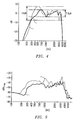
- the improvement in frequency response provided by the present invention is illustrated by the graph of FIG. 4 which plots the relative output level (in dB) of the loudspeaker that results from a constant input level for frequencies in the audio frequency range.
- the effect of the tuned port is not included in this graph.
- the reduced variation in the peaks and valleys of the the frequency response characteristic is reduced to approximately 7.5 dB when the enclosure is present.
- the sealed enclosure of the present invention provides a boost in the amplitude of the frequency response characteristic at its low end. Much emphasis is given to improving low frequency response because the typical solution is to use very large speakers and large enclosure volumes.
- low frequency response is enhanced by the use of the sealed enclosure and filler material within the enclosure. As discussed above, low frequency response is further enhanced by the use of a tuned port.
- the decrease in acoustic coupling between the loudspeaker and the microphone in a speakerphone is illustrated by the graph of FIG. 5 which plots the measured signal level (in dBV rms ) picked up by the microphone that results from a constant loudspeaker output level for frequencies in the audio frequency range.
- the effect of the tuned port is not included in this graph.
- the decreased coupling at all frequencies the improvement being nearly 20 dBV rms at some frequencies.
Landscapes
- Engineering & Computer Science (AREA)
- Signal Processing (AREA)
- Telephone Set Structure (AREA)
- Details Of Audible-Bandwidth Transducers (AREA)
Applications Claiming Priority (2)
| Application Number | Priority Date | Filing Date | Title |
|---|---|---|---|
| US07/967,340 US5369701A (en) | 1992-10-28 | 1992-10-28 | Compact loudspeaker assembly |
| US967340 | 1992-10-28 |
Publications (3)
| Publication Number | Publication Date |
|---|---|
| EP0595534A2 true EP0595534A2 (de) | 1994-05-04 |
| EP0595534A3 EP0595534A3 (en) | 1996-04-24 |
| EP0595534B1 EP0595534B1 (de) | 2001-12-12 |
Family
ID=25512658
Family Applications (1)
| Application Number | Title | Priority Date | Filing Date |
|---|---|---|---|
| EP93308333A Expired - Lifetime EP0595534B1 (de) | 1992-10-28 | 1993-10-20 | Kompakte Lautsprecheranlage für eine Fernsprechstelle |
Country Status (6)
| Country | Link |
|---|---|
| US (1) | US5369701A (de) |
| EP (1) | EP0595534B1 (de) |
| JP (1) | JP2859527B2 (de) |
| CA (1) | CA2094616C (de) |
| DE (1) | DE69331308T2 (de) |
| MY (1) | MY108729A (de) |
Cited By (1)
| Publication number | Priority date | Publication date | Assignee | Title |
|---|---|---|---|---|
| EP1195977A3 (de) * | 2000-10-05 | 2005-03-09 | Mitel Knowledge Corporation | Nutzung des handapparate-mikrofons zur verbesserung der leistung einer lautfernsprecher |
Families Citing this family (18)
| Publication number | Priority date | Publication date | Assignee | Title |
|---|---|---|---|---|
| US5513259A (en) * | 1994-07-06 | 1996-04-30 | Harris Corporation | Resealable module for supporting acoustic tranducer and printed circuit components within receiver end of craftsperson's test set |
| US5655017A (en) * | 1995-03-09 | 1997-08-05 | Lucent Technologies Inc. | Portable telephone with speakerphone |
| US5896461A (en) * | 1995-04-06 | 1999-04-20 | Coherent Communications Systems Corp. | Compact speakerphone apparatus |
| US6058315A (en) * | 1996-03-13 | 2000-05-02 | Motorola, Inc. | Speaker assembly for a radiotelephone |
| JP3305211B2 (ja) | 1996-09-10 | 2002-07-22 | 松下電器産業株式会社 | 半導体装置及びその製造方法 |
| US6035211A (en) * | 1996-12-19 | 2000-03-07 | Ericsson Inc. | Dual use speaker for both voice communication and signalling |
| US5912967A (en) * | 1997-09-11 | 1999-06-15 | 3Com Corp. | Speaker-phone assembly and method |
| US6134336A (en) * | 1998-05-14 | 2000-10-17 | Motorola, Inc. | Integrated speaker assembly of a portable electronic device |
| US6157546A (en) * | 1999-03-26 | 2000-12-05 | Ericsson Inc. | Shielding apparatus for electronic devices |
| FR2822617B1 (fr) * | 2001-03-20 | 2003-08-01 | Cit Alcatel | Telephone mains libres tolerant aux fuites |
| US6459799B1 (en) | 2002-01-02 | 2002-10-01 | Final Cia Bv | Modularly expandable electrostatic speaker system |
| US6785395B1 (en) | 2003-06-02 | 2004-08-31 | Motorola, Inc. | Speaker configuration for a portable electronic device |
| JP5245641B2 (ja) * | 2008-08-20 | 2013-07-24 | ヤマハ株式会社 | 吸音構造体 |
| WO2010146711A1 (ja) * | 2009-06-19 | 2010-12-23 | 富士通株式会社 | 音声信号処理装置及び音声信号処理方法 |
| CN105308939B (zh) * | 2013-05-07 | 2019-04-26 | 诺基亚技术有限公司 | 减小的声学耦合 |
| US9078060B2 (en) | 2013-07-25 | 2015-07-07 | Deere & Company | Sealed speaker enclosure |
| TWI783917B (zh) * | 2015-11-18 | 2022-11-21 | 美商艾孚諾亞公司 | 具有電纜上麥克風的揚聲器電話系統或揚聲器電話附件 |
| US9854080B2 (en) * | 2016-04-08 | 2017-12-26 | Google Llc | Speakerphone configuration for conferencing |
Family Cites Families (19)
| Publication number | Priority date | Publication date | Assignee | Title |
|---|---|---|---|---|
| US2542922A (en) * | 1945-07-02 | 1951-02-20 | Automatic Elect Lab | Loud speaking telephine instrument |
| FR2278213A1 (fr) * | 1974-07-11 | 1976-02-06 | Deutsche Telephonwerk Kabel | Combine pour appareils telephoniques comportant un boitier compose de deux moities en forme de coquille |
| US4375584A (en) * | 1980-10-06 | 1983-03-01 | Siemens Corporation | Modular telephone keyset structure |
| US4451711A (en) * | 1981-05-07 | 1984-05-29 | Mark Jackson | Readily portable speaker enclosure |
| JPS59126355A (ja) * | 1983-01-07 | 1984-07-20 | Nippon Telegr & Teleph Corp <Ntt> | 拡声電話機の音響装置 |
| JPS6343924U (de) * | 1986-09-08 | 1988-03-24 | ||
| US4727583A (en) * | 1986-10-28 | 1988-02-23 | Motorola, Inc. | Telephone transducer with improved frequency response |
| JP2556164Y2 (ja) * | 1986-11-19 | 1997-12-03 | パイオニア株式会社 | スピーカ用エンクロージヤ |
| US4885773A (en) * | 1987-01-09 | 1989-12-05 | Alcatel N.V. | Apparatus for mounting a unidirectional microphone in a hands-free telephone subset |
| US4837837A (en) * | 1987-11-05 | 1989-06-06 | Taddeo Anthony R | Loudspeaker |
| CA1297578C (en) * | 1988-02-26 | 1992-03-17 | Mark Walter Pocock | Modular microphone assembly |
| JPH02162864A (ja) * | 1988-12-15 | 1990-06-22 | Matsushita Electric Works Ltd | 報知ユニット |
| JPH03123153A (ja) * | 1989-10-06 | 1991-05-24 | Toshiba Corp | スピーカ用ゴムカバー |
| US5121426A (en) * | 1989-12-22 | 1992-06-09 | At&T Bell Laboratories | Loudspeaking telephone station including directional microphone |
| US5081674A (en) * | 1990-05-14 | 1992-01-14 | Motorola, Inc. | Double annular ring speaker gasket |
| US5274701A (en) * | 1991-05-29 | 1993-12-28 | Northern Telecom Limited | Telephone alerter |
| DE4117598C2 (de) * | 1991-05-29 | 1993-12-16 | Fernsprech Und Signalbau Gmbh | Fernsprechapparat |
| US5201069A (en) * | 1991-10-18 | 1993-04-06 | Motorola, Inc. | Electroacoustic transducer mounting apparatus |
| DE9203669U1 (de) * | 1992-03-18 | 1992-05-07 | Siemens AG, 8000 München | Befestigung eines Lautsprechers innerhalb einer Fernsprechstation |
-
1992
- 1992-10-28 US US07/967,340 patent/US5369701A/en not_active Expired - Lifetime
-
1993
- 1993-04-28 CA CA002094616A patent/CA2094616C/en not_active Expired - Lifetime
- 1993-06-04 MY MYPI93001075A patent/MY108729A/en unknown
- 1993-10-08 JP JP5276012A patent/JP2859527B2/ja not_active Expired - Lifetime
- 1993-10-20 EP EP93308333A patent/EP0595534B1/de not_active Expired - Lifetime
- 1993-10-20 DE DE69331308T patent/DE69331308T2/de not_active Expired - Lifetime
Cited By (1)
| Publication number | Priority date | Publication date | Assignee | Title |
|---|---|---|---|---|
| EP1195977A3 (de) * | 2000-10-05 | 2005-03-09 | Mitel Knowledge Corporation | Nutzung des handapparate-mikrofons zur verbesserung der leistung einer lautfernsprecher |
Also Published As
| Publication number | Publication date |
|---|---|
| CA2094616C (en) | 1997-04-08 |
| DE69331308T2 (de) | 2002-07-18 |
| MY108729A (en) | 1996-11-30 |
| US5369701A (en) | 1994-11-29 |
| EP0595534A3 (en) | 1996-04-24 |
| CA2094616A1 (en) | 1994-04-29 |
| JPH07312633A (ja) | 1995-11-28 |
| EP0595534B1 (de) | 2001-12-12 |
| DE69331308D1 (de) | 2002-01-24 |
| JP2859527B2 (ja) | 1999-02-17 |
Similar Documents
| Publication | Publication Date | Title |
|---|---|---|
| EP0595534B1 (de) | Kompakte Lautsprecheranlage für eine Fernsprechstelle | |
| US5790679A (en) | Communications terminal having a single transducer for handset and handsfree receive functionality | |
| KR100329134B1 (ko) | 스피커 조립체를 갖는 휴대용 전자 장치 | |
| US6064894A (en) | Portable radio telephone having improved speaker and housing assembly for handsfree and private operation | |
| US6785395B1 (en) | Speaker configuration for a portable electronic device | |
| US6144738A (en) | Telephone handset with enhanced handset/handsfree receiving and alerting audio quality | |
| CN100539612C (zh) | 扬声器组件和包括该扬声器组件的移动终端 | |
| CA2099945C (en) | Telephonic headset structure for reducing ambient noise | |
| US6389145B2 (en) | Methods and apparatus for controlling the output of moving armature transducers | |
| US4178488A (en) | Telephone set | |
| JP2609822B2 (ja) | 送話器 | |
| US7567680B2 (en) | Dual-diaphragm speaker assemblies with acoustic passageways and mobile terminals including the same | |
| EP2180667A1 (de) | Mobilkommunikationsgerät und diesbezügliches Konstruktionsverfahren | |
| US7088838B2 (en) | Speakerphone accessory assembly | |
| JP2000101699A (ja) | 電話ラウドスピ―カ包囲体 | |
| US7260364B2 (en) | Reverse mounted micro-speaker assemblies and mobile terminals including the same | |
| US20040081325A1 (en) | Waterproof acoustic structure applicable in conjunction with speaker | |
| US6374120B1 (en) | Acoustic guide for audio transducers | |
| US4528426A (en) | Directional microphone assembly | |
| US5216711A (en) | Telephone handset including directional microphone module | |
| KR20030029163A (ko) | 휴대용 통신 단말장치 및 그에 사용되는 전기 음향 변환기 | |
| EP0944220B1 (de) | Halterungsanordnung einer akustischen Membrane in Funktelefone | |
| JPS58161557A (ja) | 拡声電話機 | |
| MXPA99004480A (en) | Portable electronic device with high unit |
Legal Events
| Date | Code | Title | Description |
|---|---|---|---|
| PUAI | Public reference made under article 153(3) epc to a published international application that has entered the european phase |
Free format text: ORIGINAL CODE: 0009012 |
|
| AK | Designated contracting states |
Kind code of ref document: A2 Designated state(s): DE FR GB |
|
| RAP3 | Party data changed (applicant data changed or rights of an application transferred) |
Owner name: AT&T CORP. |
|
| PUAL | Search report despatched |
Free format text: ORIGINAL CODE: 0009013 |
|
| AK | Designated contracting states |
Kind code of ref document: A3 Designated state(s): DE FR GB |
|
| 17P | Request for examination filed |
Effective date: 19961010 |
|
| 17Q | First examination report despatched |
Effective date: 20000203 |
|
| GRAG | Despatch of communication of intention to grant |
Free format text: ORIGINAL CODE: EPIDOS AGRA |
|
| GRAG | Despatch of communication of intention to grant |
Free format text: ORIGINAL CODE: EPIDOS AGRA |
|
| GRAH | Despatch of communication of intention to grant a patent |
Free format text: ORIGINAL CODE: EPIDOS IGRA |
|
| GRAH | Despatch of communication of intention to grant a patent |
Free format text: ORIGINAL CODE: EPIDOS IGRA |
|
| GRAA | (expected) grant |
Free format text: ORIGINAL CODE: 0009210 |
|
| AK | Designated contracting states |
Kind code of ref document: B1 Designated state(s): DE FR GB |
|
| REG | Reference to a national code |
Ref country code: GB Ref legal event code: IF02 |
|
| REF | Corresponds to: |
Ref document number: 69331308 Country of ref document: DE Date of ref document: 20020124 |
|
| ET | Fr: translation filed | ||
| PLBE | No opposition filed within time limit |
Free format text: ORIGINAL CODE: 0009261 |
|
| 26N | No opposition filed | ||
| PGFP | Annual fee paid to national office [announced via postgrant information from national office to epo] |
Ref country code: DE Payment date: 20121017 Year of fee payment: 20 Ref country code: FR Payment date: 20121018 Year of fee payment: 20 |
|
| PGFP | Annual fee paid to national office [announced via postgrant information from national office to epo] |
Ref country code: GB Payment date: 20121017 Year of fee payment: 20 |
|
| REG | Reference to a national code |
Ref country code: DE Ref legal event code: R071 Ref document number: 69331308 Country of ref document: DE |
|
| REG | Reference to a national code |
Ref country code: GB Ref legal event code: PE20 Expiry date: 20131019 |
|
| PG25 | Lapsed in a contracting state [announced via postgrant information from national office to epo] |
Ref country code: DE Free format text: LAPSE BECAUSE OF EXPIRATION OF PROTECTION Effective date: 20131022 Ref country code: GB Free format text: LAPSE BECAUSE OF EXPIRATION OF PROTECTION Effective date: 20131019 |