EP0595569B1 - Heizapparat - Google Patents
Heizapparat Download PDFInfo
- Publication number
- EP0595569B1 EP0595569B1 EP93308468A EP93308468A EP0595569B1 EP 0595569 B1 EP0595569 B1 EP 0595569B1 EP 93308468 A EP93308468 A EP 93308468A EP 93308468 A EP93308468 A EP 93308468A EP 0595569 B1 EP0595569 B1 EP 0595569B1
- Authority
- EP
- European Patent Office
- Prior art keywords
- change rate
- steam
- gas volume
- gas
- sensor
- Prior art date
- Legal status (The legal status is an assumption and is not a legal conclusion. Google has not performed a legal analysis and makes no representation as to the accuracy of the status listed.)
- Expired - Lifetime
Links
Images


Classifications
-
- F—MECHANICAL ENGINEERING; LIGHTING; HEATING; WEAPONS; BLASTING
- F24—HEATING; RANGES; VENTILATING
- F24C—DOMESTIC STOVES OR RANGES ; DETAILS OF DOMESTIC STOVES OR RANGES, OF GENERAL APPLICATION
- F24C7/00—Stoves or ranges heated by electric energy
- F24C7/08—Arrangement or mounting of control or safety devices
-
- H—ELECTRICITY
- H05—ELECTRIC TECHNIQUES NOT OTHERWISE PROVIDED FOR
- H05B—ELECTRIC HEATING; ELECTRIC LIGHT SOURCES NOT OTHERWISE PROVIDED FOR; CIRCUIT ARRANGEMENTS FOR ELECTRIC LIGHT SOURCES, IN GENERAL
- H05B6/00—Heating by electric, magnetic or electromagnetic fields
- H05B6/64—Heating using microwaves
- H05B6/6435—Aspects relating to the user interface of the microwave heating apparatus
-
- H—ELECTRICITY
- H05—ELECTRIC TECHNIQUES NOT OTHERWISE PROVIDED FOR
- H05B—ELECTRIC HEATING; ELECTRIC LIGHT SOURCES NOT OTHERWISE PROVIDED FOR; CIRCUIT ARRANGEMENTS FOR ELECTRIC LIGHT SOURCES, IN GENERAL
- H05B6/00—Heating by electric, magnetic or electromagnetic fields
- H05B6/64—Heating using microwaves
- H05B6/6408—Supports or covers specially adapted for use in microwave heating apparatus
- H05B6/6411—Supports or covers specially adapted for use in microwave heating apparatus the supports being rotated
-
- H—ELECTRICITY
- H05—ELECTRIC TECHNIQUES NOT OTHERWISE PROVIDED FOR
- H05B—ELECTRIC HEATING; ELECTRIC LIGHT SOURCES NOT OTHERWISE PROVIDED FOR; CIRCUIT ARRANGEMENTS FOR ELECTRIC LIGHT SOURCES, IN GENERAL
- H05B6/00—Heating by electric, magnetic or electromagnetic fields
- H05B6/64—Heating using microwaves
- H05B6/642—Cooling of the microwave components and related air circulation systems
-
- H—ELECTRICITY
- H05—ELECTRIC TECHNIQUES NOT OTHERWISE PROVIDED FOR
- H05B—ELECTRIC HEATING; ELECTRIC LIGHT SOURCES NOT OTHERWISE PROVIDED FOR; CIRCUIT ARRANGEMENTS FOR ELECTRIC LIGHT SOURCES, IN GENERAL
- H05B6/00—Heating by electric, magnetic or electromagnetic fields
- H05B6/64—Heating using microwaves
- H05B6/6447—Method of operation or details of the microwave heating apparatus related to the use of detectors or sensors
- H05B6/645—Method of operation or details of the microwave heating apparatus related to the use of detectors or sensors using temperature sensors
-
- H—ELECTRICITY
- H05—ELECTRIC TECHNIQUES NOT OTHERWISE PROVIDED FOR
- H05B—ELECTRIC HEATING; ELECTRIC LIGHT SOURCES NOT OTHERWISE PROVIDED FOR; CIRCUIT ARRANGEMENTS FOR ELECTRIC LIGHT SOURCES, IN GENERAL
- H05B6/00—Heating by electric, magnetic or electromagnetic fields
- H05B6/64—Heating using microwaves
- H05B6/6447—Method of operation or details of the microwave heating apparatus related to the use of detectors or sensors
- H05B6/6458—Method of operation or details of the microwave heating apparatus related to the use of detectors or sensors using humidity or vapor sensors
-
- H—ELECTRICITY
- H05—ELECTRIC TECHNIQUES NOT OTHERWISE PROVIDED FOR
- H05B—ELECTRIC HEATING; ELECTRIC LIGHT SOURCES NOT OTHERWISE PROVIDED FOR; CIRCUIT ARRANGEMENTS FOR ELECTRIC LIGHT SOURCES, IN GENERAL
- H05B6/00—Heating by electric, magnetic or electromagnetic fields
- H05B6/64—Heating using microwaves
- H05B6/6447—Method of operation or details of the microwave heating apparatus related to the use of detectors or sensors
- H05B6/6464—Method of operation or details of the microwave heating apparatus related to the use of detectors or sensors using weight sensors
-
- H—ELECTRICITY
- H05—ELECTRIC TECHNIQUES NOT OTHERWISE PROVIDED FOR
- H05B—ELECTRIC HEATING; ELECTRIC LIGHT SOURCES NOT OTHERWISE PROVIDED FOR; CIRCUIT ARRANGEMENTS FOR ELECTRIC LIGHT SOURCES, IN GENERAL
- H05B6/00—Heating by electric, magnetic or electromagnetic fields
- H05B6/64—Heating using microwaves
- H05B6/647—Aspects related to microwave heating combined with other heating techniques
- H05B6/6482—Aspects related to microwave heating combined with other heating techniques combined with radiant heating, e.g. infrared heating
Definitions
- This invention relates to a heating apparatus such as microwave ovens wherein the type of food contained in a heating chamber is determined on the basis of a change rate of volume of gas emanated from the food in the heating chamber.
- US-A-4,463,238 discloses a combined microwave and electric heating oven provided with a gas sensor and a temperature sensor.
- EP-A-0576145 was published after the filing date of this application and discloses a microwave oven provided with a bread toasting function and comprising a gas sensor sensing gas such as moisture inside a cabinet of the oven to thereby produce a signal.
- a change rate of moisture is determined from the signals produced by the gas sensor. Whether bread is frozen or not is determined on the basis of the determined change rate of moisture.
- Heating apparatus such as microwave ovens have recently been provided with a gas sensor for sensing gas emanated from food to be cooked so that the type of the food is determined on the basis of an output of the gas sensor and the heating operation is controlled in accordance with the result of determination.
- the employed gas sensor is particularly sensitive to a volatile high polymer gas.
- a change rate of an output of the gas sensor or a change rate of gas volume is calculated by a control circuit.
- the obtained change rate of the gas volume is compared with a previously set reference value. On the basis of the result of comparison, it is determined whether the type of the food to be heated is one containing a large volume of gas or not.
- an initial temperature in the heating chamber takes different values, for example, when the heating operation is performed a relatively long period of time after the last operation and when the heating operation is repeated at one time.
- a generation rate of the gaseous alcohol varies depending upon the initial temperature in the heating chamber.
- an object of the present invention is to provide a heating apparatus wherein the type of the food to be heated can be reliably determined even when the initial temperature differs in one case to another.
- the present invention provides a heating apparatus according to claim 1.
- the gas volume change rate can be accurately determined even when the generation rate of the gas varies depending upon the temperature in the heating chamber since the reference value is based on the output of the temperature sensor. Consequently, the type of the food to be cooked can be reliably determined.
- the heating chamber is preferably provided with a door.
- the gas volume change rate calculating means preferably detects a minimum value of the gas volume on the basis of the gas volume signal produced by the gas sensor while the door of the heating chamber is open and detects a maximum value of the gas volume on the basis of the gas volume signal produced by the gas sensor while the door is closed.
- the gas volume change rate calculating means preferably obtains the change rate of the gas volume from the detected minimum and maximum values of the gas volume. In this case, the gas volume change rate calculating means preferably calculates the change rate of the gas volume a predetermined time period after start of a heating operation.
- the heating apparatus may further comprise a steam sensor for sensing a content of steam in the heating chamber to thereby produce a steam content signal indicative of the sensed content of steam and is characterized in that the gas volume change rate calculating means is supplied with both the steam content signal from the steam sensor and the gas volume signal from the gas sensor to thereby calculate a change rate of volume of the gas in which a steam component is removed from a gas component.
- the change rate of the volume of gas in which the steam component is removed is calculated and then, the obtained change rate is compared with the reference value. Consequently, the accuracy in the determination of the type of food can be further improved.
- the gas volume change rate calculating means preferably comprises steam content change rate calculating means for calculating a change rate of the steam content on the basis of the steam content signal from the steam sensor, and operational means for calculating a change rate of steam-removed gas volume in which a steam component is removed from a gas component, by subtracting the calculated steam content change rate from the calculated gas volume change rate.
- the gas volume change rate calculating means preferably detects a minimum value of the gas volume on the basis of the output of the gas sensor while the door of the heating chamber is open and detects a maximum value of the gas volume on the basis of the output of the gas sensor while the door is closed, and the gas volume change rate calculating means obtains the change rate of the gas volume from the detected minimum and maximum values of the gas volume.
- the steam content change rate calculating means preferably detects a minimum value of the steam content on the basis of the output of the steam sensor while the door of the heating chamber is open and detects a maximum value of the steam content on the basis of the output of the steam sensor while the door is closed, and the steam content change rate calculating means obtains the change rate of the steam content from the detected minimum and maximum values of the steam content.
- the gas volume change rate calculating means preferably calculates the change rate of the gas volume a predetermined time period after start of a heating operation and the steam content change rate calculating means calculates the change rate of the steam content a predetermined time period after start of the heating operation.
- the gas sensor is sensitive to a gaseous alcohol.
- the reference value setting means is preferably provided with a reference temperature to compare the output of the temperature sensor with the reference temperature, thereby setting the reference value.
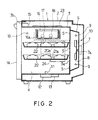
- a body 1 of the microwave oven comprises an outer casing 2 and an inner casing 3 enclosed in the outer casing 2.
- a heating chamber 4 is defined in the inner casing 3.
- a number of vent holes 5 are formed in a rear wall 3a of the inner casing 3.
- a casing 6 is mounted on the backside of the rear wall 3a and a fan motor 7 is mounted on the rear wall of the casing 6.
- the fan motor 7 has a rotational shaft 7a extending into the interior of the casing 6 and a fan 8 is mounted on the shaft 7a of the fan motor 7.
- An oven heater 9 serving as heating means is also provided in the casing 6.
- the fan motor 7, the fan 8 and the oven heater 9 constitute a hot air generating device 10.
- a weight sensor 12 is mounted on the underside of a bottom of the inner casing 3 for sensing the weight applied to a shaft 11 to be coupled to a turntable (not shown).
- a turntable motor 13 is also mounted on the underside of the inner casing bottom for driving the shaft 11.
- a door 14 is provided for closing and opening a front opening of the inner casing 3.
- a door switch 15 is provided on an upper flange 3b of the inner casing 3 for detecting the opening and closure of the door 14.
- An exhaust vent 16 covered by a net-like vent cap 16a is formed in one side wall of the inner casing 3.
- Both of a gas sensor 17 and a steam sensor 18 are provided in an exhaust path communicating between the exhaust vent 16 and the outside.
- the employed gas sensor 17 is of a type that is particularly sensitive to a volatile high molecular gas such as gaseous alcohol.
- An output of each sensor is indicated by a voltage value. The output voltage is low as a volume of gas or a content of steam is increased.
- a temperature sensor 19 is mounted on the side wall of the inner casing 3 for sensing the temperature in the heating chamber 4.
- Two light detecting elements 20a and 21a are also provided on the side wall of the inner casing 3.
- Two light emitting elements 20b and 21b are provided on an opposite side wall of the inner casing 3 (not shown) so as to be disposed opposite the respective light detecting elements 20a, 21a.
- These pairs of light emitting and detecting elements each constitute photo sensors for sensing presence and absence of shelves 22 detachably mounted in the heating chamber 4 in the cooking.
- a grill heater 23 serving as another heating means is provided on the upper face of the inner casing 3.
- a magnetron 24 is provided in the outer casing 2 for high frequency heating.
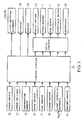
- a control circuit 25 includes a microcomputer and an analog-to-digital (A/D) converter.
- the control circuit 25 is supplied with switch signals from a start switch 26 and other switches 27 and output of each of the weight sensor 12, the door switch 15, the gas sensor 17, the steam sensor 18 and the light detecting elements 20a, 21a.
- the control circuit 25 controls the oven heater 9, the fan motor 7, the turntable motor 13, the grill heater 23 and the magnetron 24.
- the control circuit 25 further controls a display 28, a buzzer 29 and the light emitting elements 20b, 21b.
- the control circuit 25 has software arrangements for serving as steam-removed gas volume change rate calculating means, gas volume change rate calculating means, steam content change rate calculating means, operational means, determination means, and reference value setting means, as will be described later.
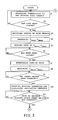
- the flowchart of FIG. 3 starts when a power supply plug (not shown) of the microwave oven is connected to a power supply receptacle (not shown).
- the temperature in the heating chamber 4 is measured on the basis of the output of the temperature sensor 19 at intervals of a predetermined period of time.
- Data of the measured temperature values T a are sequentially stored and renewed (step S1). It is then determined on the basis of the switch signal from the door switch 15 whether the door 14 has been opened or not (step S2).
- the microcomputer-based control circuit 25 When determining that the door 14 has been opened, the microcomputer-based control circuit 25 inputs the output of each of the gas and steam sensors 17, 18 (step S3) to calculate a maximum output value V Gmax of the gas sensor 17, which maximum output value is representative of a minimum volume of gas. The control circuit 25 further calculates a maximum output value V Smax of the steam sensor 18, which maximum output value is representative of a minimum content of steam (step S4). Data of these maximum values V Gmax and V Smax are stored in the microcomputer of the control circuit 25 (step S5). The above-described calculation and storing of the maximum values V Gmax and V Smax are sequentially executed until the door 14 is closed.
- the control circuit 25 determines a cooking mode on the basis of the output of the light detecting elements 20a, 21a, the weight sensor 12 and the like (step S7). More specifically, the control circuit 25 determines which one should be executed, an oven mode by the hot air generating device 10, a grill mode by the grill heater 23, or a high frequency mode by the magnetron 24.
- control circuit 25 calculates a minimum output value V Gmin of the gas sensor 17, which minimum output value is representative of a maximum volume of gas.
- the control circuit 25 further calculates a minimum output value V Smin of the steam sensor 18, which minimum output value is representative of a maximum content of steam (step S8).
- a heating operation is initiated for the cooking mode determined at step S7 and an indication of "IN PROCESS OF COOKING" is displayed on the display 28 (step S10).
- the calculation of the minimum output value V Gmin of the gas sensor 17 and of the minimum output value V Smin is completed upon lapse of a predetermined time period or 30 seconds, for example, after operation of the start switch 26 (step S12).
- a change rate ⁇ of the steam-removed gas volume is calculated at step S13.
- the output of the gas sensor 17 contains a slight steam component though it mainly detects an alcoholic component. Accordingly, the gas volume change rate obtained by the term, (1-V Gmin /V Gmax ), contains the steam component.
- the steam-removed gas volume change rate can be obtained by subtracting the steam content change rate from the gas volume change rate.
- the steam content change rate is obtained by the term, (1-V Smin /V Smax ). Consequently, the steam-removed gas volume change rate ⁇ represents a substantially correct change rate of volume of gaseous alcohol.
- step S14 it is determined at step S14 whether or not the temperature T a detected at step S1 is at a predetermined value (100°C, for example) or above.
- a reference value is set at ⁇ which is 0.05 in the embodiment (step S15).
- the reference value is set at ⁇ which is 0.20 in the embodiment (step S16).
- step S17 It is determined at step S17 whether or not the steam-removed gas change rate ⁇ is larger than ⁇ , after execution of step S15, when the temperature T a is below 100°C.
- the change rate ⁇ it is determined at step S18 that the food to be cooked contains a relatively large quantity of alcohol, for example, broiled pork, pound cake, buttered roll or apple pie.
- the change rate ⁇ is at ⁇ or below, it is determined at step S19 that the food to be cooked contains a less quantity of alcohol, for example, cream puff, roast beef, cake roll, risotto, madeleine, roast chicken, or sponge cake (step S19).
- step S20 When the temperature T a is at 100°C or above at step S14, it is determined at step S20 whether or not the steam-removed gas volume change rate ⁇ is larger than ⁇ , after execution of step S16.
- the change rate ⁇ is larger than ⁇ , it is determined at step S21 that the food to be cooked contains a relatively large quantity of alcohol, for example, broiled pork, pound cake, buttered roll or apple pie.
- the change rate ⁇ is at ⁇ or below, it is determined at step S19 that the food to be cooked contains a less quantity of alcohol, such as cream puff, roast beef, cake roll, risotto, madeleine, roast chicken, or sponge cake (step S22).
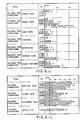
- the reference value ⁇ or ⁇ is set in accordance with the detected temperature T a so that the type of the food to be cooked is determined. More specifically, a generation rate of gas of the food varies depending upon the initial temperature in the heating chamber and the gas volume change rate varies accordingly. As shown in FIGS. 5(a) and 5(b), the steam-removed gas volume change rate ⁇ is below 0.05 in each of the cream puff, roast beef, cake roll, risotto, madeleine, roast chicken, and sponge cake when the temperature T a is below 100°C (25°C, for example) or when there is a relatively long time period of disuse of the apparatus between the last use and the current use. On the other hand, the change rate ⁇ exceeds 0.05 in each of the broiled pork, pound cake, buttered roll and apple pie.
- the steam-removed gas volume change rate ⁇ is below 0.20 in each of the cream puff, roast beef, cake roll, risotto, madeleine, roast chicken, and sponge cake when the temperature T a is at 100°C or above or when the cooking operation is repeatedly executed.
- the change rate ⁇ exceeds 0.20 in each of the broiled pork, pound cake, buttered roll and apple pie.
- the microcomputer-based control circuit 25 advances to step S23 after execution of steps S18, S19 and S21 or 522. Based on the results of the above-described determination and input data from the weight sensor 12 and the light detecting elements 20a, 21a, the control circuit 25 determines at step S23 more strictly about the type of the food to be cooked.
- the control data about a cooking temperature, a cooking time period and the like is set in accordance with the results of the determination so that the heating is executed for the food to be cooked (step S24).
- the temperature sensor 19 is provided for sensing the temperature in the heating chamber 4.
- the reference value is set in accordance with the sensed temperature. Consequently, the steam-removed gas volume change rate can be determined on the basis of the reference value in accordance with the initial temperature in the heating chamber 4. Accordingly, the type of the food to be cooked can be reliably determined even when the initial temperature in the heating chamber 4 varies.
- the change rate of the alcoholic component can be accurately detected since the steam component is removed from the gaseous component.
- the minimum volume of gas is detected on the basis of the output of the gas sensor 17 in the condition that the door 14 is opened, that is, in the condition that there is little gas in the heating chamber 4.
- the minimum volume of gas can be accurately detected.
- the maximum volume of gas is detected on the basis of the output of the gas sensor 17 in the condition that the door 14 is closed, that is, in the condition that the heating chamber 14 is filled with the gas.
- the maximum volume of gas can also be accurately detected. Consequently, the change rate of the gas volume can be reliably calculated. Additionally, the change rate of the steam content can also be reliably calculated since the minimum and maximum volumes of steam are detected in the same manner as described above.
- the detecting period of time should not be limited to this. Additionally, the initial temperature in the heating chamber may be detected before the start of the heating operation.
- the change rate of the gas volume may be based only on the output of the gas sensor and the type of the food to be cooked may be determined by comparison of the obtained gas volume change rate with the reference value.
- the steam sensor is not necessitated, and only the gas volume change rate is calculated at step S13. The subsequent steps are executed on the basis of the obtained gas volume change rate in the same manner as described above.
Landscapes
- Physics & Mathematics (AREA)
- Electromagnetism (AREA)
- Engineering & Computer Science (AREA)
- Human Computer Interaction (AREA)
- Chemical & Material Sciences (AREA)
- Combustion & Propulsion (AREA)
- Mechanical Engineering (AREA)
- General Engineering & Computer Science (AREA)
- Electric Ovens (AREA)
Claims (9)
- Erhitzungsgerät, das folgende Komponenten aufweist: einen Heizraum (4), Erhitzungsmittel (9, 23, 24) zum Erhitzen von Speisen, sie sich im Heizraum (4) befinden, einen Temperatursensor (19) zum Messen einer Temperatur im Heizraum (4), um dadurch ein Temperatursignal zu erzeugen, das kennzeichnend für die gemessene Temperatur ist, einen Gas-Sensor (17) zum Messen eines Volumens von Gas im Heizraum (4), um dadurch ein Gasvolumensignal zu erzeugen, das kennzeichnend für das gemessene Gasvolumen ist, und ein Mittel zur Berechnung der Änderungsrate des Gasvolumens (25), um eine Änderungsrate des Gasvolumens auf der Grundlage des Ausgangs vom Gas-Sensor (17) zu berechnen. gekennzeichnet durch Mittel zum Festlegen eines Bezugswertes (25), um erste und zweite Bestimmungswerte zu ermitteln, die ersten und zweiten Temperaturwerten entsprechen, die jeweils kennzeichnend für unterschiedliche festgelegte Temperaturen im Heizraum (4) sind, durch Spezifizierungsmittel (25), um den ersten Bestimmungswert zu spezifizieren, wenn das durch den Temperatursensor (19) zum Zeitpunkt des Starts eines substantiellen Erhitzungsvorgangs durch die Erhitzungsmittel (9, 23, 24) erzeugte Temperatursignal den ersten Temperaturwert angibt, und um den zweiten Bestimmungswert zu spezifizieren, wenn das durch den Temperatursensor (19) zum Zeitpunkt des Starts eines substantiellen Erhitzungsvorgangs durch die Erhitzungsmittel (9, 23, 24) erzeugte Temperatursignal den zweiten Temperaturwert angibt, durch Bestimmungsmittel (25) zum Vergleichen entweder des ersten oder des zweiten Bestimmungswertes, die durch das Spezifizierungsmittel (25) spezifiziert worden sind, mit dem Ergebnis von Berechnungen, die vom Mittel zur Berechnung der Änderungsrate des Gasvolumens (25) auf der Grundlage des Gasvolumensignals vorgenommen worden sind, das durch den Gas-Sensor (17) während des Erhitzungsvorgangs durch die Erhitzungsmittel (9, 23. 24) erzeugt worden ist, und durch Steuerungsmittel, die das Erhitzungsmittel wenigstens auf der Grundlage des Vergleichs steuern.
- Erhitzungsgerät nach Anspruch 1, bei dem der Heizraum (4) mit einer Tür (14) versehen ist, dadurch gekennzeichnet, daß das Mittel zur Berechnung der Änderungsrate des Gasvolumens (25) einen Minimalwert des Gasvolumens auf der Grundlage des Gasvolumensignals feststellt, das durch den Gas-Sensor (17) erzeugt wird, während die Tür (14) des Heizraums (4) offen ist, und einen Maximalwert des Gasvolumens auf der Grundlage des Gasvolumensignals feststellt, das durch den Gas-Sensor (17) erzeugt wird, während die Tür (14) geschlossen ist, und dadurch, daß das Mittel zur Berechnung der Änderungsrate des Gasvolumens (25) die Änderungsrate des Gasvolumens aus den festgestellten Minimal- und Maximalwerten des Gasvolumens ermittelt.
- Erhitzungsgerät nach Anspruch 2, dadurch gekennzeichnet, daß das Mittel zur Berechnung der Änderungsrate des Gasvolumens (25) die Änderungsrate des Gasvolumens während einer festgelegten Zeitspanne nach dem Beginn eines Erhitzungsvorgangs berechnet.
- Erhitzungsgerät nach Anspruch 1, das außerdem einen Dampfsensor (18) zum Messen eines Gehalts an Dampf im Heizraum (4) aufweist, um daraus ein Dampfgehaltsignal zu erzeugen, das kennzeichnend für den gemessenen Gehalt an Dampf ist, dadurch gekennzeichnet, daß dem Mittel zur Berechnung der Änderungsrate des Gasvolumens (25) sowohl das Dampfgehaltsignal vom Dampfsensor (18) als auch das Gasvolumensignal vom Gas-Sensor (17) zugeführt werden, um daraus eine Änderungsrate des Volumens des Gases zu berechnen. bei dem eine Dampfkomponente aus einer Gaskomponente entfernt worden ist.
- Erhitzungsgerät nach Anspruch 1, das außerdem einen Dampfsensor (18) zum Messen des Gehalts an Dampf im Heizraum (4) aufweist, um daraus ein Dampfgehaltsignal zu erzeugen, das kennzeichnend für den gemessenen Gehalt an Dampf ist, dadurch gekennzeichnet, daß das Mittel zur Berechnung der Änderungsrate des Gasvolumens (25) ein Mittel zur Berechnung der Änderungsrate des Dampfgehalts (25). um die Änderungsrate des Dampfgehalts auf der Grundlage des Dampfgehaltsignals vom Dampfsensor (18) zu berechnen, und Funktionsmittel (25) aufweist, um eine Änderungsrate des vom Dampf befreiten Volumens des Gases, bei dem eine Dampfkomponente aus einer Gaskomponente entfernt worden ist, durch Subtraktion der berechneten Änderungsrate des Dampfgehalts von der berechneten Änderungsrate des Gasvolumens zu berechnen.
- Erhitzungsgerät nach Anspruch 5, dadurch gekennzeichnet, daß das Mittel zur Berechnung der Änderungsrate des Gasvolumens (25) einen Minimalwert des Gasvolumens auf der Grundlage des Gasvolumensignals feststellt, das durch den Gas-Sensor (17) erzeugt wird, während die Tür (14) des Heizraums (4) offen ist, und einen Maximalwert des Gasvolumens auf der Grundlage des Gasvolumensignals feststellt, das durch den Gas-Sensor (17) erzeugt wird, während die Tür (14) geschlossen ist, daß das Mittel zur Berechnung der Änderungsrate des Gasvolumens (25) die Änderungsrate des Gasvolumens aus den festgestellten Minimal- und Maximalwerten des Gasvolumens ermittelt, daß das Mittel zur Berechnung der Änderungsrate des Dampfgehalts (25) einen Minimalwert des Dampfgehalts auf der Grundlage des Ausgangs des Dampfsensors (18) feststellt, während die Tür (14) des Heizraums (4) offen ist, und einen Maximalwert des Dampfgehalts auf der Grundlage des Ausgangs des Dampfsensors (18) feststellt, während die Tür (14) geschlossen ist, und daß das Mittel zur Berechnung der Änderungsrate des Dampfgehalts (25) die Änderungsrate des Dampfgehalts aus den festgestellten Minimal- und Maximalwerten des Dampfgehalts ermittelt.
- Erhitzungsgerät nach Anspruch 6, dadurch gekennzeichnet, daß das Mittel zur Berechnung der Änderungsrate des Gasvolumens (25) die Änderungsrate des Gasvolumens über eine festgelegte Zeitspanne nach dem Beginn des Erhitzungsvorgangs berechnet und daß das Mittel zur Berechnung der Änderungsrate des Dampfgehalts (25) die Änderungsrate des Dampfgehalts über eine festgelegte Zeitspanne nach dem Beginn des Erhitzungsvorgangs berechnet.
- Erhitzungsgerät nach Anspruch 1, dadurch gekennzeichnet, daß der Gas-Sensor (17) sensitiv gegenüber einem gasförmigen Alkohol ist.
- Erhitzungsgerät nach Anspruch 1 oder 4, dadurch gekennzeichnet, daß das Spezifizierungsmittel (25) einen Bezugstemperaturwert hat und daß das Spezifizierungsmittel (25) das Temperatursignal vom Temperatursensor (19) mit dem Bezugstemperaturwert vergleicht, um daraus in Abhängigkeit davon, ob das Temperatursignal den Bezugstemperaturwert übersteigt, den ersten oder den zweiten Bestimmungswert zu spezifizieren.
Applications Claiming Priority (2)
| Application Number | Priority Date | Filing Date | Title |
|---|---|---|---|
| JP287281/92 | 1992-10-26 | ||
| JP4287281A JPH06137561A (ja) | 1992-10-26 | 1992-10-26 | 加熱調理器 |
Publications (2)
| Publication Number | Publication Date |
|---|---|
| EP0595569A1 EP0595569A1 (de) | 1994-05-04 |
| EP0595569B1 true EP0595569B1 (de) | 1996-12-11 |
Family
ID=17715371
Family Applications (1)
| Application Number | Title | Priority Date | Filing Date |
|---|---|---|---|
| EP93308468A Expired - Lifetime EP0595569B1 (de) | 1992-10-26 | 1993-10-25 | Heizapparat |
Country Status (5)
| Country | Link |
|---|---|
| US (1) | US5558797A (de) |
| EP (1) | EP0595569B1 (de) |
| JP (1) | JPH06137561A (de) |
| KR (1) | KR0130741B1 (de) |
| DE (1) | DE69306530T2 (de) |
Families Citing this family (34)
| Publication number | Priority date | Publication date | Assignee | Title |
|---|---|---|---|---|
| GB2293027A (en) * | 1994-09-07 | 1996-03-13 | Sharp Kk | Apparatus for and method of controlling a microwave oven |
| US6133558A (en) * | 1996-06-24 | 2000-10-17 | Matsushita Electric Industrial Co., Ltd. | Microwave steam heater with microwave and steam generators controlled to equalize workpiece inner and surface temperatures |
| CA2229951C (en) * | 1997-03-18 | 2002-05-07 | Sanyo Electric Co., Ltd. | Cooking apparatus including infrared ray sensor |
| US6396035B2 (en) * | 1999-01-14 | 2002-05-28 | Samsung Electronics, Co., Ltd. | Microwave oven and data obtaining method therefor |
| US6486453B1 (en) | 1999-09-13 | 2002-11-26 | Maytag Corporation | Menu driven control system for a cooking appliance |
| DE10232133A1 (de) * | 2002-07-11 | 2004-01-22 | E.G.O. Elektro-Gerätebau GmbH | Zusatzstoff zur Zubereitung von Nahrungsmitteln, Nahrungsmittelvorbereitung sowie Verfahren zur Erkennung des Zustands eines Nahrungsmittel und Backofen |
| ITVA20030046A1 (it) * | 2003-12-04 | 2005-06-05 | Whirlpool Co | Forno domestico e procedimento di cottura che lo utilizza. |
| DE102004062737A1 (de) * | 2004-12-27 | 2006-07-13 | Rational Ag | Gargerät, enthaltend mindestens ein Gassensorarray, sowie ein Verfahren zum Garen mit diesem Gargerät, ein Verfahren zum Reinigen dieses Gargeräts und ein Probenentnahmesystem |
| US7913615B2 (en) * | 2006-04-28 | 2011-03-29 | Restaurant Technology, Inc. | Automated dual cooking surface grill and method |
| DE102007016501A1 (de) * | 2007-03-26 | 2008-10-02 | E.G.O. Elektro-Gerätebau GmbH | Verfahren und Dampfgargerät zur Regelung von Garvorgängen in einem Garraum |
| KR101596042B1 (ko) * | 2009-07-29 | 2016-02-19 | 엘지전자 주식회사 | 가스 감지부를 포함한 조리 장치 및 그 제어 방법 |
| WO2011013787A1 (ja) * | 2009-07-30 | 2011-02-03 | シャープ株式会社 | 加熱調理器 |
| US20130269537A1 (en) | 2012-04-16 | 2013-10-17 | Eugenio Minvielle | Conditioning system for nutritional substances |
| US20130269538A1 (en) | 2012-04-16 | 2013-10-17 | Eugenio Minvielle | Transformation system for nutritional substances |
| US10219531B2 (en) | 2012-04-16 | 2019-03-05 | Iceberg Luxembourg S.A.R.L. | Preservation system for nutritional substances |
| US9541536B2 (en) | 2012-04-16 | 2017-01-10 | Eugenio Minvielle | Preservation system for nutritional substances |
| US9564064B2 (en) * | 2012-04-16 | 2017-02-07 | Eugenio Minvielle | Conditioner with weight sensors for nutritional substances |
| US9414623B2 (en) | 2012-04-16 | 2016-08-16 | Eugenio Minvielle | Transformation and dynamic identification system for nutritional substances |
| US9436170B2 (en) | 2012-04-16 | 2016-09-06 | Eugenio Minvielle | Appliances with weight sensors for nutritional substances |
| US20140069838A1 (en) | 2012-04-16 | 2014-03-13 | Eugenio Minvielle | Nutritional Substance Label System For Adaptive Conditioning |
| US9702858B1 (en) | 2012-04-16 | 2017-07-11 | Iceberg Luxembourg S.A.R.L. | Dynamic recipe control |
| US9429920B2 (en) | 2012-04-16 | 2016-08-30 | Eugenio Minvielle | Instructions for conditioning nutritional substances |
| US9460633B2 (en) | 2012-04-16 | 2016-10-04 | Eugenio Minvielle | Conditioner with sensors for nutritional substances |
| US9528972B2 (en) * | 2012-04-16 | 2016-12-27 | Eugenio Minvielle | Dynamic recipe control |
| US8733631B2 (en) | 2012-04-16 | 2014-05-27 | Eugenio Minvielle | Local storage and conditioning systems for nutritional substances |
| WO2015135788A1 (en) * | 2014-03-11 | 2015-09-17 | Koninklijke Philips N.V. | Method and apparatus for controlling a cooking process of a food |
| CN106231961B (zh) * | 2014-04-23 | 2020-01-10 | 皇家飞利浦有限公司 | 用于控制食物烹饪过程的方法和烹饪设备 |
| JP6577568B2 (ja) * | 2014-08-05 | 2019-09-18 | コーニンクレッカ フィリップス エヌ ヴェKoninklijke Philips N.V. | コーヒー焙煎装置、コーヒー抽出装置及びコーヒー焙煎方法 |
| US20160116171A1 (en) * | 2014-10-22 | 2016-04-28 | General Electric Company | Oven airflow control |
| ES2797049T3 (es) * | 2014-10-22 | 2020-12-01 | Koninklijke Philips Nv | Aparato para tostar café, aparato para preparar café y método para tostar café |
| US10009965B2 (en) | 2015-01-28 | 2018-06-26 | Samsung Electronics Co., Ltd. | Gas detection apparatus, cooking apparatus, and method of controlling the apparatuses |
| DE102016215650A1 (de) * | 2016-08-19 | 2018-02-22 | BSH Hausgeräte GmbH | Haushaltsgargerät |
| US11109712B2 (en) * | 2018-12-10 | 2021-09-07 | Midea Group Co., Ltd. | Microwave oven with toaster |
| KR102959323B1 (ko) * | 2021-05-12 | 2026-04-29 | 엘지전자 주식회사 | 조리기기 및 그 제어방법 |
Citations (1)
| Publication number | Priority date | Publication date | Assignee | Title |
|---|---|---|---|---|
| EP0576145A1 (de) * | 1992-05-27 | 1993-12-29 | Kabushiki Kaisha Toshiba | Kochvorrichtung mit Gassmesswertgeber |
Family Cites Families (11)
| Publication number | Priority date | Publication date | Assignee | Title |
|---|---|---|---|---|
| JPS5596838A (en) * | 1979-01-17 | 1980-07-23 | Sharp Corp | Cooking system |
| JPS55119391A (en) * | 1979-03-06 | 1980-09-13 | Sharp Kk | Cooking oven |
| EP0024798B1 (de) * | 1979-07-20 | 1984-02-15 | Matsushita Electric Industrial Co., Ltd. | Verfahren zur Kontrolle des Erwärmens von Lebensmitteln und Apparat dafür |
| JPS5640029A (en) * | 1979-09-07 | 1981-04-16 | Matsushita Electric Ind Co Ltd | Method and apparatus for controlling food heating |
| JPS6234166Y2 (de) * | 1980-07-28 | 1987-09-01 | ||
| JPS5795528A (en) * | 1980-12-03 | 1982-06-14 | Sharp Corp | Cooking apparatus |
| CA1190604A (en) * | 1981-07-21 | 1985-07-16 | Takeshi Tanabe | Combined microwave oven and grill oven with automated cooking performance |
| JPS5875629A (ja) * | 1981-10-30 | 1983-05-07 | Matsushita Electric Ind Co Ltd | センサを備えた自動加熱装置 |
| JPS5880426A (ja) * | 1981-11-06 | 1983-05-14 | Matsushita Electric Ind Co Ltd | 高周波加熱装置 |
| JPS61143630A (ja) * | 1984-12-14 | 1986-07-01 | Sharp Corp | 加熱器 |
| EP0289000B1 (de) * | 1987-04-30 | 1993-08-25 | Matsushita Electric Industrial Co., Ltd. | Automatischer Heizapparat |
-
1992
- 1992-10-26 JP JP4287281A patent/JPH06137561A/ja active Pending
-
1993
- 1993-10-25 DE DE69306530T patent/DE69306530T2/de not_active Expired - Fee Related
- 1993-10-25 US US08/143,851 patent/US5558797A/en not_active Expired - Fee Related
- 1993-10-25 EP EP93308468A patent/EP0595569B1/de not_active Expired - Lifetime
- 1993-10-25 KR KR1019930022429A patent/KR0130741B1/ko not_active Expired - Fee Related
Patent Citations (1)
| Publication number | Priority date | Publication date | Assignee | Title |
|---|---|---|---|---|
| EP0576145A1 (de) * | 1992-05-27 | 1993-12-29 | Kabushiki Kaisha Toshiba | Kochvorrichtung mit Gassmesswertgeber |
Also Published As
| Publication number | Publication date |
|---|---|
| EP0595569A1 (de) | 1994-05-04 |
| JPH06137561A (ja) | 1994-05-17 |
| US5558797A (en) | 1996-09-24 |
| KR0130741B1 (ko) | 1998-04-09 |
| KR940009596A (ko) | 1994-05-20 |
| DE69306530T2 (de) | 1997-05-15 |
| DE69306530D1 (de) | 1997-01-23 |
Similar Documents
| Publication | Publication Date | Title |
|---|---|---|
| US5558797A (en) | Automatic food type determining device for a heating apparatus | |
| US5545880A (en) | Method for automatic control of a microwave oven | |
| EP0029483B1 (de) | Mikrowellenofen mit kontrollierter Leistung und Verfahren zum Kochen | |
| CA2077018C (en) | Cooking appliance | |
| US4447693A (en) | Power controlled microwave oven | |
| EP0078607B1 (de) | Automatisches Heizgerät mit Fühler | |
| EP0587323B1 (de) | Heizapparat | |
| US4481394A (en) | Combined microwave oven and grill oven with automated cooking _performance | |
| EP1021067B1 (de) | Verfahren zum Betrieben von Mikrowellenofen | |
| JPS62218734A (ja) | 加熱装置 | |
| EP0497546B1 (de) | Heizgerät für Lebensmittel | |
| KR100254660B1 (ko) | 전자렌지 | |
| EP0854661A2 (de) | Mikrowellenöfen mit Sicherheitsvorrichtung | |
| KR900002206B1 (ko) | 전자레인지의 자동 요리방법 | |
| US5698126A (en) | Microwave oven with food wrap film detecting function | |
| US4754112A (en) | Cooking appliance with vapor sensor and compensation for the effect of intermediate food handling on the sensed amount of vapor | |
| JPH0124483Y2 (de) | ||
| JPH06347044A (ja) | 電子レンジ | |
| JPS63172830A (ja) | 調理器 | |
| JP2854145B2 (ja) | 調理器 | |
| JP2984476B2 (ja) | 加熱調理器 | |
| JPH08124669A (ja) | 加熱調理器 | |
| KR0162400B1 (ko) | 전자레인지의 용기뚜껑 유무에 따른 가열시간 제어방법 | |
| JP3928215B2 (ja) | 加熱調理方法およびそれを用いた加熱調理器 | |
| KR100499478B1 (ko) | 토스터 겸용 전자레인지 및 그 제어방법 |
Legal Events
| Date | Code | Title | Description |
|---|---|---|---|
| PUAI | Public reference made under article 153(3) epc to a published international application that has entered the european phase |
Free format text: ORIGINAL CODE: 0009012 |
|
| 17P | Request for examination filed |
Effective date: 19931108 |
|
| AK | Designated contracting states |
Kind code of ref document: A1 Designated state(s): DE FR GB |
|
| 17Q | First examination report despatched |
Effective date: 19951010 |
|
| GRAG | Despatch of communication of intention to grant |
Free format text: ORIGINAL CODE: EPIDOS AGRA |
|
| GRAH | Despatch of communication of intention to grant a patent |
Free format text: ORIGINAL CODE: EPIDOS IGRA |
|
| GRAH | Despatch of communication of intention to grant a patent |
Free format text: ORIGINAL CODE: EPIDOS IGRA |
|
| GRAA | (expected) grant |
Free format text: ORIGINAL CODE: 0009210 |
|
| AK | Designated contracting states |
Kind code of ref document: B1 Designated state(s): DE FR GB |
|
| REF | Corresponds to: |
Ref document number: 69306530 Country of ref document: DE Date of ref document: 19970123 |
|
| ET | Fr: translation filed | ||
| PLBE | No opposition filed within time limit |
Free format text: ORIGINAL CODE: 0009261 |
|
| 26N | No opposition filed | ||
| REG | Reference to a national code |
Ref country code: GB Ref legal event code: IF02 |
|
| PGFP | Annual fee paid to national office [announced via postgrant information from national office to epo] |
Ref country code: FR Payment date: 20041008 Year of fee payment: 12 |
|
| PGFP | Annual fee paid to national office [announced via postgrant information from national office to epo] |
Ref country code: GB Payment date: 20041020 Year of fee payment: 12 |
|
| PG25 | Lapsed in a contracting state [announced via postgrant information from national office to epo] |
Ref country code: GB Free format text: LAPSE BECAUSE OF NON-PAYMENT OF DUE FEES Effective date: 20051025 |
|
| GBPC | Gb: european patent ceased through non-payment of renewal fee |
Effective date: 20051025 |
|
| PG25 | Lapsed in a contracting state [announced via postgrant information from national office to epo] |
Ref country code: FR Free format text: LAPSE BECAUSE OF NON-PAYMENT OF DUE FEES Effective date: 20060630 |
|
| PGFP | Annual fee paid to national office [announced via postgrant information from national office to epo] |
Ref country code: DE Payment date: 20061019 Year of fee payment: 14 |
|
| REG | Reference to a national code |
Ref country code: FR Ref legal event code: ST Effective date: 20060630 |
|
| PG25 | Lapsed in a contracting state [announced via postgrant information from national office to epo] |
Ref country code: DE Free format text: LAPSE BECAUSE OF NON-PAYMENT OF DUE FEES Effective date: 20080501 |