EP0596490A2 - Stereoselective reduction of ketones - Google Patents
Stereoselective reduction of ketones Download PDFInfo
- Publication number
- EP0596490A2 EP0596490A2 EP93117899A EP93117899A EP0596490A2 EP 0596490 A2 EP0596490 A2 EP 0596490A2 EP 93117899 A EP93117899 A EP 93117899A EP 93117899 A EP93117899 A EP 93117899A EP 0596490 A2 EP0596490 A2 EP 0596490A2
- Authority
- EP
- European Patent Office
- Prior art keywords
- atcc
- rhodococcus
- catalyzed
- microorganism
- group
- Prior art date
- Legal status (The legal status is an assumption and is not a legal conclusion. Google has not performed a legal analysis and makes no representation as to the accuracy of the status listed.)
- Withdrawn
Links
- 0 C*(c1ccc(*)cc1)=O Chemical compound C*(c1ccc(*)cc1)=O 0.000 description 2
Classifications
-
- C—CHEMISTRY; METALLURGY
- C12—BIOCHEMISTRY; BEER; SPIRITS; WINE; VINEGAR; MICROBIOLOGY; ENZYMOLOGY; MUTATION OR GENETIC ENGINEERING
- C12P—FERMENTATION OR ENZYME-USING PROCESSES TO SYNTHESISE A DESIRED CHEMICAL COMPOUND OR COMPOSITION OR TO SEPARATE OPTICAL ISOMERS FROM A RACEMIC MIXTURE
- C12P41/00—Processes using enzymes or microorganisms to separate optical isomers from a racemic mixture
-
- C—CHEMISTRY; METALLURGY
- C07—ORGANIC CHEMISTRY
- C07C—ACYCLIC OR CARBOCYCLIC COMPOUNDS
- C07C311/00—Amides of sulfonic acids, i.e. compounds having singly-bound oxygen atoms of sulfo groups replaced by nitrogen atoms, not being part of nitro or nitroso groups
- C07C311/01—Sulfonamides having sulfur atoms of sulfonamide groups bound to acyclic carbon atoms
- C07C311/02—Sulfonamides having sulfur atoms of sulfonamide groups bound to acyclic carbon atoms of an acyclic saturated carbon skeleton
- C07C311/08—Sulfonamides having sulfur atoms of sulfonamide groups bound to acyclic carbon atoms of an acyclic saturated carbon skeleton having the nitrogen atom of at least one of the sulfonamide groups bound to a carbon atom of a six-membered aromatic ring
-
- A—HUMAN NECESSITIES
- A61—MEDICAL OR VETERINARY SCIENCE; HYGIENE
- A61P—SPECIFIC THERAPEUTIC ACTIVITY OF CHEMICAL COMPOUNDS OR MEDICINAL PREPARATIONS
- A61P9/00—Drugs for disorders of the cardiovascular system
-
- C—CHEMISTRY; METALLURGY
- C07—ORGANIC CHEMISTRY
- C07C—ACYCLIC OR CARBOCYCLIC COMPOUNDS
- C07C311/00—Amides of sulfonic acids, i.e. compounds having singly-bound oxygen atoms of sulfo groups replaced by nitrogen atoms, not being part of nitro or nitroso groups
- C07C311/15—Sulfonamides having sulfur atoms of sulfonamide groups bound to carbon atoms of six-membered aromatic rings
- C07C311/21—Sulfonamides having sulfur atoms of sulfonamide groups bound to carbon atoms of six-membered aromatic rings having the nitrogen atom of at least one of the sulfonamide groups bound to a carbon atom of a six-membered aromatic ring
-
- C—CHEMISTRY; METALLURGY
- C12—BIOCHEMISTRY; BEER; SPIRITS; WINE; VINEGAR; MICROBIOLOGY; ENZYMOLOGY; MUTATION OR GENETIC ENGINEERING
- C12P—FERMENTATION OR ENZYME-USING PROCESSES TO SYNTHESISE A DESIRED CHEMICAL COMPOUND OR COMPOSITION OR TO SEPARATE OPTICAL ISOMERS FROM A RACEMIC MIXTURE
- C12P11/00—Preparation of sulfur-containing organic compounds
-
- C—CHEMISTRY; METALLURGY
- C12—BIOCHEMISTRY; BEER; SPIRITS; WINE; VINEGAR; MICROBIOLOGY; ENZYMOLOGY; MUTATION OR GENETIC ENGINEERING
- C12P—FERMENTATION OR ENZYME-USING PROCESSES TO SYNTHESISE A DESIRED CHEMICAL COMPOUND OR COMPOSITION OR TO SEPARATE OPTICAL ISOMERS FROM A RACEMIC MIXTURE
- C12P13/00—Preparation of nitrogen-containing organic compounds
- C12P13/02—Amides, e.g. chloramphenicol or polyamides; Imides or polyimides; Urethanes, i.e. compounds comprising N-C=O structural element or polyurethanes
-
- Y—GENERAL TAGGING OF NEW TECHNOLOGICAL DEVELOPMENTS; GENERAL TAGGING OF CROSS-SECTIONAL TECHNOLOGIES SPANNING OVER SEVERAL SECTIONS OF THE IPC; TECHNICAL SUBJECTS COVERED BY FORMER USPC CROSS-REFERENCE ART COLLECTIONS [XRACs] AND DIGESTS
- Y10—TECHNICAL SUBJECTS COVERED BY FORMER USPC
- Y10S—TECHNICAL SUBJECTS COVERED BY FORMER USPC CROSS-REFERENCE ART COLLECTIONS [XRACs] AND DIGESTS
- Y10S435/00—Chemistry: molecular biology and microbiology
- Y10S435/8215—Microorganisms
- Y10S435/822—Microorganisms using bacteria or actinomycetales
- Y10S435/872—Nocardia
-
- Y—GENERAL TAGGING OF NEW TECHNOLOGICAL DEVELOPMENTS; GENERAL TAGGING OF CROSS-SECTIONAL TECHNOLOGIES SPANNING OVER SEVERAL SECTIONS OF THE IPC; TECHNICAL SUBJECTS COVERED BY FORMER USPC CROSS-REFERENCE ART COLLECTIONS [XRACs] AND DIGESTS
- Y10—TECHNICAL SUBJECTS COVERED BY FORMER USPC
- Y10S—TECHNICAL SUBJECTS COVERED BY FORMER USPC CROSS-REFERENCE ART COLLECTIONS [XRACs] AND DIGESTS
- Y10S435/00—Chemistry: molecular biology and microbiology
- Y10S435/8215—Microorganisms
- Y10S435/911—Microorganisms using fungi
-
- Y—GENERAL TAGGING OF NEW TECHNOLOGICAL DEVELOPMENTS; GENERAL TAGGING OF CROSS-SECTIONAL TECHNOLOGIES SPANNING OVER SEVERAL SECTIONS OF THE IPC; TECHNICAL SUBJECTS COVERED BY FORMER USPC CROSS-REFERENCE ART COLLECTIONS [XRACs] AND DIGESTS
- Y10—TECHNICAL SUBJECTS COVERED BY FORMER USPC
- Y10S—TECHNICAL SUBJECTS COVERED BY FORMER USPC CROSS-REFERENCE ART COLLECTIONS [XRACs] AND DIGESTS
- Y10S435/00—Chemistry: molecular biology and microbiology
- Y10S435/8215—Microorganisms
- Y10S435/911—Microorganisms using fungi
- Y10S435/931—Mucor
Definitions
- the present invention concerns the stereoselective microbial reduction of certain keto group-containing sulfonamido compounds to form the corresponding hydroxyl group-containing compounds.
- beta-blockers Unlike other beta-blockers, it has class III antiarrhythmic properties (Lish, P.A., Weikel, J.H., and Dungan, K.W. (1965) J. Pharma. and Exper. Therapeutics, 149, 161-173).
- the beta-adrenergic blocking drugs such as propanolol and sotalol have been separated chemically into the dextro and levo rotatory optical isomers, and it has been demonstrated that the activity of the D(+) isomer is 50 times that of the corresponding L(-) isomer (Somani, P., and Bachand, T. (1969) Eur. J. Pharma, 7, 239-247).
- the present invention provides a process for the stereoselective enzymatic reduction of keto group-containing compounds to form the corresponding hydroxyl group-containing compounds.
- the present invention provides a process for preparation of an optically active alkanol compound of the formula: wherein
- the compounds of Formula I are useful as beta-adrenergic blockers in therapeutic treatment of antianginal, antiarrhythmic and antihypertensive conditions or are intermediates useful for the preparation thereof (see, for example, U.S. Patent 3,351,584).
- alkyl or "alk” as used herein alone or as a part of another group, denotes such optionally substituted, but preferably unsubstituted, straight and branched chain saturated hydrocarbon groups, preferably having 1 to 10 carbons in the normal chain.
- exemplary unsubstituted such groups include methyl, ethyl, propyl, isopropyl, n-butyl, iso-butyl, t-butyl, pentyl, hexyl, isohexyl, heptyl, 4,4-dimethyl, pentyl, octyl, 2,2,4-trimethyl pentyl, nonyl, decyl and the like.
- alkyl groups may be substituted by appropriate substituents, that is, substituents providing compounds suitable for use in the present invention.
- substituents of the alkyl group include one or more, preferably three or fewer, chloro groups, bromo groups, or iodo groups.
- lower alk or “lower alkyl” as used herein, denote such optionally substituted, but preferably unsubstituted, groups as described above for alkyl having 1 to 4 carbon atoms in the normal chain.
- lower alkoxy denotes a lower alkyl group as described above bonded through an oxygen linkage (-0-).
- monoalkylamino or dialkylamino denote an amino group substituted by one or two alkyl groups as described above, respectively.
- aryl used herein denotes homocyclic aromatic groups, preferably containing 1 or 2 rings and 6 to 12 ring carbons.
- exemplary aryl groups include phenyl, biphenyl, and naphthyl.
- substituted aryl and substituted benzyloxy denote groups wherein the aromatic ring or rings are substituted.
- substituents include one or more, preferably three or fewer, nitro groups, alkyl groups as described above or groups described above as substituents for the alkyl group.
- the process of the present invention has the advantage of producing an enantiospecific result.
- the process primarily yields the D(+) enantiomer rather than a racemic mixture of preferred and unpreferred enantiomers.
- Additional advantages of particular embodiments include, for example, a single step enantiospecific reduction compared with multi-step chemical synthesis. Also, particularly, when the reduction is catalyzed at ambient temperature and pressure, one obtains high conversion of the ketone compound to the desired enantiomer of the corresponding alcohol compound, and high enantiomeric purity of the alcohol compound.
- the enzyme or microorganism employed in the present invention may be any enzyme or microorganism capable of catalyzing the stereoselective enzymatic reduction described herein.
- the enzymatic or microbial materials may be employed in the free state or immobilized on a support such as by physical absorption or entrapment.
- Suitable enzymes include those enzymes referred to as oxido-reductases or dehydrogenases.
- the enzyme employed may, for example, be an enzyme isolated from a microorganism such as by homogenizing cell suspensions, followed by disintegration, centrifugation, DEAE-cellulose chromatography, ammonium sulfate fractionation, chromatography using gel filtration media such as Sephacryl (cross-linked co-polymer of allyl dextran and N,N'-methylene bisacrylamide) chromatography, and ion exchange chromatography such as Mono-Q (anion exchanger which binds negatively charged biomolecules through quaternary amine groups) chromatography.
- gel filtration media such as Sephacryl (cross-linked co-polymer of allyl dextran and N,N'-methylene bisacrylamide) chromatography
- ion exchange chromatography such as Mono-Q (anion exchanger which binds negatively charged biomolecules through quaternary amine groups) chromat
- Exemplary such enzymes include L-2-hydroxyisocaproate dehydrogenase, lactic acid dehydrogenase, yeast enzyme concentrate (Sigma), and beta-hydroxy butyrate dehydrogenase, or those enzymes derived from the microorganisms described hereinafter.
- the methods of the present invention may be carried out using any suitable microbial materials capable of catalyzing the stereoselective enzymatic reduction described herein.
- the cells may be used in the form of intact wet cells or dried cells such as lyophilized, spray-dried or heat-dried cells, or in the form of treated cell material such as ruptured cells or cell extracts.
- Suitable microorganisms include genera from bacteria, yeasts and fungi such as Achromobacter, Acinetobacter, Actinomyces, Alkaligenes, Arthrobacter, Azotobacter, Bacillus, Brevibacterium, Corynebacterium, Flavobacterium, Methylomonas, Mycobacterium, Nocardia, Psuedomonas, Rhodococcus, Streptomyces, Xanthomonas, Aspergillus, Candida, Fusarium, Geotrichum, Hansenula, Kloeckera, Penicillum, Pichia, Rhizopus, Rhodotorula, Saccharomyces, Trichoderma, Mortierella, Cunninghamella, Torulopsis and Rhodopseudomonas.
- Preferred microorganisms include Arthrobacter simplex, Nocardia restricta, Nocardia salmonicolor, Rhodococcus fascians, Rhodococcus rhodochrous, Mycobacterium vacca, Nocardia meditteranei, Nocardia autotrophica, Rhodococcus equi, Candida albicans, Geotrichum candidum, Mortierella alpina, Pichia pastoris, Pichia methanolica, Cunninghamella echinalate, Torulopsis polysporium, Torulopsis glabrata, and Acinetobacter calcoaceticus, and especially Rhodococcus globerulus (e.g.
- ATCC 21505 Candida guilliermondii (e.g., ATCC 20318), Rhodococcus erythropolis (e.g., ATCC 4277), Saccharomyces cerevisiae (e.g., ATCC 24702), Pseudomonas putida (e.g., ATCC 11172), Mortierella rammanianna (e.g., ATCC 38191), Hansenula fabiana (e.g., ATCC 58045), Hansenula polymorpha (e.g., ATCC 26012), Trichoderma polysporium (e.g., ATCC 28014), Rhodococcus species (e.g., ATCC 21243, ATCC 12975, and ATCC 29675), Rhodococcus fascians (e.g., ATCC 21950), Rhodococcus equi (e.g., ATCC 14887), Aureobasidium pullulans(e.g., ATCC 16623
- the host cell may be any cell, e.g., Escherichia coli, modified to contain a gene or genes for expressing one or more enzymes capable of catalysis as described herein.
- microorganisms of the genus Hansenula particularly the species Hansenula polymorpha, especially the strain Hansenula polymorpha ATCC 26012, the species Hansenula fabiana, especially the strain Hansenula fabiana ATCC 58045, the genus Rhodococcus, especially Rhodococcus sp, ATCC 21243 and the species Rhodococcus fascians, ATCC 21950, and the genus Nocardia.
- ATCC refers to the accession number of the American Type Culture Collection, 12301 Parklawn Drive, Rockville, Maryland 20852, the depository for the organism referred to. It is also particularly preferred to employ cell extracts or isolated enzymes from these organisms. Of course, combinations of two or more enzymes and/or microorganisms are contemplated to be within the scope of the invention.
- the stereoselective enzymatic reduction method of the present invention may be carried out subsequent to the fermentation of the microorganism employed (two-stage fermentation and reduction), or concurrently therewith, that is, in the latter case, by in situ fermentation and reduction (single-stage fermentation and reduction).
- the microorganisms may be grown in an appropriate medium until sufficient growth of the microorganisms is attained.
- a compound of Formula II may then be added to the microbial cultures and the stereoselective enzymatic reduction continued with the fermentation, preferably until complete conversion is obtained.
- the microorganisms may, in the first stage, be grown in an appropriate medium for fermentation until exhibiting the desired enzymatic (e.g., oxido-reductase) activity. Subsequently, the cells may be harvested by centrifugation and microbial cell suspensions prepared by suspending harvested cells in an appropriate buffered solution. Buffers such as tris-HCI, phosphates, sodium acetate and the like may be used. Water may also be used to prepare suspensions of microbial cells.
- the compound of Formula II may be mixed with the microbial cell suspensions, and the stereoselective enzymatic reduction of the compound catalyzed by the microbial cell suspensions. The reduction is preferably conducted until all or nearly all of the compound of Formula II is stereoselectively reduced.
- Growth of the microorganisms may be achieved by one of ordinary skill in the art by the use of an appropriate medium.
- Appropriate media for growing microorganisms include those which provide nutrients necessary for the growth of the microbial cells.
- a typical medium for growth includes necessary carbon sources, nitrogen sources, and trace elements.
- Inducers may also be added.
- the term "inducer”, as used herein, includes any compound enhancing formation of the desired enzymatic (e.g. oxido-reductase) activity within the microbial cell, such as those compounds containing keto groups.
- Formula I compounds may be added as inducers during growth of the microorganism.
- Carbon sources may include sugars such as maltose, lactose, glucose, fructose, glycerol, sorbitol, sucrose, starch, mannitol, propylene glycol, and the like; organic acids such as sodium acetate, sodium citrate, and the like; amino acids such as sodium glutamate and the like; and alcohols such as ethanol, propanol and the like.
- sugars such as maltose, lactose, glucose, fructose, glycerol, sorbitol, sucrose, starch, mannitol, propylene glycol, and the like
- organic acids such as sodium acetate, sodium citrate, and the like
- amino acids such as sodium glutamate and the like
- alcohols such as ethanol, propanol and the like.
- Nitrogen sources may include N-Z amine A, corn steep liquor, soy bean meal, beef extracts, yeast extracts, molasses, baker's yeast, tryptone, nutrisoy, peptone, yeastamin, sodium nitrate, ammonium sulfate and the like.
- Trace elements may include phosphates and magnesium, manganese, calcium, cobalt, nickel, iron, sodium and potassium salts.
- the medium employed may include more than one carbon or nitrogen source or other nutrient.
- Preferred media include aqueous media containing the following (in weight %):
- the pH of the medium is preferably adjusted to about 6 to 8, most preferably to 6.5, sterilized, e.g. at a temperature of 121 ° C for 30 minutes, and then adjusted to a pH of about 6.5 to 7.5, preferably 7.0, after sterilization.
- the process of the present invention is performed under conditions suitable for forming the desired compound of Formula I.
- the pH of the medium is preferably maintained between 4.0 and 9.0, most preferably between 6.0 and 8.0, during the growth of microorganisms and during the stereoselective reduction process whether performed with enzymes or microorganisms.
- Temperature is a measure of the heat energy available for the stereoselective reduction process, and should be maintained to ensure that there is sufficient energy available for this process.
- a suitable temperature range for the process of the invention is from about 15 ° C to about 60 °C.
- a preferred temperature range is from about 25 ° C to about 40 ° C.
- Pressure is not known to be critical to practice of the invention and for convenience about atmospheric pressure is typically employed.
- the process of the invention is preferably carried out under aerobic conditions.
- the agitation and aeration of the reaction mixture affects the amount of oxygen available during the stereoselective reduction process, which may be conducted, for example, in shake-flask cultures or fermentor tanks during growth of microorganisms in a single-stage or two-stage process.
- the agitation range from 50 to 1000 RPM is preferable, with 50 to 500 RPM being most preferred.
- Aeration of about 0.1 to 10 volumes of air per volume of media per minute i.e., 0.1 to 10 v/vt
- aeration of about 5 volumes of air per volume of media per minute i.e., 5 v/vt
- Complete conversion of the compound of Formula II may take, for example, from about 4 to 48 hours, preferably 12 to 24 hours, measured from the time of initially treating the compound of Formula II with a microorganism or enzyme as described herein.
- the stereoselective enzymatic reduction method of the present invention may be carried out using a co-factor such as nicotinamide adenine dinucleotide (NADH), especially when an isolated enzyme is employed.
- NADH for example, may thereafter be regenerated and reused.
- a further enzyme that regenerates the NADH in situ may be employed such as formate dehydrogenase.
- Suitable hydrogen donors include molecular hydrogen, a formate (e.g. an alkali metal or ammonium formate), a hypophosphite or an electrochemical reduction in the presence of a viologen, for example methyl viologen. It is also possible to regenerate NADH without further enzymes using, for example, ethanol or formate.
- aqueous liquid as the reaction medium, although an organic liquid, or a miscible or immiscible (biphasic) organic/aqueous liquid mixture may also be employed.
- the amount of enzyme or microorganism employed relative to the starting material is selected to allow catalysis of the stereoselective enzymatic reduction of the present invention.
- reaction yield greater than about 80%, most preferably greater than about 90%, and an optical purity of the D(+) enantiomer of about 60% or greater, preferably greater than about 80%, more preferably greater than about 90%, and most preferably greater than about 99%.
- Groups, such as hydroxyl groups, on the compound of Formula II may optionally be protected for use in the stereoselective enzymatic reduction method of the present invention; such groups may optionally thereafter be deprotected.
- the products of the stereoselective reduction process of the present invention may be isolated and purified by known methodologies such as by extraction, distillation, crystallization, column chromatography, and the like.
- a preferred method for separating the desired compound of Formula I from the remaining compounds of the reaction medium is by extraction.
- An exemplary extraction technique such as where product is prepared by whole cell suspensions, is that where the reaction medium, containing the aforementioned suspensions, is extracted with ethyl acetate, the organic layer is washed with brine, and the solvent is then removed under reduced pressure to generate an oily liquid which is chromatographed on a preparative HPLC using a C18 (25 ⁇ ) national column (2x10 inch) to produce the desired product (compound of Formula I).
- the substrate for the following enzymatic reduction process was N-(4-(1-oxo-2-chloroethane)methane)-sulfonamide (compound A) having the structure as follows.
- the desired product was the compound having the formula: and the name (+)N-(4-(1-hydroxy-2-chloroethane)methane)sulfonamide.
- the microorganisms which were employed in the reduction process are listed in Table 1 which follows.
- the microorganisms employed were maintained in a vial in liquid nitrogen.
- one vial was inoculated into 100 ml of Medium 1 (see above for the composition thereof) in a 500 ml flask and incubated at 28°C and 280 RPM on a shaker for 48 hours.
- 10 ml of culture was inoculated into a 500 ml flask containing 100 ml of Medium 1 and incubated at 28°C and 250 RPM on a shaker.
- Cells were harvested and suspended in 100 mM potassium phosphate buffer pH 6.0. Ten ml of 20% w/v cell-suspensions were prepared. Cell-suspensions were supplemented with 25 mg of substrate (Compound A) and 750 mg of glucose and the reductions ("biotransformations") were conducted at 28° ⁇ C, 150 RPM for 22-40 hours. One volume of sample was taken and extracted with two volumes of ethyl acetate and the separated organic phase was filtered through a 0.2 ⁇ m LID/x filter and collected.
- substrate Compound A
- biotransformations the reductions
- Samples were analyzed for substrate and product concentration by a Hewlett Packard gas chromatogram with a flame ionization detector (FID).
- the optical purity of product was determined by chiral HPLC.
- a Baker-bond Chiralcel OB column was used at ambient temperature. Injection volume was 20 ⁇ l, mobile phase was 65% hexane containing 35% n-butanol, flow rate was 0.5 ml/min, and detector wavelength was 230 nm. The retention time was 16.32 min for the R-(+) enantiomer and 13.63 min for the S-(-) enantiomer.
- the substrate for this process was Compound A and the desired product Compound B as described in Example 1.
- Cells of Hansenula polymorpha ATCC 26012 were grown in 100 ml of Medium 1 combined in 500 ml flasks. Growth was carried out at 25 ° C for 48 hours at 280 RPM. 100 ml of cultures were inoculated into 15 L of Medium 2 (see above for the composition thereof) combined in a fermentor. Growth in the fermentor was carried out at 25°C, 15 liters per minutes (LPM) aeration and 500 RPM agitation for 60 hours. Cells were harvested from the fermentor and used for the reduction ("biotransformation") of Compound A to Compound B.
- LPM 15 liters per minutes
- Cells (150 grams) were suspended in 1.5 L of 0.2 M potassium phosphate buffer, pH 6.0. The homogenized cell suspensions were disintegrated at 4 ° C by a Microfluidizer at 13,000 psi pressure. The disintegrated cell suspension was centrifuged at 12,000 RPM for 30 minutes. The clear supernatant ("cell extract”) was used for the biotransformation of Compound A to Compound B.
- NADH cofactor used for the biotransformation of Compound A to Compound B was, concurrent with the biotransformation, formed and regenerated using formate dehydrogenase, NAD + , and formate as shown below.
- reaction mixture was adjusted to p 7.0 and extracted three times with equal volumes of ethyl acetate.
- the organic phase was separated and washed twice with 0.7 M sodium bicarbonate.
- the separated organic layer was dried over anhydrous sodium sulfate and ethyl acetate was removed under reduced pressure.
- the resulting oily residue was dried under vacuum at room temperature to recover a pale white solid in 85% yield (isolated) and 99% optical purity.
Landscapes
- Chemical & Material Sciences (AREA)
- Organic Chemistry (AREA)
- Life Sciences & Earth Sciences (AREA)
- Engineering & Computer Science (AREA)
- Wood Science & Technology (AREA)
- Zoology (AREA)
- Health & Medical Sciences (AREA)
- Bioinformatics & Cheminformatics (AREA)
- General Health & Medical Sciences (AREA)
- Chemical Kinetics & Catalysis (AREA)
- General Chemical & Material Sciences (AREA)
- Microbiology (AREA)
- Biochemistry (AREA)
- General Engineering & Computer Science (AREA)
- Biotechnology (AREA)
- Genetics & Genomics (AREA)
- Pharmacology & Pharmacy (AREA)
- Heart & Thoracic Surgery (AREA)
- Medicinal Chemistry (AREA)
- Nuclear Medicine, Radiotherapy & Molecular Imaging (AREA)
- Cardiology (AREA)
- Animal Behavior & Ethology (AREA)
- Public Health (AREA)
- Veterinary Medicine (AREA)
- Analytical Chemistry (AREA)
- Preparation Of Compounds By Using Micro-Organisms (AREA)
- Organic Low-Molecular-Weight Compounds And Preparation Thereof (AREA)
- Acyclic And Carbocyclic Compounds In Medicinal Compositions (AREA)
Abstract
The present invention concerns a process for the stereoselective enzymatic reduction of keto group-containing compounds such as N-(4-(2-chloroacetyl)phenyl)methanesulfonamido to form the corresponding hydroxyl-group containing compound. The process is selective for the D(+) enantiomer and is catalyzed by enzymes such as oxido-reductase or dehydrogense, or by microorganisms such as Hansenula, Rhodococcus, or Norcardia species.
Description
- The present invention concerns the stereoselective microbial reduction of certain keto group-containing sulfonamido compounds to form the corresponding hydroxyl group-containing compounds.
- Larsen and Lish (Larsen, A.A. and Lish, P.M. (1964) Nature, 203, 1283-1284) reported the biological activity of a series of phenethanolamine bearing alkyl sulfonamido groups on the benzene ring. Within this series, some compounds possessed adrenergic and anti-adrenergic actions including alpha-adrenergic receptor block or receptor stimulation, beta-adrenergic receptor block or receptor stimulation. D-(+) sotalol is a beta-blocker (Uloth, R.H., Kirk, J.R., Gould, W.A., and Larsen, A.A. (1966) sulfonanilides, 9, 88-96). Unlike other beta-blockers, it has class III antiarrhythmic properties (Lish, P.A., Weikel, J.H., and Dungan, K.W. (1965) J. Pharma. and Exper. Therapeutics, 149, 161-173). The beta-adrenergic blocking drugs such as propanolol and sotalol have been separated chemically into the dextro and levo rotatory optical isomers, and it has been demonstrated that the activity of the D(+) isomer is 50 times that of the corresponding L(-) isomer (Somani, P., and Bachand, T. (1969) Eur. J. Pharma, 7, 239-247). Thus, it would be highly desirable to have a facile stereoselective process for obtaining the enantiomeric pure isomers of the above described sulfonamido compounds.
- The use of enzymes and microorganisms to produce certain optically active compounds is known in the art (see, for example, U.S. Patent 5,106,736; U.S. Patent 4,857,468; Akita, H. et al., (1984) Chem. Pharm. Bull., 32(4), 1342-1348; Hummel, W. (1990) Biotechnology Letters, 12(60), 403-408; and Schneider, M.P. et al., pp 483-529 in Bioflavour '87, P. Schreier, editor, De Grugter, Berlin (1988)). However, heretofore the stereoselective microbial/enzymatic reduction of certain keto group-containing compounds as hereinafter described has been unknown.
- We have discovered the stereoselective microbial reduction of certain ketones such as N-(4-(2-chloroacetyl)-phenyl)-methanesulfonamide to the corresponding (+)-alkanols. The alkanols are either biologically active themselves or are key chiral intermediates for the synthesis of certain cardiovascular drugs such as D-( + ) sotalol.
- The present invention provides a process for the stereoselective enzymatic reduction of keto group-containing compounds to form the corresponding hydroxyl group-containing compounds.
- Specifically, the present invention provides a process for preparation of an optically active alkanol compound of the formula:

wherein - R1 is lower alkyl, aryl, or substituted aryl;
- R2 is an alkylene group of 1 to 4 carbon atoms joining -X and

through from 1 to 2 carbon atoms; - Y is hydrogen, halogen, hydroxy, nitro, lower alkoxy, benzyloxy, substituted benzyloxy, lower alkyl, or R3S02 NH- wherein R3, independently, has the same meaning as R1; and
- X is chloro, bromo, iodo, amino, monoalkylamino, dialkylamino, or the hydrochlorides of amino, monoalkylamino, or dialkylamino;
- comprising
- contacting a ketone compound of the formula

wherein R1, X and Y are as previously defined, and - R2 is an alkylene group of 1 to 4 carbon atoms joining -X and

through from 1 to 2 carbon atoms; - The compounds of Formula I are useful as beta-adrenergic blockers in therapeutic treatment of antianginal, antiarrhythmic and antihypertensive conditions or are intermediates useful for the preparation thereof (see, for example, U.S. Patent 3,351,584).
- The term "alkyl" or "alk" as used herein alone or as a part of another group, denotes such optionally substituted, but preferably unsubstituted, straight and branched chain saturated hydrocarbon groups, preferably having 1 to 10 carbons in the normal chain. Exemplary unsubstituted such groups include methyl, ethyl, propyl, isopropyl, n-butyl, iso-butyl, t-butyl, pentyl, hexyl, isohexyl, heptyl, 4,4-dimethyl, pentyl, octyl, 2,2,4-trimethyl pentyl, nonyl, decyl and the like. The alkyl groups may be substituted by appropriate substituents, that is, substituents providing compounds suitable for use in the present invention. Exemplary substituents of the alkyl group include one or more, preferably three or fewer, chloro groups, bromo groups, or iodo groups.
- The terms "lower alk" or "lower alkyl" as used herein, denote such optionally substituted, but preferably unsubstituted, groups as described above for alkyl having 1 to 4 carbon atoms in the normal chain.
- The term "lower alkoxy" denotes a lower alkyl group as described above bonded through an oxygen linkage (-0-). The terms "monoalkylamino" or "dialkylamino" denote an amino group substituted by one or two alkyl groups as described above, respectively.
- The term aryl used herein denotes homocyclic aromatic groups, preferably containing 1 or 2 rings and 6 to 12 ring carbons. Exemplary aryl groups include phenyl, biphenyl, and naphthyl. The terms "substituted aryl" and "substituted benzyloxy" denote groups wherein the aromatic ring or rings are substituted. Exemplary substituents include one or more, preferably three or fewer, nitro groups, alkyl groups as described above or groups described above as substituents for the alkyl group.
- The process of the present invention has the advantage of producing an enantiospecific result. The process primarily yields the D(+) enantiomer rather than a racemic mixture of preferred and unpreferred enantiomers. Additional advantages of particular embodiments include, for example, a single step enantiospecific reduction compared with multi-step chemical synthesis. Also, particularly, when the reduction is catalyzed at ambient temperature and pressure, one obtains high conversion of the ketone compound to the desired enantiomer of the corresponding alcohol compound, and high enantiomeric purity of the alcohol compound.
- The enzyme or microorganism employed in the present invention may be any enzyme or microorganism capable of catalyzing the stereoselective enzymatic reduction described herein. The enzymatic or microbial materials may be employed in the free state or immobilized on a support such as by physical absorption or entrapment.
- Suitable enzymes, regardless of origin or purity, include those enzymes referred to as oxido-reductases or dehydrogenases. The enzyme employed may, for example, be an enzyme isolated from a microorganism such as by homogenizing cell suspensions, followed by disintegration, centrifugation, DEAE-cellulose chromatography, ammonium sulfate fractionation, chromatography using gel filtration media such as Sephacryl (cross-linked co-polymer of allyl dextran and N,N'-methylene bisacrylamide) chromatography, and ion exchange chromatography such as Mono-Q (anion exchanger which binds negatively charged biomolecules through quaternary amine groups) chromatography. Exemplary such enzymes include L-2-hydroxyisocaproate dehydrogenase, lactic acid dehydrogenase, yeast enzyme concentrate (Sigma), and beta-hydroxy butyrate dehydrogenase, or those enzymes derived from the microorganisms described hereinafter.
- With respect to the use of microorganisms, the methods of the present invention may be carried out using any suitable microbial materials capable of catalyzing the stereoselective enzymatic reduction described herein. For example, the cells may be used in the form of intact wet cells or dried cells such as lyophilized, spray-dried or heat-dried cells, or in the form of treated cell material such as ruptured cells or cell extracts. Suitable microorganisms include genera from bacteria, yeasts and fungi such as Achromobacter, Acinetobacter, Actinomyces, Alkaligenes, Arthrobacter, Azotobacter, Bacillus, Brevibacterium, Corynebacterium, Flavobacterium, Methylomonas, Mycobacterium, Nocardia, Psuedomonas, Rhodococcus, Streptomyces, Xanthomonas, Aspergillus, Candida, Fusarium, Geotrichum, Hansenula, Kloeckera, Penicillum, Pichia, Rhizopus, Rhodotorula, Saccharomyces, Trichoderma, Mortierella, Cunninghamella, Torulopsis and Rhodopseudomonas.
- Preferred microorganisms include Arthrobacter simplex, Nocardia restricta, Nocardia salmonicolor, Rhodococcus fascians, Rhodococcus rhodochrous, Mycobacterium vacca, Nocardia meditteranei, Nocardia autotrophica, Rhodococcus equi, Candida albicans, Geotrichum candidum, Mortierella alpina, Pichia pastoris, Pichia methanolica, Cunninghamella echinalate, Torulopsis polysporium, Torulopsis glabrata, and Acinetobacter calcoaceticus, and especially Rhodococcus globerulus (e.g. ATCC 21505), Candida guilliermondii (e.g., ATCC 20318), Rhodococcus erythropolis (e.g., ATCC 4277), Saccharomyces cerevisiae (e.g., ATCC 24702), Pseudomonas putida (e.g., ATCC 11172), Mortierella rammanianna (e.g., ATCC 38191), Hansenula fabiana (e.g., ATCC 58045), Hansenula polymorpha (e.g., ATCC 26012), Trichoderma polysporium (e.g., ATCC 28014), Rhodococcus species (e.g., ATCC 21243, ATCC 12975, and ATCC 29675), Rhodococcus fascians (e.g., ATCC 21950), Rhodococcus equi (e.g., ATCC 14887), Aureobasidium pullulans(e.g., ATCC 16623), Mucor hiemalis (e.g., ATCC 8977b), and Mortierella alpina (e.g., ATCC 36965).
- The use of genetically engineered organisms is also contemplated. The host cell may be any cell, e.g., Escherichia coli, modified to contain a gene or genes for expressing one or more enzymes capable of catalysis as described herein.
- It is particularly preferred to employ microorganisms of the genus Hansenula, particularly the species Hansenula polymorpha, especially the strain Hansenula polymorpha ATCC 26012, the species Hansenula fabiana, especially the strain Hansenula fabiana ATCC 58045, the genus Rhodococcus, especially Rhodococcus sp, ATCC 21243 and the species Rhodococcus fascians, ATCC 21950, and the genus Nocardia. The term "ATCC" as used herein refers to the accession number of the American Type Culture Collection, 12301 Parklawn Drive, Rockville, Maryland 20852, the depository for the organism referred to. It is also particularly preferred to employ cell extracts or isolated enzymes from these organisms. Of course, combinations of two or more enzymes and/or microorganisms are contemplated to be within the scope of the invention.
- The stereoselective enzymatic reduction method of the present invention may be carried out subsequent to the fermentation of the microorganism employed (two-stage fermentation and reduction), or concurrently therewith, that is, in the latter case, by in situ fermentation and reduction (single-stage fermentation and reduction). In the single-stage process, the microorganisms may be grown in an appropriate medium until sufficient growth of the microorganisms is attained. A compound of Formula II may then be added to the microbial cultures and the stereoselective enzymatic reduction continued with the fermentation, preferably until complete conversion is obtained.
- In the two-stage process, the microorganisms may, in the first stage, be grown in an appropriate medium for fermentation until exhibiting the desired enzymatic (e.g., oxido-reductase) activity. Subsequently, the cells may be harvested by centrifugation and microbial cell suspensions prepared by suspending harvested cells in an appropriate buffered solution. Buffers such as tris-HCI, phosphates, sodium acetate and the like may be used. Water may also be used to prepare suspensions of microbial cells. In the second stage, the compound of Formula II may be mixed with the microbial cell suspensions, and the stereoselective enzymatic reduction of the compound catalyzed by the microbial cell suspensions. The reduction is preferably conducted until all or nearly all of the compound of Formula II is stereoselectively reduced.
- Growth of the microorganisms may be achieved by one of ordinary skill in the art by the use of an appropriate medium. Appropriate media for growing microorganisms include those which provide nutrients necessary for the growth of the microbial cells. A typical medium for growth includes necessary carbon sources, nitrogen sources, and trace elements. Inducers may also be added. The term "inducer", as used herein, includes any compound enhancing formation of the desired enzymatic (e.g. oxido-reductase) activity within the microbial cell, such as those compounds containing keto groups. Formula I compounds may be added as inducers during growth of the microorganism.
- Carbon sources may include sugars such as maltose, lactose, glucose, fructose, glycerol, sorbitol, sucrose, starch, mannitol, propylene glycol, and the like; organic acids such as sodium acetate, sodium citrate, and the like; amino acids such as sodium glutamate and the like; and alcohols such as ethanol, propanol and the like.
- Nitrogen sources may include N-Z amine A, corn steep liquor, soy bean meal, beef extracts, yeast extracts, molasses, baker's yeast, tryptone, nutrisoy, peptone, yeastamin, sodium nitrate, ammonium sulfate and the like.
- Trace elements may include phosphates and magnesium, manganese, calcium, cobalt, nickel, iron, sodium and potassium salts.
- The medium employed may include more than one carbon or nitrogen source or other nutrient.
- Preferred media include aqueous media containing the following (in weight %):


- The pH of the medium is preferably adjusted to about 6 to 8, most preferably to 6.5, sterilized, e.g. at a temperature of 121 ° C for 30 minutes, and then adjusted to a pH of about 6.5 to 7.5, preferably 7.0, after sterilization.
- The process of the present invention is performed under conditions suitable for forming the desired compound of Formula I. The pH of the medium is preferably maintained between 4.0 and 9.0, most preferably between 6.0 and 8.0, during the growth of microorganisms and during the stereoselective reduction process whether performed with enzymes or microorganisms.
- Temperature is a measure of the heat energy available for the stereoselective reduction process, and should be maintained to ensure that there is sufficient energy available for this process. A suitable temperature range for the process of the invention is from about 15 ° C to about 60 °C. A preferred temperature range is from about 25 ° C to about 40 ° C.
- Pressure is not known to be critical to practice of the invention and for convenience about atmospheric pressure is typically employed.
- The process of the invention is preferably carried out under aerobic conditions. The agitation and aeration of the reaction mixture affects the amount of oxygen available during the stereoselective reduction process, which may be conducted, for example, in shake-flask cultures or fermentor tanks during growth of microorganisms in a single-stage or two-stage process. The agitation range from 50 to 1000 RPM is preferable, with 50 to 500 RPM being most preferred. Aeration of about 0.1 to 10 volumes of air per volume of media per minute (i.e., 0.1 to 10 v/vt) is preferred, with aeration of about 5 volumes of air per volume of media per minute (i.e., 5 v/vt) being most preferred.
- Complete conversion of the compound of Formula II may take, for example, from about 4 to 48 hours, preferably 12 to 24 hours, measured from the time of initially treating the compound of Formula II with a microorganism or enzyme as described herein.
- The stereoselective enzymatic reduction method of the present invention may be carried out using a co-factor such as nicotinamide adenine dinucleotide (NADH), especially when an isolated enzyme is employed. NADH, for example, may thereafter be regenerated and reused. A further enzyme that regenerates the NADH in situ may be employed such as formate dehydrogenase. Suitable hydrogen donors include molecular hydrogen, a formate (e.g. an alkali metal or ammonium formate), a hypophosphite or an electrochemical reduction in the presence of a viologen, for example methyl viologen. It is also possible to regenerate NADH without further enzymes using, for example, ethanol or formate.
- It is preferred to employ an aqueous liquid as the reaction medium, although an organic liquid, or a miscible or immiscible (biphasic) organic/aqueous liquid mixture may also be employed.
- It is preferred to employ 0.1 to 25 weight % of the compound of Formula II starting material based on the combined weight of the compound and reaction medium. The amount of enzyme or microorganism employed relative to the starting material is selected to allow catalysis of the stereoselective enzymatic reduction of the present invention.
- It is preferred to employ conditions providing a reaction yield greater than about 80%, most preferably greater than about 90%, and an optical purity of the D(+) enantiomer of about 60% or greater, preferably greater than about 80%, more preferably greater than about 90%, and most preferably greater than about 99%.
- Groups, such as hydroxyl groups, on the compound of Formula II may optionally be protected for use in the stereoselective enzymatic reduction method of the present invention; such groups may optionally thereafter be deprotected.
- The products of the stereoselective reduction process of the present invention may be isolated and purified by known methodologies such as by extraction, distillation, crystallization, column chromatography, and the like.
- A preferred method for separating the desired compound of Formula I from the remaining compounds of the reaction medium is by extraction. An exemplary extraction technique, such as where product is prepared by whole cell suspensions, is that where the reaction medium, containing the aforementioned suspensions, is extracted with ethyl acetate, the organic layer is washed with brine, and the solvent is then removed under reduced pressure to generate an oily liquid which is chromatographed on a preparative HPLC using a C18 (25α) national column (2x10 inch) to produce the desired product (compound of Formula I).
- The following examples are to illustrate the invention but should not be interpreted as a limitation thereon.
- The substrate for the following enzymatic reduction process was N-(4-(1-oxo-2-chloroethane)methane)-sulfonamide (compound A) having the structure as follows.

- The desired product (compound B) was the compound having the formula:

and the name (+)N-(4-(1-hydroxy-2-chloroethane)methane)sulfonamide. The microorganisms which were employed in the reduction process are listed in Table 1 which follows. - The microorganisms employed were maintained in a vial in liquid nitrogen. For routine development of inoculum, one vial was inoculated into 100 ml of Medium 1 (see above for the composition thereof) in a 500 ml flask and incubated at 28°C and 280 RPM on a shaker for 48 hours. After growth of the microorganism, 10 ml of culture was inoculated into a 500 ml flask containing 100 ml of Medium 1 and incubated at 28°C and 250 RPM on a shaker.
- Cells were harvested and suspended in 100 mM potassium phosphate buffer pH 6.0. Ten ml of 20% w/v cell-suspensions were prepared. Cell-suspensions were supplemented with 25 mg of substrate (Compound A) and 750 mg of glucose and the reductions ("biotransformations") were conducted at 28°\C, 150 RPM for 22-40 hours. One volume of sample was taken and extracted with two volumes of ethyl acetate and the separated organic phase was filtered through a 0.2 µm LID/x filter and collected.
- Samples were analyzed for substrate and product concentration by a Hewlett Packard gas chromatogram with a flame ionization detector (FID). A Hewlett Packard (Palo Alto, California) fused silica capillary column (crosslinked methyl silicone, 15 m long, 0.33 µm film thickness, 0.32 mm I.D.) at 250 °C detector temperature, and 190°C injection temperature was used. The initial oven temperature was 195°C and final temperature was 205 ° C. Temperature was increased at 0.5 ° C/Min. Helium was used as a carrier gas at 50 ml/min. The retention time for substrate (Compound A) was 1.02 min and the corresponding reduced product (Compound B) was 9.6 min. The optical purity of product (Compound B) was determined by chiral HPLC. A Baker-bond Chiralcel OB column was used at ambient temperature. Injection volume was 20 µl, mobile phase was 65% hexane containing 35% n-butanol, flow rate was 0.5 ml/min, and detector wavelength was 230 nm. The retention time was 16.32 min for the R-(+) enantiomer and 13.63 min for the S-(-) enantiomer.
- The results obtained by using various microorganisms grown on Medium 1 and following the above procedure are shown in Table 1.

- The substrate for this process was Compound A and the desired product Compound B as described in Example 1.
- Cells of Hansenula polymorpha ATCC 26012 were grown in 100 ml of Medium 1 combined in 500 ml flasks. Growth was carried out at 25 ° C for 48 hours at 280 RPM. 100 ml of cultures were inoculated into 15 L of Medium 2 (see above for the composition thereof) combined in a fermentor. Growth in the fermentor was carried out at 25°C, 15 liters per minutes (LPM) aeration and 500 RPM agitation for 60 hours. Cells were harvested from the fermentor and used for the reduction ("biotransformation") of Compound A to Compound B.
- Cells (200 grams) were suspended in 3 liter of 100 mM potassium phosphate buffer, pH 6.0 and homogenous cell suspensions were prepared. 12 grams of Compound A and 120 grams of glucose were added to the cell suspensions and the biotransformation of Compound A to Compound B was carried out at 22 °C, 160 RPM for 24 hours. After 24 hours, an additional 35 grams of glucose were added and the biotransformation was continued for 72 hours at 22 °C, 160 RPM. Samples were prepared and product yield and optical purity were determined as described in Example 1. The results obtained were summarized in Table which follows.

- The substrate for this process (Compound A) and the desired product (Compound B) were those described in Example 1.
- Cells of Hansenula polymorpha ATCC 26012 were grown on Medium 1 and Medium 2 as described in Example 2.
- Cells (150 grams) were suspended in 1.5 L of 0.2 M potassium phosphate buffer, pH 6.0. The homogenized cell suspensions were disintegrated at 4 ° C by a Microfluidizer at 13,000 psi pressure. The disintegrated cell suspension was centrifuged at 12,000 RPM for 30 minutes. The clear supernatant ("cell extract") was used for the biotransformation of Compound A to Compound B.
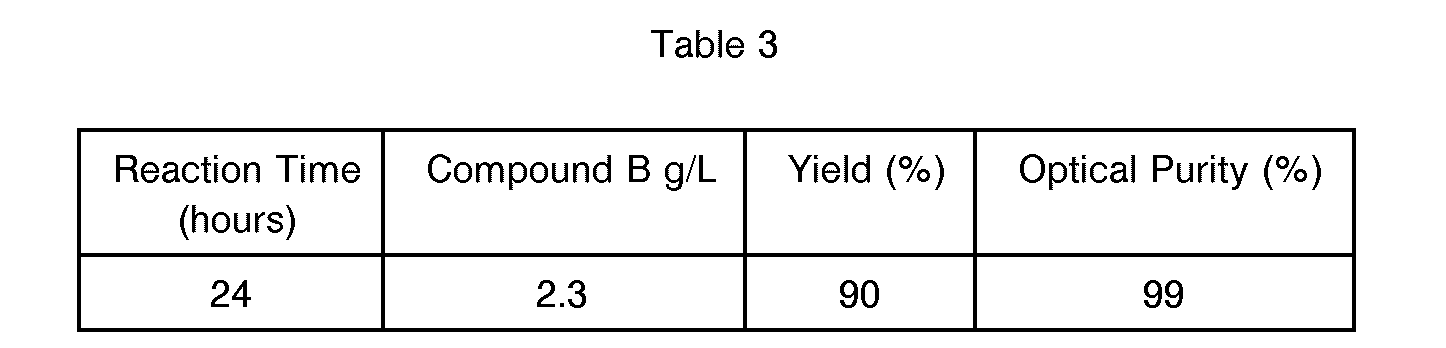
- One liter of cell extract was supplemented with 2.5 grams of substrate (Compound A), formate dehydrogenase (500 units), 0.7 mM NAD (nicotinamide adenine dinucleotide), and 25 grams of sodium formate. The reaction was carried out in a pH stat at pH 6.0, 150 RPM agitation, and 22 °C. Periodically, samples were taken and analyzed for the reaction yield and optical purity of Compound B as described in Example 1. The results obtained are those shown in Table 3 which follows.
- In the above procedure, the NADH cofactor used for the biotransformation of Compound A to Compound B was, concurrent with the biotransformation, formed and regenerated using formate dehydrogenase, NAD+, and formate as shown below.

- After complete conversion of Compound A to Compound B, the reaction mixture was adjusted to p 7.0 and extracted three times with equal volumes of ethyl acetate. The organic phase was separated and washed twice with 0.7 M sodium bicarbonate. The separated organic layer was dried over anhydrous sodium sulfate and ethyl acetate was removed under reduced pressure. The resulting oily residue was dried under vacuum at room temperature to recover a pale white solid in 85% yield (isolated) and 99% optical purity.
with an enzyme or microorganism capable of catalyzing the stereoselective reduction of the compound of Formula II to form the compound of Formula I.
Claims (21)
1. A process for preparation of an optically active alkanol compound of the formula:

wherein
with an enzyme or microorganism capable of catalyzing the stereoselective reduction of the compound of Formula II to form the compound of Formula I.
wherein
R1 is lower alkyl, aryl, or substituted aryl;
R2 is an alkylene group of 1 to 4 carbon atoms joining -X and

through from 1 to 2 carbon atoms;
through from 1 to 2 carbon atoms;
Y is hydrogen, halogen, hydroxy, nitro, lower alkoxy, benzyloxy, substituted benzyloxy, lower alkyl, or R3S02 NH- wherein R3, independently, has the same meaning as R1; and
X is chloro, bromo, iodo, amino, monoalkylamino, or dialkylamino, or the hydrochlorides of amino, monoalkylamino, or dialkylamino;
comprising
contacting a ketone compound of the formula

wherein
wherein
R1, X and Y are as previously defined, and
R2 is an alkylene group of 1 to 4 carbon atoms joining -X and

through from 1 to 2 carbon atoms;
through from 1 to 2 carbon atoms;
with an enzyme or microorganism capable of catalyzing the stereoselective reduction of the compound of Formula II to form the compound of Formula I.
2. The process of Claim 1 catalyzed by an enzyme selected from the group consisting of L-2-hydroxylisocaproate dehydrogenase, lactic acid dehydrogenase, yeast enzyme concentrate, and beta-hydroxy butyrate dehydrogenase.
3. The process of Claim 1 catalyzed by a microorganism of a genus selected from the group consisting of Achromobacter, Acinetobacter, Actinomyces, Alkaligenes, Arthrobacter, Azotobacter, Bacillus, Brevibacterium, Corynebacterium, Flavobacterium, Methylomonas, Mycobacterium, Nocardia, Psuedomonas, Rhodococcus, Streptomyces, Xanthomonas, Aspergillus, Candida, Fusarium, Geotrichum, Hansenula, Kloeckera, Penicillum, Pichia, Rhizopus, Rhodotorula, Saccharomyces, Trichoderma, Mortierella, Cunninghamella, Torulopsis and Rhodopseudomonas.
4. The process of Claim 1 catalyzed by a microorganism is selected from the group consisting of Arthrobacter simplex, Nocardia restricta, Nocardia salmonicolor, Rhodococcus fascians, Rhodococcus, rhodochrous, Mycobacterium vacca, Nocardia meditteranei, Nocardia autotrophica, Rhodococcus equi, Candida albicans, Geotrichum candidum, Mortierella alpina, Pichia pastoris, Pichia methanolica, Cunninghamella echinalate, Torulopsis polysporium, Torulopsis glabrata, Acinetobacter calcoaceticus, Nocardia globerula, Candida guilliermondii, Rhodococcus erythropolis, Saccharomyces cerevisiae, Pseudomonas putida, Mortierella rammanianna, Hansenula fabiana, Hansenula polymorpha, Trichoderma polysporium, Rhodococcus fascians, and Nocardia restricta.
5. The process of Claim 1 catalyzed by a microorganism selected from the group consisting of Rhodococcus globerulus ATCC 21505, Candida guilliermondii ATCC 20318, Rhodococcus erythropolis ATCC 4277, Saccharomyces cerevisciae ATCC 24702, Pseudomonas putida ATCC 11172, Mortierella rammanisma ATCC 38191, Hansenula fabiana ATCC 58045, Hansenula polymorpha ATCC 26012, Trichoderma polysporium ATCC 28014, Rhodococcus species ATCC 21243, Rhodococcus fascians ATCC 21950, Rhodococcus equi ATCC 14887, Aureobasidium pulluans ATCC 16623, Mucor hiemalis ATCC 8977b, Mortierella alpina ATCC 36965, Rhodococcus species ATCC 12975, and Rhodococcus species ATCC 29675.
6. The process of Claim 1 catalyzed by a microorganism of a genus selected from the group consisting of Hansenula, Rhodococcus, and Nocardia.
7. The process of Claim 1 catalyzed by a microorganism selected from the group consisting of Hansenula polymorpha ATCC 20012, Hansenula fabiana ATCC 58045, Rhodococcus sp. ATCC 21243, and Rhodococcus fascians ATCC ATCC 21950.
8. The process of any one of the preceding claims wherein R1 is lower alkyl or phenyl, R2 is ethylene or methylene, Y is hydrogen or lower alkyl, and X is chloro or isopropylamino hydrochloride.
9. The process of any one of the preceding claims wherein R1 is methyl, R2 is methylene, Y is hydrogen, and X is chloro.
10. The process of any one of the preceding claims catalyzed by a microorganism and carried out as a one-stage fermentation.
11. The process of any one of claims 1 to 9 catalyzed by a microorganism and carried out as a two-stage fermentation.
12. The process of any one of the preceding claims catalyzed by a microorganism and carried out in the presence of an inducer.
13. The process of any one of the preceding claims catalyzed by an enzyme and carried out in the presence of a co-factor.
14. The process of any one of the preceding claims catalyzed by a microorganism and carried out in a medium having one or more carbon sources selected from the group consisting of maltose, lactose, glucose, fructose, glycerol, sorbitol, sucrose, starch, mannitol, proplyene glycol, sodium acetate, sodium citrate, sodium glutamate, ethanol, propanol; one or more nitrogen sources selected from the group consisting of N-Z amine A, corn steep liquor, soy bean meal, beef extracts, yeast extracts, molasses, baker's yeast, tryptone, nutrisoy, peptone, yeastamin, sodium nitrate, ammonium sulfate; and one or more trace elements selected from the group consisting of phosphates, manganese, calcium, cobalt, nickel, iron, sodium salts and potassium salts.
15. The process of any one of the preceding claims carrried out at a pH of about 4 to about 9 and at a temperature of about 15 ° C to about 60 ° C.
16. The process of any one of the preceding claims carried out at a pH of about 6 to about 8, at a temperature of about 25 ° C to about 40 ° C, and for 4 to 48 hours.
17. The process of any one of the preceding claims catalyzed by a microorganism and carried out under agitation.
18. The process of any one of the preceding claims followed by the additional step of separating the desired product.
19. The process of Claim 18 wherein the separating step is carried out by extraction, distillation, crystallization, or column chromatography.
20. The process of any one of the preceding claims having a yield of the desired product of greater than about 80%, and an optical purity of the desired product of greater than about 80%.
21. The process of any one of the preceding claims having a yield of the desired product of greater than about 90%, and an optical purity of the desired product of greater than about 90%.
Applications Claiming Priority (2)
| Application Number | Priority Date | Filing Date | Title |
|---|---|---|---|
| US97228692A | 1992-11-05 | 1992-11-05 | |
| US972286 | 1992-11-05 |
Publications (2)
| Publication Number | Publication Date |
|---|---|
| EP0596490A2 true EP0596490A2 (en) | 1994-05-11 |
| EP0596490A3 EP0596490A3 (en) | 1995-04-26 |
Family
ID=25519464
Family Applications (1)
| Application Number | Title | Priority Date | Filing Date |
|---|---|---|---|
| EP93117899A Withdrawn EP0596490A3 (en) | 1992-11-05 | 1993-11-04 | Stereoselective reduction of ketones. |
Country Status (11)
| Country | Link |
|---|---|
| US (1) | US5391495A (en) |
| EP (1) | EP0596490A3 (en) |
| JP (1) | JPH06233695A (en) |
| KR (1) | KR940011636A (en) |
| CN (1) | CN1091472A (en) |
| AU (1) | AU5044393A (en) |
| CA (1) | CA2103932A1 (en) |
| FI (1) | FI934874A7 (en) |
| HU (1) | HUT67410A (en) |
| IL (1) | IL107312A0 (en) |
| MX (1) | MX9306727A (en) |
Cited By (6)
| Publication number | Priority date | Publication date | Assignee | Title |
|---|---|---|---|---|
| WO1996021643A1 (en) * | 1995-01-10 | 1996-07-18 | Pharmacia & Upjohn Company | Antiarrhythmic (s)-enantiomers of methanesulfonamides |
| WO1998016631A1 (en) * | 1996-10-11 | 1998-04-23 | Mcgill University | Immobilized cofactor-dependent enzymes |
| US5874475A (en) * | 1995-12-21 | 1999-02-23 | Pharmacia & Upjohn Company | Antiarrhythmic (S)-enantiomers of methanesulfonamides |
| EP0939132A1 (en) * | 1998-02-25 | 1999-09-01 | Daicel Chemical Industries, Ltd. | Preparation of optically active alcohol substituted with one or more halogen atoms |
| WO2003000911A1 (en) * | 2001-06-25 | 2003-01-03 | Kaneka Corporation | Process for producing optically active (r)-2-chloro-1-(3'-chlorophenyl)ethanol |
| DE102005021241B3 (en) * | 2005-05-09 | 2006-11-16 | Technische Universität München | Biosynthesis of organic compound, useful for the preparation of e.g. chemicals, comprises culturing and sub-culturing phototrophic microorganisms; and mixing the sub-cultured microorganisms with e.g. reducing agent |
Families Citing this family (22)
| Publication number | Priority date | Publication date | Assignee | Title |
|---|---|---|---|---|
| EP0782629B1 (en) * | 1994-09-22 | 1998-12-02 | Rhone-Poulenc Nutrition Animale | Enzymatic hydrolysis of 4-methylthiobutyronitriles |
| US5534422A (en) * | 1995-05-19 | 1996-07-09 | Merck & Co., Inc. | Bioconversion of beta keto-ester to (R) hydroxyester |
| US5900368A (en) * | 1996-09-17 | 1999-05-04 | Merck & Co., Inc. | Process for bioreduction of bisaryl ketone to bisaryl alcohol |
| JP3843255B2 (en) * | 2000-08-16 | 2006-11-08 | ブリストル−マイヤーズ スクイブ カンパニー | Stereoselective reduction of substituted oxobutanes. |
| BR0208265A (en) | 2001-03-22 | 2004-03-02 | Bristol Myers Squibb Co | Stereoselective reduction of substituted acetophenone |
| WO2003072726A2 (en) * | 2002-02-22 | 2003-09-04 | The Board Of Trustees Of The University Of Illinois | Nad phosphite oxidoreductase a novel catalyst from bacteria for regeneration of nad(p)h |
| DE10248277A1 (en) * | 2002-10-16 | 2004-05-06 | X-Zyme Gmbh | Preparation of optically active 1-hydroxy-2-alkylaminoethane compounds, useful as bronchodilators for treating e.g. asthma, by reacting an amine with reactive 2-substituted ethanol, also new intermediates |
| WO2006021885A1 (en) * | 2004-08-26 | 2006-03-02 | Pfizer Inc. | Enantioselective biotransformation for preparation of protein tyrosine kinase inhibitor intermediates |
| US7582468B2 (en) * | 2005-05-25 | 2009-09-01 | Bristol-Myers Squibb Company | Process for preparing (2R,3S)-1,2-epoxy-3-(protected)amino-4-substituted butane and intermediates thereof |
| US7393667B2 (en) * | 2005-05-31 | 2008-07-01 | Bristol-Myers Squibb Company | Stereoselective reduction process for the preparation of pyrrolotriazine compounds |
| AT504542B1 (en) * | 2006-12-07 | 2008-09-15 | Iep Gmbh | METHOD FOR THE ENANTIOSELECTIVE ENZYMATIC REDUCTION OF SECODION DERIVATIVES |
| ES2360336T3 (en) * | 2007-06-22 | 2011-06-03 | Bristol-Myers Squibb Company | COMPOSITIONS IN TABLETS CONTAINING ATAZANAVIR. |
| SI2178513T1 (en) * | 2007-06-22 | 2011-05-31 | Bristol Myers Squibb Co | Tableted compositions containing atazanavir |
| EP2178512B1 (en) * | 2007-06-22 | 2011-03-09 | Bristol-Myers Squibb Company | Tableted compositions containing atazanavir |
| DK2170292T3 (en) * | 2007-06-22 | 2014-04-07 | Bristol Myers Squibb Holdings Ireland | Tablet-containing Atazanavir Compositions |
| CN102186972B (en) * | 2008-08-29 | 2014-08-20 | 科德克希思公司 | For stereoselective production of (4S)-3-[(5S)-5-(4-fluorophenyl)-5-hydroxypentanoyl]-4-phenyl-1,3-oxazolidin-2-one Ketoreductase polypeptide |
| CN101760436B (en) * | 2008-12-26 | 2011-12-07 | 安琪酵母股份有限公司 | Yeast strain, preparation method and related application thereof |
| WO2010150946A1 (en) * | 2009-06-22 | 2010-12-29 | Sk Holdings Co., Ltd. | Method for preparation of carbamic acid (r)-1-aryl-2-tetrazolyl-ethyl ester |
| US8404461B2 (en) * | 2009-10-15 | 2013-03-26 | SK Biopharmaceutical Co. Ltd. | Method for preparation of carbamic acid (R)-1-aryl-2-tetrazolyl-ethyl ester |
| CN103748211B (en) | 2011-07-13 | 2016-05-18 | 食品安全测试系统公司 | Be used for listerial culture medium and cultural method and detect listerial method |
| CN111019981A (en) * | 2019-12-27 | 2020-04-17 | 蚌埠丰原医药科技发展有限公司 | Method for synthesizing R-noradrenaline by asymmetric method |
| CN117903997B (en) * | 2024-02-26 | 2024-12-20 | 山东格研生物技术有限公司 | Rhodococcus rhodochrous selective separation culture medium and preparation method and application thereof |
Family Cites Families (4)
| Publication number | Priority date | Publication date | Assignee | Title |
|---|---|---|---|---|
| US3342584A (en) * | 1963-07-10 | 1967-09-19 | Ansul Co | Method for killing broadleaf and grassy weeds in cotton |
| US4857468A (en) * | 1985-04-13 | 1989-08-15 | Kanegafuchi Kagaku Kogyo Kabushiki Kaisha | Process for preparing optically active 2-halo-1-phenyl ethanol |
| DE3724197A1 (en) * | 1987-07-22 | 1989-02-02 | Merck Patent Gmbh | PROCESS FOR REDUCING KETONES |
| US5106736A (en) * | 1991-04-23 | 1992-04-21 | E.R. Squibb & Sons, Inc. | Enzymatic process for enantiomer-specific perparation of mercapto alkanoic acid compounds |
-
1993
- 1993-08-12 CA CA002103932A patent/CA2103932A1/en not_active Abandoned
- 1993-10-18 IL IL107312A patent/IL107312A0/en unknown
- 1993-10-20 JP JP5293772A patent/JPH06233695A/en active Pending
- 1993-10-25 KR KR1019930022246A patent/KR940011636A/en not_active Withdrawn
- 1993-10-27 US US08/143,976 patent/US5391495A/en not_active Expired - Fee Related
- 1993-10-28 MX MX9306727A patent/MX9306727A/en unknown
- 1993-11-02 CN CN93119819A patent/CN1091472A/en active Pending
- 1993-11-04 HU HU9303130A patent/HUT67410A/en unknown
- 1993-11-04 AU AU50443/93A patent/AU5044393A/en not_active Abandoned
- 1993-11-04 EP EP93117899A patent/EP0596490A3/en not_active Withdrawn
- 1993-11-04 FI FI934874A patent/FI934874A7/en unknown
Cited By (9)
| Publication number | Priority date | Publication date | Assignee | Title |
|---|---|---|---|---|
| WO1996021643A1 (en) * | 1995-01-10 | 1996-07-18 | Pharmacia & Upjohn Company | Antiarrhythmic (s)-enantiomers of methanesulfonamides |
| CN1057758C (en) * | 1995-01-10 | 2000-10-25 | 法玛西雅厄普约翰美国公司 | Antiarrhythmic (S) -enantiomers of methanesulfonamides |
| US5874475A (en) * | 1995-12-21 | 1999-02-23 | Pharmacia & Upjohn Company | Antiarrhythmic (S)-enantiomers of methanesulfonamides |
| WO1998016631A1 (en) * | 1996-10-11 | 1998-04-23 | Mcgill University | Immobilized cofactor-dependent enzymes |
| US5807926A (en) * | 1996-10-11 | 1998-09-15 | Mcgill University | Immobilized cofactor-dependent enzymes |
| EP0939132A1 (en) * | 1998-02-25 | 1999-09-01 | Daicel Chemical Industries, Ltd. | Preparation of optically active alcohol substituted with one or more halogen atoms |
| US6168935B1 (en) | 1998-02-25 | 2001-01-02 | Daicel Chemical Industries, Ltd. | Preparation of optically active alcohol substituted with one or more halogen atoms |
| WO2003000911A1 (en) * | 2001-06-25 | 2003-01-03 | Kaneka Corporation | Process for producing optically active (r)-2-chloro-1-(3'-chlorophenyl)ethanol |
| DE102005021241B3 (en) * | 2005-05-09 | 2006-11-16 | Technische Universität München | Biosynthesis of organic compound, useful for the preparation of e.g. chemicals, comprises culturing and sub-culturing phototrophic microorganisms; and mixing the sub-cultured microorganisms with e.g. reducing agent |
Also Published As
| Publication number | Publication date |
|---|---|
| EP0596490A3 (en) | 1995-04-26 |
| FI934874L (en) | 1994-05-06 |
| FI934874A0 (en) | 1993-11-04 |
| CN1091472A (en) | 1994-08-31 |
| HUT67410A (en) | 1995-04-28 |
| FI934874A7 (en) | 1994-05-06 |
| JPH06233695A (en) | 1994-08-23 |
| AU5044393A (en) | 1994-05-19 |
| MX9306727A (en) | 1994-06-30 |
| IL107312A0 (en) | 1994-01-25 |
| US5391495A (en) | 1995-02-21 |
| KR940011636A (en) | 1994-06-21 |
| CA2103932A1 (en) | 1994-05-06 |
| HU9303130D0 (en) | 1994-01-28 |
Similar Documents
| Publication | Publication Date | Title |
|---|---|---|
| US5391495A (en) | Stereoselective reduction of ketones | |
| JP2010106025A (en) | Process for preparation of (1s, 4r)-or (1r, 4s)-4-(2-amino-6-chloro-9h-purine-9-yl)-2-cyclopentene-1-methanol | |
| CN100335643C (en) | Stereospecific reduction of substituted oxobutanes | |
| EP0569998B1 (en) | Stereoselective microbial or enzymatic reduction of 3,5-dioxoesters to 3,5-dihydroxyesters | |
| US5686298A (en) | Enzymatic reduction method for the preparation of compounds useful for preparing taxanes | |
| AU2001280698A1 (en) | Stereoselective reduction of substituted oxo-butanes | |
| US5393663A (en) | Stereoselective preparation of halophenyl alcohols from ketones | |
| US5858737A (en) | Conversion of indene to (1S)-amino-(2R)-indanol free of any stereoisomer, by combination of dioxygenase bioconversion and chemical steps | |
| JPH10507360A (en) | Enzymatic preparation of chiral α-tertiary carboxylic esters | |
| EP0863212A2 (en) | Processes for production of optical active quinuclidinol | |
| JP4818507B2 (en) | Process for producing optically active 3-quinuclidinol | |
| KR100739361B1 (en) | Method for preparing optically active β-amino alcohol | |
| Patel et al. | Stereoselective microbial reduction of N-(4-(1-oxo-2-chloroacetyl ethyl) phenyl methane sulfonamide | |
| JP3703928B2 (en) | Process for producing optically active N-benzyl-3-pyrrolidinol | |
| USH1893H (en) | Enzymatic reduction method for the preparation of halohydrins | |
| CA2321450A1 (en) | Process for producing (r)-2-hydroxy-1-phenoxypropane derivative | |
| EP0629702A2 (en) | Enzymatic preparation of chiral epoxide or hydroxy compounds by stereoselective epoxidation or hydroxylation | |
| WO2001057229A1 (en) | Process for producing optically active 4-benzyloxy-3-hydroxybutyric acid esters |
Legal Events
| Date | Code | Title | Description |
|---|---|---|---|
| PUAI | Public reference made under article 153(3) epc to a published international application that has entered the european phase |
Free format text: ORIGINAL CODE: 0009012 |
|
| AK | Designated contracting states |
Kind code of ref document: A2 Designated state(s): AT BE CH DE DK ES FR GB GR IE IT LI LU MC NL PT SE |
|
| PUAL | Search report despatched |
Free format text: ORIGINAL CODE: 0009013 |
|
| AK | Designated contracting states |
Kind code of ref document: A3 Designated state(s): AT BE CH DE DK ES FR GB GR IE IT LI LU MC NL PT SE |
|
| STAA | Information on the status of an ep patent application or granted ep patent |
Free format text: STATUS: THE APPLICATION IS DEEMED TO BE WITHDRAWN |
|
| 18D | Application deemed to be withdrawn |
Effective date: 19951027 |