EP0597379B1 - Griffelseingabeverarbeitungsgerät - Google Patents
Griffelseingabeverarbeitungsgerät Download PDFInfo
- Publication number
- EP0597379B1 EP0597379B1 EP93117837A EP93117837A EP0597379B1 EP 0597379 B1 EP0597379 B1 EP 0597379B1 EP 93117837 A EP93117837 A EP 93117837A EP 93117837 A EP93117837 A EP 93117837A EP 0597379 B1 EP0597379 B1 EP 0597379B1
- Authority
- EP
- European Patent Office
- Prior art keywords
- editing
- processing apparatus
- data
- pen
- inputting
- Prior art date
- Legal status (The legal status is an assumption and is not a legal conclusion. Google has not performed a legal analysis and makes no representation as to the accuracy of the status listed.)
- Expired - Lifetime
Links
Images







Classifications
-
- G—PHYSICS
- G06—COMPUTING OR CALCULATING; COUNTING
- G06F—ELECTRIC DIGITAL DATA PROCESSING
- G06F3/00—Input arrangements for transferring data to be processed into a form capable of being handled by the computer; Output arrangements for transferring data from processing unit to output unit, e.g. interface arrangements
- G06F3/01—Input arrangements or combined input and output arrangements for interaction between user and computer
- G06F3/03—Arrangements for converting the position or the displacement of a member into a coded form
- G06F3/033—Pointing devices displaced or positioned by the user, e.g. mice, trackballs, pens or joysticks; Accessories therefor
- G06F3/038—Control and interface arrangements therefor, e.g. drivers or device-embedded control circuitry
-
- G—PHYSICS
- G06—COMPUTING OR CALCULATING; COUNTING
- G06F—ELECTRIC DIGITAL DATA PROCESSING
- G06F3/00—Input arrangements for transferring data to be processed into a form capable of being handled by the computer; Output arrangements for transferring data from processing unit to output unit, e.g. interface arrangements
- G06F3/01—Input arrangements or combined input and output arrangements for interaction between user and computer
- G06F3/048—Interaction techniques based on graphical user interfaces [GUI]
- G06F3/0481—Interaction techniques based on graphical user interfaces [GUI] based on specific properties of the displayed interaction object or a metaphor-based environment, e.g. interaction with desktop elements like windows or icons, or assisted by a cursor's changing behaviour or appearance
-
- G—PHYSICS
- G06—COMPUTING OR CALCULATING; COUNTING
- G06F—ELECTRIC DIGITAL DATA PROCESSING
- G06F3/00—Input arrangements for transferring data to be processed into a form capable of being handled by the computer; Output arrangements for transferring data from processing unit to output unit, e.g. interface arrangements
- G06F3/01—Input arrangements or combined input and output arrangements for interaction between user and computer
- G06F3/048—Interaction techniques based on graphical user interfaces [GUI]
- G06F3/0487—Interaction techniques based on graphical user interfaces [GUI] using specific features provided by the input device, e.g. functions controlled by the rotation of a mouse with dual sensing arrangements, or of the nature of the input device, e.g. tap gestures based on pressure sensed by a digitiser
- G06F3/0488—Interaction techniques based on graphical user interfaces [GUI] using specific features provided by the input device, e.g. functions controlled by the rotation of a mouse with dual sensing arrangements, or of the nature of the input device, e.g. tap gestures based on pressure sensed by a digitiser using a touch-screen or digitiser, e.g. input of commands through traced gestures
- G06F3/04883—Interaction techniques based on graphical user interfaces [GUI] using specific features provided by the input device, e.g. functions controlled by the rotation of a mouse with dual sensing arrangements, or of the nature of the input device, e.g. tap gestures based on pressure sensed by a digitiser using a touch-screen or digitiser, e.g. input of commands through traced gestures for inputting data by handwriting, e.g. gesture or text
-
- G—PHYSICS
- G06—COMPUTING OR CALCULATING; COUNTING
- G06F—ELECTRIC DIGITAL DATA PROCESSING
- G06F40/00—Handling natural language data
- G06F40/10—Text processing
- G06F40/166—Editing, e.g. inserting or deleting
-
- G—PHYSICS
- G06—COMPUTING OR CALCULATING; COUNTING
- G06V—IMAGE OR VIDEO RECOGNITION OR UNDERSTANDING
- G06V30/00—Character recognition; Recognising digital ink; Document-oriented image-based pattern recognition
- G06V30/10—Character recognition
- G06V30/32—Digital ink
- G06V30/36—Matching; Classification
- G06V30/373—Matching; Classification using a special pattern or subpattern alphabet
Definitions
- the present invention relates to a pen input processing apparatus which can edit information displayed on a screen in accordance with handwritten instructions which are given by means such as a pen.
- infomation inputting is generally carried out through a keyboard.
- the infomation inputting through keyboard is hereinafter referred to as a key inputting.
- the editing when the editing is carried out with respect to the object such as a document, it has been done in the following manner: first, an editing point or editing area is specified by moving a cursor responsive to a key operation; and thereafter a desired editing process is carried out through further key operations.
- the following apparatus which can carry out coordinate inputting by directly pointing a screen by means of a coordinate inputting-use pen, and can carry out inputting of character with respect to the screen.
- Such apparatus is hereinafter generally referred to as pen input processing apparatus.
- a cursor 52 of the end of the sentence on a screen 51 of Fig. 14(a) is moved to the position of character "f" through means such as a key and pen as shown in Fig. 14(b).
- a handwriting button 54 in a guidance area 53 which is provided in the lower portion of the screen 51, is pressed, an inputting board 55 for handwriting appears, as shown in Fig. 14(c), on an upper side of the guidance area 53. So, when the word "very” is handwritten in a window 56 in the inputting board 55, the word “very” is added before the word "fine” in the sentence.
- Such pen input processing apparatus stores a plurality of commands for a variety of editing processes so as to correspond to line drawings having respective unique shapes.
- a line drawing is made as an instruction on the screen through an instrument such as a pen, the command corresponding to the shape of the line drawing is recognized so as to carry out the editing process accordingly.
- the user is not informed as a routine (1) whether or not the command for editing is correctly inputted and (2) whether or not the inputted command is recognized in accordance with the user's intentions.
- the user can not verify until the editing process is over whether or not the inputted command is correctly recognized. Namely, the user can verify only by comparing the displayed content of before editing with that of after editing whether or not the inputted line drawing corresponded to the intended command.
- each editing function corresponds to each unique shape of line drawing, it is required to prepare the number of line drawings which coincides with that of possible editing functions. So, when the number of the editing functions increases, it is required to adopt the line drawings having respective unmemorable and complicated shapes, thereby forcing the user to study so much in order to well handle the respective editing functions. Additionally, when the number of the line drawings increases, the recognizing processes become complicated accordingly, thereby causing the recognizing speed and the recognizing ratio to lower.
- the key inputting is available during carrying out of the editing process in accordance with the handwritten input. Accordingly, the key inputting may cause to edit mistakenly during editing in accordance with the handwritten input. More specifically, in a case where a space should be inserted during editing process, when the user imprudently touches a key, another processing such as deleting of one character may interrupt the main processing, thereby changing the editing contents.
- a circle of Fig. 15(a) it is assumed that a hatched line should be changed into a broken line.
- a circle is specified with a pen 62.
- the following operation is generally carried out, i.e., the kind of hatching is changed in accordance with the specifying by a function or an icon.
- the pen is deflected such that the pen-down and pen-up operations are not made at the same one point, thereby frequently resulting in that the specified circle moves from the original location.
- prior art document (D3) WO 92/08183 A1 discloses a control system of a computer through a position-sensed stylus similar to the pen-based computer of document D1 which also gives the user feedback that assures him that the computer has recognized the gesture he intended by replacing the inputted hand-written command with the machine-version of this command.
- the present invention provides a pen input processing apparatus as specified in claim 1.
- the present invention provides a pen input processing apparatus by which inputting by handwriting becomes simpler to operate and which can carry out more practical editing in accordance with the inputting by handwriting.
- the pen input processing apparatus of the present invention is characterized by having at least the following means:
- a pen input processing apparatus in accordance with the present invention is provided with the following elements as a controlling section, i.e., a CPU (Central Processing Unit) 1, a ROM (Read Only Memory) 2, a RAM (Random Access Memory) 3, a printer controller 4, a display controller 5, an FD controller 6, an IC card interface 7, a key interface 8, a pen interface 9, and an editing-use handwriting inputting interface 10 (hereinafter referred to as an editing-use interface 10).
- the present pen input processing apparatus can do tasks, in response to a keyborad 15 connected with the key interface 8, such as a cursor moving, inputting of characters, and editing. Such tasks can also be done in accordance with an input pen 16 connected with the pen interface 9 according to the present apparatus.
- the CPU 1 is a central controlling section for con trolling respective operations of the pen input processing apparatus.
- the CPU 1 is connected with the above-mentioned elements through a main bus.
- the CPU 1 carries out the cursor moving, inputting of characters, editing, and other processings in response to the inputting operation of the keyborad 15 and input pen 16.
- the CPU 1 has a function which displays a handwriting input area for inputting by handwriting during editing in accordance with the handwritten input. More specifically, in a case where a line drawing handwritten by the input pen 16 corresponds to a gesture command instructing to carry out an editing mode in accordance with the handwritten input, when the gesture command is recognized by the editing-use interface 10, the CPU 1 controls a screen 21 so as to display a window 22 as the handwriting input area (see Figs. 3(a) through 3(c)). Thus, the CPU 1 has a function as handwriting input area displaying means.
- the above-mentioned gesture command is an instruction to execute an application program and is also an instruction corresponding to a specific pattern which is compared with a shape of a handwritten line drawing.
- the CPU 1 has also a function as key input nullifying means which can nullify a key inputting from the keyborad 15 during editing mode which is carried out in accordance with the handwritten input.
- the CPU 1 and a buzzer controller 18 have a function as informing means. More specifically, when the CPU 1 informs the buzzer controller 18 that the gesture command has been recognized in accordance with the handwritten line drawing, the buzzer controller 18 rings a buzzer 19 in a low tone. In contrast, when the CPU 1 informs the buzzer controller 18 that the gesture command has not been recognized although there exists the handwritten line drawing, the buzzer controller 18 rings the buzzer 19 in a high tone.
- the CPU 1 controls (1) a command name displaying area 27 in a bottom end of the screen 21 so as to display a name of the recognized gesture command (see Figs. 5(a) and 5(b)), and controls (2) an editing character displaying area 28 so as to display at least one of the characters to be edited.
- the CPU 1 has functions as editing instruction displaying means and editing object displaying means.
- the command name of each recognizable gesture command is associated with JTYPE using an integer of not less than zero.
- the character number of each displaying command name is stored in a count table (COUNTTABLE) in correspondence with its JTYPE.
- Table 1 is an example of summarizing of the above-mentioned relation. Note that the JTYPE is set to -1 when the handwritten line drawing could not be recognized as a gesture command.
- Each value of the count table is counted by a working-use counter.
- Each value of the pointer table is stored in a working-use pointer.
- the command name corresponding to the value of the working-use pointer is displayed such that the character number of the command name coincides with the counted value of the working-use counter.
- Whether a character to be edited exists or a series of characters to be edited exists corresponds to whether the value of PCOUNT is "1" or "0". More specifically, when the PCOUNT value is "1", according to a pointer (POINTMOJIPTR) indicative of one character or the head end of characters of the series of characters in a text memory 39 (described later) which is to be edited, either the one character or at least one character of the head end of the series of characters is displayed. In contrast, when the PCOUNT value is "0", the editing character displaying area 28 displays a space of one character. Note that the editing character displaying area 28 may display a few characters from the heading character of the series of characters in order to easily discriminate between (1) one series of characters which are to be edited and (2) another series of characters.
- the RAM 2 is a memory which can write/readout data at random and which has a function for temporarily storing the inputted data, results calculated by the CPU 1 and other data.
- the RAM 2 has therein a plurality of working areas.
- the ROM 3 is a read only memory which preliminarily stores program and data for operating the present pen input processing apparatus and other data.
- the printer controller 4 which is connected with a printer 11, controls a printing operation of the printer 11 in accordance with an instruction from the CPU 1.
- the display controller 5 converts the displaying data from the CPU 1 into a video signal so as to supply to a displaying device 12.
- the display controller 5 also controls a displaying operation of the displaying device 12 in accordance with an instruction from the CPU 1.
- the displaying device 12 is provided with a display 31 and a tablet 32 (both described later).
- the FD controller 6 controls a floppy disk device 13 in communication with the CPU 1.
- the IC card interface 7 contains an IC card-use slot so as to relay the communication between (1) a CPU and a memory in an IC card 14 and (2) the CPU 1. Loading/saving of data can be made with respect to a floppy disk and the IC card 14 of the floppy disk device 13 in accordance with the controllings of the FD controller 6 and the IC card interface 7 respectively.
- the editing-use interface 10 which is connected with a handwriting recognition dictionary 17, reads out the gesture command stored in the handwriting recognition dictionary 17.
- the editing-use interface 10 recognizes the gesture command corresponding to the shape of handwritten line drawing with the input pen 16 in accordance with the pen data through the pen interface 9. Thus, the corresponding gesture command is specified.
- the editing-use interface 10 has a function as recognizing means.
- the editing-use interface 10 reads out a gesture command in different manners according to the following cases (1) and (2).
- One is the case (1) where an area specifying mode is set wherein the editing processing is carried out, in accordance with one gesture command, with respect to a series of characters of the editing area which is specified for a plurality of characters, and the other is the case (2) where an ordinary editing mode is set wherein the editing processing is carried out with respect to one character in accordance with one gesture command.
- dictionaries 17-1 and 17-2 for the area specifying mode
- the gesture command is read out of dictionaries 17-1 and 17-3 for the ordinary editing mode.
- the editing functions which are available during the area specifying mode are restricted.
- the functions such as a character inserting function which is not available during specifying the area through the key inputting are excluded from the objects to be recognized.
- the editing-use interface 10 has a function as editing instruction limiting means.
- the fundamental structure is provided with the input pen 16, the display 31, the tablet 32, a trace coordinate extracting section 33, a trace drawing section 34, a bit map memory 35, a gesture command judging section 36, the gesture command table 37, a text editing section 38, a text memory 39, a handwritten character recognizing section 40, and a handwritten character table 41.
- the transparent tablet 32 as inputting means is overlapped onto the display 31.
- the tablet 32 When the tablet 32 is touched by a tip of the input pen 16, the tablet 32 generates a voltage, as coordinate information, changing depending on the touched position.
- the trace coordinate extracting section 33 which is in the pen interface 9, extracts one after another the trace of the input pen on the tablet 32 as the trace coordinate.
- the trace drawing section 34 which is provided, like the text editing section 38, in the CPU 1 generates a trace image connecting the trace coordinates extracted by the trace coordinate extracting section 33.
- the trace image is supplied to the bit map memory 35 which is provided in the RAM 2.
- the trace image and the image which is currently displayed on the display 31 are synthesized by the bit map memory 35 so as to supply to the display 31.
- the gesture command judging section 36 which is provided in the editing-use interface 10, compares the extracted trace coordinate with basic stroke data of the gesture command stored in the gesture command table 37 so as to recognize a gesture command corresponding to the closest basic stroke to the line drawing which is drawn in accordance with the trace coordinate.
- the gesture command judging section 36 gives to the text editing section 38 (1) the recognized gesture command, and (2) the position information concerning the character or the series of characters which is recognized in accordance with the trace coordinate and is an editing object.
- the gesture command table 37 stores the basic stroke data indicated as the line drawing so as to correspond to the gesture command.
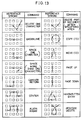
- the gesture command table 37 is provided in the handwriting recognition dictionary 17. Fig. 13, for example, is prepared as the gesture command.
- a basic stroke corresponds to a line drawing which is drawn like character V from the left to the right.
- the character which is located on a pen-down coordinate in the line drawing, is deleted.
- the pen-down coordinate coincides with the coordinate of a point on the tablet 32, the point being touched by the input pen 16.
- a basic stroke like the case of one character deleting, is the line drawing which is drawn like character V.
- the line drawing like character V is made after specifying an area to be deleted, it is recognized as a partially deleting of the document.
- a basic stroke data corresponds to a straight line which is drawn on a character or a series of characters to be underlined in a horizontal direction from the left to the right.
- the text editing section 38 which is provided in the CPU 1, carries out the editing processing with respect to a corresponding character or a series of characters of the text memory 39 in accordance with (1) the gesture command recognized by the gesture command judging section 36 and (2) the position information which is supplied along with the gesture command.
- the text editing section 38 receives not only the gesture commands from the gesture command judging section 36, but also the commands from the keyboard 15 so as to carry out the editing processing in accordance with the key operations.
- the text memory 39 which is the memory for storing one character or the series of characters displayed by the display 31, is provided in the RAM 2 like the bit map memory 35.
- the character data in the text memory 39 and the image in the bit map memory 35 are synthesized so as to be displayed by the display 31.
- the handwritten character recognizing section 40 is provided in the editing-use interface 10 and is functionally similar in the process to the gesture command judging section 36.
- the handwritten character table 41 is provided in the handwriting recognition dictionary 17 like the gesture command table 37.
- the handwritten character recognizing section 40 compares the trace coordinate extracted by the trace coordinate extracting section 33 with the plurarity of basic strokes stored in the handwritten character table 41 so as to recognize a character code corresponding to the closest basic character stroke to the line drawing which is drawn by the trace coordinate and to send the recognized character code to the text editing section 38.
- the handwritten character recognizing section 40 carries out the processing similar to the processing which the gesture command judging section 36 recognizes the gesture command in accordance with the trace coordinates.
- the editing processing is not required. So, the position information is not supplied to the text editing section 38, thereby making distinction over the gesture command judging section 36.
- a line drawing having a shape like " ⁇ ”, which indicates the handwriting inputting of characters is drawn from a substantial center of character "f" as a base point (pen-down point).
- the mode is moved from the handwriting inputting of gesture commands to the handwriting inputting of characters.
- the cursor 23 moves, as shown in Figs. 3(a) and 3(b), from character “y” to character "f", and thereafter a handwritten recognition-use inputting board 24 appears on the upper portion of a guidance area 25.
- the handwritten recognition-use inputting board 24 has the window 22 as the handwriting input area.
- the window 22 has, for example, a five-character space.
- the frame data for displaying a border-line is generated by the text editing section 38.
- the trace coordinate of character "v” is extracted by the trace coordinate extracting section 33.
- the image which is drawn by the trace drawing section 34 in accordance with the extracted trace coordinates and (2) the image which is currently displayed on the screen 21 are synthesized by the bit map memory 35 so as to output the synthesized data to the display 31.
- each character, which is written by the input pen 16 is simultaneously displayed on the screen 21.
- the handwritten character recognizing section 40 compares the trace coordinate with the basic character stroke of the handwritten character table 41 so as to obtain an optimum character code.
- the text editing section 38 processes in accordance with the optimum character code such that character "v” is added to the text memory 39 and character "v” is inserted before character "f".
- the character recognition of the first inputting area is carried out as soon as the input pen 16 is put down in a second inputting area of the window 22.
- the pen input processing apparatus is arranged so as to display the window 22 in accordance with the gestrure command which indicates the inputting of character by handwriting.
- the present pen input processing apparatus is arranged like the conventional apparatus so as to display the window 22 in accordance with the pressing of the handwriting button 26 which is displayed on the guidance area 25 provided in the lower portion of the screen 21.
- the gesture command for deleting of one character which is obtained by comparing the trace coordinate with the gesture command in the gesture command table 37, is recognized by the gesture command judging section 36. Thereafter, the position information along with the gesure command for deleting of one character is sent to the text editing section 38.
- the cursor 23 is moved from the current position to a positon responsive to the position information. Character "D" in the text memory 39 is deleted in accordance with the gesture command.
- the trace coordinate extracting section 33 and other elements are in respective stand-by states for waiting the next inputting by handwriting.
- the kind of the gesture command i.e., "delete one character” is displayed on the command name displaying area 27, and the character to be deleted, i.e., "A" is displayed on the editing character displaying area 28.
- the buzzer 19 is rung in the low tone along with the above-mentioned displaying.
- the following description deals with the difference in the gesture command processing between a case where one character is deleted and a case where a plurality of characters are deleted.
- the pointing operation through the input pen 16 is made use of.
- a rectangular area (see Fig. 7(b)) defined by a diagonal line extending from character "C" to "Y” can be specified.
- the following description deals with a way of processing for carrying out the inputting of characters by handwriting in the present pen input processing apparatus.
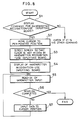
- the cursor 23 is moved to a position to which the coordinate inputting is carried out by the input pen 16 (S2).
- the screen 21 is scrolled (S3) and the handwritten recognition-use inputting board 24 is displayed (S4) such that the cursor 23 is not hidden during displaying of the handwritten recognition-use inputting board 24.
- the character data which are handwritten in the window 22 of the handwritten recognition-use inputting board 24 are read in (S5), thereafter it is judged whether or not the read-in operation is completed (S6).
- S5 The character data which are handwritten in the window 22 of the handwritten recognition-use inputting board 24 are read in (S5), thereafter it is judged whether or not the read-in operation is completed (S6).
- the input pen 16 is put down in the second area of the window 22 as mentioned above, it is judged that the read-in operation of the character data is completed.
- the processing ends as it is.
- the read-in operation is not completed, the data is inputted so as to correspond to the position of the cursor 23 (S7), thereafter returning to S5.
- the following description deals with a processing procedure of a case where the key inputting is done during processing of the gesture command.
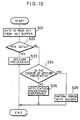
- the process is carried out wherein the pen data or key data is read-in.
- the pen data is inputted (S11).
- the key data is inputted (S12).
- the inputted pen data or key data is stored in a key buffer of the RAM 2 (S13).
- the data is read out of the key buffer (S21). It is judged whether or not the data is the pen data (S22). When the data is the pen data, the gesture command is carried out (S23). Thus, the processing ends.
- the following description deals with a processing procedure of a case where the fact, that the line drawing handwritten by the input pen 16 is recognized as the gesture command when the editing instructions are inputted by handwriting, is informed.
- the command name displaying area 27 displays the command name, specified by the MOJIPTR, by the character number of the COUNT (S34), and it is judged whether or not the PCOUNT is "0" (S35).
- the PCOUNT becomes "1".
- the editing character displaying area 28 displays the character or the character of head end of the series of characters specified by the POINTMOJIPTR (S36).
- the gesture command is carried out.
- the present pen input processing apparatus is arranged such that one line drawing can carry out the same editing processing with respect to one character and a plurality of characters. The following description deals with such processing procedure.
- the current inputting mode is first recognized so as to judge whether or not the inputting mode is the area specifying mode (S43).
- the dictionaries 17-1 and 17-2 are read out of the handwriting recognition dictionary 17 through the editing-use interface 10 (S44).
- the dictionaries 17-1 and 17-3 are read out of the handwriting recognition dictionary 17 (S45).
- the recognition processing is carried out (S46), and when the gesture command corresponding to the shape of the line drawing is recognized by the gesture command judging section 36, the recognized gesture command is outputted. In such case, when the gesture command is not recognized, it is processed as an error.
- the gesture command is a deleting command such as the one character deleting command and partial deleting command (S47).
- the deleting command it is judged whether or not the current mode is the area specifying mode (S48).
- S48 when it is not the area specifying mode, only one character is deleted (S49), and the processing ends here.
- S48 when it is the area specifying mode, a plurality of characters are deleted (S50), and the processing ends here.
- S47 when it is judged that the gesture command is not the deleting command, the editing processing is carried out in accordance with other kinds of commands (S51), and the processing ends here.
- the pen input processing apparatus of the present embodiment is arranged such that when a line drawing indicative of character inputting by handwriting is inputted and the corresponding gesture command is recognized, the handwritten recognition-use inputting board 24 is displayed on the screen 21.
- the handwritten recognition-use inputting board 24 and the window 22 are simultaneously displayed and the character inputting by handwriting is available, thereby making it simple and easy to handle.
- the present pen input processing apparatus is arranged such that when the key operation is mistakenly done during processing of the gesture command, the key inputting is nullified, thereby avoiding the occurrence of error operations due to the interrupting of key data. It is informed by ringing the buzzers whether or not the gesture command is correctly recognized, thereby making it easy to verify. Further, when the gesture command is correctly recognized, both the command name and the character to be edited are displayed, thereby certainly enabling to verify that the gesture command is recognized.
- the limiting kinds of the line drawings of the objects to be recognized can avoid the error operation. For example, it is possible not to carry out the gesture command such as inserting of character which causes the error operation during the area specifying mode.
- the recognition processing is simplified, thereby improving the recognizing speed and recognizing ratio.
Landscapes
- Engineering & Computer Science (AREA)
- Theoretical Computer Science (AREA)
- General Engineering & Computer Science (AREA)
- Physics & Mathematics (AREA)
- General Physics & Mathematics (AREA)
- Human Computer Interaction (AREA)
- Computational Linguistics (AREA)
- General Health & Medical Sciences (AREA)
- Health & Medical Sciences (AREA)
- Audiology, Speech & Language Pathology (AREA)
- Artificial Intelligence (AREA)
- Computer Vision & Pattern Recognition (AREA)
- Multimedia (AREA)
- Character Discrimination (AREA)
- User Interface Of Digital Computer (AREA)
Claims (39)
- Griffeleingabeverarbeitungsgerät mit:einer Anzeigeeinrichtung (31) mit einem Schirm zum Anzeigen von Information;einer Griffeleingabeeinrichtung (16) zum Ausführen eines Eingabevorgangs durch handschriftliches Zeichnen einer Linie auf dem Schirm;einer ersten Speichereinrichtung (37) zum Speichern einer vorbestimmten Tabelle von Editieranweisungen, von denen jede einem Grundstrich entspricht; undeiner Erkennungseinrichtung (36) zum Erkennen einer durch handschriftliches Zeichnen eingegebenen Linie als in der ersten Speichereinrichtung (37) gespeicherte Editieranweisung, wenn die von der Griffeleingabeeinrichtung (16) durch handschriftliches Zeichnen eingegebene Linie einem nächstkommenden Grundstrich entspricht;
gekennzeichnet durcheine Editieranweisungs-Anzeigeeinrichtung (38, 31) zum Anzeigen des Namens der erkannten Editieranweisung auf dem Schirm. - Griffeleingabeverarbeitungsgerät nach Anspruch 1, bei dem die Editieranweisungs-Anzeigeeinrichtung (38, 31) ein Zeichen auf dem Schirm darstellt, das durch die von der Erkennungseinrichtung (36) erkannte Editieranweisung zu editieren ist.
- Griffeleingabeverarbeitungsgerät nach Anspruch 1 oder 2, bei dem die Editieranweisungs-Anzeigeeinrichtung (38, 31) mindestens ein erstes Zeichen von mehreren Zeichen auf dem Schirm anzeigt, das durch die von der Erkennungseinrichtung (36) erkannte Editieranweisung zu editieren ist.
- Griffeleingabeverarbeitungsgerät nach Anspruch 1 oder 2, bei dem die Editieranweisungs-Anzeigeeinrichtung (38, 31) mindestens ein Zeichen auf dem Schirm anzeigt, das durch die von der Erkennungseinrichtung (36) erkannte Editieranweisung zu editieren ist.
- Griffeleingabeverarbeitungsgerät nach Anspruch 4, bei dem die Editieranweisungs-Anzeigeeinrichtung (38, 31) Folgendes aufweist:eine Bereichsdaten-Erzeugungseinrichtung zum Erzeugen erster und zweiter Bereichsdaten, von denen die ersten Bereichsdaten dazu dienen, einen Anweisungsanzeigebereich sichtbar zu machen, in dem der Name der Editieranweisung angezeigt wird, und die zweiten Bereichsdaten dazu dienen, einen Editierzeichen-Anzeigebereich sichtbar zu machen, in dem ein zu editierendes Zeichen angezeigt wird;eine zweite Speichereinrichtung (31) zum zeitweiligen Speichern von Anzeigedaten zum Anzeigen von Information auf dem Schirm; undeine Synthesedaten-Erzeugungseinrichtung (35) zum Synthetisieren der ersten Bereichsdaten, der zweiten Bereichsdaten und der Anzeigedaten und zum Ausgeben der synthetisierten Daten an die Anzeigeeinrichtung (31).
- Griffeleingabeverarbeitungsgerät nach Anspruch 5, bei dem die Synthesedaten-Erzeugungseinrichtung einen Bitkartenspeicher (35) aufweist.
- Griffeleingabeverarbeitungsgerät nach Anspruch 2, ferner mit:einer zweiten Speichereinrichtung (39) zum zeitweiligen Speichern von Anzeigedaten zum Anzeigen von Information auf dem Schirm;wobei die Griffeleingabeeinrichtung (16) eine Koordinateninformation-Erzeugungseinrichtung zum Erzeugen von Koordinateninformation für die handschriftlich auf dem Schirm bezeichnete Linie aufweist; unddie Editieranweisungs-Anzeigeeinrichtung ein Zeichen in Abhängigkeit von den Anzeigedaten und Koordinateninformation beurteilt.
- Griffeleingabeverarbeitungsgerät nach Anspruch 1, ferner mit:einer zweiten Speichereinrichtung (39) zum Einschreiben und Auslesen mit Direktzugriff;wobei die erste Speichereinrichtung (37) einen ersten Speicherbereich zum Speichern eines der Editieranweisung entsprechenden Codes aufweist unddie Editieranweisungs-Anzeigeeinrichtung (38, 31) einen der Editieranweisung entsprechenden Code aus der ersten Speichereinrichtung (37) für zeitweiliges Speichern in der zweiten Speichereinrichtung (39) liest, um die Anzeige der durch die Erkennungseinrichtung (36) erkannten Editieranweisung auf dem Schirm vorzubereiten.
- Griffeleingabeverarbeitungsgerät nach Anspruch 8, bei dem die Editieranweisungs-Anzeigeeinrichtung (38, 31) Folgendes aufweist:eine Zeichendaten-Erzeugungseinrichtung zum Umwandeln des Codes in Zeichendaten.
- Griffeleingabeverarbeitungsgerät nach Anspruch 1, bei demdie Griffeleingabeeinrichtung (16) vorhanden ist, um eine spezielle Position auf dem Schirm zu spezifizieren;die Erkennungseinrichtung (36) die der handschriftlich gezeichneten Linie entsprechende Editieranweisung entsprechend der in der ersten Speichereinrichtung (37) gespeicherten Editieranweisung und der handschriftlich gezeichneten Linie erkennt, wenn die durch die Griffeleingabeeinrichtung (16) durch handschriftliches Zeichnen eingegebene Linie einem auf dem Schirm angezeigten Zeichen entspricht; undeine Editiereinrichtung (38) vorhanden ist, um eine Editierverarbeitung in Bezug auf das eine Zeichen auszuführen, wenn die Erkennungseinrichtung (36) die Editieranweisung erkennt, und um dieselbe Editierverarbeitung in Bezug auf mehrere Zeichen wie für ein Zeichen auszuführen, wenn von der Griffeleingabeeinrichtung (16) vorab ein Bereich mit den mehreren Zeichen spezifiziert wurde.
- Griffeleingabeverarbeitungsgerät nach Anspruch 10, ferner mit:einer Editieranweisungs-Beschränkungseinrichtung zum Beschränken der von der Editiereinrichtung (38) ausgeführten Editieranweisungen auf Grundlage der Tatsache, dass der Bereich vorab spezifiziert wurde.
- Griffeleingabeverarbeitungsgerät nach Anspruch 10 oder 11, bei dem die erste Speichereinrichtung (37) Folgendes aufweist:einen ersten Speicherbereich zum Speichern einer ersten Gruppe von Editieranweisungen entsprechend einem Zeichen; undeinen zweiten Speicherbereich zum Speichern einer zweiten Gruppe von Editieranweisungen entsprechend den mehreren Zeichen, wobei die zweite Gruppe von Editieranweisungen kleinere Arten als die erste Gruppe von Editieranweisungen enthält.
- Griffeleingabeverarbeitungsgerät nach Anspruch 10 oder 11, bei dem die erste Speichereinrichtung (37) Folgendes aufweist:einen ersten Speicherbereich zum Speichern einer ersten Gruppe von Editieranweisungen, die gemeinsam zum Editieren eines Zeichens und zum Editieren mehrerer Zeichen, die auf dem Schirm angezeigt werden, verwendet werden; undeinen zweiten Speicherbereich zum Speichern einer zweiten Gruppe von Editieranweisungen, die nur zusammen mit einem Zeichen verwendet werden; undeinen dritten Speicherbereich zum Speichern einer dritten Gruppe von Editieranweisungen, die nur zusammen mit den mehreren Zeichen verwendet werden, wobei die dritte Gruppe von Editieranweisungen kleinere Arten als die zweite Gruppe von Editieranweisungen enthält.
- Griffeleingabeverarbeitungsgerät nach Anspruch 11, ferner mit:einer zentralen Verarbeitungseinheit (1) zum Steuern von Operationen des Griffeleingabeverarbeitungsgeräts,wobei diese zentrale Verarbeitungseinheit (1) einen Eingabemodus auf einen Bereichsspezifiziermodus umschaltet, wenn von der Griffeleingabeeinrichtung (16) zwei verschiedene Positionen auf dem Schirm spezifiziert werden.
- Griffeleingabeverarbeitungsgerät nach Anspruch 10, bei dem die Griffeleingabeeinrichtung (16) Folgendes aufweist:eine Koordinateninformation-Erzeugungseinrichtung zum Erzeugen von Koordinateninformation für eine Position auf dem Schirm, wobei der Bereich entsprechend Koordinateninformation jeder Position spezifiziert wird, wenn von der Griffeleingabeeinrichtung (16) zwei Positionen auf dem Schirm spezifiziert werden.
- Griffeleingabeverarbeitungsgerät nach Anspruch 1, bei dereine Handschrifteingabebereich-Anzeigeeinrichtung (12) vorhanden ist, um einen Bereich für handschriftliche Eingabe anzuzeigen, um die Eingabe eines Zeichens auf dem Schirm auszuführen, wenn die Erkennungseinrichtung die Editieranweisung zum Anweisen handschriftlicher Zeicheneingabe erkennt.
- Griffeleingabeverarbeitungsgerät nach Anspruch 16, bei dem die Handschrifteingabebereich-Anzeigeeinrichtung (12) Folgendes aufweist:eine Rahmendaten-Erzeugungseinrichtung zum Erzeugen von Rahmendaten, die dazu erforderlich sind, im Bereich für handschriftliche Eingabe einen Schreibbereich anzuzeigen, durch den das Zeichen eingeschrieben wird;eine zweite Speichereinrichtung (39) zum zeitweiligen Speichern von Anzeigedaten zum Anzeigen der Information auf dem Schirm; undeine Synthesedaten-Erzeugungseinrichtung zum Synthetisieren der Rahmendaten und der Anzeigedaten und zum Ausgeben der synthetisierten Daten an die Anzeigeeinrichtung (31).
- Griffeleingabeverarbeitungsgerät nach Anspruch 17, bei dem die Synthesedaten-Erzeugungseinrichtung einen Bitkartenspeicher aufweist.
- Griffeleingabeverarbeitungsgerät nach Anspruch 1, ferner mit:einer Einrichtung zum Anzeigen eines eine Position auf dem Schirm spezifizierenden Kursors; undeiner Einrichtung zum Durchrollen der aktuell auf dem Schirm angezeigten Information in solcher Weise, dass der Kursor durch den angezeigten Bereich für handschriftliche Eingabe nicht verdeckt wird.
- Griffeleingabeverarbeitungsgerät nach Anspruch 16, bei dem:die Eingabeeinrichtung (16) eine Koordinateninformation-Erzeugungseinrichtung zum Erzeugen von Koordinateninformation für die handschriftlich auf dem Schirm gezeichnete Linie aufweist;die erste Speichereinrichtung (37) einen ersten Speicherbereich zum Speichern von Daten eines Grundstrichs jeder Editieranweisung aufweist; unddie Erkennungseinrichtung (36) die Grundstrichdaten mit der Koordinateninformation vergleicht, um zu spezifizieren, welche Editieranweisung der handschriftlich gezeichneten Linie entspricht.
- Griffeleingabeverarbeitungsgerät nach Anspruch 16, bei dem:die Griffeleingabeeinrichtung (16) eine Koordinateninformation-Erzeugungseinrichtung zum Erzeugen von Koordinateninformation für die handschriftlich auf dem Schirm gezeichnete Linie aufweist;die erste Speichereinrichtung (37) einen ersten Speicherbereich zum Speichern von Daten eines Grundstrichs jedes Zeichens aufweist; unddie Erkennungseinrichtung (36) die Grundstrichdaten mit der Koordinateninformation vergleicht, um zu spezifizieren, welches handschriftliche Zeichen handschriftlich im Bereich für handschriftliche Eingabe eingegeben wird.
- Griffeleingabeverarbeitungsgerät nach Anspruch 1, bei dem die Griffeleingabeeinrichtung (16) Folgendes aufweist:einen Griffel;eine durchsichtige Platte, die überlappend auf den Schirm aufgelegt ist; undeine Tabletteinrichtung (32) zum Ausgeben einer Koordinate eines Punkts, auf der durchsichtigen Platte, die vom Griffel berührt wird.
- Griffeleingabeverarbeitungsgerät nach Anspruch 22, bei dem die Tabletteinrichtung (32) eine Handschrift-Schaltfläche aufweist, durch die eine Anweisung zum Ändern des Eingabemodus für Information in einen Modus zum handschriftlichen Eingeben eines Zeichens eingegeben wird.
- Griffeleingabeverarbeitungsgerät nach Anspruch 20, bei dem die Griffeleingabeeinrichtung (16) eine Griffeleinrichtung aufweist, die die Koordinateninformation-Erzeugungseinrichtung zum Erzeugen der Koordinateninformation durch Berühren des Schirms mit ihr aktiviert.
- Griffeleingabeverarbeitungsgerät nach Anspruch 24, ferner mit:einer Steuerungseinrichtung (1), die mit der Eingabeeinrichtung (16) verbunden ist, um zu beurteilen, ob die handschriftliche Eingabe beendet ist oder nicht;wobei die Steuerungseinrichtung (1) beurteilt, dass die handschriftliche Eingabe einer Editieranweisung abgeschlossen ist, wenn die den Schirm berührende Griffeleinrichtung vom Schirm abhebt.
- Griffeleingabeverarbeitungsgerät nach Anspruch 21, bei dem die Handschrifteingabebereich-Anzeigeeinrichtung Folgendes aufweist:eine Rahmendaten-Erzeugungseinrichtung zum Erzeugen von Rahmendaten, die zum Anzeigen mehrerer Fenster im Bereich für handschriftliche Eingabe erforderlich sind, wobei ein Zeichen in jedes der Fenster eingeschrieben wird.
- Griffeleingabeverarbeitungsgerät nach Anspruch 26, bei dem die Eingabeeinrichtung (16) Folgendes aufweist:eine Griffeleinrichtung zum Aktivieren der Koordinateninformation-Erzeugungseinrichtung zum Erzeugen der Koordinateninformation durch Berühren des Schirms mit ihr.
- Griffeleingabeverarbeitungsgerät nach Anspruch 27, ferner mit:einer Steuerungseinrichtung, die mit der Eingabeeinrichtung verbunden ist, um zu beurteilen, ob die handschriftliche Eingabe abgeschlossen ist oder nicht;wobei die Steuerungseinrichtung beurteilt, dass die handschriftliche Eingabe eines Zeichens in Bezug auf ein erstes Fenster der Fenster abgeschlossen ist, wenn die Griffeleinrichtung, die die handschriftliche Eingabe in Bezug auf das erste Fenster ausführt, ein zweites Fenster berührt.
- Griffeleingabeverarbeitungsgerät nach Anspruch 20, bei dem die erste Speichereinrichtung (27) Folgendes aufweist:einen zweiten Speicherbereich zum Speichern eines die Editieranweisung ausführenden Anwendungsprogramms.
- Griffeleingabeverarbeitungsgerät nach Anspruch 29, ferner mit:einer Editiereinrichtung (37) zum Ausführen der Editieranweisung entsprechend dem Anwendungsprogramm bei Empfang der Koordinateninformation und der von der Erkennungseinrichtung (36) erkannten Editieranweisung.
- Griffeleingabeverarbeitungsgerät nach Anspruch 29, ferner mit:einer zentralen Verarbeitungseinheit (1) zum Steuern von Operationen des Griffeleingabeverarbeitungsgeräts;wobei die Eingabeeinrichtung (16) und die Erkennungseinrichtung (36) eine jeweilige Schnittstelle aufweisen, von denen jede über einen Bus mit der zentralen Verarbeitungseinheit (1) verbunden ist.
- Griffeleingabeverarbeitungsgerät nach Anspruch 22, ferner mit:einer Spurzeicheneinrichtung (34) zum Erzeugen von Daten eines Spurbilds für die handschriftlich bezeichnete Linie bei Empfang der Koordinateninformation von der Tabletteinrichtung (32).
- Griffeleingabeverarbeitungsgerät nach Anspruch 32, ferner mit:einer zweiten Speichereinrichtung (39) zum zeitweiligen Speichern von Anzeigedaten zum Anzeigen von Information auf dem Schirm; undeiner Synthesedaten-Erzeugungseinrichtung zum Synthetisieren der Rahmendaten und der Anzeigedaten und zum Ausgeben der synthetisierten Daten auf der Anzeigeeinrichtung.
- Griffeleingabeverarbeitungsgerät nach Anspruch 1, bei demeine Tastatureinrichtung (15) vorhanden ist, um Tastendaten für Tasteneingabe entsprechend Tastenbetätigungen zu erzeugen; undeine Tasteneingabe-Lahmlegeeinrichtung vorhanden ist, um die Tasteneingabe während des Editierens entsprechend handschriftlicher Eingabe lahmzulegen.
- Griffeleingabeverarbeitungsgerät nach Anspruch 34, ferner mit:einer zweiten Speichereinrichtung (39) zum zeitweiligen Speichern von Interruptdaten von der Eingabeeinrichtung (16) und zum zeitweiligen Speichern von Interrupttastendaten von der Tastatureinrichtung (15).
- Griffeleingabeverarbeitungsgerät nach Anspruch 35, bei dem die Tasteneingabe-Lahmlegeeinrichtung Folgendes aufweist:eine Einrichtung zum Lesen der Daten aus der zweiten Speichereinrichtung und zum Beurteilen, ob die Daten die Interruptdaten oder die Interrupttastendaten sind; undeine Informiereinrichtung zum Informieren über einen Fehler, wenn die Daten die Interrupttastendaten sind und die Editierverarbeitung entsprechend handschriftlicher Eingabe ausgeführt wird.
- Griffeleingabeverarbeitungsgerät nach Anspruch 36, bei dem die Tasteneingabe-Lahmlegeeinrichtung Folgendes aufweist:eine Einrichtung zum Lesen der Daten aus der zweiten Speichereinrichtung (39) und zum Beurteilen, ob die Daten die Interruptdaten oder die Interrupttastendaten sind; undeine Editiereinrichtung (38) zum Ausführen einer Editieranweisung, die handschriftlich eingegeben und von der Erkennungseinrichtung erkannt wird, wenn beurteilt wird, dass die Daten die Interruptdaten sind.
- Griffeleingabeverarbeitungsgerät nach Anspruch 1, bei demeine Informiereinrichtung (19) vorhanden ist, um durch ein Geräusch zu informieren, dass die Editieranweisung soeben von der Erkennungseinrichtung erkannt wurde.
- Griffeleingabeverarbeitungsgerät nach Anspruch 38, bei dem die Informiereinrichtung (19) Folgendes aufweist:eine erste Geräuschquelle zum Informieren durch ein erstes Geräusch, dass die Editieranweisung von der Erkennungseinrichtung erkannt wurde; undeine zweite Geräuschquelle zum Informieren durch ein zweites Geräusch, dass die Editieranweisung von der Erkennungseinrichtung (36) nicht erkannt wurde, wobei das erste und das zweite Geräusch voneinander verschieden sind.
Applications Claiming Priority (6)
| Application Number | Priority Date | Filing Date | Title |
|---|---|---|---|
| JP29615592A JP2999335B2 (ja) | 1992-11-05 | 1992-11-05 | ジェスチャー処理装置およびジェスチャー処理方法 |
| JP296155/92 | 1992-11-05 | ||
| JP29615592 | 1992-11-05 | ||
| JP31532792A JP2994888B2 (ja) | 1992-11-25 | 1992-11-25 | 入力処理装置および入力処理方法 |
| JP315327/92 | 1992-11-25 | ||
| JP31532792 | 1992-11-25 |
Publications (3)
| Publication Number | Publication Date |
|---|---|
| EP0597379A2 EP0597379A2 (de) | 1994-05-18 |
| EP0597379A3 EP0597379A3 (en) | 1994-09-21 |
| EP0597379B1 true EP0597379B1 (de) | 2000-09-27 |
Family
ID=26560553
Family Applications (1)
| Application Number | Title | Priority Date | Filing Date |
|---|---|---|---|
| EP93117837A Expired - Lifetime EP0597379B1 (de) | 1992-11-05 | 1993-11-03 | Griffelseingabeverarbeitungsgerät |
Country Status (3)
| Country | Link |
|---|---|
| US (1) | US5583543A (de) |
| EP (1) | EP0597379B1 (de) |
| DE (1) | DE69329482T2 (de) |
Families Citing this family (107)
| Publication number | Priority date | Publication date | Assignee | Title |
|---|---|---|---|---|
| US8352400B2 (en) | 1991-12-23 | 2013-01-08 | Hoffberg Steven M | Adaptive pattern recognition based controller apparatus and method and human-factored interface therefore |
| JP3744552B2 (ja) * | 1994-03-07 | 2006-02-15 | 富士通株式会社 | ペン入力装置 |
| US6008799A (en) * | 1994-05-24 | 1999-12-28 | Microsoft Corporation | Method and system for entering data using an improved on-screen keyboard |
| US5570113A (en) * | 1994-06-29 | 1996-10-29 | International Business Machines Corporation | Computer based pen system and method for automatically cancelling unwanted gestures and preventing anomalous signals as inputs to such system |
| JP3416268B2 (ja) * | 1994-06-30 | 2003-06-16 | キヤノン株式会社 | 画像認識装置及びその方法 |
| JPH0816313A (ja) * | 1994-07-04 | 1996-01-19 | Sanyo Electric Co Ltd | 手書き入力方法及び装置 |
| JP2944439B2 (ja) * | 1994-12-27 | 1999-09-06 | シャープ株式会社 | 手書き文字入力装置および方法 |
| US5838302A (en) * | 1995-02-24 | 1998-11-17 | Casio Computer Co., Ltd. | Data inputting devices for inputting typed and handwritten data in a mixed manner |
| DE19681453B4 (de) * | 1995-06-12 | 2010-02-04 | Samsung Electronics Co. Ltd. | Digitalisiersteuereinrichtung, integrierter Halbleiterschaltkreis und Tableautreibersteuersignalgenerator |
| JP3839877B2 (ja) * | 1996-07-05 | 2006-11-01 | キヤノン株式会社 | 手書きパターン処理装置及び手書きパターン処理方法 |
| GB9722766D0 (en) | 1997-10-28 | 1997-12-24 | British Telecomm | Portable computers |
| US6226403B1 (en) * | 1998-02-09 | 2001-05-01 | Motorola, Inc. | Handwritten character recognition using multi-resolution models |
| US20020103728A1 (en) * | 1998-04-01 | 2002-08-01 | Naghshineh Steve F. | Bill of lading transmission and processing system for less than a load carriers |
| JP3795238B2 (ja) * | 1998-10-01 | 2006-07-12 | シャープ株式会社 | 文書画像処理装置及び文書画像処理方法 |
| US6337698B1 (en) * | 1998-11-20 | 2002-01-08 | Microsoft Corporation | Pen-based interface for a notepad computer |
| US7966078B2 (en) | 1999-02-01 | 2011-06-21 | Steven Hoffberg | Network media appliance system and method |
| US7091959B1 (en) | 1999-03-31 | 2006-08-15 | Advanced Digital Systems, Inc. | System, computer program product, computing device, and associated methods for form identification and information manipulation |
| JP2000284895A (ja) | 1999-03-31 | 2000-10-13 | Hitachi Software Eng Co Ltd | 座標入力ペン並びにそれを用いた電子ボード、座標入力システム及び電子ボードシステム |
| US6826551B1 (en) * | 2000-05-10 | 2004-11-30 | Advanced Digital Systems, Inc. | System, computer software program product, and method for producing a contextual electronic message from an input to a pen-enabled computing system |
| JP4653297B2 (ja) * | 2000-11-27 | 2011-03-16 | 富士通株式会社 | 制御装置、電子機器、および媒体 |
| US6798907B1 (en) | 2001-01-24 | 2004-09-28 | Advanced Digital Systems, Inc. | System, computer software product and method for transmitting and processing handwritten data |
| US6741749B2 (en) | 2001-01-24 | 2004-05-25 | Advanced Digital Systems, Inc. | System, device, computer program product, and method for representing a plurality of electronic ink data points |
| US6690364B1 (en) * | 2001-05-31 | 2004-02-10 | Palm Source, Inc. | Method and system for on screen text correction via pen interface |
| US7571384B1 (en) * | 2001-05-31 | 2009-08-04 | Palmsource, Inc. | Method and system for handwriting recognition with scrolling input history and in-place editing |
| AUPR824301A0 (en) * | 2001-10-15 | 2001-11-08 | Silverbrook Research Pty. Ltd. | Methods and systems (npw001) |
| US6986106B2 (en) | 2002-05-13 | 2006-01-10 | Microsoft Corporation | Correction widget |
| US8166388B2 (en) * | 2002-05-14 | 2012-04-24 | Microsoft Corporation | Overlaying electronic ink |
| US7925987B2 (en) * | 2002-05-14 | 2011-04-12 | Microsoft Corporation | Entry and editing of electronic ink |
| US20030214553A1 (en) * | 2002-05-14 | 2003-11-20 | Microsoft Corporation | Ink regions in an overlay control |
| US7158675B2 (en) * | 2002-05-14 | 2007-01-02 | Microsoft Corporation | Interfacing with ink |
| US20030214531A1 (en) * | 2002-05-14 | 2003-11-20 | Microsoft Corporation | Ink input mechanisms |
| US7137076B2 (en) * | 2002-07-30 | 2006-11-14 | Microsoft Corporation | Correcting recognition results associated with user input |
| US20040119700A1 (en) * | 2002-12-20 | 2004-06-24 | Fumiko Ichikawa | Touch sensitive input system |
| US7193616B2 (en) * | 2003-05-30 | 2007-03-20 | Hewlett-Packard Development Company, L.P. | Systems and methods for facilitating composition of handwritten documents |
| US7848573B2 (en) * | 2003-12-03 | 2010-12-07 | Microsoft Corporation | Scaled text replacement of ink |
| US7506271B2 (en) * | 2003-12-15 | 2009-03-17 | Microsoft Corporation | Multi-modal handwriting recognition correction |
| US8442331B2 (en) | 2004-02-15 | 2013-05-14 | Google Inc. | Capturing text from rendered documents using supplemental information |
| US7707039B2 (en) | 2004-02-15 | 2010-04-27 | Exbiblio B.V. | Automatic modification of web pages |
| US7812860B2 (en) | 2004-04-01 | 2010-10-12 | Exbiblio B.V. | Handheld device for capturing text from both a document printed on paper and a document displayed on a dynamic display device |
| US10635723B2 (en) | 2004-02-15 | 2020-04-28 | Google Llc | Search engines and systems with handheld document data capture devices |
| US9143638B2 (en) | 2004-04-01 | 2015-09-22 | Google Inc. | Data capture from rendered documents using handheld device |
| US9116890B2 (en) | 2004-04-01 | 2015-08-25 | Google Inc. | Triggering actions in response to optically or acoustically capturing keywords from a rendered document |
| US7990556B2 (en) | 2004-12-03 | 2011-08-02 | Google Inc. | Association of a portable scanner with input/output and storage devices |
| US20060098900A1 (en) | 2004-09-27 | 2006-05-11 | King Martin T | Secure data gathering from rendered documents |
| US8081849B2 (en) | 2004-12-03 | 2011-12-20 | Google Inc. | Portable scanning and memory device |
| US9008447B2 (en) | 2004-04-01 | 2015-04-14 | Google Inc. | Method and system for character recognition |
| US8146156B2 (en) | 2004-04-01 | 2012-03-27 | Google Inc. | Archive of text captures from rendered documents |
| US20060081714A1 (en) | 2004-08-23 | 2006-04-20 | King Martin T | Portable scanning device |
| US7894670B2 (en) | 2004-04-01 | 2011-02-22 | Exbiblio B.V. | Triggering actions in response to optically or acoustically capturing keywords from a rendered document |
| US8713418B2 (en) | 2004-04-12 | 2014-04-29 | Google Inc. | Adding value to a rendered document |
| US8874504B2 (en) | 2004-12-03 | 2014-10-28 | Google Inc. | Processing techniques for visual capture data from a rendered document |
| US8489624B2 (en) | 2004-05-17 | 2013-07-16 | Google, Inc. | Processing techniques for text capture from a rendered document |
| US8620083B2 (en) | 2004-12-03 | 2013-12-31 | Google Inc. | Method and system for character recognition |
| US7788606B2 (en) * | 2004-06-14 | 2010-08-31 | Sas Institute Inc. | Computer-implemented system and method for defining graphics primitives |
| US8346620B2 (en) | 2004-07-19 | 2013-01-01 | Google Inc. | Automatic modification of web pages |
| WO2006022668A1 (en) * | 2004-08-02 | 2006-03-02 | Hewlett-Packard Development Company, L.P. | System and method for inputting syllables into a computer |
| WO2006023937A2 (en) * | 2004-08-23 | 2006-03-02 | Exbiblio B.V. | A portable scanning device |
| US7639876B2 (en) | 2005-01-14 | 2009-12-29 | Advanced Digital Systems, Inc. | System and method for associating handwritten information with one or more objects |
| JP2006331406A (ja) * | 2005-04-25 | 2006-12-07 | Canon Inc | 情報処理装置及び方法 |
| US8487910B2 (en) * | 2005-05-02 | 2013-07-16 | Smart Technologies Ulc | Large scale touch system and methods for interacting with same |
| US7720286B2 (en) | 2005-05-25 | 2010-05-18 | Advanced Digital Systems, Inc. | System and method for associating handwritten information with one or more objects via discontinuous regions of a printed pattern |
| US8145997B2 (en) * | 2005-06-30 | 2012-03-27 | Canon Kabushiki Kaisha | Method for simultaneously performing a plurality of handwritten searches |
| US7800596B2 (en) * | 2005-12-14 | 2010-09-21 | Research In Motion Limited | Handheld electronic device having virtual navigational input device, and associated method |
| US7667686B2 (en) * | 2006-02-01 | 2010-02-23 | Memsic, Inc. | Air-writing and motion sensing input for portable devices |
| US8139030B2 (en) | 2006-02-01 | 2012-03-20 | Memsic, Inc. | Magnetic sensor for use with hand-held devices |
| EP2067119A2 (de) | 2006-09-08 | 2009-06-10 | Exbiblio B.V. | Optische scanner, zum beispiel tragbare optische scanner |
| US8269727B2 (en) | 2007-01-03 | 2012-09-18 | Apple Inc. | Irregular input identification |
| US7855718B2 (en) | 2007-01-03 | 2010-12-21 | Apple Inc. | Multi-touch input discrimination |
| US7876310B2 (en) | 2007-01-03 | 2011-01-25 | Apple Inc. | Far-field input identification |
| US8130203B2 (en) | 2007-01-03 | 2012-03-06 | Apple Inc. | Multi-touch input discrimination |
| US7844915B2 (en) | 2007-01-07 | 2010-11-30 | Apple Inc. | Application programming interfaces for scrolling operations |
| US20080168478A1 (en) | 2007-01-07 | 2008-07-10 | Andrew Platzer | Application Programming Interfaces for Scrolling |
| US20080168402A1 (en) | 2007-01-07 | 2008-07-10 | Christopher Blumenberg | Application Programming Interfaces for Gesture Operations |
| US8645827B2 (en) | 2008-03-04 | 2014-02-04 | Apple Inc. | Touch event model |
| US8717305B2 (en) | 2008-03-04 | 2014-05-06 | Apple Inc. | Touch event model for web pages |
| US8289287B2 (en) * | 2008-12-30 | 2012-10-16 | Nokia Corporation | Method, apparatus and computer program product for providing a personalizable user interface |
| US8418055B2 (en) | 2009-02-18 | 2013-04-09 | Google Inc. | Identifying a document by performing spectral analysis on the contents of the document |
| US8447066B2 (en) | 2009-03-12 | 2013-05-21 | Google Inc. | Performing actions based on capturing information from rendered documents, such as documents under copyright |
| EP2406767A4 (de) | 2009-03-12 | 2016-03-16 | Google Inc | Automatische bereitstellung von mit erfassten informationen, z. b. in echtzeit erfassten informationen, assoziierten inhalten |
| US8285499B2 (en) | 2009-03-16 | 2012-10-09 | Apple Inc. | Event recognition |
| US9684521B2 (en) | 2010-01-26 | 2017-06-20 | Apple Inc. | Systems having discrete and continuous gesture recognizers |
| US8566045B2 (en) | 2009-03-16 | 2013-10-22 | Apple Inc. | Event recognition |
| KR101559178B1 (ko) * | 2009-04-08 | 2015-10-12 | 엘지전자 주식회사 | 명령어 입력 방법 및 이를 적용한 이동 통신 단말기 |
| US9081799B2 (en) | 2009-12-04 | 2015-07-14 | Google Inc. | Using gestalt information to identify locations in printed information |
| US9323784B2 (en) | 2009-12-09 | 2016-04-26 | Google Inc. | Image search using text-based elements within the contents of images |
| JP5523090B2 (ja) * | 2009-12-25 | 2014-06-18 | キヤノン株式会社 | 入力装置、入力装置の制御方法、プログラムおよび記憶媒体 |
| US8552999B2 (en) | 2010-06-14 | 2013-10-08 | Apple Inc. | Control selection approximation |
| US20120005632A1 (en) * | 2010-06-30 | 2012-01-05 | Broyles Iii Paul J | Execute a command |
| CN102541393A (zh) * | 2010-12-09 | 2012-07-04 | 上海无戒空间信息技术有限公司 | 手写体文字编辑方法 |
| US9298363B2 (en) | 2011-04-11 | 2016-03-29 | Apple Inc. | Region activation for touch sensitive surface |
| US9099007B1 (en) * | 2011-05-15 | 2015-08-04 | Quaest, Inc. | Computerized processing of pictorial responses in evaluations |
| JP5811603B2 (ja) | 2011-06-07 | 2015-11-11 | ソニー株式会社 | 情報処理端末および方法、プログラム、並びに記録媒体 |
| JP2013084224A (ja) * | 2011-10-12 | 2013-05-09 | Ricoh Co Ltd | 画像処理装置 |
| FR2995704B1 (fr) * | 2012-09-19 | 2015-12-25 | Inst Nat De Sciences Appliquees | Methode de selection de mode d'interactivite |
| US9733716B2 (en) | 2013-06-09 | 2017-08-15 | Apple Inc. | Proxy gesture recognizer |
| US9465985B2 (en) * | 2013-06-09 | 2016-10-11 | Apple Inc. | Managing real-time handwriting recognition |
| JP5677623B1 (ja) | 2013-08-21 | 2015-02-25 | 三菱電機株式会社 | プログラム編集用プログラム |
| US20160073257A1 (en) * | 2014-09-04 | 2016-03-10 | Wedoey, Inc. | Console Display Terminal |
| DK179329B1 (en) | 2016-06-12 | 2018-05-07 | Apple Inc | Handwriting keyboard for monitors |
| US10204082B2 (en) * | 2017-03-31 | 2019-02-12 | Dropbox, Inc. | Generating digital document content from a digital image |
| CN107678673B (zh) * | 2017-10-10 | 2020-08-11 | 苏州龙盈软件开发有限公司 | 一种移动终端sns应用图片评论操作触发方法及装置 |
| US10843118B2 (en) * | 2018-10-30 | 2020-11-24 | Granitefuel Engineering Inc. | Filtration apparatus with cartridge assembly |
| US11194467B2 (en) | 2019-06-01 | 2021-12-07 | Apple Inc. | Keyboard management user interfaces |
| CN110348306A (zh) * | 2019-06-06 | 2019-10-18 | 上海学印教育科技有限公司 | 一种手写输入方法及系统 |
| US11341569B2 (en) * | 2019-10-25 | 2022-05-24 | 7-Eleven, Inc. | System and method for populating a virtual shopping cart based on video of a customer's shopping session at a physical store |
| CN111475234B (zh) * | 2020-04-10 | 2023-01-10 | 苏州浪潮智能科技有限公司 | 一种字符串传递方法、装置、计算机及可读存储介质 |
| US20240046341A1 (en) * | 2021-02-06 | 2024-02-08 | Sociograph Solutions Private Limited | System and method to provide a virtual store-front |
Family Cites Families (17)
| Publication number | Priority date | Publication date | Assignee | Title |
|---|---|---|---|---|
| JPS6249483A (ja) * | 1985-08-28 | 1987-03-04 | Hitachi Ltd | 実時間手書き文字認識の文字入力方式 |
| US3777153A (en) * | 1972-05-17 | 1973-12-04 | Sperry Rand Corp | Fiber optics light pen |
| JPS5193830A (de) * | 1975-02-15 | 1976-08-17 | ||
| JPS6091488A (ja) * | 1983-10-25 | 1985-05-22 | Casio Comput Co Ltd | デ−タ入力装置 |
| JPH07104756B2 (ja) * | 1985-07-31 | 1995-11-13 | キヤノン株式会社 | 情報処理方法 |
| JPH0814822B2 (ja) * | 1986-04-30 | 1996-02-14 | カシオ計算機株式会社 | 命令入力装置 |
| US4972496A (en) * | 1986-07-25 | 1990-11-20 | Grid Systems Corporation | Handwritten keyboardless entry computer system |
| US4839634A (en) * | 1986-12-01 | 1989-06-13 | More Edward S | Electro-optic slate for input/output of hand-entered textual and graphic information |
| US5347624A (en) * | 1987-03-05 | 1994-09-13 | Hitachi, Ltd. | Method and apparatus for display control |
| US5191622A (en) * | 1987-07-17 | 1993-03-02 | Hitachi, Ltd. | Hand-written character recognition apparatus with a personal dictionary preparation function |
| US5252951A (en) * | 1989-04-28 | 1993-10-12 | International Business Machines Corporation | Graphical user interface with gesture recognition in a multiapplication environment |
| JPH0769765B2 (ja) * | 1989-11-08 | 1995-07-31 | カシオ計算機株式会社 | 命令入力装置 |
| US5267327A (en) * | 1990-03-30 | 1993-11-30 | Sony Corporation | Apparatus and method for registering the handwriting of a user so it can be translated into block characters |
| US5063600A (en) * | 1990-05-14 | 1991-11-05 | Norwood Donald D | Hybrid information management system for handwriting and text |
| US5347295A (en) * | 1990-10-31 | 1994-09-13 | Go Corporation | Control of a computer through a position-sensed stylus |
| US5260697A (en) * | 1990-11-13 | 1993-11-09 | Wang Laboratories, Inc. | Computer with separate display plane and user interface processor |
| US5220649A (en) * | 1991-03-20 | 1993-06-15 | Forcier Mitchell D | Script/binary-encoded-character processing method and system with moving space insertion mode |
-
1993
- 1993-11-01 US US08/143,786 patent/US5583543A/en not_active Expired - Lifetime
- 1993-11-03 EP EP93117837A patent/EP0597379B1/de not_active Expired - Lifetime
- 1993-11-03 DE DE69329482T patent/DE69329482T2/de not_active Expired - Lifetime
Also Published As
| Publication number | Publication date |
|---|---|
| EP0597379A2 (de) | 1994-05-18 |
| US5583543A (en) | 1996-12-10 |
| EP0597379A3 (en) | 1994-09-21 |
| DE69329482T2 (de) | 2001-06-13 |
| DE69329482D1 (de) | 2000-11-02 |
Similar Documents
| Publication | Publication Date | Title |
|---|---|---|
| US5583543A (en) | Pen input processing apparatus | |
| US6097392A (en) | Method and system of altering an attribute of a graphic object in a pen environment | |
| EP0243925B1 (de) | Befehlseingabesystem für einen elektronischen Rechner | |
| US6434581B1 (en) | Script character processing method for interactively adjusting space between writing element | |
| US5481278A (en) | Information processing apparatus | |
| US5502803A (en) | Information processing apparatus having a gesture editing function | |
| US6442578B1 (en) | Script character processing method for compression encoding and smoothing of ink strokes | |
| EP1349056B1 (de) | Organisieren, editieren und darstellen von digitaler Tinte | |
| US6499043B1 (en) | Script character processing method and system | |
| US5809267A (en) | Apparatus and method for executing multiple-concatenated command gestures in a gesture based input system | |
| US6938220B1 (en) | Information processing apparatus | |
| JPH029385B2 (de) | ||
| WO1995034047A1 (en) | System and methods for spacing, storing and recognizing electronic representations of handwriting, printing and drawings | |
| KR20040043454A (ko) | 펜 컴퓨팅 시스템에서의 펜 입력 방법 및 장치 | |
| JP2999335B2 (ja) | ジェスチャー処理装置およびジェスチャー処理方法 | |
| JPH06175775A (ja) | 情報処理装置 | |
| JP3388451B2 (ja) | 手書き入力装置 | |
| JPS6228828A (ja) | 情報処理方法 | |
| JPH06324798A (ja) | 手書き編集機能を持つ文書処理装置 | |
| JP3469816B2 (ja) | ジェスチャー処理装置及びジェスチャー処理方法 | |
| JPH087034A (ja) | 手書き文字認識入力装置 | |
| JP3469817B2 (ja) | ジェスチャー処理装置及びジェスチャー処理方法 | |
| JPH0778262A (ja) | 罫線入力装置 | |
| JPH05108606A (ja) | 情報処理装置 | |
| JPH05108613A (ja) | 情報処理装置 |
Legal Events
| Date | Code | Title | Description |
|---|---|---|---|
| PUAI | Public reference made under article 153(3) epc to a published international application that has entered the european phase |
Free format text: ORIGINAL CODE: 0009012 |
|
| AK | Designated contracting states |
Kind code of ref document: A2 Designated state(s): DE FR GB |
|
| PUAL | Search report despatched |
Free format text: ORIGINAL CODE: 0009013 |
|
| AK | Designated contracting states |
Kind code of ref document: A3 Designated state(s): DE FR GB |
|
| 17P | Request for examination filed |
Effective date: 19941229 |
|
| 17Q | First examination report despatched |
Effective date: 19960911 |
|
| GRAG | Despatch of communication of intention to grant |
Free format text: ORIGINAL CODE: EPIDOS AGRA |
|
| GRAG | Despatch of communication of intention to grant |
Free format text: ORIGINAL CODE: EPIDOS AGRA |
|
| GRAG | Despatch of communication of intention to grant |
Free format text: ORIGINAL CODE: EPIDOS AGRA |
|
| GRAH | Despatch of communication of intention to grant a patent |
Free format text: ORIGINAL CODE: EPIDOS IGRA |
|
| GRAH | Despatch of communication of intention to grant a patent |
Free format text: ORIGINAL CODE: EPIDOS IGRA |
|
| GRAH | Despatch of communication of intention to grant a patent |
Free format text: ORIGINAL CODE: EPIDOS IGRA |
|
| RIN1 | Information on inventor provided before grant (corrected) |
Inventor name: HIROHATA, SATOSHI Inventor name: SHIGEMATSU, HIROYUKI Inventor name: NAKAMURA, YUTAKA Inventor name: NISHIDA, HIROSHI Inventor name: OKUNO, HIROSHI Inventor name: MIAKE, AKI Inventor name: SHIBATA, YUKIHIRO Inventor name: TAKAHASHI, MASAMITSU |
|
| GRAH | Despatch of communication of intention to grant a patent |
Free format text: ORIGINAL CODE: EPIDOS IGRA |
|
| GRAA | (expected) grant |
Free format text: ORIGINAL CODE: 0009210 |
|
| AK | Designated contracting states |
Kind code of ref document: B1 Designated state(s): DE FR GB |
|
| REF | Corresponds to: |
Ref document number: 69329482 Country of ref document: DE Date of ref document: 20001102 |
|
| ET | Fr: translation filed | ||
| PLBE | No opposition filed within time limit |
Free format text: ORIGINAL CODE: 0009261 |
|
| STAA | Information on the status of an ep patent application or granted ep patent |
Free format text: STATUS: NO OPPOSITION FILED WITHIN TIME LIMIT |
|
| 26N | No opposition filed | ||
| REG | Reference to a national code |
Ref country code: GB Ref legal event code: IF02 |
|
| PGFP | Annual fee paid to national office [announced via postgrant information from national office to epo] |
Ref country code: DE Payment date: 20121031 Year of fee payment: 20 Ref country code: FR Payment date: 20121130 Year of fee payment: 20 |
|
| PGFP | Annual fee paid to national office [announced via postgrant information from national office to epo] |
Ref country code: GB Payment date: 20121031 Year of fee payment: 20 |
|
| REG | Reference to a national code |
Ref country code: DE Ref legal event code: R071 Ref document number: 69329482 Country of ref document: DE |
|
| REG | Reference to a national code |
Ref country code: DE Ref legal event code: R071 Ref document number: 69329482 Country of ref document: DE |
|
| REG | Reference to a national code |
Ref country code: GB Ref legal event code: PE20 Expiry date: 20131102 |
|
| PG25 | Lapsed in a contracting state [announced via postgrant information from national office to epo] |
Ref country code: GB Free format text: LAPSE BECAUSE OF EXPIRATION OF PROTECTION Effective date: 20131102 Ref country code: DE Free format text: LAPSE BECAUSE OF EXPIRATION OF PROTECTION Effective date: 20131105 |