EP0597542B1 - Compositions adsorbentes et méthodes de fabrication - Google Patents
Compositions adsorbentes et méthodes de fabrication Download PDFInfo
- Publication number
- EP0597542B1 EP0597542B1 EP93203121A EP93203121A EP0597542B1 EP 0597542 B1 EP0597542 B1 EP 0597542B1 EP 93203121 A EP93203121 A EP 93203121A EP 93203121 A EP93203121 A EP 93203121A EP 0597542 B1 EP0597542 B1 EP 0597542B1
- Authority
- EP
- European Patent Office
- Prior art keywords
- earth
- fuller
- activated carbon
- adsorbent
- mixing
- Prior art date
- Legal status (The legal status is an assumption and is not a legal conclusion. Google has not performed a legal analysis and makes no representation as to the accuracy of the status listed.)
- Expired - Lifetime
Links
Images
Classifications
-
- C—CHEMISTRY; METALLURGY
- C12—BIOCHEMISTRY; BEER; SPIRITS; WINE; VINEGAR; MICROBIOLOGY; ENZYMOLOGY; MUTATION OR GENETIC ENGINEERING
- C12Q—MEASURING OR TESTING PROCESSES INVOLVING ENZYMES, NUCLEIC ACIDS OR MICROORGANISMS; COMPOSITIONS OR TEST PAPERS THEREFOR; PROCESSES OF PREPARING SUCH COMPOSITIONS; CONDITION-RESPONSIVE CONTROL IN MICROBIOLOGICAL OR ENZYMOLOGICAL PROCESSES
- C12Q1/00—Measuring or testing processes involving enzymes, nucleic acids or microorganisms; Compositions therefor; Processes of preparing such compositions
- C12Q1/02—Measuring or testing processes involving enzymes, nucleic acids or microorganisms; Compositions therefor; Processes of preparing such compositions involving viable microorganisms
- C12Q1/04—Determining presence or kind of microorganism; Use of selective media for testing antibiotics or bacteriocides; Compositions containing a chemical indicator therefor
-
- B—PERFORMING OPERATIONS; TRANSPORTING
- B01—PHYSICAL OR CHEMICAL PROCESSES OR APPARATUS IN GENERAL
- B01J—CHEMICAL OR PHYSICAL PROCESSES, e.g. CATALYSIS OR COLLOID CHEMISTRY; THEIR RELEVANT APPARATUS
- B01J20/00—Solid sorbent compositions or filter aid compositions; Sorbents for chromatography; Processes for preparing, regenerating or reactivating thereof
- B01J20/02—Solid sorbent compositions or filter aid compositions; Sorbents for chromatography; Processes for preparing, regenerating or reactivating thereof comprising inorganic material
- B01J20/20—Solid sorbent compositions or filter aid compositions; Sorbents for chromatography; Processes for preparing, regenerating or reactivating thereof comprising inorganic material comprising free carbon; comprising carbon obtained by carbonising processes
Definitions
- the present invention relates to adsorbent compositions that may be used in a device and method of detecting microorganisms in a rapid manner and increasing the number of microorganisms detected during the culturing of a sample by the addition of resinous and non-resin adsorbents and molecular sieves in the growth media. These agents have been found to neutralize or remove inhibitory and antimicrobial substances found in samples and media.
- the invention also relates to specific non-resinous adsorbents and the methods of manufacturing them.
- Medical test samples include body fluids such as blood, urine and cerebral spinal fluid and other solid or semi-solid samples such as tissue fluidized in saline or other liquid reagents.
- Industrial samples include pharmaceuticals, foods or any product that must be tested for the presence or levels of microorganisms.
- microorganisms can be impaired by the condition of the samples themselves.
- medical samples may contain levels of antibiotics due to treatment regimens, while it is known that serum, plasma and lysed erythrocytes naturally contain microbial inhibitors.
- Industrial samples such as pharmaceuticals and foods may also contain antimicrobials or preservatives that inhibit the growth of microorganisms.
- autoclaving of the media at very high temperatures under pressure can result in the formation of by-products toxic to microorganisms. Removal or neutralization of these inhibitory or bactericidal substances is necessary to detect microbial contamination.
- adsorbents in culture media can cause nonspecific binding of proteins, carbohydrates and other media components to the adsorbent. If enough of these components are bound and therefore not accessible to the microorganisms, no microorganisms will be detected. This binding is dependent on the ratio of the adsorbent to media volume and concentration.
- the removal of toxic by-products as well as growth components from medium influences its color. Depending on the amount of adsorbent material and the composition of the particular medium, it may become colorless, which may indicate an inability to Support growth. However, the ability of the medium to support growth is not always indicated by color, as chemically defined or semi-defined media are colorless and can still maintain optimal growth performance.
- the culture medium formulation is critical in providing optimized growth for a wide variety of microorganisms. This is particularly important when the production of carbon dioxide is used as the measure of microbial growth, for example, as described in US 4,945,060.
- the proper ratio of growth promoting components is essential to provide optimal carbon dioxide production from a variety of microorganisms with diverse metabolic pathways in order to rapidly detect microbial growth.
- the removal of medium components by any adsorbent material must be carefully controlled to maintain the optimal carbon dioxide production required for detection of microorganisms, especially if no additional growth supplements, such as blood, are added.
- the degree of neutralization is dependent on a number of factors. These factors include the dilution ratio of the sample to the medium, the concentration of the antimicrobial in the sample, and the antimicrobial sensitivity of the particular organism contained in the sample.
- factors include the dilution ratio of the sample to the medium, the concentration of the antimicrobial in the sample, and the antimicrobial sensitivity of the particular organism contained in the sample.
- the amount of adsorbent should vary with each sample.
- the present invention removes, inhibits, or isolates antimicrobials in test samples, while retaining the components of the medium necessary to recover and detect microorganisms in a rapid manner.
- the invention is an adsorbent composition that may be used in a device and a method for the enhanced recovery and detection of microorganisms in samples cultured in a growth medium containing adsorbents that are resins or non-resinous adsorbents in the presence of antimicrobial substances.
- the neutralization, binding, or inhibition of antimicrobial substances is not limited to those found in body fluids, but also includes industrial samples containing inhibitory substances and toxic by-products inherently contained in microbial growth media.
- the device for the enhanced recovery and detection of microorganisms and for continuously monitoring biological activity in a sample comprises a sealable specimen container, having an internal chamber in which a sample may be cultured with a sterile culture medium and adsorbents that are resins or non-resinous adsorbents or combinations thereof, in amounts that are effective in neutralizing, binding, or inhibiting antimicrobial substances present in said sample and said medium, having at least one transparent section in said container and a sensor means located inside said container in the region of the transparent section, whereby changes in the appearance of the sensor means can be continuously monitored from the exterior of the container through the transparent section, thereby monitoring biological activity without violating the integrity of the container after sealing.
- the sensor means comprises a membrane, which is an attachment or support medium, and an indicator medium, the indicator medium being selected for its ability to exhibit a detectable change when exposed to products of an organism's metabolic activity.
- the method for enhanced recovery and detection of microorganisms in culture comprises preparing culture medium, adding to the medium non-resinous adsorbents in amounts that are effective in neutralizing, binding or inhibiting antimicrobial substances to the culture medium, inoculating the medium with a sample, incubating and determining the results.
- non-resinous materials such as activated carbon bound to fuller's earth are taught, as is their method of production.
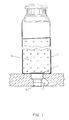
- Figure 1 Blood culture instrument.
- This drawing shows the overall appearance of the device and the functional part of an instrument that may be used to monitor the device. Illustrated are (1) the container, (2) the sensor, (3) the culture medium containing a resinous or non-resinous adsorbent, (4) the light source, and (5) the photodetector.
- the entire device is placed on an agitator inside an incubator, which provides a suitable environment for microbial growth and excludes room light from the photodetectors.
- the adsorbent compositions according to the present invention can be used in a device for detecting of microbial growth by classical methods of visual inspection for turbidity or by detecting the growth of microorganisms by their production of metabolites, for example, by detecting carbon dioxide through the use of a carbon dioxide sensor bonded internally to the device, as described in copending USSN 322,874 and US 4,945,060.
- This device can also include materials in the culture medium such as the resinous materials described in US 4,632,902, and non-resinous adsorbent materials that neutralize, bind, or inhibit antimicrobial substances from samples in the culture media, and which therefore allow for greater recovery and detection of microorganisms in these samples.
- antimicrobial substances include, among others, antibiotics, antibiotics in body fluid samples, preservatives, bacteriostats, bactericides, and any toxic by-products produced during the preparation of culture media.
- Antimicrobial substances also include naturally occurring components in blood such as complement and antibodies.
- adsorbents for the purposes of this application, includes all adsorbent materials that neutralize, bind, and inhibit antimicrobial substances. These adsorbents include resins as defined in US 4,632,902, and non-resinous adsorbents.
- resin is a subclass of adsorbents, and is further defined to include naturally occurring and synthetic resins, for example ion exchange resins, non-functional polymeric resin adsorbents and, in particular, polystyrene resins crosslinked with divinyl benzene.
- Non-resinous adsorbents are another subclass of adsorbents and are defined as naturally occurring and synthetic non-resin adsorbents and molecular sieves that can be used for clarifying, deodorizing, decolorizing, and filtering. Some of these non-resinous adsorbents are the same as those used during the production of antibiotics to remove antibiotics from culture medium growing antibiotic-producing bacteria. Whether or not these bacteria are injured during the process is unknown, as is the degree of recoverability of these bacteria remaining in the medium.
- non-resinous adsorbents include various forms of 1) aluminum oxide (alumina), 2) colloidal native hydrated aluminum silicates (clays), such as bentonite, kaolin, and fuller's earth, 3) crystalline hydrated alkali-aluminum silicates (sodium or calcium zeolites), 4) silica (silica gel, silica beads) such as Davisil, 5) siliceous frustules and fragments of various species of diatoms (infusorial earth, diatomaceous earth) such as CeliteTM (Manville Products Corporation, Denver, Colorado, USA) and 6) amorphous carbon (in particular, activated carbon) such as Carboraffin, NoritTM (American Norit Company Inc., Jacksonville, Florida, USA), Opocerbyl, and Ultracarbon.
- amorphous carbon in particular, activated carbon
- Naturally occurring adsorbent activated charcoal which has been used to prevent the lethal effects of oxidation in transport media and growth media, can also be used. This media has been used for the transport of fastidious organisms such as Neisseria gonorrhoeae and the cultivation of Legionella species.
- Non-resinous adsorbents do not require pre-treatment with a surfactant in order to function. Treatment with surfactants may even decrease the adsorptive capabilities of these materials.
- adsorbents at an appropriate ratio to medium can also remove toxic by-products produced in autoclaved media and still provide an optimal nutritious culture medium while maintaining the ability to neutralize antimicrobial substances.
- non-resinous adsorbents remove antimicrobial substances in culture.
- Other non-resinous adsorbents are the colloidal native hydrated aluminum silicates (clay) and the amorphous carbon (activated carbon) groups of adsorbent materials. Preferred materials are fuller's earth or activated charcoal used singularly or in combination.
- non-resinous adsorbents are high activity activated charcoal bound to cellulose fibers (Ecosorb® GL 241), fuller's earth bound to cellulose fibers (Ecosorb® GL 247) and high activity activated charcoal bound to fuller's earth (Ecosorb® GL 248).
- These materials are produced by Graver Chemical, Union, New Jersey, USA, primarily using the Ecosorb® process as described in US 4,238,334.
- filter aid materials which are generally fibers such as cellulose, nylon fibers, rayon fibers, polypropylene fibers and polyvinyl chloride fibers, and can be either negatively or positively charged, are treated with an electrolyte-type compound that produces a surface charge opposite to its normal surface charge.
- filter aid materials, such as fuller's earth and other non-fibrous materials, can be used as the "filter aid" materials, which are then treated.
- the treated filter aid material is mixed, in an aqueous suspension, with an active particulate material that has an opposite charge from the filter aid material, to produce the final adsorbent or filter material.
- Suitable cationic organic polyelectrolytes include polyalkylene imines, polyalkylene polyamines, and polyvinylbenzyl quaternary amonium salts.
- a non-resinous adsorbent composition comprises 20% to 80% of powdered activated carbon, 20% to 80% of fuller's earth, 0.1% to 0.7% powdered anion exchange resin, 0.3% to 1.3% cationic polyelectrolyte and 0.01% to 0.12% of anionic polyelectrolyte.
- the carbon ranges from 55% to 60%
- the fuller's earth from 40% to 45%
- the powdered anion exchange resin ranges from 0.25% to 0.35%
- the cationic polyelectrolyte from 0.55% to 0.65% and the anionic polyelectrolyte about 0.04% to 0.07%.
- the amounts used are about 58% of activated carbon, about 42% of fuller's earth, about 0.32% of powdered anion exchange resin, about 0.62% of cationic polyelectrolyte and about 0.06% of anionic polyelectrolyte.
- Another way of determining the formulation of this non-resinous adsorbent is by using 0.0032 grams per gram of activated carbon/fuller's earth, 0.015 gram per gram of fuller's earth of the cationic polyelectrolyte, and 0.001 gram per gram of carbon of the anionic polyelectrolyte.
- the negatively charged fuller's earth is changed to a positively charged material by the cationic polyelectrolyte, which is then stabilized by the powdered anion exchange resin.
- the carbon is essentially negatively charged, but there are known to be stray or floating particles that have a weak negative charge or a positive charge.
- the anionic polyelectrolyte changes these weak charges to negative charges.
- the two materials, the treated fuller's earth and the powdered activated carbon, are bound together electrostatically.
- the device contains culture media formulated to be useful with the present adsorbents. These include most general purpose media such as tryptic soy broth, brain heart infusion broth, Columbia broth, and Brucella broth. Quantities of non-resinous adsorbents resulting in neutralization of antimicrobial substances are added to the culture media, and range from 0.025 to 0.50 grams per milliliter of medium, depending on the culture medium.
- Enhancement of growth performance in the presence of non-resinous adsorbents due to detoxification of the medium is species dependent. This is due to the differences in sensitivities of the test organism to toxic by-products inherently present in the medium.
- E. coli and X. maltophilia had identical detection times in media that had no adsorbents and in media that contained charcoal bound to fuller's earth, while P. aeruginosa took longer to detect with the adsorbent.
- H. influenzae, N. meningitidis, S. aureus, S. pneumoniae and S. pyogenes all were detected in less time with the non-resinous adsorbent than without it.
- the medium formulation can be, if required, of a composition that allows for recovery and detection of contaminating organisms from industrial samples, such as pharmaceuticals, that have no additional nutritional value. Furthermore, the interaction of the adsorbent material with the medium can be manipulated, if necessary, to eliminate toxic byproducts in the medium, allowing for enhanced recovery and detection of microorganisms independent of the addition of a sample. In order to do this, one skilled in the art would balance the amount of adsorbent with the amount of medium and test the final composition for its neutralizing capability and the growth performance of test organisms, in the presence and absence of antimicrobials.
- the sample is introduced into the device, and the device is incubated until either positive growth is detected or, generally, until 5 - 7 days have passed and no growth is detected.
- the present adsorbents are not limited to use in the device. They may be added to any standard culture media, which is then inoculated with a sample, incubated at the correct temperature for an appropriate time for the type of sample being tested, while usually shaken or rocked in order to expose more surface area of the adsorbent to the liquid, to better contact any organisms present with nutrients and to avoid areas of high concentration of metabolic by-products.
- the temperatures and time periods needed for the determination of microorganism growth are well known to those skilled in the art and vary somewhat among different types of organisms.
- the culture bottle device used for the enhanced recovery and detection of microorganisms and for continuously monitoring biological activity in a sample is a sealable, sterilizable container with an internal chamber, which has at least one transparent section and a sensor means located inside the container in the region of the transparent section.
- the sensor changes appearance depending on the biological activity inside the container, and the changes can be monitored through the transparent section without violating the integrity of the container after sealing.
- the sensor is a solid support, such as a membrane, either intact or ground up or shredded, to which an indicator is bound or attached, and the indicator is selected for its ability to exhibit a detectable change when exposed to products of an organism's metabolic activity.
- the container also known as the culture bottle, contains culture medium and an adsorbent, as described below, into which the sample is inoculated.
- Culture bottles were made using a supplemented brain heart infusion broth to which the following non-resinous adsorbents were added: fuller's earth at a concentration of 0.13 g/ml; high activity activated charcoal bound to cellulose fibers at concentrations of 0.13 g/ml and 0.27 g/ml (Ecosorb GL 241); high activity activated charcoal bound to fuller's earth at concentrations of 0.09 g/ml and 0.17 g/ml (Ecosorb GL 248); and a mixture of Ecosorb GL 241 and Ecosorb GL 248 in a 1:1 ratio, at 0.13 g/ml.
- the inoculated bottles were then placed into the BacT/AlertTM Microbial Detection System (Organon Teknika Corporation, Durham, N.C., USA) for incubation and monitoring, with results being given automatically when the cultures became positive for microbial growth.
- BacT/AlertTM Microbial Detection System Organon Teknika Corporation, Durham, N.C., USA
- Example 1 Culture bottles as described in Example 1 were made with a supplemented brain heart infusion containing 0.09 g/ml of high activity charcoal bound to fuller's earth. Each bottle was then inoculated with one of the following microorganisms: E. coli, H. influenzae, N. meningitidis, P. aeruginosa, S. aureus, S. pneumoniae, S. pyogenes, and X. maltophilia. The initial inoculum ranged from 10 to 100 CFU/ml. No additional supplements were added to the medium except for the medium used to recover H. influenzae, where the growth factors found in horse blood were added. The inoculated bottles were then placed into the BacT/AlertTM Microbial Detection System for monitoring. Times to detection of positives are given in hours.
- the data in Table 2 shows a significant decrease in the time to detection for several test organisms inoculated into medium containing the non-resinous adsorbent as compared to medium without it.
- the time to detection is species dependent, as shown in this table.
- H. influenzae, N. meningitidis, S. aureus, S. pneumoniae and S. pyogenes showed decreased time to detection in the presence of the adsorbent
- E. coli, P. aeruginosa and X. maltophilia showed no significant difference in time to detection with or without the adsorbent. This indicates that the non-resinous adsorbent is functional in removing the toxic by-products in the medium itself.
- Example 2 The procedures for preparing culture bottles, inoculum Preparation, and antibiotic dilutions were the same as in Example 1. However, a sample of high activity activated charcoal bound to cellulose fibers was treated with an aqueous solution of 0.1% by weight of the surfactant TritonTM X-100 (Rohm & Haas Co., Philadelphia, PA, USA) and then washed thoroughly with water to remove residual surfactant. Culture bottles were then made with the same concentration of treated and untreated non-resinous adsorbent.
- TritonTM X-100 RostonTM X-100
- the adsorbent is prepared in an aqueous slurry and dewatered on a vacuum belt filter or similar equipment.
- Slurry concentration is normally between 5-15% solids (carbon/fuller's earth)
- a 43.36 kg (100 lb) (dry weight) batch is prepared as follows:
Landscapes
- Chemical & Material Sciences (AREA)
- Organic Chemistry (AREA)
- Health & Medical Sciences (AREA)
- Life Sciences & Earth Sciences (AREA)
- Proteomics, Peptides & Aminoacids (AREA)
- Zoology (AREA)
- Analytical Chemistry (AREA)
- Wood Science & Technology (AREA)
- Engineering & Computer Science (AREA)
- Microbiology (AREA)
- Biochemistry (AREA)
- Physics & Mathematics (AREA)
- Biotechnology (AREA)
- Immunology (AREA)
- Toxicology (AREA)
- Molecular Biology (AREA)
- Chemical Kinetics & Catalysis (AREA)
- Inorganic Chemistry (AREA)
- Biophysics (AREA)
- Bioinformatics & Cheminformatics (AREA)
- General Engineering & Computer Science (AREA)
- General Health & Medical Sciences (AREA)
- Genetics & Genomics (AREA)
- Measuring Or Testing Involving Enzymes Or Micro-Organisms (AREA)
- Solid-Sorbent Or Filter-Aiding Compositions (AREA)
- Fats And Perfumes (AREA)
- Medicines Containing Material From Animals Or Micro-Organisms (AREA)
- Apparatus Associated With Microorganisms And Enzymes (AREA)
Claims (6)
- Une composition adsorbante comprenant en tant qu'adsorbants du charbon activé lié à de la terre à foulon avec de 20% à 80% de charbon activé, 20% à 80% de terre à foulon, ledit charbon activé et ladite terre à foulon étant liés ensemble en utilisant un mélange de résines comprenant de 0,1% à 0,7% de résine échangeuse d'anion en poudre, 0,3% à 1,3% de polyélectrolyte cationique et 0,01% à 0,12% de polyélectrolyte anionique, dans lesquels toutes les proportions sont indiquées en pourcentages pondéraux par rapport à la composition totale.
- Une composition adsorbante selon la revendication 1 dans laquelle ledit charbon activé constitue 55% à 60%, ladite terre à foulon constitue 40% à 45%, ladite résine échangeuse d'anion en poudre constitue de 0,25% à 0,35%, ledit polyélectrolyte cationique constitue 0,55 à 0,65, et ledit polyélectrolyte anionique constitue de 0,04 à 0,07% en poids de la composition totale.
- Une composition adsorbante selon la revendication 1 dans laquelle ledit charbon activé représente 58%, ladite terre à foulon représente 42%. ladite résine échangeuse d'anion en poudre représente 0,32%, ledit polyélectrolyte cationique représente 0,62% et ledit polyélectrolyte anionique représente 0,06% de la composition.
- Une composition adsorbante selon la revendication 1 comprenant de 20 à 80% de charbon activé, de 20 à 80% de terre à foulon, de 0,0032 g de résine échangeuse d'anion en poudre par gramme de charbon activé/terre à foulon, 0,015 g de chlorure de diméthyl dialkyl ammonium par gramme de terre à foulon et 0,001 g de polyacrylamide par gramme de charbon activé.
- Une composition adsorbante selon la revendication 1, obtenue par un procédé comprenant:a) le mélange du polyélectrolyte cationique avec de l'eau pour obtenir une solution;b) l'incorporation de la terre à foulon dans la solution pour former une suspension comprenant 5% à 10% de solides;c) l'incorporation du charbon activé dans la suspension pour porter ainsi la teneur totale en solides à environ 20%:d) l'incorporation de la résine échangeuse d'anion en poudre:e) l'incorporation du polyélectrolyte anionique: etf) le cas échéant, essorage de la suspension pour obtenir ainsi un adsorbant non résineux charbon actif/terre à foulon.
- Un procédé de préparation d'une composition adsorbante selon la revendication 1, comprenant:a) le mélange du polyélectrolyte cationique avec l'eau pour former une solution;b) l'incorporation de la terre à foulon dans la solution, pour former une suspension comprenant 5 à 10% de solides;c) l'incorporation du charbon activé dans la suspension pour porter la teneur totale en solides à environ 20%;d) l'incorporation de la résine échangeuse d'anion en poudre;e) l'incorporation du polyélectrolyte anionique; etf) le cas échéant, essorage de la suspension pour obtenir un gâteau humide.
Applications Claiming Priority (2)
| Application Number | Priority Date | Filing Date | Title |
|---|---|---|---|
| US07/973,862 US5314855A (en) | 1992-11-09 | 1992-11-09 | Adsorbent compositions and methods of manufacture |
| US973862 | 1992-11-09 |
Publications (2)
| Publication Number | Publication Date |
|---|---|
| EP0597542A1 EP0597542A1 (fr) | 1994-05-18 |
| EP0597542B1 true EP0597542B1 (fr) | 1997-09-10 |
Family
ID=25521306
Family Applications (1)
| Application Number | Title | Priority Date | Filing Date |
|---|---|---|---|
| EP93203121A Expired - Lifetime EP0597542B1 (fr) | 1992-11-09 | 1993-11-08 | Compositions adsorbentes et méthodes de fabrication |
Country Status (9)
| Country | Link |
|---|---|
| US (1) | US5314855A (fr) |
| EP (1) | EP0597542B1 (fr) |
| JP (1) | JPH06210167A (fr) |
| AT (1) | ATE157907T1 (fr) |
| AU (1) | AU673383B2 (fr) |
| CA (1) | CA2102665A1 (fr) |
| DE (1) | DE69313782D1 (fr) |
| FI (1) | FI934926L (fr) |
| ZA (1) | ZA938280B (fr) |
Families Citing this family (26)
| Publication number | Priority date | Publication date | Assignee | Title |
|---|---|---|---|---|
| US5716709A (en) * | 1994-07-14 | 1998-02-10 | Competitive Technologies, Inc. | Multilayered nanostructures comprising alternating organic and inorganic ionic layers |
| FR2735790B1 (fr) * | 1995-06-22 | 1997-07-25 | Inst Textile De France | Procede pour adsorber des agents anti-microbiens contenus dans un liquide biologique et appareil pour la mise en oeuvre de ce procede |
| SE505274C2 (sv) * | 1995-10-24 | 1997-07-28 | Sten Andersson | Användning av en hydrofob zeolit för avlägsnande av för injektionslösningar i läkemedelssammanhang använda konserveringsmedel från en proteinlösning |
| US6548309B1 (en) * | 1998-03-19 | 2003-04-15 | Binax, Inc. | Procedure for assay of liquids containing undissolved solids, semisolids or colloids |
| EP1123501A4 (fr) * | 1998-10-19 | 2005-04-13 | Cbd Technologies Ltd | Procede de concentration de micro-organismes au moyen d'une separation par affinite |
| EP1501462A2 (fr) * | 2002-05-03 | 2005-02-02 | Gambro, Inc. | Appareil et procede de detection de bacteries dans des produits sanguins |
| US8409618B2 (en) * | 2002-12-20 | 2013-04-02 | Kimberly-Clark Worldwide, Inc. | Odor-reducing quinone compounds |
| US7666410B2 (en) * | 2002-12-20 | 2010-02-23 | Kimberly-Clark Worldwide, Inc. | Delivery system for functional compounds |
| US7794737B2 (en) * | 2003-10-16 | 2010-09-14 | Kimberly-Clark Worldwide, Inc. | Odor absorbing extrudates |
| US7678367B2 (en) * | 2003-10-16 | 2010-03-16 | Kimberly-Clark Worldwide, Inc. | Method for reducing odor using metal-modified particles |
| US7879350B2 (en) * | 2003-10-16 | 2011-02-01 | Kimberly-Clark Worldwide, Inc. | Method for reducing odor using colloidal nanoparticles |
| US7438875B2 (en) | 2003-10-16 | 2008-10-21 | Kimberly-Clark Worldwide, Inc. | Method for reducing odor using metal-modified silica particles |
| WO2005056817A2 (fr) * | 2003-12-09 | 2005-06-23 | Biomerieux, Inc. | Methode de recuperation de micro-organismes dans un echantillon |
| DE102004022264A1 (de) | 2004-05-06 | 2005-12-01 | Witty-Chemie Gmbh & Co. Kg | Aktivkohlezusammensetzung und deren Verwendung zur Aufbereitung von Schwimmbadwasser |
| US20060074348A1 (en) * | 2004-09-30 | 2006-04-06 | Gambro, Inc. | Biologic Fluid Sampling Apparatus |
| US9212384B2 (en) * | 2006-09-28 | 2015-12-15 | Tsumara & Co. | Microbial culture medium and microbial culture method using acid/activated clay |
| US20090123960A1 (en) * | 2007-11-09 | 2009-05-14 | Becton, Dickinson And Company | Method for Removing Antibiotics From Blood Culture Samples |
| US20090163887A1 (en) * | 2007-12-20 | 2009-06-25 | Arehart Kelly D | Odor control cellulose granules with quinone compounds |
| FR2937338B1 (fr) * | 2008-10-17 | 2013-03-22 | Biomerieux Sa | Milieu reactionnel pour la detection et/ou l'identification de bacteries du genre legionella |
| ITVR20120229A1 (it) | 2012-11-15 | 2014-05-16 | Bbs Srl | Dispositivo pronto all'uso e metodo per la rimozione di interferenti da campioni da sottoporre ad esame microbiologico |
| JP5975000B2 (ja) * | 2013-08-30 | 2016-08-23 | 株式会社ツムラ | 微生物検出方法 |
| EP2926794B1 (fr) | 2014-03-17 | 2017-09-06 | AL.CHI.MI.A. S.r.l. | Dispositif prêt à l'emploi et procédé pour éliminer les facteurs d'interférence d'échantillons à soumettre à un examen microbiologique |
| US9380797B2 (en) * | 2014-10-24 | 2016-07-05 | Safe Foods Corporation | Antimicrobial capture system with carbon container |
| GB201914538D0 (en) * | 2019-10-08 | 2019-11-20 | Momentum Bioscience Ltd | Microorganism capture from antimicrobial-containing solution |
| WO2021172203A1 (fr) * | 2020-02-28 | 2021-09-02 | 株式会社カネカ | Produit pour la purification de biomolécules |
| CN114558550A (zh) * | 2021-11-16 | 2022-05-31 | 宁夏大学 | 一种高效去除水体中含氮有机物的吸附材料及其制备方法 |
Family Cites Families (18)
| Publication number | Priority date | Publication date | Assignee | Title |
|---|---|---|---|---|
| GB295623A (en) * | 1927-05-14 | 1928-08-14 | Buettner Werke Ag | Decolorising agents |
| GB1043616A (en) * | 1963-03-07 | 1966-09-21 | Dow Chemical Co | Coated filter aid and improved filtration method |
| US3671399A (en) * | 1968-08-30 | 1972-06-20 | Hoffmann La Roche | Polyanionic compounds in culture media |
| GB1455692A (en) * | 1973-01-29 | 1976-11-17 | Ecodyne Corp | Composition and method for filtering liquids |
| JPS5322553B2 (fr) * | 1973-04-20 | 1978-07-10 | ||
| GB1465519A (en) * | 1973-07-31 | 1977-02-23 | Nat Patent Dev Corp | Sorbents coated with a synthetic solid water-insoluble hydro philic polymer |
| FR2293963A1 (fr) * | 1974-12-09 | 1976-07-09 | Tanaka Giken Kk | Absorbant composite |
| US4283492A (en) * | 1975-06-21 | 1981-08-11 | Fujisawa Pharmaceutical Co., Ltd. | Production of antibiotics WS-3442 A, B, C, D and E, and their acyl derivatives |
| DE2826416C3 (de) * | 1978-06-16 | 1980-10-23 | Boehringer Mannheim Gmbh, 6800 Mannheim | Vorrichtung zum Nachweis von Bakterien, Pilzen und Viren im Blut |
| US4238334A (en) * | 1979-09-17 | 1980-12-09 | Ecodyne Corporation | Purification of liquids with treated filter aid material and active particulate material |
| US4518704A (en) * | 1980-12-08 | 1985-05-21 | Kyoto Ceramic Kabushiki Kaisha | Activated carbon formed body and method of producing the same |
| US4632902A (en) * | 1981-08-20 | 1986-12-30 | Becton, Dickinson And Company | Method for detecting biological activity in a body fluid |
| CA1253129A (fr) * | 1984-02-09 | 1989-04-25 | Thomas R. Jones | Materiaux mineraux poreux |
| US4747955A (en) * | 1987-04-13 | 1988-05-31 | The Graver Company | Purification of liquids with treated polyester fibers |
| US5162229A (en) * | 1988-03-15 | 1992-11-10 | Akzo N.V. | Device and method for enhanced recovery and detection of microbial growth in the presence of antimicrobial substances |
| US4851122A (en) * | 1988-04-04 | 1989-07-25 | Stanley Bedford F | Water treatment media for conditioning apparatus |
| US4954469A (en) * | 1988-08-01 | 1990-09-04 | Robinson Ken K | Granulated activated carbon for water treatment |
| US4966872A (en) * | 1988-09-14 | 1990-10-30 | Puro Corporation Of America | Bacteriostatic activated carbon filter |
-
1992
- 1992-11-09 US US07/973,862 patent/US5314855A/en not_active Expired - Lifetime
-
1993
- 1993-11-05 ZA ZA938280A patent/ZA938280B/xx unknown
- 1993-11-08 FI FI934926A patent/FI934926L/fi not_active Application Discontinuation
- 1993-11-08 CA CA002102665A patent/CA2102665A1/fr not_active Abandoned
- 1993-11-08 DE DE69313782T patent/DE69313782D1/de not_active Expired - Lifetime
- 1993-11-08 EP EP93203121A patent/EP0597542B1/fr not_active Expired - Lifetime
- 1993-11-08 AU AU50523/93A patent/AU673383B2/en not_active Ceased
- 1993-11-08 AT AT93203121T patent/ATE157907T1/de not_active IP Right Cessation
- 1993-11-09 JP JP5279613A patent/JPH06210167A/ja active Pending
Also Published As
| Publication number | Publication date |
|---|---|
| FI934926A7 (fi) | 1994-05-10 |
| CA2102665A1 (fr) | 1994-05-10 |
| AU5052393A (en) | 1994-05-19 |
| US5314855A (en) | 1994-05-24 |
| ZA938280B (en) | 1994-09-23 |
| AU673383B2 (en) | 1996-11-07 |
| ATE157907T1 (de) | 1997-09-15 |
| FI934926L (fi) | 1994-05-10 |
| EP0597542A1 (fr) | 1994-05-18 |
| FI934926A0 (fi) | 1993-11-08 |
| DE69313782D1 (de) | 1997-10-16 |
| JPH06210167A (ja) | 1994-08-02 |
Similar Documents
| Publication | Publication Date | Title |
|---|---|---|
| EP0523805B1 (fr) | Appareil et procédé pour la récupération de microorganismes et pour la détection de la croissance microbienne en présence de substances antimicrobiennes | |
| US5314855A (en) | Adsorbent compositions and methods of manufacture | |
| CA2383991A1 (fr) | Dispositifs et procedes pour la detection de micro-organismes | |
| RU2644683C2 (ru) | Способ получения трехмерных структур, используемых для детекции, выделения или подсчета микроорганизмов | |
| EP0037932B1 (fr) | Détermination d'agents bactéricides | |
| US20110003328A1 (en) | System for detecting microbial contamination | |
| Nakazawa et al. | Characterization of hemolysin in extracellular products of Pseudomonas cepacia | |
| WO1988008037A1 (fr) | Procede permettant la detection de bacteries et de champignons | |
| US8911962B2 (en) | Method for neutralization of antibiotics in a culture medium | |
| EP1692511B1 (fr) | Methode de recuperation de micro-organismes dans un echantillon | |
| JPS6339239B2 (fr) | ||
| US20020160503A1 (en) | Method for the separation of adsorbents from microbiological growth media | |
| Chung et al. | Studies on the adsorption properties of Korean kaolin IV the adsorption of bacteria by activated halloysiste | |
| Breeze | An antimicrobial removal device as an alternative to membrane filtration in the sterility testing of antibiotics |
Legal Events
| Date | Code | Title | Description |
|---|---|---|---|
| PUAI | Public reference made under article 153(3) epc to a published international application that has entered the european phase |
Free format text: ORIGINAL CODE: 0009012 |
|
| 17P | Request for examination filed |
Effective date: 19931108 |
|
| AK | Designated contracting states |
Kind code of ref document: A1 Designated state(s): AT BE CH DE DK ES FR GB GR IE IT LI LU MC NL PT SE |
|
| RAP1 | Party data changed (applicant data changed or rights of an application transferred) |
Owner name: AKZO NOBEL N.V. |
|
| 17Q | First examination report despatched |
Effective date: 19960429 |
|
| GRAG | Despatch of communication of intention to grant |
Free format text: ORIGINAL CODE: EPIDOS AGRA |
|
| GRAH | Despatch of communication of intention to grant a patent |
Free format text: ORIGINAL CODE: EPIDOS IGRA |
|
| GRAH | Despatch of communication of intention to grant a patent |
Free format text: ORIGINAL CODE: EPIDOS IGRA |
|
| GRAA | (expected) grant |
Free format text: ORIGINAL CODE: 0009210 |
|
| AK | Designated contracting states |
Kind code of ref document: B1 Designated state(s): AT BE CH DE DK ES FR GB GR IE IT LI LU MC NL PT SE |
|
| PG25 | Lapsed in a contracting state [announced via postgrant information from national office to epo] |
Ref country code: NL Free format text: LAPSE BECAUSE OF FAILURE TO SUBMIT A TRANSLATION OF THE DESCRIPTION OR TO PAY THE FEE WITHIN THE PRESCRIBED TIME-LIMIT Effective date: 19970910 Ref country code: IT Free format text: LAPSE BECAUSE OF FAILURE TO SUBMIT A TRANSLATION OF THE DESCRIPTION OR TO PAY THE FEE WITHIN THE PRESCRIBED TIME-LIMIT;WARNING: LAPSES OF ITALIAN PATENTS WITH EFFECTIVE DATE BEFORE 2007 MAY HAVE OCCURRED AT ANY TIME BEFORE 2007. THE CORRECT EFFECTIVE DATE MAY BE DIFFERENT FROM THE ONE RECORDED. Effective date: 19970910 Ref country code: GR Free format text: LAPSE BECAUSE OF FAILURE TO SUBMIT A TRANSLATION OF THE DESCRIPTION OR TO PAY THE FEE WITHIN THE PRESCRIBED TIME-LIMIT Effective date: 19970910 Ref country code: FR Free format text: LAPSE BECAUSE OF FAILURE TO SUBMIT A TRANSLATION OF THE DESCRIPTION OR TO PAY THE FEE WITHIN THE PRESCRIBED TIME-LIMIT Effective date: 19970910 Ref country code: ES Free format text: THE PATENT HAS BEEN ANNULLED BY A DECISION OF A NATIONAL AUTHORITY Effective date: 19970910 Ref country code: DK Free format text: LAPSE BECAUSE OF NON-PAYMENT OF DUE FEES Effective date: 19970910 Ref country code: BE Effective date: 19970910 Ref country code: AT Effective date: 19970910 |
|
| REF | Corresponds to: |
Ref document number: 157907 Country of ref document: AT Date of ref document: 19970915 Kind code of ref document: T |
|
| REG | Reference to a national code |
Ref country code: CH Ref legal event code: NV Representative=s name: ISLER & PEDRAZZINI AG Ref country code: CH Ref legal event code: EP |
|
| REF | Corresponds to: |
Ref document number: 69313782 Country of ref document: DE Date of ref document: 19971016 |
|
| PG25 | Lapsed in a contracting state [announced via postgrant information from national office to epo] |
Ref country code: LU Free format text: LAPSE BECAUSE OF NON-PAYMENT OF DUE FEES Effective date: 19971108 Ref country code: IE Free format text: LAPSE BECAUSE OF NON-PAYMENT OF DUE FEES Effective date: 19971108 |
|
| PG25 | Lapsed in a contracting state [announced via postgrant information from national office to epo] |
Ref country code: LI Free format text: LAPSE BECAUSE OF NON-PAYMENT OF DUE FEES Effective date: 19971130 Ref country code: CH Free format text: LAPSE BECAUSE OF NON-PAYMENT OF DUE FEES Effective date: 19971130 |
|
| PG25 | Lapsed in a contracting state [announced via postgrant information from national office to epo] |
Ref country code: SE Effective date: 19971210 Ref country code: PT Effective date: 19971210 Ref country code: GB Free format text: LAPSE BECAUSE OF NON-PAYMENT OF DUE FEES Effective date: 19971210 |
|
| PG25 | Lapsed in a contracting state [announced via postgrant information from national office to epo] |
Ref country code: DE Free format text: LAPSE BECAUSE OF FAILURE TO SUBMIT A TRANSLATION OF THE DESCRIPTION OR TO PAY THE FEE WITHIN THE PRESCRIBED TIME-LIMIT Effective date: 19971211 |
|
| REG | Reference to a national code |
Ref country code: IE Ref legal event code: FG4D Free format text: 76361 |
|
| EN | Fr: translation not filed | ||
| NLV1 | Nl: lapsed or annulled due to failure to fulfill the requirements of art. 29p and 29m of the patents act | ||
| PG25 | Lapsed in a contracting state [announced via postgrant information from national office to epo] |
Ref country code: MC Free format text: LAPSE BECAUSE OF NON-PAYMENT OF DUE FEES Effective date: 19980531 |
|
| REG | Reference to a national code |
Ref country code: CH Ref legal event code: PL |
|
| PLBE | No opposition filed within time limit |
Free format text: ORIGINAL CODE: 0009261 |
|
| GBPC | Gb: european patent ceased through non-payment of renewal fee |
Effective date: 19971210 |
|
| 26N | No opposition filed | ||
| REG | Reference to a national code |
Ref country code: IE Ref legal event code: MM4A |