EP0598231A2 - Verfahren und Vorrichtung zur dynamischer Taskzuweisung unter asymmetrisch gekoppelten Prozessoren - Google Patents
Verfahren und Vorrichtung zur dynamischer Taskzuweisung unter asymmetrisch gekoppelten Prozessoren Download PDFInfo
- Publication number
- EP0598231A2 EP0598231A2 EP93116856A EP93116856A EP0598231A2 EP 0598231 A2 EP0598231 A2 EP 0598231A2 EP 93116856 A EP93116856 A EP 93116856A EP 93116856 A EP93116856 A EP 93116856A EP 0598231 A2 EP0598231 A2 EP 0598231A2
- Authority
- EP
- European Patent Office
- Prior art keywords
- work
- processors
- processor
- redirection
- work unit
- Prior art date
- Legal status (The legal status is an assumption and is not a legal conclusion. Google has not performed a legal analysis and makes no representation as to the accuracy of the status listed.)
- Withdrawn
Links
Images





Classifications
-
- G—PHYSICS
- G06—COMPUTING OR CALCULATING; COUNTING
- G06F—ELECTRIC DIGITAL DATA PROCESSING
- G06F9/00—Arrangements for program control, e.g. control units
- G06F9/06—Arrangements for program control, e.g. control units using stored programs, i.e. using an internal store of processing equipment to receive or retain programs
- G06F9/46—Multiprogramming arrangements
- G06F9/50—Allocation of resources, e.g. of the central processing unit [CPU]
- G06F9/5005—Allocation of resources, e.g. of the central processing unit [CPU] to service a request
- G06F9/5027—Allocation of resources, e.g. of the central processing unit [CPU] to service a request the resource being a machine, e.g. CPUs, Servers, Terminals
- G06F9/5044—Allocation of resources, e.g. of the central processing unit [CPU] to service a request the resource being a machine, e.g. CPUs, Servers, Terminals considering hardware capabilities
-
- G—PHYSICS
- G06—COMPUTING OR CALCULATING; COUNTING
- G06F—ELECTRIC DIGITAL DATA PROCESSING
- G06F9/00—Arrangements for program control, e.g. control units
- G06F9/06—Arrangements for program control, e.g. control units using stored programs, i.e. using an internal store of processing equipment to receive or retain programs
- G06F9/46—Multiprogramming arrangements
- G06F9/48—Program initiating; Program switching, e.g. by interrupt
- G06F9/4806—Task transfer initiation or dispatching
- G06F9/4843—Task transfer initiation or dispatching by program, e.g. task dispatcher, supervisor, operating system
- G06F9/485—Task life-cycle, e.g. stopping, restarting, resuming execution
- G06F9/4856—Task life-cycle, e.g. stopping, restarting, resuming execution resumption being on a different machine, e.g. task migration, virtual machine migration
-
- G—PHYSICS
- G06—COMPUTING OR CALCULATING; COUNTING
- G06F—ELECTRIC DIGITAL DATA PROCESSING
- G06F9/00—Arrangements for program control, e.g. control units
- G06F9/06—Arrangements for program control, e.g. control units using stored programs, i.e. using an internal store of processing equipment to receive or retain programs
- G06F9/46—Multiprogramming arrangements
- G06F9/50—Allocation of resources, e.g. of the central processing unit [CPU]
- G06F9/5005—Allocation of resources, e.g. of the central processing unit [CPU] to service a request
- G06F9/5027—Allocation of resources, e.g. of the central processing unit [CPU] to service a request the resource being a machine, e.g. CPUs, Servers, Terminals
- G06F9/5055—Allocation of resources, e.g. of the central processing unit [CPU] to service a request the resource being a machine, e.g. CPUs, Servers, Terminals considering software capabilities, i.e. software resources associated or available to the machine
Definitions
- This invention relates to the field of multiprocessor computer systems. More particularly, it relates to work unit (task) assignment (dispatching) in a multiprocessor computing system, where the processor features/capabilities are asymmetric (not homogeneous).
- the invention described here provides a centralized apparatus and method to assign and reassign work units among processors of a multiprocessor computing system having asymmetric features, in order to reasonably optimize use of the processors while running the highest priority tasks, when individual work units may only be able to execute on a subset of the processors.
- a work selection mechanism selects one of a set of one or more ready work units, each capable of execution on one or more of the asymmetric processors.
- a processor set identification function identifies an "indirect idle” set of processors which can participate as hosts in work reassignment to make use of a previously idle processor, and identifies an "indirect bump" set of processors which can participate as hosts in work reassignment to displace a lowest priority work unit previously executing - any work reassignment being initiated by an assigner means and comprising an optimized number of work reassignment steps reassigning work among one of the processor sets to accomplish a related assignment goal (making use of a previously idle processor, or displacing a lowest priority work unit).
- Assigned - A work unit is assigned when it has been designated by the Assignment means to execute on a given processor.
- Unassigned - A work unit is unassigned when it is not in the assigned state. This could be before the work unit has ever been assigned or when a work unit has been removed from a processor.
- Selected - A work unit is selected when the processor designated to execute the work unit has initiated (loaded the registers, etc.) the CPU for execution of the work unit. The work unit is said to be "running”.
- Deselected - A work unit is deselected when the processor that was executing the work has stopped (unloaded the registers, etc.) the CPU from executing this work unit. The work unit is removed from the processor.
- Ready - A work unit is ready when there are no events that must complete for the work unit to run.
- the work unit is capable of executing.
- Work units that are currently running on a processor are ready.
- Work units on the Ready queue are ready even though they are not running on a processor.
- Suspended - A work unit is suspended when it becomes not ready for execution, such as when it must wait for the occurrence of some event. Suspended work units are not on the Ready queue.
- Dispatched - A work unit is dispatched when it is selected and running on a processor.
- Runnable - A work unit is runnable when it is capable of executing, i.e. it is ready.
- Idle - A processor is idle when it has no work unit assigned.
- Indirect Idle subset The subset of processors within the candidate work unit's candidate mask which can participate in redirection of work to an idle processor
- Indirect Bump subset The subset of processors within the candidate work unit's candidate mask which can participate in a redirection of work to bump the lowest priority work unit.
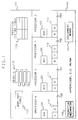
- Fig. 1 shows the system environment within which the present invention operates.
- Fig. 1 shows a tightly coupled multiprocessor system consisting of four processors (CPUs), processor W, 100, processor X, 101, processor Y, 102, processor Z, 103, sharing a common memory, 130.
- processors CPUs
- processor W 100
- processor X 101
- processor Y 102
- processor Z 103
- Each of the processors are currently executing work units.
- the work units are, WU4, 120, on processor W, 100, WU3, 121 on processor X, 101, WU1, 122, on Processor Y, 102, and WU2, 123, on Processor Z, 103.
- the multiprocessor computing system as shown is executing with a hypervisor, 140, such as IBM's Processor Resource/System Manager, PR/SM, facility in Logical Partitioning, LPAR, mode.
- the Assignment means, 141, and the Promotion mechanism, 142 are, in the preferred embodiment, a program within the hypervisor.
- the work units being assigned are actually operating systems which are independent of each other.
- the invention works equally as well, in an alternative embodiment, in a multiprocessor computing system environment running under control of an operating system, such as IBM's MVS/ESA.
- the Assignment means and the Promotion mechanism are within the operating system and the work units are tasks, address spaces or jobs.
- the processors use conventional communication paths for signalling each other.
- Fig. 2 shows an apparatus called the Work Unit Table which is block 131 of Figure 1.
- the Work Unit Table contains entries for every work unit within the computing system, describing the processor features, 204, required, the urgency (priority) of the work unit, and a bit mask of the processors capable of executing the work unit.
- the fields of the table are as follows: Work Unit ID, 201 - a unique identifier of the work unit. Priority, 202, - an indication of the urgency (priority) of this work unit.
- Features required, 204, - a list of the processor features required to be able to run this work unit Chain field, 205, - contains the address of the next Work Unit table entry.
- the Work Unit Table, 131 is constructed and maintained by the PR/SM hypervisor, 140.
- Fig. 3 is a diagram of the details of the Ready queue which is block 132 of Fig. 1.
- the Ready queue, 132 is an ordered list of the Work Unit table entries, Fig. 2, that are in the system, are ready to execute, but are not currently executing on a processor.
- the entries, 301-304, are in priority order.
- the Ready queue is constructed and maintained by the PR/SM hypervisor.
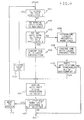
- Fig. 4 is flow diagram of the Assignment means showing the overall logic used in assigning work among the processors of the multiprocessor system.
- Work units need to be assigned, or reassigned, to processors when a currently dispatched work unit has been deselected from the processor.
- a work unit may be deselected due to suspension, time-slice end, a change in feature affinity of the work unit, a change in features available on the physical processor, or mid-dispatch reassignment of another work unit to this physical processor.
- All multiprocessor work assignment mechanisms have schemes for determining which work unit to process (assign) next. Most involve some sort of search of a queue of waiting work.
- the Assignment means of the present invention will work with schemes for choosing work units other than that to be described herein. This preferred embodiment describes the scheme used to drive the Assignment means of this invention.
- the Assignment means processes one work unit per invocation, called the candidate work unit in this description.
- the Assignment means is entered in three cases;
- the Assignment means determines if the candidate work unit is eligible to an idle processor (Fig. 4 at 401). If it is eligible for an idle processor, the idle processor is chosen for the candidate work unit (Fig. 4 at 412) and processing continues at Fig. 4, 406, to be described subsequently. If the candidate work unit is not eligible for an idle processor then the Assignment means determines which processors can have currently running work redirected (reassigned) in order to assign the candidate work unit (Fig. 4 at 402). This will be described in more detail below (under “Determining processors for redirection").
- the Assignment means checks if, within the set of processors that can participate in redirection of work (processing done in Figure 4 at 402), there is any work unit running on one of that set of processors that is eligible to an idle processor (Fig. 4 at 403). If there is such a work unit running on the set of processors that can participate in a redirection of work, then the Assignment means chooses (Fig. 4 at 404), for assignment of the candidate work unit, the processor that causes the minimum indirection that allows use of the idle processor. This will be described in more detail below (under "Minimum indirection to an idle processor"). Processing then continues at Fig. 4, 406, to be described subsequently. If, from the processing at Fig.
- the Assignment means determines which is the lowest priority work unit among the processors that can participate in a redirection of work (Fig. 4 at 408). This will be described in more detail below (under "Determining lowest priority work unit"). That lowest priority work unit is the one to be finally deselected (bumped) in order to assign the candidate work unit.
- the Assignment means then chooses for assignment, of the candidate work unit, the processor (Fig. 4 at 409) that causes the minimum indirection that allows use of the processor running the previously mentioned lowest priority work.
- the Assignment means uses a threshold mechanism to determine if the candidate work unit is high enough in priority to cause redirection of work units, Fig. 4 at 410.
- the threshold in this embodiment is based on a sampling interval of the time-slice scheduler and is used as a divisor of the difference in priorities between the candidate work unit and the lowest priority work unit to be redirected. Although this threshold mechanism is used in the invention, others may be used without departing from the spirit of the invention. If the application of the threshold, Fig. 4 at 410, does not allow the candidate work unit to be assigned, this assignment pass is complete and the Assignment means exits. Otherwise, processing continues (Fig.
- the Assignment means checks to see if the displaced work unit has been assigned to the deselecting processor but not yet selected for running (Fig. 4 at 407). This could happen in a multiple reassignment scenario where the Assignment means is proceeding at a much quicker pace than the program doing the deselection/selection (for example the Assignment means may have the highest priority in the system).
- this displaced work unit will be the next to be assigned (Fig. 4 at 411) by proceeding to Fig. 4, 401, and assigning this displaced work unit. If this was not the case (the work unit being displaced is assigned to, and selected by, the processor it is being displaced from) Fig. 4 at 407, then processing is complete and the Assignment means exits.
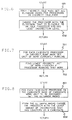
- the Assignment means looks at each candidate processor in the candidate mask, 204, for the candidate work unit (Fig. 5 at 501).
- the ELIGMASK array, Fig. 12 is then constructed first by setting the INDIRECTLEVEL index to zero (indicating no level of indirection) and setting the CPU index of this ELIGMASK entry to the first candidate processor.
- the ELIGMASK (CPU,INDIRECTLEVEL) entry is set equal to the candidate mask, 204, of the work unit running on this candidate processor (Fig. 5 at 502).
- the bit for this candidate processor is set (Fig. 5 at 505) in INDIRECT_IDLE mask, Fig. 10, 1001-1004. If the last ELIGMASK entry, 1200, for this candidate processor does not have a bit on for an idle processor then the INDIRECT_BUMP mask, Fig. 11, 1101-1104, is set equal to the last ELIGMASK entry, 1200 (Fig. 5 at 506). Processing then continues at Fig. 5, 501 with the next candidate processor until they have all been processed. At the end of this processing the INDIRECT_IDLE mask, Fig.
- the INDIRECT_BUMP mask Fig. 11, 1100
- the ELIGMASK array Fig. 12, 1200
- the LEVEL array entries 1301-1303, contain the levels of indirection which must be considered for each processor.
- Fig. 6 which is a further refinement of Fig. 4, block 404.
- the INDIRECT_IDLE mask, 1000 created previously, Fig. 5 at 505
- the ELIG_MASK entries, 1200 representing those processors are retrieved, Fig. 6 at 601.
- Each of these bits in INDIRECT_IDLE mask, 1001-1003 represent a processor to which the candidate work unit can be assigned.
- the Assignment means selects the processor that has the least (lowest value) amount of indirection as indicated by LEVEL array and ELIG_MASK entries, 1300, Fig. 6 at 602.
- Fig. 7 which is a further refinement of of Fig. 4, block 408).
- the processor running the lowest priority work unit which can participate in the redirection must be determined. The logic for this is shown in Fig. 7 (which is a further refinement of of Fig. 4, block 408).
- the INDIRECT_BUMP mask, 1100 created previously, Figure 5 at 506
- the priority is retrieved, 202, of the work unit running on the processor represented by that bit in INDIRECT_BUMP mask, 1101-1103, Fig. 7 at 701.
- the identity is saved of the processor, 100-103, which has the work unit with the lowest priority, 202, in the LEASTCPU data field, 1400, Fig. 7 at 702.
- the candidate processor is chosen, which causes the least indirection (movement of work units) to bump the lowest priority work unit.
- This logic is shown in Fig. 8, (which is a further refinement of Fig. 4, block 409).
- the ELIGMASK array, 1200 created previously, Fig. 5 at 503 and 504, for the candidate work unit, the ELIGMASK entries, 1200, are retrieved, Fig. 8 at 801.
- the candidate processor is chosen, which has LEASTCPU, 1400, (created previously in Fig. 7, block 702) as a candidate and with the least amount of indirection, from the LEVEL array, 1301-1304, Fig. 8 at 802.
- ELIGMASK array Fig. 12 is created by this logic.
- the candidate work unit is eligible to processors X, 101, and Z, 103.
- the ELIGMASK(X,0) is created as seen in Fig. 12. Then by "OR”ing together the candidate masks of the work units running on the processors indicated in ELIGMASK(X,0), Fig. 12, the ELIGMASK(X,1) is constructed, as seen in Fig. 12. This logic is continued with ELIGMASK(X,1) to construct ELIGMASK(X,2). Since ELIGMASK(X,1) and ELIGMASK(X,2) are identical the processing for candidate processor X,101, is complete.
- ELIGMASK(X,2) Since ELIGMASK(X,2) has a bit on for processor W, 100, which is the idle processor, then the bit in the INDIRECT_IDLE mask, 1002, for processor X is turned on. Processing then continues for the next candidate processor of the candidate work unit, processor Z,103. The operation is identical and results in ELIGMASK(Z,0), ELIGMASK(Z,1), and ELIGMASK(Z,2), Fig. 12, being constructed. Since ELIGMASK(Z,2) has a bit on for processor W, 100, which is the idle processor, then the bit in the INDIRECT_IDLE mask, 1002, for processor Z, 1002, is turned on. The LEVEL array, Fig. 13, is also set as shown.
- processor X, 101 for assignment of the candidate work unit.
- This candidate work unit is eligible for processors X, 101, and Y, 102. So the ELIGMASK entries for those processors will be built as described before.
- this candidate work unit will be assigned to processor Y, 102, because using processor Y, 102, requires only one level of indirection, while using processor X, 101, would require more levels of indirection.
- the work unit WU1, 122, on processor Y, 102, will be deselected.
- the promotion logic of this invention has as its input the Ready queue, Fig. 3. Key objectives of the promotion mechanism are to search as little of the Ready queue, Fig. 3, as possible, and to make as few Assignment attempts as possible. Described now is the promotion scheme of the preferred embodiment, but others may be used without departing from the spirit of the claimed invention.
- Promotion to fill the vacancy left when a work unit is deselected is accomplished by a series of assignment attempts. Because there is no bound placed on indirection to idle processors, the idle appearance of a processor after a work unit is deselected would cause unjustified indirection if the first assignment attempt following deselection were for a work unit with candidates which did not include the vacated processor, when ready and unassigned work exists for which the vacated processor is a candidate. A first pass of the Ready queue, Fig. 3, is thus required to perform an assignment attempt for the most urgent ready and not assigned work unit for which the vacated processor is a candidate.
- the ready and unassigned work units for which indirection must then be considered consist of those work units with greater urgency than the most urgent work unit for which the vacated processor is a candidate. If no ready and unassigned work unit is found for which the vacated processor is a candidate, then the entire Ready queue, Figure 3, must be considered for indirection. Such indirection can only occur, however, if work units assigned to other processors include the vacated processor as a candidate. If work units assigned to other processors do not include the vacated processor as a candidate, there is no need for a second pass to consider additional assignment attempts to deal with potential indirection.
- the work unit being deselected continues to be runnable and the candidate mask has been changed to include candidates which were not previously present, this creates a potential to utilize or improve the utilization of an additional processor.
- the work units for which indirection must be considered are those up to and including the first ready and unassigned work unit for which the vacated processor is a candidate, rather than those which precede the work unit for which an assignment attempt is issued in the first pass. If the work unit for which an assignment attempt is issued by the first pass is not the work unit being deselected under these circumstances, then a separate assignment attempt must be issued for the work unit being deselected either during or after the second pass, if any.
- the assignment attempt for the work unit being deselected should be made in sequence, while running the queue from most to least urgent, but the candidate processors for the work unit being deselected cannot be included in any mask of processors covered for the sake of indirection in a second pass.
- the candidate mask has been changed to include candidates which were not previously present and no assignment attempt has been issued for this work unit in either a first or second pass through the Ready queue, Fig. 3, then a separate assignment attempt must be issued for the work unit being deselected before the promotion process may be considered complete.
- the Assignment means uses a threshold mechanism to avoid excessive redirection of work units.
- the threshold mechanism used in this invention will be explained, but other thresholds (or no threshold) can also be used with the Assignment means.
- the threshold used in this invention has two forms.
- the priority of work units is used in assignment decisions.
- the manner of setting this priority, though not part of the Assignment means, is related to overall system performance. Accordingly, one technique for dynamically adjusting priority is described below. This technique strives to provide a consistent, entitled share of the CPU resource among the work units by adjusting priority based on entitled relative share and actual consumption. Relative processing weight, or relative share, is enforced through the use of negative feedback.
- the CPU time consumed by each work unit is converted to the elapsed time in which this amount of CPU time should be provided, referred to as effective time. For a work unit entitled to one half of a CPU, the effective time will be twice the CPU time consumed.
- the effective time will be three times the CPU time consumed, etc.
- the amount of CPU time consumed during the scheduling period determines priorities for dispatching. Those furthest behind in achieving their intended allocation of CPU resources have the most urgent priority.
- a limit must be placed on the amount of processing time to which a work unit may be entitled in response to long periods of idleness. Otherwise, a work unit could remain idle one day and be the most urgent in priority throughout the next day.
- This limit is implemented by using a history table for each work unit.
- Each history table consists of entries of cumulative totals of effective time for each of the most recent X sampling periods. At the end of each sampling period, the oldest sample is discarded, becoming an origin value, and a new sample is begun. In this embodiment, a total of thirty-one 50 millisecond sample period values are retained in the history table. The history is aged at the end of each sampling period.
- Capping is implemented by suspending work units which have reached an amount of effective time equal to the difference in time between the start and the end of the history table. To allow each capped work unit to receive some processing within each sample period, its time-slice is limited to the processing time for which the effective time is equal to the duration of a sample period.
- history would tend to repeat itself if no further measures were taken.
- a work unit suspended for capping would become entitled to exactly the same amount of processing time consumed in the period just discarded from the history table.
- a previously idle work unit entitled to one third of a CPU would run continuously for one third of the history period, about half a second. It would remain suspended for about one second, until the first sample in which it ran became discarded. It would then run continuously for another half second and be suspended for a full second thereafter. This would repeat indefinitely. as long as the work unit remained runnable.
- weighted averaging is applied to the samples within the history table, such that the oldest eight samples have one half the weight of all other samples.
- a previously idle work unit entitled to one third of a CPU it runs continuously for one third of the history period, about one half second. It remains suspended for about 1.2 seconds, until the first sample in which it was active reaches one of the half-weight positions within the history table. For the next period, it is entitled to only half of the processing time consumed in the sample for which the weight has been reduced.
- the work unit becomes entitled to half of the processing time consumed in that period.
- the amount of the processing time discarded and the amount of the processing time for which the weight has been reduced may be equal for some time, during which there is no further reduction in the amount of time to which the work unit is entitled, but the fraction of the history table for which this is allowed will be reduced from one cycle to the next. This provides a dampening of the oscillation.
- a capped work unit which has exceeded the amount of processing time to which it is entitled for the current scheduler time interval is perceived as suspended with respect to assignment.
- a work unit is placed into capping suspension when it is deselected if its processing time exceeds the amount to which it is entitled within the current scheduler time interval.
- an assignment attempt is performed for each work unit for which capping suspension has been removed.
Landscapes
- Engineering & Computer Science (AREA)
- Software Systems (AREA)
- Theoretical Computer Science (AREA)
- Physics & Mathematics (AREA)
- General Engineering & Computer Science (AREA)
- General Physics & Mathematics (AREA)
- Multi Processors (AREA)
Applications Claiming Priority (2)
| Application Number | Priority Date | Filing Date | Title |
|---|---|---|---|
| US978601 | 1992-11-19 | ||
| US07/978,601 US5301324A (en) | 1992-11-19 | 1992-11-19 | Method and apparatus for dynamic work reassignment among asymmetric, coupled processors |
Publications (2)
| Publication Number | Publication Date |
|---|---|
| EP0598231A2 true EP0598231A2 (de) | 1994-05-25 |
| EP0598231A3 EP0598231A3 (de) | 1994-10-19 |
Family
ID=25526252
Family Applications (1)
| Application Number | Title | Priority Date | Filing Date |
|---|---|---|---|
| EP9393116856A Withdrawn EP0598231A3 (de) | 1992-11-19 | 1993-10-19 | Verfahren und Vorrichtung zur dynamischer Taskzuweisung unter asymmetrisch gekoppelten Prozessoren. |
Country Status (3)
| Country | Link |
|---|---|
| US (1) | US5301324A (de) |
| EP (1) | EP0598231A3 (de) |
| JP (1) | JP2559993B2 (de) |
Cited By (1)
| Publication number | Priority date | Publication date | Assignee | Title |
|---|---|---|---|---|
| EP0867809A3 (de) * | 1997-03-27 | 1999-11-17 | Sony Computer Entertainment Inc. | Datenverarbeitungsgerät und -Verfahren |
Families Citing this family (55)
| Publication number | Priority date | Publication date | Assignee | Title |
|---|---|---|---|---|
| US6108704A (en) | 1995-09-25 | 2000-08-22 | Netspeak Corporation | Point-to-point internet protocol |
| US5706514A (en) * | 1996-03-04 | 1998-01-06 | Compaq Computer Corporation | Distributed execution of mode mismatched commands in multiprocessor computer systems |
| US6728784B1 (en) * | 1996-08-21 | 2004-04-27 | Netspeak Corporation | Collaborative multimedia architecture for packet-switched data networks |
| US5918057A (en) * | 1997-03-20 | 1999-06-29 | Industrial Technology Research Institute | Method and apparatus for dispatching multiple interrupt requests simultaneously |
| US6735631B1 (en) | 1998-02-10 | 2004-05-11 | Sprint Communications Company, L.P. | Method and system for networking redirecting |
| US6625638B1 (en) | 1998-04-30 | 2003-09-23 | International Business Machines Corporation | Management of a logical partition that supports different types of processors |
| US7216348B1 (en) * | 1999-01-05 | 2007-05-08 | Net2Phone, Inc. | Method and apparatus for dynamically balancing call flow workloads in a telecommunications system |
| US6539542B1 (en) * | 1999-10-20 | 2003-03-25 | Verizon Corporate Services Group Inc. | System and method for automatically optimizing heterogenous multiprocessor software performance |
| US20020099759A1 (en) * | 2001-01-24 | 2002-07-25 | Gootherts Paul David | Load balancer with starvation avoidance |
| US6874014B2 (en) * | 2001-05-29 | 2005-03-29 | Hewlett-Packard Development Company, L.P. | Chip multiprocessor with multiple operating systems |
| US7487504B2 (en) * | 2002-02-06 | 2009-02-03 | International Business Machines Corporation | Thread dispatch for multiprocessor computer systems |
| US7143411B2 (en) * | 2002-03-15 | 2006-11-28 | Hewlett-Packard Development Company, L.P. | Capping processor utilization |
| US7448036B2 (en) * | 2002-05-02 | 2008-11-04 | International Business Machines Corporation | System and method for thread scheduling with weak preemption policy |
| US7275249B1 (en) * | 2002-07-30 | 2007-09-25 | Unisys Corporation | Dynamically generating masks for thread scheduling in a multiprocessor system |
| JP4090908B2 (ja) * | 2003-02-21 | 2008-05-28 | シャープ株式会社 | 画像処理装置および画像形成装置 |
| US7281075B2 (en) * | 2003-04-24 | 2007-10-09 | International Business Machines Corporation | Virtualization of a global interrupt queue |
| JP4148223B2 (ja) * | 2005-01-28 | 2008-09-10 | セイコーエプソン株式会社 | プロセッサおよび情報処理方法 |
| JP2006243865A (ja) * | 2005-03-01 | 2006-09-14 | Seiko Epson Corp | プロセッサおよび情報処理方法 |
| US7856618B2 (en) * | 2005-08-04 | 2010-12-21 | International Business Machines Corporation | Adaptively generating code for a computer program |
| US20070033592A1 (en) * | 2005-08-04 | 2007-02-08 | International Business Machines Corporation | Method, apparatus, and computer program product for adaptive process dispatch in a computer system having a plurality of processors |
| JP5089896B2 (ja) * | 2006-03-17 | 2012-12-05 | 株式会社日立製作所 | マイクロプロセッサの負荷分散機能を備えたストレージシステム |
| US20070266391A1 (en) * | 2006-04-27 | 2007-11-15 | Hoffman Philip M | System and method for separating multi-workload processor utilization on a metered computer system |
| JP2007328461A (ja) * | 2006-06-06 | 2007-12-20 | Matsushita Electric Ind Co Ltd | 非対称マルチプロセッサ |
| US7461241B2 (en) * | 2006-07-31 | 2008-12-02 | International Business Machines Corporation | Concurrent physical processor reassignment method |
| US7941805B2 (en) | 2006-08-15 | 2011-05-10 | International Business Machines Corporation | Affinity dispatching load balancer with precise CPU consumption data |
| US8201165B2 (en) | 2007-01-02 | 2012-06-12 | International Business Machines Corporation | Virtualizing the execution of homogeneous parallel systems on heterogeneous multiprocessor platforms |
| US8286196B2 (en) | 2007-05-03 | 2012-10-09 | Apple Inc. | Parallel runtime execution on multiple processors |
| US11836506B2 (en) | 2007-04-11 | 2023-12-05 | Apple Inc. | Parallel runtime execution on multiple processors |
| CN103927150B (zh) * | 2007-04-11 | 2016-09-07 | 苹果公司 | 多处理器上的并行运行时执行 |
| US8276164B2 (en) * | 2007-05-03 | 2012-09-25 | Apple Inc. | Data parallel computing on multiple processors |
| WO2008127622A2 (en) * | 2007-04-11 | 2008-10-23 | Apple Inc. | Data parallel computing on multiple processors |
| US8341611B2 (en) | 2007-04-11 | 2012-12-25 | Apple Inc. | Application interface on multiple processors |
| US8108633B2 (en) * | 2007-04-11 | 2012-01-31 | Apple Inc. | Shared stream memory on multiple processors |
| US8286198B2 (en) | 2008-06-06 | 2012-10-09 | Apple Inc. | Application programming interfaces for data parallel computing on multiple processors |
| US8225325B2 (en) | 2008-06-06 | 2012-07-17 | Apple Inc. | Multi-dimensional thread grouping for multiple processors |
| US8566831B2 (en) * | 2011-01-26 | 2013-10-22 | International Business Machines Corporation | Execution of work units in a heterogeneous computing environment |
| US8683479B1 (en) * | 2011-02-16 | 2014-03-25 | Hewlett-Packard Development Company, L.P. | Shifting information technology workload demands |
| US8533720B2 (en) | 2011-02-25 | 2013-09-10 | International Business Machines Corporation | Offloading work from one type to another type of processor based on the count of each type of service call instructions in the work unit |
| RU2011117765A (ru) * | 2011-05-05 | 2012-11-10 | ЭлЭсАй Корпорейшн (US) | Устройство (варианты) и способ реализации двухпроходного планировщика задач линейной сложности |
| WO2018183542A1 (en) | 2017-03-29 | 2018-10-04 | Fungible, Inc. | Non-blocking any-to-any data center network with packet spraying over multiple alternate data paths |
| WO2018183526A1 (en) | 2017-03-29 | 2018-10-04 | Fungible, Inc. | Non-blocking, full-mesh data center network having optical permutors |
| WO2018183553A1 (en) | 2017-03-29 | 2018-10-04 | Fungible, Inc. | Non-blocking any-to-any data center network having multiplexed packet spraying within access node groups |
| CN117971715A (zh) | 2017-04-10 | 2024-05-03 | 微软技术许可有限责任公司 | 多处理器系统中的中继一致存储器管理 |
| US10659254B2 (en) | 2017-07-10 | 2020-05-19 | Fungible, Inc. | Access node integrated circuit for data centers which includes a networking unit, a plurality of host units, processing clusters, a data network fabric, and a control network fabric |
| CN117348976A (zh) | 2017-07-10 | 2024-01-05 | 微软技术许可有限责任公司 | 用于流处理的数据处理单元 |
| US12341687B2 (en) | 2017-09-29 | 2025-06-24 | Microsoft Technology Licensing, Llc | Reliable fabric control protocol extensions for data center networks with failure resilience |
| US11178262B2 (en) | 2017-09-29 | 2021-11-16 | Fungible, Inc. | Fabric control protocol for data center networks with packet spraying over multiple alternate data paths |
| US12294470B2 (en) | 2017-09-29 | 2025-05-06 | Microsoft Technology Licensing, Llc | Fabric control protocol for large-scale multi-stage data center networks |
| US12231353B2 (en) | 2017-09-29 | 2025-02-18 | Microsoft Technology Licensing, Llc | Fabric control protocol for data center networks with packet spraying over multiple alternate data paths |
| US12212495B2 (en) | 2017-09-29 | 2025-01-28 | Microsoft Technology Licensing, Llc | Reliable fabric control protocol extensions for data center networks with unsolicited packet spraying over multiple alternate data paths |
| US12278763B2 (en) | 2017-09-29 | 2025-04-15 | Microsoft Technology Licensing, Llc | Fabric control protocol with congestion control for data center networks |
| US10965586B2 (en) | 2017-09-29 | 2021-03-30 | Fungible, Inc. | Resilient network communication using selective multipath packet flow spraying |
| WO2019104090A1 (en) | 2017-11-21 | 2019-05-31 | Fungible, Inc. | Work unit stack data structures in multiple core processor system for stream data processing |
| WO2019152063A1 (en) | 2018-02-02 | 2019-08-08 | Fungible, Inc. | Efficient work unit processing in a multicore system |
| US10929175B2 (en) | 2018-11-21 | 2021-02-23 | Fungible, Inc. | Service chaining hardware accelerators within a data stream processing integrated circuit |
Family Cites Families (9)
| Publication number | Priority date | Publication date | Assignee | Title |
|---|---|---|---|---|
| US4073005A (en) * | 1974-01-21 | 1978-02-07 | Control Data Corporation | Multi-processor computer system |
| FR2500659B1 (fr) * | 1981-02-25 | 1986-02-28 | Philips Ind Commerciale | Dispositif pour l'allocation dynamique des taches d'un ordinateur multiprocesseur |
| US4394727A (en) * | 1981-05-04 | 1983-07-19 | International Business Machines Corporation | Multi-processor task dispatching apparatus |
| JPS603229A (ja) * | 1983-06-21 | 1985-01-09 | Hamamatsu Photonics Kk | パルス信号処理回路 |
| US4638427A (en) * | 1984-04-16 | 1987-01-20 | International Business Machines Corporation | Performance evaluation for an asymmetric multiprocessor system |
| JPS62115567A (ja) * | 1985-11-15 | 1987-05-27 | Nec Corp | 多重プロセサシステム |
| JPS63307570A (ja) * | 1987-06-04 | 1988-12-15 | インターナシヨナル・ビジネス・マシーンズ・コーポレーシヨン | 星形トポロジのスイツチ装置 |
| US4943912A (en) * | 1987-10-13 | 1990-07-24 | Hitachi, Ltd. | Parallel processor system having control processor and array control apparatus for selectively activating different processors |
| US5031089A (en) * | 1988-12-30 | 1991-07-09 | United States Of America As Represented By The Administrator, National Aeronautics And Space Administration | Dynamic resource allocation scheme for distributed heterogeneous computer systems |
-
1992
- 1992-11-19 US US07/978,601 patent/US5301324A/en not_active Expired - Fee Related
-
1993
- 1993-10-19 EP EP9393116856A patent/EP0598231A3/de not_active Withdrawn
- 1993-10-20 JP JP5262364A patent/JP2559993B2/ja not_active Expired - Fee Related
Cited By (3)
| Publication number | Priority date | Publication date | Assignee | Title |
|---|---|---|---|---|
| EP0867809A3 (de) * | 1997-03-27 | 1999-11-17 | Sony Computer Entertainment Inc. | Datenverarbeitungsgerät und -Verfahren |
| AU730714B2 (en) * | 1997-03-27 | 2001-03-15 | Sony Interactive Entertainment Inc. | Information processing apparatus and information processing method |
| US6304952B1 (en) | 1997-03-27 | 2001-10-16 | Sony Computer Entertainment Inc. | Information processing apparatus and information processing method |
Also Published As
| Publication number | Publication date |
|---|---|
| EP0598231A3 (de) | 1994-10-19 |
| JP2559993B2 (ja) | 1996-12-04 |
| JPH06214961A (ja) | 1994-08-05 |
| US5301324A (en) | 1994-04-05 |
Similar Documents
| Publication | Publication Date | Title |
|---|---|---|
| US5301324A (en) | Method and apparatus for dynamic work reassignment among asymmetric, coupled processors | |
| US7065766B2 (en) | Apparatus and method for load balancing of fixed priority threads in a multiple run queue environment | |
| US6948172B1 (en) | Preemptive multi-tasking with cooperative groups of tasks | |
| US6633897B1 (en) | Method and system for scheduling threads within a multiprocessor data processing system using an affinity scheduler | |
| US20050210472A1 (en) | Method and data processing system for per-chip thread queuing in a multi-processor system | |
| US6658449B1 (en) | Apparatus and method for periodic load balancing in a multiple run queue system | |
| US6748593B1 (en) | Apparatus and method for starvation load balancing using a global run queue in a multiple run queue system | |
| US6735769B1 (en) | Apparatus and method for initial load balancing in a multiple run queue system | |
| US5745778A (en) | Apparatus and method for improved CPU affinity in a multiprocessor system | |
| KR101626378B1 (ko) | 병렬도를 고려한 병렬 처리 장치 및 방법 | |
| US20020087618A1 (en) | System and method for utilizing dispatch queues in a multiprocessor data processing system | |
| US20060130062A1 (en) | Scheduling threads in a multi-threaded computer | |
| US7979861B2 (en) | Multi-processor system and program for causing computer to execute controlling method of multi-processor system | |
| US8316365B2 (en) | Computer system | |
| US20030056091A1 (en) | Method of scheduling in a reconfigurable hardware architecture with multiple hardware configurations | |
| US20050066330A1 (en) | Method and system for performing real-time operation | |
| US8286170B2 (en) | System and method for processor thread allocation using delay-costs | |
| HUP0301326A2 (en) | Method and system for managing workload in a computing environment, as well as computer program for implementing the method | |
| JP2007512632A (ja) | アクティビティ情報を用いての仮想マシンの管理 | |
| CN109840149B (zh) | 任务调度方法、装置、设备及存储介质 | |
| JPH04232560A (ja) | 情報処理システムにおけるプロセス及び情報処理ネットワーク | |
| KR101553650B1 (ko) | 멀티코어 시스템에서의 로드 밸런싱 장치 및 방법 | |
| US20030191794A1 (en) | Apparatus and method for dispatching fixed priority threads using a global run queue in a multiple run queue system | |
| JP4185103B2 (ja) | 実行可能プログラムをスケジューリングするためのシステム及び方法 | |
| Tsog et al. | Static allocation of parallel tasks to improve schedulability in cpu-gpu heterogeneous real-time systems |
Legal Events
| Date | Code | Title | Description |
|---|---|---|---|
| PUAI | Public reference made under article 153(3) epc to a published international application that has entered the european phase |
Free format text: ORIGINAL CODE: 0009012 |
|
| AK | Designated contracting states |
Kind code of ref document: A2 Designated state(s): DE FR GB |
|
| PUAL | Search report despatched |
Free format text: ORIGINAL CODE: 0009013 |
|
| AK | Designated contracting states |
Kind code of ref document: A3 Designated state(s): DE FR GB |
|
| 17P | Request for examination filed |
Effective date: 19940927 |
|
| STAA | Information on the status of an ep patent application or granted ep patent |
Free format text: STATUS: THE APPLICATION HAS BEEN WITHDRAWN |
|
| 18W | Application withdrawn |
Withdrawal date: 19961029 |