EP0598890B1 - Titan und magnesium enthaltender katalystvorläufer zur olefinpolymerisation - Google Patents
Titan und magnesium enthaltender katalystvorläufer zur olefinpolymerisation Download PDFInfo
- Publication number
- EP0598890B1 EP0598890B1 EP93914431A EP93914431A EP0598890B1 EP 0598890 B1 EP0598890 B1 EP 0598890B1 EP 93914431 A EP93914431 A EP 93914431A EP 93914431 A EP93914431 A EP 93914431A EP 0598890 B1 EP0598890 B1 EP 0598890B1
- Authority
- EP
- European Patent Office
- Prior art keywords
- titanium
- halide
- catalyst
- polymerization
- alkyl
- Prior art date
- Legal status (The legal status is an assumption and is not a legal conclusion. Google has not performed a legal analysis and makes no representation as to the accuracy of the status listed.)
- Expired - Lifetime
Links
- 239000012018 catalyst precursor Substances 0.000 title claims abstract description 56
- 238000006116 polymerization reaction Methods 0.000 title claims abstract description 52
- 150000001336 alkenes Chemical class 0.000 title claims abstract description 51
- SXSVTGQIXJXKJR-UHFFFAOYSA-N [Mg].[Ti] Chemical compound [Mg].[Ti] SXSVTGQIXJXKJR-UHFFFAOYSA-N 0.000 title description 5
- 239000010936 titanium Substances 0.000 claims abstract description 86
- 229910052719 titanium Inorganic materials 0.000 claims abstract description 79
- 239000003054 catalyst Substances 0.000 claims abstract description 75
- -1 titanium halide Chemical class 0.000 claims abstract description 72
- 150000004791 alkyl magnesium halides Chemical class 0.000 claims abstract description 48
- 150000001350 alkyl halides Chemical class 0.000 claims abstract description 42
- 239000002904 solvent Substances 0.000 claims abstract description 27
- 238000000034 method Methods 0.000 claims description 60
- VXUYXOFXAQZZMF-UHFFFAOYSA-N titanium(IV) isopropoxide Chemical compound CC(C)O[Ti](OC(C)C)(OC(C)C)OC(C)C VXUYXOFXAQZZMF-UHFFFAOYSA-N 0.000 claims description 46
- 239000006193 liquid solution Substances 0.000 claims description 32
- 230000008569 process Effects 0.000 claims description 27
- JRZJOMJEPLMPRA-UHFFFAOYSA-N olefin Natural products CCCCCCCC=C JRZJOMJEPLMPRA-UHFFFAOYSA-N 0.000 claims description 26
- FYYHWMGAXLPEAU-UHFFFAOYSA-N Magnesium Chemical compound [Mg] FYYHWMGAXLPEAU-UHFFFAOYSA-N 0.000 claims description 20
- XJDNKRIXUMDJCW-UHFFFAOYSA-J titanium tetrachloride Chemical compound Cl[Ti](Cl)(Cl)Cl XJDNKRIXUMDJCW-UHFFFAOYSA-J 0.000 claims description 20
- RTAQQCXQSZGOHL-UHFFFAOYSA-N Titanium Chemical compound [Ti] RTAQQCXQSZGOHL-UHFFFAOYSA-N 0.000 claims description 19
- 239000011777 magnesium Substances 0.000 claims description 19
- 229910052749 magnesium Inorganic materials 0.000 claims description 18
- 150000001875 compounds Chemical class 0.000 claims description 17
- 239000002245 particle Substances 0.000 claims description 17
- 150000004820 halides Chemical class 0.000 claims description 16
- 239000002685 polymerization catalyst Substances 0.000 claims description 15
- 238000006243 chemical reaction Methods 0.000 claims description 13
- VFWCMGCRMGJXDK-UHFFFAOYSA-N 1-chlorobutane Chemical group CCCCCl VFWCMGCRMGJXDK-UHFFFAOYSA-N 0.000 claims description 12
- 239000012190 activator Substances 0.000 claims description 12
- 239000000155 melt Substances 0.000 claims description 10
- 239000000203 mixture Substances 0.000 claims description 7
- VOITXYVAKOUIBA-UHFFFAOYSA-N triethylaluminium Chemical compound CC[Al](CC)CC VOITXYVAKOUIBA-UHFFFAOYSA-N 0.000 claims description 7
- LFXVBWRMVZPLFK-UHFFFAOYSA-N trioctylalumane Chemical compound CCCCCCCC[Al](CCCCCCCC)CCCCCCCC LFXVBWRMVZPLFK-UHFFFAOYSA-N 0.000 claims description 6
- 238000002360 preparation method Methods 0.000 claims description 5
- 229910052751 metal Inorganic materials 0.000 claims description 4
- 239000002184 metal Substances 0.000 claims description 4
- 150000002902 organometallic compounds Chemical class 0.000 claims description 2
- 229920005672 polyolefin resin Polymers 0.000 claims description 2
- 239000001257 hydrogen Substances 0.000 description 20
- 229910052739 hydrogen Inorganic materials 0.000 description 20
- 239000000047 product Substances 0.000 description 19
- UFHFLCQGNIYNRP-UHFFFAOYSA-N Hydrogen Chemical compound [H][H] UFHFLCQGNIYNRP-UHFFFAOYSA-N 0.000 description 17
- IMNFDUFMRHMDMM-UHFFFAOYSA-N N-Heptane Chemical compound CCCCCCC IMNFDUFMRHMDMM-UHFFFAOYSA-N 0.000 description 14
- VGGSQFUCUMXWEO-UHFFFAOYSA-N Ethene Chemical compound C=C VGGSQFUCUMXWEO-UHFFFAOYSA-N 0.000 description 13
- 239000005977 Ethylene Substances 0.000 description 13
- 239000010419 fine particle Substances 0.000 description 13
- 150000003609 titanium compounds Chemical class 0.000 description 12
- 230000000052 comparative effect Effects 0.000 description 10
- 229920000642 polymer Polymers 0.000 description 9
- 239000000243 solution Substances 0.000 description 8
- XKRFYHLGVUSROY-UHFFFAOYSA-N Argon Chemical compound [Ar] XKRFYHLGVUSROY-UHFFFAOYSA-N 0.000 description 6
- 239000007788 liquid Substances 0.000 description 6
- 239000000843 powder Substances 0.000 description 6
- 239000007787 solid Substances 0.000 description 6
- 229920000098 polyolefin Polymers 0.000 description 5
- 230000004044 response Effects 0.000 description 5
- ZCYVEMRRCGMTRW-UHFFFAOYSA-N 7553-56-2 Chemical compound [I] ZCYVEMRRCGMTRW-UHFFFAOYSA-N 0.000 description 4
- 239000004698 Polyethylene Substances 0.000 description 4
- 230000003197 catalytic effect Effects 0.000 description 4
- 239000011630 iodine Substances 0.000 description 4
- 229910052740 iodine Inorganic materials 0.000 description 4
- 229920000573 polyethylene Polymers 0.000 description 4
- 239000000725 suspension Substances 0.000 description 4
- 150000003623 transition metal compounds Chemical class 0.000 description 4
- 229910052786 argon Inorganic materials 0.000 description 3
- 230000015572 biosynthetic process Effects 0.000 description 3
- 230000000694 effects Effects 0.000 description 3
- 238000000227 grinding Methods 0.000 description 3
- 150000002431 hydrogen Chemical class 0.000 description 3
- 238000004519 manufacturing process Methods 0.000 description 3
- 239000000178 monomer Substances 0.000 description 3
- VLKZOEOYAKHREP-UHFFFAOYSA-N n-Hexane Chemical compound CCCCCC VLKZOEOYAKHREP-UHFFFAOYSA-N 0.000 description 3
- 238000004626 scanning electron microscopy Methods 0.000 description 3
- 238000003756 stirring Methods 0.000 description 3
- 239000004809 Teflon Substances 0.000 description 2
- 229920006362 Teflon® Polymers 0.000 description 2
- 230000004913 activation Effects 0.000 description 2
- 150000001338 aliphatic hydrocarbons Chemical class 0.000 description 2
- 229910052782 aluminium Inorganic materials 0.000 description 2
- 229940038926 butyl chloride Drugs 0.000 description 2
- 125000000484 butyl group Chemical group [H]C([*])([H])C([H])([H])C([H])([H])C([H])([H])[H] 0.000 description 2
- 125000004432 carbon atom Chemical group C* 0.000 description 2
- 239000003085 diluting agent Substances 0.000 description 2
- 229930195733 hydrocarbon Natural products 0.000 description 2
- 150000002430 hydrocarbons Chemical class 0.000 description 2
- 230000006872 improvement Effects 0.000 description 2
- QUXHCILOWRXCEO-UHFFFAOYSA-M magnesium;butane;chloride Chemical compound [Mg+2].[Cl-].CCC[CH2-] QUXHCILOWRXCEO-UHFFFAOYSA-M 0.000 description 2
- 125000002347 octyl group Chemical group [H]C([*])([H])C([H])([H])C([H])([H])C([H])([H])C([H])([H])C([H])([H])C([H])([H])C([H])([H])[H] 0.000 description 2
- 239000002574 poison Substances 0.000 description 2
- 231100000614 poison Toxicity 0.000 description 2
- 239000002243 precursor Substances 0.000 description 2
- 239000002002 slurry Substances 0.000 description 2
- 238000003786 synthesis reaction Methods 0.000 description 2
- 229910052723 transition metal Inorganic materials 0.000 description 2
- 150000003624 transition metals Chemical class 0.000 description 2
- 239000004711 α-olefin Substances 0.000 description 2
- CPELXLSAUQHCOX-UHFFFAOYSA-M Bromide Chemical compound [Br-] CPELXLSAUQHCOX-UHFFFAOYSA-M 0.000 description 1
- WKBOTKDWSSQWDR-UHFFFAOYSA-N Bromine atom Chemical group [Br] WKBOTKDWSSQWDR-UHFFFAOYSA-N 0.000 description 1
- 239000004215 Carbon black (E152) Substances 0.000 description 1
- VEXZGXHMUGYJMC-UHFFFAOYSA-M Chloride anion Chemical compound [Cl-] VEXZGXHMUGYJMC-UHFFFAOYSA-M 0.000 description 1
- MKYBYDHXWVHEJW-UHFFFAOYSA-N N-[1-oxo-1-(2,4,6,7-tetrahydrotriazolo[4,5-c]pyridin-5-yl)propan-2-yl]-2-[[3-(trifluoromethoxy)phenyl]methylamino]pyrimidine-5-carboxamide Chemical compound O=C(C(C)NC(=O)C=1C=NC(=NC=1)NCC1=CC(=CC=C1)OC(F)(F)F)N1CC2=C(CC1)NN=N2 MKYBYDHXWVHEJW-UHFFFAOYSA-N 0.000 description 1
- 125000001931 aliphatic group Chemical group 0.000 description 1
- XAGFODPZIPBFFR-UHFFFAOYSA-N aluminium Chemical compound [Al] XAGFODPZIPBFFR-UHFFFAOYSA-N 0.000 description 1
- QVGXLLKOCUKJST-UHFFFAOYSA-N atomic oxygen Chemical compound [O] QVGXLLKOCUKJST-UHFFFAOYSA-N 0.000 description 1
- 239000000460 chlorine Substances 0.000 description 1
- 229910052801 chlorine Inorganic materials 0.000 description 1
- 125000001309 chloro group Chemical group Cl* 0.000 description 1
- 239000003426 co-catalyst Substances 0.000 description 1
- 239000000470 constituent Substances 0.000 description 1
- 239000013078 crystal Substances 0.000 description 1
- 230000007423 decrease Effects 0.000 description 1
- 229920001971 elastomer Polymers 0.000 description 1
- 238000001125 extrusion Methods 0.000 description 1
- 238000001914 filtration Methods 0.000 description 1
- 239000007789 gas Substances 0.000 description 1
- 238000012685 gas phase polymerization Methods 0.000 description 1
- 239000012535 impurity Substances 0.000 description 1
- 238000001746 injection moulding Methods 0.000 description 1
- 150000002681 magnesium compounds Chemical class 0.000 description 1
- 239000003960 organic solvent Substances 0.000 description 1
- 125000002524 organometallic group Chemical group 0.000 description 1
- 230000003647 oxidation Effects 0.000 description 1
- 238000007254 oxidation reaction Methods 0.000 description 1
- 239000001301 oxygen Substances 0.000 description 1
- 229910052760 oxygen Inorganic materials 0.000 description 1
- 230000000737 periodic effect Effects 0.000 description 1
- 238000001556 precipitation Methods 0.000 description 1
- 125000001436 propyl group Chemical group [H]C([*])([H])C([H])([H])C([H])([H])[H] 0.000 description 1
- 239000000376 reactant Substances 0.000 description 1
- 239000011541 reaction mixture Substances 0.000 description 1
- 238000010992 reflux Methods 0.000 description 1
- 229920006395 saturated elastomer Polymers 0.000 description 1
- 238000007873 sieving Methods 0.000 description 1
- 239000011949 solid catalyst Substances 0.000 description 1
- 239000012265 solid product Substances 0.000 description 1
- SQBBHCOIQXKPHL-UHFFFAOYSA-N tributylalumane Chemical compound CCCC[Al](CCCC)CCCC SQBBHCOIQXKPHL-UHFFFAOYSA-N 0.000 description 1
- 238000007514 turning Methods 0.000 description 1
Images
Classifications
-
- C—CHEMISTRY; METALLURGY
- C08—ORGANIC MACROMOLECULAR COMPOUNDS; THEIR PREPARATION OR CHEMICAL WORKING-UP; COMPOSITIONS BASED THEREON
- C08F—MACROMOLECULAR COMPOUNDS OBTAINED BY REACTIONS ONLY INVOLVING CARBON-TO-CARBON UNSATURATED BONDS
- C08F10/00—Homopolymers and copolymers of unsaturated aliphatic hydrocarbons having only one carbon-to-carbon double bond
Definitions
- This invention relates to a new titanium magnesium catalyst precursor used to prepare catalysts which are useful for the polymerization of olefins. More particularly, this invention relates to a new method for the preactivation of a titanium catalyst wherein the catalyst precursor is preactivated by adding a preformed alkylmagnesium halide to a solution containing titanium compound(s) and an alkyl halide. As used herein, the term "preactivation" means contacting the titanium with a magnesium compound and one or more alkyl halide(s).
- olefins such as ethylene can be polymerized by means of a solid catalyst which comprises: a compound of a transition metal such as titanium in the trivalent or tetravalent state, and a co-catalyst of the organo-metallic type, most frequently an organo-aluminum compound.
- a solid catalyst which comprises: a compound of a transition metal such as titanium in the trivalent or tetravalent state, and a co-catalyst of the organo-metallic type, most frequently an organo-aluminum compound.
- U.S. Patent No. 4,042,771 issued to Michel Avaro and Pierre Mangia on August 16, 1977, discloses one type of preactivation treatment.
- the magnesium used was in the form of powder or turnings because it is said to be preferable to have the magnesium in a high state of purity.
- the magnesium is used in a reactive form which is substantially devoid of impurities due in particular to oxidation of the metal.
- Avaro et al. state that, in practice, the magnesium in the industry is activated before being introduced into the medium in which preactivation is effected.
- previous activation of the magnesium can, for example, comprise grinding the metal in an inert atmosphere or in an inert liquid such as an aliphatic solvent.
- This preliminary operation can also be effected by treating the magnesium with iodine vapor. It is stated to be more convenient, however, to activate the magnesium within the medium in which preactivation is effected.
- the catalyst may be preactivated by reaction of one or more compounds of tetravalent titanium, and an organomagnesium halide compound having the formula MgXR or the formula MgR 2 wherein X is a chlorine or bromine atom, and R is an alkyl radical which may contain from 2 to 8 carbon atoms.
- Example C of Lassalle's patent discloses a procedure for preparing the catalyst.
- a preformed alkylmagnesium halide is first prepared by reacting powdered magnesium in a flask with an alkyl halide in heptane with an iodine crystal.
- a solution of titanium compounds is added to the resulting suspension of alkylmagnesium halide over a period of 2 hours, and the resulting product forms by precipitation.
- FR-A-2 144 080 discloses in example 4 a catalyst precursor prepared by gradually adding a preformed n-butylmagnesium chloride suspension to a liquid solution maintained at 75 °C comprising heptane as a solvent, titanium tetrachloride, and butylchloride.
- the catalyst precursur is used together with triethyl aluminium to produce a catalyst for olefin polymerization.
- a catalyst precursor useful to make catalysts useful in the polymerization of olefins, comprising magnesium and titanium, wherein the catalyst precursor is prepared by adding a preformed alkylmagnesium halide to a liquid solution comprising a solvent having dissolved therein (a) a titanium alkoxide or both a titanium alkoxide and a titanium halide; and (b) an alkyl halide.
- the alkylmagnesium halide is defined by the formula R 1 MgZ wherein R 1 is an alkyl radical and Z is a halide and the alkyl halide is defined by the formula R 2 Z wherein R 2 is an alkyl radical and Z is a halide, and the addition of the preformed alkylmagnesium halide to the liquid solution is controlled over a period of time of at least one hour in a manner to allow small concentrations of the preformed alkylmagnesium halide to react with excess titanium at the beginning of the reaction.
- Also provided in accordance with the present invention is a method for the preparation of a catalyst precursor, useful to make catalysts useful in the polymerization of olefins, comprising adding a preformed alkylmagnesium halide to a liquid solution comprising a solvent having dissolved therein:
- the present invention also provides a catalyst precursor, useful to make catalysts useful in the polymerization of olefins, comprising the product obtained by reacting a preformed alkylmagnesium halide with a liquid solution comprising a solvent having dissolved therein (a) a titanium alkoxide or both a titanium alkoxide and a titanium halide; and (b) an alkyl halide, said catalyst precursor being comprised of hollow particles.
- a polymerization catalyst useful for the polymerization of olefins, prepared by a process comprising adding an organoaluminum compound, preferably tri-n-octyl-aluminum or triethylaluminum, to the product obtained by adding a preformed alkylmagnesium halide to a liquid solution comprising a solvent having dissolved therein:
- Also provided in accordance with the present invention is an improved process for the polymerization of olefins in the presence of a polymerization catalyst, wherein the improvement comprises employing a catalyst made from a catalyst precursor comprising the product obtained by adding a preformed alkylmagnesium halide to a liquid solution comprising a solvent having dissolved therein:
- Also provided in accordance with the present invention is an improved process for the polymerization of olefins in the presence of a polymerization catalyst, wherein the improvement comprises employing a catalyst made from a catalyst precursor comprising the product obtained by reacting a preformed alkylmagnesium halide and a liquid solution comprising a solvent having dissolved therein:
- a prepolymer useful for the polymerization of olefins, obtained by the process comprising:
- the present invention involves a process for the polymerization of olefins, the process comprising:
- the present invention is based on the discovery that a better catalyst is made by reversing the traditional order of addition of reactants in a titanium magnesium catalyst precursor synthesis. More particularly, the present invention is based on the discovery that the catalyst precursor made by adding a preformed alkylmagnesium halide to a solution comprising a solvent having dissolved therein:
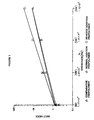
- Figure 1 is a graph depicting melt index of polymers made in accordance with the present invention as a function of hydrogen pressure.
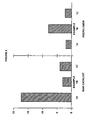
- Figure 2 is a bar graph showing the effect of catalyst type on the production of polyethylene fine particles.
- normal addition and reverse addition
- a solution of titanium compound(s) and alkyl halide is added to alkylmagnesium halide.
- reverse addition preformed alkylmagnesium halide is added to a solution of titanium compound(s) and alkyl halide.
- catalyst precursor refers to the titanium magnesium product obtained by reacting a titanium compound(s), alkylmagnesium halide and alkyl halide.
- the catalyst precursor is not an olefin polymerization catalyst, but can be activated to become one.
- the present invention is a process for the polymerization of olefins, preferably alpha-olefins, more preferably ethylene.
- Preferred olefins are alpha-olefins wherein at least one of A or A' is hydrogen.
- the olefins are contacted with a polymerization catalyst.
- the polymerization catalyst comprises a catalyst precursor that has been activated by an activator molecule.
- the catalyst precursor of the present invention comprises the product obtained by:
- the catalyst precursor is activated with an activator compound.
- the activator is an organometallic compound or compounds of a metal of Groups II or III of the Periodic Table of elements.
- the activator is an organoaluminum compound, more preferably an alkylaluminum compound.
- activators include, but are not limited to, trialkylaluminum compounds such as triethylaluminum, tri-n-octylaluminum and the like.
- the activator compound may be used in neat form, or it may be supported on a carrier. If a carrier is employed, it may be an inert, organic or inorganic carrier.
- the catalyst precursor may be activated prior to introduction into the polymerization reactor, or the catalyst precursor and activator compound may be added to the polymerization reactor separately.
- the olefin polymerization catalyst is contacted with an olefin, under polymerization conditions, to produce a prepolymer.
- a sufficient amount of olefin is used such that the prepolymer obtained has a melt index in the range of 1 to 5 g/10min.
- melt index refers to the unit of measure described in ASTM Procedure No. D-1238.
- the prepolymer is then used as a catalyst for the polymerization of the olefin. Polymerization is accomplished by adding more olefin to the prepolymer under polymerization conditions.
- the catalyst precursors of the present invention are prepared by adding a preformed alkylmagnesium halide to a liquid solution containing titanium compound(s) and an alkyl halide.
- the alkylmagnesium halide is defined by the formula R'MgZ wherein R 1 is an alkyl radical, preferably C 2 to C 8 alkyl, more preferably butyl, and Z is a halide, preferably chloride or bromide.
- the alkylmagnesium halide may be added to the liquid solution in solid powdered form or as a solid suspended in an organic liquid, preferably heptane.
- the preformed alkylmagnesium halide is slowly added to a solution comprising a solvent having dissolved therein:
- the titanium compounds may contain trivalent or tetravalent titanium, having the formula TiZ n or Ti(OR') m , wherein n and m each is 3 or 4, preferably 4, and Z and R' are as defined above.
- the titanium halide is preferably titanium tetrachloride and the titanium alkoxide is preferably titanium tetraisopropoxide. More preferably, a mixture of titanium halide and titanium alkoxide in a mole ratio of about 1:1 is used.
- the mole ratio of Mg to Ti should be in the range of 3:1 to 6:1, preferably 4:1 to 4.5:1.
- the alkyl halide is defined by the formula R 2 Z wherein R 2 is an alkyl radical, preferably C 2 to C 8 alkyl, more preferably butyl or propyl, and Z is as defined above.
- titanium halide, titanium alkoxide or both is dissolved in an appropriate amount of solvent together with an alkyl halide such that the molar ratios are:
- the amount of solvent to titanium solution should be a volume ratio of about 20-50:1, preferably about 30-35:1.
- the solvent may be any liquid which dissolves the titanium compound(s) and alkyl halide, and does not interfere with the reaction which produces the catalyst precursor.
- the solvent will typically be an organic solvent, preferably a hydrocarbon solvent. Examples of suitable solvents include, but are not limited to, C 5 to C 10 hydrocarbons. Hexane and heptane are preferred solvents.
- the catalyst precursors of this invention may be produced by reaction at a temperature of from 60° to 90°C, preferably from 70° to 80°C.
- the liquid solution containing the titanium compound(s) and alkyl halide is heated to about 70°C.
- a preformed alkylmagnesium halide compound is then added to the liquid solution by a controlled addition, i.e., the alkylmagnesium halide is added to the liquid solution slowly over time. Once all of the alkylmagnesium halide has been added to the liquid solution, the resulting mixture is cooled to room temperature and filtered to recover the catalyst precursor in the form of a powder.
- the preformed alkylmagnesium halide be slowly added to the solution of titanium compound(s) and alkyl halide by a controlled addition over a relatively long period of time. While the period of time over which the alkylmagnesium halide is added to the liquid solution will depend on such factors as the size of the reaction mixture, typically that period of time will be 1 to 5 hours, preferably 2 to 4 hours. This manner (and order) of addition is necessary to allow small concentrations of preformed alkylmagnesium halide to react with excess titanium in the beginning of the reaction.
- the catalyst precursors synthesized by the reverse addition method of this invention contain particles having a unique morphology, i.e., the catalyst precursor contains hollow particles. These hollow particles are different from the solid, compact particles obtained by the normal addition process.
- SEM scanning electron microscopy
- Fine particles are particles of less than 180 microns in diameter. Particle sizes may be determined by using a Malvern 2600 Particle Size Analyzer or by standard sieving techniques. Fine particles are especially disadvantageous in gas phase olefin polymerization reactions. The fine particles are too light for gas phase polymerization, and easily blow out the top of the reactor bed and into areas of the reactor where polymerization is not supposed to occur. To avoid this problem, the fine particles must be removed prior to polymerization. This is typically done via an expensive elutriation procedure, like the one described in U.S. Patent No. 4,931,193. This procedure involves first having to prepare a homogeneous suspension of the particles in an elutriation liquid, then elutriating the catalyst by filtering the suspension through one or two elutriation columns.
- the present invention provides catalysts and prepolymers with fewer fine particles, the aforementioned elutriation procedure can be avoided. This saves both time and money , since the additional step of elutriation is expensive and time consuming.
- Table I below illustrates the above mentioned advantages.
- Table I % Fines Raw Catalyst % Fines Prepolymer Melt Index of polyethylene product [H2] (150 psig) 1.14x10 6 Pa Morphology of Catalyst COMPARATIVE EXAMPLE A 17.5 2 * 4.9 Solid & Compact COMPARATIVE EXAMPLE B 3 8 4.8 Solid & Compact EXAMPLE 1 4 2.3 12 Hollow * catalyst was elutriated in prior step.
- the catalyst precursor becomes the polymerization catalyst upon activation.
- the catalyst precursor is activated by contacting it with an activator compound, as discussed above.
- Preferred activators are trialkylaluminum compounds, especially triethylaluminum, tributylaluminum and tri-n-octylaluminum.
- the aluminum to titanium mole ratio is about 0.50:1 to 2.0:1, preferably 0.8:1 to 1.2:1.
- the catalyst precursor is activated by the activator compound by methods conventional in the art.
- Prepolymerization and polymerization are generally carried out under a pressure of less than about 4.8x10 5 Pa (70 psi) and at a temperature from 40° to 150°C.
- This operation may be performed by introducing the monomer(s) comprising, e.g., ethylene (and possibly other olefins), into a liquid diluent such as a saturated aliphatic hydrocarbon or, in the absence of diluent, by direct contact between the monomer(s) in the gaseous condition and the constituents of the catalyst system.
- a liquid diluent such as a saturated aliphatic hydrocarbon or, in the absence of diluent
- Prepolymerization and polymerization are carried out in the presence of a chain growth limiter, generally comprising hydrogen, whose proportion by volume with respect to the monomer(s) introduced into the polymerization medium is from 1 to 80%, so as to produce a polymer having the desired melt index.
- a chain growth limiter generally comprising hydrogen, whose proportion by volume with respect to the monomer(s) introduced into the polymerization medium is from 1 to 80%, so as to produce a polymer having the desired melt index.
- the catalyst may be introduced into the polymerization reactor directly or in the form of a prepolymer produced by preliminary polymerization of one or more olefins within an inert liquid such as an aliphatic hydrocarbon and in the presence of a catalyst of the present invention.
- the prepolymer contains about 1000 parts by weight of olefin per part by weight of titanium. It may or may not be filtered prior to polymerization.
- the prepolymer has a melt index in the range of 1 to 5 g/10 min.
- Figure 2 is a bar graph depiction of the percentage of fine particles of polyethylene produced using catalysts made from the magnesium powder catalyst precursor of Comparative Example A, the normal addition catalyst precursor of Comparative Example B, and the reverse addition catalyst precursor of Example 1 wherein the catalysts used were in raw form and in prepolymer form.
- a catalyst used in raw form is one which does not go through a prepolymerization stage.
- the graph shows that normal addition catalyst and reverse addition catalyst produce about the same percentage of fine particles in the raw form. However, when using the catalysts in prepolymer form, the reverse addition catalyst produces significantly less fine particles.
- the graph also shows that powdered magnesium catalysts have the lowest production of fine particles.
- Comparative Example A catalyst was elutriated of its contaminating particles. The elutriation procedure is very timely and expensive.
- An 810 Ml Fisher-Porter bottle is charged with 350 mg of the polymerization catalyst precursor, 50mL heptane, alkylaluminum compound, and a Teflon stir bar.
- the bottle is connected to an ethylene cylinder and the assembly evacuated. Hydrogen is added as required.
- the bottle is pressurized as required with ethylene and heated to 80°C. As ethylene is consumed, the pressure falls, and the bottle is repressurized to original pressure after the gauge pressure has fallen 6.9x10 4 Pa (10 psig). A total of 2.1x10 6 Pa (300 psi) of ethylene is added in this way.
- the catalyst gradually turns white-grey during the course of this one to two hour process.
- the pressure is vented and the solid product dries in vacuo to leave prepolymer as an off-white product.
- a two-liter autoclave equipped with an anchor-helix stirrer is purged of any oxygen or moisture by evacuation at 80°C followed by several pressure/evacuate cycles with argon.
- the vessel is charged with a slurry of catalyst precursor, alkylaluminum compound, and 10-20 Ml heptane.
- Argon and hydrogen are added to bring the pressure to 2.5x10 6 Pa (350 psig).
- Ethylene is added to bring the total pressure to 3.9x10 6 Pa (550 psig).
- Temperature and stirring rate are maintained and ethylene is metered from a reservoir to determine a kinetic profile of the catalyst. After the appropriate time, the gasses are vented and the reactor cooled to leave polyethylene as a white powder.
- Figure 1 shows the hydrogen response for the catalyst of this invention and comparative catalysts.
- the catalyst of the present invention gives higher melt index polymers at any given hydrogen concentration.
- the melt index is about 10 when the catalyst of this invention is used, while the melt index is only about 4 for the comparative example.
- the melt index is about 35 when the catalyst of this invention is used, compared to about 12 for the comparative catalyst.
- the catalyst of this invention has a surprisingly high hydrogen response, that is, relatively small amounts of hydrogen can be used to alter the polymer molecular weight.
- This high hydrogen response is advantageous, as it is often desirable to adjust polymer molecular weight during a polymerization run depending on the melt index of the polyolefin product desired and its planned applications or uses.
- the high hydrogen response of the catalyst of this invention also means that less hydrogen is used. As it is difficult to remove catalyst poisons from hydrogen, less hydrogen means fewer introduced catalyst poisons. Also, there are operating pressure limits on most ethylene polymerization vessels; these limit the amount of hydrogen that can be added. Moreover, added hydrogen generally displaces ethylene in the polymerization vessel and, thus, decreases the ethylene concentration in the vessel. This can impact the reaction kinetics.
Landscapes
- Chemical & Material Sciences (AREA)
- Health & Medical Sciences (AREA)
- Chemical Kinetics & Catalysis (AREA)
- Medicinal Chemistry (AREA)
- Polymers & Plastics (AREA)
- Organic Chemistry (AREA)
- Transition And Organic Metals Composition Catalysts For Addition Polymerization (AREA)
Claims (37)
- Katalysatorvorläufer zur Herstellung von Katalysatoren für die Polymersisation von Olefinen, umfassend Magnesium und Titan,wobei der Katalysatorvorläufer hergestellt wird durch Zugeben eines vorgefertigten Alkylmagnesiumhalogenids zu einer flüssigen Lösung, umfassend ein Lösungsmittel mit einem darin gelösten (a) Titanalkoxid oder einem Titanalkoxid und einem Titanhalogenid und (b) einem Alkylhalogenid,wobei das Alkylmagnesiumhalogenid die Formel R1MgZ hat, worin R1 ein Alkylrest und Z ein Halogen ist und das Alkylhalogenid die Formel R2Z hat, worin R2 ein Alkylrest und Z ein Halogen ist, unddie Zugabe des vorgefertigten Alkylmagnesiumhalogenids zu einer flüssigen Lösung über eine Zeitdauer von mindestens einer Stunde so gesteuert wird, daß geringe Mengen des vorgefertigten Alkylmagnesiumhalogenids mit dem Überschußtitan am Beginn der Umsetzung reagieren können.
- Katalysatorvorläufer nach Anspruch 1, wobei das Titanhalogenid die allgemeine Formel TiZn hat, worin Z ein Halogenid und n 3 oder 4 ist, und das Titanalkoxid die allgemeine Formel Ti(OR1)m hat, worin R1 ein Alkylrest und m 3 oder 4 ist.
- Katalysatorvorläufer nach Anspruch 1, wobei (a) Titantetraisopropoxid oder Titantetraisopropoxid und Titantetrachlorid umfaßt.
- Katalysatorvorläufer nach Anspruch 1, wobei (a) Titantetrachlorid und Titantetraisopropoxid umfaßt.
- Katalysatorvorläufer nach Anspruch 1, wobei das Alkylhalogenid Butylchlorid ist.
- Katalysatorvorläufer nach Anspruch 1, wobei (a) Titantetrachlorid und Titantetraisopropoxid umfaßt und (b) Butylchlorid ist.
- Katalysatorvorläufer nach Anspruch 1, der Hohlteilchen aufweist.
- Katalysatorvorläufer nach Anspruch 1, wobei das Alkylmagnesiumhalogenid der flüssigen Lösung in 1 bis 5 Stunden zugegeben wird.
- Verfahren zur Herstellung eines Katalysatorvorläufers zur Herstellung von Katalysatoren für die Polymerisation von Olefinen, wobei das Verfahren die Zugabe eines vorgefertigten Alkylmagnesiumhalogenids zu einer flüssigen Lösung umfaßt, die ein Lösungsmittel mit einem darin gelösten (a) Titanalkoxid oder einem Titanalkoxid und einem Titanhalogenid, und (b) einem Alkylhalogenid umfaßt,
wobei das Alkylmagnesiumhalogenid die Formel R1MgZ hat, worin R1 ein Alkylrest und Z ein Halogen ist und das Alkylhalogenid die Formel R2Z hat, worin R2 ein Alkylrest und Z ein Halogen ist, und die Zugabe des vorgefertigten Alkylmagnesiumhalogenids zur flüssigen Lösung über eine Zeitdauer von mindes-tens einer Stunde so gesteuert wird, daß geringe Mengen des vorgefertigten Alkylmagnesiumhalogenids mit dem Überschußtitan am Beginn der Umsetzung reagieren können. - Verfahren nach Anspruch 9, wobei das Titanoxid die allgemeine Formel TiZn hat, worin Z ein Halogenid und n 3 oder 4 ist, und das Titanalkoxid die allgemeine Formel Ti(OR1)m hat, worin R1 ein Alkylrest und m 3 oder 4 ist.
- Verfahren nach Anspruch 9, wobei (a) Titantetraisopropoxid oder Titantetraisopropoxid und Titantetrachlorid umfaßt.
- Verfahren nach Anspruch 9, wobei (a) Titantetrachlorid und Titantetraisopropoxid umfaßt.
- Verfahren nach Anspruch 9, wobei das Alkylhalogenid Butylchlorid ist.
- Verfahren nach Anspruch 9, wobei (a) Titantetrachlorid und Titantetraisopropoxid umfaßt und (b) Butylchlorid ist.
- Polymerisationskatalysator zur Polymerisation von Olefinen, der nach einem Verfahren hergestellt wird, bei dem eine Organoaluminiumverbindung zu einem Katalysatorvorläufer nach einem der Ansprüche 1 bis 8 zugegeben wird.
- Katalysator nach Anspruch 15, wobei das Titanhalogenid die allgemeine Formel TiZn hat, worin Z ein Halogen und n 3 oder 4 ist, und das Titanalkoxid die allge-meine Formel Ti(OR1)m hat, worin R1 ein Alkylrest und m 3 oder 4 ist.
- Katalysator nach Anspruch 15, wobei (a) Titantetra-isopropoxid oder Titantetraisopropoxid und Titantetrachlorid umfaßt.
- Katalysator nach Anspruch 15, wobei (a) Titantetrachlorid und Titantetraisopropoxid umfaßt.
- Katalysator nach Anspruch 15, wobei das Alkylhalogenid Butylchlorid ist.
- Katalysator nach Anspruch 15, wobei (a) Titantetrachlorid und Titantetraisopropoxid umfaßt und (b) Butylchlorid ist.
- Katalysator nach Anspruch 15, wobei die Organoaluminiumverbindung eine Trialkylaluminiumverbindung ist.
- Katalysator nach Anspruch 21, wobei die Trialkylaluminiumverbindung Triethylaluminium oder Tri-n-octylaluminium ist.
- Vorpolymerisat zur Polymerisation von Olefinen, das nach dem Verfahren hergestellt wird, bei dem:(1) der Katalysatorvorläufer nach einem der Ansprüche 1 bis 8 mit einem Aktivierungsmittel umgesetzt wird, das eine Organometallverbindung oder Verbindungen eines Metalls der Gruppe II oder III ist; und(2) das Produkt aus Schritt (1) bei Olefin-Polymerisationsbedingungen mit einer ausreichenden Menge Olefin in Kontakt gebracht wird, so daß der Schmelzindex des erhaltenen Vorpolymerisats im Bereich von 1 bis 5 g/10 Min liegt.
- Verfahren zur Polymerisation von Olefinen in Anwesenheit eines Polymerisatkatalysators, wobei das Verfahren die Verwendung eines Katalysators umfaßt, der aus einem Katalysatorvorläufer hergestellt wird, der das Produkt umfaßt, das man durch Zugeben eines vorgefertigten Alkylmagnesiumhalogenids zu einer flüssigen Lösung erhält, die ein Lösungsmittel mit einem darin gelösten (a) Titanalkoxid oder einem Titanalkoxid und einem Titanhalogenid, und (b) einem Alkylhalogenid umfaßt,wobei das Alkylmagnesiumhalogenid die Formel R1MgZ hat, worin R1 ein Alkylrest und Z ein Halogen ist und das Alkylhalogenid die Formel R2Z hat, worin R2 ein Alkylrest und Z ein Halogen ist, unddie Zugabe des vorgefertigten Alkylmagnesiumhalogenids zur flüssigen Lösung über eine Zeitdauer von mindestens einer Stunde so gesteuert wird, daß geringe Mengen des vorgefertigten Alkylmagnesiumhalogenids mit dem Überschußtitan am Beginn der Umsetzung reagieren können.
- Verfahren nach Anspruch 24, wobei das Titanoxid die allgemeine Formel TiZn hat, worin Z ein Halogenid und n 3 oder 4 ist, und das Titanalkoxid die allgemeine Formel Ti(OR1)m hat, worin R1 ein Alkylrest und m 3 oder 4 ist.
- Verfahren nach Anspruch 24, wobei (a) Titantetraisopropoxid oder Titantetraisopropoxid und Titantetrachlorid umfaßt.
- Verfahren nach Anspruch 24, wobei (a) Titantetrachlorid und Titantetraisopropoxid umfaßt.
- Verfahren nach Anspruch 24, wobei das Alkylhalogenid Butylchlorid ist.
- Verfahren nach Anspruch 24, wobei (a) Titantetrachlorid und Titantetraisopropoxid umfaßt und (b) Butylchlorid ist.
- Verfahren nach Anspruch 24, wobei der Katalysatorvorläufer Hohlteilchen aufweist.
- Verfahren zur Herstellung von Olefinen, umfassend:(1) das Herstellen eines vorgefertigten Alkylmagnesiumhalogenids in einem Lösungsmittel;(2) das Herstellen einer flüssigen Lösung, umfassend ein Lösungsmittel mit einem darin gelösten Titanalkoxid oder einem Titanalkoxid und einem Titanhalogenid, und einem Alkylhalogenid;(3) das Zugeben des Produkts aus Schritt (1) zur flüssigen Lösung aus Schritt (2);(4) das Zugeben von Trialkylaluminium zum Produkt aus Schritt (3);(5) das Umsetzen des Produkts aus Schritt (4) bei Olefin-Polymerisationsbedingungen mit einer ausreichenden Menge Olefin, so daß der Schmelz-index des hergestellten Produkts im Bereich von 1 bis 5 g/10 Min liegt; und(6) das Umsetzen des Produkts aus Schritt (5) bei Olefin-Polymerisationsbedingungen mit einer ausreichenden Menge Olefin, so daß das Polyolefinharz entsteht,wobei das Alkylmagnesiumhalogenid die Formel R1MgZ hat, worin R1 ein Alkylrest und Z ein Halogen ist und das Alkylhalogenid die Formel R2Z hat, worin R2 ein Alkylrest und Z ein Halogen ist, unddie Zugabe des vorgefertigten Alkylmagnesiumhalogenids zu einer flüssigen Lösung über eine Zeitdauer von mindestens einer Stunde so gesteuert wird, daß geringe Mengen des vorgefertigten Alkylmagnesiumhalogenids mit dem Überschußtitan am Beginn der Umsetzung reagieren können.
- Verfahren nach Anspruch 31, wobei das Titanhalogenid die allgemeine Formel TiZn hat, worin Z ein Halogenid und n 3 oder 4 ist, und das Titanalkoxid die allgemeine Formel Ti(OR1)m hat, worin R1 ein Alkylrest und m 3 oder 4 ist.
- Verfahren nach Anspruch 31, wobei (a) Titantetraisopropoxid oder Titantetraisopropoxid und Titantetrachlorid umfaßt.
- Verfahren nach Anspruch 31, wobei die flüssige Lösung aus (2) ein Gemisch aus Titantetrachlorid und Titantetraisopropoxid umfaßt.
- Verfahren nach Anspruch 31, wobei das Alkylhalogenid Butylchlorid ist.
- Verfahren nach Anspruch 31, wobei die flüssige Lösung aus (2) ein Gemisch aus Titantetrachlorid und Titantetraisopropoxid umfaßt und das Alkylhalogenid Butylchlorid ist.
- Verfahren nach Anspruch 31, wobei das Trialkylaluminium Triethylaluminium oder Tri-n-octylaluminium ist.
Applications Claiming Priority (3)
| Application Number | Priority Date | Filing Date | Title |
|---|---|---|---|
| US89627192A | 1992-06-10 | 1992-06-10 | |
| US896271 | 1992-06-10 | ||
| PCT/US1993/005457 WO1993025589A1 (en) | 1992-06-10 | 1993-06-08 | Titanium magnesium catalyst precursors for the polymerization of olefins |
Publications (2)
| Publication Number | Publication Date |
|---|---|
| EP0598890A1 EP0598890A1 (de) | 1994-06-01 |
| EP0598890B1 true EP0598890B1 (de) | 1997-08-13 |
Family
ID=25405929
Family Applications (1)
| Application Number | Title | Priority Date | Filing Date |
|---|---|---|---|
| EP93914431A Expired - Lifetime EP0598890B1 (de) | 1992-06-10 | 1993-06-08 | Titan und magnesium enthaltender katalystvorläufer zur olefinpolymerisation |
Country Status (6)
| Country | Link |
|---|---|
| EP (1) | EP0598890B1 (de) |
| JP (1) | JPH06509840A (de) |
| AU (1) | AU4409493A (de) |
| CA (1) | CA2115043C (de) |
| DE (1) | DE69313078T2 (de) |
| WO (1) | WO1993025589A1 (de) |
Families Citing this family (2)
| Publication number | Priority date | Publication date | Assignee | Title |
|---|---|---|---|---|
| WO1995024432A1 (en) * | 1994-03-10 | 1995-09-14 | Chevron Chemical Company | Transition metal-magnesium catalyst precursors for the polymerization of olefins |
| FI942949A0 (fi) * | 1994-06-20 | 1994-06-20 | Borealis Polymers Oy | Prokatalysator foer producering av etenpolymerer och foerfarande foer framstaellning daerav |
Family Cites Families (4)
| Publication number | Priority date | Publication date | Assignee | Title |
|---|---|---|---|---|
| BE785673A (fr) * | 1971-06-30 | 1973-01-02 | Naphtachimie Sa | Catalyseurs de polymerisation des olefines prepares a partir decomposesorganomagnesiens |
| FR2436794A1 (fr) * | 1978-09-22 | 1980-04-18 | Naphtachimie Sa | Procede de polymerisation de l'ethylene et produits en resultant |
| IT1134011B (it) * | 1979-10-23 | 1986-07-24 | Japan Ep Rubber Co | Procedimento per la produzione di gomma di un copolimero olefinico |
| JPS58113212A (ja) * | 1981-12-28 | 1983-07-06 | Japan Synthetic Rubber Co Ltd | オレフイン共重合体ゴムの製造方法 |
-
1993
- 1993-06-08 CA CA002115043A patent/CA2115043C/en not_active Expired - Fee Related
- 1993-06-08 WO PCT/US1993/005457 patent/WO1993025589A1/en not_active Ceased
- 1993-06-08 JP JP6501668A patent/JPH06509840A/ja active Pending
- 1993-06-08 DE DE69313078T patent/DE69313078T2/de not_active Expired - Fee Related
- 1993-06-08 AU AU44094/93A patent/AU4409493A/en not_active Abandoned
- 1993-06-08 EP EP93914431A patent/EP0598890B1/de not_active Expired - Lifetime
Also Published As
| Publication number | Publication date |
|---|---|
| EP0598890A1 (de) | 1994-06-01 |
| AU4409493A (en) | 1994-01-04 |
| JPH06509840A (ja) | 1994-11-02 |
| WO1993025589A1 (en) | 1993-12-23 |
| CA2115043A1 (en) | 1993-12-23 |
| DE69313078D1 (de) | 1997-09-18 |
| CA2115043C (en) | 2000-08-22 |
| DE69313078T2 (de) | 1997-12-11 |
Similar Documents
| Publication | Publication Date | Title |
|---|---|---|
| KR940004124B1 (ko) | 지글러-나타 촉매와 2개의 유기금속 화합물을 이용한 올레핀의 중합방법 | |
| US5077358A (en) | Process for the start up of polymerization or copolymerization in the gas phase of alpha-olefins in the presence of a ziegler-natta catalyst system | |
| US4172050A (en) | High efficiency titanate catalyst for polymerizing olefins | |
| RU2097388C1 (ru) | Способ получения полимера или сополимера этилена | |
| US5968862A (en) | Transition metal-magnesium catalyst precursors for the polymerization of olefins | |
| CA1286837C (en) | Polymerisation of olefins using a modified ziegler-natta catalyst | |
| JPH04306203A (ja) | 改良されたオレフィン重合用乾燥触媒 | |
| SU424360A3 (ru) | Способ получения полиолефинов | |
| US4067822A (en) | High efficiency complex catalyst for polymerizing olefins | |
| EP0251100B1 (de) | Erhöhung der Katalysatorproduktivität in der Olefinpolymerisation | |
| US4892853A (en) | Ethylene polymerization catalyst | |
| US4295992A (en) | Support prepared from organomagnesium compounds and silicon halides; and catalysts for polymerizing olefins | |
| US4027088A (en) | Process of preparing polyolefins | |
| US4283515A (en) | Support, catalyst and process for polymerizing olefins | |
| EP0652904B1 (de) | Katalysatorbestandteil für ethylenpolymerisation | |
| CA2115043C (en) | Titanium magnesium catalyst precursors for the polymerization of olefins | |
| KR100192716B1 (ko) | 실리카 지지된 전이금속 촉매 | |
| EP0111902B1 (de) | Katalysator und Verfahren zur Herstellung von Olefinpolymeren unter Verwendung dieses Katalysators | |
| US4210736A (en) | Particles of titanium trichlorides which can be used for the stereospecific polymerization of alpha-olefines | |
| AU610576B2 (en) | Transition metal composition | |
| KR920004424B1 (ko) | 에틸렌 중합 촉매 | |
| US4182816A (en) | Olefine polymerization process | |
| EP0020808A1 (de) | Träger, Katalysator und Verfahren zur Polymerisation von Olefinen | |
| US4476288A (en) | Catalysts comprising magnesium and a transition metal | |
| CA1155829A (en) | Olefin polymerization catalyst |
Legal Events
| Date | Code | Title | Description |
|---|---|---|---|
| PUAI | Public reference made under article 153(3) epc to a published international application that has entered the european phase |
Free format text: ORIGINAL CODE: 0009012 |
|
| 17P | Request for examination filed |
Effective date: 19940309 |
|
| AK | Designated contracting states |
Kind code of ref document: A1 Designated state(s): BE DE FR GB IT |
|
| RAP1 | Party data changed (applicant data changed or rights of an application transferred) |
Owner name: CHEVRON RESEARCH AND TECHNOLOGY COMPANY |
|
| 17Q | First examination report despatched |
Effective date: 19960212 |
|
| GRAG | Despatch of communication of intention to grant |
Free format text: ORIGINAL CODE: EPIDOS AGRA |
|
| GRAH | Despatch of communication of intention to grant a patent |
Free format text: ORIGINAL CODE: EPIDOS IGRA |
|
| GRAH | Despatch of communication of intention to grant a patent |
Free format text: ORIGINAL CODE: EPIDOS IGRA |
|
| GRAA | (expected) grant |
Free format text: ORIGINAL CODE: 0009210 |
|
| AK | Designated contracting states |
Kind code of ref document: B1 Designated state(s): BE DE FR GB IT |
|
| RAP2 | Party data changed (patent owner data changed or rights of a patent transferred) |
Owner name: CHEVRON U.S.A. INC. |
|
| REF | Corresponds to: |
Ref document number: 69313078 Country of ref document: DE Date of ref document: 19970918 |
|
| ET | Fr: translation filed | ||
| ITF | It: translation for a ep patent filed | ||
| PLBE | No opposition filed within time limit |
Free format text: ORIGINAL CODE: 0009261 |
|
| STAA | Information on the status of an ep patent application or granted ep patent |
Free format text: STATUS: NO OPPOSITION FILED WITHIN TIME LIMIT |
|
| 26N | No opposition filed | ||
| REG | Reference to a national code |
Ref country code: GB Ref legal event code: IF02 |
|
| PGFP | Annual fee paid to national office [announced via postgrant information from national office to epo] |
Ref country code: GB Payment date: 20020501 Year of fee payment: 10 |
|
| PGFP | Annual fee paid to national office [announced via postgrant information from national office to epo] |
Ref country code: FR Payment date: 20020605 Year of fee payment: 10 |
|
| PGFP | Annual fee paid to national office [announced via postgrant information from national office to epo] |
Ref country code: DE Payment date: 20020628 Year of fee payment: 10 |
|
| PGFP | Annual fee paid to national office [announced via postgrant information from national office to epo] |
Ref country code: BE Payment date: 20020717 Year of fee payment: 10 |
|
| PG25 | Lapsed in a contracting state [announced via postgrant information from national office to epo] |
Ref country code: GB Free format text: LAPSE BECAUSE OF NON-PAYMENT OF DUE FEES Effective date: 20030608 |
|
| PG25 | Lapsed in a contracting state [announced via postgrant information from national office to epo] |
Ref country code: BE Free format text: LAPSE BECAUSE OF NON-PAYMENT OF DUE FEES Effective date: 20030630 |
|
| BERE | Be: lapsed |
Owner name: *CHEVRON U.S.A. INC. Effective date: 20030630 |
|
| PG25 | Lapsed in a contracting state [announced via postgrant information from national office to epo] |
Ref country code: DE Free format text: LAPSE BECAUSE OF NON-PAYMENT OF DUE FEES Effective date: 20040101 |
|
| GBPC | Gb: european patent ceased through non-payment of renewal fee |
Effective date: 20030608 |
|
| PG25 | Lapsed in a contracting state [announced via postgrant information from national office to epo] |
Ref country code: FR Free format text: LAPSE BECAUSE OF NON-PAYMENT OF DUE FEES Effective date: 20040227 |
|
| REG | Reference to a national code |
Ref country code: FR Ref legal event code: ST |
|
| PG25 | Lapsed in a contracting state [announced via postgrant information from national office to epo] |
Ref country code: IT Free format text: LAPSE BECAUSE OF NON-PAYMENT OF DUE FEES Effective date: 20050608 |