EP0599153B1 - Verfahren und Vorrichtung zur stofflichen Identifikation von Werkstoffen - Google Patents
Verfahren und Vorrichtung zur stofflichen Identifikation von Werkstoffen Download PDFInfo
- Publication number
- EP0599153B1 EP0599153B1 EP19930118326 EP93118326A EP0599153B1 EP 0599153 B1 EP0599153 B1 EP 0599153B1 EP 19930118326 EP19930118326 EP 19930118326 EP 93118326 A EP93118326 A EP 93118326A EP 0599153 B1 EP0599153 B1 EP 0599153B1
- Authority
- EP
- European Patent Office
- Prior art keywords
- laser
- raw material
- temperature
- identified
- heat
- Prior art date
- Legal status (The legal status is an assumption and is not a legal conclusion. Google has not performed a legal analysis and makes no representation as to the accuracy of the status listed.)
- Expired - Lifetime
Links
- 239000000463 material Substances 0.000 title claims abstract description 102
- 238000000034 method Methods 0.000 title claims abstract description 33
- 230000005855 radiation Effects 0.000 claims abstract description 23
- 230000003287 optical effect Effects 0.000 claims abstract description 9
- 238000010438 heat treatment Methods 0.000 claims abstract description 7
- 238000001514 detection method Methods 0.000 claims description 29
- 238000004458 analytical method Methods 0.000 claims description 17
- 238000009826 distribution Methods 0.000 claims description 15
- 238000001816 cooling Methods 0.000 claims description 14
- 238000005259 measurement Methods 0.000 claims description 13
- 238000010521 absorption reaction Methods 0.000 claims description 11
- 230000001419 dependent effect Effects 0.000 claims description 7
- 230000008569 process Effects 0.000 claims description 7
- 238000009529 body temperature measurement Methods 0.000 claims description 4
- 238000005516 engineering process Methods 0.000 claims description 4
- 238000012360 testing method Methods 0.000 claims description 4
- 239000002994 raw material Substances 0.000 claims 35
- 230000001537 neural effect Effects 0.000 claims 2
- 230000035515 penetration Effects 0.000 claims 2
- 235000010627 Phaseolus vulgaris Nutrition 0.000 claims 1
- 244000046052 Phaseolus vulgaris Species 0.000 claims 1
- 235000021251 pulses Nutrition 0.000 claims 1
- 229920003023 plastic Polymers 0.000 description 74
- 239000004033 plastic Substances 0.000 description 74
- 230000004044 response Effects 0.000 description 17
- 238000000926 separation method Methods 0.000 description 17
- 238000011156 evaluation Methods 0.000 description 14
- 239000004743 Polypropylene Substances 0.000 description 10
- 239000004800 polyvinyl chloride Substances 0.000 description 9
- 238000004064 recycling Methods 0.000 description 8
- 239000004698 Polyethylene Substances 0.000 description 7
- 230000008901 benefit Effects 0.000 description 7
- 239000000126 substance Substances 0.000 description 7
- 229920003229 poly(methyl methacrylate) Polymers 0.000 description 6
- 239000004926 polymethyl methacrylate Substances 0.000 description 6
- 239000004793 Polystyrene Substances 0.000 description 5
- 238000012545 processing Methods 0.000 description 5
- 239000004676 acrylonitrile butadiene styrene Substances 0.000 description 4
- 239000000654 additive Substances 0.000 description 4
- 239000000203 mixture Substances 0.000 description 4
- 239000002250 absorbent Substances 0.000 description 3
- 230000002745 absorbent Effects 0.000 description 3
- 239000010791 domestic waste Substances 0.000 description 3
- 239000000975 dye Substances 0.000 description 3
- 238000001704 evaporation Methods 0.000 description 3
- 230000008020 evaporation Effects 0.000 description 3
- 238000004519 manufacturing process Methods 0.000 description 3
- 238000002844 melting Methods 0.000 description 3
- 230000008018 melting Effects 0.000 description 3
- 239000002245 particle Substances 0.000 description 3
- 229920000642 polymer Polymers 0.000 description 3
- 229920000098 polyolefin Polymers 0.000 description 3
- 239000004810 polytetrafluoroethylene Substances 0.000 description 3
- 229920001343 polytetrafluoroethylene Polymers 0.000 description 3
- 210000002023 somite Anatomy 0.000 description 3
- 238000001228 spectrum Methods 0.000 description 3
- 238000012549 training Methods 0.000 description 3
- 238000013528 artificial neural network Methods 0.000 description 2
- 230000005540 biological transmission Effects 0.000 description 2
- 230000015572 biosynthetic process Effects 0.000 description 2
- 239000003153 chemical reaction reagent Substances 0.000 description 2
- 239000003086 colorant Substances 0.000 description 2
- 230000007423 decrease Effects 0.000 description 2
- 239000007850 fluorescent dye Substances 0.000 description 2
- 239000007788 liquid Substances 0.000 description 2
- -1 polyethylene Polymers 0.000 description 2
- 238000000197 pyrolysis Methods 0.000 description 2
- 230000002123 temporal effect Effects 0.000 description 2
- XLYOFNOQVPJJNP-UHFFFAOYSA-N water Substances O XLYOFNOQVPJJNP-UHFFFAOYSA-N 0.000 description 2
- 241001136792 Alle Species 0.000 description 1
- 238000004616 Pyrometry Methods 0.000 description 1
- 239000006096 absorbing agent Substances 0.000 description 1
- 230000004888 barrier function Effects 0.000 description 1
- 230000009286 beneficial effect Effects 0.000 description 1
- 230000015556 catabolic process Effects 0.000 description 1
- 230000008859 change Effects 0.000 description 1
- 239000003795 chemical substances by application Substances 0.000 description 1
- 238000004040 coloring Methods 0.000 description 1
- 230000008878 coupling Effects 0.000 description 1
- 238000010168 coupling process Methods 0.000 description 1
- 238000005859 coupling reaction Methods 0.000 description 1
- 230000007547 defect Effects 0.000 description 1
- 238000006731 degradation reaction Methods 0.000 description 1
- 230000001066 destructive effect Effects 0.000 description 1
- 238000011161 development Methods 0.000 description 1
- 230000018109 developmental process Effects 0.000 description 1
- 230000004069 differentiation Effects 0.000 description 1
- 230000000694 effects Effects 0.000 description 1
- 239000010793 electronic waste Substances 0.000 description 1
- 238000005265 energy consumption Methods 0.000 description 1
- 238000005188 flotation Methods 0.000 description 1
- 230000004927 fusion Effects 0.000 description 1
- 239000011521 glass Substances 0.000 description 1
- 230000002209 hydrophobic effect Effects 0.000 description 1
- 239000012535 impurity Substances 0.000 description 1
- 239000002440 industrial waste Substances 0.000 description 1
- 229910052500 inorganic mineral Inorganic materials 0.000 description 1
- 238000011835 investigation Methods 0.000 description 1
- 230000001678 irradiating effect Effects 0.000 description 1
- 238000002372 labelling Methods 0.000 description 1
- 238000004949 mass spectrometry Methods 0.000 description 1
- 229910052751 metal Inorganic materials 0.000 description 1
- 239000002184 metal Substances 0.000 description 1
- 150000002739 metals Chemical class 0.000 description 1
- 239000011707 mineral Substances 0.000 description 1
- 238000002156 mixing Methods 0.000 description 1
- 238000004806 packaging method and process Methods 0.000 description 1
- 239000010816 packaging waste Substances 0.000 description 1
- 239000000049 pigment Substances 0.000 description 1
- 239000004014 plasticizer Substances 0.000 description 1
- 229920000573 polyethylene Polymers 0.000 description 1
- 229920001155 polypropylene Polymers 0.000 description 1
- 238000004451 qualitative analysis Methods 0.000 description 1
- 238000012958 reprocessing Methods 0.000 description 1
- 238000004904 shortening Methods 0.000 description 1
- 230000003068 static effect Effects 0.000 description 1
- 238000004154 testing of material Methods 0.000 description 1
- 238000005979 thermal decomposition reaction Methods 0.000 description 1
- 238000001931 thermography Methods 0.000 description 1
- 239000002699 waste material Substances 0.000 description 1
- 238000004876 x-ray fluorescence Methods 0.000 description 1
Images



Classifications
-
- G—PHYSICS
- G01—MEASURING; TESTING
- G01N—INVESTIGATING OR ANALYSING MATERIALS BY DETERMINING THEIR CHEMICAL OR PHYSICAL PROPERTIES
- G01N33/00—Investigating or analysing materials by specific methods not covered by groups G01N1/00 - G01N31/00
- G01N33/44—Resins; Plastics; Rubber; Leather
- G01N33/442—Resins; Plastics
-
- B—PERFORMING OPERATIONS; TRANSPORTING
- B07—SEPARATING SOLIDS FROM SOLIDS; SORTING
- B07C—POSTAL SORTING; SORTING INDIVIDUAL ARTICLES, OR BULK MATERIAL FIT TO BE SORTED PIECE-MEAL, e.g. BY PICKING
- B07C5/00—Sorting according to a characteristic or feature of the articles or material being sorted, e.g. by control effected by devices which detect or measure such characteristic or feature; Sorting by manually actuated devices, e.g. switches
- B07C5/34—Sorting according to other particular properties
-
- B—PERFORMING OPERATIONS; TRANSPORTING
- B29—WORKING OF PLASTICS; WORKING OF SUBSTANCES IN A PLASTIC STATE IN GENERAL
- B29B—PREPARATION OR PRETREATMENT OF THE MATERIAL TO BE SHAPED; MAKING GRANULES OR PREFORMS; RECOVERY OF PLASTICS OR OTHER CONSTITUENTS OF WASTE MATERIAL CONTAINING PLASTICS
- B29B17/00—Recovery of plastics or other constituents of waste material containing plastics
- B29B17/02—Separating plastics from other materials
-
- B—PERFORMING OPERATIONS; TRANSPORTING
- B29—WORKING OF PLASTICS; WORKING OF SUBSTANCES IN A PLASTIC STATE IN GENERAL
- B29B—PREPARATION OR PRETREATMENT OF THE MATERIAL TO BE SHAPED; MAKING GRANULES OR PREFORMS; RECOVERY OF PLASTICS OR OTHER CONSTITUENTS OF WASTE MATERIAL CONTAINING PLASTICS
- B29B17/00—Recovery of plastics or other constituents of waste material containing plastics
- B29B17/02—Separating plastics from other materials
- B29B2017/0203—Separating plastics from plastics
-
- B—PERFORMING OPERATIONS; TRANSPORTING
- B29—WORKING OF PLASTICS; WORKING OF SUBSTANCES IN A PLASTIC STATE IN GENERAL
- B29B—PREPARATION OR PRETREATMENT OF THE MATERIAL TO BE SHAPED; MAKING GRANULES OR PREFORMS; RECOVERY OF PLASTICS OR OTHER CONSTITUENTS OF WASTE MATERIAL CONTAINING PLASTICS
- B29B17/00—Recovery of plastics or other constituents of waste material containing plastics
- B29B17/02—Separating plastics from other materials
- B29B2017/0213—Specific separating techniques
- B29B2017/0279—Optical identification, e.g. cameras or spectroscopy
-
- B—PERFORMING OPERATIONS; TRANSPORTING
- B29—WORKING OF PLASTICS; WORKING OF SUBSTANCES IN A PLASTIC STATE IN GENERAL
- B29K—INDEXING SCHEME ASSOCIATED WITH SUBCLASSES B29B, B29C OR B29D, RELATING TO MOULDING MATERIALS OR TO MATERIALS FOR MOULDS, REINFORCEMENTS, FILLERS OR PREFORMED PARTS, e.g. INSERTS
- B29K2023/00—Use of polyalkenes or derivatives thereof as moulding material
- B29K2023/04—Polymers of ethylene
- B29K2023/06—PE, i.e. polyethylene
-
- B—PERFORMING OPERATIONS; TRANSPORTING
- B29—WORKING OF PLASTICS; WORKING OF SUBSTANCES IN A PLASTIC STATE IN GENERAL
- B29K—INDEXING SCHEME ASSOCIATED WITH SUBCLASSES B29B, B29C OR B29D, RELATING TO MOULDING MATERIALS OR TO MATERIALS FOR MOULDS, REINFORCEMENTS, FILLERS OR PREFORMED PARTS, e.g. INSERTS
- B29K2023/00—Use of polyalkenes or derivatives thereof as moulding material
- B29K2023/10—Polymers of propylene
- B29K2023/12—PP, i.e. polypropylene
-
- B—PERFORMING OPERATIONS; TRANSPORTING
- B29—WORKING OF PLASTICS; WORKING OF SUBSTANCES IN A PLASTIC STATE IN GENERAL
- B29K—INDEXING SCHEME ASSOCIATED WITH SUBCLASSES B29B, B29C OR B29D, RELATING TO MOULDING MATERIALS OR TO MATERIALS FOR MOULDS, REINFORCEMENTS, FILLERS OR PREFORMED PARTS, e.g. INSERTS
- B29K2025/00—Use of polymers of vinyl-aromatic compounds or derivatives thereof as moulding material
-
- B—PERFORMING OPERATIONS; TRANSPORTING
- B29—WORKING OF PLASTICS; WORKING OF SUBSTANCES IN A PLASTIC STATE IN GENERAL
- B29K—INDEXING SCHEME ASSOCIATED WITH SUBCLASSES B29B, B29C OR B29D, RELATING TO MOULDING MATERIALS OR TO MATERIALS FOR MOULDS, REINFORCEMENTS, FILLERS OR PREFORMED PARTS, e.g. INSERTS
- B29K2027/00—Use of polyvinylhalogenides or derivatives thereof as moulding material
- B29K2027/06—PVC, i.e. polyvinylchloride
-
- B—PERFORMING OPERATIONS; TRANSPORTING
- B29—WORKING OF PLASTICS; WORKING OF SUBSTANCES IN A PLASTIC STATE IN GENERAL
- B29K—INDEXING SCHEME ASSOCIATED WITH SUBCLASSES B29B, B29C OR B29D, RELATING TO MOULDING MATERIALS OR TO MATERIALS FOR MOULDS, REINFORCEMENTS, FILLERS OR PREFORMED PARTS, e.g. INSERTS
- B29K2033/00—Use of polymers of unsaturated acids or derivatives thereof as moulding material
- B29K2033/04—Polymers of esters
- B29K2033/12—Polymers of methacrylic acid esters, e.g. PMMA, i.e. polymethylmethacrylate
-
- B—PERFORMING OPERATIONS; TRANSPORTING
- B29—WORKING OF PLASTICS; WORKING OF SUBSTANCES IN A PLASTIC STATE IN GENERAL
- B29K—INDEXING SCHEME ASSOCIATED WITH SUBCLASSES B29B, B29C OR B29D, RELATING TO MOULDING MATERIALS OR TO MATERIALS FOR MOULDS, REINFORCEMENTS, FILLERS OR PREFORMED PARTS, e.g. INSERTS
- B29K2077/00—Use of PA, i.e. polyamides, e.g. polyesteramides or derivatives thereof, as moulding material
-
- G—PHYSICS
- G01—MEASURING; TESTING
- G01N—INVESTIGATING OR ANALYSING MATERIALS BY DETERMINING THEIR CHEMICAL OR PHYSICAL PROPERTIES
- G01N25/00—Investigating or analyzing materials by the use of thermal means
- G01N25/72—Investigating presence of flaws
-
- Y—GENERAL TAGGING OF NEW TECHNOLOGICAL DEVELOPMENTS; GENERAL TAGGING OF CROSS-SECTIONAL TECHNOLOGIES SPANNING OVER SEVERAL SECTIONS OF THE IPC; TECHNICAL SUBJECTS COVERED BY FORMER USPC CROSS-REFERENCE ART COLLECTIONS [XRACs] AND DIGESTS
- Y02—TECHNOLOGIES OR APPLICATIONS FOR MITIGATION OR ADAPTATION AGAINST CLIMATE CHANGE
- Y02W—CLIMATE CHANGE MITIGATION TECHNOLOGIES RELATED TO WASTEWATER TREATMENT OR WASTE MANAGEMENT
- Y02W30/00—Technologies for solid waste management
- Y02W30/50—Reuse, recycling or recovery technologies
- Y02W30/62—Plastics recycling; Rubber recycling
Definitions
- the invention relates to a method and a device for material identification of materials, whereby the materials are exposed to laser energy and the heat radiation of the materials after completion of the Heating recorded and material-specific with regard to optical and thermal material properties evaluated becomes.
- the other technically used principle of the Flotation is due to the fact that the hydrophobic Selectively attach air bubbles to the surface of plastics, whereby these substances float on water.
- By targeted addition of reagents can be added to the attachment of Prevent air bubbles on certain plastics (E. Kroker, R&D projects, pilot projects for separation and processing Plastics from household and commercial waste, information the Official Material Testing Institute, Hanover 1989).
- the disadvantages of the method lie in the limited Can be separated into just two plastic fractions per application and secondly in the possible influences of plastics through contact with the Separation reagents.
- Furthermore, due to the surface specific separation only unpolluted as well separate unpainted and uncoated plastics, which is another significant limitation of the process represents.
- a principle of plastic detection is based on one Identification of the plastics by one at the Production of the plastic mixed fluorescent dye (K. Luttermann, A. Becker, Bayer AG, labeling of plastics with fluorescent dyes, lecture at the DVM day 1992 "component 1992", Berlin).
- plastic mixed fluorescent dye K. Luttermann, A. Becker, Bayer AG, labeling of plastics with fluorescent dyes, lecture at the DVM day 1992 "component 1992", Berlin.
- plastic manufacturers on a uniform and grade-specific Admixing the fluorescent colors already with notify the manufacture of the plastics. The problem therefore lies in the enforcement of the necessary general Introduction and standardization of this admixture of Fluorescent colors.
- Another method is plastic detection using an AOTF reflection spectrometer (N. Eisenreich, lecture in the 384th Dechema Colloquim, January 30, 1992, Frankfurt / Main; N. Eisenreich, H. Krause, H. Kull, Th. Messer, Fast detection of plastics with AOTF reflection spectrometer, VDI area No. 934, 1991, Pp. 447-459), in which the NIR reflection spectrum for the Identification of the plastic grade is used.
- the reflection spectrum contains the near infrared frequency range (1000 to 2500 nm) sufficient information, around the examined plastic in the fingerprint area to be able to recognize.
- Problematic and technically complex is the quick evaluation of the very complicated Spectra that are also dependent on added Additives, dyes and various additives change greatly. Problems continue to occur at the Examination of dirty and filled plastic samples on. This process is technically very complex.
- EP 0 497 397 A1 describes a method for the qualitative Analysis of plastic particles known in which one too analyzing plastic particles with a UV laser Laser energy is applied so that it is on the surface a plasma of the plastic particle to be analyzed forms, which is analyzed spectroscopically in the UV range.
- the object of the present invention is a method and a device for fast and reliable Identification of different materials.
- the invention uses the recognizability more specifically thermal and optical material properties of the various Materials for material identification of these Materials.
- the invention uses a laser-based Energy input into the material surface and the recording and evaluation of the local and temporal IR heat radiation using pyrometric temperature measurement technology.
- the thermal and optical material properties such as degree of absorption, thermal conductivity, Heat capacity and emissivity both temporal (cooling rates) as well local (heat distribution) substance-specific differences in the heat impulse response of the materials.
- the heat impulse response is characterized by temperature maxima directly after the laser irradiation, through temperature distributions and cooling rates.
- thermography system thermal camera
- IR line scanner be, because here the movement of the material IR radiation detection of the movement axis automatically enabled.
- Both reference libraries and also fuzzy logic or neural networks to evaluate the substance-specific characteristics of the heat impulse response will. With the help of the computer-aided evaluation up to 50 analysis processes can be evaluated per second, so that with multiple measurements of a material sample Detection reliability can be increased.
- FIG. 1 schematically shows a device for laser-based material detection.
- a point 4 of a material 6 to be identified is acted upon with laser energy, specifically at certain points and for a short time.
- Laser irradiations with powers below 300 watts and with a pulse duration below 20 ms can be used.
- a thermal camera 8 With the help of a thermal camera 8, the heat impulse response of the material is then recorded immediately after the application of energy.
- An IR line scanner is preferably used for the analysis of moving materials. Different materials can be examined with regard to their thermal and optical material properties, such as degree of absorption, thermal conductivity, heat capacity and emissivity.
- a CO 2 laser 12 for example with a power of 100 watts, is subjected to materials 14 to be identified, which are transported by means of a conveyor belt 16 through a test track.
- the entry of the materials into the test section is sensed by a sensor 18, for example a light barrier, the output signal of which is fed to a control unit 21 for triggering the laser pulse, which emits the laser 12 to irradiate the materials passing through the sensor as a function of the sensor signal via an electronic data processing system 20 controls.
- a control unit 21 for triggering the laser pulse, which emits the laser 12 to irradiate the materials passing through the sensor as a function of the sensor signal via an electronic data processing system 20 controls.
- the heat impulse response is recorded and fed to the electronic data processing system 21 for evaluation.
- the laser 12 with its optics 24 is preferably below arranged of the materials to be identified, such as this is shown in FIGS. 5 and 6 to the material surface to be subjected to radiation energy from below.
- the conveyor belt 16 has an analysis window 25 on about the energy radiation and detection the heat impulse response takes place. This has the advantage that different distances of the material to Analysis system caused by varying material sizes be minimized. Another advantage is minimizing the variation in surface attitude angles to the analysis system.
- the material surface can coexist several laser pulses 26a, 26b, 26c are applied using a multiple beam splitter 28 such as this 5, 6 and 7 is shown schematically.
- a multiple beam splitter 28 such as this 5
- 6 and 7 is shown schematically. This is a multiple measurement and an increase in the detection reliability (also of stationary materials) possible. This also makes it possible to set cooling rates of moving material samples to measure when the simultaneous Exposure with several laser pulses along the movement axis takes place.
- the IR line scanner 22 can both accept the Maximum temperatures Ta, Tb and Tc as well as the assigned Temperature distributions caused by the isotherms TVa, TVb and TVc are indicated, record.
- FIG. 13 shows an arrangement with a multiple beam splitter 50, with which it is possible to have several at the same time Laser pulses 52, 54, 56 different laser energy in the material surface (e.g. perpendicular to the axis of movement) bring in.
- a laser 60 can be used for moving material detection in continuous wave mode (pulsed or unpulsed) with a Multiple beam splitter 50 for the simultaneous introduction of several Laser beams of different energy (analogous to be advantageous in the device according to FIG. 13) see. Fig. 14. Advantages are in particular those that are not necessary Triggering of the laser because of the moving material samples be detected by the laser in any case. Another The advantage is the increase in the number of temperature profiles that can be evaluated, because over the entire irradiated material length evaluable IR heat radiation can be observed. Notable disadvantages of the arrangement mentioned is that Impossible with the help of a line or line scanner to detect the cooling behavior and the need a higher laser energy consumption as well as the associated shortening of the average life of the used Lasers.
- the arrangement includes in this case a beam absorber (with good thermal conductivity and high thermal resistance).
- FIGS. 5 and 6 show a device for laser-assisted material detection in the case of stationary materials.
- the material 30 to be identified rests on a base 32 which has an analysis window 34.
- a CO 2 laser 36 applies radiation energy to the material surface from below via the analysis window 34, with the laser beam being divided into a plurality of laser beams 40a, 40b, 40c by a multiple beam splitter 38, as in the embodiment according to FIGS. 5 and 6 in order to apply several laser pulses to the material simultaneously, point by point and for a short time for the purpose of multiple measurements and thus to increase the detection reliability.
- the thermal impulse response of the materials is recorded with the aid of a thermal camera 42.
- Laser pulses of different energy can also be introduced, as in the embodiments according to FIGS. 13 and 14 described above.
Landscapes
- Engineering & Computer Science (AREA)
- Health & Medical Sciences (AREA)
- Life Sciences & Earth Sciences (AREA)
- Chemical & Material Sciences (AREA)
- Pathology (AREA)
- Environmental & Geological Engineering (AREA)
- Physics & Mathematics (AREA)
- Analytical Chemistry (AREA)
- Biochemistry (AREA)
- General Health & Medical Sciences (AREA)
- General Physics & Mathematics (AREA)
- Immunology (AREA)
- Food Science & Technology (AREA)
- Medicinal Chemistry (AREA)
- Mechanical Engineering (AREA)
- Investigating Or Analyzing Materials Using Thermal Means (AREA)
- Physical Or Chemical Processes And Apparatus (AREA)
- Thermal Transfer Or Thermal Recording In General (AREA)
- Manufacture, Treatment Of Glass Fibers (AREA)
- Separation, Recovery Or Treatment Of Waste Materials Containing Plastics (AREA)
- Manufacturing Of Magnetic Record Carriers (AREA)
- Automatic Analysis And Handling Materials Therefor (AREA)
- Preliminary Treatment Of Fibers (AREA)
- Forging (AREA)
Description
- Fig. 1
- das Prinzip einer Vorrichtung zur lasergestützten Werkstofferkennung,
- Fig. 2
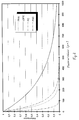
- in einer grafischen Darstellung die Transmission verschiedener Werkstoffe in Abhängigkeit von der Materialstärke,
- Fig. 3
- in einer grafischen Darstellung die Temperatur in Abhängigkeit von der Materialtiefe,
- Fig. 4
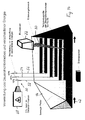
- das Prinzip einer Vorrichtung zur lasergestützten Werkstofferkennung bei bewegten Werkstoffen,
- Fig. 5
- eine Frontansicht einer bevorzugten Ausführungsform der Vorrichtung nach Fig. 4,
- Fig. 6
- eine Seitenansicht der Vorrichtung nach Fig. 5,
- Fig. 7
- schematisch eine Vorrichtung zur Erfassung der Abkühlgeschwindigkeit bei bewegten Werkstoffen,
- Fig. 8
- das Prinzip einer Vorrichtung zur lasergestützten Werkstofferkennung bei ruhenden Werkstoffen,
- Fig. 9
- eine Tabelle bestimmter Stoffeigenschaften verschiedener Kunststoffe,
- Fig. 10
- in einer grafischen Darstellung das Temperaturzeitverhalten von fünf verschiedenen Kunststoffen,
- Fig. 11 und 12
- in einer grafischen Darstellung die Durchschnitts- und Maximaltemperaturen sowie die Temperaturverteilungen verschiedener Kunststoffe auf den mit Laserlicht bestrahlten Oberflächen,
- Fig. 13
- schematisch eine Vorrichtung zur Einstrahlung mehrerer Laserimpulse verschiedener Energie und
- Fig. 14
- schematisch eine Vorrichtung bei Verwendung eines Lasers im Dauerstrichbetrieb und verschiedener Strahlenergien.
Claims (18)
- Verfahren zur stofflichen Identifikation von Werkstoffen, bei dem die Werkstoffe mit Laserenergie beaufschlagt werden und die Wärmeabstrahlung der Werkstoffe nach Beendigung der Erwärmung erfaßt und werkstoffspezifisch hinsichtlich optischer und thermischer Materialeigenschaften ausgewertet wird, dadurch gekennzeichnet, daß wenigstens eine Stelle der Oberfläche der zu identifizierenden Werkstoffe punktförmig und kurzzeitig mit der Laserenergie beaufschlagt wird und die für den beaufschlagten Oberflächenbereich stofflich charakteristische Wärmeimpulsantwort des Werkstoffes örtlich und/oder zeitlich meßtechnisch erfaßt und hinsichtlich der Werkstoffart ausgewertet wird, indem die Maximaltemperatur, die ein Maß für die wellenlängenabhängige Absorption bzw. optische Eindringtiefe des Werkstoffes darstellt, direkt nach der lasergestützten Erwärmung und/oder die Wärmeverteilung, die ein Maß für die Strahlungsabsorption und für die Energieverteilung des Laserstrahles auf der Werkstoffoberfläche ist, direkt nach der Laserbestrahlung und/oder die Wärmeverteilung nach einer definierten Abkühlzeit nach Beendigung der Laserbestrahlung als ein Maß für die Temperaturleitfähigkeit des zu identifizierenden Werkstoffes unter Berücksichtigung der eingebrachten Temperaturverteilung direkt nach der Laserbestrahlung und/oder die Abkühlgeschwindigkeiten, die bei Berücksichtigung der direkt nach der Laserstrahlung erzeugten Temperaturgradienten im Material des Werkstoffes ein Maß für die Temperaturleitfähigkeit darstellen, gemessen werden, wobei in jedem Fall die Wärmeimpulsantwort durch eine pyrometrische Temperaturmessung mit Hilfe einer Thermokamera oder eines IR-Linien- bzw. Zeilenscanners erfaßt wird.
- Verfahren zur stofflichen Identifikation von Werkstoffen, bei dem die Werkstoffe mit Laserenergie beaufschlagt werden und die Wärmeabstrahlung der Werkstoffe nach Beendigung der Erwärmung erfaßt und werkstoffspezifisch hinsichtlich optischer und thermischer Materialeigenschaften ausgewertet wird, dadurch gekennzeichnet, daß wenigstens eine Stelle der Oberfläche der zu identifizierenden Werkstoffe punktförmig und kurzzeitig mit der Laserenergie beaufschlagt wird und die für den beaufschlagten Oberflächenbereich stofflich charakteristische Wärmeimpulsantwort des Werkstoffes örtlich und/oder zeitlich meßtechnisch erfaßt und hinsichtlich der Werkstoffart ausgewertet wird, indem die Maximaltemperatur, die ein Maß für die wellenlängenabhängige Absorption bzw. optische Eindringtiefe des Werkstoffes darstellt, direkt nach der lasergestützten Erwärmung und/oder die Wärmeverteilung, die ein Maß für die Strahlungsabsorption und für die Energieverteilung des Laserstrahles auf der Werkstoffoberfläche ist, direkt nach der Laserbestrahlung und/oder die Wärmeverteilung nach einer definierten Abkühlzeit nach Beendigung der Laserbestrahlung als ein Maß für die Temperaturleitfähigkeit des zu identifizierenden Werkstoffes unter Berücksichtigung der eingebrachten Temperaturverteilung direkt nach der Laserbestrahlung und/oder die Abkühlgeschwindigkeiten, die bei Berücksichtigung der direkt nach der Laserstrahlung erzeugten Temperaturgradienten im Material des Werkstoffes ein Maß für die Temperaturleitfähigkeit darstellen, gemessen werden, und
daß in jedem Fall zur Identifikation von bewegten Werkstoffen in einem automatischen Prozeß der Laser durch ein vom Eintritt der zu analysierenden Werkstoffe in eine Prüfstrecke abhängiges Triggersignal gesteuert wird. - Verfahren nach einem der vorhergehenden Ansprüche, dadurch gekennzeichnet, daß die Werkstoffoberfläche zeitgleich mit mehreren Laserpulsen beaufschlagt wird.
- Verfahren nach einem der vorhergehenden Ansprüche, dadurch gekennzeichnet, daß der Werkstoff mit mehreren Laserstrahlen unterschiedlicher Intensität beaufschlagt wird.
- Verfahren nach einem der vorhergehenden Ansprüche, dadurch gekennzeichnet, daß der Werkstoff mit mehreren Laserstrahlen unterschiedlicher Wellenlänge beaufschlagt wird.
- Verfahren nach einem der vorhergehenden Ansprüche, dadurch gekennzeichnet, daß der Werkstoff während seiner Bewegung durch den Wirkbereich des Lasers entlang seiner Bewegungsachse gleichförmig mit der Laserstrahlung beaufschlagt wird.
- Verfahren nach einem der vorhergehenden Ansprüche, dadurch gekennzeichnet, daß zusätzlich der Temperaturgradient der Wärmeimpulsantwort gemessen wird und hinsichtlich des Oberflächenlagewinkels des Werkstoffes zum Laser ausgewertet wird zur entprechenden Korrektur der Wärmeimpulsantwort.
- Verfahren nach einem der vorhergehenden Ansprüche, dadurch gekennzeichnet, daß die Dauer der Beaufschlagung der Werkstoffe mit Laserenergie 5-50 msec beträgt.
- Verfahren nach einem der vorhergehenden Ansprüche, dadurch gekennzeichnet, daß ein Strahldurchmesser ≤ 2mm verwendet wird.
- Verfahren nach einem der vorhergehenden Ansprüche, dadurch gekennzeichnet, daß ein oder mehrere Einzelstrahlen mit jeweils einer Leistung ≤ 100 Watt verwendet werden.
- Vorrichtung zur Durchführung des Verfahrens nach einem der vorhergehenden Ansprüche, bei ruhendem zu identifizierenden Werkstoff mit einem Laser zur kurzzeitigen Beaufschlagung wenigstens einer Stelle der Oberfläche des zu identifizierenden Werkstoffes, einer Temperaturmeßeinrichtung und einer an die Temperaturmeßeinrichtung angeschlossenen rechnergestützten Auswerteeinrichtung, dadurch gekennzeichnet, daß für die Erfassung der Wärmeimpulsantwort des zu identifizierenden Werkstoffes (6, 14, 30) eine Thermokamera (8, 42) oder ein IR-Linienscanner (22) vorgesehen ist, deren aus der pyrometrischen Temperaturmessung gewonnenen Meßsignale der rechnergestützten Auswerteeinrichtung (10, 21) zugeführt werden, welche die Meßsignale gemäß einem der vorhergehenden Ansprüche hinsichtlich Temperaturmaxima und/oder Temperaturverteilungen und/oder Abkühlgeschwindigkeiten auswertet und Analysesignale bereitstellt unter Nutzung von Referenzbibliotheken oder Fuzzylogiken oder neuronaler Netze.
- Vorrichtung zur Durchführung des Verfahrens nach einem der Ansprüche 1 bis 10 bei bewegten zu identifizierenden Werkstoffen mit einem Laser zur kurzzeitigen Beaufschlagung wenigstens einer Stelle der Oberfläche des zu identifizierenden Werkstoffes, einer Transporteinrichtung für die zu untersuchenden Werkstoffe, einer Temperaturmeßeinrichtung und einer an die Temperaturmeßeinrichtung angeschlossenen rechnergestützen Auswerteeinrichtung, dadurch gekennzeichnet,
daß die aus der pyrometrischen Temperaturmessung gewonnenen Meßsignale der rechnergestützten Auswerteeinrichtung (10, 21) zugeführt werden, welche die Meßsignale gemäß einem der Ansprüche 1 bis 10 hinsichtlich Temperaturmaxima und/oder Temperaturverteilungen und/oder Abkühlgeschwindigkeiten auswertet und Analysesignale bereitstellt unter Nutzung von Referenzbibliotheken oder Fuzzylogiken oder neuronaler Netze, wobei ein Sensor (18) vorgesehen ist, der den Eintritt eines Werkstoffes (14) in eine Prüfstrecke erfaßt, sowie ein Triggersignalgeber (20), der vom Sensorausgangssignal gesteuert wird und mit dem Laser (12) verbunden ist zu dessen Steuerung in Abhängigkeit vom Sensorausgangssignal. - Vorrichtung nach Anspruch 12, dadurch gekennzeichnet, daß ein Laser (60) im Dauerstrichbetrieb verwendet wird.
- Vorrichtung nach Anspruch 12 oder 13, dadurch gekennzeichnet, daß entlang der Bewegungsrichtung oder quer zur Bewegungsrichtung des Werkstoffes mehrere Laser oder ein Mehrfachstrahlteiler (28, 38, 50) für die Laserstrahlung angeordnet sind bzw. ist.
- Vorrichtung nach Anspruch 14, dadurch gekennzeichnet, daß ein Mehrfachstrahler (50) zur Erzeugung von Laserstrahlen verschiedener Intensität verwendet wird.
- Vorrichtung nach einem der Ansprüche 11 bis 15, dadurch gekennzeichnet, daß die Laserlichtoptik (12, 24, 28, 36, 38) unterhalb des Werkstoffes (6, 14, 30) angeordnet ist zur Beaufschlagung der Oberfläche des Werkstoffes von unten.
- Vorrichtung nach einem der Ansprüche 11 bis 16, dadurch gekennzeichnet, daß als Laser ein CO2-Laser eingesetzt wird.
- Vorrichtung nach einem der Ansprüche 11 bis 17, dadurch gekennzeichnet, daß mehrere Laser mit verschiedenen Wellenlängen verwendet werden.
Applications Claiming Priority (2)
| Application Number | Priority Date | Filing Date | Title |
|---|---|---|---|
| DE4239479 | 1992-11-21 | ||
| DE4239479A DE4239479A1 (de) | 1992-11-21 | 1992-11-21 | Verfahren zum Erkennen und Sortieren von verschiedenen Kunststoffen |
Publications (2)
| Publication Number | Publication Date |
|---|---|
| EP0599153A1 EP0599153A1 (de) | 1994-06-01 |
| EP0599153B1 true EP0599153B1 (de) | 1998-12-23 |
Family
ID=6473529
Family Applications (1)
| Application Number | Title | Priority Date | Filing Date |
|---|---|---|---|
| EP19930118326 Expired - Lifetime EP0599153B1 (de) | 1992-11-21 | 1993-11-12 | Verfahren und Vorrichtung zur stofflichen Identifikation von Werkstoffen |
Country Status (9)
| Country | Link |
|---|---|
| US (1) | US5489778A (de) |
| EP (1) | EP0599153B1 (de) |
| AT (1) | ATE175023T1 (de) |
| CA (1) | CA2109669A1 (de) |
| CZ (1) | CZ245693A3 (de) |
| DE (2) | DE4239479A1 (de) |
| DK (1) | DK0599153T3 (de) |
| ES (1) | ES2128383T3 (de) |
| PL (1) | PL301102A1 (de) |
Families Citing this family (26)
| Publication number | Priority date | Publication date | Assignee | Title |
|---|---|---|---|---|
| AU4607896A (en) * | 1995-02-01 | 1996-08-21 | Beloit Technologies, Inc. | Thermal imaging refuse separator |
| DE19515447C2 (de) * | 1995-04-27 | 1997-08-07 | Rational Beratungsgesellschaft | Gerät zum Erkennen eines Kunststoffes |
| JP3252682B2 (ja) * | 1995-11-13 | 2002-02-04 | 株式会社豊田中央研究所 | 赤外分光分析法による樹脂の高速同定方法およびそのシステム |
| US5646405A (en) * | 1995-11-29 | 1997-07-08 | Lawson-Hemphill, Inc. | Method of detecting contaminants in cotton fibers |
| US5823677A (en) * | 1996-03-18 | 1998-10-20 | The Board Of Trustees Of Western Michigan | Method of identifying a substance by infrared imaging |
| DE19623121C2 (de) * | 1996-06-10 | 2000-05-11 | Wagner International Ag Altsta | Verfahren und Vorrichtung zum photothermischen Prüfen von Werkstückoberflächen |
| DE19747784A1 (de) * | 1997-10-29 | 1999-05-06 | Rothe Lutz Dr Ing Habil | Objekterkennung mittels Thermosignaturanalyse |
| US6304660B1 (en) | 1998-05-29 | 2001-10-16 | Welch Allyn Data Collection, Inc. | Apparatuses for processing security documents |
| DE19908410B4 (de) * | 1998-10-27 | 2004-05-13 | Klaus Herbst | Verfahren und Vorrichtung zur Unterscheidung von Original- und Nachahmungsprodukten |
| US6303925B1 (en) * | 1999-02-24 | 2001-10-16 | Patricia Alaine Edmonds | Apparatus and method for distinguishing paper articles from plastic articles |
| ATE470547T1 (de) | 2000-08-25 | 2010-06-15 | Techno Polymer Co Ltd | Verfahren und einrichtung zur reinigung von thermoplastischen produkten |
| JP3961205B2 (ja) * | 2000-08-30 | 2007-08-22 | 日本電気株式会社 | プラスチック識別装置 |
| US6855901B1 (en) | 2001-04-20 | 2005-02-15 | National Recovery Technologies, Inc. | Process and apparatus for spectroscopic identification and sorting of barrier materials |
| DE10217586A1 (de) * | 2002-04-19 | 2003-11-20 | Giesecke & Devrient Gmbh | Verfahren und Vorrichtung zur Erkennung von Fremdmaterial auf Banknoten |
| GB2399409B (en) * | 2003-01-20 | 2006-03-15 | Rolton Group Ltd | Identification of materials by non destructive testing |
| DE10338582B4 (de) * | 2003-08-22 | 2011-08-11 | MTU Aero Engines GmbH, 80995 | Verfahren zum Messen eines Parameters einer Beschichtung |
| DE102005000919B4 (de) * | 2005-01-06 | 2007-05-24 | Systektum Gmbh | Verfahren zur Bestimmung des Vorhandenseins von Partikeln auf Oberflächen |
| DE102010050860A1 (de) | 2010-03-31 | 2011-10-06 | Innolight Innovative Laser Und Systemstechnik Gmbh | Mikrokristall-Laser zur Erzeugung von Laserpulsen |
| US8948220B2 (en) | 2012-12-18 | 2015-02-03 | Coherent Gmbh | Wavelength-stabilized microcrystal laser |
| FR3009212B1 (fr) * | 2013-08-01 | 2015-07-31 | Pellenc Selective Technologies | Procede et installation automatique pour la caracterisation et/ou le tri d'emballages |
| EP3372340A1 (de) * | 2017-03-10 | 2018-09-12 | Scheppach Fabrikation von Holzbearbeitungsmaschinen GmbH | Verfahren zur steuerung eines elektrowerkzeugs und zur durchführung des verfahrens eingerichtetes elektrowerkzeug |
| CN112670216A (zh) * | 2020-12-30 | 2021-04-16 | 芯钛科半导体设备(上海)有限公司 | 一种用于自动识别晶圆盒中物件的装置 |
| CN115062807B (zh) * | 2022-08-19 | 2022-11-04 | 广东安拓普聚合物科技有限公司 | 一种pcr回收方法及系统 |
| CN115494110B (zh) * | 2022-09-20 | 2024-11-08 | 上海环境卫生工程设计院有限公司 | 一种采用温度特性的垃圾分类识别系统 |
| CN116609375B (zh) * | 2023-07-13 | 2023-09-22 | 江西省水利科学院(江西省大坝安全管理中心、江西省水资源管理中心) | 一种利用热脉冲分布式光纤估算设施作物耗水量的方法 |
| WO2025196958A1 (ja) * | 2024-03-19 | 2025-09-25 | 本田技研工業株式会社 | 選別装置および方法 |
Family Cites Families (9)
| Publication number | Priority date | Publication date | Assignee | Title |
|---|---|---|---|---|
| DE3317513A1 (de) * | 1983-05-13 | 1984-11-15 | Kernforschungszentrum Karlsruhe Gmbh, 7500 Karlsruhe | Einrichtung zum bestimmen der waermeleitfaehigkeit eines festen werkstoffes |
| DE3735286A1 (de) * | 1987-10-17 | 1989-04-27 | Rheinische Braunkohlenw Ag | Verfahren zur bestimmung der zusammensetzung von mineralischen lagerstaetten |
| US4928254A (en) * | 1988-04-28 | 1990-05-22 | Knudsen Arne K | Laser flash thermal conductivity apparatus and method |
| DE3820862A1 (de) * | 1988-06-21 | 1989-12-28 | Soelter Hans Joachim Dipl Phys | Verfahren und vorrichtung zur kontaktlosen untersuchung von oberflaechen und inneren strukturen eines festen pruefkoerpers |
| US5075552A (en) * | 1989-01-13 | 1991-12-24 | Iowa State University Research Foundation Inc. | Apparatus and method for transient thermal infrared emission spectrometry |
| DE3913474A1 (de) * | 1989-04-24 | 1990-10-25 | Siemens Ag | Photothermisches untersuchungsverfahren, einrichtung zu seiner durchfuehrung und verwendung des verfahrens |
| DE4021882A1 (de) * | 1990-07-11 | 1992-01-16 | Mindermann Kurt Henry | Verfahren zum erkennen unterschiedlicher kunststoffe |
| DE4102767A1 (de) * | 1991-01-31 | 1992-08-06 | Metallgesellschaft Ag | Verfahren zur qualitativen analyse von kunststoffteilchen |
| DE4105586A1 (de) * | 1991-02-22 | 1992-08-27 | Gerhard Prof Barich | Verfahren und vorrichtung zum sortieren von kunststoffabfaellen |
-
1992
- 1992-11-21 DE DE4239479A patent/DE4239479A1/de not_active Withdrawn
-
1993
- 1993-11-12 ES ES93118326T patent/ES2128383T3/es not_active Expired - Lifetime
- 1993-11-12 DK DK93118326T patent/DK0599153T3/da active
- 1993-11-12 EP EP19930118326 patent/EP0599153B1/de not_active Expired - Lifetime
- 1993-11-12 DE DE59309244T patent/DE59309244D1/de not_active Expired - Fee Related
- 1993-11-12 AT AT93118326T patent/ATE175023T1/de not_active IP Right Cessation
- 1993-11-17 CZ CZ932456A patent/CZ245693A3/cs unknown
- 1993-11-18 US US08/154,065 patent/US5489778A/en not_active Expired - Fee Related
- 1993-11-19 PL PL30110293A patent/PL301102A1/xx unknown
- 1993-11-22 CA CA 2109669 patent/CA2109669A1/en not_active Abandoned
Also Published As
| Publication number | Publication date |
|---|---|
| PL301102A1 (en) | 1994-05-30 |
| DK0599153T3 (da) | 1999-08-23 |
| ES2128383T3 (es) | 1999-05-16 |
| DE4239479A1 (de) | 1994-05-26 |
| DE59309244D1 (de) | 1999-02-04 |
| CA2109669A1 (en) | 1994-05-22 |
| EP0599153A1 (de) | 1994-06-01 |
| ATE175023T1 (de) | 1999-01-15 |
| CZ245693A3 (en) | 1994-06-15 |
| US5489778A (en) | 1996-02-06 |
Similar Documents
| Publication | Publication Date | Title |
|---|---|---|
| EP0599153B1 (de) | Verfahren und Vorrichtung zur stofflichen Identifikation von Werkstoffen | |
| DE69006213T2 (de) | Verfahren und gerät zur nichtzerstörenden kennzeichnung von komposit-schichtkörpern. | |
| DE4129754C2 (de) | Verfahren zur Gewinnung sortenreiner Kunststofffraktionen | |
| EP1752228B1 (de) | Verfahren und Vorrichtung zur Detektion und Sortierung von Glas | |
| WO2000070331A1 (de) | Verfahren und vorrichtung zur detektion und unterscheidung zwischen kontaminationen und gutstoffen sowie zwischen verschiedenen farben in feststoffpartikeln | |
| DE4439714C2 (de) | Verfahren zum Markieren, wie Kennzeichnen und/oder Beschriften, von Produkten in einem Fertigungsablauf unter Verwendung von Laserstrahlung | |
| DE1958101B2 (de) | Verfahren und Vorrichtung zur ' qualitativen Bestimmung von in einem Trägermedium enthaltenen mikroskopischen Teilchen | |
| DE4004627A1 (de) | Verfahren zur bestimmung von materialeigenschaften polymerer werkstoffe und vorrichtung zur durchfuehrung des verfahrens | |
| DE19751862A1 (de) | Verfahren und Vorrichtung zum Identifizieren und Sortieren von bandgeförderten Objekten | |
| DE19949656A1 (de) | Verfahren und Vorrichtung zur automatischen Fraktionierung von Kunststoffen, Metallen oder Gläsern | |
| WO2020239328A1 (de) | Automatische materialerkennung mit laser | |
| DE19816881B4 (de) | Verfahren und Vorrichtung zur Detektion und Unterscheidung zwischen Kontaminationen und Gutstoffen sowie zwischen verschiedenen Farben in Feststoffpartikeln | |
| EP3843966A1 (de) | Verfahren und vorrichtung zum aufbereiten, bearbeiten und/oder recyceln von materialien | |
| DE102008019176A1 (de) | Verfahren und Vorrichtung zur Herstellung von Kunststoffbehältnissen mit Infrarot-Absorptionsüberwachung | |
| EP0166899A2 (de) | Verfahren zur Untersuchung von Kunststoffkörpern | |
| WO2022263132A1 (de) | Vorrichtung und verfahren zum inspizieren von befüllten behältnissen und deren füllgut | |
| DE69307344T2 (de) | Trennung von kunststoffen | |
| AT407198B (de) | Verfahren und anlage zum lokalisieren von harzeinschlüssen in holz | |
| EP4377679A1 (de) | Gebinde aus rezyklierbarem kunststoff sowie verfahren und vorrichtung zum zurücknehmen eines solchen gebindes | |
| DE102004051311B9 (de) | Vorrichtung und Verfahren zur Durchführung der Fluoreszenz- und Emissionsspektrometrie | |
| DE102019000525B4 (de) | Verfahren zur Messung der Oberflächenspannung mittels Reflektion am kondensierten Tropfen | |
| DE10309845A1 (de) | Verfahren und Vorrichtung zum berührungsfreien Identifizieren von chemischen Substanzen | |
| DE4410398C1 (de) | Verfahren zur Identifikation von polymeren Materialien | |
| DE102015107616B4 (de) | Verfahren und Vorrichtung zum Bestimmen der Schichtdicken einer mehrschichtigen Probe | |
| DE102016214792A1 (de) | Vorrichtung und Verfahren zur Identifikation von Stoffen eines Materials mittels Spektroskopie |
Legal Events
| Date | Code | Title | Description |
|---|---|---|---|
| PUAI | Public reference made under article 153(3) epc to a published international application that has entered the european phase |
Free format text: ORIGINAL CODE: 0009012 |
|
| 17P | Request for examination filed |
Effective date: 19940402 |
|
| AK | Designated contracting states |
Kind code of ref document: A1 Designated state(s): AT BE CH DE DK ES GB IT LI NL |
|
| RBV | Designated contracting states (corrected) |
Designated state(s): AT BE CH DE DK ES FR GB IT LI NL |
|
| 17Q | First examination report despatched |
Effective date: 19950426 |
|
| GRAG | Despatch of communication of intention to grant |
Free format text: ORIGINAL CODE: EPIDOS AGRA |
|
| GRAG | Despatch of communication of intention to grant |
Free format text: ORIGINAL CODE: EPIDOS AGRA |
|
| GRAH | Despatch of communication of intention to grant a patent |
Free format text: ORIGINAL CODE: EPIDOS IGRA |
|
| GRAH | Despatch of communication of intention to grant a patent |
Free format text: ORIGINAL CODE: EPIDOS IGRA |
|
| GRAA | (expected) grant |
Free format text: ORIGINAL CODE: 0009210 |
|
| AK | Designated contracting states |
Kind code of ref document: B1 Designated state(s): AT BE CH DE DK ES FR GB IT LI NL |
|
| REF | Corresponds to: |
Ref document number: 175023 Country of ref document: AT Date of ref document: 19990115 Kind code of ref document: T |
|
| REG | Reference to a national code |
Ref country code: CH Ref legal event code: EP |
|
| REF | Corresponds to: |
Ref document number: 59309244 Country of ref document: DE Date of ref document: 19990204 |
|
| REG | Reference to a national code |
Ref country code: CH Ref legal event code: NV Representative=s name: PATENTANWALTSBUERO JEAN HUNZIKER |
|
| ITF | It: translation for a ep patent filed | ||
| ET | Fr: translation filed | ||
| GBT | Gb: translation of ep patent filed (gb section 77(6)(a)/1977) |
Effective date: 19990330 |
|
| REG | Reference to a national code |
Ref country code: ES Ref legal event code: FG2A Ref document number: 2128383 Country of ref document: ES Kind code of ref document: T3 |
|
| REG | Reference to a national code |
Ref country code: DK Ref legal event code: T3 |
|
| PLBE | No opposition filed within time limit |
Free format text: ORIGINAL CODE: 0009261 |
|
| STAA | Information on the status of an ep patent application or granted ep patent |
Free format text: STATUS: NO OPPOSITION FILED WITHIN TIME LIMIT |
|
| 26N | No opposition filed | ||
| PGFP | Annual fee paid to national office [announced via postgrant information from national office to epo] |
Ref country code: BE Payment date: 20000828 Year of fee payment: 8 |
|
| PGFP | Annual fee paid to national office [announced via postgrant information from national office to epo] |
Ref country code: FR Payment date: 20000929 Year of fee payment: 8 |
|
| PGFP | Annual fee paid to national office [announced via postgrant information from national office to epo] |
Ref country code: GB Payment date: 20001102 Year of fee payment: 8 Ref country code: ES Payment date: 20001102 Year of fee payment: 8 |
|
| PGFP | Annual fee paid to national office [announced via postgrant information from national office to epo] |
Ref country code: DK Payment date: 20001123 Year of fee payment: 8 |
|
| PGFP | Annual fee paid to national office [announced via postgrant information from national office to epo] |
Ref country code: AT Payment date: 20001128 Year of fee payment: 8 |
|
| PGFP | Annual fee paid to national office [announced via postgrant information from national office to epo] |
Ref country code: NL Payment date: 20001129 Year of fee payment: 8 |
|
| PGFP | Annual fee paid to national office [announced via postgrant information from national office to epo] |
Ref country code: CH Payment date: 20001211 Year of fee payment: 8 |
|
| PG25 | Lapsed in a contracting state [announced via postgrant information from national office to epo] |
Ref country code: GB Free format text: LAPSE BECAUSE OF NON-PAYMENT OF DUE FEES Effective date: 20011112 Ref country code: DK Free format text: LAPSE BECAUSE OF NON-PAYMENT OF DUE FEES Effective date: 20011112 Ref country code: AT Free format text: LAPSE BECAUSE OF NON-PAYMENT OF DUE FEES Effective date: 20011112 |
|
| PG25 | Lapsed in a contracting state [announced via postgrant information from national office to epo] |
Ref country code: ES Free format text: LAPSE BECAUSE OF NON-PAYMENT OF DUE FEES Effective date: 20011113 |
|
| PG25 | Lapsed in a contracting state [announced via postgrant information from national office to epo] |
Ref country code: LI Free format text: LAPSE BECAUSE OF NON-PAYMENT OF DUE FEES Effective date: 20011130 Ref country code: CH Free format text: LAPSE BECAUSE OF NON-PAYMENT OF DUE FEES Effective date: 20011130 Ref country code: BE Free format text: LAPSE BECAUSE OF NON-PAYMENT OF DUE FEES Effective date: 20011130 |
|
| PGFP | Annual fee paid to national office [announced via postgrant information from national office to epo] |
Ref country code: DE Payment date: 20011205 Year of fee payment: 9 |
|
| REG | Reference to a national code |
Ref country code: GB Ref legal event code: IF02 |
|
| BERE | Be: lapsed |
Owner name: LASER ZENTRUM HANNOVER E.V. Effective date: 20011130 |
|
| PG25 | Lapsed in a contracting state [announced via postgrant information from national office to epo] |
Ref country code: NL Free format text: LAPSE BECAUSE OF NON-PAYMENT OF DUE FEES Effective date: 20020601 |
|
| REG | Reference to a national code |
Ref country code: CH Ref legal event code: PL |
|
| REG | Reference to a national code |
Ref country code: DK Ref legal event code: EBP |
|
| PG25 | Lapsed in a contracting state [announced via postgrant information from national office to epo] |
Ref country code: FR Free format text: LAPSE BECAUSE OF NON-PAYMENT OF DUE FEES Effective date: 20020730 |
|
| NLV4 | Nl: lapsed or anulled due to non-payment of the annual fee |
Effective date: 20020601 |
|
| REG | Reference to a national code |
Ref country code: FR Ref legal event code: ST |
|
| REG | Reference to a national code |
Ref country code: FR Ref legal event code: ST |
|
| PG25 | Lapsed in a contracting state [announced via postgrant information from national office to epo] |
Ref country code: DE Free format text: LAPSE BECAUSE OF NON-PAYMENT OF DUE FEES Effective date: 20030603 |
|
| REG | Reference to a national code |
Ref country code: ES Ref legal event code: FD2A Effective date: 20021213 |
|
| PG25 | Lapsed in a contracting state [announced via postgrant information from national office to epo] |
Ref country code: IT Free format text: LAPSE BECAUSE OF NON-PAYMENT OF DUE FEES Effective date: 20051112 |