EP0600569B1 - Procédé pour l'évaluation d'un nombre de règles linguistiques - Google Patents
Procédé pour l'évaluation d'un nombre de règles linguistiques Download PDFInfo
- Publication number
- EP0600569B1 EP0600569B1 EP93250290A EP93250290A EP0600569B1 EP 0600569 B1 EP0600569 B1 EP 0600569B1 EP 93250290 A EP93250290 A EP 93250290A EP 93250290 A EP93250290 A EP 93250290A EP 0600569 B1 EP0600569 B1 EP 0600569B1
- Authority
- EP
- European Patent Office
- Prior art keywords
- linguistic
- statement
- premise
- statements
- rule
- Prior art date
- Legal status (The legal status is an assumption and is not a legal conclusion. Google has not performed a legal analysis and makes no representation as to the accuracy of the status listed.)
- Expired - Lifetime
Links
Images


Classifications
-
- G—PHYSICS
- G05—CONTROLLING; REGULATING
- G05B—CONTROL OR REGULATING SYSTEMS IN GENERAL; FUNCTIONAL ELEMENTS OF SUCH SYSTEMS; MONITORING OR TESTING ARRANGEMENTS FOR SUCH SYSTEMS OR ELEMENTS
- G05B13/00—Adaptive control systems, i.e. systems automatically adjusting themselves to have a performance which is optimum according to some preassigned criterion
- G05B13/02—Adaptive control systems, i.e. systems automatically adjusting themselves to have a performance which is optimum according to some preassigned criterion electric
- G05B13/0265—Adaptive control systems, i.e. systems automatically adjusting themselves to have a performance which is optimum according to some preassigned criterion electric the criterion being a learning criterion
- G05B13/0275—Adaptive control systems, i.e. systems automatically adjusting themselves to have a performance which is optimum according to some preassigned criterion electric the criterion being a learning criterion using fuzzy logic only
-
- G—PHYSICS
- G06—COMPUTING OR CALCULATING; COUNTING
- G06N—COMPUTING ARRANGEMENTS BASED ON SPECIFIC COMPUTATIONAL MODELS
- G06N7/00—Computing arrangements based on specific mathematical models
- G06N7/02—Computing arrangements based on specific mathematical models using fuzzy logic
- G06N7/04—Physical realisation
Definitions
- the invention relates to a method according to the preamble of Claim 1.
- Such a method is u. a. through the essay by C. L. McCullough: "An anticipatory fuzzy logic controller utilizing neutral net prediction "in the magazine” Simulation "58, May 1992, Pages 327 to 332.
- Fuzzy controllers have become increasingly fuzzy in recent years Gained meaning, cf. for example H. P. Preuss: "Fuzzy controlheuristic Control using fuzzy logic (automation technology Kir 34, 1992, Issue 4, pages 176 to 184 (Part I) and Issue 5, pages 239 to 246 (Part II)).
- the invention deals with a fuzzy controller which has n input variables and an output variable Z.
- the actions of the fuzzy controller are controlled by a set of ⁇ R 1 , ..., R N ⁇ linguistic rules.
- Each of these rules has as a premise either a linguistic statement about an input variable or an AND operation of several linguistic statements about pairs of different input variables, and as a conclusion, the rule has a linguistic statement about the output variables of the controller.
- Each linguistic statement is described by a fuzzy set, which is characterized by its membership function. This structure is the most common for a fuzzy controller.
- a disadvantage of the usual mode of operation of a fuzzy controller is that many arithmetic operations with membership functions required at runtime are. This can be especially the case with high speed requirements, for example in real-time operation. Too in this case not relying on particularly powerful hardware to be, fuzzy controls were presented several times, which according to the in the preamble of claim 1 given relationship (1) or the like Kind of work. Examples include the one mentioned at the beginning Literature also the contribution of M.Mizumoto: "Realization of PID controls by fuzzy control methods "in Proceed. IEEE Intern. Conf. on Fuzzy Systems 1992, pages 709 to 715.
- Fig. 1 of the drawing shows the operation of such a controller as an example for the case of two input variables X and Y.
- x t and y t be the current values of the input variables X and Y.
- the N action suggestions weighted in this way are added (step V).
- the sum of all weight factors is formed for normalization (step VI).
- the current value z t of the variable determined by the unset controller is determined by dividing the value formed in step V by the value determined in step VI (step VII).
- the invention has for its object in the preamble of the claim 1 specified method more cost-effective and more efficient to implement.
- the method according to the invention ensures that the sum of the weight factors is always 1. This creates a summation at runtime (Step VI) and one division (Step VII) saved so that the blurred Controller requires less computing time or less computing hardware. In addition, a check — not shown in FIG. 1 — is saved whether the denominator is zero or not.
- a fuzzy controller can determine a value of the output variable for every possible combination of input values, while in other methods it is not excluded that the sum ⁇ 1 (t) + ... + ⁇ N (t) is zero at a sampling time and the fuzzy controllers can therefore not take any action, and the characteristic surface of the fuzzy controller is constant if you limit yourself to continuous membership functions for linguistic statements about input variables.
- many conventionally operating unsharp controllers can have an inconsistent characteristic surface even with a continuous membership function.
- Fig. 2 shows a fuzzy controller that works according to the method of claim 1.
- the fact that the divisor always assumes the value 1 when forming the number z t means that the process steps shaded gray in FIG. 1 are omitted.
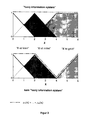
- the same example illustrates the term "consistent rule set”:
- the rule set is only consistent if it is either at most one rule with the premise "X is big AND Y is small” or at most one with the premise "X is large” or at most one with the premise "Y is small", but not both with a rule the premise "X is big AND Y is small” as well as one with the premise "X is big", not both a rule with the premise "X is.”
- the rule set is beyond that then consistent if they don't have two rules with the premise "X is big” having.
- the rule set in the above example is only complete and consistent if there is either exactly one (one and only one) rule with the Premise "X is big AND Y is small” or exactly one with the premise "X is big” or exactly one with the premise "Y is small” there.
- ⁇ i 1, ..., N let ⁇ i , ⁇ i and ⁇ i be the membership functions for the linguistic statements about X, Y and Z as a rule R i ; ⁇ i , ⁇ i , ⁇ i are elements from ⁇ (1) , ..., ⁇ (m) ⁇ , ⁇ (1) , ..., ⁇ (n) ⁇ or ( ⁇ (1) , ..., ⁇ (1) ⁇ .
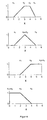
- FIG. 4 shows the trapezoidal membership functions permissible according to claim 2 (this includes triangular functions and ramp functions).
- each membership value can be exactly determined by first determining the two reference points adjacent to the current value and then linearly interpolating over these two reference points (cf. FIG. 4).
- the "defuzzification" of the membership functions required for the conclusions of the rules in the first phase can also be easily carried out with this restriction.
- the characteristic surface of the fuzzy controller is in the case of trapezoidal membership functions spatial-multilinear. If you choose the bases suitable, so a fuzzy controller according to the invention can be exactly reproduce by spatial-linear interpolation over the base points. "Exact” means: the original fuzzy controller and the interpolating one Replica have the same characteristic surface.
- fuzzy controllers When restricted to trapezoidal membership functions, one operating according to the present method and shown in FIG. 2 fuzzy controllers also realized through spatial-linear interpolation via suitably chosen support points.
Landscapes
- Engineering & Computer Science (AREA)
- Software Systems (AREA)
- Artificial Intelligence (AREA)
- Physics & Mathematics (AREA)
- General Physics & Mathematics (AREA)
- Mathematical Physics (AREA)
- Automation & Control Theory (AREA)
- Theoretical Computer Science (AREA)
- Fuzzy Systems (AREA)
- Health & Medical Sciences (AREA)
- Evolutionary Computation (AREA)
- Pure & Applied Mathematics (AREA)
- General Engineering & Computer Science (AREA)
- Data Mining & Analysis (AREA)
- Algebra (AREA)
- Life Sciences & Earth Sciences (AREA)
- Mathematical Analysis (AREA)
- Mathematical Optimization (AREA)
- General Health & Medical Sciences (AREA)
- Computing Systems (AREA)
- Computational Mathematics (AREA)
- Biomedical Technology (AREA)
- Molecular Biology (AREA)
- Computer Vision & Pattern Recognition (AREA)
- Medical Informatics (AREA)
- Feedback Control In General (AREA)
- Complex Calculations (AREA)
- Devices For Executing Special Programs (AREA)
- Electrically Operated Instructional Devices (AREA)
- Machine Translation (AREA)
Claims (3)
- Procédé d'établissement de fonctions d'appartenance pour des informations linguistiques concernant les grandeurs d'entrée d'un régulateur flou ainsi que de déterminations et d'évaluation d'une quantité de règles linguistiques {R1,...,RN}, qui possèdent respectivement en tant que prémisse une ou plusieurs informations linguistiques concernant des grandeurs d'entrée et en tant que conclusion une information linguistique au sujet de la grandeur déterminée par les règles, pour chaque information linguistique existant une fonction d'appartenance concernant le total de base de la grandeur concernée dans l'information, etcaractérisé en ce queau cours d'une première phase pour chacune des règles Ri, la conclusion étant remplacée par une valeur numérique Zi pour la grandeur concernée par l'information, qui est obtenue par "défuzzification" de la fonction d'appartenance caractérisant l'information linguistique de la conclusion, etau cours d'une seconde phase pour chaque instant t, pour lequel l'évaluation doit être effectuée, dans toutes les règles Ri pour chaque information linguistique Aij, qui apparaít dans la prémisse de Ri, le degré d'appartenance aij(t) étant détecté, qui possède la valeur réelle de la grandeur concernée par l'information linguistique dans la fonction d'appartenance caractérisant l'information linguistique et le nombre zt selon la relationpour i = 1,...,N, ωi(t) étant la pondération réelle de la règle Ri, étant formée et utilisée en tant que valeur de la grandeur déterminée par les règles linguistiques,
 la pondération réelle de la règle Ri selon la relationest formée,
 la limite linguistique de chaque grandeur d'entrée forme un système d'information flou ("fuzzy information system") c'est-à-dire que pour chaque valeur possible d'une grandeur d'entrée, la somme des valeurs d'appartenance pour les fonctions d'appartenance caractérisant les informations linguistiques concernant la grandeur d'entrée est toujours égale à 1,les informations linguistiques dans la prémisse de chaque règle sont toujours combinées par une relation ET,les informations linguistiques dans la prémisse de chaque règle s'appliquent à différentes grandeurs d'entrée par paires,la quantité de règles est complète, ainsi pour chaque combinaison possible (information1,..., informationn) d'informations linguistiques, n désignant le nombre des grandeurs d'entrée et l'informationi de la i-ème grandeur d'entrée s'applique (i = 1,...,n), il existe une règle Ri dont la prémisse se compose exclusivement d'informations linguistiques provenant de la quantité {informationi,..., informationn}, etla quantité de règles est cohérente, il existe ainsi pour chaque combinaison possible (information1,...,informationm) d'informations linguistiques concernant des grandeurs d'entrée au plus une règle Ri, dont la prémisse se compose exclusivement d'informations linguistiques provenant de la quantité {information1,...,informationm},et ainsi dans la relation (1), le dénominateurprend toujours la valeur 1.
- Procédé selon la revendication 1, caractérisé en ce qu'on utilise des fonctions d'appartenance trapézoïdales.
- Procédé selon la revendication 1, caractérisé en ce qu'à chaque instant d'analyse pour chaque grandeur d'entrée, les valeurs d'appartenance de leur valeur réelle pour toutes les informations linguistiques concernant ces grandeurs d'entrée sont préalablement déterminées, mémorisées temporairement et les valeurs d'appartenance mémorisées sont utilisées lors de l'application de la règle pour cet instant d'analyse.
Applications Claiming Priority (2)
| Application Number | Priority Date | Filing Date | Title |
|---|---|---|---|
| DE4238772A DE4238772C1 (de) | 1992-11-12 | 1992-11-12 | Verfahren zur Auswertung einer Menge linguistischer Regeln |
| DE4238772 | 1992-11-12 |
Publications (2)
| Publication Number | Publication Date |
|---|---|
| EP0600569A1 EP0600569A1 (fr) | 1994-06-08 |
| EP0600569B1 true EP0600569B1 (fr) | 1999-05-19 |
Family
ID=6473099
Family Applications (1)
| Application Number | Title | Priority Date | Filing Date |
|---|---|---|---|
| EP93250290A Expired - Lifetime EP0600569B1 (fr) | 1992-11-12 | 1993-10-26 | Procédé pour l'évaluation d'un nombre de règles linguistiques |
Country Status (6)
| Country | Link |
|---|---|
| US (1) | US5625754A (fr) |
| EP (1) | EP0600569B1 (fr) |
| JP (1) | JPH06348307A (fr) |
| AT (1) | ATE180335T1 (fr) |
| CA (1) | CA2102944C (fr) |
| DE (2) | DE4238772C1 (fr) |
Cited By (1)
| Publication number | Priority date | Publication date | Assignee | Title |
|---|---|---|---|---|
| US10973967B2 (en) | 2018-01-10 | 2021-04-13 | Tc1 Llc | Bearingless implantable blood pump |
Families Citing this family (5)
| Publication number | Priority date | Publication date | Assignee | Title |
|---|---|---|---|---|
| DE4330914A1 (de) * | 1993-09-11 | 1995-03-23 | Bosch Gmbh Robert | Verfahren zum Widerstandsschweißen |
| DE4415693A1 (de) * | 1994-05-04 | 1995-11-09 | Thomson Brandt Gmbh | Verfahren zur Fuzzy-Inferenz in einem Fuzzy-Regelkreis |
| US6236978B1 (en) | 1997-11-14 | 2001-05-22 | New York University | System and method for dynamic profiling of users in one-to-one applications |
| US20020010691A1 (en) * | 2000-03-16 | 2002-01-24 | Chen Yuan Yan | Apparatus and method for fuzzy analysis of statistical evidence |
| US12019673B2 (en) | 2020-12-16 | 2024-06-25 | International Business Machines Corporation | Digital semantic structure conversion |
Family Cites Families (9)
| Publication number | Priority date | Publication date | Assignee | Title |
|---|---|---|---|---|
| JPH0682396B2 (ja) * | 1985-10-22 | 1994-10-19 | オムロン株式会社 | メンバーシップ関数合成装置およびファジィ・システム |
| JPS63279302A (ja) * | 1987-05-12 | 1988-11-16 | Fujitsu Ltd | ファジイ推論方式 |
| US5189728A (en) * | 1988-08-18 | 1993-02-23 | Omron Tateisi Electronics Co. | Rule generating and verifying apparatus for fuzzy control |
| US5179625A (en) * | 1988-09-26 | 1993-01-12 | Omron Tateisi Electronics Co. | Fuzzy inference system having a dominant rule detection unit |
| JP2800309B2 (ja) * | 1989-10-06 | 1998-09-21 | オムロン株式会社 | ハイブリッド制御装置及びハイブリッド制御方法 |
| JPH0414103A (ja) * | 1990-05-08 | 1992-01-20 | Omron Corp | ハイブリッドプロセス制御装置 |
| JPH04107703A (ja) * | 1990-08-29 | 1992-04-09 | Omron Corp | 温湿度調節装置 |
| JP2603164B2 (ja) * | 1991-04-15 | 1997-04-23 | 株式会社ミクニ | デファジィファイア回路 |
| EP0509796A3 (en) * | 1991-04-15 | 1993-05-12 | Mikuni Corporation | Defuzzifier circuit |
-
1992
- 1992-11-12 DE DE4238772A patent/DE4238772C1/de not_active Expired - Fee Related
-
1993
- 1993-10-26 AT AT93250290T patent/ATE180335T1/de not_active IP Right Cessation
- 1993-10-26 EP EP93250290A patent/EP0600569B1/fr not_active Expired - Lifetime
- 1993-10-26 DE DE59309593T patent/DE59309593D1/de not_active Expired - Fee Related
- 1993-11-11 JP JP5315727A patent/JPH06348307A/ja active Pending
- 1993-11-12 CA CA002102944A patent/CA2102944C/fr not_active Expired - Fee Related
-
1995
- 1995-06-22 US US08/493,526 patent/US5625754A/en not_active Expired - Fee Related
Cited By (1)
| Publication number | Priority date | Publication date | Assignee | Title |
|---|---|---|---|---|
| US10973967B2 (en) | 2018-01-10 | 2021-04-13 | Tc1 Llc | Bearingless implantable blood pump |
Also Published As
| Publication number | Publication date |
|---|---|
| JPH06348307A (ja) | 1994-12-22 |
| US5625754A (en) | 1997-04-29 |
| CA2102944A1 (fr) | 1994-05-13 |
| ATE180335T1 (de) | 1999-06-15 |
| CA2102944C (fr) | 1999-03-09 |
| DE4238772C1 (de) | 1993-12-09 |
| EP0600569A1 (fr) | 1994-06-08 |
| DE59309593D1 (de) | 1999-06-24 |
Similar Documents
| Publication | Publication Date | Title |
|---|---|---|
| DE68928612T2 (de) | Verfahren zur bestimmung der inferenzregel sowie inferenzmotor | |
| DE19814422A1 (de) | System zur Lösung eines Randbedingungsproblems und Aufbau eines derartigen Systems | |
| DE19606480C2 (de) | Verfahren und Anordnung zur Adaption eines Fuzzy-Reglers | |
| DE69314293T2 (de) | Neuronalanlage und -Bauverfahren | |
| DE4238772C1 (de) | Verfahren zur Auswertung einer Menge linguistischer Regeln | |
| DE4121453C2 (de) | Näherungsschlußfolgerungsvorrichtung | |
| DE69118981T2 (de) | Einrichtung zur "Fuzzy"-Folgerung | |
| DE68923126T2 (de) | Automatisches Programmiersystem. | |
| DE3721504C2 (de) | Regelsystem | |
| EP0464896B1 (fr) | Procédé d'amélioration d'image et dispositif de mise en oeuvre de ce procédé | |
| DE4406300C2 (de) | Lineares Interpolationsverfahren | |
| EP0703567B1 (fr) | Procédé et dispositif de détermination du degré de concordance de deux structures, dispositif de reconnaissance de parole utilisant celui-ci et module de programme pour celui-ci | |
| EP0292749B1 (fr) | Procédé pour déterminer les paramètres d'un élément de retard du n-ième ordre avec des constantes de temps identiques | |
| DE19835137C2 (de) | Vorrichtung zum Bestimmen der Konzentration einer Meßflüssigkeit | |
| EP0296498B1 (fr) | Dispositif d'identification de la fonction de transfert d'un système, en particulier d'un système régulé | |
| DE3832796C2 (fr) | ||
| EP1254415A1 (fr) | Dispositif, support d'informations et procede pour trouver des objets presentant une grande similitude par rapport a un objet predetermine | |
| EP0673522B1 (fr) | Dispositif pour completer une base de regles incomplete dans un regulateur flou | |
| DE10011607A1 (de) | Verfahren und Vorrichtung sowie Computerprogrammprodukt zum Betrieb einer technischen Anlage | |
| DE69900987T2 (de) | Verfahren und vorrichtung zur bestimmung des angenäherten wertes einer logarithmischen funktion | |
| DE4303149C1 (de) | Verfahren zur Abspeicherung und Auswertung einer Menge linguistischer Regeln | |
| DE1303305B (fr) | ||
| DE69029537T2 (de) | Verarbeitungsverfahren, neuronale Netzwerkstruktur und Rechner zur Simulation einer solchen neuronalen Netzwerkstruktur | |
| DE68911719T2 (de) | Verfahren und Vorrichtung, die schlechte Leistung eines Rechnersystemes diagnostisiert. | |
| DE69426858T2 (de) | Fuzzy-Regler |
Legal Events
| Date | Code | Title | Description |
|---|---|---|---|
| PUAI | Public reference made under article 153(3) epc to a published international application that has entered the european phase |
Free format text: ORIGINAL CODE: 0009012 |
|
| AK | Designated contracting states |
Kind code of ref document: A1 Designated state(s): AT BE CH DE FR GB IT LI NL SE |
|
| 17P | Request for examination filed |
Effective date: 19940622 |
|
| GRAG | Despatch of communication of intention to grant |
Free format text: ORIGINAL CODE: EPIDOS AGRA |
|
| 17Q | First examination report despatched |
Effective date: 19980923 |
|
| GRAG | Despatch of communication of intention to grant |
Free format text: ORIGINAL CODE: EPIDOS AGRA |
|
| GRAH | Despatch of communication of intention to grant a patent |
Free format text: ORIGINAL CODE: EPIDOS IGRA |
|
| GRAH | Despatch of communication of intention to grant a patent |
Free format text: ORIGINAL CODE: EPIDOS IGRA |
|
| GRAA | (expected) grant |
Free format text: ORIGINAL CODE: 0009210 |
|
| RAP1 | Party data changed (applicant data changed or rights of an application transferred) |
Owner name: DAIMLERCHRYSLER AG |
|
| AK | Designated contracting states |
Kind code of ref document: B1 Designated state(s): AT BE CH DE FR GB IT LI NL SE |
|
| REF | Corresponds to: |
Ref document number: 180335 Country of ref document: AT Date of ref document: 19990615 Kind code of ref document: T |
|
| REG | Reference to a national code |
Ref country code: CH Ref legal event code: EP |
|
| REF | Corresponds to: |
Ref document number: 59309593 Country of ref document: DE Date of ref document: 19990624 |
|
| GBT | Gb: translation of ep patent filed (gb section 77(6)(a)/1977) |
Effective date: 19990608 |
|
| ET | Fr: translation filed | ||
| PLBE | No opposition filed within time limit |
Free format text: ORIGINAL CODE: 0009261 |
|
| 26N | No opposition filed | ||
| PGFP | Annual fee paid to national office [announced via postgrant information from national office to epo] |
Ref country code: GB Payment date: 20000915 Year of fee payment: 8 |
|
| PGFP | Annual fee paid to national office [announced via postgrant information from national office to epo] |
Ref country code: CH Payment date: 20000921 Year of fee payment: 8 |
|
| PGFP | Annual fee paid to national office [announced via postgrant information from national office to epo] |
Ref country code: NL Payment date: 20000925 Year of fee payment: 8 |
|
| PGFP | Annual fee paid to national office [announced via postgrant information from national office to epo] |
Ref country code: AT Payment date: 20000926 Year of fee payment: 8 |
|
| PGFP | Annual fee paid to national office [announced via postgrant information from national office to epo] |
Ref country code: SE Payment date: 20001002 Year of fee payment: 8 |
|
| PGFP | Annual fee paid to national office [announced via postgrant information from national office to epo] |
Ref country code: DE Payment date: 20001005 Year of fee payment: 8 |
|
| PGFP | Annual fee paid to national office [announced via postgrant information from national office to epo] |
Ref country code: FR Payment date: 20001012 Year of fee payment: 8 |
|
| PGFP | Annual fee paid to national office [announced via postgrant information from national office to epo] |
Ref country code: BE Payment date: 20001020 Year of fee payment: 8 |
|
| PG25 | Lapsed in a contracting state [announced via postgrant information from national office to epo] |
Ref country code: GB Free format text: LAPSE BECAUSE OF NON-PAYMENT OF DUE FEES Effective date: 20011026 Ref country code: AT Free format text: LAPSE BECAUSE OF NON-PAYMENT OF DUE FEES Effective date: 20011026 |
|
| PG25 | Lapsed in a contracting state [announced via postgrant information from national office to epo] |
Ref country code: SE Free format text: LAPSE BECAUSE OF NON-PAYMENT OF DUE FEES Effective date: 20011027 |
|
| PG25 | Lapsed in a contracting state [announced via postgrant information from national office to epo] |
Ref country code: LI Free format text: LAPSE BECAUSE OF NON-PAYMENT OF DUE FEES Effective date: 20011031 Ref country code: CH Free format text: LAPSE BECAUSE OF NON-PAYMENT OF DUE FEES Effective date: 20011031 Ref country code: BE Free format text: LAPSE BECAUSE OF NON-PAYMENT OF DUE FEES Effective date: 20011031 |
|
| REG | Reference to a national code |
Ref country code: GB Ref legal event code: IF02 |
|
| BERE | Be: lapsed |
Owner name: DAIMLERCHRYSLER A.G. Effective date: 20011031 |
|
| PG25 | Lapsed in a contracting state [announced via postgrant information from national office to epo] |
Ref country code: NL Free format text: LAPSE BECAUSE OF NON-PAYMENT OF DUE FEES Effective date: 20020501 |
|
| EUG | Se: european patent has lapsed |
Ref document number: 93250290.9 |
|
| REG | Reference to a national code |
Ref country code: CH Ref legal event code: PL |
|
| GBPC | Gb: european patent ceased through non-payment of renewal fee |
Effective date: 20011026 |
|
| PG25 | Lapsed in a contracting state [announced via postgrant information from national office to epo] |
Ref country code: FR Free format text: LAPSE BECAUSE OF NON-PAYMENT OF DUE FEES Effective date: 20020628 |
|
| NLV4 | Nl: lapsed or anulled due to non-payment of the annual fee |
Effective date: 20020501 |
|
| PG25 | Lapsed in a contracting state [announced via postgrant information from national office to epo] |
Ref country code: DE Free format text: LAPSE BECAUSE OF NON-PAYMENT OF DUE FEES Effective date: 20020702 |
|
| REG | Reference to a national code |
Ref country code: FR Ref legal event code: ST |
|
| PG25 | Lapsed in a contracting state [announced via postgrant information from national office to epo] |
Ref country code: IT Free format text: LAPSE BECAUSE OF NON-PAYMENT OF DUE FEES Effective date: 20051026 |