EP0601609B1 - L' inhibition de dépot de coke avec triamides d'acide phosphorique - Google Patents
L' inhibition de dépot de coke avec triamides d'acide phosphorique Download PDFInfo
- Publication number
- EP0601609B1 EP0601609B1 EP19930120003 EP93120003A EP0601609B1 EP 0601609 B1 EP0601609 B1 EP 0601609B1 EP 19930120003 EP19930120003 EP 19930120003 EP 93120003 A EP93120003 A EP 93120003A EP 0601609 B1 EP0601609 B1 EP 0601609B1
- Authority
- EP
- European Patent Office
- Prior art keywords
- phosphoric triamide
- petroleum feedstock
- feedstock
- heat transfer
- furnace
- Prior art date
- Legal status (The legal status is an assumption and is not a legal conclusion. Google has not performed a legal analysis and makes no representation as to the accuracy of the status listed.)
- Expired - Lifetime
Links
- DMSZORWOGDLWGN-UHFFFAOYSA-N ctk1a3526 Chemical compound NP(N)(N)=O DMSZORWOGDLWGN-UHFFFAOYSA-N 0.000 title claims description 42
- 230000002401 inhibitory effect Effects 0.000 title claims description 4
- 239000003208 petroleum Substances 0.000 claims description 39
- 238000012546 transfer Methods 0.000 claims description 36
- 238000000034 method Methods 0.000 claims description 35
- 239000000571 coke Substances 0.000 claims description 32
- OAICVXFJPJFONN-UHFFFAOYSA-N Phosphorus Chemical compound [P] OAICVXFJPJFONN-UHFFFAOYSA-N 0.000 claims description 27
- 229910052698 phosphorus Inorganic materials 0.000 claims description 27
- 239000011574 phosphorus Substances 0.000 claims description 27
- 238000005336 cracking Methods 0.000 claims description 21
- VGGSQFUCUMXWEO-UHFFFAOYSA-N Ethene Chemical compound C=C VGGSQFUCUMXWEO-UHFFFAOYSA-N 0.000 claims description 16
- 239000005977 Ethylene Substances 0.000 claims description 16
- 230000015572 biosynthetic process Effects 0.000 claims description 15
- 125000004432 carbon atom Chemical group C* 0.000 claims description 11
- 125000001183 hydrocarbyl group Chemical group 0.000 claims description 11
- CPKHPYQIXCUKQJ-UHFFFAOYSA-N 1-di(piperidin-1-yl)phosphorylpiperidine Chemical compound C1CCCCN1P(N1CCCCC1)(=O)N1CCCCC1 CPKHPYQIXCUKQJ-UHFFFAOYSA-N 0.000 claims description 10
- 239000007789 gas Substances 0.000 claims description 9
- -1 piperidino, azepinyl Chemical group 0.000 claims description 9
- 125000002924 primary amino group Chemical group [H]N([H])* 0.000 claims description 9
- ATUOYWHBWRKTHZ-UHFFFAOYSA-N Propane Chemical compound CCC ATUOYWHBWRKTHZ-UHFFFAOYSA-N 0.000 claims description 8
- 239000000203 mixture Substances 0.000 claims description 8
- 125000005842 heteroatom Chemical group 0.000 claims description 7
- 125000000623 heterocyclic group Chemical group 0.000 claims description 6
- 238000011144 upstream manufacturing Methods 0.000 claims description 6
- 125000003118 aryl group Chemical group 0.000 claims description 5
- 238000002156 mixing Methods 0.000 claims description 5
- OTMSDBZUPAUEDD-UHFFFAOYSA-N Ethane Chemical compound CC OTMSDBZUPAUEDD-UHFFFAOYSA-N 0.000 claims description 4
- 125000000217 alkyl group Chemical group 0.000 claims description 4
- 239000001273 butane Substances 0.000 claims description 4
- 229910052798 chalcogen Inorganic materials 0.000 claims description 4
- 150000001787 chalcogens Chemical group 0.000 claims description 4
- 238000010438 heat treatment Methods 0.000 claims description 4
- 239000003350 kerosene Substances 0.000 claims description 4
- IJDNQMDRQITEOD-UHFFFAOYSA-N n-butane Chemical compound CCCC IJDNQMDRQITEOD-UHFFFAOYSA-N 0.000 claims description 4
- OFBQJSOFQDEBGM-UHFFFAOYSA-N n-pentane Natural products CCCCC OFBQJSOFQDEBGM-UHFFFAOYSA-N 0.000 claims description 4
- 229910052760 oxygen Inorganic materials 0.000 claims description 4
- 239000001294 propane Substances 0.000 claims description 4
- 125000000719 pyrrolidinyl group Chemical group 0.000 claims description 4
- NINIDFKCEFEMDL-UHFFFAOYSA-N Sulfur Chemical compound [S] NINIDFKCEFEMDL-UHFFFAOYSA-N 0.000 claims description 3
- 125000002877 alkyl aryl group Chemical group 0.000 claims description 3
- 125000003710 aryl alkyl group Chemical group 0.000 claims description 3
- QVGXLLKOCUKJST-UHFFFAOYSA-N atomic oxygen Chemical compound [O] QVGXLLKOCUKJST-UHFFFAOYSA-N 0.000 claims description 3
- 125000000609 carbazolyl group Chemical group C1(=CC=CC=2C3=CC=CC=C3NC12)* 0.000 claims description 3
- 238000001816 cooling Methods 0.000 claims description 3
- 239000001257 hydrogen Substances 0.000 claims description 3
- 229910052739 hydrogen Inorganic materials 0.000 claims description 3
- 125000004435 hydrogen atom Chemical group [H]* 0.000 claims description 3
- 125000003387 indolinyl group Chemical group N1(CCC2=CC=CC=C12)* 0.000 claims description 3
- 125000001041 indolyl group Chemical group 0.000 claims description 3
- 125000004594 isoindolinyl group Chemical group C1(NCC2=CC=CC=C12)* 0.000 claims description 3
- 239000001301 oxygen Substances 0.000 claims description 3
- 125000001422 pyrrolinyl group Chemical group 0.000 claims description 3
- 125000000168 pyrrolyl group Chemical group 0.000 claims description 3
- 229910052717 sulfur Inorganic materials 0.000 claims description 3
- 239000011593 sulfur Substances 0.000 claims description 3
- 125000004853 tetrahydropyridinyl group Chemical group N1(CCCC=C1)* 0.000 claims description 3
- 125000004655 dihydropyridinyl group Chemical group N1(CC=CC=C1)* 0.000 claims description 2
- 239000000654 additive Substances 0.000 description 41
- 230000000996 additive effect Effects 0.000 description 23
- XYFCBTPGUUZFHI-UHFFFAOYSA-N Phosphine Chemical compound P XYFCBTPGUUZFHI-UHFFFAOYSA-N 0.000 description 18
- 239000004215 Carbon black (E152) Substances 0.000 description 17
- 229930195733 hydrocarbon Natural products 0.000 description 17
- 150000002430 hydrocarbons Chemical class 0.000 description 17
- VLKZOEOYAKHREP-UHFFFAOYSA-N n-Hexane Chemical compound CCCCCC VLKZOEOYAKHREP-UHFFFAOYSA-N 0.000 description 14
- 239000006227 byproduct Substances 0.000 description 12
- 238000005260 corrosion Methods 0.000 description 11
- 230000007797 corrosion Effects 0.000 description 11
- 229910000073 phosphorus hydride Inorganic materials 0.000 description 11
- 239000000047 product Substances 0.000 description 9
- 238000004939 coking Methods 0.000 description 8
- 239000003054 catalyst Substances 0.000 description 7
- XLYOFNOQVPJJNP-UHFFFAOYSA-N water Substances O XLYOFNOQVPJJNP-UHFFFAOYSA-N 0.000 description 7
- YXFVVABEGXRONW-UHFFFAOYSA-N Toluene Chemical compound CC1=CC=CC=C1 YXFVVABEGXRONW-UHFFFAOYSA-N 0.000 description 6
- 150000001412 amines Chemical class 0.000 description 6
- 239000003112 inhibitor Substances 0.000 description 6
- 238000004519 manufacturing process Methods 0.000 description 6
- 238000010791 quenching Methods 0.000 description 6
- 238000006243 chemical reaction Methods 0.000 description 5
- 150000001875 compounds Chemical class 0.000 description 5
- 230000001629 suppression Effects 0.000 description 5
- 239000003795 chemical substances by application Substances 0.000 description 4
- 150000005690 diesters Chemical class 0.000 description 4
- 230000000694 effects Effects 0.000 description 4
- 230000005764 inhibitory process Effects 0.000 description 4
- 239000007788 liquid Substances 0.000 description 4
- 238000012545 processing Methods 0.000 description 4
- RIOQSEWOXXDEQQ-UHFFFAOYSA-N triphenylphosphine Chemical compound C1=CC=CC=C1P(C=1C=CC=CC=1)C1=CC=CC=C1 RIOQSEWOXXDEQQ-UHFFFAOYSA-N 0.000 description 4
- UHOVQNZJYSORNB-UHFFFAOYSA-N Benzene Chemical compound C1=CC=CC=C1 UHOVQNZJYSORNB-UHFFFAOYSA-N 0.000 description 3
- 229910019142 PO4 Inorganic materials 0.000 description 3
- 238000009825 accumulation Methods 0.000 description 3
- 230000002411 adverse Effects 0.000 description 3
- 238000009835 boiling Methods 0.000 description 3
- 230000015556 catabolic process Effects 0.000 description 3
- 239000003518 caustics Substances 0.000 description 3
- 238000004140 cleaning Methods 0.000 description 3
- 238000006731 degradation reaction Methods 0.000 description 3
- RLMOMHNXIWBGTF-UHFFFAOYSA-N diaminophosphinoamine Chemical compound NP(N)N RLMOMHNXIWBGTF-UHFFFAOYSA-N 0.000 description 3
- 230000003628 erosive effect Effects 0.000 description 3
- NBIIXXVUZAFLBC-UHFFFAOYSA-K phosphate Chemical compound [O-]P([O-])([O-])=O NBIIXXVUZAFLBC-UHFFFAOYSA-K 0.000 description 3
- 239000010452 phosphate Substances 0.000 description 3
- 230000004580 weight loss Effects 0.000 description 3
- IJGRMHOSHXDMSA-UHFFFAOYSA-N Atomic nitrogen Chemical compound N#N IJGRMHOSHXDMSA-UHFFFAOYSA-N 0.000 description 2
- 229910000975 Carbon steel Inorganic materials 0.000 description 2
- 241000196324 Embryophyta Species 0.000 description 2
- 239000004594 Masterbatch (MB) Substances 0.000 description 2
- NBIIXXVUZAFLBC-UHFFFAOYSA-N Phosphoric acid Chemical compound OP(O)(O)=O NBIIXXVUZAFLBC-UHFFFAOYSA-N 0.000 description 2
- NQRYJNQNLNOLGT-UHFFFAOYSA-N Piperidine Chemical compound C1CCNCC1 NQRYJNQNLNOLGT-UHFFFAOYSA-N 0.000 description 2
- JUJWROOIHBZHMG-UHFFFAOYSA-N Pyridine Chemical compound C1=CC=NC=C1 JUJWROOIHBZHMG-UHFFFAOYSA-N 0.000 description 2
- HEDRZPFGACZZDS-MICDWDOJSA-N Trichloro(2H)methane Chemical compound [2H]C(Cl)(Cl)Cl HEDRZPFGACZZDS-MICDWDOJSA-N 0.000 description 2
- 239000002519 antifouling agent Substances 0.000 description 2
- 239000010962 carbon steel Substances 0.000 description 2
- 238000005235 decoking Methods 0.000 description 2
- 238000000354 decomposition reaction Methods 0.000 description 2
- 230000008021 deposition Effects 0.000 description 2
- 230000001627 detrimental effect Effects 0.000 description 2
- 230000002349 favourable effect Effects 0.000 description 2
- 238000005194 fractionation Methods 0.000 description 2
- 238000012423 maintenance Methods 0.000 description 2
- OJMIONKXNSYLSR-UHFFFAOYSA-N phosphorous acid Chemical compound OP(O)O OJMIONKXNSYLSR-UHFFFAOYSA-N 0.000 description 2
- 150000003018 phosphorus compounds Chemical class 0.000 description 2
- XHXFXVLFKHQFAL-UHFFFAOYSA-N phosphoryl trichloride Chemical compound ClP(Cl)(Cl)=O XHXFXVLFKHQFAL-UHFFFAOYSA-N 0.000 description 2
- 239000000243 solution Substances 0.000 description 2
- 239000002904 solvent Substances 0.000 description 2
- 239000000126 substance Substances 0.000 description 2
- 238000012360 testing method Methods 0.000 description 2
- RYYWUUFWQRZTIU-UHFFFAOYSA-K thiophosphate Chemical compound [O-]P([O-])([O-])=S RYYWUUFWQRZTIU-UHFFFAOYSA-K 0.000 description 2
- FIQMHBFVRAXMOP-UHFFFAOYSA-N triphenylphosphane oxide Chemical compound C=1C=CC=CC=1P(C=1C=CC=CC=1)(=O)C1=CC=CC=C1 FIQMHBFVRAXMOP-UHFFFAOYSA-N 0.000 description 2
- 238000004679 31P NMR spectroscopy Methods 0.000 description 1
- 150000001338 aliphatic hydrocarbons Chemical class 0.000 description 1
- 239000000956 alloy Substances 0.000 description 1
- 229910045601 alloy Inorganic materials 0.000 description 1
- HSFWRNGVRCDJHI-UHFFFAOYSA-N alpha-acetylene Natural products C#C HSFWRNGVRCDJHI-UHFFFAOYSA-N 0.000 description 1
- 229910000147 aluminium phosphate Inorganic materials 0.000 description 1
- 230000003373 anti-fouling effect Effects 0.000 description 1
- 150000004945 aromatic hydrocarbons Chemical class 0.000 description 1
- 125000002785 azepinyl group Chemical group 0.000 description 1
- 239000007795 chemical reaction product Substances 0.000 description 1
- 238000003776 cleavage reaction Methods 0.000 description 1
- 239000012141 concentrate Substances 0.000 description 1
- 238000012790 confirmation Methods 0.000 description 1
- 125000004122 cyclic group Chemical group 0.000 description 1
- 230000007423 decrease Effects 0.000 description 1
- 230000003413 degradative effect Effects 0.000 description 1
- 230000001419 dependent effect Effects 0.000 description 1
- 238000013461 design Methods 0.000 description 1
- 238000011161 development Methods 0.000 description 1
- 239000003085 diluting agent Substances 0.000 description 1
- 238000010790 dilution Methods 0.000 description 1
- 239000012895 dilution Substances 0.000 description 1
- BEQVQKJCLJBTKZ-UHFFFAOYSA-N diphenylphosphinic acid Chemical compound C=1C=CC=CC=1P(=O)(O)C1=CC=CC=C1 BEQVQKJCLJBTKZ-UHFFFAOYSA-N 0.000 description 1
- 239000006185 dispersion Substances 0.000 description 1
- 238000007323 disproportionation reaction Methods 0.000 description 1
- 239000002019 doping agent Substances 0.000 description 1
- 125000002534 ethynyl group Chemical group [H]C#C* 0.000 description 1
- 238000004952 furnace firing Methods 0.000 description 1
- GNOIPBMMFNIUFM-UHFFFAOYSA-N hexamethylphosphoric triamide Chemical compound CN(C)P(=O)(N(C)C)N(C)C GNOIPBMMFNIUFM-UHFFFAOYSA-N 0.000 description 1
- 230000007062 hydrolysis Effects 0.000 description 1
- 238000006460 hydrolysis reaction Methods 0.000 description 1
- 238000011065 in-situ storage Methods 0.000 description 1
- 239000004615 ingredient Substances 0.000 description 1
- 239000012212 insulator Substances 0.000 description 1
- 239000003446 ligand Substances 0.000 description 1
- 230000000670 limiting effect Effects 0.000 description 1
- 239000000463 material Substances 0.000 description 1
- 239000002808 molecular sieve Substances 0.000 description 1
- 229910052757 nitrogen Inorganic materials 0.000 description 1
- 230000009972 noncorrosive effect Effects 0.000 description 1
- 230000000269 nucleophilic effect Effects 0.000 description 1
- 230000000737 periodic effect Effects 0.000 description 1
- 150000008039 phosphoramides Chemical class 0.000 description 1
- 150000003014 phosphoric acid esters Chemical class 0.000 description 1
- UXCDUFKZSUBXGM-UHFFFAOYSA-N phosphoric tribromide Chemical compound BrP(Br)(Br)=O UXCDUFKZSUBXGM-UHFFFAOYSA-N 0.000 description 1
- 230000000704 physical effect Effects 0.000 description 1
- 125000000587 piperidin-1-yl group Chemical group [H]C1([H])N(*)C([H])([H])C([H])([H])C([H])([H])C1([H])[H] 0.000 description 1
- 239000002574 poison Substances 0.000 description 1
- 231100000614 poison Toxicity 0.000 description 1
- 229920000642 polymer Polymers 0.000 description 1
- 239000002243 precursor Substances 0.000 description 1
- 230000002035 prolonged effect Effects 0.000 description 1
- 230000001681 protective effect Effects 0.000 description 1
- UMJSCPRVCHMLSP-UHFFFAOYSA-N pyridine Natural products COC1=CC=CN=C1 UMJSCPRVCHMLSP-UHFFFAOYSA-N 0.000 description 1
- 238000000197 pyrolysis Methods 0.000 description 1
- 230000000171 quenching effect Effects 0.000 description 1
- 230000002829 reductive effect Effects 0.000 description 1
- 229920006395 saturated elastomer Polymers 0.000 description 1
- 230000007017 scission Effects 0.000 description 1
- 238000004088 simulation Methods 0.000 description 1
- URGAHOPLAPQHLN-UHFFFAOYSA-N sodium aluminosilicate Chemical compound [Na+].[Al+3].[O-][Si]([O-])=O.[O-][Si]([O-])=O URGAHOPLAPQHLN-UHFFFAOYSA-N 0.000 description 1
- 241000894007 species Species 0.000 description 1
- 238000001228 spectrum Methods 0.000 description 1
- 238000004230 steam cracking Methods 0.000 description 1
- 150000004763 sulfides Chemical class 0.000 description 1
- 238000001149 thermolysis Methods 0.000 description 1
- 230000009466 transformation Effects 0.000 description 1
Images
Classifications
-
- C—CHEMISTRY; METALLURGY
- C10—PETROLEUM, GAS OR COKE INDUSTRIES; TECHNICAL GASES CONTAINING CARBON MONOXIDE; FUELS; LUBRICANTS; PEAT
- C10G—CRACKING HYDROCARBON OILS; PRODUCTION OF LIQUID HYDROCARBON MIXTURES, e.g. BY DESTRUCTIVE HYDROGENATION, OLIGOMERISATION, POLYMERISATION; RECOVERY OF HYDROCARBON OILS FROM OIL-SHALE, OIL-SAND, OR GASES; REFINING MIXTURES MAINLY CONSISTING OF HYDROCARBONS; REFORMING OF NAPHTHA; MINERAL WAXES
- C10G9/00—Thermal non-catalytic cracking, in the absence of hydrogen, of hydrocarbon oils
- C10G9/14—Thermal non-catalytic cracking, in the absence of hydrogen, of hydrocarbon oils in pipes or coils with or without auxiliary means, e.g. digesters, soaking drums, expansion means
- C10G9/16—Preventing or removing incrustation
Definitions
- the invention relates to an antifouling process for treating heat transfer surfaces which heat or cool various hydrocarbon feedstocks, often in the presence of steam, at conditions tending to promote the formation of coke on the surfaces.
- the invention relates to a method for inhibiting coke-formation on heat transfer surfaces used to heat or cool a petroleum feedstock at coke-forming conditions.
- Ethylene manufacture entails the use of pyrolysis or cracking furnaces to manufacture ethylene from various gaseous and liquid petroleum feedstocks.
- Typical gaseous feedstocks include ethane, propane, butane and mixtures thereof.
- Typical liquid feedstocks include naphthas, kerosene, and atmospheric/vacuum gas oil.
- gaseous or liquid hydrocarbon feedstocks are pyrolyzed in the presence of steam, significant quantities of ethylene and other useful unsaturated compounds are obtained.
- Steam is used to regulate the cracking reaction of saturated feedstocks to unsaturated products. The effluent products are quenched and fractionated in downstream columns, and then further reacted or processed depending on need.
- Fouling of cracking furnace coils, transfer line exchangers (TLEs) and other heat transfer surfaces occurs because of coking and polymer deposition.
- the fouling problem is one of the major operational limitations experienced in running an ethylene plant. Depending on deposition rate, ethylene furnaces must be periodically shut down for cleaning. In addition to periodic cleaning, crash shutdowns are sometimes required because of dangerous increases in pressure or temperatures resulting from deposit buildup in the furnace coils and TLEs. Cleaning operations are carried out either mechanically or by passing steam and/or air through the coils to oxidize and burn off the coke buildup.
- a major limitation of ethylene furnace run length is coke formation in the radiant section and transfer line exchangers (TLEs).
- the coke is normally removed by introducing steam and/or air to the unit which in effect burns off carbonaceous deposits. Since coke is a good thermal insulator, the furnace firing must be gradually increased to provide enough heat transfer to maintain the desired conversion level. Higher temperatures shorten the tube life, and tubes are quite expensive to replace. Additionally, coke formation decreases the effective cross-sectional area of the process gas, which increases the pressure drop across the furnace and TLEs. Not only is valuable production time lost during the decoking operation, but also the pressure buildup resulting from coke formation adversely affects ethylene yield.
- Run lengths for ethylene furnaces average from one week to four months depending in part upon the rate of fouling of the furnace coils and TLEs. This fouling rate is in turn dependent upon the nature of the feedstock as well as upon furnace design and operational parameters. In general, however, heavier feedstocks and higher cracking severity results in an increased rate of furnace and TLE fouling. A process or additive that could increase run length would lead to fewer days lost to decoking and lower maintenance costs.
- Convection section corrosion has been a problem with many phosphorus-based anticoking additives of the prior art.
- conditions are constantly changing. Heated steam and hydrocarbon are typically introduced to the section separately and then mixed well before entering the radiant section.
- Heated steam and hydrocarbon are typically introduced to the section separately and then mixed well before entering the radiant section.
- temperatures, pressures, and compositions which enhance the conversion of antifoulants to detrimental corrosive by-products.
- a product which is an excellent coke suppressant may also be an'extremely corrosive species if it accumulates in the convection section.
- additives Once additives pass through the convection, radiant, and TLE sections, they are subject to effluent quench conditions.
- heavy products concentrate in the primary fractionator, water quench tower, caustic tower and/or compressor knock-out drums, while the lighter components are fractionated in columns downstream of the compressors.
- Accumulation of coke inhibitors and their cracked by-products is dictated mainly by their physical properties. Briefly, inhibitor by-products with high boiling points are condensed early in the fractionation process while lighter ones progress to the later stages.
- phosphorus-containing products are good ligands and can adversely affect the catalyst performance.
- the phosphorus by-product which is of greatest concern is phosphine (PH 3 ).
- This by-product is extremely low-boiling (-88°C). In fact, it has basically the same boiling point as acetylene (-84°C), a hydrocarbon by-product which is often catalytically hydrogenated to the more desired ethylene.
- the object of the present invention is to find a new phosphorus-based anticoking additive for cracking furnaces which is essentially free from contributing to corrosion and from forming catalyst impairing by-products.
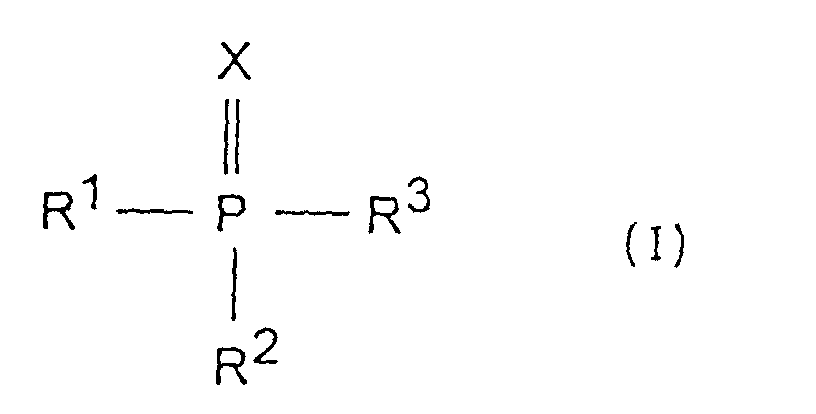
- Subject-matter of the present invention is a method for inhibiting coke formation on heat transfer surfaces used to heat or cool a petroleum feedstock at coke-forming conditions which comprises contacting the heat transfer surfaces with an effective amount of a phosphoric triamide of the formula: wherein
- the heat transfer surfaces can be contacted with the inhibitor in several different ways, including, for example, pretreating the heat transfer surfaces prior to heating or cooling the petroleum feedstock, continuously or intermittently adding a trace amount of the additive to the petroleum feedstock as it is being heated or cooled, adding the phosphoric triamide to steam feed which is then mixed with the petroleum feedstock, to the petroleum feedstock itself, or to a feed mixture of the petroleum foodstock and steam.
- the additive is preferably added at a rate of from 0.1 to 1000 ppm, on a basis of elemental phosphorus in the additive, more preferably of from 1 to 100 ppm, by weight of the petroleum feedstock.
- Each R 4 and R 5 in the foregoing phosphoric triamide formula is preferably alkyl, aryl, alkylaryl or arylalkyl, wherein the phosphoric triamide preferably has from 3 to 48 carbon atoms, and more preferably, each of R 4 and R 5 have from 1 to 15, especially from 1 to 8 carbon atoms. More preferably, each heterocyclic moiety has from 4 to 12 carbon atoms and is selected from pyrrolyl, pyrrolinyl, pyrrolidinyl, dihydropyridinyl, tetrahydropyridinyl, piperidino, azepinyl, indolyl, isoindolinyl, indolinyl, and carbazolyl.
- a particularly preferred phorphoric triamide comprises tripiperidinophosphine oxide.
- the phosphoric triamide derivatives of the above general formula (I) which are used according to the present invention are already known from US-A-3 433 623 and EP-A-0 165 507, and are disclosed therein as additives for controlling weeds and as phosphorus dopants to be used in integrated circuit manufacture, respectively.
- both documents are completely silent on other application purposes of such phosphoric triamides.
- their use as an antifoulant and coke suppressant in various high temperature applications is not mentioned therein.
- coke formation is defined as any buildup of coke or coke precursors on the heat transfer surfaces, including convection coils, radiant furnace coils, transfer line exchangers, quench towers, or the like.
- Other phosphorus-containing compounds have been disclosed in various patents and other references as effective coke formation inhibitors.
- none of the phosphorus compounds provide the same performance as the presently used phosphoric triamides Performance is based not only on the anticoking agent's ability to suppress and inhibit coke formation, but just as importantly, on being essentially free from causing any harmful side effects associated with many of the prior art additives, such as contributing to corrosion or impairing catalyst performance.
- petroleum feedstock is used to refer to any hydrocarbon generally heated or cooled at the heat transfer surfaces, regardless of the degree of previous processing, and specifically when used in reference to an ethylene or other cracking furnace, refers to the hydrocarbon before processing, as well as the hydrocarbon during and after processing in the furnace itself, in the TLE, in the quench section, etc.
- the feedstock can include ethane, propane, butane, kerosene, naphtha, gas oil, and combinations thereof.
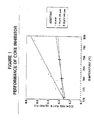
- Fig. 1 is a graph of coking rates obtained by inhibition with tripiperidinophosphine oxide over a typical cracking furnace operating temperature range according to the present invention.
- the coking inhibitor used according to the present invention is a phosphorus-based compound which is preferably essentially non-corrosive and is preferably essentially free from phosphine formation general conditions for hydrocarbon cracking.
- the presently used anti-coking agent has the following general formula: wherein X is chalcogen, preferably sulfur, and especially oxygen; and wherein each R 1 through R 3 is independently an amino moiety of the formula: wherein each R 4 is independently hydrocarbyl, such as, for example, alkyl, aryl, alkylaryl, or arylalkyl, and each R 5 is independently hydrogen or hydrocarbyl, and R 4 and R 5 taken together can, and preferably do form a heterocyclic moiety, such as, for example, pyrrolyl, pyrrolinyl, pyrrolidinyl, piperidino, dihydropyridinyl, tetrahydropyridinyl, azepinyl, indolyl, indolinyl, is
- the phosphoric triamide preferably has from 3 to 48 carbon atoms, and more preferably from 12 to 24 carbon atoms.
- Each hydrocarbyl group R 4 and R 5 (where they do not form a heterocyclic amino moiety) preferably comprises from 1 to 15 carbon atoms.
- Each heterocyclic amino moiety (where R 4 and R 5 taken together form the heterocyclic moiety) preferably has from 4 to 12 carbon atoms. If the number of carbon atoms in the amino moieties is excessively large, the economics of the additive are less favorable, the additive can lose volatility and miscibility to mix properly in the petroleum feedstock being treated, or can lose the desired stability.
- the hydrocarbyl groups can be substituted with or contain a heteroatom such as a chalcogen, or nitrogen, but this is generally less preferred because of the concomitant instability imparted by the heteroatom.
- a heteroatom such as a chalcogen, or nitrogen
- the heteroatom will impart solubility in steam or water, for example, the presence of a heteroatom can be useful, especially where the heteroatom is in a terminal portion of the hydrocarbyl group spaced from the amino moiety, so that any cleavage or other reaction of the heteroatom will leave the triaminophosphine moiety substantially intact for anticoking effectiveness.
- the hydrocarbyl groups can be the same or different in each amino moiety, for example, where the phosphoric triamide is formed from a mixture of different amines, and/or reacted with different amines in a stepwise fashion. In many instances, it is not necessary that the phosphoric triamide be completely pure, and the reaction product obtained by using isomers or mixtures of amines, which may be more economically available than the pure amines, are generally suitable.
- anticoking additives include tripiperidinophosphine oxide, hexamethyl phosphoramide, hexaoctyl phosphoramide, and hexaphenyl phosphoramide.
- the anti-coking agent is referred to herein generally as the preferred tripiperidinophosphine oxide (TPyPO) with the understanding that this is just one example of the phosphoric triamides used according to the present invention.
- TPyPO tripiperidinophosphine oxide
- the phosphoric triamides are prepared according to methods known in the art, and in some cases are commercially available.
- the phosphoric triamides can be prepared by the reaction of phosphorus oxyhalide, e.g. phosphorus oxybromide or phosphorus oxychloride, with an excess of the desired amine, e.g. piperidine, in a suitable solvent such as heavy aromatic naphtha, toluene, and benzene, with evolution of the corresponding hydrohalide.
- Other bases which are less nucleophilic e.g. pyridine
- the phosphoric triamide can be prepared from the corresponding phosphorus triamide which is oxidized or sulfurized. In some cases, it may be possible to effectively convert phosphorous triamide to the corresponding phosphoric triamide in situ in the cracking furnace, in accordance with the present invention.
- the TPyPO is used to inhibit coke formation on heat transfer surfaces used most often to heat, but sometimes to cool, petroleum feedstocks at coke-forming conditions, by treating the surfaces with an effective amount of the TPyPO.
- the surface can be effectively treated, for example, by introducing the TPyPO into the petroleum feedstock before the feedstock comes into contact with the heat transfer surfaces.
- the TPyPO can be used in an amount effective to obtain the desired inhibition of coke formation, usually at least 0.1 ppm by weight in the hydrocarbon, preferably at least 1 ppm, on a basis of elemental phosphorus. There is usually no added benefit in using the TPyPO in a relatively high concentration, and the economics are less favorable.
- the TPyPO is used in an amount from 0.1 to 1000 ppm, more preferably from 1 to 100 ppm, by weight in the hydrocarbon, on an elemental phosphorus basis.
- the addition to the petroleum feedstock is preferably continuous, but it is also possible to use the petroleum feedstock treatment on an intermittent basis, depending on the coke inhibition which is desired in the particular application. For example, where there is a scheduled shutdown of the heat transfer equipment for maintenance, other than for the build up of coke deposits, the continuous addition of the TPyPO to the petroleum feedstock could be terminated in advance of the shutdown. Or, the anti-coking agent could be used in the petroleum feedstock after the development of a pressure drop through the heat transfer equipment indicative of coke formation therein.
- the TPyPO can be circulated through the heat transfer equipment, preferably in a suitable diluent.
- the heat transfer equipment can also be filled with the TPyPO solution and allowed to soak for a period of time to form a protective film on the heat transfer surfaces.
- the petroleum feedstock can be dosed at a relatively high initial rate, for example, at the beginning of a run, e.g. 0.5 to 2.0 weight percent, and after a period of time, e.g. 1 to 24 hours, reduced to the continuous dosage rates described above.
- the TPyPO is preferably added as a solution in a master batch.
- the mode of blending the TPyPO with the feedstock is not particularly critical, and a vessel with an agitator is all that is required.
- a master batch of the TPyPO in a suitable solvent, such as aliphatic or aromatic hydrocarbon is metered into a stream of the feedstock and intimately mixed therein by turbulence in the processing equipment.
- the TPyPO can be added to a steam or water stream which is injected or otherwise added to the petroleum feedstock stream, or the TPyPO can be added to a mixed stream of the petroleum feedstock and steam or water.
- the TPyPO should be added to the feedstock upstream of the heat transfer surfaces being treated.
- the TPyPO addition should be sufficiently upstream to allow sufficient mixing and dispersion of the additive in the feedstock, but preferably not too far upstream in order to avoid or minimize any significant decomposition or degradation of the TPyPO before it reaches the surfaces being treated
- Tripiperidinophosphine oxide was evaluated for coke suppression at 200 ppm and 500 ppm in n-hexane.
- the hexane was fed into the test reactor at 38-40 g/h with steam dilution at 0.5 kg/kg hexane, and a V/F 0 value of 41-43 l ⁇ sec/mol, where V is the equivalent reactor volume (in liters) and F 0 is the initial molar flow rate of hexane (in moles/sec).
- V is the equivalent reactor volume (in liters)
- F 0 is the initial molar flow rate of hexane (in moles/sec).
- the results illustrated in Fig. 1 show that Additive A reduces the asymptotic coking rate over a range of temperatures above about 770°C. This performance is comparable to the performance of other phosphorus-based additives reported in U.S.-A-4,842,716; 4,835,332, and 4,900, 426
- a high temperature wheel box was used to determine the degradative properties of various additives over long periods of time.
- Additive A was used at a concentration of 5 percent in heavy aromatic naphtha, and other additives were used at an equivalent phosphorus content.
- the additive was added to a high alloy vessel along with hydrocarbon, an equal amount of water and preweighed coupons constructed of carbon steel. The contents were rotated continuously at temperatures representative of a typical convection section of an ethylene furnace; the mixing ensured that the coupons would be exposed to both a liquid and a gas phase (composed of water and hydrocarbon). Exposing the additives to high temperature for extended periods of time permitted potential decomposition to harmful by-products.
- this method simulated a worse case scenario involving a fairly high concentration of an additive in the convection section with eventual accumulation/degradation (e.g. thermolysis, hydrolysis, disproportionation, etc.) to by-products which may or may not be corrosive. Additionally, the appearance of corrosion may not be the direct result of degradation, but may be an inherent property of an additive.
- accumulation/degradation e.g. thermolysis, hydrolysis, disproportionation, etc.
- a lab unit was constructed which would simulate the dynamic (i.e. erosive and corrosive) conditions of a typical convection section of an ethylene furnace. Corrosion is more likely to occur at or near the bends/elbows of the convection sections because of high erosion due to the velocity of the stream.
- Steam, generated from one vessel was mixed with hydrocarbon (hexane and toluene at 50-50 weight percent) from a second vessel (steam:hydrocarbon weight ratio 0.5-0.6). Heating to the desired temperature was accomplished by passing the mixture through two independent furnaces held at specified temperatures (100-600°C). Both furnaces were monitored and controlled via two separate temperature controllers. Preweighed corrosion coupons, made of carbon steel, were situated at the bends within the furnace coil.
- Coupon A was situated in the process flow, subjected to the erosive and corrosive nature of the process stream, upstream and at a lower temperature (above 100°C) relative to Coupon B which was situated downstream at a higher temperature (less than 600°C). Thermocouples were used to record the temperature of both coupons as well as both furnace sections.
- the cracked gas effluent was bubbled through deuterated chloroform at low temperatures (-78°C) and analyzed by 31 PNMR at -60°C. The spectrum obtained matched PH 3 from the literature (-234 ppm, quartet with J PH 192 Hz).
- tripiperidinophosphine oxide was as effective in coke suppression as the prior art phosphorus-based additives, but was essentially free from contributing to corrosion and from forming phosphine. It is further seen that the other phosphorus-based additives evaluated either contributed to corrosion or formed phosphine under coking conditions.
Landscapes
- Chemical & Material Sciences (AREA)
- Oil, Petroleum & Natural Gas (AREA)
- Physics & Mathematics (AREA)
- Thermal Sciences (AREA)
- Engineering & Computer Science (AREA)
- Chemical Kinetics & Catalysis (AREA)
- General Chemical & Material Sciences (AREA)
- Organic Chemistry (AREA)
- Production Of Liquid Hydrocarbon Mixture For Refining Petroleum (AREA)
Claims (20)
- Procédé pour inhiber la formation de coke sur des surfaces de transfert de chaleur qui sont utilisées pour le chauffage ou le refroidissement d'un matériau de départ de pétrole sous des conditions de formation de coke, qui comprend:dans laquellela mise en contact des surfaces de transfert de chaleur avec une quantité efficace d'un triamide phosphorique de la formule
 dans laquelle R4 est un hydrocarbyle et R5 est l'hydrogène ou un hydrocarbyle et R4 et R5 pris ensemble peuvent constituer un reste hétérocyclique.X est un chalcogène etR1 à R3 sont respectivement un reste amino de la formule

- Procédé selon la revendication 1, dans lequel X dans la formule (I) représente l'oxygène ou le soufre.
- Procédé selon la revendication 1 ou 2, dans lequel le triamide phosphorique comprend 3 à 48 atomes de carbone.
- Procédé selon la revendication 3, dans lequel les hydrocarbyles ne contiennent pas des hétéroatomes.
- Procédé selon la revendication 4, dans lequel R4 aussi bien que R5 représente indépendamment un alkyl, un aryle, un alkylaryle ou un arylalkyl avec 1 à 15 atomes de carbone.
- Procédé selon l'une quelconque des revendications 1 à 3, dans lequel les restes amino comprennent des restes hétérocycliques avec 4 à 12 atomes de carbone.
- Procédé selon la revendication 6, dans lequel les restes amino sont choisis du groupe pyrrolyle, pyrrolinyle, pyrrolidinyle, dihydropyridinyle, tetrahydropyridinyle, piperidino, azepinyle, indolyle, isoindolinyle, indolinyle et carbazolyle.
- Procédé selon l'une quelconque des revendications 1 à 3, dans lequel le triamide phosphorique comprend l'oxide de tripiperidinophosphine.
- Procédé selon l'une quelconque des revendications 1 à 8, dans lequel le produit de départ de pétrole chauffé ou refroidi est traité avec 0,1 à 1000 ppm de triamide phosphorique sur une base de phosphore élémentaire dans le triamide phosphorique par rapport au poids du produit de départ.
- Procédé selon la revendication 9, dans lequel le produit de départ de pétrole chauffé ou refroidi est traité avec 1 à 100 ppm de triamide phosphorique sur une base de phosphore élémentaire dans le triamide phosphorique par rapport au poids du produit de départ.
- Procédé selon l'une quelconque des revendications 1 à 10, dans lequel le produit de départ de pétrole comprend l'éthane, le propane, le butane, le naphta, le kérosène, le gasoil ou leurs combinaisons.
- Procédé selon l'une quelconque des revendications 1 à 11, dans lequel les surfaces de transfert de chaleur comprennent des serpentins de four de craquage.
- Procédé selon l'une quelconque des revendications 1 à 12, dans lequel les surfaces de transfert de chaleur comprennent des échangeurs tubulaires de transfert.
- Procédé selon l'une quelconque des revendications 1 à 13, dans lequel les surfaces de transfert de chaleur sont pré-traitées avec le triamide phosphorique avant le chauffage ou le refroidissement du produit de départ de pétrole.
- Procédé selon l'une quelconque des revendications 1 à 14, comprenant:l'addition du triamide phosphorique à un produit de départ de pétrole; etle passage du mélange résultant à travers des sections de convection et de rayonnement d'un four de craquage.
- Procédé selon la revendication 15, qui comprend en outre le fractionnement de l'effluent du four et le traitement catalytique d'une fraction de ce dernier.
- Procédé selon l'une quelconque des revendications 1 à 14, comprenant:l'addition du triamide phosphorique à un produit de départ de pétrole ou à un effluent de four d'éthylène en amont d'un échangeur tubulaire de transfert etle passage de l'effluent du four de craquage contenant le triamide phosphorique à travers l'échangeur tubulaire de transfert.
- Procédé selon la revendication 17, qui comprend en outre le fractionnement de l'effluent du four et le traitement catalytique d'une fraction de ce dernier.
- Procédé selon l'une quelconque des revendications 1 à 14, comprenant:l'addition de triamide phosphorique à de la vapeur d'eau ;le mélange de la vapeur d'eau avec un produit de départ de pétrole; etle passage du mélange du produit de départ et de la vapeur d'eau contenant le triamide phosphorique à travers un four de craquage.
- Procédé selon l'une quelconque des revendications 1 à 14, comprenant:l'addition du triamide phosphorique à un mélange de vapeur d'eau et de produit de départ de pétrole; etle passage du mélange résultant à travers un four de craquage.
Applications Claiming Priority (4)
| Application Number | Priority Date | Filing Date | Title |
|---|---|---|---|
| US99078292A | 1992-12-10 | 1992-12-10 | |
| US990782 | 1992-12-10 | ||
| US71458 | 1993-06-02 | ||
| US08/071,458 US5360531A (en) | 1992-12-10 | 1993-06-02 | Phosphoric triamide coking inhibitors |
Publications (2)
| Publication Number | Publication Date |
|---|---|
| EP0601609A1 EP0601609A1 (fr) | 1994-06-15 |
| EP0601609B1 true EP0601609B1 (fr) | 1999-01-27 |
Family
ID=26752254
Family Applications (1)
| Application Number | Title | Priority Date | Filing Date |
|---|---|---|---|
| EP19930120003 Expired - Lifetime EP0601609B1 (fr) | 1992-12-10 | 1993-12-10 | L' inhibition de dépot de coke avec triamides d'acide phosphorique |
Country Status (2)
| Country | Link |
|---|---|
| EP (1) | EP0601609B1 (fr) |
| DE (1) | DE69323285T2 (fr) |
Families Citing this family (1)
| Publication number | Priority date | Publication date | Assignee | Title |
|---|---|---|---|---|
| DE4143056A1 (de) * | 1991-12-30 | 1993-07-01 | Henkel Kgaa | Verwendung ausgewaehlter inhibitoren gegen die ausbildung fester inkrustationen auf organischer basis aus fliessfaehigen kohlenwasserstoffgemischen |
Family Cites Families (3)
| Publication number | Priority date | Publication date | Assignee | Title |
|---|---|---|---|---|
| US4542253A (en) * | 1983-08-11 | 1985-09-17 | Nalco Chemical Company | Use of phosphate and thiophosphate esters neutralized with water soluble amines as ethylene furnace anti-coking antifoulants |
| US4775458A (en) * | 1986-12-18 | 1988-10-04 | Betz Laboratories, Inc. | Multifunctional antifoulant compositions and methods of use thereof |
| US4804456A (en) * | 1986-12-18 | 1989-02-14 | Betz Laboratories, Inc. | Method for controlling fouling deposit formation in petroleum hydrocarbons or petrochemicals |
-
1993
- 1993-12-10 EP EP19930120003 patent/EP0601609B1/fr not_active Expired - Lifetime
- 1993-12-10 DE DE1993623285 patent/DE69323285T2/de not_active Expired - Fee Related
Also Published As
| Publication number | Publication date |
|---|---|
| DE69323285D1 (de) | 1999-03-11 |
| EP0601609A1 (fr) | 1994-06-15 |
| DE69323285T2 (de) | 1999-08-12 |
Similar Documents
| Publication | Publication Date | Title |
|---|---|---|
| EP0158968B1 (fr) | Inhibiteurs d'incrustation pour procédés de craquage thermique | |
| US5446229A (en) | Thermal cracking process with reduced coking | |
| EP0086461B1 (fr) | Procédé pour réduire le dépot de coke au cours du craquage catalytique et inhibiteur d'encrassement | |
| EP0241020B1 (fr) | Agents prévenant l'encrassement dans des procédés de craquage thermique | |
| US5552085A (en) | Phosphorus thioacid ester inhibitor for naphthenic acid corrosion | |
| US5354450A (en) | Phosphorothioate coking inhibitors | |
| US5360531A (en) | Phosphoric triamide coking inhibitors | |
| EP0241845A1 (fr) | Agents prévenant l'encrassement dans des procédés de craquage thermique | |
| US5954943A (en) | Method of inhibiting coke deposition in pyrolysis furnaces | |
| EP0242693B1 (fr) | Agents prévenant l'encrassement dans des procédés de craquage thermique | |
| EP0852256B1 (fr) | Une méthode pour inhibiter de dépot de coke avec les phosphonates/thiophonates | |
| EP0357418A1 (fr) | Emploi de triphénylphosphine comme inhibiteur d'encrassement dans un fourneau de craquage | |
| EP1085074A2 (fr) | Agents prévenant l'encrassement à base de phospore et soufre | |
| EP0391620B1 (fr) | Procédé de réduction des incrustations dans les fours de craquage d'éthylène | |
| PL180515B1 (pl) | Sposób zmniejszenia zanieczyszczenia nagarem powierzchni wymiany ciepla PL | |
| EP0601609A1 (fr) | Triamides d'acide phosphorique inhibiteurs de dépôt de coke |
Legal Events
| Date | Code | Title | Description |
|---|---|---|---|
| PUAI | Public reference made under article 153(3) epc to a published international application that has entered the european phase |
Free format text: ORIGINAL CODE: 0009012 |
|
| AK | Designated contracting states |
Kind code of ref document: A1 Designated state(s): DE GB NL |
|
| 17P | Request for examination filed |
Effective date: 19940628 |
|
| 17Q | First examination report despatched |
Effective date: 19970317 |
|
| GRAG | Despatch of communication of intention to grant |
Free format text: ORIGINAL CODE: EPIDOS AGRA |
|
| GRAG | Despatch of communication of intention to grant |
Free format text: ORIGINAL CODE: EPIDOS AGRA |
|
| GRAH | Despatch of communication of intention to grant a patent |
Free format text: ORIGINAL CODE: EPIDOS IGRA |
|
| GRAH | Despatch of communication of intention to grant a patent |
Free format text: ORIGINAL CODE: EPIDOS IGRA |
|
| GRAA | (expected) grant |
Free format text: ORIGINAL CODE: 0009210 |
|
| AK | Designated contracting states |
Kind code of ref document: B1 Designated state(s): DE GB NL |
|
| REF | Corresponds to: |
Ref document number: 69323285 Country of ref document: DE Date of ref document: 19990311 |
|
| PLBE | No opposition filed within time limit |
Free format text: ORIGINAL CODE: 0009261 |
|
| STAA | Information on the status of an ep patent application or granted ep patent |
Free format text: STATUS: NO OPPOSITION FILED WITHIN TIME LIMIT |
|
| 26N | No opposition filed | ||
| PGFP | Annual fee paid to national office [announced via postgrant information from national office to epo] |
Ref country code: NL Payment date: 20011120 Year of fee payment: 9 |
|
| PGFP | Annual fee paid to national office [announced via postgrant information from national office to epo] |
Ref country code: GB Payment date: 20011122 Year of fee payment: 9 |
|
| PGFP | Annual fee paid to national office [announced via postgrant information from national office to epo] |
Ref country code: DE Payment date: 20011123 Year of fee payment: 9 |
|
| REG | Reference to a national code |
Ref country code: GB Ref legal event code: IF02 |
|
| REG | Reference to a national code |
Ref country code: GB Ref legal event code: 732E |
|
| NLS | Nl: assignments of ep-patents |
Owner name: ONDEO NALCO ENERGY SERVICES, L.P. |
|
| PG25 | Lapsed in a contracting state [announced via postgrant information from national office to epo] |
Ref country code: GB Free format text: LAPSE BECAUSE OF NON-PAYMENT OF DUE FEES Effective date: 20021210 |
|
| PG25 | Lapsed in a contracting state [announced via postgrant information from national office to epo] |
Ref country code: NL Free format text: LAPSE BECAUSE OF NON-PAYMENT OF DUE FEES Effective date: 20030701 Ref country code: DE Free format text: LAPSE BECAUSE OF NON-PAYMENT OF DUE FEES Effective date: 20030701 |
|
| GBPC | Gb: european patent ceased through non-payment of renewal fee | ||
| NLV4 | Nl: lapsed or anulled due to non-payment of the annual fee |
Effective date: 20030701 |