EP0602096B1 - Verfahren zur mikrobiologischen bodenreinigung - Google Patents
Verfahren zur mikrobiologischen bodenreinigung Download PDFInfo
- Publication number
- EP0602096B1 EP0602096B1 EP92918309A EP92918309A EP0602096B1 EP 0602096 B1 EP0602096 B1 EP 0602096B1 EP 92918309 A EP92918309 A EP 92918309A EP 92918309 A EP92918309 A EP 92918309A EP 0602096 B1 EP0602096 B1 EP 0602096B1
- Authority
- EP
- European Patent Office
- Prior art keywords
- line
- liquid
- bed reactor
- container
- spouted
- Prior art date
- Legal status (The legal status is an assumption and is not a legal conclusion. Google has not performed a legal analysis and makes no representation as to the accuracy of the status listed.)
- Expired - Lifetime
Links
Images

Classifications
-
- B—PERFORMING OPERATIONS; TRANSPORTING
- B09—DISPOSAL OF SOLID WASTE; RECLAMATION OF CONTAMINATED SOIL
- B09C—RECLAMATION OF CONTAMINATED SOIL
- B09C1/00—Reclamation of contaminated soil
- B09C1/10—Reclamation of contaminated soil microbiologically, biologically or by using enzymes
-
- B—PERFORMING OPERATIONS; TRANSPORTING
- B01—PHYSICAL OR CHEMICAL PROCESSES OR APPARATUS IN GENERAL
- B01J—CHEMICAL OR PHYSICAL PROCESSES, e.g. CATALYSIS OR COLLOID CHEMISTRY; THEIR RELEVANT APPARATUS
- B01J8/00—Chemical or physical processes in general, conducted in the presence of fluids and solid particles; Apparatus for such processes
- B01J8/18—Chemical or physical processes in general, conducted in the presence of fluids and solid particles; Apparatus for such processes with fluidised particles
- B01J8/20—Chemical or physical processes in general, conducted in the presence of fluids and solid particles; Apparatus for such processes with fluidised particles with liquid as a fluidising medium
- B01J8/22—Chemical or physical processes in general, conducted in the presence of fluids and solid particles; Apparatus for such processes with fluidised particles with liquid as a fluidising medium gas being introduced into the liquid
- B01J8/224—Chemical or physical processes in general, conducted in the presence of fluids and solid particles; Apparatus for such processes with fluidised particles with liquid as a fluidising medium gas being introduced into the liquid the particles being subject to a circulatory movement
- B01J8/228—Chemical or physical processes in general, conducted in the presence of fluids and solid particles; Apparatus for such processes with fluidised particles with liquid as a fluidising medium gas being introduced into the liquid the particles being subject to a circulatory movement externally, i.e. the particles leaving the vessel and subsequently re-entering it
-
- G—PHYSICS
- G01—MEASURING; TESTING
- G01N—INVESTIGATING OR ANALYSING MATERIALS BY DETERMINING THEIR CHEMICAL OR PHYSICAL PROPERTIES
- G01N33/00—Investigating or analysing materials by specific methods not covered by groups G01N1/00 - G01N31/00
- G01N33/18—Water
- G01N33/186—Water using one or more living organisms, e.g. a fish
- G01N33/1866—Water using one or more living organisms, e.g. a fish using microorganisms
Definitions
- the invention relates to a method for microbiological soil cleaning, in which the contaminated soil is excavated and separated into a coarse fraction and a fine fraction, the fine fraction is decontaminated in a bioreactor, process water is returned to the circuit and the decontaminated soil, if necessary after remixing the coarse fraction is filled.
- DE 37 33 341 A1 discloses a method and a device for microbiological floor cleaning in order to clean floors contaminated with hydrocarbons, in particular mineral oils, by microbial oxidation, the floors in addition to oxygen, water, soluble nutrients and soluble or dispersed surfactants , e.g. in a "hydrodynamic" bioreactor, to bring about a complete mineralization of the mineral oils by breathing to CO2 and H20, whereby a regulation of temperature, pH, oxygen concentration and fumigation rate is provided.
- the disadvantage here is that the amount of oxygen provided by ventilation does not correspond to the oxygen requirement for biological mineral oxidation.
- it is disadvantageous that the process is more expensive because of the addition of the surfactants and that a comparatively complex control device is required.
- This method is not intended and also not suitable for removing polycyclic aromatic hydrocarbons from soils with a high silt content.
- stirred tank reactors with a maximum of 10% and pneumatically operated reactors (bubble columns / airlift reactors) with a maximum of 25% solids content can be operated economically.
- DE 39 20 827 C1 discloses a cleaning system for contaminated soils in the form of a non-generic regeneration rent for the treatment of naturally moist soils, which has an irrigation cycle and has a ventilation circuit and has control devices which keep the moisture and the microbial activity constant, whereby alternately aerobic and anaerobic treatment conditions can be used. With this system, it is difficult to neutralize the weather conditions. This method is not intended and also not suitable for removing polycyclic aromatic hydrocarbons from soils with a high silt content.
- the present invention is based on the object of avoiding the aforementioned disadvantages of the known methods and of developing a simpler method for microbiological soil cleaning which has low energy requirements for the suspension for homogeneous soil treatment at high solids contents of the soil suspension, with only one for biological pollutant degradation Bioreactor for the fine material is required and with which polycyclic aromatic hydrocarbons in particular can be separated from silty soils.
- a device for performing the method has the features of claim 6.
- the cleaned soil can be reused after dewatering, if necessary including the previously separated, coarse components.
- the process liquid with the microorganisms contained therein can largely be circulated within the process in an environmentally friendly manner.
- the method and the device are also suitable for the treatment of soils which are contaminated with difficultly degradable hydrocarbons at coke oven sites.
- PAH contamination polycyclic aromatic hydrocarbons
- PAH polycyclic aromatic hydrocarbons
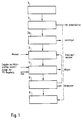
- Soil excavation 1 is fed to a screening plant 2.
- the coarse fraction screened off there may be disposed of elsewhere. If the coarse fraction is not contaminated, it can also be added to the fine material after it has been decontaminated.
- the fine material from the screening plant 2 is fed to a sorting plant 2a as required and separated from light goods therein.
- the fine material then passes into a refining drum 3 and is suspended there in water. Part of the suspension liquid from the process can be recycled into the refining drum 3.
- the soil suspension from the lauter drum 3 passes into a bioreactor system 4, which consists of a bubble bed reactor 7 and an associated gassing tank 8 (FIG. 2).
- soil suspension from the lauter drum 3 is charged with nutrients for the microorganisms, acid or alkali for pH control and with gas in order to create the best possible living conditions for the microorganisms, which degrade the various pollutants in that they biologically separate or convert them into harmless components.
- the solids concentration in the process according to the invention can be up to 60%.
- Gaseous conversion products are discharged with the exhaust air and, if necessary, subjected to a separate cleaning process in an exhaust air filter system, not shown in the drawing.
- the soil suspension is kept in suspension in the bioreactor system 4 by pumping around decanted suspension liquid.
- the duration of the treatment depends on the type of contamination of the soil in the following staggering: mineral oil contaminated soils 2 to 5 days, easily degradable PAK 5 to 10 days and poorly degradable PAHs 10 to 20 days and more.
- the soil suspension is thickened in the bubble bed reactor 7 of the bioreactor system 4 and then fed to a drainage system 5, the waste water of which is partially reused as a suspension liquid within the process. Waste water to be discharged from the process must be disposed of elsewhere.
- the dewatered fines, possibly together with the previously separated coarse fraction, are reused and brought to the bottom deposit 6.
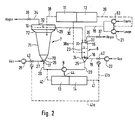
- FIG. 2 shows the overview of the bioreactor system 4, consisting of the hydrofluidized fluidized bed reactor 7 with the associated gassing container 8.
- the bubble bed reactor 7 consists of a conical container part 70, into which the suspension liquid is introduced from below via a liquid line 20.
- Container part 70 merges into a further conical container part 71, in which the biodegradation takes place in the individual decomposition zones of identical grain areas which form there and which partially overlap.
- the container parts 70 and 71 serve, after the biological pollutant degradation has ended, as a thickening container for the soil suspension.
- This is followed by a further conical container part 72, in the lower area of which a sedimentation zone is built up.
- the upper part of the bubble bed reactor 7 is formed by a round container 10.
- an acid / alkali inlet 15 is provided, to which an acid / alkali line 18 is connected.
- the acid or lye is conveyed into the gassing tank 8 by an acid pump 63 or lye pump 21.
- a gas inlet 16, to which a gas line 19 connects, is also installed in the gassing container 8.
- the gas is introduced into the gassing container 8 via a blower 22. It dissolves in the suspension liquid.
- the gassing container 8 has a liquid outlet 25 to which the liquid line 20 connects, via which the gassed suspension liquid is conveyed from the gassing container 8 into the bubble bed reactor 7 by means of a liquid pump 9, into which it is hydraulically connected via a liquid inlet 17 on the container part 70 is entered.
- the liquid outlet 25 is arranged on a pointed bottom 24, which closes the gassing container 8, which is otherwise designed as a round container 23, at the bottom.
- a gas inlet 26 is let in laterally, to which a gas line 27 is connected, which is provided with a blower 28 which, if necessary, pushes additional gas into the bubble bed reactor 7, which dissolves in the suspension liquid.
- the round container 10 of the bubble bed reactor 7 has a liquid outlet 29, to which a liquid line 30 connects, from which the decanted liquid from the bubble bed reactor 7 passes via a liquid inlet 31 into the gassing tank 8.
- the bubble bed reactor 7 and the gassing tank 8 also each have an exhaust gas outlet 32 or 33 for an exhaust gas line 34 or 35, which are equipped with valves 36 and 37, respectively. As already mentioned, the exhaust gas is disposed of elsewhere.
- the gassing container 8 is connected via a measuring line 38a and the bubble bed reactor 7 to a measuring line 38 with a measuring device 11.
- the measuring device 11 is assigned a control device 12 which is connected via a control line 39 to the acid pump 63 or the alkali pump 21.
- the temperature and the O2 content of the soil suspension in the bubble bed reactor 7 and via the measuring line 38a the pH of the suspension liquid in the gassing tank 8 are determined by sensors (not shown here) and transmitted to the measuring device 11.
- the pH value is kept constant or adapted to changed conditions via the control device 12, by regulating the acid / alkali supply into the gassing container 8 via the control line 39, which leads to the acid pump 63 or to the alkali pump 21.
- the bubble bed reactor 7 and the gassing container 8 are connected to a further measuring device 13 and associated control device 14 in terms of measurement and control technology.
- Via a measuring line 40 which leads from the liquid line 20 to the measuring device 13, measured values of flow, pressure and O2 content of the suspension liquid in the liquid line 20 are determined via suitable sensors, which are not shown here, and transmitted to the measuring device 13.
- a control line 41, 41a leads to the valve 43 in the gas line 27 of the bubble bed reactor 7 and a control line 41b to the valve 42 of the gas line 19 of the gassing container 8 for the purpose of regulating the O2 content.
- a control line 44 leads to the liquid pump 9 in the liquid line 20 in order to regulate the liquid supply according to pressure and quantity in accordance with the respective requirements of the bubble bed reactor 7.
- the bubble bed reactor 7 according to FIG. 2 is particularly suitable for fine fractions with a wide grain spectrum of 0 to 0.5 mm grain diameter because of its conical design.
- FIG. 3 shows a modified bubble bed reactor 7a, in which a longer cylindrical container part 46 is connected to a short conical container part 45, to which a second conical container part 47 is attached, which is connected to a second cylindrical container part 48.
- This modified Bubble bed reactor 7a is particularly suitable for fine fractions with a narrow grain spectrum of 20 »m to 300» m grain diameter.
- 3 is connected to the gassing container 8 via liquid line 20 and via liquid line 30.
- Liquid line 20 conveys the gassed suspension liquid from the gassing container 8 to the conical container part 45 of the bubble bed reactor 7a.
- Liquid line 30 leads the excess liquid from the cylindrical container part 48 of the bubble bed reactor 4 back into the gassing container 8.
- a temperature measuring device 65 and an oxygen measuring device 66 are integrated in the liquid line 30.
- the liquid line 20 contains a shut-off valve 53 arranged below the gassing container 8 and a shut-off valve 54 arranged below the bubble bed reactor 7a.
- a liquid pump 9 is integrated into the liquid line 20, which pumps a bypass line 49 containing a shut-off valve 52 above and above the liquid pump 9. downstream three-way valves 50, 51 can be bypassed when the liquid pump 9 is not or not temporarily operated.
- a temperature measuring device 55, a flow measuring device 56 and an oxygen measuring device 57 are accommodated in the liquid line 20. The latter is connected via a control line 58 to a shut-off valve 59 in the gas line 27 and forms an oxygen control circuit with the valve 59.
- a flow meter 69 is also assigned to the gas line 27.
- An exhaust pipe 35 leads out of the gassing container 8 and leads to a filter system, not shown in the drawing leads.
- An acid line 60 with an acid pump 63 and an alkali line 61 with an alkali pump 62 and a pH value measuring device 64 are connected to the gassing container part 8. The latter is connected to the pumps 62, 63 via control lines 67, 68 and forms pH control loops with these.
- the operation of the bubble bed reactor 7, 7a provides an oxygen supply which is adapted to the need for biodegradation.
- an O2 entry by gassing with air or pure oxygen in the gassing tank 8 and in the bubble bed reactor 7, 7a is provided if the O2 requirement is high.
- fumigation alone in the fumigation container 8 is sufficient.
- the circulation of the liquid can be dispensed with at times. Because this results in slow sedimentation of the soil suspension in the bubble bed reactor 7, 7a and a decrease in the O2 content in the soil suspension, the liquid circulation must be activated from time to time.
- a flow velocity of 4x10 ⁇ 4 to 8x10 ⁇ 4 m / s has been determined as optimal.
- the solids concentration in the bubble bed reactor 7, 7a was 500 g / l, while the solids concentration of the circulating suspension liquid was ⁇ 50 g / l.
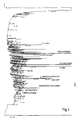
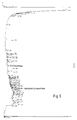
- FIGS. 4 and 5 show, even if one does not assign each characteristic PAH its characteristic pollutant component in detail, that an almost complete decontamination could be achieved overall.
- the concentration of the PAH usually measured according to the EPA "List of priority pollants" (MA Callahan et al. (1979), Water-related environmental fate of 129 priority pollutants, EPA Report -440 / 4-79-0296) was determined in Example reduced from 180 mg PAH / kg soil to 18 mg PAH / kg soil.
Landscapes
- Chemical & Material Sciences (AREA)
- Life Sciences & Earth Sciences (AREA)
- Engineering & Computer Science (AREA)
- Health & Medical Sciences (AREA)
- General Health & Medical Sciences (AREA)
- Microbiology (AREA)
- Immunology (AREA)
- Organic Chemistry (AREA)
- Analytical Chemistry (AREA)
- Biochemistry (AREA)
- Medicinal Chemistry (AREA)
- General Physics & Mathematics (AREA)
- Food Science & Technology (AREA)
- Pathology (AREA)
- Combustion & Propulsion (AREA)
- Physics & Mathematics (AREA)
- Chemical Kinetics & Catalysis (AREA)
- Biomedical Technology (AREA)
- Biotechnology (AREA)
- Molecular Biology (AREA)
- Mycology (AREA)
- Soil Sciences (AREA)
- Environmental & Geological Engineering (AREA)
- Processing Of Solid Wastes (AREA)
- Detergent Compositions (AREA)
Applications Claiming Priority (3)
| Application Number | Priority Date | Filing Date | Title |
|---|---|---|---|
| DE4129363A DE4129363A1 (de) | 1991-09-04 | 1991-09-04 | Verfahren zur mikrobiologischen bodenreinigung |
| DE4129363 | 1991-09-04 | ||
| PCT/EP1992/002030 WO1993004794A1 (de) | 1991-09-04 | 1992-09-03 | Verfahren zur mikrobiologischen bodenreinigung |
Publications (2)
| Publication Number | Publication Date |
|---|---|
| EP0602096A1 EP0602096A1 (de) | 1994-06-22 |
| EP0602096B1 true EP0602096B1 (de) | 1995-12-27 |
Family
ID=6439817
Family Applications (1)
| Application Number | Title | Priority Date | Filing Date |
|---|---|---|---|
| EP92918309A Expired - Lifetime EP0602096B1 (de) | 1991-09-04 | 1992-09-03 | Verfahren zur mikrobiologischen bodenreinigung |
Country Status (5)
| Country | Link |
|---|---|
| EP (1) | EP0602096B1 (cs) |
| AT (1) | ATE132063T1 (cs) |
| CZ (1) | CZ219193A3 (cs) |
| DE (2) | DE4129363A1 (cs) |
| WO (1) | WO1993004794A1 (cs) |
Families Citing this family (4)
| Publication number | Priority date | Publication date | Assignee | Title |
|---|---|---|---|---|
| DE4339875A1 (de) * | 1993-11-23 | 1995-05-24 | Hohnecker Helmut | Verfahren zur Reinigung und Aufbereitung von verunreinigtem Gut |
| DE4437812C2 (de) * | 1994-10-12 | 1999-10-07 | Andreas Bartetzko | Zweistufiges Verfahren und Vorrichtung zur Dekontaminierung von partikelförmigen Materialien |
| DE19514222A1 (de) * | 1995-04-15 | 1996-10-17 | Dechema | Verfahren zur biologischen Bodensanierung |
| NL1002311C2 (nl) * | 1996-02-12 | 1997-08-13 | Heidemij Realisatie Bv | Werkwijze voor het voorspellen van het resultaat van een reinigings- proces. |
Family Cites Families (10)
| Publication number | Priority date | Publication date | Assignee | Title |
|---|---|---|---|---|
| EP0290661A1 (en) * | 1987-05-15 | 1988-11-17 | M. W. Kellogg Company | Three-phase reactor operation |
| DE3733341A1 (de) * | 1987-10-02 | 1989-04-13 | Wintershall Ag | Verfahren zur verbesserung der mikrobiellen reinigung von mit kohlenwasserstoffen, insbesondere mit mineraloelen kontaminierten boeden, durch mikrobielle oxidation |
| DE3818398A1 (de) * | 1988-05-31 | 1989-12-14 | Xenex Ges Zur Biotechnischen S | Verfahren und anlage zur rekultivierungsbehandlung von xenobiotisch-kontaminiertem erdreich mittels mikroorganismen |
| DE3921066A1 (de) * | 1988-06-27 | 1989-12-28 | Rethmann Staedtereinigung Gmbh | Verfahren und anlage zur mikrobiologischen altlastensanierung kontaminierter boeden |
| NL193056C (nl) * | 1988-11-07 | 1998-09-08 | Bird Engineering B V | Werkwijze en inrichting voor het scheiden en (bio)chemisch behandelen van vaste stoffen. |
| DE3901100C1 (cs) * | 1989-01-16 | 1990-06-13 | Santec Gmbh, 1000 Berlin, De | |
| DE3920827C1 (en) * | 1989-06-24 | 1990-05-03 | Peter Dipl.-Biol. Harborth | Decontamination of earth - by covering with foil pref. insulated and spraying earth with water and air under controlled conditions |
| DE59003167D1 (de) * | 1989-08-18 | 1993-11-25 | Terdekon Gmbh Erddekontaminier | Verfahren zur reinigung und aufbereitung von verunreinigtem gut. |
| DE3941510A1 (de) * | 1989-12-15 | 1991-06-20 | Fraunhofer Ges Forschung | Verfahren und vorrichtung zur entfernung und vernichtung von biologisch abbaubaren schadstoffen aus abwaessern |
| DE4001558C1 (en) * | 1990-01-20 | 1991-04-18 | Biodetox Mbh Gesellschaft Zur Biologischen Schadstoffentsorgung Mbh, 3061 Ahnsen, De | Decontaminating soil contg. mineral oil hydrocarbon - by three-stage biological degradation of contaminants under non-aerobic and aerobic conditions |
-
1991
- 1991-09-04 DE DE4129363A patent/DE4129363A1/de not_active Ceased
-
1992
- 1992-09-03 WO PCT/EP1992/002030 patent/WO1993004794A1/de not_active Ceased
- 1992-09-03 EP EP92918309A patent/EP0602096B1/de not_active Expired - Lifetime
- 1992-09-03 DE DE59204865T patent/DE59204865D1/de not_active Expired - Fee Related
- 1992-09-03 CZ CS932191A patent/CZ219193A3/cs unknown
- 1992-09-03 AT AT92918309T patent/ATE132063T1/de not_active IP Right Cessation
Also Published As
| Publication number | Publication date |
|---|---|
| EP0602096A1 (de) | 1994-06-22 |
| CZ219193A3 (en) | 1994-07-13 |
| DE4129363A1 (de) | 1993-03-11 |
| DE59204865D1 (de) | 1996-02-08 |
| ATE132063T1 (de) | 1996-01-15 |
| WO1993004794A1 (de) | 1993-03-18 |
Similar Documents
| Publication | Publication Date | Title |
|---|---|---|
| EP0046900B2 (de) | Verfahren und Vorrichtung zur biologischen Reinigung von Abwasser | |
| DE3853354T2 (de) | Zweistufiges Verfahren für die Abwasserbehandlung. | |
| DE2942112A1 (de) | Verfahren zur abwasserbehandlung mit belebtschlamm | |
| DE3137055A1 (de) | "verfahren und vorrichtung zur biologischen reinigung von abwasser" | |
| DE69701969T2 (de) | Reaktor für biologische sanierrung | |
| DE3726201A1 (de) | Belebtschlamm-behandlungsverfahren fuer abwasser oder industrieabwasser | |
| DE10352636B4 (de) | Verfahren und Anlage zur Aufbereitung von Abwässern auf Schiffen | |
| DE19723607C2 (de) | Verfahren zur Sanierung schadstoffbelasteter Böden und Schlämme und Vorrichtung zur Durchführung des Verfahrens | |
| DE4303529C2 (de) | Verfahren und Vorrichtung zur chemisch-physikalischen und/oder biologisch-physikalischen Bodenreinigung | |
| EP0602096B1 (de) | Verfahren zur mikrobiologischen bodenreinigung | |
| US5071566A (en) | Process for the separation of solid phase from liquid substance, particularly for waste water purification | |
| EP0208253B1 (de) | Verfahren und Vorrichtung zur biologischen Reinigung von Abwasser | |
| DE4437812C2 (de) | Zweistufiges Verfahren und Vorrichtung zur Dekontaminierung von partikelförmigen Materialien | |
| DE3933513C2 (cs) | ||
| DE4240064C2 (de) | Verfahren und Anlage zum Reinigen von Abwasser | |
| EP0265442A1 (de) | Verfahren und anlage zum reinigen von abwasser | |
| EP0659695B1 (de) | Verfahren zum Aufbereiten von Klärschlamm | |
| DE4243627A1 (de) | Offenporige mineralische Schüttstoffe mit immobilisierten Mikroorganismen, deren Herstellung und Verwendung | |
| DE4333490A1 (de) | Verfahren zur Bodensanierung | |
| DE4235892C2 (de) | Blähton und/oder Blähschiefer mit immobilisierten Mikroorganismen, deren Herstellung und Verwendung | |
| EP0546015B1 (de) | Verfahren zur dekontaminierung von schadstoffbelastetem, losem, stückigem gut | |
| EP0534351A2 (de) | Verfahren und Anlage zur Behandlung von hochkonzentrierten Ammoniakabwasser | |
| DE10046959A1 (de) | Verfahren zum vollständigen Schadstoffabbau höchstbelasteter Industrieschlämme und Abwässer und Vorrichtung zur Durchführung des Verfahrens | |
| EP2046689B8 (de) | Anlage zur vorreinigung von schmutzwässern mit integrierter weiterbehandlung der feststoffe | |
| DE3438857C1 (de) | Verfahren zur Gewinnung und Verwertung von homogenisiertem Humus |
Legal Events
| Date | Code | Title | Description |
|---|---|---|---|
| PUAI | Public reference made under article 153(3) epc to a published international application that has entered the european phase |
Free format text: ORIGINAL CODE: 0009012 |
|
| 17P | Request for examination filed |
Effective date: 19930811 |
|
| AK | Designated contracting states |
Kind code of ref document: A1 Designated state(s): AT BE CH DE DK FR GB IT LI LU NL |
|
| 17Q | First examination report despatched |
Effective date: 19950413 |
|
| ITF | It: translation for a ep patent filed | ||
| GRAA | (expected) grant |
Free format text: ORIGINAL CODE: 0009210 |
|
| AK | Designated contracting states |
Kind code of ref document: B1 Designated state(s): AT BE CH DE DK FR GB IT LI LU NL |
|
| PG25 | Lapsed in a contracting state [announced via postgrant information from national office to epo] |
Ref country code: DK Effective date: 19951227 |
|
| REF | Corresponds to: |
Ref document number: 132063 Country of ref document: AT Date of ref document: 19960115 Kind code of ref document: T |
|
| ET | Fr: translation filed | ||
| REF | Corresponds to: |
Ref document number: 59204865 Country of ref document: DE Date of ref document: 19960208 |
|
| GBT | Gb: translation of ep patent filed (gb section 77(6)(a)/1977) |
Effective date: 19960117 |
|
| PGFP | Annual fee paid to national office [announced via postgrant information from national office to epo] |
Ref country code: AT Payment date: 19960814 Year of fee payment: 5 |
|
| PGFP | Annual fee paid to national office [announced via postgrant information from national office to epo] |
Ref country code: CH Payment date: 19960827 Year of fee payment: 5 |
|
| PLBE | No opposition filed within time limit |
Free format text: ORIGINAL CODE: 0009261 |
|
| 26N | No opposition filed | ||
| PG25 | Lapsed in a contracting state [announced via postgrant information from national office to epo] |
Ref country code: AT Free format text: LAPSE BECAUSE OF NON-PAYMENT OF DUE FEES Effective date: 19970903 |
|
| PG25 | Lapsed in a contracting state [announced via postgrant information from national office to epo] |
Ref country code: LI Free format text: LAPSE BECAUSE OF NON-PAYMENT OF DUE FEES Effective date: 19970930 Ref country code: CH Free format text: LAPSE BECAUSE OF NON-PAYMENT OF DUE FEES Effective date: 19970930 |
|
| REG | Reference to a national code |
Ref country code: CH Ref legal event code: PL |
|
| REG | Reference to a national code |
Ref country code: GB Ref legal event code: IF02 |
|
| PGFP | Annual fee paid to national office [announced via postgrant information from national office to epo] |
Ref country code: NL Payment date: 20020815 Year of fee payment: 11 Ref country code: GB Payment date: 20020815 Year of fee payment: 11 |
|
| PGFP | Annual fee paid to national office [announced via postgrant information from national office to epo] |
Ref country code: LU Payment date: 20020829 Year of fee payment: 11 |
|
| PG25 | Lapsed in a contracting state [announced via postgrant information from national office to epo] |
Ref country code: LU Free format text: LAPSE BECAUSE OF NON-PAYMENT OF DUE FEES Effective date: 20030903 Ref country code: GB Free format text: LAPSE BECAUSE OF NON-PAYMENT OF DUE FEES Effective date: 20030903 |
|
| PG25 | Lapsed in a contracting state [announced via postgrant information from national office to epo] |
Ref country code: NL Free format text: LAPSE BECAUSE OF NON-PAYMENT OF DUE FEES Effective date: 20040401 |
|
| GBPC | Gb: european patent ceased through non-payment of renewal fee | ||
| NLV4 | Nl: lapsed or anulled due to non-payment of the annual fee |
Effective date: 20040401 |
|
| PG25 | Lapsed in a contracting state [announced via postgrant information from national office to epo] |
Ref country code: IT Free format text: LAPSE BECAUSE OF NON-PAYMENT OF DUE FEES;WARNING: LAPSES OF ITALIAN PATENTS WITH EFFECTIVE DATE BEFORE 2007 MAY HAVE OCCURRED AT ANY TIME BEFORE 2007. THE CORRECT EFFECTIVE DATE MAY BE DIFFERENT FROM THE ONE RECORDED. Effective date: 20050903 |
|
| PGFP | Annual fee paid to national office [announced via postgrant information from national office to epo] |
Ref country code: DE Payment date: 20070822 Year of fee payment: 16 |
|
| PGFP | Annual fee paid to national office [announced via postgrant information from national office to epo] |
Ref country code: BE Payment date: 20071001 Year of fee payment: 16 |
|
| PGFP | Annual fee paid to national office [announced via postgrant information from national office to epo] |
Ref country code: FR Payment date: 20070812 Year of fee payment: 16 |
|
| BERE | Be: lapsed |
Owner name: *BERGWERKSVERBAND G.M.B.H. Effective date: 20080930 |
|
| REG | Reference to a national code |
Ref country code: FR Ref legal event code: ST Effective date: 20090529 |
|
| PG25 | Lapsed in a contracting state [announced via postgrant information from national office to epo] |
Ref country code: BE Free format text: LAPSE BECAUSE OF NON-PAYMENT OF DUE FEES Effective date: 20080930 |
|
| PG25 | Lapsed in a contracting state [announced via postgrant information from national office to epo] |
Ref country code: DE Free format text: LAPSE BECAUSE OF NON-PAYMENT OF DUE FEES Effective date: 20090401 |
|
| PG25 | Lapsed in a contracting state [announced via postgrant information from national office to epo] |
Ref country code: FR Free format text: LAPSE BECAUSE OF NON-PAYMENT OF DUE FEES Effective date: 20080930 |