EP0602782A1 - Batterie secondaire - Google Patents
Batterie secondaire Download PDFInfo
- Publication number
- EP0602782A1 EP0602782A1 EP93308575A EP93308575A EP0602782A1 EP 0602782 A1 EP0602782 A1 EP 0602782A1 EP 93308575 A EP93308575 A EP 93308575A EP 93308575 A EP93308575 A EP 93308575A EP 0602782 A1 EP0602782 A1 EP 0602782A1
- Authority
- EP
- European Patent Office
- Prior art keywords
- secondary battery
- clo4
- group
- solute
- battery according
- Prior art date
- Legal status (The legal status is an assumption and is not a legal conclusion. Google has not performed a legal analysis and makes no representation as to the accuracy of the status listed.)
- Granted
Links
Images




Classifications
-
- H—ELECTRICITY
- H01—ELECTRIC ELEMENTS
- H01M—PROCESSES OR MEANS, e.g. BATTERIES, FOR THE DIRECT CONVERSION OF CHEMICAL ENERGY INTO ELECTRICAL ENERGY
- H01M10/00—Secondary cells; Manufacture thereof
- H01M10/05—Accumulators with non-aqueous electrolyte
-
- H—ELECTRICITY
- H01—ELECTRIC ELEMENTS
- H01M—PROCESSES OR MEANS, e.g. BATTERIES, FOR THE DIRECT CONVERSION OF CHEMICAL ENERGY INTO ELECTRICAL ENERGY
- H01M4/00—Electrodes
- H01M4/02—Electrodes composed of, or comprising, active material
- H01M4/36—Selection of substances as active materials, active masses, active liquids
- H01M4/48—Selection of substances as active materials, active masses, active liquids of inorganic oxides or hydroxides
- H01M4/483—Selection of substances as active materials, active masses, active liquids of inorganic oxides or hydroxides for non-aqueous cells
-
- H—ELECTRICITY
- H01—ELECTRIC ELEMENTS
- H01M—PROCESSES OR MEANS, e.g. BATTERIES, FOR THE DIRECT CONVERSION OF CHEMICAL ENERGY INTO ELECTRICAL ENERGY
- H01M4/00—Electrodes
- H01M4/02—Electrodes composed of, or comprising, active material
- H01M4/36—Selection of substances as active materials, active masses, active liquids
- H01M4/58—Selection of substances as active materials, active masses, active liquids of inorganic compounds other than oxides or hydroxides, e.g. sulfides, selenides, tellurides, halogenides or LiCoFy; of polyanionic structures, e.g. phosphates, silicates or borates
- H01M4/583—Carbonaceous material, e.g. graphite-intercalation compounds or CFx
- H01M4/587—Carbonaceous material, e.g. graphite-intercalation compounds or CFx for inserting or intercalating light metals
-
- H—ELECTRICITY
- H01—ELECTRIC ELEMENTS
- H01M—PROCESSES OR MEANS, e.g. BATTERIES, FOR THE DIRECT CONVERSION OF CHEMICAL ENERGY INTO ELECTRICAL ENERGY
- H01M6/00—Primary cells; Manufacture thereof
- H01M6/14—Cells with non-aqueous electrolyte
- H01M6/16—Cells with non-aqueous electrolyte with organic electrolyte
- H01M6/162—Cells with non-aqueous electrolyte with organic electrolyte characterised by the electrolyte
- H01M6/166—Cells with non-aqueous electrolyte with organic electrolyte characterised by the electrolyte by the solute
-
- Y—GENERAL TAGGING OF NEW TECHNOLOGICAL DEVELOPMENTS; GENERAL TAGGING OF CROSS-SECTIONAL TECHNOLOGIES SPANNING OVER SEVERAL SECTIONS OF THE IPC; TECHNICAL SUBJECTS COVERED BY FORMER USPC CROSS-REFERENCE ART COLLECTIONS [XRACs] AND DIGESTS
- Y02—TECHNOLOGIES OR APPLICATIONS FOR MITIGATION OR ADAPTATION AGAINST CLIMATE CHANGE
- Y02E—REDUCTION OF GREENHOUSE GAS [GHG] EMISSIONS, RELATED TO ENERGY GENERATION, TRANSMISSION OR DISTRIBUTION
- Y02E60/00—Enabling technologies; Technologies with a potential or indirect contribution to GHG emissions mitigation
- Y02E60/10—Energy storage using batteries
Definitions
- This invention relates to a secondary battery, and more particularly to an improved ion conductive material for an active material to be used in a secondary battery.
- a negative electrode having carbon compositions for a secondary battery using lithium provides certain advantages.
- such secondary battery has a higher capacity than a Ni-Cd battery.
- Carbon compositions have superior discharge capacities and secondary batteries employing such compositions do not have to be charged over and over again.
- such secondary batteries can discharge for a long period on one charging; therefore, they are energy-saving batteries.
- a primary object of the present invention is to provide a secondary battery with improved battery characteristics, such as improved discharge capacity.
- Another object of the present invention is to provide a secondary battery with improved discharge voltage.
- a secondary battery comprising a positive electrode having a material intercalating alkali earth metal ions reversibly, a negative electrode having a carbon composition intercalating alkali earth metal ions reversibly and an electrolyte having an organic solvent and a solute.
- the solute includes an alkali earth metal salt, for example, Ba(BF4)2, Ba(CF3SO3)2, Ba(PF6)2, Ba(ClO4)2, Ba(AsF6)2, Ba(SbF6)2, Sr(BF4)2, Sr(CF3SO3)2, Sr(PF6)2, Sr(ClO4)2, Sr(AsF6)2, Sr(SbF6)2, Ca(BF4)2, Ca(CF3SO3)2, Ca(PF6)2, Ca(ClO4)2, Ca(AsF6)2, Ca(SbF6)2, Mg(BF4)2, Mg(CF3SO3)2, Mg(PF6)2, Mg(ClO4)2, Mg(AsF6)2 and Mg(SbF6)2.
- an alkali earth metal salt for example, Ba(BF4)2, Ba(CF3SO3)2, Ba(PF6)2, Ba(ClO4)2, Ba(AsF6)2, Ba(SbF6)2, Sr(BF4)2, Sr(CF3SO3)2, Sr(PF6)2, Sr(C
- the material for the positive electrode is selected from BaNiO3, BaNiO2, BaCoO3, BaCoO 2.8 , BaFeO3, SrNiO3, SrCoO 2.5 , SrCoO 2.8 , SrCoO3, SrFeO4, SrFeO 2.5 , SrFeO3, CaCo2O4, Ca3Co4O9, Ca2Co2O5, Ca3Co2O6, CaFeO3, CaFeO2, MgNiO2, MgCo2O4 and MgFe2O4.
- a secondary battery comprising a positive electrode having a material intercalating lanthanoid metal ions reversibly, a negative electrode having a carbon composition intercalating lanthanoid metal ions reversibly and an electrolyte having an organic solvent and a solute.
- the solute includes a lanthanoid metal salt, for example, Sm(BF4)3, Sm(CF3SO3)3, Sm(PF6)3, Sm(ClO4)3, Sm(AsF6)3, Sm(SbF6)3, Eu(BF4)3, Eu(CF3SO3), Eu(PF6)3, Eu(ClO4)3, Eu(AsF6)3, Eu(SbF6)3, Yb(BF4)3, Yb(CF3SO3)3, Yb(PF6)3, Yb(ClO4)3, Yb(AsF6)3, Yb(SbF6)3, La(BF4)3, La(CF3SO3)3, La(PF6)3, La(ClO4)3, La(AsF6)3 and La(SbF6)3.
- a lanthanoid metal salt for example, Sm(BF4)3, Sm(CF3SO3)3, Sm(PF6)3, Sm(ClO4)3, Sm(AsF6)3, Sm(SbF6)3, Eu(BF4)3, Eu(CF
- the material for the positive electrode is selected from BaSmNiO5, SmMnO3, Sm3Fe5O12, BaEu2NiO5, EuFeO3, EuFe5O12, EuMnO3, EuYbFe2O4 LaNiO3 La2CoO4 LaNi 0.6 Co 0.4 O3, LaMnO 4.15 , La4Mn4O11, LaMnO3, LaMn7O12 and LaMnO 3.15 .
- yet another embodiment of the invention comprising a secondary battery having an average discharge voltage of about 4.0 V and comprising a positive electrode having a material intercalating alkali earth metal ions reversibly, a negative electrode having a carbon composition intercalating alkali earth metal ions reversibly and an electrolyte having an organic solvent and a solute.
- the solute includes an alkali earth metal salt and is composed of ClO42 ⁇ ions and cations.
- the material for the positive electrode is selected from BaFeO3, SrFeO3, CaFeO3 and CaFeO2.
- the carbon composition for the negative electrode may be selected from coke, refined coke with 99% or more purity, organic compound produced by calcined cellulose, graphite and glassy carbon.
- Graphite is one of the more suitable materials for the negative electrode because the amount of intercalating and deintercalating alkali earth metal ions or lanthanoid metal ions is larger.
- the graphite preferably has an average granule size ranging from 1 ⁇ m to 30 ⁇ m, a "d" value (d002) of a crystal face (002) evaluated by X-rays diffraction ranging from 3.35 to 3.40 and a size of crystallite for a C-axis direction tested by X-rays diffraction larger than 150 ⁇ .
- the organic solvent may be selected from a group consisting of ethylene carbonate (EC), dimethyl carbonate (DMC) and vinylene carbonate (VC).
- EC ethylene carbonate
- DMC dimethyl carbonate
- VC vinylene carbonate
- the organic solvent may be composed of a mixture of ethylene carbonate (EC) and dimethyl carbonate (DMC).
- an ion conductive agent is composed of an alkali earth metal ion (Ba2+, Sr2+, Ca2+, Mg2+ ) or a lanthanoid metal ion (Eu3+, Yb3+, Sm3+, La3+ or the like).
- An ion conductive agent for a secondary battery in accordance with the present invention is used for several reasons: Charge of the alkali earth metal ion or the lanthanoid metal ion is twice or three times larger than that of lithium ion. An electrochemical equivalent of either the alkali earth metal ion or the lanthanoid metal ion is half or one-third smaller than that of a lithium ion, respectively. Therefore, the capacity of the secondary battery using those ions for an ion conductive agent will twice or three times larger than that of using lithium.
- alkali earth metal ions are chemically intercalated into carbon compound.
- the alkali earth metal ions are electrochemically intercalated into carbon compounds. This is because an electrolyte having a superior conductivity is required in order to intercalate alkali earth metal ions into carbon compounds. It was thought that no suitable electrolyte was available.
- either an alkali earth ion or a lanthanoid metal ion is limited for an ion conductive agent among 2+ charged and 3+ charged metal ions.
- a reason of the limitation is based on that oxidation-reduction potential of both the alkali earth ion and the lanthanoid metal ion is baser than that of another 2+ charged or 3+ charged metal ions. As a result, a battery with higher capacity will be obtained.
- the above positive electrode materials may be mixed with a binder, for example, polytetrafluoroethylene (PTFE) and polyvinylidenfluoride (PVdF) and a conductive agent, for example, acetylene black, carbon black and graphite, so as to provide a mixture for the positive electrode.
- a binder for example, polytetrafluoroethylene (PTFE) and polyvinylidenfluoride (PVdF)
- PVdF polyvinylidenfluoride
- a conductive agent for example, acetylene black, carbon black and graphite
- a carbon composition for a negative electrode which intercalates either alkali earth metal ions or lanthanoid metal ions reversibly may be formed, for example, by coke, preferably, refined coke with the purity of 99% or more, organic compounds produced by calcined cellulose, graphite or glassy carbon. It is appreciated that these carbon compositions have a porous structure. In accordance with one aspect of the invention, they may be used independently, or two or more of them may be mixed together.
- Graphite may be one of the most suitable materials for the negative electrode, because either alkali earth metal ions or lanthanoid metal ions have both large intercalating and deintercalating capacities as an active material.
- the graphite would have the following characteristics:
- the carbon composition is mixed with a binder, such as for example, polytetrafluoroethylene (PTFE) and polyvinylidenfluoride (PVdF) to obtain a mixture for a negative electrode.
- a binder such as for example, polytetrafluoroethylene (PTFE) and polyvinylidenfluoride (PVdF) to obtain a mixture for a negative electrode.
- the solute needs to involve a cation composed of either an alkali earth metal or a lanthanoid metal for the positive electrode material.
- a cation composed of either an alkali earth metal or a lanthanoid metal for the positive electrode material.
- BaNiO3 for the positive electrode material
- Ba(ClO4)2, Ba(BF4)2, Ba(CF3SO3)2, Ba(PF6)2, Ba(AsF6)2 or Ba(SbF6)2 may be used for the solute because those are composed of Ba2+ cations.
- an electrolyte includes an organic solvent, for example, ethylene carbonate (EC), dimethyl carbonate (DMC) and vinylene carbonate (VC).
- an organic solvent may include vinylene carbonate and its derivatives.
- the vinylene carbonate derivatives may be obtained by replacing at least one of hydrogen atoms of vinylene carbonate by a methyl group, an ethyl group or one halogen atom.
- an organic solvent used or proposed in a conventional secondary battery for an electrolyte may be applicable.
- a concentration of the solute in the electrolyte is ranging from 0.7 M to 1.5 M, preferably 1 M.
- a method of preparing a positive electrode will first be described.
- BaNiO3 is mixed with graphite powder as a conductive agent in a weight ratio of 95:5 to obtain a mixture.
- the mixture is dispersed in a polyimide resin, linear condensated polyimide macromolecules ("TORAY” TORAYNEECE #3000), with N-methyl-2-pyrrolidone (NMP) as a binder solution to obtain slurry.
- the slurry is kneaded and then coated by Dr. blade method onto one side of a conductive plate of thin aluminum foil to obtain an electrode plate. Then, the electrode plate is then dried at 60°C under a vacuum condition to evaporate NMP.
- the slurry On the other side of the conductive plate the slurry is coated, and dried in the same way.
- the polyimide resin is used in 2 parts weight compared to 100 parts weight of the mixture.
- the plate is heat-treated at a 350°C temperature for 20 hours to obtain a positive electrode.
- a negative electrode may be prepared in the following manner. First, natural graphite powder (a purity of 99% and an average granule size of 12 ⁇ m) is mixed with a binder solution to obtain a slurry. Second, the slurry is coated onto a current collector comprising a thin copper plate to obtain an electrode plate. Then, the electrode plate is dried and heated to obtain a graphite layer with a 50 ⁇ m thickness. In the negative electrode, the binder is used in 0.5 parts weight in comparison with the natural graphite powder of 100 parts weight.
- Ethylene carbonate (EC) and dimethyl carbonate (DMC) are mixed to form an organic solvent mixture.
- An alkali earth metal salt (Ba(ClO4)2) is dissolved into the solvent mixture in a concentration of 1 mole/liter to provide a non-aqueous electrolyte.
- a volume ratio of EC to DME is preferably set at 1:1.
- the battery “BA1” of the present invention has a positive electrode 1 and a negative electrode 2. These electrodes 1 and 2 are separated by a separator 3 impregnated with the non-aqueous electrolyte.
- the separator 3 is typically formed from an ion permeative porous polypropylene thin film (for example, "Cellgard 3401", made by Hoechst Celanese Co. Ltd.).
- the positive electrode 1, the negative electrode 2 and the separator 3 are coiled into a roll, and the roll is placed in an outer case 7.
- the positive electrode 1 is connected to a positive terminal 6 through a lead plate 4.
- the negative electrode 2 is connected to the outer case 7 through a lead plate 5.
- the battery “BA1” typically has a cylindrical shape. In a preferred embodiment, the diameter and the height of the battery “BA1" are 14.22 mm and 50 mm, respectively.
- batteries “BA2 - BA9”, except for the positive electrode and solute thereof, are the same as those in battery “BA1".
- the batteries “BA2-BA9” have positive electrodes and solutes as shown in Table 1.
- each battery has a positive electrode composed of an alkali earth metal oxide as shown in Table 1.
- batteries “BA10 - BA25”, except for the positive electrode and solute thereof, are the same as those in battery “BA1".
- the batteries “BA10 - BA25” have positive electrodes and solutes as shown in Table 2.
- each battery has a positive electrode composed of an alkali earth metal oxide as shown in Table 2.
- the battery “BC” has a positive electrode composed of LiCoO2 and a solute composed of LiClO4.
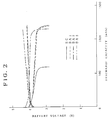
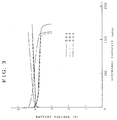
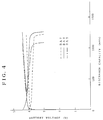
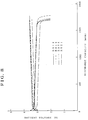
- FIG.2 - FIG.9 show discharge characteristics of the batteries tested.
- the horizontal axis represents battery capacity (mAh) and the vertical axis represents battery discharge voltage (V).
- Table 3 and Table 4 average discharge voltages (V) and capacities (mAh) of the batteries are shown.
- the batteries "BA1 - BA9" using alkali earth metal ions for an ion conductive material have approximately twice the capacity of the battery "BC” used for comparison.
- the batteries "BA10 - BA25" using lanthanoid metal ions for an ion conductive material have approximately three times the capacity of the battery "BC”.
- the batteries have a cylindrical shape.
- a coin shaped battery or a flat shaped battery are similarly available.
Landscapes
- Chemical & Material Sciences (AREA)
- Chemical Kinetics & Catalysis (AREA)
- Electrochemistry (AREA)
- General Chemical & Material Sciences (AREA)
- Inorganic Chemistry (AREA)
- Engineering & Computer Science (AREA)
- Manufacturing & Machinery (AREA)
- Secondary Cells (AREA)
- Carbon And Carbon Compounds (AREA)
- Battery Electrode And Active Subsutance (AREA)
Applications Claiming Priority (2)
| Application Number | Priority Date | Filing Date | Title |
|---|---|---|---|
| JP335660/92 | 1992-11-19 | ||
| JP4335660A JPH06163080A (ja) | 1992-11-19 | 1992-11-19 | 二次電池 |
Publications (2)
| Publication Number | Publication Date |
|---|---|
| EP0602782A1 true EP0602782A1 (fr) | 1994-06-22 |
| EP0602782B1 EP0602782B1 (fr) | 1997-05-14 |
Family
ID=18291095
Family Applications (1)
| Application Number | Title | Priority Date | Filing Date |
|---|---|---|---|
| EP93308575A Expired - Lifetime EP0602782B1 (fr) | 1992-11-19 | 1993-10-27 | Batterie secondaire |
Country Status (3)
| Country | Link |
|---|---|
| EP (1) | EP0602782B1 (fr) |
| JP (1) | JPH06163080A (fr) |
| DE (1) | DE69310689T2 (fr) |
Cited By (4)
| Publication number | Priority date | Publication date | Assignee | Title |
|---|---|---|---|---|
| EP1058330A1 (fr) * | 1999-06-04 | 2000-12-06 | Sony Corporation | Batterie à électrolyte nonaqueux |
| WO2001009972A1 (fr) * | 1999-07-29 | 2001-02-08 | Universita' Degli Studi Di Padova | Batteries primaires (non rechargeables) et secondaires (rechargeables) a base de magnesium |
| EP1123902A1 (fr) * | 2000-02-10 | 2001-08-16 | The Secretary of Agency of Industrial Science and Technology | Oxyde complexe ayant un coefficient Seebeck élevé et une conductivité électrique élevée |
| EP2784860A4 (fr) * | 2011-11-24 | 2015-07-22 | Mitsubishi Corp | Matière d'électrode négative pour batterie rechargeable à électrolyte non-aqueux et son procédé de production |
Families Citing this family (16)
| Publication number | Priority date | Publication date | Assignee | Title |
|---|---|---|---|---|
| JP4501181B2 (ja) * | 1999-08-31 | 2010-07-14 | ソニー株式会社 | 非水電解質電池及びその製造方法 |
| JP4503790B2 (ja) * | 2000-06-21 | 2010-07-14 | 東芝電池株式会社 | アルカリ電池 |
| JP4503791B2 (ja) * | 2000-06-23 | 2010-07-14 | 東芝電池株式会社 | 電池 |
| JP3737729B2 (ja) * | 2001-09-26 | 2006-01-25 | 株式会社東芝 | 非水電解液電池および非水電解液 |
| JP2004200015A (ja) * | 2002-12-19 | 2004-07-15 | Sanyo Electric Co Ltd | 非水電池用電解質及びその製造方法並びに非水電池用電解液 |
| US7247405B2 (en) | 2003-02-28 | 2007-07-24 | Sanyo Electric Co., Ltd. | Nonaqueous electrolyte battery |
| JP4839573B2 (ja) * | 2004-02-13 | 2011-12-21 | ソニー株式会社 | 電気化学デバイス及び電極 |
| JP2006216511A (ja) * | 2005-02-07 | 2006-08-17 | Sanyo Electric Co Ltd | 非水電解質二次電池 |
| JP2006216510A (ja) * | 2005-02-07 | 2006-08-17 | Sanyo Electric Co Ltd | 正極およびそれを用いた非水電解質二次電池 |
| CN102308418A (zh) * | 2009-06-15 | 2012-01-04 | 松下电器产业株式会社 | 锂离子二次电池用负极活性物质及使用其的锂离子二次电池 |
| JP5534578B2 (ja) * | 2009-11-19 | 2014-07-02 | 旭化成株式会社 | 正極電極用活物質 |
| JP2012248470A (ja) * | 2011-05-30 | 2012-12-13 | Asahi Kasei Corp | 二次電池 |
| CN105977526A (zh) * | 2016-06-15 | 2016-09-28 | 昆明理工大学 | 一种可充电铝碳电池及其制备方法 |
| JP6705369B2 (ja) * | 2016-12-22 | 2020-06-03 | トヨタ自動車株式会社 | 活物質およびフッ化物イオン電池 |
| JP7060336B2 (ja) * | 2017-04-27 | 2022-04-26 | トヨタ自動車株式会社 | 正極活物質、リチウムイオン二次電池および正極活物質の製造方法 |
| JP7375424B2 (ja) * | 2019-09-27 | 2023-11-08 | 株式会社豊田中央研究所 | 負極活物質及びリチウムイオン二次電池 |
Citations (8)
| Publication number | Priority date | Publication date | Assignee | Title |
|---|---|---|---|---|
| DE3231243A1 (de) * | 1981-08-27 | 1983-03-10 | Kao Soap Co., Ltd., Tokyo | Elektrochemische batterie |
| US4707423A (en) * | 1982-06-10 | 1987-11-17 | Celanese Corporation | Electric storage battery and process for the manufacture thereof |
| WO1988003331A1 (fr) * | 1986-10-30 | 1988-05-05 | Centre National De La Recherche Scientifique (Cnrs | Nouveau materiau a conduction ionique constitue par un sel en solution dans un electrolyte liquide |
| EP0309171A1 (fr) * | 1987-09-19 | 1989-03-29 | Sharp Kabushiki Kaisha | Procédé pour la fabrication d'une électrode à base de carbone |
| JPH01258410A (ja) * | 1988-04-08 | 1989-10-16 | Asahi Glass Co Ltd | 非水電解液エネルギーの貯蔵装置 |
| DE3918963A1 (de) * | 1988-06-20 | 1989-12-21 | Bridgestone Corp | Sekundaerelement mit nichtwaessrigem, fluessigem elektrolyten |
| US4894302A (en) * | 1985-06-14 | 1990-01-16 | The Dow Chemical Company | Alkaline earth metal anode-containing cell having electrolyte of organometallic alkaline earth metal salt and organic solvent |
| JPH02262241A (ja) * | 1989-03-31 | 1990-10-25 | Furukawa Battery Co Ltd:The | リチウム二次電池用正極 |
Family Cites Families (1)
| Publication number | Priority date | Publication date | Assignee | Title |
|---|---|---|---|---|
| JPS5682574A (en) * | 1979-11-06 | 1981-07-06 | South African Inventions | Method of manufacturing cathode adapted for secondary electrochemical battery |
-
1992
- 1992-11-19 JP JP4335660A patent/JPH06163080A/ja active Pending
-
1993
- 1993-10-27 DE DE69310689T patent/DE69310689T2/de not_active Expired - Fee Related
- 1993-10-27 EP EP93308575A patent/EP0602782B1/fr not_active Expired - Lifetime
Patent Citations (8)
| Publication number | Priority date | Publication date | Assignee | Title |
|---|---|---|---|---|
| DE3231243A1 (de) * | 1981-08-27 | 1983-03-10 | Kao Soap Co., Ltd., Tokyo | Elektrochemische batterie |
| US4707423A (en) * | 1982-06-10 | 1987-11-17 | Celanese Corporation | Electric storage battery and process for the manufacture thereof |
| US4894302A (en) * | 1985-06-14 | 1990-01-16 | The Dow Chemical Company | Alkaline earth metal anode-containing cell having electrolyte of organometallic alkaline earth metal salt and organic solvent |
| WO1988003331A1 (fr) * | 1986-10-30 | 1988-05-05 | Centre National De La Recherche Scientifique (Cnrs | Nouveau materiau a conduction ionique constitue par un sel en solution dans un electrolyte liquide |
| EP0309171A1 (fr) * | 1987-09-19 | 1989-03-29 | Sharp Kabushiki Kaisha | Procédé pour la fabrication d'une électrode à base de carbone |
| JPH01258410A (ja) * | 1988-04-08 | 1989-10-16 | Asahi Glass Co Ltd | 非水電解液エネルギーの貯蔵装置 |
| DE3918963A1 (de) * | 1988-06-20 | 1989-12-21 | Bridgestone Corp | Sekundaerelement mit nichtwaessrigem, fluessigem elektrolyten |
| JPH02262241A (ja) * | 1989-03-31 | 1990-10-25 | Furukawa Battery Co Ltd:The | リチウム二次電池用正極 |
Non-Patent Citations (2)
| Title |
|---|
| PATENT ABSTRACTS OF JAPAN vol. 14, no. 16 (E - 872) 12 January 1989 (1989-01-12) * |
| PATENT ABSTRACTS OF JAPAN vol. 15, no. 9 (E - 1021) 9 January 1991 (1991-01-09) * |
Cited By (6)
| Publication number | Priority date | Publication date | Assignee | Title |
|---|---|---|---|---|
| EP1058330A1 (fr) * | 1999-06-04 | 2000-12-06 | Sony Corporation | Batterie à électrolyte nonaqueux |
| US6426164B1 (en) | 1999-06-04 | 2002-07-30 | Sony Corporation | Non-aqueous electrolyte battery incorporating magnesium as a charger carrier |
| WO2001009972A1 (fr) * | 1999-07-29 | 2001-02-08 | Universita' Degli Studi Di Padova | Batteries primaires (non rechargeables) et secondaires (rechargeables) a base de magnesium |
| EP1123902A1 (fr) * | 2000-02-10 | 2001-08-16 | The Secretary of Agency of Industrial Science and Technology | Oxyde complexe ayant un coefficient Seebeck élevé et une conductivité électrique élevée |
| US6376763B2 (en) | 2000-02-10 | 2002-04-23 | Agency Of Industrial Science And Technology | Complex oxide having high seebeck coefficient and high electric conductivity |
| EP2784860A4 (fr) * | 2011-11-24 | 2015-07-22 | Mitsubishi Corp | Matière d'électrode négative pour batterie rechargeable à électrolyte non-aqueux et son procédé de production |
Also Published As
| Publication number | Publication date |
|---|---|
| DE69310689D1 (de) | 1997-06-19 |
| DE69310689T2 (de) | 1997-12-18 |
| JPH06163080A (ja) | 1994-06-10 |
| EP0602782B1 (fr) | 1997-05-14 |
Similar Documents
| Publication | Publication Date | Title |
|---|---|---|
| EP0602782B1 (fr) | Batterie secondaire | |
| EP0582448B1 (fr) | Batterie non-aqueuse | |
| CA2214186C (fr) | Cathode pour accumulateur rechargeable au lithium | |
| US5643695A (en) | Carbonaceous electrode and compatible electrolyte | |
| CA2032137C (fr) | Electrodes au carbone pour piles ai lithium | |
| US6372384B1 (en) | Rechargeable lithium battery comprising substituted lithium titanate electrodes | |
| CA2431948C (fr) | Materiau a plaque positive et cellule le comprenant | |
| EP0903799B1 (fr) | Batterie secondaire à électrolyte non-aqueux et son anode | |
| KR20060111393A (ko) | 대용량 비가역 물질을 포함하는 새로운 시스템의 리튬 이온전지 | |
| CA2152226A1 (fr) | Composes d'insertion a base d'oxyde de manganese, utilisables comme materiau actif de l'electrode positive dans une pile au lithium | |
| JP3260282B2 (ja) | 非水電解質リチウム二次電池 | |
| Xia et al. | Solid‐State Lithium‐Polymer Batteries Using Lithiated MnO2 Cathodes | |
| CN1113422C (zh) | 锂二次电池和用于锂二次电池的阴极活性物质 | |
| US20030082451A1 (en) | Active material having extended cycle life | |
| US5670277A (en) | Lithium copper oxide cathode for lithium cells and batteries | |
| US5601949A (en) | Ion conductive material for secondary battery | |
| JP4224995B2 (ja) | 二次電池および二次電池用集電体 | |
| KR101502898B1 (ko) | 리튬 이차 전지용 복합 음극 활물질, 이의 제조 방법 및 이를 구비한 리튬 이차 전지 | |
| US6472100B1 (en) | Nonaqueous-electrolyte battery | |
| US4818647A (en) | Method of making a cathode for use in a rechargeable lithium battery, cathode so made, and rechargeable lithium battery including the cathode | |
| EP0810681B1 (fr) | Accumulateur à électrolyte non-aqueux | |
| US5763120A (en) | Lithium manganese oxide cathodes with high capacity and stability | |
| JP2004362934A (ja) | 正極材料および電池 | |
| US6808849B2 (en) | Negative electrode material for nonaqueous electrochemical cells | |
| US6383682B1 (en) | Yttrium-ion rechargeable battery cells |
Legal Events
| Date | Code | Title | Description |
|---|---|---|---|
| PUAI | Public reference made under article 153(3) epc to a published international application that has entered the european phase |
Free format text: ORIGINAL CODE: 0009012 |
|
| AK | Designated contracting states |
Kind code of ref document: A1 Designated state(s): DE FR |
|
| 17P | Request for examination filed |
Effective date: 19940901 |
|
| 17Q | First examination report despatched |
Effective date: 19950829 |
|
| GRAG | Despatch of communication of intention to grant |
Free format text: ORIGINAL CODE: EPIDOS AGRA |
|
| GRAG | Despatch of communication of intention to grant |
Free format text: ORIGINAL CODE: EPIDOS AGRA |
|
| GRAH | Despatch of communication of intention to grant a patent |
Free format text: ORIGINAL CODE: EPIDOS IGRA |
|
| GRAH | Despatch of communication of intention to grant a patent |
Free format text: ORIGINAL CODE: EPIDOS IGRA |
|
| GRAA | (expected) grant |
Free format text: ORIGINAL CODE: 0009210 |
|
| AK | Designated contracting states |
Kind code of ref document: B1 Designated state(s): DE FR |
|
| REF | Corresponds to: |
Ref document number: 69310689 Country of ref document: DE Date of ref document: 19970619 |
|
| ET | Fr: translation filed | ||
| PLBE | No opposition filed within time limit |
Free format text: ORIGINAL CODE: 0009261 |
|
| 26N | No opposition filed | ||
| PGFP | Annual fee paid to national office [announced via postgrant information from national office to epo] |
Ref country code: FR Payment date: 20021008 Year of fee payment: 10 |
|
| PGFP | Annual fee paid to national office [announced via postgrant information from national office to epo] |
Ref country code: DE Payment date: 20021031 Year of fee payment: 10 |
|
| PG25 | Lapsed in a contracting state [announced via postgrant information from national office to epo] |
Ref country code: DE Free format text: LAPSE BECAUSE OF NON-PAYMENT OF DUE FEES Effective date: 20040501 |
|
| PG25 | Lapsed in a contracting state [announced via postgrant information from national office to epo] |
Ref country code: FR Free format text: LAPSE BECAUSE OF NON-PAYMENT OF DUE FEES Effective date: 20040630 |
|
| REG | Reference to a national code |
Ref country code: FR Ref legal event code: ST |