EP0603030A2 - Antivirales Antibiotikum BU-4628V und dessen Herstellung - Google Patents
Antivirales Antibiotikum BU-4628V und dessen Herstellung Download PDFInfo
- Publication number
- EP0603030A2 EP0603030A2 EP93402976A EP93402976A EP0603030A2 EP 0603030 A2 EP0603030 A2 EP 0603030A2 EP 93402976 A EP93402976 A EP 93402976A EP 93402976 A EP93402976 A EP 93402976A EP 0603030 A2 EP0603030 A2 EP 0603030A2
- Authority
- EP
- European Patent Office
- Prior art keywords
- exhibits
- antibiotic
- antiviral
- antiviral antibiotic
- culture
- Prior art date
- Legal status (The legal status is an assumption and is not a legal conclusion. Google has not performed a legal analysis and makes no representation as to the accuracy of the status listed.)
- Withdrawn
Links
Images

Classifications
-
- C—CHEMISTRY; METALLURGY
- C07—ORGANIC CHEMISTRY
- C07K—PEPTIDES
- C07K14/00—Peptides having more than 20 amino acids; Gastrins; Somatostatins; Melanotropins; Derivatives thereof
- C07K14/195—Peptides having more than 20 amino acids; Gastrins; Somatostatins; Melanotropins; Derivatives thereof from bacteria
- C07K14/36—Peptides having more than 20 amino acids; Gastrins; Somatostatins; Melanotropins; Derivatives thereof from bacteria from Actinomyces; from Streptomyces (G)
-
- A—HUMAN NECESSITIES
- A61—MEDICAL OR VETERINARY SCIENCE; HYGIENE
- A61P—SPECIFIC THERAPEUTIC ACTIVITY OF CHEMICAL COMPOUNDS OR MEDICINAL PREPARATIONS
- A61P31/00—Antiinfectives, i.e. antibiotics, antiseptics, chemotherapeutics
- A61P31/04—Antibacterial agents
-
- A—HUMAN NECESSITIES
- A61—MEDICAL OR VETERINARY SCIENCE; HYGIENE
- A61P—SPECIFIC THERAPEUTIC ACTIVITY OF CHEMICAL COMPOUNDS OR MEDICINAL PREPARATIONS
- A61P31/00—Antiinfectives, i.e. antibiotics, antiseptics, chemotherapeutics
- A61P31/12—Antivirals
-
- C—CHEMISTRY; METALLURGY
- C12—BIOCHEMISTRY; BEER; SPIRITS; WINE; VINEGAR; MICROBIOLOGY; ENZYMOLOGY; MUTATION OR GENETIC ENGINEERING
- C12N—MICROORGANISMS OR ENZYMES; COMPOSITIONS THEREOF; PROPAGATING, PRESERVING, OR MAINTAINING MICROORGANISMS; MUTATION OR GENETIC ENGINEERING; CULTURE MEDIA
- C12N1/00—Microorganisms; Compositions thereof; Processes of propagating, maintaining or preserving microorganisms or compositions thereof; Processes of preparing or isolating a composition containing a microorganism; Culture media therefor
- C12N1/20—Bacteria; Culture media therefor
- C12N1/205—Bacterial isolates
-
- A—HUMAN NECESSITIES
- A61—MEDICAL OR VETERINARY SCIENCE; HYGIENE
- A61K—PREPARATIONS FOR MEDICAL, DENTAL OR TOILETRY PURPOSES
- A61K38/00—Medicinal preparations containing peptides
-
- C—CHEMISTRY; METALLURGY
- C12—BIOCHEMISTRY; BEER; SPIRITS; WINE; VINEGAR; MICROBIOLOGY; ENZYMOLOGY; MUTATION OR GENETIC ENGINEERING
- C12R—INDEXING SCHEME ASSOCIATED WITH SUBCLASSES C12C - C12Q, RELATING TO MICROORGANISMS
- C12R2001/00—Microorganisms ; Processes using microorganisms
- C12R2001/01—Bacteria or Actinomycetales ; using bacteria or Actinomycetales
- C12R2001/465—Streptomyces
Definitions
- the present invention relates to a novel antiviral antibiotic designated BU-4628V having antibacterial and antiviral activities that is useful for treating bacterial and viral infections. It also relates to a process of producing the novel antibiotic by fermentation of a new microorganism Streptomyces sp. and to a pharmaceutical composition thereof.
- This invention relates to a new antiviral antibiotic designated herein as BU-4628V, to its preparation by fermentation of a new microorganism, Streptomyces sp. ATCC 55286, or a mutant thereof, in an aqueous fermentation culture nutrient medium containing assimilable sources of nitrogen and carbon under submerged aerobic conditions until a substantial amount of the antiviral antibiotic designated BU-4628V is produced by the organism in the fermentation culture nutrient medium, and to its recovery from the fermentation medium.
- This invention also relates to the pharmaceutical compositions containing the new antiviral antibiotic and methods for using said antiviral antibiotic as an antimicrobial and antiviral agent.
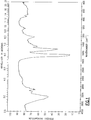
- FIG. 1 shows the infrared (IR) absorption spectrum of BU-4628V (KBr, pellet).
- FIG. 2 shows the proton magnetic resonance (1H-NMR) spectrum of BU-4628V in CD3OD (400 MHz).
- the present invention relates to a new antiviral antibiotic, designated BU-4628V, which is produced by fermenting a BU-4628V-producing strain of Streptomyces sp. ATCC 55286.
- this invention provides a pharmaceutical composition of BU-4628V.
- this invention provides a process for producing the novel antiviral antibiotic BU-4628V.
- this invention provides a method for inhibiting the growth of viruses in human blood cells comprising contacting such viruses with a growth-inhibitory effective amount of the novel antiviral antibiotic, BU-4628V.
- this invention provides a novel microorganism Streptomyces sp. ATCC 55286.
- the novel antiviral antibiotic BU-4628V is obtained by fermentation of a new microorganism classified as a species of the genus Streptomyces , accumulating BU-4628V produced by said microorganism and collecting the antiviral antibiotic BU-4628V from the culture broth.
- a preferred BU-4628V-producing microorganism is the Streptomyces sp.
- Strain AA3891 isolated from a soil sample collected at Madhya Pradesh, India. Based on the taxonomic descriptions of this genus and the comparative studies to the relevant species, Strain AA3891 was classified as Streptomyces sp. and was deposited in the American Type Culture Collection, Rockville, MD, under the accession number ATCC 55286.
- the microorganism producing BU-4628V, Strain AA3891 was isolated from a soil sample collected at Madhya Pradesh, India.
- Temperature range for growth was determined on yeast starch agar using a temperature gradient incubator TN-3 (Toyo Kagaku Snagyo Co., Ltd.).
- strain AA3891 On various agar media, strain AA3891 showed characteristics typical of streptomycetes and formed aerial mycelia of the Gray-color series. On observation with a light microscope, sporophores monopodially branched and showed narrow compact sprials (Section: Spirales ). Mature spore chains more than 20 spores in chain. Scanning electron micrographs indicated that the spore was oval in shape, 1.0 ⁇ m in size, and spiny-surfaced.
- strain AA3891 on 14 agar media The appearance of strain AA3891 on 14 agar media is shown in Table 1. The strain grew well on both synthetic and organic media. Mature aerial mycelia were generally powdery. The color of aerial mass was pale greenish yellow to olive gray. The color of vegetative mycelia and reverse side of colony was pale yellow to pale greenish yellow. No diffusible pigment was produced in various agar media.
- Strain AA3891 grew at temperatures ranging from 17 to 48°C with an optimum range of 32 to 45°C.
- strain AA3891 is considered as belonging a species of the genus Streptomyces Waksman and Henrici (1943). Based on comparison with the published descriptions of known species of the genus Streptomyces , it was determined that the BU-4628V producing strain AA3891 is designated as Streptomyces sp. TABLE 2 Physiological Characteristics of Strain AA3891 Test Results Starch hydrolysis (On ISP med. No.
- the process for producing the antiviral antibiotic BU-4628V comprises the steps of:
- the nutrient medium should contain an appropriate assimilable carbon source for use in the aqueous fermentation culture medium and may be a carbohydrate such as, for example, glucose, ribose, galactose, fructose, mannose, sucrose, lactose, soluble starch, and glycerol to name a few.
- the assimilable nitrogen source for use in the aqueous fermentation culture medium may be any one of such conventionally known sources, including fish meal, soybean meal, corn steep liquor, peptones, meat extract, peanut flour, yeast extract, and ammonium salts to name but a few.
- Inorganic salts such as sodium chloride, potassium chloride, magnesium sulfate, calcium carbonate, phosphates, and the like, may be added if desired.
- trace elements such as copper, manganese, iron, zinc, and the like, may be added if desired or they may be supplied as minor or trace impurities of other constituents in the fermentation media.
- Production of the antiviral antibiotic BU-4628V may be effected at any temperature conducive to satisfactory growth of the producing organism such as 10°-50°C and is most conveniently carried out at a temperature of about 25°-32°C.
- a neutral or nearly neutral initial pH for example, pH about 6-8, is preferably employed in the fermentation media, and production of the antiviral antibiotic by fermentation is generally carried out for a period of about 2-10 days. Ordinarily, optimum production is achieved in about 4-7 days.
- shake flasks and surface culture can be employed whereas for relatively large amounts submerged aerobic culture in sterile fermentation tanks are preferred.
- tank fermentation it is desirable to inoculate a vegetative culture obtained by inoculating the broth culture with a spore from the organism and, when a young active vegetative inoculum has been obtained, transferring the inoculum aseptically to the fermentation tank medium.
- Aeration in tanks and bottles may be provided by forcing sterile air through or onto the surface of the fermentation medium. Further agitation of the medium may be provided by a mechanical impeller and an antifoaming agent such as is conventional in the art, e.g., lard oil may be added as needed.
- the production of the antiviral antibiotic BU-4628V in the fermentation medium may be followed readily during the course of the fermentation by syncytium formation inhibition assay.
- the whole broth may be extracted by an organic solvent which contains antibiotic activity.
- the component having antibiotic activity can be recovered from the organic extract by employing conventional adsorption techniques.
- the fermentation broth is extracted with an alkanol solvent, preferably n-butanol, and the solid produced after concentration was dissolved in alkanol, preferably methanol, and applied to a column packed with Diaion HP-20 resin (Mitsubishi Chemical Industries), and the resin is washed with 30% aqueous methanol and then eluted with 80% aqueous methanol. The eluate fractions having antibiotic activity are combined and concentrated in vacuo. The resulting crude solid is then applied to a column packed with YMC GEL ODS A60 (YMC Co.) and the column is eluted with acetonitrile - 0.15% KH2PO4 (4:6) at pH 3.5.
- an alkanol solvent preferably n-butanol
- the solid produced after concentration was dissolved in alkanol, preferably methanol
- Diaion HP-20 resin Mitsubishi Chemical Industries
- the eluate fractions having antibiotic activity are combined and concentrated in vacuo.
- the resulting antibiotic activity - containing eluate is concentrated in vacuo and then extracted with n-butanol.
- the semi-pure solid from the concentrated extract was further purified on a column packed with Sephadex LH-20 resin (Pharmacia Fine Chemicals Inc.) and the column eluted with methanol to produce a white solid of pure antiviral antibiotic BU-4628V.
- the antiviral antibiotic BU-4628V was isolated as a white amorphous powder. It is soluble in dimethyl sulfoxide, dimethylformamide, methanol and ethanol, and slightly soluble in alkaline water, but insoluble in water, ethyl acetate, chloroform, benzene, n-hexane and petroleum ether. It gave a positive color reaction with sulfuric acid but a negative color reaction with ninhydrin reagent.
- the antiviral antibiotic BU-4628V was hydrolyzed for 48 hours in a sealed tube with 6N hydrochloric acid at 110°C under a nitrogen atmosphere, and the hydrolysate was subjected to amino acid analysis. Analysis showed the presence of the following amino acids; Asp(2), Ser(1), Gly(4), Ala(2), Tyr(1), Val(1), Ile(2), Leu(1) and Phe(2).
- Trp was additionally detected by the hydrolysis of BU-4628V in the presence of 3M mercaptoethanesulfonic acid (100°C, 48 hours, in a sealed tube).
- S-carboxymethylation of BU-4628V was performed with dithiothreitol followed by iodoacetic acid.
- S-carboxymethyl-Cys were detected by the hydrolysis of S-carboxymethyl-BU-4628V (6N HCl, 110°C, 48 hours, in a sealed tube), which indicated the presence of four moles of Cys in BU-4628V.
- BU-4628V was constituted of 21 amino acids, Asp (2), Ser(1), Gly(4), Ala(2), Tyr(1), Val(1), Ile(2), Leu(1), Phe(2), Trp(1) and Cys(4). From an analysis of the data, it appears that BU-4628V may be a cyclic peptide.
- the antiviral antibiotic designated BU-4628V has physico-chemical properties which in substantially pure form:
- the antiviral antibiotic BU-4628V was evaluated for activity against human immunodeficiency virus (HIV-1 RF and HIV-1 IIIb strains were obtained from Robert Gallo, and HIV-2 CBL-20 strain obtained from Robin Weiss, all from the AIDS Research and Reference Program, Division of AIDS, NIAID, NIH) in CEM-SS cells (P.L. Nara et al. in AIDS Res . Human Retroviruses , 3 , 283-302, 1987) using the XTT assay described by D.S. Weislow et al. in J . Natl . Cancer Institute, 81 , 577-586, 1989.
- the CEM-SS cells were obtained from Peter Nara, AIDS Research and Reference Program, Division of AIDS, NIAID, NIH.
- the antiviral effect is expressed as the inhibitory concentration of a compound which reduces the number of viruses of the infected culture to 50% of that of the drug - untreated, control culture (IC50).
- the cytotoxicity is expressed as the concentration of a compound which yields 50% of the number of viable cells of the untreated control cultures (IC50).
- 2',3'-Dideoxyinosine ddI, Videx®
- ddI 2',3'-Dideoxyinosine
- Table 7 confirm that BU-4628V is active against three different strains of HIV and appears to be more active than ddI which has an IC50 value of about 1-2 ⁇ M and, like ddI, showed very weak cytotoxicity against the test CEM-SS cells.
- the in vitro antiviral activity of BU-4628V was assessed against the herpes simplex virus type 1 (HSV-1) using the KOS strain.
- the assay was done according to the reported protocol of C. McLaren et al. in Antiviral Research , 3 , 223-234, (1986) with minor modification. Briefly, 50 ⁇ l of Eagle's MEM medium containing BU-4628V and then 200 ⁇ l of the Vero cell suspension (2 X 10⁴ cells/200 ⁇ l) were added to a well of a 96-well microtiter plate. To the well, 50 ⁇ l of medium containing approximately 30 times of the 50% tissue culture infectious dose (50% TCID) of virus was added.
- the same set of cells without virus infection was prepared, which was for the determination of cytotoxicity of the sample. After 72 hours incubation at 37°C, the inhibition degree of virus-induced cytopathic effect and cytotoxicity by the sample were determined, respectively.
- the ID50 is expressed as the concentration of a compound showing 50% growth inhibition of the cytopathic effect and the TD50 as the concentration of a compound showing 50% growth inhibition of the cells in the absence of virus.
- Acyclovir was used as the reference compound for anti-HSV activity in the assay.
- BU-4628V The in vitro antibacterial activity of BU-4628V against various test organisms were determined by the general standard serial two-fold dilution method after overnight incubation at 32°C. As shown in Table 9, BU-4628V shows fairly good antibacterial activity against Gram-positive bacteria.
- the antiviral antibiotic BU-4628V according to the present invention and pharmaceutical compositions thereof, are useful to inhibit the growth of Gram-positive bacteria and of viruses, including the human immunodeficiency and herpes simplex viruses.
- the antibacterial and antiviral effects of BU-4628V was demonstrated as described above.
- the present invention therefore, provides a method for therapeutically treating an animal host affected by a bacterial infection or by a retroviral infection which comprises administering to said host an effective antibacterial or antiviral-inhibiting dose of BU-4628V, or a pharmaceutical composition thereof.
- BU-4628V may be administered orally or parenterally in its pure-solid form, in dilute solution or suspension or in a concentrate and prepared for unit dose or multi-dose presentation.
- parenterally by intravenous or intramuscular or subcutaneous injection, or when administered orally, the dosage administered will be dependent on the age and weight of the mammalian species being treated, the route of administration, and the type and severity of the infectious condition being treated and other factors readily evaluated by the physician or veterinarian in attendance.
- compositions containing the antibiotic herein carrier and other ingredients should be such as not to diminish the therapeutic effects of the antibiotic.
- Suitable dosage forms for oral use are tablets, dispersible powders, granules, capsules, syrups, and elixirs. Examples of parenteral forms are solutions, suspensions, dispersions, emulsions, and the like.
- the compositions for oral use may contain one or more conventional adjuvants, such as sweetening agents, flavoring agents, coloring agents, and preserving agents, in order to provide a composition of suitable pharmaceutical elegance.
- Tablets may contain the active ingredient in admixture with conventional pharmaceutically acceptable excipients, including inert diluents such as calcium carbonate, sodium carbonate, lactose, and talc; granulating and disintegrating agents such as starch and alginic acid; binding agents such as starch, gelatin, and acacia; and lubricating agents such as magnesium stearate, stearic acid, and talc.
- the tablets may be uncoated or coated by known techniques to delay disintegration and absorption in the gastrointestinal tract and thereby provide a sustained action over a longer period.
- suspensions, syrups, and elixirs may contain the active ingredient in admixture with any of the conventional excipients utilized for the preparation of such compositions, such as suspending agents (e.g., methylcellulose, tragacanth, and sodium alginate), wetting agents (e.g., lecithin, polyoxyethylene stearate), and preservatives, such as ethyl p-hydroxybenzoate.
- suspending agents e.g., methylcellulose, tragacanth, and sodium alginate
- wetting agents e.g., lecithin, polyoxyethylene stearate
- preservatives such as ethyl p-hydroxybenzoate.
- Capsules may contain the active ingredient alone or admixed with an inert solid diluent, such as calcium carbonate, calcium phosphate, and kaolin.
- the injectable compositions are formulated as shown in the art and may contain appropriate dispersing or wetting agents
- the daily dosage for adult human treatment will preferably range from about 100 mg to about 2,000 mg of the active BU-4628V for a 70 kg adult, depending on the nature of the infection and the frequency and route of administration inter alia . It will be appreciated that in some instances, e.g., in the treatment of neonates, infants, and juveniles, smaller dosages than adult dosages may be desired.
- compositions of this invention will generally comprise an effective antibacterial or antiviral-inhibiting amount of BU-4628V in combination with a suitable pharmaceutical acceptable carrier, such as water or alcohols which may contain fillers, stabilizers, wetting agents, emulsifying agents, and dispersing agents, to name but a few conventional carriers, adjuvants, and excipients which may be employed.
- a suitable pharmaceutical acceptable carrier such as water or alcohols which may contain fillers, stabilizers, wetting agents, emulsifying agents, and dispersing agents, to name but a few conventional carriers, adjuvants, and excipients which may be employed.
- BU-4628V or a pharmaceutical composition thereof is administered so that the concentration of active ingredient is greater than the minimum inhibitory concentration for the particular organism being treated.
- optimal dosages and regimes of BU-4628V for a given mammalian host can be readily ascertained by those skilled in the art. It will, of course, be appreciated that the actual dose of BU-4628V used will vary according to the particular composition formulated, the mode of application and the particular situs, host and disease treated.
- BU-4628V For use in the treatment of retroviral infections and, specifically, for the treatment of human immunodeficiency virus (HIV), it is contemplated that the treatment and dosage of BU-4628V would be similar to the treatment and dosage used with ddI (Videx®) and that the dosage would be adjusted accordingly by one skilled in the art to reflect the relative level of activity, for example, about 2 to about 5 times less than the relative dose of treatment with ddI.
- ddI Videx®
- the assay system for screening anti-syncytium formation agents consists of two cell lines, recombinant vaccinia virus-infected BSC-1 cells (gp-120 expressed) and HeLa-T4 cells (CD4 antigen expressed). Two cell lines were mixed together in the presence or absence of an inhibitor and the number of syncytia formed within 3 ⁇ 5 hours was scored.
- HeLa-T4 cells (P. J. Maddon, et al., The T4 gene encodes the AIDS virus receptor and is expressed in the immune system and the brain, Cell , 47 , pp 333-348, 1986) were grown in Dulbecco modified Minimum Essential Medium (D-MEM, GIBCO) supplemented with 10% heat-inactivated fetal bovine serum (FBS, GIBCO) and 1 mg/ml geneticin (GIBCO).
- D-MEM Dulbecco modified Minimum Essential Medium
- FBS heat-inactivated fetal bovine serum
- GBCO 1 mg/ml geneticin
- BSC-1 cells were grown in Eagle(E)-MEM (Nissui Pharmaceutical, Tokyo) supplemented with 10% FBS and 50 ⁇ g/ml amikacin (Bristol-Myers Squibb).
- the viral inoculum was removed by aspiration and the virus-infected cells were added 8 ml of E-MEM and incubated at 37°C for further 20 to 24 hours in a humidified 5% CO2 and 95% air environment.
- the syncytium formation titer of the cell suspension designated HIV gp-120 expressing BSC-1 cells, was determined to be 6 x 10⁴ syncytia per milliliter by the 2-serial dilution method using HeLa-T4 cells as the test cells.
- a HeLa-T4 cell suspension (100 ⁇ l containing 3 x 10⁴ cells) was seeded in each well of the 96-well microtiterplate and grown at 37°C for 20 to 24 hours in a humidified 5% CO2 and 95% air environment. The old medium was removed and replaced by 50 ⁇ l of the fresh E-MEM supplemented with 10% FBS which contained a test sample at various concentrations. Then the HIV gp-120 expressing BSC-1 cell suspension was diluted at 1:15. Fifty microliters of the dilution was added to each well of the 96-well microtiterplate. After incubation at 37°C for 3 ⁇ 5 hours, the medium in each well was removed by aspiration.
- syncytia Cells were stained with 50 ⁇ l Giemsa solution (Wako Pure Chemicals, Osaka) and were washed 3 times with tap water. Number of syncytia in each well was scored under a microscope at a magnification of 40. Syncytium inhibitory activity of the compound is expressed in ID50 (50% inhibitory dose) which is defined as the minimal concentration of the compound required to reduce syncytia formation by 50% as compared to the inhibitor-untreated control. Dextrane sulfate was used as a reference compound for syncytium formation inhibitory activity.
- ID50 50% inhibitory dose
- Streptomyces sp. AA3891 was propagated on an agar slant composed of soluble starch (Nichiden Kagaku Co.) 0.5%, glucose 0.5%, meat extract (Mikuni Kagaku Kougyo Co.) 0.1%, yeast extract (Oliental Koubo Co.) 0.1%, NZ-case (Humko Sheffield Chemical Co.) 0.2%, NaCl 0.2%, CaCO3 0.1% and agar (Junsei Chemical Co.) 1.6%.
- a portion of the mature agar slant was inoculated into 100 ml of a seed medium in a 500-ml Erlenmeyer flask and incubated for 4 days at 28°C on a rotary shaker (200 rpm).
- the seed medium was composed of soluble starch 2%, glucose 0.5%, NZ-case 0.3%, yeast extract 0.2%, fish meal D30X (Banyu nutrient) 0.5% and CaCO3 0.3%.
- the resulting vegetative mycelia were spun down (3,000 rpm, 15 min., 4°C) and resuspended with a half volume of 20% aq. glycerol solution and then stocked in -80°C.
- a portion (0.3 ml) of vegetative mycelia described above was inoculated into 100 ml of the seed medium in a 500-ml Erlenmeyer flask and incubated for 4 days at 28°C on a rotary shaker (200 rpm).
- a 5-ml portion of the seed culture described above was transferred into 500-ml Erlenmeyer flasks each containing 100 ml of the production medium and incubated for 112 hours under the same conditions as those for the seed culture.
- the production medium consisted of soluble starch 2.0%, glucose 1.0%, Pharmamedia (Traders Protein Co.) 1.0%, Brewer's yeast extract (Asahi Breweries, Ltd.) 0.3%, NZ-amine (Humko Sheffield Chemical) 0.3%, Allophane (Sinagawa Brick Co.) 0.5% and CaCO3 0.3%.
- the pH of the medium was adjusted to 7.0 before autoclaving.
- Antibiotic production in the fermentation broth was determined by Syncytium formation inhibitory activity.
- the harvested fermentation broth (8.5 L) was extracted with n-butanol (3 L) and the extract was concentrated in vacuo to give a residual solid (3.74 g).
- the solid was applied on a column of Diaion HP-20 (Mitsubishi Chemical Industries Ltd., 40 mm i.d. x 250 mm), and the column was washed with 30% aqueous methanol (800 ml), then eluted with 80% aqueous methanol (1 L). Evaporation of the eluate yielded a crude solid of BU-4628V (1.43 g).
- the crude BU-4628V was chromatographed on a column of YMC GEL ODS A60 (YMC Co., 40 mm i.d.
Landscapes
- Health & Medical Sciences (AREA)
- Chemical & Material Sciences (AREA)
- Life Sciences & Earth Sciences (AREA)
- Organic Chemistry (AREA)
- Medicinal Chemistry (AREA)
- General Health & Medical Sciences (AREA)
- Engineering & Computer Science (AREA)
- Genetics & Genomics (AREA)
- Veterinary Medicine (AREA)
- Virology (AREA)
- Wood Science & Technology (AREA)
- Pharmacology & Pharmacy (AREA)
- Animal Behavior & Ethology (AREA)
- Communicable Diseases (AREA)
- Nuclear Medicine, Radiotherapy & Molecular Imaging (AREA)
- Oncology (AREA)
- Public Health (AREA)
- Biotechnology (AREA)
- General Chemical & Material Sciences (AREA)
- Bioinformatics & Cheminformatics (AREA)
- Biochemistry (AREA)
- Chemical Kinetics & Catalysis (AREA)
- Zoology (AREA)
- Tropical Medicine & Parasitology (AREA)
- Proteomics, Peptides & Aminoacids (AREA)
- Biomedical Technology (AREA)
- General Engineering & Computer Science (AREA)
- Gastroenterology & Hepatology (AREA)
- Biophysics (AREA)
- Molecular Biology (AREA)
- Microbiology (AREA)
- Preparation Of Compounds By Using Micro-Organisms (AREA)
- Medicines Containing Material From Animals Or Micro-Organisms (AREA)
- Pharmaceuticals Containing Other Organic And Inorganic Compounds (AREA)
- Compounds Of Unknown Constitution (AREA)
- Micro-Organisms Or Cultivation Processes Thereof (AREA)
- Medicines That Contain Protein Lipid Enzymes And Other Medicines (AREA)
Applications Claiming Priority (2)
| Application Number | Priority Date | Filing Date | Title |
|---|---|---|---|
| US99014692A | 1992-12-14 | 1992-12-14 | |
| US990146 | 1992-12-14 |
Publications (2)
| Publication Number | Publication Date |
|---|---|
| EP0603030A2 true EP0603030A2 (de) | 1994-06-22 |
| EP0603030A3 EP0603030A3 (de) | 1995-06-28 |
Family
ID=25535824
Family Applications (1)
| Application Number | Title | Priority Date | Filing Date |
|---|---|---|---|
| EP93402976A Withdrawn EP0603030A3 (de) | 1992-12-14 | 1993-12-09 | Antivirales Antibiotikum BU-4628V und dessen Herstellung. |
Country Status (4)
| Country | Link |
|---|---|
| EP (1) | EP0603030A3 (de) |
| JP (1) | JPH07309886A (de) |
| AU (1) | AU5232393A (de) |
| CA (1) | CA2110854A1 (de) |
Cited By (1)
| Publication number | Priority date | Publication date | Assignee | Title |
|---|---|---|---|---|
| EP0848064A1 (de) * | 1996-12-13 | 1998-06-17 | Hoechst Aktiengesellschaft | Neues Antibiotikum, Feglymycin, Verfahren zu seiner Herstellung und Verwendung |
Families Citing this family (1)
| Publication number | Priority date | Publication date | Assignee | Title |
|---|---|---|---|---|
| CN113262293B (zh) * | 2020-02-17 | 2022-11-08 | 中国医学科学院医药生物技术研究所 | 一组具有抗病毒活性的肽类化合物奥米克欣及其应用 |
Family Cites Families (1)
| Publication number | Priority date | Publication date | Assignee | Title |
|---|---|---|---|---|
| FR2693199B1 (fr) * | 1992-07-02 | 1994-09-02 | Rhone Poulenc Rorer Sa | Nouveaux polypeptides biologiquement actifs, préparation et utilisation. |
-
1993
- 1993-12-07 CA CA002110854A patent/CA2110854A1/en not_active Abandoned
- 1993-12-09 EP EP93402976A patent/EP0603030A3/de not_active Withdrawn
- 1993-12-13 AU AU52323/93A patent/AU5232393A/en not_active Abandoned
- 1993-12-14 JP JP5346779A patent/JPH07309886A/ja active Pending
Cited By (3)
| Publication number | Priority date | Publication date | Assignee | Title |
|---|---|---|---|---|
| EP0848064A1 (de) * | 1996-12-13 | 1998-06-17 | Hoechst Aktiengesellschaft | Neues Antibiotikum, Feglymycin, Verfahren zu seiner Herstellung und Verwendung |
| US5891851A (en) * | 1996-12-13 | 1999-04-06 | Hoechst Aktiengesellschaft | Antibiotic, feglymycin, processes for its preparation and its use |
| US5994307A (en) * | 1996-12-13 | 1999-11-30 | Hoechst Aktiengesellschaft | Methods of treatment with novel antibiotic feglymycin |
Also Published As
| Publication number | Publication date |
|---|---|
| JPH07309886A (ja) | 1995-11-28 |
| CA2110854A1 (en) | 1994-06-15 |
| AU5232393A (en) | 1994-06-23 |
| EP0603030A3 (de) | 1995-06-28 |
Similar Documents
| Publication | Publication Date | Title |
|---|---|---|
| Tsunakawa et al. | Siamycins I and II, new anti-HIV peptides: I. Fermentation, isolation, biological activity and initial characterization | |
| EP0485725A1 (de) | Alpha-glucosidase Inhibitor, Pradimicin Q | |
| JPH0415236B2 (de) | ||
| CA1198695A (en) | Antibiotic compound | |
| EP0345735B1 (de) | Glycosid-Antibiotika BU-3608D und BU-3608E | |
| US6432978B1 (en) | SF2809-I,II,III,IV,V and VI substances exhibiting chymase-inhibiting activities | |
| NL8501708A (nl) | Antitumor antibioticum. | |
| US5266600A (en) | BU-4641V, an antibacterial, antiviral and antitumor antibiotic | |
| EP0603031A2 (de) | Antivirales Antibiotikum BU-4724V und seine Herstellung | |
| US5286649A (en) | Antiviral antibiotic BU-3889V | |
| JP2506568B2 (ja) | 抗生物質10381b2の製法および該抗生物質を含有する食肉用動物の成長促進用組成物 | |
| US5098708A (en) | Antiviral antibiotic BU-3889V | |
| JP2861267B2 (ja) | 生理活性物質be―18257類 | |
| CA2110854A1 (en) | Antiviral antibiotic bu-4628v and preparation thereof | |
| JPH0147479B2 (de) | ||
| US4777160A (en) | BU-2867T peptide antibiotics | |
| EP0376609B1 (de) | Antibiotikum A80915 und Verfahren zu seiner Herstellung | |
| US5124150A (en) | Process for preparing antiviral antibiotic BU-3889V | |
| US4916063A (en) | BU-2867T peptide antibiotics | |
| US4463092A (en) | Process for production antibiotic A53868 | |
| GB2324300A (en) | Microbial Transformation Products With Antifungal Properties | |
| US4482488A (en) | Antibiotic A53868 and process for production thereof | |
| US5140101A (en) | Antiviral antibiotic BU-4344V | |
| US5256548A (en) | Antiviral antibiotic BU-4344V | |
| JPS643878B2 (de) |
Legal Events
| Date | Code | Title | Description |
|---|---|---|---|
| PUAI | Public reference made under article 153(3) epc to a published international application that has entered the european phase |
Free format text: ORIGINAL CODE: 0009012 |
|
| AK | Designated contracting states |
Kind code of ref document: A2 Designated state(s): AT BE CH DE DK ES FR GB GR IE IT LI LU MC NL PT SE |
|
| PUAL | Search report despatched |
Free format text: ORIGINAL CODE: 0009013 |
|
| AK | Designated contracting states |
Kind code of ref document: A3 Designated state(s): AT BE CH DE DK ES FR GB GR IE IT LI LU MC NL PT SE |
|
| STAA | Information on the status of an ep patent application or granted ep patent |
Free format text: STATUS: THE APPLICATION IS DEEMED TO BE WITHDRAWN |
|
| 18D | Application deemed to be withdrawn |
Effective date: 19951229 |