EP0604319B1 - Compositions de solutions de polyamide et procédé de préparation - Google Patents
Compositions de solutions de polyamide et procédé de préparation Download PDFInfo
- Publication number
- EP0604319B1 EP0604319B1 EP93403147A EP93403147A EP0604319B1 EP 0604319 B1 EP0604319 B1 EP 0604319B1 EP 93403147 A EP93403147 A EP 93403147A EP 93403147 A EP93403147 A EP 93403147A EP 0604319 B1 EP0604319 B1 EP 0604319B1
- Authority
- EP
- European Patent Office
- Prior art keywords
- polyimide
- acid
- mmoles
- polyimide solution
- nmp
- Prior art date
- Legal status (The legal status is an assumption and is not a legal conclusion. Google has not performed a legal analysis and makes no representation as to the accuracy of the status listed.)
- Expired - Lifetime
Links
- 229920001721 polyimide Polymers 0.000 title claims abstract description 229
- 239000004642 Polyimide Substances 0.000 title claims abstract description 204
- 239000000203 mixture Substances 0.000 title claims abstract description 100
- 238000004519 manufacturing process Methods 0.000 title claims description 10
- 239000002253 acid Substances 0.000 claims abstract description 53
- 238000006243 chemical reaction Methods 0.000 claims abstract description 49
- GTDPSWPPOUPBNX-UHFFFAOYSA-N ac1mqpva Chemical compound CC12C(=O)OC(=O)C1(C)C1(C)C2(C)C(=O)OC1=O GTDPSWPPOUPBNX-UHFFFAOYSA-N 0.000 claims abstract description 40
- 150000004984 aromatic diamines Chemical class 0.000 claims abstract description 27
- 239000002798 polar solvent Substances 0.000 claims abstract description 27
- SECXISVLQFMRJM-UHFFFAOYSA-N N-Methylpyrrolidone Chemical compound CN1CCCC1=O SECXISVLQFMRJM-UHFFFAOYSA-N 0.000 claims description 147
- YXFVVABEGXRONW-UHFFFAOYSA-N Toluene Chemical compound CC1=CC=CC=C1 YXFVVABEGXRONW-UHFFFAOYSA-N 0.000 claims description 141
- 238000000034 method Methods 0.000 claims description 65
- JUJWROOIHBZHMG-UHFFFAOYSA-N Pyridine Chemical compound C1=CC=NC=C1 JUJWROOIHBZHMG-UHFFFAOYSA-N 0.000 claims description 42
- 239000002904 solvent Substances 0.000 claims description 42
- 238000010438 heat treatment Methods 0.000 claims description 34
- ZMXDDKWLCZADIW-UHFFFAOYSA-N N,N-Dimethylformamide Chemical compound CN(C)C=O ZMXDDKWLCZADIW-UHFFFAOYSA-N 0.000 claims description 33
- 230000008569 process Effects 0.000 claims description 29
- WPYMKLBDIGXBTP-UHFFFAOYSA-N benzoic acid Chemical compound OC(=O)C1=CC=CC=C1 WPYMKLBDIGXBTP-UHFFFAOYSA-N 0.000 claims description 25
- UMJSCPRVCHMLSP-UHFFFAOYSA-N pyridine Natural products COC1=CC=CN=C1 UMJSCPRVCHMLSP-UHFFFAOYSA-N 0.000 claims description 21
- -1 aromatic hydrocarbon halide Chemical class 0.000 claims description 20
- ZMANZCXQSJIPKH-UHFFFAOYSA-N Triethylamine Chemical compound CCN(CC)CC ZMANZCXQSJIPKH-UHFFFAOYSA-N 0.000 claims description 18
- SJRJJKPEHAURKC-UHFFFAOYSA-N N-Methylmorpholine Chemical compound CN1CCOCC1 SJRJJKPEHAURKC-UHFFFAOYSA-N 0.000 claims description 15
- LDHQCZJRKDOVOX-NSCUHMNNSA-N crotonic acid Chemical compound C\C=C\C(O)=O LDHQCZJRKDOVOX-NSCUHMNNSA-N 0.000 claims description 14
- KPUWHANPEXNPJT-UHFFFAOYSA-N disiloxane Chemical class [SiH3]O[SiH3] KPUWHANPEXNPJT-UHFFFAOYSA-N 0.000 claims description 14
- LDHQCZJRKDOVOX-UHFFFAOYSA-N trans-crotonic acid Natural products CC=CC(O)=O LDHQCZJRKDOVOX-UHFFFAOYSA-N 0.000 claims description 14
- 239000003054 catalyst Substances 0.000 claims description 13
- CXWXQJXEFPUFDZ-UHFFFAOYSA-N tetralin Chemical compound C1=CC=C2CCCCC2=C1 CXWXQJXEFPUFDZ-UHFFFAOYSA-N 0.000 claims description 12
- XLYOFNOQVPJJNP-UHFFFAOYSA-N water Substances O XLYOFNOQVPJJNP-UHFFFAOYSA-N 0.000 claims description 12
- 235000010233 benzoic acid Nutrition 0.000 claims description 11
- 239000005711 Benzoic acid Substances 0.000 claims description 10
- 150000003949 imides Chemical class 0.000 claims description 10
- ISWSIDIOOBJBQZ-UHFFFAOYSA-N phenol group Chemical group C1(=CC=CC=C1)O ISWSIDIOOBJBQZ-UHFFFAOYSA-N 0.000 claims description 10
- SMWDFEZZVXVKRB-UHFFFAOYSA-N Quinoline Chemical compound N1=CC=CC2=CC=CC=C21 SMWDFEZZVXVKRB-UHFFFAOYSA-N 0.000 claims description 8
- RYHBNJHYFVUHQT-UHFFFAOYSA-N 1,4-Dioxane Chemical compound C1COCCO1 RYHBNJHYFVUHQT-UHFFFAOYSA-N 0.000 claims description 7
- WYURNTSHIVDZCO-UHFFFAOYSA-N Tetrahydrofuran Chemical compound C1CCOC1 WYURNTSHIVDZCO-UHFFFAOYSA-N 0.000 claims description 6
- 239000008199 coating composition Substances 0.000 claims description 6
- GAEKPEKOJKCEMS-UHFFFAOYSA-N gamma-valerolactone Chemical compound CC1CCC(=O)O1 GAEKPEKOJKCEMS-UHFFFAOYSA-N 0.000 claims description 6
- OKTJSMMVPCPJKN-UHFFFAOYSA-N Carbon Chemical compound [C] OKTJSMMVPCPJKN-UHFFFAOYSA-N 0.000 claims description 5
- 150000004985 diamines Chemical class 0.000 claims description 5
- IAZDPXIOMUYVGZ-UHFFFAOYSA-N Dimethylsulphoxide Chemical compound CS(C)=O IAZDPXIOMUYVGZ-UHFFFAOYSA-N 0.000 claims description 4
- CTQNGGLPUBDAKN-UHFFFAOYSA-N O-Xylene Chemical compound CC1=CC=CC=C1C CTQNGGLPUBDAKN-UHFFFAOYSA-N 0.000 claims description 4
- 150000008065 acid anhydrides Chemical class 0.000 claims description 4
- 239000010439 graphite Substances 0.000 claims description 4
- 229910002804 graphite Inorganic materials 0.000 claims description 4
- 239000008096 xylene Substances 0.000 claims description 4
- RTZKZFJDLAIYFH-UHFFFAOYSA-N Diethyl ether Chemical compound CCOCC RTZKZFJDLAIYFH-UHFFFAOYSA-N 0.000 claims description 3
- 150000001768 cations Chemical class 0.000 claims description 3
- 238000002360 preparation method Methods 0.000 claims description 3
- YLQBMQCUIZJEEH-UHFFFAOYSA-N tetrahydrofuran Natural products C=1C=COC=1 YLQBMQCUIZJEEH-UHFFFAOYSA-N 0.000 claims description 3
- AVQQQNCBBIEMEU-UHFFFAOYSA-N 1,1,3,3-tetramethylurea Chemical compound CN(C)C(=O)N(C)C AVQQQNCBBIEMEU-UHFFFAOYSA-N 0.000 claims description 2
- FXHOOIRPVKKKFG-UHFFFAOYSA-N N,N-Dimethylacetamide Chemical compound CN(C)C(C)=O FXHOOIRPVKKKFG-UHFFFAOYSA-N 0.000 claims description 2
- 150000007933 aliphatic carboxylic acids Chemical class 0.000 claims description 2
- 150000002576 ketones Chemical class 0.000 claims description 2
- 239000012778 molding material Substances 0.000 claims description 2
- CWQXQMHSOZUFJS-UHFFFAOYSA-N molybdenum disulfide Chemical compound S=[Mo]=S CWQXQMHSOZUFJS-UHFFFAOYSA-N 0.000 claims description 2
- 229910052982 molybdenum disulfide Inorganic materials 0.000 claims description 2
- HXJUTPCZVOIRIF-UHFFFAOYSA-N sulfolane Chemical compound O=S1(=O)CCCC1 HXJUTPCZVOIRIF-UHFFFAOYSA-N 0.000 claims description 2
- OAXARSVKYJPDPA-UHFFFAOYSA-N tert-butyl 4-prop-2-ynylpiperazine-1-carboxylate Chemical compound CC(C)(C)OC(=O)N1CCN(CC#C)CC1 OAXARSVKYJPDPA-UHFFFAOYSA-N 0.000 claims 2
- PYVHTIWHNXTVPF-UHFFFAOYSA-N F.F.F.F.C=C Chemical compound F.F.F.F.C=C PYVHTIWHNXTVPF-UHFFFAOYSA-N 0.000 claims 1
- 238000006068 polycondensation reaction Methods 0.000 abstract description 6
- 239000003377 acid catalyst Substances 0.000 abstract description 2
- 239000000243 solution Substances 0.000 description 108
- OKKJLVBELUTLKV-UHFFFAOYSA-N Methanol Chemical compound OC OKKJLVBELUTLKV-UHFFFAOYSA-N 0.000 description 72
- 239000000047 product Substances 0.000 description 44
- 239000000843 powder Substances 0.000 description 31
- IJGRMHOSHXDMSA-UHFFFAOYSA-N Atomic nitrogen Chemical compound N#N IJGRMHOSHXDMSA-UHFFFAOYSA-N 0.000 description 28
- 238000003756 stirring Methods 0.000 description 28
- 239000011521 glass Substances 0.000 description 22
- 239000000463 material Substances 0.000 description 22
- 238000000576 coating method Methods 0.000 description 18
- 230000000052 comparative effect Effects 0.000 description 16
- 239000000126 substance Substances 0.000 description 16
- 229920001400 block copolymer Polymers 0.000 description 15
- 229920005575 poly(amic acid) Polymers 0.000 description 15
- 238000005979 thermal decomposition reaction Methods 0.000 description 15
- 239000011248 coating agent Substances 0.000 description 14
- 229910052757 nitrogen Inorganic materials 0.000 description 14
- 239000002966 varnish Substances 0.000 description 13
- 238000012360 testing method Methods 0.000 description 11
- 229960004365 benzoic acid Drugs 0.000 description 10
- QPJVMBTYPHYUOC-UHFFFAOYSA-N methyl benzoate Chemical compound COC(=O)C1=CC=CC=C1 QPJVMBTYPHYUOC-UHFFFAOYSA-N 0.000 description 10
- 239000009719 polyimide resin Substances 0.000 description 10
- 238000010992 reflux Methods 0.000 description 10
- 238000005507 spraying Methods 0.000 description 10
- 238000002076 thermal analysis method Methods 0.000 description 10
- WFDIJRYMOXRFFG-UHFFFAOYSA-N Acetic anhydride Chemical compound CC(=O)OC(C)=O WFDIJRYMOXRFFG-UHFFFAOYSA-N 0.000 description 9
- LYCAIKOWRPUZTN-UHFFFAOYSA-N Ethylene glycol Chemical compound OCCO LYCAIKOWRPUZTN-UHFFFAOYSA-N 0.000 description 9
- 150000001875 compounds Chemical class 0.000 description 9
- 238000000465 moulding Methods 0.000 description 9
- 230000009477 glass transition Effects 0.000 description 8
- 239000011541 reaction mixture Substances 0.000 description 8
- 239000011347 resin Substances 0.000 description 8
- 229920005989 resin Polymers 0.000 description 8
- 238000003860 storage Methods 0.000 description 8
- ZWEHNKRNPOVVGH-UHFFFAOYSA-N 2-Butanone Chemical compound CCC(C)=O ZWEHNKRNPOVVGH-UHFFFAOYSA-N 0.000 description 7
- WKDNYTOXBCRNPV-UHFFFAOYSA-N bpda Chemical compound C1=C2C(=O)OC(=O)C2=CC(C=2C=C3C(=O)OC(C3=CC=2)=O)=C1 WKDNYTOXBCRNPV-UHFFFAOYSA-N 0.000 description 7
- CSCPPACGZOOCGX-UHFFFAOYSA-N Acetone Chemical compound CC(C)=O CSCPPACGZOOCGX-UHFFFAOYSA-N 0.000 description 6
- PAYRUJLWNCNPSJ-UHFFFAOYSA-N Aniline Chemical compound NC1=CC=CC=C1 PAYRUJLWNCNPSJ-UHFFFAOYSA-N 0.000 description 6
- XUIMIQQOPSSXEZ-UHFFFAOYSA-N Silicon Chemical compound [Si] XUIMIQQOPSSXEZ-UHFFFAOYSA-N 0.000 description 6
- 238000010521 absorption reaction Methods 0.000 description 6
- 230000001070 adhesive effect Effects 0.000 description 6
- 238000009835 boiling Methods 0.000 description 6
- 239000000919 ceramic Substances 0.000 description 6
- HZAXFHJVJLSVMW-UHFFFAOYSA-N 2-Aminoethan-1-ol Chemical compound NCCO HZAXFHJVJLSVMW-UHFFFAOYSA-N 0.000 description 5
- 239000000853 adhesive Substances 0.000 description 5
- 125000003118 aryl group Chemical group 0.000 description 5
- 238000005266 casting Methods 0.000 description 5
- 238000009833 condensation Methods 0.000 description 5
- 230000005494 condensation Effects 0.000 description 5
- 230000018044 dehydration Effects 0.000 description 5
- 238000006297 dehydration reaction Methods 0.000 description 5
- 229910052500 inorganic mineral Inorganic materials 0.000 description 5
- 239000000543 intermediate Substances 0.000 description 5
- 229910052751 metal Inorganic materials 0.000 description 5
- 239000002184 metal Substances 0.000 description 5
- 229940095102 methyl benzoate Drugs 0.000 description 5
- 239000011707 mineral Substances 0.000 description 5
- MUBZPKHOEPUJKR-UHFFFAOYSA-N oxalic acid group Chemical group C(C(=O)O)(=O)O MUBZPKHOEPUJKR-UHFFFAOYSA-N 0.000 description 5
- 229920005604 random copolymer Polymers 0.000 description 5
- 150000003839 salts Chemical class 0.000 description 5
- 238000000926 separation method Methods 0.000 description 5
- 239000010703 silicon Substances 0.000 description 5
- 229910052710 silicon Inorganic materials 0.000 description 5
- VLDPXPPHXDGHEW-UHFFFAOYSA-N 1-chloro-2-dichlorophosphoryloxybenzene Chemical compound ClC1=CC=CC=C1OP(Cl)(Cl)=O VLDPXPPHXDGHEW-UHFFFAOYSA-N 0.000 description 4
- VOZKAJLKRJDJLL-UHFFFAOYSA-N 2,4-diaminotoluene Chemical compound CC1=CC=C(N)C=C1N VOZKAJLKRJDJLL-UHFFFAOYSA-N 0.000 description 4
- NIQCNGHVCWTJSM-UHFFFAOYSA-N Dimethyl phthalate Chemical compound COC(=O)C1=CC=CC=C1C(=O)OC NIQCNGHVCWTJSM-UHFFFAOYSA-N 0.000 description 4
- VEXZGXHMUGYJMC-UHFFFAOYSA-N Hydrochloric acid Chemical compound Cl VEXZGXHMUGYJMC-UHFFFAOYSA-N 0.000 description 4
- QAOWNCQODCNURD-UHFFFAOYSA-N Sulfuric acid Chemical compound OS(O)(=O)=O QAOWNCQODCNURD-UHFFFAOYSA-N 0.000 description 4
- 150000001412 amines Chemical class 0.000 description 4
- BKDVBBSUAGJUBA-UHFFFAOYSA-N bicyclo[2.2.2]oct-7-ene-2,3,5,6-tetracarboxylic acid Chemical compound C1=CC2C(C(O)=O)C(C(=O)O)C1C(C(O)=O)C2C(O)=O BKDVBBSUAGJUBA-UHFFFAOYSA-N 0.000 description 4
- 238000001816 cooling Methods 0.000 description 4
- 238000009826 distribution Methods 0.000 description 4
- 239000004744 fabric Substances 0.000 description 4
- 239000000835 fiber Substances 0.000 description 4
- 238000001914 filtration Methods 0.000 description 4
- 239000005357 flat glass Substances 0.000 description 4
- 230000004048 modification Effects 0.000 description 4
- 238000012986 modification Methods 0.000 description 4
- 239000002243 precursor Substances 0.000 description 4
- 239000007787 solid Substances 0.000 description 4
- 239000010935 stainless steel Substances 0.000 description 4
- 229910001220 stainless steel Inorganic materials 0.000 description 4
- 239000007858 starting material Substances 0.000 description 4
- DKKYOQYISDAQER-UHFFFAOYSA-N 3-[3-(3-aminophenoxy)phenoxy]aniline Chemical compound NC1=CC=CC(OC=2C=C(OC=3C=C(N)C=CC=3)C=CC=2)=C1 DKKYOQYISDAQER-UHFFFAOYSA-N 0.000 description 3
- WXNZTHHGJRFXKQ-UHFFFAOYSA-N 4-chlorophenol Chemical compound OC1=CC=C(Cl)C=C1 WXNZTHHGJRFXKQ-UHFFFAOYSA-N 0.000 description 3
- VQVIHDPBMFABCQ-UHFFFAOYSA-N 5-(1,3-dioxo-2-benzofuran-5-carbonyl)-2-benzofuran-1,3-dione Chemical compound C1=C2C(=O)OC(=O)C2=CC(C(C=2C=C3C(=O)OC(=O)C3=CC=2)=O)=C1 VQVIHDPBMFABCQ-UHFFFAOYSA-N 0.000 description 3
- QTBSBXVTEAMEQO-UHFFFAOYSA-N Acetic acid Chemical compound CC(O)=O QTBSBXVTEAMEQO-UHFFFAOYSA-N 0.000 description 3
- 229920000049 Carbon (fiber) Polymers 0.000 description 3
- RYGMFSIKBFXOCR-UHFFFAOYSA-N Copper Chemical compound [Cu] RYGMFSIKBFXOCR-UHFFFAOYSA-N 0.000 description 3
- YMWUJEATGCHHMB-UHFFFAOYSA-N Dichloromethane Chemical compound ClCCl YMWUJEATGCHHMB-UHFFFAOYSA-N 0.000 description 3
- LFQSCWFLJHTTHZ-UHFFFAOYSA-N Ethanol Chemical compound CCO LFQSCWFLJHTTHZ-UHFFFAOYSA-N 0.000 description 3
- 229910052782 aluminium Inorganic materials 0.000 description 3
- XAGFODPZIPBFFR-UHFFFAOYSA-N aluminium Chemical compound [Al] XAGFODPZIPBFFR-UHFFFAOYSA-N 0.000 description 3
- JFDZBHWFFUWGJE-UHFFFAOYSA-N benzonitrile Chemical compound N#CC1=CC=CC=C1 JFDZBHWFFUWGJE-UHFFFAOYSA-N 0.000 description 3
- 239000004917 carbon fiber Substances 0.000 description 3
- 238000004140 cleaning Methods 0.000 description 3
- 239000003085 diluting agent Substances 0.000 description 3
- 238000001035 drying Methods 0.000 description 3
- 125000000219 ethylidene group Chemical group [H]C(=[*])C([H])([H])[H] 0.000 description 3
- 238000005227 gel permeation chromatography Methods 0.000 description 3
- 239000012948 isocyanate Substances 0.000 description 3
- 150000002513 isocyanates Chemical class 0.000 description 3
- VNWKTOKETHGBQD-UHFFFAOYSA-N methane Chemical compound C VNWKTOKETHGBQD-UHFFFAOYSA-N 0.000 description 3
- VLKZOEOYAKHREP-UHFFFAOYSA-N n-Hexane Chemical compound CCCCCC VLKZOEOYAKHREP-UHFFFAOYSA-N 0.000 description 3
- LGRFSURHDFAFJT-UHFFFAOYSA-N phthalic anhydride Chemical compound C1=CC=C2C(=O)OC(=O)C2=C1 LGRFSURHDFAFJT-UHFFFAOYSA-N 0.000 description 3
- 229920000642 polymer Polymers 0.000 description 3
- 238000006116 polymerization reaction Methods 0.000 description 3
- 238000010298 pulverizing process Methods 0.000 description 3
- 238000011160 research Methods 0.000 description 3
- 239000000758 substrate Substances 0.000 description 3
- CMQCNTNASCDNGR-UHFFFAOYSA-N toluene;hydrate Chemical compound O.CC1=CC=CC=C1 CMQCNTNASCDNGR-UHFFFAOYSA-N 0.000 description 3
- ZBMISJGHVWNWTE-UHFFFAOYSA-N 3-(4-aminophenoxy)aniline Chemical compound C1=CC(N)=CC=C1OC1=CC=CC(N)=C1 ZBMISJGHVWNWTE-UHFFFAOYSA-N 0.000 description 2
- XUSNPFGLKGCWGN-UHFFFAOYSA-N 3-[4-(3-aminopropyl)piperazin-1-yl]propan-1-amine Chemical compound NCCCN1CCN(CCCN)CC1 XUSNPFGLKGCWGN-UHFFFAOYSA-N 0.000 description 2
- WCXGOVYROJJXHA-UHFFFAOYSA-N 3-[4-[4-(3-aminophenoxy)phenyl]sulfonylphenoxy]aniline Chemical compound NC1=CC=CC(OC=2C=CC(=CC=2)S(=O)(=O)C=2C=CC(OC=3C=C(N)C=CC=3)=CC=2)=C1 WCXGOVYROJJXHA-UHFFFAOYSA-N 0.000 description 2
- LFBALUPVVFCEPA-UHFFFAOYSA-N 4-(3,4-dicarboxyphenyl)phthalic acid Chemical compound C1=C(C(O)=O)C(C(=O)O)=CC=C1C1=CC=C(C(O)=O)C(C(O)=O)=C1 LFBALUPVVFCEPA-UHFFFAOYSA-N 0.000 description 2
- YEJRWHAVMIAJKC-UHFFFAOYSA-N 4-Butyrolactone Chemical compound O=C1CCCO1 YEJRWHAVMIAJKC-UHFFFAOYSA-N 0.000 description 2
- KIFDSGGWDIVQGN-UHFFFAOYSA-N 4-[9-(4-aminophenyl)fluoren-9-yl]aniline Chemical compound C1=CC(N)=CC=C1C1(C=2C=CC(N)=CC=2)C2=CC=CC=C2C2=CC=CC=C21 KIFDSGGWDIVQGN-UHFFFAOYSA-N 0.000 description 2
- KWOLFJPFCHCOCG-UHFFFAOYSA-N Acetophenone Chemical compound CC(=O)C1=CC=CC=C1 KWOLFJPFCHCOCG-UHFFFAOYSA-N 0.000 description 2
- QGZKDVFQNNGYKY-UHFFFAOYSA-N Ammonia Chemical compound N QGZKDVFQNNGYKY-UHFFFAOYSA-N 0.000 description 2
- XKRFYHLGVUSROY-UHFFFAOYSA-N Argon Chemical compound [Ar] XKRFYHLGVUSROY-UHFFFAOYSA-N 0.000 description 2
- LCGLNKUTAGEVQW-UHFFFAOYSA-N Dimethyl ether Chemical compound COC LCGLNKUTAGEVQW-UHFFFAOYSA-N 0.000 description 2
- ROSDSFDQCJNGOL-UHFFFAOYSA-N Dimethylamine Chemical compound CNC ROSDSFDQCJNGOL-UHFFFAOYSA-N 0.000 description 2
- BAVYZALUXZFZLV-UHFFFAOYSA-N Methylamine Chemical compound NC BAVYZALUXZFZLV-UHFFFAOYSA-N 0.000 description 2
- YNAVUWVOSKDBBP-UHFFFAOYSA-N Morpholine Chemical compound C1COCCN1 YNAVUWVOSKDBBP-UHFFFAOYSA-N 0.000 description 2
- AHVYPIQETPWLSZ-UHFFFAOYSA-N N-methyl-pyrrolidine Natural products CN1CC=CC1 AHVYPIQETPWLSZ-UHFFFAOYSA-N 0.000 description 2
- NBIIXXVUZAFLBC-UHFFFAOYSA-N Phosphoric acid Chemical compound OP(O)(O)=O NBIIXXVUZAFLBC-UHFFFAOYSA-N 0.000 description 2
- VYPSYNLAJGMNEJ-UHFFFAOYSA-N Silicium dioxide Chemical compound O=[Si]=O VYPSYNLAJGMNEJ-UHFFFAOYSA-N 0.000 description 2
- KKEYFWRCBNTPAC-UHFFFAOYSA-N Terephthalic acid Chemical compound OC(=O)C1=CC=C(C(O)=O)C=C1 KKEYFWRCBNTPAC-UHFFFAOYSA-N 0.000 description 2
- 238000000862 absorption spectrum Methods 0.000 description 2
- 150000007513 acids Chemical class 0.000 description 2
- 125000001931 aliphatic group Chemical group 0.000 description 2
- RDOXTESZEPMUJZ-UHFFFAOYSA-N anisole Chemical compound COC1=CC=CC=C1 RDOXTESZEPMUJZ-UHFFFAOYSA-N 0.000 description 2
- 230000008901 benefit Effects 0.000 description 2
- 230000015572 biosynthetic process Effects 0.000 description 2
- 238000012661 block copolymerization Methods 0.000 description 2
- JHIWVOJDXOSYLW-UHFFFAOYSA-N butyl 2,2-difluorocyclopropane-1-carboxylate Chemical compound CCCCOC(=O)C1CC1(F)F JHIWVOJDXOSYLW-UHFFFAOYSA-N 0.000 description 2
- 230000003197 catalytic effect Effects 0.000 description 2
- MVPPADPHJFYWMZ-UHFFFAOYSA-N chlorobenzene Chemical compound ClC1=CC=CC=C1 MVPPADPHJFYWMZ-UHFFFAOYSA-N 0.000 description 2
- 229920001577 copolymer Polymers 0.000 description 2
- 239000011889 copper foil Substances 0.000 description 2
- 239000007822 coupling agent Substances 0.000 description 2
- JHIVVAPYMSGYDF-UHFFFAOYSA-N cyclohexanone Chemical compound O=C1CCCCC1 JHIVVAPYMSGYDF-UHFFFAOYSA-N 0.000 description 2
- 238000000354 decomposition reaction Methods 0.000 description 2
- 238000000151 deposition Methods 0.000 description 2
- 230000008021 deposition Effects 0.000 description 2
- 125000006159 dianhydride group Chemical group 0.000 description 2
- 235000014113 dietary fatty acids Nutrition 0.000 description 2
- FBSAITBEAPNWJG-UHFFFAOYSA-N dimethyl phthalate Natural products CC(=O)OC1=CC=CC=C1OC(C)=O FBSAITBEAPNWJG-UHFFFAOYSA-N 0.000 description 2
- WOZVHXUHUFLZGK-UHFFFAOYSA-N dimethyl terephthalate Chemical compound COC(=O)C1=CC=C(C(=O)OC)C=C1 WOZVHXUHUFLZGK-UHFFFAOYSA-N 0.000 description 2
- 229960001826 dimethylphthalate Drugs 0.000 description 2
- USIUVYZYUHIAEV-UHFFFAOYSA-N diphenyl ether Chemical compound C=1C=CC=CC=1OC1=CC=CC=C1 USIUVYZYUHIAEV-UHFFFAOYSA-N 0.000 description 2
- 238000007598 dipping method Methods 0.000 description 2
- 230000000694 effects Effects 0.000 description 2
- 239000012776 electronic material Substances 0.000 description 2
- XLLIQLLCWZCATF-UHFFFAOYSA-N ethylene glycol monomethyl ether acetate Natural products COCCOC(C)=O XLLIQLLCWZCATF-UHFFFAOYSA-N 0.000 description 2
- 239000000194 fatty acid Substances 0.000 description 2
- 229930195729 fatty acid Natural products 0.000 description 2
- 150000004665 fatty acids Chemical class 0.000 description 2
- 239000010408 film Substances 0.000 description 2
- RLSSMJSEOOYNOY-UHFFFAOYSA-N m-cresol Chemical compound CC1=CC=CC(O)=C1 RLSSMJSEOOYNOY-UHFFFAOYSA-N 0.000 description 2
- 239000012528 membrane Substances 0.000 description 2
- 150000002739 metals Chemical class 0.000 description 2
- 238000002156 mixing Methods 0.000 description 2
- 150000007524 organic acids Chemical class 0.000 description 2
- 239000003960 organic solvent Substances 0.000 description 2
- 239000002245 particle Substances 0.000 description 2
- 229920003223 poly(pyromellitimide-1,4-diphenyl ether) Polymers 0.000 description 2
- AOJFQRQNPXYVLM-UHFFFAOYSA-N pyridin-1-ium;chloride Chemical compound [Cl-].C1=CC=[NH+]C=C1 AOJFQRQNPXYVLM-UHFFFAOYSA-N 0.000 description 2
- 238000007665 sagging Methods 0.000 description 2
- 239000011877 solvent mixture Substances 0.000 description 2
- JOXIMZWYDAKGHI-UHFFFAOYSA-N toluene-4-sulfonic acid Chemical compound CC1=CC=C(S(O)(=O)=O)C=C1 JOXIMZWYDAKGHI-UHFFFAOYSA-N 0.000 description 2
- XFNJVJPLKCPIBV-UHFFFAOYSA-N trimethylenediamine Chemical compound NCCCN XFNJVJPLKCPIBV-UHFFFAOYSA-N 0.000 description 2
- OLQWMCSSZKNOLQ-ZXZARUISSA-N (3s)-3-[(3r)-2,5-dioxooxolan-3-yl]oxolane-2,5-dione Chemical compound O=C1OC(=O)C[C@H]1[C@@H]1C(=O)OC(=O)C1 OLQWMCSSZKNOLQ-ZXZARUISSA-N 0.000 description 1
- WBYWAXJHAXSJNI-VOTSOKGWSA-M .beta-Phenylacrylic acid Natural products [O-]C(=O)\C=C\C1=CC=CC=C1 WBYWAXJHAXSJNI-VOTSOKGWSA-M 0.000 description 1
- OCJBOOLMMGQPQU-UHFFFAOYSA-N 1,4-dichlorobenzene Chemical compound ClC1=CC=C(Cl)C=C1 OCJBOOLMMGQPQU-UHFFFAOYSA-N 0.000 description 1
- DURPTKYDGMDSBL-UHFFFAOYSA-N 1-butoxybutane Chemical compound CCCCOCCCC DURPTKYDGMDSBL-UHFFFAOYSA-N 0.000 description 1
- RRQYJINTUHWNHW-UHFFFAOYSA-N 1-ethoxy-2-(2-ethoxyethoxy)ethane Chemical compound CCOCCOCCOCC RRQYJINTUHWNHW-UHFFFAOYSA-N 0.000 description 1
- KUFFULVDNCHOFZ-UHFFFAOYSA-N 2,4-xylenol Chemical compound CC1=CC=C(O)C(C)=C1 KUFFULVDNCHOFZ-UHFFFAOYSA-N 0.000 description 1
- SMZOUWXMTYCWNB-UHFFFAOYSA-N 2-(2-methoxy-5-methylphenyl)ethanamine Chemical compound COC1=CC=C(C)C=C1CCN SMZOUWXMTYCWNB-UHFFFAOYSA-N 0.000 description 1
- NIXOWILDQLNWCW-UHFFFAOYSA-N 2-Propenoic acid Natural products OC(=O)C=C NIXOWILDQLNWCW-UHFFFAOYSA-N 0.000 description 1
- JRBJSXQPQWSCCF-UHFFFAOYSA-N 3,3'-Dimethoxybenzidine Chemical group C1=C(N)C(OC)=CC(C=2C=C(OC)C(N)=CC=2)=C1 JRBJSXQPQWSCCF-UHFFFAOYSA-N 0.000 description 1
- XCSLJQFPTAZKDV-UHFFFAOYSA-N 3,4,5-trihydroxy-6-oxobenzo[7]annulene-8-carboxylic acid Chemical compound O=C1C=C(C(=O)O)C=C2C=CC(O)=C(O)C2=C1O XCSLJQFPTAZKDV-UHFFFAOYSA-N 0.000 description 1
- UENRXLSRMCSUSN-UHFFFAOYSA-N 3,5-diaminobenzoic acid Chemical compound NC1=CC(N)=CC(C(O)=O)=C1 UENRXLSRMCSUSN-UHFFFAOYSA-N 0.000 description 1
- SMDGQEQWSSYZKX-UHFFFAOYSA-N 3-(2,3-dicarboxyphenoxy)phthalic acid Chemical compound OC(=O)C1=CC=CC(OC=2C(=C(C(O)=O)C=CC=2)C(O)=O)=C1C(O)=O SMDGQEQWSSYZKX-UHFFFAOYSA-N 0.000 description 1
- FMXFZZAJHRLHGP-UHFFFAOYSA-N 3-(2,3-dicarboxyphenyl)sulfonylphthalic acid Chemical compound OC(=O)C1=CC=CC(S(=O)(=O)C=2C(=C(C(O)=O)C=CC=2)C(O)=O)=C1C(O)=O FMXFZZAJHRLHGP-UHFFFAOYSA-N 0.000 description 1
- LJGHYPLBDBRCRZ-UHFFFAOYSA-N 3-(3-aminophenyl)sulfonylaniline Chemical compound NC1=CC=CC(S(=O)(=O)C=2C=C(N)C=CC=2)=C1 LJGHYPLBDBRCRZ-UHFFFAOYSA-N 0.000 description 1
- PAHZZOIHRHCHTH-UHFFFAOYSA-N 3-[2-(2,3-dicarboxyphenyl)propan-2-yl]phthalic acid Chemical compound C=1C=CC(C(O)=O)=C(C(O)=O)C=1C(C)(C)C1=CC=CC(C(O)=O)=C1C(O)=O PAHZZOIHRHCHTH-UHFFFAOYSA-N 0.000 description 1
- ICNFHJVPAJKPHW-UHFFFAOYSA-N 4,4'-Thiodianiline Chemical compound C1=CC(N)=CC=C1SC1=CC=C(N)C=C1 ICNFHJVPAJKPHW-UHFFFAOYSA-N 0.000 description 1
- HLBLWEWZXPIGSM-UHFFFAOYSA-N 4-Aminophenyl ether Chemical compound C1=CC(N)=CC=C1OC1=CC=C(N)C=C1 HLBLWEWZXPIGSM-UHFFFAOYSA-N 0.000 description 1
- HHLMWQDRYZAENA-UHFFFAOYSA-N 4-[4-[2-[4-(4-aminophenoxy)phenyl]-1,1,1,3,3,3-hexafluoropropan-2-yl]phenoxy]aniline Chemical compound C1=CC(N)=CC=C1OC1=CC=C(C(C=2C=CC(OC=3C=CC(N)=CC=3)=CC=2)(C(F)(F)F)C(F)(F)F)C=C1 HHLMWQDRYZAENA-UHFFFAOYSA-N 0.000 description 1
- KMKWGXGSGPYISJ-UHFFFAOYSA-N 4-[4-[2-[4-(4-aminophenoxy)phenyl]propan-2-yl]phenoxy]aniline Chemical compound C=1C=C(OC=2C=CC(N)=CC=2)C=CC=1C(C)(C)C(C=C1)=CC=C1OC1=CC=C(N)C=C1 KMKWGXGSGPYISJ-UHFFFAOYSA-N 0.000 description 1
- OSFGNTLIOUHOKN-UHFFFAOYSA-N 4-[benzyl(methyl)sulfamoyl]benzoic acid Chemical compound C=1C=C(C(O)=O)C=CC=1S(=O)(=O)N(C)CC1=CC=CC=C1 OSFGNTLIOUHOKN-UHFFFAOYSA-N 0.000 description 1
- FJKROLUGYXJWQN-UHFFFAOYSA-M 4-hydroxybenzoate Chemical compound OC1=CC=C(C([O-])=O)C=C1 FJKROLUGYXJWQN-UHFFFAOYSA-M 0.000 description 1
- MNVMYTVDDOXZLS-UHFFFAOYSA-N 4-methoxyguaiacol Natural products COC1=CC=C(O)C(OC)=C1 MNVMYTVDDOXZLS-UHFFFAOYSA-N 0.000 description 1
- 239000010965 430 stainless steel Substances 0.000 description 1
- PHICKPBIPXXFIP-UHFFFAOYSA-N 5-amino-2-(4-amino-5-methyl-2-sulfophenyl)-4-methylbenzenesulfonic acid Chemical compound C1=C(N)C(C)=CC(C=2C(=CC(N)=C(C)C=2)S(O)(=O)=O)=C1S(O)(=O)=O PHICKPBIPXXFIP-UHFFFAOYSA-N 0.000 description 1
- JVERADGGGBYHNP-UHFFFAOYSA-N 5-phenylbenzene-1,2,3,4-tetracarboxylic acid Chemical compound OC(=O)C1=C(C(O)=O)C(C(=O)O)=CC(C=2C=CC=CC=2)=C1C(O)=O JVERADGGGBYHNP-UHFFFAOYSA-N 0.000 description 1
- KNDQHSIWLOJIGP-UHFFFAOYSA-N 826-62-0 Chemical compound C1C2C3C(=O)OC(=O)C3C1C=C2 KNDQHSIWLOJIGP-UHFFFAOYSA-N 0.000 description 1
- 206010000117 Abnormal behaviour Diseases 0.000 description 1
- LSNNMFCWUKXFEE-UHFFFAOYSA-M Bisulfite Chemical class OS([O-])=O LSNNMFCWUKXFEE-UHFFFAOYSA-M 0.000 description 1
- ZOXJGFHDIHLPTG-UHFFFAOYSA-N Boron Chemical compound [B] ZOXJGFHDIHLPTG-UHFFFAOYSA-N 0.000 description 1
- WBYWAXJHAXSJNI-SREVYHEPSA-N Cinnamic acid Chemical compound OC(=O)\C=C/C1=CC=CC=C1 WBYWAXJHAXSJNI-SREVYHEPSA-N 0.000 description 1
- YCKRFDGAMUMZLT-UHFFFAOYSA-N Fluorine atom Chemical compound [F] YCKRFDGAMUMZLT-UHFFFAOYSA-N 0.000 description 1
- 238000004566 IR spectroscopy Methods 0.000 description 1
- 229920000271 Kevlar® Polymers 0.000 description 1
- DFPAKSUCGFBDDF-UHFFFAOYSA-N Nicotinamide Chemical group NC(=O)C1=CC=CN=C1 DFPAKSUCGFBDDF-UHFFFAOYSA-N 0.000 description 1
- GRYLNZFGIOXLOG-UHFFFAOYSA-N Nitric acid Chemical compound O[N+]([O-])=O GRYLNZFGIOXLOG-UHFFFAOYSA-N 0.000 description 1
- FZWWMSDUDKBOAD-UHFFFAOYSA-N O(C1=CC=C(C=C1)N)C=1C=C(C=CC1)N.O(C1=CC=C(C=C1)N)C1=CC=C(C=C1)N.C(C1=CC=C(C=C1)N)C1=CC=C(C=C1)N.NC1=C(C=C(C=C1)C1=CC(=CC=C1)OC)OC Chemical compound O(C1=CC=C(C=C1)N)C=1C=C(C=CC1)N.O(C1=CC=C(C=C1)N)C1=CC=C(C=C1)N.C(C1=CC=C(C=C1)N)C1=CC=C(C=C1)N.NC1=C(C=C(C=C1)C1=CC(=CC=C1)OC)OC FZWWMSDUDKBOAD-UHFFFAOYSA-N 0.000 description 1
- 239000004793 Polystyrene Substances 0.000 description 1
- 229910000831 Steel Inorganic materials 0.000 description 1
- 229920001646 UPILEX Polymers 0.000 description 1
- 230000002159 abnormal effect Effects 0.000 description 1
- 230000002730 additional effect Effects 0.000 description 1
- 239000012790 adhesive layer Substances 0.000 description 1
- 230000032683 aging Effects 0.000 description 1
- 229910045601 alloy Inorganic materials 0.000 description 1
- 239000000956 alloy Substances 0.000 description 1
- 229920005603 alternating copolymer Polymers 0.000 description 1
- 229910000147 aluminium phosphate Inorganic materials 0.000 description 1
- 125000003368 amide group Chemical group 0.000 description 1
- 150000001408 amides Chemical class 0.000 description 1
- 229910021529 ammonia Inorganic materials 0.000 description 1
- 229910052786 argon Inorganic materials 0.000 description 1
- 159000000032 aromatic acids Chemical class 0.000 description 1
- 150000004982 aromatic amines Chemical class 0.000 description 1
- SRSXLGNVWSONIS-UHFFFAOYSA-N benzenesulfonic acid Chemical compound OS(=O)(=O)C1=CC=CC=C1 SRSXLGNVWSONIS-UHFFFAOYSA-N 0.000 description 1
- 229940092714 benzenesulfonic acid Drugs 0.000 description 1
- KCXMKQUNVWSEMD-UHFFFAOYSA-N benzyl chloride Chemical compound ClCC1=CC=CC=C1 KCXMKQUNVWSEMD-UHFFFAOYSA-N 0.000 description 1
- 230000000903 blocking effect Effects 0.000 description 1
- 229910052796 boron Inorganic materials 0.000 description 1
- OWBTYPJTUOEWEK-UHFFFAOYSA-N butane-2,3-diol Chemical compound CC(O)C(C)O OWBTYPJTUOEWEK-UHFFFAOYSA-N 0.000 description 1
- 125000000484 butyl group Chemical group [H]C([*])([H])C([H])([H])C([H])([H])C([H])([H])[H] 0.000 description 1
- 238000004364 calculation method Methods 0.000 description 1
- 150000001732 carboxylic acid derivatives Chemical class 0.000 description 1
- 230000008859 change Effects 0.000 description 1
- 235000013985 cinnamic acid Nutrition 0.000 description 1
- 229930016911 cinnamic acid Natural products 0.000 description 1
- 239000002131 composite material Substances 0.000 description 1
- 238000006482 condensation reaction Methods 0.000 description 1
- 239000011231 conductive filler Substances 0.000 description 1
- 238000010924 continuous production Methods 0.000 description 1
- 238000007334 copolymerization reaction Methods 0.000 description 1
- 229910052802 copper Inorganic materials 0.000 description 1
- 239000010949 copper Substances 0.000 description 1
- 230000008878 coupling Effects 0.000 description 1
- 238000010168 coupling process Methods 0.000 description 1
- 238000005859 coupling reaction Methods 0.000 description 1
- 238000004132 cross linking Methods 0.000 description 1
- STZIXLPVKZUAMV-UHFFFAOYSA-N cyclopentane-1,1,2,2-tetracarboxylic acid Chemical compound OC(=O)C1(C(O)=O)CCCC1(C(O)=O)C(O)=O STZIXLPVKZUAMV-UHFFFAOYSA-N 0.000 description 1
- KSFBTBXTZDJOHO-UHFFFAOYSA-N diaminosilicon Chemical compound N[Si]N KSFBTBXTZDJOHO-UHFFFAOYSA-N 0.000 description 1
- 150000001990 dicarboxylic acid derivatives Chemical class 0.000 description 1
- 229940117389 dichlorobenzene Drugs 0.000 description 1
- 229940019778 diethylene glycol diethyl ether Drugs 0.000 description 1
- 238000010790 dilution Methods 0.000 description 1
- 239000012895 dilution Substances 0.000 description 1
- BTVWZWFKMIUSGS-UHFFFAOYSA-N dimethylethyleneglycol Natural products CC(C)(O)CO BTVWZWFKMIUSGS-UHFFFAOYSA-N 0.000 description 1
- 238000003618 dip coating Methods 0.000 description 1
- 230000008034 disappearance Effects 0.000 description 1
- 238000010494 dissociation reaction Methods 0.000 description 1
- 230000005593 dissociations Effects 0.000 description 1
- 229920001971 elastomer Polymers 0.000 description 1
- 239000000806 elastomer Substances 0.000 description 1
- 239000002305 electric material Substances 0.000 description 1
- 230000003628 erosive effect Effects 0.000 description 1
- 150000002168 ethanoic acid esters Chemical class 0.000 description 1
- 150000002170 ethers Chemical class 0.000 description 1
- 125000001495 ethyl group Chemical group [H]C([H])([H])C([H])([H])* 0.000 description 1
- 238000001704 evaporation Methods 0.000 description 1
- 230000001747 exhibiting effect Effects 0.000 description 1
- 239000011737 fluorine Substances 0.000 description 1
- 229910052731 fluorine Inorganic materials 0.000 description 1
- 238000001879 gelation Methods 0.000 description 1
- 239000003365 glass fiber Substances 0.000 description 1
- 230000005484 gravity Effects 0.000 description 1
- LHGVFZTZFXWLCP-UHFFFAOYSA-N guaiacol Chemical compound COC1=CC=CC=C1O LHGVFZTZFXWLCP-UHFFFAOYSA-N 0.000 description 1
- 229920006015 heat resistant resin Polymers 0.000 description 1
- 229910052734 helium Inorganic materials 0.000 description 1
- 239000001307 helium Substances 0.000 description 1
- SWQJXJOGLNCZEY-UHFFFAOYSA-N helium atom Chemical compound [He] SWQJXJOGLNCZEY-UHFFFAOYSA-N 0.000 description 1
- 238000005470 impregnation Methods 0.000 description 1
- 239000011261 inert gas Substances 0.000 description 1
- 150000002500 ions Chemical class 0.000 description 1
- 238000010030 laminating Methods 0.000 description 1
- 238000003475 lamination Methods 0.000 description 1
- 239000010410 layer Substances 0.000 description 1
- 239000007788 liquid Substances 0.000 description 1
- FPYJFEHAWHCUMM-UHFFFAOYSA-N maleic anhydride Chemical compound O=C1OC(=O)C=C1 FPYJFEHAWHCUMM-UHFFFAOYSA-N 0.000 description 1
- 238000005259 measurement Methods 0.000 description 1
- UZKWTJUDCOPSNM-UHFFFAOYSA-N methoxybenzene Substances CCCCOC=C UZKWTJUDCOPSNM-UHFFFAOYSA-N 0.000 description 1
- 125000002496 methyl group Chemical group [H]C([H])([H])* 0.000 description 1
- WBYWAXJHAXSJNI-UHFFFAOYSA-N methyl p-hydroxycinnamate Natural products OC(=O)C=CC1=CC=CC=C1 WBYWAXJHAXSJNI-UHFFFAOYSA-N 0.000 description 1
- 239000012046 mixed solvent Substances 0.000 description 1
- PSZYNBSKGUBXEH-UHFFFAOYSA-N naphthalene-1-sulfonic acid Chemical compound C1=CC=C2C(S(=O)(=O)O)=CC=CC2=C1 PSZYNBSKGUBXEH-UHFFFAOYSA-N 0.000 description 1
- YTVNOVQHSGMMOV-UHFFFAOYSA-N naphthalenetetracarboxylic dianhydride Chemical compound C1=CC(C(=O)OC2=O)=C3C2=CC=C2C(=O)OC(=O)C1=C32 YTVNOVQHSGMMOV-UHFFFAOYSA-N 0.000 description 1
- 229910017604 nitric acid Inorganic materials 0.000 description 1
- 239000012454 non-polar solvent Substances 0.000 description 1
- 230000001473 noxious effect Effects 0.000 description 1
- 235000005985 organic acids Nutrition 0.000 description 1
- 235000006408 oxalic acid Nutrition 0.000 description 1
- 230000003647 oxidation Effects 0.000 description 1
- 238000007254 oxidation reaction Methods 0.000 description 1
- 125000001997 phenyl group Chemical group [H]C1=C([H])C([H])=C(*)C([H])=C1[H] 0.000 description 1
- 230000000704 physical effect Effects 0.000 description 1
- 239000003495 polar organic solvent Substances 0.000 description 1
- 229920003210 poly(4-hydroxy benzoic acid) Polymers 0.000 description 1
- 229920000768 polyamine Polymers 0.000 description 1
- 229920002223 polystyrene Polymers 0.000 description 1
- 229920005749 polyurethane resin Polymers 0.000 description 1
- 238000001556 precipitation Methods 0.000 description 1
- 150000003139 primary aliphatic amines Chemical class 0.000 description 1
- 150000003141 primary amines Chemical class 0.000 description 1
- 230000002035 prolonged effect Effects 0.000 description 1
- 239000011253 protective coating Substances 0.000 description 1
- 230000001681 protective effect Effects 0.000 description 1
- VHNQIURBCCNWDN-UHFFFAOYSA-N pyridine-2,6-diamine Chemical compound NC1=CC=CC(N)=N1 VHNQIURBCCNWDN-UHFFFAOYSA-N 0.000 description 1
- 230000005855 radiation Effects 0.000 description 1
- 239000002901 radioactive waste Substances 0.000 description 1
- 150000005619 secondary aliphatic amines Chemical class 0.000 description 1
- 150000003335 secondary amines Chemical class 0.000 description 1
- 239000004065 semiconductor Substances 0.000 description 1
- 238000007086 side reaction Methods 0.000 description 1
- 239000000377 silicon dioxide Substances 0.000 description 1
- 229920002545 silicone oil Polymers 0.000 description 1
- 239000012265 solid product Substances 0.000 description 1
- 238000001228 spectrum Methods 0.000 description 1
- 238000004544 sputter deposition Methods 0.000 description 1
- 239000010959 steel Substances 0.000 description 1
- 229940124530 sulfonamide Drugs 0.000 description 1
- 150000003456 sulfonamides Chemical class 0.000 description 1
- 230000002195 synergetic effect Effects 0.000 description 1
- LUEGQDUCMILDOJ-UHFFFAOYSA-N thiophene-2,3,4,5-tetracarboxylic acid Chemical compound OC(=O)C=1SC(C(O)=O)=C(C(O)=O)C=1C(O)=O LUEGQDUCMILDOJ-UHFFFAOYSA-N 0.000 description 1
- 231100000331 toxic Toxicity 0.000 description 1
- 230000002588 toxic effect Effects 0.000 description 1
- 231100000419 toxicity Toxicity 0.000 description 1
- 230000001988 toxicity Effects 0.000 description 1
- 238000007039 two-step reaction Methods 0.000 description 1
- 238000003828 vacuum filtration Methods 0.000 description 1
- 238000005406 washing Methods 0.000 description 1
- 150000003739 xylenols Chemical class 0.000 description 1
Images


Classifications
-
- C—CHEMISTRY; METALLURGY
- C09—DYES; PAINTS; POLISHES; NATURAL RESINS; ADHESIVES; COMPOSITIONS NOT OTHERWISE PROVIDED FOR; APPLICATIONS OF MATERIALS NOT OTHERWISE PROVIDED FOR
- C09J—ADHESIVES; NON-MECHANICAL ASPECTS OF ADHESIVE PROCESSES IN GENERAL; ADHESIVE PROCESSES NOT PROVIDED FOR ELSEWHERE; USE OF MATERIALS AS ADHESIVES
- C09J179/00—Adhesives based on macromolecular compounds obtained by reactions forming in the main chain of the macromolecule a linkage containing nitrogen, with or without oxygen, or carbon only, not provided for in groups C09J161/00 - C09J177/00
- C09J179/04—Polycondensates having nitrogen-containing heterocyclic rings in the main chain; Polyhydrazides; Polyamide acids or similar polyimide precursors
- C09J179/08—Polyimides; Polyester-imides; Polyamide-imides; Polyamide acids or similar polyimide precursors
-
- C—CHEMISTRY; METALLURGY
- C08—ORGANIC MACROMOLECULAR COMPOUNDS; THEIR PREPARATION OR CHEMICAL WORKING-UP; COMPOSITIONS BASED THEREON
- C08G—MACROMOLECULAR COMPOUNDS OBTAINED OTHERWISE THAN BY REACTIONS ONLY INVOLVING UNSATURATED CARBON-TO-CARBON BONDS
- C08G73/00—Macromolecular compounds obtained by reactions forming a linkage containing nitrogen with or without oxygen or carbon in the main chain of the macromolecule, not provided for in groups C08G12/00 - C08G71/00
- C08G73/06—Polycondensates having nitrogen-containing heterocyclic rings in the main chain of the macromolecule
- C08G73/10—Polyimides; Polyester-imides; Polyamide-imides; Polyamide acids or similar polyimide precursors
- C08G73/1003—Preparatory processes
- C08G73/1007—Preparatory processes from tetracarboxylic acids or derivatives and diamines
- C08G73/1021—Preparatory processes from tetracarboxylic acids or derivatives and diamines characterised by the catalyst used
-
- C—CHEMISTRY; METALLURGY
- C08—ORGANIC MACROMOLECULAR COMPOUNDS; THEIR PREPARATION OR CHEMICAL WORKING-UP; COMPOSITIONS BASED THEREON
- C08G—MACROMOLECULAR COMPOUNDS OBTAINED OTHERWISE THAN BY REACTIONS ONLY INVOLVING UNSATURATED CARBON-TO-CARBON BONDS
- C08G73/00—Macromolecular compounds obtained by reactions forming a linkage containing nitrogen with or without oxygen or carbon in the main chain of the macromolecule, not provided for in groups C08G12/00 - C08G71/00
- C08G73/06—Polycondensates having nitrogen-containing heterocyclic rings in the main chain of the macromolecule
- C08G73/10—Polyimides; Polyester-imides; Polyamide-imides; Polyamide acids or similar polyimide precursors
- C08G73/1003—Preparatory processes
- C08G73/1007—Preparatory processes from tetracarboxylic acids or derivatives and diamines
- C08G73/1028—Preparatory processes from tetracarboxylic acids or derivatives and diamines characterised by the process itself, e.g. steps, continuous
- C08G73/1032—Preparatory processes from tetracarboxylic acids or derivatives and diamines characterised by the process itself, e.g. steps, continuous characterised by the solvent(s) used
-
- C—CHEMISTRY; METALLURGY
- C09—DYES; PAINTS; POLISHES; NATURAL RESINS; ADHESIVES; COMPOSITIONS NOT OTHERWISE PROVIDED FOR; APPLICATIONS OF MATERIALS NOT OTHERWISE PROVIDED FOR
- C09D—COATING COMPOSITIONS, e.g. PAINTS, VARNISHES OR LACQUERS; FILLING PASTES; CHEMICAL PAINT OR INK REMOVERS; INKS; CORRECTING FLUIDS; WOODSTAINS; PASTES OR SOLIDS FOR COLOURING OR PRINTING; USE OF MATERIALS THEREFOR
- C09D179/00—Coating compositions based on macromolecular compounds obtained by reactions forming in the main chain of the macromolecule a linkage containing nitrogen, with or without oxygen, or carbon only, not provided for in groups C09D161/00 - C09D177/00
- C09D179/04—Polycondensates having nitrogen-containing heterocyclic rings in the main chain; Polyhydrazides; Polyamide acids or similar polyimide precursors
- C09D179/08—Polyimides; Polyester-imides; Polyamide-imides; Polyamide acids or similar polyimide precursors
Definitions
- the present invention relates to solution compositions comprising a polyimide resin having excellent heat-resistant insulating properties, and a process for preparing the same. More particularly, the invention relates to an imidization process which is effected in an organic polar solvent in the presence of an acid with heating, and a high molecular weight polyimide solution composition prepared by this process and having a good storage stability.
- the present invention also relates to solution compositions of polyimide block copolymers having excellent properties of polyimides of the two-component type and further having a new function imparted thereto, a process for preparing the composition and use thereof.
- Polyimide resins have high resistance to heat and chemicals, are also outstanding in mechanical characteristics, electrical insulating properties and like characteristics, and are very useful especially for films, electric wire or cable coatings, adhesives, coating compositions, laminates, etc. for use at high temperatures.
- Polyimide resins are used as heat-insulating films, adhesives, coating agents, molding resins or laminating resins, and have found in recent years applications to electric or electronic materials, space aeronautic materials, automotive parts and components of special devices or apparatus.
- Polyimide resins have the advantages of being excellent in physical properties, being available in the form of resins of high purity as prepared from materials of high purity by condensation and having high solvent resistance. Presently, improvements achieved in the mechanical and electrical characteristics and other properties of polyimides have led to wider use of the resins. Further attempts are made to give higher dimensional stability and impact resistance, increased storage stability and improved properties for use as separation membranes and also to impart adhesive properties to the resins.
- aromatic polyimide resins are (a) a process comprising reacting equal amounts of tetracarboxylic acid dianhydride and aromatic diamine in a polar solvent, such as N-methyl-2-pyrrolidone (abbreviated as NMP) or dimethylformamide (DMF), in the absence of water at a low temperature to obtain high-molecular-weight polyamic acid, then casting or molding the polyamic acid and thereafter heat-treating the product to obtain a film or molding, and (b) a process wherein acetic anhydride and triethylamine are added to polyamic acid, and the mixture is chemically treated to separate out an imide compound.
- NMP N-methyl-2-pyrrolidone
- DMF dimethylformamide
- compositions of solvent-soluble polyimide are moldable in the form of polyimide, can therefore be molded merely by removing the solvent and are accordingly outstanding in moldability.
- the composition further has the advantage of giving a smooth-surfaced polyimide film free from pinholes which would otherwise be formed owing to dehydration.
- the polyimide resin prepared from 3, 3',4, 4'-biphenyltetracarboxylic acid dianhydride (BPDA) and 4, 4'-diaminodiphenyl ether is soluble in 4-chlorophenol, so that when heated in 4-chlorophenol at about 180°C and thereby dehydrated, the resin makes a directly imidized polyimide solution having good storage stability and a high molecular weight.
- the solution forms a polyimide film having excellent properties when cast and heated to evaporate off the solvent (Examined Japanese Patent Publication SHO 61-45652).
- phenolic solvents have a high boiling point and strong toxicity and cause erosion or like serious damage to the human body when coming into direct contact therewith, these solvents are prepared or processed in equipment having protective means for completely preventing release of the solvent. It is therefore required to use solvents ensuring high safety and substituting for these solvents.
- Known polymers composed of at least three components include random copolymers, alternating copolymers and block copolymers.
- Random copolymers exhibit the properties of the individual components on the average rather than exhibiting the excellent properties of one of the components, so that modification to the block copolymer is more useful than modification to the random copolymer.
- polyurethane resins are made into block copolymers for modification. Modification of polyamidoimide to a block copolymer is also proposed (Unexamined Japanese Patent Publication SHO 51-34300).
- modified polyimides it is also known to prepare a block and segment block copolymer polyimide with use of a mixture of phenolic solvents such as a mixture of phenol and methoxyphenol or mixture of phenol and 2,4-dimethylphenol.
- a mixture of phenolic solvents such as a mixture of phenol and methoxyphenol or mixture of phenol and 2,4-dimethylphenol.
- the product is useful for producing separation membranes of improved properties (U.S. Pat. No. 5,202,411).
- these soluble polyimides are prepared by subjecting the starting material to polycondensation in NMP to obtain polyamic acid, then adding acetic anhydride and triethylamine to the acid and collecting the resulting product in the form of a polyimide powder which separates out. The powder is dissolved in NMP or other solvent again and made into films or moldings.
- Polyimides are also known which are soluble in NMP, DMF and like organic polar solvents (Unexamined Japanese Patent Publications HEI 4-11631, HEI 4-20252 and HEI 4-23832). These polyimides are prepared also by reacting the starting materials in NMP to obtain polyamic acid and casting the acid into a film or molded product, or by adding acetic anhydride and triethylamine to a polyamic acid solution to separate out a polyimide powder, which is then collected.
- FR-A-2 295 978 relates to a method of preparing polyimides which comprises subjecting a diamine and a tetracarboxylic acid dianhydride to a polycondensation reaction in a polar organic solvent, in the presence of a catalyst such as a carboxylic acid, at a temperature of 100-220°C.
- JP-A-3 077 865 discloses a method of producing aromatic cyclic polyimides which comprises continuously or intermittently adding a specific aromatic polyamine to a reaction system comprising an ⁇ , ⁇ -unsaturated dicarboxylic acid anhydride and a mixed solvent (60-99 wt% nonpolar solvent + 1-40 wt% aprotic polar solvent) in the presence of an acid catalyst under reflux and dehydration under heating.
- the present inventors prepared a polyimide of high molecular weight from 4, 4'- [2, 2, 2-trifluoro-1-(trifluoromethyl) ethylidene] bis-(1, 2-benzenedicarboxylic dianhydride) (6FDA) and o-toluidinesulfone by heating these compounds in NMP at 190 to 200°C for a long period of time.
- the polyimide exhibited abnormal behavior.
- the molecular weight distribution determined by GPC revealed two peaks as distinguished from that of usual polyimides.
- the polyimide portion with an abnormally high molecular weight on the higher molecular weight side appeared to be an abnormal polymer formed by a reaction involving NMP.
- the main object of the present invention is to develop a process for preparing a polyimide solution having a high molecular weight and good storage stability of a polyimide which is soluble in organic polar solvents by a single step, i.e., by subjecting the polyimide to condensation in an organic polar solvent with heating for direct imidization, to develop a process which comprises the same procedure as above and which is adapted to prepare a block polyimide copolymer solution or segment block polyimide copolymer solution having various other additional properties, and to develop solution compositions of such polyimide or copolymer solution and use thereof.
- the present inventors have conducted intensive research and consequently found that when an acid is added to an organic polar solvent for use in preparing a polyimide resin solution to ensure catalytic activity, dehydration takes place readily with heating to give a polyimide solution composition having a high molecular weight and good storage stability.
- the imidization reaction of the present invention can be interpreted as represented by the following chemical equation.
- a catalyst comprised of two components, one being an acid
- an acid dianhydride in an organic polar solvent is converted to a highly active carbonium cation.
- the cation reacts with an aromatic diamine to form an unstable amic acid cation, which immediately undergoes dehydration condensation, giving a polyimide solution.
- the acid serving as a component of the catalyst reacts with the acid dianhydride and is therefore preferably an acid close to benzoic acid in the degree of dissociation or having greater acidity. Accordingly, acetic acid or like fatty acid is not suitable, nor is oxalic acid suitable.
- Sulfuric acid depolymerizes polyimides.
- free mineral acids have no catalytic activity.
- hydrochloric acid or like mineral acid acts catalytically when in the form of a salt with pyridine or quinoline for example.
- catalytically active organic acids for use in the invention are not limited particularly, preferable are those having a double bond in the vicinity of acid because the presence of the double bond gives enhanced ionic properties to the acid and makes the ion dipole separated by a great distance to accelerate formation of the polyimide solution.
- useful acids are crotonic acid, acrylic acid, trans-3-hexenoic acid, hydroxybenzoic acid, benzoic acid, terephthalic acid, benzenesulfonic acid, p-toluenesulfonic acid, naphthalenesulfonic acid, etc.
- 4-position substituted benzenecarboxylic acid and sulfonic acid are especially preferable, and crotonic acid, cinnamic acid or long fatty acids are preferred.
- crotonic acid ⁇ - valerolactone or benzoic acid which has a lower boiling point.
- useful mineral acid salts are those prepared from an acid such as hydrochloric acid, phosphoric acid or nitric acid and a base such as pyridine, quinoline, triethylamine, N-methylmorpholine or trimethylenediamine.
- Pyridine hydrochloride which is low in boiling point, is especially suited for use is molding the polyimide solution with direct heating.
- the solvent for use in preparing the soluble polyimide is a polar solvent other than a phenolic solvent.
- solvents are N-methyl-2-pyrrolidone, dimethylformamide, N, N-dimethylacetamide, tetramethylurea, dimethyl sulfoxide and sulfolane, dioxane or tetrahydrofuran.
- the phenolic solvents are excluded because they exhibit peculiar behavior in the imidization reaction.
- ketones such as acetone, 2-butanone, cyclohexanone and acetophenone
- aromatic hydrocarbon halides such as chlorobenzene, dichlorobenzene and chlorotoluene
- aliphatic and aromatic carboxylic acid esters such as acetic acid esters of methyl, ethyl, butyl and phenyl, methyl benzoate and dimethyl terephthalate
- ethers such as dibutyl ether, diphenyl ether, anisole, and ethylene glycol mono-and di-methyl and ethyl ethers.
- the amount of polyimide to be dissolved can be determined by admixing therewith such organic polar solvents singly, or at least two of them in a suitable amount. Not only a single solvent but also a mixture of at least two suitable solvents is selected as a solvent for dissolving, for example, at least 10% of polyimide. Especially useful are NMP, DMF, dioxane and methyl ethyl ketone which are low in boiling point.
- acid dianhydride to be used in the present invention is not limited specifically, examples of useful acid dianhydrides are as follows.
- Biphenyltetracarboxylic dianhydride Benzophenonetetracarboxylic dianhydride Bis (dicarboxyphenyl)propane dianhydride 4, 4'-[2, 2, 2-Trifluoro-1-(trifluoromethyl) ethylidene] - bis(1, 2-benzenedicarboxylic anhydride) (6FDA) Bis (dicarboxyphenyl) sulfone dianhydride Bis (dicarboxyphenyl) ether dianhydride Thiophenetetracarboxylic dianhydride Pyromellitic dianhydride Naphthalenetetracarboxylic dianhydride
- These compounds can be used singly, or at least two of them are usable for preparing a polyimide solution.
- Useful aromatic diamines are not limited specifically and include, for example, the following compounds. 1, 4-Benzenediamine 1, 3-Benzenediamine 6-Methyl-1, 3-benzenediamine 4, 4'-Diamino-3, 3'-dimethyl-1, 1'-biphenyl 4, 4'-Amino-3, 3'-dimethoxy-1, 1'-biphenyl 4, 4'-Methylenebis (benzeneamine) 4, 4'-Oxybis(benzeneamine) 3, 4'-Oxybis (benzeneamine) 3, 3'-Carboxyl (benzeneamine) 4, 4'-Thiobis(benzeneamine) 4, 4'-Sulfonyl (benzeneamine) 3, 3'-Sulfonyl (benzeneamine) 1-Methylethylidene-4,4, 4'-bis (benzeneamine) 1-Trifluoromethyl-2,2, 2-trifluoroethylidene-4, 4'-bis (benzeneamine) 4, 4'
- These compounds can be used singly, or at least two of them are usable for preparing the polyimide solution.
- approximately equimolar amounts of acid dianhydride and aromatic diamine are reacted with heating in the above-mentioned polar solvent containing an organic acid or salt of mineral acid added thereto.
- the proportions of the starting materials (combined amount) and the polar solvent are determined based on the solubility of the materials, and a usually 5% to 60% of the materials and 95% to 40% of the solvent, preferably 10% to 40% of the materials and 90% to 60% of the solvent is used.
- the ratio of the acid or mineral acid salt to the dianhydride is not limited specifically, 2 to 50 wt.% of the acid or salt is used based on the dianhydride.
- the reaction temperature for imidization is 100 to 200t, preferably 140 to 180t. To avoid oxidation, it is desirable to effect the reaction in an inert gas (nitrogen, argon or helium for example).
- the water resulting from imidization is removed from the reaction system in the form of an azeotropic mixture with xylene, toluene or tetralin during the reaction to enhance direct imidization.
- the reaction can be completed effectively by adding to the reaction system a basic polycondensation promoter such as pyridine, triethylamine, N-methylmorpholine or quinoline.
- a basic polycondensation promoter such as pyridine, triethylamine, N-methylmorpholine or quinoline.
- the polyimide solution composition obtained by the process of the invention has a high degree of imidization and contains at a high concentration a polyimide having a high molecular weight and a high value in terms of logarithmic intrinsic viscosity. Over a temperature range of room temperature to 100°C, the polyimide remains almost free of crosslinking or depolymerization, so that the composition can be preserved for a long time within the above temperature range, especially for several months with good stability at a temperature of up to 50°C.
- the polyimide solutions obtained by a reaction in an acid-free polar solvent are up to 0.2 in logarithmic intrinsic viscosity, whereas those obtained in the presence of an acid are at least 0.4 in this viscosity value, and those highly viscous are as high as 1.25 in this value.
- the polyimide solution composition of the invention comprises a high-molecular-weight polyimide formed of an acid dianhydride and aromatic diamine, an acid serving as a component of the catalyst and a volatile polar solvent, and is not only suitable for forming a film by casting and subsequent dehydration with heating but also usable for impregnating glass cloth, carbon fiber and other fabric to prepare composite materials and usable as an electric wire coating varnish, coating composition, adhesive or the like.
- the present invention further includes the following modes.
- a polyimide solution is prepared by a two-step reaction, i.e., by heating an acid dianhydride and an aromatic diamine in a polar solvent in the presence of a catalyst comprised of two components, one being an acid to produce an imide oligomer first, and subsequently adding the acid dianhydride and/or aromatic diamine.
- a catalyst comprised of two components, one being an acid to produce an imide oligomer first, and subsequently adding the acid dianhydride and/or aromatic diamine.
- the block copolymer or segment block copolymer solution is obtained by varying the amount of components added and changing the order of addition and the properties of the polyimide can be improved using a method suited to the need. According to the present invention, synergistic effects are expectable by using components in different combinations.
- the heating temperature is at least 120° C.
- the process of the present invention makes it possible to produce a wide variety of polyimide solutions ranging from a soft elastomer to a rigid structural polyimide.
- polyimides are available which have an improved modulus of elasticity, higher dimensional stability, adhesiveness, improved transparency, enhanced mechanical strength and other characteristics imparted thereto.
- the block polyimide solution composition obtained by the present invention contains no amic acid, is therefore stable against heat or moisture and can be stored for a prolonged period of time.
- the composition is used in various forms known in the art. For example, it is usable in the form of heat-resistant films and as an adhesive, coating composition and lamination resin. It is applicable to electrical or electronic materials, space aeronautic materials, automotive parts and components of special devices or apparatus.
- polyimides are heat-resistant resins which are outstanding in resistance to chemicals and electric insulating properties, they have certain disadvantages in respect of adhesion as coating materials for ceramic, glass and silicon wafer substrates, consequently failing to fully exhibit the excellent heat resistance.
- silicone oil having a diamine ending is used for preparing an imide oligomer, which is then subjected to block copolymerization to prepare a solution composition of a siloxane-containing segment block polyimide.
- This composition exhibits strong adhesion to noncrystalline substances.
- siloxane-containing polyamic intermediates are low in storage stability, are each a random copolymer and are limited in the characteristics available. If the polyamic acid intermediate is chemically treated to obtain a polyimide, which is then collected for use as dissolved in a solvent, the process becomes costly.
- an aromatic acid dianhydride is added to a diaminosiloxane in an amount of at least two moles per mole of the siloxane in an organic polar solvent in the presence of a catalyst comprised of two components, one being an acid, followed by heating at temperature of at least 140°Cto form a siloxane-containing compound having acid anhydride endings.
- An aromatic diamine is then added to the compound, and the mixture is heated to obtain a polyimide solution composition.
- aromatic acid dianhydrides examples are those which are strong acid, such as 3, 4, 3', 4'-biphenyltetracarboxylic dianhydride (abbreviated as "s-BPDA"), pyromellitic dianhydride (PMDA) and 4, 4'- [2, 2, 2-trifluoro-1-(trifluoromethyl)ethylidene] bis-(1, 2-benzenedicarboxylic anhydride) (6-FDA).
- s-BPDA 3, 4, 3', 4'-biphenyltetracarboxylic dianhydride
- PMDA pyromellitic dianhydride
- 6-FDA 4, 4'- [2, 2, 2-trifluoro-1-(trifluoromethyl)ethylidene] bis-(1, 2-benzenedicarboxylic anhydride)
- the imidosiloxane precursor (I ) is not a single compound but an imide oligomer.
- the aromatic diamine (NH 2 -R-NH 2 ) is added to the precursor for the reaction of the second stage. This reaction is represented by the following chemical equation.
- the reaction directly produces the segment block copolymer (II) in the presence of the catalyst.
- the polyimide solution composition thus obtained exhibits higher adhesion than the conventional siloxane-containing polyamic acid.
- a mixture of the aromatic diamine and acid dianhydride can be added in place of the aromatic diamine.
- the mixing ratio of the two components is such that the acid dianhydride and the diamine are present in equimolar amounts in the overall system.
- the segment block polyimide solution composition can be used as it is as a coating material for protecting the surface of various electronic devices.
- the composition is usable also for wiring structures for electronic circuits including, for example, semiconductors, transistors, ICs, light-emitting diodes and LSIs, and as an electrically conductive paste when having a conductive filler incorporated therein.
- the composition is further useful as a coating varnish for dip-coating electric wires, magnet wires and electric parts and for forming protective coatings on metal parts, and as an impregnating varnish for glass cloth, silica cloth, graphite fiber, carbon fiber and boron fiber. It is useful for structural components of laser domes, printed boards, radioactive waste containers, turbine blades, spaceships of which high-temperature characteristics and excellent electrical characteristics are required, and for internal finishing materials for computer wave guides, atomic devices or apparatus and X-ray devices to block microwaves or radiation.
- the composition is usable exactly in the same manner as usual coating composition of such type.
- the composition is useful also as a molding material with for example graphite powder, graphite fiber, molybdenum disulfide, polyethylene tetrafluoride or Ekonol® incorporated therein to provide self-lubricating slidable surfaces, and is used also for piston rings, valve seats, bearings, seals, etc.
- the composition when containing for example glass fiber, graphite fiber, carbon fiber or Kevlar® added thereto, is useful for jet engine parts and structural molding of high strength.
- BCD stands for bicyclo [2, 2, 2] oct-7-ene 2, 3, 5, 6-tetracarboxylic dianhydride.
- the segment block copolymer solution composition of siloxane-containing polyimide exhibits adhesion to ceramic, glass and silicon substrates.
- the solution composition of this polyimide exhibits enhanced adhesion when incorporating BCD.
- the solution composition shows adhesion also to amorphous alloys, copper, aluminum, in addition to noncrystalline substances such as glass.
- the BCD-containing polyimide solution is devoid of yellow color which is characteristic of polyimides and almost colorless, and has increased solubility in solvents.
- the siloxane-containing polyimide solution composition is excellent in adhesion to metals, ceramics, glass, etc. and is therefore used as a heat-resistant coating composition.
- compositions of polyimide as dissolved in NMP or like polar solvent having a high boiling point are used as varnishes for dipping.
- the varnish will sag if applied to a large thickness (30-60 ⁇ m), so that the varnish is not usable for spraying.
- the varnish of high concentration needs to be diluted with a diluent of low boiling point to a lower viscosity.
- a diluent of low boiling point to a lower viscosity.
- high-molecular-weight polyimide solution compositions are highly viscous and difficult to use for spraying.
- the viscosity of the polyimide varnish can be reduced by lowering the molecular weight of the polyimide or increasing the content of siloxane or BCD.
- the present invention employs a method of bringing the polyimide forming reaction to an equilibrium by blocking the polyimide ending with a reaction terminator group.
- the method wherein the acid dianhydride or aromatic diamine is used in a stoichiometrically excessive amount to interrupt polymerization has the drawbacks that the resulting polyimide is wide in molecular weight distribution and that the reaction system requires a long period of time to reach an equilibrium concentration. Accordingly, it is effective to control the molecular weight of the polyimide to be produced by adding as a shortstop a calculated amount of an acid anhydride such as phthalic anhydride, bicyclo [2, 2, 1] hept-5-ene-2, 3-dicarboxylic anhydride or maleic anhydride.
- an acid anhydride such as phthalic anhydride, bicyclo [2, 2, 1] hept-5-ene-2, 3-dicarboxylic anhydride or maleic anhydride.
- a polyimide solution with a concentration of 35% it is suitable for a polyimide solution with a concentration of 35% to have a relatively lower molecular weight as large as of 10,000 to 50,000, preferably 10,000 to 30,000, based on the starting polystyrene molecular weight for use as a composition for spray coating.
- the polyimide solution composition of the invention can be produced by a batchwise or continuous process.
- the reactor used for production is cleaned when there arises a need to terminate the reaction, collect the product or change the composition of reaction system.
- the present invention proposes an economical cleaning method of washing polyimide solution compositions off the reactor wall on decomposition. These compositions are readily decomposed with primary and secondary aliphatic amines. Polyimides easily decompose especially when heated in a solution of ethanolamine, and become soluble in solvents. For example, a solution of ethanol in DMF is added to the polyimide, followed by heating at 60 to 100°C to decompose the polyimide. When the reactor is treated in this way, the reactor wall can be washed clean with water or methanol. Examples of useful primary and secondary amines are for example ammonia, methylamine, dimethylamine, morpholine or ethanolamine.
- the inherent viscosity was determined by using the following measuring method and calculating from the equation given below.
- t is the falling velocity of the polymer sample (0.5 g of the sample as dissolved in 100 m l of NMP), and t0 is the falling velocity of the solvent only.
- the polyimide solution composition obtained by reaction was placed into an excess of methanol, and the mixture was vigorously agitated to cause polyimide particles to separate out.
- the particulate polyimide was collected by aspiration and filtration and then dried in a vacuum at 150°C for 2 hours.
- a 0.5 g quantity of the resulting polyimide powder was dissolved in 100 m l of NMP, and the falling velocity of the solution was measured in a constant-temperature bath at 30°C ⁇ 1°C using an Ostwald viscometer.
- the acid dianhydride and the aromatic diamine quantitatively form a polyimide, of course when used in precisely equimolar amounts and even when the mixing ratio is slightly altered.
- a bad solvent for example, to methanol or hexane
- the polyimide separates out in the form of particles or a solid product, which can be collected quantitatively.
- the polyimide solution composition is characterized by its viscosity, color, specific gravity, concentration, solids content, etc.
- the solution composition can be used in the form of films, coating, adhesives, moldings and the like, for example, by casting the composition as it is or dipping workpieces therein, and evaporating off the solvent present.
- the solid or film is usable for determining various properties thereof.
- the IR absorption spectrum of the polyimide was determined on a KBr disc by infrared spectrometer "Nicolet 510 Ft.”
- the absorption characteristic of the polyimide produced was found near 1780, 1720, 1370 and 720 cm -1 .
- the spectrum revealed disappearance of absorption at 1650 cm -1 which is characteristic of the amide linkage of polyamic acid, polyimide precursor, and showed new absorption at 1780 cm -1 . Calculation based on the absorption substantiated nearly 100% imidization.
- the thermal decomposition temperature and glass transition temperature (Tg) were measured by "TAG-50" and "ASC-50” manufactured by Shimadzu Seisakusho, Ltd.
- the glass transition temperature (Tg) in particular, was determined by heating the sample to 420°C at a rate of 10°C/min, then cooling the sample in the air and heating the sample again to 350°C at a rate of 10°C/min.
- the Tg value shown was obtained by the second heating step.
- a 500- m l three -necked separable flask was used which was equipped with a stainless steel anchor agitator, nitrogen introduction tube and reflux condenser, the condenser comprising a trap having a stopcock, and a cooling tube having balls and mounted on the trap.
- the polyimide as dissolved in NMP was 0.85 in inherent viscosity at 30°C.
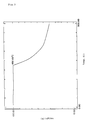
- IR spectroscopy gave the result shown in Fig. 1, which reveals absorption characteristic of imide at 1777, 1716, 1374 and 711 cm -1 and absorption characteristic of APB at 1479 and 776 cm -1 .
- Fig. 2 shows the glass transition temperature as determined by a Shimadzu DSC measuring device. The glass transition point is found at 211 - 220°C. The thermal decomposition temperature as determined by a Shimadzu TG measuring device was 451°C as shown in Fig. 3.
- a reaction was effected in the same device as used in Example 1.
- a 7.35 g quantity (25 mmoles) of BPDA, 6.21 g (25 mmoles) of BCD, 14.62 g (50 mmoles) of APB, 8 g (100 mmoles) of pyridine, 15 ml of toluene and 150 g of NMP were placed into the flask and reacted in nitrogen.
- the reaction was carried out at room temperature for 30 minutes, at 140°C for 1 hour and 180°C for 3 hours.
- the reaction mixture was a liquid having a low viscosity.
- the reaction mixture was poured into 1 liter of methanol, and the mixture was treated in the same manner as in Example 1, giving 26.8 g of polyimide powder.
- NMP at 30°C the product was 0.21 in inherent viscosity.
- a reaction was effected in the same manner as in Example 1.
- BPDA (7.35 g ), 6.21 g of BCD, 14.62 g of APB, 4 g of pyridine and 15 ml of toluene were placed into the flask, followed by addition of 100 g of NMP and 50 g of crotonic acid (product of Tokyo Kasei Co., Ltd.).
- the mixture was reacted in the same manner as in Example 1 to obtain a consistent polyimide solution composition.
- the composition was treated similarly, giving 27.5 g of a polyimide powder.
- the product had an inherent viscosity of 0.70 in NMP at 30°C.
- a reaction was effected in the same manner as in Example 1 using 16.11 g of 3, 4, 3', 4'-benzophenonetetracarboxylic dianhydride (50 mmoles, product of Tokyo Kasei Co., Ltd.), 3.05 g of 4-diaminotoluene (25 mmoles, product of Tokyo Kasei Co., Ltd.), 10.81 g of bis- [4-(3-aminophenoxy)phenyl] sulfone (25 mmoles, product of Wakayama Seika Co., Ltd.), 4 g of pyridine, 200 g of NMP, 25 g benzoic acid and 50 g of methyl benzoate to obtain a consistent polyimide solution composition.
- the composition was poured into 1 liter of methanol to collect a polyimide powder, which was then dried.
- the powder which was obtained in an amount of 28.8 g , had an inherent viscosity of 0.53 in NMP at 30°C.
- the polyimide was 576°C in thermal decomposition temperature and 263 to 280°C in glass transition temperature as determined by DSC measurement.
- Block polyimide solution composition and process for preparing same
- a stainless steel anchor agitator, nitrogen introduction tube and reflux condenser were attached to a 1-liter three-necked separable flask, the condenser comprising a trap having a stopcock, and a cooling tube having balls and mounted on the trap. While introducing nitrogen into the flask, the flask was heated by being immersed in a silicon bath provided with a temperature adjusting device. The temperature of the bath was the reaction temperature.
- the reactor was cooled in the air, and 43.25g (100 mmoles) of bis[4-(3-aminophenoxy)phenyl] sulfone (molecular weight 43.25, product of Wakayama Seika, hereinafter referred to as "m-BAPS"), 300 g of NMP and 50 g of toluene were added to the reaction mixture.
- m-BAPS bis[4-(3-aminophenoxy)phenyl] sulfone
- the reaction gave a solution composition of a block polyimide composed of the three components, i.e., BTDA, 2, 4-diaminotoluene and m-BAPS.
- the polyimide solution was cast onto a stainless steel plate and dried at 150°Cin a dryer having an IR lamp, whereby a polyimide film was formed over the stinless steel plate.
- a 112 g quantity of polyimide was obtained by filtering off, washed with methanol, and drying the powder (at 150°C in a vacuum).
- the polyimide powder was subjected to thermal analysis and found to be 266 to 284°C in glass transition temperature (Tg) and 552°C in thermal decomposition temperature.
- a 500- m l three-necked flask was used for repeating the procedure of Example 5 using 16.11g (50 mmoles) of BTDA, 5.41 g (25 mmoles) of 4, 4'-diaminodiphenyl sulfide (molecular weight 216.3, product of Wakayama Seika), 0.86 g (10 mmoles) of crotonic acid, 2.0 g (25 mmoles) of pyridine, 80g of NMP and 30 g of toluene. These materials were held at room temperature for 30 minutes and heated at 140°C for 30 minutes and at 180°C for 1 hour with stirring.
- the reactor was cooled in the air, followed by addition of 10.81g (25 mmoles) of m-BAPS, 50 g of NMP and 30 g of toluene.
- the resulting mixture was maintained at room temperature for 1 hour and heated at 140°C for 30 minutes and then at 180°C for 2 hours with stirring (250r.p.m.).
- One hour after the start of heating at 180°C 14 m l of toluene-water was removed, and the toluene refluxed was thereafter drawn off from the system.
- the resulting polyimide solution was poured into methanol, and the mixture was stirred in a mixer to obtain a yellow polyimide powder.
- the powder was filtered off, washed with methanol, and dried, giving 31.3 g of polyimide.
- the power was subjected to thermal analysis and consequently found to be 241 to 252°C in Tg and 566°C in thermal decomposition temperature.
- Example 6 Substantially the same procedure as in Example 6 was carried out using 16.11 g (50 mmoles) of BTDA, 8.71g (25 mmoles) of 9, 9-bis(4-aminophenyl)fluorene(molecular weight 348.5, product of Wakayama Seika), 0.86 g (10 mmoles) of crotonic acid, 2.0 g (25 mmoles) of pyridine, 80g of NMP and 30 g of toluene.
- the materials were maintained at room temperature for 30 minutes and heated at 140°C for 30 minutes and 180°C for 1 hour with stirring, followed by cooling in the air and then by addition of 10.81g (25 mmoles) of m-BAPS, 50 g of NMP and 30 g of toluene.
- the resulting mixture was maintained at room temperature for 1 hour and heated at 140°C for 30 minutes and at 180°C for 2 hours with stirring, giving a polyimide solution.
- the solution was cast onto a glass plate and heated in an IR dryer at 85°C to obtain a polyimide film.
- the polyimide solution was treated in the same manner as in Example 8 to obtain a polyimide powder.
- Tg 266-284°C thermal decomposition temperature 552°C.
- Example 5 Substantially the same procedure as in Example 5 was carried out using a 1-liter three-necked flask. Placed into the flask were 32.22 g (100 mmoles) of BTDA, 21.63 g (50 mmoles) of m-BAPS, 2.4 g (20 mmoles) of benzoic acid (molecular weight 122.19, product of Kanto Kagaku), 3.2 g (40 mmoles) of pyridine, 150 g of NMP and 40 g of toluene. While introducing nitrogen into the flask, the materials were maintained at room temperature for 30 minutes and heated at 180°C for 1 hour with stirring.
- the mixture was cooled in the air, followed by addition of 2.75 g (25 mmoles) of 2, 6-diaminopyridine (molecular weight 110.14, product of Aldrich), 3.80 g (25 mmoles) of 3, 5-diaminobenzoic acid (molecular weight 152.15, product of Tokyo Kasei), 150 g of NMP and 40 g of toluene.
- the resulting mixture was maintained at room temperature for 1 hour and heated at 160°C for 30 minutes and then at 180°C for 3 hours with stirring. One hour after the start of heating at 180°C, the toluene refluxed was removed from the system.
- a polyimide solution was obtained, which was then cast onto a glass plate and heated at 100°C in an IR dryer, whereby a polyimide film was obtained.
- the polyimide solution was poured into an excess of methanol, followed by stirring in a mixer and collection of a powder by filtration.
- the product was subjected to thermal analysis and consequently found to be 240°C in Tg and 570°C in thermal decomposition temperature.
- Example 8 Substantially the same procedure as in Example 8 was carried out using 32.22g (100 mmoles) of BTDA, 21.63 g (50 mmoles) of m-BAPS, 2.4 g (20 mmoles) of benzoic acid, 3.2 g (40 mmoles) of pyridine, 150 g of NMP and 40 g of toluene. The materials were maintained at room temperature for 30 minutes and heated at 180°C for 1 hour with stirring.
- Example 8 Substantially the same procedure as in Example 8 was carried out using 32.22 g (100 mmoles) of BTDA, 21.63 g (50 mmoles) of m-BAPS, 2.4 g (20 mmoles) of benzoic acid, 3.2g (40 mmoles) of pyridine, 150 g of NMP and 40 g of toluene. The materials were maintained at room temperature for 30 minutes and heated at 180°C for 1 hour with stirring in a nitrogen stream.
- the polyimide solution obtained was poured into a large amount of methanol, causing a polyimide powder to separate out.
- the powder was filtered off, washed with methanol, dried and subjected to thermal analysis.
- Example 6 Substantially the same procedure as in Example 6 was carried out using a 500-ml three necked flask, in which were placed 12.41 g (50 mmoles) of bicyclo[2, 2, 2]oct-7-ene-2, 3, 5, 6-tetracarboxylic dianhydride (molecular weight 248.19, product of Aldrich Chemical, hereinafter referred to as "BCD"), 3.05 g (25 mmoles) of 2, 4-diaminotoluene, 2.2 g (25 mmoles) of crotonic acid, 2.0 g (25 mmoles) of pyridine, 150 g of NMP and 30 g of toluene.
- BCD 6-tetracarboxylic dianhydride
- Example 6 Substantially the same procedure as in Example 6 was carried out using 29.00 g (90 mmoles) of BTDA, 3.66 g (30 mmoles) of 2, 4-diaminotoluene, 2.0 g (20 mmoles) of ⁇ -valerolactone (molecular weight 100.12, product of Tokyo Kasei), 2.0 g (20 mmoles) of N-methylmorpholine, 130 g of NMP and 30 g of toluene. These materials were maintained at room temperature for 30 minutes and heated at 180°C for 1 hour with stirring (250r.p.m.).
- the solution was cast onto a glass panel and dried at 100°C in an IR dryer to form a polyimide film.
- a polyimide coating was formed.
- a cross-cut test (1 mm, 10 ⁇ 10)
- the film remained free of separation.
- the polyimide solution was poured into methanol, followed by vacuum filtration to collect a polyimide powder.
- Tg 208°C thermal decomposition temperature 449°C.
- T-peel strength 650 kg/cm.
- the adherends used for determining this bond strength value were a polyimide film (Kapton H, 1 mil in thickness) treated by sputtering, and copper foil (Nikko DHN-02, 35 ⁇ m in thickness ).
- the polyimide solution was applied to the Kapton film and thereafter dried (85°C ⁇ 30 min + 150°C ⁇ 60 min) to form an adhesive layer of about 25 ⁇ m.
- the copper foil was affixed to the film and bonded thereto under the condition of 30°C ⁇ 60 min ⁇ 20 kg/cm 2 .
- the sample was etched over a width of 1 mm and teated for peel resistance at 90°C. The pulling speed was 50 mm/min.
- the polyimide solution was cast on a glass panel and heated at 200°Cin an IR dryer to form a polyimide film. It was found impossible to peel off the polyimide film from the glass panel by a cross-cut test.
- the solution may be colored as required for use in coating glass, ceramic or metal surfaces.
- the polyimide solution is transparent and useful for coating usual window glass and the window glass of ships, vehicles and aircraft to block heat or light and prevent deposition of water droplets.
- Example 5 Substantially the same procedure as in Example 5 was carried out using 8.83g (30 mmoles) of S-BPDA, 9.60 g (10 mmoles) of diaminosiloxane (amine equivalent 480, product of Shin-Etsu Chemical), 0.86 g (10 mmoles) of crotonic acid, 3.5 g (40 mmoles) of pyridine, 100 g of NMP and 30 g of toluene. In a nitrogen stream, the materials were maintained at room temperature for 30 minutes and heated at 140°C for 30 minutes and at 170°C for 1 hour with stirring.
- the coating remained unseparated even when subjected to a cross-cut test.
- the solution was poured into methanol to obtain a polyimide powder, which was then thermally analyzed. Tg (glass transition temperature) was not measurable. Thermal decomposition temperature was 429°C.
- the mixture was then cooled in the air, followed by addition of 16.016 g (80 mmoles) of 3, 4'-diaminodiphenyl ether, 39.71 g (160 mmoles) of BCD, 200 g of NMP and 40 g of toluene.
- the resulting mixture was heated at 140°C for 30 minutes and at 170°C for 1 hour with stirring, and cooled in the air, followed by addition of 43.25 g (100 mmoles) of m-BAPS, 120 g of NMP and 40 g of toluene and further by heating at 140°C for 30 minutes and at 180°C for 3 hours with stirring.
- the polyimide solution is transparent and useful for coating usual window glass and the window glass of ships, vehicles and aircraft to block heat or light and prevent deposition of water droplets.
- the polyimide solution was added to a large amount of methanol, followed by pulverization in a mixer, a polyimide powder was obtained.
- Tg was not determinable by thermal analysis. Thermal decomposition temperature was 429°C.
- Transparent polyimide solution compositions were prepared by repeating the same reaction procedure as in Example 15 except that 43.25 g (100 mmoles) of m-BAPS was replaced by 51.85 g (100 mmoles) of 2, 2-bis [4-(4-aminophenoxy)phenyl] hexafluoropropane (molecular weight 518.4, product of Wakayama Seika) or 41.05 g (100 mmoles) of BAPP (molecular weight 410.5) or 29.23 g (100 mmoles) of 1, 3-bis(3-aminophenoxy)benzene(molecular weight 292.3, product of Mitsui Toatsu).
- Example 5 Substantially the same procedure as in Example 5 was carried out using 35.31 g (120 mmoles) of S-BPDA, 27.48 g (30 mmoles) of diaminosiloxane (amine equivalent 458, product of Shin-Etsu Chemical), 5.17 g (60 mmoles) of crotonic acid, 4.75 g (60 mmoles) of pyridine, 150 g of NMP and 40 g of toluene. The materials were maintained at room temperature for 30 minutes and heated at 160°C for 1 hour with stirring.
- the mixture was then cooled in the air, followed by addition of 29.78 g (120 mmoles) of BCD, 62.85 g (215 mmoles) of m-TPE, 1.48 g (10.02 mmoles) of phthalic anhydride, 144 g of NMP and 40 g of toluene.
- the resulting mixture was maintained at room temperature for 1 hour and heated at 140°C for 30 minutes and at 180°C for 4.5 hours with stirring. During the period following the heating at 180°C for 1 hour, the refluxing substance was removed from the system.
- the dilution was 200cp. in bubble viscosity.
- the polyimide solution obtained was checked for molecular weight by gel permeation chromatography using (GPC)-Toso-HLC8020 and tetrahydrofuran as a developing solvent.
- Mn number average molecular weight
- Mw weight average moleculr weight
- Mz Z average molecular weight
- the varnish was applied by spray coating to SUS 430 stainless steel panels (0.9mm ⁇ 75mm ⁇ 150mm) and aluminum panels (1.0mm l 50mm ⁇ 60mm) which were merely degreased.
- the coatings (2 kg/m 2 ) were treated at 120 to 130°C for 15 minutes in a drying oven and at 270°C for 30 minutes in a baking oven.
- the coatings were teated for properties.
- the coatings were 15 ⁇ m in thickness, had a hardness of 2H (pencil hardness) and proved satisfactory by Erichsen test (pushed out by 8mm), Du pont impact tester (1 kg, 50 cm , 1/4-1/8 in.) and cross-cut test (10 ⁇ 10 1-mm squares, adhesion test resuling in no separation).
- the coatings were 10 ⁇ m in thickness, had a hardness of H to 2H and proved free of separation and satisfactory by the same adhesion test.
- the polyimide solution was poured into a large amount of an alcohol, followed by pulverization in a mixer to give a polyimide powder, which was found to be 205°C in Tg and 444°C in thermal decomposition temperature by thermal analysis.
- Example 5 The same reaction procedure as in Example 5 was repeated except that the glass container was replaced by a 1-liter stainless steel reactor. The reaction mixture was cooled in the air and then transferred to another container with a siphon. The reaction mixture was found adhering to the reactor wall and agitator bars.
- the mixture was transferred to another container again, and 300 m l of DMF was placed into the reactor and stirred at room temperature for 30 minutes.
- the DMF was transferred to another container, and 300ml of methanol was placed into the reactor and stirred.
- the methanol was transferred to another container, whereby the reactor was completely cleaned.
- the reactor was subsequently usable free of any trouble.
Landscapes
- Chemical & Material Sciences (AREA)
- Chemical Kinetics & Catalysis (AREA)
- Organic Chemistry (AREA)
- Health & Medical Sciences (AREA)
- Medicinal Chemistry (AREA)
- Polymers & Plastics (AREA)
- Life Sciences & Earth Sciences (AREA)
- Engineering & Computer Science (AREA)
- Materials Engineering (AREA)
- Wood Science & Technology (AREA)
- Macromolecular Compounds Obtained By Forming Nitrogen-Containing Linkages In General (AREA)
- Processes Of Treating Macromolecular Substances (AREA)
Claims (8)
- Procédé pour préparer une solution de polyimide qui comprend les étapes de :où le catalyseur consiste en un mélange de(i) réaction d'un dianhydride d'acide et d'une diamine aromatique dans un solvant autre qu'un solvant phénolique en présence d'un catalyseur et(ii) condensation du cation résultant à une température dans le domaine de 100 à 200°C ;où le dianhydride d'acide et la diamine sont utilisés en des quantités équimolaires,(a) acide crotonique, γ-valérolactone ou acide benzoïque et(b) pyridine, triéthylamine, N-méthylmorpholine ou quinoléine,
et où le solvant est un solvant polaire organique choisi dans le groupe consistant en une cétone, un halogénure d'hydrocarbure aromatique, un ester d'acide carboxylique aliphatique ou aromatique, un éther, la N-méthyl-2-pyrrolidone, le diméthylformamide, le N,N-diméthylacétamide, la tétraméthylurée, le diméthylsulfoxyde, le sulfolane, le dioxane, le tétrahydrofurane et leurs mélanges. - Procédé selon la revendication 1, qui comprend en outre l'étape d'addition de xylène, de toluène ou de tétraline au système réactionnel pour retirer par voie azéotropique l'eau dudit système.
- Procédé selon la revendication 1, pour préparer une solution de polyimide séquence qui comprend les étapes de :où la température de chauffage des étapes (i) et (ii) est d'au moins 120°C.(i1) chauffage d'un dianhydride d'acide et d'un excès de diamine aromatique dans le solvant polaire organique en présence du catalyseur, pour former un oligomère d'imide et(ii1) addition d'un dianhydride d'acide audit oligomère et chauffage du mélange résultant,ou (i2) chauffage d'une diamine aromatique et d'un excès de dianhydride d'acide dans le solvant polaire organique en présence du catalyseur pour former un oligomère d'imide et(ii2) addition d'une diamine aromatique audit oligomère et chauffage du mélange résultant,
- Procédé selon la revendication 3, qui comprend en outre l'addition de toluène, xylène ou tétraline au système réactionnel pour retirer l'eau par voie azéotropique dudit système.
- Procédé selon la revendication 3 ou 4, pour la préparation d'une solution de polyimide séquence contenant un siloxane, où dans l'étape (i) un composé de diaminosiloxane est utilisé à la place de la diamine aromatique pour former un oligomère de siloxane imide ayant des extrémités opposées d'anhydride d'acide.
- Procédé selon la revendication 5 pour la préparation d'une solution de polymide séquencé contenant BCD et un siloxane où le dianhydride de bicyclo-[2.2.2]oct-7-ène-2,3,5,6-tétracarboxylique (BCD) et une diamine aromatique sont utilisés dans l'étape (ii).
- Composition de revêtement comprenant la solution de polyimide préparée par le procédé défini dans l'une des revendications 1 à 6.
- Matière de moulage comprenant la composition de la revendication 7 et au moins un élément choisi parmi le graphite finement divisé, le disulfure de molybdène et le tétrafluorure d'éthylène.
Applications Claiming Priority (4)
| Application Number | Priority Date | Filing Date | Title |
|---|---|---|---|
| JP358909/92 | 1992-12-25 | ||
| JP4358909A JP3053040B2 (ja) | 1992-12-25 | 1992-12-25 | ポリイミド溶液組成物及びその製造方法 |
| JP05339549A JP3126577B2 (ja) | 1993-12-02 | 1993-12-02 | ポリイミドブロック共重合体の製造方法及びその溶液組成物 |
| JP339549/93 | 1993-12-02 |
Publications (2)
| Publication Number | Publication Date |
|---|---|
| EP0604319A1 EP0604319A1 (fr) | 1994-06-29 |
| EP0604319B1 true EP0604319B1 (fr) | 1999-04-28 |
Family
ID=26576445
Family Applications (1)
| Application Number | Title | Priority Date | Filing Date |
|---|---|---|---|
| EP93403147A Expired - Lifetime EP0604319B1 (fr) | 1992-12-25 | 1993-12-23 | Compositions de solutions de polyamide et procédé de préparation |
Country Status (3)
| Country | Link |
|---|---|
| EP (1) | EP0604319B1 (fr) |
| AT (1) | ATE179435T1 (fr) |
| DE (1) | DE69324662T2 (fr) |
Cited By (1)
| Publication number | Priority date | Publication date | Assignee | Title |
|---|---|---|---|---|
| US7812099B2 (en) | 2005-07-22 | 2010-10-12 | Evonik Fibres Gmbh | Process for preparing a block copolymer from polyimides and use of the block copolymer for producing powders and mouldings |
Families Citing this family (12)
| Publication number | Priority date | Publication date | Assignee | Title |
|---|---|---|---|---|
| JP3089195B2 (ja) * | 1995-10-12 | 2000-09-18 | 大日本塗料株式会社 | 電着用ポリイミド組成物 |
| MY124687A (en) * | 1998-05-20 | 2006-06-30 | Hitachi Chemical Co Ltd | Insulating adhesive for electronic parts, and lead frame and semiconductor device using the same |
| JP2000202970A (ja) | 1999-01-13 | 2000-07-25 | Pi Gijutsu Kenkyusho:Kk | ポリイミド被覆フィルム |
| EA014021B1 (ru) * | 2005-06-13 | 2010-08-30 | ДСМ АйПи АССЕТС Б.В. | Способ получения высокопривитого многофункционального сополимера олефина, полученный сополимер, композиция смазочного масла и способы ее использования |
| RU2352595C2 (ru) * | 2007-04-11 | 2009-04-20 | Евгений Львович Вулах | Способ получения раствора полиамидокислоты на основе 4,4'-диаминотрифениламина |
| CN104149472B (zh) * | 2014-08-04 | 2016-04-20 | 江汉大学 | 一种尺寸稳定型无胶挠性覆铜板的制备方法 |
| KR102672003B1 (ko) * | 2016-10-21 | 2024-06-03 | 한국전기연구원 | 전착코팅용 이미드계 고분자 콜로이드 분산액 및 그 제조방법 |
| CN112048241A (zh) * | 2020-09-08 | 2020-12-08 | 深圳市志邦科技有限公司 | 耐热型高粘附聚酰亚胺涂料、其制备方法及涂层制备方法 |
| CN114806676B (zh) * | 2022-05-11 | 2022-11-25 | 河南大学 | 油溶性羟基硅酸镁纳米微粒、抗磨减摩剂、合成润滑油和聚酰亚胺自润滑复合材料及其应用 |
| CN117327446B (zh) * | 2022-06-24 | 2024-12-10 | 比亚迪股份有限公司 | 一种聚酰亚胺漆包线漆及其制备方法 |
| CN118271605B (zh) * | 2022-12-30 | 2025-11-04 | 比亚迪股份有限公司 | 用于合成聚酰亚胺的催化剂及其制备方法和应用 |
| CN116478402B (zh) * | 2023-04-25 | 2024-11-19 | 安徽中科宇顺科技有限公司 | 一种高耐热低膨胀的透明聚酰亚胺及其制备方法 |
Family Cites Families (4)
| Publication number | Priority date | Publication date | Assignee | Title |
|---|---|---|---|---|
| FR2295978A1 (fr) * | 1974-12-23 | 1976-07-23 | Inst Elementoorganicheskikh So | Procede de preparation de polyimides et polymeres ainsi obtenus |
| JPS5734127A (en) * | 1980-08-07 | 1982-02-24 | Ube Ind Ltd | Production of polyimide solution |
| DE3925099A1 (de) * | 1989-07-28 | 1991-01-31 | Consortium Elektrochem Ind | Verfahren zur herstellung von poly(imid-siloxanen) |
| JPH0774199B2 (ja) * | 1989-08-21 | 1995-08-09 | 新日本理化株式会社 | 芳香族環状ポリイミドの製造方法 |
-
1993
- 1993-12-23 AT AT93403147T patent/ATE179435T1/de not_active IP Right Cessation
- 1993-12-23 DE DE69324662T patent/DE69324662T2/de not_active Expired - Lifetime
- 1993-12-23 EP EP93403147A patent/EP0604319B1/fr not_active Expired - Lifetime
Cited By (1)
| Publication number | Priority date | Publication date | Assignee | Title |
|---|---|---|---|---|
| US7812099B2 (en) | 2005-07-22 | 2010-10-12 | Evonik Fibres Gmbh | Process for preparing a block copolymer from polyimides and use of the block copolymer for producing powders and mouldings |
Also Published As
| Publication number | Publication date |
|---|---|
| ATE179435T1 (de) | 1999-05-15 |
| DE69324662T2 (de) | 1999-09-02 |
| DE69324662D1 (de) | 1999-06-02 |
| EP0604319A1 (fr) | 1994-06-29 |
Similar Documents
| Publication | Publication Date | Title |
|---|---|---|
| US5502143A (en) | Process for preparing polyimide resins | |
| JP3126577B2 (ja) | ポリイミドブロック共重合体の製造方法及びその溶液組成物 | |
| US5252703A (en) | Polyimidosiloxane resin and composition thereof and method of applying same | |
| AU623684B2 (en) | Process for lowering the dielectric constant of polyimides using diamic acid additives | |
| KR20170016384A (ko) | 폴리이미드 막의 제조 방법 | |
| US4877653A (en) | Process for insolublizing solvent soluble polyimide compositions | |
| CA1109175A (fr) | Solution de revetement a base de monomeres formant un polyetherimide | |
| EP0142149A2 (fr) | Utilisation de polyimides contenant du fluor pour des couches d'orientation de dispositifs d'affichage à cristaux liquides. | |
| EP0604319A1 (fr) | Compositions de solutions de polyamide et procédé de préparation | |
| JP3243963B2 (ja) | ポリイミドシロキサン組成物 | |
| EP1145845B1 (fr) | Film composite | |
| US5177176A (en) | Soluble pseudo rod-like polyimides having low coefficient of thermal expansion | |
| US5428102A (en) | Low dielectric polyimides | |
| KR20250171266A (ko) | 폴리이미드 수지 전구체, 폴리이미드 수지 및 폴리이미드 필름 | |
| US5071908A (en) | Silicon polyimide precursor composition | |
| JPH06192420A (ja) | ポリイミド溶液組成物及びその製造方法 | |
| EP0202259B1 (fr) | Polymeres contenant du siloxane | |
| JPH0374702B2 (fr) | ||
| EP0488630A2 (fr) | Polyimide thermiquement stable et procédé de préparation | |
| JP2631878B2 (ja) | ポリイミドシロキサン組成物および膜 | |
| EP0520236A2 (fr) | Polyimides à la base de 9-arylène-9-(perfluoroalkylène)-2,3,6,7-dianhydride ou de 9,9'-bis-(perfluoroalkylène)-2,3,6,7-dianhydride et de dérivés de benzidine | |
| AU599325B2 (en) | Flexible copper-clad circuit substrate | |
| JP3528236B2 (ja) | 粗面化ポリイミドフィルム及びその製造方法 | |
| JPH10231426A (ja) | ポリイミド樹脂組成物 | |
| JP3646947B2 (ja) | ポリイミド樹脂 |
Legal Events
| Date | Code | Title | Description |
|---|---|---|---|
| PUAI | Public reference made under article 153(3) epc to a published international application that has entered the european phase |
Free format text: ORIGINAL CODE: 0009012 |
|
| AK | Designated contracting states |
Kind code of ref document: A1 Designated state(s): AT BE CH DE FR GB IT LI NL |
|
| 17P | Request for examination filed |
Effective date: 19941206 |
|
| 17Q | First examination report despatched |
Effective date: 19960703 |
|
| GRAG | Despatch of communication of intention to grant |
Free format text: ORIGINAL CODE: EPIDOS AGRA |
|
| GRAG | Despatch of communication of intention to grant |
Free format text: ORIGINAL CODE: EPIDOS AGRA |
|
| GRAH | Despatch of communication of intention to grant a patent |
Free format text: ORIGINAL CODE: EPIDOS IGRA |
|
| GRAH | Despatch of communication of intention to grant a patent |
Free format text: ORIGINAL CODE: EPIDOS IGRA |
|
| GRAA | (expected) grant |
Free format text: ORIGINAL CODE: 0009210 |
|
| RAP1 | Party data changed (applicant data changed or rights of an application transferred) |
Owner name: ITATANI, HIROSHI |
|
| AK | Designated contracting states |
Kind code of ref document: B1 Designated state(s): AT BE CH DE FR GB IT LI NL |
|
| PG25 | Lapsed in a contracting state [announced via postgrant information from national office to epo] |
Ref country code: LI Free format text: LAPSE BECAUSE OF FAILURE TO SUBMIT A TRANSLATION OF THE DESCRIPTION OR TO PAY THE FEE WITHIN THE PRESCRIBED TIME-LIMIT Effective date: 19990428 Ref country code: CH Free format text: LAPSE BECAUSE OF FAILURE TO SUBMIT A TRANSLATION OF THE DESCRIPTION OR TO PAY THE FEE WITHIN THE PRESCRIBED TIME-LIMIT Effective date: 19990428 Ref country code: BE Free format text: LAPSE BECAUSE OF FAILURE TO SUBMIT A TRANSLATION OF THE DESCRIPTION OR TO PAY THE FEE WITHIN THE PRESCRIBED TIME-LIMIT Effective date: 19990428 Ref country code: AT Free format text: LAPSE BECAUSE OF FAILURE TO SUBMIT A TRANSLATION OF THE DESCRIPTION OR TO PAY THE FEE WITHIN THE PRESCRIBED TIME-LIMIT Effective date: 19990428 |
|
| REF | Corresponds to: |
Ref document number: 179435 Country of ref document: AT Date of ref document: 19990515 Kind code of ref document: T |
|
| REG | Reference to a national code |
Ref country code: CH Ref legal event code: EP |
|
| REF | Corresponds to: |
Ref document number: 69324662 Country of ref document: DE Date of ref document: 19990602 |
|
| ET | Fr: translation filed | ||
| REG | Reference to a national code |
Ref country code: CH Ref legal event code: PL |
|
| PLBE | No opposition filed within time limit |
Free format text: ORIGINAL CODE: 0009261 |
|
| STAA | Information on the status of an ep patent application or granted ep patent |
Free format text: STATUS: NO OPPOSITION FILED WITHIN TIME LIMIT |
|
| 26N | No opposition filed | ||
| REG | Reference to a national code |
Ref country code: GB Ref legal event code: IF02 |
|
| REG | Reference to a national code |
Ref country code: GB Ref legal event code: 732E |
|
| NLS | Nl: assignments of ep-patents |
Owner name: PI R&D CO., LTD. |
|
| REG | Reference to a national code |
Ref country code: FR Ref legal event code: TP |
|
| PG25 | Lapsed in a contracting state [announced via postgrant information from national office to epo] |
Ref country code: IT Free format text: LAPSE BECAUSE OF NON-PAYMENT OF DUE FEES Effective date: 20091223 |
|
| PGRI | Patent reinstated in contracting state [announced from national office to epo] |
Ref country code: IT Effective date: 20110616 |
|
| PGFP | Annual fee paid to national office [announced via postgrant information from national office to epo] |
Ref country code: FR Payment date: 20121126 Year of fee payment: 20 |
|
| PGFP | Annual fee paid to national office [announced via postgrant information from national office to epo] |
Ref country code: GB Payment date: 20121231 Year of fee payment: 20 Ref country code: IT Payment date: 20121102 Year of fee payment: 20 |
|
| PGFP | Annual fee paid to national office [announced via postgrant information from national office to epo] |
Ref country code: DE Payment date: 20121219 Year of fee payment: 20 |
|
| PGFP | Annual fee paid to national office [announced via postgrant information from national office to epo] |
Ref country code: NL Payment date: 20121220 Year of fee payment: 20 |
|
| REG | Reference to a national code |
Ref country code: DE Ref legal event code: R071 Ref document number: 69324662 Country of ref document: DE |
|
| REG | Reference to a national code |
Ref country code: NL Ref legal event code: V4 Effective date: 20131223 |
|
| REG | Reference to a national code |
Ref country code: GB Ref legal event code: PE20 Expiry date: 20131222 |
|
| PG25 | Lapsed in a contracting state [announced via postgrant information from national office to epo] |
Ref country code: DE Free format text: LAPSE BECAUSE OF EXPIRATION OF PROTECTION Effective date: 20131224 Ref country code: GB Free format text: LAPSE BECAUSE OF EXPIRATION OF PROTECTION Effective date: 20131222 |