EP0604862A2 - Polysaccharides linéaires et réticulés comme gels pour électrophorèse - Google Patents
Polysaccharides linéaires et réticulés comme gels pour électrophorèse Download PDFInfo
- Publication number
- EP0604862A2 EP0604862A2 EP93120471A EP93120471A EP0604862A2 EP 0604862 A2 EP0604862 A2 EP 0604862A2 EP 93120471 A EP93120471 A EP 93120471A EP 93120471 A EP93120471 A EP 93120471A EP 0604862 A2 EP0604862 A2 EP 0604862A2
- Authority
- EP
- European Patent Office
- Prior art keywords
- gel
- cross
- linker
- agarose
- gels
- Prior art date
- Legal status (The legal status is an assumption and is not a legal conclusion. Google has not performed a legal analysis and makes no representation as to the accuracy of the status listed.)
- Granted
Links
- 238000001962 electrophoresis Methods 0.000 title claims abstract description 62
- 229920001282 polysaccharide Polymers 0.000 title claims abstract description 41
- 239000005017 polysaccharide Substances 0.000 title claims abstract description 41
- 150000004676 glycans Chemical class 0.000 title claims abstract 28
- 239000000499 gel Substances 0.000 title abstract description 438
- 229920000642 polymer Polymers 0.000 title abstract description 187
- 239000004971 Cross linker Substances 0.000 claims abstract description 176
- 238000006243 chemical reaction Methods 0.000 claims abstract description 54
- 125000002887 hydroxy group Chemical group [H]O* 0.000 claims abstract description 31
- 230000015572 biosynthetic process Effects 0.000 claims abstract description 29
- 229920002521 macromolecule Polymers 0.000 claims abstract description 25
- RTZKZFJDLAIYFH-UHFFFAOYSA-N Diethyl ether Chemical compound CCOCC RTZKZFJDLAIYFH-UHFFFAOYSA-N 0.000 claims abstract description 15
- 238000001502 gel electrophoresis Methods 0.000 claims abstract description 14
- 239000011159 matrix material Substances 0.000 claims abstract description 13
- 229920000936 Agarose Polymers 0.000 claims description 129
- XLYOFNOQVPJJNP-UHFFFAOYSA-N water Substances O XLYOFNOQVPJJNP-UHFFFAOYSA-N 0.000 claims description 41
- 238000000034 method Methods 0.000 claims description 36
- 230000005012 migration Effects 0.000 claims description 24
- 238000013508 migration Methods 0.000 claims description 24
- -1 dihaloalkyl alcohols Chemical class 0.000 claims description 19
- 239000004354 Hydroxyethyl cellulose Substances 0.000 claims description 18
- 229920000663 Hydroxyethyl cellulose Polymers 0.000 claims description 18
- 235000019447 hydroxyethyl cellulose Nutrition 0.000 claims description 18
- 150000004804 polysaccharides Polymers 0.000 claims description 17
- 229920002307 Dextran Polymers 0.000 claims description 15
- 230000005684 electric field Effects 0.000 claims description 14
- 239000008107 starch Substances 0.000 claims description 14
- 235000019698 starch Nutrition 0.000 claims description 14
- 150000001875 compounds Chemical class 0.000 claims description 13
- 229920002472 Starch Polymers 0.000 claims description 12
- AFOSIXZFDONLBT-UHFFFAOYSA-N divinyl sulfone Chemical compound C=CS(=O)(=O)C=C AFOSIXZFDONLBT-UHFFFAOYSA-N 0.000 claims description 12
- 229920001059 synthetic polymer Polymers 0.000 claims description 11
- 150000002500 ions Chemical class 0.000 claims description 8
- 239000004372 Polyvinyl alcohol Substances 0.000 claims description 6
- 229920002451 polyvinyl alcohol Polymers 0.000 claims description 6
- 125000003636 chemical group Chemical group 0.000 claims description 5
- 239000002904 solvent Substances 0.000 claims description 4
- 150000002605 large molecules Chemical class 0.000 claims description 3
- 150000003384 small molecules Chemical class 0.000 claims description 2
- GAWIXWVDTYZWAW-UHFFFAOYSA-N C[CH]O Chemical group C[CH]O GAWIXWVDTYZWAW-UHFFFAOYSA-N 0.000 claims 2
- 229920001612 Hydroxyethyl starch Polymers 0.000 claims 2
- 150000003944 halohydrins Chemical class 0.000 claims 2
- 229940050526 hydroxyethylstarch Drugs 0.000 claims 2
- 239000003791 organic solvent mixture Substances 0.000 claims 2
- 239000012634 fragment Substances 0.000 abstract description 85
- 102000004169 proteins and genes Human genes 0.000 abstract description 9
- 108090000623 proteins and genes Proteins 0.000 abstract description 9
- 230000003287 optical effect Effects 0.000 abstract description 7
- HEMHJVSKTPXQMS-UHFFFAOYSA-M Sodium hydroxide Chemical compound [OH-].[Na+] HEMHJVSKTPXQMS-UHFFFAOYSA-M 0.000 description 83
- 239000000243 solution Substances 0.000 description 81
- 238000004132 cross linking Methods 0.000 description 39
- BRLQWZUYTZBJKN-UHFFFAOYSA-N Epichlorohydrin Chemical compound ClCC1CO1 BRLQWZUYTZBJKN-UHFFFAOYSA-N 0.000 description 30
- 239000011543 agarose gel Substances 0.000 description 30
- 238000000926 separation method Methods 0.000 description 29
- IFDLXKQSUOWIBO-UHFFFAOYSA-N 1,3-dichloropropan-1-ol Chemical compound OC(Cl)CCCl IFDLXKQSUOWIBO-UHFFFAOYSA-N 0.000 description 23
- HPILSDOMLLYBQF-UHFFFAOYSA-N 2-[1-(oxiran-2-ylmethoxy)butoxymethyl]oxirane Chemical compound C1OC1COC(CCC)OCC1CO1 HPILSDOMLLYBQF-UHFFFAOYSA-N 0.000 description 20
- 239000000872 buffer Substances 0.000 description 16
- 238000002835 absorbance Methods 0.000 description 14
- 239000002585 base Substances 0.000 description 14
- 238000005452 bending Methods 0.000 description 14
- 238000002360 preparation method Methods 0.000 description 14
- 238000007792 addition Methods 0.000 description 12
- 238000011534 incubation Methods 0.000 description 12
- 239000000203 mixture Substances 0.000 description 11
- 125000000524 functional group Chemical group 0.000 description 10
- 230000008569 process Effects 0.000 description 10
- 239000006227 byproduct Substances 0.000 description 8
- 230000008859 change Effects 0.000 description 8
- 239000000178 monomer Substances 0.000 description 8
- 238000003756 stirring Methods 0.000 description 8
- 238000001429 visible spectrum Methods 0.000 description 8
- PEDCQBHIVMGVHV-UHFFFAOYSA-N Glycerine Chemical compound OCC(O)CO PEDCQBHIVMGVHV-UHFFFAOYSA-N 0.000 description 7
- 239000008049 TAE buffer Substances 0.000 description 7
- HGEVZDLYZYVYHD-UHFFFAOYSA-N acetic acid;2-amino-2-(hydroxymethyl)propane-1,3-diol;2-[2-[bis(carboxymethyl)amino]ethyl-(carboxymethyl)amino]acetic acid Chemical compound CC(O)=O.OCC(N)(CO)CO.OC(=O)CN(CC(O)=O)CCN(CC(O)=O)CC(O)=O HGEVZDLYZYVYHD-UHFFFAOYSA-N 0.000 description 7
- 239000000047 product Substances 0.000 description 7
- 241000894007 species Species 0.000 description 7
- 238000000539 two dimensional gel electrophoresis Methods 0.000 description 7
- 239000003153 chemical reaction reagent Substances 0.000 description 6
- 238000011067 equilibration Methods 0.000 description 6
- 238000002474 experimental method Methods 0.000 description 6
- 230000037230 mobility Effects 0.000 description 6
- 229920005615 natural polymer Polymers 0.000 description 6
- 150000003839 salts Chemical class 0.000 description 6
- 238000001228 spectrum Methods 0.000 description 6
- JYEUMXHLPRZUAT-UHFFFAOYSA-N 1,2,3-triazine Chemical group C1=CN=NN=C1 JYEUMXHLPRZUAT-UHFFFAOYSA-N 0.000 description 4
- SSZWWUDQMAHNAQ-UHFFFAOYSA-N 3-chloropropane-1,2-diol Chemical compound OCC(O)CCl SSZWWUDQMAHNAQ-UHFFFAOYSA-N 0.000 description 4
- CTKINSOISVBQLD-UHFFFAOYSA-N Glycidol Chemical compound OCC1CO1 CTKINSOISVBQLD-UHFFFAOYSA-N 0.000 description 4
- 230000001588 bifunctional effect Effects 0.000 description 4
- 239000003431 cross linking reagent Substances 0.000 description 4
- 230000001419 dependent effect Effects 0.000 description 4
- ZMMJGEGLRURXTF-UHFFFAOYSA-N ethidium bromide Chemical compound [Br-].C12=CC(N)=CC=C2C2=CC=C(N)C=C2[N+](CC)=C1C1=CC=CC=C1 ZMMJGEGLRURXTF-UHFFFAOYSA-N 0.000 description 4
- 229960005542 ethidium bromide Drugs 0.000 description 4
- 239000000835 fiber Substances 0.000 description 4
- 238000006116 polymerization reaction Methods 0.000 description 4
- 235000019422 polyvinyl alcohol Nutrition 0.000 description 4
- 239000011148 porous material Substances 0.000 description 4
- 238000007086 side reaction Methods 0.000 description 4
- 238000005406 washing Methods 0.000 description 4
- UWFRVQVNYNPBEF-UHFFFAOYSA-N 1-(2,4-dimethylphenyl)propan-1-one Chemical compound CCC(=O)C1=CC=C(C)C=C1C UWFRVQVNYNPBEF-UHFFFAOYSA-N 0.000 description 3
- LYCAIKOWRPUZTN-UHFFFAOYSA-N Ethylene glycol Chemical compound OCCO LYCAIKOWRPUZTN-UHFFFAOYSA-N 0.000 description 3
- 102000008857 Ferritin Human genes 0.000 description 3
- 108050000784 Ferritin Proteins 0.000 description 3
- 238000008416 Ferritin Methods 0.000 description 3
- KWYUFKZDYYNOTN-UHFFFAOYSA-M Potassium hydroxide Chemical compound [OH-].[K+] KWYUFKZDYYNOTN-UHFFFAOYSA-M 0.000 description 3
- 102000009843 Thyroglobulin Human genes 0.000 description 3
- 108010034949 Thyroglobulin Proteins 0.000 description 3
- 239000011324 bead Substances 0.000 description 3
- 229920006037 cross link polymer Polymers 0.000 description 3
- 230000003247 decreasing effect Effects 0.000 description 3
- 238000001212 derivatisation Methods 0.000 description 3
- 238000009792 diffusion process Methods 0.000 description 3
- 239000012153 distilled water Substances 0.000 description 3
- 230000000694 effects Effects 0.000 description 3
- 238000005370 electroosmosis Methods 0.000 description 3
- 238000001879 gelation Methods 0.000 description 3
- 125000005843 halogen group Chemical group 0.000 description 3
- 102000039446 nucleic acids Human genes 0.000 description 3
- 108020004707 nucleic acids Proteins 0.000 description 3
- 150000007523 nucleic acids Chemical class 0.000 description 3
- 239000002245 particle Substances 0.000 description 3
- 229920003023 plastic Polymers 0.000 description 3
- 239000004033 plastic Substances 0.000 description 3
- 229920002401 polyacrylamide Polymers 0.000 description 3
- 239000000376 reactant Substances 0.000 description 3
- 239000011541 reaction mixture Substances 0.000 description 3
- 230000035484 reaction time Effects 0.000 description 3
- 230000009257 reactivity Effects 0.000 description 3
- 125000001424 substituent group Chemical group 0.000 description 3
- 229960002175 thyroglobulin Drugs 0.000 description 3
- 229920002554 vinyl polymer Polymers 0.000 description 3
- WQZGKKKJIJFFOK-SVZMEOIVSA-N (+)-Galactose Chemical compound OC[C@H]1OC(O)[C@H](O)[C@@H](O)[C@H]1O WQZGKKKJIJFFOK-SVZMEOIVSA-N 0.000 description 2
- QWVCIORZLNBIIC-UHFFFAOYSA-N 2,3-dibromopropan-1-ol Chemical compound OCC(Br)CBr QWVCIORZLNBIIC-UHFFFAOYSA-N 0.000 description 2
- STMDPCBYJCIZOD-UHFFFAOYSA-N 2-(2,4-dinitroanilino)-4-methylpentanoic acid Chemical group CC(C)CC(C(O)=O)NC1=CC=C([N+]([O-])=O)C=C1[N+]([O-])=O STMDPCBYJCIZOD-UHFFFAOYSA-N 0.000 description 2
- VEXZGXHMUGYJMC-UHFFFAOYSA-M Chloride anion Chemical compound [Cl-] VEXZGXHMUGYJMC-UHFFFAOYSA-M 0.000 description 2
- ZAMOUSCENKQFHK-UHFFFAOYSA-N Chlorine atom Chemical compound [Cl] ZAMOUSCENKQFHK-UHFFFAOYSA-N 0.000 description 2
- 229920005654 Sephadex Polymers 0.000 description 2
- 238000004458 analytical method Methods 0.000 description 2
- 229920001222 biopolymer Polymers 0.000 description 2
- 238000009835 boiling Methods 0.000 description 2
- 239000000460 chlorine Substances 0.000 description 2
- 229910052801 chlorine Inorganic materials 0.000 description 2
- 238000004587 chromatography analysis Methods 0.000 description 2
- 238000001816 cooling Methods 0.000 description 2
- 230000007423 decrease Effects 0.000 description 2
- 238000000502 dialysis Methods 0.000 description 2
- 238000010790 dilution Methods 0.000 description 2
- 239000012895 dilution Substances 0.000 description 2
- 238000010438 heat treatment Methods 0.000 description 2
- MVBJSQCJPSRKSW-UHFFFAOYSA-N n-[1,3-dihydroxy-2-(hydroxymethyl)propan-2-yl]prop-2-enamide Chemical compound OCC(CO)(CO)NC(=O)C=C MVBJSQCJPSRKSW-UHFFFAOYSA-N 0.000 description 2
- 125000000466 oxiranyl group Chemical group 0.000 description 2
- 230000000379 polymerizing effect Effects 0.000 description 2
- 239000012146 running buffer Substances 0.000 description 2
- 238000010186 staining Methods 0.000 description 2
- 239000000126 substance Substances 0.000 description 2
- 238000012360 testing method Methods 0.000 description 2
- 125000000391 vinyl group Chemical group [H]C([*])=C([H])[H] 0.000 description 2
- WZYRMLAWNVOIEX-MOJAZDJTSA-N (2s)-2-[(2r,3r,4s)-3,4-dihydroxyoxolan-2-yl]-2-hydroxyacetaldehyde Chemical compound O=C[C@@H](O)[C@@H]1OC[C@H](O)[C@H]1O WZYRMLAWNVOIEX-MOJAZDJTSA-N 0.000 description 1
- 229920002818 (Hydroxyethyl)methacrylate Polymers 0.000 description 1
- QRRZOBWADKAXKF-UHFFFAOYSA-N 1,2-dibromopropan-1-ol Chemical compound CC(Br)C(O)Br QRRZOBWADKAXKF-UHFFFAOYSA-N 0.000 description 1
- RYHBNJHYFVUHQT-UHFFFAOYSA-N 1,4-Dioxane Chemical compound C1COCCO1 RYHBNJHYFVUHQT-UHFFFAOYSA-N 0.000 description 1
- LCPVQAHEFVXVKT-UHFFFAOYSA-N 2-(2,4-difluorophenoxy)pyridin-3-amine Chemical compound NC1=CC=CN=C1OC1=CC=C(F)C=C1F LCPVQAHEFVXVKT-UHFFFAOYSA-N 0.000 description 1
- DCQFFOLNJVGHLW-UHFFFAOYSA-N 4'-Me ether-Punctatin+ Natural products O1C(O)C(O)C2OCC1C2O DCQFFOLNJVGHLW-UHFFFAOYSA-N 0.000 description 1
- QFVHZQCOUORWEI-UHFFFAOYSA-N 4-[(4-anilino-5-sulfonaphthalen-1-yl)diazenyl]-5-hydroxynaphthalene-2,7-disulfonic acid Chemical compound C=12C(O)=CC(S(O)(=O)=O)=CC2=CC(S(O)(=O)=O)=CC=1N=NC(C1=CC=CC(=C11)S(O)(=O)=O)=CC=C1NC1=CC=CC=C1 QFVHZQCOUORWEI-UHFFFAOYSA-N 0.000 description 1
- HRPVXLWXLXDGHG-UHFFFAOYSA-N Acrylamide Chemical compound NC(=O)C=C HRPVXLWXLXDGHG-UHFFFAOYSA-N 0.000 description 1
- 229920001817 Agar Polymers 0.000 description 1
- CPELXLSAUQHCOX-UHFFFAOYSA-M Bromide Chemical compound [Br-] CPELXLSAUQHCOX-UHFFFAOYSA-M 0.000 description 1
- 230000007023 DNA restriction-modification system Effects 0.000 description 1
- LFQSCWFLJHTTHZ-UHFFFAOYSA-N Ethanol Chemical compound CCO LFQSCWFLJHTTHZ-UHFFFAOYSA-N 0.000 description 1
- IAYPIBMASNFSPL-UHFFFAOYSA-N Ethylene oxide Chemical compound C1CO1 IAYPIBMASNFSPL-UHFFFAOYSA-N 0.000 description 1
- PIICEJLVQHRZGT-UHFFFAOYSA-N Ethylenediamine Chemical compound NCCN PIICEJLVQHRZGT-UHFFFAOYSA-N 0.000 description 1
- 229920002148 Gellan gum Polymers 0.000 description 1
- WOBHKFSMXKNTIM-UHFFFAOYSA-N Hydroxyethyl methacrylate Chemical compound CC(=C)C(=O)OCCO WOBHKFSMXKNTIM-UHFFFAOYSA-N 0.000 description 1
- DGAQECJNVWCQMB-PUAWFVPOSA-M Ilexoside XXIX Chemical compound C[C@@H]1CC[C@@]2(CC[C@@]3(C(=CC[C@H]4[C@]3(CC[C@@H]5[C@@]4(CC[C@@H](C5(C)C)OS(=O)(=O)[O-])C)C)[C@@H]2[C@]1(C)O)C)C(=O)O[C@H]6[C@@H]([C@H]([C@@H]([C@H](O6)CO)O)O)O.[Na+] DGAQECJNVWCQMB-PUAWFVPOSA-M 0.000 description 1
- 108010044467 Isoenzymes Proteins 0.000 description 1
- KWYHDKDOAIKMQN-UHFFFAOYSA-N N,N,N',N'-tetramethylethylenediamine Chemical compound CN(C)CCN(C)C KWYHDKDOAIKMQN-UHFFFAOYSA-N 0.000 description 1
- 239000005662 Paraffin oil Substances 0.000 description 1
- 239000004743 Polypropylene Substances 0.000 description 1
- 239000004793 Polystyrene Substances 0.000 description 1
- 229920001218 Pullulan Polymers 0.000 description 1
- 239000004373 Pullulan Substances 0.000 description 1
- 241000700605 Viruses Species 0.000 description 1
- 239000002253 acid Substances 0.000 description 1
- 229920001284 acidic polysaccharide Polymers 0.000 description 1
- 150000004805 acidic polysaccharides Chemical class 0.000 description 1
- 230000002378 acidificating effect Effects 0.000 description 1
- 150000007513 acids Chemical class 0.000 description 1
- NIXOWILDQLNWCW-UHFFFAOYSA-N acrylic acid group Chemical group C(C=C)(=O)O NIXOWILDQLNWCW-UHFFFAOYSA-N 0.000 description 1
- 150000001263 acyl chlorides Chemical class 0.000 description 1
- 239000008272 agar Substances 0.000 description 1
- 150000001298 alcohols Chemical class 0.000 description 1
- 229910001854 alkali hydroxide Inorganic materials 0.000 description 1
- 150000008044 alkali metal hydroxides Chemical class 0.000 description 1
- 150000001412 amines Chemical class 0.000 description 1
- 125000005228 aryl sulfonate group Chemical group 0.000 description 1
- UDSAIICHUKSCKT-UHFFFAOYSA-N bromophenol blue Chemical compound C1=C(Br)C(O)=C(Br)C=C1C1(C=2C=C(Br)C(O)=C(Br)C=2)C2=CC=CC=C2S(=O)(=O)O1 UDSAIICHUKSCKT-UHFFFAOYSA-N 0.000 description 1
- 125000004432 carbon atom Chemical group C* 0.000 description 1
- HFNQLYDPNAZRCH-UHFFFAOYSA-N carbonic acid Chemical compound OC(O)=O.OC(O)=O HFNQLYDPNAZRCH-UHFFFAOYSA-N 0.000 description 1
- 239000003054 catalyst Substances 0.000 description 1
- 229920002678 cellulose Polymers 0.000 description 1
- 239000001913 cellulose Substances 0.000 description 1
- 150000001793 charged compounds Chemical class 0.000 description 1
- 239000007809 chemical reaction catalyst Substances 0.000 description 1
- 239000003638 chemical reducing agent Substances 0.000 description 1
- 125000001309 chloro group Chemical group Cl* 0.000 description 1
- WZYRMLAWNVOIEX-UHFFFAOYSA-N cinnamtannin B-2 Natural products O=CC(O)C1OCC(O)C1O WZYRMLAWNVOIEX-UHFFFAOYSA-N 0.000 description 1
- 239000000470 constituent Substances 0.000 description 1
- 238000007334 copolymerization reaction Methods 0.000 description 1
- 150000007973 cyanuric acids Chemical class 0.000 description 1
- MGNCLNQXLYJVJD-UHFFFAOYSA-N cyanuric chloride Chemical compound ClC1=NC(Cl)=NC(Cl)=N1 MGNCLNQXLYJVJD-UHFFFAOYSA-N 0.000 description 1
- 230000002542 deteriorative effect Effects 0.000 description 1
- 230000001627 detrimental effect Effects 0.000 description 1
- 238000011161 development Methods 0.000 description 1
- 238000007865 diluting Methods 0.000 description 1
- 150000002118 epoxides Chemical class 0.000 description 1
- 150000002148 esters Chemical class 0.000 description 1
- 229940093476 ethylene glycol Drugs 0.000 description 1
- 230000002349 favourable effect Effects 0.000 description 1
- 239000003517 fume Substances 0.000 description 1
- 125000002791 glucosyl group Chemical group C1([C@H](O)[C@@H](O)[C@H](O)[C@H](O1)CO)* 0.000 description 1
- 150000002314 glycerols Chemical class 0.000 description 1
- 229910052736 halogen Inorganic materials 0.000 description 1
- 150000002367 halogens Chemical class 0.000 description 1
- 231100001261 hazardous Toxicity 0.000 description 1
- 231100000086 high toxicity Toxicity 0.000 description 1
- 230000007062 hydrolysis Effects 0.000 description 1
- 238000006460 hydrolysis reaction Methods 0.000 description 1
- 229920001477 hydrophilic polymer Polymers 0.000 description 1
- 230000002209 hydrophobic effect Effects 0.000 description 1
- XLYOFNOQVPJJNP-UHFFFAOYSA-M hydroxide Chemical compound [OH-] XLYOFNOQVPJJNP-UHFFFAOYSA-M 0.000 description 1
- 230000006872 improvement Effects 0.000 description 1
- 238000013383 initial experiment Methods 0.000 description 1
- 229910001853 inorganic hydroxide Inorganic materials 0.000 description 1
- 150000002540 isothiocyanates Chemical class 0.000 description 1
- 230000007774 longterm Effects 0.000 description 1
- 238000003760 magnetic stirring Methods 0.000 description 1
- 238000005259 measurement Methods 0.000 description 1
- 230000007246 mechanism Effects 0.000 description 1
- 229910021645 metal ion Inorganic materials 0.000 description 1
- 230000000813 microbial effect Effects 0.000 description 1
- 238000002156 mixing Methods 0.000 description 1
- 239000005445 natural material Substances 0.000 description 1
- 125000004433 nitrogen atom Chemical group N* 0.000 description 1
- 239000003960 organic solvent Substances 0.000 description 1
- 230000000737 periodic effect Effects 0.000 description 1
- 229920003229 poly(methyl methacrylate) Polymers 0.000 description 1
- 239000004926 polymethyl methacrylate Substances 0.000 description 1
- 229920001155 polypropylene Polymers 0.000 description 1
- 229920002223 polystyrene Polymers 0.000 description 1
- 230000002035 prolonged effect Effects 0.000 description 1
- MILWSGRFEGYSGM-UHFFFAOYSA-N propane-1,2-diol;propane-1,2,3-triol Chemical group CC(O)CO.OCC(O)CO MILWSGRFEGYSGM-UHFFFAOYSA-N 0.000 description 1
- 235000019423 pullulan Nutrition 0.000 description 1
- 238000001853 pulsed-field electrophoresis Methods 0.000 description 1
- 239000010453 quartz Substances 0.000 description 1
- 238000010526 radical polymerization reaction Methods 0.000 description 1
- 230000009467 reduction Effects 0.000 description 1
- 238000011160 research Methods 0.000 description 1
- 230000002441 reversible effect Effects 0.000 description 1
- 238000007142 ring opening reaction Methods 0.000 description 1
- 229920006395 saturated elastomer Polymers 0.000 description 1
- 238000007873 sieving Methods 0.000 description 1
- VYPSYNLAJGMNEJ-UHFFFAOYSA-N silicon dioxide Inorganic materials O=[Si]=O VYPSYNLAJGMNEJ-UHFFFAOYSA-N 0.000 description 1
- CHQMHPLRPQMAMX-UHFFFAOYSA-L sodium persulfate Substances [Na+].[Na+].[O-]S(=O)(=O)OOS([O-])(=O)=O CHQMHPLRPQMAMX-UHFFFAOYSA-L 0.000 description 1
- 238000007711 solidification Methods 0.000 description 1
- 230000008023 solidification Effects 0.000 description 1
- 230000006641 stabilisation Effects 0.000 description 1
- 238000011105 stabilization Methods 0.000 description 1
- 238000003860 storage Methods 0.000 description 1
- 238000006467 substitution reaction Methods 0.000 description 1
- 125000001273 sulfonato group Chemical class [O-]S(*)(=O)=O 0.000 description 1
- YBBRCQOCSYXUOC-UHFFFAOYSA-N sulfuryl dichloride Chemical compound ClS(Cl)(=O)=O YBBRCQOCSYXUOC-UHFFFAOYSA-N 0.000 description 1
- 239000000725 suspension Substances 0.000 description 1
- 230000008961 swelling Effects 0.000 description 1
- 230000009897 systematic effect Effects 0.000 description 1
- 150000003512 tertiary amines Chemical class 0.000 description 1
- 239000010409 thin film Substances 0.000 description 1
- 150000003558 thiocarbamic acid derivatives Chemical class 0.000 description 1
- 238000002211 ultraviolet spectrum Methods 0.000 description 1
- 230000004304 visual acuity Effects 0.000 description 1
- 238000012800 visualization Methods 0.000 description 1
Images



Classifications
-
- C—CHEMISTRY; METALLURGY
- C08—ORGANIC MACROMOLECULAR COMPOUNDS; THEIR PREPARATION OR CHEMICAL WORKING-UP; COMPOSITIONS BASED THEREON
- C08J—WORKING-UP; GENERAL PROCESSES OF COMPOUNDING; AFTER-TREATMENT NOT COVERED BY SUBCLASSES C08B, C08C, C08F, C08G or C08H
- C08J3/00—Processes of treating or compounding macromolecular substances
- C08J3/24—Crosslinking, e.g. vulcanising, of macromolecules
-
- B—PERFORMING OPERATIONS; TRANSPORTING
- B01—PHYSICAL OR CHEMICAL PROCESSES OR APPARATUS IN GENERAL
- B01D—SEPARATION
- B01D57/00—Separation, other than separation of solids, not fully covered by a single other group or subclass, e.g. B03C
- B01D57/02—Separation, other than separation of solids, not fully covered by a single other group or subclass, e.g. B03C by electrophoresis
-
- C—CHEMISTRY; METALLURGY
- C08—ORGANIC MACROMOLECULAR COMPOUNDS; THEIR PREPARATION OR CHEMICAL WORKING-UP; COMPOSITIONS BASED THEREON
- C08B—POLYSACCHARIDES; DERIVATIVES THEREOF
- C08B15/00—Preparation of other cellulose derivatives or modified cellulose, e.g. complexes
- C08B15/005—Crosslinking of cellulose derivatives
-
- C—CHEMISTRY; METALLURGY
- C08—ORGANIC MACROMOLECULAR COMPOUNDS; THEIR PREPARATION OR CHEMICAL WORKING-UP; COMPOSITIONS BASED THEREON
- C08B—POLYSACCHARIDES; DERIVATIVES THEREOF
- C08B31/00—Preparation of derivatives of starch
- C08B31/003—Crosslinking of starch
-
- C—CHEMISTRY; METALLURGY
- C08—ORGANIC MACROMOLECULAR COMPOUNDS; THEIR PREPARATION OR CHEMICAL WORKING-UP; COMPOSITIONS BASED THEREON
- C08B—POLYSACCHARIDES; DERIVATIVES THEREOF
- C08B37/00—Preparation of polysaccharides not provided for in groups C08B1/00 - C08B35/00; Derivatives thereof
-
- G—PHYSICS
- G01—MEASURING; TESTING
- G01N—INVESTIGATING OR ANALYSING MATERIALS BY DETERMINING THEIR CHEMICAL OR PHYSICAL PROPERTIES
- G01N27/00—Investigating or analysing materials by the use of electric, electrochemical, or magnetic means
- G01N27/26—Investigating or analysing materials by the use of electric, electrochemical, or magnetic means by investigating electrochemical variables; by using electrolysis or electrophoresis
- G01N27/416—Systems
- G01N27/447—Systems using electrophoresis
- G01N27/44704—Details; Accessories
- G01N27/44747—Composition of gel or of carrier mixture
-
- C—CHEMISTRY; METALLURGY
- C08—ORGANIC MACROMOLECULAR COMPOUNDS; THEIR PREPARATION OR CHEMICAL WORKING-UP; COMPOSITIONS BASED THEREON
- C08J—WORKING-UP; GENERAL PROCESSES OF COMPOUNDING; AFTER-TREATMENT NOT COVERED BY SUBCLASSES C08B, C08C, C08F, C08G or C08H
- C08J2301/00—Characterised by the use of cellulose, modified cellulose or cellulose derivatives
-
- C—CHEMISTRY; METALLURGY
- C08—ORGANIC MACROMOLECULAR COMPOUNDS; THEIR PREPARATION OR CHEMICAL WORKING-UP; COMPOSITIONS BASED THEREON
- C08J—WORKING-UP; GENERAL PROCESSES OF COMPOUNDING; AFTER-TREATMENT NOT COVERED BY SUBCLASSES C08B, C08C, C08F, C08G or C08H
- C08J2305/00—Characterised by the use of polysaccharides or of their derivatives not provided for in groups C08J2301/00 or C08J2303/00
Definitions
- This invention relates to novel gels and the use of these gels as a matrix for electrophoretic separation of molecules.
- Electrophoresis is a process for separation of charged species based on different mobilities of these species in electric field. The mobilities depend on electrophoresis medium, electric field strength and characteristics of ions themselves, including net surface charge, size and shape. Small species, like metal ions, as well as large species such as viruses have been separated by electrophoretic techniques. However, electrophoresis is currently used mostly for separation of biological macromolecules, including proteins, nucleic acids and their derivatives. The process is usually carried out by forcing the molecules to migrate through an aqueous gel as the electrophoresis medium.
- the gels may be composed of natural or synthetic polymers. Agarose is the most widely used natural material and polyacrylamide gels represent the most common synthetic matrix.
- the gels are run essentially in two types of electrophoretic units, including vertical and horizontal ones.
- the contact between the electrodes and the gel may be established directly or by means of wicks.
- the gel may be immersed in a buffer which serves as a conductive medium between electrodes and the gel.
- This format is known as submerged gel electrophoresis and it is the simplest to operate.
- Submerged gel electrophoresis is widely used for analysis of nucleic acids and agarose gels are the mostly used matrix.
- a new synthetic matrix has been introduced for analysis of proteins and nucleic acids by Kozulic et al (US Patent Application 328,123, Analytical Biochemistry 163 (1987) 506-512 and Analytical Biochemistry 170 (1988) 478-484).
- the matrix is based on an acrylic monomer, N-acryloyl-tris(hydroxymethyl)aminomethane (NAT).
- NAT N-acryloyl-tris(hydroxymethyl)aminomethane
- the poly(NAT) gels were found to be more porous than polyacrylamide gels but less porous than agarose gels.
- the gels were particularly suitable for separation of DNA molecules in size range from about 50 to a few thousand base pairs.
- Agarose gels comprising about 0.6 to 1 percent polymer are suitable for separation of DNA molecules in size range from a few thousand to a few tens of thousand base pairs. The size range can be extended to several million base pairs by pulsed field electrophoresis (Cantor et al. Ann. Rev. Biophys. Biophys. Chem. 17 (1988) 287-304). Smaller DNA molecules require higher agarose concentrations for good resolution, as generally known in prior art. However, more concentrated agarose gels are difficult to prepare due to a high viscosity of agarose solutions. Furthermore, visualization of separated bands is difficult due to gel opacity.
- the bending effect described was influenced by several factors but it was related mostly to difference in conductivity between the electrophoresis buffer and the gel immersed in that buffer. This difference in conductivity is caused by resistance of gel polymers to migration of buffer ions. The resistance, and therefore the difference in conductivity, may be presumably reduced by lowering the polymer concentration of the gel.
- lowering of polymer concentration compromises resolution of smaller biomolecules. For example, optimal resolution of small DNA molecules requires an increase of derivatized agarose concentration to up to 8-9% polymer dry weight (Dumais and Chanumson, BioTechniques, 5 (1987) 62). It should also be noted that improved resolution of proteins is achievable by first partially depolymerizing agarose and then preparing a gel having the polymer content of around 5-6% (Nochumson et al, PCT/US90/00184).
- the extended Ogston model teaches that very small ions are also retarded in a gel because even when radius R of an ion is zero, retardation coefficient is higher than zero (equation 1). However, from that equation it is not possible to predict at which minimal gel concentration, if at any, resistance to migration of buffer ions is so small that the difference in gel and buffer conductivity does not significantly affect the bending of bands. Experiments were designed in an attempt to find out whether there is such a gel comprising synthetic polymers, since resolution of macromolecules of small size in low percentage agarose gels is known to be inferior. In practice, the lowest workable concentration of a synthetic gel is determined by its mechanical stability which in turn depends mostly on polymerization efficiency of a starting monomer solution of a low concentration.
- That cross-linker was an agarose polymer substituted with allyl glycidyl ether (US Patent 4,504,641 to Rickumson), which is known as Acryl AideTM (FMC Corporation). Since a mechanically more stable, low percentage gel was desirable, in an attempt to obtain such a gel the Acryl AideTM agarose polymer was cross-linked through its hydroxyl groups prior to copolymerization. It was reasoned that a single large and branched cross-linked vinyl-agarose polymer will cross-link during polymerization many chains formed from the polymerizing monomer and thus improve mechanical stability of the matrix and resolution of small biomolecules.
- a gel is regarded as a block comprising randomly distributed polymer chains and water.
- the polymer chains have different motional freedom along their length. Regions of high motional freedom are separated by spots of low motional freedom, which correspond to cross-linking points in synthetic gels. There are no pores of any finite shape or size in transparent gels. Accordingly, there is no defined space or volume a macromolecule can enter before it begins to migrate in electric field. Once it starts migrating, the macromolecule pushes the polymer chains and thus creates the space it occupies.
- the macromolecules move along their path in discrete steps and in each step they pass through one gel layer.
- the gel layer is defined as a gel cross-section perpendicular to direction of migrating molecules.
- a gel layer is thicker than radius of the polymer chain but thinner than radius or length of the migrating macromolecule.
- the migrating molecule may encounter a second layer before it completely passes through the first one, however, resistance to its migration is given only by the second layer.
- Essential to this model is the notion that there are two ways a macromolecule can pass trough a layer. Thus, it will push aside polymer chains when on its path the macromolecule encounters a region in which polymers have a high motional freedom. In this way the macromolecule will open a "door" in the layer.
- the macromolecule When on its path the macromolecule encounters an area where polymers have a low motional freedom, it deforms the layer until an opening is formed. This opening is created at places where one or more polymer chains end or where the polymer chains are less cross-linked or entangled.
- the macromolecule thus creates a "corridor” in the layer. Creation of a "corridor” in one layer is accompanied by dislocation of some polymer chains in at least one layer above and below. If the migrating macromolecule encounters a similar place on the next layer, it will again open a "corridor". These two “corridors" may be connected into a single one and thus the same "corridor” can span several layers.
- Whether a macromolecule will predominantly open “doors” or “corridors” on its way through the layers depends entirely on the balance of two forces.
- the first force acting on the layer is electrokinetic and it is exercised by all macroions moving in an electric field. This force is countered by resistance of polymer chains comprising the layer.
- the polymer chains resist to any change in their arrangement because during gel formation they have acquired energetically the most favorable position.
- magnitude of the electrokinetic force in relation to resistance of polymer chains is low, "corridors” will be predominantly formed.
- the two forces are of similar magnitude, a part of the openings will be “doors” and part “corridors".
- the ratio of electrokinetic force and resistance is large, then the openings in layers will be predominantly "doors".
- polymers of different layers must be connected in such a way that they can be dislocated sufficiently to open the "corridors".
- the "corridors” cannot be opened and there is no resolution when polymer chains of different layers are connected with a large, branched cross-linker, such as the one described above.
- the new model predicts that if some molecules were to open "corridors" in most layers, they would migrate faster than those which open both "doors” and “corridors” since, as one "corridor” can span several layers, such molecules would pass through these layers in one step. In other words, in some gels larger molecules may migrate faster than smaller ones even at a low electric field strength.
- An example supporting the above prediction is presented herein. Thus, it was found that in an unidirectional electric field at 7 V/cm a 23 kbp DNA fragment migrated faster than a 9.4 kbp fragment in a standard 6% poly(NAT) gel cross-linked with Bis.
- Electrophoresis of DNA fragments resulted in poor resolution in the gel cross-linked at 65°C, especially in the 200-600 bp range. Unexpectedly, however, electrophoresis under the same conditions in the gel cross-linked at 45°C gave very good resolution of DNA fragments, also in the 200-600 bp range. Now that this surprising result was known, it was sensible to test other cross-linkers and cross-linking conditions. The general features of the above experiment remained constant, that is gel formation and cross-linking reaction proceeded simultaneously in a water solution of dissolved agarose. The gel was always in form of a continuous bed. Further, the cross-linkers reacted with hydroxyl groups of polymers to form ether linkages without introducing a charged group into the gel.
- Another process for treatment of polysaccharide gels comprises suspending or dissolving the polysaccharide gel in a solution of 2,4,6-trichloro-1,3,5-triazine, as disclosed in US Patent 3,956,272 to Tixier.
- the resulting strengthened gel may be in form of plates.
- Tixier it should be noted that the triazine ring of the starting cross-linker is incorporated into the agarose matrix.
- each of the three cross-linker chlorine atoms had the possibility to react with either hydroxyl groups of agarose or water.
- triazine molecules were inevitable converted to cyanuric acid derivatives, that is to compounds containing one or two hydroxyl groups at carbon atoms initially linked to chlorine. These hydroxyl groups are known to have a low pK value, and as such are charged at a high pH.
- each triazine ring contains three nitrogen atoms and, as a tertiary amine, triazine will be protonated at a low pH. Therefore, the cross-linking reaction of Tixier introduces into the gel a chemical group which is charged.
- Honkanen and Tixier reported that their cross-linked agarose gels could be used as media for electrophoresis. Regarding properties of these matrices, Honkanen teaches that movement of large molecules (proteins) is more rapid in the cross-linked agarose, which would indicate an increase of effective porosity due to the cross-linking reaction. Tixier discloses that the treated gels had essentially the same characteristics as untreated gels with respect to sieving and resolving power. This result of Tixier is in accordance with the report of Porath (J. Chromatogr. 103 (1975) 49-62) who found that cross-linked agarose beads did not change their porosity.
- agarose gels Other ways of changing some properties of agarose gels are also known in prior art. For example, electroendosmosis can be eliminated by mixing agarose with another polysaccharide (US Patent 4,290,911), resolution of LDH isoenzymes can be improved by addition of an acidic polysaccharide (US Patent 4,321,121) and gel porosity can be continuously varied by using a salt gradient during gelation (US Patent 5,009,759).
- the gels discussed above comprised agarose polymers. These polymers are composed of D-galactose and 3,6- anhydro-L-galactose, linked in alpha 1-4 linkages and thus forming linear polymers. Branched polysaccharide polymers are also widely known, and some of them have been employed in preparation of gels for electrophoresis. Thus, gels made of starch are one of the oldest media for electrophoresis. As disclosed in US Patent 4,094,832 to Soderberg, derivatized dextran polymers may also serve as a component of gels for electrophoresis. The dextran polymers were chemically modified in such a way that hydroxyl groups in glucose units were substituted for functional groups containing double bonds.
- a further objective of the present invention is the provision of novel method using as the electrophoresis medium a gel of the present invention.
- Bands representing separated species are bent in a submerged electrophoresis gel containing a high polymer concentration and the same buffer as a running buffer.
- the bending effect is related mostly to a difference in current density/specific conductivity ratio between the electrophoresis buffer and the gel immersed in that buffer (Kozulic, PCT/EP 92/00368).
- This difference exists because of resistance of polymer chains to migration of buffer ions and due possibly to a change of relative migration rates of ions in the gel and buffer.
- the resistance, and therefore the difference in conductivity may be reduced by lowering the polymer concentration of a gel.
- Fig. 1 The result shown in Fig. 1 can be explained by the new model of gel electrophoresis which states that macromolecules deform gel layers as they migrate. The branched cross-linker interfered with the deformation of gel layers and therefore the resolution was lost.
- Fig. 2 It shows two-dimensional electrophoresis of DNA fragments varying in size from 2.0 to 23 kbp in a 6% poly(NAT) gel. In the first dimension the DNA molecules were run at 2 V/cm for 32 h and then the gel was turned by 90° and electrophoresis continued for 5 h at 7 V/cm. At 2 V/cm the migration order of the DNA fragments was as expected, that is the largest fragment migrated the shortest distance. However, at 7 V/cm the largest fragment (23 kbp) migrated faster than the second largest fragment (9.4 kbp). This experimental result cannot be explained by the extended Ogston model nor reptation model of gel electrophoresis.
- the branched cross-linker used in Example 1 was a derivative of agarose.
- underivatized agarose polymers were cross-linked with the same cross-linker, epichlorhydrin, employed for preparation of the branched vinyl cross-linker.
- the cross-linker to agarose ratio was essentially equal to that used to cross-link the vinyl-agarose polymer.
- the cross-linking reaction was carried out at different temperatures because agarose polymers are at equilibrium with the gel form over a broad temperature range (FMC Source Book).
- FMC Source Book broad temperature range
- the polymers may be of synthetic or natural origin and illustrative examples of the polymers include polyvinyl alcohol, hydroxyethyl methacrylate, hydroxyethyl cellulose, agar, agarose, gellan, pullulan, starch and dextran. Some polymers, like hydroxyethyl cellulose, remain as viscous water solutions whereas the others, like agarose, form thermally reversible gels.
- the suitable cross-linkers may have functional groups of equal or different reactivities and illustrative examples comprise bis-epoxides, halo-epoxides, bis-haloalkanes, bis-haloalcohols, alkanediol bis-alkyl or aryl sulfonates and divinyl-sulfone.
- the reactive groups of the cross-linkers may be of different type, however, ether bonds must be formed from both groups after reaction with hydroxyl groups from the polymer.
- Other polymers and cross-linkers not mentioned here will suggest themselves to those skilled in the art.
- Gels of the present invention are formed by reacting a hydroxyl group containing polymer with a cross-linker able to link the polymer chains through ether linkages.
- the properties of so formed gels depend not only on the particular polymer and cross-linker but also on the cross-linking conditions. This fact has already been demonstrated (Figs. 3-4) and will be further documented hereinunder. There are several important factors which need to be considered when choosing the cross-linking conditions. Thus, the polymer must be stable during the reaction, that is other functional groups, if present, should not be unspecifically affected.
- the cross-linking reaction should be performed at a basic pH because glycosidic bonds in polysaccharides are not stable at a low pH.
- the cross-linking reaction should be carried out in the absence of any compound which would introduce a charged group into the gel after reacting with a functional group of the cross-linker.
- amines should be avoided. An exception to this rule may exist if the starting polymer is slightly charged and a small number of opposite charges needs to be introduced into the gel in order to balance positive and negative charges of the matrix, for reasons disclosed in US Patent 4,312,739. Compounds having hydroxyl groups or compounds with no reactive group may be present, if desirable, during the cross-linking reaction.
- cross-linking reaction is performed in water
- hydrolysis of the reactive groups present in the cross-linker is an unavoidable side reaction.
- This side reaction deserves a detailed consideration. Taking epichlorhydrin as a model cross-linker, reaction with one water molecule gives glycidol or 3-chloro-1,2-propanediol, depending whether chloride is substituted or epoxide opened. In both cases the reaction with one additional water molecule will give glycerol. Glycidol and 3-chloro-1,2-propanediol can also react with polymer hydroxyl groups.
- the polymer will be substituted with a glycerol (propane-2,3-diol) moiety.
- This glycerol moiety on the polymer can react with epichlorhydrin and thus participate in the cross-linking of polymer chains.
- the polymer glycerol moiety may react with another glycidol or 3-chloro-1,2-propanediol molecule, thus extending the length of the substituent.
- glycidol or 3-chloro-1,2-propanediol can react with an epichlorhydrin molecule and thus form a new cross-linker.
- the length of the cross-links is not constant but varies significantly.
- the starting cross-linker is bifunctional it does not mean that only two polymer hydroxyl groups participate in all cross-links.
- a single newly formed polyfunctional cross-linker may cross-link not only two but three or more hydroxyl groups and thus more than two polymer chains.
- trifunctioanal and tetrafunctional cross-linkers EP 0 132 244 B1
- the gel structure includes units derived from the polymer and cross-linker.
- the units derived from the cross-linker are heterogenous, that is they differ in size and structure. These units can be long or short and branched or linear.
- Gel properties will depend not only on the number of cross-linking points but also on the size and structure of the cross-links. On the polymer chains there will exist inevitably also substituents which are not cross-links.
- the relative proportions of the cross-links and substituents as well as their size and structure depend on several variables including the initial polymer/cross-linker ratio, type of the cross-linker as well as temperature, pH and reaction time. Due to complexity of the cross-linking reaction and accompanying gel formation it is difficult to predict the exact experimental conditions giving a gel of desirable properties. Such a gel can be obtained only by systematic variation of the reaction parameters.
- the choice of the starting polymer is of major importance. It is possible to use a synthetic or natural polymer possessing hydroxyl groups. Synthetic polymers are usually more chemically stable and more resistant to microbial attack, which may be essential for long term storage of the gels. On the other hand, synthetic polymers tend to be more hydrophobic than the natural ones and therefore, when the electrophoretic separation of biomolecules is to be based exclusively on their charge and size, natural polymers are preferable. The polymer choice depends also on its water solubility and size. It is advantageous to dissolve the polymer to at least 1 % (w/v), preferable up to about 10 %.
- the molecular mass of the polymer should not be lower than about 10,000 Da but it may be as high as several million Daltons, preferable it should be in the range of 50,000 to 500,000 Da.
- a water solution of the polymer may be such that a gel would form by changing pH or temperature. Alternatively, the polymer may remain as a water solution over the whole temperature (0 - 100°C) and pH (0 - 14) range. When desirable, more than one of the above polymers may be used so that a single gel will comprise units derived from different polymers.
- the choice of a reagent that will cross-link the polymer chains is very important.
- the cross-linker must possess chemical groups which readily react with hydroxyl groups from the polymers in a water solution under conditions which are compatible with stability of the polymer.
- the cross-linker itself must be uncharged and must not give rise to a side reaction giving a charged compound which can be incorporated into the matrix.
- the cross-linker should also be hydrophilic. Reaction of water with its reactive groups should result in formation of an alcohol.
- the reactive groups in the cross-linker molecule may be chemically equivalent or they may be of different chemical reactivity.
- the reaction between hydroxyl groups from the polymer and reactive groups of the cross-linker may be of different type, such as addition, substitution or ring opening.
- the reaction may be catalyzed by acids or bases and one or more base equivalents may be consumed during the reaction.
- a salt may be produced as a byproduct.
- the cross-linker may be diluted with a solvent prior to its addition into a water solution of the polymer.
- both synthetic and natural polymers can be used in practice of the present invention. Natural polymers are preferred because of their pronounced hydrophilicity. There are many hydrophilic polymers of natural origin but suitable for electrophoretic applications are only those which are essentially charge free or those which possess only a small number of charges. Most common of such polymers are agarose, derivatized cellulose, starch and dextran. Of many chemical compounds which satisfy the requirements for a possible cross-linker, preferred are relatively small molecules with molecular weight less than 500. Compounds having oxirane groups are particularly suitable as well as those possessing oxirane and halo groups. Other suitable cross-linkers are those with two or more halo groups or with good leaving groups other than a halogen.
- cross-linkers with an oxirane group include epichlorhydrin, butanediol diglycidylether and ethyleneglycol diglycidylether.
- the cross-linkers with halo groups comprise 1,2-dibromo-propanol and 1,3-dichloropropanol whereas divinyl sulfone is an example of a suitable cross-linker with activated double bonds.
- the cross-linking reaction was carried out under basic conditions. Different bases can be used but preferred are inorganic hydroxides and most preferred are sodium and potassium hydroxide. Depending on the cross-linker type, a base may act as the reaction catalyst or it can be also consumed in the reaction. Thus, there is no base consumption when using divinyl sulfone or butanediol diglycidylether but one mole of base is consumed for every epichlorhydrin molecule. Two base equivalents are necessary for the cross-linking reactions with, for example, 1,3-dichloropropanol.
- Gel properties depend also on the polymer concentration.
- the choice of polymer concentration relies on its water solubility and desirable gel properties, such as mechanical stability and separation range. Good mechanical stability and optimal separation were achieved at different polymer concentrations when the gels comprised different starting polymers.
- the preferred polysaccharide polymer concentration with standard commercial agarose preparations was from about 0.5 to 2%.
- the concentration of hydroxyethyl cellulose polymers giving handleable polymer solutions and suitable gels was from about 3 to about 6%.
- Dextran polymers formed gels of good mechanical stability when the polymer concentration was from about 5 to about 10%. Separation of biomolecules in the above gels was dependent on both the polymer type and concentration.
- Cross-linker type and concentration also determine gel characteristics.
- the suitable cross-linker concentrations were dependent strongly on the cross-linker type, which is not surprising given the greatly different reactivities of the chemical groups of the cross-linkers.
- divinyl sulfone produced gels at the lowest concentration of all tested cross-linkers (0.1-0.5 %, v/v) whereas the concentration of other cross-linkers was typically above 1 %, v/v.
- the reactive groups of the cross-linkers were usually in a molar excess over hydroxyl groups in the polymer. The need for an excess of the cross-linkers indicates that reactions with water are faster than with polymer hydroxyl groups. Divinyl sulfone seems to have the best selectivity for polymer hydroxyl groups but its high toxicity is a concern.
- the cross-linking reaction proceeded for different time periods.
- the reaction time and temperature of any chemical reaction are known to be interconnected, because in general reaction rates increase with temperature.
- the reaction time was varied from about 15 minutes to 5 days.
- the shortest time periods were possible with divinyl sulfone which, under certain conditions, reacted so fast that a gel formed before the reaction solution could be poured into a mold.
- bis-oxirane cross-linkers reacted much slower so that no changes in the electrophoretic pattern of DNA fragments could be demonstrated only after a several day long incubation.
- Byproducts are formed during gel formation. They include nonionic and ionic species. Ionic species result from a cross-linker having a leaving group.
- the formed gels contain also the base which is used as a catalyst and/or reactant. The gels may also contain some unreacted cross-linker if the reaction conditions were not optimal.
- ionic composition of a gel is well defined. The simplest way to achieve this goal is to wash the gel in water followed by incubation in a desirable electrophoresis buffer. When the gel is intended for use in submerged gel electrophoresis mode then equilibration is easy because at least five gel sides are open so that diffusion paths are short.
- Gels of the present invention can be cast also in a vertical mode between two plates. Such gels can be equilibrated electrophoretically, that is upon application of a voltage gradient, all ionic species would migrate out of the gel. There would still be nonionic byproducts left, however, provided that all reactive groups of the cross-linker have reacted, these byproduct can be only alcohols and their presence is compatible with electrophoresis of biomolecules.
- DNA fragments migrated further in a gel comprising 1 % agarose polymers cross-linked with epichlorhydrin than in a 1 % gel cross-linked with butanediol diglycidylether (Examples 4 and 6). Gels comprising more than one polymer also gave good separations. Migration distances in these gels depended not only on the polymer concentration but also on the relative ratios of the polymers (Example 16). When a gelling polysaccharide, agarose, was used there were pronounced changes in several properties of the new gels compared to those of the standard gels obtained merely by temperature induced gelation. Thus, gels of the present invention could not be redissolved by heating.
- Gels comprising agarose polymers and prepared according to the present invention have profoundly different optical properties from the agarose gels known in prior art.
- Figure 5 shows a spectrum (400-800 nm) of a standard agarose gel whereas
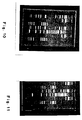
- Fig. 6 shows a spectrum of the new gel containing the same agarose polymer at the same concentration. It is clear that over the whole visible spectrum new gels exhibit only a tiny fraction of the absorbance of the standard agarose gels. It has been reported that the use of derivatized agarose polymers resulted in gels with improved optical clarity (US Patents 3,956,273 and 4,319,975). A spectrum of such a gel prepared from commercial hydroxyethylated agarose polymer is shown in Fig. 7.
- the separation range of the new gels depended on the polymer type, its concentration, cross-linker type, cross-linker concentration as well as on the cross-linking conditions.
- a gel containing 1 % polymer cross-linked with butanediol diglycidylether (0.5 ml in 20 ml) gave very good separation of DNA fragments in the size range from about 150 to 3000 bp, when electrophoresis was carried out for 1 h and 55 min at 7 V/cm.
- a 1.5 % gel containing the same constituents (1 mi in 20 ml) and run under the same conditions gave excellent resolution in the size range from about 50 to 700 bp.
- gels of the present invention comprise repeating units derived from the linear polysaccharide polymer and cross-linker.
- the use of different cross-linkers with the same polymer resulted in gels which showed different properties regarding electrophoretic separation of biomolecules. Therefore it is likely that repeating units derived from both the polymer and cross-linker participate in selective retardation of biomolecules migrating in an electric field through a gel of the present invention.
- Very good resolution of small (200 - 600 bp) DNA fragments in present gels comprising only about 1% of agarose polymer is surprising in view of prior art but in agreement with the present model according to which gel structure is much more important than gel polymer concentration.
- the gel structure may be such that a low concentration of cross-linked polymers of one type gives rise to the same resistance to migrating macromolecules as a much higher concentration of cross-linked polymer of another type. Opening of "doors” and “corridors” requires a change of different magnitude in arrangement of polymer chains and the resistance they will give to these changes clearly depends on polymer type and the way the polymer chains are cross-linked.
- the resulting viscous polymer solution was extensively dialyzed, first against water and then against 30 mM Tris-acetate-EDTA buffer pH 8.0 (TAE buffer). The dialyzed solution was recovered and stored in a dark bottle at room temperature. Due to negligible dilution during the dialysis step, the polymer concentration of the cross-linked polymer solution was taken as 0.5%.
- Gel a contains no branched cross-linker, in gel b the ratio of the branched to linear cross-linker is 0.1 : 2.9; in gel c, 0.2 : 2.8; in gel d, 0.4 : 2.6; in gel e, 0.6 : 2.4; in gel f, 0.8 : 2.2; in gel g, 1.0 : 2.0 and in gel h, 1.2 : 1.8.
- the resolution gradually becomes worse with increasing concentrations of the branched cross-linker. The worsening occurred first in the low molecular weight range (gels d-f).
- Electrophoresis at 2 V/cm was from top to bottom and at 7 V/cm from left to right.
- the 23,130 bp fragment as the biggest one, migrated the shortest distance at 2 V/cm but at 7 V/cm it migrated further than the 9,416 bp fragment (the two top bands). It actually migrated slightly ahead of the 6,557 fragment, as can be more clearly seen in the bottom lane. Contrary to the general opinion that larger DNA fragments always migrate slower in a relatively weak homogenous electric field, Fig. 2 shows that this is not the case. It should be noted that without knowing this unexpected result, identification of bands in the lane run at 7 V/cm would be incorrect.
- the 2,027, 2,232 and 4,361 DNA fragments migrated in expected order and were resolved well at both electric field strengths.
- a 1% agarose solution (72 ml) was prepared as described above and 0.660 ml of 10 N NaOH was added under stirring. Three 12 g aliquotes of this solution were taken and poured into gel molds. To the remaining solution 0.234 ml of epichlorhydrin was added and the solution vigorously stirred for about 2-3 min. The solution was then transferred to other three gel molds. Two of each gel molds, one with and the other without epichlorhydrin, were placed in closed polypropylene boxes with enough water to keep the atmosphere saturated with water vapor. The boxes were placed into incubators at 45, 55 and 65°C. The gel molds were made of polymethylmethacrylate and contained sample well formers. The gel dimensions were 92 X 62 mm and they were 1.5 mm thick. The gels were fixed onto a piece of Gel Bond (for agarose gels, FMC) during gel formation.
- FMC Gel Bond
- DNA fragments were from the 1kb ladder (BRL) with the following sizes: 12216, 11198, 10180, 9162, 8144, 7126, 6108, 5090, 4072, 3054, 2036, 1636, 1018, 516, 506, 396, 344, 298, 220, 201, 154, 134 and 75 base pairs.
- Another sample included fragments from pBR322/Hae III (Boehringer) with sizes 587, 540, 504, 458, 267, 234, 213, 192, 184, 124, 123, 104, 89, 80, 64, 57 and 51 bp.
- the gels were run at 7 V/cm for 1 hour and 50 min and then stained with ethidium bromide.
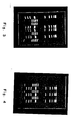
- Fig. 3 shows DNA pattern in the gel incubated at 65°C. Resolution in the whole size range is poor. The gel incubated at 55°C shows somewhat better resolution (not shown). Resolution over the whole size range is much better in the gel incubated at 45°C (Fig. 4).
- the above gels as well as others comprising less than about 2% polymer could be dried, in the open air, to a thin film without curling of the plastic support.
- the dried gels rehydrated when placed into water and the rehydration degree was dependent on the polymer and cross-linker type and quantity.
- Gels comprising agarose and epichlorhydrin prepared by incubating the reaction mixture at different temperatures for different time.
- the gels contained 0.6 g of agarose (FMC, GT grade), 0.780 ml of epichlorhydrin and 1 ml of 10 N NaOH in 40 ml. After pouring the solution into gel molds, the first gel was incubated at room temperature overnight, the second at 35°C from three days, the third at 45°C overnight and the fourth initially at 4°C overnight and then two days at room temperature. The gels were washed and equilibrated as described above. Various DNA fragments were electrophoresed in these gels at 7 V/cm for one hour and 45 min.
- Gels comprising agarose and butanediol diglycidylether prepared at different polymer/cross-linker ratios and incubated for different time periods at various temperatures.
- Gels (1.5 mm thick) were prepared from 10 ml of 1% agarose solution which was made 0.1 M in NaOH and contained 0.05, 0.1, 0.2, 0.4, 0.6 ml butanediol diglycidylether. The molds with the above reaction mixtures were incubated at room temperature for 4 days. After electrophoresis (7 V/cm, 1 h 50 min), it was observed that the migration distances of DNA fragments decreased with the increase of the butanediol diglycidylether concentration.
- the 123 bp fragment migrated out of the 1% gel but it was more than 1.5 cm far from the bottom of the 1.5% gel. Resolution of DNA fragments above about 500 bp was better in the 1% gel and resolution of smaller fragments was better in the 1.5% gel.
- Gels comprising agarose and 1,3-dichloropropanol prepared at different polymer/cross-linker ratios and incubated for different time periods.
- a series of gels was prepared comprising 1% agarose polymer and with it dissolved in 10 ml 0.25, 0.5, 1.0, 1.5, 2.0 and 2.5 mmol of 1,3-dichloropropanol (DCP) and 0.55, 1.1, 2.2, 3.3, 4.4 and 5.5 mmol of sodium hydroxide, respectively.
- DCP 1,3-dichloropropanol
- the solutions were poured into gel molds and incubated at 35°C for 2 days.
- Electrophoresis of DNA at 7 V/cm for 1 hour and 50 min showed differences in migration distances and resolution of DNA fragments.
- the 267 bp fragment (from pBR322/Hae III) was just at the bottom of the gel cross-linked with 0.25 mmol DCP, whereas it was more than 1 cm away from the bottom of the gel cross-linked with 2.5 mmol DCP.
- Another series of gels was made by preparing a 1.5 % solution of agarose in water and adding 1,3-dichloropropanol (1, 2, 3 and 4 mmol) and 10 N NaOH (2.2, 4.4, 6.6 and 8.8 mmol) to 10 ml of the warm agarose solution. The gelling was for 4 days at 35°C. Electrophoresis of DNA fragments resulted in sharper bands in the gels with 2 and 3 than in the gel with 1 mmol of 1,3-dichloropropanol. It is noteworthy that the larger DNA fragments, above 500 bp, migrated further in the gel with 4 mmol than in the gel with 3 mmol of the cross-linker.
- a series of gels containing 2 % of agarose polymers and 0, 0.1, 0.2, 0.4, 0.6, 1.0, 2.0 and 4.0 mmol of 1,3-dichloropropanol, plus NaOH in 10% molar excess over chlorine, in 10 ml were prepared by incubation at 35°C for 4 days. A portion of about 1.5 ml of each gel solution (in triplicate) was placed in polystyrene cuvettes, overlaid with paraffin oil and incubated under the same conditions. Electrophoresis of DNA fragments (7 V/cm, 1 h 50 min) showed improved resolution of DNA fragments below 1000 bp with increasing cross-linker concentration to about 1 mmol and remained good to 4.0 mmol.
- Transparency of the gels was determined by measuring the absorbance at 500 nm (Table 1) and recording a visible spectrum (400-800 nm) of the gels equilibrated at room temperature overnight.
- the spectrum of the agarose gel comprising no cross-linker is shown in Fig. 5.
- the absorbance values at all wavelengths decreased with increasing cross-linker concentrations and became essentially constant beyond 1 mmol.
- the visible spectrum of the gel prepared with 2 mmol of 1,3-dichloropropanol in 10 ml is shown in Fig. 6.
- the absorbance at 500 nm of this gel is over one order of magnitude lower than that of the standard agarose gel (Table 1).
- the UV spectrum, recorded after transferring a gel into a quartz cuvette showed a low absorbance in the 300-400 nm region, a shoulder around 260 nm a steep rise below about 230 nm.
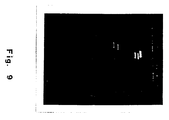
- Two dimensional electrophoresis of lambda/Hind III fragments was carried out in a gel comprising 1.5 % agarose polymer cross-linked with 1,3-dichloropropanol at 1.5 mmol per 10 ml.
- the gel was run at 2 V/cm for 16 h.
- the second dimension electrophoresis was carried out at 7 V/cm for 4 h.
- Fig. 9 shows that at 7 V/cm the 23 kbp fragment migrated further than the 9.4 kbp fragment. Since this result is the same as that shown in Fig. 2, it indicates that the mechanism of DNA migration in both gels is identical.
- FIG. 8 shows the spectrum of the gel comprising hydroxylated agarose polymer and 1.0 mmol of 1,3-dichloropropanol in 10 ml.
- the gel comprising hydroxylated agarose displays about one half of absorbance of the underivatized agarose in the visible region (compare Fig. 5 and Fig. 7).
- the present gels which in addition to the same polymers comprise a cross-linker, showed less than one tenth of absorbance of the gels with no cross-linker. Actually, the absorbance of the present gels comprising hydroxylated agarose and higher amounts of the cross-linker is almost nonexistent in the visible region (Fig. 8).
- Gels comprising agarose and 2,3-dibromopropanol prepared at different polymer/cross-linker ratios.
- a series of gels comprising 1 % agarose polymer and 0.25, 0.5, 1.0, 1.5, 2.0 and 2.5 mmol of 2,3-dibromopropanol in 10 ml was prepared.
- the gel solution included also sodium hydroxide in 10 % molar excess over bromide.
- the gels were incubated at 35° C for two days. Electrophoresis of DNA fragments showed improved resolution in the small molecular weight range, especially at 1-2 mmol of the cross-linker. The resolution was somewhat inferior to that achieved with gels cross-linked wit 1,3-dichloropropanol. Occasionally, small bubbles could be noticed in the gels.
- Gels comprising agarose and ethyleneglycol diglycidylether prepared at different polymer/cross-linker ratios.
- a series of gel comprising 1 % agarose polymer in 0.1 M NaOH and 0.05, 0.1, 0.2, 0.4 and 0.6 ml of ethyleneglycol diglycidylether in 10 ml was prepared by incubation at room temperature for 4 days. Electrophoresis showed reduced migration distances with increasing cross-linker concentration. Resolution was inferior to that obtained with butanediol diglycidylether.
- Gels comprising agarose and divinylsulfone prepared at different polymer/cross-linker ratios at various pH values for different time.
- a series of gels was prepared which comprised 1 % agarose in 10 mM NaOH and 0.020, 0.040, 0.060, 0.080 and 0.100 ml of divinylsulfone per 20 ml. After addition of the cross-linker each gel was immediately poured in the gel mold and left there for 15 min. The gel with 0.100 ml of the cross-linker was too weak for subsequent handling. The other gels were washed in water and equilibrated in the TAE buffer. Electrophoresis showed decreased migration distances with increasing cross-linker concentrations. The DNA bands in all four gels were more diffuse than in the above gel cross-linked at pH 11 for 2 days.
- Gels comprising hydroxyethylcellulose and butanediol diglycidyl ether.
- a 5 % solution of hydroxyethylcellulose (Fluka, Cat. No. 54290) was prepared in 0.1 M NaOH by prolonged stirring (1-2 days).
- 0.5 ml of butanediol diglycidylether was added under stirring and the solution incubated at room temperature for three days.
- Another gel was prepared by diluting the polymer solution with 0.1 M NaOH to 4% and adding the same amount of the cross-linker. Fully transparent gels of good mechanical stability were formed from both solutions.
- Gels comprising agarose, butanediol diglycidylether or 1,3-dichloropropanol and additional polymers comprising hydroxyethyl cellulose, polyvinyl alcohol, starch and dextran.
- a solution of 1 % agarose polymers and 0.5 % of starch was prepared in 0.1 M NaOH and to 20 ml of this solution 0.5 ml of butanediol diglycidylether was added.
- a gel which formed after incubation at 35°C for 2 days showed very good resolution of DNA fragments in the 100-2000 bp range.
- Another gel was prepared under identical conditions but it contained 0.5 % dextran instead of starch.
- the separation range was the same but DNA bands were less sharp than in the gel comprising starch.
- a gel comprising 0.5 % hydroxyethylcellulose and 1% agarose polymers was also prepared by incubation for 1 day at 35°C. Resolution of DNA fragments was very good and the 104 bp fragment migrated about 0.5 cm less than in the gel comprising starch.
- Two gels comprising polyvinylalcohol, 0.5 and 1%, in addition to 1 % agarose polymers were prepared in the same way. The gel which comprised 0.5 % of polyvinylalcohol showed sharper bands and very good resolution in the size range from 120 to 3000 bp.
- Gels were also prepared in which the order of reagent addition was changed.
- one gel was prepared by adding 2.5 mmol of 1,3-dichloropropanol to a solution of agarose and hydroxyethylcellulose (10 ml, both polymers at 1 %) and the other by adding 2.5 mmol of 1,3-dichloropropanol to a solution of agarose followed by addition of hydroxyethylcellulose.
- the final concentration of each polymer was 1 %.
- the solutions contained 5 mmol of NaOH before addition of the cross-linker. Following incubation at 35°C for two days, electrophoresis of DNA fragments showed essentially no difference in migration distances between identical DNA fragments run in the two gels.
- Gels comprising agarose and epichlorhydrin prepared by dilution of the cross-linker prior to its addition into the polymer solution.
- Dioxane (1 ml) was used to dilute the cross-linker (1 mmol) before it was added to 9 ml of 1.1 % agarose solution containing 1.1 mmol of NaOH.
- the gel solution was incubated at 35°C for two days. Following washing and equilibration, electrophoresis showed very good resolution of DNA fragments.
Landscapes
- Chemical & Material Sciences (AREA)
- Health & Medical Sciences (AREA)
- Life Sciences & Earth Sciences (AREA)
- Chemical Kinetics & Catalysis (AREA)
- Molecular Biology (AREA)
- Biochemistry (AREA)
- Medicinal Chemistry (AREA)
- Polymers & Plastics (AREA)
- Organic Chemistry (AREA)
- Engineering & Computer Science (AREA)
- Materials Engineering (AREA)
- Electrochemistry (AREA)
- General Health & Medical Sciences (AREA)
- Physics & Mathematics (AREA)
- Analytical Chemistry (AREA)
- Dispersion Chemistry (AREA)
- General Physics & Mathematics (AREA)
- Immunology (AREA)
- Pathology (AREA)
- Environmental & Geological Engineering (AREA)
- Polysaccharides And Polysaccharide Derivatives (AREA)
- Addition Polymer Or Copolymer, Post-Treatments, Or Chemical Modifications (AREA)
- Processes Of Treating Macromolecular Substances (AREA)
- Peptides Or Proteins (AREA)
Applications Claiming Priority (2)
| Application Number | Priority Date | Filing Date | Title |
|---|---|---|---|
| US998299 | 1992-12-30 | ||
| US07/998,299 US5371208A (en) | 1992-12-30 | 1992-12-30 | Preparation of cross-linked linear polysaccharide polymers as gels for electrophoresis |
Publications (3)
| Publication Number | Publication Date |
|---|---|
| EP0604862A2 true EP0604862A2 (fr) | 1994-07-06 |
| EP0604862A3 EP0604862A3 (en) | 1996-03-06 |
| EP0604862B1 EP0604862B1 (fr) | 1999-09-15 |
Family
ID=25545021
Family Applications (1)
| Application Number | Title | Priority Date | Filing Date |
|---|---|---|---|
| EP93120471A Expired - Lifetime EP0604862B1 (fr) | 1992-12-30 | 1993-12-18 | Polysaccharides linéaires et réticulés comme gels pour électrophorèse |
Country Status (6)
| Country | Link |
|---|---|
| US (3) | US5371208A (fr) |
| EP (1) | EP0604862B1 (fr) |
| JP (1) | JP3492405B2 (fr) |
| AT (1) | ATE184614T1 (fr) |
| CA (1) | CA2112450C (fr) |
| DE (1) | DE69326422T2 (fr) |
Cited By (1)
| Publication number | Priority date | Publication date | Assignee | Title |
|---|---|---|---|---|
| WO2005032252A1 (fr) * | 2003-07-14 | 2005-04-14 | Nederlandse Organisatie Voor Toegepast- Natuurwetenschappelijk Onderzoek Tno | Matrice polymere destinee a prolonger la vie en vase de fleurs coupees |
Families Citing this family (24)
| Publication number | Priority date | Publication date | Assignee | Title |
|---|---|---|---|---|
| US5496937A (en) * | 1993-05-14 | 1996-03-05 | Nakano Vinegar Co., Ltd. | Polysaccharide substances, process for producing them and use of them |
| US5679572A (en) * | 1993-09-22 | 1997-10-21 | Daicel Chemical Industries, Ltd. | Separation of chiral compounds on polysaccharide supports |
| SE9600171D0 (sv) * | 1996-01-18 | 1996-01-18 | Pharmacia Biotech Ab | Användning av tidigare känt material för separation och nya former av materialet |
| SE9601368D0 (sv) * | 1996-04-11 | 1996-04-11 | Pharmacia Biotech Ab | Process for the production of a porous cross-linked polysaccharide gel |
| US5840877A (en) * | 1996-09-05 | 1998-11-24 | Guest Elchrom Scientific | Electrophoresis gels of enhanced selectivity |
| US6203680B1 (en) | 1998-02-05 | 2001-03-20 | The United States Of America As Represented By The Secretary Of Commerce | Electrophoresis gels |
| ATE483480T1 (de) * | 1998-12-16 | 2010-10-15 | Tno | Saure superabsorbierende polysaccharide |
| EP2295971B1 (fr) * | 2001-03-09 | 2016-09-07 | TrovaGene, Inc. | Sondes de conjugué et détection optique d'analytes |
| US6632340B2 (en) | 2001-03-23 | 2003-10-14 | Bio-Rad Laboratories, Inc. | Precast gel and tray combination for submerged gel electrophoresis |
| US6500947B1 (en) * | 2001-08-24 | 2002-12-31 | Weyerhaeuser Company | Superabsorbent polymer |
| US20030219487A1 (en) * | 2002-02-28 | 2003-11-27 | Liu Xiang Yang | Process for the preparation of a small molecule gel via the addition of a branching additive |
| US20030034136A1 (en) * | 2002-07-19 | 2003-02-20 | Neogi Amar N. | Superabsorbent cellulosic fiber |
| US20030035950A1 (en) * | 2002-07-19 | 2003-02-20 | Neogi Amar N. | Superabsorbent cellulosic fiber |
| US20030034137A1 (en) * | 2002-07-19 | 2003-02-20 | Neogi Amar N. | Superabsorbent cellulosic fiber |
| US20030024663A1 (en) * | 2002-07-19 | 2003-02-06 | Neogi Amar N. | Superabsorbent cellulosic fiber |
| DE10247876A1 (de) * | 2002-10-14 | 2004-05-13 | Aventis Behring Gmbh Intellectual Property/Legal | Verfahren zur Bestimmung von Multimeren von Plasmaproteinen |
| US7326324B2 (en) * | 2002-11-20 | 2008-02-05 | Shin-Etsu Chemical Co., Ltd. | Purification and use of gellan in electrophoresis gels |
| US7025864B2 (en) * | 2003-03-10 | 2006-04-11 | Elchrom Scientific A.G. | Method and apparatus for recovering target molecules from a gel containing said target molecules |
| GB0316742D0 (en) * | 2003-07-17 | 2003-08-20 | Fermentas Uab | Electrophoretic gels and their manufacture |
| SE0402322D0 (sv) * | 2004-09-22 | 2004-09-22 | Amersham Biosciences Ab | Method of preparing a chromatography matrix |
| US8632671B2 (en) * | 2008-10-03 | 2014-01-21 | Board Of Regents, University Of Texas System | Method for measuring carbon nanotubes taken-up by a plurality of living cells |
| CA2930437C (fr) * | 2013-11-29 | 2021-08-10 | Calix Ltd | Procede et appareil pour la fabrication de ciment portland |
| JP6903617B2 (ja) * | 2018-09-19 | 2021-07-14 | 株式会社東芝 | 分子プローブの決定方法 |
| KR102314901B1 (ko) * | 2019-11-12 | 2021-10-19 | 한국화학연구원 | 물리화학적 안정성이 향상된 가교 자성 아가로스 비드 및 그의 제조 방법 |
Family Cites Families (24)
| Publication number | Priority date | Publication date | Assignee | Title |
|---|---|---|---|---|
| US3507851A (en) * | 1966-03-24 | 1970-04-21 | Victor Ghetie | Synthesis derivatives of agarose having application in electrophoresis on gel and in chromatography |
| US3959251A (en) * | 1970-06-25 | 1976-05-25 | Exploaterings Aktiebolaget T.B.F. | Stabilized agar product and method for its stabilization |
| US3956273A (en) * | 1971-06-07 | 1976-05-11 | Marine Colloids, Inc. | Modified agarose and agar and method of making same |
| US3860573A (en) * | 1971-10-01 | 1975-01-14 | Orion Yhtymae Oy | Method for cross-linking agarose or agar |
| GB1435508A (en) * | 1972-05-01 | 1976-05-12 | Rech Et Dapplications Scient S | Process for the preparation of crosslinked polysaccharide gels |
| DE2322552C2 (de) * | 1972-11-06 | 1986-08-28 | Pharmacia AB, Uppsala | Verfahren zum Abtrennen von Protein A aus Staphylococcus aureus aus einer Flüssigkeit |
| DE2322533C2 (de) * | 1972-11-06 | 1986-08-28 | Pharmacia AB, Uppsala | Verfahren zum Binden von Immunoglobulin und Hilfsmittel zur Durchführung des Verfahrens |
| SE417431B (sv) * | 1975-12-12 | 1981-03-16 | Pharmacia Fine Chemicals Ab | Dextranderivatgel for elektroforetisk separation |
| US4175183A (en) * | 1977-03-01 | 1979-11-20 | Development Finance Corporation Of New Zealand | Hydroxyalkylated cross-linked regenerated cellulose and method of preparation thereof |
| US4290911A (en) * | 1979-02-07 | 1981-09-22 | Fmc Corporation | Agarose composition, aqueous gel and method of making same |
| SE7908454L (sv) * | 1979-10-11 | 1981-04-12 | Pharmacia Fine Chemicals Ab | Medium for isoelektrisk fokusering |
| JPS5740503A (en) * | 1980-08-22 | 1982-03-06 | Seikagaku Kogyo Co Ltd | Separation of saccharides |
| US4319975A (en) * | 1980-10-20 | 1982-03-16 | Fmc Corporation | Derivatized agarose and method of making and using same |
| US4321121A (en) * | 1981-01-19 | 1982-03-23 | Beckman Instruments, Inc. | Electrophoretic technique for separating lactate dehydrogenase isoenzymes and improved electrophoretic gel for use therein |
| DE3103257A1 (de) * | 1981-01-31 | 1982-08-26 | Bayer Ag, 5090 Leverkusen | Verfahren zur herstellung des hochreinen enzyms kallikrein aus schweinepankreas-extrakten |
| US4504641A (en) * | 1982-02-19 | 1985-03-12 | Fmc Corporation | Polyacrylamide cross-linked with a polysaccharide resin as electrophoretic gel medium |
| US4459358A (en) * | 1982-12-29 | 1984-07-10 | Polaroid Corporation | Multilayer element for analysis |
| US4861705A (en) * | 1983-01-31 | 1989-08-29 | Yeda Research And Development Company, Ltd. | Method for removing components of biological fluids |
| US4693985A (en) * | 1984-08-21 | 1987-09-15 | Pall Corporation | Methods of concentrating ligands and active membranes used therefor |
| JPS63301234A (ja) * | 1987-06-02 | 1988-12-08 | Bio Meito:Kk | プラスチック表面の親水化方法 |
| US5037527A (en) * | 1987-08-28 | 1991-08-06 | Kanzaki Paper Mfg. Co., Ltd. | Reference electrode and a measuring apparatus using the same |
| US4930893A (en) * | 1988-03-25 | 1990-06-05 | Molecular Dynamics | Electrophoresis imaging system |
| US5202007A (en) * | 1989-01-05 | 1993-04-13 | Branko Kozulic | Hydrophilic synthetic gels and their use in electrophoresis |
| US5009759A (en) * | 1989-09-22 | 1991-04-23 | Board Of Regents, The University Of Texas System | Methods for producing agarose gels having variable pore sizes |
-
1992
- 1992-12-30 US US07/998,299 patent/US5371208A/en not_active Expired - Lifetime
-
1993
- 1993-12-18 DE DE69326422T patent/DE69326422T2/de not_active Expired - Lifetime
- 1993-12-18 AT AT93120471T patent/ATE184614T1/de not_active IP Right Cessation
- 1993-12-18 EP EP93120471A patent/EP0604862B1/fr not_active Expired - Lifetime
- 1993-12-24 CA CA002112450A patent/CA2112450C/fr not_active Expired - Fee Related
- 1993-12-27 JP JP33216393A patent/JP3492405B2/ja not_active Expired - Fee Related
-
1994
- 1994-06-30 US US08/268,436 patent/US5541255A/en not_active Expired - Lifetime
-
1995
- 1995-12-27 US US08/579,272 patent/US5767196A/en not_active Expired - Fee Related
Cited By (1)
| Publication number | Priority date | Publication date | Assignee | Title |
|---|---|---|---|---|
| WO2005032252A1 (fr) * | 2003-07-14 | 2005-04-14 | Nederlandse Organisatie Voor Toegepast- Natuurwetenschappelijk Onderzoek Tno | Matrice polymere destinee a prolonger la vie en vase de fleurs coupees |
Also Published As
| Publication number | Publication date |
|---|---|
| US5767196A (en) | 1998-06-16 |
| CA2112450C (fr) | 2006-02-21 |
| US5371208A (en) | 1994-12-06 |
| JP3492405B2 (ja) | 2004-02-03 |
| JPH06316592A (ja) | 1994-11-15 |
| DE69326422D1 (de) | 1999-10-21 |
| DE69326422T2 (de) | 2000-07-27 |
| US5541255A (en) | 1996-07-30 |
| EP0604862A3 (en) | 1996-03-06 |
| CA2112450A1 (fr) | 1994-07-01 |
| EP0604862B1 (fr) | 1999-09-15 |
| ATE184614T1 (de) | 1999-10-15 |
Similar Documents
| Publication | Publication Date | Title |
|---|---|---|
| EP0604862B1 (fr) | Polysaccharides linéaires et réticulés comme gels pour électrophorèse | |
| EP0050389B1 (fr) | Agarose modifié et procédé pour sa préparation et son application | |
| US5470916A (en) | Formulations for polyacrylamide matrices in electrokinetic and chromatographic methodologies | |
| US5159049A (en) | Method for stabilizing polyacrylamide gels | |
| Righetti | Of matrices and men | |
| JP4681177B2 (ja) | ダイナミックコーティング | |
| Carlsson et al. | Polymer-surfactant interactions. Binding of N-tetradecylpyridinium bromide to ethyl (hydroxyethyl) cellulose | |
| Stefansson et al. | Modification of the electrophoretic mobility of neutral and charged polysaccharides | |
| US5785832A (en) | Covalently cross-linked, mixed-bed agarose-polyacrylamide matrices for electrophoresis and chromatography | |
| US5319046A (en) | Polymers, and their use as gels for electrophoresis | |
| JP4036392B2 (ja) | 選択性の向上した電気泳動ゲル | |
| JPH09502805A (ja) | 荷電したポリマーを用いることによる、ゲルのないポリマー媒体における電気泳動の間の電気浸透の抑制 | |
| US5202007A (en) | Hydrophilic synthetic gels and their use in electrophoresis | |
| US7799194B2 (en) | Electrophoretic gels and their manufacture | |
| EP0115436A2 (fr) | Milieu pour l'électrophorèse | |
| Chiari et al. | Low viscosity DNA sieving matrices for capillary electrophoresis | |
| US5338428A (en) | Poly(N-Acylalkylenimine) electrophoresis support media | |
| Perlman et al. | Improved resolution of DNA fragments in polysaccharide-supplemented agarose gels | |
| EP0809103A2 (fr) | Dénaturants stables pour l'utilisation en techniques électrophorétiques et méthodes d'utilisation | |
| NL9101775A (nl) | Capillaire gels gevormd door ruimtelijke progressieve polymerisatie waarbij gebruik wordt gemaakt van een bewegende initiator. | |
| EP0882068B1 (fr) | Polyhydroxy-polymeres substitues par des groupes styryl-ether et gels et surfaces elabores a partir de ces polymeres | |
| Cole et al. | Modification of the electrokinetic properties of reversible electrophoresis gels for the separation and preparation of DNA: addition of linear polymers | |
| Wehr et al. | Sieving matrix selection | |
| Heller | The separation matrix | |
| Sinajon | Preparative-scale isoelectric trapping separations in a multicompartmental electrolyzer: Implementation and monitoring |
Legal Events
| Date | Code | Title | Description |
|---|---|---|---|
| PUAI | Public reference made under article 153(3) epc to a published international application that has entered the european phase |
Free format text: ORIGINAL CODE: 0009012 |
|
| AK | Designated contracting states |
Kind code of ref document: A2 Designated state(s): AT BE CH DE DK ES FR GB GR IE IT LI LU MC NL PT SE |
|
| PUAL | Search report despatched |
Free format text: ORIGINAL CODE: 0009013 |
|
| AK | Designated contracting states |
Kind code of ref document: A3 Designated state(s): AT BE CH DE DK ES FR GB GR IE IT LI LU MC NL PT SE |
|
| 17P | Request for examination filed |
Effective date: 19960812 |
|
| 17Q | First examination report despatched |
Effective date: 19970522 |
|
| GRAG | Despatch of communication of intention to grant |
Free format text: ORIGINAL CODE: EPIDOS AGRA |
|
| GRAG | Despatch of communication of intention to grant |
Free format text: ORIGINAL CODE: EPIDOS AGRA |
|
| GRAH | Despatch of communication of intention to grant a patent |
Free format text: ORIGINAL CODE: EPIDOS IGRA |
|
| GRAH | Despatch of communication of intention to grant a patent |
Free format text: ORIGINAL CODE: EPIDOS IGRA |
|
| GRAA | (expected) grant |
Free format text: ORIGINAL CODE: 0009210 |
|
| AK | Designated contracting states |
Kind code of ref document: B1 Designated state(s): AT BE CH DE DK ES FR GB GR IE IT LI LU MC NL PT SE |
|
| PG25 | Lapsed in a contracting state [announced via postgrant information from national office to epo] |
Ref country code: SE Free format text: THE PATENT HAS BEEN ANNULLED BY A DECISION OF A NATIONAL AUTHORITY Effective date: 19990915 Ref country code: NL Free format text: LAPSE BECAUSE OF FAILURE TO SUBMIT A TRANSLATION OF THE DESCRIPTION OR TO PAY THE FEE WITHIN THE PRESCRIBED TIME-LIMIT Effective date: 19990915 Ref country code: IT Free format text: LAPSE BECAUSE OF FAILURE TO SUBMIT A TRANSLATION OF THE DESCRIPTION OR TO PAY THE FEE WITHIN THE PRE;WARNING: LAPSES OF ITALIAN PATENTS WITH EFFECTIVE DATE BEFORE 2007 MAY HAVE OCCURRED AT ANY TIME BEFORE 2007. THE CORRECT EFFECTIVE DATE MAY BE DIFFERENT FROM THE ONE RECORDED.SCRIBED TIME-LIMIT Effective date: 19990915 Ref country code: GR Free format text: LAPSE BECAUSE OF NON-PAYMENT OF DUE FEES Effective date: 19990915 Ref country code: FR Free format text: LAPSE BECAUSE OF FAILURE TO SUBMIT A TRANSLATION OF THE DESCRIPTION OR TO PAY THE FEE WITHIN THE PRESCRIBED TIME-LIMIT Effective date: 19990915 Ref country code: ES Free format text: THE PATENT HAS BEEN ANNULLED BY A DECISION OF A NATIONAL AUTHORITY Effective date: 19990915 Ref country code: BE Free format text: LAPSE BECAUSE OF FAILURE TO SUBMIT A TRANSLATION OF THE DESCRIPTION OR TO PAY THE FEE WITHIN THE PRESCRIBED TIME-LIMIT Effective date: 19990915 Ref country code: AT Free format text: LAPSE BECAUSE OF FAILURE TO SUBMIT A TRANSLATION OF THE DESCRIPTION OR TO PAY THE FEE WITHIN THE PRESCRIBED TIME-LIMIT Effective date: 19990915 |
|
| REF | Corresponds to: |
Ref document number: 184614 Country of ref document: AT Date of ref document: 19991015 Kind code of ref document: T |
|
| REG | Reference to a national code |
Ref country code: CH Ref legal event code: EP |
|
| REF | Corresponds to: |
Ref document number: 69326422 Country of ref document: DE Date of ref document: 19991021 |
|
| REG | Reference to a national code |
Ref country code: IE Ref legal event code: FG4D |
|
| PG25 | Lapsed in a contracting state [announced via postgrant information from national office to epo] |
Ref country code: PT Free format text: LAPSE BECAUSE OF FAILURE TO SUBMIT A TRANSLATION OF THE DESCRIPTION OR TO PAY THE FEE WITHIN THE PRESCRIBED TIME-LIMIT Effective date: 19991215 Ref country code: DK Free format text: LAPSE BECAUSE OF FAILURE TO SUBMIT A TRANSLATION OF THE DESCRIPTION OR TO PAY THE FEE WITHIN THE PRESCRIBED TIME-LIMIT Effective date: 19991215 |
|
| PG25 | Lapsed in a contracting state [announced via postgrant information from national office to epo] |
Ref country code: LU Free format text: LAPSE BECAUSE OF NON-PAYMENT OF DUE FEES Effective date: 19991218 Ref country code: IE Free format text: LAPSE BECAUSE OF NON-PAYMENT OF DUE FEES Effective date: 19991218 |
|
| REG | Reference to a national code |
Ref country code: CH Ref legal event code: NV Representative=s name: FREI PATENTANWALTSBUERO |
|
| NLV1 | Nl: lapsed or annulled due to failure to fulfill the requirements of art. 29p and 29m of the patents act | ||
| EN | Fr: translation not filed | ||
| PG25 | Lapsed in a contracting state [announced via postgrant information from national office to epo] |
Ref country code: MC Free format text: LAPSE BECAUSE OF NON-PAYMENT OF DUE FEES Effective date: 20000630 |
|
| PLBE | No opposition filed within time limit |
Free format text: ORIGINAL CODE: 0009261 |
|
| STAA | Information on the status of an ep patent application or granted ep patent |
Free format text: STATUS: NO OPPOSITION FILED WITHIN TIME LIMIT |
|
| 26N | No opposition filed | ||
| REG | Reference to a national code |
Ref country code: IE Ref legal event code: MM4A |
|
| REG | Reference to a national code |
Ref country code: CH Ref legal event code: PUE Owner name: ELCHROM LTD TRANSFER- ELCHROM SCIENTIFIC AG |
|
| REG | Reference to a national code |
Ref country code: GB Ref legal event code: 732E |
|
| REG | Reference to a national code |
Ref country code: GB Ref legal event code: IF02 |
|
| PGFP | Annual fee paid to national office [announced via postgrant information from national office to epo] |
Ref country code: CH Payment date: 20101119 Year of fee payment: 18 |
|
| PGFP | Annual fee paid to national office [announced via postgrant information from national office to epo] |
Ref country code: GB Payment date: 20101221 Year of fee payment: 18 |
|
| PGFP | Annual fee paid to national office [announced via postgrant information from national office to epo] |
Ref country code: DE Payment date: 20101222 Year of fee payment: 18 |
|
| REG | Reference to a national code |
Ref country code: CH Ref legal event code: PL |
|
| GBPC | Gb: european patent ceased through non-payment of renewal fee |
Effective date: 20111218 |
|
| REG | Reference to a national code |
Ref country code: DE Ref legal event code: R119 Ref document number: 69326422 Country of ref document: DE Effective date: 20120703 |
|
| PG25 | Lapsed in a contracting state [announced via postgrant information from national office to epo] |
Ref country code: DE Free format text: LAPSE BECAUSE OF NON-PAYMENT OF DUE FEES Effective date: 20120703 Ref country code: GB Free format text: LAPSE BECAUSE OF NON-PAYMENT OF DUE FEES Effective date: 20111218 Ref country code: LI Free format text: LAPSE BECAUSE OF NON-PAYMENT OF DUE FEES Effective date: 20111231 Ref country code: CH Free format text: LAPSE BECAUSE OF NON-PAYMENT OF DUE FEES Effective date: 20111231 |