EP0605428B9 - Cellules pancreatiquees secretant des hormones et maintenues en culture de longue duree - Google Patents
Cellules pancreatiquees secretant des hormones et maintenues en culture de longue duree Download PDFInfo
- Publication number
- EP0605428B9 EP0605428B9 EP92914162A EP92914162A EP0605428B9 EP 0605428 B9 EP0605428 B9 EP 0605428B9 EP 92914162 A EP92914162 A EP 92914162A EP 92914162 A EP92914162 A EP 92914162A EP 0605428 B9 EP0605428 B9 EP 0605428B9
- Authority
- EP
- European Patent Office
- Prior art keywords
- cells
- medium
- hormone
- culture
- insulin
- Prior art date
- Legal status (The legal status is an assumption and is not a legal conclusion. Google has not performed a legal analysis and makes no representation as to the accuracy of the status listed.)
- Expired - Lifetime
Links
- 229940088597 hormone Drugs 0.000 title claims abstract description 120
- 239000005556 hormone Substances 0.000 title claims abstract description 120
- 230000003248 secreting effect Effects 0.000 title claims abstract description 60
- 230000007774 longterm Effects 0.000 title claims abstract description 22
- 210000004027 cell Anatomy 0.000 claims abstract description 601
- NOESYZHRGYRDHS-UHFFFAOYSA-N insulin Chemical compound N1C(=O)C(NC(=O)C(CCC(N)=O)NC(=O)C(CCC(O)=O)NC(=O)C(C(C)C)NC(=O)C(NC(=O)CN)C(C)CC)CSSCC(C(NC(CO)C(=O)NC(CC(C)C)C(=O)NC(CC=2C=CC(O)=CC=2)C(=O)NC(CCC(N)=O)C(=O)NC(CC(C)C)C(=O)NC(CCC(O)=O)C(=O)NC(CC(N)=O)C(=O)NC(CC=2C=CC(O)=CC=2)C(=O)NC(CSSCC(NC(=O)C(C(C)C)NC(=O)C(CC(C)C)NC(=O)C(CC=2C=CC(O)=CC=2)NC(=O)C(CC(C)C)NC(=O)C(C)NC(=O)C(CCC(O)=O)NC(=O)C(C(C)C)NC(=O)C(CC(C)C)NC(=O)C(CC=2NC=NC=2)NC(=O)C(CO)NC(=O)CNC2=O)C(=O)NCC(=O)NC(CCC(O)=O)C(=O)NC(CCCNC(N)=N)C(=O)NCC(=O)NC(CC=3C=CC=CC=3)C(=O)NC(CC=3C=CC=CC=3)C(=O)NC(CC=3C=CC(O)=CC=3)C(=O)NC(C(C)O)C(=O)N3C(CCC3)C(=O)NC(CCCCN)C(=O)NC(C)C(O)=O)C(=O)NC(CC(N)=O)C(O)=O)=O)NC(=O)C(C(C)CC)NC(=O)C(CO)NC(=O)C(C(C)O)NC(=O)C1CSSCC2NC(=O)C(CC(C)C)NC(=O)C(NC(=O)C(CCC(N)=O)NC(=O)C(CC(N)=O)NC(=O)C(NC(=O)C(N)CC=1C=CC=CC=1)C(C)C)CC1=CN=CN1 NOESYZHRGYRDHS-UHFFFAOYSA-N 0.000 claims abstract description 126
- 238000000034 method Methods 0.000 claims abstract description 123
- WQZGKKKJIJFFOK-GASJEMHNSA-N Glucose Natural products OC[C@H]1OC(O)[C@H](O)[C@@H](O)[C@@H]1O WQZGKKKJIJFFOK-GASJEMHNSA-N 0.000 claims abstract description 81
- 239000008103 glucose Substances 0.000 claims abstract description 81
- 229940125396 insulin Drugs 0.000 claims abstract description 64
- 102000004877 Insulin Human genes 0.000 claims abstract description 62
- 108090001061 Insulin Proteins 0.000 claims abstract description 62
- 238000000338 in vitro Methods 0.000 claims abstract description 56
- 238000004113 cell culture Methods 0.000 claims abstract description 52
- 230000028327 secretion Effects 0.000 claims abstract description 40
- 230000001965 increasing effect Effects 0.000 claims abstract description 30
- 238000012360 testing method Methods 0.000 claims abstract description 26
- 230000003914 insulin secretion Effects 0.000 claims abstract description 25
- 239000001963 growth medium Substances 0.000 claims abstract description 24
- 238000012423 maintenance Methods 0.000 claims abstract description 13
- 239000000126 substance Substances 0.000 claims abstract description 12
- 108060003199 Glucagon Proteins 0.000 claims abstract description 4
- MASNOZXLGMXCHN-ZLPAWPGGSA-N glucagon Chemical compound C([C@@H](C(=O)N[C@H](C(=O)N[C@@H](CCC(N)=O)C(=O)N[C@@H](CC=1C2=CC=CC=C2NC=1)C(=O)N[C@@H](CC(C)C)C(=O)N[C@@H](CCSC)C(=O)N[C@@H](CC(N)=O)C(=O)N[C@@H]([C@@H](C)O)C(O)=O)C(C)C)NC(=O)[C@H](CC(O)=O)NC(=O)[C@H](CCC(N)=O)NC(=O)[C@H](C)NC(=O)[C@H](CCCNC(N)=N)NC(=O)[C@H](CCCNC(N)=N)NC(=O)[C@H](CO)NC(=O)[C@H](CC(O)=O)NC(=O)[C@H](CC(C)C)NC(=O)[C@H](CC=1C=CC(O)=CC=1)NC(=O)[C@H](CCCCN)NC(=O)[C@H](CO)NC(=O)[C@H](CC=1C=CC(O)=CC=1)NC(=O)[C@H](CC(O)=O)NC(=O)[C@H](CO)NC(=O)[C@@H](NC(=O)[C@H](CC=1C=CC=CC=1)NC(=O)[C@@H](NC(=O)CNC(=O)[C@H](CCC(N)=O)NC(=O)[C@H](CO)NC(=O)[C@@H](N)CC=1NC=NC=1)[C@@H](C)O)[C@@H](C)O)C1=CC=CC=C1 MASNOZXLGMXCHN-ZLPAWPGGSA-N 0.000 claims abstract description 4
- 229960004666 glucagon Drugs 0.000 claims abstract description 4
- 102000051325 Glucagon Human genes 0.000 claims abstract 3
- 239000002609 medium Substances 0.000 claims description 151
- 210000002966 serum Anatomy 0.000 claims description 77
- 230000004044 response Effects 0.000 claims description 37
- 108091003079 Bovine Serum Albumin Proteins 0.000 claims description 28
- 239000000203 mixture Substances 0.000 claims description 27
- 229940098773 bovine serum albumin Drugs 0.000 claims description 25
- 210000004369 blood Anatomy 0.000 claims description 24
- 239000008280 blood Substances 0.000 claims description 24
- 235000001014 amino acid Nutrition 0.000 claims description 20
- 150000001413 amino acids Chemical class 0.000 claims description 20
- 230000035899 viability Effects 0.000 claims description 19
- 230000035755 proliferation Effects 0.000 claims description 17
- 150000001875 compounds Chemical class 0.000 claims description 16
- 230000000644 propagated effect Effects 0.000 claims description 13
- 238000001727 in vivo Methods 0.000 claims description 12
- QNAYBMKLOCPYGJ-REOHCLBHSA-N L-alanine Chemical compound C[C@H](N)C(O)=O QNAYBMKLOCPYGJ-REOHCLBHSA-N 0.000 claims description 10
- 235000004279 alanine Nutrition 0.000 claims description 10
- ZDXPYRJPNDTMRX-UHFFFAOYSA-N glutamine Natural products OC(=O)C(N)CCC(N)=O ZDXPYRJPNDTMRX-UHFFFAOYSA-N 0.000 claims description 10
- 239000000725 suspension Substances 0.000 claims description 10
- 239000004475 Arginine Substances 0.000 claims description 9
- ODKSFYDXXFIFQN-UHFFFAOYSA-N arginine Natural products OC(=O)C(N)CCCNC(N)=N ODKSFYDXXFIFQN-UHFFFAOYSA-N 0.000 claims description 9
- 230000001902 propagating effect Effects 0.000 claims description 9
- 230000001737 promoting effect Effects 0.000 claims description 8
- 238000012258 culturing Methods 0.000 claims description 7
- LCTONWCANYUPML-UHFFFAOYSA-M Pyruvate Chemical compound CC(=O)C([O-])=O LCTONWCANYUPML-UHFFFAOYSA-M 0.000 claims description 6
- 230000008859 change Effects 0.000 claims description 6
- JVTAAEKCZFNVCJ-UHFFFAOYSA-M Lactate Chemical compound CC(O)C([O-])=O JVTAAEKCZFNVCJ-UHFFFAOYSA-M 0.000 claims description 5
- 235000021120 animal protein Nutrition 0.000 claims description 5
- WQZGKKKJIJFFOK-VFUOTHLCSA-N beta-D-glucose Chemical compound OC[C@H]1O[C@@H](O)[C@H](O)[C@@H](O)[C@@H]1O WQZGKKKJIJFFOK-VFUOTHLCSA-N 0.000 claims description 5
- 235000018102 proteins Nutrition 0.000 claims description 5
- 108090000623 proteins and genes Proteins 0.000 claims description 5
- 102000004169 proteins and genes Human genes 0.000 claims description 5
- 230000007480 spreading Effects 0.000 claims description 5
- 238000003892 spreading Methods 0.000 claims description 5
- 239000003053 toxin Substances 0.000 claims description 5
- 231100000765 toxin Toxicity 0.000 claims description 5
- 239000007640 basal medium Substances 0.000 claims description 4
- 210000000170 cell membrane Anatomy 0.000 claims description 4
- 210000000805 cytoplasm Anatomy 0.000 claims description 4
- 239000012528 membrane Substances 0.000 claims description 4
- 239000002356 single layer Substances 0.000 claims description 4
- 231100000419 toxicity Toxicity 0.000 claims description 4
- 230000001988 toxicity Effects 0.000 claims description 4
- ODKSFYDXXFIFQN-BYPYZUCNSA-P L-argininium(2+) Chemical compound NC(=[NH2+])NCCC[C@H]([NH3+])C(O)=O ODKSFYDXXFIFQN-BYPYZUCNSA-P 0.000 claims description 3
- 231100000916 relative toxicity Toxicity 0.000 claims description 3
- 208000007536 Thrombosis Diseases 0.000 claims description 2
- 239000012090 serum-supplement Substances 0.000 claims description 2
- 230000003139 buffering effect Effects 0.000 claims 3
- 235000021321 essential mineral Nutrition 0.000 claims 3
- 150000002632 lipids Chemical class 0.000 claims 3
- 150000003839 salts Chemical class 0.000 claims 3
- 235000002639 sodium chloride Nutrition 0.000 claims 3
- 235000013343 vitamin Nutrition 0.000 claims 3
- 239000011782 vitamin Substances 0.000 claims 3
- 229940088594 vitamin Drugs 0.000 claims 3
- 229930003231 vitamin Natural products 0.000 claims 3
- 239000013060 biological fluid Substances 0.000 claims 2
- 108010017384 Blood Proteins Proteins 0.000 claims 1
- 102000004506 Blood Proteins Human genes 0.000 claims 1
- DTHNMHAUYICORS-KTKZVXAJSA-N Glucagon-like peptide 1 Chemical compound C([C@@H](C(=O)N[C@@H]([C@@H](C)CC)C(=O)N[C@@H](C)C(=O)N[C@@H](CC=1C2=CC=CC=C2NC=1)C(=O)N[C@@H](CC(C)C)C(=O)N[C@@H](C(C)C)C(=O)N[C@@H](CCCCN)C(=O)NCC(=O)N[C@@H](CCCNC(N)=N)C(N)=O)NC(=O)[C@H](CCC(O)=O)NC(=O)[C@H](CCCCN)NC(=O)[C@H](C)NC(=O)[C@H](C)NC(=O)[C@H](CCC(N)=O)NC(=O)CNC(=O)[C@H](CCC(O)=O)NC(=O)[C@H](CC(C)C)NC(=O)[C@H](CC=1C=CC(O)=CC=1)NC(=O)[C@H](CO)NC(=O)[C@H](CO)NC(=O)[C@@H](NC(=O)[C@H](CC(O)=O)NC(=O)[C@H](CO)NC(=O)[C@@H](NC(=O)[C@H](CC=1C=CC=CC=1)NC(=O)[C@@H](NC(=O)CNC(=O)[C@H](CCC(O)=O)NC(=O)[C@H](C)NC(=O)[C@@H](N)CC=1N=CNC=1)[C@@H](C)O)[C@@H](C)O)C(C)C)C1=CC=CC=C1 DTHNMHAUYICORS-KTKZVXAJSA-N 0.000 claims 1
- 101800000224 Glucagon-like peptide 1 Proteins 0.000 claims 1
- 102100040918 Pro-glucagon Human genes 0.000 claims 1
- 230000000007 visual effect Effects 0.000 claims 1
- 230000003325 follicular Effects 0.000 abstract description 49
- 102000012673 Follicle Stimulating Hormone Human genes 0.000 abstract description 39
- 108010079345 Follicle Stimulating Hormone Proteins 0.000 abstract description 39
- 229940028334 follicle stimulating hormone Drugs 0.000 abstract description 39
- 210000000496 pancreas Anatomy 0.000 abstract description 31
- 102000009151 Luteinizing Hormone Human genes 0.000 abstract description 27
- 108010073521 Luteinizing Hormone Proteins 0.000 abstract description 27
- 229940040129 luteinizing hormone Drugs 0.000 abstract description 27
- 238000004166 bioassay Methods 0.000 abstract description 20
- 229940011871 estrogen Drugs 0.000 abstract description 20
- 239000000262 estrogen Substances 0.000 abstract description 20
- 238000004519 manufacturing process Methods 0.000 abstract description 16
- 229940079593 drug Drugs 0.000 abstract description 11
- 239000003814 drug Substances 0.000 abstract description 11
- 230000001225 therapeutic effect Effects 0.000 abstract description 10
- 238000010257 thawing Methods 0.000 abstract description 8
- 229960004407 chorionic gonadotrophin Drugs 0.000 abstract description 6
- 210000004696 endometrium Anatomy 0.000 abstract description 6
- 230000002611 ovarian Effects 0.000 abstract description 6
- 230000001817 pituitary effect Effects 0.000 abstract description 6
- 239000000583 progesterone congener Substances 0.000 abstract description 6
- 206010012601 diabetes mellitus Diseases 0.000 abstract description 5
- 210000001672 ovary Anatomy 0.000 abstract description 5
- 210000001685 thyroid gland Anatomy 0.000 abstract description 5
- 241001465754 Metazoa Species 0.000 abstract description 4
- 230000002950 deficient Effects 0.000 abstract description 4
- 231100000041 toxicology testing Toxicity 0.000 abstract description 3
- 210000002993 trophoblast Anatomy 0.000 abstract description 3
- 238000013461 design Methods 0.000 abstract description 2
- 238000003860 storage Methods 0.000 abstract description 2
- 230000006259 progesterone secretion Effects 0.000 abstract 1
- 238000009256 replacement therapy Methods 0.000 abstract 1
- 229960001031 glucose Drugs 0.000 description 74
- RJKFOVLPORLFTN-LEKSSAKUSA-N Progesterone Chemical compound C1CC2=CC(=O)CC[C@]2(C)[C@@H]2[C@@H]1[C@@H]1CC[C@H](C(=O)C)[C@@]1(C)CC2 RJKFOVLPORLFTN-LEKSSAKUSA-N 0.000 description 58
- 210000004681 ovum Anatomy 0.000 description 37
- 239000000186 progesterone Substances 0.000 description 31
- 102000002322 Egg Proteins Human genes 0.000 description 29
- 108010000912 Egg Proteins Proteins 0.000 description 29
- 229960003387 progesterone Drugs 0.000 description 29
- 210000001519 tissue Anatomy 0.000 description 29
- 238000002360 preparation method Methods 0.000 description 24
- 238000003786 synthesis reaction Methods 0.000 description 24
- 230000015572 biosynthetic process Effects 0.000 description 23
- 239000000243 solution Substances 0.000 description 20
- 238000003556 assay Methods 0.000 description 19
- 210000002503 granulosa cell Anatomy 0.000 description 18
- 239000007789 gas Substances 0.000 description 15
- 230000003054 hormonal effect Effects 0.000 description 13
- 210000000227 basophil cell of anterior lobe of hypophysis Anatomy 0.000 description 12
- 230000000638 stimulation Effects 0.000 description 12
- 108010029485 Protein Isoforms Proteins 0.000 description 11
- 102000001708 Protein Isoforms Human genes 0.000 description 11
- 230000004720 fertilization Effects 0.000 description 11
- 239000003921 oil Substances 0.000 description 11
- 241000700159 Rattus Species 0.000 description 10
- MUMGGOZAMZWBJJ-DYKIIFRCSA-N Testostosterone Chemical compound O=C1CC[C@]2(C)[C@H]3CC[C@](C)([C@H](CC4)O)[C@@H]4[C@@H]3CCC2=C1 MUMGGOZAMZWBJJ-DYKIIFRCSA-N 0.000 description 10
- 238000011534 incubation Methods 0.000 description 10
- 102000004190 Enzymes Human genes 0.000 description 9
- 108090000790 Enzymes Proteins 0.000 description 9
- ZDXPYRJPNDTMRX-VKHMYHEASA-N L-glutamine Chemical compound OC(=O)[C@@H](N)CCC(N)=O ZDXPYRJPNDTMRX-VKHMYHEASA-N 0.000 description 9
- 206010028980 Neoplasm Diseases 0.000 description 9
- 229940088598 enzyme Drugs 0.000 description 9
- 238000009472 formulation Methods 0.000 description 9
- 230000006870 function Effects 0.000 description 9
- 238000003127 radioimmunoassay Methods 0.000 description 9
- VOXZDWNPVJITMN-ZBRFXRBCSA-N 17β-estradiol Chemical compound OC1=CC=C2[C@H]3CC[C@](C)([C@H](CC4)O)[C@@H]4[C@@H]3CCC2=C1 VOXZDWNPVJITMN-ZBRFXRBCSA-N 0.000 description 8
- 229920002274 Nalgene Polymers 0.000 description 8
- 229960005309 estradiol Drugs 0.000 description 8
- 229930182833 estradiol Natural products 0.000 description 8
- UCSJYZPVAKXKNQ-HZYVHMACSA-N streptomycin Chemical compound CN[C@H]1[C@H](O)[C@@H](O)[C@H](CO)O[C@H]1O[C@@H]1[C@](C=O)(O)[C@H](C)O[C@H]1O[C@@H]1[C@@H](NC(N)=N)[C@H](O)[C@@H](NC(N)=N)[C@H](O)[C@H]1O UCSJYZPVAKXKNQ-HZYVHMACSA-N 0.000 description 8
- XLYOFNOQVPJJNP-UHFFFAOYSA-N water Substances O XLYOFNOQVPJJNP-UHFFFAOYSA-N 0.000 description 8
- JGSARLDLIJGVTE-MBNYWOFBSA-N Penicillin G Chemical compound N([C@H]1[C@H]2SC([C@@H](N2C1=O)C(O)=O)(C)C)C(=O)CC1=CC=CC=C1 JGSARLDLIJGVTE-MBNYWOFBSA-N 0.000 description 7
- 230000008014 freezing Effects 0.000 description 7
- 210000004602 germ cell Anatomy 0.000 description 7
- 238000004128 high performance liquid chromatography Methods 0.000 description 7
- 150000003431 steroids Chemical class 0.000 description 7
- IJGRMHOSHXDMSA-UHFFFAOYSA-N Atomic nitrogen Chemical compound N#N IJGRMHOSHXDMSA-UHFFFAOYSA-N 0.000 description 6
- PEDCQBHIVMGVHV-UHFFFAOYSA-N Glycerine Chemical compound OCC(O)CO PEDCQBHIVMGVHV-UHFFFAOYSA-N 0.000 description 6
- 238000004458 analytical method Methods 0.000 description 6
- 230000004663 cell proliferation Effects 0.000 description 6
- 230000002338 cryopreservative effect Effects 0.000 description 6
- 230000000694 effects Effects 0.000 description 6
- 238000007710 freezing Methods 0.000 description 6
- 238000002513 implantation Methods 0.000 description 6
- 210000000287 oocyte Anatomy 0.000 description 6
- 239000013589 supplement Substances 0.000 description 6
- 210000002700 urine Anatomy 0.000 description 6
- 102000003946 Prolactin Human genes 0.000 description 5
- 108010057464 Prolactin Proteins 0.000 description 5
- 238000011161 development Methods 0.000 description 5
- 230000018109 developmental process Effects 0.000 description 5
- 210000005168 endometrial cell Anatomy 0.000 description 5
- 210000002950 fibroblast Anatomy 0.000 description 5
- 239000010410 layer Substances 0.000 description 5
- 229940097325 prolactin Drugs 0.000 description 5
- 239000003270 steroid hormone Substances 0.000 description 5
- 239000000758 substrate Substances 0.000 description 5
- 229960003604 testosterone Drugs 0.000 description 5
- IAZDPXIOMUYVGZ-UHFFFAOYSA-N Dimethylsulphoxide Chemical compound CS(C)=O IAZDPXIOMUYVGZ-UHFFFAOYSA-N 0.000 description 4
- 101000976075 Homo sapiens Insulin Proteins 0.000 description 4
- UIIMBOGNXHQVGW-UHFFFAOYSA-M Sodium bicarbonate Chemical compound [Na+].OC([O-])=O UIIMBOGNXHQVGW-UHFFFAOYSA-M 0.000 description 4
- 102000011923 Thyrotropin Human genes 0.000 description 4
- 108010061174 Thyrotropin Proteins 0.000 description 4
- 230000001464 adherent effect Effects 0.000 description 4
- 239000002775 capsule Substances 0.000 description 4
- 238000005119 centrifugation Methods 0.000 description 4
- 210000001771 cumulus cell Anatomy 0.000 description 4
- 238000002474 experimental method Methods 0.000 description 4
- 239000011521 glass Substances 0.000 description 4
- 239000003163 gonadal steroid hormone Substances 0.000 description 4
- 239000003102 growth factor Substances 0.000 description 4
- 238000005462 in vivo assay Methods 0.000 description 4
- PBGKTOXHQIOBKM-FHFVDXKLSA-N insulin (human) Chemical compound C([C@@H](C(=O)N[C@@H](CC(C)C)C(=O)N[C@H]1CSSC[C@H]2C(=O)N[C@H](C(=O)N[C@@H](CO)C(=O)N[C@H](C(=O)N[C@H](C(N[C@@H](CO)C(=O)N[C@@H](CC(C)C)C(=O)N[C@@H](CC=3C=CC(O)=CC=3)C(=O)N[C@@H](CCC(N)=O)C(=O)N[C@@H](CC(C)C)C(=O)N[C@@H](CCC(O)=O)C(=O)N[C@@H](CC(N)=O)C(=O)N[C@@H](CC=3C=CC(O)=CC=3)C(=O)N[C@@H](CSSC[C@H](NC(=O)[C@H](C(C)C)NC(=O)[C@H](CC(C)C)NC(=O)[C@H](CC=3C=CC(O)=CC=3)NC(=O)[C@H](CC(C)C)NC(=O)[C@H](C)NC(=O)[C@H](CCC(O)=O)NC(=O)[C@H](C(C)C)NC(=O)[C@H](CC(C)C)NC(=O)[C@H](CC=3NC=NC=3)NC(=O)[C@H](CO)NC(=O)CNC1=O)C(=O)NCC(=O)N[C@@H](CCC(O)=O)C(=O)N[C@@H](CCCNC(N)=N)C(=O)NCC(=O)N[C@@H](CC=1C=CC=CC=1)C(=O)N[C@@H](CC=1C=CC=CC=1)C(=O)N[C@@H](CC=1C=CC(O)=CC=1)C(=O)N[C@@H]([C@@H](C)O)C(=O)N1[C@@H](CCC1)C(=O)N[C@@H](CCCCN)C(=O)N[C@@H]([C@@H](C)O)C(O)=O)C(=O)N[C@@H](CC(N)=O)C(O)=O)=O)CSSC[C@@H](C(N2)=O)NC(=O)[C@H](CCC(N)=O)NC(=O)[C@H](CCC(O)=O)NC(=O)[C@H](C(C)C)NC(=O)[C@@H](NC(=O)CN)[C@@H](C)CC)[C@@H](C)CC)[C@@H](C)O)NC(=O)[C@H](CCC(N)=O)NC(=O)[C@H](CC(N)=O)NC(=O)[C@@H](NC(=O)[C@@H](N)CC=1C=CC=CC=1)C(C)C)C1=CN=CN1 PBGKTOXHQIOBKM-FHFVDXKLSA-N 0.000 description 4
- 239000007788 liquid Substances 0.000 description 4
- 230000000624 ovulatory effect Effects 0.000 description 4
- 230000004043 responsiveness Effects 0.000 description 4
- 229960005322 streptomycin Drugs 0.000 description 4
- 238000012546 transfer Methods 0.000 description 4
- 210000000251 trophoblastic cell Anatomy 0.000 description 4
- 210000004881 tumor cell Anatomy 0.000 description 4
- DNIAPMSPPWPWGF-GSVOUGTGSA-N (R)-(-)-Propylene glycol Chemical compound C[C@@H](O)CO DNIAPMSPPWPWGF-GSVOUGTGSA-N 0.000 description 3
- JKMHFZQWWAIEOD-UHFFFAOYSA-N 2-[4-(2-hydroxyethyl)piperazin-1-yl]ethanesulfonic acid Chemical compound OCC[NH+]1CCN(CCS([O-])(=O)=O)CC1 JKMHFZQWWAIEOD-UHFFFAOYSA-N 0.000 description 3
- 102000029816 Collagenase Human genes 0.000 description 3
- 108060005980 Collagenase Proteins 0.000 description 3
- 239000007995 HEPES buffer Substances 0.000 description 3
- 102000003864 Human Follicle Stimulating Hormone Human genes 0.000 description 3
- 108010082302 Human Follicle Stimulating Hormone Proteins 0.000 description 3
- OKKJLVBELUTLKV-UHFFFAOYSA-N Methanol Chemical compound OC OKKJLVBELUTLKV-UHFFFAOYSA-N 0.000 description 3
- 206010061538 Pituitary tumour benign Diseases 0.000 description 3
- 241000283984 Rodentia Species 0.000 description 3
- 229930006000 Sucrose Natural products 0.000 description 3
- CZMRCDWAGMRECN-UGDNZRGBSA-N Sucrose Chemical compound O[C@H]1[C@H](O)[C@@H](CO)O[C@@]1(CO)O[C@@H]1[C@H](O)[C@@H](O)[C@H](O)[C@@H](CO)O1 CZMRCDWAGMRECN-UGDNZRGBSA-N 0.000 description 3
- 206010067584 Type 1 diabetes mellitus Diseases 0.000 description 3
- 230000004075 alteration Effects 0.000 description 3
- 230000000469 anti-sperm effect Effects 0.000 description 3
- 239000012298 atmosphere Substances 0.000 description 3
- 230000029803 blastocyst development Effects 0.000 description 3
- 229960002424 collagenase Drugs 0.000 description 3
- 238000007796 conventional method Methods 0.000 description 3
- 210000002308 embryonic cell Anatomy 0.000 description 3
- 230000002124 endocrine Effects 0.000 description 3
- 239000012894 fetal calf serum Substances 0.000 description 3
- 238000007667 floating Methods 0.000 description 3
- 239000002933 immunoreactive insulin Substances 0.000 description 3
- 206010022498 insulinoma Diseases 0.000 description 3
- 239000011159 matrix material Substances 0.000 description 3
- 210000004379 membrane Anatomy 0.000 description 3
- 230000003278 mimic effect Effects 0.000 description 3
- DNIAPMSPPWPWGF-UHFFFAOYSA-N monopropylene glycol Natural products CC(O)CO DNIAPMSPPWPWGF-UHFFFAOYSA-N 0.000 description 3
- 229910052757 nitrogen Inorganic materials 0.000 description 3
- 235000015097 nutrients Nutrition 0.000 description 3
- 210000002394 ovarian follicle Anatomy 0.000 description 3
- 229940056360 penicillin g Drugs 0.000 description 3
- 239000012071 phase Substances 0.000 description 3
- 230000008569 process Effects 0.000 description 3
- 239000000047 product Substances 0.000 description 3
- 150000003146 progesterones Chemical class 0.000 description 3
- 230000002062 proliferating effect Effects 0.000 description 3
- 235000013772 propylene glycol Nutrition 0.000 description 3
- 239000005720 sucrose Substances 0.000 description 3
- 238000001356 surgical procedure Methods 0.000 description 3
- 108700012359 toxins Proteins 0.000 description 3
- 238000011282 treatment Methods 0.000 description 3
- 230000001573 trophoblastic effect Effects 0.000 description 3
- ZDRRIRUAESZNIH-BZGUUIOASA-N (2s)-1-[(4r,7s,10s,13s,16s,19r)-19-amino-7-(2-amino-2-oxoethyl)-13-[(2s)-butan-2-yl]-10-[(1r)-1-hydroxyethyl]-16-[(4-hydroxyphenyl)methyl]-6,9,12,15,18-pentaoxo-1,2-dithia-5,8,11,14,17-pentazacycloicosane-4-carbonyl]-n-[(2s)-1-[(2-amino-2-oxoethyl)amino]- Chemical compound C([C@H]1C(=O)N[C@H](C(N[C@H](C(=O)N[C@@H](CC(N)=O)C(=O)N[C@@H](CSSC[C@H](N)C(=O)N1)C(=O)N1[C@@H](CCC1)C(=O)N[C@@H](CC(C)C)C(=O)NCC(N)=O)[C@@H](C)O)=O)[C@@H](C)CC)C1=CC=C(O)C=C1 ZDRRIRUAESZNIH-BZGUUIOASA-N 0.000 description 2
- HZAXFHJVJLSVMW-UHFFFAOYSA-N 2-Aminoethan-1-ol Chemical compound NCCO HZAXFHJVJLSVMW-UHFFFAOYSA-N 0.000 description 2
- DVKQVRZMKBDMDH-UUOKFMHZSA-N 8-Br-cAMP Chemical compound C([C@H]1O2)OP(O)(=O)O[C@H]1[C@@H](O)[C@@H]2N1C(N=CN=C2N)=C2N=C1Br DVKQVRZMKBDMDH-UUOKFMHZSA-N 0.000 description 2
- 239000004382 Amylase Substances 0.000 description 2
- 102000013142 Amylases Human genes 0.000 description 2
- 108010065511 Amylases Proteins 0.000 description 2
- CIWBSHSKHKDKBQ-JLAZNSOCSA-N Ascorbic acid Chemical compound OC[C@H](O)[C@H]1OC(=O)C(O)=C1O CIWBSHSKHKDKBQ-JLAZNSOCSA-N 0.000 description 2
- 241000699800 Cricetinae Species 0.000 description 2
- XUIIKFGFIJCVMT-GFCCVEGCSA-N D-thyroxine Chemical compound IC1=CC(C[C@@H](N)C(O)=O)=CC(I)=C1OC1=CC(I)=C(O)C(I)=C1 XUIIKFGFIJCVMT-GFCCVEGCSA-N 0.000 description 2
- 102000010834 Extracellular Matrix Proteins Human genes 0.000 description 2
- 108010037362 Extracellular Matrix Proteins Proteins 0.000 description 2
- 241000282412 Homo Species 0.000 description 2
- 206010062767 Hypophysitis Diseases 0.000 description 2
- 229930182816 L-glutamine Natural products 0.000 description 2
- 102000023108 LH Receptors Human genes 0.000 description 2
- 108010011942 LH Receptors Proteins 0.000 description 2
- 108010000817 Leuprolide Proteins 0.000 description 2
- TWRXJAOTZQYOKJ-UHFFFAOYSA-L Magnesium chloride Chemical compound [Mg+2].[Cl-].[Cl-] TWRXJAOTZQYOKJ-UHFFFAOYSA-L 0.000 description 2
- CSNNHWWHGAXBCP-UHFFFAOYSA-L Magnesium sulfate Chemical compound [Mg+2].[O-][S+2]([O-])([O-])[O-] CSNNHWWHGAXBCP-UHFFFAOYSA-L 0.000 description 2
- 241000699666 Mus <mouse, genus> Species 0.000 description 2
- 241000699670 Mus sp. Species 0.000 description 2
- 206010033266 Ovarian Hyperstimulation Syndrome Diseases 0.000 description 2
- 208000007913 Pituitary Neoplasms Diseases 0.000 description 2
- 102000004576 Placental Lactogen Human genes 0.000 description 2
- 108010003044 Placental Lactogen Proteins 0.000 description 2
- 239000000381 Placental Lactogen Substances 0.000 description 2
- 206010074268 Reproductive toxicity Diseases 0.000 description 2
- 208000024770 Thyroid neoplasm Diseases 0.000 description 2
- 102000004142 Trypsin Human genes 0.000 description 2
- 108090000631 Trypsin Proteins 0.000 description 2
- 108010047196 Urofollitropin Proteins 0.000 description 2
- 230000002159 abnormal effect Effects 0.000 description 2
- 239000002253 acid Substances 0.000 description 2
- 150000007513 acids Chemical class 0.000 description 2
- 235000019418 amylase Nutrition 0.000 description 2
- 239000003098 androgen Substances 0.000 description 2
- 210000002469 basement membrane Anatomy 0.000 description 2
- 201000011510 cancer Diseases 0.000 description 2
- 230000032823 cell division Effects 0.000 description 2
- 238000006243 chemical reaction Methods 0.000 description 2
- HVYWMOMLDIMFJA-DPAQBDIFSA-N cholesterol Chemical compound C1C=C2C[C@@H](O)CC[C@]2(C)[C@@H]2[C@@H]1[C@@H]1CC[C@H]([C@H](C)CCCC(C)C)[C@@]1(C)CC2 HVYWMOMLDIMFJA-DPAQBDIFSA-N 0.000 description 2
- 238000005138 cryopreservation Methods 0.000 description 2
- 230000006378 damage Effects 0.000 description 2
- PXBRQCKWGAHEHS-UHFFFAOYSA-N dichlorodifluoromethane Chemical compound FC(F)(Cl)Cl PXBRQCKWGAHEHS-UHFFFAOYSA-N 0.000 description 2
- 230000004069 differentiation Effects 0.000 description 2
- 231100000673 dose–response relationship Toxicity 0.000 description 2
- 210000002257 embryonic structure Anatomy 0.000 description 2
- 230000006862 enzymatic digestion Effects 0.000 description 2
- 230000002255 enzymatic effect Effects 0.000 description 2
- 210000002744 extracellular matrix Anatomy 0.000 description 2
- 238000000605 extraction Methods 0.000 description 2
- 210000001733 follicular fluid Anatomy 0.000 description 2
- 238000007429 general method Methods 0.000 description 2
- 210000002149 gonad Anatomy 0.000 description 2
- 210000005260 human cell Anatomy 0.000 description 2
- JYGXADMDTFJGBT-VWUMJDOOSA-N hydrocortisone Chemical compound O=C1CC[C@]2(C)[C@H]3[C@@H](O)C[C@](C)([C@@](CC4)(O)C(=O)CO)[C@@H]4[C@@H]3CCC2=C1 JYGXADMDTFJGBT-VWUMJDOOSA-N 0.000 description 2
- 230000001900 immune effect Effects 0.000 description 2
- 238000002372 labelling Methods 0.000 description 2
- GFIJNRVAKGFPGQ-LIJARHBVSA-N leuprolide Chemical compound CCNC(=O)[C@@H]1CCCN1C(=O)[C@H](CCCNC(N)=N)NC(=O)[C@H](CC(C)C)NC(=O)[C@@H](CC(C)C)NC(=O)[C@@H](NC(=O)[C@H](CO)NC(=O)[C@H](CC=1C2=CC=CC=C2NC=1)NC(=O)[C@H](CC=1N=CNC=1)NC(=O)[C@H]1NC(=O)CC1)CC1=CC=C(O)C=C1 GFIJNRVAKGFPGQ-LIJARHBVSA-N 0.000 description 2
- 229960004338 leuprorelin Drugs 0.000 description 2
- 210000001161 mammalian embryo Anatomy 0.000 description 2
- 230000007246 mechanism Effects 0.000 description 2
- 239000002480 mineral oil Substances 0.000 description 2
- 235000010446 mineral oil Nutrition 0.000 description 2
- 231100000252 nontoxic Toxicity 0.000 description 2
- 230000003000 nontoxic effect Effects 0.000 description 2
- 238000010899 nucleation Methods 0.000 description 2
- 210000004940 nucleus Anatomy 0.000 description 2
- 210000000056 organ Anatomy 0.000 description 2
- 210000004923 pancreatic tissue Anatomy 0.000 description 2
- 239000011049 pearl Substances 0.000 description 2
- 239000002304 perfume Substances 0.000 description 2
- 210000003635 pituitary gland Anatomy 0.000 description 2
- 239000004033 plastic Substances 0.000 description 2
- 231100000683 possible toxicity Toxicity 0.000 description 2
- 238000002203 pretreatment Methods 0.000 description 2
- 229940077150 progesterone and estrogen Drugs 0.000 description 2
- 238000011084 recovery Methods 0.000 description 2
- 230000009467 reduction Effects 0.000 description 2
- 230000007696 reproductive toxicity Effects 0.000 description 2
- 231100000372 reproductive toxicity Toxicity 0.000 description 2
- 230000000717 retained effect Effects 0.000 description 2
- 238000012552 review Methods 0.000 description 2
- 238000007790 scraping Methods 0.000 description 2
- 235000017557 sodium bicarbonate Nutrition 0.000 description 2
- 229910000030 sodium bicarbonate Inorganic materials 0.000 description 2
- 230000001629 suppression Effects 0.000 description 2
- 230000004083 survival effect Effects 0.000 description 2
- 238000004114 suspension culture Methods 0.000 description 2
- 208000013076 thyroid tumor Diseases 0.000 description 2
- 229940034208 thyroxine Drugs 0.000 description 2
- XUIIKFGFIJCVMT-UHFFFAOYSA-N thyroxine-binding globulin Natural products IC1=CC(CC([NH3+])C([O-])=O)=CC(I)=C1OC1=CC(I)=C(O)C(I)=C1 XUIIKFGFIJCVMT-UHFFFAOYSA-N 0.000 description 2
- 231100000331 toxic Toxicity 0.000 description 2
- 230000002588 toxic effect Effects 0.000 description 2
- 239000003440 toxic substance Substances 0.000 description 2
- 238000002723 toxicity assay Methods 0.000 description 2
- 238000002054 transplantation Methods 0.000 description 2
- 238000003211 trypan blue cell staining Methods 0.000 description 2
- 229960001322 trypsin Drugs 0.000 description 2
- 239000012588 trypsin Substances 0.000 description 2
- 210000004340 zona pellucida Anatomy 0.000 description 2
- CBUWTGCATVNMJE-UHFFFAOYSA-N 6,6-dimethylheptanal Chemical compound CC(C)(C)CCCCC=O CBUWTGCATVNMJE-UHFFFAOYSA-N 0.000 description 1
- 208000037068 Abnormal Karyotype Diseases 0.000 description 1
- 238000012935 Averaging Methods 0.000 description 1
- 210000002237 B-cell of pancreatic islet Anatomy 0.000 description 1
- 241000894006 Bacteria Species 0.000 description 1
- 241000283690 Bos taurus Species 0.000 description 1
- 101001011741 Bos taurus Insulin Proteins 0.000 description 1
- OYPRJOBELJOOCE-UHFFFAOYSA-N Calcium Chemical compound [Ca] OYPRJOBELJOOCE-UHFFFAOYSA-N 0.000 description 1
- 241000700199 Cavia porcellus Species 0.000 description 1
- 208000006332 Choriocarcinoma Diseases 0.000 description 1
- 102000011022 Chorionic Gonadotropin Human genes 0.000 description 1
- 108010062540 Chorionic Gonadotropin Proteins 0.000 description 1
- 241000699802 Cricetulus griseus Species 0.000 description 1
- 108020004414 DNA Proteins 0.000 description 1
- 241000458966 Ennucula granulosa Species 0.000 description 1
- 102000018233 Fibroblast Growth Factor Human genes 0.000 description 1
- 108050007372 Fibroblast Growth Factor Proteins 0.000 description 1
- 102400000321 Glucagon Human genes 0.000 description 1
- 102000003886 Glycoproteins Human genes 0.000 description 1
- 108090000288 Glycoproteins Proteins 0.000 description 1
- 206010018910 Haemolysis Diseases 0.000 description 1
- 108010003272 Hyaluronate lyase Proteins 0.000 description 1
- 102000001974 Hyaluronidases Human genes 0.000 description 1
- 208000013016 Hypoglycemia Diseases 0.000 description 1
- 206010021143 Hypoxia Diseases 0.000 description 1
- 231100000750 In vitro toxicology Toxicity 0.000 description 1
- 241000274177 Juniperus sabina Species 0.000 description 1
- ROHFNLRQFUQHCH-YFKPBYRVSA-N L-leucine Chemical compound CC(C)C[C@H](N)C(O)=O ROHFNLRQFUQHCH-YFKPBYRVSA-N 0.000 description 1
- ROHFNLRQFUQHCH-UHFFFAOYSA-N Leucine Natural products CC(C)CC(N)C(O)=O ROHFNLRQFUQHCH-UHFFFAOYSA-N 0.000 description 1
- 241000829100 Macaca mulatta polyomavirus 1 Species 0.000 description 1
- 206010025538 Malignant ascites Diseases 0.000 description 1
- 108700020796 Oncogene Proteins 0.000 description 1
- 102000043276 Oncogene Human genes 0.000 description 1
- 229910019142 PO4 Inorganic materials 0.000 description 1
- 229930182555 Penicillin Natural products 0.000 description 1
- 102000035195 Peptidases Human genes 0.000 description 1
- 108091005804 Peptidases Proteins 0.000 description 1
- 102000015731 Peptide Hormones Human genes 0.000 description 1
- 108010038988 Peptide Hormones Proteins 0.000 description 1
- 201000005746 Pituitary adenoma Diseases 0.000 description 1
- 239000004365 Protease Substances 0.000 description 1
- 239000012980 RPMI-1640 medium Substances 0.000 description 1
- 235000018734 Sambucus australis Nutrition 0.000 description 1
- 244000180577 Sambucus australis Species 0.000 description 1
- BUGBHKTXTAQXES-UHFFFAOYSA-N Selenium Chemical compound [Se] BUGBHKTXTAQXES-UHFFFAOYSA-N 0.000 description 1
- UIIMBOGNXHQVGW-DEQYMQKBSA-M Sodium bicarbonate-14C Chemical compound [Na+].O[14C]([O-])=O UIIMBOGNXHQVGW-DEQYMQKBSA-M 0.000 description 1
- 102000004338 Transferrin Human genes 0.000 description 1
- 108090000901 Transferrin Proteins 0.000 description 1
- GLNADSQYFUSGOU-GPTZEZBUSA-J Trypan blue Chemical compound [Na+].[Na+].[Na+].[Na+].C1=C(S([O-])(=O)=O)C=C2C=C(S([O-])(=O)=O)C(/N=N/C3=CC=C(C=C3C)C=3C=C(C(=CC=3)\N=N\C=3C(=CC4=CC(=CC(N)=C4C=3O)S([O-])(=O)=O)S([O-])(=O)=O)C)=C(O)C2=C1N GLNADSQYFUSGOU-GPTZEZBUSA-J 0.000 description 1
- 208000027418 Wounds and injury Diseases 0.000 description 1
- 241000269370 Xenopus <genus> Species 0.000 description 1
- 239000012190 activator Substances 0.000 description 1
- -1 alanine or arginine Chemical class 0.000 description 1
- GZCGUPFRVQAUEE-SLPGGIOYSA-N aldehydo-D-glucose Chemical compound OC[C@@H](O)[C@@H](O)[C@H](O)[C@@H](O)C=O GZCGUPFRVQAUEE-SLPGGIOYSA-N 0.000 description 1
- 230000003698 anagen phase Effects 0.000 description 1
- 102000001307 androgen receptors Human genes 0.000 description 1
- 108010080146 androgen receptors Proteins 0.000 description 1
- 229940030486 androgens Drugs 0.000 description 1
- 238000010171 animal model Methods 0.000 description 1
- 229960005070 ascorbic acid Drugs 0.000 description 1
- 235000010323 ascorbic acid Nutrition 0.000 description 1
- 239000011668 ascorbic acid Substances 0.000 description 1
- 230000008901 benefit Effects 0.000 description 1
- 238000001574 biopsy Methods 0.000 description 1
- IXIBAKNTJSCKJM-BUBXBXGNSA-N bovine insulin Chemical compound C([C@@H](C(=O)N[C@@H](CC(C)C)C(=O)N[C@H]1CSSC[C@H]2C(=O)N[C@@H](C)C(=O)N[C@@H](CO)C(=O)N[C@H](C(=O)N[C@H](C(N[C@@H](CO)C(=O)N[C@@H](CC(C)C)C(=O)N[C@@H](CC=3C=CC(O)=CC=3)C(=O)N[C@@H](CCC(N)=O)C(=O)N[C@@H](CC(C)C)C(=O)N[C@@H](CCC(O)=O)C(=O)N[C@@H](CC(N)=O)C(=O)N[C@@H](CC=3C=CC(O)=CC=3)C(=O)N[C@@H](CSSC[C@H](NC(=O)[C@H](C(C)C)NC(=O)[C@H](CC(C)C)NC(=O)[C@H](CC=3C=CC(O)=CC=3)NC(=O)[C@H](CC(C)C)NC(=O)[C@H](C)NC(=O)[C@H](CCC(O)=O)NC(=O)[C@H](C(C)C)NC(=O)[C@H](CC(C)C)NC(=O)[C@H](CC=3NC=NC=3)NC(=O)[C@H](CO)NC(=O)CNC1=O)C(=O)NCC(=O)N[C@@H](CCC(O)=O)C(=O)N[C@@H](CCCNC(N)=N)C(=O)NCC(=O)N[C@@H](CC=1C=CC=CC=1)C(=O)N[C@@H](CC=1C=CC=CC=1)C(=O)N[C@@H](CC=1C=CC(O)=CC=1)C(=O)N[C@@H]([C@@H](C)O)C(=O)N1[C@@H](CCC1)C(=O)N[C@@H](CCCCN)C(=O)N[C@@H](C)C(O)=O)C(=O)N[C@@H](CC(N)=O)C(O)=O)=O)CSSC[C@@H](C(N2)=O)NC(=O)[C@H](CCC(N)=O)NC(=O)[C@H](CCC(O)=O)NC(=O)[C@H](C(C)C)NC(=O)[C@@H](NC(=O)CN)[C@@H](C)CC)C(C)C)NC(=O)[C@H](CCC(N)=O)NC(=O)[C@H](CC(N)=O)NC(=O)[C@@H](NC(=O)[C@@H](N)CC=1C=CC=CC=1)C(C)C)C1=CN=CN1 IXIBAKNTJSCKJM-BUBXBXGNSA-N 0.000 description 1
- 239000000872 buffer Substances 0.000 description 1
- 229960005069 calcium Drugs 0.000 description 1
- 239000011575 calcium Substances 0.000 description 1
- 229910052791 calcium Inorganic materials 0.000 description 1
- MKJXYGKVIBWPFZ-UHFFFAOYSA-L calcium lactate Chemical compound [Ca+2].CC(O)C([O-])=O.CC(O)C([O-])=O MKJXYGKVIBWPFZ-UHFFFAOYSA-L 0.000 description 1
- 239000001527 calcium lactate Substances 0.000 description 1
- 229960002401 calcium lactate Drugs 0.000 description 1
- 235000011086 calcium lactate Nutrition 0.000 description 1
- 239000003183 carcinogenic agent Substances 0.000 description 1
- 230000024245 cell differentiation Effects 0.000 description 1
- 210000003855 cell nucleus Anatomy 0.000 description 1
- 238000003516 cell number determination Methods 0.000 description 1
- 239000006285 cell suspension Substances 0.000 description 1
- 230000009920 chelation Effects 0.000 description 1
- SMNPLAKEGAEPJD-UHFFFAOYSA-N chembl34922 Chemical compound Cl.Cl.Cl.C1CN(C)CCN1C1=CC=C(NC(=N2)C=3C=C4N=C(NC4=CC=3)C=3C=CC(O)=CC=3)C2=C1 SMNPLAKEGAEPJD-UHFFFAOYSA-N 0.000 description 1
- 239000013043 chemical agent Substances 0.000 description 1
- 231100000045 chemical toxicity Toxicity 0.000 description 1
- 235000012000 cholesterol Nutrition 0.000 description 1
- 238000012761 co-transfection Methods 0.000 description 1
- 230000002596 correlated effect Effects 0.000 description 1
- 230000009260 cross reactivity Effects 0.000 description 1
- 230000000959 cryoprotective effect Effects 0.000 description 1
- 238000002425 crystallisation Methods 0.000 description 1
- 230000008025 crystallization Effects 0.000 description 1
- 230000003436 cytoskeletal effect Effects 0.000 description 1
- 230000007812 deficiency Effects 0.000 description 1
- 230000018044 dehydration Effects 0.000 description 1
- 238000006297 dehydration reaction Methods 0.000 description 1
- 231100000585 developmental toxicology Toxicity 0.000 description 1
- 239000012502 diagnostic product Substances 0.000 description 1
- 230000029087 digestion Effects 0.000 description 1
- 229960001760 dimethyl sulfoxide Drugs 0.000 description 1
- 201000010099 disease Diseases 0.000 description 1
- 208000037265 diseases, disorders, signs and symptoms Diseases 0.000 description 1
- 238000002224 dissection Methods 0.000 description 1
- 239000012153 distilled water Substances 0.000 description 1
- 229940000406 drug candidate Drugs 0.000 description 1
- 201000003511 ectopic pregnancy Diseases 0.000 description 1
- 238000005538 encapsulation Methods 0.000 description 1
- 230000002357 endometrial effect Effects 0.000 description 1
- 230000002708 enhancing effect Effects 0.000 description 1
- 210000003743 erythrocyte Anatomy 0.000 description 1
- 102000015694 estrogen receptors Human genes 0.000 description 1
- 108010038795 estrogen receptors Proteins 0.000 description 1
- 230000007717 exclusion Effects 0.000 description 1
- 210000003020 exocrine pancreas Anatomy 0.000 description 1
- 239000003777 experimental drug Substances 0.000 description 1
- 230000002349 favourable effect Effects 0.000 description 1
- 230000035558 fertility Effects 0.000 description 1
- 229940126864 fibroblast growth factor Drugs 0.000 description 1
- 239000012467 final product Substances 0.000 description 1
- 239000007850 fluorescent dye Substances 0.000 description 1
- 239000012737 fresh medium Substances 0.000 description 1
- 239000003517 fume Substances 0.000 description 1
- 210000003976 gap junction Anatomy 0.000 description 1
- 231100000025 genetic toxicology Toxicity 0.000 description 1
- 230000001738 genotoxic effect Effects 0.000 description 1
- 150000002303 glucose derivatives Chemical class 0.000 description 1
- 230000034659 glycolysis Effects 0.000 description 1
- 210000004368 gonadotroph Anatomy 0.000 description 1
- 230000001456 gonadotroph Effects 0.000 description 1
- 230000012010 growth Effects 0.000 description 1
- 230000036541 health Effects 0.000 description 1
- 230000008588 hemolysis Effects 0.000 description 1
- 108091008039 hormone receptors Proteins 0.000 description 1
- 238000001794 hormone therapy Methods 0.000 description 1
- 229940084986 human chorionic gonadotropin Drugs 0.000 description 1
- 229940090343 human menopausal gonadotrophin Drugs 0.000 description 1
- 229960002773 hyaluronidase Drugs 0.000 description 1
- 210000004408 hybridoma Anatomy 0.000 description 1
- 229960000890 hydrocortisone Drugs 0.000 description 1
- 230000007954 hypoxia Effects 0.000 description 1
- 230000000984 immunochemical effect Effects 0.000 description 1
- 208000015181 infectious disease Diseases 0.000 description 1
- 230000036512 infertility Effects 0.000 description 1
- 230000000266 injurious effect Effects 0.000 description 1
- 208000014674 injury Diseases 0.000 description 1
- 230000009027 insemination Effects 0.000 description 1
- 210000002660 insulin-secreting cell Anatomy 0.000 description 1
- 230000003834 intracellular effect Effects 0.000 description 1
- 210000004153 islets of langerhan Anatomy 0.000 description 1
- 238000002955 isolation Methods 0.000 description 1
- 210000003734 kidney Anatomy 0.000 description 1
- 210000001756 lactotroph Anatomy 0.000 description 1
- 230000001381 lactotroph Effects 0.000 description 1
- 230000003902 lesion Effects 0.000 description 1
- 210000002332 leydig cell Anatomy 0.000 description 1
- 239000007791 liquid phase Substances 0.000 description 1
- 229910001629 magnesium chloride Inorganic materials 0.000 description 1
- 229910052943 magnesium sulfate Inorganic materials 0.000 description 1
- 230000014759 maintenance of location Effects 0.000 description 1
- 230000003211 malignant effect Effects 0.000 description 1
- 210000004216 mammary stem cell Anatomy 0.000 description 1
- 230000008774 maternal effect Effects 0.000 description 1
- 235000012054 meals Nutrition 0.000 description 1
- 230000001404 mediated effect Effects 0.000 description 1
- 239000011873 medical mixture Substances 0.000 description 1
- 230000009245 menopause Effects 0.000 description 1
- OGFXBIXJCWAUCH-UHFFFAOYSA-N meso-secoisolariciresinol Natural products C1=2C=C(O)C(OC)=CC=2CC(CO)C(CO)C1C1=CC=C(O)C(OC)=C1 OGFXBIXJCWAUCH-UHFFFAOYSA-N 0.000 description 1
- 230000002503 metabolic effect Effects 0.000 description 1
- 230000004060 metabolic process Effects 0.000 description 1
- 230000000877 morphologic effect Effects 0.000 description 1
- WLGOTMXHWBRTJA-GACYYNSASA-N murodermin Chemical compound C([C@H]1C(=O)N[C@@H](CO)C(=O)NCC(=O)N[C@@H](CC(O)=O)C(=O)N[C@@H](CCCNC(N)=N)C(=O)N[C@@H](CSSC[C@@H](C(=O)N[C@H](C(=O)N[C@H](C(NCC(=O)N1)=O)[C@@H](C)CC)C(C)C)NC(=O)[C@H](CC(N)=O)NC(=O)[C@H]1NC(=O)[C@H]([C@@H](C)O)NC(=O)[C@H](CC=2C=CC(O)=CC=2)NC(=O)[C@H](CO)NC(=O)[C@H](CC(O)=O)NC(=O)[C@H](CC(C)C)NC(=O)[C@H](CO)NC(=O)[C@H](CCC(O)=O)NC(=O)[C@H]([C@@H](C)CC)NC(=O)[C@H](CC=2NC=NC=2)NC(=O)[C@H](CCSC)NC(=O)[C@@H]2CSSC[C@@H](C(=O)N3CCC[C@H]3C(=O)N[C@@H](CO)C(=O)N[C@@H](CO)C(=O)N[C@@H](CC=3C=CC(O)=CC=3)C(=O)N[C@@H](CC(O)=O)C(=O)NCC(=O)N[C@@H](CC=3C=CC(O)=CC=3)C(=O)N[C@H](C(N[C@@H](CC(C)C)C(=O)N[C@@H](CC(N)=O)C(=O)NCC(=O)NCC(=O)N[C@H](C(=O)N2)C(C)C)=O)CSSC1)NC(=O)CNC(=O)[C@H]1N(CCC1)C(=O)[C@H](CC=1C=CC(O)=CC=1)NC(=O)[C@H](CO)NC(=O)[C@@H](N)CC(N)=O)C(=O)N[C@@H](CCC(N)=O)C(=O)N[C@@H]([C@@H](C)O)C(=O)N[C@@H](CCCNC(N)=N)C(=O)N[C@@H](CC(O)=O)C(=O)N[C@@H](CC(C)C)C(=O)N[C@@H](CCCNC(N)=N)C(=O)N[C@@H](CC=1C2=CC=CC=C2NC=1)C(=O)N[C@@H](CC=1C2=CC=CC=C2NC=1)C(=O)N[C@@H](CCC(O)=O)C(=O)N[C@@H](CC(C)C)C(=O)N[C@@H](CCCNC(N)=N)C(O)=O)C1=CC=C(O)C=C1 WLGOTMXHWBRTJA-GACYYNSASA-N 0.000 description 1
- 230000007886 mutagenicity Effects 0.000 description 1
- 231100000299 mutagenicity Toxicity 0.000 description 1
- 239000013642 negative control Substances 0.000 description 1
- 238000010606 normalization Methods 0.000 description 1
- 238000009806 oophorectomy Methods 0.000 description 1
- 230000008520 organization Effects 0.000 description 1
- 208000013371 ovarian adenocarcinoma Diseases 0.000 description 1
- 230000027758 ovulation cycle Effects 0.000 description 1
- 230000009996 pancreatic endocrine effect Effects 0.000 description 1
- 208000021255 pancreatic insulinoma Diseases 0.000 description 1
- 244000052769 pathogen Species 0.000 description 1
- 239000008188 pellet Substances 0.000 description 1
- 229940049954 penicillin Drugs 0.000 description 1
- 239000000813 peptide hormone Substances 0.000 description 1
- NBIIXXVUZAFLBC-UHFFFAOYSA-K phosphate Chemical compound [O-]P([O-])([O-])=O NBIIXXVUZAFLBC-UHFFFAOYSA-K 0.000 description 1
- 239000010452 phosphate Substances 0.000 description 1
- 208000021310 pituitary gland adenoma Diseases 0.000 description 1
- 208000010916 pituitary tumor Diseases 0.000 description 1
- 210000002826 placenta Anatomy 0.000 description 1
- 230000003389 potentiating effect Effects 0.000 description 1
- 230000035935 pregnancy Effects 0.000 description 1
- 230000037452 priming Effects 0.000 description 1
- 239000012268 protein inhibitor Substances 0.000 description 1
- 229940121649 protein inhibitor Drugs 0.000 description 1
- 108700042226 ras Genes Proteins 0.000 description 1
- 230000036647 reaction Effects 0.000 description 1
- 230000001105 regulatory effect Effects 0.000 description 1
- 231100000687 reproductive toxin Toxicity 0.000 description 1
- 238000012827 research and development Methods 0.000 description 1
- PYWVYCXTNDRMGF-UHFFFAOYSA-N rhodamine B Chemical compound [Cl-].C=12C=CC(=[N+](CC)CC)C=C2OC2=CC(N(CC)CC)=CC=C2C=1C1=CC=CC=C1C(O)=O PYWVYCXTNDRMGF-UHFFFAOYSA-N 0.000 description 1
- 239000001022 rhodamine dye Substances 0.000 description 1
- 239000012266 salt solution Substances 0.000 description 1
- 238000009738 saturating Methods 0.000 description 1
- 238000001878 scanning electron micrograph Methods 0.000 description 1
- 238000012216 screening Methods 0.000 description 1
- 229910052711 selenium Inorganic materials 0.000 description 1
- 239000011669 selenium Substances 0.000 description 1
- 210000001625 seminal vesicle Anatomy 0.000 description 1
- 238000000926 separation method Methods 0.000 description 1
- 239000011734 sodium Substances 0.000 description 1
- 239000008279 sol Substances 0.000 description 1
- 230000021595 spermatogenesis Effects 0.000 description 1
- 238000010186 staining Methods 0.000 description 1
- 239000007858 starting material Substances 0.000 description 1
- 210000000130 stem cell Anatomy 0.000 description 1
- 238000006467 substitution reaction Methods 0.000 description 1
- 208000024891 symptom Diseases 0.000 description 1
- 210000001550 testis Anatomy 0.000 description 1
- 238000002560 therapeutic procedure Methods 0.000 description 1
- 231100000167 toxic agent Toxicity 0.000 description 1
- 231100000027 toxicology Toxicity 0.000 description 1
- 239000012581 transferrin Substances 0.000 description 1
- 238000011269 treatment regimen Methods 0.000 description 1
- 230000004102 tricarboxylic acid cycle Effects 0.000 description 1
- 229960004371 urofollitropin Drugs 0.000 description 1
- 239000012808 vapor phase Substances 0.000 description 1
- 201000010653 vesiculitis Diseases 0.000 description 1
- 230000004584 weight gain Effects 0.000 description 1
- 235000019786 weight gain Nutrition 0.000 description 1
Images





Classifications
-
- C—CHEMISTRY; METALLURGY
- C12—BIOCHEMISTRY; BEER; SPIRITS; WINE; VINEGAR; MICROBIOLOGY; ENZYMOLOGY; MUTATION OR GENETIC ENGINEERING
- C12N—MICROORGANISMS OR ENZYMES; COMPOSITIONS THEREOF; PROPAGATING, PRESERVING, OR MAINTAINING MICROORGANISMS; MUTATION OR GENETIC ENGINEERING; CULTURE MEDIA
- C12N5/00—Undifferentiated human, animal or plant cells, e.g. cell lines; Tissues; Cultivation or maintenance thereof; Culture media therefor
- C12N5/06—Animal cells or tissues; Human cells or tissues
- C12N5/0602—Vertebrate cells
- C12N5/0681—Cells of the genital tract; Non-germinal cells from gonads
- C12N5/0682—Cells of the female genital tract, e.g. endometrium; Non-germinal cells from ovaries, e.g. ovarian follicle cells
-
- C—CHEMISTRY; METALLURGY
- C12—BIOCHEMISTRY; BEER; SPIRITS; WINE; VINEGAR; MICROBIOLOGY; ENZYMOLOGY; MUTATION OR GENETIC ENGINEERING
- C12N—MICROORGANISMS OR ENZYMES; COMPOSITIONS THEREOF; PROPAGATING, PRESERVING, OR MAINTAINING MICROORGANISMS; MUTATION OR GENETIC ENGINEERING; CULTURE MEDIA
- C12N5/00—Undifferentiated human, animal or plant cells, e.g. cell lines; Tissues; Cultivation or maintenance thereof; Culture media therefor
- C12N5/06—Animal cells or tissues; Human cells or tissues
- C12N5/0602—Vertebrate cells
- C12N5/0603—Embryonic cells ; Embryoid bodies
- C12N5/0605—Cells from extra-embryonic tissues, e.g. placenta, amnion, yolk sac, Wharton's jelly
-
- C—CHEMISTRY; METALLURGY
- C12—BIOCHEMISTRY; BEER; SPIRITS; WINE; VINEGAR; MICROBIOLOGY; ENZYMOLOGY; MUTATION OR GENETIC ENGINEERING
- C12N—MICROORGANISMS OR ENZYMES; COMPOSITIONS THEREOF; PROPAGATING, PRESERVING, OR MAINTAINING MICROORGANISMS; MUTATION OR GENETIC ENGINEERING; CULTURE MEDIA
- C12N5/00—Undifferentiated human, animal or plant cells, e.g. cell lines; Tissues; Cultivation or maintenance thereof; Culture media therefor
- C12N5/06—Animal cells or tissues; Human cells or tissues
- C12N5/0602—Vertebrate cells
- C12N5/0613—Cells from endocrine organs
- C12N5/0617—Thyroid and parathyroid glands
-
- C—CHEMISTRY; METALLURGY
- C12—BIOCHEMISTRY; BEER; SPIRITS; WINE; VINEGAR; MICROBIOLOGY; ENZYMOLOGY; MUTATION OR GENETIC ENGINEERING
- C12N—MICROORGANISMS OR ENZYMES; COMPOSITIONS THEREOF; PROPAGATING, PRESERVING, OR MAINTAINING MICROORGANISMS; MUTATION OR GENETIC ENGINEERING; CULTURE MEDIA
- C12N5/00—Undifferentiated human, animal or plant cells, e.g. cell lines; Tissues; Cultivation or maintenance thereof; Culture media therefor
- C12N5/06—Animal cells or tissues; Human cells or tissues
- C12N5/0602—Vertebrate cells
- C12N5/0676—Pancreatic cells
-
- C—CHEMISTRY; METALLURGY
- C12—BIOCHEMISTRY; BEER; SPIRITS; WINE; VINEGAR; MICROBIOLOGY; ENZYMOLOGY; MUTATION OR GENETIC ENGINEERING
- C12P—FERMENTATION OR ENZYME-USING PROCESSES TO SYNTHESISE A DESIRED CHEMICAL COMPOUND OR COMPOSITION OR TO SEPARATE OPTICAL ISOMERS FROM A RACEMIC MIXTURE
- C12P21/00—Preparation of peptides or proteins
- C12P21/02—Preparation of peptides or proteins having a known sequence of two or more amino acids, e.g. glutathione
-
- G—PHYSICS
- G01—MEASURING; TESTING
- G01N—INVESTIGATING OR ANALYSING MATERIALS BY DETERMINING THEIR CHEMICAL OR PHYSICAL PROPERTIES
- G01N33/00—Investigating or analysing materials by specific methods not covered by groups G01N1/00 - G01N31/00
- G01N33/48—Biological material, e.g. blood, urine; Haemocytometers
- G01N33/50—Chemical analysis of biological material, e.g. blood, urine; Testing involving biospecific ligand binding methods; Immunological testing
- G01N33/5005—Chemical analysis of biological material, e.g. blood, urine; Testing involving biospecific ligand binding methods; Immunological testing involving human or animal cells
-
- A—HUMAN NECESSITIES
- A61—MEDICAL OR VETERINARY SCIENCE; HYGIENE
- A61K—PREPARATIONS FOR MEDICAL, DENTAL OR TOILETRY PURPOSES
- A61K38/00—Medicinal preparations containing peptides
-
- C—CHEMISTRY; METALLURGY
- C12—BIOCHEMISTRY; BEER; SPIRITS; WINE; VINEGAR; MICROBIOLOGY; ENZYMOLOGY; MUTATION OR GENETIC ENGINEERING
- C12N—MICROORGANISMS OR ENZYMES; COMPOSITIONS THEREOF; PROPAGATING, PRESERVING, OR MAINTAINING MICROORGANISMS; MUTATION OR GENETIC ENGINEERING; CULTURE MEDIA
- C12N2500/00—Specific components of cell culture medium
- C12N2500/30—Organic components
- C12N2500/32—Amino acids
-
- C—CHEMISTRY; METALLURGY
- C12—BIOCHEMISTRY; BEER; SPIRITS; WINE; VINEGAR; MICROBIOLOGY; ENZYMOLOGY; MUTATION OR GENETIC ENGINEERING
- C12N—MICROORGANISMS OR ENZYMES; COMPOSITIONS THEREOF; PROPAGATING, PRESERVING, OR MAINTAINING MICROORGANISMS; MUTATION OR GENETIC ENGINEERING; CULTURE MEDIA
- C12N2500/00—Specific components of cell culture medium
- C12N2500/30—Organic components
- C12N2500/32—Amino acids
- C12N2500/33—Amino acids other than alpha-amino carboxylic acids, e.g. beta-amino acids, taurine
-
- C—CHEMISTRY; METALLURGY
- C12—BIOCHEMISTRY; BEER; SPIRITS; WINE; VINEGAR; MICROBIOLOGY; ENZYMOLOGY; MUTATION OR GENETIC ENGINEERING
- C12N—MICROORGANISMS OR ENZYMES; COMPOSITIONS THEREOF; PROPAGATING, PRESERVING, OR MAINTAINING MICROORGANISMS; MUTATION OR GENETIC ENGINEERING; CULTURE MEDIA
- C12N2500/00—Specific components of cell culture medium
- C12N2500/30—Organic components
- C12N2500/34—Sugars
-
- C—CHEMISTRY; METALLURGY
- C12—BIOCHEMISTRY; BEER; SPIRITS; WINE; VINEGAR; MICROBIOLOGY; ENZYMOLOGY; MUTATION OR GENETIC ENGINEERING
- C12N—MICROORGANISMS OR ENZYMES; COMPOSITIONS THEREOF; PROPAGATING, PRESERVING, OR MAINTAINING MICROORGANISMS; MUTATION OR GENETIC ENGINEERING; CULTURE MEDIA
- C12N2500/00—Specific components of cell culture medium
- C12N2500/30—Organic components
- C12N2500/36—Lipids
-
- C—CHEMISTRY; METALLURGY
- C12—BIOCHEMISTRY; BEER; SPIRITS; WINE; VINEGAR; MICROBIOLOGY; ENZYMOLOGY; MUTATION OR GENETIC ENGINEERING
- C12N—MICROORGANISMS OR ENZYMES; COMPOSITIONS THEREOF; PROPAGATING, PRESERVING, OR MAINTAINING MICROORGANISMS; MUTATION OR GENETIC ENGINEERING; CULTURE MEDIA
- C12N2500/00—Specific components of cell culture medium
- C12N2500/30—Organic components
- C12N2500/38—Vitamins
-
- C—CHEMISTRY; METALLURGY
- C12—BIOCHEMISTRY; BEER; SPIRITS; WINE; VINEGAR; MICROBIOLOGY; ENZYMOLOGY; MUTATION OR GENETIC ENGINEERING
- C12N—MICROORGANISMS OR ENZYMES; COMPOSITIONS THEREOF; PROPAGATING, PRESERVING, OR MAINTAINING MICROORGANISMS; MUTATION OR GENETIC ENGINEERING; CULTURE MEDIA
- C12N2501/00—Active agents used in cell culture processes, e.g. differentation
- C12N2501/30—Hormones
- C12N2501/31—Pituitary sex hormones, e.g. follicle-stimulating hormone [FSH], luteinising hormone [LH]; Chorionic gonadotropins
-
- C—CHEMISTRY; METALLURGY
- C12—BIOCHEMISTRY; BEER; SPIRITS; WINE; VINEGAR; MICROBIOLOGY; ENZYMOLOGY; MUTATION OR GENETIC ENGINEERING
- C12N—MICROORGANISMS OR ENZYMES; COMPOSITIONS THEREOF; PROPAGATING, PRESERVING, OR MAINTAINING MICROORGANISMS; MUTATION OR GENETIC ENGINEERING; CULTURE MEDIA
- C12N2503/00—Use of cells in diagnostics
-
- G—PHYSICS
- G01—MEASURING; TESTING
- G01N—INVESTIGATING OR ANALYSING MATERIALS BY DETERMINING THEIR CHEMICAL OR PHYSICAL PROPERTIES
- G01N2800/00—Detection or diagnosis of diseases
- G01N2800/52—Predicting or monitoring the response to treatment, e.g. for selection of therapy based on assay results in personalised medicine; Prognosis
Definitions
- the invention relates to long-term proliferating in vitro cultures of hormone-secreting pancreatic cells and to methods for establishing, maintaining, and propagating hormone-secreting cells in culture.
- Hormone-secreting cells are highly differentiated and specialized for the synthesis and secretion of typically one or two specific hormones.
- hormone-secreting cells include certain cells of the pituitary gland, the endometrium, the ovary and the pancreas.
- the pituitary gland contains cells specialized for the synthesis and secretion of glycoprotein hormones known as gonadotrophins, follicle-stimulating hormone (FSH) and luteinizing hormone (LH), which act on the gonads.
- gonadotrophins secreted by the pituitary enter the blood stream and reach the gonads, where they exert their affects.
- ⁇ -cells of the islets respond to increased blood glucose concentration with an increase in insulin secretion.
- normal or tumor cells are removed from an animal or a human cell donor, placed in a liquid chemical medium in laboratory culture dishes, and maintained in an incubator under physical conditions which mimic the cells' environment in vivo .
- the medium and the incubator environment provide regulated temperature, pH, nutrients, growth factors, protection against pathogens, and in some cases a necessary substrate for cell attachment.
- most types of normal cells have a limited life span in culture.
- cells other than fibroblasts are established in primary tissue culture they do not proliferate; they may or may not continue to perform their differentiated functions over the short-term. When the cells reach the end of their natural life-span they die, thus the cultures are self-limiting.
- Hormone-secreting cells generally survive in culture for no more than 8 to 12 days, during which time they undergo few or no cycles of cell division. During the life-span of hormone-secreting cells in culture, as they have been maintained using prior known techniques, such cells typically undergo a loss of function as evidenced by a decrease in hormone production.
- embryonic cells In order to increase the life-span of hormone-secreting cells in culture, published techniques have included the use of embryonic cells.
- the strategy of starting with embryonic cells is based on the fact that embryonic cells are relatively less differentiated than adult cells, and thus can be expected to go through several cycles of cell division before becoming terminally differentiated, i.e. specialized for hormone synthesis. It is an axiom of biology that undifferentiated cells proliferate at a greater rate than differentiated cells. It is generally believed that by the time a cell has developed the necessary intra-cellular machinery for hormone synthesis and secretion, it is no longer able to divide rapidly, if at all.
- Another known strategy for establishing cells in culture is to start with cancer cells, since cancer cells would be expected to have a greater potential for proliferation.
- few cells derived from tumors or other cancerous lesions are able to become established and divide in culture.
- One cell line was established from a malignant human choriocarcinoma by propagating the tumor cells through 304 serial transplantations to the hamster cheek pouch over a period of 8 years before establishment in vitro (BeWo cell line; ATCC CCL 98; May 1990 supplement to the 1988 American Tissue Culture Collection [ATCC] catalog of cell lines).
- the BeWo cell line was reported to produce human chorionic gonadotrophin (hCG), polypeptide hormones, human placental lactogen (hPL), estrogens and progestins.
- a cell line with an abnormal karyotype was established from the malignant ascites of a patient with adenocarcinoma of the ovary (NIH:OVCAR-3; ATCC HTB 161; ref. supra ).
- the OVCAR-3 cell line was reported to possess androgen and estrogen receptors, however no synthesis of hormones by these cells was reported.
- a rat clonal beta-cell line was established in culture from a rat insulinoma (Clark, S.A., et al, 1980, Endocrinology 127:2779-2788). RIN cells were reported to secrete insulin in vitro in response to low levels of glucose, with maximal response at 0.6 mM glucose. This response is comparable to that of immature rat beta-cells, and quite different from that of normal mature rat islets which secrete in response to glucose concentrations ranging from 5 mM to 16 mM.
- tumor cells are difficult to establish in vitro .
- tumor cells that do become established in culture often possess abnormal characteristics which diminish their usefulness, such as the loss or alteration of hormone synthesis or secretogogue responsiveness.
- UMR cells derived from normal islets of neonatal rats (NG, K.W., et al., 1987, J. Endocrinol. 113:8-10
- HIT cells derived by simian virus-40 infection of hamster islets (Santerre, R.F., et al., 1981, PNAS 78:4339-4343).
- the insulin secretory output of these cell lines is low, and response to glucose is lost with passage in culture.
- Another strategy for promoting the maintenance of differentiation in culture involved the culturing of the component parts of entire follicles, including the oocyte and cumulus complex (Vanderhyden, B.C., et al. 1990 Develop. Biol. 140, 307-317).
- mouse granulosa cells were maintained in a differentiated state for 7 days.
- hMG Human gonadotrophin preparations
- FSH farnesoid hormone
- LH human gonadotrophin preparations
- the administered hMG stimulates the woman's ovaries to produce multiple pre-ovulatory follicles, which are subsequently aspirated for in vitro fertilization.
- hMG is currently derived from the urine of post-menopausal women. Each lot differs according to the age and endocrine status of the urine donors, the differences being in both concentration and types of isoforms present in the final product.
- HPLC high-density lipoprotein
- RIA radioimmunoassay
- the need for biopotency assessments of gonadotrophins has been acknowledged by several national agencies, including the U. s. Food and Drug Administration (FDA).
- the assays currently accepted by the FDA are in vivo assays conducted in rodents.
- the in vivo assay for FSH is the Steelman-Pohley assay which is based on mouse uterine weight gain.
- One in vivo assay for LH is the rat Leydig cell assay; the degree of proliferation in the seminal vesicles of the immature male rat is the index for assessing biopotency of LH.
- Another in vivo bioassay for LH is the rat ovarian ascorbic acid depletion test.
- the current source for therapeutic gonadotrophins is limited by the inherent biological variability among the human donors.
- the major source of human gonadotrophin human menopausal gonadotrophin, hMG
- the post-menopausal women living within the convent pool their urine for sale to a company which derives each lot of its product from a batch of the pooled urine. Since the age and endocrine status of each donor to the urine pool changes from batch to batch, each preparation of gonadotrophin is different in chemical composition and in biopotency. Thus there exists a need for a consistent source of human gonadotrophin.
- estrogen and progesterone compounds are prepared by standardized chemical synthesis.
- the class of compounds designated "estrogens” produced normally in the human female includes several different formulae and isoforms.
- progestins includes several different compounds and isoforms.
- Toxicity testing is another field which scientists have attempted to address through use of in vitro systems (for review see: Nau, H. 1990. in Methods in Developmental Toxicology: Use in Defining Mechanisms and Risk Parameters. Eds. G.L. Kimmel, D. M. Kochhar, CRC Press, pp. 29-43.)
- in vitro systems based on hormone-secreting cells have been very limited, partly because of the difficulties inherent in maintaining hormone-secreting cells in culture.
- the reproductive toxicity of a compound could be assessed by the capacity of the compound to impair hormone-secretion from cells which characteristically secrete a given hormone.
- a non-human cell line (Chinese hamster ovary, CHO) has been extensively utilized for toxicology analyses, (Tsushimoto, G., et al., 1983 Arch Environ Contam Toxicol, 12 , 721).
- Amphibian oocytes have been proposed as a system for the testing of tumor promoting compounds (U.S. Patent No: 4,983,527; issued January 8, 1991).
- Xenopus testis explants have been proposed for the testing of mutagenicity and genotoxicity during spermatogenesis (U.S. Patent No: 4,929,542; issued May 29, 1990).
- Cell lines established from rat embryo fibroblasts have been proposed as systems for screening for protein inhibitors and activators (U.S. Patent No. 4,980,281; issued December 25, 1990). Since it is generally recognized that humans have different toxic susceptibilities compared to amphibians and rodents, the above proposed in vitro testing systems are limited by the non-human origins of the cells.
- This invention provides in a first aspect a method for establishing a cell culture of hormone-secreting human pancreatic cells in vitro comprising the steps of:
- the invention also provides a method for establishing a cell culture of hormone-secreting human pancreatic cells in vitro comprising the steps of :
- the methods according to the invention advantageously provide for the long-term maintenance and propagation in defined media of hormone-secreting cells in vitro .
- the cells secrete hormones characteristic of their tissue of origin in this case.
- the secreted hormones include insulin and glucagon.
- Cells may respond to stimulation by secretogogues with increased hormone secretion.
- the methods of the invention also provide for the production of established hormone-secreting pancreatic cell lines which may be cryopreserved and propagated from frozen stock, and which retain a characteristic hormone-secretion profile over several generations in vitro .
- the secreted hormones may be therapeutically useful by propagating hormone-secreting cells in culture and isolating the secreted hormones from the culture medium surrounding the cells.
- the hormone secreting cells in culture may also be suitable for an in vitro bio-assay for the biopotency of therapeutic hormone preparations.
- an in vitro toxicology assay based on changes in hormone secretion by human pancreatic cells in vitro in response to contact by the chemical agent being tested is also provided.
- the invention provides a method of determining the toxicity of a test compound comprising the steps of:
- the cell cultures obtainable by the methods of the described also form part of the invention, which may also be particularly useful for implantation in a subject to replace the deficient hormones.
- Figure 1 is an outline of the general method for establishing and propagating hormone-secreting cells in vitro .
- Figure 2 is a photomicrograph (4900X total magnification) of a typical culture of human ovarian follicular cells after the completion of step 8 in Figure 1.
- Figure 3 provides a second example of the cells depicted in Figure 2.
- Figure 4 provides a third example of the cells depicted in Figure 2.
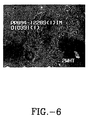
- Figure 6 is a photomicrograph of a typical initial sub-culture of follicular cells (SC-1; see Example 2).
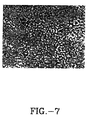
- Figure 7 is a photomicrograph (2500X approximate total magnification) of a typical sub-culture of follicular cells after more than 20 rounds of serial sub-culture (see Example 2). The cells were seeded four days previously at a density of 10 6 cells per 15 ml medium in a 25cm 2 flask.
- Figure 8 is a photomicrograph (1100X approximate total magnification) of a "blastema-like" outgrowth of cells at the edge of a section of original pituitary macroadenoma which had been placed in culture 9 days previously.
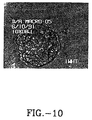
- Figure 9 is a photomicrograph (2200X total magnification) of a group of cells which detached from an outgrowing "blastema-like" projection after the original piece of pituitary adenoma had been in culture for 18 days.
- Figure 10 is another photomicrograph taken two days later of the same group of cells as in Figure 9 (20 days total culture time for the original tumor section). The magnification is the same as in Figure 9, thus illustrating by comparison the rapid proliferation of these cells.
- Figure 11 is a histogram depicting increased insulin secretion by human pancreas cells in response to increased glucose concentration.
- cells with hormone-secreting potential are carefully isolated from a surgical tissue sample according to methods provided herein.
- cells to be established in culture are obtained from a human donor undergoing a medical procedure during which tissue is removed as a part of the procedure (step 2).
- the cells are gently isolated from the tissues (step 3) and initially established in culture under conditions which sufficiently mimic the in vivo environment so that the viability of the cells is promoted (steps 4-6).
- the cells are selected for hormone-secreting potential (step 9).
- Selected cells are placed into sub-cultures and further maintained and propagated in defined medium (steps 10 and 11).
- the defined medium is formulated to promote cell proliferation and the continued viability of the sub-cultures.
- Useful hormones may be isolated from the medium (step 12). After sufficient cells are propagated, the cell cultures are characterized for proliferation rate, secretion of hormones, and responses to secretogogues and toxins (step 13). Aliquots may be cryopreserved (step 14) and tested for retention of cell line characteristics. When a cell line is sufficiently characterized, it may be designated an established cell line and may be used for the production of hormones or for biopotency or toxicity assays.
- Cells obtained from ovarian follicles may be removed from a donor undergoing in vitro fertilization.
- the donor has typically been treated with a combined hormonal regimen to stimulate the development of multiple pre-ovulatory follicles (step 1).
- the hormonal regimen typically includes leuprolide acetate for midluteal suppression combined with human menopausal hormone (hMG) and follicle-stimulating hormone (FSH) for controlled ovarian hyperstimulation.
- human chorionic gonadotrophin may be administered to promote further growth and differentiation of the follicle.
- the above described hormonal regimen stimulates the proliferation of the granulosa cells surrounding the ovum.
- two populations of granulosa cells develop: 1) mural granulosa cells which maintain contact with the basal lamina enclosing the follicle, and 2) the cumulus granulosa cells, also known as zona radiata cells, closest to the ovum, which are coupled by gap junctions to both the oocyte and other surrounding cumulus cells.
- Gonadotrophin stimulation of granulosa cell differentiation is characterized by changes in cell-cell contacts, cell shape, cytoskeletal organization, and biosynthesis of estrogens, progesterone, progestins, extracellular matrix components, and hormone receptors.
- FSH acts by a cAMP mediated mechanism on undifferentiated granulosa cells to stimulate the enzymatic activity required for the metabolism of cholesterol to progesterone and for the conversion of androgens to estrogens.
- FSH and estrogen stimulate the production of granulosa cell plasma membrane associated LH receptors.
- granulosa cells become responsive to LH and will then synthesize progesterone in response to added LH.
- tissue refers to the entire follicle, including the basal lamina, cumulus granulosa cells, mural granulosa cells and ovum.
- non-germ line follicular cells accompany the extracted ova (step 2), and these non-germ line cells would usually be discarded during the normal course of the in vitro fertilization method.
- Cells are isolated for culture (step 3) from the follicles of those patients who donate their non-germ line cells for medical research and development for health care applications.
- follicular cells which exhibit low basal levels of hormone secretion, but which respond to gonadotrophin with increased hormone secretion, are desirable for in vitro biopotency assays for therapeutic gonadotrophin preparations. Therefore, follicular cells may be obtained from a donor who has undergone only the first part of the above described pretreatment regimen. The donor has received hMG and FSH but not hCG. In this embodiment, relatively undifferentiated follicular cells are obtained from growing primary follicles, rather than from mature pre-ovulatory follicles.
- Follicular cells may also be obtained from a donor who has not undergone any pretreatment regimen.
- relatively undifferentiated follicular cells are obtained from primary follicles, rather than from hormone-stimulated pre-ovulatory follicles.
- follicular cells obtained by this method exhibit low basal levels of hormone secretion while retaining the ability to respond to gonadatrophin with increased hormone secretion. Therefore, cells obtained by this embodiment are likewise useful for in vitro gonadotrophin bio-potency assays.
- tissue is not subjected to enzymatic digestion and (2) the cells are not subjected to centrifugation.
- enzymes such as collagenase, hyaluronidase and trypsin in order to release cells from the tissue matrix.
- enzyme treatment typically rely on centrifugation to isolate cells from the resulting debris.
- substantially enzyme free refers to a process in which enzymes are not added to the incubation medium. It is understood that small amounts of enzymes such as proteases may be present in any medium, and the presence thereof is allowed within the definition of the term “substantially enzyme-free”.
- the first step after obtaining the follicular cells is to place cells, with or without the ovum, in an establishing medium (EM; step 4).
- establishing medium refers to a solution which essentially mimics the critical parameters of the in vivo environment from which the cells were derived. Five specific formulations for establishing media are disclosed herein.
- Critical parameters of the in vivo environment of follicular cells include an osmolarity which is reduced compared to the osmolarity typically used in previous attempts to culture hormone-secreting cells.
- the osmolarity of follicular fluid is generally in the range of 270 to 275 mOsm.
- the final osmolarity of an establishing culture medium of the present invention ranges preferably from about 248 mOsm to about 275 mOsm, most preferably from about 269 mOsm to about 275 mOsm.
- the establishing medium is supplemented with serum obtained from the specific cell donor (establishing medium, homologous serum; EMHS).
- EMHS homologous serum
- the EMHS contains 0.5% to 15% homologous serum, more preferably 5% to 10% homologous serum, most preferably 7% to 8% homologous serum.
- homologous serum provides an environment which contains no proteins other than those proteins which are specific to the individual from whom the cells were derived, and thus favors the viability of the donated cells because of the minimization of immunologic reaction. Additionally, donor serum may be favorable for its specific content and concentration of hormones such as progesterones, estrogens, and gonadotrophins.
- the establishing medium is supplemented with serum obtained from an individual other than the specific cell donor (establishing medium,non-homologous serum; EMNS).
- EMNS establishing medium,non-homologous serum
- the EMNS contains 0.5% to 15% non-homologous serum, more preferably 5% to 10% non-homologous serum, most preferably 7% to 8% non-homologous serum.
- medium may also be variously supplemented with hormones and growth factors to promote the survival of cells with desired characteristics, such as elevated progesterone production.
- cells are successfully established in a defined medium which does not contain serum, but rather is supplemented with bovine serum albumin (BSA) or a combination of BSA and purchased serum substitute.
- BSA bovine serum albumin
- defined medium refers to a culture medium which does not contain human serum, and thus contains fewer unknown, unassayed components than does human serum-containing medium. It is understood that medium which contains any animal-derived product, such as BSA, is not as completely defined as a medium which is composed entirely of chemically synthesized components.
- BSA-containing media and serum-substitute containing media are commonly referred to as "defined media”.
- the generic term "defined medium” refers to any medium which does not contain human serum.
- EM-01 medium-01
- DM-1 defined medium-1
- DMSS defined medium, serum substitute
- the term "serum substitute” refers to a combination of proteins and growth factors, preferably added in the amount of about 5% to about 15% of the total volume of the medium.
- EM-01 was originally devised to promote the viability of fertilized ova from a donor whose serum contained anti-sperm antibody. Fortuitously, the substitution of BSA for donor serum also promoted the viability of non-germ line follicular cells which were cultured at the same time as the ova. Therefore, EM-01 is a preferred establishing medium for follicular cells.
- the media designated DM-1 and DMSS were originally formulated for use after 30 days in EM containing human serum (EMHS and EMNS).
- EM-01, DM-1 and DMSS share the distinguishing characteristics of EM containing human serum in that they also have a lower osmolarity than do conventional culture media.
- the osmolarity of EM-01, DM-1 and DMSS is preferably in the range of about 248 mOsm to about 300 mOsm, more preferably in the range of about 260 mOsm to about 280 mOsm, most preferably about 270 mOsm to about 275 mOsm.
- the media formulations employed in this method may contain, in addition to glucose, additional energy sources such as lactate and pyruvate.
- energy source refers to a chemical which can be used by the cells to make ATP either through glycolysis or through the tricarboxylic acid cycle.
- the ovum and surrounding non-germ line follicular cells are placed together in EM (EMHS, EMNS, EM-01, DM-1, DMSS; step 2a).
- EM EM
- EMNS EM-01, DM-1, DMSS
- step 2a sperm may be added to the EM, and the cells may be incubated for an additional 20-24 hours (step 2b).
- spermatozoa provide an enzyme known as acrosomal enzyme, which gently releases the non-germ line cells from the matrix surrounding the ovum. It is understood that the amount of spermatozoa-associated acrosomal enzyme is small and is not comparable to the large amounts of enzymes such as collagenase which are employed in traditional methods for digesting tissue matrices to release cells.
- cells of the corona radiata may be manually stripped from the ovum through use of a hollow needle as described in Example 1 (step 2c).
- follicular cells which do not adhere to the ovum may be simply isolated from the surrounding medium (step 3).
- Viable cells are selected through a dissecting microscope (90X magnification; step 5).
- the term "viable” refers to cells which typically show monolayer spreading on the bottom of a culture dish. Viability may be confirmed in a dispensable sample of cells by the method of trypan blue dye exclusion as is well known in the art.
- the method of Fig. 1 is again distinguished in step 5, as well as in step 3 supra , from the methods of Amsterdam, et al ( supra ) and Pellicer, et al ( supra ) in that no centrifugation or gradient separation is used in the present technique. Instead, cells are manually and gently selected and isolated for culture, which preserves the membrane integrity of a larger number of cells as compared with cell populations that have undergone centrifugation.
- the method is again distinguished from techniques which require enzymatic digestion of tissue to isolate cells. Such well known techniques typically involve incubation in trypsin or collagenase, which may be injurious to the cells desired for the practice of this invention.
- Selected cells are placed in fresh EM with the aid of a fine glass micropipette and incubated for a further 24 to 96 hours (step 6). It is preferred to flood the cells with the medical blood gas mixture described supra to best mimic gas conditions in vivo. At this point, cells may be divided into cultures containing 50 to 100 cells in fresh EM (step 7).
- the selected cells are further maintained in the establishing medium for up to about 30 days (step 8).
- culture medium is refreshed only every 6 to 7 days. This produces a slight hypoxia of the cultures and is a physiological selection against fibroblasts, since rapidly dividing cells such as fibroblasts do not survive in a lowered O 2 atmosphere (Aladjem, S. et al 1981 Placenta Suppl 3 , 175).
- the lowered O 2 atmosphere is concomitantly a positive selection for cells of granulosa origin since their normal in vivo milieu is of a similar condition.
- a high proportion of the cells are able to survive and proliferate without attachment to a substrate.
- a number of the cells spread on the bottom of the culture plate and form attachments to the plastic.
- a given cell culture may comprise both cell clumps floating in suspension, cell clumps adhering to the plastic dish, and cells spreading in monolayer fashion on the bottom of the dish.
- cells are chosen for hormone-secreting potential (step 9) according to morphological criteria as depicted in Figures 2, 3, and 4.
- the circled clumps of cells are representative of the type of cell clumps that are selected.
- small clumps of 2 to 12 cells are chosen, most preferably clumps of 4 to 5 cells.
- Selected clumps are combined into groups of 50-150 cells (step 9a) or alternatively into groups of 10 - 15 cells (step 10). These groups are designated first sub-cultures (SC-1). Because of the spatial arrangement of cells within a selected clump, i.e.
- FIG. 6 shows a typical initial sub-culture of follicular cells in SC-1.
- the dark spots are particularly dense clumps of cells in which individual cells were not photographically resolvable.
- the lighter colored cell layers in between the dark spots are cells which spread on the bottom of the culture plate and on which the camera was focused. (The white lettering on the photo is merely a record-keeping designation and does not contain information for this patent application.)
- Criteria for cells with hormone-secreting potential include an approximately spheroid or ovoid shape, and homogeneity of size and shape within a clump, as illustrated by the circled clumps in Figures 2, 3, and 4. These selection criteria are based on the Applicant's observations of follicular cells, and specifically of granulosa cells, using phase contrast optics and microsurgical manipulations, and on the study of histological preparations and scanning electron micrographs of follicular cells. It will be apparent to one of skill in the art that the above described and depicted selection criteria are to be understood in the context of comparison to other, non-selected cells in the field of view ( Figures 2, 3, and 4).
- the selected cell clumps contain fewer cells than the non-selected clumps, and the individual cells are more homogeneous than cells of the non-selected clumps.
- Selected cells have a smooth-appearing plasma membrane, in contrast to non-selected cells which typically have plasma membranes with ruffled leading edges. Also, in the case of follicular cells, the cytoplasm of selected cells typically appears smooth rather than granular.
- Methods for removing cells to subcultures are harvested for sub-culture by gently scraping the cells from the plate with the aid of a fine glass micropipette.
- This method contrasts with methods which use enzymatic or other harsh methods such as calcium chelation to detach cells from substrate.
- no detachment step is necessary.
- Selected cells are transferred to a defined medium (steps 10 and 11, e.g. DM-1, DMSS, described supra ).
- the defined medium formulations described herein allow the cells to proliferate and to maintain hormone secretion capability.
- the culture flasks or plates containing cells and medium are flooded with the medical blood gas mixture described supra and kept sealed within a 37°C incubator.
- the cells proliferate in culture over a long term of at least about 2 months, more preferably at least 5.5 months, most preferably longer than 15 months.
- the cell cultures are typically flooded with medical blood gas mixture every other day and subdivided as needed according to the density of the proliferating cell population.
- the defined medium may have a higher initial pH than that typically used in previous attempts to culture follicular cells.
- the pH values of the media designated DM-1 and DMSS are initially adjusted to 7.65, in contrast to the conventional culture medium pH of 7.4.
- the rationale for using a higher initial pH is based on the fact that follicular fluid and granulosa cells exist in vivo in a slightly elevated CO 2 environment and mammalian embryos have a higher pH when compared to maternal serum (Nau, H. et al 1986 Nature 323 , 276-279; Nau, H. 1990 supra ).
- the higher initial pH of the establishing medium may protect the cells from damage by weak acids by minimizing the production of same.
- the initial pH of 7.65 is offered only as an enabling suggestion.
- the establishing media designated EMHS, EMNS, and EM-01 have pH values ranging from 7.2 to 7.45, thus a more conventional pH is sufficient to establish hormone-secreting cells in culture, and may also be sufficient to propagate such cells in culture.
- cell number typically increases about 2-fold, preferably about 3-fold or greater.
- cell proliferation rate increases to a doubling time of preferably about 72 hours, more preferably about 48 to 36 hours or less.
- Figure 6 shows the typical appearance of an initial sub-culture after 14 days in culture (step 10).
- the dark spots are large cell clumps comprising 200 cells or greater; the lighter colored cell areas between the clumps are layers composed of single cells or a few cells spreading on the bottom of the culture dish.
- Figure 7 is a photomicrograph of follicular cells after more than 20 sub-cultures (step 11) which were plated at a density of 10 6 cells/ 15 ml/ 25cm 2 four days previous to the photographic date.
- the camera lens is focused on only the lower layer of cells closest to the bottom of the culture dish, and there are many layers of floating clumps of cells between the medium surface and the lowest cell layer.
- the typical cell density of a culture similar to that depicted in Figure 7 is preferably about 3 x 10 6 to about 4 x 10 6 cells/15 ml/25 cm 2 .
- an individual culture may exhibit slowed or halted proliferation.
- a "dormant" culture may be useful when differentiated characteristics, such as responses to secretogogues, are preserved.
- a dormant culture may be useful for the bio-assay of gonadotrophin potency as described below.
- a proliferating culture may also be used in a gonadotrophin bio-assay.
- a large population of like cells is obtained (step 11).
- portions of the population are frozen in a cryoprotective medium and are stored in liquid nitrogen (step 14).
- Protocols for freezing cells as described in Example 15, represent traditional techniques as well as more complex techniques which are currently used for the freezing of embryos.
- the large size of certain hormone-secreting cells in culture particularly pituitary cells ( Figures 8 - 10; Example 13)
- it is suitable to employ freezing techniques which are designed for use with embryos, which are of a comparably large size.
- simple and conventional techniques may be employed when a smaller viability percentage is considered acceptable.
- the cells may exhibit the characteristic proliferation and hormone-secretion patterns of the population from which they were derived.
- a cell population is propagated and cryopreserved to provide an essentially unlimited supply of cells having defined characteristics. Such a characterized and stored population is known as an "established cell line".
- the cells are capable of secreting at least one human hormone.
- the cells secrete at rates sufficient for the isolation of the hormone(s).
- the cells of a specific population may not secrete a high basal level of steroid hormone.
- the cells do, however, respond to stimulation by gonadotrophins with detectably increased steroid hormone secretion.
- a maximum dose of FSH for instance, stimulates a 2-20 fold increase, more preferably a 4-10 fold increase, most preferably a 5-8 fold increase in the amount of steroid hormone secreted into the medium over a period of from 24 to 48 hours.
- the increase in steroid secretion may be correlated with the dose and type of gonadotrophin administered to the cells, thus defining the hormone secretion profile of the population.
- hormone-secretion profile refers to (1) the specific secretogogues to which the cells respond, (2) the type(s) of hormone(s) and (3) the amounts of hormones which are secreted in response to a specified secretogogue.
- Established cell lines may be employed as bio-assays for gonadotrophin bio-potency.
- cells may be derived from human trophoblastic tissue most preferably tissue of non-tumorous origin.
- the cells are established in culture and sub-cultured as described above and illustrated in Example 12.
- Trophoblastic cells preferably secrete hCG and other hormones.
- Populations of cells of non-tumorous trophoblastic origin are suitably employed in bio-assays of potential reproductive toxins. The bio-assays are based on the reduction or alteration of basal sex hormone secretion upon contacting the cells with a potential toxin.
- cells may be derived from human endometrium.
- the endometrial cells are established in culture and sub-cultured according to any of the above described methods.
- the populations of endometrial cells in culture preferably secrete high levels of progestins and/or estrogens such that they can be used as sources for therapeutically useful hormone preparations.
- the endometrial cell populations are also used in bio-assays for reproductive toxicity.
- cells may be isolated from a human pituitary tumor.
- the cells may be established and propagated in culture by any of the above described methods and as illustrated in Example 13.
- the tumor tissue is initially sectioned into pieces of approximately 1 - 3 mm diameter and individual pieces are placed in establishing medium for 15 to 20 days.
- outgrowths of cells develop and separate from the original piece of tumor ( Figures 8 - 10).
- the cell outgrowths are referred to as "blastema-like", an embryological term for a cell group which gives rise to an organ.
- the separated "blastema” cell groups are then transferred into individual cultures for further propagation in defined medium.
- the pituitary cells secrete at least one human gonadotrophin such as FSH or LH.
- human FSH or LH is isolated from the medium surrounding the cell cultures to form a therapeutically useful gonadotrophin preparation.
- cells are obtained from normal tissue of the pancreas and propagated in vitro according to methods described herein.
- a variation of the establishment method is used.
- the tissue may be placed directly in establishing medium, then the tissue is teased into small chunks through use of a sterile scalpel.
- the chunks contain about 50 to 300 cells.
- the chunks are aliquoted into several dishes and flooded with the medical blood gas mixture described supra . They are kept in sealed containers for about two weeks, and the gas is refreshed every other day. The cells proliferate during this time. After two weeks, the cell cultures may be subdivided and maintained for approximately 8 additional weeks in establishing medium.
- the cultures may be subdivided as needed during this time, depending on how quickly the cultures proliferate.
- the medium of each culture is assayed for hormone content.
- cells derived from pancreas secrete insulin.
- Cultures containing a desired level of hormone are selected for further culture in defined medium ( Figure 1, step 10).
- cells may be selected which did not adhere to the surfaces of the culture vessels but rather are floating suspended in the medium.
- Pancreas cells are maintained in long-term culture for at least 5.5 months and up to one year or longer. Portions of the pancreas cell cultures are frozen at intervals according to the methods described in Example 17. When these frozen cultures are thawed and placed in defined medium, the cells retain their ability to synthesize and secrete insulin.
- the term “maintenance level of insulin secretion” refers to the amount of insulin secreted into the defined culture medium.
- DMSS medium designated herein as “DMSS”
- any of the defined media described herein may be used for pancreas cells.
- the pancreas cells of the present invention secrete a maintenance level of about 2 uIU to about 1000 uIU insulin/ hour/ 10 5 cells/ milliliter of culture medium. More preferably, the cells secrete a maintenance level of about 20 uIU to about 400 uIU insulin/ hour/ 10 5 cells/ milliliter of culture medium.
- pancreas cells of the present invention maintained in long-term culture, have the ability to respond to increased glucose and increased amino acid concentrations with increased insulin secretion.
- the pancreas cells retain these functions for one year or longer in continuous culture.
- beta-cells within the islets of Langerhans typically are exposed to blood glucose concentrations in the range of about 3 mM to about 8.8 mM.
- blood glucose concentration rises above about 5 mM
- the normal beta-cells secrete the right amount of insulin to effect the normalization of blood glucose back to 4.4 - 5.3 mM.
- Another factor influencing the secretion of insulin in the normal subject is the level of amino acids such as alanine, arginine, and leucine in the blood. Elevated amino acid levels can potentiate the secretion of insulin so that secretion is stimulated at lower glucose levels.
- normal beta-cells are extraordinarly sensitive to glucose and amino acid levels which rise after a meal, and their secretion of insulin is finely tuned to return those levels to normal.
- pancreas cells of human patients who have Type I juvenile onset diabetes are unable to secrete insulin in response to elevated glucose levels. If uncontrolled by exogenous insulin, blood glucose levels in a diabetic may reach 10 mM or greater, at which point glucose is lost through the kidneys leading to dehydration and profound metabolic disturbances.
- exogenous insulin is administered at appropriate times and in appropriate amounts to attempt to maintain blood glucose levels between 3.88 mM to 6.66 mM glucose. In a child with Type I diabetes, it is generally considered safer to maintain blood glucose at a higher level, i.e.
- exogenous insulin administration is an imperfect substitute for the function of normal pancreatic beta-cells which respond continuously to fluctuating glucose levels with appropriate insulin secretion.
- the human pancreas cell cultures of the present invention have the capability to respond in dose-response fashion to increased glucose levels in their culture medium, as depicted in Figure 11. Moreover, the in vitro response of these cells in long-term culture is comparable to that expected from normal mature human beta-cells in primary culture. The responsiveness of the cells may be tested by several means.
- the cells may be placed in fresh defined culture medium of the same type in which they are maintained over the long term.
- the long-term culture medium preferably contains from about 6.5 mM to about 8.0 mM glucose, most preferably 7.4 +/- 0.3 mM glucose.
- the preferred glucose level in the long-term culture medium is comparable to the high end of the normal range of human blood glucose, so that the cells remain induced for insulin production.
- the amount of insulin secreted into the defined medium is referrred to as the "maintenance level", as described above.
- the cells may be "glucose-starved" by incubation in "glucose-poor medium".
- the term “glucose-poor medium” refers to a culture medium which contains less than the normal physiological concentration of glucose, typically from zero to about 2 mM glucose. The cells are incubated for about one to about 16 hours, preferably about 2 hours, in glucose-poor medium prior to the experimental test for response to glucose.
- the cells are then placed in a range of glucose concentrations, typically from about 0.5 mM to about 33 mM glucose.
- a range of glucose concentrations typically from about 0.5 mM to about 33 mM glucose.
- several cultures are not exposed to increased glucose, but rather are placed in fresh "glucose-poor medium” or the regular defined medium containing a high normal physiological concentration of glucose (approximately 7.4 mM). Samples of medium are removed at various time points for assay of insulin content.
- the amount of insulin secreted into the control medium without added glucose, whether glucose-poor or defined medium, is referred to as the "basal level" of insulin secretion for a given test.
- the pancreatic cells of the present invention respond maximally to 11 mM to 16.5 mM glucose.
- pancreatic cells' response to amino acids is tested similarly.
- the cells are placed in medium containing various concentrations of glucose. Portions of the cultures are exposed to an amino acid such as alanine or arginine, in concentrations ranging from about 0.5 mM to about 40 mm. After an incubation time of about 0.5 to about 24 hours, preferably after 1.5 hours, samples of the medium are assayed for insulin content.
- an amino acid such as alanine or arginine
- the pancreatic cells secrete an intermediate level of insulin.
- insulin secretion is stimulated approximately 1.13 fold over the intermediate level of secretion.
- insulin secretion is stimulated approximately 1.4 fold over the intermediate level of secretion.
- similar effects of amino acids are seen in 2 mM glucose. This amino acid response is comparable to that expected from normal pancreas cells, in which insulin secretion is potentiated by amino acids so that more insulin is secreted at lower levels of glucose.
- the cells respond to physiologically relevant changes in glucose and amino acid concentration, they are good candidates for transplantation into diabetic patients to replace the functions of damaged or destroyed beta-cells.
- the cells may be subjected to encapsulation processes, and the resulting capsules may be implanted in the patient.
- the capsules are porous, to allow glucose from the blood stream to reach the cells, and to allow insulin secreted by the cells to diffuse out of the capsule and into the blood stream. It is expected that the cells will respond to changes in the patient's blood glucose concentration in a similar fashion as they do to glucose concentrations in vitro. Resulting insulin secretion by the cells is expected to normalize the patient's blood glucose level, and the cells will then decrease their insulin secretion accordingly.
- single-cell sub-clone cultures may be established from the cell cultures of the present invention. There may be advantages to single-cell sub-clone cultures in that the cells of a given culture, being progeny of just one cell, are expected to be homogeneous in their characteristics. Numerous sub-clone cultures may then be screened for various desired characteristics such as rate of proliferation and responsiveness to glucose. An optimal culture may be selected for each projected use, such as implantation within capsules.
- This example sets forth a method for establishing human granulosa cells in culture using donor serum in the establishing medium.
- Cell source The cells in this example were obtained from follicular cells which accompanied ova extracted from patients undergoing in vitro fertilization.
- Donor serum Blood was collected from each cell donor 24 hours before ovum retrieval and was allowed to thoroughly clot. The clotted blood was centrifuged at 2700 rpm for 10 min. The clear serum was carefully removed, placed in a sterile Falcon tube and centrifuged again to remove any residual erythrocytes. The serum was used only if there were no signs of hemolysis. The serum was removed, placed in another sterile Falcon tube and heat inactivated at 57°C for 30 minutes. The heat inactivated serum was filtered with a 0.20 micron Nalgene filter and collected into a sterile Falcon test tube before use in making the BDM and EM.
- IVF Hams's F-10 was used as the basis for the media described below designated blastocyst development medium (BDM) and establishing medium (EM), and for the media formulations described in Example 2 (DM-1) and in Example 5 (EM-01).
- Oil plates Each oil plate was prepared by placing 12 ml of mineral oil equilibrated against IVF Ham's F-10 for about 16 hours in the bottom of a Nunculon culture plate (Nunculon tops were not used). Under the oil overlay was carefully placed a bubble of EM or BDM of approximately 0.4 to 0.5 cc which had been equilibrated overnight with 5% CO 2 /5% N 2 /90%O 2 at 37°C. Each oil plate had 6 bubbles of EM or BDM. The equilibrated oil overlay provided protection against rapid pH changes in the bubbles.
- Ovum complexes were identified and transferred to Falcon culture well dishes (#3007) containing 5 cc warm establishing medium (EM). One to 3 ovum complexes were put into each collection dish.
- An ovum complex includes the ovum, the surrounding zona pellucida , zona radiata , cumulus cells, and attached follicular components.
- the time limitation for the transfer procedure was 90 seconds in order to minimize pH alterations and temperature fluctuations.
- the collection dish was immediately placed, with the lid cracked, into a 37°C incubator containing 5% CO 2 (medical grade).
- the ovum complexes were transferred into EM bubbles on an oil plate. Generally 1 to 3 ovum complexes were placed within a single EM bubble. During this procedure, the EM plate remained outside the incubator no longer than 7 minutes. The oil plate was then placed into a fail-safe container which was gassed with filtered 5% CO 2 /5% O 2 /90% N 2 medical mixture, sealed and placed into a 5% CO 2 incubator at 37°C for 4 to 5.5 hours.
- the ovum was then inseminated by the addition of a drop of final sperm suspension to each EM bubble.
- the amount of sperm added was adjusted to give a final concentration of approximately 50 to 60 million spermatozoa per ml in each EM bubble.
- the oil plate was incubated overnight as above. The following morning, examination of the EM bubbles showed the presence of two classes of cells: 1) loose cells in the EM, and 2) cells of the zona radiata tightly complexed with the ovum.
- This example sets forth a method for maintaining and propagating hormone-secreting cells in long-term culture.
- Example 1 Upon completion of the initial 30 days of establishing culture (Example 1), the sub-culture selection process was begun.
- Initial sub-cultures (SC-1) of small groups of cells were manually selected. Cell selection was performed under phase optics according to selection criteria illustrated in Figures 2, 3, and 4.
- the circled clumps of cells are representative of the type of cell clumps that were chosen as most likely to have hormone-secreting potential. Small clumps of 2 to 12 cells were chosen, most often clumps of 4 to 5 cells.
- the cells in the selected clumps were arranged in a semi-linear fashion, i.e. touching each other in a "string-of-pearls" type arrangement.
- the selected cells were approximately spheroid or ovoid in shape, and were of approximately homogeneous size and shape.
- the selected cells typically had a smooth appearing membrane, and a smooth-appearing rather than a granular cytoplasm.
- the selected clumps were grouped into cultures of 50 to 150 cells each, designated SC-1, in a medium composed of 40 cc IVF Ham's F-10 + 0.25 gm BSA in Falcon #3037 tissue culture wells with no oil overlay.
- SC-1 a medium composed of 40 cc IVF Ham's F-10 + 0.25 gm BSA in Falcon #3037 tissue culture wells with no oil overlay.
- Each culture was placed in an individual well containing 5 ml of medium, the cultures were flooded with medical blood gas mixture ( supra ), and placed in a sealed container within a 37°C incubator. The cultures were maintained in this medium for 3 days, after which hormone content of the medium was assayed.
- clumps were grouped into smaller starting sub-cultures of 10-15 cells, also designated SC-1. These groups were placed in defined medium (DM-1) formulated as follows.
- DM-1 defined medium-1 (DM-1) : 100 ml of IVF Ham's F-10 (see example 1 above) was mixed with 100 ml nutrient Ham's F-12, HEPES and sodium bicarbonate buffered and glutamine supplemented (7.35 mM glutamine, Sigma) plus 30 ml tissue culture water (Sigma), 7.2 grams cell culture tested BSA (Fraction V, Sigma), 1500 IU penicillin-G, and 1.5 mg streptomycin. The medium was equilibrated overnight at 37°C in a 5% CO 2 atmosphere before use. The final osmolarity was 272 +/- 1 mOsm. The pH was adjusted to 7.65. The medium was filter sterilized with one 0.45 um and one 0.20 um Nalgene filter unit.
- each SC-1 culture was divided into about 4 to 6 second sub-cultures (SC-2).
- Progesterone, testosterone, estradiol, prolactin, thyroid stimulating hormone and luteinizing hormone were assayed by the Coat-a-count procedure (Diagnostic Products Corp., Los Angeles).
- Follicle-stimulating hormone and B-hCG were assayed by the SERONO MATAclone procedure (Serono, Italy).
- This example demonstrates the level of cell propagation achieved in cultures of hormone-secreting cells.
- Cell counting methods For seeding original primary cultures, as in Example 1, and first sub-cultures, as in Example 2, cell number was established by direct counting through an inverted phase microscope as the cells were being selected. At various time points after seeding, cell number was established by counting and averaging numbers of cells contained in multiple drops on a Makler counting chamber (Sefi Medical Instruments, Haifa, Israel).
- the Makler counting chamber has a grid 0.01 mm 2 X 0.01 mm depth.
- Representative samples of cell concentrations were obtained either directly from suspension cultures or from cell populations that had been detached from substrate.
- cell proliferation rate typically increased to a doubling time of approximately three days.
- Example 2 cells also produced hormones during the days they proliferated.
- This example describes the establishment of follicular cells in culture using non-homologous human serum.
- Follicular cells from three individual cell donors were established in culture as described in Example 1, with the exception that the cells were placed directly into DM instead of EM, and maintained in DM for 7 days. Subsequently, the cells were transferred into a second medium which was either DM or EM containing, in place of cell donor serum, serum from a different individual.
- the serum donors were women participating in the IVF program who were being pre-treated with the hormonal regimen as described.
- the hormonal profile for donor serum "A” was within the normal range for women undergoing this hormonal pre-treatment; the hormonal profile for donor serum "B” was within the "hyperstimulated" range.
- Hyperstimulation which occurs for unknown reasons in certain patients undergoing regular IVF hormonal pretreatment, is marked by high levels of estrogen and an increase in progesterone to about 1.0 ng/ml in the serum.
- the cells were maintained in either DM or in EM (non-homologous serum) for 2 to 3 weeks, after which they were subcultured as described in Example 2.
- Cells can be established in EM containing non-homologous serum, however the level of hormone secretion is influenced by the level of estrogen and may also be influenced by the progesterone level in the serum employed.
- This example describes a method for establishing, maintaining, and propagating hormone-secreting cells in a culture medium not containing serum.
- Follicular cells were obtained from a donor as described in Example 1.
- the serum of this patient contained a significant amount of anti-sperm antibody (greater than 20% of the total IgG was anti-sperm). Therefore, in order to optimize the insemination of the ova from this patient, donor serum was not included in any of the media used during the IVF procedure.
- Follicular cells were obtained, selected, and established in culture as described in Example 1 with the exception that BSA supplemented medium (EM-1) was used in place of donor-serum containing medium (GM and EM).
- EM-1 consisted of IVF Ham's F-10 (see Example 1) plus BSA (fraction V, Sigma) added to a final concentration of 0.5% to 1.0%.
- the osmolarity of EM-1 was 273 mOsm; the pH was 7.41.
- Cells which are initially established in DM exhibit a rate of proliferation which is comparable to that of cells which are initially established in EM.
- Cells established in DM exhibit reduced basal steroid hormone production even after 7 or 8 rounds of serial sub-culture. Therefore, cells established in DM are advantageous for use in assays such as gonadotrophin bioassays, which are favored by low basal steroid secretion.
- This example describes the maintenance and propagation of cells in defined medium containing a serum substitute (DMSS).
- DMSS serum substitute
- Follicular cells were established in culture as described in Example 1. The cells were then subcultured as described in Example 2 with the exception that the amount of BSA was reduced as compared to the defined culture medium (DM-1) and a serum-substitute was added [Seru-Max, Lot No: 107-F-4607, Sigma].
- Seru-Max contains, among other components, growth factors such as bovine fibroblast growth factor, murine epidermal growth factor, and bovine insulin, as well as ethanolamine, selenium, transferrin, and hydrocortisone.
- This medium formulation, DMSS represents a more defined medium than DM because a portion of the BSA is replaced by a more defined supplement (Seru-Max).
- the formulation of DMSS is described below:
- DMSS medium, serum substitute
- This example describes the establishment, maintenance, and propagation in culture of follicular cells which were not exposed to sperm.
- Follicular cells were obtained as described in Example 1 from patients who prior to ovum extraction had elected to have only a specific number of retrieved ova fertilized. This situation allowed for the selection of follicular cells which were treated as described in Example 1 with the exception that they had not been exposed to sperm.
- Example 1(a) Cells were selected as in Example 1(a) from loose cells in EM bubbles. (It was impractical to retrieve cells surrounding the ovum as, in Example 1(b), possibly because exposure to sperm is required to loosen the cells of the zona radiata .) Fewer cells were obtained by this method as compared to Example 1, however the cultures were successful. Initial cell counts showed a recovery of only 12 to 27 cells per EM bubble with 3 complexes per bubble. This contrasted to the complexes that had a sperm suspension added (same cell donor) in which the initial cell recovery from each EM bubble for primary culture was 131 to 198 cells. The non-sperm exposed cultures did eventually become established, however an additional 1.5 to 2 weeks were required for satisfactory cell culture establishment. The non-sperm exposed cultures were maintained for approximately 5 weeks, during which time their hormone-secretion profile was comparable to that shown in Table 1 for sperm-exposed cultures.
- This example describes cells maintained in culture which respond to stimulation by gonadotrophin and by cAMP with increased hormone secretion.
- Ovarian follicular cells lines 100B-OR-5A, 100B5-OR-B, and 100B5-OR-D, were established in culture as described in Example 1 and maintained and sub-cultured as described in Example 2. From these lines were created sub-cultures designated 1, 2, and 3 respectively, which were employed in the stimulation protocol described below.
- Follicular cells in culture responded to stimulation by gonadotrophin in a manner comparable to their counterparts in vivo , i.e. granulosa cells. This indicates that follicular cells propagated in vitro express a differentiated characteristic of granulosa cells, and are thus potentially useful in bioassays for gonadotrophin potency as well as for chemical toxicity.
- This example sets forth a method to assay the potency of a preparation of gonadotrophin.
- Follicular cells were obtained from a donor who had been pre-treated with an ovary-stimulating hormonal regimen that did not include hCG. The follicular cells had therefore not been exposed to high levels of gonadotrophin prior to selection for culture, and did not secrete high basal levels of progesterone.
- the cells were established in culture as in Example 1 and propagated in culture as in Example 2 and Example 6.
- the amount of progesterone secreted by these cells into a culture medium not containing gonadotrophin was typically undetectable, but a significant amount of estradiol was synthesized.
- the gonadotrophin to be bio-assayed e.g. commercially available FSH preparations
- the potency of the gonadotrophin in this in vitro bio-assay is initially related to the FSH values obtained by high-performance liquid chromatography (HPLC; Stone, B. A., et al., 1990, supra ).
- HPLC high-performance liquid chromatography
- the relative potency of a gonadotrophin preparation is obtained by fitting the bio-assay numerical values to standard curves prepared by comparison of bio-assay values and HPLC values.
- This example describes an in vitro bioassay for the potential toxicity of drugs and other chemical compounds.
- Ovarian follicular cells were established in culture as described in Example 1 and maintained and sub-cultured as described in Example 2. Sub-cultures secreted progesterone and estrogen at levels comparable to those shown in Table 1.
- the cells are contacted with the drug to be tested and with a control compound known to be non-toxic.
- the cells contacted with a non-toxic compound continue to secrete steroid hormones at basal levels.
- the level of hormone secretion is reduced as compared with control.
- This example sets forth a method to establish and propagate in culture cells from primary follicles.
- ovarian follicles were obtained from two donors who were undergoing ovariectomy and who had not been pre-treated with an ovary-stimulating hormonal regimen.
- Primary follicles were manually isolated from small pieces of ovarian tissue. The primary follicle complex was placed into culture and maintained in culture for 6 weeks in the medium designated DMSS (see Example 6). After 5 weeks in culture, the cells were found to secrete estradiol plus a detectable amount of progesterone. Primary Follicle Sub-cultures (after 4 + months) Primary Follicles (Primary culture - after 9 days of culture) No.
- This example sets forth a method to establish and propagate in culture hormone-secreting cells of trophoblastic origin.
- Trophoblastic cells were obtained from a cell donor undergoing surgery for an ectopic pregnancy. A number of the trophoblastic cells were placed directly into EM as described in Example 1 and further cultured in DM as in Example 2. A second group of trophoblastic cells were placed directly into an alternative type of defined medium containing serum substitute (DMSS, formula given in Example 6, supra ) and further cultured as in Example 2, with the exception that the growth medium was DMSS.
- DMSS serum substitute
- the trophoblast cells typically proliferated successfully in culture under both the above described conditions. After 6 days in SC-3 subcultures the medium was assayed for the hormones listed in Table 8 below. 6 weeks synthesis after 5 weeks of culture FSH mIU/ml E 2 pg/ml ⁇ -hCG mIU/ml Progesterone ng/ml Testosterone ng/ml TSH mIU/ml SREP-1-0 .14 2.83 43.9 7.5 0.1 0.27 SPEP-2-02 0.17 2.63 37.6 5.8 0.13 0.58
- the trophoblast cells maintained the secretion of significant levels of ⁇ -hCG, (i.e. 43.9 mIU/10 6 cells/10ml/6 days).
- This example sets forth a method for establishing, maintaining, and propagating gonadotrophin secreting pituitary cells in culture.
- D/A Macro-05 After 15 days in culture (10 days synthesis time), the cells continued to secrete hormones.
- the values for D/A Macro-05 were: LH, 11.3; FSH, 4.04; B-hCG, 5.9 (mIU/ml).
- the -05 culture contained 3.0 mIU/ml of LH, but the other hormones were undetectable.
- "blastema-like" cell clusters as illustrated in Figures 9 and 10, were transferred to separate cultures at culture day 20, and were found to secrete relatively large amounts of hormone. For instance, two such "blastema" groups combined in one culture dish secreted 3.0 mIU/ml of LH over a period of 8 days. Given the relatively small number of cells in the culture, this represents a large amount of hormone secretion, and suggests that the "blastema" cells represented the most productive members of the primary cultures.
- a cell line which secretes a therapeutically useful form of human gonadotrophin.
- the gonadotrophin is isolated from the medium surrounding the cell cultures and used in the preparation of a medical composition for the pretreatment of women for the in vitro fertilization procedure.
- This example describes a method to establish, maintain and propagate human endometrial cells in vitro.
- Endometrial cells were obtained from a woman donor undergoing endometrial biopsy.
- Example 12 Cells were manually isolated as described in Example 12. Groups of cells were placed into individual wells and subsequently selected for further culture on the basis of their hormone secretory activity, as determined by RIA of the media. Selected cell groups were established in culture as described in Example 1 and propagated in culture as described in Example 2. As shown in Table 10, after greater than 4 months in culture, two of the cell lines continued to secrete very significant amounts of estrogen and progesterone. Thus, these cell lines are useful for the production of human sex steroid hormone for therapeutic use. Endometrium Sub-cultures (after 4 + months) Endometrium (2nd subculture) No.
- This example describes methods for the cryopreservation of hormone-secreting cells.
- Follicular cells were placed in 3 alternative cryopreservative media:
- cryopreservatives A or B were frozen at a rate of approximately -1°C per minute to a temperature of -34°C and stored under liquid nitrogen.
- cryopreservative C the cells were processed according to the following protocol:
- Thawing for freezing method using cryopreservative C Thawing solutions:
- the thawing solutions were equilibrated in loose/open-top test tubes with medical gas mixture.
- the frozen cyrovial was quickly thawed in a 30°C water bath.
- the vial was opened and the cells immediately transferred to 6 ml medium "T1" in a Nunculon petri dish and placed in a gassed (medical gas mixture) sealed glass container for 8 minutes at room temperature.
- the cells were transferred to a second Nunculon (bottom) culture dish with 6 ml of T1 solution, regassed, and incubated for another 8 minutes. This step was repeated for each of the thawing solutions (T2-T6). The thawed, rehydrated cells were transferred to 25cm 2 Falcon tissue culture flasks containing 10 to 15 ml of DMSS plus 10% Hybridoma Enhancing Supplement (H6020 or H8142, Sigma).
- thawed cells Eighty percent of the thawed cells were found to be viable via the trypan blue dye exclusion test. After one week in culture, the thawed cells typically proliferated at a rate comparable to the cultures from which they originated, and retained the hormone-secretion profiles of their respective parent cultures.
- This example demonstrates a method to establish hormone secreting cells in culture from a thyroid tumor and a method according to the invention to establish cells cultures from pancreas tissue.
- Sections of thyroid tumor were obtained from a 30 year old female donor.
- Sections of pancreatic tissue were obtained from the posterior lobe of the pancreas of an elderly female donor who was undergoing surgery because of an injury to the pancreas.
- Small chunks containing about 50 to 300 cells were teased apart from the tissue and placed in establishing culture medium as described in Example 13.
- the cultures were flooded with the medical gas mixture described supra every other day. After 2 weeks, the cultures were subdivided and placed in fresh establishing medium. over the course of an additional 8 weeks in culture, the cell cultures were subdivided as needed, depending on the rate of cell proliferation.
- the thyroid cells After a total time in primary culture of 8 weeks (10 days synthesis time) the thyroid cells had accumulated thyroxine (T 4 ) in the medium at a concentration of 7.3 ug/Dl (assayed by a commercial clinical laboratory). This represents a considerable amount of thyroxine secretion when compared to the normal range for adult serum of 4 to 12 ug/Dl, and indicates that the thyroid cells were performing at least one differentiated thyroid function after 8 weeks in culture.
- the cells secreted no detectable amounts of progesterone or LH, but over 4 weeks of synthesis they accumulated estrogen in the amount of 255 pg/ml.
- the cells remained in follicle-like clusters throughout the culture period.
- the pancreatic cells may be sub-cloned to produce cultures which produce human insulin and which are free of exocrine pancreatic cells.
- This example demonstrates the maintenance of insulin-secreting cells in long-term culture, and the maintenance of the cells' insulin secretory capacity after freezing and thawing.
- pancreas cell cultures described in Example 16 were passaged approximately every 3 - 5 days through generation 47. Passaging was done by placing 0.5 - 1.0 ml of cell suspension into 10 ml fresh medium in a flask. Each flask was flooded with medical blood gas mixture ( supra ), sealed, and maintained in an incubator at 37°C. Typically, each flask was flooded with fresh gas every other day. At passage 47, the cells had been in continuous culture for 9.5 months.
- pancreas cells at generation 47 were frozen according to the method described in Example 15 using cryopreservative A.
- the cells were stored frozen for 1 day, after which they were thawed according to the method described in Example 15.
- the thawed cells and cells from generation 47 which had not been frozen were placed in DMSS medium and centrifuged at 1070 rpm for 5 minutes. The pellets were washed and resuspended in 30 ml of Medium PDM (Dulbecco's salt solution, phosphate buffered, with MgSO 4 (no MgCl 2 ), plus 2% BSA Fraction V), final osmolality adjusted to 272 mOsm) at 37°.
- Medium PDM Disulbecco's salt solution, phosphate buffered, with MgSO 4 (no MgCl 2 ), plus 2% BSA Fraction V
- the cells were incubated 30 minutes at 37°, then centrifuged and resuspended as above. Cell count and viability were determined by Trypan blue exclusion.
- the cells were then centrifuged and resuspended in a base medium consisting of 3 parts Medium PDM (supra) and 1 part DMSS, as defined in Example 6 above.
- the cells were incubated for 1.5 or 3 hours in D(+)glucose at concentrations ranging from 1 to 21 mM as shown in Table 11 below.
- RIA analysis demonstrated that the cells responded to glucose by the secretion of insulin as shown in Table 11.
- Glucose level total uIU insulin secreted / ml / 10,000 cells pg 47 pg47 frozen/thawed 1 mM 92 99 2 mM 100 105 6 mM 111 114 11 mM 117 128 16 mM 129 125 21 mM 116 124
- pancreas cells were maintained in long term culture, during which time the cells maintained their capacity to secrete insulin in response to increased glucose concentrations. Moreover, cells which had been frozen and thawed retained their capacity for response to glucose, which response was comparable to that of non-frozen cells.
- This example shows the time course of the human pancreas cells' response to glucose.
- Human pancreas cell cultures from Example 16 were maintained in continuous culture through 55 generations, at which time they had been in culture for 12 months.
- the cells were centrifuged at 1070 rpm for 5 minutes and then resuspended in glucose-poor medium consisting of 1 part DMSS plus 6 parts PDM.
- the cells were incubated in glucose-poor medium (glucose-starved) at a concentration of about 1.5 X 10 6 cells/ml in 10 ml culture flasks for two hours at 37°.
- the cells were then centrifuged and resuspended in the experimental medium consisting of one part DMSS and six parts PDM.
- the glucose concentration in the experimental medium alone was 1.1 mM.
- To this medium was added glucose in the concentrations shown in Table 12 below, and the cells were incubated for various times. Samples were collected and assayed for insulin content as shown in Table 12.
- the cells responded in graded dose-response fashion to increasing concentrations of glucose, with a maximal response at 16.5 mM, which is comparable to the response expected from normal human beta-cells in primary culture.
- the maximal response ranged from approximately 20 fold to 128 fold the basal level of insulin secretion.
- pancreas cells in continuous culture retain their capacity to secrete insulin in response to glucose.
- Example 16 A portion of the human pancreas cells from Example 16 at passage generation 21 were frozen according to the method described in Example 17, and then thawed 9.5 months later prior to the experiment. Passage generation 60 cells were maintained in continuous culture for 1 year. Both groups of cells were glucose-starved for 2 hours prior to the experiment, as described in Example 18.
- the cultures were then placed in 24 well plates at a concentration of 10 5 cells/ml/well in an incubation medium of RPMI-1640-Y [100 ml glucose deficient RPMI-1640 (R 1383, Sigma), 1 gm BSA Fraction V, 1.5 ml HEPES solution, 5.5 ml tissue culture water, 1500 IU penicillin-G, 1.5 mg streptomycin, pH 7.4-7.6, final osmolarity adjusted to 272 mosm].
- RPMI-1640-Y 100 ml glucose deficient RPMI-1640 (R 1383, Sigma), 1 gm BSA Fraction V, 1.5 ml HEPES solution, 5.5 ml tissue culture water, 1500 IU penicillin-G, 1.5 mg streptomycin, pH 7.4-7.6, final osmolarity adjusted to 272 mosm.
- the cells were incubated for 90 minutes or 5 hours in various concentrations of glucose as shown in Figure 11.
- This example demonstrates the response of pancreas cells in long-term culture to amino acids.
- Human pancreas cells at passage generation 47 were prepared for the experiment as described in Example 17 above. The cells were incubated in 6 parts PDM plus 1 part DMSS medium at a concentration of 10 5 cells/ml, at various concentrations of glucose. Alanine (10mM) or arginine(20mM) were added, and the cells were incubated for 90 minutes, at which time samples were collected for assay of insulin content. The results are shown in Table 13. Effect of amino acids on glucose stimulated insulin secretion.
- the secondary antibody was anti-guinea pig IgG (whole molecule) - TRITC conjugate (Rb) from Sigma (T-7153).
- Rb TRITC conjugate
- the cells were counterstained with Hoechst dye 33258.
- the immunostained cells were observed and photographed on a Zeiss IM35 microscope using a Zeiss #15 filter to illuminate the rhodamine dye labeling for insulin.
- the identical cell fields were observed and photographed using a Zeiss #2 filter to illuminate the Hoechst labeling of DNA in the nuclei of all cells in the field. Photographs of cell nuclei were compared with counterpart photographs of rhodamine labeled cell cytoplasms to determine how many cells in the field contained immunoreactive insulin.
Landscapes
- Health & Medical Sciences (AREA)
- Life Sciences & Earth Sciences (AREA)
- Engineering & Computer Science (AREA)
- Biomedical Technology (AREA)
- Chemical & Material Sciences (AREA)
- Organic Chemistry (AREA)
- Zoology (AREA)
- Biotechnology (AREA)
- Wood Science & Technology (AREA)
- Genetics & Genomics (AREA)
- Bioinformatics & Cheminformatics (AREA)
- General Health & Medical Sciences (AREA)
- Microbiology (AREA)
- Biochemistry (AREA)
- General Engineering & Computer Science (AREA)
- Cell Biology (AREA)
- Reproductive Health (AREA)
- Immunology (AREA)
- Molecular Biology (AREA)
- Endocrinology (AREA)
- Urology & Nephrology (AREA)
- Gynecology & Obstetrics (AREA)
- Hematology (AREA)
- Developmental Biology & Embryology (AREA)
- Chemical Kinetics & Catalysis (AREA)
- Gastroenterology & Hepatology (AREA)
- Medicinal Chemistry (AREA)
- Proteomics, Peptides & Aminoacids (AREA)
- Pathology (AREA)
- General Chemical & Material Sciences (AREA)
- Tropical Medicine & Parasitology (AREA)
- Physics & Mathematics (AREA)
- Food Science & Technology (AREA)
- Analytical Chemistry (AREA)
- General Physics & Mathematics (AREA)
- Pregnancy & Childbirth (AREA)
- Micro-Organisms Or Cultivation Processes Thereof (AREA)
- Measuring Or Testing Involving Enzymes Or Micro-Organisms (AREA)
- Data Exchanges In Wide-Area Networks (AREA)
Claims (48)
- Procédé pour l'établissement d'une culture cellulaire de cellules pancréatiques humaines sécrétrices d'hormone in vitro, comprenant les étapes consistant :(a) à sélectionner les cellules ayant un potentiel de sécrétion d'insuline à partir d'une population de cellules pancréatiques humaines similaires non tumorales présentant un potentiel de sécrétion d'insuline,(b) à mettre lesdites cellules en suspension dans un milieu d'établissement comprenant l'un quelconque des agents consistant en sérum humain, sérum-albumine bovine et un agent de substitution du sérum contenant des protéines animales, milieu d'établissement qui est capable d'améliorer la viabilité ou la prolifération de ladite ou desdites cellules pendant au moins 13 jours in vitro, et(c) à soumettre les cellules à une sous-culture, indépendantes de l'ancrage, de l'étape (b) de telle sorte que les cellules prolifèrent et que la viabilité soit maintenue pendant une période de temps d'au moins 5,5 mois.
- Procédé suivant la revendication 1, dans lequel lesdites cellules sont choisies de manière à présenter au moins deux caractéristiques choisies dans le groupe consistant en :(a) une membrane extérieure lisse,(b) une des formes consistant en une forme approximativement sphérique et une forme pratiquement ovoïde,(c) un cytoplasme non granulaire, et(d) un membre d'un amas de cellules comprenant un nombre d'environ 2 à 12 cellules, ayant des dimensions et une forme approximativement homogènes.
- Procédé suivant la revendication 1, comprenant l'étape supplémentaire de subdivision de la descendance de l'étape (c) en une pluralité de cultures cellulaires.
- Procédé suivant la revendication 2, dans lequel la sélection est effectuée par observation visuelle au microscope, et
ledit procédé comprenant en outre l'étape d'aspiration d'au moins un des éléments consistant en une cellule distincte et un amas cellulaire distinct. - Procédé suivant la revendication 1, qui est mis en oeuvre sans centrifugation.
- Procédé suivant la revendication 5, qui est mis en oeuvre pratiquement sans enzyme.
- Procédé suivant la revendication 1, comprenant en outre les étapes consistant
avant l'étape (a), à placer un groupe de cellules comprenant ladite population de cellules similaires dans une solution ayant une composition chimique pratiquement identique à celle du fluide biologique qui entourait naturellement ledit groupe de cellules in vivo, la concentration dudit groupe de cellules dans ladite solution étant inférieure ou égale à la concentration de cellules existant dans ledit fluide biologique, et
avant l'étape (a), à séparer ladite population de cellules dudit groupe de cellules dans ladite solution en sélectionnant les cellules ayant des caractéristiques de cellules viables et en séparant lesdites cellules de ladite solution. - Procédé suivant la revendication 7, dans lequel
ladite étape de sélection des cellules ayant les caractéristiques de cellules viables est effectuée en sélectionnant les cellules ayant des caractéristiques choisies dans le groupe consistant en :(a) des cellules ayant une membrane plasmatique lisse,(b) des cellules s'étalant sous forme d'une couche monocellulaire sur le fond de la boíte de culture, et(c) des cellules dépourvues de caillots sanguins. - Procédé suivant l'une des revendications 1, 2, 3 et 8, dans lequel le milieu d'établissement de l'étape (b) a une osmolarité comprise dans l'intervalle d'environ 248 mOsm à environ 275 mOsm.
- Procédé suivant la revendication 9, dans lequel
le milieu d'établissement comprend en outre :(i) un milieu basal comprenant des substances minérales essentielles, des sels, des vitamines, des amino-acides et des lipides,(ii) un système tampon,(iii) de la glutamine en une quantité d'environ 6,35 mM à environ 8,35 mM, et(iv) au moins une source d'énergie choisie dans le groupe consistant en lactate et pyruvate. - Procédé suivant la revendication 9, dans lequel
le milieu d'établissement comprend en outre un sérum en une quantité d'environ 0,5 % à environ 15 % du volume total du milieu. - Procédé suivant la revendication 9, dans lequel
le milieu d'établissement comprend en outre un agent de substitution du sérum en une quantité d'environ 5 % à environ 15 % du volume total du milieu. - Procédé suivant la revendication 11, dans lequel
le sérum consiste en sérum humain. - Procédé suivant la revendication 13, dans lequel
le sérum est obtenu à partir du sang d'un donneur de ladite population cellulaire. - Procédé suivant la revendication 9, dans lequel
le milieu d'établissement comprend en outre une protéine sérique de mammifère en une quantité d'environ 0,5 % à environ 3,0 % (en poids/volume). - Procédé suivant la revendication 15, dans lequel
le milieu d'établissement comprend de la sérum-albumine bovine. - Procédé pour l'établissement d'une culture cellulaire de cellules pancréatiques humaines sécrétrices d'hormone, in vitro, comprenant les étapes consistant :(a) à sélectionner des cellules ayant un potentiel de sécrétion d'hormone à partir d'une population de cellules pancréatiques humaines non tumorales similaires présentant un potentiel de sécrétion d'hormone,(b) à mettre lesdites cellules en suspension dans un milieu d'établissement comprenant l'un quelconque des constituants consistant en sérum humain, sérum-albumine bovine ou un agent de substitution du sérum contenant des protéines animales, le milieu d'établissement étant capable d'améliorer la viabilité ou la prolifération desdites cellules pendant au moins 13 jours in vitro, et(c) à soumettre à une sous-culture des cellules, indépendantes de l'ancrage, de l'étape (b) dans un milieu défini ayant une osmolarité d'environ 248 mOsm à environ 275 mOsm, de telle sorte que les cellules prolifèrent et produisent une descendance et la viabilité soit maintenue pendant un temps d'au moins 5,5 mois.
- Procédé suivant la revendication 17, dans lequel
l'étape (c) est mise en oeuvre en plaçant dans le milieu défini des cellules qui produiront une descendance ayant un potentiel de sécrétion d'au moins une hormone appartenant au groupe consistant en le glucagon et l'insuline. - Procédé suivant la revendication 17, dans lequel
l'étape (c) est mise en oeuvre en plaçant les cellules dans un milieu défini comprenant en outre :(i) un milieu basal contenant des substances minérales essentielles, des sels, des vitamines, des amino-acides et des lipides,(ii) un système tampon,(iii) une protéine,(iv) au moins une source d'énergie choisie dans le groupe consistant en lactate et pyruvate, et(v) de la glutamine en une quantité d'environ 6,35 mM à environ 8,35 mM. - Procédé suivant la revendication 19, dans lequel le milieu défini comprend en outre un agent de substitution du sérum en une quantité d'environ 5 % à environ 15 % du volume total du milieu.
- Procédé suivant la revendication 17, dans lequel l'étape (c) est mise en oeuvre en soumettant à une sous-culture les cellules dans un milieu défini ayant une osmolarité comprise dans l'intervalle d'environ 269 mOsm à environ 275 mOsm.
- Procédé suivant la revendication 17, comprenant l'étape supplémentaire consistant : à placer la descendance de l'étape (c) dans un milieu défini pauvre en glucose, et à provoquer ainsi la sécrétion par lesdites cellules d'un taux basal d'insuline.
- Procédé suivant la revendication 17, comprenant en outre l'étape de mise en contact des cellules de la descendance dans l'étape (c) avec environ 0,5 mM à environ 22 mM de glucose.
- Procédé suivant la revendication 17, comprenant en outre l'étape de mise en contact des cellules de la descendance dans l'étape (c) avec environ 2 mM à environ 9 mM de glucose.
- Procédé suivant la revendication 17, comprenant en outre l'étape de mise en contact des cellules de la descendance dans l'étape (c) avec 1 mM à 6 mM de glucose, ce qui provoque la sécrétion par lesdites cellules d'un taux intermédiaire d'insuline, et en outre la mise en contact desdites cellules avec un amino-acide.
- Procédé suivant la revendication 25, dans lequel l'amino-acide est au moins un des amino-acides consistant en l'alanine et l'arginine.
- Procédé suivant la revendication 26, dans lequel l'amino-acide comprend l'alanine à une concentration d'environ 10 mM;
- Procédé suivant la revendication 26, dans lequel l'amino-acide comprend l'arginine à une concentration d'environ 20 mM.
- Procédé suivant la revendication 17, qui comprend l'étape supplémentaire de mise en contact des cellules de la descendance avec un sécrétagogue choisi dans le groupe consistant en le peptide 1 analogue au glucagon et le glucose.
- Culture de cellules pancréatiques humaines pouvant être obtenue par les procédés suivant l'une quelconque des revendications 1 à 21.
- Culture de cellules pancréatiques humaines suivant la revendication 30, et qui est capable de proliférer in vitro et de sécréter environ 2 µUI à environ 1000 µUI d'insuline/heure/105 cellules/ml de milieu de culture.
- Culture cellulaire suivant la revendication 31, dans laquelle la quantité sécrétée d'insuline est comprise dans l'intervalle d'environ 20 µUI à environ 400 µUI d'insuline/heure pour 105 cellules par millilitre de milieu de culture défini.
- Culture cellulaire pouvant être obtenue par le procédé suivant la revendication 22, dans laquelle le taux basal d'insuline est compris dans l'intervalle d'environ 20 µUI à environ 250 µUI d'insuline/heure pour 1,5 million de cellules par millilitre de milieu pauvre en glucose.
- Culture cellulaire pouvant être obtenue par le procédé suivant la revendication 23, dans laquelle les cellules de la descendance sont sensibles au contact avec le glucose pour parvenir à une sécrétion accrue d'insuline en une quantité d'environ 1,2 fois à environ 130 fois le taux basal de sécrétion d'insuline, ledit taux basal étant compris dans l'intervalle d'environ 20 µUI à environ 250 µUI d'insuline pour 1,5 million de cellules par millilitre de milieu.
- Culture cellulaire suivant la revendication 34, dans laquelle la réponse se produit en une période de temps comprise dans l'intervalle d'environ 30 minutes à environ 24 heures.
- Culture cellulaire pouvant être obtenue par le procédé suivant la revendication 24, dans laquelle les cellules de la descendance répondent au contact avec le glucose en présentant une augmentation de la sécrétion d'insuline en une quantité comprise dans l'intervalle d'environ 1,5 à environ 10 fois le taux basal de sécrétion d'insuline.
- Culture cellulaire pouvant être obtenue suivant l'un quelconque des procédés des revendications 25 à 28, dans laquelle les cellules de la descendance répondent au contact avec l'amino-acide en présentant une augmentation de la sécrétion d'insuline dans l'intervalle d'environ 1,3 à environ 2,0 fois le taux intermédiaire de sécrétion d'insuline.
- Procédé pour déterminer la toxicité d'un composé d'essai, comprenant les étapes consistant :(a) à prendre une lignée de cellules pancréatiques humaines non tumorales établie produite par les procédés suivant la revendication 1 ou 17, lignée cellulaire qui comprend des cellules qui présentent une réponse caractéristique à une toxine connue, ladite réponse consistant en une variation connue du profil de sécrétion d'hormone desdites cellules de ladite lignée cellulaire,(b) à mettre en contact lesdites cellules avec ledit composé d'essai,(c) à déterminer le profil de sécrétion d'hormone desdites cellules après l'étape (b), et(d) à comparer le profil de sécrétion d'hormone desdites cellules après l'étape (b) à ladite variation connue de profil de sécrétion d'hormone pour déterminer la toxicité relative dudit composé d'essai.
- Culture cellulaire comprenant :des cellules pancréatiques humaines non tumorales sécrétrices d'hormone suivant la revendication 30 en suspension dans un milieu défini, ledit milieu défini comprenant :(a) un milieu basal comprenant des substances minérales essentielles, des sels, des vitamines, des amino-acides et des lipides,(b) un système tampon,(c) une osmolarité d'environ 248 mOsm à environ 275 mOsm, ladite culture ayant été additionnée d'un gaz consistant en un mélange gazeux médical comprenant 5 % de CO2, 5 % de O2 et 90 % de N2, et(d) de la glutamine en une quantité d'environ 6,35 mM à environ 8,35 mM.
- Culture cellulaire suivant la revendication 39, dans laquelle le milieu comprend en outre au moins une source d'énergie choisie dans le groupe consistant en lactate et pyruvate.
- Culture cellulaire suivant la revendication 39 ou 40, dans laquelle le milieu comprend en outre du sérum en une quantité d'environ 0,5 % à environ 15 % du volume total du milieu.
- Culture cellulaire suivant la revendication 41, dans laquelle le sérum comprend au moins un des agents consistant en un sérum humain et un supplément de sérum défini.
- Culture cellulaire répondant à la définition suivant la revendication 39, dans laquelle le milieu défini comprend une protéine.
- Culture cellulaire suivant la revendication 43, dans laquelle le milieu comprend en outre au moins une source d'énergie choisie dans le groupe consistant en lactate et pyruvate.
- Culture cellulaire suivant la revendication 43, dans laquelle l'osmolarité est comprise dans l'intervalle d'environ 269 mOsm à environ 275 mOsm.
- Culture cellulaire suivant la revendication 43, dans laquelle l'hormone sécrétée est choisie dans le groupe consistant en le glucagon et l'insuline.
- Procédé pour le maintien à long terme de cellules pancréatiques humaines non tumorales sécrétrices d'hormone, in vitro, pouvant être obtenues par le procédé suivant la revendication 17, comprenant les étapes consistant :(a) à multiplier ladite ou lesdites cellules dans l'étape (c) dans laquelle le milieu défini est capable d'améliorer la viabilité d'au moins une partie de la descendance de telle sorte qu'au moins une partie de ladite descendance soit viable in vitro après au moins un an depuis la mise en oeuvre de l'étape (a).
- Procédé pour déterminer la toxicité d'un composé d'essai, comprenant les étapes consistant :(a) à prendre une lignée de cellules pancréatiques humaines non tumorales établie suivant la revendication 30, ladite lignée cellulaire ayant été multipliée in vitro pendant un temps supérieur à un an et ses cellules présentant une réponse caractérisée à une toxine connue, ladite réponse consistant en une variation connue du profil de sécrétion d'hormone desdites cellules de ladite lignée cellulaire,(b) à mettre en contact lesdites cellules avec ledit composé d'essai,(c) à déterminer le profil de sécrétion d'hormone desdites cellules après l'étape (b), et(d) à comparer le profil de sécrétion d'hormone desdites cellules après l'étape (b) à ladite variation connue de profil de sécrétion d'hormone pour déterminer la toxicité relative dudit composé d'essai.
Applications Claiming Priority (3)
| Application Number | Priority Date | Filing Date | Title |
|---|---|---|---|
| US71997791A | 1991-06-24 | 1991-06-24 | |
| US719977 | 1991-06-24 | ||
| PCT/US1992/005267 WO1993000441A1 (fr) | 1991-06-24 | 1992-06-23 | Cellules de secretion d'hormones maintenues en culture a long terme |
Publications (4)
| Publication Number | Publication Date |
|---|---|
| EP0605428A1 EP0605428A1 (fr) | 1994-07-13 |
| EP0605428A4 EP0605428A4 (fr) | 1995-01-11 |
| EP0605428B1 EP0605428B1 (fr) | 2002-04-03 |
| EP0605428B9 true EP0605428B9 (fr) | 2003-01-02 |
Family
ID=24892163
Family Applications (1)
| Application Number | Title | Priority Date | Filing Date |
|---|---|---|---|
| EP92914162A Expired - Lifetime EP0605428B9 (fr) | 1991-06-24 | 1992-06-23 | Cellules pancreatiquees secretant des hormones et maintenues en culture de longue duree |
Country Status (10)
| Country | Link |
|---|---|
| US (2) | US5928942A (fr) |
| EP (1) | EP0605428B9 (fr) |
| JP (1) | JPH06508527A (fr) |
| AT (1) | ATE215605T1 (fr) |
| AU (2) | AU2228592A (fr) |
| CA (1) | CA2112112A1 (fr) |
| DE (2) | DE69232535T4 (fr) |
| DK (1) | DK0605428T5 (fr) |
| ES (1) | ES2179821T3 (fr) |
| WO (1) | WO1993000441A1 (fr) |
Families Citing this family (47)
| Publication number | Priority date | Publication date | Assignee | Title |
|---|---|---|---|---|
| US6352707B1 (en) | 1992-02-24 | 2002-03-05 | Anton-Lewis Usala | Transplant encapsulation in a hydrogel matrix to obscure immune recognition |
| US6231881B1 (en) | 1992-02-24 | 2001-05-15 | Anton-Lewis Usala | Medium and matrix for long-term proliferation of cells |
| CA2159804A1 (fr) * | 1993-04-08 | 1994-10-27 | Human Cell Cultures, Inc. | Methode et milieu pour la culture de cellules |
| US6008047A (en) * | 1993-04-08 | 1999-12-28 | Livercell L.L.C. | Cell culturing method and medium |
| US5534404A (en) * | 1993-12-10 | 1996-07-09 | Cytotherapeutics, Inc. | Glucose responsive insulin secreting β-cell lines and method for producing same |
| US5834308A (en) * | 1994-04-28 | 1998-11-10 | University Of Florida Research Foundation, Inc. | In vitro growth of functional islets of Langerhans |
| US6703017B1 (en) | 1994-04-28 | 2004-03-09 | Ixion Biotechnology, Inc. | Reversal of insulin-dependent diabetes by islet-producing stem cells, islet progenitor cells and islet-like structures |
| US6001647A (en) * | 1994-04-28 | 1999-12-14 | Ixion Biotechnology, Inc. | In vitro growth of functional islets of Langerhans and in vivo uses thereof |
| US6485723B1 (en) | 1995-02-10 | 2002-11-26 | Purdue Research Foundation | Enhanced submucosal tissue graft constructs |
| US5695998A (en) * | 1995-02-10 | 1997-12-09 | Purdue Research Foundation | Submucosa as a growth substrate for islet cells |
| CA2235509A1 (fr) * | 1995-10-25 | 1997-05-01 | Ammon B. Peck | Croissance in vitro d'ilots de langerhans fonctionnels et utilisations in vivo de ces ilots |
| US6043092A (en) * | 1996-03-18 | 2000-03-28 | University Of Pittsburgh | Cell culture media for mammalian cells |
| FR2757371B1 (fr) * | 1996-12-20 | 1999-03-26 | Mxm | Dispositif elastique a grande capacite d'allongement pour l'extension de tissu vivant |
| EP0954580B1 (fr) | 1997-02-06 | 2003-12-17 | Genetics Institute, LLC | Proteines sdf-5 humaines et compositions associees |
| US6165748A (en) | 1997-07-11 | 2000-12-26 | Genetics Institute, Inc. | Frazzled nucleotide sequences and expression products |
| US6074874A (en) * | 1997-08-29 | 2000-06-13 | University Of Pittsburgh | Epithelial cell cultures for in vitro testing |
| US6667176B1 (en) | 2000-01-11 | 2003-12-23 | Geron Corporation | cDNA libraries reflecting gene expression during growth and differentiation of human pluripotent stem cells |
| JP2003523323A (ja) * | 1999-12-06 | 2003-08-05 | ザ ジェネラル ホスピタル コーポレーション | 膵臓幹細胞および移植におけるその使用 |
| US20050042749A1 (en) | 2001-05-16 | 2005-02-24 | Carpenter Melissa K. | Dopaminergic neurons and proliferation-competent precursor cells for treating Parkinson's disease |
| IL152741A0 (en) | 2000-05-17 | 2003-06-24 | Geron Corp | Neural progenitor cell populations |
| AU2001273108A1 (en) * | 2000-06-30 | 2002-01-14 | Amcyte, Inc. | Culturing pancreatic stem cells having a specified, intermediate stage of development |
| US6759039B2 (en) * | 2000-06-30 | 2004-07-06 | Amcyte, Inc. | Culturing pancreatic stem cells having a specified, intermediate stage of development |
| US6468989B1 (en) * | 2000-07-13 | 2002-10-22 | Dow Pharmaceutical Sciences | Gel compositions containing metronidazole |
| JP2004526449A (ja) | 2001-03-29 | 2004-09-02 | イクシオン・バイオテクノロジー・インコーポレーテッド | 非膵性幹細胞の膵分化経路への分化転換法 |
| US6642003B2 (en) | 2001-08-02 | 2003-11-04 | Cedars-Sinai Medical Center | Human glucose-dependent insulin-secreting cell line |
| CN101240262A (zh) * | 2001-12-07 | 2008-08-13 | 杰龙公司 | 源自人胚胎干细胞的胰岛细胞 |
| US7101546B2 (en) * | 2001-12-21 | 2006-09-05 | Amcyte, Inc. | In situ maturation of cultured pancreatic stem cells having a specified, intermediate stage of development |
| US6881726B2 (en) * | 2001-12-24 | 2005-04-19 | Dow Pharmaceutical Sciences | Aqueous compositions containing metronidazole |
| US7141240B2 (en) * | 2002-03-12 | 2006-11-28 | Cedars-Sinai Medical Center | Glucose-dependent insulin-secreting cells transfected with a nucleotide sequence encoding GLP-1 |
| US20050025838A1 (en) | 2003-06-25 | 2005-02-03 | Badylak Stephen F. | Conditioned compositions for tissue restoration |
| EP1752146A4 (fr) * | 2004-05-19 | 2007-10-10 | Ajinomoto Kk | Agent thérapeutique pour le diabète |
| CN100446051C (zh) * | 2006-05-19 | 2008-12-24 | 刘芳 | 一种胚胎体外着床模型的建立方法及其用途 |
| WO2007149182A2 (fr) | 2006-06-19 | 2007-12-27 | Geron Corporation | Différenciation et enrichissement de cellules de type cellules des îlots pancréatiques à partir de cellules souches pluripotentes humaines |
| US8298586B2 (en) | 2009-07-22 | 2012-10-30 | Acell Inc | Variable density tissue graft composition |
| US8652500B2 (en) | 2009-07-22 | 2014-02-18 | Acell, Inc. | Particulate tissue graft with components of differing density and methods of making and using the same |
| CN104928336B (zh) | 2009-10-26 | 2020-05-08 | 弗·哈夫曼-拉罗切有限公司 | 用于生产糖基化免疫球蛋白的方法 |
| US9878071B2 (en) | 2013-10-16 | 2018-01-30 | Purdue Research Foundation | Collagen compositions and methods of use |
| EP4548939A3 (fr) | 2014-08-27 | 2025-08-06 | Purdue Research Foundation | Systèmes d'administration thérapeutique à base de collagène |
| US11919941B2 (en) | 2015-04-21 | 2024-03-05 | Purdue Research Foundation | Cell-collagen-silica composites and methods of making and using the same |
| US20180140640A1 (en) * | 2015-04-22 | 2018-05-24 | Cadens Beheer B.V. | Improved contraceptive methods and compositions and devices for use therein |
| CN106701659A (zh) * | 2016-10-31 | 2017-05-24 | 四川农业大学 | 一种猪卵巢颗粒细胞原代培养的方法 |
| ES3040675T3 (en) | 2017-01-31 | 2025-11-04 | Geniphys Inc | Methods and compositions for matrix preparation |
| US10767164B2 (en) | 2017-03-30 | 2020-09-08 | The Research Foundation For The State University Of New York | Microenvironments for self-assembly of islet organoids from stem cells differentiation |
| US11739291B2 (en) | 2017-04-25 | 2023-08-29 | Purdue Research Foundation | 3-dimensional (3D) tissue-engineered muscle for tissue restoration |
| CA3168904A1 (fr) | 2020-01-27 | 2021-08-05 | Geniphys, Inc. | Charge biologique pour restaurer et regenerer un tissu |
| CN112048540B (zh) * | 2020-09-14 | 2022-10-11 | 北京大学 | 胰岛内源胰岛素分泌的检测方法及应用 |
| CN113398251B (zh) * | 2021-07-30 | 2022-08-05 | 宁波人健药业集团股份有限公司 | 一种重组人绒毛膜促性腺激素冻干粉针剂及其制备方法 |
Family Cites Families (15)
| Publication number | Priority date | Publication date | Assignee | Title |
|---|---|---|---|---|
| US3882233A (en) * | 1973-07-27 | 1975-05-06 | American Home Prod | Methods of increasing production of pituitary hormones |
| US4288546A (en) * | 1976-04-09 | 1981-09-08 | The Regents Of The University Of Minnesota | Process for the large scale production of pituitary hormones by serial secondary suspension culture |
| US4439521A (en) * | 1981-10-21 | 1984-03-27 | Ontario Cancer Institute | Method for producing self-reproducing mammalian pancreatic islet-like structures |
| US4657866A (en) * | 1982-12-21 | 1987-04-14 | Sudhir Kumar | Serum-free, synthetic, completely chemically defined tissue culture media |
| DK402984D0 (da) * | 1984-08-23 | 1984-08-23 | Nordisk Insulinlab | Fremgangsmaade til formering af insulin-producerende celler |
| WO1987005929A1 (fr) * | 1986-04-01 | 1987-10-08 | Genelabs Incorporated | Cellules immortalisees produisant des substances a specificite cellulaire |
| DE3871206D1 (de) * | 1987-03-24 | 1992-06-25 | Grace W R & Co | Basisnaehrmedium fuer eine zellkultur. |
| US4929542A (en) * | 1987-10-30 | 1990-05-29 | Cornell Research Foundation, Inc. | In vitro screening test for mutagenicity and genotoxicity during spermatogenesis |
| US4980281A (en) * | 1988-02-10 | 1990-12-25 | Housey Gerard M | Method of screening for protein inhibitors and activators |
| EP0363125A3 (fr) * | 1988-10-03 | 1990-08-16 | Hana Biologics Inc. | Produit contenant des cellules pancréatiques endocrines aptes à proliférer et procédé |
| US4983515A (en) * | 1989-02-16 | 1991-01-08 | E. I. Du Pont De Nemours And Company | Labeled cryopreserved cells for use as targets in cytotoxicity assays |
| US4983527A (en) * | 1989-05-26 | 1991-01-08 | Arizona Board Of Regents | Oocyte test for detection of tumor promoting compounds |
| US5328844A (en) * | 1990-05-09 | 1994-07-12 | University Of Colorado Foundation, Inc. | Culture media for mammalian cells |
| CA2159804A1 (fr) * | 1993-04-08 | 1994-10-27 | Human Cell Cultures, Inc. | Methode et milieu pour la culture de cellules |
| US5534404A (en) * | 1993-12-10 | 1996-07-09 | Cytotherapeutics, Inc. | Glucose responsive insulin secreting β-cell lines and method for producing same |
-
1992
- 1992-06-23 AT AT92914162T patent/ATE215605T1/de not_active IP Right Cessation
- 1992-06-23 CA CA002112112A patent/CA2112112A1/fr not_active Abandoned
- 1992-06-23 AU AU22285/92A patent/AU2228592A/en not_active Abandoned
- 1992-06-23 JP JP5501606A patent/JPH06508527A/ja active Pending
- 1992-06-23 ES ES92914162T patent/ES2179821T3/es not_active Expired - Lifetime
- 1992-06-23 EP EP92914162A patent/EP0605428B9/fr not_active Expired - Lifetime
- 1992-06-23 DK DK92914162T patent/DK0605428T5/da active
- 1992-06-23 DE DE69232535T patent/DE69232535T4/de not_active Expired - Lifetime
- 1992-06-23 WO PCT/US1992/005267 patent/WO1993000441A1/fr not_active Ceased
- 1992-06-23 DE DE69232535A patent/DE69232535D1/de not_active Expired - Fee Related
-
1995
- 1995-06-07 US US08/475,969 patent/US5928942A/en not_active Expired - Fee Related
-
1996
- 1996-10-23 AU AU70365/96A patent/AU700946B2/en not_active Ceased
-
1999
- 1999-04-28 US US09/301,110 patent/US6372493B1/en not_active Expired - Fee Related
Also Published As
| Publication number | Publication date |
|---|---|
| DK0605428T5 (da) | 2003-01-06 |
| DE69232535D1 (de) | 2002-05-08 |
| DE69232535T4 (de) | 2003-09-11 |
| AU2228592A (en) | 1993-01-25 |
| EP0605428B1 (fr) | 2002-04-03 |
| ATE215605T1 (de) | 2002-04-15 |
| DK0605428T3 (da) | 2002-07-29 |
| JPH06508527A (ja) | 1994-09-29 |
| DE69232535T2 (de) | 2003-01-09 |
| ES2179821T3 (es) | 2003-02-01 |
| WO1993000441A1 (fr) | 1993-01-07 |
| AU7036596A (en) | 1997-02-20 |
| AU700946B2 (en) | 1999-01-14 |
| US5928942A (en) | 1999-07-27 |
| CA2112112A1 (fr) | 1993-01-07 |
| EP0605428A4 (fr) | 1995-01-11 |
| EP0605428A1 (fr) | 1994-07-13 |
| US6372493B1 (en) | 2002-04-16 |
Similar Documents
| Publication | Publication Date | Title |
|---|---|---|
| EP0605428B1 (fr) | Cellules pancreatiquees secretant des hormones et maintenues en culture de longue duree | |
| US5821121A (en) | Hormone-secreting cells maintained in long-term culture | |
| Smitz et al. | Current achievements and future research directions in ovarian tissue culture, in vitro follicle development and transplantation: implications for fertility preservation | |
| Huleihel et al. | Application of three-dimensional culture systems to study mammalian spermatogenesis, with an emphasis on the rhesus monkey (Macaca mulatta) | |
| Eppig et al. | Capacity of mouse oocytes from preantral follicles to undergo embryogenesis and development to live young after growth, maturation, and fertilization in vitro | |
| Songsasen et al. | Nuclear maturation of canine oocytes cultured in protein‐free media | |
| Tesarik et al. | Differentiation of spermatogenic cells during in-vitro culture of testicular biopsy samples from patients with obstructive azoospermia: effect of recombinant follicle stimulating hormone. | |
| Hovatta | Cryopreservation of testicular tissue in young cancer patients | |
| Pope et al. | In vitro production and transfer of cat embryos in the 21st century | |
| EP2496940B1 (fr) | Système de classement de cellules souches à lignée germinale | |
| Antinori et al. | Successful fertilization and pregnancy after injection of frozen-thawed round spermatids into human oocytes. | |
| Bungum et al. | Recombinant human albumin as protein source in culture media used for IVF: a prospective randomized study | |
| US5747341A (en) | Culture media having low osmolarity for establishing and maintaining hormone-secreting cells in long-term culture | |
| JPH08506735A (ja) | 細胞培養法および培地 | |
| US20180245036A1 (en) | Oocytes derived from ovarian culture initially containing no oocytes | |
| EP2248887A1 (fr) | Procédé d'élaboration d'une banque de cellules placentaires mésenchymateuses humaines à applications cliniques | |
| Martinez-Madrid et al. | Ficoll density gradient method for recovery of isolated human ovarian primordial follicles | |
| Sirisathien et al. | Effect of leukemia inhibitory factor on bovine embryos produced in vitro under chemically defined conditions | |
| Al-Hasani et al. | Intracytoplasmic injection of round and elongated spermatids from azoospermic patients: results and review | |
| Viganó et al. | Culture of human endometrial cells: a new simple technique to completely separate epithelial glands | |
| van der Ven et al. | Fertilization of human oocytes in capillary tubes with very small numbers of spermatozoa | |
| US20020115211A1 (en) | A method for in vitro maturation of human gametes | |
| Summers et al. | Characteristics of trophoblastic tissue derived from in vitro culture of preimplantation embryos of the common marmoset monkey | |
| Bouma et al. | An in vitro system for the long‐term tissue culture of juvenile rainbow trout (Oncorhynchus mykiss) testis | |
| Gonzales et al. | Adult rat seminiferous tubules secrete a fraction greater than 30 kDa to regulate spermatogenesis |
Legal Events
| Date | Code | Title | Description |
|---|---|---|---|
| PUAI | Public reference made under article 153(3) epc to a published international application that has entered the european phase |
Free format text: ORIGINAL CODE: 0009012 |
|
| AK | Designated contracting states |
Kind code of ref document: A1 Designated state(s): AT BE CH DE DK ES FR GB GR IT LI LU MC NL SE |
|
| RHK1 | Main classification (correction) |
Ipc: C12P 21/02 |
|
| A4 | Supplementary search report drawn up and despatched |
Effective date: 19941125 |
|
| AK | Designated contracting states |
Kind code of ref document: A4 Designated state(s): AT BE CH DE DK ES FR GB GR IT LI LU MC NL SE |
|
| 17P | Request for examination filed |
Effective date: 19931220 |
|
| 17Q | First examination report despatched |
Effective date: 19961017 |
|
| EUG | Se: european patent has lapsed | ||
| RIC1 | Information provided on ipc code assigned before grant |
Free format text: 7C 12P 21/02 A, 7C 12N 5/08 B, 7C 07K 14/605 B, 7C 07K 14/62 B, 7G 01N 33/50 B |
|
| RTI1 | Title (correction) |
Free format text: HORMONE-SECRETING PANCREATIC CELLS MAINTAINED IN LONG-TERM CULTURE |
|
| GRAG | Despatch of communication of intention to grant |
Free format text: ORIGINAL CODE: EPIDOS AGRA |
|
| RIC1 | Information provided on ipc code assigned before grant |
Free format text: 7C 12P 21/02 A, 7C 12N 5/08 B, 7C 07K 14/605 B, 7C 07K 14/62 B, 7G 01N 33/50 B |
|
| RTI1 | Title (correction) |
Free format text: HORMONE-SECRETING PANCREATIC CELLS MAINTAINED IN LONG-TERM CULTURE |
|
| GRAG | Despatch of communication of intention to grant |
Free format text: ORIGINAL CODE: EPIDOS AGRA |
|
| GRAG | Despatch of communication of intention to grant |
Free format text: ORIGINAL CODE: EPIDOS AGRA |
|
| GRAH | Despatch of communication of intention to grant a patent |
Free format text: ORIGINAL CODE: EPIDOS IGRA |
|
| REG | Reference to a national code |
Ref country code: GB Ref legal event code: IF02 |
|
| GRAH | Despatch of communication of intention to grant a patent |
Free format text: ORIGINAL CODE: EPIDOS IGRA |
|
| GRAA | (expected) grant |
Free format text: ORIGINAL CODE: 0009210 |
|
| AK | Designated contracting states |
Kind code of ref document: B1 Designated state(s): AT BE CH DE DK ES FR GB GR IT LI LU MC NL SE |
|
| PG25 | Lapsed in a contracting state [announced via postgrant information from national office to epo] |
Ref country code: GR Free format text: LAPSE BECAUSE OF FAILURE TO SUBMIT A TRANSLATION OF THE DESCRIPTION OR TO PAY THE FEE WITHIN THE PRESCRIBED TIME-LIMIT Effective date: 20020403 Ref country code: AT Free format text: LAPSE BECAUSE OF FAILURE TO SUBMIT A TRANSLATION OF THE DESCRIPTION OR TO PAY THE FEE WITHIN THE PRESCRIBED TIME-LIMIT Effective date: 20020403 |
|
| REF | Corresponds to: |
Ref document number: 215605 Country of ref document: AT Date of ref document: 20020415 Kind code of ref document: T |
|
| REG | Reference to a national code |
Ref country code: CH Ref legal event code: EP |
|
| REF | Corresponds to: |
Ref document number: 69232535 Country of ref document: DE Date of ref document: 20020508 |
|
| PG25 | Lapsed in a contracting state [announced via postgrant information from national office to epo] |
Ref country code: MC Free format text: LAPSE BECAUSE OF NON-PAYMENT OF DUE FEES Effective date: 20020623 Ref country code: LU Free format text: LAPSE BECAUSE OF NON-PAYMENT OF DUE FEES Effective date: 20020623 |
|
| RAP2 | Party data changed (patent owner data changed or rights of a patent transferred) |
Owner name: HCELL TECHNOLOGY, INC. |
|
| REG | Reference to a national code |
Ref country code: DK Ref legal event code: T3 |
|
| REG | Reference to a national code |
Ref country code: CH Ref legal event code: PUE Owner name: PACIFIC BIOMEDICAL RESEARCH, INC. TRANSFER- HCELL Ref country code: CH Ref legal event code: PFA Free format text: HCELL TECHNOLOGY, INC.,730 WILLOW STREET, FORT WILLOW,RENO, NV 89511 (US) TRANSFER- HCELL TECHNOLOGY, INC,230 SOUTH ROCK BLVD. SUITE 30,RENO, NEVADA 89502 (US) Ref country code: CH Ref legal event code: NV Representative=s name: BOVARD AG PATENTANWAELTE |
|
| RAP2 | Party data changed (patent owner data changed or rights of a patent transferred) |
Owner name: HCELL TECHNOLOGY, INC. |
|
| ET | Fr: translation filed | ||
| NLT2 | Nl: modifications (of names), taken from the european patent patent bulletin |
Owner name: HCELL TECHNOLOGY, INC. |
|
| NLT2 | Nl: modifications (of names), taken from the european patent patent bulletin |
Owner name: HCELL TECHNOLOGY, INC. |
|
| BECA | Be: change of holder's address |
Free format text: 20020403 *HCELL TECHNOLOGY INC.:230 SOUTH ROCK BLVD - SUITE 30, RENO, NEVADA 89502 |
|
| BECH | Be: change of holder |
Free format text: 20020403 *HCELL TECHNOLOGY INC. |
|
| REG | Reference to a national code |
Ref country code: DK Ref legal event code: EBP |
|
| REG | Reference to a national code |
Ref country code: ES Ref legal event code: FG2A Ref document number: 2179821 Country of ref document: ES Kind code of ref document: T3 |
|
| PLBE | No opposition filed within time limit |
Free format text: ORIGINAL CODE: 0009261 |
|
| STAA | Information on the status of an ep patent application or granted ep patent |
Free format text: STATUS: NO OPPOSITION FILED WITHIN TIME LIMIT |
|
| 26N | No opposition filed |
Effective date: 20030106 |
|
| NLS | Nl: assignments of ep-patents |
Owner name: CELLMART, INC. |
|
| NLT1 | Nl: modifications of names registered in virtue of documents presented to the patent office pursuant to art. 16 a, paragraph 1 |
Owner name: HCELL TECHNOLOGY, INC. |
|
| REG | Reference to a national code |
Ref country code: SE Ref legal event code: RPOT |
|
| ET1 | Fr: translation filed ** revision of the translation of the patent or the claims | ||
| REG | Reference to a national code |
Ref country code: GB Ref legal event code: 732E |
|
| REG | Reference to a national code |
Ref country code: FR Ref legal event code: TP Ref country code: FR Ref legal event code: CD Ref country code: FR Ref legal event code: CA |
|
| PGFP | Annual fee paid to national office [announced via postgrant information from national office to epo] |
Ref country code: IT Payment date: 20060630 Year of fee payment: 15 |
|
| PGFP | Annual fee paid to national office [announced via postgrant information from national office to epo] |
Ref country code: CH Payment date: 20061227 Year of fee payment: 15 Ref country code: GB Payment date: 20061227 Year of fee payment: 15 |
|
| PGFP | Annual fee paid to national office [announced via postgrant information from national office to epo] |
Ref country code: SE Payment date: 20061228 Year of fee payment: 15 Ref country code: DK Payment date: 20061228 Year of fee payment: 15 |
|
| PGFP | Annual fee paid to national office [announced via postgrant information from national office to epo] |
Ref country code: BE Payment date: 20061229 Year of fee payment: 15 |
|
| PGFP | Annual fee paid to national office [announced via postgrant information from national office to epo] |
Ref country code: NL Payment date: 20061231 Year of fee payment: 15 |
|
| PGFP | Annual fee paid to national office [announced via postgrant information from national office to epo] |
Ref country code: DE Payment date: 20070102 Year of fee payment: 15 |
|
| PGFP | Annual fee paid to national office [announced via postgrant information from national office to epo] |
Ref country code: ES Payment date: 20070125 Year of fee payment: 15 |
|
| BERE | Be: lapsed |
Owner name: *HCELL TECHNOLOGY INC. Effective date: 20070630 |
|
| REG | Reference to a national code |
Ref country code: CH Ref legal event code: PL |
|
| EUG | Se: european patent has lapsed | ||
| GBPC | Gb: european patent ceased through non-payment of renewal fee |
Effective date: 20070623 |
|
| NLV4 | Nl: lapsed or anulled due to non-payment of the annual fee |
Effective date: 20080101 |
|
| REG | Reference to a national code |
Ref country code: DK Ref legal event code: EBP |
|
| PG25 | Lapsed in a contracting state [announced via postgrant information from national office to epo] |
Ref country code: BE Free format text: LAPSE BECAUSE OF NON-PAYMENT OF DUE FEES Effective date: 20070630 |
|
| REG | Reference to a national code |
Ref country code: FR Ref legal event code: ST Effective date: 20080229 |
|
| PG25 | Lapsed in a contracting state [announced via postgrant information from national office to epo] |
Ref country code: NL Free format text: LAPSE BECAUSE OF NON-PAYMENT OF DUE FEES Effective date: 20080101 Ref country code: LI Free format text: LAPSE BECAUSE OF NON-PAYMENT OF DUE FEES Effective date: 20070630 Ref country code: DE Free format text: LAPSE BECAUSE OF NON-PAYMENT OF DUE FEES Effective date: 20080101 Ref country code: CH Free format text: LAPSE BECAUSE OF NON-PAYMENT OF DUE FEES Effective date: 20070630 |
|
| PGFP | Annual fee paid to national office [announced via postgrant information from national office to epo] |
Ref country code: FR Payment date: 20061228 Year of fee payment: 15 |
|
| PG25 | Lapsed in a contracting state [announced via postgrant information from national office to epo] |
Ref country code: GB Free format text: LAPSE BECAUSE OF NON-PAYMENT OF DUE FEES Effective date: 20070623 |
|
| PG25 | Lapsed in a contracting state [announced via postgrant information from national office to epo] |
Ref country code: SE Free format text: LAPSE BECAUSE OF NON-PAYMENT OF DUE FEES Effective date: 20070624 |
|
| PG25 | Lapsed in a contracting state [announced via postgrant information from national office to epo] |
Ref country code: DK Free format text: LAPSE BECAUSE OF NON-PAYMENT OF DUE FEES Effective date: 20070702 |
|
| REG | Reference to a national code |
Ref country code: ES Ref legal event code: FD2A Effective date: 20070625 |
|
| PG25 | Lapsed in a contracting state [announced via postgrant information from national office to epo] |
Ref country code: FR Free format text: LAPSE BECAUSE OF NON-PAYMENT OF DUE FEES Effective date: 20070702 |
|
| PG25 | Lapsed in a contracting state [announced via postgrant information from national office to epo] |
Ref country code: ES Free format text: LAPSE BECAUSE OF NON-PAYMENT OF DUE FEES Effective date: 20070625 |
|
| PG25 | Lapsed in a contracting state [announced via postgrant information from national office to epo] |
Ref country code: IT Free format text: LAPSE BECAUSE OF NON-PAYMENT OF DUE FEES Effective date: 20070623 |