EP0606579A2 - Verwendung einer Zusammensetzung als keramisches Gasanschlussbauteil für Brennstoffzellen mit Zirkonoxid-Festelektrolyt - Google Patents
Verwendung einer Zusammensetzung als keramisches Gasanschlussbauteil für Brennstoffzellen mit Zirkonoxid-Festelektrolyt Download PDFInfo
- Publication number
- EP0606579A2 EP0606579A2 EP93119484A EP93119484A EP0606579A2 EP 0606579 A2 EP0606579 A2 EP 0606579A2 EP 93119484 A EP93119484 A EP 93119484A EP 93119484 A EP93119484 A EP 93119484A EP 0606579 A2 EP0606579 A2 EP 0606579A2
- Authority
- EP
- European Patent Office
- Prior art keywords
- gas connection
- mgo
- al2o3
- components
- ceramic
- Prior art date
- Legal status (The legal status is an assumption and is not a legal conclusion. Google has not performed a legal analysis and makes no representation as to the accuracy of the status listed.)
- Granted
Links
Images


Classifications
-
- H—ELECTRICITY
- H01—ELECTRIC ELEMENTS
- H01M—PROCESSES OR MEANS, e.g. BATTERIES, FOR THE DIRECT CONVERSION OF CHEMICAL ENERGY INTO ELECTRICAL ENERGY
- H01M8/00—Fuel cells; Manufacture thereof
- H01M8/02—Details
-
- C—CHEMISTRY; METALLURGY
- C04—CEMENTS; CONCRETE; ARTIFICIAL STONE; CERAMICS; REFRACTORIES
- C04B—LIME, MAGNESIA; SLAG; CEMENTS; COMPOSITIONS THEREOF, e.g. MORTARS, CONCRETE OR LIKE BUILDING MATERIALS; ARTIFICIAL STONE; CERAMICS; REFRACTORIES; TREATMENT OF NATURAL STONE
- C04B35/00—Shaped ceramic products characterised by their composition; Ceramics compositions; Processing powders of inorganic compounds preparatory to the manufacturing of ceramic products
- C04B35/01—Shaped ceramic products characterised by their composition; Ceramics compositions; Processing powders of inorganic compounds preparatory to the manufacturing of ceramic products based on oxide ceramics
- C04B35/16—Shaped ceramic products characterised by their composition; Ceramics compositions; Processing powders of inorganic compounds preparatory to the manufacturing of ceramic products based on oxide ceramics based on silicates other than clay
- C04B35/20—Shaped ceramic products characterised by their composition; Ceramics compositions; Processing powders of inorganic compounds preparatory to the manufacturing of ceramic products based on oxide ceramics based on silicates other than clay rich in magnesium oxide, e.g. forsterite
-
- C—CHEMISTRY; METALLURGY
- C04—CEMENTS; CONCRETE; ARTIFICIAL STONE; CERAMICS; REFRACTORIES
- C04B—LIME, MAGNESIA; SLAG; CEMENTS; COMPOSITIONS THEREOF, e.g. MORTARS, CONCRETE OR LIKE BUILDING MATERIALS; ARTIFICIAL STONE; CERAMICS; REFRACTORIES; TREATMENT OF NATURAL STONE
- C04B35/00—Shaped ceramic products characterised by their composition; Ceramics compositions; Processing powders of inorganic compounds preparatory to the manufacturing of ceramic products
- C04B35/01—Shaped ceramic products characterised by their composition; Ceramics compositions; Processing powders of inorganic compounds preparatory to the manufacturing of ceramic products based on oxide ceramics
- C04B35/44—Shaped ceramic products characterised by their composition; Ceramics compositions; Processing powders of inorganic compounds preparatory to the manufacturing of ceramic products based on oxide ceramics based on aluminates
- C04B35/443—Magnesium aluminate spinel
-
- C—CHEMISTRY; METALLURGY
- C25—ELECTROLYTIC OR ELECTROPHORETIC PROCESSES; APPARATUS THEREFOR
- C25B—ELECTROLYTIC OR ELECTROPHORETIC PROCESSES FOR THE PRODUCTION OF COMPOUNDS OR NON-METALS; APPARATUS THEREFOR
- C25B1/00—Electrolytic production of inorganic compounds or non-metals
- C25B1/01—Products
- C25B1/02—Hydrogen or oxygen
- C25B1/04—Hydrogen or oxygen by electrolysis of water
-
- H—ELECTRICITY
- H01—ELECTRIC ELEMENTS
- H01M—PROCESSES OR MEANS, e.g. BATTERIES, FOR THE DIRECT CONVERSION OF CHEMICAL ENERGY INTO ELECTRICAL ENERGY
- H01M8/00—Fuel cells; Manufacture thereof
- H01M8/10—Fuel cells with solid electrolytes
- H01M8/12—Fuel cells with solid electrolytes operating at high temperature, e.g. with stabilised ZrO2 electrolyte
- H01M8/1213—Fuel cells with solid electrolytes operating at high temperature, e.g. with stabilised ZrO2 electrolyte characterised by the electrode/electrolyte combination or the supporting material
-
- H—ELECTRICITY
- H01—ELECTRIC ELEMENTS
- H01M—PROCESSES OR MEANS, e.g. BATTERIES, FOR THE DIRECT CONVERSION OF CHEMICAL ENERGY INTO ELECTRICAL ENERGY
- H01M8/00—Fuel cells; Manufacture thereof
- H01M8/10—Fuel cells with solid electrolytes
- H01M8/12—Fuel cells with solid electrolytes operating at high temperature, e.g. with stabilised ZrO2 electrolyte
- H01M8/124—Fuel cells with solid electrolytes operating at high temperature, e.g. with stabilised ZrO2 electrolyte characterised by the process of manufacturing or by the material of the electrolyte
-
- H—ELECTRICITY
- H01—ELECTRIC ELEMENTS
- H01M—PROCESSES OR MEANS, e.g. BATTERIES, FOR THE DIRECT CONVERSION OF CHEMICAL ENERGY INTO ELECTRICAL ENERGY
- H01M8/00—Fuel cells; Manufacture thereof
- H01M8/10—Fuel cells with solid electrolytes
- H01M8/12—Fuel cells with solid electrolytes operating at high temperature, e.g. with stabilised ZrO2 electrolyte
- H01M8/124—Fuel cells with solid electrolytes operating at high temperature, e.g. with stabilised ZrO2 electrolyte characterised by the process of manufacturing or by the material of the electrolyte
- H01M8/1246—Fuel cells with solid electrolytes operating at high temperature, e.g. with stabilised ZrO2 electrolyte characterised by the process of manufacturing or by the material of the electrolyte the electrolyte consisting of oxides
- H01M8/1253—Fuel cells with solid electrolytes operating at high temperature, e.g. with stabilised ZrO2 electrolyte characterised by the process of manufacturing or by the material of the electrolyte the electrolyte consisting of oxides the electrolyte containing zirconium oxide
-
- H—ELECTRICITY
- H01—ELECTRIC ELEMENTS
- H01M—PROCESSES OR MEANS, e.g. BATTERIES, FOR THE DIRECT CONVERSION OF CHEMICAL ENERGY INTO ELECTRICAL ENERGY
- H01M8/00—Fuel cells; Manufacture thereof
- H01M8/24—Grouping of fuel cells, e.g. stacking of fuel cells
- H01M8/2465—Details of groupings of fuel cells
-
- H—ELECTRICITY
- H01—ELECTRIC ELEMENTS
- H01M—PROCESSES OR MEANS, e.g. BATTERIES, FOR THE DIRECT CONVERSION OF CHEMICAL ENERGY INTO ELECTRICAL ENERGY
- H01M8/00—Fuel cells; Manufacture thereof
- H01M8/24—Grouping of fuel cells, e.g. stacking of fuel cells
- H01M8/2465—Details of groupings of fuel cells
- H01M8/2484—Details of groupings of fuel cells characterised by external manifolds
-
- C—CHEMISTRY; METALLURGY
- C25—ELECTROLYTIC OR ELECTROPHORETIC PROCESSES; APPARATUS THEREFOR
- C25B—ELECTROLYTIC OR ELECTROPHORETIC PROCESSES FOR THE PRODUCTION OF COMPOUNDS OR NON-METALS; APPARATUS THEREFOR
- C25B9/00—Cells or assemblies of cells; Constructional parts of cells; Assemblies of constructional parts, e.g. electrode-diaphragm assemblies; Process-related cell features
- C25B9/70—Assemblies comprising two or more cells
- C25B9/73—Assemblies comprising two or more cells of the filter-press type
- C25B9/77—Assemblies comprising two or more cells of the filter-press type having diaphragms
-
- H—ELECTRICITY
- H01—ELECTRIC ELEMENTS
- H01M—PROCESSES OR MEANS, e.g. BATTERIES, FOR THE DIRECT CONVERSION OF CHEMICAL ENERGY INTO ELECTRICAL ENERGY
- H01M8/00—Fuel cells; Manufacture thereof
- H01M8/10—Fuel cells with solid electrolytes
- H01M8/12—Fuel cells with solid electrolytes operating at high temperature, e.g. with stabilised ZrO2 electrolyte
- H01M2008/1293—Fuel cells with solid oxide electrolytes
-
- H—ELECTRICITY
- H01—ELECTRIC ELEMENTS
- H01M—PROCESSES OR MEANS, e.g. BATTERIES, FOR THE DIRECT CONVERSION OF CHEMICAL ENERGY INTO ELECTRICAL ENERGY
- H01M2300/00—Electrolytes
- H01M2300/0017—Non-aqueous electrolytes
- H01M2300/0065—Solid electrolytes
- H01M2300/0068—Solid electrolytes inorganic
- H01M2300/0071—Oxides
- H01M2300/0074—Ion conductive at high temperature
-
- H—ELECTRICITY
- H01—ELECTRIC ELEMENTS
- H01M—PROCESSES OR MEANS, e.g. BATTERIES, FOR THE DIRECT CONVERSION OF CHEMICAL ENERGY INTO ELECTRICAL ENERGY
- H01M8/00—Fuel cells; Manufacture thereof
- H01M8/10—Fuel cells with solid electrolytes
- H01M8/12—Fuel cells with solid electrolytes operating at high temperature, e.g. with stabilised ZrO2 electrolyte
- H01M8/1213—Fuel cells with solid electrolytes operating at high temperature, e.g. with stabilised ZrO2 electrolyte characterised by the electrode/electrolyte combination or the supporting material
- H01M8/1226—Fuel cells with solid electrolytes operating at high temperature, e.g. with stabilised ZrO2 electrolyte characterised by the electrode/electrolyte combination or the supporting material characterised by the supporting layer
-
- H—ELECTRICITY
- H01—ELECTRIC ELEMENTS
- H01M—PROCESSES OR MEANS, e.g. BATTERIES, FOR THE DIRECT CONVERSION OF CHEMICAL ENERGY INTO ELECTRICAL ENERGY
- H01M8/00—Fuel cells; Manufacture thereof
- H01M8/24—Grouping of fuel cells, e.g. stacking of fuel cells
- H01M8/241—Grouping of fuel cells, e.g. stacking of fuel cells with solid or matrix-supported electrolytes
- H01M8/2425—High-temperature cells with solid electrolytes
-
- H—ELECTRICITY
- H01—ELECTRIC ELEMENTS
- H01M—PROCESSES OR MEANS, e.g. BATTERIES, FOR THE DIRECT CONVERSION OF CHEMICAL ENERGY INTO ELECTRICAL ENERGY
- H01M8/00—Fuel cells; Manufacture thereof
- H01M8/24—Grouping of fuel cells, e.g. stacking of fuel cells
- H01M8/2465—Details of groupings of fuel cells
- H01M8/2484—Details of groupings of fuel cells characterised by external manifolds
- H01M8/2485—Arrangements for sealing external manifolds; Arrangements for mounting external manifolds around a stack
-
- Y—GENERAL TAGGING OF NEW TECHNOLOGICAL DEVELOPMENTS; GENERAL TAGGING OF CROSS-SECTIONAL TECHNOLOGIES SPANNING OVER SEVERAL SECTIONS OF THE IPC; TECHNICAL SUBJECTS COVERED BY FORMER USPC CROSS-REFERENCE ART COLLECTIONS [XRACs] AND DIGESTS
- Y02—TECHNOLOGIES OR APPLICATIONS FOR MITIGATION OR ADAPTATION AGAINST CLIMATE CHANGE
- Y02E—REDUCTION OF GREENHOUSE GAS [GHG] EMISSIONS, RELATED TO ENERGY GENERATION, TRANSMISSION OR DISTRIBUTION
- Y02E60/00—Enabling technologies; Technologies with a potential or indirect contribution to GHG emissions mitigation
- Y02E60/30—Hydrogen technology
- Y02E60/36—Hydrogen production from non-carbon containing sources, e.g. by water electrolysis
-
- Y—GENERAL TAGGING OF NEW TECHNOLOGICAL DEVELOPMENTS; GENERAL TAGGING OF CROSS-SECTIONAL TECHNOLOGIES SPANNING OVER SEVERAL SECTIONS OF THE IPC; TECHNICAL SUBJECTS COVERED BY FORMER USPC CROSS-REFERENCE ART COLLECTIONS [XRACs] AND DIGESTS
- Y02—TECHNOLOGIES OR APPLICATIONS FOR MITIGATION OR ADAPTATION AGAINST CLIMATE CHANGE
- Y02E—REDUCTION OF GREENHOUSE GAS [GHG] EMISSIONS, RELATED TO ENERGY GENERATION, TRANSMISSION OR DISTRIBUTION
- Y02E60/00—Enabling technologies; Technologies with a potential or indirect contribution to GHG emissions mitigation
- Y02E60/30—Hydrogen technology
- Y02E60/50—Fuel cells
-
- Y—GENERAL TAGGING OF NEW TECHNOLOGICAL DEVELOPMENTS; GENERAL TAGGING OF CROSS-SECTIONAL TECHNOLOGIES SPANNING OVER SEVERAL SECTIONS OF THE IPC; TECHNICAL SUBJECTS COVERED BY FORMER USPC CROSS-REFERENCE ART COLLECTIONS [XRACs] AND DIGESTS
- Y02—TECHNOLOGIES OR APPLICATIONS FOR MITIGATION OR ADAPTATION AGAINST CLIMATE CHANGE
- Y02P—CLIMATE CHANGE MITIGATION TECHNOLOGIES IN THE PRODUCTION OR PROCESSING OF GOODS
- Y02P70/00—Climate change mitigation technologies in the production process for final industrial or consumer products
- Y02P70/50—Manufacturing or production processes characterised by the final manufactured product
Definitions
- Zirconium oxide solid electrolyte fuel cells are electrochemical energy converters that generate electricity directly from gaseous energy sources, e.g. H2, CO, CH4) produce. They are based on zirconium oxide as an oxygen-ion-conducting solid electrolyte and are operated at temperatures of approx. 800 to 1000 ° C. Since they are not subject to the Carnot rule like thermal engines, they achieve significantly higher efficiencies of over 50%. For this reason and because of their low emission of pollutants, they have a high potential as future energy converters, especially if they use natural gas as a primary energy source.
- gaseous energy sources e.g. H2, CO, CH4
- a planar cell design is advantageous in terms of economy and high energy density.
- thin solid electrolyte plates are coated on both sides with porous electrodes and these are alternately stacked with connecting elements on top of one another, so that a bipolar arrangement is produced.
- Several individual cells can be connected in series.
- the arrangements described for fuel cells can also be used for the reverse process of high-temperature electrolysis in order to produce hydrogen with high efficiency from water at approx. 800 to 1000 ° C.
- thermal expansion coefficients of all components are very well matched to one another to ensure the high requirements for gas-tightness at high temperatures and during heating and cooling.
- a mixture of two or more ceramic materials is therefore used according to the invention, in which one of the materials has a higher coefficient of thermal expansion than required and the other has a lower coefficient than required.
- the thermal expansion coefficient can be set by selecting the volume ratio or the mole ratio derived therefrom. If the substances do not react with each other, the resulting expansion coefficient can be calculated using the mean of the individual values weighted with the two volume ratios.
- the two-substance system MgO-Al2O3 in the range MgO / Al2O3 from 1: 1 to 7: 1 is used. Since the limiting ratio 1: 1 of the composition MgO ⁇ Al2O3 (or MgAl2O4 in another notation) corresponds to the magnesium spinel, it is a MgO-overstoichiometric spinel. With the MgO / Al2O3 ratio 1: 1, the thermal expansion coefficient is below ZrO2. Since the thermal expansion coefficient increases monotonically when the MgO content is increased, specific MgO addition can be carried out the expansion coefficient of ZrO2 can be set exactly.
- MgO and MgO ⁇ Al2O3 powders can be used, which are commercially and inexpensively available. All sub-tasks described above are thus solved.
- the principle according to the invention of setting the coefficient of thermal expansion via the mixing ratio of two substances can also be applied to other systems such as e.g. MgO-SiO2 transferred.
Landscapes
- Engineering & Computer Science (AREA)
- Chemical & Material Sciences (AREA)
- Manufacturing & Machinery (AREA)
- Electrochemistry (AREA)
- Chemical Kinetics & Catalysis (AREA)
- General Chemical & Material Sciences (AREA)
- Sustainable Energy (AREA)
- Sustainable Development (AREA)
- Life Sciences & Earth Sciences (AREA)
- Ceramic Engineering (AREA)
- Materials Engineering (AREA)
- Organic Chemistry (AREA)
- Structural Engineering (AREA)
- Inorganic Chemistry (AREA)
- Metallurgy (AREA)
- Fuel Cell (AREA)
- Compositions Of Oxide Ceramics (AREA)
Abstract
Description
- Zirkonoxid-Festelektrolyt-Brennstoffzellen sind elektrochemische Energiewandler, die Strom direkt aus gasförmigen Energieträgern /z.B. H₂, CO, CH₄) erzeugen. Sie basieren auf Zirkonoxid als Sauerstoff-Ionen-Ieitendem Festelektrolyt und werden bei Temperaturen von ca. 800 bis 1000°C betrieben. Da sie nicht wie Wärmekraftmaschinen der Carnot-Regel unterliegen, erreichen sie deutlich höhere Wirkungsgrade von über 50 %. Deshalb und wegen ihrer geringen Emission von Schadstoffen haben sie ein hohes Potential als zukünftige Energiewandler, speziell wenn sie Erdgas als Primärenergieträger verwenden.
- Im Hinblick auf Wirtschaftlichkeit und hohe Energiedichte ist ein planares Zelldesign vorteilhaft. Bei dieser Anordnung sind dünne Festelektrolytplatten beidseitig mit porösen Elektroden beschichtet und diese abwechselnd mit Verbindungselementen übereinander gestapelt, so daß eine bipolare Anordnung entsteht. Mehrere Einzelzellen können seriengeschaltet werden. Diese Zellverbunde (= Zellstacks) werden zu größeren Einheiten mit Hilfe von elektrischen Leitersystemen und Gasleitungen verschaltet.
- Die für Brennstoffzellen beschriebenen Anordnungen können auch für den Umkehrprozeß der Hochtemperatur-Elektrolyse verwendet werden, um aus Wasser bei ca. 800 bis 1000°C mit hohem Wirkungsgrad Wasserstoff herzustellen.
- Stand der Technik sind bei den (heute bevorzugten) Kreuzstrom-Gasführungen Gasanschlußbauteile aus Zirkonoxid oder Aluminiumoxid. Bei anderen z.B. internen Gasführungen werden zum Teil auch metallische Teile verwendet, die jedoch gegen die Zellen elektrisch isoliert werden müssen. Alle diese Lösungen haben jedoch prinzipielle Nachteile: Im Fall des Zirkonoxid führt dessen Sauerstoffionenleitfähigkeit dazu, daß ein elektrischer Nebenschluß zu den Zellen existiert, der den Wirkungsgrad erniedrigt und sogar zu elektrochemisch bedingten Werkstoffzerstörungen führen kann. Bei der Verwendung von Aluminiumoxid sind aufwendige Konstruktionen zum Ausgleich der nicht angepaßten thermischen Ausdehnung zwischen dem Zellstapel und den Gasanschlußteilen erforderlich, die oft nur zu Lasten der Gasdichtigkeit möglich sind. Im letztgenannten Fall der metallischen Teile sind aufwendige Geometrien zur elektrischen Isolierung der Zellen erforderlich, die hohe Kosten verursachen und die Fertigungs- und Betriebssicherheit verringern.
- Als Werkstoffe für Festelektrolyt-Brennstoffzellen werden vorzugsweise verwendet:
- Elektrolyt:
- ZrO₂ mit CaO-, MgO-, Y₂O₃- oder anderer Seltenerdoxid-Dotierung sowie teilweise auch mit Al₂O₃-Zusatz
- Brenngaselektrode:
- Metallkeramikverbundwerkstoffe mit Nickel oder Kobalt als metallischer und dotiertem CeO₂ oder ZrO₂ als keramischer Komponente
- Luftelektrode:
- Dotierte Oxide mit Perowskitstruktur wie z.B. La1-xCaxMnO₃, La1-xSrxMnO₃, La1-xSrxCoyMn1-yO₃
- Verbindungselement:
- Dotiertes Lanthanchromit wie z.B. La1-xSrxCoyLaMgxCr1-xO₃
- Um die hohen Anforderungen an die Gasdichtigkeit bei hoher Temperatur und beim Aufheizen sowie Abkühlen zu gewährleisten, sind die thermischen Ausdehnungskoeffizienten sämtlicher Komponenten sehr gut aufeinander abgestimmt.
- Den Zellverbunden werden unter definierten Strömungsbedingungen Luft sowie Brenngas zugeführt und die Abgase oder die abgereicherte Luft abgeführt. Hierzu werden gasdichte Gasanschlußbauteile benötigt, an die folgende Aufgaben gestellten werden:
- Die thermische Ausdehnung soll mit den anderen Brennstoffzellenkomponenten, insbesondere dem ZrO₂-Elektrolyt übereinstimmen.
- Hochtemperaturbeständigkeit in Anwesenheit von Luft einerseits sowie Brenngasen wie H₂, CH₄ oder CO andererseits.
- Sie sollen bei Betriebstemperatur elektrisch isolieren, so daß sie keinen Nebenschluß zum Zellverbund darstellen.
- Sie sollen sich zu günstigen Kosten herstellen lassen und mit dem Zellverbund gasdicht verbindbar sein.
- Es ist kein Einstoffsystem bekannt, das alle vier Teilaufgaben erfüllt. Es wird deshalb erfindungsgemäß ein Gemisch aus zwei oder mehr keramischen Stoffen verwendet, bei dem einer der Stoffe einen höheren thermischen Ausdehnungskoeffizient als gefordert und der andere einen geringeren als gefordert besitzen. Durch Wahl des Volumenverhältnisses oder daraus abgeleitet des Molverhältnisses kann der thermische Ausdehnungskoeffizient eingestellt werden. Sofern die Stoffe keine Reaktion miteinander eingehen, kann der resultierende Ausdehnungskoeffizient durch das mit den beiden Volumenverhältnissen gewichtete Mittel der Einzelwerte berechnet werden.
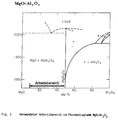
- Beim Gegenstand der Erfindung wird das Zweistoffsystem MgO-Al₂O₃ in dem Bereich MgO/Al₂O₃ von 1:1 bis 7:1 verwendet. Da das Grenzverhältnis 1:1 der Zusammensetzung MgO · Al₂O₃ (oder in anderer Schreibweise MgAl₂O₄) dem Magnesiumspinell entspricht, handelt es sich um einen hinsichtlich MgO überstöchiometrischen Spinell.
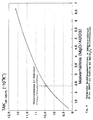
Beim MgO/Al₂O₃-Verhältnis 1:1 liegt der thermische Ausdehnungskoeffizient unterhalb von ZrO₂. Da sich bei der Steigerung des MgO-Gehalts der thermische Ausdehnungskoeffizient monoton erhöht, kann über gezielte MgO-Zugabe der Ausdehnungskoeffizient von ZrO₂ exakt eingestellt werden. - Da sowohl MgO · Al₂O₃ (Spinell) als auch MgO hochtemperaturbeständig, elektrisch isolierend, und gegen Reduktion durch die Brenngase beständig sind, trifft dies auch auf die hier beschriebene Mischkeramik zu. Hinsichtlich der Herstell- und Fügetechniken lassen sich ebenfalls die für MgO · Al₂O₃ oder MgO erprobten Verfahren übertragen.
- Als Rohstoffe zur Herstellung der Gasanschlußbauteile können MgO- und MgO · Al₂O₃-Pulver verwendet werden, die kommerziell und kostengünstig erhältlich sind. Somit sind alle oben beschriebenen Teilaufgaben gelöst.
- Das erfindungsgemäße Prinzip, über das Mischungsverhältnis von zwei Stoffen den thermischen Ausdehnungskoeffizienten einzustellen, läßt sich auch auf andere Systeme wie z.B. MgO-SiO₂ übertragen.
- Die Erfindung wird nachfolgend anhand von Fig. und eines Ausführungsbeispiels beschrieben.
- Es zeigen:
- Fig. 1
- seriengeschaltete Einzelzellen einer Brennstoffzelle,
- Fig. 2
- ein Ausführungsbeispiel für die Geometrie von Gasanschlußbauteilen,
- Fig. 3
- ein Diagramm mit dem Arbeitsbereich in einem erfindungsgemäßen Zweistoffsystem, und
- Fig. 4
- ein Diagramm des thermischen Ausdehnungskoeffizienten als Funktion des MgO/Al₂O₃ Molverhältnisses.
- Die erfindungsgemäßen Gasanschlußbauteile wurden nach folgendem Verfahren hergestellt:
- Mischen von Pulvern aus MgO und MgO · Al₂O₃
- Isostatisches Pressen bei 2000 bar oder Axialpressen bei 1000 bar
- Sintern an Luft bei 1650°C
- Mechanische Nachbearbeitung
Als spezifischer elektrischer Widerstand wurde 1,5 · 10⁶ Ω cm bei 1000°C gemessen. Gasdichte Verbindungen mit Brennstoffzellen wurden durch Fügen oder Lote auf SiO₂-Basis bei Temperaturen von rund 1200°C hergestellt. Betriebsversuche mit kompletten Brennstoffzellen verliefen erfolgreich.
Claims (12)
- Elektrisch isolierende Gasanschlußbauteile für Brennstoffzellen mit keramischem Elektrolyt, dadurch gekennzeichnet, daß die Gasanschlußbauteile eine Zusammensetzung aus dem Stoffsystem MgO-Al₂O₃ aufweisen, bei der das Molverhältnis MgO/Al₂O₃ zwischen 1:1 und 7:1 beträgt.
- Gasanschlußbauteile nach Anspruch 1, dadurch gekennzeichnet, daß über das MgO/Al₂O₃-Verhältnis der thermische Ausdehnungskoeffizient von 20°C bis 1000°C zwischen 9 · 10⁻⁶K⁻¹ und 12,6 · 10⁻⁶K⁻¹ eingestellt werden kann.
- Gasanschlußbauteile nach Ansprüchen 1 und 2, dadurch gekennzeichnet, daß der thermische Ausdehnungskoeffizient zwischen 20°C und 1000°C durch Wahl des MgO/Al₂O₃-Verhältnisses auf ± 10⁻⁷K⁻¹ an den keramischen Festelektrolyt angepaßt wird.
- Gasanschlußbauteile nach Ansprüchen 1 bis 3, dadurch gekennzeichnet, daß die Bauteile in Kombination mit einem Festelektrolyt der Zusammensetzung [(ZrO₂)1-x(Y₂O₃)x]1-y(Al₂O₃)y mit 0,03 ≦ x ≦ 0,2 und O ≦ y ≦ 0,25 verwendet werden, wobei über den Parameter y dessen thermischer Ausdehnungskoeffizient variiert werden kann.
- Gasanschlußbauteile nach Ansprüchen 1 bis 4, dadurch gekennzeichnet, daß die Bauteile mittels eines Lotes aus Glas, Keramik, Glaskeramik oder Metall gasdicht mit dem Brennstofzellen-Stapel verbunden werden.
- Gasanschlußbauteile nach Ansprüchen 1 bis 5, dadurch gekennzeichnet, daß die Bauteile für Elektrolysezellen mit keramischem Festelektrolyt statt für Brennstoffzellen verwendet werden.
- Gasanschlußbauteile nach Ansprüchen 1 bis 6, dadurch gekennzeichnet, daß die Bauteile neben MgO und Al₂O₃ noch eines oder mehrere der folgenden Oxide FeO, Fe₂O₃, ZrO₂, SiO₂, CaO, SrO, Na₂O, K₂O, TiO₂, Cr₂O₃ in einer Konzentration bis 3 mol% enthalten.
- Gasanschlußbauteile nach Ansprüchen 1 bis 7, dadurch gekennzeichnet, daß der spezifische elektrische Widerstand der Bauteile bei 1000°C mindestens 5 · 10⁵ Ω cm beträgt.
- Gasanschlußbauteil nach Ansprüchen 1 bis 8, dadurch gekennzeichnet, daß die Bauteile statt aus dem System MgO/Al₂O₃ aus zwei oder mehr beliebigen oxidkeramischen Zusammensetzungen mit unterschiedlichen thermischen Ausdehnungskoeffizienten ausgewählt werden und über das Molverhältnis dieser Phasen der thermische Ausdehnungskoeffizient an die Brennstoffzellen angepaßt wird.
- Gasanschlußbauteil nach Ansprüchen 1 bis 9, dadurch gekennzeichnet, daß für die Bauteile nach Anspruch 9 das System MgO/SiO₂ und hieraus der Stoff Mg₂SiO₄ (Forsterit) gewählt wird, der mit ca. 10,3 · 10⁻⁶k⁻¹ einen gut zu ZrO₂ passenden thermischen Ausdehnungskoeffizienten besitzt.
- Gasanschlußbauteil nach Anspruch 9, dadurch gekennzeichnet, daß eine Mg₂SiO₄-Forsterit-Keramik mit überstöchiometrischen MgO-Zusatz verwendet wird, wodurch der thermische Ausdehnungskoeffizient einstellbar erhöht wird.
- Gasanschlußbauteil nach Anspruch 9, dadurch gekennzeichnet, daß eine Mg₂SiO₄-Forsterit-Keramik mit stöchiometrischem SiO₂-Enstatit-Zusatz verwendet wird, wodurch der thermische Ausdehungskoeffizient einstellbar verringert wird.
Priority Applications (1)
| Application Number | Priority Date | Filing Date | Title |
|---|---|---|---|
| EP95119977A EP0712176A1 (de) | 1992-12-17 | 1993-12-03 | Keramische Gasanschlussbauteile für Brennstoffzellen mit Zirkonoxid-Festelektrolyt |
Applications Claiming Priority (2)
| Application Number | Priority Date | Filing Date | Title |
|---|---|---|---|
| DE4242728 | 1992-12-17 | ||
| DE4242728A DE4242728A1 (de) | 1992-12-17 | 1992-12-17 | Keramische Gasanschlußbauteile für Brennstoffzellen mit Zirkonoxid-Festelektrolyt |
Related Child Applications (1)
| Application Number | Title | Priority Date | Filing Date |
|---|---|---|---|
| EP95119977.7 Division-Into | 1995-12-18 |
Publications (3)
| Publication Number | Publication Date |
|---|---|
| EP0606579A2 true EP0606579A2 (de) | 1994-07-20 |
| EP0606579A3 EP0606579A3 (de) | 1994-11-02 |
| EP0606579B1 EP0606579B1 (de) | 1997-04-23 |
Family
ID=6475618
Family Applications (2)
| Application Number | Title | Priority Date | Filing Date |
|---|---|---|---|
| EP93119484A Expired - Lifetime EP0606579B1 (de) | 1992-12-17 | 1993-12-03 | Verwendung einer Zusammensetzung als keramisches Gasanschlussbauteil für Brennstoffzellen mit Zirkonoxid-Festelektrolyt |
| EP95119977A Withdrawn EP0712176A1 (de) | 1992-12-17 | 1993-12-03 | Keramische Gasanschlussbauteile für Brennstoffzellen mit Zirkonoxid-Festelektrolyt |
Family Applications After (1)
| Application Number | Title | Priority Date | Filing Date |
|---|---|---|---|
| EP95119977A Withdrawn EP0712176A1 (de) | 1992-12-17 | 1993-12-03 | Keramische Gasanschlussbauteile für Brennstoffzellen mit Zirkonoxid-Festelektrolyt |
Country Status (3)
| Country | Link |
|---|---|
| US (1) | US5587251A (de) |
| EP (2) | EP0606579B1 (de) |
| DE (1) | DE4242728A1 (de) |
Cited By (3)
| Publication number | Priority date | Publication date | Assignee | Title |
|---|---|---|---|---|
| EP0834950A3 (de) * | 1996-09-26 | 1998-05-13 | Air Products And Chemicals, Inc. | Flacher Festelektrolyt-Brennstoffzellenstapel mit Polarisationselektroden und versetzten Dichtungen, als Sauerstoffpumpe arbeitend |
| US6165632A (en) * | 1997-10-02 | 2000-12-26 | Siemens Aktiengesellschaft | High-temperature fuel cell and high-temperature fuel cell stack |
| WO2004030131A3 (en) * | 2002-09-24 | 2004-05-21 | Morgan Crucible Co | Mgo-mgal2o4 refractory components for fuel cells and/or reformers |
Families Citing this family (15)
| Publication number | Priority date | Publication date | Assignee | Title |
|---|---|---|---|---|
| DE19511817C2 (de) * | 1995-03-30 | 1997-10-09 | Aeg Energietechnik Gmbh | Wärmetauscher in Plattenbauweise mit Reformer |
| DE19515490A1 (de) * | 1995-04-27 | 1996-10-31 | Abb Patent Gmbh | Keramischer Werkstoff sowie Verfahren zu seiner Herstellung |
| US5712055A (en) * | 1996-02-29 | 1998-01-27 | Gas Research Institute | Multi-stage fuel cell arrangement |
| DE19608727C1 (de) * | 1996-03-06 | 1997-06-19 | Siemens Ag | Elektrisch isolierende Schicht zum Verbinden von elektrisch leitenden Bauelementen einer Hochtemperatur-Brennstoffzelle |
| US5770326A (en) * | 1996-12-23 | 1998-06-23 | Limaye; Santosh Y. | Monolithic mass and energy transfer cell |
| JP3456378B2 (ja) * | 1997-08-21 | 2003-10-14 | 株式会社村田製作所 | 固体電解質型燃料電池 |
| US5976721A (en) * | 1997-09-15 | 1999-11-02 | Limaye; Santosh Y. | Chemical cogeneration process |
| AU9642498A (en) | 1998-10-25 | 2000-05-15 | Nanomotion Ltd. | Driver for piezoelectric motors |
| DE10310642A1 (de) * | 2003-03-12 | 2004-09-23 | Forschungszentrum Jülich GmbH | Hochtemperatur-Brennstoffzellensystem |
| US7550221B2 (en) * | 2003-10-29 | 2009-06-23 | Rolls-Royce Fuel Cell Systems Limited | Gas delivery substrate |
| DE102006030323A1 (de) | 2006-04-21 | 2007-10-25 | Fraunhofer-Gesellschaft zur Förderung der angewandten Forschung e.V. | Verfahren zur Oberflächenbehandlung einer metallischen Substratoberfläche |
| FR2969179B1 (fr) * | 2010-12-20 | 2013-02-08 | Commissariat Energie Atomique | Cellule de production d'hydrogene comprenant une cellule d'electrolyseur de la vapeur d'eau a haute temperature. |
| JP6156778B2 (ja) * | 2012-09-28 | 2017-07-05 | Toto株式会社 | 固体酸化物形燃料電池セル |
| JP6271621B2 (ja) * | 2016-03-18 | 2018-01-31 | 日本碍子株式会社 | 支持基板材料及び燃料電池 |
| CN117945737A (zh) * | 2022-10-31 | 2024-04-30 | 国家能源集团新能源有限责任公司 | 用于固体氧化物燃料电池电堆的输气管连接用陶瓷接头及其制备方法 |
Family Cites Families (7)
| Publication number | Priority date | Publication date | Assignee | Title |
|---|---|---|---|---|
| SU1513841A1 (ru) * | 1987-11-16 | 1991-03-07 | Vostoch Ni Pi Ogneupornoj | Керамический материал |
| US4950562A (en) * | 1988-04-21 | 1990-08-21 | Toa Nenryo Kogyo Kabushiki Kaisha | Solid electrolyte type fuel cells |
| US5034023A (en) * | 1989-12-21 | 1991-07-23 | Corning Incorporated | Ceramic honeycomb structures as oxygen separators or concentrators |
| DE4011506A1 (de) * | 1990-04-10 | 1991-10-17 | Abb Patent Gmbh | Brennstoffzellenanordnung und verfahren zu deren herstellung |
| DE4203245C2 (de) * | 1991-02-07 | 1994-03-24 | Yoshida Kogyo Kk | Festelektrolytbrennstoffzelle |
| DE4104841A1 (de) * | 1991-02-16 | 1992-08-20 | Abb Patent Gmbh | Brennstoffzellenanordnung |
| JP2706197B2 (ja) * | 1992-01-17 | 1998-01-28 | 日本碍子株式会社 | セラミック薄膜の形成方法 |
-
1992
- 1992-12-17 DE DE4242728A patent/DE4242728A1/de not_active Withdrawn
-
1993
- 1993-12-03 EP EP93119484A patent/EP0606579B1/de not_active Expired - Lifetime
- 1993-12-03 EP EP95119977A patent/EP0712176A1/de not_active Withdrawn
- 1993-12-17 US US08/168,251 patent/US5587251A/en not_active Expired - Fee Related
Cited By (4)
| Publication number | Priority date | Publication date | Assignee | Title |
|---|---|---|---|---|
| EP0834950A3 (de) * | 1996-09-26 | 1998-05-13 | Air Products And Chemicals, Inc. | Flacher Festelektrolyt-Brennstoffzellenstapel mit Polarisationselektroden und versetzten Dichtungen, als Sauerstoffpumpe arbeitend |
| KR100279495B1 (ko) * | 1996-09-26 | 2001-02-01 | 마쉬 윌리엄 에프 | 오프셋시일및바이어스전극을구비한이온전도체스택 |
| US6165632A (en) * | 1997-10-02 | 2000-12-26 | Siemens Aktiengesellschaft | High-temperature fuel cell and high-temperature fuel cell stack |
| WO2004030131A3 (en) * | 2002-09-24 | 2004-05-21 | Morgan Crucible Co | Mgo-mgal2o4 refractory components for fuel cells and/or reformers |
Also Published As
| Publication number | Publication date |
|---|---|
| EP0712176A1 (de) | 1996-05-15 |
| US5587251A (en) | 1996-12-24 |
| EP0606579A3 (de) | 1994-11-02 |
| DE4242728A1 (de) | 1994-06-23 |
| EP0606579B1 (de) | 1997-04-23 |
Similar Documents
| Publication | Publication Date | Title |
|---|---|---|
| EP0606579B1 (de) | Verwendung einer Zusammensetzung als keramisches Gasanschlussbauteil für Brennstoffzellen mit Zirkonoxid-Festelektrolyt | |
| DE60111165T2 (de) | Verfahren zur Herstellung eines Glasmatrixverbundwerkstoffes und Glasmatrixverbundwerkstoff | |
| DE69813411T2 (de) | Festelektrolyt-Brennstoffzellenstapel | |
| US4562124A (en) | Air electrode material for high temperature electrochemical cells | |
| DE4237519C1 (de) | Festelektrolyt mit darauf angebrachter mehrschichtiger Elektrode | |
| DE60025364T2 (de) | Glaskeramisches verbindungsmaterial und verbindungsverfahren | |
| DE60020772T2 (de) | Wasserstoffdurchlässigkeit durch protonen- und elektronenleitende Mischwerkstoffe | |
| DE19839202B4 (de) | Leitfähige Substanz aus Mischoxidionen und deren Verwendung | |
| Holc et al. | Electrical and microstructural characterisation of (La0. 8Sr0. 2)(Fe1− xAlx) O3 and (La0. 8Sr0. 2)(Mn1− xAlx) O3 as possible SOFC cathode materials | |
| DE19547700A1 (de) | Elektrodensubstrat für Brennstoffzelle | |
| EP0395975A1 (de) | Brennstoffzellenanordnung | |
| DE10108438A1 (de) | Oxidionenleiter, Herstellungsmethode dafür und ihn verwendende Brennstoffzelle | |
| DE69129305T2 (de) | Duktile keramische zusammensetzungen | |
| DE4307727C2 (de) | Elektrolytfolie für planare Hochtemperaturbrennstoffzellen und Verfahren zu ihrer Herstellung | |
| EP1023591A1 (de) | AUFBAUSTRUKTUR FÜR NO x?-SENSOREN | |
| JP3134882B2 (ja) | ランタンクロマイト系複合酸化物と用途 | |
| DE19514164C2 (de) | Verbindungselement auf Lanthanchromitbasis für Hochtemperaturbrennstoffzellen und Hochtemperaturelektrolysezellen | |
| Pizzini et al. | On the thermoelectric power of stabilized zirconia | |
| DE10301404B4 (de) | Brennstoffzelle, Brennstoffzellenstapel sowie dessen Herstellungsverfahren | |
| EP0968543B1 (de) | Hochtemperatur-brennstoffzelle mit verbundstoff-kathode | |
| DE19630210A1 (de) | Brenngaselektrode für elektrochemische Zellen | |
| EP3002812A1 (de) | Festoxidbrennstoffzellenstapel | |
| DE10209791C1 (de) | Anodenmaterial für Hochtemperatur-Brennstoffzellen | |
| DE19634085A1 (de) | Brenngaselektrode zur Steuerung der Brenngasreformierungskinetik in Hochtemperaturbrennstoffzellen | |
| DE69422011T2 (de) | Keramik auf Basis von Lanthanchromit, Separatoren dieses enthaltend und Festelektrolyt-Brennstoffzellen mit diesen Separatoren |
Legal Events
| Date | Code | Title | Description |
|---|---|---|---|
| PUAI | Public reference made under article 153(3) epc to a published international application that has entered the european phase |
Free format text: ORIGINAL CODE: 0009012 |
|
| AK | Designated contracting states |
Kind code of ref document: A2 Designated state(s): FR GB |
|
| PUAL | Search report despatched |
Free format text: ORIGINAL CODE: 0009013 |
|
| AK | Designated contracting states |
Kind code of ref document: A3 Designated state(s): FR GB |
|
| 17P | Request for examination filed |
Effective date: 19950413 |
|
| 17Q | First examination report despatched |
Effective date: 19951103 |
|
| GRAG | Despatch of communication of intention to grant |
Free format text: ORIGINAL CODE: EPIDOS AGRA |
|
| GRAH | Despatch of communication of intention to grant a patent |
Free format text: ORIGINAL CODE: EPIDOS IGRA |
|
| GRAH | Despatch of communication of intention to grant a patent |
Free format text: ORIGINAL CODE: EPIDOS IGRA |
|
| GRAA | (expected) grant |
Free format text: ORIGINAL CODE: 0009210 |
|
| AK | Designated contracting states |
Kind code of ref document: B1 Designated state(s): FR GB |
|
| DX | Miscellaneous (deleted) | ||
| PG25 | Lapsed in a contracting state [announced via postgrant information from national office to epo] |
Ref country code: FR Free format text: THE PATENT HAS BEEN ANNULLED BY A DECISION OF A NATIONAL AUTHORITY Effective date: 19970423 |
|
| ET | Fr: translation filed | ||
| GBT | Gb: translation of ep patent filed (gb section 77(6)(a)/1977) |
Effective date: 19970610 |
|
| PG25 | Lapsed in a contracting state [announced via postgrant information from national office to epo] |
Ref country code: GB Free format text: LAPSE BECAUSE OF NON-PAYMENT OF DUE FEES Effective date: 19971203 |
|
| PLBE | No opposition filed within time limit |
Free format text: ORIGINAL CODE: 0009261 |
|
| STAA | Information on the status of an ep patent application or granted ep patent |
Free format text: STATUS: NO OPPOSITION FILED WITHIN TIME LIMIT |
|
| 26N | No opposition filed | ||
| GBPC | Gb: european patent ceased through non-payment of renewal fee |
Effective date: 19971203 |
|
| REG | Reference to a national code |
Ref country code: FR Ref legal event code: ST |