EP0606744B1 - Anrufverwaltung in einem Telekommunikationssystem - Google Patents
Anrufverwaltung in einem Telekommunikationssystem Download PDFInfo
- Publication number
- EP0606744B1 EP0606744B1 EP93310132A EP93310132A EP0606744B1 EP 0606744 B1 EP0606744 B1 EP 0606744B1 EP 93310132 A EP93310132 A EP 93310132A EP 93310132 A EP93310132 A EP 93310132A EP 0606744 B1 EP0606744 B1 EP 0606744B1
- Authority
- EP
- European Patent Office
- Prior art keywords
- telephone
- indication
- command signal
- control unit
- mobile telephone
- Prior art date
- Legal status (The legal status is an assumption and is not a legal conclusion. Google has not performed a legal analysis and makes no representation as to the accuracy of the status listed.)
- Expired - Lifetime
Links
- 238000004891 communication Methods 0.000 claims abstract description 24
- 230000002401 inhibitory effect Effects 0.000 claims description 11
- 230000005236 sound signal Effects 0.000 claims description 8
- 230000000007 visual effect Effects 0.000 claims description 3
- 238000012545 processing Methods 0.000 abstract description 9
- 238000000034 method Methods 0.000 abstract description 5
- 230000008569 process Effects 0.000 abstract description 4
- 238000010586 diagram Methods 0.000 description 2
- 206010011469 Crying Diseases 0.000 description 1
- 230000008901 benefit Effects 0.000 description 1
- 230000005540 biological transmission Effects 0.000 description 1
- 230000008878 coupling Effects 0.000 description 1
- 238000010168 coupling process Methods 0.000 description 1
- 238000005859 coupling reaction Methods 0.000 description 1
- 239000004973 liquid crystal related substance Substances 0.000 description 1
- 230000004048 modification Effects 0.000 description 1
- 238000012986 modification Methods 0.000 description 1
- 238000012806 monitoring device Methods 0.000 description 1
- 238000012544 monitoring process Methods 0.000 description 1
- 230000004044 response Effects 0.000 description 1
Images


Classifications
-
- H—ELECTRICITY
- H04—ELECTRIC COMMUNICATION TECHNIQUE
- H04M—TELEPHONIC COMMUNICATION
- H04M1/00—Substation equipment, e.g. for use by subscribers
- H04M1/66—Substation equipment, e.g. for use by subscribers with means for preventing unauthorised or fraudulent calling
- H04M1/663—Preventing unauthorised calls to a telephone set
- H04M1/665—Preventing unauthorised calls to a telephone set by checking the validity of a code
-
- H—ELECTRICITY
- H04—ELECTRIC COMMUNICATION TECHNIQUE
- H04M—TELEPHONIC COMMUNICATION
- H04M1/00—Substation equipment, e.g. for use by subscribers
- H04M1/72—Mobile telephones; Cordless telephones, i.e. devices for establishing wireless links to base stations without route selection
- H04M1/724—User interfaces specially adapted for cordless or mobile telephones
Definitions
- the present invention relates to telecommunications and is concerned particularly with telephones.
- US-A-4754473 discloses a communication system in which a caller may, by inputting a code, inhibit the ringing of a called telephone and then send data to the called telephone for processing and re-transmitting to another remote address.
- the advantage of this apparatus is that it allows signals to be sent via a conventional land line and then from a called destination sent further, e.g. by radio, to a further receiving device.
- the apparatus does not need to transmit by radio over the entire distance from caller to required location but instead advantageously utilises existing land lines.
- US-A-4571455 (Labock) concerns a system primarily for use as a "babysitter" wherein a monitor unit may be accessed remotely by a user over a conventional telephone line. Upon connection the user may activate a microphone in the monitoring device by sending a coded signal down the telephone line. The remote caller may then listen to sounds in the location of the monitor unit.
- US-A-5151972 (Lorenz) concerns apparatus for automatically differentiating between incoming voice telephone and facsimile or modem calls and routing the incoming call appropriately, particularly when a telephone and facsimile or modem are sharing access to a single telephone line.
- the specification discloses apparatus and method for automatically coupling a telephone or "terminal device" (i.e. modem or facsimile) in response to a signal from a caller.
- a telecommunication system comprising a plurality of telephones for communicating audio data with each other, the system comprising first and second telephones, the first telephone for requesting communication with the second telephone, the second telephone comprising an indication means for providing an indication when the first telephone requests communication and a microphone for detecting incident audio signals, characterised in that the first telephone is arranged in use to transmit a command signal to the second telephone upon receipt of which the second telephone automatically communicates said incident audio signals to the first telephone via at least one communication medium, the second telephone further including inhibiting means for at least partially suppressing the operation of the indication means, which inhibiting means is activated upon receipt by the second telephone of an inhibit signal from the first telephone.
- the command signal and the inhibit signal may comprise a common signal.
- the indication means provide a visual indication.
- the indication means may provide an audible indication.
- the inhibiting means is preferably arranged to prevent the operation of the indication means.
- the communication medium may comprise radio.
- the invention provides a mobile telephone for communicating audio data with a calling telephone, said mobile telephone further comprising an indication means for providing an indication when the calling telephone requests communication and a microphone for detecting incident audio signals, characterised in that when said mobile telephone receives from a calling telephone a command signal, said mobile telephone is arranged to automatically communicate said incident audio signals to the calling telephone via at least one communication medium, the mobile telephone further including inhibiting means for at least partially suppressing the operation of the indication means, which inhibiting means is activated upon receipt by the mobile telephone of an inhibit signal from the calling telephone.
- the command signal and the inhibit signal may comprise a common signal.
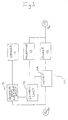
- this shows generally at 10 a telephone having a speaker 11, a microphone 12, processing means 13, a control unit 14 and an audible indicator 15.
- the telephone 10 When the telephone 10 is used to conventionally communicate with another telephone (not shown), for example to enable respective users of the telephones to speak to each other, electronic signals corresponding to the speech are input to and output from the telephone 10 at input 16 and output 17 respectively.
- the input 16 and output 17 may be connected to a radio transmitter/receiver (not shown) of a mobile telephone.
- the processing means 13 electronically processes the signals and in the case of incoming signals these are relayed from the input 16 to the speaker 11. In the case of outgoing signals these are relayed from the microphone 12 to the output 17. Conventionally, when another telephone requests communication with the telephone 10, the processing means activates the audible indicator 15 which alerts a user to the incoming call by making an appropriate sound. If the user then wishes to answer the call he establishes the channel of communication by pressing the appropriate button (not shown) or in some cases by lifting the telephone from a mounting location. Once the channel of communication has been established the processing means processes the incoming and outgoing signals in a manner described above.
- the purpose of the control unit 14 is to identify the presence of a command signal with the incoming call. If a user of another telephone (not shown) wishes to call telephone 10, the telephone number of telephone 10 is dialled in the conventional way. However, if during a time interval of predetermined length beginning immediately after the telephone number of telephone 10 is dialled, the caller inputs a command code via his conventional telephone key pad, this sends a command signal to telephone 10 which is identified by control unit 14. Upon identification of the command signal the control unit 14 inhibits the operation of the audible indicator 15, by means of inhibit unit 14b so that no indication is made of the incoming call. Additionally, the control unit 14 automatically establishes the channel of communication, as though the user had answered the call.
- any sounds detected by the microphone 12 are processed by the processing means 13 and are sent to output 17.
- the caller can then effectively hear on his own telephone (not shown) everything which is detected by the microphone 12 in telephone 10. Similarly any sound made by the caller on his telephone is emitted from the speaker 11 of telephone 10.
- the channel of communication then remains open until the caller chooses to close it by conventionally pressing a cut off button on his telephone (not shown) or replacing his telephone on its mounting.
- FIG. 2 represents, in flow diagram form, the above mentioned operation of telephone 10.
- the telephone 10 is awaiting calls and is in a so-called "stand-by" condition in which it checks for the presence of a call request in a conventional way. If a call request is detected the control means 14 looks for the presence of a command signal within a predetermined time interval t at a step 19. In the absence of a command signal the operation of the telephone 10 is that of a conventional telephone, ie. the audible indication is given at step 20 and the telephone rings awaiting a user to answer.
- control unit 14 inhibits the audible indication at step 21 by means of inhibit unit 14b of Figure 1 and automatically establishes the line of communication at step 22.
- the telephone 10 then operates in a conventional way described above.
- the above described embodiment of the invention enables a caller to listen to ambient sounds in the vicinity of telephone 10 from a remote location.
- a caller can, for example, telephone his house when he is out to check that no one has intruded therein. Since the conventional audible indicate is inhibited, for example either by muting it or suppressing it completely, any intruder need not be alerted to the call. Similarly a mother may for example telephone her hotel room to check whether her baby is crying. The baby would not be disturbed by the call since the audible indication could be suppressed.
- Use of the device may be charged for separately by telecommunications operating companies. For example in the case of a mobile telephone a charge is made for the number and length of occasions on which the telephone is used.
- a charge is made for the number and length of occasions on which the telephone is used.
- the caller's telephone may be made to notify the operating company upon the selection of the command mode, or alternatively the receiving telephone may be made to make a notification upon receipt of the command signal. In either case notification may be made to the operating company by the presence of a notification signal such as a coded signal or a signal of predetermined frequency when the command service is used.
- the device After a predetermined time interval during which no such command signal is transmitted, the device would enable the ringing of the receiving telephone and a conventional telephone call would be possible.
- Figure 3 shows generally at 30 a digital mobile telephone (such as a GSM telephone) having a speaker 31, a microphone 32, a micro-controller 33, a voice codec device 34, an audible indicator/ringer 35, a display (liquid crystal or other) and key-pad 36.
- a digital mobile telephone such as a GSM telephone
- a microphone 32 having a microphone 32, a micro-controller 33, a voice codec device 34, an audible indicator/ringer 35, a display (liquid crystal or other) and key-pad 36.
- another phone (not shown) communicates conventionally with this telephone, for example to enable respective users of the telephone as they speak to each other, electronic signals corresponding to the speech are input to and output from the telephone 30 at input 37 and output 38 respectively connected to a radio transmitter/receiver which is controlled by a switch 39 and a timer 40.
- the processing means 33 electronically processes the signals and in the case of incoming signals these are equalised at 41 and decoded at 42 and relayed through the voice codec 34 to the speaker 31. Outgoing signals from the microphone 32 are relayed via the voice codec 34 to the micro-controller 33 then to the channel code 43 and to the modulator 44 and finally to the output 38 for transmission.
- the control unit 40 and the micro-controller 33 identify the presence of a command signal with the incoming calls. If a user of another telephone (not shown) wishes to call telephone 30, the telephone number of telephone 30 is keyed in the conventional way. However, if a code sequence is added to the telephone number immediately following the telephone number, this is identified by the micro-controller 33.
- the micro-controller 33 then inhibits the operation of the ringer 35, the display 36, and a speaker 35, so that no indication is made of the incoming call.
- the micro-controller establishes the channel of communication as though the user had answered the call. If the user of the telephone 30 depresses any key of the key-pad 36, the micro-controller closes the communications channel and resets the telephone 30, speaker 31, ringer 35 and display 36 to normal operation.
- a code may activate a modem which relays data to the caller or calling device which download the data onto a computer.
Landscapes
- Engineering & Computer Science (AREA)
- Signal Processing (AREA)
- Computer Security & Cryptography (AREA)
- Human Computer Interaction (AREA)
- Computer Networks & Wireless Communication (AREA)
- Telephonic Communication Services (AREA)
- Mobile Radio Communication Systems (AREA)
- Steroid Compounds (AREA)
Claims (12)
- Ein Telekommunikationssystem, dass eine Vielzahl von Telefonen zur Übermittlung von Audiodaten untereinander umfasst, wobei das System ein erstes und zweites Telefon aufweist, wobei das erste Telefon zur Beantragung einer Kommunikation mit dem zweiten Telefon dient, wobei das zweite Telefon ein Mobiltelefon ist und ein Meldemittel (15) zur Bereitstellung einer Meldung, wenn das erste Telefon eine Kommunikation beantragt, und ein Mikrophon (12) zum Erkennen von eingehenden Audiosignalen aufweist, dadurch gekennzeichnet, dass das erste Telefon im Gebrauch angeordnet ist, um ein Befehlssignal an das zweite Telefon zu übertragen, nach Empfang dessen, das zweite Telefon automatisch die eingehenden Audiosignale an das erste Telefon über mindestens ein Kommunikationsmedium übermittelt, wobei das zweite Telefon ferner ein Sperrmittel (14b) zur mindestens teilweisen Unterdrückung des Betriebs der Meldemittel aufweist, wobei das Sperrmittel nach Empfang eines Sperrsignals von dem ersten Telefon durch das zweite Telefon aktiviert wird.
- Ein System gemäß Anspruch 1, wobei das Befehlssignal und das Sperrsignal ein gemeinsames Signal aufweisen.
- Ein System gemäß Anspruch 1 oder 2, wobei das Meldemittel eine visuelle Meldung bereitstellt.
- Ein System gemäß einem der Ansprüche 1-3, wobei das Meldemittel eine hörbare Meldung bereitstellt.
- Ein System gemäß einem der Ansprüche 1-4, wobei das Sperrmittel den Betrieb des Meldemittels unterbindet.
- Ein System gemäß einem der Ansprüche 1-5, wobei das Kommunikationsmedium Funk umfasst.
- Ein Mobiltelefon (10) zur Übermittlung von Audiodaten mittels eines rufenden Telefons, wobei das Mobiltelefon ferner ein Meldemittel (15) zur Bereitstellung einer Meldung, wenn das erste Telefon eine Kommunikation beantragt, und ein Mikrophon (12) zum Erkennen von eingehenden Audiosignalen aufweist, dadurch gekennzeichnet, dass, wenn das Mobiltelefon von dem rufenden Telefon ein Befehlssignal empfängt, das Mobiltelefon angeordnet ist, automatisch die eingehenden Audiosignale an das rufende Telefon über mindestens ein Kommunikationsmedium zu übermitteln, wobei das Mobiltelefon ferner ein Sperrmittel (14b) zur mindestens teilweisen Unterdrückung des Betriebs der Meldemittel aufweist, wobei das Sperrmittel nach Empfang eines Sperrsignals von dem rufenden Telefon durch das Mobiltelefon aktiviert wird.
- Ein Mobiltelefon gemäß Anspruch 7, wobei das Befehlssignal und das Sperrsignal ein gemeinsames Signal aufweisen.
- Ein Mobiltelefon gemäß Anspruch 7 oder 8, wobei das Kommunikationsmedium Funk umfasst.
- Ein Mobiltelefon gemäß einem der Ansprüche 7-9, wobei das Meldemittel angeordnet ist, um eine visuelle Meldung bereit zu stellen.
- Ein Mobiltelefon gemäß einem der Ansprüche 7-10, wobei das Meldemittel angeordnet ist, um eine hörbare Meldung bereit zu stellen.
- Ein Mobiltelefon gemäß einem der Ansprüche 7-11, wobei das Sperrmittel angeordnet ist, um den Betrieb des Meldemittels zu unterbinden.
Applications Claiming Priority (2)
| Application Number | Priority Date | Filing Date | Title |
|---|---|---|---|
| GB929226104A GB9226104D0 (en) | 1992-12-15 | 1992-12-15 | Telecommunications |
| GB9226104 | 1992-12-15 |
Publications (2)
| Publication Number | Publication Date |
|---|---|
| EP0606744A1 EP0606744A1 (de) | 1994-07-20 |
| EP0606744B1 true EP0606744B1 (de) | 2002-03-13 |
Family
ID=10726627
Family Applications (1)
| Application Number | Title | Priority Date | Filing Date |
|---|---|---|---|
| EP93310132A Expired - Lifetime EP0606744B1 (de) | 1992-12-15 | 1993-12-15 | Anrufverwaltung in einem Telekommunikationssystem |
Country Status (8)
| Country | Link |
|---|---|
| EP (1) | EP0606744B1 (de) |
| JP (1) | JPH07507191A (de) |
| AT (1) | ATE214528T1 (de) |
| AU (1) | AU682163B2 (de) |
| CA (1) | CA2130111A1 (de) |
| DE (1) | DE69331683T2 (de) |
| GB (2) | GB9226104D0 (de) |
| WO (1) | WO1994014271A1 (de) |
Families Citing this family (2)
| Publication number | Priority date | Publication date | Assignee | Title |
|---|---|---|---|---|
| JP2000332908A (ja) * | 1999-05-17 | 2000-11-30 | Kyocera Corp | 携帯テレビ電話端末 |
| GB2354669A (en) * | 1999-09-24 | 2001-03-28 | Inventec Electronics | Telephone ringer control |
Family Cites Families (12)
| Publication number | Priority date | Publication date | Assignee | Title |
|---|---|---|---|---|
| DE1271780B (de) * | 1966-05-13 | 1968-07-04 | Agfa Gevaert Ag | Einrichtung zum Anschalten einer elektrischen Einrichtung im Bereich einer Fernsprech-Teilnehmerstelle an die Teilnehmerleitung |
| US3829616A (en) * | 1974-06-28 | 1974-08-13 | Int Mobile Machines | Ringer blocking attachment for telephones |
| US4446334A (en) * | 1983-01-31 | 1984-05-01 | Groff James W | Telephone number coding device |
| JPS6051056A (ja) * | 1983-08-30 | 1985-03-22 | Canon Inc | データ通信装置 |
| US4571455A (en) * | 1983-12-06 | 1986-02-18 | Yoram Labock | Electronic monitoring system particularly useful as an electronic babysitter |
| US4837797A (en) * | 1985-11-27 | 1989-06-06 | Advanced Service Development Corporation | Electronic message unit and methods using same |
| US4754473A (en) * | 1986-10-16 | 1988-06-28 | Willie Edwards | Remote telephonic data transcribing system |
| GB2203614A (en) * | 1987-04-09 | 1988-10-19 | British Broadcasting Corp | Control of access to a telephone |
| GB2214384A (en) * | 1988-01-04 | 1989-08-31 | Lam Sek Wai | A control system for use with a telephone system |
| US5151972A (en) * | 1989-03-28 | 1992-09-29 | Lynx Automation, Inc. | Apparatus for automatically connecting terminal device to telephone lines |
| US5036513A (en) * | 1989-06-21 | 1991-07-30 | Academy Of Applied Science | Method of and apparatus for integrated voice (audio) communication simultaneously with "under voice" user-transparent digital data between telephone instruments |
| US5062133A (en) * | 1989-07-07 | 1991-10-29 | Logotronix Incorporated | Multi-function telephone call management system |
-
1992
- 1992-12-15 GB GB929226104A patent/GB9226104D0/en active Pending
-
1993
- 1993-12-15 EP EP93310132A patent/EP0606744B1/de not_active Expired - Lifetime
- 1993-12-15 AU AU57046/94A patent/AU682163B2/en not_active Ceased
- 1993-12-15 AT AT93310132T patent/ATE214528T1/de not_active IP Right Cessation
- 1993-12-15 CA CA002130111A patent/CA2130111A1/en not_active Abandoned
- 1993-12-15 JP JP6513963A patent/JPH07507191A/ja not_active Ceased
- 1993-12-15 DE DE69331683T patent/DE69331683T2/de not_active Expired - Fee Related
- 1993-12-15 GB GB9325734A patent/GB2273630B/en not_active Expired - Fee Related
- 1993-12-15 WO PCT/GB1993/002557 patent/WO1994014271A1/en not_active Ceased
Also Published As
| Publication number | Publication date |
|---|---|
| DE69331683T2 (de) | 2002-11-21 |
| WO1994014271A1 (en) | 1994-06-23 |
| GB9325734D0 (en) | 1994-02-16 |
| GB2273630A (en) | 1994-06-22 |
| JPH07507191A (ja) | 1995-08-03 |
| DE69331683D1 (de) | 2002-04-18 |
| GB2273630B (en) | 1997-05-14 |
| AU5704694A (en) | 1994-07-04 |
| ATE214528T1 (de) | 2002-03-15 |
| AU682163B2 (en) | 1997-09-25 |
| EP0606744A1 (de) | 1994-07-20 |
| GB9226104D0 (en) | 1993-02-10 |
| CA2130111A1 (en) | 1994-06-23 |
Similar Documents
| Publication | Publication Date | Title |
|---|---|---|
| US6104785A (en) | Subscriber control unit for united home security system | |
| US6047173A (en) | Call box with keyboard communication | |
| KR100378953B1 (ko) | 호출음과 화중음 선택형 통신기기 | |
| JP2002051109A (ja) | 無音着信電話を操作するための方法および装置 | |
| US6662026B1 (en) | Apparatus and method for detecting and handling accidental dialing on a mobile communications device | |
| EP0606744B1 (de) | Anrufverwaltung in einem Telekommunikationssystem | |
| KR100450138B1 (ko) | 이동통신단말기에 있어서 통화중 알림 기능 제공 방법 | |
| US6002938A (en) | Mobile telephone which inhibits an operation of an indication for a calling telephone requesting communication | |
| GB2298552A (en) | Cordless radio telephone system with a plurality of portable units | |
| DK0940027T3 (da) | Förste abonnents signalering til banke-på kaldenummervisningssystem (CWCID) | |
| US7526269B1 (en) | Remote intercom and automatic dialing system | |
| JP3529283B2 (ja) | 回線選択装置 | |
| HK1014620A (en) | Call management in a telecommunication system | |
| KR20010048639A (ko) | 이동 통신 단말기에서 착신 호 대기 방법 | |
| KR20000001188A (ko) | 모닝콜 원격 제어방법 | |
| KR19980065025A (ko) | 착신음 녹음이 가능한 유/무선 통신단말기 | |
| JP2949098B1 (ja) | 回線接続装置 | |
| KR20000001055A (ko) | 휴대 전화 단말 장치에서의 대기 안내 메시지 송출방법 | |
| KR200240708Y1 (ko) | 음성전송 단축다이얼 장치 | |
| JP2567217B2 (ja) | 電話装置 | |
| JP2001177637A (ja) | 電話装置 | |
| KR20020021474A (ko) | 회의 모드시 휴대폰과 이동교환국의 착신 호 처리방법 | |
| JPS5945596B2 (ja) | エレベ−タ非常通報通話装置 | |
| JPH0425231A (ja) | コードレス電話システム | |
| JPH09247756A (ja) | 移動端末 |
Legal Events
| Date | Code | Title | Description |
|---|---|---|---|
| PUAI | Public reference made under article 153(3) epc to a published international application that has entered the european phase |
Free format text: ORIGINAL CODE: 0009012 |
|
| AK | Designated contracting states |
Kind code of ref document: A1 Designated state(s): AT BE CH DE DK ES FR GB GR IE IT LI LU MC NL PT SE |
|
| 17P | Request for examination filed |
Effective date: 19950120 |
|
| 17Q | First examination report despatched |
Effective date: 19970204 |
|
| RIC1 | Information provided on ipc code assigned before grant |
Free format text: 7H 04M 1/66 A, 7H 04M 1/725 B |
|
| GRAG | Despatch of communication of intention to grant |
Free format text: ORIGINAL CODE: EPIDOS AGRA |
|
| RIC1 | Information provided on ipc code assigned before grant |
Free format text: 7H 04M 1/66 A, 7H 04M 1/725 B |
|
| GRAG | Despatch of communication of intention to grant |
Free format text: ORIGINAL CODE: EPIDOS AGRA |
|
| GRAH | Despatch of communication of intention to grant a patent |
Free format text: ORIGINAL CODE: EPIDOS IGRA |
|
| REG | Reference to a national code |
Ref country code: GB Ref legal event code: IF02 |
|
| GRAH | Despatch of communication of intention to grant a patent |
Free format text: ORIGINAL CODE: EPIDOS IGRA |
|
| GRAA | (expected) grant |
Free format text: ORIGINAL CODE: 0009210 |
|
| AK | Designated contracting states |
Kind code of ref document: B1 Designated state(s): AT BE CH DE DK ES FR GB GR IE IT LI LU MC NL PT SE |
|
| PG25 | Lapsed in a contracting state [announced via postgrant information from national office to epo] |
Ref country code: NL Free format text: LAPSE BECAUSE OF FAILURE TO SUBMIT A TRANSLATION OF THE DESCRIPTION OR TO PAY THE FEE WITHIN THE PRESCRIBED TIME-LIMIT Effective date: 20020313 Ref country code: IT Free format text: LAPSE BECAUSE OF FAILURE TO SUBMIT A TRANSLATION OF THE DESCRIPTION OR TO PAY THE FEE WITHIN THE PRE;WARNING: LAPSES OF ITALIAN PATENTS WITH EFFECTIVE DATE BEFORE 2007 MAY HAVE OCCURRED AT ANY TIME BEFORE 2007. THE CORRECT EFFECTIVE DATE MAY BE DIFFERENT FROM THE ONE RECORDED.SCRIBED TIME-LIMIT Effective date: 20020313 Ref country code: GR Free format text: LAPSE BECAUSE OF FAILURE TO SUBMIT A TRANSLATION OF THE DESCRIPTION OR TO PAY THE FEE WITHIN THE PRESCRIBED TIME-LIMIT Effective date: 20020313 |
|
| REF | Corresponds to: |
Ref document number: 214528 Country of ref document: AT Date of ref document: 20020315 Kind code of ref document: T |
|
| REG | Reference to a national code |
Ref country code: CH Ref legal event code: EP |
|
| REF | Corresponds to: |
Ref document number: 69331683 Country of ref document: DE Date of ref document: 20020418 |
|
| PG25 | Lapsed in a contracting state [announced via postgrant information from national office to epo] |
Ref country code: DK Free format text: LAPSE BECAUSE OF FAILURE TO SUBMIT A TRANSLATION OF THE DESCRIPTION OR TO PAY THE FEE WITHIN THE PRESCRIBED TIME-LIMIT Effective date: 20020613 |
|
| PG25 | Lapsed in a contracting state [announced via postgrant information from national office to epo] |
Ref country code: PT Free format text: LAPSE BECAUSE OF FAILURE TO SUBMIT A TRANSLATION OF THE DESCRIPTION OR TO PAY THE FEE WITHIN THE PRESCRIBED TIME-LIMIT Effective date: 20020614 |
|
| NLV1 | Nl: lapsed or annulled due to failure to fulfill the requirements of art. 29p and 29m of the patents act | ||
| ET | Fr: translation filed | ||
| REG | Reference to a national code |
Ref country code: CH Ref legal event code: NV Representative=s name: KIRKER & CIE SA |
|
| PG25 | Lapsed in a contracting state [announced via postgrant information from national office to epo] |
Ref country code: ES Free format text: LAPSE BECAUSE OF FAILURE TO SUBMIT A TRANSLATION OF THE DESCRIPTION OR TO PAY THE FEE WITHIN THE PRESCRIBED TIME-LIMIT Effective date: 20020925 |
|
| PG25 | Lapsed in a contracting state [announced via postgrant information from national office to epo] |
Ref country code: LU Free format text: LAPSE BECAUSE OF NON-PAYMENT OF DUE FEES Effective date: 20021215 Ref country code: GB Free format text: LAPSE BECAUSE OF NON-PAYMENT OF DUE FEES Effective date: 20021215 |
|
| PLBE | No opposition filed within time limit |
Free format text: ORIGINAL CODE: 0009261 |
|
| STAA | Information on the status of an ep patent application or granted ep patent |
Free format text: STATUS: NO OPPOSITION FILED WITHIN TIME LIMIT |
|
| 26N | No opposition filed |
Effective date: 20021216 |
|
| PG25 | Lapsed in a contracting state [announced via postgrant information from national office to epo] |
Ref country code: MC Free format text: LAPSE BECAUSE OF NON-PAYMENT OF DUE FEES Effective date: 20030701 |
|
| GBPC | Gb: european patent ceased through non-payment of renewal fee |
Effective date: 20021215 |
|
| PGFP | Annual fee paid to national office [announced via postgrant information from national office to epo] |
Ref country code: CH Payment date: 20041216 Year of fee payment: 12 |
|
| PGFP | Annual fee paid to national office [announced via postgrant information from national office to epo] |
Ref country code: AT Payment date: 20041230 Year of fee payment: 12 |
|
| REG | Reference to a national code |
Ref country code: HK Ref legal event code: WD Ref document number: 1014620 Country of ref document: HK |
|
| PG25 | Lapsed in a contracting state [announced via postgrant information from national office to epo] |
Ref country code: AT Free format text: LAPSE BECAUSE OF NON-PAYMENT OF DUE FEES Effective date: 20051215 |
|
| PG25 | Lapsed in a contracting state [announced via postgrant information from national office to epo] |
Ref country code: LI Free format text: LAPSE BECAUSE OF NON-PAYMENT OF DUE FEES Effective date: 20051231 Ref country code: CH Free format text: LAPSE BECAUSE OF NON-PAYMENT OF DUE FEES Effective date: 20051231 |
|
| PGFP | Annual fee paid to national office [announced via postgrant information from national office to epo] |
Ref country code: SE Payment date: 20060627 Year of fee payment: 13 |
|
| PGFP | Annual fee paid to national office [announced via postgrant information from national office to epo] |
Ref country code: BE Payment date: 20060629 Year of fee payment: 13 |
|
| REG | Reference to a national code |
Ref country code: CH Ref legal event code: PL |
|
| PG25 | Lapsed in a contracting state [announced via postgrant information from national office to epo] |
Ref country code: SE Free format text: LAPSE BECAUSE OF NON-PAYMENT OF DUE FEES Effective date: 20061216 |
|
| PG25 | Lapsed in a contracting state [announced via postgrant information from national office to epo] |
Ref country code: BE Free format text: LAPSE BECAUSE OF NON-PAYMENT OF DUE FEES Effective date: 20061231 |
|
| PGFP | Annual fee paid to national office [announced via postgrant information from national office to epo] |
Ref country code: IE Payment date: 20070615 Year of fee payment: 14 |
|
| PGFP | Annual fee paid to national office [announced via postgrant information from national office to epo] |
Ref country code: DE Payment date: 20070625 Year of fee payment: 14 |
|
| EUG | Se: european patent has lapsed | ||
| BERE | Be: lapsed |
Owner name: *CARNALL MURAT ANTHONY Effective date: 20061231 |
|
| PGFP | Annual fee paid to national office [announced via postgrant information from national office to epo] |
Ref country code: FR Payment date: 20070611 Year of fee payment: 14 |
|
| REG | Reference to a national code |
Ref country code: IE Ref legal event code: MM4A |
|
| PG25 | Lapsed in a contracting state [announced via postgrant information from national office to epo] |
Ref country code: DE Free format text: LAPSE BECAUSE OF NON-PAYMENT OF DUE FEES Effective date: 20080701 Ref country code: IE Free format text: LAPSE BECAUSE OF NON-PAYMENT OF DUE FEES Effective date: 20071217 |
|
| REG | Reference to a national code |
Ref country code: FR Ref legal event code: ST Effective date: 20081020 |
|
| PG25 | Lapsed in a contracting state [announced via postgrant information from national office to epo] |
Ref country code: FR Free format text: LAPSE BECAUSE OF NON-PAYMENT OF DUE FEES Effective date: 20071231 |