EP0607004A2 - Composition de savon contenant du pyrophosphate sodique - Google Patents
Composition de savon contenant du pyrophosphate sodique Download PDFInfo
- Publication number
- EP0607004A2 EP0607004A2 EP94300155A EP94300155A EP0607004A2 EP 0607004 A2 EP0607004 A2 EP 0607004A2 EP 94300155 A EP94300155 A EP 94300155A EP 94300155 A EP94300155 A EP 94300155A EP 0607004 A2 EP0607004 A2 EP 0607004A2
- Authority
- EP
- European Patent Office
- Prior art keywords
- soap
- tspp
- bars
- bar
- water
- Prior art date
- Legal status (The legal status is an assumption and is not a legal conclusion. Google has not performed a legal analysis and makes no representation as to the accuracy of the status listed.)
- Withdrawn
Links
- 239000000344 soap Substances 0.000 title claims abstract description 135
- FQENQNTWSFEDLI-UHFFFAOYSA-J sodium diphosphate Chemical compound [Na+].[Na+].[Na+].[Na+].[O-]P([O-])(=O)OP([O-])([O-])=O FQENQNTWSFEDLI-UHFFFAOYSA-J 0.000 title claims abstract description 96
- 235000019818 tetrasodium diphosphate Nutrition 0.000 title claims abstract description 95
- 239000000203 mixture Substances 0.000 title claims abstract description 48
- 229940048086 sodium pyrophosphate Drugs 0.000 title 1
- 239000001577 tetrasodium phosphonato phosphate Substances 0.000 title 1
- XLYOFNOQVPJJNP-UHFFFAOYSA-N water Substances O XLYOFNOQVPJJNP-UHFFFAOYSA-N 0.000 claims abstract description 50
- 239000003599 detergent Substances 0.000 claims abstract description 24
- 229910052783 alkali metal Inorganic materials 0.000 claims abstract description 9
- 238000000034 method Methods 0.000 claims abstract description 9
- 229920006395 saturated elastomer Polymers 0.000 claims abstract description 8
- 150000004671 saturated fatty acids Chemical class 0.000 claims abstract description 6
- 150000004670 unsaturated fatty acids Chemical class 0.000 claims abstract description 6
- 235000021122 unsaturated fatty acids Nutrition 0.000 claims abstract description 6
- QGZKDVFQNNGYKY-UHFFFAOYSA-O Ammonium Chemical compound [NH4+] QGZKDVFQNNGYKY-UHFFFAOYSA-O 0.000 claims abstract description 5
- 150000001340 alkali metals Chemical class 0.000 claims abstract description 5
- 238000002156 mixing Methods 0.000 claims abstract description 5
- 235000014113 dietary fatty acids Nutrition 0.000 claims description 12
- 239000000194 fatty acid Substances 0.000 claims description 12
- 229930195729 fatty acid Natural products 0.000 claims description 12
- 150000004665 fatty acids Chemical class 0.000 claims description 12
- 239000003760 tallow Substances 0.000 claims description 10
- 238000004519 manufacturing process Methods 0.000 claims description 7
- 235000013162 Cocos nucifera Nutrition 0.000 claims description 2
- 244000060011 Cocos nucifera Species 0.000 claims description 2
- 235000011180 diphosphates Nutrition 0.000 claims description 2
- XPPKVPWEQAFLFU-UHFFFAOYSA-J diphosphate(4-) Chemical compound [O-]P([O-])(=O)OP([O-])([O-])=O XPPKVPWEQAFLFU-UHFFFAOYSA-J 0.000 claims 1
- 238000001816 cooling Methods 0.000 abstract 1
- 239000012071 phase Substances 0.000 description 12
- 239000000945 filler Substances 0.000 description 9
- OAICVXFJPJFONN-UHFFFAOYSA-N Phosphorus Chemical compound [P] OAICVXFJPJFONN-UHFFFAOYSA-N 0.000 description 7
- -1 alkali metal orthophosphate Chemical class 0.000 description 7
- 239000011574 phosphorus Substances 0.000 description 7
- 229910052698 phosphorus Inorganic materials 0.000 description 7
- 238000001035 drying Methods 0.000 description 5
- 238000013507 mapping Methods 0.000 description 5
- 238000012360 testing method Methods 0.000 description 5
- 230000007704 transition Effects 0.000 description 5
- 238000009826 distribution Methods 0.000 description 4
- 238000002149 energy-dispersive X-ray emission spectroscopy Methods 0.000 description 4
- 239000008399 tap water Substances 0.000 description 4
- 235000020679 tap water Nutrition 0.000 description 4
- 238000005406 washing Methods 0.000 description 4
- 230000004580 weight loss Effects 0.000 description 4
- 230000015572 biosynthetic process Effects 0.000 description 3
- 239000003795 chemical substances by application Substances 0.000 description 3
- 239000003792 electrolyte Substances 0.000 description 3
- 230000000704 physical effect Effects 0.000 description 3
- 230000008569 process Effects 0.000 description 3
- 238000005185 salting out Methods 0.000 description 3
- 150000003839 salts Chemical class 0.000 description 3
- 235000019832 sodium triphosphate Nutrition 0.000 description 3
- 239000003039 volatile agent Substances 0.000 description 3
- 239000004322 Butylated hydroxytoluene Substances 0.000 description 2
- NLZUEZXRPGMBCV-UHFFFAOYSA-N Butylhydroxytoluene Chemical compound CC1=CC(C(C)(C)C)=C(O)C(C(C)(C)C)=C1 NLZUEZXRPGMBCV-UHFFFAOYSA-N 0.000 description 2
- KCXVZYZYPLLWCC-UHFFFAOYSA-N EDTA Chemical compound OC(=O)CN(CC(O)=O)CCN(CC(O)=O)CC(O)=O KCXVZYZYPLLWCC-UHFFFAOYSA-N 0.000 description 2
- 229910019142 PO4 Inorganic materials 0.000 description 2
- FAPWRFPIFSIZLT-UHFFFAOYSA-M Sodium chloride Chemical compound [Na+].[Cl-] FAPWRFPIFSIZLT-UHFFFAOYSA-M 0.000 description 2
- GWEVSGVZZGPLCZ-UHFFFAOYSA-N Titan oxide Chemical compound O=[Ti]=O GWEVSGVZZGPLCZ-UHFFFAOYSA-N 0.000 description 2
- 239000002671 adjuvant Substances 0.000 description 2
- 229940095259 butylated hydroxytoluene Drugs 0.000 description 2
- 235000010354 butylated hydroxytoluene Nutrition 0.000 description 2
- 125000004432 carbon atom Chemical group C* 0.000 description 2
- 239000003153 chemical reaction reagent Substances 0.000 description 2
- 239000013078 crystal Substances 0.000 description 2
- 238000009472 formulation Methods 0.000 description 2
- 239000002304 perfume Substances 0.000 description 2
- NBIIXXVUZAFLBC-UHFFFAOYSA-K phosphate Chemical compound [O-]P([O-])([O-])=O NBIIXXVUZAFLBC-UHFFFAOYSA-K 0.000 description 2
- 239000010452 phosphate Substances 0.000 description 2
- 239000004094 surface-active agent Substances 0.000 description 2
- RYCLIXPGLDDLTM-UHFFFAOYSA-J tetrapotassium;phosphonato phosphate Chemical compound [K+].[K+].[K+].[K+].[O-]P([O-])(=O)OP([O-])([O-])=O RYCLIXPGLDDLTM-UHFFFAOYSA-J 0.000 description 2
- UNXRWKVEANCORM-UHFFFAOYSA-I triphosphate(5-) Chemical class [O-]P([O-])(=O)OP([O-])(=O)OP([O-])([O-])=O UNXRWKVEANCORM-UHFFFAOYSA-I 0.000 description 2
- YGUMVDWOQQJBGA-VAWYXSNFSA-N 5-[(4-anilino-6-morpholin-4-yl-1,3,5-triazin-2-yl)amino]-2-[(e)-2-[4-[(4-anilino-6-morpholin-4-yl-1,3,5-triazin-2-yl)amino]-2-sulfophenyl]ethenyl]benzenesulfonic acid Chemical compound C=1C=C(\C=C\C=2C(=CC(NC=3N=C(N=C(NC=4C=CC=CC=4)N=3)N3CCOCC3)=CC=2)S(O)(=O)=O)C(S(=O)(=O)O)=CC=1NC(N=C(N=1)N2CCOCC2)=NC=1NC1=CC=CC=C1 YGUMVDWOQQJBGA-VAWYXSNFSA-N 0.000 description 1
- ZCYVEMRRCGMTRW-UHFFFAOYSA-N 7553-56-2 Chemical compound [I] ZCYVEMRRCGMTRW-UHFFFAOYSA-N 0.000 description 1
- OYHQOLUKZRVURQ-HZJYTTRNSA-M 9-cis,12-cis-Octadecadienoate Chemical compound CCCCC\C=C/C\C=C/CCCCCCCC([O-])=O OYHQOLUKZRVURQ-HZJYTTRNSA-M 0.000 description 1
- 239000005995 Aluminium silicate Substances 0.000 description 1
- 101100114365 Caenorhabditis elegans col-8 gene Proteins 0.000 description 1
- 101100328895 Caenorhabditis elegans rol-8 gene Proteins 0.000 description 1
- QPCDCPDFJACHGM-UHFFFAOYSA-N N,N-bis{2-[bis(carboxymethyl)amino]ethyl}glycine Chemical compound OC(=O)CN(CC(O)=O)CCN(CC(=O)O)CCN(CC(O)=O)CC(O)=O QPCDCPDFJACHGM-UHFFFAOYSA-N 0.000 description 1
- 239000006057 Non-nutritive feed additive Substances 0.000 description 1
- ZLMJMSJWJFRBEC-UHFFFAOYSA-N Potassium Chemical compound [K] ZLMJMSJWJFRBEC-UHFFFAOYSA-N 0.000 description 1
- 238000002441 X-ray diffraction Methods 0.000 description 1
- 239000002253 acid Substances 0.000 description 1
- 125000000217 alkyl group Chemical group 0.000 description 1
- 235000012211 aluminium silicate Nutrition 0.000 description 1
- 239000003945 anionic surfactant Substances 0.000 description 1
- 239000002585 base Substances 0.000 description 1
- 239000011449 brick Substances 0.000 description 1
- 239000002738 chelating agent Substances 0.000 description 1
- 239000003240 coconut oil Substances 0.000 description 1
- 235000019864 coconut oil Nutrition 0.000 description 1
- 239000003086 colorant Substances 0.000 description 1
- 239000000470 constituent Substances 0.000 description 1
- 238000005336 cracking Methods 0.000 description 1
- 238000002425 crystallisation Methods 0.000 description 1
- 230000008025 crystallization Effects 0.000 description 1
- 230000003247 decreasing effect Effects 0.000 description 1
- 230000000694 effects Effects 0.000 description 1
- 230000002255 enzymatic effect Effects 0.000 description 1
- 235000019197 fats Nutrition 0.000 description 1
- 239000003205 fragrance Substances 0.000 description 1
- 235000021588 free fatty acids Nutrition 0.000 description 1
- 238000010438 heat treatment Methods 0.000 description 1
- 238000011065 in-situ storage Methods 0.000 description 1
- 239000004615 ingredient Substances 0.000 description 1
- 229910052740 iodine Inorganic materials 0.000 description 1
- 239000011630 iodine Substances 0.000 description 1
- NLYAJNPCOHFWQQ-UHFFFAOYSA-N kaolin Chemical compound O.O.O=[Al]O[Si](=O)O[Si](=O)O[Al]=O NLYAJNPCOHFWQQ-UHFFFAOYSA-N 0.000 description 1
- 238000004898 kneading Methods 0.000 description 1
- 229940049918 linoleate Drugs 0.000 description 1
- 239000007791 liquid phase Substances 0.000 description 1
- 239000011159 matrix material Substances 0.000 description 1
- 238000002844 melting Methods 0.000 description 1
- 230000008018 melting Effects 0.000 description 1
- 230000004048 modification Effects 0.000 description 1
- 238000012986 modification Methods 0.000 description 1
- 229940049964 oleate Drugs 0.000 description 1
- ZQPPMHVWECSIRJ-KTKRTIGZSA-N oleic acid Chemical compound CCCCCCCC\C=C/CCCCCCCC(O)=O ZQPPMHVWECSIRJ-KTKRTIGZSA-N 0.000 description 1
- 239000003605 opacifier Substances 0.000 description 1
- 239000003346 palm kernel oil Substances 0.000 description 1
- 235000019865 palm kernel oil Nutrition 0.000 description 1
- 230000035515 penetration Effects 0.000 description 1
- 239000004033 plastic Substances 0.000 description 1
- 229920000642 polymer Polymers 0.000 description 1
- 229910052700 potassium Inorganic materials 0.000 description 1
- 239000011591 potassium Substances 0.000 description 1
- 238000002360 preparation method Methods 0.000 description 1
- 238000012545 processing Methods 0.000 description 1
- 238000001953 recrystallisation Methods 0.000 description 1
- 230000009467 reduction Effects 0.000 description 1
- 230000003014 reinforcing effect Effects 0.000 description 1
- 238000010008 shearing Methods 0.000 description 1
- 239000011734 sodium Substances 0.000 description 1
- 239000011780 sodium chloride Substances 0.000 description 1
- 229940079776 sodium cocoyl isethionate Drugs 0.000 description 1
- 159000000000 sodium salts Chemical class 0.000 description 1
- 239000007779 soft material Substances 0.000 description 1
- 239000007790 solid phase Substances 0.000 description 1
- 230000007928 solubilization Effects 0.000 description 1
- 238000005063 solubilization Methods 0.000 description 1
- 239000000271 synthetic detergent Substances 0.000 description 1
- 239000000454 talc Substances 0.000 description 1
- 229910052623 talc Inorganic materials 0.000 description 1
- ISIJQEHRDSCQIU-UHFFFAOYSA-N tert-butyl 2,7-diazaspiro[4.5]decane-7-carboxylate Chemical compound C1N(C(=O)OC(C)(C)C)CCCC11CNCC1 ISIJQEHRDSCQIU-UHFFFAOYSA-N 0.000 description 1
- 238000001291 vacuum drying Methods 0.000 description 1
- 238000005303 weighing Methods 0.000 description 1
Images


Classifications
-
- C—CHEMISTRY; METALLURGY
- C11—ANIMAL OR VEGETABLE OILS, FATS, FATTY SUBSTANCES OR WAXES; FATTY ACIDS THEREFROM; DETERGENTS; CANDLES
- C11D—DETERGENT COMPOSITIONS; USE OF SINGLE SUBSTANCES AS DETERGENTS; SOAP OR SOAP-MAKING; RESIN SOAPS; RECOVERY OF GLYCEROL
- C11D9/00—Compositions of detergents based essentially on soap
- C11D9/04—Compositions of detergents based essentially on soap containing compounding ingredients other than soaps
- C11D9/06—Inorganic compounds
- C11D9/08—Water-soluble compounds
- C11D9/10—Salts
- C11D9/14—Phosphates; Polyphosphates
-
- C—CHEMISTRY; METALLURGY
- C11—ANIMAL OR VEGETABLE OILS, FATS, FATTY SUBSTANCES OR WAXES; FATTY ACIDS THEREFROM; DETERGENTS; CANDLES
- C11D—DETERGENT COMPOSITIONS; USE OF SINGLE SUBSTANCES AS DETERGENTS; SOAP OR SOAP-MAKING; RESIN SOAPS; RECOVERY OF GLYCEROL
- C11D9/00—Compositions of detergents based essentially on soap
- C11D9/02—Compositions of detergents based essentially on soap on alkali or ammonium soaps
Definitions
- the present invention relates to soap bar compositions having enhanced structural integrity, hardness, slough and wear- and crack-resistant properties.
- soaps in water are generally very high, especially when they contain high levels of salts of unsaturated fatty acids (oleate and linoleate).
- Soaps derived from high levels of coconut oil have high wear properties, and they possess poor slough characteristics. These soaps produce good lather and are resistant to crack; however, rate of wear and slough properties are important attributes in a soap bar.
- Structurants or fillers have been commonly used in detergent bars to improve the properties of the bar. They are used to provide structural integrity, as well as to improve the physical properties of the soap bars in which they are incorporated. For example, electrolytes (sodium chloride) and various polymers have been added to soap bars to improve the wear characteristics by salting out the liquid phase in the bar. However, the resulting soaps have poor lather and increased tendency to crack.
- Tetrasodium pyrophosphate has been previously used in detergent bar formulations as a filler. It has low solubility in water (7-8% at room temperature), high transition temperature (80°C) and absorbs water (60% of its weight). On recrystallization, TSPP forms long needle and hexagonal platelets.
- U.S. Patent No. 2,686,761 discloses the addition of TSPP to soap bar compositions containing high moisture levels, i.e., greater than 20% by weight.
- the TSPP is combined with the high moisture content soap in the crutcher: however, the mixture must be subjected to rigorous kneading, shearing and compacting to result in a "salting-out" of the molten soap and water so as to produce a bar having milled soap properties and which is waxy, translucent and predominantly in the beta phase.
- the resulting bar has a high total water content, however, at a cost of reduced soap content.
- the presence of excess moisture in the bar leads to an increased tendency to crack.
- the TSPP functions as an inert filler in the soap bar disclosed in U.S. Patent No. 2,686,761, thereby enabling the provision of a composition containing more water and less soap with inferior structural properties.
- U.S. Patent No. 4,308,158 relates to a synthetic surfactant composition containing a builder which comprises a mixture of alkali metal orthophosphate, alkali metal pyrophosphate and alkali metal tripolyphosphate.
- U.S. Patent No. 3,639,286 discloses the addition of an alkali metal trimetaphosphate to a synthetic detergent bar or cake to absorb the water content thereof such that the final water content is as water of crystallization of the tripolyphosphate salt.
- U.S. Patent No. 3,494,869 describes a superfatted soap bar containing an acidulating agent which may comprise a phosphorous acid or a strong acid salt thereof.
- the acidulating agent is present to react with the constituent soaps to form free fatty acids in situ.
- U.S. Patent No. 2,868,731 discloses the inclusion of TSPP in non-soap detergent bars to function as a "filler.”
- U.S. Patent Nos. 2,970,116 and 3,274,119 relate to a transparent soap bar having a high moisture content and containing an electrolyte including sodium tripolyphosphate to salt out the water.
- U.S. Patent No. 3,370,015 discloses strong, fast-dissolving detergent tablets containing a hydratable condensed phosphate such as TSPP.
- U.S. Patent No. 4,297,230 describes a non-crystallizing transparent soap bar containing 4 to 20% potassium soap and an electrolyte which may comprise tetrasodium pyrophosphate.
- U.S. Patent No. 3,344,076 relates to detergent tablets or briquettes containing at least 20% by weight of a phosphate component (tetrapotassium pyrophosphate or pentasodium or pentapotassium tripolyphosphate).
- a phosphate component tetrapotassium pyrophosphate or pentasodium or pentapotassium tripolyphosphate.
- the tablets are designed to have a high rate of disintegration and solubilization in washing machines.
- U.S. Patent No. 3,798,181 discloses an enzymatic detergent bar useful for washing laundry and containing, as a builder, tetrapotassium pyrophosphate.
- a detergent soap composition in bar form comprising (1) an alkali metal or ammonium soap of a saturated or unsaturated fatty acid or mixture thereof, (2) no more than about 14% by weight, preferably 6 to 14 % by weight of total water, and (3) from about 0.5 to about 15% by weight of a structurant selected from the group consisting of tetrasodium pyrophosphate, a hydrate of tetrasodium pyrophosphate and mixtures thereof; the structurant providing enhanced structural integrity, hardness, slough and wear- and crack-resistant characteristics thereto.
- An additional embodiment of the invention is a method of preparing the above-described detergent soap composition comprising mixing in a crutcher the alkali metal or ammonium soap of a saturated or unsaturated fatty acid or mixture thereof, water and at least a portion of the tetrasodium pyrophosphate at a temperature above about 80°C and then vacuum drying to a final moisture level of 6-14% while maintaining the soap temperature above 80°C.
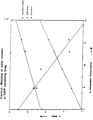
- Figs. 1 and 2 graphically compare rates of moisture loss over time of soap bars of the invention containing TSPP compound with a control bar containing no TSPP.
- Fig. 3 graphically depicts mapping of water content in soap bars containing TSPP.
- TSPP tetrasodium pyrophosphate
- TSPP has been incorporated in soap detergent bars.
- its use has been limited to soaps of specific fatty acid compositions having high moisture content, wherein it functions as a filler.
- U.S. Patent No. 2,686,761 describes a process which, by adding TSPP to the soap composition under certain processing conditions, enables the production of a soap bar containing a high proportion of water at the expense of a lower proportion of soap.
- the resulting soap bar is Predominantly in the beta phase. It is well known that, in high moisture (20-40%) soap bars, the rate of wear increases as the percentage of beta phase increases.
- 2,686,761 is applicable only to a certain class of fatty acid soaps (i.e., soap of a fat stock of iodine value above 25 and wherein not more than 40% of the combined fatty acids of which are saturated and of less than 16 carbon atoms and at least 20% of the combined fatty acids of which are saturated and of from 16 to 22 carbon atoms).
- the composition containing soap, water and TSPP must be subjected to extreme conditions of shear following mixing in the crutcher to achieve the desired "milled soap properties" and predominantly beta phase. It also appears that the use of the above-described limited class of fatty acid soaps is critical for the formation of the beta phase in the resulting soap bars.
- TSPP functions in the soap bar compositions of U.S. Patent No. 2,686,761 strictly as a filler and as a "salting-out" agent to enable the production of bars containing large amounts of water and low proportions of soap which are in the beta phase.
- TSPP functions in an entirely different manner.
- the invention is applicable to all fatty soaps used in manufacturing soap detergent bars.
- the TSPP functions not merely as a filler enabling the production of soap bars containing a high amount of water, but rather as a functional reagent which enables the production of a low water content soap detergent bar and which effectively enhances many of the physical properties of the bar.
- the TSPP acts as a processing aid in the formation of the detergent bars.
- the highly advantageous properties of the soap detergent bars of the invention are produced by the unique method of mixing the components of the composition in the crutcher and drying the resulting mixture.
- at least a portion, and preferably all, of the TSPP be added to the soap mixture in the crutcher.
- the mixture is then heated to a temperature above about 80°C, the transition temperature of the hydrate of TSPP, and dried under vacuum at that temperature to a final moisture level of 6-14%.
- the excess moisture be removed during the drying step at a temperature above the transition temperature of TSPP, i.e., 80°C.
- TSPP and remaining TSPP hydrate in the finished bars are believed to form long needle and hexagonal platelet crystals throughout the soap bar structure, thereby forming what amounts to a fibrous-type matrix network therein.
- This reinforcing network of TSPP and TSPP hydrate crystals is believed to provide the enhanced structural integrity, hardness, slough and wear- and crack-resistant properties associated with the soap detergent bars of the invention.
- any fatty acid or mixture thereof, whether saturated or unsaturated, conventionally employed to prepare soap detergent bars may be employed in the practice of the invention.
- fatty acids employed to prepare the soap/TSPP/H2O mixture is not overly critical.
- suitable such fatty acids from which the soaps (preferably sodium salts) are derived are fatty acids with alkyl chain lengths of C8 to C22, and preferably C12 to C18.
- Preferred fatty acids are those derived from tallow/coconut blends wherein the ratio of tallow/coco soap ranges from 1:1 to 9:1. Coco soap is interchangeable with palm kernel oil soap. Tallow soap is interchangeable with palm derived soap, or any other hardened soap derived from C16 and above fatty acids.
- the TSPP may be added to the kettle soap or therewith when the latter is fed to the crutcher, or it may be added to the crutcher following addition of the soap. In a preferred embodiment, most of the TSPP is added to the crutcher with the soap and the remainder is added in the amalgamator.
- Adjuvants typically employed in the preparation of detergent soap bars may, of course, be added to the compositions of the invention.
- exemplary of such adjuvants are: chelating agents such as EDTA, DTPA; opacifiers, e.g., TiO2; brighteners such as Tinopal; and fillers, e.g., talc, kaolin, etc.
- the invention is illustrated by the following non-limiting example.
- Crutcher Formula (Soap Chips) Ingredients Weight % Neat Soap (85% tallow/15% coco) 96.95 - 100 TSPP 0 - 3 EDTA (Na)4 0.03 BHT (butylated hydroxytoluene) 0.02 Amalgamator Formula Soap chips 98.5 Perfume 1.5
- TSPP tetrasodium pyrophosphate
- the soap chips were mixed with perfume and colorants, milled on a roll mill three times and plodded. The bars were then pressed into brick shape.
- Examples 1 to 7 were prepared using 85/15 tallow/coco soap (see Table 1).
- Examples 1, 3 and 6 are comparison examples.
- Batches 1 and 2 were made with and without 3% TSPP. The final moisture in the bars was maintained at approximately 8% and TSPP was added in the crutcher.
- Batches 3-5 were made with 9-10% moisture content in the soap bar with and without 3% TSPP, and TSPP was added in the crutcher.
- an additional 1.5% TSPP was added in the amalgamator.
- Batches 6 and 7 were made with and without 3% TSPP, and TSPP was added in the amalgamator.
- Volatiles The volatiles are reported as percent weight loss. This loss equals water plus fragrance and other volatiles lost during heating overnight (12 hours) using a vacuum oven (180°F, 25'' Hg). (82°C, 63.5 mm Hg) (see col 3 in Table 1).
- Hardness The bar hardness was determined using a needle penetrometer (Prevision Scientific Co. Model 11-12). This apparatus uses a weighted needle point, and the depth of penetration into the soap surface was measured for a 10-second interval. A minimum of ten data points were taken, and average results are given in millimeters. The results provide a relative assessment of bar hardness (see col 4 in Table 1).
- a rating of 0-25 is acceptable, and values of increasing and unacceptable specks are 50, 75 and 100 (see col 6 in Table 1).
- Slough (low humidity, room temperature) The initial weights of the soap bars were recorded. The bars were placed in plastic soap dishes (120 mm x 75 mm x 16 mm) filled with tap water at room temperature. The soap remained in the water for 17 hours. The soft soap was then removed by hand, and the bars were dried at room temperature for 24 hours and weighed. The test results are given as the weight loss per 100 grams (see col 7 in Table 1). Slough Test (high humidity) - The weight of the bar was recorded in grams. The bars were washed twice at 30 minute intervals for 10 seconds at 100°F (38°C) before testing.
- the bar was placed in a soap dish (120 mm x 75 mm x 16 mm). The dish was filled with tap water, and the bar remained in the water for 17 hours at 35-40°C at 100% relative humidity. At the end of 17 hours, the resulting soft material (slough) was removed using finger pressure. The bar was air-dried for 24 hours at 21-25°C, after which the bar weight was recorded. The weight loss was determined as the loss per 100 grams. (see col 8 in Table 1). Wear By Repeated Hand Wash - In this second method, the soap bars were repeatedly washed and then allowed to dry. The test was carried out over a 4-day period in order to simulate at-home usage. The initial weights of the bars were recorded.
- the slough properties of bars containing TSPP were superior to the bars without TSPP (both in high and low humidity testing conditions).
- the hardness of bars improved with the addition of TSPP and bars with TSPP were better in crack resistance.
- TSPP forms a hydrate with water and absorbs water up to 60% of its weight.
- the mapping of the water content of soap bars was studied by Differential Scanning Calorimeter (DSC).
- the total water content was obtained by drying the samples in a vacuum oven at 180°F (82°C) for 24 hours, whereas the free water was calculated from the endothermic transition of melting of ice in the soap samples by DSC.
- the difference between the total moisture and the free water is the total bound water in the soap bars. Soap water was then calculated from the total bound and TSPP water content in the soap (see Table 3).
- the flat (cleaved) regions of the soap bars were elementally characterized both in a qualitative fashion and by elemental distribution (dot map or elemental) surveys by energy dispersive X-ray analysis (EDX).
- EDX energy dispersive X-ray analysis
- the following combar samples were prepared with tallow coco soap base with 0-25% synthetic surfactants selected from anionic surfactants (coco-monoglyceridesulfate, sodium cocoyl isethionate, alkylglycerylsulfonate) and analyzed by EDX: Sample #1 - TSPP (4%) added in the amalgamator Sample #2 - TSPP (0%) Sample #3 - TSPP (3%) added in the crutcher Sample #4 - TSPP (4%) added in the crutcher.
- sample #2 phosphorus was not detected in significant amounts.
- elemental dot mapping indicated that phosphorus was concentrated unevenly, whereas in sample #3 and sample #4, phosphorus appeared to be evenly distributed in small clusters.
- Soap bars prepared with and without TSPP were analyzed for different phases by X-ray diffraction pattern. Soap bars without TSPP have predominantly omega phase with 9-14% beta phase. However, the beta phase in TSPP-containing soap bars could not be determined as the diffraction pattern of TSPP blocks the region where beta phase is generally observed. Therefore, it is not possible to quantify the beta phase in TSPP-containing soap bars.
- detergent soap bars containing TSPP which, due to the manner in which it is incorporated into the bars, acts as a functional reagent and structurant rather than merely as a filler, enabling the production of bars having high water and low soap contents.
Landscapes
- Chemical & Material Sciences (AREA)
- Life Sciences & Earth Sciences (AREA)
- Engineering & Computer Science (AREA)
- Chemical Kinetics & Catalysis (AREA)
- Oil, Petroleum & Natural Gas (AREA)
- Wood Science & Technology (AREA)
- Organic Chemistry (AREA)
- Inorganic Chemistry (AREA)
- Detergent Compositions (AREA)
Applications Claiming Priority (4)
| Application Number | Priority Date | Filing Date | Title |
|---|---|---|---|
| US315293A | 1993-01-11 | 1993-01-11 | |
| US3152 | 1993-01-11 | ||
| US5604993A | 1993-04-30 | 1993-04-30 | |
| US56049 | 1998-04-06 |
Publications (2)
| Publication Number | Publication Date |
|---|---|
| EP0607004A2 true EP0607004A2 (fr) | 1994-07-20 |
| EP0607004A3 EP0607004A3 (fr) | 1995-03-08 |
Family
ID=26671394
Family Applications (1)
| Application Number | Title | Priority Date | Filing Date |
|---|---|---|---|
| EP94300155A Withdrawn EP0607004A3 (fr) | 1993-01-11 | 1994-01-10 | Composition de savon contenant du pyrophosphate sodique. |
Country Status (9)
| Country | Link |
|---|---|
| EP (1) | EP0607004A3 (fr) |
| KR (1) | KR940018461A (fr) |
| CN (1) | CN1094088A (fr) |
| BR (1) | BR9400061A (fr) |
| CZ (1) | CZ6894A3 (fr) |
| HU (1) | HUT67658A (fr) |
| MX (1) | MXPA94000372A (fr) |
| RO (1) | RO114345B1 (fr) |
| SK (1) | SK3294A3 (fr) |
Cited By (2)
| Publication number | Priority date | Publication date | Assignee | Title |
|---|---|---|---|---|
| FR2738255A1 (fr) * | 1995-09-05 | 1997-03-07 | Talc De Luzenac | Composition de nettoyage a base de savon presentant de faibles proprietes dessechantes, et procede de preparation |
| WO1998056891A1 (fr) * | 1997-06-13 | 1998-12-17 | Colgate-Palmolive Company | Composition demaquillante solide contenant du savon |
Family Cites Families (7)
| Publication number | Priority date | Publication date | Assignee | Title |
|---|---|---|---|---|
| US2093927A (en) * | 1935-05-08 | 1937-09-21 | Procter & Gamble | Soap builder of reduced alkalinity |
| US2277730A (en) * | 1938-03-22 | 1942-03-31 | Lever Brothers Ltd | Soap |
| BE437050A (fr) * | 1938-11-22 | |||
| US2686761A (en) * | 1950-06-02 | 1954-08-17 | Procter & Gamble | Detergent product having milled soap properties |
| BE515112A (fr) * | 1951-10-25 | |||
| GB8823656D0 (en) * | 1988-10-07 | 1988-11-16 | Unilever Plc | Soap composition |
| GB8911006D0 (en) * | 1989-05-12 | 1989-06-28 | Unilever Plc | Soap composition |
-
1994
- 1994-01-10 EP EP94300155A patent/EP0607004A3/fr not_active Withdrawn
- 1994-01-10 CN CN94101070A patent/CN1094088A/zh active Pending
- 1994-01-10 RO RO94-00026A patent/RO114345B1/ro unknown
- 1994-01-10 KR KR1019940000317A patent/KR940018461A/ko not_active Ceased
- 1994-01-10 BR BR9400061A patent/BR9400061A/pt not_active Application Discontinuation
- 1994-01-11 CZ CZ9468A patent/CZ6894A3/cs unknown
- 1994-01-11 MX MXPA94000372A patent/MXPA94000372A/es unknown
- 1994-01-11 SK SK32-94A patent/SK3294A3/sk unknown
- 1994-01-11 HU HU9400072A patent/HUT67658A/hu unknown
Cited By (4)
| Publication number | Priority date | Publication date | Assignee | Title |
|---|---|---|---|---|
| FR2738255A1 (fr) * | 1995-09-05 | 1997-03-07 | Talc De Luzenac | Composition de nettoyage a base de savon presentant de faibles proprietes dessechantes, et procede de preparation |
| WO1997009413A1 (fr) * | 1995-09-05 | 1997-03-13 | Talc De Luzenac | Composition de nettoyage a base de savon |
| WO1998056891A1 (fr) * | 1997-06-13 | 1998-12-17 | Colgate-Palmolive Company | Composition demaquillante solide contenant du savon |
| US5888952A (en) * | 1997-06-13 | 1999-03-30 | Colgate-Palmolive Co. | Solid cleansing composition comprising tetrasodium pyrophosphate |
Also Published As
| Publication number | Publication date |
|---|---|
| KR940018461A (ko) | 1994-08-18 |
| RO114345B1 (ro) | 1999-03-30 |
| HUT67658A (en) | 1995-04-28 |
| EP0607004A3 (fr) | 1995-03-08 |
| MXPA94000372A (es) | 2004-08-20 |
| SK3294A3 (en) | 1994-08-10 |
| CN1094088A (zh) | 1994-10-26 |
| BR9400061A (pt) | 1994-08-16 |
| CZ6894A3 (en) | 1995-02-15 |
| HU9400072D0 (en) | 1994-05-30 |
Similar Documents
| Publication | Publication Date | Title |
|---|---|---|
| US5952289A (en) | Soap-based laundry bars with improved firmness | |
| US3376229A (en) | Synthetic detergent bar | |
| US4663070A (en) | Process for preparing soap-acyl isethionate toilet bars | |
| US4180470A (en) | Method for improved acyl isethionate detergent bars | |
| EP0287300B1 (fr) | Compositions de nettoyage | |
| US6255265B1 (en) | Low synthetic soap bars comprising organic salts and polyalkylene glycol | |
| US4096082A (en) | Quick lathering toilet bars and method of making same | |
| US3991001A (en) | Soap bars | |
| EP0239606B1 (fr) | Compositions detergentes | |
| WO2017202577A1 (fr) | Composition de nettoyage solide formée et son procédé de fabrication | |
| US5571287A (en) | Soap composition containing sodium pyrophosphate | |
| GB2247464A (en) | Soap compositions | |
| US3989647A (en) | Quick lathering toilet bars and method of making same | |
| GB2238316A (en) | Soap bars | |
| CA1060754A (fr) | Detergents en pains | |
| KR920002114B1 (ko) | 바형세제 | |
| CZ6894A3 (en) | Soap composition containing sodium diphosphate and process for preparing thereof | |
| US7662761B2 (en) | Soap bars comprising insoluble multivalent ion soap complexes | |
| DE2813324C2 (de) | Herstellung eines Reinigungsstücks | |
| GB2231882A (en) | Laundry soap bar | |
| US3723329A (en) | Soap tablet production | |
| US5069825A (en) | Detergent laundry bar with improved formulation and process | |
| GB2263282A (en) | Soap compositions | |
| US4058490A (en) | Quick lathering toilet bars and method of making same | |
| EP0708175A1 (fr) | Composition pour savonnette pour l'hygiène personnelle |
Legal Events
| Date | Code | Title | Description |
|---|---|---|---|
| PUAI | Public reference made under article 153(3) epc to a published international application that has entered the european phase |
Free format text: ORIGINAL CODE: 0009012 |
|
| 17P | Request for examination filed |
Effective date: 19940119 |
|
| AK | Designated contracting states |
Kind code of ref document: A2 Designated state(s): AT BE CH DE DK ES FR GB IE IT LI LU NL SE |
|
| PUAL | Search report despatched |
Free format text: ORIGINAL CODE: 0009013 |
|
| AK | Designated contracting states |
Kind code of ref document: A3 Designated state(s): AT BE CH DE DK ES FR GB IE IT LI LU NL SE |
|
| 17Q | First examination report despatched |
Effective date: 19980514 |
|
| STAA | Information on the status of an ep patent application or granted ep patent |
Free format text: STATUS: THE APPLICATION IS DEEMED TO BE WITHDRAWN |
|
| 18D | Application deemed to be withdrawn |
Effective date: 19981125 |