EP0607005B1 - ADN isolé encodant l'endonucléase de restriction Not I et procédés pour leur production - Google Patents
ADN isolé encodant l'endonucléase de restriction Not I et procédés pour leur production Download PDFInfo
- Publication number
- EP0607005B1 EP0607005B1 EP94300162A EP94300162A EP0607005B1 EP 0607005 B1 EP0607005 B1 EP 0607005B1 EP 94300162 A EP94300162 A EP 94300162A EP 94300162 A EP94300162 A EP 94300162A EP 0607005 B1 EP0607005 B1 EP 0607005B1
- Authority
- EP
- European Patent Office
- Prior art keywords
- dna
- endonuclease
- gene
- restriction
- restriction endonuclease
- Prior art date
- Legal status (The legal status is an assumption and is not a legal conclusion. Google has not performed a legal analysis and makes no representation as to the accuracy of the status listed.)
- Expired - Lifetime
Links
Images

Classifications
-
- C—CHEMISTRY; METALLURGY
- C12—BIOCHEMISTRY; BEER; SPIRITS; WINE; VINEGAR; MICROBIOLOGY; ENZYMOLOGY; MUTATION OR GENETIC ENGINEERING
- C12N—MICROORGANISMS OR ENZYMES; COMPOSITIONS THEREOF; PROPAGATING, PRESERVING, OR MAINTAINING MICROORGANISMS; MUTATION OR GENETIC ENGINEERING; CULTURE MEDIA
- C12N9/00—Enzymes; Proenzymes; Compositions thereof; Processes for preparing, activating, inhibiting, separating or purifying enzymes
- C12N9/10—Transferases (2.)
- C12N9/1003—Transferases (2.) transferring one-carbon groups (2.1)
- C12N9/1007—Methyltransferases (general) (2.1.1.)
-
- C—CHEMISTRY; METALLURGY
- C12—BIOCHEMISTRY; BEER; SPIRITS; WINE; VINEGAR; MICROBIOLOGY; ENZYMOLOGY; MUTATION OR GENETIC ENGINEERING
- C12N—MICROORGANISMS OR ENZYMES; COMPOSITIONS THEREOF; PROPAGATING, PRESERVING, OR MAINTAINING MICROORGANISMS; MUTATION OR GENETIC ENGINEERING; CULTURE MEDIA
- C12N9/00—Enzymes; Proenzymes; Compositions thereof; Processes for preparing, activating, inhibiting, separating or purifying enzymes
- C12N9/14—Hydrolases (3)
- C12N9/16—Hydrolases (3) acting on ester bonds (3.1)
- C12N9/22—Ribonucleases [RNase]; Deoxyribonucleases [DNase]
Definitions
- the present invention relates to recombinant DNA which encodes the Not I restriction endonuclease and modification methylase, and the production of these enzymes from the recombinant DNA.
- Restriction endonucleases are a class of enzymes that occur naturally in bacteria. When they are purified away from other contaminating bacterial components, restriction endonucleases can be used in the laboratory to cut DNA molecules into precise fragments. This property enables DNA molecules to be uniquely identified and to be fractionated into their constituent genes. Restriction endonucleases have proved to be indispensable tools in modern genetic research. They are the biochemical 'scissors' by means of which genetic engineering and analysis is performed.
- Restriction endonucleases act by recognizing and binding to particular sequences of nucleotides (the 'recognition sequence') along the DNA molecule. Once bound, they cleave the molecule within, or to one side of, the recognition sequence. Different restriction endonucleases have affinity for different recognition sequences. More than one hundred different restriction endonucleases have been identified among the many hundreds of bacterial species that have been examined to date.
- Bacteria tend to possess only a small number of restriction endonucleases per species.
- the endonucleases typically are named according to the bacteria from which they are derived.
- the species Neisseria lactamica for example, synthesizes four different restriction endonucleases, named Nla I , Nla II, Nla III and Nla IV .
- These enzymes recognize and cleave the sequences GGCC, GATC, CATG and GGNNCC respectively.
- Escherichia coli RY13 synthesizes only one enzyme, Eco RI , which recognizes the sequence GAATTC.
- restriction endonucleases play a protective role in the welfare of the bacterial cell. They enable bacteria to resist infection by foreign DNA molecules like viruses and plasmids that would otherwise destroy or parasitize them. They impart resistance by scanning the lengths of the infecting DNA molecule and cleaving them each time that the recognition sequence occurs. The cleavage that takes place disables many of the infecting genes and renders the DNA susceptible to further degradation by non-specific nucleases.
- a second component of bacterial protective systems are the modification methylases. These enzymes are complementary to restriction endonucleases and provide the means by which bacteria are able to protect their own DNA and distinguish it from foreign, infecting DNA. Modification methylases recognize and bind to the same nucleotide recognition sequence as the corresponding restriction endonuclease, but instead of cleaving the DNA, they chemically modify one or other of the nucleotides within the sequence by the addition of a methyl group. Following methylation, the recognition sequence is no longer bound or cleaved by the restriction endonuclease.
- the DNA of a bacterial cell is fully modified by virtue of the activity of its modification methylase, and is therefore insensitive to the presence of the endogenous restriction endonuclease. It is only unmodified, and therefore identifiably foreign DNA, that is sensitive to restriction endonuclease recognition and cleavage.
- the standard approach to isolating clones of interest is to develop a simple and reliable method to identify such clones within complex 'libraries', i.e. populations of clones derived by 'shotgun' procedures, when they occur at frequencies as low as 10 -3 to 10 -4 .
- the method should be selective, such that the unwanted majority of clones are destroyed while the desirable rare clones survive.
- Type II restriction-modification systems are being cloned with increasing frequency.
- the first cloned systems used bacteriophage infection as a means of identifying or selecting restriction endonuclease clones ( Eco RII: Kosykh et al., Molec. Gen. Genet 178: 717-719, (1980); Hha II: Mann et al., Gene 3: 97-112, (1978); Pst I: Walder et al., Proc. Nat. Acad. Sci. 78 1503-1507, (1981)).
- Another cloning approach involves transferring systems initially characterized as plasmid-borne into E. coli cloning plasmids ( Eco RV: Bougueleret et al., Nucl. Acid. Res. 12: 3659-3676, (1984); Pae R7: Gingeras and Brooks, Proc. Natl. Acad. Sci. USA 80: 402-406, (1983); Theriault and Roy, Gene 19: 355-359 (1982); Pvu II: Blumenthal et al., J. Bacteriol. 164: 501-509, (1985)).
- a third approach which is being used to clone a growing number of systems, involves selection for an active methylase gene (See e.g., EPO No.: 193,413 published September 3, 1986 and Bsu RI: Kiss et al., Nucl. Acid. Res. 13: 6403-6421, (1985)). Since restriction and modification genes are often closely linked, both genes can often be cloned simultaneously.
- methylase gene and endonuclease gene are introduced on a common DNA fragment, the methylase gene must modify or protect the host before the endonuclease gene cleaves the host's genome.
- restriction endonuclease and methylase genes may not express in E. coli due to differences in the transcription machinery of the source organism and E. coli, such as differences in promotors and ribosome binding sites.
- the methylase selection technique requires that the methylase express well enough in E. coli to fully protect at least some of the plasmids carrying the gene.
- the present invention relates to recombinant DNA encoding the genes for the Not I restriction endonuclease and modification methylase obtainable from Nocardia otitidis-caviarum (ATCC 14630) as well as related methods for the production of these enzymes from the recombinant DNA.
- the known methods for cloning restriction endonuclease genes were not successful in cloning NotI restriction endonuclease and modification methylase genes. Numerous attempts were made with the very successful method of selecting for an active methylase gene as well as the phage selection method. It is now known that these methods do not work because neither the methylase or endonuclease gene will be expressed when using the above methods.
- the new method involves purifying the NotI restriction endonuclease to homogeneity and determining the amino acid sequence of the N terminal end and of internal cyanogen-bromide degradation fragments of the protein.
- the amino acid sequence is used to make PCR primers to amplify a portion of the endonuclease directly from the N. otitidis-caviarum genome, which then serves as a probe to identify clones containing the entire gene.
- This invention also relates to a transformed host which expresses the restriction endonuclease Not I , an enzyme which recognizes the DNA sequence 5'-GCGGCCGC-3' and cleaves in the recognition sequence between the first -CG- pair leaving a 4 base 5' overhang (Roberts, R., Nucl. Acid Res.,supplement 13:165 (1985)).
- Not I restriction endonuclease produced in accordance with the present invention is substantially pure and free of the contaminants normally found in restriction endonuclease preparations made by conventional techniques as described in step 2 of example 1.
- One preferred method for cloning the Not I restriction-modification system comprises: purifying the endonuclease from N.
- otitidis-caviarum to near homogeneity, determining the amino acid sequence of the N-terminus and internal cyanogen bromide fragments, making degenerate DNA primers based on the amino acid sequences, amplifying a portion of the endonuclease from genomic N. otitidis-caviarum DNA with the degenerate primers, selecting an appropriate vector, forming a library containing DNA from N.
- otitidis caviarum isolating those clones containing DNA which hybridizes to the amplified DNA corresponding to a portion of the endonuclease, sequencing the cloned DNA to determine the DNA sequence at the beginning of the endonuclease and to identify the adjacent methylase (the Not I methylase), amplifying the entire endonuclease by PCR and ligating it into an expression vector beginning at the Not I AUG start codon, pre-modifying an appropriate host cell with Eag I methylase ( -CGGCCG- ) on a separate, compatible vector, introducing the above ligated expression vector containing the Not I endonuclease gene into the pre-modified host, growing the host and inducing with the appropriate expression conditions, harvesting the cells and purifying the Not I endonuclease.
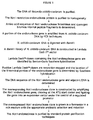
- Figure 1 illustrates the preferred method for cloning and producing the Not I restriction endonuclease.
- the methylase selection approach did not yield Not I methylase (nor endonuclease) clones.
- the protein sequencing, DNA amplification and the cloning results, and subsequent DNA sequencing, mapping, and characterization of the clones described in Figure 1 and example 1 reveal the previously unknown direct pathway for cloning and expressing the Not I restriction-modification system.
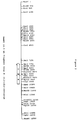
- Figure 2 is a restriction map of the 14.5 kb BamH I fragment of N. otitidis-caviarum DNA obtained from hybridization of the amplified portion of the Not I endonuclease gene to the BamH I Lambda Dash II library. The location and orientation of the NotI endonuclease and methylase genes are indicated.
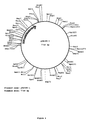
- Figure 3 is a restriction map of the over-expression clone pRM189-1.
- Figure 4 is the DNA sequence of the 5' end of the Not I restriction endonuclease gene
- the present invention relates to recombinant DNA which encodes the Not I restriction endonuclease, as well as to the enzyme produced from such a recombinant DNA.
- the endonuclease protein was purified to near homogeneity and used to determine the amino acid sequence of portions of the protein.
- the N-terminal amino acid sequence was determined and the endonuclease was digested with cyanogen bromide, which produced 4 major peptide fragments of approximately 24kD, 10kD, 4kD, and 3kD in size. Unamibiguous amino acid sequence was determined for the 24kD, 10kD and 4kD fragments, while the 3kD peptide gave a mixed signal.
- the 24kD peptide was found to be the N-terminal fragment of the endonuclease.
- DNA primers based on the amino acid sequence of the N-terminal region and the 10 kD fragment were synthesized and used to amplify this portion of the endonuclease gene from genomic N. otitidis-caviarum DNA by PCR.
- the amplified DNA fragment of approximately 680 bp was subcloned into pUC19 and sequenced.
- the amino acid sequence deduced from the DNA sequence of this PCR fragment matched the amino acid sequence of the Not I endonuclease determined from the N-terminal (24kD), 10 kD and 4kD peptides, confirming that this DNA fragment represented a portion of the Not I endonuclease gene.
- a library of N A library of N.
- otitidis-caviarum DNA was constructed in a Lambda Dash vector system to generate clones containing 9 to 23 kb inserts of N. otitidis-caviarum DNA.
- the 680 bp fragment of the endonuclease gene was used as a probe to identify Lambda Dash clones containing this portion of the endonuclease gene.
- These lambda clones were purified and all were found to contain a 14.5 kb BamH I fragment. The location of the probe was mapped onto the BamH I fragment to approximately position 8200 to 8900.
- DNA primers were designed to amplify the entire Not I endonuclease gene, from the N-terminal end of the Not I gene, introducing an Nde I site at the ATG start codon (-CATATG-), to a Sal I site approximately 500 bp 3-prime of the end of the Not I gene.
- the entire gene was amplified, both from the 14.5kb Bam HI plasmid and from the genomic N. otitidis-caviarum DNAs.
- the amplified DNA was cleaved by Nde I and Sal I endonucleases and ligated into the T7 expression vector pSYX22, which had been previously cleaved by Sal I and Nde I.
- the ligation reaction was transformed into ER2169 competent cells pre-modified with the Eag I methylase (-CGGCCG-) on the compatible plasmid pACYC184.
- Vectors containing inserts of the desired size were identified by miniprep procedures. These clones were grown to mid-log phase and induced with IPTG. The cells were then harvested by centrifugation, resuspended in sonication buffer and lysed by sonication. The extract was clarified and assayed for Not I endonuclease activity.
- Clones derived from N. otitidis-caviarum genomic DNA and from the 14.5 kb BamH I fragment plasmid produced Not I activity at 5,000,000 units per gram of cells (wet weight).
- the N . otitidis-caviarum DNA inserts in the lambda Dash vectors may be subcloned into a plasmid vector, such as pUC19 (ATCC# 37254), in order to simplify mapping and genetic manipulation of the insert, and to determine if the clones produce either Not I endonuclease or methylase.
- a plasmid vector such as pUC19 (ATCC# 37254)
- clones of the 14.5kb BamH I fragment in either orientation in pUC19 did not produce detectable levels of Not I endonuclease in vitro.
- the fragment also contained 4 Not I sites which were all completely cleaved in vitro by Not I, indicating that there was no in vivo Not I methylase activity.
- the DNA sequence of the gene can be altered by site-directed mutagenesis or by resynthesizing the gene itself to use codons that are more efficiently utilized in E. coli (Ikemura, J. Mol. Biol. 151:389-409, (1981)).
- the second and third codons of the endonuclease gene were changed to the codons most frequently used by E. coli through the PCR amplification process.
- the first 15 residues of the 42 kd protein corresponded to Met-Arg-Ser-Asp-Thr-Ser-Val-Glu-Pro-Glu-Gly-Ala-Asn-Phe-Ile, SEQ ID:1.
- This reaction mixture was evaporated to dryness and resuspended in 20 ⁇ l of loading buffer (1.5M Tris-HCl, pH 8.5, 12% glycerol, 4% SDS, 0.05% Serva Blue G, 0.05% Phenol Red) at 100°C for 5 minutes.
- loading buffer 1.5M Tris-HCl, pH 8.5, 12% glycerol, 4% SDS, 0.05% Serva Blue G, 0.05% Phenol Red
- This sample was subjected to electrophoresis on a Tris-Tricine 10 to 20% polyacrylamide gradient gel (Novex) for three hours and then transferred to a polyvinylidene difluoride (PVDF) membrane (Problott, Applied Biosystems Inc.) using 10 mM CAPS buffer (10mM 3-[cyclohexylamino]-1-propanesulfonic acid, 10 % methanol, 0.05% SDS, 0.005% dithiotheritiol, adjusted to pH 11.0 with NaOH) for 18 hours at 200 volts in a tank electroblotter (TE52, Hoeffer).
- PVDF polyvinylidene difluoride
- the membrane was stained with Coomassie blue R-250 and major bands of 24 kd, 10 kd, 4 kd and 3 kd were observed. These stained protein bands were excised from the membrane and each subjected to sequential degradation (2).
- the first 27 residues of the 24 kd peptide corresponded to Met-Arg-Ser-Asp-Thr-Ser-Val-Glu-Pro-Glu-Gly-Ala-Asn-Phe-Ile-Ala-Glu-Phe-Phe-Gly-X-X-Val-Tyr-Pro-Glu-Val, SEQ ID:2. Residues 21 and 22 were not identified. This fragment was therefore determined to be derived from the N-terminus of the endonuclease.
- the first 36 residues of the 4 kd peptide corresponded to Asp-Phe-His-Gly-Ser-Tyr-Lys-His-Ala-Val-Gly-Ala-Ile-Asp-Ile-Ala-Leu-Val-Glu-Gly-Ile-Asp-Phe-His-Gly-X-Leu-Pro-Thr-Pro-Ala-Gly-(Tyr or Arg)-Ala-Ala-(Lys or Leu), SEQ ID:4, where residue 26 was undetermined and residues 33 and 36 were somewhat ambiguous.
- the 3 kd peptide band produced two signals in most cycles and appeared to be a mixture of two peptides.
- pNOTB14.5 In order to facilitate sequencing of the region of the clone near the probe, various subclones of pNOTB14.5 were constructed. Subclones were made by deleting portions of the clone, or by cleaving with a restriction enzyme(s), gel prepping the desired fragment and ligating it into an appropriately cleaved and dephosphorylated pUC19 vector. Clones of the desired construct were identified by performing minipreps, digesting the purified DNA and analyzing it by agarose gel electrophoresis.
- each supernatant was poured into a centrifuge tube containing 3 ml of isopropanol and mixed. After 10 minutes at room temperature, the tubes were spun at 15000 rpm for 10 minutes to pellet the precipitated nucleic acids. The supernatants were discarded and the pellets were air-dried at room temperature for 30 minutes. Once dry, the pellets were dissolved in 500 ⁇ l of 10 mM Tris pH 8.0, 1 mM EDTA, containing 50 ⁇ g/ml RNase and incubated for 1 hour at 37°C to digest the RNA. The DNA was precipitated by the addition of 50 ⁇ l of 5 M NaCl followed by 350 ⁇ l of isopropanol.
- the DNA was spun down by centrifugation for 5 minutes, the supernatants were discarded, the pellets were dried and then redissolved in a final solution of 150 ⁇ l of 10 mM Tris, 1 mM EDTA pH 8.0.
- the plasmid minipreps were subsequently analyzed by digestion with various restriction endonucleases.
- the Not I restriction endonuclease obtained from this purification was substantially pure and free of non-specific endonuclease and exonuclease.
- the purity of the Not I restriction endonuclease preparation was checked by looking at the following criteria: 1) Ligation : After a 25-fold overdigestion of Adeno2 DNA, greater than 95% of the DNA fragments produced were ligated with T4 DNA Ligase ( at a 5' termini concentration of 1-2 uM at 16°C). Of these ligated fragments, 95% were able to be recut.
Landscapes
- Life Sciences & Earth Sciences (AREA)
- Health & Medical Sciences (AREA)
- Chemical & Material Sciences (AREA)
- Genetics & Genomics (AREA)
- Organic Chemistry (AREA)
- Engineering & Computer Science (AREA)
- Bioinformatics & Cheminformatics (AREA)
- Zoology (AREA)
- Wood Science & Technology (AREA)
- Molecular Biology (AREA)
- Microbiology (AREA)
- Biotechnology (AREA)
- Biomedical Technology (AREA)
- Biochemistry (AREA)
- General Engineering & Computer Science (AREA)
- General Health & Medical Sciences (AREA)
- Medicinal Chemistry (AREA)
- Enzymes And Modification Thereof (AREA)
- Micro-Organisms Or Cultivation Processes Thereof (AREA)
Claims (7)
- ADN isolé codant pour l'endonucléase de restriction NotI, dans lequel l'ADN isolé peut être obtenu à partir de Nocardia otitidis-caviarum.
- Vecteur recombinant comprenant un vecteur dans lequel a été inséré un ADN codant pour l'endonucléase de restriction NotI.
- Vecteur recombinant selon la revendication 2 comprenant l'ADN isolé selon la revendication 1.
- Vecteur recombinant selon la revendication 3, dans lequel le vecteur comprend le plasmide pRM189-1 (ATCC 69139).
- Cellule hôte transformée avec le vecteur recombinant selon la revendication 2, 3 ou 4.
- Méthode de production de l'endonucléase de restriction NotI, comprenant la culture d'une cellule hôte transformée avec le vecteur selon la revendication 2, 3 ou 4 dans des conditions appropriées à l'expression de ladite endonucléase.
- ADN isolé selon la revendication 1, dans lequel l'ADN isolé comprend la séquence ID NO:17.
Applications Claiming Priority (2)
| Application Number | Priority Date | Filing Date | Title |
|---|---|---|---|
| US3254 | 1993-01-11 | ||
| US08/003,254 US5371006A (en) | 1993-01-11 | 1993-01-11 | Isolated DNA encoding the NotI restriction endonuclease and related methods for producing the same |
Publications (3)
| Publication Number | Publication Date |
|---|---|
| EP0607005A2 EP0607005A2 (fr) | 1994-07-20 |
| EP0607005A3 EP0607005A3 (fr) | 1995-07-19 |
| EP0607005B1 true EP0607005B1 (fr) | 1997-04-16 |
Family
ID=21704942
Family Applications (1)
| Application Number | Title | Priority Date | Filing Date |
|---|---|---|---|
| EP94300162A Expired - Lifetime EP0607005B1 (fr) | 1993-01-11 | 1994-01-11 | ADN isolé encodant l'endonucléase de restriction Not I et procédés pour leur production |
Country Status (4)
| Country | Link |
|---|---|
| US (1) | US5371006A (fr) |
| EP (1) | EP0607005B1 (fr) |
| JP (2) | JP4040112B2 (fr) |
| DE (2) | DE607005T1 (fr) |
Families Citing this family (8)
| Publication number | Priority date | Publication date | Assignee | Title |
|---|---|---|---|---|
| WO1993020096A1 (fr) * | 1991-05-08 | 1993-10-14 | Stratagene | Bibliotheques d'oligonucleotides utiles pour la production d'amorces |
| US5543308A (en) * | 1994-10-18 | 1996-08-06 | New England Biolabs, Inc. | Isolated DNA encoding the FSEI restriction endonuclease and related methods for producing the same |
| US6025179A (en) * | 1998-08-31 | 2000-02-15 | New England Biolabs, Inc. | Method for cloning and producing the SnaBI restriction endonuclease and purification of the recombinant SnaBI restriction endonuclease |
| US6846658B1 (en) * | 2000-10-12 | 2005-01-25 | New England Biolabs, Inc. | Method for cloning and producing the Msel restriction endonuclease |
| EP2568040A1 (fr) | 2005-08-04 | 2013-03-13 | New England Biolabs, Inc. | Nouvelles endonucléases de restriction, ADN codant ces endonucléases et procédés pour identifier de nouvelles endonucleases avec la spécificité identique ou variée |
| KR100722255B1 (ko) * | 2005-08-19 | 2007-05-31 | 전광수 | 농축여과장치 |
| CN101802183B (zh) * | 2007-07-12 | 2016-02-24 | 新英格兰生物实验室公司 | 高保真度限制性内切核酸酶 |
| CN106967743A (zh) * | 2017-05-02 | 2017-07-21 | 通用生物系统(安徽)有限公司 | 一种重组NotI限制性内切酶在大肠杆菌中的生产方法 |
Family Cites Families (3)
| Publication number | Priority date | Publication date | Assignee | Title |
|---|---|---|---|---|
| IN166864B (fr) * | 1985-03-01 | 1990-07-28 | New England Biolabs Inc | |
| US4996151A (en) * | 1988-05-19 | 1991-02-26 | New England Biolabs, Inc. | Method for producing the Eag I restriction endonuclease and methylase |
| US5202248A (en) * | 1990-11-02 | 1993-04-13 | New England Biolabs, Inc. | Method for cloning and producing the nco i restriction endonuclease and methylase |
-
1993
- 1993-01-11 US US08/003,254 patent/US5371006A/en not_active Expired - Lifetime
-
1994
- 1994-01-11 EP EP94300162A patent/EP0607005B1/fr not_active Expired - Lifetime
- 1994-01-11 DE DE0607005T patent/DE607005T1/de active Pending
- 1994-01-11 JP JP01324594A patent/JP4040112B2/ja not_active Expired - Lifetime
- 1994-01-11 DE DE69402563T patent/DE69402563T2/de not_active Expired - Lifetime
-
2004
- 2004-08-18 JP JP2004238241A patent/JP2005046153A/ja active Pending
Non-Patent Citations (1)
| Title |
|---|
| Ann. Rev. Genet. (1991) 25: 585-627 * |
Also Published As
| Publication number | Publication date |
|---|---|
| JPH06277070A (ja) | 1994-10-04 |
| EP0607005A3 (fr) | 1995-07-19 |
| JP4040112B2 (ja) | 2008-01-30 |
| DE69402563T2 (de) | 1997-12-18 |
| EP0607005A2 (fr) | 1994-07-20 |
| JP2005046153A (ja) | 2005-02-24 |
| DE69402563D1 (de) | 1997-05-22 |
| DE607005T1 (de) | 1995-04-20 |
| US5371006A (en) | 1994-12-06 |
Similar Documents
| Publication | Publication Date | Title |
|---|---|---|
| EP0869174B1 (fr) | Procédé pour clonage et production de l'endonucléase de restriction Spel | |
| EP0483797B1 (fr) | Procédé de clonage et de production de l'endonucléase de restriction Nco I | |
| EP0607005B1 (fr) | ADN isolé encodant l'endonucléase de restriction Not I et procédés pour leur production | |
| US6335190B1 (en) | Method for cloning and producing the BsmI restriction endonuclease in E. coli | |
| EP0581436B1 (fr) | Procédé de clonage et de production de l'endonucléase de restriction et de la méthylase AatII | |
| US6245545B1 (en) | Method for cloning and producing the SwaI restriction endonuclease | |
| EP0712933B1 (fr) | ADN isolé encodant l'endonucléase de restriction FseI et procédés pour leur production | |
| EP0586116B1 (fr) | ADN codante pour la SphI endonucléase de restriction et procédés de sa fabrication | |
| EP0931835B1 (fr) | Procédé de clonage et de production de l'endonucléase de restriction PmeI | |
| EP0577254B1 (fr) | Procédé de donage et de préparation de l'enzyme de restriction et de la methylase nael | |
| EP0778346B1 (fr) | Procédé de clonage et de production de l'endonucléase Sca1 dans E. coli | |
| EP0733711A2 (fr) | Méthode de clonage et de production de l'endonucléase de restriction SacI | |
| US6723546B2 (en) | Method for cloning and expression of BsaI restriction endonuclease and BsaI methylase in E. coli | |
| US5786195A (en) | Method for cloning and producing the bssHII restriction endonuclease in E. coli | |
| US5849558A (en) | Discovery of and method for cloning and producing the PspGI restriction endonuclease | |
| US6210945B1 (en) | Method for cloning and producing the RsaI restriction endonuclease in E. coli and purification of the recombinant RsaI restriction endonuclease | |
| US5366882A (en) | Method for producing the BGLI restriction endonuclease and methylase | |
| US5824529A (en) | Method for cloning and producing the PshAI restriction endonuclease | |
| US6764843B2 (en) | Method of cloning and expression of BsmBI restriction endonuclease and BsmBI methylase in E. coli and purification of BsmBI endonuclease | |
| US6589769B1 (en) | Method for cloning and expression of TspRI restriction endonuclease and TspRI methylase in E. coli | |
| US6919194B2 (en) | Method for cloning and expression of Tth111II restriction endonuclease-methylase in E. coli |
Legal Events
| Date | Code | Title | Description |
|---|---|---|---|
| PUAI | Public reference made under article 153(3) epc to a published international application that has entered the european phase |
Free format text: ORIGINAL CODE: 0009012 |
|
| 17P | Request for examination filed |
Effective date: 19940201 |
|
| AK | Designated contracting states |
Kind code of ref document: A2 Designated state(s): DE FR GB |
|
| EL | Fr: translation of claims filed | ||
| DET | De: translation of patent claims | ||
| PUAL | Search report despatched |
Free format text: ORIGINAL CODE: 0009013 |
|
| AK | Designated contracting states |
Kind code of ref document: A3 Designated state(s): DE FR GB |
|
| 17Q | First examination report despatched |
Effective date: 19951020 |
|
| GRAG | Despatch of communication of intention to grant |
Free format text: ORIGINAL CODE: EPIDOS AGRA |
|
| GRAH | Despatch of communication of intention to grant a patent |
Free format text: ORIGINAL CODE: EPIDOS IGRA |
|
| GRAH | Despatch of communication of intention to grant a patent |
Free format text: ORIGINAL CODE: EPIDOS IGRA |
|
| GRAA | (expected) grant |
Free format text: ORIGINAL CODE: 0009210 |
|
| AK | Designated contracting states |
Kind code of ref document: B1 Designated state(s): DE FR GB |
|
| REF | Corresponds to: |
Ref document number: 69402563 Country of ref document: DE Date of ref document: 19970522 |
|
| ET | Fr: translation filed | ||
| PLBE | No opposition filed within time limit |
Free format text: ORIGINAL CODE: 0009261 |
|
| STAA | Information on the status of an ep patent application or granted ep patent |
Free format text: STATUS: NO OPPOSITION FILED WITHIN TIME LIMIT |
|
| 26N | No opposition filed | ||
| REG | Reference to a national code |
Ref country code: GB Ref legal event code: IF02 |
|
| PGFP | Annual fee paid to national office [announced via postgrant information from national office to epo] |
Ref country code: GB Payment date: 20130109 Year of fee payment: 20 Ref country code: DE Payment date: 20130109 Year of fee payment: 20 Ref country code: FR Payment date: 20130204 Year of fee payment: 20 |
|
| REG | Reference to a national code |
Ref country code: DE Ref legal event code: R071 Ref document number: 69402563 Country of ref document: DE |
|
| REG | Reference to a national code |
Ref country code: DE Ref legal event code: R071 Ref document number: 69402563 Country of ref document: DE |
|
| REG | Reference to a national code |
Ref country code: GB Ref legal event code: PE20 Expiry date: 20140110 |
|
| PG25 | Lapsed in a contracting state [announced via postgrant information from national office to epo] |
Ref country code: GB Free format text: LAPSE BECAUSE OF EXPIRATION OF PROTECTION Effective date: 20140110 Ref country code: DE Free format text: LAPSE BECAUSE OF EXPIRATION OF PROTECTION Effective date: 20140114 |