EP0608505B1 - Airbag-Gasgenerator mit einem Selbstzündmittel - Google Patents
Airbag-Gasgenerator mit einem Selbstzündmittel Download PDFInfo
- Publication number
- EP0608505B1 EP0608505B1 EP93118814A EP93118814A EP0608505B1 EP 0608505 B1 EP0608505 B1 EP 0608505B1 EP 93118814 A EP93118814 A EP 93118814A EP 93118814 A EP93118814 A EP 93118814A EP 0608505 B1 EP0608505 B1 EP 0608505B1
- Authority
- EP
- European Patent Office
- Prior art keywords
- gas generator
- auto
- weight
- carbon
- nitrocellulose
- Prior art date
- Legal status (The legal status is an assumption and is not a legal conclusion. Google has not performed a legal analysis and makes no representation as to the accuracy of the status listed.)
- Expired - Lifetime
Links
- 229910052799 carbon Inorganic materials 0.000 claims abstract description 20
- OKTJSMMVPCPJKN-UHFFFAOYSA-N Carbon Chemical compound [C] OKTJSMMVPCPJKN-UHFFFAOYSA-N 0.000 claims abstract description 19
- 239000000020 Nitrocellulose Substances 0.000 claims abstract description 17
- 229920001220 nitrocellulos Polymers 0.000 claims abstract description 17
- 239000007800 oxidant agent Substances 0.000 claims abstract description 9
- FGIUAXJPYTZDNR-UHFFFAOYSA-N potassium nitrate Chemical group [K+].[O-][N+]([O-])=O FGIUAXJPYTZDNR-UHFFFAOYSA-N 0.000 claims description 15
- 238000002485 combustion reaction Methods 0.000 claims description 12
- 239000000446 fuel Substances 0.000 claims description 9
- 235000010333 potassium nitrate Nutrition 0.000 claims description 8
- 239000004323 potassium nitrate Substances 0.000 claims description 8
- 239000000203 mixture Substances 0.000 claims description 6
- 239000000463 material Substances 0.000 claims description 4
- XTEGARKTQYYJKE-UHFFFAOYSA-M Chlorate Chemical compound [O-]Cl(=O)=O XTEGARKTQYYJKE-UHFFFAOYSA-M 0.000 claims description 3
- 150000002978 peroxides Chemical class 0.000 claims description 3
- 239000003380 propellant Substances 0.000 claims description 3
- VLTRZXGMWDSKGL-UHFFFAOYSA-N perchloric acid Chemical compound OCl(=O)(=O)=O VLTRZXGMWDSKGL-UHFFFAOYSA-N 0.000 claims description 2
- 229910002651 NO3 Inorganic materials 0.000 claims 1
- NHNBFGGVMKEFGY-UHFFFAOYSA-N Nitrate Chemical compound [O-][N+]([O-])=O NHNBFGGVMKEFGY-UHFFFAOYSA-N 0.000 claims 1
- VLTRZXGMWDSKGL-UHFFFAOYSA-M perchlorate Inorganic materials [O-]Cl(=O)(=O)=O VLTRZXGMWDSKGL-UHFFFAOYSA-M 0.000 claims 1
- 239000003795 chemical substances by application Substances 0.000 abstract description 7
- 230000002269 spontaneous effect Effects 0.000 abstract 1
- 239000007789 gas Substances 0.000 description 12
- 239000000843 powder Substances 0.000 description 8
- 238000010438 heat treatment Methods 0.000 description 4
- 230000004580 weight loss Effects 0.000 description 4
- NINIDFKCEFEMDL-UHFFFAOYSA-N Sulfur Chemical compound [S] NINIDFKCEFEMDL-UHFFFAOYSA-N 0.000 description 3
- 230000000052 comparative effect Effects 0.000 description 3
- 238000010586 diagram Methods 0.000 description 3
- 239000012528 membrane Substances 0.000 description 3
- 239000011593 sulfur Substances 0.000 description 3
- 229910052717 sulfur Inorganic materials 0.000 description 3
- 230000009172 bursting Effects 0.000 description 2
- 238000005259 measurement Methods 0.000 description 2
- VWDWKYIASSYTQR-UHFFFAOYSA-N sodium nitrate Chemical compound [Na+].[O-][N+]([O-])=O VWDWKYIASSYTQR-UHFFFAOYSA-N 0.000 description 2
- ZLMJMSJWJFRBEC-UHFFFAOYSA-N Potassium Chemical compound [K] ZLMJMSJWJFRBEC-UHFFFAOYSA-N 0.000 description 1
- 239000000853 adhesive Substances 0.000 description 1
- 230000001070 adhesive effect Effects 0.000 description 1
- 239000003513 alkali Substances 0.000 description 1
- 229910001963 alkali metal nitrate Inorganic materials 0.000 description 1
- 229910052782 aluminium Inorganic materials 0.000 description 1
- XAGFODPZIPBFFR-UHFFFAOYSA-N aluminium Chemical compound [Al] XAGFODPZIPBFFR-UHFFFAOYSA-N 0.000 description 1
- ZJRXSAYFZMGQFP-UHFFFAOYSA-N barium peroxide Chemical compound [Ba+2].[O-][O-] ZJRXSAYFZMGQFP-UHFFFAOYSA-N 0.000 description 1
- 239000002585 base Substances 0.000 description 1
- 230000015572 biosynthetic process Effects 0.000 description 1
- 229920002678 cellulose Polymers 0.000 description 1
- 239000001913 cellulose Substances 0.000 description 1
- 239000003610 charcoal Substances 0.000 description 1
- 239000003245 coal Substances 0.000 description 1
- 238000000354 decomposition reaction Methods 0.000 description 1
- 230000007423 decrease Effects 0.000 description 1
- 238000013467 fragmentation Methods 0.000 description 1
- 238000006062 fragmentation reaction Methods 0.000 description 1
- 239000003721 gunpowder Substances 0.000 description 1
- 239000011261 inert gas Substances 0.000 description 1
- 230000000977 initiatory effect Effects 0.000 description 1
- 239000003562 lightweight material Substances 0.000 description 1
- 230000007774 longterm Effects 0.000 description 1
- 150000002828 nitro derivatives Chemical class 0.000 description 1
- 150000002894 organic compounds Chemical class 0.000 description 1
- 239000008188 pellet Substances 0.000 description 1
- 230000002035 prolonged effect Effects 0.000 description 1
- 235000010344 sodium nitrate Nutrition 0.000 description 1
- 239000004317 sodium nitrate Substances 0.000 description 1
- 239000004071 soot Substances 0.000 description 1
- 230000006641 stabilisation Effects 0.000 description 1
- 238000011105 stabilization Methods 0.000 description 1
- 230000001960 triggered effect Effects 0.000 description 1
Images
Classifications
-
- B—PERFORMING OPERATIONS; TRANSPORTING
- B60—VEHICLES IN GENERAL
- B60R—VEHICLES, VEHICLE FITTINGS, OR VEHICLE PARTS, NOT OTHERWISE PROVIDED FOR
- B60R21/00—Arrangements or fittings on vehicles for protecting or preventing injuries to occupants or pedestrians in case of accidents or other traffic risks
- B60R21/02—Occupant safety arrangements or fittings, e.g. crash pads
- B60R21/16—Inflatable occupant restraints or confinements designed to inflate upon impact or impending impact, e.g. air bags
- B60R21/26—Inflatable occupant restraints or confinements designed to inflate upon impact or impending impact, e.g. air bags characterised by the inflation fluid source or means to control inflation fluid flow
- B60R21/264—Inflatable occupant restraints or confinements designed to inflate upon impact or impending impact, e.g. air bags characterised by the inflation fluid source or means to control inflation fluid flow using instantaneous generation of gas, e.g. pyrotechnic
- B60R21/2644—Inflatable occupant restraints or confinements designed to inflate upon impact or impending impact, e.g. air bags characterised by the inflation fluid source or means to control inflation fluid flow using instantaneous generation of gas, e.g. pyrotechnic using only solid reacting substances, e.g. pellets, powder
-
- C—CHEMISTRY; METALLURGY
- C06—EXPLOSIVES; MATCHES
- C06B—EXPLOSIVES OR THERMIC COMPOSITIONS; MANUFACTURE THEREOF; USE OF SINGLE SUBSTANCES AS EXPLOSIVES
- C06B29/00—Compositions containing an inorganic oxygen-halogen salt, e.g. chlorate, perchlorate
-
- C—CHEMISTRY; METALLURGY
- C06—EXPLOSIVES; MATCHES
- C06B—EXPLOSIVES OR THERMIC COMPOSITIONS; MANUFACTURE THEREOF; USE OF SINGLE SUBSTANCES AS EXPLOSIVES
- C06B31/00—Compositions containing an inorganic nitrogen-oxygen salt
- C06B31/02—Compositions containing an inorganic nitrogen-oxygen salt the salt being an alkali metal or an alkaline earth metal nitrate
- C06B31/12—Compositions containing an inorganic nitrogen-oxygen salt the salt being an alkali metal or an alkaline earth metal nitrate with a nitrated organic compound
- C06B31/22—Compositions containing an inorganic nitrogen-oxygen salt the salt being an alkali metal or an alkaline earth metal nitrate with a nitrated organic compound the compound being nitrocellulose
-
- C—CHEMISTRY; METALLURGY
- C06—EXPLOSIVES; MATCHES
- C06C—DETONATING OR PRIMING DEVICES; FUSES; CHEMICAL LIGHTERS; PYROPHORIC COMPOSITIONS
- C06C9/00—Chemical contact igniters; Chemical lighters
-
- B—PERFORMING OPERATIONS; TRANSPORTING
- B60—VEHICLES IN GENERAL
- B60R—VEHICLES, VEHICLE FITTINGS, OR VEHICLE PARTS, NOT OTHERWISE PROVIDED FOR
- B60R21/00—Arrangements or fittings on vehicles for protecting or preventing injuries to occupants or pedestrians in case of accidents or other traffic risks
- B60R21/02—Occupant safety arrangements or fittings, e.g. crash pads
- B60R21/16—Inflatable occupant restraints or confinements designed to inflate upon impact or impending impact, e.g. air bags
- B60R21/26—Inflatable occupant restraints or confinements designed to inflate upon impact or impending impact, e.g. air bags characterised by the inflation fluid source or means to control inflation fluid flow
- B60R2021/26064—Inflatable occupant restraints or confinements designed to inflate upon impact or impending impact, e.g. air bags characterised by the inflation fluid source or means to control inflation fluid flow characterised by auto-ignition means
Definitions
- the invention relates to an airbag gas generator with an auto-ignition device according to the preamble of claim 1.
- Such gas generators are known (cf. US-A-4 561 675 and DE 39 14 690 A1). At ambient temperatures of around 150 to 200 ° C, as can occur in the event of a fire, for example, the auto-ignition device ignites the fuel and thus triggers the airbag. At these temperatures, the aluminum or the like generally has. Lightweight material existing generator housing still has sufficient strength. This prevents fragmentation of the housing when the airbag is deployed in the event of a fire.
- gunpowder that is to say nitrocellulose, if appropriate in combination with other organic nitro compounds, is used as the auto-ignition agent.
- an airbag gas generator including the auto-ignition agent
- a temperature load of up to 110 ° C.
- Such peak temperatures can occur, for example, with prolonged exposure to sunlight.
- nitrocellulose is decomposed if it is heated for a long time. The requirement mentioned is therefore not met by the known auto-ignition devices.
- the object of the invention is to provide a self-igniter for airbag gas generators, which remains stable even with long-term heating to relatively high temperatures.
- nitrocellulose inorganic oxidizer which reacts with carbon are added to the nitrocellulose.
- the proportion of nitrocellulose in the auto-ignition agent is 20 to 70% by weight, preferably 30 to 50% by weight, in particular approximately 40% by weight.
- alkali metal nitrates such as potassium or sodium nitrate can be used as inorganic oxidizers.
- Alkali chlorates and perchlorates can also be used as oxidizers, as can peroxides, in particular alkaline earth peroxides, such as barium peroxide.
- Carbon is of major importance in the heat stabilization of nitrocellulose in the auto-ignition device according to the invention.
- Finely comminuted coal such as charcoal, soot, or the like.
- Carbon-containing powdery material can be used as carbon.
- the proportion of carbon in the auto-ignition device according to the invention should be at least 3% by weight, but the carbon content is preferably 5 to 20% by weight, based on the total weight of the auto-ignition device.
- other fuels that can be reacted with the inorganic oxidizer can also be present in the auto-igniter, for example sulfur or organic compounds such as sugar or cellulose.
- a self-igniting agent has been found to be particularly suitable which consists of a mixture of nitrocellulose and sulfur-free black powder, the weight ratio of the nitrocellulose to the sulfur-free black powder being 0.5: 1 to 0.8: 1.
- the sulfur-free black powder preferably consists of 70 to 85% by weight of potassium nitrate and 30 to 15% by weight of carbon, especially about 80% by weight potassium nitrate and about 20% by weight carbon.
- black powder containing sulfur can also be used, which consists of approximately 75% by weight of potassium nitrate, 10% by weight of sulfur and 15% by weight of carbon.
- the auto-ignition device according to the invention consisting of a mixture of nitrocellulose, carbon and an oxidizer and possibly a further fuel for the inorganic oxidizer (in addition to carbon) can be pressed to form tablets, pelets or the like.
- the same nitrocellulose powder as in the comparative example is mixed with sulfur-free black powder (with the composition 80% by weight potassium nitrate and 20% by weight carbon) in a ratio of 0.66: 1.
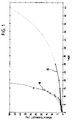
- the mixture is stored in air at 105 ° C and the weight loss measured daily. The measurement results are shown by curve B in the attached diagram (FIG. 1).
- the weight loss of the pure nitrocellulose (curve A) due to the formation of gaseous decomposition products is already about 30% after 15 days (360 hours) and even about 50% after 17 days (408 hours).
- the auto-ignition device according to the invention even after heating for 30 days (720 hours) to 105 ° C., there was only a weight loss of about 7%.
- the functionality is still reliably guaranteed even after such a long period at a temperature of 105 ° C.
- the auto-ignition device according to the invention is preferably used in the form of tablets, pelets or in the form of other lumpy bodies.
- the tablets can be arranged at different locations in the gas generator.
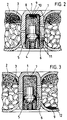
- the gas generator has a central tube 1, around which extends a toroidal combustion chamber housing 2, which is filled with fuel pellets 3.
- a toroidal combustion chamber housing 2 which is filled with fuel pellets 3.
- an electric igniter 5 is mounted on the ignition carrier 4, which projects into an amplifier charge 6, which is arranged in a sleeve 7.
- the sleeve 7 On its end face facing away from the igniter 5, the sleeve 7 is provided with a recess 8 in which the auto-ignition device designed as a tablet 9 is arranged.
- the bottom 10 of the recess 8 is designed as a bursting membrane.
- the interior of the central tube 1 is connected to the interior of the combustion chamber housing 2 through channels 11.
- the auto-ignition material 9 self-ignites, causing the booster membrane 6 to over-ignite after the bursting membrane 10 has been opened, thus initiating the fuel 3.
- the embodiment of the gas generator according to Fig. 3 differs from that according to Fig. 2 essentially only in that the auto-ignition device designed as a tablet 9, e.g. is attached to the inside of the combustion chamber housing 2 with a suitable adhesive 12.
- the auto-ignition means 9 self-ignites, so that the fuel 3 over-ignites.
- the fuel combustion also initiates the booster charge 6 and the electrical igniter 5, so that a completely inert gas generator is present after the combustion has ended.
- the embodiment according to FIG. 3 with the auto-ignition tablet arranged on the inside of the combustion chamber housing is also particularly suitable for long tube generators. If in such a tube generator the auto-ignition means (only) is provided on the ignition unit, which projects axially into the tubular combustion chamber housing from one end face, the auto-ignition agent will not be ignited if the combustion chamber housing is heated only on the side facing away from the ignition unit. If, on the other hand, several auto-ignition tablets are attached to the inner wall of the combustion chamber housing, the airbag is triggered even if the housing is only heated locally.
Landscapes
- Chemical & Material Sciences (AREA)
- Organic Chemistry (AREA)
- Inorganic Chemistry (AREA)
- Physics & Mathematics (AREA)
- Fluid Mechanics (AREA)
- Engineering & Computer Science (AREA)
- Mechanical Engineering (AREA)
- Chemical Kinetics & Catalysis (AREA)
- General Chemical & Material Sciences (AREA)
- Air Bags (AREA)
- Feeding, Discharge, Calcimining, Fusing, And Gas-Generation Devices (AREA)
Description
- Die Erfindung bezieht sich auf einen Airbag-Gasgenerator mit einem Selbstzündmittel nach dem Oberbegriff des Anspruchs 1.
- Derartige Gasgeneratoren sind bekannt (vgl. US-A-4 561 675 und DE 39 14 690 A1). Bei Umgebungstemperaturen von etwa 150 bis 200° C, wie sie beispielsweise im Falle eines Brandes auftreten können, führt das Selbstzündmittel zum Zünden des Treibstoffs und damit zur Auslösung des Airbags. Bei diesen Temperaturen besitzt das im allgemeinen aus Aluminium o.dgl. Leichtbaumaterial bestehende Generatorgehäuse noch eine ausreichende Festigkeit. Eine Fragmentierung des Gehäuses bei der Airbag-Auslösung im Brandfall wird damit verhindert.
- Als Selbstzündmittel werden nach der US-A-4 561 675 und DE 39 14 690 A1 Schießpulver, also Nitrozellulose ggf. in Verbindung mit anderen organischen Nitroverbindungen, verwendet.
- Es besteht die Forderung, daß ein Airbag-Gasgenerator, einschließlich des Selbstzündmittels, bei einer Temperaturbelastung bis zu 110° C über einen Zeitraum von 400 Std. funktionsfähig bleibt. Solche Spitzentemperaturen können beispielsweise bei längerer Sonneneinstrahlung auftreten. Nitrozellulose wird bei langandauernder Erwärmung jedoch zersetzt. Die genannte Forderung wird daher von den bekannten Selbstzündmitteln nicht erfüllt.
- Aufgabe der Erfindung ist es, ein Selbstzündmittel für Airbag-Gasgeneratoren bereitzustellen, das auch bei langandauernder Erwärmung auf relativ hohe Temperaturen stabil bleibt.
- Dies wird erfindungsgemäß mit dem im Anspruch 1 gekennzeichneten Airbag-Gasgenerator erreicht. In den Unteransprüchen sind vorteilhafte Ausgestaltungen der Erfindung wiedergegeben.
- Völlig überraschend wurde gefunden, daß die vorstehend genannte Forderung erfüllt wird, wenn der Nitrozellulose Kohlenstoff und ein mit Kohlenstoff reagierender anorganischer Oxydator zugesetzt wird. Der Anteil der Nitrozellulose in dem Selbstzündmittel liegt bei 20 bis 70 Gew.-%, vorzugsweise bei 30 bis 50 Gew.-%, insbesondere etwa 40 Gew.-%.
- Als anorganische Oxydatoren können insbesondere Alkalinitrate, wie Kalium- oder Natriumnitrat eingesetzt werden. Ferner sind Alkalichlorate und -perchlorate als Oxydatoren verwendbar, desgleichen Peroxide, insbesondere Erdalkaliperoxide, wie Bariumperoxid.
- Dem Kohlenstoff kommt eine wesentliche Bedeutung bei der Wärmestabilisierung der Nitrozellulose in dem erfindungsgemäßen Selbstzündmittel zu. Als Kohlenstoff kann fein zerkleinerte Kohle, wie Holzkohle, Ruß, oder dgl. kohlenstoffhaltiges pulverförmiges Material verwendet werden. Der Anteil des Kohlenstoffs in dem erfindungsgemäßen Selbstzündmittel soll mindestens 3 Gew.-% betragen, vorzugsweise liegt der Kohlenstoffanteil jedoch bei 5 bis 20 Gew.-%, bezogen auf das Gesamtgewicht des Selbstzündmittels. Neben Kohlenstoff können noch andere Brennstoffe, die mit dem anorganischen Oxydator umsetzbar sind, in dem Selbstzündmittel vorliegen, beispielsweise Schwefel oder organische Verbindungen, wie Zucker oder Zellulose.
- Als besonders geeignet hat sich ein Selbstzündmittel herausgestellt, das aus einem Gemisch aus Nitrozellulose und schwefelfreiem Schwarzpulver besteht, wobei das Gewichtsverhältnis der Nitrozellulose zum schwefelfreien Schwarzpulver 0,5 : 1 bis 0,8 : 1 beträgt.
- Das schwefelfreie Schwarzpulver besteht vorzugsweise aus 70 bis 85 Gew.-% Kaliumnitrat und 30 bis 15 Gew.-% Kohlenstoff, insbesondere etwa 80 Gew.-% Kaliumnitrat und etwa 20 Gew.-% Kohlenstoff.
- Es ist jedoch auch schwefelhaltiges Schwarzpulver einsetzbar, das zu etwa 75 Gew.-% aus Kaliumnitrat, 10 Gew.-% Schwefel und 15 Gew.-% Kohlenstoff besteht. Das erfindungsgemäße Selbstzündmittel aus einem Gemisch aus Nitrozellulose, Kohlenstoff und einem Oxydator sowie ggf. einem weiteren Brennstoff für den anorganischen Oxydator (neben Kohlenstoff) läßt sich hervorragend zu Tabletten, Peletts o. dgl. stückige Körper pressen oder in anderer Weise formen.
- Nachstehend ist die Erfindung anhand eines Vergleichsbeispiels und eines Beispiels näher erläutert.
- Einbasiges, reines Nitrozellulose-Pulver (= rauchloses Treibladungspulver) wird an der Luft bei 105° C gelagert. Der Gewichtsverlust der Nitrozellulose wird täglich gemessen. Die Ergebnisse dieser Messungen sind in dem beigefügten Diagramm (Fig. 1) als Kurve A dargestellt.
- Das gleiche Nitrozellulosepulver wie im Vergleichsbeispiel wird mit schwefelfreiem Schwarzpulver (mit der Zusammensetzung 80 Gew.-% Kaliumnitrat und 20 Gew.-% Kohlenstoff) im Verhältnis 0,66 : 1 vermischt. Das Gemisch wird an der Luft bei 105° C gelagert und der Gewichtsverlust täglich gemessen. Die Meßergebnisse sind in dem beigefügten Diagramm (Fig. 1) durch die Kurve B dargestellt.
- Wie aus dem Diagramm hervorgeht, beträgt der Gewichtsverlust der reinen Nitrozellulose (Kurve A) durch Bildung gasförmiger Zersetzungsprodukte nach 15 Tagen (360 Std.) bereits etwa 30 % und nach 17 Tagen (408 Std.) sogar schon etwa 50 %. Das heißt, die Funktionsfähigkeit eines Gasgenerators mit Nitrozellulose als Selbstzündmittel nimmt sehr schnell ab. Demgegenüber ist bei dem erfindungsgemäßen Selbstzündmittel selbst nach 30 Tagen (720 Std.) Erwärmung auf 105° C erst ein Gewichtsverlust von etwa 7 % eingetreten. Das heißt, bei einem Gasgenerator mit dem erfindungsgemäßen Selbstzündmittel ist die Funktionsfähigkeit auch nach einem so langen Zeitraum bei einer Temperatur von 105°C noch sicher gewährleistet.
- Das erfindungsgemäße Selbstzündmittel wird vorzugsweise in Form von Tabletten, Peletts oder in Form anderer stückiger Körper eingesetzt. Die Tabletten können dabei an unterschiedlichen Stellen im Gasgenerator angeordnet werden.
- Nachstehend sind zwei Ausführungsformen von Airbag-Gasgeneratoren anhand der Zeichnung näher erläutert, bei denen die Selbstzündmitteltabletten an verschiedenen Stellen angeordnet sind. Dabei zeigen
- Fig. 2 und 3
- jeweils einen Schnitt durch zwei verschiedene Ausführungsformen des Gasgenerators in teilweiser Wiedergabe.
- Gemäß Fig. 2 weist der Gasgenerator ein Zentralrohr 1 auf, um das sich ein torusförmiges Brennkammergehäuse 2 erstreckt, das mit Treibstoffpellets 3 gefüllt ist. Im Zentralrohr 1 ist auf dem Anzündträger 4 ein elektrischer Anzünder 5 montiert, der in eine Verstärkerladung 6 ragt, die in einer Hülse 7 angeordnet ist. An ihrer von dem Anzünder 5 abgewandten Stirnseite ist die Hülse 7 mit einer Vertiefung 8 versehen, in der das als Tablette 9 ausgebildete Selbstzündmittel angeordnet ist. Der Boden 10 der Vertiefung 8 ist als Berstmembran ausgebildet. Das Innere des Zentralrohrs 1 ist mit dem Inneren des Brennkammergehäuses 2 durch Kanäle 11 verbunden.
- Im Falle einer übermäßigen Erhitzung des Brennkammergehäuses 1 und des Zentralrohrs 2 kommt es zu einer Selbstentzündung des Selbstzündmaterials 9, wodurch nach Öffnen der Berstmembran 10 eine Überzündung der Verstärkerladung 6 erfolgt und damit der Treibstoff 3 initiiert wird.
- Die Ausführungsform des Gasgenerators nach Fig. 3 unterscheidet sich von derjenigen nach Fig. 2 im wesentlichen nur dadurch, daß das als Tablette 9 ausgebildete Selbstzündmittel, z.B. mit einem geeigneten Klebstoff 12 an der Innenseite des Brennkammergehäuses 2 befestigt ist.
- Im Falle einer übermäßigen Erhitzung des Brennkammergehäuses 1 kommt es zu einer Selbstzündung des Selbstzündmittels 9, so daß eine Überzündung auf den Treibstoff 3 stattfindet. Durch die Treibstoffverbrennung wird auch noch die Verstärkerladung 6 sowie der elektrische Anzünder 5 initiiert, so daß nach Brennschluß ein völlig inerter Gasgenerator vorliegt.
- Die Ausführungsform nach Fig. 3 mit an der Innenseite des Brennkammergehäuses angeordneter Selbstzündmittel-Tablette ist insbesondere auch für lange Rohrgeneratoren geeignet. Wenn in einem solchen Rohrgenerator das Selbstzündmittel (nur) an der Anzündeinheit vorgesehen ist, die von einer Stirnseite axial in das rohrförmige Brennkammergehäuse ragt, wird das Selbstzündmittel nämlich dann nicht gezündet, wenn die Erwärmung des Brennkammergehäuses nur auf der von der Anzündeinheit abgewandten Seite erfolgt. Wenn hingegen mehrere Selbstzündmittel-Tabletten verteilt an der Innenwand des Brennkammergehäuses befestigt sind, erfolgt eine Auslösung des Airbags auch bei nur lokaler Erwärmung des Gehäuses.
Claims (7)
- Airbag-Gasgenerator mit einem Selbstzündmittel, das bei einer Temperatur zündet, die deutlich über der normalen Umgebungstemperatur, aber wesentlich unter der Zündtemperatur des Treibstoffs liegt, dadurch gekennzeichnet, daß das Selbstzündmittel (9) aus einem Gemisch aus Nitrozellulose, einem anorganischen Oxydator, Kohlenstoff und ggf. einem weiteren Brennstoff für den anorganischen Oxydator besteht, wobei der Anteil der Nitrozellulose 20 bis 70 Gew.-% und der Anteil des Kohlenstoffs mindestens 3 Gew.-% beträgt.
- Gasgenerator nach Anspruch 1, dadurch gekennzeichnet, daß der Anteil der Nitrozellulose im Selbstzündmittel (9) 30 bis 50 Gew.-% beträgt.
- Gasgenerator nach Anspruch 1 oder 2, dadurch gekennzeichnet, daß der Anteil des Kohlenstoffs im Treibmittel 5 bis 20 Gew.-% beträgt.
- Gasgenerator nach einem der vorstehenden Ansprüche, dadurch gekennzeichnet, daß der Oxydator ein Alkali- oder Erdalkalinitrat, -chlorat, -perchlorat oder -peroxid ist.
- Gasgenerator nach einem der vorstehenden Ansprüche, dadurch gekennzeichnet, daß der Oxydator Kaliumnitrat ist und der Anteil des Kaliumnitrats, bezogen auf das Gemisch aus Kaliumnitrat, Kohlenstoff und dem weiteren Brennstoff 70 bis 85 Gew.-% beträgt.
- Gasgenerator nach einem der vorstehenden Ansprüche, dadurch gekennzeichnet, daß das Selbstzündmittel (9) als Tablette ausgebildet ist.
- Gasgenerator nach Anspruch 6, dadurch gekennzeichnet, daß das Selbstzündmittel (9) an der Innenseite des Brennkammergehäuses (1) angebracht ist.
Applications Claiming Priority (2)
| Application Number | Priority Date | Filing Date | Title |
|---|---|---|---|
| DE4301794A DE4301794C1 (de) | 1993-01-23 | 1993-01-23 | Airbag-Gasgenerator mit einem Selbstzündmittel |
| DE4301794 | 1993-01-23 |
Publications (2)
| Publication Number | Publication Date |
|---|---|
| EP0608505A1 EP0608505A1 (de) | 1994-08-03 |
| EP0608505B1 true EP0608505B1 (de) | 1996-01-17 |
Family
ID=6478788
Family Applications (1)
| Application Number | Title | Priority Date | Filing Date |
|---|---|---|---|
| EP93118814A Expired - Lifetime EP0608505B1 (de) | 1993-01-23 | 1993-11-23 | Airbag-Gasgenerator mit einem Selbstzündmittel |
Country Status (7)
| Country | Link |
|---|---|
| US (1) | US5501152A (de) |
| EP (1) | EP0608505B1 (de) |
| JP (1) | JPH06279164A (de) |
| AT (1) | ATE133153T1 (de) |
| CA (1) | CA2112787A1 (de) |
| DE (2) | DE4301794C1 (de) |
| ES (1) | ES2083246T3 (de) |
Families Citing this family (29)
| Publication number | Priority date | Publication date | Assignee | Title |
|---|---|---|---|---|
| GB2281609A (en) * | 1993-09-03 | 1995-03-08 | Ici America Inc | Gas generator for an air bag |
| US5459071A (en) * | 1994-05-02 | 1995-10-17 | Bedminster Biconversion Corporation | Compost curing system |
| US5468017A (en) * | 1994-10-17 | 1995-11-21 | Trw Inc. | Auto ignition package for an air bag inflator |
| DE19531666A1 (de) * | 1995-08-29 | 1997-03-06 | Temic Bayern Chem Airbag Gmbh | Frühzündeinrichtung |
| DE19541924A1 (de) * | 1995-11-10 | 1997-05-15 | Diehl Gmbh & Co | Gasgenerator |
| US5613706A (en) * | 1995-12-13 | 1997-03-25 | Morton International, Inc. | Self-contained inflator pyrotechnic initiator |
| DE19548544A1 (de) * | 1995-12-23 | 1997-06-26 | Dynamit Nobel Ag | Initialsprengstoff-freie Anzündmischung |
| DE19600625A1 (de) * | 1996-01-10 | 1997-07-24 | Temic Bayern Chem Airbag Gmbh | Zündvorrichtung für Gasgeneratoren |
| US5704640A (en) * | 1996-05-01 | 1998-01-06 | Morton International, Inc. | Bondable autoignition foil |
| EP0914305B2 (de) * | 1996-07-20 | 2007-04-04 | Dynamit Nobel GmbH Explosivstoff- und Systemtechnik | Thermische sicherung |
| US5834679A (en) * | 1996-10-30 | 1998-11-10 | Breed Automotive Technology, Inc. | Methods of providing autoignition for an airbag inflator |
| US5750922A (en) * | 1996-10-30 | 1998-05-12 | Breed Automotive Technology, Inc. | Autoignition system for airbag inflator |
| US5831207A (en) * | 1996-10-30 | 1998-11-03 | Breed Automotive Technology, Inc. | Autoignition composition for an airbag inflator |
| AU6287298A (en) * | 1998-03-06 | 1999-09-20 | Snc Industrial Technologies Inc./Les Technologies Industrielles Snc Inc. | Non-toxic primers for small caliber ammunition |
| DE19818337C1 (de) * | 1998-04-23 | 1999-11-18 | Buck Werke Gmbh & Co Kg | Pyrotechnische Wirkmasse mit Anzünd- und Abbrandbeschleuniger |
| US6120626A (en) * | 1998-10-23 | 2000-09-19 | Autoliv Asp Inc. | Dispensing fibrous cellulose material |
| US6682708B1 (en) * | 1999-06-18 | 2004-01-27 | Trw Airbag Systems Gmbh & Co. Kg | Gas generator |
| JP2002283946A (ja) * | 2001-03-23 | 2002-10-03 | Takata Corp | ガス発生器及びエアバッグ装置 |
| JP2002283947A (ja) * | 2001-03-23 | 2002-10-03 | Takata Corp | ガス発生器 |
| EP1371936A3 (de) * | 2002-06-14 | 2004-03-24 | Hirschmann Austria GmbH | Zündvorrichtung für ein Sicherheitssystem |
| TWI300307B (en) * | 2004-04-16 | 2008-08-21 | Hon Hai Prec Ind Co Ltd | Touch control / sound control electronic device |
| DE202004009621U1 (de) * | 2004-06-18 | 2004-08-19 | Trw Airbag Systems Gmbh | Pyrotechnische Zusammensetzung |
| NL1029465C2 (nl) * | 2005-07-06 | 2007-01-09 | Tno | Een pyrotechnische samenstelling. |
| JP5090184B2 (ja) * | 2006-01-18 | 2012-12-05 | 日本化薬株式会社 | ガスアクチュエータ用小型ガス発生器及びプリテンショナーシステム |
| WO2007090278A1 (en) * | 2006-02-09 | 2007-08-16 | General Dynamics Ordnance And Tactical Systems - Canada Valleyfield Inc. | Black powder substitutes for small caliber firearms |
| US7537241B2 (en) * | 2006-11-22 | 2009-05-26 | Tk Holdings, Inc. | Inflator with an auto-ignition cradle |
| DE102007023045A1 (de) * | 2007-05-16 | 2008-11-20 | Trw Airbag Systems Gmbh | Gasgenerator |
| US7887090B2 (en) * | 2007-07-17 | 2011-02-15 | Key Safety Systems, Inc. | Ignition delay module for an airbag inflator |
| US8997655B1 (en) * | 2009-06-04 | 2015-04-07 | Tk Holdings Inc. | Gas generating system |
Family Cites Families (12)
| Publication number | Priority date | Publication date | Assignee | Title |
|---|---|---|---|---|
| DE308538C (de) * | ||||
| US1464012A (en) * | 1921-04-11 | 1923-08-07 | Western Cartridge Co | Propellant explosive |
| US3856590A (en) * | 1945-04-18 | 1974-12-24 | Director Office Of Scient Res | Propellants and method of producing the same |
| US3182595A (en) * | 1962-07-20 | 1965-05-11 | Harry F Hassmann | Igniter assembly containing strands of benite |
| DE1302998B (de) * | 1965-08-21 | |||
| US4561675A (en) * | 1984-04-02 | 1985-12-31 | Morton Thiokol, Inc. | Auto ignition device |
| US4798142A (en) * | 1986-08-18 | 1989-01-17 | Morton Thiokol, Inc. | Rapid buring propellant charge for automobile air bag inflators, rocket motors, and igniters therefor |
| US5024160A (en) * | 1986-08-18 | 1991-06-18 | Thiokol Corporation | Rapid burning propellant charge for automobile air bag inflators, rocket motors, and igniters therefor |
| US5062365A (en) * | 1986-08-18 | 1991-11-05 | Thiokol Corporation | Rapid burning propellent charge for automobile air bag inflators, rocket motors, and igniters therefor |
| US4858951A (en) * | 1988-05-04 | 1989-08-22 | Trw Vehicle Safety Systems, Inc. | Igniter for gas generating material |
| US5084118A (en) * | 1990-10-23 | 1992-01-28 | Automotive Systems Laboratory, Inc. | Ignition composition for inflator gas generators |
| DE4229624C2 (de) * | 1991-09-05 | 2000-12-07 | Trw Inc | Aufblasvorrichtung für eine Fahrzeuginsassen-Rückhaltevorrichtung |
-
1993
- 1993-01-23 DE DE4301794A patent/DE4301794C1/de not_active Expired - Fee Related
- 1993-11-23 DE DE59301472T patent/DE59301472D1/de not_active Expired - Lifetime
- 1993-11-23 AT AT93118814T patent/ATE133153T1/de not_active IP Right Cessation
- 1993-11-23 EP EP93118814A patent/EP0608505B1/de not_active Expired - Lifetime
- 1993-11-23 ES ES93118814T patent/ES2083246T3/es not_active Expired - Lifetime
- 1993-12-20 JP JP5320102A patent/JPH06279164A/ja not_active Withdrawn
- 1993-12-29 US US08/175,300 patent/US5501152A/en not_active Expired - Lifetime
-
1994
- 1994-01-04 CA CA002112787A patent/CA2112787A1/en not_active Abandoned
Also Published As
| Publication number | Publication date |
|---|---|
| JPH06279164A (ja) | 1994-10-04 |
| DE4301794C1 (de) | 1994-05-26 |
| ES2083246T3 (es) | 1996-04-01 |
| EP0608505A1 (de) | 1994-08-03 |
| CA2112787A1 (en) | 1994-07-24 |
| ATE133153T1 (de) | 1996-02-15 |
| US5501152A (en) | 1996-03-26 |
| DE59301472D1 (de) | 1996-02-29 |
Similar Documents
| Publication | Publication Date | Title |
|---|---|---|
| DE4301794C1 (de) | Airbag-Gasgenerator mit einem Selbstzündmittel | |
| DE69424041T2 (de) | Zündmittelzusammensetzungen für airbag-gasgeneratoren | |
| DE69534615T2 (de) | Gasgeneratorselbstentzündung mit einer Chloratzusammensetzung | |
| DE4412871C2 (de) | Zusammensetzungen für Gasgeneratoren | |
| DE2946422C2 (de) | ||
| DE69829568T2 (de) | Anzündbeschleunigende zusammensetzung für eine airbagaufblasvorrichtung | |
| DE69316530T2 (de) | Zweikomponenten-Zünder für Gaserzeugungszusammensetzungen | |
| DE2551921A1 (de) | Gaserzeugendes azid-verbindungsgemisch | |
| DE2629949A1 (de) | Leuchtende pyrotechnische zusammensetzung und sie enthaltende mittel | |
| DE69323410T2 (de) | Gaserzeugungsmittel für airbags | |
| DE3914690A1 (de) | Zuendvorrichtung fuer gasentwickelndes material | |
| DE2439771A1 (de) | Pyrotechnisches gemisch | |
| EP0691317A2 (de) | Gaserzeugendes, azidfreies Stoffgemisch | |
| DE19646931A1 (de) | Eisenoxid als ein Kühlmittel und Restebildner in einem organischen Antriebsmittel | |
| EP1162183B1 (de) | Anzündmischung zur Verwendung in Gasgeneratoren | |
| EP1171404B1 (de) | Gaserzeugende stoffe | |
| EP0679618B1 (de) | Pyrotechnische Ladung zur Freigabe von eingeschlossenem Druckgas | |
| EP0952130A1 (de) | Pyrotechnische Wirkmasse mit Anzünd- und Abbrandbeschleuniger sowie Verwendung von Treibladungspulver als Anzünd- und Abbrandbeschleuniger | |
| EP0781260B1 (de) | Anzündelemente und fein abstufbare zündsätze | |
| EP2698362B1 (de) | Wirkmasse für ein beim Abbrand der Wirkmasse spektral strahlendes Scheinziel | |
| DE60012933T2 (de) | Zusammengesetztes, gaserzeugendes material für gasbetriebene fahrzeugsicherheitseinrichtungen | |
| EP1064241B1 (de) | Durch elektrische auslösung anzündbare initialexplosivstoffe und anzündsätze | |
| DE102019121477A1 (de) | Gasgenerator und verwendung eines flexiblen trägers als frühzündeinrichtung in einem gasgenerator | |
| DE19516818A1 (de) | Gasentwickler-Zusammensetzungen | |
| EP0323828A1 (de) | Sprengstoff für Gefechtsköpfe und Raketenfesttreibstoff |
Legal Events
| Date | Code | Title | Description |
|---|---|---|---|
| PUAI | Public reference made under article 153(3) epc to a published international application that has entered the european phase |
Free format text: ORIGINAL CODE: 0009012 |
|
| AK | Designated contracting states |
Kind code of ref document: A1 Designated state(s): AT BE CH DE DK ES FR GB GR IE IT LI LU MC NL PT SE |
|
| 17P | Request for examination filed |
Effective date: 19940810 |
|
| 17Q | First examination report despatched |
Effective date: 19950228 |
|
| GRAA | (expected) grant |
Free format text: ORIGINAL CODE: 0009210 |
|
| AK | Designated contracting states |
Kind code of ref document: B1 Designated state(s): AT BE CH DE DK ES FR GB GR IE IT LI LU MC NL PT SE |
|
| PG25 | Lapsed in a contracting state [announced via postgrant information from national office to epo] |
Ref country code: NL Free format text: LAPSE BECAUSE OF FAILURE TO SUBMIT A TRANSLATION OF THE DESCRIPTION OR TO PAY THE FEE WITHIN THE PRESCRIBED TIME-LIMIT Effective date: 19960117 Ref country code: GR Free format text: LAPSE BECAUSE OF FAILURE TO SUBMIT A TRANSLATION OF THE DESCRIPTION OR TO PAY THE FEE WITHIN THE PRESCRIBED TIME-LIMIT Effective date: 19960117 Ref country code: DK Effective date: 19960117 Ref country code: BE Effective date: 19960117 |
|
| REF | Corresponds to: |
Ref document number: 133153 Country of ref document: AT Date of ref document: 19960215 Kind code of ref document: T |
|
| ITF | It: translation for a ep patent filed | ||
| REG | Reference to a national code |
Ref country code: IE Ref legal event code: FG4D Free format text: 66959 |
|
| GBT | Gb: translation of ep patent filed (gb section 77(6)(a)/1977) |
Effective date: 19960119 |
|
| REF | Corresponds to: |
Ref document number: 59301472 Country of ref document: DE Date of ref document: 19960229 |
|
| REG | Reference to a national code |
Ref country code: ES Ref legal event code: FG2A Ref document number: 2083246 Country of ref document: ES Kind code of ref document: T3 |
|
| PG25 | Lapsed in a contracting state [announced via postgrant information from national office to epo] |
Ref country code: PT Effective date: 19960417 |
|
| ET | Fr: translation filed | ||
| NLV1 | Nl: lapsed or annulled due to failure to fulfill the requirements of art. 29p and 29m of the patents act | ||
| PG25 | Lapsed in a contracting state [announced via postgrant information from national office to epo] |
Ref country code: IE Free format text: LAPSE BECAUSE OF NON-PAYMENT OF DUE FEES Effective date: 19960815 |
|
| REG | Reference to a national code |
Ref country code: IE Ref legal event code: FD4D Ref document number: 66959 Country of ref document: IE |
|
| PLBE | No opposition filed within time limit |
Free format text: ORIGINAL CODE: 0009261 |
|
| STAA | Information on the status of an ep patent application or granted ep patent |
Free format text: STATUS: NO OPPOSITION FILED WITHIN TIME LIMIT |
|
| PG25 | Lapsed in a contracting state [announced via postgrant information from national office to epo] |
Ref country code: AT Effective date: 19961123 |
|
| PG25 | Lapsed in a contracting state [announced via postgrant information from national office to epo] |
Ref country code: LU Free format text: LAPSE BECAUSE OF NON-PAYMENT OF DUE FEES Effective date: 19961130 Ref country code: LI Effective date: 19961130 Ref country code: CH Effective date: 19961130 |
|
| 26N | No opposition filed | ||
| PG25 | Lapsed in a contracting state [announced via postgrant information from national office to epo] |
Ref country code: MC Effective date: 19970531 |
|
| REG | Reference to a national code |
Ref country code: CH Ref legal event code: PL |
|
| PGFP | Annual fee paid to national office [announced via postgrant information from national office to epo] |
Ref country code: GB Payment date: 19990108 Year of fee payment: 6 |
|
| PGFP | Annual fee paid to national office [announced via postgrant information from national office to epo] |
Ref country code: ES Payment date: 19990115 Year of fee payment: 6 |
|
| PG25 | Lapsed in a contracting state [announced via postgrant information from national office to epo] |
Ref country code: GB Free format text: LAPSE BECAUSE OF NON-PAYMENT OF DUE FEES Effective date: 19991123 |
|
| PG25 | Lapsed in a contracting state [announced via postgrant information from national office to epo] |
Ref country code: ES Free format text: LAPSE BECAUSE OF NON-PAYMENT OF DUE FEES Effective date: 19991124 |
|
| GBPC | Gb: european patent ceased through non-payment of renewal fee |
Effective date: 19991123 |
|
| REG | Reference to a national code |
Ref country code: ES Ref legal event code: FD2A Effective date: 20001214 |
|
| PG25 | Lapsed in a contracting state [announced via postgrant information from national office to epo] |
Ref country code: IT Free format text: LAPSE BECAUSE OF NON-PAYMENT OF DUE FEES;WARNING: LAPSES OF ITALIAN PATENTS WITH EFFECTIVE DATE BEFORE 2007 MAY HAVE OCCURRED AT ANY TIME BEFORE 2007. THE CORRECT EFFECTIVE DATE MAY BE DIFFERENT FROM THE ONE RECORDED. Effective date: 20051123 |
|
| PGFP | Annual fee paid to national office [announced via postgrant information from national office to epo] |
Ref country code: SE Payment date: 20071105 Year of fee payment: 15 |
|
| PGFP | Annual fee paid to national office [announced via postgrant information from national office to epo] |
Ref country code: FR Payment date: 20071105 Year of fee payment: 15 |
|
| EUG | Se: european patent has lapsed | ||
| REG | Reference to a national code |
Ref country code: FR Ref legal event code: ST Effective date: 20090731 |
|
| PG25 | Lapsed in a contracting state [announced via postgrant information from national office to epo] |
Ref country code: SE Free format text: LAPSE BECAUSE OF NON-PAYMENT OF DUE FEES Effective date: 20081124 |
|
| PG25 | Lapsed in a contracting state [announced via postgrant information from national office to epo] |
Ref country code: FR Free format text: LAPSE BECAUSE OF NON-PAYMENT OF DUE FEES Effective date: 20081130 |
|
| PGFP | Annual fee paid to national office [announced via postgrant information from national office to epo] |
Ref country code: DE Payment date: 20121130 Year of fee payment: 20 |
|
| REG | Reference to a national code |
Ref country code: DE Ref legal event code: R071 Ref document number: 59301472 Country of ref document: DE |
|
| PG25 | Lapsed in a contracting state [announced via postgrant information from national office to epo] |
Ref country code: DE Free format text: LAPSE BECAUSE OF EXPIRATION OF PROTECTION Effective date: 20131126 |