EP0609144A1 - Dosage immunométrique d'un antigène ou d'un haptène - Google Patents
Dosage immunométrique d'un antigène ou d'un haptène Download PDFInfo
- Publication number
- EP0609144A1 EP0609144A1 EP94400166A EP94400166A EP0609144A1 EP 0609144 A1 EP0609144 A1 EP 0609144A1 EP 94400166 A EP94400166 A EP 94400166A EP 94400166 A EP94400166 A EP 94400166A EP 0609144 A1 EP0609144 A1 EP 0609144A1
- Authority
- EP
- European Patent Office
- Prior art keywords
- substance
- antibody
- assayed
- solid phase
- reagent
- Prior art date
- Legal status (The legal status is an assumption and is not a legal conclusion. Google has not performed a legal analysis and makes no representation as to the accuracy of the status listed.)
- Granted
Links
- 239000000427 antigen Substances 0.000 title claims abstract description 13
- 102000036639 antigens Human genes 0.000 title claims abstract description 13
- 108091007433 antigens Proteins 0.000 title claims abstract description 13
- 238000003018 immunoassay Methods 0.000 title description 4
- 238000000034 method Methods 0.000 claims abstract description 50
- 239000007790 solid phase Substances 0.000 claims abstract description 40
- 239000000126 substance Substances 0.000 claims description 82
- QDZOEBFLNHCSSF-PFFBOGFISA-N (2S)-2-[[(2R)-2-[[(2S)-1-[(2S)-6-amino-2-[[(2S)-1-[(2R)-2-amino-5-carbamimidamidopentanoyl]pyrrolidine-2-carbonyl]amino]hexanoyl]pyrrolidine-2-carbonyl]amino]-3-(1H-indol-3-yl)propanoyl]amino]-N-[(2R)-1-[[(2S)-1-[[(2R)-1-[[(2S)-1-[[(2S)-1-amino-4-methyl-1-oxopentan-2-yl]amino]-4-methyl-1-oxopentan-2-yl]amino]-3-(1H-indol-3-yl)-1-oxopropan-2-yl]amino]-1-oxo-3-phenylpropan-2-yl]amino]-3-(1H-indol-3-yl)-1-oxopropan-2-yl]pentanediamide Chemical compound C([C@@H](C(=O)N[C@H](CC=1C2=CC=CC=C2NC=1)C(=O)N[C@@H](CC(C)C)C(=O)N[C@@H](CC(C)C)C(N)=O)NC(=O)[C@@H](CC=1C2=CC=CC=C2NC=1)NC(=O)[C@H](CCC(N)=O)NC(=O)[C@@H](CC=1C2=CC=CC=C2NC=1)NC(=O)[C@H]1N(CCC1)C(=O)[C@H](CCCCN)NC(=O)[C@H]1N(CCC1)C(=O)[C@H](N)CCCNC(N)=N)C1=CC=CC=C1 QDZOEBFLNHCSSF-PFFBOGFISA-N 0.000 claims description 42
- 102400000096 Substance P Human genes 0.000 claims description 40
- 101800003906 Substance P Proteins 0.000 claims description 40
- 239000003153 chemical reaction reagent Substances 0.000 claims description 29
- XUIIKFGFIJCVMT-UHFFFAOYSA-N thyroxine-binding globulin Natural products IC1=CC(CC([NH3+])C([O-])=O)=CC(I)=C1OC1=CC(I)=C(O)C(I)=C1 XUIIKFGFIJCVMT-UHFFFAOYSA-N 0.000 claims description 22
- XUIIKFGFIJCVMT-GFCCVEGCSA-N D-thyroxine Chemical compound IC1=CC(C[C@@H](N)C(O)=O)=CC(I)=C1OC1=CC(I)=C(O)C(I)=C1 XUIIKFGFIJCVMT-GFCCVEGCSA-N 0.000 claims description 20
- 229940034208 thyroxine Drugs 0.000 claims description 20
- SXRSQZLOMIGNAQ-UHFFFAOYSA-N Glutaraldehyde Chemical group O=CCCCC=O SXRSQZLOMIGNAQ-UHFFFAOYSA-N 0.000 claims description 17
- 238000011088 calibration curve Methods 0.000 claims description 15
- 230000008569 process Effects 0.000 claims description 14
- 238000013198 immunometric assay Methods 0.000 claims description 9
- 230000001588 bifunctional effect Effects 0.000 claims description 8
- ZWIBGKZDAWNIFC-UHFFFAOYSA-N disuccinimidyl suberate Chemical compound O=C1CCC(=O)N1OC(=O)CCCCCCC(=O)ON1C(=O)CCC1=O ZWIBGKZDAWNIFC-UHFFFAOYSA-N 0.000 claims description 8
- 230000001900 immune effect Effects 0.000 claims description 7
- -1 ANF Chemical compound 0.000 claims description 6
- 238000004925 denaturation Methods 0.000 claims description 5
- 230000036425 denaturation Effects 0.000 claims description 5
- 102000004190 Enzymes Human genes 0.000 claims description 4
- 108090000790 Enzymes Proteins 0.000 claims description 4
- 230000009471 action Effects 0.000 claims description 4
- QXZGBUJJYSLZLT-FDISYFBBSA-N bradykinin Chemical compound NC(=N)NCCC[C@H](N)C(=O)N1CCC[C@H]1C(=O)N1[C@H](C(=O)NCC(=O)N[C@@H](CC=2C=CC=CC=2)C(=O)N[C@@H](CO)C(=O)N2[C@@H](CCC2)C(=O)N[C@@H](CC=2C=CC=CC=2)C(=O)N[C@@H](CCCNC(N)=N)C(O)=O)CCC1 QXZGBUJJYSLZLT-FDISYFBBSA-N 0.000 claims description 4
- 230000008105 immune reaction Effects 0.000 claims description 4
- 108090001008 Avidin Proteins 0.000 claims description 3
- 101800004538 Bradykinin Proteins 0.000 claims description 3
- 102000002045 Endothelin Human genes 0.000 claims description 3
- 108050009340 Endothelin Proteins 0.000 claims description 3
- QXZGBUJJYSLZLT-UHFFFAOYSA-N H-Arg-Pro-Pro-Gly-Phe-Ser-Pro-Phe-Arg-OH Natural products NC(N)=NCCCC(N)C(=O)N1CCCC1C(=O)N1C(C(=O)NCC(=O)NC(CC=2C=CC=CC=2)C(=O)NC(CO)C(=O)N2C(CCC2)C(=O)NC(CC=2C=CC=CC=2)C(=O)NC(CCCN=C(N)N)C(O)=O)CCC1 QXZGBUJJYSLZLT-UHFFFAOYSA-N 0.000 claims description 3
- 101000904173 Homo sapiens Progonadoliberin-1 Proteins 0.000 claims description 3
- 102400000050 Oxytocin Human genes 0.000 claims description 3
- 101800000989 Oxytocin Proteins 0.000 claims description 3
- 102100024028 Progonadoliberin-1 Human genes 0.000 claims description 3
- 108010090804 Streptavidin Proteins 0.000 claims description 3
- 101000996723 Sus scrofa Gonadotropin-releasing hormone receptor Proteins 0.000 claims description 3
- 239000002253 acid Substances 0.000 claims description 3
- ZUBDGKVDJUIMQQ-UBFCDGJISA-N endothelin-1 Chemical compound C([C@@H](C(=O)N[C@@H](CC(C)C)C(=O)N[C@@H](CC(O)=O)C(=O)N[C@@H]([C@@H](C)CC)C(=O)N[C@@H]([C@@H](C)CC)C(=O)N[C@@H](CC=1C2=CC=CC=C2NC=1)C(O)=O)NC(=O)[C@H]1NC(=O)[C@H](CC=2C=CC=CC=2)NC(=O)[C@@H](CC=2C=CC(O)=CC=2)NC(=O)[C@H](C(C)C)NC(=O)[C@H]2CSSC[C@@H](C(N[C@H](CO)C(=O)N[C@@H](CO)C(=O)N[C@H](CC(C)C)C(=O)N[C@@H](CCSC)C(=O)N[C@H](CC(O)=O)C(=O)N[C@@H](CCCCN)C(=O)N[C@@H](CCC(O)=O)C(=O)N2)=O)NC(=O)[C@@H](CO)NC(=O)[C@H](N)CSSC1)C1=CNC=N1 ZUBDGKVDJUIMQQ-UBFCDGJISA-N 0.000 claims description 3
- XLXSAKCOAKORKW-UHFFFAOYSA-N gonadorelin Chemical compound C1CCC(C(=O)NCC(N)=O)N1C(=O)C(CCCN=C(N)N)NC(=O)C(CC(C)C)NC(=O)CNC(=O)C(NC(=O)C(CO)NC(=O)C(CC=1C2=CC=CC=C2NC=1)NC(=O)C(CC=1NC=NC=1)NC(=O)C1NC(=O)CC1)CC1=CC=C(O)C=C1 XLXSAKCOAKORKW-UHFFFAOYSA-N 0.000 claims description 3
- 229910052500 inorganic mineral Chemical class 0.000 claims description 3
- 239000011707 mineral Chemical class 0.000 claims description 3
- XNOPRXBHLZRZKH-DSZYJQQASA-N oxytocin Chemical compound C([C@H]1C(=O)N[C@H](C(N[C@@H](CCC(N)=O)C(=O)N[C@@H](CC(N)=O)C(=O)N[C@@H](CSSC[C@H](N)C(=O)N1)C(=O)N1[C@@H](CCC1)C(=O)N[C@@H](CC(C)C)C(=O)NCC(N)=O)=O)[C@@H](C)CC)C1=CC=C(O)C=C1 XNOPRXBHLZRZKH-DSZYJQQASA-N 0.000 claims description 3
- 108010064733 Angiotensins Proteins 0.000 claims description 2
- 102000015427 Angiotensins Human genes 0.000 claims description 2
- 102400000967 Bradykinin Human genes 0.000 claims description 2
- 239000000055 Corticotropin-Releasing Hormone Substances 0.000 claims description 2
- 108010092674 Enkephalins Proteins 0.000 claims description 2
- URLZCHNOLZSCCA-VABKMULXSA-N Leu-enkephalin Chemical compound C([C@@H](C(=O)N[C@@H](CC(C)C)C(O)=O)NC(=O)CNC(=O)CNC(=O)[C@@H](N)CC=1C=CC(O)=CC=1)C1=CC=CC=C1 URLZCHNOLZSCCA-VABKMULXSA-N 0.000 claims description 2
- OTZRAYGBFWZKMX-SHSCPDMUSA-N Leukotriene E4 Natural products CCCCCC=C/CC=C/C=C/C=C/C(SCC(N)C(=O)O)C(O)CCCC(=O)O OTZRAYGBFWZKMX-SHSCPDMUSA-N 0.000 claims description 2
- XNOPRXBHLZRZKH-UHFFFAOYSA-N Oxytocin Natural products N1C(=O)C(N)CSSCC(C(=O)N2C(CCC2)C(=O)NC(CC(C)C)C(=O)NCC(N)=O)NC(=O)C(CC(N)=O)NC(=O)C(CCC(N)=O)NC(=O)C(C(C)CC)NC(=O)C1CC1=CC=C(O)C=C1 XNOPRXBHLZRZKH-UHFFFAOYSA-N 0.000 claims description 2
- GXBMIBRIOWHPDT-UHFFFAOYSA-N Vasopressin Natural products N1C(=O)C(CC=2C=C(O)C=CC=2)NC(=O)C(N)CSSCC(C(=O)N2C(CCC2)C(=O)NC(CCCN=C(N)N)C(=O)NCC(N)=O)NC(=O)C(CC(N)=O)NC(=O)C(CCC(N)=O)NC(=O)C1CC1=CC=CC=C1 GXBMIBRIOWHPDT-UHFFFAOYSA-N 0.000 claims description 2
- 108010004977 Vasopressins Proteins 0.000 claims description 2
- 102000002852 Vasopressins Human genes 0.000 claims description 2
- 150000007513 acids Chemical class 0.000 claims description 2
- KBZOIRJILGZLEJ-LGYYRGKSSA-N argipressin Chemical compound C([C@H]1C(=O)N[C@@H](CCC(N)=O)C(=O)N[C@@H](CC(N)=O)C(=O)N[C@@H](CSSC[C@@H](C(N[C@@H](CC=2C=CC(O)=CC=2)C(=O)N1)=O)N)C(=O)N1[C@@H](CCC1)C(=O)N[C@@H](CCCN=C(N)N)C(=O)NCC(N)=O)C1=CC=CC=C1 KBZOIRJILGZLEJ-LGYYRGKSSA-N 0.000 claims description 2
- IDLFZVILOHSSID-OVLDLUHVSA-N corticotropin Chemical compound C([C@@H](C(=O)N[C@@H](CO)C(=O)N[C@@H](CCSC)C(=O)N[C@@H](CCC(O)=O)C(=O)N[C@@H](CC=1NC=NC=1)C(=O)N[C@@H](CC=1C=CC=CC=1)C(=O)N[C@@H](CCCNC(N)=N)C(=O)N[C@@H](CC=1C2=CC=CC=C2NC=1)C(=O)NCC(=O)N[C@@H](CCCCN)C(=O)N1[C@@H](CCC1)C(=O)N[C@@H](C(C)C)C(=O)NCC(=O)N[C@@H](CCCCN)C(=O)N[C@@H](CCCCN)C(=O)N[C@@H](CCCNC(N)=N)C(=O)N[C@@H](CCCNC(N)=N)C(=O)N1[C@@H](CCC1)C(=O)N[C@@H](C(C)C)C(=O)N[C@@H](CCCCN)C(=O)N[C@@H](C(C)C)C(=O)N[C@@H](CC=1C=CC(O)=CC=1)C(=O)N1[C@@H](CCC1)C(=O)N[C@@H](CC(N)=O)C(=O)NCC(=O)N[C@@H](C)C(=O)N[C@@H](CCC(O)=O)C(=O)N[C@@H](CC(O)=O)C(=O)N[C@@H](CCC(O)=O)C(=O)N[C@@H](CO)C(=O)N[C@@H](C)C(=O)N[C@@H](CCC(O)=O)C(=O)N[C@@H](C)C(=O)N[C@@H](CC=1C=CC=CC=1)C(=O)N1[C@@H](CCC1)C(=O)N[C@@H](CC(C)C)C(=O)N[C@@H](CCC(O)=O)C(=O)N[C@@H](CC=1C=CC=CC=1)C(O)=O)NC(=O)[C@@H](N)CO)C1=CC=C(O)C=C1 IDLFZVILOHSSID-OVLDLUHVSA-N 0.000 claims description 2
- 229960000258 corticotropin Drugs 0.000 claims description 2
- 239000007850 fluorescent dye Substances 0.000 claims description 2
- OTZRAYGBFWZKMX-JUDRUQEKSA-N leukotriene E4 Chemical compound CCCCCC=CCC=C\C=C\C=C\[C@@H](SC[C@H](N)C(O)=O)[C@@H](O)CCCC(O)=O OTZRAYGBFWZKMX-JUDRUQEKSA-N 0.000 claims description 2
- 239000003960 organic solvent Chemical class 0.000 claims description 2
- 229960001723 oxytocin Drugs 0.000 claims description 2
- 230000002285 radioactive effect Effects 0.000 claims description 2
- 150000003839 salts Chemical class 0.000 claims description 2
- 239000004094 surface-active agent Chemical class 0.000 claims description 2
- 238000002604 ultrasonography Methods 0.000 claims description 2
- 229960003726 vasopressin Drugs 0.000 claims description 2
- 239000002585 base Chemical class 0.000 claims 1
- 230000035945 sensitivity Effects 0.000 abstract description 9
- 238000003556 assay Methods 0.000 description 33
- 238000002835 absorbance Methods 0.000 description 16
- 239000000243 solution Substances 0.000 description 9
- 238000005406 washing Methods 0.000 description 9
- HZAXFHJVJLSVMW-UHFFFAOYSA-N 2-Aminoethan-1-ol Chemical compound NCCO HZAXFHJVJLSVMW-UHFFFAOYSA-N 0.000 description 8
- VEXZGXHMUGYJMC-UHFFFAOYSA-N Hydrochloric acid Chemical compound Cl VEXZGXHMUGYJMC-UHFFFAOYSA-N 0.000 description 8
- 239000000872 buffer Substances 0.000 description 8
- 239000012071 phase Substances 0.000 description 8
- 238000006243 chemical reaction Methods 0.000 description 7
- 125000000524 functional group Chemical group 0.000 description 7
- 239000012086 standard solution Substances 0.000 description 7
- HEMHJVSKTPXQMS-UHFFFAOYSA-M Sodium hydroxide Chemical compound [OH-].[Na+] HEMHJVSKTPXQMS-UHFFFAOYSA-M 0.000 description 6
- 238000010586 diagram Methods 0.000 description 6
- 239000012089 stop solution Substances 0.000 description 6
- 239000011534 wash buffer Substances 0.000 description 6
- 108091003079 Bovine Serum Albumin Proteins 0.000 description 5
- 229940022698 acetylcholinesterase Drugs 0.000 description 5
- 229940098773 bovine serum albumin Drugs 0.000 description 5
- CWWARWOPSKGELM-SARDKLJWSA-N methyl (2s)-2-[[(2s)-2-[[2-[[(2s)-2-[[(2s)-2-[[(2s)-5-amino-2-[[(2s)-5-amino-2-[[(2s)-1-[(2s)-6-amino-2-[[(2s)-1-[(2s)-2-amino-5-(diaminomethylideneamino)pentanoyl]pyrrolidine-2-carbonyl]amino]hexanoyl]pyrrolidine-2-carbonyl]amino]-5-oxopentanoyl]amino]-5 Chemical compound C([C@@H](C(=O)NCC(=O)N[C@@H](CC(C)C)C(=O)N[C@@H](CCSC)C(=O)OC)NC(=O)[C@H](CC=1C=CC=CC=1)NC(=O)[C@H](CCC(N)=O)NC(=O)[C@H](CCC(N)=O)NC(=O)[C@H]1N(CCC1)C(=O)[C@H](CCCCN)NC(=O)[C@H]1N(CCC1)C(=O)[C@@H](N)CCCN=C(N)N)C1=CC=CC=C1 CWWARWOPSKGELM-SARDKLJWSA-N 0.000 description 5
- 239000012279 sodium borohydride Substances 0.000 description 5
- 229910000033 sodium borohydride Inorganic materials 0.000 description 5
- FTOAOBMCPZCFFF-UHFFFAOYSA-N 5,5-diethylbarbituric acid Chemical compound CCC1(CC)C(=O)NC(=O)NC1=O FTOAOBMCPZCFFF-UHFFFAOYSA-N 0.000 description 4
- 102000012440 Acetylcholinesterase Human genes 0.000 description 4
- 108010022752 Acetylcholinesterase Proteins 0.000 description 4
- 239000007982 barbital buffer Substances 0.000 description 4
- 229940031098 ethanolamine Drugs 0.000 description 4
- 238000005259 measurement Methods 0.000 description 4
- KIUMMUBSPKGMOY-UHFFFAOYSA-N 3,3'-Dithiobis(6-nitrobenzoic acid) Chemical compound C1=C([N+]([O-])=O)C(C(=O)O)=CC(SSC=2C=C(C(=CC=2)[N+]([O-])=O)C(O)=O)=C1 KIUMMUBSPKGMOY-UHFFFAOYSA-N 0.000 description 3
- BTBUEUYNUDRHOZ-UHFFFAOYSA-N Borate Chemical compound [O-]B([O-])[O-] BTBUEUYNUDRHOZ-UHFFFAOYSA-N 0.000 description 3
- OKKJLVBELUTLKV-UHFFFAOYSA-N Methanol Chemical compound OC OKKJLVBELUTLKV-UHFFFAOYSA-N 0.000 description 3
- ZMXDDKWLCZADIW-UHFFFAOYSA-N N,N-Dimethylformamide Chemical compound CN(C)C=O ZMXDDKWLCZADIW-UHFFFAOYSA-N 0.000 description 3
- 230000015572 biosynthetic process Effects 0.000 description 3
- 230000000052 comparative effect Effects 0.000 description 3
- 238000012875 competitive assay Methods 0.000 description 3
- 238000001514 detection method Methods 0.000 description 3
- 229940088598 enzyme Drugs 0.000 description 3
- 239000003550 marker Substances 0.000 description 3
- 239000000203 mixture Substances 0.000 description 3
- 238000012986 modification Methods 0.000 description 3
- 230000004048 modification Effects 0.000 description 3
- 239000008363 phosphate buffer Substances 0.000 description 3
- 238000003756 stirring Methods 0.000 description 3
- YBJHBAHKTGYVGT-ZKWXMUAHSA-N (+)-Biotin Chemical compound N1C(=O)N[C@@H]2[C@H](CCCCC(=O)O)SC[C@@H]21 YBJHBAHKTGYVGT-ZKWXMUAHSA-N 0.000 description 2
- HEAUFJZALFKPBA-JPQUDPSNSA-N (3s)-3-[[(2s,3r)-2-[[(2s)-6-amino-2-[[(2s)-2-amino-3-(1h-imidazol-5-yl)propanoyl]amino]hexanoyl]amino]-3-hydroxybutanoyl]amino]-4-[[(2s)-1-[[(2s)-1-[[(2s)-1-[[2-[[(2s)-1-[[(2s)-1-amino-4-methylsulfanyl-1-oxobutan-2-yl]amino]-4-methyl-1-oxopentan-2-yl]amin Chemical compound C([C@@H](C(=O)N[C@H](C(=O)NCC(=O)N[C@@H](CC(C)C)C(=O)N[C@@H](CCSC)C(N)=O)C(C)C)NC(=O)[C@H](CO)NC(=O)[C@H](CC(O)=O)NC(=O)[C@@H](NC(=O)[C@H](CCCCN)NC(=O)[C@@H](N)CC=1NC=NC=1)[C@@H](C)O)C1=CC=CC=C1 HEAUFJZALFKPBA-JPQUDPSNSA-N 0.000 description 2
- RBCRBKCMJJQRDD-UHFFFAOYSA-N 8-anilinonaphthalene-2-sulfonic acid Chemical compound C12=CC(S(=O)(=O)O)=CC=C2C=CC=C1NC1=CC=CC=C1 RBCRBKCMJJQRDD-UHFFFAOYSA-N 0.000 description 2
- KCXVZYZYPLLWCC-UHFFFAOYSA-N EDTA Chemical compound OC(=O)CN(CC(O)=O)CCN(CC(O)=O)CC(O)=O KCXVZYZYPLLWCC-UHFFFAOYSA-N 0.000 description 2
- 239000004793 Polystyrene Substances 0.000 description 2
- PXIPVTKHYLBLMZ-UHFFFAOYSA-N Sodium azide Chemical compound [Na+].[N-]=[N+]=[N-] PXIPVTKHYLBLMZ-UHFFFAOYSA-N 0.000 description 2
- FAPWRFPIFSIZLT-UHFFFAOYSA-M Sodium chloride Chemical compound [Na+].[Cl-] FAPWRFPIFSIZLT-UHFFFAOYSA-M 0.000 description 2
- MCMNRKCIXSYSNV-UHFFFAOYSA-N Zirconium dioxide Chemical compound O=[Zr]=O MCMNRKCIXSYSNV-UHFFFAOYSA-N 0.000 description 2
- 150000001412 amines Chemical class 0.000 description 2
- 229960002319 barbital Drugs 0.000 description 2
- 230000008901 benefit Effects 0.000 description 2
- 229960002685 biotin Drugs 0.000 description 2
- 239000011616 biotin Substances 0.000 description 2
- 210000004556 brain Anatomy 0.000 description 2
- 238000007796 conventional method Methods 0.000 description 2
- 230000002255 enzymatic effect Effects 0.000 description 2
- 238000006911 enzymatic reaction Methods 0.000 description 2
- 230000003100 immobilizing effect Effects 0.000 description 2
- 229920002223 polystyrene Polymers 0.000 description 2
- BDERNNFJNOPAEC-UHFFFAOYSA-N propan-1-ol Chemical compound CCCO BDERNNFJNOPAEC-UHFFFAOYSA-N 0.000 description 2
- 102000004169 proteins and genes Human genes 0.000 description 2
- 108090000623 proteins and genes Proteins 0.000 description 2
- 150000003384 small molecules Chemical class 0.000 description 2
- 238000001179 sorption measurement Methods 0.000 description 2
- 210000000278 spinal cord Anatomy 0.000 description 2
- JWDFQMWEFLOOED-UHFFFAOYSA-N (2,5-dioxopyrrolidin-1-yl) 3-(pyridin-2-yldisulfanyl)propanoate Chemical compound O=C1CCC(=O)N1OC(=O)CCSSC1=CC=CC=N1 JWDFQMWEFLOOED-UHFFFAOYSA-N 0.000 description 1
- JLTCWSBVQSZVLT-CDIPANDDSA-N (2s)-n-[(2s)-6-amino-1-[(2-amino-2-oxoethyl)amino]-1-oxohexan-2-yl]-1-[(4r,7s,10s,13s,16s,19r)-19-amino-7-(2-amino-2-oxoethyl)-10-(3-amino-3-oxopropyl)-13-benzyl-16-[(4-hydroxyphenyl)methyl]-6,9,12,15,18-pentaoxo-1,2-dithia-5,8,11,14,17-pentazacycloicosan Chemical compound NCCCC[C@@H](C(=O)NCC(N)=O)NC(=O)[C@@H]1CCCN1C(=O)[C@H]1NC(=O)[C@H](CC(N)=O)NC(=O)[C@H](CCC(N)=O)NC(=O)[C@H](CC=2C=CC=CC=2)NC(=O)[C@H](CC=2C=CC(O)=CC=2)NC(=O)[C@@H](N)CSSC1.C([C@H]1C(=O)N[C@@H](CCC(N)=O)C(=O)N[C@@H](CC(N)=O)C(=O)N[C@@H](CSSC[C@@H](C(N[C@@H](CC=2C=CC(O)=CC=2)C(=O)N1)=O)N)C(=O)N1[C@@H](CCC1)C(=O)N[C@@H](CCCN=C(N)N)C(=O)NCC(N)=O)C1=CC=CC=C1 JLTCWSBVQSZVLT-CDIPANDDSA-N 0.000 description 1
- JXSSPZOCHGZWJP-UHFFFAOYSA-N 1,2-difluoro-3,4-dinitrobenzene Chemical compound [O-][N+](=O)C1=CC=C(F)C(F)=C1[N+]([O-])=O JXSSPZOCHGZWJP-UHFFFAOYSA-N 0.000 description 1
- PBFKSBAPGGMKKJ-UHFFFAOYSA-N 1-[6-(2,5-dioxopyrrolidin-1-yl)hexyl]pyrrolidine-2,5-dione Chemical compound O=C1CCC(=O)N1CCCCCCN1C(=O)CCC1=O PBFKSBAPGGMKKJ-UHFFFAOYSA-N 0.000 description 1
- GFFIJCYHQYHUHB-UHFFFAOYSA-N 2-acetylsulfanylethyl(trimethyl)azanium Chemical compound CC(=O)SCC[N+](C)(C)C GFFIJCYHQYHUHB-UHFFFAOYSA-N 0.000 description 1
- QQZOUYFHWKTGEY-UHFFFAOYSA-N 4-azido-n-[2-[2-[(4-azido-2-hydroxybenzoyl)amino]ethyldisulfanyl]ethyl]-2-hydroxybenzamide Chemical compound OC1=CC(N=[N+]=[N-])=CC=C1C(=O)NCCSSCCNC(=O)C1=CC=C(N=[N+]=[N-])C=C1O QQZOUYFHWKTGEY-UHFFFAOYSA-N 0.000 description 1
- 102000002723 Atrial Natriuretic Factor Human genes 0.000 description 1
- 101800001288 Atrial natriuretic factor Proteins 0.000 description 1
- 208000006561 Cluster Headache Diseases 0.000 description 1
- 108010067110 Corticotropin-Like Intermediate Lobe Peptide Proteins 0.000 description 1
- CZGUSIXMZVURDU-JZXHSEFVSA-N Ile(5)-angiotensin II Chemical compound C([C@@H](C(=O)N[C@@H]([C@@H](C)CC)C(=O)N[C@@H](CC=1NC=NC=1)C(=O)N1[C@@H](CCC1)C(=O)N[C@@H](CC=1C=CC=CC=1)C([O-])=O)NC(=O)[C@@H](NC(=O)[C@H](CCCNC(N)=[NH2+])NC(=O)[C@@H]([NH3+])CC([O-])=O)C(C)C)C1=CC=C(O)C=C1 CZGUSIXMZVURDU-JZXHSEFVSA-N 0.000 description 1
- DGAQECJNVWCQMB-PUAWFVPOSA-M Ilexoside XXIX Chemical compound C[C@@H]1CC[C@@]2(CC[C@@]3(C(=CC[C@H]4[C@]3(CC[C@@H]5[C@@]4(CC[C@@H](C5(C)C)OS(=O)(=O)[O-])C)C)[C@@H]2[C@]1(C)O)C)C(=O)O[C@H]6[C@@H]([C@H]([C@@H]([C@H](O6)CO)O)O)O.[Na+] DGAQECJNVWCQMB-PUAWFVPOSA-M 0.000 description 1
- YFGBQHOOROIVKG-FKBYEOEOSA-N Met-enkephalin Chemical compound C([C@@H](C(=O)N[C@@H](CCSC)C(O)=O)NC(=O)CNC(=O)CNC(=O)[C@@H](N)CC=1C=CC(O)=CC=1)C1=CC=CC=C1 YFGBQHOOROIVKG-FKBYEOEOSA-N 0.000 description 1
- 108010042237 Methionine Enkephalin Proteins 0.000 description 1
- NHXYSAFTNPANFK-HDMCBQFHSA-N Neurokinin B Chemical compound C([C@@H](C(=O)N[C@H](C(=O)NCC(=O)N[C@@H](CC(C)C)C(=O)N[C@@H](CCSC)C(N)=O)C(C)C)NC(=O)[C@H](CC=1C=CC=CC=1)NC(=O)[C@H](CC(O)=O)NC(=O)[C@H](CC=1N=CNC=1)NC(=O)[C@H](CCSC)NC(=O)[C@@H](N)CC(O)=O)C1=CC=CC=C1 NHXYSAFTNPANFK-HDMCBQFHSA-N 0.000 description 1
- 239000000020 Nitrocellulose Substances 0.000 description 1
- 229910019142 PO4 Inorganic materials 0.000 description 1
- 229920001213 Polysorbate 20 Polymers 0.000 description 1
- 238000011481 absorbance measurement Methods 0.000 description 1
- 150000001298 alcohols Chemical class 0.000 description 1
- 125000003172 aldehyde group Chemical group 0.000 description 1
- 150000001299 aldehydes Chemical group 0.000 description 1
- PNEYBMLMFCGWSK-UHFFFAOYSA-N aluminium oxide Inorganic materials [O-2].[O-2].[O-2].[Al+3].[Al+3] PNEYBMLMFCGWSK-UHFFFAOYSA-N 0.000 description 1
- 125000003277 amino group Chemical group 0.000 description 1
- JYPVVOOBQVVUQV-CGHBYZBKSA-N angiotensinamide Chemical compound C([C@H](NC(=O)[C@@H](NC(=O)[C@H](CCCN=C(N)N)NC(=O)[C@@H](N)CC(N)=O)C(C)C)C(=O)N[C@@H](C(C)C)C(=O)N[C@@H](CC=1N=CNC=1)C(=O)N1[C@@H](CCC1)C(=O)N[C@@H](CC=1C=CC=CC=1)C(O)=O)C1=CC=C(O)C=C1 JYPVVOOBQVVUQV-CGHBYZBKSA-N 0.000 description 1
- 239000011324 bead Substances 0.000 description 1
- 102000023732 binding proteins Human genes 0.000 description 1
- 108091008324 binding proteins Proteins 0.000 description 1
- 235000020958 biotin Nutrition 0.000 description 1
- 230000008859 change Effects 0.000 description 1
- 239000003638 chemical reducing agent Substances 0.000 description 1
- 239000003795 chemical substances by application Substances 0.000 description 1
- ZYDMZKPAPSZILB-XDGGXQJNSA-N clilp Chemical compound C([C@@H](C(=O)N1CCC[C@H]1C(=O)N[C@@H](CC(C)C)C(=O)N[C@@H](CCC(O)=O)C(=O)N[C@@H](CC=1C=CC=CC=1)C(O)=O)NC(=O)[C@H](C)NC(=O)[C@H](CCC(O)=O)NC(=O)[C@H](C)NC(=O)[C@H](CO)NC(=O)[C@H](CCC(O)=O)NC(=O)[C@H](CC(O)=O)NC(=O)[C@H](CCC(O)=O)NC(=O)[C@H](C)NC(=O)CNC(=O)[C@H](CC(N)=O)NC(=O)[C@H]1N(CCC1)C(=O)[C@H](CC=1C=CC(O)=CC=1)NC(=O)[C@@H](NC(=O)[C@H](CCCCN)NC(=O)[C@@H](NC(=O)C1N(CCC1)C(=O)[C@@H](N)CCCNC(N)=N)C(C)C)C(C)C)C1=CC=CC=C1 ZYDMZKPAPSZILB-XDGGXQJNSA-N 0.000 description 1
- 208000018912 cluster headache syndrome Diseases 0.000 description 1
- 230000008878 coupling Effects 0.000 description 1
- 238000010168 coupling process Methods 0.000 description 1
- 238000005859 coupling reaction Methods 0.000 description 1
- CGMRCMMOCQYHAD-UHFFFAOYSA-J dicalcium hydroxide phosphate Chemical compound [OH-].[Ca++].[Ca++].[O-]P([O-])([O-])=O CGMRCMMOCQYHAD-UHFFFAOYSA-J 0.000 description 1
- KZHJGOXRZJKJNY-UHFFFAOYSA-N dioxosilane;oxo(oxoalumanyloxy)alumane Chemical compound O=[Si]=O.O=[Si]=O.O=[Al]O[Al]=O.O=[Al]O[Al]=O.O=[Al]O[Al]=O KZHJGOXRZJKJNY-UHFFFAOYSA-N 0.000 description 1
- 239000011521 glass Substances 0.000 description 1
- 125000000487 histidyl group Chemical group [H]N([H])C(C(=O)O*)C([H])([H])C1=C([H])N([H])C([H])=N1 0.000 description 1
- 238000011534 incubation Methods 0.000 description 1
- 238000002372 labelling Methods 0.000 description 1
- 239000000463 material Substances 0.000 description 1
- 239000012528 membrane Substances 0.000 description 1
- 238000005497 microtitration Methods 0.000 description 1
- 229910052863 mullite Inorganic materials 0.000 description 1
- 229920001220 nitrocellulos Polymers 0.000 description 1
- XNOPRXBHLZRZKH-MQYCRUOZSA-N oxytocin Chemical compound C([C@H]1C(=O)N[C@H](C(N[C@@H](CCC(N)=O)C(=O)N[C@@H](CC(N)=O)C(=O)N[C@@H](CSSC[C@H](N)C(=O)N1)C(=O)N1C(CCC1)C(=O)N[C@@H](CC(C)C)C(=O)NCC(N)=O)=O)[C@@H](C)CC)C1=CC=C(O)C=C1 XNOPRXBHLZRZKH-MQYCRUOZSA-N 0.000 description 1
- BABRMHJHAGFVGO-BRTFOEFASA-N peptide, atrial natriuretic Chemical compound C([C@@H](C(=O)NCC(=O)NCC(=O)N[C@@H](CCCNC(N)=N)C(=O)N[C@H](C(=O)N[C@@H](CC(O)=O)C(=O)N[C@@H](CCCNC(N)=N)C(=O)N[C@@H]([C@@H](C)CC)C(=O)NCC(=O)N[C@@H](C)C(=O)N[C@@H](CCC(N)=O)C(=O)N[C@@H](CO)C(=O)NCC(=O)N[C@@H](CC(C)C)C(=O)NCC(=O)N[C@@H](CS)C(=O)N[C@@H](CC(N)=O)C(=O)N[C@@H](CO)C(=O)N[C@@H](CC=1C=CC=CC=1)C(=O)N[C@@H](CCCNC(N)=N)C(=O)N[C@@H](CC=1C=CC(O)=CC=1)C(O)=O)[C@@H](C)CC)NC(=O)[C@H](CS)NC(=O)[C@H](CO)NC(=O)[C@H](CO)NC(=O)[C@H](CCCNC(N)=N)NC(=O)[C@H](CCCNC(N)=N)NC(=O)[C@H](CC(C)C)NC(=O)[C@@H](N)CO)C1=CC=CC=C1 BABRMHJHAGFVGO-BRTFOEFASA-N 0.000 description 1
- 239000004033 plastic Substances 0.000 description 1
- 229920000728 polyester Polymers 0.000 description 1
- 239000000256 polyoxyethylene sorbitan monolaurate Substances 0.000 description 1
- 235000010486 polyoxyethylene sorbitan monolaurate Nutrition 0.000 description 1
- 239000008057 potassium phosphate buffer Substances 0.000 description 1
- 239000000700 radioactive tracer Substances 0.000 description 1
- 230000009467 reduction Effects 0.000 description 1
- 239000011734 sodium Substances 0.000 description 1
- 229910052708 sodium Inorganic materials 0.000 description 1
- 239000011780 sodium chloride Substances 0.000 description 1
- ADNPLDHMAVUMIW-CUZNLEPHSA-N substance P Chemical compound C([C@@H](C(=O)NCC(=O)N[C@@H](CC(C)C)C(=O)N[C@@H](CCSC)C(N)=O)NC(=O)[C@H](CC=1C=CC=CC=1)NC(=O)[C@H](CCC(N)=O)NC(=O)[C@H](CCC(N)=O)NC(=O)[C@H]1N(CCC1)C(=O)[C@H](CCCCN)NC(=O)[C@H]1N(CCC1)C(=O)[C@@H](N)CCCN=C(N)N)C1=CC=CC=C1 ADNPLDHMAVUMIW-CUZNLEPHSA-N 0.000 description 1
- JJAHTWIKCUJRDK-UHFFFAOYSA-N succinimidyl 4-(N-maleimidomethyl)cyclohexane-1-carboxylate Chemical compound C1CC(CN2C(C=CC2=O)=O)CCC1C(=O)ON1C(=O)CCC1=O JJAHTWIKCUJRDK-UHFFFAOYSA-N 0.000 description 1
- 238000003786 synthesis reaction Methods 0.000 description 1
- 125000003396 thiol group Chemical group [H]S* 0.000 description 1
Images


Classifications
-
- G—PHYSICS
- G01—MEASURING; TESTING
- G01N—INVESTIGATING OR ANALYSING MATERIALS BY DETERMINING THEIR CHEMICAL OR PHYSICAL PROPERTIES
- G01N33/00—Investigating or analysing materials by specific methods not covered by groups G01N1/00 - G01N31/00
- G01N33/48—Biological material, e.g. blood, urine; Haemocytometers
- G01N33/50—Chemical analysis of biological material, e.g. blood, urine; Testing involving biospecific ligand binding methods; Immunological testing
- G01N33/53—Immunoassay; Biospecific binding assay; Materials therefor
- G01N33/543—Immunoassay; Biospecific binding assay; Materials therefor with an insoluble carrier for immobilising immunochemicals
- G01N33/54306—Solid-phase reaction mechanisms
-
- G—PHYSICS
- G01—MEASURING; TESTING
- G01N—INVESTIGATING OR ANALYSING MATERIALS BY DETERMINING THEIR CHEMICAL OR PHYSICAL PROPERTIES
- G01N33/00—Investigating or analysing materials by specific methods not covered by groups G01N1/00 - G01N31/00
- G01N33/48—Biological material, e.g. blood, urine; Haemocytometers
- G01N33/50—Chemical analysis of biological material, e.g. blood, urine; Testing involving biospecific ligand binding methods; Immunological testing
- G01N33/53—Immunoassay; Biospecific binding assay; Materials therefor
- G01N33/543—Immunoassay; Biospecific binding assay; Materials therefor with an insoluble carrier for immobilising immunochemicals
- G01N33/54353—Immunoassay; Biospecific binding assay; Materials therefor with an insoluble carrier for immobilising immunochemicals with ligand attached to the carrier via a chemical coupling agent
-
- Y—GENERAL TAGGING OF NEW TECHNOLOGICAL DEVELOPMENTS; GENERAL TAGGING OF CROSS-SECTIONAL TECHNOLOGIES SPANNING OVER SEVERAL SECTIONS OF THE IPC; TECHNICAL SUBJECTS COVERED BY FORMER USPC CROSS-REFERENCE ART COLLECTIONS [XRACs] AND DIGESTS
- Y10—TECHNICAL SUBJECTS COVERED BY FORMER USPC
- Y10S—TECHNICAL SUBJECTS COVERED BY FORMER USPC CROSS-REFERENCE ART COLLECTIONS [XRACs] AND DIGESTS
- Y10S436/00—Chemistry: analytical and immunological testing
- Y10S436/815—Test for named compound or class of compounds
- Y10S436/817—Steroids or hormones
-
- Y—GENERAL TAGGING OF NEW TECHNOLOGICAL DEVELOPMENTS; GENERAL TAGGING OF CROSS-SECTIONAL TECHNOLOGIES SPANNING OVER SEVERAL SECTIONS OF THE IPC; TECHNICAL SUBJECTS COVERED BY FORMER USPC CROSS-REFERENCE ART COLLECTIONS [XRACs] AND DIGESTS
- Y10—TECHNICAL SUBJECTS COVERED BY FORMER USPC
- Y10S—TECHNICAL SUBJECTS COVERED BY FORMER USPC CROSS-REFERENCE ART COLLECTIONS [XRACs] AND DIGESTS
- Y10S436/00—Chemistry: analytical and immunological testing
- Y10S436/822—Identified hapten
Definitions
- the subject of the present invention is a method for the immunometric determination of a substance constituted by an antigen or a hapten.
- haptens that is to say of small molecules which very often have in themselves only one site for fixing antibodies (monoepitopic haptens).
- a hapten is a small molecule which cannot by itself stimulate the synthesis of antibodies but which can induce the formation of antibodies when coupled with a protein which serves as an antigen carrier.
- the immunoassays are therefore usually carried out by competition between the hapten to be assayed and the same labeled hapten, for antibody sites in limited quantity, attached to a solid phase, optionally via another antibody, as described by Pradelles et al in Anal. Chem. 57, 1985, p. 1170, and by Renzi et al in Trends in Cluster Headache, F. Sicuteri et al, Editors, Elsevier, NY, 1987, 125-134, in the case of substance P.
- immunoassays such as immunometric assays of the “sandwich” type or at two sites, in which the antigen is fixed on a solid phase by means of a first antibody, then revealed by a second antibody labeled and put in excess, allow a much greater sensitivity to be obtained, but they are unfortunately not applicable to haptens monoepitopic.
- the present invention specifically relates to an immunometric assay method, usable in particular for the assay of these haptens, which makes it possible to obtain a much better sensitivity than assays by competition.
- the treatment carried out in the second step is very important since it leads to complete immobilization of the substance to be assayed on the solid phase by covalent chemical bonds and to a restitution of the immunological properties of the substance to be assayed so that 'she can react again immunologically with an antibody.
- the bifunctional reagent used in the first stage is a reagent comprising a first functional group capable of reacting chemically with the solid phase, the saturation substance and / or the first antibody attached to the solid phase, and a second functional group, identical or different of the first, capable of reacting with the substance to be dosed.
- These functional groups can be for example amine groups, acid groups, aldehyde groups, thyrosyl groups, histidyl groups or thiol groups.
- glutaraldehyde difluorodinitrobenzene
- disuccinimidyl suberate bis (maleimido) hexane
- bis [ ⁇ - (4-azido-salicylamido) ethyl] disulfide examples include glutaraldehyde, difluorodinitrobenzene, disuccinimidyl suberate, bis (maleimido) hexane, and bis [ ⁇ - (4-azido-salicylamido) ethyl] disulfide.
- reagents examples include N-succinimidyl-3- (2-pyridyldithio) propionate and succinimidyl-4- (N-maleimidomethyl) cyclohexane-1-carboxylate.
- reagent used depends not only on the substance to be assayed, but also on the solid phase and the antibody used.
- the solid phase may consist of the solid phases generally used in immunoassays, for example by microtiter plates, tubes, membranes made of plastic, for example made of polystyrene, nitrocellulose or polyester, glass beads, or by any substance capable of covalently or indirectly fixing, directly or indirectly, the first antibody.
- the fixation can be carried out by adsorption, by covalent chemical bonding or by means of binding molecules such as antibodies and the avidin-biotin system. It is also possible to use solid phases in mineral materials such as hydroxylapatite, mullite, alumina, ZrO2 and Ca3 (PO4) 2.
- the binding of the first antibody to the surface of the solid phase can be passive or active. It can be obtained by direct adsorption or by means of suitable reagents.
- the first and second antibodies used are both antibodies specific for the substance to be assayed.
- This first and this second antibody can come from the same source or from different sources.
- these antibodies can be polyclonal antibodies or monoclonal antibodies.
- the first and the second antibody are identical and preferably monoclonal.
- the substance to be assayed is an antigen
- two different antibodies can be used, but it is advantageous to use two identical antibodies, and preferably also monoclonal antibodies.
- labeling can be carried out using various techniques, for example using a radioactive element, an enzyme, a fluorescent marker, a luminescent marker, or molecules capable of reacting with avidin or streptavidin like biotin and its structural analogues.
- the second antibody is labeled with a molecule such as an enzyme, a fluorescent label, a luminescent label or a molecule capable of reacting with avidin or streptavidin
- coupling of the label with the antibody can be carried out by the conventional techniques usually used in this type of assay.
- the process of the invention advantageously applies to the antigen assay because, in this case, the same sensitivity can be obtained as with the “sandwich” type assays by using a single antibody, preferably a monoclonal antibody.
- the method of the invention is of even greater interest for the determination of monoepitopic haptens because it makes it possible to obtain in this case much greater sensitivities than in the assays by competition, using a single antibody, taking advantage of the use of excess reagents (capture antibodies and labeled antibodies) as is done in immunometric assays at two sites.
- haptens capable of being assayed by the method of the invention, mention may be made of ACTH, angiotensin, ANF, bradykinin, enkephalin, LHRH, oxytocin, vasopressin, neurokinins, endothelin, substance P, thyroxine and leukotriene E4.
- ACTH (18-39): Arg-Pro-Val-Lys-Val-Tyr-Pro-Asn-Gly-Ala-Glu-Asp-Glu-Ser-Ala-Glu-Ala-Phe-Pro-Leu-Glu-Phe ANGIOTENSINE II: Asp-Arg-Val-Tyr-Ile-His-Pro-Phe
- ANF (1-28): Ser-Leu-Arg-Arg-Ser-Ser-Cys-Phe-GlyGly-Arg-Met-Asp-Arg -Ile-Gly-Ala-Gln-Ser-Gly-Leu-Gly-Cys-Asn-Ser-Phe-Arg-Tyr BRADYKININE: Arg-Pro-Pro-Gly-Phe-Ser-Pro-Phe-Arg ENKEPHALINE: Tyr-Gly-Gly-Phe-Met LHRH: Pyr-His
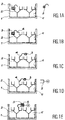
- FIGS. 1A to 1E the various stages of the immunometric assay method of the invention are shown.
- FIG. 1A which represents the first step, we see a solid phase (1) on which are fixed a capture antibody (2) specific for the substance to be assayed (3) and the saturation substance (6) generally constituted by proteins like bovine serum albumin.
- the support (1) provided with the capture antibodies (2) and the saturation substance (6) was brought into contact with the substance to be assayed (3) to bind this substance immunologically. (3) with the antibody (2) attached.
- the quantity of antibody fixed on the solid phase corresponds to an excess compared to the quantity of substance to be assayed present in the sample.
- the solid phase is subjected to a treatment using an at least bifunctional reagent to immobilize the substance to be assayed (3) by forming a bond covalent (4) on the solid phase (1) ( Figure 1B).
- This covalent bond can be established directly with the solid phase, with the first capture antibody and / or with the saturation substance.
- the epitope of the substance to be assayed (3) is made accessible for a new immunological reaction by denaturing its immunological bond with the antibody (2).
- the solid phase (1) on which the saturation substance, the capture antibody (2) and the substance to be determined (3) immunologically linked to this antibody are fixed, with a solution of an at least bifunctional reagent, at an appropriate pH, with stirring, for a sufficient period.
- the pH depends in particular on the polyfunctional reagent used.
- glutaraldehyde a pH of 5 to 9 is preferred, while in the case of disuccinimidyl suberate (DSS), a pH of 7 to 9 is preferred.
- DSS disuccinimidyl suberate
- the stop solution may comprise a reducing agent such as NaBH4, to destroy the excess aldehyde functions of glutaraldehyde, or an amine, such as ethanol amine, in order to use the groups. remaining glutaraldehyde capable of reacting with amine functions.
- This denaturation treatment can be carried out in a conventional manner using appropriate reagents, or alternatively under the action of ultrasound or heat.
- reagents can be chosen, for example, from acids such as HCl, bases such as NaOH, organic solvents, for example alcohols such as methanol, surfactants and mineral salts.
- the reagent used is chosen according to the antigen-antibody pair and the nature of the bond between the first antibody and the solid phase.
- the solid phase (1) on which the substance to be immobilized is brought into contact assay (3) by a covalent bond (4) with a second labeled antibody (5) specific for the substance (3). This is done by means of a solution containing an amount of labeled antibody corresponding to an excess relative to the amount of immobilized substance to be assayed.
- the quantity of labeled antibody (5) fixed on the solid phase is measured by immunological bonding with the substance to be assayed (3). This measurement is carried out by conventional methods such as those usually used for this type of assay, depending on the marker used.
- the assay is then carried out of a sample of unknown concentration under the same conditions, and by referring to the calibration curve, the concentration of substance to be determined is obtained from the measurement of the amount of second antibody fixed. the sample.
- each step of this process is preceded by a conventional washing operation, carried out by means of washing pads.
- Example 1 Determination of substance P.
- polystyrene on which an anti-substance P monoclonal antibody is fixed, constituted by the antibody SP14 described by Couraud et al in J. of Neurochemistry, vol 49, n ° 6, 1987, p. 1708-1718, operating as follows.
- the first stage of the assay is then carried out by introducing into each well, after washing with the washing buffer, a standard solution of substance P or the sample, at a rate of 100 ⁇ l in the EIA buffer, it is left to incubate for 18 h at +4 ° C, then wash with the wash buffer.
- the second stage is then carried out in two stages.
- 100 ⁇ l of 0.1M borate buffer (pH 9) containing 2.5% of glutaraldehyde is added to each well, and the mixture is left to react for 1 hour with moderate stirring.
- 250 ⁇ l of a stop solution consisting of a borohydride solution are added to each well.
- sodium at 4 mg / ml and left to react for 1 hour, then washing is carried out with the washing buffer.
- the third step is carried out by adding to each well 200 ⁇ l of the anti-substance P monoclonal antibody used in the first step which has been labeled with acetylcholinesterase (AChE) (5EU / ml), and which is diluted in the EIA buffer, and incubate for 18 h at 4 ° C. Then we wash.
- AChE acetylcholinesterase
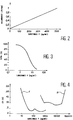
- the enzymatic activity is measured by adding 200 ⁇ l of Ellman reagent, consisting of a mixture, to each well. acetyl thiocholine and DTNB as described by Pradelles et al in Anal. Chem. 57, 1985, p. 1170, by carrying out the enzymatic reaction for 1 hour and then determining the absorbance at 414nm. From the absorbance measurements obtained for the standard solutions, the calibration curve is plotted, shown in FIG. 2, which gives the concentrations of substance P (in pg / ml) as a function of the absorbance at 414nm.
- the concentration of substance P in the sample can be determined by referring to the calibration curve in FIG. 2.
- the method of the invention allows a precise and sensitive dosage of substance P, the detectable concentration being 6pg / ml.
- Comparative example 1 Determination of substance P.
- a microtiter plate is used and the monoclonal antibody SP 14 is used, operating as described by Couraud et al in J. of Neurochemistry, vol 49, n ° 6, 1987, p. 1708-1718, then 50 ⁇ l of standard solution or sample and 50 ⁇ l of the substance P-acetylcholinesterase conjugate serving as an enzyme tracer are introduced into each well. After incubation overnight at 4 ° C., the plates are washed and the immobilized enzymatic activity is determined by operating as in Example 1.
- the absorbance is represented as a function of the concentration of substance P in the case of the assay of example 1 (curve 1) and in the case of the assay of comparative example 1 (curve 2).
- the detection limit (LDD) is of the order of 10 pg / ml in the case of the assay of the invention, while it is of the order of 900 pg / ml in the case of dosage by competition in accordance with the prior art.
- the immunometric assay method of the invention allows a precise and sensitive assay of the substance P. It makes it possible in particular to achieve greater precision and to detect much lower amounts of substance P.
- Example 2 Determination of substance P.
- FIG. 6 represents the absorbance at 414nm as a function of the concentration of glutaraldehyde.
- Example 3 Determination of substance P.
- Example 2 the same procedure is followed as in Example 1 on a standard solution at 500 ⁇ g / ml of substance P, using pH values ranging from 3 to 10 during the immobilization step.
- Figure 7 shows the change in absorbance as a function of the pH used. It is thus noted that the absorbance is better in the pH range from 5 to 9.
- Example 4 the use of NaBH4 is eliminated, that is to say that the immobilization reaction stop solution is not used.
- Example 5 no glutaraldehyde solution is used, but the reduction step is carried out with NaBH4.
- Example 6 the immobilization stage, that is to say the reaction with the glutaraldehyde solution and the addition of the stop solution, is completely eliminated.
- Example 7 the immobilization stage and not the epitope release stage are carried out by the hydrochloric acid solution.
- FIG. 8 represents the calibration curves obtained in each case, ie the evolution of the absorbance at 414nm as a function of the concentration of substance P (pg / ml).
- curve 1 refers to example 1
- curve 4 refers to example 4
- Curve 5 refers to Example 5
- Curve 6 refers to Example 6
- Curve 7 refers to Example 7.
- Example 8 Determination of thyroxine.
- Example 1 For this assay, a 96-well microtiter plate identical to that of Example 1 is used and an antithyroxine antibody constituted by a monoclonal antibody from the Pasteur Institute is fixed in the wells, operating under the same conditions as those of Example 1.
- the Ellman reagent 200 ⁇ l is added, the enzymatic reaction is allowed to proceed for 10 min, then the absorbance is measured at 414nm.
- FIG. 9 represents the evolution of the absorbance at 414nm as a function of the thyroxine concentration (ng / ml).
- the detection limit is 61pg / ml.
- a high sensitivity is therefore obtained by using a single antibody and by improving the specificity of the assay by the use of a monoclonal antibody.
- Example 9 For these assays, the same procedure is followed as in Example 8, using different agents to inhibit the action of binding proteins such as TBG, and adding 10 ⁇ l of standard plasma or sample, ie to 100 ⁇ l of barbital buffer. (example 9), either to 100 ⁇ l of barbital buffer containing 1 mg / ml of ANS (8-anilino-2-naphthalene sulfonic acid) (example 10), or to 100 ⁇ l of barbital buffer containing 0.4% of thymerosal (example 11 ).
- ANS 8-anilino-2-naphthalene sulfonic acid
- the step of immobilizing the thyroxine in the wells is then carried out using a 2.5% glutaraldehyde solution in the borate buffer, which is reacted for 30 min with moderate stirring, then the reaction is stopped by means of NaBH4 which is reacted for 30 min.
- FIG. 10 represents the calibration curves obtained, ie the absorbance at 414nm as a function of the thyroxine concentration (in nmol / l).
- curve 9 refers to example 9
- curve 10 refers to example 10
- curve 11 refers to example 11.
- Example 12 DSS is used as immobilization reagent, ethanolamine as stop solution but 0.1N hydrochloric acid as reagent for releasing the epitope.
- Example 13 only the step of immobilizing the thyroxine by DSS and ethanolamine is carried out but without release of the epitope by HCl.
- Example 14 neither the immobilization step of the thyroxine is carried out, nor the step of releasing the epitope.
- FIG. 11 represents the calibration curves obtained.
- curves 12, 13 and 14 refer respectively to Examples 12 to 14.
Landscapes
- Health & Medical Sciences (AREA)
- Immunology (AREA)
- Life Sciences & Earth Sciences (AREA)
- Engineering & Computer Science (AREA)
- Chemical & Material Sciences (AREA)
- Urology & Nephrology (AREA)
- Hematology (AREA)
- Biomedical Technology (AREA)
- Molecular Biology (AREA)
- Medicinal Chemistry (AREA)
- Analytical Chemistry (AREA)
- Cell Biology (AREA)
- Pathology (AREA)
- Food Science & Technology (AREA)
- Biotechnology (AREA)
- Physics & Mathematics (AREA)
- Microbiology (AREA)
- Biochemistry (AREA)
- General Health & Medical Sciences (AREA)
- General Physics & Mathematics (AREA)
- Chemical Kinetics & Catalysis (AREA)
- Peptides Or Proteins (AREA)
- Investigating Or Analysing Biological Materials (AREA)
- Preparation Of Compounds By Using Micro-Organisms (AREA)
- Medicines Containing Antibodies Or Antigens For Use As Internal Diagnostic Agents (AREA)
Abstract
Description
- La présente invention a pour objet un procédé de dosage immunométrique d'une substance constituée par un antigène ou un haptène.
- Elle s'applique particulièrement au dosage des haptènes, c'est-à-dire de petites molécules qui très souvent ne possèdent en elles-mêmes qu'un seul site de fixation d'anticorps (haptènes monoépitopiques). En effet, un haptène est une petite molécule qui ne peut pas par elle-même stimuler la synthèse d'anticorps mais qui peut induire la formation d'anticorps lorsqu'on la couple avec une protéine qui sert de porteur antigénique.
- Dans le cas des haptènes dont la taille n'est pas suffisante pour être liés simultanément à 2 anticorps, on réalise donc habituellement les dosages immunologiques par compétition entre l'haptène à doser et le même haptène marqué, pour des sites anticorps en quantité limitée, fixés sur une phase solide, éventuellement par l'intermédiaire d'un autre anticorps, comme il est décrit par Pradelles et al dans Anal. Chem. 57, 1985, p. 1170, et par Renzi et al dans Trends in Cluster Headache, F. Sicuteri et al, Editors, Elsevier, NY, 1987, 125-134, dans le cas de la substance P.
- D'autres dosages immunologiques tels que les dosages immunométriques du type "sandwich" ou à deux sites, dans lesquels l'antigène est fixé sur une phase solide par l'intermédiaire d'un premier anticorps, puis révélé par un second anticorps marqué et mis en excès, permettent l'obtention d'une beaucoup plus grande sensibilité, mais ils ne sont malheureusement pas applicables aux haptènes monoépitopiques.
- La présente invention a précisément pour objet un procédé de dosage immunométrique, utilisable notamment pour le dosage de ces haptènes, qui permet d'obtenir une bien meilleure sensibilité que les dosages par compétition.
- Selon l'invention, le procédé de dosage immunométrique d'une substance constituée par un antigène ou un haptène, comprend les étapes suivantes :
- 1°) mettre en contact un échantillon contenant la substance à doser avec une phase solide sur laquelle sont fixés une substance de saturation et un anticorps de capture, dit premier anticorps, spécifique d'un épitope de la substance à doser, pour lier immunologiquement la substance à doser avec l'anticorps fixé,
- 2°) soumettre la phase solide sur laquelle sont fixés la substance de saturation, l'anticorps et la substance à doser à un traitement au moyen d'au moins un réactif pour immobiliser la substance à doser sur la phase solide par formation de liaisons covalentes et pour rendre accessible un épitope de la substance à doser en vue d'une nouvelle réaction immunologiques,
- 3°) mettre en contact la phase solide ainsi traitée avec un anticorps marqué, dit second anticorps, spécifique de la substance à doser,
- 4°) mesurer la quantité du second anticorps fixé sur la phase solide, et
- 5°) déterminer sur une courbe d'étalonnage la quantité de substance à doser présente dans l'échantillon à partir de la quantité du second anticorps mesurée dans la quatrième étape.
- Dans ce procédé, le traitement effectué dans la deuxième étape est très important puisqu'il conduit à une immobilisation complète de la substance à doser sur la phase solide par des liaisons chimiques covalentes et à une restitution des propriétés immunologiques de la substance à doser pour qu'elle puisse à nouveau réagir immunologiquement avec un anticorps.
- Généralement, ce traitement comprend
- un premier stade dans lequel on fait réagir la substance à doser liée immunologiquement au premier anticorps avec un réactif au moins bifonctionnel capable de former des liaisons covalentes, d'une part, avec la substance à doser, et, d'autre part, avec la phase solide revêtue du premier anticorps et de la substance de saturation pour immobiliser la substance à doser sur la phase solide au moyen de ce réactif, et
- un second stade dans lequel on soumet la substance à doser immobilisée sur la phase solide à un traitement de dénaturation de sa liaison immunologique avec le premier anticorps.
- Le réactif bifonctionnel utilisé dans le premier stade est un réactif comportant un premier groupement fonctionnel capable de réagir chimiquement avec la phase solide, la substance de saturation et/ou le premier anticorps fixé sur la phase solide, et un second groupement fonctionnel, identique ou différent du premier, capable de réagir avec la substance à doser. Ces groupements fonctionnels peuvent être par exemple des groupements amines, des groupements acides, des groupements aldéhydes, des groupements thyrosyles, des groupements histidyles ou des groupements thiols.
- Lorsque ces groupements fonctionnels sont identiques, on a un réactif homobifonctionnel ou homopolyfonctionnel.
- A titre d'exemple de tels réactifs, on peut citer le glutaraldéhyde, le difluorodinitrobenzène, le disuccinimidyl subérate, le bis(maléimido)hexane, et le bis[β-(4-azido-salicylamido)éthyl] disulfure.
- Lorsque les groupements fonctionnels sont différents, on a un réactif hétérobifonctionnel ou hétéropolyfonctionnel.
- A titre d'exemple de tels réactifs, on peut citer le N-succinimidyl-3-(2-pyridyldithio)propionate et le succinimidyl-4-(N-maléimidométhyl)cyclohexane-1-carboxylate.
- Le choix du réactif utilisé dépend non seulement de la substance à doser, mais également de la phase solide et de l'anticorps utilisés.
- La phase solide peut être constituée par les phases solides généralement utilisées dans les dosages immunologiques, par exemple par des plaques de microtitration, des tubes, des membranes en matière plastique, par exemple en polystyrène, en nitrocellulose ou en polyester, des billes de verre, ou par n'importe quelle substance susceptible de fixer de façon covalente ou non, directement ou non, le premier anticorps. La fixation peut s'effectuer par adsorption, par liaison chimique covalente ou par l'intermédiaire de molécules liantes telles que des anticorps et le système avidine-biotine. On peut aussi utiliser des phases solides en matières minérales comme l'hydroxylapatite, la mullite, l'alumine, ZrO₂ et Ca₃(PO₄)₂.
- La fixation du premier anticorps sur la surface de la phase solide peut être passive ou active. Elle peut être obtenue par adsorption directe ou au moyen de réactifs appropriés.
- Dans le procédé de l'invention, le premier et le second anticorps utilisés sont tous deux des anticorps spécifiques de la substance à doser.
- Ce premier et ce second anticorps peuvent provenir de la même source ou de sources différentes. De plus, ces anticorps peuvent être des anticorps polyclonaux ou des anticorps monoclonaux.
- Dans le cas où la substance à doser est un haptène monoépitopique, le premier et le second anticorps sont identiques et de préférence monoclonaux.
- Dans le cas où la substance à doser est un antigène, on peut utiliser deux anticorps différents, mais il est avantageux d'utiliser deux anticorps identiques, et de préférence également des anticorps monoclonaux. Pour le second anticorps marqué, le marquage peut être réalisé au moyen de diverses techniques, par exemple au moyen d'un élément radioactif, d'une enzyme, d'un marqueur fluorescent, d'un marqueur luminescent, ou de molécules capables de réagir avec l'avidine ou la streptavidine comme la biotine et ses analogues structuraux.
- Lorsque le second anticorps est marqué au moyen d'une molécule telle qu'une enzyme, un marqueur fluorescent, un marqueur luminescent ou une molécule capable de réagir avec l'avidine ou la streptavidine, le couplage du marqueur avec l'anticorps peut être réalisé par les techniques classiques utilisées habituellement dans ce type de dosage.
- Le procédé de l'invention s'applique avantageusement au dosage des antigènes car, dans ce cas, on peut obtenir la même sensibilité qu'avec les dosages de type "sandwich" en utilisant un seul anticorps, de préférence un anticorps monoclonal.
- Toutefois, le procédé de l'invention présente un intérêt encore plus important pour le dosage des haptènes monoépitopiques car il permet d'obtenir dans ce cas des sensibilités beaucoup plus grandes que dans les dosages par compétition, en utilisant un seul anticorps, mettant à profit l'utilisation de réactifs en excès (anticorps de capture et anticorps marqués) comme cela est fait dans les dosages immunométriques à deux sites.
- A titre d'exemple d'haptènes susceptibles d'être dosés par le procédé de l'invention, on peut citer l'ACTH, l'angiotensine, l'ANF, la bradykinine, l'enképhaline, le LHRH, l'ocytocine, la vasopressine, les neurokinines, l'endothéline, la substance P, la thyroxine et le leucotriène E₄.
- Les formules correspondantes de ces haptènes sont données ci-après.
ACTH (18-39) : Arg-Pro-Val-Lys-Val-Tyr-Pro-Asn-Gly-Ala-Glu-Asp-Glu-Ser-Ala-Glu-Ala-Phe-Pro-Leu-Glu-Phe
ANGIOTENSINE II : Asp-Arg-Val-Tyr-Ile-His-Pro-Phe ANF(1-28) : Ser-Leu-Arg-Arg-Ser-Ser-Cys-Phe-GlyGly-Arg-Met-Asp-Arg-Ile-Gly-Ala-Gln-Ser-Gly-Leu-Gly-Cys-Asn-Ser-Phe-Arg-Tyr
BRADYKININE : Arg-Pro-Pro-Gly-Phe-Ser-Pro-Phe-Arg
ENKEPHALINE : Tyr-Gly-Gly-Phe-Met
LHRH : Pyr-His-Trp-Ser-Tyr-Gly-Leu-Arg-Pro-Gly-NH₂
OCYTOCINE : Cys-Tyr-Ile-Gln-Asn-Cys-Pro-Leu-Gly-NH₂
VASOPRESSINE : Cys-Tyr-Phe-Gln-Asn-Cys-Cys-Pro-Arg-Gly-NH₂
NEUROKININE A : His-Lys-Thr-Asp-Ser-Phe-Val-Gly-Leu-Met-NH₂
NEUROKININE B : Asp-Met-His-Asp-Phe-Phe-Val-Gly-Leu-Met-NH₂
ENDOTHELINE : cis-Ser-cis-Ser-Ser-Leu-Met-Asp-Lys-Glu-cis-Val-Tyr-Phe-cis-His-Leu-Asp-Ile-Ile-Trp
SUBSTANCE P : Arg-Pro-Lys-Pro-Gln-Gln-Phe-Phe-Gly-Leu-Met-NH₂
THYROXINE :
- D'autres caractéristiques et avantages de l'invention apparaîtront mieux à la lecture de la description qui suit, donnée bien entendu à titre illustratif et non limitatif, en référence aux dessins annexés, sur lesquesl
- les figures 1A à 1E sont des représentations schématiques des différentes étapes du procédé de dosage immunométrique de l'invention,
- la figure 2 est une courbe d'étalonnage obtenue pour le dosage immunométrique de la substance P par le procédé de l'invention,
- la figure 3 est une courbe d'étalonnage obtenue pour le dosage par compétition de la substance P par un procédé conforme à l'art antérieur,
- la figure 4 est un diagramme illustrant les profils de précision obtenus pour la substance P avec le dosage immunométrique de l'invention et avec le dosage par compétition de l'art antérieur,
- la figure 5 est un diagramme illustrant les sensibilités des dosages de la substance P par le procédé de l'invention et par le procédé de l'art antérieur,
- la figure 6 est un diagramme illustrant l'influence de la concentration en glutaraldéhyde sur le dosage de la substance P conformément au procédé de l'invention,
- la figure 7 est un diagramme illustrant l'influence du pH de l'étape d'immobilisation sur le dosage de la substance P conformément au procédé de l'invention,
- la figure 8 est un diagramme illustrant l'influence des différentes étapes du procédé de l'invention sur le dosage de la substance P,
- la figure 9 est une courbe d'étalonnage obtenue pour le dosage de la thyroxine conformément au procédé de l'invention,
- la figure 10 représente les courbes d'étalonnage obtenues pour des dosages de la thyroxine selon le procédé de l'invention, et
- la figure 11 est un diagramme illustrant l'influence des différentes étapes du procédé de l'invention sur le dosage de la thyroxine.
- Sur les figures 1A à 1E, on a représenté les différentes étapes du procédé de dosage immunométrique de l'invention.
- Ainsi, sur la figure 1A qui représente la première étape, on voit une phase solide (1) sur laquelle sont fixés un anticorps de capture (2) spécifique de la substance à doser (3) et la substance de saturation (6) constituée généralement par des protéines comme la sérumalbumine bovine. Pour effectuer cette étape, on a mis en contact le support (1) muni des anticorps de capture (2) et de la substance de saturation (6) avec la substance à doser (3) pour lier immunologiquement cette substance (3) avec l'anticorps (2) fixé. La quantité d'anticorps fixée sur la phase solide correspond à un excès par rapport à la quantité de substance à doser présente dans l'échantillon.
- Dans la deuxième étape, dont les deux stades sont représentés sur les figures 1B et 1C, on soumet la phase solide à un traitement au moyen d'un réactif au moins bifonctionnel pour immobiliser la substance à doser (3) par formation d'une liaison covalente (4) sur la phase solide (1) (figure 1B). Cette liaison covalente peut être établie directement avec la phase solide, avec le premier anticorps de capture et/ou avec la substance de saturation.
- Dans le second stade, on rend accessible l'épitope de la substance à doser (3) en vue d'une nouvelle réaction immunologique en dénaturant sa liaison immunologique avec l'anticorps (2).
- Pour effectuer le premier stade d'immobilisation, on met en contact la phase solide (1) sur laquelle sont fixés la substance de saturation, l'anticorps de capture (2) et la substance à doser (3) liée immunologiquement à cet anticorps, avec une solution d'un réactif au moins bifonctionnel, à un pH approprié, sous agitation, pendant une durée suffisante.
- Le pH dépend en particulier du réactif polyfonctionnel utilisé. Ainsi, dans le cas du glutaraldéhyde, on préfère un pH de 5 à 9, alors que dans le cas du disuccinimidyl subérate (DSS), on préfère un pH de 7 à 9. Ces pH sont obtenus au moyen de tampons appropriés.
- Pour arrêter la réaction, on peut ensuite ajouter une solution d'arrêt qui a pour rôle, soit de détruire les groupements fonctionnels existants capables de réagir avec le réactif bifonctionnel, soit de réagir avec les groupements fonctionnels libres du réactif bifonctionnel. Ainsi, lorsqu'on utilise comme réactif bifonctionnel le glutaraldéhyde, la solution d'arrêt peut comprendre un agent réducteur tel que NaBH₄, pour détruire les fonctions aldéhydes en excès du glutaraldéhyde, ou une amine, telle que I'éthanol amine pour utiliser les groupements restants du glutaraldéhyde capables de réagir avec les fonctions amines.
- Dans le second stade (fig. 1C), on effectue un traitement de dénaturation de la liaison immunologique de la substance à doser avec le premier anticorps.
- Ce traitement de dénaturation peut être effectué de façon classique au moyen de réactifs appropriés, ou encore sous l'action des ultrasons ou de la chaleur.
- Ces réactifs peuvent être choisis, par exemple, parmi les acides comme HCl, les bases comme NaOH, les solvants organiques, par exemple les alcools tels que le méthanol, les agents tensioactifs et les sels minéraux. Le réactif utilisé est choisi en fonction du couple antigène-anticorps et de la nature de la liaison entre le premier anticorps et la phase solide.
- Dans certains cas, il n'est pas nécessaire d'effectuer ce second stade de dénaturation, car cette dénaturation peut être obtenue simultanément dans le premier stade d'immobilisation, en raison des conditions réactionnelles utilisées.
- Dans la troisième étape représentée sur la figure 1D, on met en contact la phase solide (1) sur laquelle est immobilisée la substance à doser (3) par une liaison covalente (4) avec un second anticorps marqué (5) spécifique de la substance (3). Ceci est effectué au moyen d'une solution contenant une quantité d'anticorps marqué correspondant à un excès par rapport à la quantité de substance à doser immobilisée.
- Dans la quatrième étape (figure 1E), on mesure la quantité d'anticorps marqué (5) fixée sur la phase solide par liaison immunologique avec la substance à doser (3). Cette mesure est effectuée par des méthodes classiques telles que celles mises en oeuvre habituellement pour ce type de dosage, selon le marqueur utilisé.
- Pour obtenir la courbe d'étalonnage, on effectue plusieurs dosages sur des solutions standards ayant des concentrations connues en substance à doser, en opérant dans les mêmes conditions, ce qui donne les taux d'anticorps fixés correspondant aux différentes concentrations en vue d'établir cette courbe.
- On effectue ensuite le dosage d'un échantillon de concentration inconnue dans les mêmes conditions, et en se reportant à la courbe d'étalonnage, on obtient à partir de la mesure de la quantité de second anticorps fixée, la concentration en substance à doser de l'échantillon.
- On précise que chaque étape de ce procédé est précédée par une opération de lavage classique, effectuée au moyen de tampons de lavage.
- On décrit, ci-après, des dosages réalisés conformément à ce procédé.
- Dans cet exemple, on utilise comme phase solide une plaque de microtitration à 96 puits en polystyrène, sur laquelle on fixe un anticorps monoclonal antisubstance P, constitué par l'anticorps SP14 décrit par Couraud et al dans J. of Neurochemistry, vol 49, n°6, 1987, p. 1708-1718, en opérant de la façon suivante.
- On ajoute dans chaque puits 200µl de tampon phosphate 5.10⁻²M (pH 7,4) contenant 10µg/ml d'anticorps antisubstance P (SP14) et on laisse incuber pendant 18h à 22°C. On lave ensuite chaque puits avec un tampon de lavage constitué par le tampon phosphate utilisé précédemment qui contient en plus 0,05% de Tween 20, puis on ajoute dans chaque puits 300µl du tampon EIA qui est un tampon au phosphate de potassium 0,1M (pH 7,5) contenant 0,1mol/l de NaCl, 1mmol/l d'acide éthylène diamine tétracétique (EDTA), 0,1% de sérum albumine bovine (BSA) et 0,01% d'azoture de sodium, pour saturer la phase solide avec une substance de saturation (BSA), et on maintient les plaques à 4°C pendant au moins 24h avant la première utilisation.
- On réalise ensuite la première étape du dosage en introduisant dans chaque puits, après lavage par le tampon de lavage, une solution standard de substance P ou l'échantillon, à raison de 100µl dans le tampon EIA, on laisse incuber pendant 18h à +4°C, puis on procéde à un lavage au moyen du tampon de lavage.
- On réalise ensuite la deuxième étape en deux stades. Dans le premier stade, on ajoute dans chaque puits 100µl de tampon borate 0,1M (pH 9) contenant 2,5% de glutaraldéhyde et on laisse réagir pendant 1h sous agitation modérée. Après lavage, on ajoute dans chaque puits 250µl d'une solution d'arrêt constituée par une solution de borohydrure de sodium à 4mg/ml, et on laisse réagir pendant 1h, puis on procède à un lavage par le tampon de lavage.
- Dans le second stade, on ajoute 250µl de HCl 0,1N et on laisse réagir pendant 10min à 22°C, ce qui conduit à dénaturer la liaison immunologique entre la substance P (3) et le premier anticorps (2) pour rendre accessible l'épitope de la substance P en vue d'une nouvelle réaction immunologique.
- Après lavage, on réalise la troisième étape en ajoutant dans chaque puits 200µl de l'anticorps monoclonal antisubstance P utilisé dans la première étape qui a été marqué avec de I'acétylcholinestérase (AChE) (5EU/ml), et qui est dilué dans le tampon EIA, et on laisse incuber pendant 18h à 4°C. On procède ensuite à un lavage.
- Pour réaliser la quatrième étape, c'est-à-dire mesurer la quantité du second anticorps (5) fixé sur la phase solide, on mesure l'activité enzymatique en ajoutant dans chaque puits 200µl de réactif d'Ellman, constitué par un mélange d'acétyl thiocholine et de DTNB comme décrit par Pradelles et al dans Anal. Chem. 57, 1985, p. 1170, en réalisant la réaction enzymatique pendant 1h et en déterminant ensuite l'absorbance à 414nm. A partir des mesures d'absorbance obtenues pour les solutions standard, on trace la courbe d'étalonnage, représentée sur la figure 2, qui donne les concentrations en substance P (en pg/ml) en fonction de l'absorbance à 414nm.
- A partir de l'absorbance obtenue dans le puits contenant l'échantillon, on peut déterminer la concentration en substance P de l'échantillon en se reportant à la courbe d'étalonnage de la figure 2.
- Ainsi, le procédé de l'invention permet un dosage précis et sensible de la substance P, la concentration détectable étant de 6pg/ml.
- Dans cet exemple, on utilise la technique du dosage par compétition et le même anticorps monoclonal SP14 que dans l'exemple 1 pour doser la substance P.
- Dans ce cas, on utilise une plaque de microtitration et on utilise l'anticorps monoclonal SP 14 en opérant comme décrit par Couraud et al dans J. of Neurochemistry, vol 49, n° 6, 1987, p. 1708-1718, puis on introduit dans chaque puits 50µl de solution standard ou d'échantillon et 50µl du conjugué substance P-acétylcholinestérase servant de traceur enzymatique. Après incubation pendant une nuit à 4°C, on lave les plaques et on détermine l'activité enzymatique immobilisée en opérant comme dans l'exemple 1.
- On obtient ainsi la courbe d'étalonnage représentée sur la figure 3, sur laquelle on a indiqué en ordonnée le rapport B/B₀ (en %) en fonction de la concentration en substance P (en ng/ml). On précise que B représente l'absorbance mesurée en présence de substance P et B₀ représente l'absorbance mesurée en l'absence de substance P.
- Sur la figure 4, on a illustré les profils de précision obtenus dans le dosage de l'exemple 1 (courbe 1) et le dosage de l'exemple comparatif 1 (courbe 2).
- Ces profils de précision représentent les variations du coefficient de précision CV (en %) en fonction de la quantité de substance P (en pg/ml) en coordonnée logarithmique.
- Pour tracer ces courbes, on effectue 8 mesures pour chaque concentration de substance P dans la solution standard afin de déterminer la déviation standard d et la valeur moyenne vm relative à chaque concentration. Le coefficient de précision CV (en %) est évalué à partir de ces mesures par la formule :

- Sur la figure 4, on remarque ainsi que le coefficient de précision et la sensibilité sont meilleurs dans le cas de la courbe 1, et que le coefficient de précision est en particulier très bon dans la gamme de concentrations allant de 30 à 1000pg/ml.
- Sur la figure 5, on a représenté l'absorbance en fonction de la concentration en substance P dans le cas du dosage de l'exemple 1 (courbe 1) et dans le cas du dosage de l'exemple comparatif 1 (courbe 2).
- Au vu de ces résultats, on remarque que la limite de détection (LDD) est de l'ordre de 10 pg/ml dans le cas du dosage de l'invention, alors qu'elle est de l'ordre de 900 pg/ml dans le cas du dosage par compétition conforme à l'art antérieur.
- Ainsi, le procédé de dosage immunométrique de l'invention permet un dosage précis et sensible de la substance P. Il permet notamment d'atteindre une plus grande précision et de détecter des quantités bien moindres de substance P.
- Dans cet exemple, on étudie l'influence de la concentration en glutaraldéhyde utilisé dans la deuxième étape d'immobilisation de la substance P sur les résultats du dosage. Dans ce cas, on effectue des dosages comme dans l'exemple 1 sur une solution standard contenant 500pg/ml de substance P en utilisant des concentrations en glutaraldéhyde qui varient de 0 à 2,5%, et on mesure dans chaque cas, l'absorbance à 414nm.
- Les résultats obtenus sont donnés sur la figure 6 qui représente l'absorbance à 414nm en fonction de la concentration en glutaraldéhyde.
- On remarque ainsi que l'absorbance augmente avec la concentration en glutaraldéhyde, et que de bons résultats sont obtenus dans la gamme de concentrations allant de 0,5 à 2,5%.
- Dans cet exemple, on étudie l'influence du pH utilisé lors de l'étape d'immobilisation, c'est-à-dire du pH de la solution de glutaraldéhyde sur le dosage.
- Dans ce cas, on suit le même mode opératoire que dans l'exemple 1 sur une solution standard à 500pg/ml de substance P en utilisant lors de l'étape d'immobilisation des pH allant de 3 à 10.
- La figure 7 représente l'évolution de l'absorbance en fonction du pH utilisé. On remarque ainsi que l'absorbance est meilleure dans la gamme de pH allant de 5 à 9.
- Dans ces exemples, on étudie l'influence des deux stades de la deuxième étape du procédé de l'invention sur le dosage.
- Dans tous les exemples, on suit le même mode opératoire que dans l'exemple 1, mis à part les modifications suivantes de la deuxième étape.
- Dans l'exemple 4, on supprime l'utilisation de NaBH₄, c'est-à-dire qu'on n'utilise pas de solution d'arrêt de la réaction d'immobilisation.
- Dans l'exemple 5, on n'utilise pas de solution de glutaraldéhyde, mais on effectue l'étape de réduction par NaBH₄.
- Dans l'exemple 6, on supprime complètement le stade d'immobilisation, c'est-à-dire la réaction avec la solution de glutaraldéhyde et l'addition de la solution d'arrêt.
- Dans l'exemple 7, on effectue le stade d'immobilisation et pas le stade de libération de I'épitope par la solution d'acide chlorhydrique.
- Ces modifications sont regroupées dans le tableau qui suit.
Tableau 1 Etape 2 Ex 1 Ex 4 Ex 5 Ex 6 Ex 7 Stade 1 glutaraldéhyde oui oui non non oui NaBH₄ oui non oui non oui Stade 2 HCl oui oui oui oui non - Les résultats obtenus sont donnés sur la figure 8 qui représente les courbes d'étalonnage obtenues dans chaque cas, soit l'évolution de l'absorbance à 414nm en fonction de la concentration en substance P (pg/ml).
- Sur cette figure, la courbe 1 se réfère à l'exemple 1, la courbe 4 se réfère à l'exemple 4, La courbe 5 se réfère à l'exemple 5, la courbe 6 se réfère à l'exemple 6 et la courbe 7 se réfère à l'exemple 7.
- Au vu de cette figure, on remarque que la réalisation des stades d'immobilisation de la substance P sur les plaques de microtitration et de libération de son épitope est essentielle pour permettre le dosage de la substance P.
- Pour ce dosage, on utilise une plaque de microtitration à 96 puits identique à celle de l'exemple 1 et on fixe dans les puits un anticorps antithyroxine constitué par un anticorps monoclonal de l'Institut Pasteur, en opérant dans les mêmes conditions que celles de l'exemple 1.
- On introduit ensuite dans chaque puits, une solution standard de thyroxine à raison de 100µl dans un tampon barbital 0,05M (pH 8,6) contenant 0,1% de BSA, puis on laisse incuber pendant 1h à 22°C. On lave ensuite au moyen de tampon de lavage utilisé dans l'exemple 1.
- Dans la seconde étape, on ajoute dans chaque puits, 100µl de tampon phosphate 0,1M (pH 7) et 10µl de disuccinimidyl subérate (DSS) à une concentration de 1mg/ml dans un mélange de diméthylformamide et de n-propanol (1/9 en volume), et on laisse réagir pendant 15min à la température de 22°C, puis on lave avec le tampon de lavage et on arrête la réaction avec de l'éthanolamine 0,1M dans le tampon borate 0,1M (pH9). Après lavage, on ajoute 250µl de soude 0,1N dans chaque puits pour libérer l'épitope de la thyroxine.
- Après lavage, on ajoute 100µl du même anticorps monoclonal anti-thyroxine marqué à l'acétylcholinestérase (AChE) (5EU/ml) dilué dans le tampon barbital et on laisse incuber pendant 1h à 22°C.
- Après lavage, on ajoute le réactif d'Ellman (200µl), on laisse la réaction enzymatique se dérouler pendant 10min, puis on mesure l'absorbance à 414nm.
- Les résultats obtenus, c'est-à-dire la courbe d'étalonnage, sont donnés sur la figure 9 qui représente l'évolution de l'absorbance à 414nm en fonction de la concentration en thyroxine (ng/ml).
- La limite de détection est de 61pg/ml.
- On obtient donc une sensibilité élevée en utilisant un seul anticorps et en améliorant la spécificité du dosage par l'utilisation d'un anticorps monoclonal.
- A titre comparatif, on précise que le même dosage effectué par compétition avec le même anticorps donne une limite de détection de 1ng/ml.
- Pour ces dosages, on suit le même mode opératoire que dans l'exemple 8 en utilisant différents agents pour inhiber l'action des protéines liantes comme les TBG, et en ajoutant 10µl de plasma standard ou d'échantillon, soit à 100µl de tampon barbital (exemple 9), soit à 100µl de tampon barbital contenant 1mg/ml d'ANS (acide 8-anilino-2-naphtalène sulfonique) (exemple 10), soit à 100µl de tampon barbital contenant 0,4% de thymérosal (exemple 11).
- On réalise ensuite l'étape d'immobilisation de la thyroxine dans les puits en utilisant une solution de glutaraldéhyde à 2,5% dans le tampon borate, que l'on fait réagir pendant 30min sous agitation modérée, puis on arrête la réaction au moyen de NaBH₄ que l'on fait réagir pendant 30min.
- Pour la libération de l'épitope et la suite des étapes de dosage, on procède comme dans l'exemple 8.
- Les résultats obtenus sont donnés sur la figure 10 qui représente les courbes d'étalonnage obtenues, soit l'absorbance à 414nm en fonction de la concentration en thyroxine (en nmol/l).
- Sur cette figure, la courbe 9 se réfère à l'exemple 9, la courbe 10 se réfère à l'exemple 10 et la courbe 11 se réfère à l'exemple 11.
- Au vu de cette figure, on remarque que les meilleurs résultats sont obtenus lorsqu'on utilise le tampon barbital avec du thymérosal.
- Dans ces exemples, on étudie l'influence des différentes étapes du procédé de l'invention sur le dosage.
- Dans tous les exemples, on suit le même mode opératoire que dans l'exemple 8 mises à part les modifications suivantes.
- Dans l'exemple 12, on utilise le DSS comme réactif d'immobilisation, de l'éthanolamine comme solution d'arrêt mais de l'acide chlorhydrique 0,1N comme réactif de libération de l'épitope.
- Dans l'exemple 13, on effectue uniquement l'étape d'immobilisation de la thyroxine par le DSS et l'éthanolamine mais sans libération de l'épitope par HCl.
- Dans l'exemple 14, on n'effectue ni l'étape d'immobilisation de la thyroxine, ni l'étape de libération de l'épitope.
- Les résultats obtenus sont représentés sur la figure 11 qui représente les courbes d'étalonnage obtenues. Sur cette figure, les courbes 12, 13 et 14 se réfèrent respectivement aux exemples 12 à 14.
- Au vu de cette figure, on remarque que les deux étapes d'immobilisation et de libération de l'épitope sont essentielles pour permettre le dosage de la thyroxine puisqu'on ne remarque aucune variation d'absorbance en fonction de la concentration en thyroxine dans le cas des exemples 13 et 14.
- Le procédé de l'invention est donc très intéressant car il permet d'obtenir une sensibilité élevée, en utilisant un seul anticorps. Par ailleurs, les résultats donnés dans le tableau 2, ci-dessous, d'études de corrélation effectuées sur des substance P provenant de différentes sources, ont montré qu'on obtenait avec le procédé de l'invention des résultats équivalents à ceux d'un dosage par compétition au moyen du même anticorps, ce qui confirme la fiabilité du procédé de l'invention.
Tableau 2 Origine de la Substance P Dosage de l'invention SP (ng/ml) Dosage par compétition SP (ng/ml) Extrait de Cerveau de rat 70 75,5 Extrait de Moëlle épinière de rat 61,4 61,3 Extrait de Cerveau de souris 75,5 70 Extrait de Moëlle épinière de souris 33,4 32,1
Claims (12)
- Procédé de dosage immunométrique d'une substance constituée par un antigène ou un haptène, caractérisé en ce qu'il comprend les étapes suivantes :1°) mettre en contact un échantillon contenant la substance à doser avec une phase solide sur laquelle sont fixés une substance de saturation etunanticorps de capture, dit premier anticorps, spécifique d'un épitope de la substance à doser, pour lier immunologiquement la substance à doser avec l'anticorps fixé,2°) soumettre la phase solide sur laquelle sont fixés la substance de saturation, l'anticorps et la substance à doser à un traitement au moyen d'au moins un réactif pour immobiliser la substance à doser sur la phase solide par formation de liaisons covalentes et pour rendre accessible un épitope de la substance à doser en vue d'une nouvelle réaction immunologiques,3°) mettre en contact la phase solide ainsi traitée avec un anticorps marqué, dit second anticorps, spécifique de la substance à doser,4°) mesurer la quantité du second anticorps fixé sur la phase solide, et5°) déterminer sur une courbe d'étalonnage la quantité de substance à doser présente dans l'échantillon à partir de la quantité du second anticorps mesurée dans la quatrième étape.
- Procédé selon la revendication 1, caractérisé en ce que, dans la deuxième étape, on fait réagir la substance à doser liée immunologiquement au premier anticorps, avec un réactif au moins bifonctionnel capable de former des liaisons covalentes, d'une part avec la substance à doser, et, d'autre part, avec la phase solide revêtue du premier anticorps et de la substance de saturation pour immobiliser la substance à doser sur la phase solide au moyen de ce réactif.
- Procédé selon la revendication 2, caractérisé en ce que le réactif est le glutaraldéhyde ou le disuccinimidyl subérate.
- Procédé selon l'une quelconque des revendications 2 et 3, caractérisé en ce que, dans la deuxième étape, on soumet ensuite la substance à doser immobilisée sur la phase solide, à un traitement de dénaturation de sa liaison immunologique avec le premier anticorps.
- Procédé selon la revendication 4, caractérisé en ce que le traitement de dénaturation est effectué au moyen d'un réactif.
- Procédé selon la revendication 5, caractérisé en ce que le réactif est choisi parmi les acides, les bases, les solvants organiques, les agents tensioactifs et les sels minéraux.
- Procédé selon la revendication 4, caractérisé en ce que le traitement de dénaturation est effectué par action d'ultrasons ou par action de la chaleur.
- Procédé selon l'une quelconque des revendications 1 à 7, caractérisé en ce que le premier et le second anticorps sont identiques.
- Procédé selon l'une quelconque des revendications 1 à 8, caractérisé en ce que les deux anticorps sont des anticorps monoclonaux.
- Procédé selon l'une quelconque des revendications 1 à 9, caractérisé en ce que le second anticorps est marqué au moyen d'un élément radioactif, d'une enzyme, d'un marqueur fluorescent, d'un marqueur luminescent ou d'une molécule capable de réagir avec l'avidine ou la streptavidine.
- Procédé selon l'une quelconque des revendications 1 à 10, caractérisé en ce que la substance à doser est la substance P ou la thyroxine.
- Procédé selon l'une quelconque des revendications 1 à 10, caractérisé en ce que la substance à doser est un haptène choisi dans le groupe comprenant l'ACTH, l'angiotensine, l'ANF, la bradykinine, l'enképhaline, le LHRH, l'ocytocine, la vasopressine, les neurokinines, l'endothéline et le leucotriène E₄.
Applications Claiming Priority (2)
| Application Number | Priority Date | Filing Date | Title |
|---|---|---|---|
| FR9300869A FR2700855B1 (fr) | 1993-01-28 | 1993-01-28 | Dosage immunométrique d'un antigène ou d'un haptène. |
| FR9300869 | 1993-01-28 |
Publications (2)
| Publication Number | Publication Date |
|---|---|
| EP0609144A1 true EP0609144A1 (fr) | 1994-08-03 |
| EP0609144B1 EP0609144B1 (fr) | 1999-05-19 |
Family
ID=9443449
Family Applications (1)
| Application Number | Title | Priority Date | Filing Date |
|---|---|---|---|
| EP94400166A Expired - Lifetime EP0609144B1 (fr) | 1993-01-28 | 1994-01-26 | Dosage immunométrique d'un antigène ou d'un haptène |
Country Status (7)
| Country | Link |
|---|---|
| US (1) | US5476770A (fr) |
| EP (1) | EP0609144B1 (fr) |
| JP (1) | JP3310090B2 (fr) |
| CA (1) | CA2113383C (fr) |
| DE (1) | DE69418501T2 (fr) |
| ES (1) | ES2133503T3 (fr) |
| FR (1) | FR2700855B1 (fr) |
Families Citing this family (14)
| Publication number | Priority date | Publication date | Assignee | Title |
|---|---|---|---|---|
| US5688506A (en) * | 1994-01-27 | 1997-11-18 | Aphton Corp. | Immunogens against gonadotropin releasing hormone |
| US5619955A (en) * | 1995-06-29 | 1997-04-15 | Stone Products, Inc. | Harness gripping aid for tandem riders |
| FI100276B (fi) * | 1996-02-06 | 1997-10-31 | Orion Yhtymae Oy | Menetelmä analyyttien ei-kilpailevaa määritystä varten |
| FR2799839A1 (fr) * | 2000-02-02 | 2001-04-20 | Commissariat Energie Atomique | Procede pour determiner la capacite antioxydante de composes chimiques et procedes de dosage et d'immobilisation utilisables pour cette determination |
| US6769347B1 (en) | 2002-11-26 | 2004-08-03 | Recon/Optical, Inc. | Dual elevation weapon station and method of use |
| US7429472B2 (en) | 2003-01-31 | 2008-09-30 | Promega Corporation | Method of immobilizing a protein or molecule via a mutant dehalogenase that is bound to an immobilized dehalogenase substrate and linked directly or indirectly to the protein or molecule |
| EP1594962B1 (fr) | 2003-01-31 | 2014-08-27 | Promega Corporation | Fixation covalente de groupes fonctionnels a des proteines |
| FR2853965B1 (fr) * | 2003-04-15 | 2006-09-15 | Commissariat Energie Atomique | Procede de criblage de conditions operatoires d'une reaction chimique de couplage et trousses pour la mise en oeuvre de ce procede |
| US20050227351A1 (en) * | 2004-04-08 | 2005-10-13 | Awdalla Essam T | Methods and compound protein molecules used for inducing cytotoxic cell-mediated immune response in a mammal against a pathogenic cell |
| US20070087400A1 (en) * | 2004-07-30 | 2007-04-19 | Aldis Darzins | Covalent tethering of functional groups to proteins and substrates therefor |
| US7425436B2 (en) * | 2004-07-30 | 2008-09-16 | Promega Corporation | Covalent tethering of functional groups to proteins and substrates therefor |
| WO2007092579A2 (fr) * | 2006-02-08 | 2007-08-16 | Promega Corporation | Compositions et méthodes de capture et d'analyse de biomolécules réticulées |
| CA2667697A1 (fr) | 2006-10-30 | 2008-05-08 | Promega Corporation | Proteines hydrolase mutantes a cinetique et expression fonctionnelle ameliorees |
| DE102007045099A1 (de) * | 2007-09-20 | 2008-10-30 | Dade Behring Marburg Gmbh | Verfahren zur Bestimmung eines Analyten mittels Ultraschall |
Citations (3)
| Publication number | Priority date | Publication date | Assignee | Title |
|---|---|---|---|---|
| EP0080109A1 (fr) * | 1981-11-19 | 1983-06-01 | New York Blood Center, Inc. | Immunoassays sensibles d'antigènes ou d'anticorps séquestrés dans des immunocomplexes |
| WO1991016377A1 (fr) * | 1990-04-24 | 1991-10-31 | Novo Nordisk A/S | MODIFICATION DE SURFACES POLYMERES PAR TRAITEMENT AUX SELS DE Ce(IV) ET PAR RAYONNEMENT ELECTROMAGNETIQUE |
| EP0467078A2 (fr) * | 1990-07-18 | 1992-01-22 | Abbott Laboratories | Réactif à base de substitution d'une analyte à utiliser dans les essais, les dispositifs et les trousses de liaisons spécifiques |
Family Cites Families (4)
| Publication number | Priority date | Publication date | Assignee | Title |
|---|---|---|---|---|
| US4376110A (en) * | 1980-08-04 | 1983-03-08 | Hybritech, Incorporated | Immunometric assays using monoclonal antibodies |
| US4703001A (en) * | 1985-10-23 | 1987-10-27 | Synbiotics, Corporation | Immunoassay for the detection of serum analytes using pH dependent chastropic acids |
| US4794090A (en) * | 1986-09-26 | 1988-12-27 | W. R. Grace & Co.-Conn. | Immobilization support for biologicals |
| US5236830A (en) * | 1988-11-10 | 1993-08-17 | Eiji Ishikawa | Method of assay for antigen |
-
1993
- 1993-01-28 FR FR9300869A patent/FR2700855B1/fr not_active Expired - Fee Related
-
1994
- 1994-01-13 CA CA002113383A patent/CA2113383C/fr not_active Expired - Fee Related
- 1994-01-24 US US08/184,935 patent/US5476770A/en not_active Expired - Lifetime
- 1994-01-26 DE DE69418501T patent/DE69418501T2/de not_active Expired - Fee Related
- 1994-01-26 EP EP94400166A patent/EP0609144B1/fr not_active Expired - Lifetime
- 1994-01-26 ES ES94400166T patent/ES2133503T3/es not_active Expired - Lifetime
- 1994-01-28 JP JP00885894A patent/JP3310090B2/ja not_active Expired - Fee Related
Patent Citations (3)
| Publication number | Priority date | Publication date | Assignee | Title |
|---|---|---|---|---|
| EP0080109A1 (fr) * | 1981-11-19 | 1983-06-01 | New York Blood Center, Inc. | Immunoassays sensibles d'antigènes ou d'anticorps séquestrés dans des immunocomplexes |
| WO1991016377A1 (fr) * | 1990-04-24 | 1991-10-31 | Novo Nordisk A/S | MODIFICATION DE SURFACES POLYMERES PAR TRAITEMENT AUX SELS DE Ce(IV) ET PAR RAYONNEMENT ELECTROMAGNETIQUE |
| EP0467078A2 (fr) * | 1990-07-18 | 1992-01-22 | Abbott Laboratories | Réactif à base de substitution d'une analyte à utiliser dans les essais, les dispositifs et les trousses de liaisons spécifiques |
Also Published As
| Publication number | Publication date |
|---|---|
| JPH06273416A (ja) | 1994-09-30 |
| EP0609144B1 (fr) | 1999-05-19 |
| DE69418501T2 (de) | 1999-12-16 |
| ES2133503T3 (es) | 1999-09-16 |
| CA2113383A1 (fr) | 1994-07-29 |
| JP3310090B2 (ja) | 2002-07-29 |
| DE69418501D1 (de) | 1999-06-24 |
| US5476770A (en) | 1995-12-19 |
| CA2113383C (fr) | 2007-04-24 |
| FR2700855B1 (fr) | 1995-03-03 |
| FR2700855A1 (fr) | 1994-07-29 |
Similar Documents
| Publication | Publication Date | Title |
|---|---|---|
| US4314821A (en) | Sandwich immunoassay using piezoelectric oscillator | |
| US4228237A (en) | Methods for the detection and determination of ligands | |
| EP0609144B1 (fr) | Dosage immunométrique d'un antigène ou d'un haptène | |
| JPS6343711B2 (fr) | ||
| FR2590674A1 (fr) | Nouveaux reactifs de diagnostic | |
| JP2002516393A (ja) | リガンド結合アッセイおよび阻害性分析物分離領域を有するキット | |
| Pritchard et al. | Simultaneous determination of follicle stimulating hormone and luteinising hormone using a multianalyte immunosensor | |
| FR2481318A1 (fr) | Procede d'analyse immunologique | |
| JP2642342B2 (ja) | 固相拡散試験法 | |
| JPS61502417A (ja) | ポリクロナ−ル抗体、製法と用途 | |
| JP5270672B2 (ja) | 分析物の検出方法 | |
| EP0055751B1 (fr) | Procede de detection et de dosage d'une substance biologique par erythroadsorption | |
| JPS60218071A (ja) | 抗体、抗原、リセプター又はリガンド検出用の、色原体応答機能を有する固相支持複合体 | |
| JP3644780B2 (ja) | 免疫学的定量装置 | |
| JPS62170850A (ja) | 免疫化学的測定法 | |
| JPS58211662A (ja) | 試験試料中の被検体を測定するための均一系結合分析方法および該方法に用いる試薬系 | |
| JP3808527B2 (ja) | 特異的結合方法および試験キット | |
| FR2523311A1 (fr) | Produit de couplage entre une albumine et un ligand specifique, obtention et applications dans le domaine biologique | |
| EP0107551B1 (fr) | Procédé de détection et de dosage d'une substance biologique par érythroadsorption | |
| JP2672151B2 (ja) | 磁性体を利用した酵素免疫測定法 | |
| EP0488195B1 (fr) | Essai immunologique chemiluminescente | |
| JP2922040B2 (ja) | プロテインa分子膜により抗体タンパク質を固定化する方法及び抗体固定膜 | |
| JP2807831B2 (ja) | 免疫学的測定法 | |
| JP2000310638A (ja) | 均一系酵素免疫分析方法 | |
| JP2000304749A (ja) | 特異結合免疫分析容器 |
Legal Events
| Date | Code | Title | Description |
|---|---|---|---|
| PUAI | Public reference made under article 153(3) epc to a published international application that has entered the european phase |
Free format text: ORIGINAL CODE: 0009012 |
|
| AK | Designated contracting states |
Kind code of ref document: A1 Designated state(s): BE CH DE ES GB IT LI NL SE |
|
| 17P | Request for examination filed |
Effective date: 19950118 |
|
| 17Q | First examination report despatched |
Effective date: 19980223 |
|
| GRAG | Despatch of communication of intention to grant |
Free format text: ORIGINAL CODE: EPIDOS AGRA |
|
| GRAG | Despatch of communication of intention to grant |
Free format text: ORIGINAL CODE: EPIDOS AGRA |
|
| GRAH | Despatch of communication of intention to grant a patent |
Free format text: ORIGINAL CODE: EPIDOS IGRA |
|
| GRAH | Despatch of communication of intention to grant a patent |
Free format text: ORIGINAL CODE: EPIDOS IGRA |
|
| GRAA | (expected) grant |
Free format text: ORIGINAL CODE: 0009210 |
|
| AK | Designated contracting states |
Kind code of ref document: B1 Designated state(s): BE CH DE ES GB IT LI NL SE |
|
| REG | Reference to a national code |
Ref country code: CH Ref legal event code: EP |
|
| REF | Corresponds to: |
Ref document number: 69418501 Country of ref document: DE Date of ref document: 19990624 |
|
| GBT | Gb: translation of ep patent filed (gb section 77(6)(a)/1977) |
Effective date: 19990721 |
|
| REG | Reference to a national code |
Ref country code: ES Ref legal event code: FG2A Ref document number: 2133503 Country of ref document: ES Kind code of ref document: T3 |
|
| PLBE | No opposition filed within time limit |
Free format text: ORIGINAL CODE: 0009261 |
|
| STAA | Information on the status of an ep patent application or granted ep patent |
Free format text: STATUS: NO OPPOSITION FILED WITHIN TIME LIMIT |
|
| 26N | No opposition filed | ||
| REG | Reference to a national code |
Ref country code: GB Ref legal event code: IF02 |
|
| PGFP | Annual fee paid to national office [announced via postgrant information from national office to epo] |
Ref country code: DE Payment date: 20070126 Year of fee payment: 14 Ref country code: CH Payment date: 20070126 Year of fee payment: 14 |
|
| PGFP | Annual fee paid to national office [announced via postgrant information from national office to epo] |
Ref country code: ES Payment date: 20071228 Year of fee payment: 15 |
|
| PGFP | Annual fee paid to national office [announced via postgrant information from national office to epo] |
Ref country code: SE Payment date: 20080104 Year of fee payment: 15 Ref country code: NL Payment date: 20080103 Year of fee payment: 15 Ref country code: IT Payment date: 20080128 Year of fee payment: 15 Ref country code: GB Payment date: 20080123 Year of fee payment: 15 |
|
| REG | Reference to a national code |
Ref country code: CH Ref legal event code: PL |
|
| PGFP | Annual fee paid to national office [announced via postgrant information from national office to epo] |
Ref country code: BE Payment date: 20080403 Year of fee payment: 15 |
|
| PG25 | Lapsed in a contracting state [announced via postgrant information from national office to epo] |
Ref country code: LI Free format text: LAPSE BECAUSE OF NON-PAYMENT OF DUE FEES Effective date: 20080131 Ref country code: DE Free format text: LAPSE BECAUSE OF NON-PAYMENT OF DUE FEES Effective date: 20080801 Ref country code: CH Free format text: LAPSE BECAUSE OF NON-PAYMENT OF DUE FEES Effective date: 20080131 |
|
| EUG | Se: european patent has lapsed | ||
| GBPC | Gb: european patent ceased through non-payment of renewal fee |
Effective date: 20090126 |
|
| NLV4 | Nl: lapsed or anulled due to non-payment of the annual fee |
Effective date: 20090801 |
|
| PG25 | Lapsed in a contracting state [announced via postgrant information from national office to epo] |
Ref country code: NL Free format text: LAPSE BECAUSE OF NON-PAYMENT OF DUE FEES Effective date: 20090801 Ref country code: GB Free format text: LAPSE BECAUSE OF NON-PAYMENT OF DUE FEES Effective date: 20090126 |
|
| PG25 | Lapsed in a contracting state [announced via postgrant information from national office to epo] |
Ref country code: BE Free format text: LAPSE BECAUSE OF NON-PAYMENT OF DUE FEES Effective date: 20090131 |
|
| REG | Reference to a national code |
Ref country code: ES Ref legal event code: FD2A Effective date: 20090127 |
|
| PG25 | Lapsed in a contracting state [announced via postgrant information from national office to epo] |
Ref country code: ES Free format text: LAPSE BECAUSE OF NON-PAYMENT OF DUE FEES Effective date: 20090127 |
|
| PG25 | Lapsed in a contracting state [announced via postgrant information from national office to epo] |
Ref country code: IT Free format text: LAPSE BECAUSE OF NON-PAYMENT OF DUE FEES Effective date: 20090126 |
|
| PG25 | Lapsed in a contracting state [announced via postgrant information from national office to epo] |
Ref country code: SE Free format text: LAPSE BECAUSE OF NON-PAYMENT OF DUE FEES Effective date: 20090127 |