EP0609801A1 - Méthode d'isolation et purification de tréhalose - Google Patents
Méthode d'isolation et purification de tréhalose Download PDFInfo
- Publication number
- EP0609801A1 EP0609801A1 EP94101379A EP94101379A EP0609801A1 EP 0609801 A1 EP0609801 A1 EP 0609801A1 EP 94101379 A EP94101379 A EP 94101379A EP 94101379 A EP94101379 A EP 94101379A EP 0609801 A1 EP0609801 A1 EP 0609801A1
- Authority
- EP
- European Patent Office
- Prior art keywords
- trehalose
- crystals
- concentrated
- solution
- dihydrate
- Prior art date
- Legal status (The legal status is an assumption and is not a legal conclusion. Google has not performed a legal analysis and makes no representation as to the accuracy of the status listed.)
- Withdrawn
Links
- HDTRYLNUVZCQOY-UHFFFAOYSA-N α-D-glucopyranosyl-α-D-glucopyranoside Natural products OC1C(O)C(O)C(CO)OC1OC1C(O)C(O)C(O)C(CO)O1 HDTRYLNUVZCQOY-UHFFFAOYSA-N 0.000 title claims abstract description 87
- HDTRYLNUVZCQOY-WSWWMNSNSA-N Trehalose Natural products O[C@@H]1[C@@H](O)[C@@H](O)[C@@H](CO)O[C@@H]1O[C@@H]1[C@H](O)[C@@H](O)[C@@H](O)[C@@H](CO)O1 HDTRYLNUVZCQOY-WSWWMNSNSA-N 0.000 title claims abstract description 87
- HDTRYLNUVZCQOY-LIZSDCNHSA-N alpha,alpha-trehalose Chemical compound O[C@@H]1[C@@H](O)[C@H](O)[C@@H](CO)O[C@@H]1O[C@@H]1[C@H](O)[C@@H](O)[C@H](O)[C@@H](CO)O1 HDTRYLNUVZCQOY-LIZSDCNHSA-N 0.000 title claims abstract description 87
- 238000000034 method Methods 0.000 title claims abstract description 42
- 238000000746 purification Methods 0.000 title description 4
- 238000002955 isolation Methods 0.000 title description 2
- 229940074410 trehalose Drugs 0.000 claims abstract description 86
- 239000013078 crystal Substances 0.000 claims abstract description 50
- 239000000243 solution Substances 0.000 claims abstract description 41
- DPVHGFAJLZWDOC-PVXXTIHASA-N (2r,3s,4s,5r,6r)-2-(hydroxymethyl)-6-[(2r,3r,4s,5s,6r)-3,4,5-trihydroxy-6-(hydroxymethyl)oxan-2-yl]oxyoxane-3,4,5-triol;dihydrate Chemical compound O.O.O[C@@H]1[C@@H](O)[C@H](O)[C@@H](CO)O[C@@H]1O[C@@H]1[C@H](O)[C@@H](O)[C@H](O)[C@@H](CO)O1 DPVHGFAJLZWDOC-PVXXTIHASA-N 0.000 claims abstract description 33
- 229940074409 trehalose dihydrate Drugs 0.000 claims abstract description 33
- 238000000108 ultra-filtration Methods 0.000 claims abstract description 10
- 239000007864 aqueous solution Substances 0.000 claims abstract description 9
- 239000012528 membrane Substances 0.000 claims description 9
- 238000001816 cooling Methods 0.000 claims description 4
- 238000005342 ion exchange Methods 0.000 claims description 4
- 150000001298 alcohols Chemical class 0.000 claims 1
- 239000007788 liquid Substances 0.000 description 33
- LFQSCWFLJHTTHZ-UHFFFAOYSA-N Ethanol Chemical compound CCO LFQSCWFLJHTTHZ-UHFFFAOYSA-N 0.000 description 13
- 238000000855 fermentation Methods 0.000 description 11
- 230000004151 fermentation Effects 0.000 description 11
- NWUYHJFMYQTDRP-UHFFFAOYSA-N 1,2-bis(ethenyl)benzene;1-ethenyl-2-ethylbenzene;styrene Chemical compound C=CC1=CC=CC=C1.CCC1=CC=CC=C1C=C.C=CC1=CC=CC=C1C=C NWUYHJFMYQTDRP-UHFFFAOYSA-N 0.000 description 10
- 238000012258 culturing Methods 0.000 description 10
- 235000019441 ethanol Nutrition 0.000 description 10
- 239000000126 substance Substances 0.000 description 10
- 239000003957 anion exchange resin Substances 0.000 description 9
- 238000005119 centrifugation Methods 0.000 description 9
- 238000002425 crystallisation Methods 0.000 description 9
- 230000008025 crystallization Effects 0.000 description 9
- 239000000706 filtrate Substances 0.000 description 9
- 238000004519 manufacturing process Methods 0.000 description 9
- 244000005700 microbiome Species 0.000 description 9
- XLYOFNOQVPJJNP-UHFFFAOYSA-N water Substances O XLYOFNOQVPJJNP-UHFFFAOYSA-N 0.000 description 9
- 239000003729 cation exchange resin Substances 0.000 description 7
- WHUUTDBJXJRKMK-VKHMYHEASA-N L-glutamic acid Chemical compound OC(=O)[C@@H](N)CCC(O)=O WHUUTDBJXJRKMK-VKHMYHEASA-N 0.000 description 6
- 239000003456 ion exchange resin Substances 0.000 description 6
- 229920003303 ion-exchange polymer Polymers 0.000 description 6
- 108090000623 proteins and genes Proteins 0.000 description 6
- 102000004169 proteins and genes Human genes 0.000 description 6
- 240000004808 Saccharomyces cerevisiae Species 0.000 description 5
- 229930006000 Sucrose Natural products 0.000 description 5
- CZMRCDWAGMRECN-UGDNZRGBSA-N Sucrose Chemical compound O[C@H]1[C@H](O)[C@@H](CO)O[C@@]1(CO)O[C@@H]1[C@H](O)[C@@H](O)[C@H](O)[C@@H](CO)O1 CZMRCDWAGMRECN-UGDNZRGBSA-N 0.000 description 5
- 229940024606 amino acid Drugs 0.000 description 5
- 150000001413 amino acids Chemical class 0.000 description 5
- 239000005720 sucrose Substances 0.000 description 5
- YBJHBAHKTGYVGT-ZKWXMUAHSA-N (+)-Biotin Chemical compound N1C(=O)N[C@@H]2[C@H](CCCCC(=O)O)SC[C@@H]21 YBJHBAHKTGYVGT-ZKWXMUAHSA-N 0.000 description 4
- IJGRMHOSHXDMSA-UHFFFAOYSA-N Atomic nitrogen Chemical compound N#N IJGRMHOSHXDMSA-UHFFFAOYSA-N 0.000 description 4
- RTZKZFJDLAIYFH-UHFFFAOYSA-N Diethyl ether Chemical compound CCOCC RTZKZFJDLAIYFH-UHFFFAOYSA-N 0.000 description 4
- XSQUKJJJFZCRTK-UHFFFAOYSA-N Urea Chemical compound NC(N)=O XSQUKJJJFZCRTK-UHFFFAOYSA-N 0.000 description 4
- 230000001476 alcoholic effect Effects 0.000 description 4
- 239000003610 charcoal Substances 0.000 description 4
- 238000001914 filtration Methods 0.000 description 4
- 239000000047 product Substances 0.000 description 4
- 238000003756 stirring Methods 0.000 description 4
- 238000002834 transmittance Methods 0.000 description 4
- OWEGMIWEEQEYGQ-UHFFFAOYSA-N 100676-05-9 Natural products OC1C(O)C(O)C(CO)OC1OCC1C(O)C(O)C(O)C(OC2C(OC(O)C(O)C2O)CO)O1 OWEGMIWEEQEYGQ-UHFFFAOYSA-N 0.000 description 3
- CSCPPACGZOOCGX-UHFFFAOYSA-N Acetone Chemical compound CC(C)=O CSCPPACGZOOCGX-UHFFFAOYSA-N 0.000 description 3
- WEVYAHXRMPXWCK-UHFFFAOYSA-N Acetonitrile Chemical compound CC#N WEVYAHXRMPXWCK-UHFFFAOYSA-N 0.000 description 3
- GUBGYTABKSRVRQ-PICCSMPSSA-N Maltose Natural products O[C@@H]1[C@@H](O)[C@H](O)[C@@H](CO)O[C@@H]1O[C@@H]1[C@@H](CO)OC(O)[C@H](O)[C@H]1O GUBGYTABKSRVRQ-PICCSMPSSA-N 0.000 description 3
- OKKJLVBELUTLKV-UHFFFAOYSA-N Methanol Chemical compound OC OKKJLVBELUTLKV-UHFFFAOYSA-N 0.000 description 3
- 239000003795 chemical substances by application Substances 0.000 description 3
- 230000000052 comparative effect Effects 0.000 description 3
- 239000012141 concentrate Substances 0.000 description 3
- 229960002989 glutamic acid Drugs 0.000 description 3
- 239000000543 intermediate Substances 0.000 description 3
- 238000009938 salting Methods 0.000 description 3
- 239000007787 solid Substances 0.000 description 3
- HRPVXLWXLXDGHG-UHFFFAOYSA-N Acrylamide Chemical compound NC(=O)C=C HRPVXLWXLXDGHG-UHFFFAOYSA-N 0.000 description 2
- QGZKDVFQNNGYKY-UHFFFAOYSA-N Ammonia Chemical compound N QGZKDVFQNNGYKY-UHFFFAOYSA-N 0.000 description 2
- NLXLAEXVIDQMFP-UHFFFAOYSA-N Ammonia chloride Chemical compound [NH4+].[Cl-] NLXLAEXVIDQMFP-UHFFFAOYSA-N 0.000 description 2
- 241000186146 Brevibacterium Species 0.000 description 2
- VTYYLEPIZMXCLO-UHFFFAOYSA-L Calcium carbonate Chemical compound [Ca+2].[O-]C([O-])=O VTYYLEPIZMXCLO-UHFFFAOYSA-L 0.000 description 2
- HEDRZPFGACZZDS-UHFFFAOYSA-N Chloroform Chemical compound ClC(Cl)Cl HEDRZPFGACZZDS-UHFFFAOYSA-N 0.000 description 2
- 241000186216 Corynebacterium Species 0.000 description 2
- 241000186226 Corynebacterium glutamicum Species 0.000 description 2
- 244000068988 Glycine max Species 0.000 description 2
- 235000010469 Glycine max Nutrition 0.000 description 2
- 239000007836 KH2PO4 Substances 0.000 description 2
- 241000187654 Nocardia Species 0.000 description 2
- WCUXLLCKKVVCTQ-UHFFFAOYSA-M Potassium chloride Chemical compound [Cl-].[K+] WCUXLLCKKVVCTQ-UHFFFAOYSA-M 0.000 description 2
- 241001361634 Rhizoctonia Species 0.000 description 2
- GUBGYTABKSRVRQ-QUYVBRFLSA-N beta-maltose Chemical compound OC[C@H]1O[C@H](O[C@H]2[C@H](O)[C@@H](O)[C@H](O)O[C@@H]2CO)[C@H](O)[C@@H](O)[C@@H]1O GUBGYTABKSRVRQ-QUYVBRFLSA-N 0.000 description 2
- 229960002685 biotin Drugs 0.000 description 2
- 235000020958 biotin Nutrition 0.000 description 2
- 239000011616 biotin Substances 0.000 description 2
- 239000006227 byproduct Substances 0.000 description 2
- 239000004202 carbamide Substances 0.000 description 2
- 229910052799 carbon Inorganic materials 0.000 description 2
- 238000004587 chromatography analysis Methods 0.000 description 2
- 238000007796 conventional method Methods 0.000 description 2
- 238000001035 drying Methods 0.000 description 2
- 230000002255 enzymatic effect Effects 0.000 description 2
- 229910052564 epsomite Inorganic materials 0.000 description 2
- 238000001704 evaporation Methods 0.000 description 2
- 230000008020 evaporation Effects 0.000 description 2
- 238000000605 extraction Methods 0.000 description 2
- 150000004677 hydrates Chemical class 0.000 description 2
- SQQMAOCOWKFBNP-UHFFFAOYSA-L manganese(II) sulfate Chemical compound [Mn+2].[O-]S([O-])(=O)=O SQQMAOCOWKFBNP-UHFFFAOYSA-L 0.000 description 2
- 229910000357 manganese(II) sulfate Inorganic materials 0.000 description 2
- 229910052603 melanterite Inorganic materials 0.000 description 2
- 229910000402 monopotassium phosphate Inorganic materials 0.000 description 2
- 235000019796 monopotassium phosphate Nutrition 0.000 description 2
- 229910052757 nitrogen Inorganic materials 0.000 description 2
- 239000012466 permeate Substances 0.000 description 2
- BASFCYQUMIYNBI-UHFFFAOYSA-N platinum Chemical compound [Pt] BASFCYQUMIYNBI-UHFFFAOYSA-N 0.000 description 2
- GNSKLFRGEWLPPA-UHFFFAOYSA-M potassium dihydrogen phosphate Chemical compound [K+].OP(O)([O-])=O GNSKLFRGEWLPPA-UHFFFAOYSA-M 0.000 description 2
- 239000002244 precipitate Substances 0.000 description 2
- 150000003839 salts Chemical class 0.000 description 2
- 238000011218 seed culture Methods 0.000 description 2
- DPJRMOMPQZCRJU-UHFFFAOYSA-M thiamine hydrochloride Chemical compound Cl.[Cl-].CC1=C(CCO)SC=[N+]1CC1=CN=C(C)N=C1N DPJRMOMPQZCRJU-UHFFFAOYSA-M 0.000 description 2
- 229960000344 thiamine hydrochloride Drugs 0.000 description 2
- 235000019190 thiamine hydrochloride Nutrition 0.000 description 2
- 239000011747 thiamine hydrochloride Substances 0.000 description 2
- YNJBWRMUSHSURL-UHFFFAOYSA-N trichloroacetic acid Chemical compound OC(=O)C(Cl)(Cl)Cl YNJBWRMUSHSURL-UHFFFAOYSA-N 0.000 description 2
- 229920001817 Agar Polymers 0.000 description 1
- 108010074725 Alpha,alpha-trehalose phosphorylase Proteins 0.000 description 1
- 241000186063 Arthrobacter Species 0.000 description 1
- 241000185996 Arthrobacter citreus Species 0.000 description 1
- 241000894006 Bacteria Species 0.000 description 1
- LSNNMFCWUKXFEE-UHFFFAOYSA-M Bisulfite Chemical compound OS([O-])=O LSNNMFCWUKXFEE-UHFFFAOYSA-M 0.000 description 1
- OKTJSMMVPCPJKN-UHFFFAOYSA-N Carbon Chemical compound [C] OKTJSMMVPCPJKN-UHFFFAOYSA-N 0.000 description 1
- 241001517047 Corynebacterium acetoacidophilum Species 0.000 description 1
- 241001485655 Corynebacterium glutamicum ATCC 13032 Species 0.000 description 1
- 241000807905 Corynebacterium glutamicum ATCC 14067 Species 0.000 description 1
- 241000233866 Fungi Species 0.000 description 1
- WQZGKKKJIJFFOK-GASJEMHNSA-N Glucose Natural products OC[C@H]1OC(O)[C@H](O)[C@@H](O)[C@@H]1O WQZGKKKJIJFFOK-GASJEMHNSA-N 0.000 description 1
- 108700023372 Glycosyltransferases Proteins 0.000 description 1
- 102000051366 Glycosyltransferases Human genes 0.000 description 1
- 108010057899 Maltose phosphorylase Proteins 0.000 description 1
- 241001467578 Microbacterium Species 0.000 description 1
- 241000144155 Microbacterium ammoniaphilum Species 0.000 description 1
- 241000157907 Paeniglutamicibacter sulfureus Species 0.000 description 1
- 239000004952 Polyamide Substances 0.000 description 1
- 239000004698 Polyethylene Substances 0.000 description 1
- 239000004372 Polyvinyl alcohol Substances 0.000 description 1
- 241000195974 Selaginella Species 0.000 description 1
- LSNNMFCWUKXFEE-UHFFFAOYSA-N Sulfurous acid Chemical compound OS(O)=O LSNNMFCWUKXFEE-UHFFFAOYSA-N 0.000 description 1
- SMEGJBVQLJJKKX-HOTMZDKISA-N [(2R,3S,4S,5R,6R)-5-acetyloxy-3,4,6-trihydroxyoxan-2-yl]methyl acetate Chemical compound CC(=O)OC[C@@H]1[C@H]([C@@H]([C@H]([C@@H](O1)O)OC(=O)C)O)O SMEGJBVQLJJKKX-HOTMZDKISA-N 0.000 description 1
- 229940081735 acetylcellulose Drugs 0.000 description 1
- 238000005273 aeration Methods 0.000 description 1
- 239000008272 agar Substances 0.000 description 1
- 235000019270 ammonium chloride Nutrition 0.000 description 1
- 238000004458 analytical method Methods 0.000 description 1
- KGBXLFKZBHKPEV-UHFFFAOYSA-N boric acid Chemical compound OB(O)O KGBXLFKZBHKPEV-UHFFFAOYSA-N 0.000 description 1
- 239000004327 boric acid Substances 0.000 description 1
- 229910000019 calcium carbonate Inorganic materials 0.000 description 1
- 229920002301 cellulose acetate Polymers 0.000 description 1
- 229920001429 chelating resin Polymers 0.000 description 1
- 238000010790 dilution Methods 0.000 description 1
- 239000012895 dilution Substances 0.000 description 1
- 239000003814 drug Substances 0.000 description 1
- 238000010828 elution Methods 0.000 description 1
- 235000013305 food Nutrition 0.000 description 1
- 238000007710 freezing Methods 0.000 description 1
- 238000002523 gelfiltration Methods 0.000 description 1
- 239000008103 glucose Substances 0.000 description 1
- 238000010438 heat treatment Methods 0.000 description 1
- 229910001385 heavy metal Inorganic materials 0.000 description 1
- 238000004128 high performance liquid chromatography Methods 0.000 description 1
- 239000012535 impurity Substances 0.000 description 1
- 239000003014 ion exchange membrane Substances 0.000 description 1
- 229910000360 iron(III) sulfate Inorganic materials 0.000 description 1
- 150000002632 lipids Chemical class 0.000 description 1
- 229910000372 mercury(II) sulfate Inorganic materials 0.000 description 1
- 150000007522 mineralic acids Chemical class 0.000 description 1
- 239000000203 mixture Substances 0.000 description 1
- 239000005445 natural material Substances 0.000 description 1
- 150000007524 organic acids Chemical class 0.000 description 1
- 235000005985 organic acids Nutrition 0.000 description 1
- 238000010979 pH adjustment Methods 0.000 description 1
- 229910052697 platinum Inorganic materials 0.000 description 1
- 229920001467 poly(styrenesulfonates) Polymers 0.000 description 1
- 229920002492 poly(sulfone) Polymers 0.000 description 1
- 229920002239 polyacrylonitrile Polymers 0.000 description 1
- 229920002647 polyamide Polymers 0.000 description 1
- 229920000515 polycarbonate Polymers 0.000 description 1
- 239000004417 polycarbonate Substances 0.000 description 1
- 229920000728 polyester Polymers 0.000 description 1
- -1 polyethylene Polymers 0.000 description 1
- 229920000573 polyethylene Polymers 0.000 description 1
- 229920002451 polyvinyl alcohol Polymers 0.000 description 1
- 239000001103 potassium chloride Substances 0.000 description 1
- 235000011164 potassium chloride Nutrition 0.000 description 1
- 239000011347 resin Substances 0.000 description 1
- 229920005989 resin Polymers 0.000 description 1
- 238000000926 separation method Methods 0.000 description 1
- 238000010898 silica gel chromatography Methods 0.000 description 1
- 239000002002 slurry Substances 0.000 description 1
- 238000001179 sorption measurement Methods 0.000 description 1
- 230000002269 spontaneous effect Effects 0.000 description 1
- 239000006228 supernatant Substances 0.000 description 1
- WUUHFRRPHJEEKV-UHFFFAOYSA-N tripotassium borate Chemical compound [K+].[K+].[K+].[O-]B([O-])[O-] WUUHFRRPHJEEKV-UHFFFAOYSA-N 0.000 description 1
Images
Classifications
-
- C—CHEMISTRY; METALLURGY
- C07—ORGANIC CHEMISTRY
- C07H—SUGARS; DERIVATIVES THEREOF; NUCLEOSIDES; NUCLEOTIDES; NUCLEIC ACIDS
- C07H3/00—Compounds containing only hydrogen atoms and saccharide radicals having only carbon, hydrogen, and oxygen atoms
- C07H3/04—Disaccharides
-
- C—CHEMISTRY; METALLURGY
- C12—BIOCHEMISTRY; BEER; SPIRITS; WINE; VINEGAR; MICROBIOLOGY; ENZYMOLOGY; MUTATION OR GENETIC ENGINEERING
- C12P—FERMENTATION OR ENZYME-USING PROCESSES TO SYNTHESISE A DESIRED CHEMICAL COMPOUND OR COMPOSITION OR TO SEPARATE OPTICAL ISOMERS FROM A RACEMIC MIXTURE
- C12P19/00—Preparation of compounds containing saccharide radicals
- C12P19/12—Disaccharides
Definitions
- the present invention relates to a method of isolating and purifying trehalose.
- Trehalose and its various hydrates are well known as cell activity-retaining agents, cold-resisting agents, an anti-freezing agents, etc. in the fields of medicine, biochemistry and food science.
- Trehalose has been isolated by extraction from dry yeast or the like; by enzymatic production and isolation, and by the culturing of microorganisms.
- methods have been reported wherein trehalose is extracted with ether or alcohol followed by the repeated crystallization of the extracted trehalose with alcohol and acetone (Science, 61 (1587), 570, 1925); wherein trehalose is extracted from yeast by treatment with NH2SO4 and heavy metals (HgSO4+Fe2(SO4)3) and a large amount of 95 % alcohol is added to the extract to crystallize trehalose (Science, 82 (2131), 422, 1935); wherein trehalose is extracted from yeasts with alcohol, ionic substances are removed with ion-exchange resins (Amberlite IR-100, IR-4B), and a large amount of 95% alcohol is added to the extract to crystallize trehalose (J.
- the obtained trehalose fraction is treated with a cation-exchange resin and concentrated, the concentrated liquid is distilled after adding a lower alcohol thereto so as to remove boric acid therefrom, and thereafter this concentrate is repeatedly crystallized with alcohol to obtain crystals of trehalose dihydrate.
- sucrose is treated with an immobilized glycosyl transferase to produce paratinose, which is crystallized and separated, and the mother liquid containing by-product trehalose is treated with an anion-exchange resin of a mixed sulfite/bisulfite type and treated with a cation-exchange resin of the Ca-type to purify and isolate trehalose (Japanese Patent Application Laid-Open No. 4-131090).
- these methods require purification or treatment with ion-exchange resins, they are not suitable for mass-production or for producing a large amount of trehalose.
- the purity of the trehalose produced by such methods is low.
- trehalose-producing bacteria of the genus Nocardia were cultured, the cells were removed from the culture liquid, the culture liquid was treated with methanol, insoluble substances were removed by filtration, and trehalose was isolated from the filtrate (Japanese Patent Laid-Open Application No. 50-154485).
- the filtrate is treated twice each with an anion-exchange resin and a cation-exchange resin and then subjected to gel filtration followed by adsorption to and elution from active charcoal, and the resulting elutate is crystallized from ethanol repeatedly to obtain crystals of trehalose.
- the extract is first treated with chloroform and ether to remove lipids and trichloroacetic acid, further it is treated with an ion-exchange resin and dried to solid by evaporation.
- the solid is dissolved in acetonitrile or the like, and the solution is subjected to silica gel chromatography to isolate trehalose.
- the cells are removed from the culture liquid, the resulting supernatant is concentrated and then subjected to chromatography (Bio-Gel P-2), the trehalose fraction thus obtained is treated with Dowex 50 and again subjected to chromatography (Bio-Gel P-2), and finally dried to solid by evaporation to obtain a dry product of trehalose (Agric. Biol. Chem. 52 (3), 867-868, 1988).
- these methods require various chromatographic processes, they are not suitable for mass-production or for producing a large amount of trehalose.
- the purification methods require many steps.
- One object of the present invention is to solve the above-mentioned problems found in the prior art and provide a method of easily isolating highly-pure crystals of trehalose dihydrate from a trehalose-containing solution, which method is suitable for both mass-production and for producing a large amount of trehalose dihydrate crystals.
- Other objects of the invention will become apparent in the course of the following detailed description.
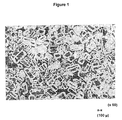
- Fig. 1 is a photograph showing the crystal structure of the crystals of trehalose dihydrate obtained in Example 1 of the present invention.
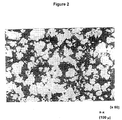
- Fig. 2 is a photograph showing the crystal structure of the crystals of trehalose dihydrate obtained in Comparative Example 2.
- the present invention relates to a method of isolating and purifying trehalose and all the hydrates thereof (including trehalose dihydrate) from a trehalose-containing solution which method is suitable for mass-production and for producing a large amount of pure trehalose.
- the method of this invention which is industrially useful, inexpensive and efficient includes first subjecting a trehalose-containing solution to ultrafiltration preferably with an ultrafilter and then concentrating and preferably cooling the solution to crystallize trehalose dihydrate in and from the trehalose-containing solution so as to obtain highly-pure crystals of trehalose dihydrate in a high yield.
- the origin of the trehalose-containing solution to be processed by the present invention method is not limited. Preferably, it is an aqueous solution.
- useful in the present invention method are various trehalose solutions obtained as intermediates in various processes of producing, extracting, etc., trehalose from natural substances such as a dry yeast, a selaginella and the like; various aqueous trehalose solutions obtained as intermediates in various processes of obtaining trehalose by enzymatically converting maltose, sucrose or the like into trehalose; and various trehalose solutions obtained as intermediates in processes of obtaining trehalose by culturing microorganisms.
- the processes of producing trehalose by culturing microorganisms may be any such known process like the one described above that utilizes known microorganisms of the genera Nocardia, Rhizoctonia and Sklerotium.
- various aqueous solutions derived from fermentation liquids obtained by culturing microorganisms belonging to the genus Brevibacterium, Corynebacterium, Microbacterium or Arthrobacter, which have heretofore been known as microorganisms that produce L-glutamic acid and other various amino acids in liquid media containing sucrose or maltose as the carbon source may be used. Any strain of these genera may be employed in the present invention, provided that they have an ability to produce trehalose.
- strains may be used: Brevibacterium lactofermentum ATCC 13869 Brevibacterium flavum ATCC 14067 Brevibacterium tibaricatum ATCC 21642 Corynebacterium glutamicum ATCC 13032 Corynebacterium acetoacidophilum ATCC 13870 Corynebacterium lilium ATCC 15990 Arthrobacter citreus ATCC 11624 Arthrobacter sulfureus ATCC 15170 Microbacterium ammoniaphilum ATCC 15354
- mutants derived from these strains and having elevated trehalose-producing ability can also be employed.
- the cultivation of the microorganism is aerobic or anaerobic, preferably under aerobic conditions.
- the temperature for the cultivation is suitably from 20 to 45°C.
- the pH of the culture liquid is preferably controlled from 5.0 to 10.0.
- inorganic or organic acids or alkaline substances may be used as well as urea, calcium carbonate, ammonia gas, or the like.
- the cells may be separated from the fermentation liquid by conventional centrifugation or filtration before the liquid is processed by the present invention.
- Useful ultrafilters include those that fractionate high-molecular weight substances having a molecular weight of about 1,000 daltons or more, typically 2,000, 3,000, 4,000 etc. daltons or more.
- Various known types of ultrafilters include those based on acetyl cellulose or similar cellulosic membranes, as well as polyamide,polysulfone, polyester, polyacrylonitrile, polyvinyl alcohol, polycarbonate, polyethylene, etc. membranes, and various inorganic membranes. Any ultrafilter may be employed in the present invention, irrespective of the kind. Regarding the shape, any shape may be used.
- Preferred ultrafilters are of the flat membrane type or the module type. The latter module type is particularly preferred.
- the fermentation liquids or other trehalose-containing starting solutions contain substantial amounts of inorganic salts and/or other various ionic substances these are preferably removed prior to trehalose crystallization since such salts or ionic substances would precipitate during the crystallization.
- the de-salting means ion-exchange membranes and the like may be employed, but a simple method using a combination of a free-type cation-exchange resin and a free-type anion-exchange resin is preferred.
- the kinds of the cation-exchange resin and the anion-exchange resin to be used are not limited and any resin having a de-salting ability may be used irrespective of the kind.
- De-salting with ion-exchange resins may be conducted either before or after the ultrafiltration with an ultrafilter membrane. Prior to the crystallization of trehalose, it is preferred that the solution is decolored with an active charcoal or the like.
- the solution is first concentrated to provide a dissolved trehalose concentration of approximately 50 to 100, preferably 60 to 80, more preferably 70 to 75 g/dl while the temperature of the solution is adjusted to about 20 to 100, preferably 40 to 80°C, and, optionally, fine powdery crystals of trehalose dihydrate are seeded to the concentrated solution to induce the generation or growth of new crystals.
- the slurry can be further concentrated to provide a total trehalose concentration of approximately 75 to 100, preferably 85 to 93 g/dl total trehalose, and this further concentrated solution is gradually cooled to a temperature of from 5 to 20°C to further grow the crystals. Then, the solution is allowed to stand for about 30 minutes to 2 hours to decrease or eliminate supersaturation, and it is then subjected to solid-liquid separation, and the crystals thus separated are washed with a small amount of water. In this way, highly-pure trehalose dihydrate crystals having a purity of 99% or more can be obtained.
- Trehalose itself may be produced by dehydrating the obtained trehalose dihydrate by any conventional method such as vacuum heating.
- Trehalose dihydrate crystals obtained by conventional crystallization from aqueous alcoholic solutions are small and fine (approximately 100 ⁇ m) and, when they are dissolved in water, the resulting aqueous solutions are not of high transparency.
- Trehalose dihydrate crystals obtained by the method of the present invention however, have a high purity and, when they are dissolved in water, the resulting aqueous solutions have high transparency.
- trehalose Since trehalose has an extremely high solubility in water, a trehalose-containing solution could not previously be crystallized even after it had been concentrated. Even when concentrated by conventional methods, it becomes a caramel-like paste.
- aqueous trehalose solutions are crystallized after having been previously filtered through an ultrafilter. Such solutions may then be crystallized to form trehalose dihydrate crystals. While not wishing to be held to a particular theory, it is believed that the present method succeeds because the substances which inhibit the crystallization of trehalose may be removed by the ultrafiltration.
- ionic substances and other impurities which may contribute to the problems of the prior art may be removed efficiently by the optional ion-exchange treatment with an ion-exchange resin.
- an ion-exchange resin may be used for fermentation.
- these amino acids may be removed by the ion-exchange treatment. Therefore, the present invention is free from the lowering of the purity of the product trehalose due to the amino acids.
- a liquid medium comprising 4% of glucose, 0.5% of urea, 0.1% of KH2PO4, 0.04% of MgSO4 ⁇ 7H2O, 300 ⁇ g/liter of thiamine hydrochloride, 300 ⁇ g/liter of biotin, 0.1% of concentrate liquid of soybean decomposate (as total nitrogen), 0.001% of FeSO4 ⁇ 7H20 and 0.001% of MnSO4 ⁇ 4H20 was prepared.
- the medium was placed in 500 ml-shaking flasks each in an amount of 20 ml/flask, and the flasks were sterilized at 110°C for 10 minutes.
- 15 ml of the seed culture liquid was inoculated to the media in the jar fermenters and incubated therein at 31.5°C and at a stirring rate of 700 rpm under aeration of 1/2 vvm.
- the pH of the media was controlled at 7.3 by introducing ammonia gas thereinto.
- 0.4 wt.% polyoxysorbitan monopalmitate was added to the medium and the culturing was continued further. Then, at the time when the sucrose in the culture liquid was completely consumed, culturing was terminated.
- the de-salted liquid was filtered with an ultrafilter membrane SIP-0013 (fractionating molecular weight: 3000 daltons, manufactured by Asahi Chemical Co.) to obtain 60 liters of a permeate (having a protein concentration of 0.01%).
- the permeate was pre-concentrated to have a trehalose concentration of about 35 g/dl, thus providing about 900 ml of a preconcentrate.
- 30 g of a powdery active charcoal was added to the preconcentrate and stirred for 2 hours at 60°C whereby the preconcentrate was decolored. By filtration, a decolored filtrate was obtained.
- Example 1 110 ml of the fermentation broth containing 4.4 g of trehalose (measured as trehalose dihydrate) and having a protein concentration of 2.0% that had been obtained in Example 1 was subjected to centrifugation (for removing the cells) and then to ion-exchange treatment in the same manner as in Example 1.
- the cell-free broth was then concentrated and crystallized in the same manner as in Example 1, but the ultrafiltration step was omitted. Crystals of trehalose dihydrate were obtained. However, the crystals were obviously finer than those obtained in Example 1, and they were aggregated crystals.
- the purity of the crystals was 90%, and the yield thereof was 3.3 g. As compared with the trehalose dihydrate obtained in Examples 1 and 2, the purity and the yield were lower.
- the cell-free broth was passed through a combination of a 2-liter H-type column of cation-exchange resin SK1B (manufactured by Mitsubishi Kasei Corp.) and a 5-liter OH-type column of anion-exchange resin WA30 (manufactured by Mitsubishi Kasei Corp.) connected in series, at a flow rate of 2 liter/hr, and 5 liters of a de-salted liquid were obtained.
- the de-salted liquid was subjected to an ultrafiltration membrane SIP-0013 (fractionating molecular weight: 3000, manufactured by Asahi Chemical Co.) to obtain 10 liters of a filtrate (having a protein concentration of 0.01% or less).
- the filtrate was concentrated to have a trehalose concentration of 35 g/dl.
- 900 ml of 100% ethyl alcohol was gradually added to the concentrated trehalose solution, with stirring.
- seed crystals of trehalose dihydrate were also added to the solution for crystallizing trehalose.
- This solution was cooled to 5°C.
- the crystals thus formed were separated by centrifugation and dried in a reduced-pressure drier at 40°C for 15 hours, and 75 g of highly-pure trehalose dihydrate crystals (pillar-like crystals having a purity of 95% and a specific rotation [ ⁇ ]20 (NaD ray) of +178.9°) were obtained.
- the grains of the crystals were fine and not uniform, as shown in Fig. 2 (x 50). These were inferior to the crystals obtained in Example 1.
- a large amount of highly-pure crystals of trehalose dihydrate may be easily isolated and purified from a trehalose-containing solution, particularly from a trehalose containing fermentation liquid.
- the method of the present invention is suitable for mass-production and for producing large amounts of trehalose crystals.
Landscapes
- Chemical & Material Sciences (AREA)
- Organic Chemistry (AREA)
- Life Sciences & Earth Sciences (AREA)
- Engineering & Computer Science (AREA)
- Wood Science & Technology (AREA)
- Biochemistry (AREA)
- Biotechnology (AREA)
- General Health & Medical Sciences (AREA)
- Genetics & Genomics (AREA)
- Health & Medical Sciences (AREA)
- Zoology (AREA)
- Molecular Biology (AREA)
- Microbiology (AREA)
- General Chemical & Material Sciences (AREA)
- Chemical Kinetics & Catalysis (AREA)
- Bioinformatics & Cheminformatics (AREA)
- General Engineering & Computer Science (AREA)
- Preparation Of Compounds By Using Micro-Organisms (AREA)
Applications Claiming Priority (4)
| Application Number | Priority Date | Filing Date | Title |
|---|---|---|---|
| JP1561493A JPH06225782A (ja) | 1993-02-02 | 1993-02-02 | トレハロースの単離精製法 |
| JP1561693A JPH06269289A (ja) | 1993-02-02 | 1993-02-02 | トレハロースの水晶析による単離精製法 |
| JP15616/93 | 1993-02-02 | ||
| JP15614/93 | 1993-02-02 |
Publications (1)
| Publication Number | Publication Date |
|---|---|
| EP0609801A1 true EP0609801A1 (fr) | 1994-08-10 |
Family
ID=26351794
Family Applications (1)
| Application Number | Title | Priority Date | Filing Date |
|---|---|---|---|
| EP94101379A Withdrawn EP0609801A1 (fr) | 1993-02-02 | 1994-01-31 | Méthode d'isolation et purification de tréhalose |
Country Status (3)
| Country | Link |
|---|---|
| US (1) | US5441644A (fr) |
| EP (1) | EP0609801A1 (fr) |
| BR (1) | BR9400368A (fr) |
Cited By (7)
| Publication number | Priority date | Publication date | Assignee | Title |
|---|---|---|---|---|
| WO1995009243A1 (fr) * | 1993-09-28 | 1995-04-06 | Ústav Makromolekulární Chemie Akademie Ved C^¿Eské Republiky | PROCEDE DE PRODUCTION DE α,α-TREHALOSE |
| EP0691344A1 (fr) * | 1992-12-28 | 1996-01-10 | Kabushiki Kaisha Hayashibara Seibutsu Kagaku Kenkyujo | Purification de tréhalose |
| US5677442A (en) * | 1992-12-28 | 1997-10-14 | Kabushiki Kaisha Hayashibara Seibutsu Kagaku Kenkyujo | Method of crystallizing trehalose without using organic solvent |
| GB2339197A (en) * | 1998-07-09 | 2000-01-19 | Hayashibara Biochem Lab | Crystalline trehalose dihydrate |
| WO2002012257A1 (fr) * | 2000-08-08 | 2002-02-14 | Nihon Shokuhin Kako Co., Ltd. | Procede de production de tagatose cristallin |
| CN104592316A (zh) * | 2015-01-31 | 2015-05-06 | 湖南尔康制药股份有限公司 | 一种供注射用海藻糖的制备方法 |
| CN106317131A (zh) * | 2016-08-24 | 2017-01-11 | 山东福洋生物科技有限公司 | 一种海藻糖的结晶方法 |
Families Citing this family (12)
| Publication number | Priority date | Publication date | Assignee | Title |
|---|---|---|---|---|
| US5576303A (en) * | 1993-03-16 | 1996-11-19 | Kabushiki Kaisha Hayashibara Seibutsu Kagaku Kenkyujo | Energy-supplementing saccharide source and its uses |
| JP3633648B2 (ja) * | 1993-07-20 | 2005-03-30 | 株式会社林原生物化学研究所 | マルトース・トレハロース変換酵素とその製造方法並びに用途 |
| JP3659985B2 (ja) * | 1993-12-28 | 2005-06-15 | 三栄源エフ・エフ・アイ株式会社 | トレハラーゼ及び該酵素を用いた糖類の製法 |
| DE69529026T2 (de) * | 1994-07-19 | 2003-07-17 | Kabushiki Kaisha Hayashibara Seibutsu Kagaku Kenkyujo, Okayama | Trehalose, ihre Herstellung und ihre Verwendung |
| US5869604A (en) * | 1995-11-09 | 1999-02-09 | Georgia Institute Of Technology | Crystallization and purification of polypeptides |
| JP4034846B2 (ja) * | 1996-12-10 | 2008-01-16 | 株式会社林原生物化学研究所 | 結晶性粉末糖質とその製造方法並びに用途 |
| JP2004269488A (ja) * | 2002-06-06 | 2004-09-30 | Hayashibara Biochem Lab Inc | 結晶α−D−グルコシルα−D−ガラクトシドとこれを含有する糖質及びこれらの製造方法並びに用途 |
| EP1460080A1 (fr) * | 2003-03-21 | 2004-09-22 | Cargill Incorporated | Trehalose sous forme solide directement compressible |
| DE102004013736A1 (de) * | 2004-03-18 | 2005-10-06 | Basf Ag | Verfahren zur Anreicherung von Trehalose mit Hilfe von Alumosilikaten |
| KR101776032B1 (ko) | 2011-09-21 | 2017-09-07 | 가부시기가이샤하야시바라 | α,α-트레할로스 이수화물 결정 함유 분말의 제조방법 |
| CN102924539B (zh) * | 2012-10-31 | 2015-05-20 | 南京工业大学 | 一种制备海藻糖晶体的方法 |
| SG10201811099SA (en) * | 2014-06-13 | 2019-01-30 | Avantor Performance Materials Llc | High purity low endotoxin carbohydrate (hple) compositions, and methods of isolation thereof |
Citations (2)
| Publication number | Priority date | Publication date | Assignee | Title |
|---|---|---|---|---|
| FR2671099A1 (fr) * | 1990-12-27 | 1992-07-03 | Orsan | Procede de production de trehalose par fermentation de microorganisme dans des conditions induisant une variation de la pression osmotique. |
| EP0556838A1 (fr) * | 1992-02-21 | 1993-08-25 | Takeda Chemical Industries, Ltd. | Méthode de production de tréhalose |
Family Cites Families (3)
| Publication number | Priority date | Publication date | Assignee | Title |
|---|---|---|---|---|
| JPS5432076B2 (fr) * | 1973-09-14 | 1979-10-11 | ||
| US4247340A (en) * | 1978-09-19 | 1981-01-27 | Rohm And Haas Company | Purification of sugars using emulsion anion exchange resins |
| US5008189A (en) * | 1986-08-11 | 1991-04-16 | Uop | Enhanced membrane separation of monosaccharides utilizing concentration polarization |
-
1994
- 1994-01-27 BR BR9400368A patent/BR9400368A/pt not_active Application Discontinuation
- 1994-01-31 EP EP94101379A patent/EP0609801A1/fr not_active Withdrawn
- 1994-02-02 US US08/190,449 patent/US5441644A/en not_active Expired - Fee Related
Patent Citations (2)
| Publication number | Priority date | Publication date | Assignee | Title |
|---|---|---|---|---|
| FR2671099A1 (fr) * | 1990-12-27 | 1992-07-03 | Orsan | Procede de production de trehalose par fermentation de microorganisme dans des conditions induisant une variation de la pression osmotique. |
| EP0556838A1 (fr) * | 1992-02-21 | 1993-08-25 | Takeda Chemical Industries, Ltd. | Méthode de production de tréhalose |
Non-Patent Citations (1)
| Title |
|---|
| PATENT ABSTRACTS OF JAPAN * |
Cited By (15)
| Publication number | Priority date | Publication date | Assignee | Title |
|---|---|---|---|---|
| US6017899A (en) * | 1992-12-28 | 2000-01-25 | Kabushiki Kaisha Hayashibara Seibutsu Kagaku Kenkyujo | Non-reducing saccharide-forming enzyme, its preparation and uses |
| EP0691344A1 (fr) * | 1992-12-28 | 1996-01-10 | Kabushiki Kaisha Hayashibara Seibutsu Kagaku Kenkyujo | Purification de tréhalose |
| US5610047A (en) * | 1992-12-28 | 1997-03-11 | Kabushiki Kaisha Hayashibara Seibutsu Kagaku Kenkyujo | Non-reducing saccharide-forming enzyme, its preparation and uses |
| US5677442A (en) * | 1992-12-28 | 1997-10-14 | Kabushiki Kaisha Hayashibara Seibutsu Kagaku Kenkyujo | Method of crystallizing trehalose without using organic solvent |
| US5716838A (en) * | 1992-12-28 | 1998-02-10 | Kabushiki Kaisha Hayashibara Seibutsu Kagaku Kenkyujo | Non-reducing saccharide-forming enzyme, its preparation and uses |
| US5922580A (en) * | 1992-12-28 | 1999-07-13 | Kabushiki Kaisha Hayashibara Seibutsu Kagaku Kenkyujo | Non-reducing saccharide-forming enzyme, its preparation and uses |
| WO1995009243A1 (fr) * | 1993-09-28 | 1995-04-06 | Ústav Makromolekulární Chemie Akademie Ved C^¿Eské Republiky | PROCEDE DE PRODUCTION DE α,α-TREHALOSE |
| GB2339197A (en) * | 1998-07-09 | 2000-01-19 | Hayashibara Biochem Lab | Crystalline trehalose dihydrate |
| GB2339197B (en) * | 1998-07-09 | 2002-08-14 | Hayashibara Biochem Lab | Crystalline trehalose dihydrate |
| US6723170B2 (en) | 1998-07-09 | 2004-04-20 | Kabushiki Kaisha Hayashibara Seibutsu Kagaku Kenkyujo | Crystalline trehalose dihydrate, its preparation and uses |
| WO2002012257A1 (fr) * | 2000-08-08 | 2002-02-14 | Nihon Shokuhin Kako Co., Ltd. | Procede de production de tagatose cristallin |
| US7101432B2 (en) | 2000-08-08 | 2006-09-05 | Nihon Shokuhin Kako Co., Ltd. | Process for producing crystalline tagatose |
| CN104592316A (zh) * | 2015-01-31 | 2015-05-06 | 湖南尔康制药股份有限公司 | 一种供注射用海藻糖的制备方法 |
| CN106317131A (zh) * | 2016-08-24 | 2017-01-11 | 山东福洋生物科技有限公司 | 一种海藻糖的结晶方法 |
| CN106317131B (zh) * | 2016-08-24 | 2019-04-16 | 山东福洋生物科技有限公司 | 一种海藻糖的结晶方法 |
Also Published As
| Publication number | Publication date |
|---|---|
| BR9400368A (pt) | 1994-08-23 |
| US5441644A (en) | 1995-08-15 |
Similar Documents
| Publication | Publication Date | Title |
|---|---|---|
| US5441644A (en) | Method of isolation and purification of trehalose | |
| KR100660270B1 (ko) | 미생물 배양 배지로부터의 에리쓰리톨의 제조 및 회수 공정 | |
| EP0167132B1 (fr) | Procédé de préparation de L-isoleucine par fermentation | |
| US11060118B2 (en) | Production of vanillin by fermentation | |
| EP0363561A2 (fr) | Procédé de production d'hyaluronate de sodium par fermentation | |
| EP0327016A2 (fr) | Procédé d'isolement et de récupération de l'érythritol d'un milieu de culture le contenant | |
| EP0798377A2 (fr) | Procédé de préparation d'aspartase et l'acide L-aspartique | |
| EP0392556A1 (fr) | Procédé pour la production de l'isomaltulose | |
| US3767528A (en) | Process for the manufacture of 3,4-disubstituted phenyl-l-alanines | |
| JP3890744B2 (ja) | グルコースを出発原料としたl−リボースの製造方法 | |
| EP0205849B1 (fr) | Procédé de production de L-thréonine par fermentation | |
| EP0636695A1 (fr) | Méthode de la production de L-3,4-dihydroxyphénylalanine | |
| EP0386476B1 (fr) | Procédé de préparation de L-alanine | |
| EP0154472B1 (fr) | Procédé de préparation de l'ester de L-aspartyl-L-phénylalanine | |
| US2729587A (en) | Production of fructose | |
| JPH06269289A (ja) | トレハロースの水晶析による単離精製法 | |
| US3056729A (en) | Process for preparing l-lysine by fermentation of the corresponding dllactam | |
| EP0248622B1 (fr) | Production microbiologique de L-thréonine à partir d'homosérine | |
| US5036004A (en) | Process for producing L-serine | |
| JPH06269288A (ja) | トレハロースのアルコール晶析による単離精製法 | |
| JPH06225782A (ja) | トレハロースの単離精製法 | |
| US4452897A (en) | Method of preparing optically active β-(S)-aminoglutaric acid monoalkyl esters | |
| EP0336387B1 (fr) | Méthode de production de l'arginine | |
| US2947666A (en) | Amino acids and process | |
| EP0301107B1 (fr) | Procede de preparation de d-alanine |
Legal Events
| Date | Code | Title | Description |
|---|---|---|---|
| PUAI | Public reference made under article 153(3) epc to a published international application that has entered the european phase |
Free format text: ORIGINAL CODE: 0009012 |
|
| AK | Designated contracting states |
Kind code of ref document: A1 Designated state(s): DE FR GB |
|
| 17P | Request for examination filed |
Effective date: 19950203 |
|
| 17Q | First examination report despatched |
Effective date: 19960523 |
|
| STAA | Information on the status of an ep patent application or granted ep patent |
Free format text: STATUS: THE APPLICATION IS DEEMED TO BE WITHDRAWN |
|
| 18D | Application deemed to be withdrawn |
Effective date: 19961203 |