EP0611006A1 - Système radio mobile à communication duplex intégral et semi-duplex - Google Patents
Système radio mobile à communication duplex intégral et semi-duplex Download PDFInfo
- Publication number
- EP0611006A1 EP0611006A1 EP94200328A EP94200328A EP0611006A1 EP 0611006 A1 EP0611006 A1 EP 0611006A1 EP 94200328 A EP94200328 A EP 94200328A EP 94200328 A EP94200328 A EP 94200328A EP 0611006 A1 EP0611006 A1 EP 0611006A1
- Authority
- EP
- European Patent Office
- Prior art keywords
- channel
- mobile station
- group
- transmission system
- message transmission
- Prior art date
- Legal status (The legal status is an assumption and is not a legal conclusion. Google has not performed a legal analysis and makes no representation as to the accuracy of the status listed.)
- Granted
Links
- 238000004891 communication Methods 0.000 claims abstract description 9
- 230000005540 biological transmission Effects 0.000 claims description 75
- 230000011664 signaling Effects 0.000 claims description 30
- 230000008878 coupling Effects 0.000 claims description 18
- 238000010168 coupling process Methods 0.000 claims description 18
- 238000005859 coupling reaction Methods 0.000 claims description 18
- 238000000034 method Methods 0.000 claims description 14
- 238000012544 monitoring process Methods 0.000 claims description 4
- 230000004044 response Effects 0.000 claims description 4
- 238000013475 authorization Methods 0.000 claims description 2
- 230000001413 cellular effect Effects 0.000 abstract description 4
- 230000008901 benefit Effects 0.000 description 5
- 238000005259 measurement Methods 0.000 description 4
- 241001136792 Alle Species 0.000 description 3
- 230000001419 dependent effect Effects 0.000 description 3
- 238000005516 engineering process Methods 0.000 description 2
- 230000007774 longterm Effects 0.000 description 2
- 238000012546 transfer Methods 0.000 description 2
- 230000007704 transition Effects 0.000 description 2
- 230000006978 adaptation Effects 0.000 description 1
- 230000015572 biosynthetic process Effects 0.000 description 1
- 230000008859 change Effects 0.000 description 1
- 230000000295 complement effect Effects 0.000 description 1
- 238000012937 correction Methods 0.000 description 1
- 238000013461 design Methods 0.000 description 1
- 238000001514 detection method Methods 0.000 description 1
- 230000002349 favourable effect Effects 0.000 description 1
- 230000006870 function Effects 0.000 description 1
- 239000011159 matrix material Substances 0.000 description 1
- 238000010295 mobile communication Methods 0.000 description 1
- 230000008520 organization Effects 0.000 description 1
- 230000008569 process Effects 0.000 description 1
- 238000012545 processing Methods 0.000 description 1
- 239000013589 supplement Substances 0.000 description 1
- 238000012549 training Methods 0.000 description 1
Images

Classifications
-
- H—ELECTRICITY
- H04—ELECTRIC COMMUNICATION TECHNIQUE
- H04W—WIRELESS COMMUNICATION NETWORKS
- H04W4/00—Services specially adapted for wireless communication networks; Facilities therefor
- H04W4/06—Selective distribution of broadcast services, e.g. multimedia broadcast multicast service [MBMS]; Services to user groups; One-way selective calling services
-
- H—ELECTRICITY
- H04—ELECTRIC COMMUNICATION TECHNIQUE
- H04W—WIRELESS COMMUNICATION NETWORKS
- H04W84/00—Network topologies
- H04W84/02—Hierarchically pre-organised networks, e.g. paging networks, cellular networks, WLAN [Wireless Local Area Network] or WLL [Wireless Local Loop]
- H04W84/04—Large scale networks; Deep hierarchical networks
- H04W84/08—Trunked mobile radio systems
Definitions
- the invention relates to a mobile radio system with base stations and mobile stations for communication between mobile stations with one another and / or mobile stations and wired subscribers, in which a multiplicity of radio channels in the direction from mobile station to base station (uplink radio channels) and a multiplicity of radio channels in the direction from base station to mobile station (Downlink radio channels) are assigned to one another in pairs as duplex radio channels and in which signaling between the base station and mobile station is provided on at least one control channel in order to occupy a duplex radio channel or to switch to a trunked radio system.
- uplink radio channels uplink radio channels
- Downlink radio channels Downlink radio channels
- Mobile radio systems to cover a larger coverage area have long been designed as cellular radio networks.
- at least one fixed base station is provided, which maintains the radio connection to the mobile stations in your radio cell in full duplex mode.
- Signaling procedures on a control channel ensure that only one mobile subscriber occupies a full-duplex radio channel.
- So-called trunked radio systems also exist for closed user groups, in which the individual users can access a radio channel using the half-duplex method. Access to this radio channel is also ensured by suitable signaling methods, with only one subscriber in a user group being able to speak in group calls, but all trunked radio subscribers in the same user group can hear this subscriber.
- trunked radio systems are very economical in terms of frequency, since a user group requires only a single radio channel because of the half-duplex operation.
- trunked radio systems are radio systems that operate in different frequency bands and also do not match in terms of their geographic extent. For example, trunked radio systems currently in existence in Germany are even regionally restricted to certain cities and their surroundings.
- a method is known from WO 92/08326 which enables participation in both a mobile radio system and a trunked radio system with only one radio receiver, it being possible to switch between the two systems as desired.
- different access numbers are used on the control channels monitored by the mobile stations in each case, by means of which a mobile station can distinguish which of the two systems is currently calling for it, or whether a group call of its own user group is currently being carried out in the trunked radio system.
- the object of the invention is to design a mobile radio system of the type mentioned in such a way that it offers greater flexibility and better frequency economy.
- coupling means are provided for coupling an uplink radio channel and / or a wired subscriber to at least one downlink radio channel.
- Half-duplex radio channels are formed, which can be used for group calls, such as in a trunked radio system.
- group calls such as in a trunked radio system.
- the radio channels previously required for both networks can be used much better, since they can now be used as required, either as a full-duplex radio channel for two-way calls or as a half-duplex radio channel for group calls.
- mobile radio systems are generally expanded across the board, users who previously had no opportunity to participate in a trunked radio system due to their location are also offered this option. Using a single infrastructure is also cheaper than operating two different systems in parallel.
- a trunked radio system can be inserted into any existing mobile radio system, for example the known ETSI GSM mobile radio system, without great effort.
- the coupling means can be arranged both in the network itself, for example in a respective base station of the network, or else can be designed such that they are connected to the network, for example, like a network subscriber, and send data arriving from the message transmission system back to the message transmission system.
- a signaling channel exclusively assigned to the respective mobile station is provided in the full-duplex method for each mobile station participating in a group call in the message transmission system.
- the signaling channels of all group participants can be accommodated on a common radio channel.
- One embodiment provides that the information required for the coordinated transmission on the common group channel by the mobile station (for example the distance-dependent transmission time 'timing advance') is determined by the mobile station in that the mobile station transmits shortened access messages, the base station sends these messages after the time of arrival or Content is analyzed and processed, and a control unit in the network transmits a message to the mobile station which contains at least the information necessary for transmission.
- the information required by the mobile station for coordinated transmission on the common group channel can be determined by the mobile station by communication with the network on the duplex signaling channel assigned to it.
- a mobile station that wants to transmit information on a common group channel first waits until this group channel is free and then sends shortened access messages.
- the network sends feedback on the shortened access messages.
- the mobile station takes the access authorization to the group channel, the time of access, the time of transmission or the transmission power from these responses. If the mobile station has already been assigned a duplex signaling channel exclusively assigned to it, it sends the access message on the duplex signaling channel assigned to it. Access collisions can be avoided in this way.
- the mobile station When the mobile station has signaled to the network that it wishes to access the common group channel, it waits for a certain amount of time to be calculated for the necessary feedback from the network, and repeats its access request if there is no response from the network.
- One way to regulate access on the common group channel can be that the mobile station releases the group channel without signaling after it has sent its information on the common group channel.
- a special embodiment provides that two or more group channels in the same or different cells are coupled together in the message transmission system. Such a coupling can preferably take place with known conference devices. In this way, the capacity or the area coverage of the group calls within the mobile radio system can be increased.
- An embodiment of the message transmission system provides a specially designed control unit with which the individual subscribers first set up a call, such as a subscriber who wishes to have a duplex call connection with another network subscriber, and only then are referred to the desired group channel by the control unit. In this way, a large part of the protocols can be shared.
- communication is encrypted with the key of the individual subscriber during normal call setup and only then is the subscriber given the key for the group call.
- Another embodiment provides that the network sends out information via channels for group calls. This makes it possible for the mobile stations to assign themselves to a cell based on the information about group calls sent out by the network.
- the permanent signaling channel assigned to a mobile station is provided for subscriber monitoring or for security-related services during the group call.
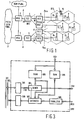
- FIG. 1 shows the structure of a cellular mobile radio system.
- the GSM system Global System for Mobile Communication
- the GSM network is well known to the person skilled in the art, the description of the invention only deals with the GSM network to the extent that it is necessary for understanding the invention .
- the invention is of course not only limited to the GSM network, but is also suitable for all other mobile radio systems in which duplex connections are provided.
- the radio switching center MSC is a digital switching center of high performance, which both establishes the transition between the GSM network and other telecommunications networks, such as the public telephone network (PSTN), the ISDN network, etc., and also manages the GSM network.
- BTS base transceiver station
- the transition from the radio switching center MSC to the base station control device BSC is standardized as a so-called A interface.
- the A interface provides the known PCM30 format as the data format, so that conventional PCM30 transmission links can be used for data transmission.
- the PCM30 signal is a time-division multiplex signal in which 30 data signals, for example digitized telephone signals with a data rate of 64 Kbit / s, are combined to form a bit stream of 2.048 Mbit / s.
- the PCM30 frame is divided into 32 time slots of 8 bits each.
- the first time slot (No. 0) contains an indication of the start of the frame, the 17th time slot (No. 16) is used for the transmission of signaling of the data channels accommodated in the remaining 30 time slots.
- LPC linear predictive coding
- LPC long-term prediction
- RPE regular pulse exitation
- TCE transcoder equipment
- the 260 associated bits of a 20 ms speech sample are referred to below as net bits because they contain no further information.
- TRAU frame Transcoding Rate Adaptation Unit.
- the data rate of the TRAU frame is therefore exactly 16 Kbits / s.
- the call data should be encoded with only half the data rate if the call quality is comparable.
- the transmission capacity can be doubled, especially on the radio transmission path of the GSM network. Since no definitive determinations are currently available with regard to the coding method to be used, the transmission of full-rate data channels is described below as a representative.
- the transcoding device TCE is a logical part of the base station control device BSC, it is located locally at the respective radio switching center MSC. In this way, only a quarter of the transmission capacity is required on the so-called M interface, the transmission path between the transcoder TCE and the central base station control unit BCE (Base Station Central Equipment), because each PCM30 channel with 64 Kbit / s four TRAU signals with 16 Kbit / s can be accommodated simultaneously. Since the distance between the radio switching center and the central base station control device BCE is up to several 100 km transmission costs can be saved in this way.
- a PCM30 frame is also provided for data transmission between the central base station control device BCE and the individual base stations BTS (so-called A to interface), whereby logical subchannels are also formed within the PCM30 frame, so that 16 Kbit / s transmission capacity for each user channel be available.
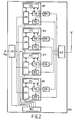
- Fig. 2 shows the schematic structure of a base station BTS.
- a connection concentrator LCU Line Concentrator Unit
- useful signals and control signals are separated from one another from the data stream coming via the A to interface.
- RT Radio Terminal
- a signal processor unit SPU (signaling processing unit) arranged in the radio part RT forms time slot transmission signals from the respective useful data, which are modulated in a transmission part TXU (transmitter unit) on an HF carrier likewise generated in the transmission part and, if appropriate, in a power output stage HPA (high power amplifier) a corresponding output transmission power are brought.
- the transmission output signals of all radio parts of a base station are combined into a single transmission signal via an antenna coupling device ACE (Antenna Coupling Equipment).
- the signals received by an antenna are in the receiver section RXU (Receiver Unit) of the radio part RT frequency-selected and converted into complex, digital baseband signals.
- the baseband-converted signals are decoded in the signal processor unit SPU and combined into a continuous data stream and transmitted to the BCE via the internal data bus and the connection concentrator via the A bis interface.
- an internal control device BCU (BTS central unit) is also provided in each base station.
- the internal data bus of the base station BTS is composed of a first data bus 301 which carries the data signals arriving via the A bis interface and a second data bus 302 on which the data outgoing via the A bis interface are carried.
- a coder 304 arranged in the signal processor unit SPU controls a first interface 303 in such a way that the data intended for a radio channel are taken over by the internal data bus 301.
- the data 304 are buffered by the encoder 304 in a first memory 305 in accordance with the respective radio channel, ie in accordance with the time slot in which they are to be transmitted. For this purpose, the user data that is still integrated in the TRAU frame is extracted.
- the 260 bits of a 20 ms speech sample are provided with additional bits for error detection by the encoder 304 and expanded to a total of 456 bits by a convolutional coding, which provides great security against transmission errors.
- Eight partial blocks of 57 bits each are formed from these 456 bits.
- a sub-block of a TRAU frame and a corresponding sub-block of the following TRAU frame are transmitted, so that after every eight TDM frames a total of two TRAU frames are transmitted.
- This interleaving means that the gross bits of a 20 ms speech sample are distributed over eight successive TDMA frames, so that the signal is less susceptible to short interferences, but the resulting delay in transmission is not too great.
- signaling data that have a net length of 184 bits are also transmitted with a gross length of 456 bits.
- the encoder adds a training sequence, each with 57 bits, between the sub-blocks to be transmitted, which contains a certain bit pattern of 26 bits and two further signaling bits (stealing flags) and three start and end bits at the beginning and end of the time slot signal added.
- the data block of 148 bits each formed in this way for each of the eight time slots is sent in time by the encoder 304 to the transmitting part TXU.
- the received signals converted into baseband by the receiving part RXU are converted into sample values in an equalizer 306 for each bit to be decoded.
- a decoder 307 calculates the received data blocks from these samples for each time slot, deinterleaves the partial data blocks and reassembles them into a TRAU frame. For the timely transmission of these TRAU frames via a second interface controller 309, the respectively calculated TRAU frames are temporarily stored in a second memory 308.
- Signaling data is also required to transmit the call data.
- these signaling data are also formed by time-division multiplexing in different logical channels, so-called control channels (control channel) organized, which depending on the task completely occupy a physical channel, or also use the same physical channel as the call data, with a correspondingly lower data transfer rate.
- control channels control channel
- Each base station sends different system information on the BCCH.
- the BCCH is only required in the direction from the base station to the mobile station, in the so-called downlink.
- each mobile station which is located within the radio cell of the base station in question is enabled to establish a connection with the base station assigned to it.
- the system information of the BCCH contains the frequency of a control channel RACH (random access channel), which is only provided in the direction from mobile station to base station, the so-called uplink, and on which a mobile station can request a channel, which is then bidirectionally available for exclusive use.
- the requested channel is taken from a radio channel list stored in the base station and communicated to the mobile station in a so-called immediate assignment message via the CCCH.
- the assigned channel is initially used as SDCCH (stand alone dedicated control channel) in both directions exclusively for data exchange. If a call is established, the selected channel is used in time-division multiplex mode as the TCH (traffic channel) and for signaling during an ongoing call as SACCH (slow associated control channel).
- TCH traffic channel
- SACCH slow associated control channel
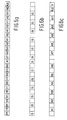
- FIG. 6a shows the time-division multiplexing scheme for two conversation channels H1, H2, which are designed as half-rate data channels.
- a control channel time slot A1 or A2 is contained in the time division multiplex frame scheme for every twelve conversation channel time slots H1 and H2, respectively.
- the information of the respective SACCH is transmitted in these control channel time slots A1 and A2.
- a switch to another frequency within a cell (intracell handover) and a change to another cell (intercell handover) is provided in the GSM system.
- intracell handover a switch to another frequency within a cell
- intercell handover a change to another cell
- the frequencies of the BCCHs of the neighboring base stations are communicated on the SACCH of each mobile station.
- the time division multiplex frame of the GSM system is constructed in such a way that it also contains time slots that are not occupied by a traffic channel or by a control channel. In these time slots, the receiver of the mobile station is tuned to the BCCHs of the neighboring base stations and measures their signal strength. The measured signal strengths are transmitted to the base station in SACCH. Furthermore, the signal strength and the bit error rate of the selected channel are measured by each mobile station in the GSM system and also sent to the base station via the SACCH.
- the coupling of the uplink radio channel of the duplex connection to the downlink radio channel of the same duplex connection is provided.
- this coupling is achieved by appropriate programming of the signal processor unit SPU.
- all TRAU frames received for the radio channel provided as a group channel from decoder 307 are sent from encoder 304 to the transmitting part instead of the TRAU frames arriving from base station control device BSC as the next TRAU frame.
- a group conversation is limited to the transmission and reception area of a base station. This corresponds, for example, to the area of cell 10 in FIG. 1. This is also appropriate for locally limited group discussions that are only required within a narrowly limited area. Since with GSM, for example, a radio cell can be extended up to a radius of approx. 37 km, a relatively large area can still be operated by group radio. Typical examples of such single-cell group radio applications are, for example, taxi radio, within the large cell of a city or group calls within a small cell, for example the calls of shunting workers within the strictly defined area of a train station.
- the advantage of the invention is precisely that the location of a base station can be set up primarily in accordance with the local needs of the planned group discussions.
- the base station placed in this way is primarily used for group calls, but can also be used as a secondary network supplement for normal duplex connections.
- a group can consist of two or more participants.
- the special feature is the half duplex operation, i.e. that only one participant is active and sends out information while the other participants are passive, i.e. they don't send, they only receive.
- a switch push-to-talk button
- a switch can be provided in the respective mobile radio device, for example, which must be held down by the respective user as long as he wants to send a message on the group channel.
- the group consists of the mobile stations MS1, MS2, MS3 and MS4. They share one channel of the base station as a "group channel", while normal traffic (eg according to the GSM standard) can be handled on the other channels of this base station.
- the mobile station MS1 is active and sends to the base station.
- the base station receives the signal from the mobile station MS1 in the receiver BS-E, processes it, passes the received information to its transmitter BS-S and sends it out again.
- the mobile station MS1 can again receive the transmitted signal and compare it with the signal transmitted by it. In this way, a mobile station can determine whether its signal has been accepted by the respective base station.
- the communication between a central unit and the group of mobile stations is carried out (see FIG. 5).
- a duplex connection to the active mobile station MS1 is possible.
- the mobile stations MS2, MS3 and MS4 are passive and in this case only hear the center and not the mobile station MS1.
- the center can be configured as a fixed network subscriber, so that no interventions are required in the existing mobile radio system.
- the coupling means can thus also be provided only in such a center, the loop between uplink and downlink radio channel in the center being concluded by coupling the incoming call to the outgoing call.
- This operating mode can also be operated half-duplex with a coupling circuit in the base station. Then the mobile stations MS2, MS3 and MS4 can listen to both the central station and the mobile stations MS1.
- conference calls in a switching center group channels from different base stations can be interconnected. Operation can thus be extended for a group to several channels in the same or in different cells. If these conference calls are arranged at a radio switching center, it is possible in this way to expand the group radio across the board or, if necessary, only partially over the area of a radio switching center. The advantage remains that only one duplex channel is required for group formation within a cell.
- Handover between such channels is possible if the command for handover (handover_command) is addressed to one, to several or to all mobile stations.
- the base stations transmit information about group channels that have been set up. On the basis of this information, the mobile stations can select a cell in which group calls are possible, or in which a group call has already been set up for the desired group.
- the call can be set up in the manner known from the GSM system, i.e. the mobile station sends the message channel_request (see GSM Recommendation 04.08) and receives an individual channel from the network with the message immediate_assignment. The identification, authentication and encryption can then take place. If the group call is encrypted with a group key, this group key can now be communicated to the mobile station so that it is secure from eavesdropping. The network now assigns the group channel to the desired group to the mobile station.
- Another possibility for setting up a call is that the network sends out information about group calls, and the mobile station uses this information to go directly to the group channel of the desired group.
- GSM-900 or DCS-1800 Another possible implementation for group calls is described below using the example of a GSM system (GSM-900 or DCS-1800).
- the characteristic of normal operation of duplex user channels in GSM is the associated control channel ACCH assigned to each user channel, via which measurement information (e.g. reception level and quality of observed neighboring channels) is transmitted from the mobile station in the uplink direction and in the opposite direction
- measurement information e.g. reception level and quality of observed neighboring channels
- commands for the transmission timing and for the transmission power regulation are also transmitted to the mobile station.
- This ACCH has 1/26 of the useful capacity for full-rate useful channels and 1/13 for half-rate useful channels (cf. FIG. 6a).
- the invention proposes to provide a "group user channel" GTCH and at least one "group control channel” GCCH for group calls per cell and group. It should be noted that for a conventional mobile station, the simultaneous operation of GTCH and GCCH must not cause any conflicts. This is done in GSM e.g. excluded by using two complementary half-rate subchannels.
- the GTCH (see FIG. 6b) is used in the uplink by all mobile stations involved, but only ever by one mobile station at a time.
- the useful information received from the network on the uplink is distributed by a control unit to the connected GTCHs in the downlink direction. This can be a recoding eg signaling messages or voice signals may be necessary.
- the assigned GCCHs are operated using the full duplex method and are divided by a multiplex method among the mobile stations participating in the group in such a way that they can each take on the usual role of ACCHs for a full duplex connection, e.g. for transferring measurement information in the uplink and control information in the downlink.
- a GCCH based on the GSM half rate channel is able to control up to twelve mobile stations. If required, several GCCHs can be made available per group.
- the advantage of this method is that the constant monitoring of the connections involved means that the mobile stations each have the correction necessary for transmission for the time of transmission and therefore the use of the GTCH in the uplink does not require a shortened access.
- the channel can be immediately used to send user information without delay if it is recognized as free by the mobile station. In the event of collisions in the case of multiple accesses which are recognized by the control unit in the network or by the mobile stations themselves, a renewed access can be repeated by the mobile station at certain intervals to be calculated.
- Another advantage of this method is that individual group calls can be forwarded through the network to neighboring cells if necessary, if the corresponding group channels are available there.
- this is possible with the help of signaling messages on the subchannels operated as ACCH, but can
- the GCCH can be supported by providing additional signaling channels in addition to the ACCH (see SDCCH in GSM) or by using in-band signaling (see FACCH) on the user channel.
- One variant consists in using the ACCH originally present in the GCCH (as the useful channel) and the subchannel which was initially not used for controlling the accesses. This additional duplex channel is then called "access channel" in the following.
- a mobile station that requests the assignment of the uplink GTCH sends a message on the access channel which signals the request for access and which enables the network to specifically assign the GTCH. This can be done by sending a message derived from the access request to the mobile station in the reverse direction on the downlink of the access channel or on the downlink of the corresponding (GCCH-) ACCH.
Landscapes
- Engineering & Computer Science (AREA)
- Computer Networks & Wireless Communication (AREA)
- Signal Processing (AREA)
- Multimedia (AREA)
- Mobile Radio Communication Systems (AREA)
Applications Claiming Priority (2)
| Application Number | Priority Date | Filing Date | Title |
|---|---|---|---|
| DE4304095A DE4304095B4 (de) | 1993-02-11 | 1993-02-11 | Mobilfunksystem |
| DE4304095 | 1993-02-11 |
Publications (2)
| Publication Number | Publication Date |
|---|---|
| EP0611006A1 true EP0611006A1 (fr) | 1994-08-17 |
| EP0611006B1 EP0611006B1 (fr) | 2004-11-17 |
Family
ID=6480225
Family Applications (1)
| Application Number | Title | Priority Date | Filing Date |
|---|---|---|---|
| EP94200328A Expired - Lifetime EP0611006B1 (fr) | 1993-02-11 | 1994-02-10 | Système radio mobile à communication duplex intégral et semi-duplex |
Country Status (4)
| Country | Link |
|---|---|
| US (1) | US5506837A (fr) |
| EP (1) | EP0611006B1 (fr) |
| JP (1) | JP3472332B2 (fr) |
| DE (2) | DE4304095B4 (fr) |
Cited By (4)
| Publication number | Priority date | Publication date | Assignee | Title |
|---|---|---|---|---|
| WO1996017483A1 (fr) * | 1994-11-29 | 1996-06-06 | Alcatel N.V. | Systeme radiotelephonique pour un groupe prive d'utilisateurs |
| AU685363B2 (en) * | 1995-12-04 | 1998-01-15 | Motorola, Inc. | Radio telecommunication network and method for unobtrusive call interception via transcoder bypass |
| DE19636196C1 (de) * | 1996-09-06 | 1998-02-05 | Lucent Tech Network Sys Gmbh | Funksystem und Verfahren zu dessen Betrieb |
| WO1999004585A1 (fr) * | 1997-07-16 | 1999-01-28 | Telefonaktiebolaget Lm Ericsson (Publ) | Systeme et procede de realisation d'une communication interphone et par canal multivocal dans un systeme telephonique prive... |
Families Citing this family (123)
| Publication number | Priority date | Publication date | Assignee | Title |
|---|---|---|---|---|
| US5694414A (en) | 1991-05-13 | 1997-12-02 | Omnipoint Corporation | Multi-band, multi-mode spread-spectrum communication system |
| US5790587A (en) | 1991-05-13 | 1998-08-04 | Omnipoint Corporation | Multi-band, multi-mode spread-spectrum communication system |
| US5796772A (en) | 1991-05-13 | 1998-08-18 | Omnipoint Corporation | Multi-band, multi-mode spread-spectrum communication system |
| US5815525A (en) | 1991-05-13 | 1998-09-29 | Omnipoint Corporation | Multi-band, multi-mode spread-spectrum communication system |
| US5887020A (en) | 1991-05-13 | 1999-03-23 | Omnipoint Corporation | Multi-band, multi-mode spread-spectrum communication system |
| JP3221975B2 (ja) * | 1993-05-11 | 2001-10-22 | 富士通株式会社 | 移動体通信システム、移動体通信制御装置及び移動体通信制御方法 |
| US6005856A (en) | 1993-11-01 | 1999-12-21 | Omnipoint Corporation | Communication protocol for spread spectrum wireless communication system |
| US6088590A (en) | 1993-11-01 | 2000-07-11 | Omnipoint Corporation | Method and system for mobile controlled handoff and link maintenance in spread spectrum communication |
| KR100395040B1 (ko) * | 1994-06-09 | 2003-12-31 | 코닌클리케 필립스 일렉트로닉스 엔.브이. | 쌍방향다중액세스통신시스템,및이시스템에이용되는중앙스테이션및사용자스테이션 |
| FI111580B (fi) * | 1994-06-13 | 2003-08-15 | Nokia Corp | Tehonsäätömenetelmä ja -järjestely handoverin yhteydessä matkaviestinjärjestelmässä |
| KR970002689B1 (en) * | 1994-06-30 | 1997-03-08 | Hyundai Electronics Ind | Cdma |
| DE4441262A1 (de) * | 1994-11-19 | 1996-05-23 | Oliver Alexander Stoll | Kommunikationssystem für den Daten- und Informationsaustausch zwischen vorzugsweise mehreren Datenerfassungs- und/oder Datenverarbeitungsstellen und Kommunikationsgerät zur Verwendung in einem solchen System |
| US5664004A (en) * | 1995-01-13 | 1997-09-02 | Nokia Telecommunications Oy | Support of multiplicity of radio interfaces over an interface between a base station system and a mobile switch |
| JP3231575B2 (ja) * | 1995-04-18 | 2001-11-26 | 三菱電機株式会社 | 無線データ伝送装置 |
| US5953651A (en) * | 1995-05-04 | 1999-09-14 | Interwave Communications International, Ltd. | Cellular adjunct to a public wired network |
| US5887256A (en) * | 1995-05-04 | 1999-03-23 | Interwave Communications International, Ltd. | Hybrid cellular communication apparatus and method |
| US5734979A (en) * | 1995-05-04 | 1998-03-31 | Interwave Communications International, Ltd. | Cellular base station with intelligent call routing |
| US5577029A (en) * | 1995-05-04 | 1996-11-19 | Interwave Communications | Cellular communication network having intelligent switching nodes |
| US5818824A (en) * | 1995-05-04 | 1998-10-06 | Interwave Communications International, Ltd. | Private multiplexing cellular network |
| US5734699A (en) * | 1995-05-04 | 1998-03-31 | Interwave Communications International, Ltd. | Cellular private branch exchanges |
| US5842138A (en) * | 1995-05-04 | 1998-11-24 | Interwave Communications International Ltd. | Configuration-independent methods and apparatus for software communication in a cellular network |
| US5689502A (en) | 1995-06-05 | 1997-11-18 | Omnipoint Corporation | Efficient frequency division duplex communication system with interleaved format and timing adjustment control |
| IL118447A (en) * | 1995-06-05 | 2000-01-31 | Omnipunt Corp | System and method for time division duplex communication |
| US5802046A (en) * | 1995-06-05 | 1998-09-01 | Omnipoint Corporation | Efficient time division duplex communication system with interleaved format and timing adjustment control |
| US5745484A (en) | 1995-06-05 | 1998-04-28 | Omnipoint Corporation | Efficient communication system using time division multiplexing and timing adjustment control |
| US5959980A (en) * | 1995-06-05 | 1999-09-28 | Omnipoint Corporation | Timing adjustment control for efficient time division duplex communication |
| FI101443B1 (fi) * | 1995-06-28 | 1998-06-15 | Ericsson Telefon Ab L M | Menetelmä kutsutun tilaajan tavoittamiseksi |
| JP3270306B2 (ja) * | 1995-09-14 | 2002-04-02 | 株式会社東芝 | 移動通信システムおよびこのシステムで使用される移動通信網並びに移動通信装置 |
| US5732076A (en) * | 1995-10-26 | 1998-03-24 | Omnipoint Corporation | Coexisting communication systems |
| US5966659A (en) * | 1995-10-31 | 1999-10-12 | Motorola, Inc. | Service request rooting by a local resource controller |
| JP2809179B2 (ja) * | 1996-03-14 | 1998-10-08 | 日本電気株式会社 | 無線同報通信システム |
| EP1274200A1 (fr) * | 1996-05-28 | 2003-01-08 | Matsushita Electric Industrial Co., Ltd. | Procédé d'accès dans un système de télécommunication |
| US5884148A (en) * | 1996-07-08 | 1999-03-16 | Omnipoint Corporation | Wireless local loop system and method |
| US5835564A (en) * | 1996-07-31 | 1998-11-10 | Lucent Technologies Inc. | Method for enhancing the reliability of a wireless telecommunications system |
| US5978672A (en) * | 1996-09-27 | 1999-11-02 | Global Mobility Systems, Inc. | Mobility extended telephone application programming interface and method of use |
| US6181935B1 (en) | 1996-09-27 | 2001-01-30 | Software.Com, Inc. | Mobility extended telephone application programming interface and method of use |
| US7359720B2 (en) * | 1996-09-27 | 2008-04-15 | Openwave Systems Inc. | Mobility extended telephone application programming interface and method of use |
| US6301474B1 (en) | 1996-09-27 | 2001-10-09 | Openwave Technologies Inc. | Mobility extended telephone application programming interface and method of use |
| US6018532A (en) * | 1996-11-14 | 2000-01-25 | Telefonaktiebolget L M Ericsson (Publ) | Method for multiplexing adjacent transceiver/transcoder links into a single timeslot |
| US5892802A (en) * | 1996-11-14 | 1999-04-06 | Telefonaktiebolaget L M Ericsson (Publ) | Transporting user data over A-Bis and A-interfaces within a mobile telecommunications network |
| US6049548A (en) * | 1996-11-22 | 2000-04-11 | Stanford Telecommunications, Inc. | Multi-access CS-P/CD-E system and protocols on satellite channels applicable to a group of mobile users in close proximity |
| US5924041A (en) * | 1996-11-25 | 1999-07-13 | Ericsson Inc. | Method and apparatus for providing a dispatch system in a cellular radiotelephone system |
| US7054271B2 (en) | 1996-12-06 | 2006-05-30 | Ipco, Llc | Wireless network system and method for providing same |
| US8982856B2 (en) | 1996-12-06 | 2015-03-17 | Ipco, Llc | Systems and methods for facilitating wireless network communication, satellite-based wireless network systems, and aircraft-based wireless network systems, and related methods |
| US6819933B1 (en) * | 1997-01-15 | 2004-11-16 | Sbc Technology Resources, Inc. | Communications system having pre-defined calling group |
| US6073023A (en) * | 1998-01-07 | 2000-06-06 | Comcast Cellular Communications, Inc. | Communications system having pre-defined calling group |
| US7137550B1 (en) | 1997-02-14 | 2006-11-21 | Statsignal Ipc, Llc | Transmitter for accessing automated financial transaction machines |
| US6233327B1 (en) | 1997-02-14 | 2001-05-15 | Statsignal Systems, Inc. | Multi-function general purpose transceiver |
| US7079810B2 (en) | 1997-02-14 | 2006-07-18 | Statsignal Ipc, Llc | System and method for communicating with a remote communication unit via the public switched telephone network (PSTN) |
| US6272121B1 (en) | 1997-03-03 | 2001-08-07 | Omnipoint Corporation | Spread spectrum communication system using DECT protocol |
| FI106601B (fi) * | 1997-04-23 | 2001-02-28 | Nokia Networks Oy | Tiedonsiirto matkaviestinverkossa |
| US6226367B1 (en) * | 1997-04-23 | 2001-05-01 | Nortel Networks Limited | Calling line identification with location icon |
| US6026296A (en) * | 1997-04-30 | 2000-02-15 | Motorola, Inc. | Apparatus for providing dispatch service to an existing telephone network |
| RU2126591C1 (ru) * | 1997-06-16 | 1999-02-20 | Закрытое акционерное общество "МобиКом" | Система сотовой подвижной связи |
| WO1999009665A1 (fr) * | 1997-08-14 | 1999-02-25 | Ericsson Inc. | Combine permettant des communications en semi-duplex au moyen d'un terminal cellulaire |
| US6829477B1 (en) | 1997-08-27 | 2004-12-07 | Interwave Communications International, Ltd. | Private multiplexing cellular network |
| US6640108B2 (en) | 1997-09-11 | 2003-10-28 | Interwave Communications International, Ltd. | Cellular communication system |
| US6377564B1 (en) * | 1997-10-21 | 2002-04-23 | Ericsson Inc. | Method for increasing uplink bandwidth over a dedicated control channel |
| US6005848A (en) * | 1997-10-27 | 1999-12-21 | Motorola, Inc. | Method and apparatus for a talkgroup call in a wireless CDMA system |
| FI104925B (fi) * | 1997-10-31 | 2000-04-28 | Nokia Networks Oy | Kanavointimenetelmä ja lähetinvastaanotin |
| US6097817A (en) * | 1997-12-10 | 2000-08-01 | Omnipoint Corporation | Encryption and decryption in communication system with wireless trunk |
| US6580906B2 (en) * | 1997-12-10 | 2003-06-17 | Intel Corporation | Authentication and security in wireless communication system |
| US8165028B1 (en) | 1997-12-10 | 2012-04-24 | Intel Corporation | Monitoring in communication system with wireless trunk |
| US6208627B1 (en) | 1997-12-10 | 2001-03-27 | Xircom, Inc. | Signaling and protocol for communication system with wireless trunk |
| US6526026B1 (en) * | 1997-12-10 | 2003-02-25 | Intel Corporation | Digit transmission over wireless communication link |
| DE19755379C2 (de) * | 1997-12-12 | 2000-06-08 | Siemens Ag | Basisstation für ein Funk-Kommunkationssystem |
| US6169906B1 (en) * | 1998-03-24 | 2001-01-02 | Motorola, Inc. | Method of transmitting messages in a dispatch call |
| US6181685B1 (en) * | 1998-04-23 | 2001-01-30 | Motorola, Inc. | Method and apparatus for group calls in a wireless CDMA communication system |
| DE19818463C2 (de) * | 1998-04-24 | 2001-08-30 | Siemens Ag | Verfahren zum Betreiben einer drahtlosen Telekommunikationseinrichtung |
| US6223062B1 (en) * | 1998-05-15 | 2001-04-24 | Northrop Grumann Corporation | Communications interface adapter |
| US6891838B1 (en) | 1998-06-22 | 2005-05-10 | Statsignal Ipc, Llc | System and method for monitoring and controlling residential devices |
| US6437692B1 (en) | 1998-06-22 | 2002-08-20 | Statsignal Systems, Inc. | System and method for monitoring and controlling remote devices |
| US6914533B2 (en) | 1998-06-22 | 2005-07-05 | Statsignal Ipc Llc | System and method for accessing residential monitoring devices |
| US8410931B2 (en) | 1998-06-22 | 2013-04-02 | Sipco, Llc | Mobile inventory unit monitoring systems and methods |
| US6914893B2 (en) | 1998-06-22 | 2005-07-05 | Statsignal Ipc, Llc | System and method for monitoring and controlling remote devices |
| US6215994B1 (en) | 1998-09-04 | 2001-04-10 | Ericsson Inc. | System and method for over the air programming of mobile stations |
| US6208872B1 (en) | 1998-09-04 | 2001-03-27 | Ericsson Inc. | Method and apparatus for inhibition of calls while roaming |
| JP3450196B2 (ja) * | 1998-09-09 | 2003-09-22 | 三菱電機株式会社 | Tdma無線通信方式 |
| FI982121L (fi) * | 1998-09-30 | 2000-03-31 | Nokia Networks Oy | Tehonsäätö radiojärjestelmässä |
| US7103511B2 (en) | 1998-10-14 | 2006-09-05 | Statsignal Ipc, Llc | Wireless communication networks for providing remote monitoring of devices |
| GB9826985D0 (en) * | 1998-12-08 | 1999-02-03 | Simoco Int Ltd | Mobile radio communications system |
| GB9826986D0 (en) * | 1998-12-08 | 1999-02-03 | Simoco Int Ltd | Radio communication system |
| US6620014B1 (en) | 1998-12-21 | 2003-09-16 | Telefonaktiebolaget Lm Ericsson(Publ) | Communicating radio planning information among control nodes in a cellular communication network |
| US7263073B2 (en) | 1999-03-18 | 2007-08-28 | Statsignal Ipc, Llc | Systems and methods for enabling a mobile user to notify an automated monitoring system of an emergency situation |
| US7650425B2 (en) | 1999-03-18 | 2010-01-19 | Sipco, Llc | System and method for controlling communication between a host computer and communication devices associated with remote devices in an automated monitoring system |
| US6947469B2 (en) | 1999-05-07 | 2005-09-20 | Intel Corporation | Method and Apparatus for wireless spread spectrum communication with preamble processing period |
| US6564049B1 (en) | 1999-05-10 | 2003-05-13 | Ericsson Inc. | Methods and systems for providing group calls with reduced setup times |
| US6577874B1 (en) | 1999-05-10 | 2003-06-10 | Ericsson Inc. | Methods and systems for providing temporary identification numbers for mobile terminals |
| US6449491B1 (en) | 1999-05-10 | 2002-09-10 | Ericsson Inc. | Apparatus and methods for conducting group calls in wireless communications systems |
| US6532224B1 (en) | 1999-05-10 | 2003-03-11 | Ericsson, Inc. | Method, systems, and terminals for assigning control channel time slots for group and individual pages |
| US6970442B1 (en) * | 1999-07-19 | 2005-11-29 | At&T Corp. | Multiple-access scheme for packet voice that uses voice activity detection |
| AU7425000A (en) * | 1999-10-01 | 2001-05-10 | Nokia Corporation | A radio link system |
| US6405027B1 (en) | 1999-12-08 | 2002-06-11 | Philips Electronics N.A. Corporation | Group call for a wireless mobile communication device using bluetooth |
| US6944137B1 (en) * | 2000-03-24 | 2005-09-13 | Motorola, Inc. | Method and apparatus for a talkgroup call in a wireless communication system |
| US6308079B1 (en) * | 2000-03-24 | 2001-10-23 | Motorola, Inc. | Method and apparatus for a talkgroup call in a wireless communication system |
| CA2310188A1 (fr) * | 2000-05-30 | 2001-11-30 | Mark J. Frazer | Structure de communication avec canaux a configuration sensible a la qualite de reception |
| GB2366477B (en) * | 2000-08-24 | 2004-03-31 | Motorola Inc | Communications system,base transmitter station and method for supporting half duplexcalls via full duplex connections |
| AU2001279241A1 (en) * | 2000-08-09 | 2002-02-18 | Statsignal Systems, Inc. | Systems and methods for providing remote monitoring of electricity consumption for an electric meter |
| JP4424572B2 (ja) * | 2000-09-19 | 2010-03-03 | 本田技研工業株式会社 | グループ登録機能付き通信装置 |
| US7346463B2 (en) | 2001-08-09 | 2008-03-18 | Hunt Technologies, Llc | System for controlling electrically-powered devices in an electrical network |
| FI112838B (fi) * | 2001-09-24 | 2004-01-15 | Primatel Oy | Päätelaitteiden valvonta tietoliikennejärjestelmässä |
| US8489063B2 (en) | 2001-10-24 | 2013-07-16 | Sipco, Llc | Systems and methods for providing emergency messages to a mobile device |
| US7480501B2 (en) | 2001-10-24 | 2009-01-20 | Statsignal Ipc, Llc | System and method for transmitting an emergency message over an integrated wireless network |
| US7424527B2 (en) | 2001-10-30 | 2008-09-09 | Sipco, Llc | System and method for transmitting pollution information over an integrated wireless network |
| US7231211B2 (en) * | 2002-07-24 | 2007-06-12 | Signal Intelligence, Inc. | Apparatus and method for monitoring a trunked radio communications system |
| KR100957387B1 (ko) * | 2003-02-06 | 2010-05-11 | 삼성전자주식회사 | 확장 그룹-콜 서비스 제공 방법 |
| EP1625762B1 (fr) * | 2003-05-20 | 2009-08-05 | T-Mobile Deutschland GmbH | Procede et systeme de mise en oeuvre d'un service push-to-talk dans un reseau de communication radio mobile du type gsm |
| PL1692907T3 (pl) * | 2003-11-21 | 2010-06-30 | T Mobile Deutschland Gmbh | Dodatkowe informacje dla usługi grupowego połączenia głosowego |
| DE10360883A1 (de) * | 2003-12-23 | 2005-07-21 | Siemens Ag | Verfahen zur Vergabe von Übertragungsrechten |
| US7756086B2 (en) | 2004-03-03 | 2010-07-13 | Sipco, Llc | Method for communicating in dual-modes |
| US8031650B2 (en) | 2004-03-03 | 2011-10-04 | Sipco, Llc | System and method for monitoring remote devices with a dual-mode wireless communication protocol |
| US7757211B2 (en) * | 2004-05-03 | 2010-07-13 | Jordan Thomas L | Managed object member architecture for software defined radio |
| US7974224B2 (en) * | 2004-07-31 | 2011-07-05 | Nextel Communications Inc. | Subscriber unit capable of switching between full-duplex and half-duplex modes during an on-going session |
| RU2292646C2 (ru) * | 2004-09-10 | 2007-01-27 | Андрей Юрьевич ГАВРИЛОВ | Устройство сети мобильной коммуникации |
| US20060092865A1 (en) * | 2004-11-03 | 2006-05-04 | Airnet Communications Corporation | Supporting wireless communication interoperability compatibility with existing communications infrastructure |
| US9439126B2 (en) | 2005-01-25 | 2016-09-06 | Sipco, Llc | Wireless network protocol system and methods |
| DE102005011177A1 (de) * | 2005-03-09 | 2006-09-14 | Vodafone Holding Gmbh | Verfahren und System zum Optimieren der Kapazität eines Mobilfunknetzes |
| FR2892591B1 (fr) * | 2005-10-20 | 2008-01-04 | Eads Telecom Soc Par Actions S | Gestion des transferts intercellulaires dans les communications de groupe |
| KR101390110B1 (ko) * | 2007-02-22 | 2014-04-28 | 삼성전자주식회사 | 통신 시스템에서 신호 송수신 방법 및 장치 |
| US8275107B2 (en) * | 2007-03-14 | 2012-09-25 | Microsoft Corporation | Techniques for managing a multimedia conference call |
| US8295209B2 (en) * | 2008-02-21 | 2012-10-23 | Nokia Corporation | Frame structures with flexible partition boundary for wireless networks |
| US20110051630A1 (en) * | 2009-08-31 | 2011-03-03 | Tait Electronics Limited | Repeater for a trunked radio network |
| AU2011274320B2 (en) * | 2010-06-30 | 2016-08-04 | Commonwealth Scientific And Industrial Research Organisation | Dynamic frequency allocation in wireless backhaul networks |
Citations (3)
| Publication number | Priority date | Publication date | Assignee | Title |
|---|---|---|---|---|
| WO1986003635A1 (fr) * | 1984-12-06 | 1986-06-19 | Motorola, Inc. | Systeme radio interurbain de distribution/interconnexion duplex |
| EP0339740A2 (fr) * | 1988-04-28 | 1989-11-02 | Philips Patentverwaltung GmbH | Système de communication |
| WO1992008300A1 (fr) * | 1990-11-05 | 1992-05-14 | Motorola, Inc. | Appels prives dans un systeme de communication multimode |
Family Cites Families (12)
| Publication number | Priority date | Publication date | Assignee | Title |
|---|---|---|---|---|
| US3898390A (en) * | 1973-05-15 | 1975-08-05 | Martin Marietta Corp | Multiple zone communications system and method |
| US4646345A (en) * | 1986-06-09 | 1987-02-24 | Motorola, Inc. | Automatic unit ID for quasi-transmission trunked systems |
| US5042082A (en) * | 1989-06-26 | 1991-08-20 | Telefonaktiebolaget L. M. Ericsson | Mobile assisted handoff |
| GB2232562A (en) * | 1989-05-26 | 1990-12-12 | Philips Electronic Associated | Data transmission over a tdm duplex channel |
| US5095529A (en) * | 1989-05-30 | 1992-03-10 | Motorola, Inc. | Intersystem group call communication system and method |
| FR2667747A1 (fr) * | 1990-10-09 | 1992-04-10 | Trt Telecom Radio Electr | Systeme de transmission comportant une pluralite de dispositifs d'abonne. |
| US5218716A (en) * | 1990-11-05 | 1993-06-08 | Motorola, Inc. | Method for locating a communication unit within a multi mode communication system |
| US5179721A (en) * | 1990-11-05 | 1993-01-12 | Motorola Inc. | Method for inter operation of a cellular communication system and a trunking communication system |
| US5239674A (en) * | 1990-11-05 | 1993-08-24 | Motorola, Inc. | Method for transferring private data transmissions from a trunking communication system to a cellular communication |
| CA2031551C (fr) * | 1990-12-05 | 1998-06-30 | Leo Strawczynski | Commutation des appels entre les cellules dans les systemes de radiocommunication a attribution dynamique des canaux |
| CA2032325C (fr) * | 1990-12-14 | 1998-07-07 | Leo Strawczynski | Transfert intracellulaire des appels dans les systemes de radiocommunication a affectation dynamique des canaux |
| CA2078193A1 (fr) * | 1991-11-27 | 1993-05-28 | Chinmei Chen Lee | Transfert d'appels radio mobiles entre stations de base |
-
1993
- 1993-02-11 DE DE4304095A patent/DE4304095B4/de not_active Expired - Lifetime
-
1994
- 1994-02-10 EP EP94200328A patent/EP0611006B1/fr not_active Expired - Lifetime
- 1994-02-10 US US08/197,526 patent/US5506837A/en not_active Expired - Lifetime
- 1994-02-10 DE DE59410394T patent/DE59410394D1/de not_active Expired - Lifetime
- 1994-02-14 JP JP01743094A patent/JP3472332B2/ja not_active Expired - Lifetime
Patent Citations (3)
| Publication number | Priority date | Publication date | Assignee | Title |
|---|---|---|---|---|
| WO1986003635A1 (fr) * | 1984-12-06 | 1986-06-19 | Motorola, Inc. | Systeme radio interurbain de distribution/interconnexion duplex |
| EP0339740A2 (fr) * | 1988-04-28 | 1989-11-02 | Philips Patentverwaltung GmbH | Système de communication |
| WO1992008300A1 (fr) * | 1990-11-05 | 1992-05-14 | Motorola, Inc. | Appels prives dans un systeme de communication multimode |
Non-Patent Citations (2)
| Title |
|---|
| B.FINO ET AL.: "LES RADIOCOMMUNICATION AVEC LES MOBILES", COMMUTATION ET TRANSMISSION, vol. 9, no. 1, 1987, PARIS FR, pages 51 - 54 * |
| M.COUDREUSE ET AL.: "LES SYSTEMES DE RADIOCOMMUNICATION MOBILE A RESSOURCES PARTAGEES TN10 - TN100 - TN200", COMMUTATION ET TRANSMISSION, vol. 11, no. 2, 1989, PARIS FR, pages 39 - 50, XP000032850 * |
Cited By (7)
| Publication number | Priority date | Publication date | Assignee | Title |
|---|---|---|---|---|
| WO1996017483A1 (fr) * | 1994-11-29 | 1996-06-06 | Alcatel N.V. | Systeme radiotelephonique pour un groupe prive d'utilisateurs |
| US6014563A (en) * | 1994-11-29 | 2000-01-11 | Alcatel N.V. | Radio system for a closed user group |
| AU685363B2 (en) * | 1995-12-04 | 1998-01-15 | Motorola, Inc. | Radio telecommunication network and method for unobtrusive call interception via transcoder bypass |
| DE19636196C1 (de) * | 1996-09-06 | 1998-02-05 | Lucent Tech Network Sys Gmbh | Funksystem und Verfahren zu dessen Betrieb |
| WO1999004585A1 (fr) * | 1997-07-16 | 1999-01-28 | Telefonaktiebolaget Lm Ericsson (Publ) | Systeme et procede de realisation d'une communication interphone et par canal multivocal dans un systeme telephonique prive... |
| US6044268A (en) * | 1997-07-16 | 2000-03-28 | Telefonaktiebolaget Lm Ericsson Ab | System and method for providing intercom and multiple voice channels in a private telephone system |
| AU745471B2 (en) * | 1997-07-16 | 2002-03-21 | Telefonaktiebolaget Lm Ericsson (Publ) | System and method for providing intercom and multiple voice channels in a private telephone system |
Also Published As
| Publication number | Publication date |
|---|---|
| US5506837A (en) | 1996-04-09 |
| JPH06350519A (ja) | 1994-12-22 |
| JP3472332B2 (ja) | 2003-12-02 |
| EP0611006B1 (fr) | 2004-11-17 |
| DE4304095A1 (de) | 1994-08-18 |
| DE4304095B4 (de) | 2005-08-25 |
| DE59410394D1 (de) | 2004-12-23 |
Similar Documents
| Publication | Publication Date | Title |
|---|---|---|
| EP0611006B1 (fr) | Système radio mobile à communication duplex intégral et semi-duplex | |
| EP0938820B1 (fr) | Procede et systeme de station de base pour la configuration d'une interface radio entre une station mobile et une station de base d'un systeme radiotelephonique mobile a multiplexage dans le temps pour une transmission de donnees par paquets | |
| DE69030851T2 (de) | Kommunikationssystem | |
| DE69414789T2 (de) | Kanalaufteilungsverfahren durch kontrollierten Zeitschlitzdiebstahl in einem gemultiplexten Funkkommunikationssystem, sowie entsprechendes Endgerät und Infrastruktur | |
| DE68926123T2 (de) | Zeit-/frequenzmultiplexkommunikationssystem mit vielfach-steuerungszeitschlitzen | |
| DE69133292T2 (de) | Vielfach-Zugriffsverarbeitung in einem zellularen Kommunikationssystem | |
| DE19681600C2 (de) | Aktivitätssteuerung für eine mobile Station in einem drahtlosen Übertragungssystem | |
| EP0742989B1 (fr) | Procede pour la transmission de donnees en paquets dans un systeme mobile radio | |
| EP0210698B1 (fr) | Système de radio-transmission avec durée variable des intervalles temporaires d'une trame multiplex dans le temps | |
| DE69228676T2 (de) | Zellulares funksystem mit gemeinsamen funkhauptnetz | |
| EP0872148B1 (fr) | Procede et dispositif pour transmettre des donnees dans un systeme radiotelephonique cellulaire | |
| DE69729649T2 (de) | Halten eines sammelrufes in einem mobilfunksystem | |
| DE69414514T2 (de) | Burstfüllstruktur in einer digitalen TDMA zellularen Funkanordnung, und Basisstation, die diese Struktur aufbaut | |
| DE69607822T2 (de) | Synchronisation einer telekommunikationsverbindung in einer mobilen telekommunikationsanordnung | |
| DE69834917T2 (de) | Datenübertragung in einem mobilen netzwerk | |
| DE69709364T2 (de) | Kommunikationssystem für mobil zu mobil ruf und verfahren zur verschlüsselung und identitätsfeststellung bei anrufen zwischen zwei mobilstationen | |
| DE69919998T2 (de) | Verfahren zur übermittlung von nachrichten für einen bündelfunkruf | |
| DE19681608B3 (de) | Verfahren zum Rufen von mobilen Stationen | |
| DE19882703B4 (de) | Verfahren und Einrichtung in einem Mobiltelekommunikationsnetz | |
| EP1266533B1 (fr) | Procede de surveillance de la qualite de transmission dans un systeme de communication radio cellulaire et systeme correspondant | |
| DE69428241T2 (de) | Duplex Übertragungsverfahren zwischen mobilen und ortsgebundenen Teile über eine Relaisstation in einem schnurlose DECT Anordnung | |
| DE60014388T2 (de) | Funkübertragungsverfahren zwischen einer basisstation und mobilen endgeräten, basisstation und mobile endgeräte dafür | |
| DE69320102T2 (de) | Mobiles Funksystem mit Weiterreichen von Gruppenanruf | |
| EP1090527B1 (fr) | Procede pour transmettre des informations d'organisation | |
| DE69313077T2 (de) | Verfahren für sprachkanalzuweisung in einem mobil-telekommunikationssystem |
Legal Events
| Date | Code | Title | Description |
|---|---|---|---|
| PUAI | Public reference made under article 153(3) epc to a published international application that has entered the european phase |
Free format text: ORIGINAL CODE: 0009012 |
|
| AK | Designated contracting states |
Kind code of ref document: A1 Designated state(s): DE FR GB IT |
|
| 17P | Request for examination filed |
Effective date: 19950217 |
|
| RAP1 | Party data changed (applicant data changed or rights of an application transferred) |
Owner name: LUCENT TECHNOLOGIES INC. |
|
| 17Q | First examination report despatched |
Effective date: 20020130 |
|
| RIC1 | Information provided on ipc code assigned before grant |
Ipc: 7H 04B 7/26 B Ipc: 7H 04Q 7/28 A |
|
| GRAP | Despatch of communication of intention to grant a patent |
Free format text: ORIGINAL CODE: EPIDOSNIGR1 |
|
| GRAS | Grant fee paid |
Free format text: ORIGINAL CODE: EPIDOSNIGR3 |
|
| GRAA | (expected) grant |
Free format text: ORIGINAL CODE: 0009210 |
|
| AK | Designated contracting states |
Kind code of ref document: B1 Designated state(s): DE FR GB IT |
|
| REG | Reference to a national code |
Ref country code: GB Ref legal event code: FG4D Free format text: NOT ENGLISH |
|
| GBT | Gb: translation of ep patent filed (gb section 77(6)(a)/1977) |
Effective date: 20041117 |
|
| REF | Corresponds to: |
Ref document number: 59410394 Country of ref document: DE Date of ref document: 20041223 Kind code of ref document: P |
|
| ET | Fr: translation filed | ||
| PLBE | No opposition filed within time limit |
Free format text: ORIGINAL CODE: 0009261 |
|
| STAA | Information on the status of an ep patent application or granted ep patent |
Free format text: STATUS: NO OPPOSITION FILED WITHIN TIME LIMIT |
|
| 26N | No opposition filed |
Effective date: 20050818 |
|
| PGFP | Annual fee paid to national office [announced via postgrant information from national office to epo] |
Ref country code: IT Payment date: 20120224 Year of fee payment: 19 |
|
| PGFP | Annual fee paid to national office [announced via postgrant information from national office to epo] |
Ref country code: FR Payment date: 20130301 Year of fee payment: 20 Ref country code: DE Payment date: 20130219 Year of fee payment: 20 Ref country code: GB Payment date: 20130218 Year of fee payment: 20 |
|
| REG | Reference to a national code |
Ref country code: GB Ref legal event code: 732E Free format text: REGISTERED BETWEEN 20131121 AND 20131127 |
|
| REG | Reference to a national code |
Ref country code: FR Ref legal event code: CD Owner name: ALCATEL-LUCENT USA INC. Effective date: 20131122 |
|
| REG | Reference to a national code |
Ref country code: DE Ref legal event code: R071 Ref document number: 59410394 Country of ref document: DE |
|
| REG | Reference to a national code |
Ref country code: GB Ref legal event code: PE20 Expiry date: 20140209 |
|
| PG25 | Lapsed in a contracting state [announced via postgrant information from national office to epo] |
Ref country code: GB Free format text: LAPSE BECAUSE OF EXPIRATION OF PROTECTION Effective date: 20140209 Ref country code: DE Free format text: LAPSE BECAUSE OF EXPIRATION OF PROTECTION Effective date: 20140211 |
|
| REG | Reference to a national code |
Ref country code: FR Ref legal event code: GC Effective date: 20140410 |
|
| REG | Reference to a national code |
Ref country code: FR Ref legal event code: RG Effective date: 20141015 |