EP0614399B1 - Ceroxid-aluminiumoxid enthaltender oxidationskatalysator und verfahren zur anwendung. - Google Patents
Ceroxid-aluminiumoxid enthaltender oxidationskatalysator und verfahren zur anwendung. Download PDFInfo
- Publication number
- EP0614399B1 EP0614399B1 EP93900592A EP93900592A EP0614399B1 EP 0614399 B1 EP0614399 B1 EP 0614399B1 EP 93900592 A EP93900592 A EP 93900592A EP 93900592 A EP93900592 A EP 93900592A EP 0614399 B1 EP0614399 B1 EP 0614399B1
- Authority
- EP
- European Patent Office
- Prior art keywords
- ceria
- platinum
- alumina
- catalyst composition
- catalyst
- Prior art date
- Legal status (The legal status is an assumption and is not a legal conclusion. Google has not performed a legal analysis and makes no representation as to the accuracy of the status listed.)
- Expired - Lifetime
Links
- 239000003054 catalyst Substances 0.000 title claims abstract description 230
- PNEYBMLMFCGWSK-UHFFFAOYSA-N aluminium oxide Inorganic materials [O-2].[O-2].[O-2].[Al+3].[Al+3] PNEYBMLMFCGWSK-UHFFFAOYSA-N 0.000 title claims abstract description 205
- 238000007254 oxidation reaction Methods 0.000 title claims abstract description 86
- 230000003647 oxidation Effects 0.000 title claims abstract description 85
- 238000000034 method Methods 0.000 title claims abstract description 46
- BASFCYQUMIYNBI-UHFFFAOYSA-N platinum Chemical compound [Pt] BASFCYQUMIYNBI-UHFFFAOYSA-N 0.000 claims abstract description 284
- CETPSERCERDGAM-UHFFFAOYSA-N ceric oxide Chemical compound O=[Ce]=O CETPSERCERDGAM-UHFFFAOYSA-N 0.000 claims abstract description 129
- 229910000422 cerium(IV) oxide Inorganic materials 0.000 claims abstract description 129
- 229910052697 platinum Inorganic materials 0.000 claims abstract description 127
- 230000003197 catalytic effect Effects 0.000 claims abstract description 125
- 239000000203 mixture Substances 0.000 claims abstract description 100
- 239000000463 material Substances 0.000 claims abstract description 98
- KDLHZDBZIXYQEI-UHFFFAOYSA-N Palladium Chemical compound [Pd] KDLHZDBZIXYQEI-UHFFFAOYSA-N 0.000 claims abstract description 45
- 229910052763 palladium Inorganic materials 0.000 claims abstract description 21
- 229910052751 metal Inorganic materials 0.000 claims description 35
- 239000002184 metal Substances 0.000 claims description 35
- 230000000694 effects Effects 0.000 claims description 23
- 238000000576 coating method Methods 0.000 claims description 21
- 239000011248 coating agent Substances 0.000 claims description 19
- 230000008569 process Effects 0.000 claims description 3
- 238000000746 purification Methods 0.000 claims 1
- 239000011819 refractory material Substances 0.000 claims 1
- 239000000446 fuel Substances 0.000 abstract description 3
- RAHZWNYVWXNFOC-UHFFFAOYSA-N Sulphur dioxide Chemical compound O=S=O RAHZWNYVWXNFOC-UHFFFAOYSA-N 0.000 description 106
- 229930195733 hydrocarbon Natural products 0.000 description 73
- 150000002430 hydrocarbons Chemical class 0.000 description 73
- 238000006243 chemical reaction Methods 0.000 description 65
- 239000007789 gas Substances 0.000 description 44
- 238000012360 testing method Methods 0.000 description 43
- 238000011068 loading method Methods 0.000 description 40
- 239000002245 particle Substances 0.000 description 32
- 229910052799 carbon Inorganic materials 0.000 description 29
- VYPSYNLAJGMNEJ-UHFFFAOYSA-N Silicium dioxide Chemical compound O=[Si]=O VYPSYNLAJGMNEJ-UHFFFAOYSA-N 0.000 description 27
- QAOWNCQODCNURD-UHFFFAOYSA-L Sulfate Chemical compound [O-]S([O-])(=O)=O QAOWNCQODCNURD-UHFFFAOYSA-L 0.000 description 19
- 239000012071 phase Substances 0.000 description 18
- 230000000052 comparative effect Effects 0.000 description 17
- 230000009467 reduction Effects 0.000 description 17
- 239000000377 silicon dioxide Substances 0.000 description 16
- 239000010687 lubricating oil Substances 0.000 description 15
- 244000304337 Cuminum cyminum Species 0.000 description 13
- 239000000969 carrier Substances 0.000 description 13
- 239000002002 slurry Substances 0.000 description 13
- GWEVSGVZZGPLCZ-UHFFFAOYSA-N Titan oxide Chemical compound O=[Ti]=O GWEVSGVZZGPLCZ-UHFFFAOYSA-N 0.000 description 12
- -1 comprising gaseous Substances 0.000 description 12
- 229910052782 aluminium Inorganic materials 0.000 description 11
- 238000002485 combustion reaction Methods 0.000 description 11
- 229910044991 metal oxide Inorganic materials 0.000 description 11
- 150000004706 metal oxides Chemical class 0.000 description 11
- 239000000758 substrate Substances 0.000 description 11
- 239000010410 layer Substances 0.000 description 10
- 239000000243 solution Substances 0.000 description 10
- QTBSBXVTEAMEQO-UHFFFAOYSA-N Acetic acid Chemical compound CC(O)=O QTBSBXVTEAMEQO-UHFFFAOYSA-N 0.000 description 9
- JSKIRARMQDRGJZ-UHFFFAOYSA-N dimagnesium dioxido-bis[(1-oxido-3-oxo-2,4,6,8,9-pentaoxa-1,3-disila-5,7-dialuminabicyclo[3.3.1]nonan-7-yl)oxy]silane Chemical compound [Mg++].[Mg++].[O-][Si]([O-])(O[Al]1O[Al]2O[Si](=O)O[Si]([O-])(O1)O2)O[Al]1O[Al]2O[Si](=O)O[Si]([O-])(O1)O2 JSKIRARMQDRGJZ-UHFFFAOYSA-N 0.000 description 9
- 238000006073 displacement reaction Methods 0.000 description 9
- QAOWNCQODCNURD-UHFFFAOYSA-N Sulfuric acid Chemical compound OS(O)(=O)=O QAOWNCQODCNURD-UHFFFAOYSA-N 0.000 description 8
- MCMNRKCIXSYSNV-UHFFFAOYSA-N Zirconium dioxide Chemical compound O=[Zr]=O MCMNRKCIXSYSNV-UHFFFAOYSA-N 0.000 description 8
- 230000032683 aging Effects 0.000 description 8
- 238000001354 calcination Methods 0.000 description 8
- 229910052878 cordierite Inorganic materials 0.000 description 8
- 239000003344 environmental pollutant Substances 0.000 description 8
- 239000007788 liquid Substances 0.000 description 8
- 150000003058 platinum compounds Chemical class 0.000 description 8
- 231100000719 pollutant Toxicity 0.000 description 8
- 239000003870 refractory metal Substances 0.000 description 8
- 238000010998 test method Methods 0.000 description 8
- 238000007792 addition Methods 0.000 description 7
- XLYOFNOQVPJJNP-UHFFFAOYSA-N water Substances O XLYOFNOQVPJJNP-UHFFFAOYSA-N 0.000 description 7
- CURLTUGMZLYLDI-UHFFFAOYSA-N Carbon dioxide Chemical compound O=C=O CURLTUGMZLYLDI-UHFFFAOYSA-N 0.000 description 6
- NINIDFKCEFEMDL-UHFFFAOYSA-N Sulfur Chemical compound [S] NINIDFKCEFEMDL-UHFFFAOYSA-N 0.000 description 6
- XAGFODPZIPBFFR-UHFFFAOYSA-N aluminium Chemical compound [Al] XAGFODPZIPBFFR-UHFFFAOYSA-N 0.000 description 6
- 239000004615 ingredient Substances 0.000 description 6
- MWUXSHHQAYIFBG-UHFFFAOYSA-N nitrogen oxide Inorganic materials O=[N] MWUXSHHQAYIFBG-UHFFFAOYSA-N 0.000 description 6
- 229910002092 carbon dioxide Inorganic materials 0.000 description 5
- 238000009833 condensation Methods 0.000 description 5
- 230000005494 condensation Effects 0.000 description 5
- 230000001590 oxidative effect Effects 0.000 description 5
- 239000002243 precursor Substances 0.000 description 5
- 230000001737 promoting effect Effects 0.000 description 5
- 239000004071 soot Substances 0.000 description 5
- 229910052717 sulfur Inorganic materials 0.000 description 5
- 239000011593 sulfur Substances 0.000 description 5
- 229910001868 water Inorganic materials 0.000 description 5
- BNGXYYYYKUGPPF-UHFFFAOYSA-M (3-methylphenyl)methyl-triphenylphosphanium;chloride Chemical compound [Cl-].CC1=CC=CC(C[P+](C=2C=CC=CC=2)(C=2C=CC=CC=2)C=2C=CC=CC=2)=C1 BNGXYYYYKUGPPF-UHFFFAOYSA-M 0.000 description 4
- IJGRMHOSHXDMSA-UHFFFAOYSA-N Atomic nitrogen Chemical compound N#N IJGRMHOSHXDMSA-UHFFFAOYSA-N 0.000 description 4
- 239000004215 Carbon black (E152) Substances 0.000 description 4
- UGFAIRIUMAVXCW-UHFFFAOYSA-N Carbon monoxide Chemical compound [O+]#[C-] UGFAIRIUMAVXCW-UHFFFAOYSA-N 0.000 description 4
- IMNFDUFMRHMDMM-UHFFFAOYSA-N N-Heptane Chemical compound CCCCCCC IMNFDUFMRHMDMM-UHFFFAOYSA-N 0.000 description 4
- 229960000583 acetic acid Drugs 0.000 description 4
- 230000009286 beneficial effect Effects 0.000 description 4
- 229910002091 carbon monoxide Inorganic materials 0.000 description 4
- 230000015556 catabolic process Effects 0.000 description 4
- 238000006731 degradation reaction Methods 0.000 description 4
- 238000011156 evaluation Methods 0.000 description 4
- 238000010348 incorporation Methods 0.000 description 4
- VNWKTOKETHGBQD-UHFFFAOYSA-N methane Chemical compound C VNWKTOKETHGBQD-UHFFFAOYSA-N 0.000 description 4
- 239000011148 porous material Substances 0.000 description 4
- 239000000843 powder Substances 0.000 description 4
- 239000010948 rhodium Substances 0.000 description 4
- 229910052703 rhodium Inorganic materials 0.000 description 4
- MHOVAHRLVXNVSD-UHFFFAOYSA-N rhodium atom Chemical compound [Rh] MHOVAHRLVXNVSD-UHFFFAOYSA-N 0.000 description 4
- 239000007787 solid Substances 0.000 description 4
- 230000006641 stabilisation Effects 0.000 description 4
- 238000011105 stabilization Methods 0.000 description 4
- 150000003467 sulfuric acid derivatives Chemical class 0.000 description 4
- 239000003017 thermal stabilizer Substances 0.000 description 4
- VUTSITSGGYCKFP-UHFFFAOYSA-J [C+4].[O-]S([O-])(=O)=O.[O-]S([O-])(=O)=O Chemical compound [C+4].[O-]S([O-])(=O)=O.[O-]S([O-])(=O)=O VUTSITSGGYCKFP-UHFFFAOYSA-J 0.000 description 3
- 230000009471 action Effects 0.000 description 3
- QVGXLLKOCUKJST-UHFFFAOYSA-N atomic oxygen Chemical compound [O] QVGXLLKOCUKJST-UHFFFAOYSA-N 0.000 description 3
- 239000010953 base metal Substances 0.000 description 3
- 230000008901 benefit Effects 0.000 description 3
- 150000001875 compounds Chemical class 0.000 description 3
- 238000013461 design Methods 0.000 description 3
- 238000004455 differential thermal analysis Methods 0.000 description 3
- 238000001035 drying Methods 0.000 description 3
- 239000012362 glacial acetic acid Substances 0.000 description 3
- 239000001301 oxygen Substances 0.000 description 3
- 229910052760 oxygen Inorganic materials 0.000 description 3
- 230000019635 sulfation Effects 0.000 description 3
- 238000005670 sulfation reaction Methods 0.000 description 3
- 238000002411 thermogravimetry Methods 0.000 description 3
- OKTJSMMVPCPJKN-UHFFFAOYSA-N Carbon Chemical compound [C] OKTJSMMVPCPJKN-UHFFFAOYSA-N 0.000 description 2
- 230000010718 Oxidation Activity Effects 0.000 description 2
- VSCWAEJMTAWNJL-UHFFFAOYSA-K aluminium trichloride Chemical compound Cl[Al](Cl)Cl VSCWAEJMTAWNJL-UHFFFAOYSA-K 0.000 description 2
- 238000000498 ball milling Methods 0.000 description 2
- 230000033228 biological regulation Effects 0.000 description 2
- 230000008859 change Effects 0.000 description 2
- 230000001143 conditioned effect Effects 0.000 description 2
- 239000000470 constituent Substances 0.000 description 2
- 238000005336 cracking Methods 0.000 description 2
- 239000008367 deionised water Substances 0.000 description 2
- 229910021641 deionized water Inorganic materials 0.000 description 2
- 239000002283 diesel fuel Substances 0.000 description 2
- 239000003517 fume Substances 0.000 description 2
- 238000005470 impregnation Methods 0.000 description 2
- 229910052809 inorganic oxide Inorganic materials 0.000 description 2
- 239000007791 liquid phase Substances 0.000 description 2
- 150000002739 metals Chemical class 0.000 description 2
- 230000004048 modification Effects 0.000 description 2
- 238000012986 modification Methods 0.000 description 2
- 230000000051 modifying effect Effects 0.000 description 2
- 239000003345 natural gas Substances 0.000 description 2
- 229910052757 nitrogen Inorganic materials 0.000 description 2
- 239000003921 oil Substances 0.000 description 2
- GPNDARIEYHPYAY-UHFFFAOYSA-N palladium(ii) nitrate Chemical compound [Pd+2].[O-][N+]([O-])=O.[O-][N+]([O-])=O GPNDARIEYHPYAY-UHFFFAOYSA-N 0.000 description 2
- 239000013618 particulate matter Substances 0.000 description 2
- NFOHLBHARAZXFQ-UHFFFAOYSA-L platinum(2+);dihydroxide Chemical compound O[Pt]O NFOHLBHARAZXFQ-UHFFFAOYSA-L 0.000 description 2
- 239000010970 precious metal Substances 0.000 description 2
- 229910001404 rare earth metal oxide Inorganic materials 0.000 description 2
- 239000002356 single layer Substances 0.000 description 2
- 239000003381 stabilizer Substances 0.000 description 2
- 230000001052 transient effect Effects 0.000 description 2
- HZAXFHJVJLSVMW-UHFFFAOYSA-N 2-Aminoethan-1-ol Chemical compound NCCO HZAXFHJVJLSVMW-UHFFFAOYSA-N 0.000 description 1
- RWSOTUBLDIXVET-UHFFFAOYSA-N Dihydrogen sulfide Chemical compound S RWSOTUBLDIXVET-UHFFFAOYSA-N 0.000 description 1
- GRYLNZFGIOXLOG-UHFFFAOYSA-N Nitric acid Chemical compound O[N+]([O-])=O GRYLNZFGIOXLOG-UHFFFAOYSA-N 0.000 description 1
- 229910052581 Si3N4 Inorganic materials 0.000 description 1
- QCWXUUIWCKQGHC-UHFFFAOYSA-N Zirconium Chemical compound [Zr] QCWXUUIWCKQGHC-UHFFFAOYSA-N 0.000 description 1
- GMTXBUZKCHNBCH-UHFFFAOYSA-L [K].[Pt](Cl)Cl Chemical compound [K].[Pt](Cl)Cl GMTXBUZKCHNBCH-UHFFFAOYSA-L 0.000 description 1
- XHCLAFWTIXFWPH-UHFFFAOYSA-N [O-2].[O-2].[O-2].[O-2].[O-2].[V+5].[V+5] Chemical compound [O-2].[O-2].[O-2].[O-2].[O-2].[V+5].[V+5] XHCLAFWTIXFWPH-UHFFFAOYSA-N 0.000 description 1
- HDYRYUINDGQKMC-UHFFFAOYSA-M acetyloxyaluminum;dihydrate Chemical compound O.O.CC(=O)O[Al] HDYRYUINDGQKMC-UHFFFAOYSA-M 0.000 description 1
- 239000002253 acid Substances 0.000 description 1
- 230000002378 acidificating effect Effects 0.000 description 1
- 239000002535 acidifier Substances 0.000 description 1
- 230000002411 adverse Effects 0.000 description 1
- 239000000443 aerosol Substances 0.000 description 1
- 229910052784 alkaline earth metal Inorganic materials 0.000 description 1
- 150000001342 alkaline earth metals Chemical class 0.000 description 1
- DIZPMCHEQGEION-UHFFFAOYSA-H aluminium sulfate (anhydrous) Chemical class [Al+3].[Al+3].[O-]S([O-])(=O)=O.[O-]S([O-])(=O)=O.[O-]S([O-])(=O)=O DIZPMCHEQGEION-UHFFFAOYSA-H 0.000 description 1
- 229940009827 aluminum acetate Drugs 0.000 description 1
- CNLWCVNCHLKFHK-UHFFFAOYSA-N aluminum;lithium;dioxido(oxo)silane Chemical compound [Li+].[Al+3].[O-][Si]([O-])=O.[O-][Si]([O-])=O CNLWCVNCHLKFHK-UHFFFAOYSA-N 0.000 description 1
- 229940045985 antineoplastic platinum compound Drugs 0.000 description 1
- 239000007864 aqueous solution Substances 0.000 description 1
- FGEWSWBUAUZSTE-UHFFFAOYSA-L azane platinum(2+) dithiocyanate Chemical compound N.[Pt+2].[S-]C#N.[S-]C#N FGEWSWBUAUZSTE-UHFFFAOYSA-L 0.000 description 1
- 239000011805 ball Substances 0.000 description 1
- 229910052788 barium Inorganic materials 0.000 description 1
- DSAJWYNOEDNPEQ-UHFFFAOYSA-N barium atom Chemical compound [Ba] DSAJWYNOEDNPEQ-UHFFFAOYSA-N 0.000 description 1
- 239000002585 base Substances 0.000 description 1
- 230000015572 biosynthetic process Effects 0.000 description 1
- 239000001569 carbon dioxide Substances 0.000 description 1
- 239000006255 coating slurry Substances 0.000 description 1
- 239000002131 composite material Substances 0.000 description 1
- 229910052593 corundum Inorganic materials 0.000 description 1
- 230000001419 dependent effect Effects 0.000 description 1
- 238000002405 diagnostic procedure Methods 0.000 description 1
- 238000009792 diffusion process Methods 0.000 description 1
- KZHJGOXRZJKJNY-UHFFFAOYSA-N dioxosilane;oxo(oxoalumanyloxy)alumane Chemical compound O=[Si]=O.O=[Si]=O.O=[Al]O[Al]=O.O=[Al]O[Al]=O.O=[Al]O[Al]=O KZHJGOXRZJKJNY-UHFFFAOYSA-N 0.000 description 1
- 239000006185 dispersion Substances 0.000 description 1
- 238000010574 gas phase reaction Methods 0.000 description 1
- 239000007792 gaseous phase Substances 0.000 description 1
- 238000002309 gasification Methods 0.000 description 1
- 239000003502 gasoline Substances 0.000 description 1
- 238000010438 heat treatment Methods 0.000 description 1
- 229910000037 hydrogen sulfide Inorganic materials 0.000 description 1
- 238000010902 jet-milling Methods 0.000 description 1
- 229910052746 lanthanum Inorganic materials 0.000 description 1
- FZLIPJUXYLNCLC-UHFFFAOYSA-N lanthanum atom Chemical compound [La] FZLIPJUXYLNCLC-UHFFFAOYSA-N 0.000 description 1
- 239000000395 magnesium oxide Substances 0.000 description 1
- CPLXHLVBOLITMK-UHFFFAOYSA-N magnesium oxide Inorganic materials [Mg]=O CPLXHLVBOLITMK-UHFFFAOYSA-N 0.000 description 1
- 238000005259 measurement Methods 0.000 description 1
- VUZPPFZMUPKLLV-UHFFFAOYSA-N methane;hydrate Chemical compound C.O VUZPPFZMUPKLLV-UHFFFAOYSA-N 0.000 description 1
- 238000003801 milling Methods 0.000 description 1
- 239000003595 mist Substances 0.000 description 1
- 238000002156 mixing Methods 0.000 description 1
- 229910052863 mullite Inorganic materials 0.000 description 1
- XNHGKSMNCCTMFO-UHFFFAOYSA-D niobium(5+);oxalate Chemical compound [Nb+5].[Nb+5].[O-]C(=O)C([O-])=O.[O-]C(=O)C([O-])=O.[O-]C(=O)C([O-])=O.[O-]C(=O)C([O-])=O.[O-]C(=O)C([O-])=O XNHGKSMNCCTMFO-UHFFFAOYSA-D 0.000 description 1
- 229910017604 nitric acid Inorganic materials 0.000 description 1
- 230000002035 prolonged effect Effects 0.000 description 1
- 229910052761 rare earth metal Inorganic materials 0.000 description 1
- 150000002910 rare earth metals Chemical class 0.000 description 1
- 239000012495 reaction gas Substances 0.000 description 1
- RMAQACBXLXPBSY-UHFFFAOYSA-N silicic acid Chemical compound O[Si](O)(O)O RMAQACBXLXPBSY-UHFFFAOYSA-N 0.000 description 1
- 235000012239 silicon dioxide Nutrition 0.000 description 1
- HQVNEWCFYHHQES-UHFFFAOYSA-N silicon nitride Chemical compound N12[Si]34N5[Si]62N3[Si]51N64 HQVNEWCFYHHQES-UHFFFAOYSA-N 0.000 description 1
- 238000001179 sorption measurement Methods 0.000 description 1
- 241000894007 species Species 0.000 description 1
- 229910052642 spodumene Inorganic materials 0.000 description 1
- 230000000087 stabilizing effect Effects 0.000 description 1
- 229910001220 stainless steel Inorganic materials 0.000 description 1
- 239000010935 stainless steel Substances 0.000 description 1
- 150000003464 sulfur compounds Chemical class 0.000 description 1
- 239000013589 supplement Substances 0.000 description 1
- 230000001629 suppression Effects 0.000 description 1
- 229910001935 vanadium oxide Inorganic materials 0.000 description 1
- 239000012808 vapor phase Substances 0.000 description 1
- 230000004584 weight gain Effects 0.000 description 1
- 235000019786 weight gain Nutrition 0.000 description 1
- 230000004580 weight loss Effects 0.000 description 1
- 229910001845 yogo sapphire Inorganic materials 0.000 description 1
- 229910052726 zirconium Inorganic materials 0.000 description 1
- GFQYVLUOOAAOGM-UHFFFAOYSA-N zirconium(iv) silicate Chemical compound [Zr+4].[O-][Si]([O-])([O-])[O-] GFQYVLUOOAAOGM-UHFFFAOYSA-N 0.000 description 1
Images




Classifications
-
- B—PERFORMING OPERATIONS; TRANSPORTING
- B01—PHYSICAL OR CHEMICAL PROCESSES OR APPARATUS IN GENERAL
- B01D—SEPARATION
- B01D53/00—Separation of gases or vapours; Recovering vapours of volatile solvents from gases; Chemical or biological purification of waste gases, e.g. engine exhaust gases, smoke, fumes, flue gases, aerosols
- B01D53/34—Chemical or biological purification of waste gases
- B01D53/92—Chemical or biological purification of waste gases of engine exhaust gases
- B01D53/94—Chemical or biological purification of waste gases of engine exhaust gases by catalytic processes
- B01D53/9481—Catalyst preceded by an adsorption device without catalytic function for temporary storage of contaminants, e.g. during cold start
-
- B—PERFORMING OPERATIONS; TRANSPORTING
- B01—PHYSICAL OR CHEMICAL PROCESSES OR APPARATUS IN GENERAL
- B01D—SEPARATION
- B01D53/00—Separation of gases or vapours; Recovering vapours of volatile solvents from gases; Chemical or biological purification of waste gases, e.g. engine exhaust gases, smoke, fumes, flue gases, aerosols
- B01D53/34—Chemical or biological purification of waste gases
- B01D53/38—Removing components of undefined structure
-
- B—PERFORMING OPERATIONS; TRANSPORTING
- B01—PHYSICAL OR CHEMICAL PROCESSES OR APPARATUS IN GENERAL
- B01D—SEPARATION
- B01D53/00—Separation of gases or vapours; Recovering vapours of volatile solvents from gases; Chemical or biological purification of waste gases, e.g. engine exhaust gases, smoke, fumes, flue gases, aerosols
- B01D53/34—Chemical or biological purification of waste gases
- B01D53/74—General processes for purification of waste gases; Apparatus or devices specially adapted therefor
- B01D53/86—Catalytic processes
- B01D53/864—Removing carbon monoxide or hydrocarbons
-
- B—PERFORMING OPERATIONS; TRANSPORTING
- B01—PHYSICAL OR CHEMICAL PROCESSES OR APPARATUS IN GENERAL
- B01D—SEPARATION
- B01D53/00—Separation of gases or vapours; Recovering vapours of volatile solvents from gases; Chemical or biological purification of waste gases, e.g. engine exhaust gases, smoke, fumes, flue gases, aerosols
- B01D53/34—Chemical or biological purification of waste gases
- B01D53/74—General processes for purification of waste gases; Apparatus or devices specially adapted therefor
- B01D53/86—Catalytic processes
- B01D53/8668—Removing organic compounds not provided for in B01D53/8603 - B01D53/8665
-
- B—PERFORMING OPERATIONS; TRANSPORTING
- B01—PHYSICAL OR CHEMICAL PROCESSES OR APPARATUS IN GENERAL
- B01D—SEPARATION
- B01D53/00—Separation of gases or vapours; Recovering vapours of volatile solvents from gases; Chemical or biological purification of waste gases, e.g. engine exhaust gases, smoke, fumes, flue gases, aerosols
- B01D53/34—Chemical or biological purification of waste gases
- B01D53/92—Chemical or biological purification of waste gases of engine exhaust gases
- B01D53/94—Chemical or biological purification of waste gases of engine exhaust gases by catalytic processes
- B01D53/944—Simultaneously removing carbon monoxide, hydrocarbons or carbon making use of oxidation catalysts
-
- B—PERFORMING OPERATIONS; TRANSPORTING
- B01—PHYSICAL OR CHEMICAL PROCESSES OR APPARATUS IN GENERAL
- B01J—CHEMICAL OR PHYSICAL PROCESSES, e.g. CATALYSIS OR COLLOID CHEMISTRY; THEIR RELEVANT APPARATUS
- B01J23/00—Catalysts comprising metals or metal oxides or hydroxides, not provided for in group B01J21/00
- B01J23/10—Catalysts comprising metals or metal oxides or hydroxides, not provided for in group B01J21/00 of rare earths
-
- B—PERFORMING OPERATIONS; TRANSPORTING
- B01—PHYSICAL OR CHEMICAL PROCESSES OR APPARATUS IN GENERAL
- B01J—CHEMICAL OR PHYSICAL PROCESSES, e.g. CATALYSIS OR COLLOID CHEMISTRY; THEIR RELEVANT APPARATUS
- B01J23/00—Catalysts comprising metals or metal oxides or hydroxides, not provided for in group B01J21/00
- B01J23/38—Catalysts comprising metals or metal oxides or hydroxides, not provided for in group B01J21/00 of noble metals
- B01J23/54—Catalysts comprising metals or metal oxides or hydroxides, not provided for in group B01J21/00 of noble metals combined with metals, oxides or hydroxides provided for in groups B01J23/02 - B01J23/36
- B01J23/56—Platinum group metals
- B01J23/63—Platinum group metals with rare earths or actinides
-
- B—PERFORMING OPERATIONS; TRANSPORTING
- B01—PHYSICAL OR CHEMICAL PROCESSES OR APPARATUS IN GENERAL
- B01J—CHEMICAL OR PHYSICAL PROCESSES, e.g. CATALYSIS OR COLLOID CHEMISTRY; THEIR RELEVANT APPARATUS
- B01J35/00—Catalysts, in general, characterised by their form or physical properties
- B01J35/60—Catalysts, in general, characterised by their form or physical properties characterised by their surface properties or porosity
-
- B—PERFORMING OPERATIONS; TRANSPORTING
- B01—PHYSICAL OR CHEMICAL PROCESSES OR APPARATUS IN GENERAL
- B01J—CHEMICAL OR PHYSICAL PROCESSES, e.g. CATALYSIS OR COLLOID CHEMISTRY; THEIR RELEVANT APPARATUS
- B01J37/00—Processes, in general, for preparing catalysts; Processes, in general, for activation of catalysts
- B01J37/02—Impregnation, coating or precipitation
- B01J37/0215—Coating
-
- B—PERFORMING OPERATIONS; TRANSPORTING
- B01—PHYSICAL OR CHEMICAL PROCESSES OR APPARATUS IN GENERAL
- B01J—CHEMICAL OR PHYSICAL PROCESSES, e.g. CATALYSIS OR COLLOID CHEMISTRY; THEIR RELEVANT APPARATUS
- B01J37/00—Processes, in general, for preparing catalysts; Processes, in general, for activation of catalysts
- B01J37/02—Impregnation, coating or precipitation
- B01J37/024—Multiple impregnation or coating
- B01J37/0244—Coatings comprising several layers
-
- B—PERFORMING OPERATIONS; TRANSPORTING
- B01—PHYSICAL OR CHEMICAL PROCESSES OR APPARATUS IN GENERAL
- B01J—CHEMICAL OR PHYSICAL PROCESSES, e.g. CATALYSIS OR COLLOID CHEMISTRY; THEIR RELEVANT APPARATUS
- B01J29/00—Catalysts comprising molecular sieves
- B01J29/04—Catalysts comprising molecular sieves having base-exchange properties, e.g. crystalline zeolites
- B01J29/06—Crystalline aluminosilicate zeolites; Isomorphous compounds thereof
- B01J29/70—Crystalline aluminosilicate zeolites; Isomorphous compounds thereof of types characterised by their specific structure not provided for in groups B01J29/08 - B01J29/65
- B01J29/72—Crystalline aluminosilicate zeolites; Isomorphous compounds thereof of types characterised by their specific structure not provided for in groups B01J29/08 - B01J29/65 containing iron group metals, noble metals or copper
- B01J29/7215—Zeolite Beta
-
- B—PERFORMING OPERATIONS; TRANSPORTING
- B01—PHYSICAL OR CHEMICAL PROCESSES OR APPARATUS IN GENERAL
- B01J—CHEMICAL OR PHYSICAL PROCESSES, e.g. CATALYSIS OR COLLOID CHEMISTRY; THEIR RELEVANT APPARATUS
- B01J35/00—Catalysts, in general, characterised by their form or physical properties
- B01J35/60—Catalysts, in general, characterised by their form or physical properties characterised by their surface properties or porosity
- B01J35/61—Surface area
- B01J35/613—10-100 m2/g
-
- B—PERFORMING OPERATIONS; TRANSPORTING
- B01—PHYSICAL OR CHEMICAL PROCESSES OR APPARATUS IN GENERAL
- B01J—CHEMICAL OR PHYSICAL PROCESSES, e.g. CATALYSIS OR COLLOID CHEMISTRY; THEIR RELEVANT APPARATUS
- B01J35/00—Catalysts, in general, characterised by their form or physical properties
- B01J35/60—Catalysts, in general, characterised by their form or physical properties characterised by their surface properties or porosity
- B01J35/61—Surface area
- B01J35/615—100-500 m2/g
-
- B—PERFORMING OPERATIONS; TRANSPORTING
- B01—PHYSICAL OR CHEMICAL PROCESSES OR APPARATUS IN GENERAL
- B01J—CHEMICAL OR PHYSICAL PROCESSES, e.g. CATALYSIS OR COLLOID CHEMISTRY; THEIR RELEVANT APPARATUS
- B01J35/00—Catalysts, in general, characterised by their form or physical properties
- B01J35/60—Catalysts, in general, characterised by their form or physical properties characterised by their surface properties or porosity
- B01J35/63—Pore volume
- B01J35/638—Pore volume more than 1.0 ml/g
-
- B—PERFORMING OPERATIONS; TRANSPORTING
- B01—PHYSICAL OR CHEMICAL PROCESSES OR APPARATUS IN GENERAL
- B01J—CHEMICAL OR PHYSICAL PROCESSES, e.g. CATALYSIS OR COLLOID CHEMISTRY; THEIR RELEVANT APPARATUS
- B01J35/00—Catalysts, in general, characterised by their form or physical properties
- B01J35/60—Catalysts, in general, characterised by their form or physical properties characterised by their surface properties or porosity
- B01J35/64—Pore diameter
- B01J35/647—2-50 nm
-
- F—MECHANICAL ENGINEERING; LIGHTING; HEATING; WEAPONS; BLASTING
- F02—COMBUSTION ENGINES; HOT-GAS OR COMBUSTION-PRODUCT ENGINE PLANTS
- F02B—INTERNAL-COMBUSTION PISTON ENGINES; COMBUSTION ENGINES IN GENERAL
- F02B3/00—Engines characterised by air compression and subsequent fuel addition
- F02B3/06—Engines characterised by air compression and subsequent fuel addition with compression ignition
Definitions
- This invention relates to a catalyst composition and method for the oxidation of oxidizeable components of a gas-borne stream, e.g., for the treatment of diesel engine exhaust, and more specifically to the treatment of such diesel exhaust to reduce the particulates content thereof.
- gas-borne streams or engine exhausts often contain oxidizeable pollutants such as unburned fuel and vaporized or condensed oils.
- diesel engine exhaust contains not only gaseous pollutants such as carbon monoxide (“CO") and unburned hydrocarbons (“HC”), but also soot particles which, as described in more detail below, comprise both a dry carbonaceous fraction and a hydrocarbon liquid which is sometimes referred to as a volatile organic fraction (“VOF”), which terminology will be used herein, or a soluble organic fraction.
- VFO volatile organic fraction
- the exhaust of a diesel engine is actually a heterogeneous material, comprising gaseous, liquid and solid components.
- the VOF may exist in diesel exhaust either as a vapor or as an aerosol (fine droplets of liquid condensate) depending on the temperature of the diesel exhaust.
- Oxidation catalysts comprising a platinum group metal dispersed on a refractory metal oxide support are known for use in treating the exhaust of diesel engines in order to convert both HC and CO gaseous pollutants and particulates, i.e., soot particles, by catalyzing the oxidation of these pollutants to carbon dioxide and water.
- One problem faced in the treatment of diesel engine exhaust is presented by the presence of sulfur in diesel fuel. Upon combustion, sulfur forms sulfur dioxide and the oxidation catalyst catalyzes the SO 2 to SO 3 ("sulfates”) with subsequent formation of sulfuric acid. The sulfates also react with activated alumina supports to form aluminum sulfates, which render activated alumina-containing catalysts inactive. In this regard, see U.S.
- Previous attempts to deal with the sulfation problem include the incorporation of large amounts of sulfate-resistant materials such as vanadium oxide into the support coating, or the use of alternative support materials such as ⁇ -alumina, silica and titania, which are sulfation-resistant materials.
- the oxidation of SO 2 to SO 3 also adds to the particulates in the exhaust by forming condensible sulfur compounds, such as sulfuric acid, which condense upon, and thereby add to, the mass of particulates.
- catalysts designed for the treatment of diesel exhaust fumes and soot include U.S. Patent 4,849,399 to Joy et al dated July 18, 1989.
- This Patent discloses catalytic composites which incorporate sulfur-resistant refractory inorganic oxides selected from the group consisting of titania, zirconia, and alumina treated with titania and/or zirconia (see column 6, lines 62-68).
- EP-A-251,708 discloses certain catalysts of the type commonly referred to as "three-way conversion” (“TWC”) catalysts, which catalyse simultaneously the oxidation of hydrocarbons, the oxidation of carbon monoxide and the reduction of nitrogen oxides.
- TWC catalysts find utility in the treatment of the exhaust gases from internal combustion engines fuelled by gasoline.
- the catalyst compositions with which this reference is concerned comprise a platinum-group metal catalytic component and an activated alumina that is stabilised against thermal degradation.
- Such a catalyst may be made by a method comprising the steps of applying a coating of activated alumina to a carrier substrate; calcining the resultant alumina-coated substrate to provide a calcined coating of activated alumina thereon; dispersing one or more platinum group metal components on the activated alumina; thereafter dispersing a stabiliser-precursor on the calcined coating on the carrier; and calcining the coating having the stabilizer-precursor dispersed thereon.
- the catalytic component may be selected from platinum, palladium and rhodium, and the stabilizer-precursor may be selected from precursors of stabilizers selected from alkaline earth metal (e.g.
- an oxidation catalyst composition and a method for oxidizing oxidizeable components of a gas-borne stream e.g., for treating diesel engine exhaust in which at least a volatile organic fraction component (described below) of the diesel exhaust particulates is converted to innocuous materials, and in which gaseous HC and CO pollutants may also be similarly converted.
- a volatile organic fraction component (described below) of the diesel exhaust particulates is converted to innocuous materials, and in which gaseous HC and CO pollutants may also be similarly converted.
- the objectives of the invention are attained by an oxidation catalyst comprising a base metal oxide catalytic material consisting essentially of a mixture of high surface area ceria and high surface area alumina, which optionally may have dispersed thereon a low loading of platinum catalytic metal.
- the method of the invention is attained by flowing a gas-borne stream, e.g., a diesel engine exhaust, into contact under reaction conditions with a catalyst composition as described above.
- a gas-borne stream e.g., a diesel engine exhaust
- the exhaust may be contacted under reaction conditions with a catalyst composition which contains palladium instead of a low loading of platinum but is otherwise as described above.
- an oxidation catalyst composition which comprises a refractory carrier on which is disposed a coating of a ceria-alumina catalytic material consisting essentially of a combination of bulk ceria and bulk alumina each having a BET surface area of at least about 10 m 2 /g, preferably the alumina having a surface area of from about 25 m 2 /g to 200 m 2 /g and the ceria having a surface area of from about 25 m 2 /g to 200 m 2 /g.
- the ceria and alumina each comprises from about 5 to 95 percent, preferably from about 10 to 90 percent, more preferably from about 40 to 60 percent, by weight of the combination.
- the catalyst composition optionally further comprises a catalytically effective amount of platinum dispersed on the catalytic material in an amount not to exceed about 15 g/ft 3 (530 g/m 3 ) of the catalyst composition.
- the platinum may be present in the amount of from about 0.1 to 15 g/ft 3 (3.5 to 530 g/m 3 ) of the composition, preferably from about 0.1 to 5 g/ft 3 (3.5 to 177 g/m 3 ) of the composition.
- the catalyst composition includes platinum
- another aspect of the invention provides that at least a catalytically effective amount of the platinum is dispersed on the ceria.
- At least a catalytically effective amount of the platinum may also be dispersed on the alumina.
- Such dispersal of the platinum may be utilized whether the alumina and ceria are mixed in a single layer or are present in discrete layers of, respectively, ceria and alumina and, in the latter case, irrespective of which of the two layers is the top layer.
- the ceria comprises an aluminum-stabilized ceria.
- the alumina may also be stabilized against thermal degradation.
- the ceria and alumina may be combined as a mixture and the mixture deposited as a single layer coating on the refractory carrier, or the ceria and alumina may be present in respective discrete superimposed layers of ceria and alumina.
- the ceria layer may be above or below the alumina layer.
- a method of treating diesel engine exhaust containing a volatile organic fraction includes contacting the exhaust with a catalyst composition comprised of components as described above or with a catalyst composition comprised of components as described above but which optionally includes palladium instead of the optional platinum.
- the method includes contacting the gas-borne stream to be treated with a catalyst composition comprising ceria and alumina as described above, and optionally including platinum or palladium.
- a catalyst composition comprising ceria and alumina as described above, and optionally including platinum or palladium.
- the optional palladium may be present in the amount from about 0.1 to 200 g/ft 3 (3.5 to 706 g/m 3 ), preferably in the amount of from about 20 to 120 g/ft 3 (706 to 424 g/m 3 ), of the catalyst composition.
- contacting of the diesel exhaust with the catalyst composition is carried out at a temperature high enough to catalyze oxidation of at least some of the volatile organic fraction of the exhaust, for example, an inlet temperature of from about 100°C to 800°C.
- gas-borne stream means a gaseous stream which may contain non-gaseous components such as solid particulates and/or vapors, liquid mist or droplets, and/or solid particulates wetted by a liquid.
- BET surface area has its usual meaning of referring to the Brunauer, Emmett, Teller method for determining surface area by N 2 adsorption. Unless otherwise specifically stated, all references herein to the surface area of a ceria, alumina or other component refer to the BET surface area.
- activated alumina has its usual meaning of a high BET surface area alumina, comprising primarily one or more of ⁇ -, ⁇ - and ⁇ -aluminas (gamma, theta and delta).
- catalytically effective amount means that the amount of material present is sufficient to affect the rate of reaction of the oxidation of pollutants in the exhaust being treated.
- inlet temperature shall mean the temperature of the exhaust, test gas or other stream being treated immediately prior to initial contact of the exhaust, test gas or other stream with the catalyst composition.
- ceria-alumina catalytic material means a combination of ceria particles and alumina particles each having a BET surface area of at least about 10 m 2 /g, i.e., a combination of high surface area bulk ceria and high surface area bulk alumina, sometimes referred to as "activated alumina”.
- combination when used with reference to a combination of ceria and alumina includes combinations attained by mixtures or blends of ceria and alumina as well as superimposed discrete layers of ceria and alumina.
- aluminum-stabilized ceria means ceria which has been stabilized against thermal degradation by incorporation therein of an aluminum compound.
- a suitable technique is shown in U.S. Patent 4,714,694 of C.Z. Wan et al, in which ceria particles are impregnated with a liquid dispersion of an aluminum compound, e.g., an aqueous solution of a soluble aluminum compound such as aluminum nitrate, aluminum chloride, aluminum oxychloride, aluminum acetate, etc.
- the aluminum compound impregnated into the ceria particles is converted into an effective thermal stabilizer for the ceria.
- the term "aluminum-stabilized" is used for economy of expression although the aluminum is probably present in the ceria as a compound, presumably alumina, and not as elemental aluminum.
- the thermal stabilization of ceria particles (bulk ceria) with alumina as described above with respect to U.S. Patent 4,714,694 results in the alumina being dispersed into the ceria particles and does not provide the dispersed alumina in "bulk” form, i.e., as discrete particles of alumina.
- TGA thermogravimetric analysis which is measure of the weight change (e.g., loss) of a sample as a function of temperature and/or time.
- DTA differential thermal analysis which is measure of the amount of heat emitted (exotherm) or absorbed (endotherm) by a sample as a function of temperature and/or time.
- the present invention provides an oxidation catalyst composition which is effective for oxidizing oxidizeable components of a gas-borne stream, for example, for treating diesel engine exhaust.
- the composition is particularly effective with regard to reducing the total particulates in the exhaust.
- the carbonaceous particulates (“soot”) component of diesel engine exhaust is, as is well-known, comprised of two major components. One component is relatively dry carbonaceous particles and the other, usually referred to as a volatile organic fraction (“VOF”), is a mixture of high molecular weight hydrocarbons comprised of unburned and partially burned diesel fuel and lubricating oil.
- VPF volatile organic fraction
- the volatile organic fraction is present in the diesel exhaust as either a vapor phase or a liquid phase, or both, depending on the temperature of the exhaust.
- the volatile organic fraction is oxidized to innocuous CO 2 and H 2 O by being contacted with an oxidation catalyst under suitable reaction conditions.
- the required U.S. Government limits for 1991 on HC, CO, nitrogen oxides (“NO x ”) and total particulate emissions (“TPM”) in diesel engine exhaust have been largely met by suitable engine design modifications.
- the oxidation catalysts of the present invention when employed as a diesel exhaust treatment catalyst, are primarily concerned with effectuating a reduction in total particulates, they are also capable, with the optional addition of platinum in limited amounts of providing the added advantage of also oxidizing a portion of the HC and CO contained in the gaseous component of the diesel engine exhaust without promoting excessive oxidation of SO 2 to SO 3 .
- the oxidation catalysts of the present invention avoid or reduce the unwanted side effect of promoting the oxidation of SO 2 to SO 3 which, as noted above, contributes to the particulates problem because the condensation of sulfuric acid and other sulfate condensibles which accumulate on, and add to, the mass of the particulates in the exhaust.
- the oxidation catalysts of the present invention have utility for uses other than the treatment of diesel engine exhaust.
- the catalysts of the present invention are useful for oxidation of gas-borne oxidizeable components in engine exhausts generally, such as any application in which lubricating oils are discharged, e.g., the exhaust of compressed natural gas engines, ethanol-fueled engines, compressors, gas turbines, etc.
- engine exhausts generally, such as any application in which lubricating oils are discharged, e.g., the exhaust of compressed natural gas engines, ethanol-fueled engines, compressors, gas turbines, etc.
- Many alternate-fueled engines such as compressed natural gas engines are built on diesel engine carcasses and therefore inherently discharge significant quantities of lubricating oil.
- the bulk ceria and the bulk alumina will each have a surface area of at least about 10 m 2 /g, preferably at least about 20 m 2 /g.
- the bulk alumina may have a surface area of from about 120 to 180 m 2 /g and the bulk ceria may have a surface area of from about 70 to 150 m 2 /g.
- a catalyst composition which can serve as a diesel oxidation catalyst and which contains activated alumina as a major component thereof has proven to be successful is in itself surprising, in view of the consensus of the prior art that alumina, if used at all in diesel oxidation catalysts, must be a low surface area alumina ( ⁇ -alumina) and/or be used in conjunction with sulfate-resistant refractory metal oxides such as zirconia, titania or silica.
- a combination of high surface area alumina and a high surface area ceria provides a catalytic material which effectively catalyzes the oxidation of the volatile organic fraction so as to provide a significant reduction in total particulates in diesel engine exhaust and exhibits good durability, that is, long life, both in laboratory and diesel engine tests.
- the prior art generally considers refractory base metal oxides used in diesel oxidation catalysts to be merely supports for the dispersal thereon of catalytically active metals such as platinum group metals.
- a ceria-alumina catalytic material comprising essentially only ceria and alumina of sufficiently high surface area (10 m 2 /g or higher), dispersed on a suitable carrier, provides a durable and effective diesel oxidation catalyst.
- the presence of a low loading of platinum on the ceria occupies some catalytic sites on the ceria, thereby moderating the tendency of ceria to promote the oxidation of SO 2 to SO 3 .
- the catalytic metal platinum is added to the catalytic composition, it serves to catalyze the oxidation of gas phase HC and CO pollutants as an added benefit.
- such catalytic metal is not needed to supplement the action of the ceria-alumina catalytic material in reducing total particulate emissions.
- the platinum catalytic metal does not appear to play a role in controlling particulates, as indicated by data discussed elsewhere herein, which show that the quantity of platinum utilized does not significantly affect the rate of particulates conversion.
- the catalysts of the present invention may take the form of a carrier or substrate, such as a monolithic "honeycomb" structure (a body having a plurality of gas flow passages extending therethrough), on which is applied a coating of the catalytic material comprising a mixture of high surface area ceria and alumina and, optionally, a low loading platinum. As discussed below, discrete coatings of the ceria and alumina may be employed.
- the Carrier (Substrate )
- the carrier used in this invention should be relatively inert with respect to the catalytic composition dispersed thereon.
- the preferred carriers are comprised of ceramic-like materials such as cordierite, ⁇ -alumina, silicon nitride, zirconia, mullite, spodumene, alumina-silica-magnesia or zirconium silicate, or of refractory metals such as stainless steel.
- the carriers are preferably of the type sometimes referred to as honeycomb or monolithic carriers, comprising a unitary cylindrical body having a plurality of fine, substantially parallel gas flow passages extending therethrough and connecting both end-faces of the carrier to provide a "flow-through" type of carrier.
- Such monolithic carriers may contain up to about 700 or more flow channels ("cells”) per square inch of cross section, although far fewer may be used.
- the carrier may have from about 7 to 600, more usually from about 200 to 400, cells per square inch (“cpsi”) (108.5 to 9 300, more usually 3 100 to 6 200, cells per dm 2 ).
- Wall-flow carriers are generally similar in structure to flow-through carriers, with the distinction that each channel is blocked at one end of the carrier body, with alternate channels blocked at opposite end-faces.
- Wall-flow carrier substrates and the support coatings deposited thereon are necessarily porous, as the exhaust must pass through the walls of the carrier in order to exit the carrier structure.
- the ceria-alumina catalytic material may be prepared in the form of an aqueous slurry of ceria and alumina particles, the particles optionally being impregnated with the platinum catalytic metal component if one is to be utilized.
- the slurry is then applied to the carrier, dried and calcined to form a catalytic material coating ("washcoat") thereon.
- the ceria and alumina particles are mixed with water and an acidifier such as acetic acid, nitric acid or sulfuric acid, and ball milled to a desired particle size.
- the optional platinum catalytic metal component is, when used, preferably incorporated into the ceria particles or into the ceria and alumina particles.
- the ceria-alumina acts not only as a catalyst but also as a support for the optional platinum catalytic metal component.
- Such incorporation may be carried out after the ceria-alumina catalytic material is coated as a wash-coat onto a suitable carrier, by impregnating the coated carrier with a solution of a suitable platinum compound, followed by drying and calcination.
- the ceria particles or both the ceria and alumina particles are impregnated with a suitable platinum compound before a coating of the ceria-alumina catalytic material is applied to the carrier.
- the optional platinum metal may be added to the ceria-alumina catalytic material as, e.g., a solution of a soluble platinum compound, the solution serving to impregnate the ceria and alumina particles (or the ceria-alumina coating on the carrier), which may then be dried and the platinum fixed thereon. Fixing may be carried out by calcination or by treatment with hydrogen sulfide or by other known means, to render the metal in water-insoluble form.
- the slurry of ceria and activated alumina particles will be deposited upon the carrier substrate and dried and calcined to adhere the catalytic material to the carrier and, when the platinum compound is present, to revert the platinum compound to the elemental metal or its oxide.
- Suitable platinum compounds for use in the foregoing process include potassium platinum chloride, ammonium platinum thiocyanate, amine-solubilized platinum hydroxide and chloroplatinic acid, as is well-known in the art.
- such compounds are converted into the catalytically active elemental platinum metal or its oxide.
- the proportions of ingredients are conventionally expressed as weight of material per unit volume of catalyst, as this measure accommodates the presence of different sizes of catalyst composition voids provided by different carrier wall thicknesses, gas flow passages, etc.
- the ceria-alumina catalytic material of the present invention generally may comprise from about 0.25 to about 4.0 g/in 3 (15 to 244 g/dm 3 ), preferably from about 0.25 to about 3.0 g/in 3 (15 to 183 g/dm 3 ) of the coated carrier substrate, optionally including from about 0 to 25 g/ft 3 (0 to 883 g/m 3 ), preferably from about 0 to 15 g/ft 3 (0 to 530 g/m 3 ) of platinum.
- the small pore size of the high surface area ceria-alumina catalytic material is believed to provide such capillary condensation action for the VOF.
- the condensed hydrocarbon liquids (condensed VOF) are desorbed from the ceria-alumina catalytic material and volatilize, at which time the catalytic effect of the ceria-alumina catalytic material, which provides numerous acidic sites, is believed to enhance cracking and gas phase oxidation, i.e., combustion, of the desorbed, re-volatilized hydro-carbon (VOF) vapors.
- the ceria-alumina catalytic material is believed to act as a trap and a storage medium for condensed or condensible VOF during relatively cool phases of the exhaust, and releases the cracked VOF only upon re-volatilization thereof during relatively hot phases.
- the porous nature of the ceria-alumina catalytic material is also believed to promote rapid diffusion of the VOF throughout the washcoat structure, thereby facilitating relatively low temperature gasification and oxidation of the VOF upon increases in temperature of the catalyst during higher engine load (and therefore increased exhaust gas temperature) cycles.
- Data on aging show that the presence of sulfates does not significantly adversely affect the capacity of the ceria-alumina catalytic material to reduce particulate emissions.
- thermal stabilizers for the alumina e.g., rare earth metal oxides such as ceria.
- thermal stabilization of high surface area ceria and alumina to militate against phase conversion to less catalytically effective low surface area forms is well-known in the art although thermal stabilization of alumina is not usually needed for diesel exhaust service.
- thermal stabilizers may be incorporated into the bulk ceria or into the bulk activated alumina, by impregnating the ceria (or alumina) particles with, e.g., a solution of a soluble compound of the stabilizer metal, for example, an aluminum nitrate solution in the case of stabilizing bulk ceria. Such impregnation is then followed by drying and calcining the impregnated ceria particles to convert the aluminum nitrate impregnated therein into alumina.
- the catalyst compositions of the invention may contain other catalytic ingredients such as other base metal promoters or the like.
- the catalyst composition of the present invention consists essentially only of the high surface area ceria and high surface area alumina, preferably present in a weight proportion of 1.5:1 to 1:1.5, with or without thermal stabilizers impregnated therein, and, optionally, limited amounts of platinum.
- the use of palladium in place of platinum is contemplated.
- a catalyst composition in accordance with one embodiment of the invention, in which an optional alumina undercoat is provided beneath a coating of the ceria-alumina catalytic material having a platinum metal dispersed thereon, was prepared as follows.
- An activated alumina undercoat slurry is prepared by combining 1000 grams of activated alumina having a nominal BET surface area of 150 m 2 /g with 50 cubic centimeters ("cc") of glacial acetic acid and 1 cc of an anti-foamant sold under the trademark NOPCO NXZ in 1000 cc of deionized water. The ingredients are ball milled until an average particle size of at least 90 percent by volume of the particles having a diameter of not greater than 12 microns is attained.
- Cylindrical carriers comprising cordierite cylinders 6 inches (15.24 cm) long by 6 inches (15.24 cm) in diameter and having 400 gas flow passages per square inch of end face area (400 cpsi or 6 200 per dm 2 ) are dipped into the slurry, excess slurry is blown from the gas flow passages and the slurry-coated carriers are dried at 110°C and then calcined in air at 450°C for 1 hour to provide alumina-coated carriers.
- the ceria-alumina catalytic material is prepared by utilizing 1050 grams of the same activated alumina as used in Part A and 900 grams of aluminum-stabilized ceria having a BET surface area of 164 m 2 /g.
- the aluminum-stabilized ceria is attained by impregnating the ceria particles with a solution of an aluminum compound such as aluminum nitrate followed by calcining, to provide an aluminum content in the ceria of 1.35 weight percent aluminum, based on the total weight of ceria with the weight of aluminum calculated as the metal.
- the aluminum is present as alumina.
- One such method of preparing an aluminum-stabilized ceria is shown in U.S. Patent 4,714,694 issued December 22, 1981 to C.Z. Wan et al. As is well-known, high surface area refractory oxides such as ceria are subject to loss of surface area and consequent reduction in catalytic efficiency upon prolonged exposure to high temperatures and other conditions of treating diesel exhausts.
- Aluminum-stabilized ceria is more resistant to such thermal degradation than is unstabilized ceria.
- alumina may also be thermally stabilized, usually by a similar impregnation of the alumina with precursors of rare earth metal oxides such as ceria.
- thermal stabilization of the alumina is usually not necessary for the temperatures encountered in treating diesel engine exhaust.
- the high surface area ceria and high surface area alumina particles are placed in separate ball mills.
- a quantity of an amine-solubilized platinum hydroxide solution containing 0.2894 grams of platinum, a quantity of monoethanolamine ("MEA"), 97.5 cc of glacial acetic acid, 2.0 cc of an anti-foamant sold under the trademark NOPCO NXZ and about 1950 cc of deionized water are employed. About one-half the water and sufficient MEA to adjust the pH to at least about 7 are placed in the ball mill containing the alumina which is milled to thoroughly blend the ingredients. Then, one-half of the platinum solution is added and ball milling is continued for about 5 minutes.
- the alumina-coated carrier obtained in Part A of this Example 1 is dipped into the blended slurry, excess slurry is blown from the gas flow passages of the carrier, and the coated carrier is then dried and calcined in air at 450°C to provide a finished catalyst containing a coating of a ceria-alumina catalytic material having about 0.5 g/ft 3 (18 g/m 3 ) of platinum dispersed thereon.
- the catalytic material coating sometimes referred to as a washcoat, inclusive of the platinum content, comprises about 1.95 g/in 3 (119 g/dm 3 ) of the catalyst composition, the catalytic material overlying an alumina undercoat which comprises about 1.00 g/in 3 (61 g/dm 3 ) of the catalyst composition.
- catalyst samples in accordance with the present invention in subsequent Examples have the same type and loading of alumina undercoat and ceria-alumina catalytic material as a topcoat overlying the undercoat.
- space velocity means the flow rate of exhaust or test gas flowed through a catalyst, expressed as volumes of exhaust or test gas per volume of catalyst per hour, calculated with the exhaust or test gas at standard conditions of temperature and pressure.
- a series of sample catalysts was prepared generally in accordance with the procedures of Example 1 to provide a series of five otherwise identical compositions containing a ceria-alumina catalytic material in accordance with the teachings of the present invention, having various amounts of platinum dispersed thereon, including 0, 0.5, 1.0, 2.0 and 5.0 g/ft 3 (0, 18, 35, 71 and 177 g/m 3 ) of platinum.
- These catalyst samples comprised cores measuring 1.5 inches (3.81 cm) in diameter and 3.0 inches (7.62 cm) in length, cut from cordierite carriers 6 inches long and 6 inches in diameter, used, as in Example 1, to make the catalysts of this Example 2.
- the resulting 400 cpsi (6200 cells/dm 2 ) cordierite sample cores contained a loading of 1.95 g/in 3 (119 g/dm 3 ) of the ceria-alumina catalytic material overlying an alumina undercoat present in the amount of 1.00 g/in 3 (61 g/dm 3 ), in addition to the specified loading of platinum metal dispersed on the ceria-alumina catalytic material.
- the test catalysts were aged for 10 hours at 500°C by having a mixture of 10 percent steam in air flowed through them.
- test gas was contacted with each of these aged catalysts in a series of tests at a space velocity of 50,000 and inlet temperature of, respectively, 275°C, 350°C, 425°C and 500°C.
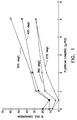
- the test gas had a composition of 10 percent steam, 10 percent oxygen, 4.5 percent CO 2 , 1000 ppm NO, 28.6 ppm heptane, 200 ppm CO, 50 ppm SO 2 , balance nitrogen. All percents are volume percent and "ppm" means parts per million by volume. Measurements were taken to determine the amount of oxidation of SO 2 to SO 3 . The results of these tests are tabulated in TABLE I below and plotted in Figure 1. Inlet Gas Temp.
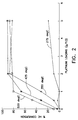
- Figure 2 shows the corresponding conversion of hydro-carbons in the test gas at the various temperature levels tested.
- the HC and CO conversion data of TABLE I, and the plot of the HC conversion data of TABLE I in Figure 2 show the expected result that as the content of platinum metal increases the degree of conversion of HC and CO likewise increases.
- catalytic treatment of diesel exhaust may not be necessary in order to attain reductions in HC and CO to meet U.S. Government standards, because the modified engines have reduced the output of HC and CO to below that of the current and impending U.S. Government standards.
- the inclusion of platinum at least at a loading of not more than about 1 g/ft 3 (35 g/m 3 ), preferably at from about 0.1 to 0.8 g/ft 3 (3.5 to 28 g/m 3 ), more preferably at about 0.5 g/ft 3 (18 g/m 3 ), is seen to have a beneficial effect on reducing the amount of oxidation of SO 2 to SO 3 .
- the addition of platinum is seen to reduce SO 2 oxidation and thereby ameliorate particulates emissions.
- the addition of platinum also provides a beneficial added effect of further reducing HC and CO emissions.
- test catalysts were prepared generally in accordance with the procedure outlined in Example 1 to provide three samples, each comprising an alumina undercoat at a loading of 1.0 g/in 3 (61 g/dm 3 ) upon which was coated a topcoat layer comprised of a ceria-alumina catalytic material containing ceria and alumina in proportions of 46.2 weight percent aluminum-stabilized ceria and 53.8 weight percent alumina, and having dispersed thereon 0.5 g/ft 3 (18 g/m 3 ) of platinum.
- the ceria-alumina topcoat layer was present in the amount of 1.95 g/in 3 (119 g/dm 3 ).
- the ceria had a surface area of about 164 m 2 /g and the alumina had a surface area of about 150 m 2 /g.
- One sample, designated S-3Ce has the platinum dispersed only on the ceria component of the catalytic material
- a second sample designated S-3 has equal amounts of the platinum dispersed on the ceria and the alumina components of the ceria-alumina catalytic material
- the third sample, designated S-3Al has the platinum disposed entirely on the alumina component of the ceria-alumina catalytic material.
- the three catalyst samples were then tested for HC, CO and SO 2 conversion at 350°C and a space velocity of 90,000. The results are shown in TABLE II below. Sample %C CO %C HC %C SO 2 S-3Ce 80.2 37.5 4.1 S-3 49.3 7.55 4.6 S-3Al 94.9 56.5 8.0
- S-3 catalyst provided significant, but lesser, conversions of CO and HC and only slightly more (4.6%) of the undesired oxidation of SO 2 than did S-3Ce, but was much better in terms of less promotion of oxidation of SO 2 than was the S-3Al sample (8.0%).
- TABLE II thus demonstrates the desirability of dispersing all or at least a part of the platinum metal component on the ceria component of the ceria-alumina catalytic material.
- a series of catalyst samples was prepared generally according to the procedures of Example 1 to provide an alumina undercoat at a loading of 1.0 g/in 3 (61 g/dm 3 ) on which a metal oxide topcoat was coated.
- the topcoat contained no ceria
- the topcoat of comparative sample Comp.2 contained no alumina
- the topcoat comprised a ceria-alumina catalytic material containing 46.2 percent ceria and 53.8 weight percent alumina.
- each of the samples contained 0.5 g/ft 3 (18 g/m 3 ) of platinum and had a topcoat loading of about 1.95 g/in 3 (119 g/dm 3 ), inclusive of the platinum.
- the ceria had a surface area of 164 m 2 /g and the alumina had a surface area of 150 m 2 /g.
- the samples were tested with the same test gas as described in Example 2 at 275°C, 350°C, 425°C and 500°C, and the conversion of HC, CO and oxidation of SO 2 to SO 3 at a space velocity of 50,000 was measured. The results of these tests are summarized in TABLE III. Inlet Gas Temp. (°C) Sample No.
- the data of TABLE III indicate the conversion of hydro-carbons (HC) was highest for sample Comp.1, containing 100 percent alumina and no ceria, and lowest for sample Comp.2, containing 100 percent ceria and no alumina.
- the catalyst in accordance with the present invention, S-3 provided intermediate levels of conversion of HC. Comparable results were obtained for conversion of CO at all temperature levels.
- the results of TABLE III concerning the conversion of SO 2 to SO 3 are shown in the perspective-view plot of Figure 3 from which it is readily seen that at each temperature level tested a lower degree of conversion of SO 2 was attained by the S-3 sample in accordance with an embodiment of the present invention, than was attained with either the 100 percent alumina (Comp.1) version or the 100 percent ceria (Comp.2) version.
- a series of catalyst compositions was prepared in order to test catalyst compositions in accordance with the present invention against comparative catalyst compositions containing various refractory metal oxides and catalytic metals. These catalysts were tested both on a laboratory diagnostic reactor and on diesel engines.
- the two test engines employed were a Cummins 6BT engine, rated at 190 horsepower and having a 5.9 liter displacement and a Caterpillar 3176 engine, rated at 325 horsepower (242 kW) and having a 10.3 liter displacement.
- the operating characteristics of these two engines are shown in TABLE IV based on the operating cycle used to test the catalyst composition samples. Temperature (°C) Caterpillar 3176 Temp. Cycle Cummins 6BT Temp.
- the Cummins engine runs with a cooler exhaust than does the Caterpillar engine and the total engine emissions are roughly comparable although the Cummins engine runs richer in the volatile organic fraction (VOF) which is the component most effectively treated by the diesel oxidation catalyst of the present invention.
- VPF volatile organic fraction
- a series of catalyst samples was prepared generally by the method disclosed in Example 1 including two catalysts, designated samples S-3 and S-3B, comprising embodiments of the present invention and made exactly in accordance with Example 1 except that for sample S-3B palladium was substituted for platinum by using palladium nitrate as the source of the catalytic metal.
- Samples S-3 and S-3B each had an alumina undercoat at a loading of 1.0 g/in 3 (61 g/dm 3 ) and a topcoat of the ceria-alumina coating at a loading of 1.95 g/in 3 (119 g/dm 3 ).
- a series of comparative catalysts designated Comp.4, Comp.4M, Comp.4B, Comp.7, Comp.2.3, Comp.6 and Comp.5 were made by procedures comparable to those used in Example 1, with the following differences.
- the comparative catalysts were made without an alumina undercoat and, of course, using different refractory metal oxides as indicated by their respective compositions.
- the niobia-silica (Comp.4, 4M, 4B and 7) the niobia was provided by dissolving niobium oxalate in the coating slurry.
- foamed a-alumina (“FAA") of Comp.2.3 and the silica of other comparative samples were not ball milled but were dry-jet milled and then incorporated into the coating step by use of a high speed intensive mixer.
- the vanadia-titania of sample Comp.6 was incorporated into a slurry containing palladium nitrate as the catalytic metal source.
- the silica employed in each case except Comp.2.3 was an extremely porous silica designated PQ-1022 by its manufacturer, PQ Corporation.
- the PQ-1022 silica has a porosity of 1.26 cc/g pore volume comprised of pores having a radius of from about 10 to 300 Angstroms (1 to 30 nm), and a surface area of 225 m 2 /g.
- the high porosity of the silica accounts for the relatively low weight loadings of the silica-containing washcoats.
- a silica sol was used for the Comp. 2.3 sample as described in footnote c of TABLE V.
- Each of these catalysts was prepared as a slurry of the refractory metal oxide or oxides indicated in TABLE V which had been impregnated with the specified loading of catalytic metal and then coated onto 400 cpsi (6200 cells/dm 2 ) cylindrical cordierite honeycomb carriers manufactured by NGK and measuring 9 inches (22.86 cm) in diameter by 6 inches (15.24 cm) in length, providing a catalyst volume of 6.25 liters.
- the S-3 and S-3B samples each contain 46.2 weight percent aluminum-stabilized ceria and 53.8 weight percent alumina.
- the percent conversion is the percentage of the emissions contained in the untreated exhaust which were converted to innocuous components by utilization of the catalyst samples.
- the abbreviation "TPM” is used for "total particulate matter”.
- Table VII shows that the best results were attained by the S-3 and S-3B catalysts for both total particulate emissions and VOF conversion. With respect to HC reduction the best performance was shown by S-3B although the S-3 catalyst proved to be the most stable, the results attained by the S-3 catalyst after 100 hours aging being actually better than those attained by the 24-hour aged S-3 sample. The S-3B catalyst exhibited improved CO conversion for the 100-hour aged catalyst as compared to the fresh (24-hour aged) catalyst. Note that the Comp.6 sample removed essentially no CO at 24 hours and became a net CO producer after being aged for 100 hours. The results of TABLE VI and VII clearly show that the catalyst compositions of the present invention, S-3 and S-3B, gave the best overall emissions control and the best durability as evidenced by 100 hours of aging.
- each catalyst comprised a cordierite 400 cpsi (6200 cells/dm 2 ) substrate containing 1.95 g/in 3 (119 g/dm 3 ) of the ceria-alumina catalytic material of the invention.
- the ceria-alumina catalytic material contained 46.2 weight percent of aluminum-stabilized ceria and 53.8 weight percent of activated alumina.
- Each catalyst had an alumina undercoat in the amount of 1.00 g/ft 3 (35 g/m 3 ) onto which the ceria-alumina catalytic material was coated.
- One sample, designated S-3.5Pt had 0.5 g/ft 3 (35 g/m 3 ) of platinum dispersed thereon
- another sample, designated S-3.20Pt had 2.0 g/ft 3 (71 g/m 3 ) of platinum dispersed thereon
- a third sample, designated S-3Pd had 50 g/ft 3 (1766 g/m 3 ) of palladium dispersed thereon.
- the resultant series of powders were each mixed with 10 weight percent of a diesel engine lubricating oil, Cummins SAE-15W Premium Blue Diesel Engine Lube Oil, and the sample of the mixture was evaluated by simultaneous thermogravimetric analysis and differential thermal analysis (TGA/DTA) for combustion of the lubricating oil.
- unburned diesel engine lubricating oil constitutes a significant portion of the volatile organic fraction (VOF) of diesel exhaust particulate emissions and the efficacy of the ceria-alumina catalytic material in catalyzing combustion of the lubricating oil is a good indication of the effectiveness of the ceria-alumina catalytic material in catalyzing oxidation of VOF and, thereby, reduction of particulate emissions.
- Thermogravimetric analysis measures the weight gain or loss of a sample (indicating a chemical reaction undergone by the sample) as a function of the temperature to which the sample is heated.
- Differential thermal analysis measures the amount of energy (heat) absorbed by the sample (indicating that the sample has undergone an endothermic reaction) or liberated by the sample (indicating that the sample has undergone an exothermic reaction) as a function of the temperature to which the sample is heated.
- Figure 4 is a plot of the results obtained by heating the mixture of catalytic material powder and lubricating oil in a temperature regime ranging from ambient temperature to 600°C and recording the TGA/DTA data.
- the DTA peak area was corrected for the weight change determined by the TGA so that the results attained are proportional to the amount of lubricating oil combusted, i.e., to the effectiveness of the tested ceria-alumina catalytic materials, which are identical except for the varying platinum metal loadings.
- the results attained are plotted in Figure 4 wherein, despite some experimental scatter in the data points, the trend line indicates substantially no effect of the platinum content of the catalytic material insofar as lubricating oil combustion is concerned.
- Comp.11 is a commercially available diesel exhaust catalyst, and each containing high platinum group metal loadings
- Comp.1 is a commercially available diesel exhaust catalyst, and each containing high platinum group metal loadings
- Three samples, Comp.1, Comp.2 and S-3 were prepared generally in accordance with the procedure of Example 1 to coat cylindrical carriers comprising 400 cpsi (6200 cells/dm 2 ) cordierite cores measuring 1.5 inches (3.81 cm) in diameter by 3 inches (7.62 cm) in length.
- the samples were aged for 10 hours at 500°C by having a mixture of 10 percent steam in air flowed through each sample.
- Comparative sample Comp.1 comprised 50 g/ft 3 (1766 g/m 3 ) of platinum disposed on an activated alumina carrier and comparative sample Comp.2 had a 50 g/ft 3 (1766 g/m 3 ) platinum group metal loading, the platinum group metal comprising platinum and rhodium in a 5:1 weight ratio disposed on a ceria-alumina catalytic material comprising 53.8 percent by weight alumina and 46.2 percent by weight aluminum-stabilized ceria.
- the S-3 sample comprised, in accordance with one embodiment of the present invention, 0.5 g/ft 3 (18 g/m 3 ) of platinum dispersed on a ceria-alumina catalytic material comprising 46.2 percent by weight aluminum-stabilized ceria and 53.8 percent by weight alumina with one-half the platinum metal dispersed on the aluminum-stabilized ceria and one-half the platinum metal dispersed on the alumina.
- the commercially available catalyst for diesel exhaust applications was analyzed and found to comprise a catalytic material dispersed on a honeycomb-type carrier having 400 cells per square inch (6200 cells per dm 2 ).
- the commercial catalyst contained about 50 g/ft 3 (1766 g/m 3 ) of platinum dispersed on a support comprised primarily of titania, vanadia and alumina.
- a core 2.5 inches (6.32 cm) long and 1.5 inches (3.81 cm) in diameter was cut from the commercial catalyst and this comparative catalyst core was designated as Comp.11.
- the four catalyst samples were tested at space velocities of 50,000 and 90,000 at temperatures of 275°C, 350°C, 425°C and 500°C. (In this Example 10 and in Example 11 below, the flow rate of the reaction gas was adjusted as necessary to compensate for the slight difference in catalyst volume so that each tested sample was evaluated at the same space velocity.) Each sample was held at the indicated temperature for 10 minutes during the evaluation.
- test gas used in the laboratory diagnostic unit comprised 10 percent steam, 10 percent oxygen, 4.5 percent CO 2 , 1000 ppm NO, 28.57 ppm heptane (equivalent to 200 ppm C 1 hydrocarbons), 28.6 ppm CO, 50 ppm SO 2 , balance nitrogen. (The percents are volume percents and "ppm" means parts per million by volume.) The results of these evaluations are given in TABLE X. Catalyst Sample/Inlet Temp. Percent Conversion at Indicated Space Velocity 50,000 SV 90,000 SV CO HC SO 2 CO HC SO 2 Comp.
- the comparative catalyst sample Comp.11 is seen to suppress SO 2 oxidation in a manner comparable to that of sample S-3, but only up to a temperature between 350° and 425°C. At 425°C and higher temperatures the Comp.11 sample exhibits greatly increased SO 2 oxidation as compared to the S-3 catalyst sample. Accordingly, the catalyst sample of the present invention, even with a 0.5 g/ft 3 (18 g/m 3 ) platinum loading, appears to be significantly better with respect to SO 2 oxidation in higher temperature regimes than the commercial catalyst of Comp.11.
- the comparative samples Comp.1, Comp.2 and Comp.11 all contain high platinum loadings and consequently show higher HC and CO conversion than does the 0.5 g/ft 3 (18 g/m 3 ) platinum S-3 catalyst sample.
- HC and CO emissions generally satisfactorily controlled by engine design and the problem which the art is seeking to overcome is to control the total particulates emissions which, as noted above, is in part a function of sulfate make.
- the catalysts of the present invention with no or a very low loading of platinum, show excellent activity for reducing total particulate emissions because of their unexpected good activity for oxidizing VOF and their low sulfate make. Further, it is obviously economically advantageous to eliminate or drastically reduce the platinum metal loading in accordance with the teachings of the present invention.
- a catalyst sample in accordance with an embodiment of the present invention was prepared and designated sample S-3P.
- Catalyst sample S-3P is identical to catalyst sample S-3 of Example 10 except that it contains a platinum loading of 2.0 g/ft 3 (71 g/m 3 ).
- the S-3P) catalyst sample was 3.0 inches (7.62 cm) long by 1.5 inches (3.81 cm) in diameter.
- Catalyst S-3P was tested by passing therethrough a test gas in the same manner as described in Example 10 at space velocities of 50,000 and 90,000 at temperatures of 275°C, 350°C, 425°C and 500°C. The results of this test are shown in TABLE XI. Catalyst Sample/Inlet Temp.
- the S-3P catalyst exhibits higher SO 2 oxidation at all temperature levels and space velocities as compared to the S-3 catalyst of Example 10 which contains 0.5 g/ft 3 (18 g/m 3 ) of platinum, one-fourth of the amount of platinum (2.0 g/ft 3 (71 g/m 3 )) which S-3P contains.
- the S-3P sample also exhibited higher HC and CO conversions, which shows that a modest increase in platinum loading, still keeping the total platinum loading to very low levels as compared to prior art catalysts, can accommodate a higher HC and CO conversion but at the potential cost of somewhat increased particulate emissions because of additional sulfate make.
- a comparative sample, Comp.1 of Example 4 was prepared generally in accordance with the procedure of Example 1 but omitting the ceria component of the catalytic material.
- the resulting catalyst comprised an activated alumina washcoat having 0.5 g/ft 3 (18 g/m 3 ) of platinum disposed thereon.
- This sample designated Comp.3C was subjected to the same test as in Examples 10 and 11 and the results thereof are summarized in TABLE XII and show that the SO 2 conversion over this catalyst is significantly greater than for the S-3 catalyst, especially at low temperatures. Higher conversions of HC and CO were also attained.
- a catalyst was prepared in accordance with the present invention generally following the teachings of Example 1, except that no alumina undercoat was utilized.
- this sample comprised 1.95 g/in 3 (119 g/dm 3 ) of a ceria-alumina catalytic material containing 46.2 weight percent aluminum-stabilized ceria (164 m 2 /g BET surface area) and 53.8 weight percent alumina (150 m 2 /g BET surface area) disposed directly upon the carrier without an alumina undercoat, and having 0.5 g/ft 3 (18 g/m 3 ) of platinum dispersed thereon.
- This catalyst, designated S-3SC was aged and tested in the same manner as in Example 10 and the results thereof are shown in TABLE XIII.
- Catalysts were prepared generally in accordance with the procedures of Example 1 to provide a series of three otherwise identical compositions containing a ceria-alumina catalytic material in accordance with the teachings of the present invention having platinum dispersed thereon, including 0.0, 0.5 and 2.0 g/ft 3 (0,18 and 71 g/m 3 ) platinum.
- Each catalyst comprised a ⁇ -alumina undercoat at a loading of 1.0 g/in 3 (61 g/dm 3 ) upon which was coated a top layer comprised of 1.05 g/in 3 (64 g/dm 3 ) ⁇ -alumina plus 0.90 g/in 3 (55 g/dm 3 ) alumina-stabilized ceria (2.5 weight percent Al 2 O 3 based on the combined weight of bulk ceria and alumina dispersed therein).
- the catalysts were coated onto a 9 inch (22.86 cm) diameter by 6 inch (15.24 cm) long, 400 cpsi (6200 cells/dm 2 ) cordierite substrate.
- the resulting catalyst samples were designated as S-4 (0.0 g/ft 3 platinum, aged 24 hours), S-5 (0.5 g/ft 3 (18 g/m 3 ) platinum, aged 25 hours) and S-6 (2.0 g/ft 3 (71 g/m 3 ) platinum, aged 24 hours).
- the SOF removal performance is also reflected in the total particulate (TPM) removal levels of the three catalysts which are compared in Figure 6.
- the platinum-free catalyst sample is comparable to, or better than, the platinum-containing catalyst samples S-5 and S-6 at all temperatures. Note also, all three catalyst samples make particulates at the highest temperatures of the test. This is due to sulfate-make from the oxidation of gas phase SO 2 to SO 3 . Thus, even the platinum-free sample makes sulfate at extremely high temperatures, but apparently to a slightly lesser extent than the platinum-containing samples, reflecting the lower gas phase activity of the platinum-free sample.
- the gas phase activity of the three catalyst samples are compared in Figures 7 and 8 for, respectively, hydrocarbon (“HC”) and carbon monoxide (“CO”) gas phase conversions.
- HC hydrocarbon
- CO carbon monoxide
- the platinum-free sample S-4 exhibits some gas phase activity for HC and CO conversion, it is clear from these results that the platinum-containing samples S-5 and S-6 have substantially higher gas phase activity. This is especially clear in the case of CO conversion.
- the platinum-free sample S-4 has some gas phase activity because the ceria component has activity as an oxidation catalyst.
Landscapes
- Chemical & Material Sciences (AREA)
- Engineering & Computer Science (AREA)
- Chemical Kinetics & Catalysis (AREA)
- Environmental & Geological Engineering (AREA)
- Materials Engineering (AREA)
- Organic Chemistry (AREA)
- Health & Medical Sciences (AREA)
- Analytical Chemistry (AREA)
- General Chemical & Material Sciences (AREA)
- Oil, Petroleum & Natural Gas (AREA)
- Biomedical Technology (AREA)
- Combustion & Propulsion (AREA)
- Catalysts (AREA)
- Exhaust Gas Treatment By Means Of Catalyst (AREA)
- Low-Molecular Organic Synthesis Reactions Using Catalysts (AREA)
- Compounds Of Alkaline-Earth Elements, Aluminum Or Rare-Earth Metals (AREA)
Claims (41)
- Eine Oxidationskatalysator-Zusammensetzung, umfassend einen hitzebeständigen Träger, auf dem eine Beschichtung aus einem katalytischen Ceroxid-Aluminiumoxid-Material aufgebraucht ist, das im wesentlichen aus einer Kombination von Bulk-Ceroxid mit einer BET-Oberfläche von mindestens 10 m2/g und Bulk-Aluminiumoxid mit einer BET-Oberfläche von mindestens 10 m2/g besteht.
- Die Katalysatorzusammensetzung nach Anspruch 1, worin das Ceroxid und Aluminiumoxid jeweils 5 bis 95 Gew.-% der Kombination umfassen.
- Die Katalysatorzusammensetzung nach Anspruch 1, worin das Ceroxid und Aluminiumoxid jeweils 10 bis 90 Gew.-% der Kombination umfassen.
- Die Katalysatorzusammensetzung nach Anspruch 1, worin das Ceroxid und Aluminiumoxid jeweils 40 bis 60 Gew.-% der Kombination umfassen.
- Die Katalysatorzusammensetzung nach einem der Ansprüche 1 bis 4, worin das Ceroxid und das Aluminiumoxid jeweils in getrennten Schichten, eine über der anderen, angeordnet sind.
- Die Katalysatorzusammensetzung nach einem der Ansprüche 1 bis 5, worin das Ceroxid ein Aluminium-stabilisiertes Ceroxid umfaßt.
- Die Katalysatorzusammensetzung nach einem der Ansprüche 1 bis 6, worin das Ceroxid und das Aluminiumoxid jeweils eine BET-Oberfläche von 25 m2/g bis 200 m2/g haben.
- Die Katalysatorzusammensetzung nach einem der Ansprüche 1 bis 7, die weiterhin katalytisch aktives Platin oder Palladium, dispergiert auf dem katalytischen Material, enthält, wobei das Platin oder Palladium in einer mäßigen Menge vorhanden ist, um die Oxidation von SO2 zu SO3 zu beschränken oder zu verringern.
- Die Katalysatorzusammensetzung nach Anspruch 8, worin das katalytische Material darauf dispergiert eine katalytisch wirksame Menge von Platin hat, die 25 g/ft3 (883 g/m3) der Katalysatorzusammensetzung nicht übersteigt.
- Die Katalysatorzusammensetzung nach Anspruch 8, worin das katalytische Material darauf dispergiert eine katalytisch wirksame Menge von Platin hat, die 15 g/ft3 (530 g/m3) der Katalysatorzusammensetzung nicht übersteigt.
- Die Katalysatorzusammensetzung nach Anspruch 8, die weiterhin auf dem katalytischen Material dispergiertes Platin enthält, wobei das Platin in einer Menge von 0,1 bis 15 g/ft3 (3,5 bis 530 g/m3) der Zusammensetzung vorhanden ist.
- Die Katalysatorzusammensetzung nach Anspruch 11, worin das Platin in einer Menge von 0,1 bis 5 g/ft3 (3,5 bis 177 g/m3) der Zusammensetzung vorhanden ist.
- Die Katalysatorzusammensetzung nach Anspruch 12, worin 0,1 bis 1,0 g/ft3 (3,5 bis 35 g/m3) Platin vorhanden ist.
- Die Katalysatorzusammensetzung nach Anspruch 8, die weiterhin bis zu 0,5 g/ft3 (18 g/m3) Platin, dispergiert auf dem katalytischen Material, enthält.
- Die Katalysatorzusammensetzung nach Anspruch 10 oder 14, worin 0,1 bis 0,5 g/ft3 (3,5 bis 18 g/m3) Platin vorhanden ist.
- Die Katalysatorzusammensetzung nach einem der Ansprüche 8 bis 15, worin mindestens eine katalytisch wirksame Menge des Platins auf dem Ceroxid dispergiert ist.
- Die Katalysatorzusammensetzung nach Anspruch 16, worin mindestens eine katalytisch wirksame Menge des Platins auf dem Aluminiumoxid dispergiert ist.
- Die Katalysatorzusammensetzung nach Anspruch 8, enthaltend Palladium, dispergiert auf dem katalytischen Material, wobei das Palladium in einer Menge von 0,1 bis 200 g/ft3 (3,5 bis 7063 g/m3) der Zusammensetzung vorhanden ist.
- Die Katalysatorzusammensetzung nach Anspruch 18, worin das Palladium in einer Menge von 20 bis 120 g/ft3 (706 bis 4238 g/m3) der Zusammensetzung vorhanden ist.
- Die Katalysatorzusammensetzung nach einem der Ansprüche 1 bis 19 zur Verwendung bei der Reinigung eines gashaltigen Stroms, z.B. eines Dieselmotorenabgases, und zur Oxidation flüchtiger, organischer Komponenten in dem Strom.
- Ein Verfahren zum Oxidieren oxidierbarer Komponenten eines gashaltigen Stroms, umfassend den Kontakt des Stromes mit einer Katalysatorzusammensetzung bei einer Temperatur, die hoch genug ist, um die Oxidation von mindestens einem Teil der oxidierbaren Komponenten zu katalysieren, wobei die Katalysatorzusammensetzung ein katalytisches Material umfaßt, das im wesentlichen aus einer Kombination von Bulk-Ceroxid mit einer BET-Oberfläche von mindestens 10 m2/g und Bulk-Aluminiumoxid mit einer BET-Oberfläche von mindestens 10 m2/g besteht.
- Ein Verfahren gemäß Anspruch 21, worin der gashaltige Strom einen Dieselmotoren-Abgasstrom umfaßt, der eine flüchtige, organische Fraktion enthält, und worin der Strom mit der Katalysatorzusammensetzung bei einer Temperatur in Kontakt gebracht wird, die hoch genug ist, um die Oxidation mindestens eines Teils der flüchtigen, organischen Fraktion zu katalysieren.
- Das Verfahren nach Anspruch 21 oder 22, worin das Ceroxid und Aluminiumoxid jeweils 5 bis 95 Gew.-% der Kombination umfassen.
- Verfahren nach Anspruch 21 oder 22, worin das Ceroxid und Aluminiumoxid jeweils 10 bis 90 Gew.-% der Kombination umfassen.
- Das Verfahren nach Anspruch 21 oder 22, worin das Ceroxid und Aluminiumoxid jeweils 40 bis 60 Gew.-% der Kombination umfassen.
- Das Verfahren nach einem der Ansprüche 1 bis 25, worin die Temperatur des am Anfang mit der Katalysatorzusammensetzung in Kontakt gebrachten Abgases 100 bis 800 °C beträgt.
- Verfahren nach einem der Ansprüche 21 bis 26, worin das Ceroxid und das Aluminiumoxid jeweils eine BET-Oberfläche von 25 m2/g bis 200 m2/g haben.
- Das Verfahren nach einem der Ansprüche 21 bis 27, worin das Ceroxid Aluminiumstabilisiertes Ceroxid umfaßt.
- Das Verfahren nach einem der Ansprüche 21 bis 28, worin das Ceroxid und das Aluminiumoxid jeweils in getrennten Schichten, eine über der anderen, angeordnet sind.
- Verfahren nach einem der Ansprüche 21 bis 29, worin die Katalysatorzusammensetzung weiterhin katalytisch aktives Platin oder Palladium, dispergiert auf dem katalytischen Material, umfaßt, wobei das Platin oder Palladium in einer mäßigen Menge vorhanden ist, um die Oxidation von SO2 zu SO3 zu beschränken oder zu verringern.
- Das Verfahren nach Anspruch 30, worin das katalytische Material eine darauf dispergierte, katalytisch wirksame Menge von Platin enthält, die 25 g/ft3 (883 g/m3) der Katalysatorzusammensetzung nicht übersteigt.
- Das Verfahren nach Anspruch 30, weiter enthaltend Platin, dispergiert auf dem katalytischen Material, wobei das Platin in einer Menge von 0,1 bis 15 g/ft3 (3,5 bis 530 g/m3) der Zusammensetzung vorhanden ist.
- Das Verfahren nach Anspruch 32, worin das Platin in einer Menge von 0,1 bis 5 g/ft3 (3,5 bis 177 g/m3) der Zusammensetzung vorhanden ist.
- Das Verfahren nach Anspruch 33, worin 0,1 bis 1,0 g/ft3 (3,5 bis 35 g/m3) Platin vorhanden ist.
- Das Verfahren nach Anspruch 30, worin das katalytische Material, darauf dispergiert, bis zu 0,5 g/ft3 (18 g/m3) Platin hat.
- Das Verfahren nach Anspruch 35, worin das Platin in einer Menge von 0,1 bis 0,5 g/ft3 (3,5 bis 18 g/m3) der Zusammensetzung vorhanden ist.
- Das Verfahren nach Anspruch 30, enthaltend Palladium, dispergiert auf dem katalytischen Material, wobei das Palladium in einer Menge von 0,1 bis 200 g/ft3 (3,5 bis 7063 g/m3) der Zusammensetzung vorhanden ist.
- Das Verfahren nach Anspruch 37, worin das Palladium in einer Menge von 20 bis 120 g/ft3 (706 bis 4238 g/m3) der Zusammensetzung vorhanden ist.
- Die Verwendung in einem Verfahren zur katalytischen Oxidation mindestens eines Teils der flüchtigen, organischen Komponente eines Dieselmotoren-Abgasstroms, eines Katalysators zum Bewirken einer solchen Oxidation, wobei die Oxidation von SO2 zu SO3 moderat erfolgt, wobei der Katalysator einen hitzebeständigen Träger umfaßt, auf dem eine Beschichtung eines katalytischen Ceroxid-Aluminiumoxid-Materials angeordnet ist, das im wesentlichen aus einer Kombination von Bulk-Ceroxid mit einer BET-Oberfläche von mindestens 10 m2/g und Bulk-Aluminiumoxid mit einer BET-Oberfläche von mindestens 10 m2/g besteht, und der Katalysator weiterhin auf dem katalytischen Material dispergiertes Platin enthält, wobei das Platin in einer Menge von 0,1 bis 5 g/ft3 (3,5 bis 177 g/m3) der Zusammensetzung vorhanden ist.
- Die Katalysatorzusammensetzung nach einem der Ansprüche 1 bis 8, umfassend den hitzebeständigen Träger, das Ceroxid und das Aluminiumoxid, in Abwesenheit eines Metalls der Platingruppe.
- Die Katalysatorzusammensetzung nach einem der Ansprüche 1 bis 8, umfassend das hitzebeständige Material und das katalytische Material, bestehend im wesentlichen aus einer Kombination von Ceroxid und Aluminiumoxid, wobei der Katalysator weiterhin bis zu 0,1 g/ft3 (bis zu 3,5 g/m3) Platin, dispergiert auf dem katalytischen Material, umfaßt.
Applications Claiming Priority (5)
| Application Number | Priority Date | Filing Date | Title |
|---|---|---|---|
| US79843791A | 1991-11-26 | 1991-11-26 | |
| US798437 | 1991-11-26 | ||
| US97346192A | 1992-11-19 | 1992-11-19 | |
| US973461 | 1992-11-19 | ||
| PCT/US1992/010060 WO1993010886A1 (en) | 1991-11-26 | 1992-11-20 | Ceria-alumina oxidation catalyst and method of use |
Publications (2)
| Publication Number | Publication Date |
|---|---|
| EP0614399A1 EP0614399A1 (de) | 1994-09-14 |
| EP0614399B1 true EP0614399B1 (de) | 2000-03-08 |
Family
ID=27121989
Family Applications (1)
| Application Number | Title | Priority Date | Filing Date |
|---|---|---|---|
| EP93900592A Expired - Lifetime EP0614399B1 (de) | 1991-11-26 | 1992-11-20 | Ceroxid-aluminiumoxid enthaltender oxidationskatalysator und verfahren zur anwendung. |
Country Status (9)
| Country | Link |
|---|---|
| US (2) | US5462907A (de) |
| EP (1) | EP0614399B1 (de) |
| JP (1) | JP3574655B2 (de) |
| KR (2) | KR100361419B1 (de) |
| AT (1) | ATE190241T1 (de) |
| CA (1) | CA2124441A1 (de) |
| DE (1) | DE69230759T2 (de) |
| MX (1) | MX9206829A (de) |
| WO (1) | WO1993010886A1 (de) |
Cited By (2)
| Publication number | Priority date | Publication date | Assignee | Title |
|---|---|---|---|---|
| DE10248508A1 (de) * | 2002-07-15 | 2004-01-29 | Volkswagen Ag | Verbrennungsmotoranlage mit direkteinspritzendem Ottomotor und einem Katalysatorsystem |
| DE102007057305A1 (de) | 2007-11-28 | 2009-06-04 | Süd-Chemie AG | Beschichtungszusammensetzung für Dieseloxidationskatalysatoren |
Families Citing this family (98)
| Publication number | Priority date | Publication date | Assignee | Title |
|---|---|---|---|---|
| US5580535A (en) * | 1994-07-07 | 1996-12-03 | Engelhard Corporation | System and method for abatement of food cooking fumes |
| US6129834A (en) * | 1995-05-05 | 2000-10-10 | W. R. Grace & Co. -Conn. | NOx reduction compositions for use in FCC processes |
| US6165933A (en) * | 1995-05-05 | 2000-12-26 | W. R. Grace & Co.-Conn. | Reduced NOx combustion promoter for use in FCC processes |
| US5789339A (en) * | 1995-06-07 | 1998-08-04 | W. R. Grace & Co.-Conn. | Catalyst for oxidizing oxygen-containing organic compounds in waste gas |
| US5849255A (en) * | 1995-06-07 | 1998-12-15 | Asec Manufacturing | Treatment of diesel exhaust gas using zeolite catalyst |
| US5987882A (en) * | 1996-04-19 | 1999-11-23 | Engelhard Corporation | System for reduction of harmful exhaust emissions from diesel engines |
| US6422008B2 (en) | 1996-04-19 | 2002-07-23 | Engelhard Corporation | System for reduction of harmful exhaust emissions from diesel engines |
| US5849256A (en) * | 1996-04-26 | 1998-12-15 | Engelhard Corporation | Method for oxidizing carbon monoxide in a gas stream containing oxidizable sulphur compounds |
| GB9615123D0 (en) * | 1996-07-18 | 1996-09-04 | Johnson Matthey Plc | Three-way conversion catalysts and methods for the preparation therof |
| JP4164884B2 (ja) * | 1997-08-08 | 2008-10-15 | マツダ株式会社 | 排気ガス浄化用触媒 |
| KR100611263B1 (ko) * | 1997-12-02 | 2006-08-10 | 엥겔하드 코포레이션 | 기체상의 할로겐화 및 비-할로겐화 유기 화합물의 산화를위한 방법 및 촉매 |
| US5895636A (en) | 1997-12-02 | 1999-04-20 | Engelhard Corporation | Catalytic compositions and methods for suppression of halogenation of organic compounds with oxidation products of halogenated organic compounds in gaseous emission streams |
| US6022825A (en) * | 1998-01-08 | 2000-02-08 | Johnson Matthey Public Limited Company | Thermally durable low H2 S three-way catalysts |
| US6156283A (en) | 1998-03-23 | 2000-12-05 | Engelhard Corporation | Hydrophobic catalytic materials and method of forming the same |
| ATE306608T1 (de) * | 1998-11-13 | 2005-10-15 | Engelhard Corp | Katalysator und verfahren zur reduzierung der abgasemissionen |
| US6226955B1 (en) * | 1998-12-28 | 2001-05-08 | Jerry L. Lorrigan | Method and apparatus for handling building materials and implements |
| US6497848B1 (en) | 1999-04-02 | 2002-12-24 | Engelhard Corporation | Catalytic trap with potassium component and method of using the same |
| EP1196234B1 (de) | 1999-07-02 | 2007-04-18 | Engelhard Corporation | Katalysatorsystem zum behandeln von abgasen aus dieselmotoren und verfahren |
| JP4443685B2 (ja) * | 1999-09-10 | 2010-03-31 | 三井金属鉱業株式会社 | 排気ガス浄化用助触媒の製造方法 |
| US6458741B1 (en) | 1999-12-20 | 2002-10-01 | Eltron Research, Inc. | Catalysts for low-temperature destruction of volatile organic compounds in air |
| US7329359B2 (en) * | 1999-12-20 | 2008-02-12 | Eltron Research, Inc. | Application of catalysts for destruction of organic compounds in liquid media |
| US6606856B1 (en) * | 2000-03-03 | 2003-08-19 | The Lubrizol Corporation | Process for reducing pollutants from the exhaust of a diesel engine |
| US20030084658A1 (en) | 2000-06-20 | 2003-05-08 | Brown Kevin F | Process for reducing pollutants from the exhaust of a diesel engine using a water diesel fuel in combination with exhaust after-treatments |
| JP2002054422A (ja) * | 2000-08-08 | 2002-02-20 | Ngk Insulators Ltd | セラミック製フィルター及びその製造方法 |
| US6830622B2 (en) * | 2001-03-30 | 2004-12-14 | Lam Research Corporation | Cerium oxide containing ceramic components and coatings in semiconductor processing equipment and methods of manufacture thereof |
| US6655369B2 (en) | 2001-08-01 | 2003-12-02 | Diesel Engine Transformations Llc | Catalytic combustion surfaces and method for creating catalytic combustion surfaces |
| US7276212B2 (en) | 2001-10-01 | 2007-10-02 | Engelhard Corporation | Exhaust articles for internal combustion engines |
| US6912847B2 (en) | 2001-12-21 | 2005-07-05 | Engelhard Corporation | Diesel engine system comprising a soot filter and low temperature NOx trap |
| US6680279B2 (en) * | 2002-01-24 | 2004-01-20 | General Motors Corporation | Nanostructured catalyst particle/catalyst carrier particle system |
| US20050160724A1 (en) * | 2002-02-04 | 2005-07-28 | Valentine James M. | Reduced-emissions combustion utilizing multiple-component metallic combustion catalyst and lightly catalyzed diesel oxidation catalyst |
| US20050205465A1 (en) * | 2002-02-22 | 2005-09-22 | Peters Alan W | NOx reduction compositions for use in FCC processes |
| JP4019357B2 (ja) * | 2002-05-02 | 2007-12-12 | 日産自動車株式会社 | 排気ガス浄化用触媒粉末の製造方法及び排気ガス浄化触媒の製造方法 |
| US7504355B2 (en) * | 2002-06-20 | 2009-03-17 | Princeton University | Supported metal catalyst with improved thermal stability |
| JP2004041868A (ja) * | 2002-07-09 | 2004-02-12 | Daihatsu Motor Co Ltd | 排ガス浄化用触媒 |
| JP2004041867A (ja) * | 2002-07-09 | 2004-02-12 | Daihatsu Motor Co Ltd | 排ガス浄化用触媒 |
| AU2003281203A1 (en) * | 2002-07-09 | 2004-01-23 | Cataler Corporation | Catalyst for clarifying exhaust gas |
| JP4311918B2 (ja) * | 2002-07-09 | 2009-08-12 | ダイハツ工業株式会社 | ペロブスカイト型複合酸化物の製造方法 |
| FI118418B (fi) | 2003-04-17 | 2007-11-15 | Ecocat Oy | Alumiinioksidipohjainen katalyytti poistekaasujen puhdistukseen |
| US7229597B2 (en) | 2003-08-05 | 2007-06-12 | Basfd Catalysts Llc | Catalyzed SCR filter and emission treatment system |
| JP4437785B2 (ja) * | 2003-08-12 | 2010-03-24 | 日本碍子株式会社 | 炭化珪素質触媒体の製造方法 |
| US20050056006A1 (en) * | 2003-08-15 | 2005-03-17 | Yinyan Huang | Process for reducing diesel enigne emissions |
| US7413583B2 (en) * | 2003-08-22 | 2008-08-19 | The Lubrizol Corporation | Emulsified fuels and engine oil synergy |
| US20050054526A1 (en) * | 2003-09-08 | 2005-03-10 | Engelhard Corporation | Coated substrate and process of preparation thereof |
| US20050113249A1 (en) * | 2003-11-24 | 2005-05-26 | Robin Ziebarth | Catalyst for a diesel particulate filter |
| JP4429756B2 (ja) * | 2004-02-10 | 2010-03-10 | 株式会社キャタラー | フィルタ触媒 |
| US7374729B2 (en) * | 2004-03-30 | 2008-05-20 | Basf Catalysts Llc | Exhaust gas treatment catalyst |
| US7235507B2 (en) * | 2004-08-14 | 2007-06-26 | Sud-Chemie Inc. | Catalyst for purifying diesel engine exhaust emissions |
| KR100640583B1 (ko) * | 2004-08-16 | 2006-10-31 | 삼성전자주식회사 | 산화세륨 연마 입자 및 그 제조 방법과 cmp용 슬러리조성물 및 그 제조 방법과 이들을 이용한 기판 연마 방법 |
| US7481983B2 (en) | 2004-08-23 | 2009-01-27 | Basf Catalysts Llc | Zone coated catalyst to simultaneously reduce NOx and unreacted ammonia |
| EP1919613B1 (de) * | 2005-08-05 | 2009-10-07 | Basf Catalysts Llc | Dieselabgasartikel und katalysatorzusammensetzungen dafür |
| KR100713298B1 (ko) * | 2005-09-08 | 2007-05-04 | 한화석유화학 주식회사 | 내열성이 우수한 금속산화물 및 이의 제조방법 |
| JP4839773B2 (ja) * | 2005-10-21 | 2011-12-21 | トヨタ自動車株式会社 | Pm浄化装置の製造方法 |
| US8119075B2 (en) * | 2005-11-10 | 2012-02-21 | Basf Corporation | Diesel particulate filters having ultra-thin catalyzed oxidation coatings |
| US7506504B2 (en) * | 2005-12-21 | 2009-03-24 | Basf Catalysts Llc | DOC and particulate control system for diesel engines |
| US7576031B2 (en) * | 2006-06-09 | 2009-08-18 | Basf Catalysts Llc | Pt-Pd diesel oxidation catalyst with CO/HC light-off and HC storage function |
| US8800268B2 (en) * | 2006-12-01 | 2014-08-12 | Basf Corporation | Zone coated filter, emission treatment systems and methods |
| US20080127638A1 (en) * | 2006-12-01 | 2008-06-05 | Marius Vaarkamp | Emission Treatment Systems and Methods |
| JP4849034B2 (ja) * | 2007-08-08 | 2011-12-28 | マツダ株式会社 | 触媒付パティキュレートフィルタ |
| DE502007002874D1 (de) * | 2007-09-28 | 2010-04-01 | Umicore Ag & Co Kg | Entfernung von Partikeln aus dem Abgas von mit überwiegend stöchiometrischem Luft/Kraftstoff-Gemisch betriebenen Verbrennungsmotoren |
| US9863297B2 (en) * | 2007-12-12 | 2018-01-09 | Basf Corporation | Emission treatment system |
| US9993771B2 (en) | 2007-12-12 | 2018-06-12 | Basf Corporation | Emission treatment catalysts, systems and methods |
| US8038954B2 (en) * | 2008-02-14 | 2011-10-18 | Basf Corporation | CSF with low platinum/palladium ratios |
| US9403151B2 (en) | 2009-01-30 | 2016-08-02 | Umicore Ag & Co. Kg | Basic exchange for enhanced redox OS materials for emission control applications |
| CN102015536A (zh) | 2008-03-27 | 2011-04-13 | 尤米科尔股份公司及两合公司 | 贱金属和贱金属改性的柴油氧化催化剂 |
| US8778831B2 (en) * | 2008-03-27 | 2014-07-15 | Umicore Ag & Co. Kg | Base metal and base metal modified diesel oxidation catalysts |
| EP2112339A1 (de) * | 2008-04-24 | 2009-10-28 | Umicore AG & Co. KG | Verfahren und Vorrichtung zur Reinigung von Abgasen eines Verbrennungsmotors |
| US20100077727A1 (en) * | 2008-09-29 | 2010-04-01 | Southward Barry W L | Continuous diesel soot control with minimal back pressure penatly using conventional flow substrates and active direct soot oxidation catalyst disposed thereon |
| US8544260B2 (en) | 2008-12-24 | 2013-10-01 | Basf Corporation | Emissions treatment systems and methods with catalyzed SCR filter and downstream SCR catalyst |
| PL2382031T5 (pl) | 2008-12-24 | 2023-04-11 | Basf Corporation | Układy i sposoby obróbki spalin z katalizowanym SCR filtrem i katalizatorem SCR za nim |
| US8211392B2 (en) * | 2009-01-16 | 2012-07-03 | Basf Corporation | Diesel oxidation catalyst composite with layer structure for carbon monoxide and hydrocarbon conversion |
| US9440192B2 (en) | 2009-01-16 | 2016-09-13 | Basf Corporation | Diesel oxidation catalyst and use thereof in diesel and advanced combustion diesel engine systems |
| US8329607B2 (en) * | 2009-01-16 | 2012-12-11 | Basf Corporation | Layered diesel oxidation catalyst composites |
| US8252258B2 (en) * | 2009-01-16 | 2012-08-28 | Basf Corporation | Diesel oxidation catalyst with layer structure for improved hydrocarbon conversion |
| US20100251700A1 (en) * | 2009-04-02 | 2010-10-07 | Basf Catalysts Llc | HC-SCR System for Lean Burn Engines |
| NL2002711C2 (nl) * | 2009-04-03 | 2010-10-05 | Theodoor Petrus Knook | Werkwijze voor het zuiveren van rookgassen van een gasmotor. |
| US9475002B2 (en) * | 2009-04-22 | 2016-10-25 | Basf Corporation | Partial filter substrates containing SCR catalysts and methods and emissions treatment systems |
| US8246923B2 (en) | 2009-05-18 | 2012-08-21 | Umicore Ag & Co. Kg | High Pd content diesel oxidation catalysts with improved hydrothermal durability |
| US8246922B2 (en) | 2009-10-02 | 2012-08-21 | Basf Corporation | Four-way diesel catalysts and methods of use |
| US8557203B2 (en) * | 2009-11-03 | 2013-10-15 | Umicore Ag & Co. Kg | Architectural diesel oxidation catalyst for enhanced NO2 generator |
| US9657625B2 (en) | 2009-11-13 | 2017-05-23 | Basf Corporation | Wall flow filter loaded with SCR catalyst, systems and methods of exhaust gas treatment |
| CN102892506A (zh) | 2009-12-17 | 2013-01-23 | 巴斯夫欧洲公司 | 含有纳米级铁-铂族金属颗粒的金属氧化物载体材料 |
| US8263033B2 (en) | 2010-02-23 | 2012-09-11 | Ford Global Technologies, Llc | Palladium-contaning oxidation catalyst |
| GB201021887D0 (en) | 2010-12-21 | 2011-02-02 | Johnson Matthey Plc | Oxidation catalyst for a lean burn internal combustion engine |
| JP5789126B2 (ja) | 2011-05-25 | 2015-10-07 | ジョンソン、マッセイ、パブリック、リミテッド、カンパニーJohnson Matthey Publiclimited Company | 排ガス酸化触媒 |
| CN104169000B (zh) * | 2012-04-05 | 2017-03-01 | 优美科股份公司及两合公司 | 从稀燃内燃发动机的排气中去除一氧化碳和烃类的方法 |
| WO2014063738A1 (en) * | 2012-10-25 | 2014-05-01 | Haldor Topsøe A/S | Method for the selective oxidation of carbon monoxide and volatile organic compounds in off-gas further comprising sulphur dioxide |
| US9138725B2 (en) * | 2013-03-12 | 2015-09-22 | Basf Corporation | Catalyst materials for NO oxidation |
| JP6378169B2 (ja) * | 2013-03-15 | 2018-08-22 | エヌ・イーケムキャット株式会社 | ディーゼルエンジン排気ガス浄化用の軽油の酸化触媒及びそれを用いたディーゼルエンジンの排気ガス浄化装置 |
| US20160215735A1 (en) * | 2013-09-11 | 2016-07-28 | International Engine Intellectual Property Company, Llc | Thermal screen for an egr cooler |
| EP2905074B1 (de) * | 2014-02-06 | 2019-04-24 | Heraeus Deutschland GmbH & Co. KG | Katalytisch wirksame Zusammensetzung für einen Mehrschichtkatalysator zur Abgasnachbehandlung von Verbrennungsabgasen |
| US9616384B2 (en) | 2014-06-11 | 2017-04-11 | Basf Se | Base metal catalyst |
| KR101830477B1 (ko) * | 2015-08-11 | 2018-03-30 | 주식회사 포스코 | 소결 배기가스 내에 포함된 질소 산화물 제거 장치 및 질소 산화물 제거 방법 |
| DE102015225579A1 (de) * | 2015-12-17 | 2017-06-22 | Umicore Ag & Co. Kg | Verfahren zur Verhinderung der Kontamination eines SCR-Katalysators mit Platin |
| CN111315970B (zh) * | 2017-11-10 | 2023-02-03 | 巴斯夫公司 | 氨氧化减少的催化烟灰过滤器 |
| JP7450359B2 (ja) * | 2019-10-01 | 2024-03-15 | 株式会社キャタラー | 排ガス浄化用触媒 |
| JP7344815B2 (ja) * | 2020-02-28 | 2023-09-14 | 株式会社Subaru | ガソリンリーンバーンエンジン用lnt積層触媒、及びこれを用いた排ガス浄化装置 |
| CN113262598B (zh) * | 2020-05-20 | 2022-06-07 | 北京航空航天大学 | 实现餐饮业油烟类污染物全面净化的装置与方法 |
| CN113074395B (zh) * | 2021-03-25 | 2022-05-10 | 宁波方太厨具有限公司 | 楼宇中公共烟道的恒风量控制方法及系统 |
Family Cites Families (33)
| Publication number | Priority date | Publication date | Assignee | Title |
|---|---|---|---|---|
| US3161605A (en) * | 1961-03-31 | 1964-12-15 | Du Pont | Preparation of supported catalysts |
| US3993572A (en) * | 1972-08-04 | 1976-11-23 | Engelhard Minerals & Chemicals Corporation | Rare earth containing catalyst composition |
| JPS5252193A (en) * | 1975-10-23 | 1977-04-26 | Toyota Motor Corp | Catalyst for purifying exhaust gas from cars |
| US4200552A (en) * | 1976-10-06 | 1980-04-29 | Toyota Jidosha Kogyo Kabushiki Kaisha | Catalyst carrier, catalyst and their manufacturing process |
| US4189404A (en) * | 1977-01-06 | 1980-02-19 | Engelhard Minerals & Chemicals Corporation | Catalyst and process of its preparation |
| US4171289A (en) * | 1977-12-02 | 1979-10-16 | Exxon Research & Engineering Co. | Selective automotive exhaust catalysts and a process for their preparation |
| DE3141713A1 (de) * | 1981-10-21 | 1983-05-11 | Degussa Ag, 6000 Frankfurt | Katalysator zur herabsetzung der zuendtemperatur von dieselruss |
| FR2530489B1 (fr) * | 1982-07-26 | 1987-02-27 | Pro Catalyse | Procede de fabrication de catalyseurs pour le traitement des gaz d'echappement des moteurs a combustion interne |
| JPS59142851A (ja) * | 1983-02-02 | 1984-08-16 | Nippon Shokubai Kagaku Kogyo Co Ltd | 排ガス浄化用触媒 |
| US4757045A (en) * | 1983-02-14 | 1988-07-12 | Engelhard Corporation | Catalysts with support coatings having increased macroporosity and method for producing the catalysts |
| FR2546078B1 (fr) * | 1983-05-19 | 1987-05-07 | Pro Catalyse | Procede de fabrication de catalyseurs pour le traitement des gaz d'echappement des moteurs a combustion interne |
| FR2546770A1 (fr) * | 1983-06-03 | 1984-12-07 | Pro Catalyse | Catalyseur et procede pour le traitement des gaz de combustion contenant du methane |
| DE3340682C2 (de) * | 1983-11-10 | 1986-01-09 | Insumma GmbH, 8500 Nürnberg | Katalysator zur Umwandlung von Gasen und höheren Kohlenwasserstoffen |
| EP0148358B1 (de) * | 1983-11-10 | 1991-04-03 | KAT-TEC Gesellschaft für Katalysatortechnik mbH | Katalysator zur Verbrennung und Umwandlung von Gasen und höheren Kohlenwasserstoffen, sowie Vorrichtung zur Reduktion von Stickoxiden und Abgasnachverbrenner mit einem solchen Katalysator |
| FR2556236B1 (fr) * | 1983-12-09 | 1988-04-01 | Pro Catalyse | Procede de fabrication d'un catalyseur pour le traitement des gaz d'echappement |
| CA1260909A (en) * | 1985-07-02 | 1989-09-26 | Koichi Saito | Exhaust gas cleaning catalyst and process for production thereof |
| US4727052A (en) * | 1986-06-27 | 1988-02-23 | Engelhard Corporation | Catalyst compositions and methods of making the same |
| US4714694A (en) * | 1986-06-30 | 1987-12-22 | Engelhard Corporation | Aluminum-stabilized ceria catalyst compositions, and methods of making the same |
| US4727333A (en) * | 1986-06-30 | 1988-02-23 | Rca Corporation | Circuitry for multiplying a PCM signal by a sinusoid |
| US4857088A (en) * | 1986-12-23 | 1989-08-15 | Swiss Aluminum Ltd. | Filter for cleaning the exhaust gases from diesel engines |
| US4759918A (en) * | 1987-04-16 | 1988-07-26 | Allied-Signal Inc. | Process for the reduction of the ignition temperature of diesel soot |
| US4849399A (en) * | 1987-04-16 | 1989-07-18 | Allied-Signal Inc. | Catalyst for the reduction of the ignition temperature of diesel soot |
| DE3716446A1 (de) * | 1987-05-16 | 1988-12-01 | Dornier System Gmbh | Katalytisches dieselruss-filter |
| US4782038C1 (en) * | 1987-10-26 | 2001-04-17 | Ford Motor Co | Platinum group alumina-supported metal oxidation catalysts and method of making same |
| CA1319141C (en) * | 1987-11-07 | 1993-06-15 | Makoto Horiuchi | Exhaust gas purification catalyst |
| US4868150A (en) * | 1987-12-22 | 1989-09-19 | Rhone-Poulenc Inc. | Catalyst support material containing lanthanides |
| CA1337070C (en) * | 1989-01-06 | 1995-09-19 | Douglas J. Ball | Silica catalyst support for reduced sulfate emissions for diesel fueled engines |
| FR2647366B1 (fr) * | 1989-05-24 | 1991-08-30 | Inst Francais Du Petrole | Catalyseurs multifonctionnels, renfermant du cerium et de l'uranium, et au moins un metal pour la conversion des polluants emis par les moteurs a combustion interne et leurs preparations |
| GB8913978D0 (en) * | 1989-06-17 | 1989-08-09 | Atomic Energy Authority Uk | Catalytic treatment |
| JP2863567B2 (ja) * | 1989-10-03 | 1999-03-03 | 株式会社リケン | 排ガス浄化材及び排ガス浄化方法 |
| DE3940758A1 (de) * | 1989-12-09 | 1991-06-13 | Degussa | Verfahren zur reinigung der abgase von dieselmotoren |
| US5081095A (en) * | 1990-09-10 | 1992-01-14 | General Motors Corporation | Method of making a support containing an alumina-ceria washcoat for a noble metal catalyst |
| US5145825A (en) * | 1991-04-08 | 1992-09-08 | Engelhard Corporation | Oxidation catalyst resistant to sulfation |
-
1992
- 1992-11-20 AT AT93900592T patent/ATE190241T1/de not_active IP Right Cessation
- 1992-11-20 KR KR1020017007124A patent/KR100361419B1/ko not_active Expired - Fee Related
- 1992-11-20 KR KR1019940701749A patent/KR100318575B1/ko not_active Expired - Fee Related
- 1992-11-20 CA CA002124441A patent/CA2124441A1/en not_active Abandoned
- 1992-11-20 JP JP51018493A patent/JP3574655B2/ja not_active Expired - Fee Related
- 1992-11-20 DE DE69230759T patent/DE69230759T2/de not_active Expired - Lifetime
- 1992-11-20 WO PCT/US1992/010060 patent/WO1993010886A1/en not_active Ceased
- 1992-11-20 EP EP93900592A patent/EP0614399B1/de not_active Expired - Lifetime
- 1992-11-26 MX MX9206829A patent/MX9206829A/es not_active IP Right Cessation
-
1994
- 1994-05-23 US US08/247,625 patent/US5462907A/en not_active Expired - Lifetime
-
1995
- 1995-06-19 US US08/492,178 patent/US5627124A/en not_active Expired - Lifetime
Cited By (2)
| Publication number | Priority date | Publication date | Assignee | Title |
|---|---|---|---|---|
| DE10248508A1 (de) * | 2002-07-15 | 2004-01-29 | Volkswagen Ag | Verbrennungsmotoranlage mit direkteinspritzendem Ottomotor und einem Katalysatorsystem |
| DE102007057305A1 (de) | 2007-11-28 | 2009-06-04 | Süd-Chemie AG | Beschichtungszusammensetzung für Dieseloxidationskatalysatoren |
Also Published As
| Publication number | Publication date |
|---|---|
| JP3574655B2 (ja) | 2004-10-06 |
| CA2124441A1 (en) | 1993-06-10 |
| EP0614399A1 (de) | 1994-09-14 |
| DE69230759D1 (de) | 2000-04-13 |
| MX9206829A (es) | 1993-07-01 |
| JPH07501485A (ja) | 1995-02-16 |
| US5627124A (en) | 1997-05-06 |
| KR100361419B1 (ko) | 2002-11-22 |
| KR100318575B1 (ko) | 2002-04-22 |
| US5462907A (en) | 1995-10-31 |
| WO1993010886A1 (en) | 1993-06-10 |
| ATE190241T1 (de) | 2000-03-15 |
| DE69230759T2 (de) | 2000-07-13 |
Similar Documents
| Publication | Publication Date | Title |
|---|---|---|
| EP0614399B1 (de) | Ceroxid-aluminiumoxid enthaltender oxidationskatalysator und verfahren zur anwendung. | |
| EP0614398B1 (de) | Oxidationskatalysator und verfahren zur anwendung | |
| US6274107B1 (en) | Zeolite-containing oxidation catalyst and method of use | |
| EP0691883B1 (de) | Verbesserter zeolith enthaltender oxidationskatalysator und verfahren zu seiner anwendung | |
| EP2969205B1 (de) | In zonen unterteilter katalysator für dieselanwendungen | |
| EP1797288B1 (de) | Druckausgeglichener, katalytischer russfilter | |
| EP0841981B1 (de) | Dieselmotorabgaskatalysator und verwendungsmethode | |
| EP2387462B1 (de) | Dieseloxidationskatalysator und seine verwendung für dieselmotorsysteme und dieselmotorsysteme mit fortschrittlicher verbrennung | |
| US8038954B2 (en) | CSF with low platinum/palladium ratios | |
| AU669679B2 (en) | Improved ceria-alumina oxidation catalyst and method of use | |
| EP1779927B1 (de) | Abgasbehandlungskatalysator und seine Verwendung zur Behandlung von Dieselabgasen | |
| AU669498B2 (en) | Improved oxidation catalyst and method of use |
Legal Events
| Date | Code | Title | Description |
|---|---|---|---|
| PUAI | Public reference made under article 153(3) epc to a published international application that has entered the european phase |
Free format text: ORIGINAL CODE: 0009012 |
|
| 17P | Request for examination filed |
Effective date: 19940622 |
|
| AK | Designated contracting states |
Kind code of ref document: A1 Designated state(s): AT BE CH DE DK ES FR GB GR IE IT LI LU MC NL SE |
|
| 17Q | First examination report despatched |
Effective date: 19950308 |
|
| GRAG | Despatch of communication of intention to grant |
Free format text: ORIGINAL CODE: EPIDOS AGRA |
|
| GRAG | Despatch of communication of intention to grant |
Free format text: ORIGINAL CODE: EPIDOS AGRA |
|
| GRAH | Despatch of communication of intention to grant a patent |
Free format text: ORIGINAL CODE: EPIDOS IGRA |
|
| GRAH | Despatch of communication of intention to grant a patent |
Free format text: ORIGINAL CODE: EPIDOS IGRA |
|
| GRAA | (expected) grant |
Free format text: ORIGINAL CODE: 0009210 |
|
| AK | Designated contracting states |
Kind code of ref document: B1 Designated state(s): AT BE CH DE DK ES FR GB GR IE IT LI LU MC NL SE |
|
| PG25 | Lapsed in a contracting state [announced via postgrant information from national office to epo] |
Ref country code: SE Free format text: THE PATENT HAS BEEN ANNULLED BY A DECISION OF A NATIONAL AUTHORITY Effective date: 20000308 Ref country code: NL Free format text: LAPSE BECAUSE OF FAILURE TO SUBMIT A TRANSLATION OF THE DESCRIPTION OR TO PAY THE FEE WITHIN THE PRESCRIBED TIME-LIMIT Effective date: 20000308 Ref country code: LI Free format text: LAPSE BECAUSE OF NON-PAYMENT OF DUE FEES Effective date: 20000308 Ref country code: IT Free format text: LAPSE BECAUSE OF FAILURE TO SUBMIT A TRANSLATION OF THE DESCRIPTION OR TO PAY THE FEE WITHIN THE PRE;WARNING: LAPSES OF ITALIAN PATENTS WITH EFFECTIVE DATE BEFORE 2007 MAY HAVE OCCURRED AT ANY TIME BEFORE 2007. THE CORRECT EFFECTIVE DATE MAY BE DIFFERENT FROM THE ONE RECORDED.SCRIBED TIME-LIMIT Effective date: 20000308 Ref country code: GR Free format text: LAPSE BECAUSE OF NON-PAYMENT OF DUE FEES Effective date: 20000308 Ref country code: ES Free format text: THE PATENT HAS BEEN ANNULLED BY A DECISION OF A NATIONAL AUTHORITY Effective date: 20000308 Ref country code: CH Free format text: LAPSE BECAUSE OF NON-PAYMENT OF DUE FEES Effective date: 20000308 Ref country code: AT Free format text: LAPSE BECAUSE OF FAILURE TO SUBMIT A TRANSLATION OF THE DESCRIPTION OR TO PAY THE FEE WITHIN THE PRESCRIBED TIME-LIMIT Effective date: 20000308 |
|
| REF | Corresponds to: |
Ref document number: 190241 Country of ref document: AT Date of ref document: 20000315 Kind code of ref document: T |
|
| REG | Reference to a national code |
Ref country code: CH Ref legal event code: EP |
|
| REF | Corresponds to: |
Ref document number: 69230759 Country of ref document: DE Date of ref document: 20000413 |
|
| ET | Fr: translation filed | ||
| REG | Reference to a national code |
Ref country code: IE Ref legal event code: FG4D |
|
| PG25 | Lapsed in a contracting state [announced via postgrant information from national office to epo] |
Ref country code: DK Free format text: LAPSE BECAUSE OF FAILURE TO SUBMIT A TRANSLATION OF THE DESCRIPTION OR TO PAY THE FEE WITHIN THE PRESCRIBED TIME-LIMIT Effective date: 20000608 |
|
| NLV1 | Nl: lapsed or annulled due to failure to fulfill the requirements of art. 29p and 29m of the patents act | ||
| REG | Reference to a national code |
Ref country code: CH Ref legal event code: PL |
|
| PG25 | Lapsed in a contracting state [announced via postgrant information from national office to epo] |
Ref country code: LU Free format text: LAPSE BECAUSE OF NON-PAYMENT OF DUE FEES Effective date: 20001120 Ref country code: IE Free format text: LAPSE BECAUSE OF NON-PAYMENT OF DUE FEES Effective date: 20001120 |
|
| PG25 | Lapsed in a contracting state [announced via postgrant information from national office to epo] |
Ref country code: MC Free format text: THE PATENT HAS BEEN ANNULLED BY A DECISION OF A NATIONAL AUTHORITY Effective date: 20001130 |
|
| PLBE | No opposition filed within time limit |
Free format text: ORIGINAL CODE: 0009261 |
|
| STAA | Information on the status of an ep patent application or granted ep patent |
Free format text: STATUS: NO OPPOSITION FILED WITHIN TIME LIMIT |
|
| 26N | No opposition filed | ||
| REG | Reference to a national code |
Ref country code: IE Ref legal event code: MM4A |
|
| PGFP | Annual fee paid to national office [announced via postgrant information from national office to epo] |
Ref country code: GB Payment date: 20011107 Year of fee payment: 10 |
|
| PGFP | Annual fee paid to national office [announced via postgrant information from national office to epo] |
Ref country code: BE Payment date: 20011218 Year of fee payment: 10 |
|
| REG | Reference to a national code |
Ref country code: GB Ref legal event code: IF02 |
|
| PG25 | Lapsed in a contracting state [announced via postgrant information from national office to epo] |
Ref country code: GB Free format text: LAPSE BECAUSE OF NON-PAYMENT OF DUE FEES Effective date: 20021120 |
|
| PG25 | Lapsed in a contracting state [announced via postgrant information from national office to epo] |
Ref country code: BE Free format text: LAPSE BECAUSE OF NON-PAYMENT OF DUE FEES Effective date: 20021130 |
|
| BERE | Be: lapsed |
Owner name: *ENGELHARD CORP. Effective date: 20021130 |
|
| GBPC | Gb: european patent ceased through non-payment of renewal fee | ||
| PGFP | Annual fee paid to national office [announced via postgrant information from national office to epo] |
Ref country code: DE Payment date: 20091112 Year of fee payment: 18 |
|
| PGFP | Annual fee paid to national office [announced via postgrant information from national office to epo] |
Ref country code: FR Payment date: 20091123 Year of fee payment: 18 |
|
| REG | Reference to a national code |
Ref country code: FR Ref legal event code: ST Effective date: 20110801 |
|
| PG25 | Lapsed in a contracting state [announced via postgrant information from national office to epo] |
Ref country code: DE Free format text: LAPSE BECAUSE OF NON-PAYMENT OF DUE FEES Effective date: 20110531 |
|
| REG | Reference to a national code |
Ref country code: DE Ref legal event code: R119 Ref document number: 69230759 Country of ref document: DE Effective date: 20110601 Ref country code: DE Ref legal event code: R119 Ref document number: 69230759 Country of ref document: DE Effective date: 20110531 |
|
| PG25 | Lapsed in a contracting state [announced via postgrant information from national office to epo] |
Ref country code: FR Free format text: LAPSE BECAUSE OF NON-PAYMENT OF DUE FEES Effective date: 20101130 |