EP0618914B1 - Oxirannylmethylethers et leur utilisation comme agents dopants dans des melanges de cristaux liquides - Google Patents
Oxirannylmethylethers et leur utilisation comme agents dopants dans des melanges de cristaux liquides Download PDFInfo
- Publication number
- EP0618914B1 EP0618914B1 EP92924707A EP92924707A EP0618914B1 EP 0618914 B1 EP0618914 B1 EP 0618914B1 EP 92924707 A EP92924707 A EP 92924707A EP 92924707 A EP92924707 A EP 92924707A EP 0618914 B1 EP0618914 B1 EP 0618914B1
- Authority
- EP
- European Patent Office
- Prior art keywords
- diyl
- carbon atoms
- straight
- chain
- alkyl radical
- Prior art date
- Legal status (The legal status is an assumption and is not a legal conclusion. Google has not performed a legal analysis and makes no representation as to the accuracy of the status listed.)
- Expired - Lifetime
Links
- 0 *=N[C@](CC1S)OC1=O Chemical compound *=N[C@](CC1S)OC1=O 0.000 description 9
- QVPKQLPQAUWJAE-UHFFFAOYSA-N CC(CCC(C)O1)C1=O Chemical compound CC(CCC(C)O1)C1=O QVPKQLPQAUWJAE-UHFFFAOYSA-N 0.000 description 1
- ADMNPXHHOLUBJF-YFKPBYRVSA-N CO[C@@H](C1CC1)N Chemical compound CO[C@@H](C1CC1)N ADMNPXHHOLUBJF-YFKPBYRVSA-N 0.000 description 1
- QHVONJVOYQUPQU-UHFFFAOYSA-N NC(CC(O1)I)C1=O Chemical compound NC(CC(O1)I)C1=O QHVONJVOYQUPQU-UHFFFAOYSA-N 0.000 description 1
Classifications
-
- C—CHEMISTRY; METALLURGY
- C07—ORGANIC CHEMISTRY
- C07D—HETEROCYCLIC COMPOUNDS
- C07D405/00—Heterocyclic compounds containing both one or more hetero rings having oxygen atoms as the only ring hetero atoms, and one or more rings having nitrogen as the only ring hetero atom
- C07D405/02—Heterocyclic compounds containing both one or more hetero rings having oxygen atoms as the only ring hetero atoms, and one or more rings having nitrogen as the only ring hetero atom containing two hetero rings
- C07D405/12—Heterocyclic compounds containing both one or more hetero rings having oxygen atoms as the only ring hetero atoms, and one or more rings having nitrogen as the only ring hetero atom containing two hetero rings linked by a chain containing hetero atoms as chain links
-
- C—CHEMISTRY; METALLURGY
- C07—ORGANIC CHEMISTRY
- C07D—HETEROCYCLIC COMPOUNDS
- C07D405/00—Heterocyclic compounds containing both one or more hetero rings having oxygen atoms as the only ring hetero atoms, and one or more rings having nitrogen as the only ring hetero atom
- C07D405/14—Heterocyclic compounds containing both one or more hetero rings having oxygen atoms as the only ring hetero atoms, and one or more rings having nitrogen as the only ring hetero atom containing three or more hetero rings
-
- C—CHEMISTRY; METALLURGY
- C07—ORGANIC CHEMISTRY
- C07K—PEPTIDES
- C07K16/00—Immunoglobulins [IG], e.g. monoclonal or polyclonal antibodies
- C07K16/18—Immunoglobulins [IG], e.g. monoclonal or polyclonal antibodies against material from animals or humans
- C07K16/28—Immunoglobulins [IG], e.g. monoclonal or polyclonal antibodies against material from animals or humans against receptors, cell surface antigens or cell surface determinants
- C07K16/2893—Immunoglobulins [IG], e.g. monoclonal or polyclonal antibodies against material from animals or humans against receptors, cell surface antigens or cell surface determinants against CD52
-
- C—CHEMISTRY; METALLURGY
- C09—DYES; PAINTS; POLISHES; NATURAL RESINS; ADHESIVES; COMPOSITIONS NOT OTHERWISE PROVIDED FOR; APPLICATIONS OF MATERIALS NOT OTHERWISE PROVIDED FOR
- C09K—MATERIALS FOR MISCELLANEOUS APPLICATIONS, NOT PROVIDED FOR ELSEWHERE
- C09K19/00—Liquid crystal materials
- C09K19/04—Liquid crystal materials characterised by the chemical structure of the liquid crystal components, e.g. by a specific unit
- C09K19/06—Non-steroidal liquid crystal compounds
- C09K19/34—Non-steroidal liquid crystal compounds containing at least one heterocyclic ring
- C09K19/3441—Non-steroidal liquid crystal compounds containing at least one heterocyclic ring having nitrogen as hetero atom
- C09K19/345—Non-steroidal liquid crystal compounds containing at least one heterocyclic ring having nitrogen as hetero atom the heterocyclic ring being a six-membered aromatic ring containing two nitrogen atoms
- C09K19/3458—Uncondensed pyrimidines
- C09K19/3466—Pyrimidine with at least another heterocycle in the chain
-
- C—CHEMISTRY; METALLURGY
- C09—DYES; PAINTS; POLISHES; NATURAL RESINS; ADHESIVES; COMPOSITIONS NOT OTHERWISE PROVIDED FOR; APPLICATIONS OF MATERIALS NOT OTHERWISE PROVIDED FOR
- C09K—MATERIALS FOR MISCELLANEOUS APPLICATIONS, NOT PROVIDED FOR ELSEWHERE
- C09K19/00—Liquid crystal materials
- C09K19/52—Liquid crystal materials characterised by components which are not liquid crystals, e.g. additives with special physical aspect: solvents, solid particles
- C09K19/58—Dopants or charge transfer agents
- C09K19/586—Optically active dopants; chiral dopants
- C09K19/588—Heterocyclic compounds
-
- C—CHEMISTRY; METALLURGY
- C09—DYES; PAINTS; POLISHES; NATURAL RESINS; ADHESIVES; COMPOSITIONS NOT OTHERWISE PROVIDED FOR; APPLICATIONS OF MATERIALS NOT OTHERWISE PROVIDED FOR
- C09K—MATERIALS FOR MISCELLANEOUS APPLICATIONS, NOT PROVIDED FOR ELSEWHERE
- C09K19/00—Liquid crystal materials
- C09K19/04—Liquid crystal materials characterised by the chemical structure of the liquid crystal components, e.g. by a specific unit
- C09K19/06—Non-steroidal liquid crystal compounds
- C09K19/34—Non-steroidal liquid crystal compounds containing at least one heterocyclic ring
- C09K19/3402—Non-steroidal liquid crystal compounds containing at least one heterocyclic ring having oxygen as hetero atom
- C09K19/3405—Non-steroidal liquid crystal compounds containing at least one heterocyclic ring having oxygen as hetero atom the heterocyclic ring being a five-membered ring
-
- C—CHEMISTRY; METALLURGY
- C09—DYES; PAINTS; POLISHES; NATURAL RESINS; ADHESIVES; COMPOSITIONS NOT OTHERWISE PROVIDED FOR; APPLICATIONS OF MATERIALS NOT OTHERWISE PROVIDED FOR
- C09K—MATERIALS FOR MISCELLANEOUS APPLICATIONS, NOT PROVIDED FOR ELSEWHERE
- C09K19/00—Liquid crystal materials
- C09K19/04—Liquid crystal materials characterised by the chemical structure of the liquid crystal components, e.g. by a specific unit
- C09K19/06—Non-steroidal liquid crystal compounds
- C09K19/34—Non-steroidal liquid crystal compounds containing at least one heterocyclic ring
- C09K19/3402—Non-steroidal liquid crystal compounds containing at least one heterocyclic ring having oxygen as hetero atom
- C09K19/3411—Non-steroidal liquid crystal compounds containing at least one heterocyclic ring having oxygen as hetero atom the heterocyclic ring being a three-membered ring
-
- C—CHEMISTRY; METALLURGY
- C09—DYES; PAINTS; POLISHES; NATURAL RESINS; ADHESIVES; COMPOSITIONS NOT OTHERWISE PROVIDED FOR; APPLICATIONS OF MATERIALS NOT OTHERWISE PROVIDED FOR
- C09K—MATERIALS FOR MISCELLANEOUS APPLICATIONS, NOT PROVIDED FOR ELSEWHERE
- C09K2323/00—Functional layers of liquid crystal optical display excluding electroactive liquid crystal layer characterised by chemical composition
- C09K2323/03—Viewing layer characterised by chemical composition
- C09K2323/031—Polarizer or dye
Definitions
- Liquid crystals have found their way into various areas, particularly in the last decade found technical fields in which electro-optical and display device properties are in demand (e.g. in watch, calculator and Typewriter ads). These display devices are based on the dielectric alignment effects in the nematic, cholesteric and / or smectic phases of the liquid crystalline compounds, whereby - caused by electrical anisotropy - the molecular longitudinal axis of the connections one preferred orientation in an applied electrical field. The Typical switching times for these displays are for many others potential areas of application of liquid crystals too long. This disadvantage does especially noticeable when a large number of pixels must be controlled. The cost of manufacturing devices, the larger Contain screen areas, such as of video devices are then general too high.
- Clark and Lagerwall were able to show that the use of ferroelectric Liquid crystal systems in very thin cells for optoelectric switching or Display elements leads, which compared to the conventional TN ("twisted nematic ") cells have switching times that are up to a factor of 1000 faster (cf. e.g. Lagerwall et al. "Ferroelectric Liquid Crystals for Displays", SID Symposium, October Meeting 1985, San Diego, Ca., USA). Because of this and others favorable properties, e.g. the bistable switching option and the almost angle-independent contrast, FLCs are basically for the above Areas of application, e.g. via a matrix control, well suited.
- a uniform planar orientation of the liquid crystals is necessary to achieve a good contrast ratio in electro-optical components.
- a good orientation in the S * A and S * C phase can be achieved if the phase sequence of the liquid crystal mixture with decreasing temperature is: Isotropic ⁇ N * ⁇ S * A ⁇ S * C
- the DHF effect was described by BI Ostrovski in Advances in Liquid Crystal Research and Applications, Oxford / Budapest, 1980, 469 ff.
- the PSFLCD effect was described in DE 3 920 625 and EP 0 405 346.
- a liquid crystal material with a short S C pitch is required to use these effects.
- the optical switching time ⁇ [ ⁇ s] of ferroelectric liquid crystal systems which should be as short as possible, depends on the rotational viscosity of the system ⁇ [mPas], the spontaneous polarization P s [nC / cm 2 ] and the electric field strength E [V / m] after the relationship ⁇ ⁇ ⁇ P s • E
- the ferroelectric Display medium Since the field strength E by the electrode spacing in the electro-optical component and is determined by the applied voltage, the ferroelectric Display medium has low viscosity and a high spontaneous polarization, so that a short switching time is achieved.
- the basis (or matrix) used is preferably compounds which, if possible, already have the desired phase sequence I ⁇ N ⁇ S A ⁇ S C.
- Other components of the mixture are often added to lower the melting point and broaden the S C - and usually also the N phase, to induce optical activity, to compensate for pitch and to adapt the optical and dielectric anisotropy, but, for example, do not increase the rotational viscosity if possible shall be.
- EP-A 0 306 919, EP-A 0 404 081 and US 5,061,814 there are further Liquid crystal compositions described, the oxirane derivatives as dopants or as intermediates for the production of mixture components contain.
- the object of the present invention is to show compounds which, at high values for their own polarization or those induced in liquid crystal phases, have P S structural elements which also make them “compatible” (ie miscible) with other components in liquid crystal systems, since inter alia the mesogenic part of the molecules is often responsible for good "compatibility" with the other mixture components in liquid crystal systems; these compounds themselves do not necessarily have to be liquid-crystalline, in particular they do not necessarily have to have an S C phase.
- the compounds of the general formula (I) can be prepared by reacting the compounds of the general formula (IX) with the oxiranes of the general formula (X), in which Z is H or represents a nucleofugic group such as p-toluenesulfonyl, methylsulfonyl or trifluoromethylsulfonyl .
- Z is H or represents a nucleofugic group such as p-toluenesulfonyl, methylsulfonyl or trifluoromethylsulfonyl .
- the oxiranyl methyl ethers mentioned are suitable as components for liquid-crystal mixtures, where R 4 can then have the same meaning as R 2 , ie also means H.
- the LC mixtures can contain 0.01 to 60% by weight, preferably 0.1 to 20% by weight, particularly preferably 0.1 to 5% by weight, of the compounds according to the invention.
- the other constituents are preferably selected from the known compounds with nematic, cholesteric and / or smectic phases; these include, for example, Schiff bases, biphenyls, terphenyls, phenylcyclohexanes, cyclohexylbiphenyls, N, S or O-containing heterocycles, for example pyrimidines, cinnamic acid esters, cholesterol esters or variously bridged, terminally polar polynuclear esters of p-alkylbenzoic acids.
- the commercially available liquid crystal mixtures are present before the addition of the optically active compound (s) as mixtures of various components, at least one of which is mesogenic, ie as a compound, in a derivatized form or in a mixture with other components which shows a liquid crystal phase which at least one enantiotropic (clarification temperature> melting temperature) or monotropic (clarification temperature ⁇ melting temperature) mesophase formation can be expected.
- the optically active compound (s) as mixtures of various components, at least one of which is mesogenic, ie as a compound, in a derivatized form or in a mixture with other components which shows a liquid crystal phase which at least one enantiotropic (clarification temperature> melting temperature) or monotropic (clarification temperature ⁇ melting temperature) mesophase formation can be expected.
- the compounds according to the invention are in particular as dopants for inclined-smectic liquid crystal phases, as they are used in ferroelectric Convert liquid crystal phases.
- Liquid crystal mixtures which contain the compounds according to the invention can, for example, in electro-optical or completely optical components be used, e.g. as a display device, for image processing, Information processing, data storage or generally in the field of nonlinear optics.
- the elements also contain the following components: two electrodes, two carrier plates and at least one orientation layer.
- the structure of FLC displays is generally described in EP-B 0 032 362.
- the P s values were determined by the method of H. Diamant et al. (Rev. Sci. Instr., 28, 30, 1957), using measurement cells were used with 10 ⁇ m Eiektrodenabstand without orientation layer.
- a square wave voltage of ⁇ 100 was used to measure the electrical switching time Volt applied to the measuring cell described above and the Reverse polarization current measured.
- the electrical switching time ⁇ is defined as Time delay between the voltage reversal and the maximum Polarization current.
- the helical twist in the nematic phase was after the Grandjean-Cano method determined using a wedge cell (F. Grandjean, CR Acad. Sci. (Paris) 172, 71 (1921), R. Cano, Bull. Soc. Franc. Mineral. Crystallogr. XC (333 (1967)).
- connection shows the following phase sequence: X 126 S * C 158 - 164 S A 198 I
- connection shows the following phase sequence: X 117 (132) S 2 142 S * C 169 N 184 I
- Example 2 is obtained analogously to Example 1 by reacting [(2S, 3S) -3-butyl-2-yl] methyl [4 (5-hydroxypyrimidin-2-yl) phenyl] ether - obtained analogously to Example 1 from 5-benzyloxy-2 - (4-hydroxyphenyl) pyrimidine and (2S, 3S) -3-butyl-oxiran-2-yl-methanol with subsequent hydrogenolytic removal of the benzyl group - with (2S, 3S) -3-butyl-oxiran-2-yl- methanol.
- connection shows the following phase sequence: X 89 S * C 112.5 I
- Example 2 is obtained analogously to Example 1 from 2- (4-hexyloxyphenyl) -5-hydroxy-pyrimidine and (2S, 3S) -3-propyl-oxiran-2-yl-methanol.
- connection shows the following phase sequence: X 92 S * C 98 S A 107 N * 109 I
- a ferroelectric mixture consists of the components 5-octyloxy-2- (4-hexyloxyphenyl) pyrimidine 22.8 mol% 5-octyloxy-2- (4-butyloxyphenyl) pyrimidine 24 mol% 5-octyloxy-2- (4-decyioxyphenyl) pyrimidine 19.2 mol% 5-octyloxy-2- (4-octyloxyphenyl) pyrimidine 10.5 mol% trans-4-pentylcyclohexane carboxylic acid (4 '- (5-decylpyrimidin-2-yl) phenyl ester 13.5 mol% ((2S, 3S) -3-butyloxiran-2-yl) methyl- [4- (5- (4-hexylphenyl) pyrimidin-2-yl) phenyl] ether 10 mol% shows the following liquid crystalline phase areas: S * C 88 S A 100 N 120 I and has
- a ferroelectric mixture consists of the components 5-octyloxy-2- (4-hexyloxyphenyl) pyrimidine 24.1 mol% 5-octyloxy-2- (4-butyloxyphenyl) pyrimidine 25.4 mol% 5-octyloxy-2- (4-decyloxyphenyl) pyrimidine 20.2 mol% 5-octyloxy-2- (4-octyloxyphenyl) pyrimidine 11.1 mol% trans-4-pentyl-cyclohexane carboxylic acid (4 '- (5-decylpyrimidin-2-yl)) phenyl ester 14.3 mol% ((2S, 3S) -3-butyloxiran-2-yl) methyl- [4- (4- (5-octylpyrimidin-2-yl) phenyl) phenyl] ether 5 mol% shows the following liquid crystalline phase areas: S * C 87 S A 94
- the addition of the dopants induces polarization and also causes one Increase in all liquid-crystalline phase transitions.
- a ferroelectric mixture consisting of the components 5-octyl-2- (4-hexyloxyphenyl) pyrimidine 14.2 mol% 5-octyl-2- (4-decyloxyphenyl) pyrimidine 9.5 mol% 5-decyl-2- (4-hexyloxyphenyl) pyrimidine 9.2 mol% 5-octyl-2- (4- (7-cyclopropylheptyloxy) phenyl) pyridine 7.7 mol% 5-octyl-2- (4- (6-cyclopropyl) hexylcarbonyloxyphenyl) pyrimidine 9.6 mol% 5- (8-Cyclopropyloctyloxy) -2- (4-transpentylcyclohexyl-4-phenyl) pyrimidine 11.0 mol% 4- (8-Cyclopropyloctyl) pyrimidin-2-yl phenyl trans-4-pentylcyclohexane
- liquid-crystalline mixture which differs from that of the above-mentioned mixture only in that it contains no oxirane dopant, has the following phase ranges. S C 67.5 S A 77.3 N 94.8 I
- Mixture B shows the following liquid-crystalline phase ranges: S C 69 S A 76 N 94 I
- the helical twisting power of these compounds can be used to advantage use to reverse the twist in the cholesteric phase.
- a sufficiently large pitch of the helix is in the cholesteric phase necessary for a good homogeneous orientation of the displays To achieve liquid crystal mixture.
- the critical pulse area of ferroelectric mixtures which contain the dopants according to the invention certainly.
- the critical pulse area is the product of the critical pulse width and the applied field strength.
- the critical pulse width is the minimum pulse width that is needed to get the FLC off to switch from one stable switching state to the other. It is determined by the FLC into one of the first by a sufficiently large bipolar reset pulse two stable switching states is switched and then an inverse after 20 ms bipolar pulse is applied, the width of which is varied until switching takes place.
- the critical pulse area was determined by application of bipolar pulses with a pulse width of 30 ⁇ s and measuring the pulse area of a leg determined.
- a ferroelectric mixture consisting of the components 5-octyl-2- (4-hexyloxyphenyl) pyrimidine 16.1 mol% 5-octyl-2- (4-decyloxyphenyl) pyrimidine 10.7 mol% 5-octyl-2- (4-octyloxyphenyl) pyrimidine 14.5 mol% 5-octyloxy-2- (4-hexyloxyphenyl) pyrimidine 10 mol% 5-octyloxy-2- (4-octyloxyphenyl) pyrimidine 4.6 mol% 5-octyloxy-2- (4-butyloxyphenyl) pyrimidine 10.5 mol% 5-octyloxy-2- (4-decyloxyphenyl) pyrimidine 8.4 mol% (2R, 3R) -3-propyloxirane-2-carboxylic acid [4- (5- ⁇ 10-undecenyloxy ⁇ ) pyrimidin
- the mixture switches at 25 ° C with a critical pulse area of 630 Vs / m.
- the helical twist is cholesteric throughout the temperature range Phase largely canceled.
- the same mixture without the compounds claimed according to the invention shows the following liquid-crystalline phase regions S * C 56 S A 77 N * 79 I and has a spontaneous polarization of 12 nC / cm 2 at 25 ° C.
- the helical twisting power is at 18 ° C + 4.9 ⁇ m -1.
- a ferroelectric mixture consisting of the components 5-octyl-2- (4-hexyloxyphenyl) pyrimidine 17.1 mol% 5-octyl-2- (4-decyloxyphenyl) pyrimidine 11.4 mol% 5-octyl-2- (4-octyloxyphenyl) pyrimidine 15.3 mol% 5-octyloxy-2- (4-hexyloxyphenyl) pyrimidine 10.7 mol% 5-octyloxy-2- (4-octyloxyphenyl) pyrimidine 4.9 mol% 5-octyloxy-2- (4-butyloxyphenyl) pyrimidine 11.2 mol% 5-octyloxy-2- (4-decyloxyphenyl) pyrimidine 8.9 mol% (2R, 3R) -3-propyloxirane-2-carboxylic acid [4- (5- ⁇ 10-undecenyloxy ⁇ ) pyrimi
- the mixture switches at 25 ° C with a critical pulse area of 670 Vs / m.
- the helical twist is cholesteric throughout the temperature range Phase largely canceled.
Landscapes
- Chemical & Material Sciences (AREA)
- Organic Chemistry (AREA)
- Health & Medical Sciences (AREA)
- Crystallography & Structural Chemistry (AREA)
- Immunology (AREA)
- Materials Engineering (AREA)
- Engineering & Computer Science (AREA)
- Life Sciences & Earth Sciences (AREA)
- Genetics & Genomics (AREA)
- Medicinal Chemistry (AREA)
- Molecular Biology (AREA)
- Proteomics, Peptides & Aminoacids (AREA)
- General Health & Medical Sciences (AREA)
- Biophysics (AREA)
- Biochemistry (AREA)
- Liquid Crystal Substances (AREA)
- Plural Heterocyclic Compounds (AREA)
- Epoxy Compounds (AREA)
Claims (10)
- Oxyde d'oxiranylméthyle chiral de formule générale (I),dans laquelle les symboles et indices ont la signification suivante :

- *
- est un centre chiral
- R1
- est un groupe alkyle à chaíne linéaire ou ramifiée
ayant de 1 à 16 atomes de carbone (avec ou sans
atome de carbone asymétrique), dans lequel un ou
plusieurs groupes -CH2- non voisins peuvent aussi
être remplacés par -O-, -S-, -CO-, -CO-O-, -O-CO-,
-CO-S-, -S-CO-, -O-CO-O-, -CH=CH-, -C≡C- ou Δ et/ou
un ou plusieurs atomes d'hydrogène du groupe alkyle
peuvent être substitués par F, Cl, Br ou CN, ou un
des groupes chiraux suivants :




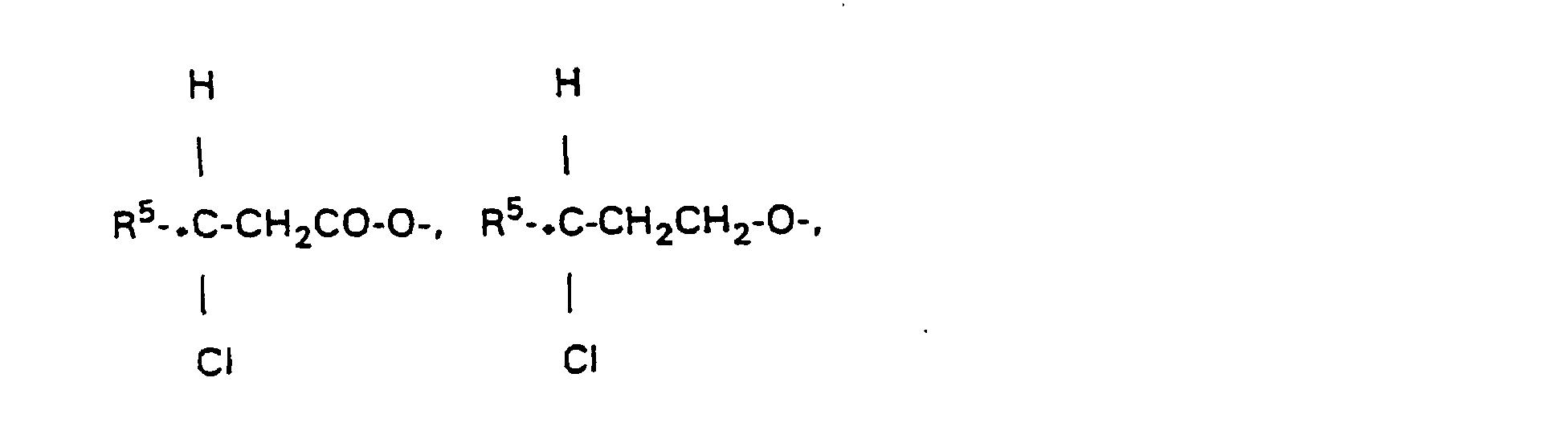


- R2, R3, R5, R6, R7, R8
- sont indépendamment les uns des autres H ou un groupe alkyle à chaíne linéaire ou ramifiée ayant de 1 à 16 atomes de carbone, ou R5 et R6 peuvent être ensemble aussi -(CH2)4- ou -(CH2)5- lorsqu'ils sont liés à un système dioxolane comme substituants,
- R4
- est un groupe alkyle à chaíne linéaire ou ramifiée ayant de 1 à 16 atomes de carbone,
- A1, A2, A3
- sont, identiques ou différents, un groupe 1,4-phénylène, dans lequel un ou deux atomes H peuvent être remplacés par F, Cl et/ou CN, pyrazin-2,5-diyle, pyridazin-3,6-diyle, pyridin-2,5-diyle, pyrimidin-2,5-diyle, trans-1,4-cyclohexylène, dans lequel un ou deux atomes H peuvent être remplacés par CN et/ou CH3, (1,3,4)-thiadiazol-2,5-diyle, 1,3-dioxan-2,5-diyle, 1,3-dithian-2,5-diyle, 1,3-thiazol-2,4-diyle, 1,3-thiazol-2,5-diyle, thiophèn-2,4-diyle, thiophèn-2,5-diyle, pipérazin-1,4-diyle, pipérazin-2,5-diyle, naphtalèn-2,6-diyle, bicyclo-[2.2.2]octan-1,4-diyle ou 1,3-dioxa-borinan-2,5-diyle, A1 et A2 et A3 ne pouvant pas être en même temps un groupe 1,4-phénylène non substitué, lorsque M1 ou M2 est -COO-,
- M1, M2
- sont, identiques ou différents, -O-, -S-, -CO-, -CO-O-, -O-CO-, -CO-S-, -S-CO-, -O-CO-O-, -CH2-O-, -O-CH2-, -CH2-CH2-, -CH=CH- ou -C≡C-,
- M3
- est -CH2-O-, -O-CH2-, -CO-O-, -O-CO- ou une liaison simple,
- a, b, c, d, e
- sont zéro ou un, à la condition que la somme a + b + e soit 1, 2 ou 3,




 dans lesquelles
- R9
- représente un groupe alcényle en C3 à C12 à chaíne linéaire ou ramifiée ayant une liaison double terminale, dans lequel un ou deux groupes CH2 non voisins peuvent être remplacés par des atomes O et/ou S,
- R10
- représente un groupe alkyle à chaíne linéaire ou ramifiée ayant de 1 à 12 atomes de carbone, dans lequel un ou deux groupes CH2 non voisins peuvent être remplacés par O et/ou S, et
- R11
- représente un groupe alcoxy ayant de 5 à 12 atomes de carbone
dans laquelle
- X
- représente un groupe alkylène à chaíne linéaire ou ramifiée ayant de 1 à 16 atomes de carbone, dans lequel un ou deux groupes -CH2- non voisins peuvent aussi être remplacés par -O-, -S-, -O-CO-, -CO-O-, CO ou -O-CO-O-.
- Oxyde d'oxiranylméthyle chiral selon la revendication 1, caractérisé en ce que les symboles et indices de la formule générale (I) ont la signification suivante :
- R1
- est un groupe alkyle à chaíne linéaire ou ramifiée
ayant de 1 à 16 atomes de carbone (avec ou sans
atome de carbone asymétrique), dans lequel
également un ou plusieurs groupes -CH2- peuvent
être remplacés par -O-, -S-, -CO-, -CO-O-, -O-CO-,
-O-CO-O-, -CH=CH-, -C≡C-, ou Δ, ou un des groupes
chiraux suivants :



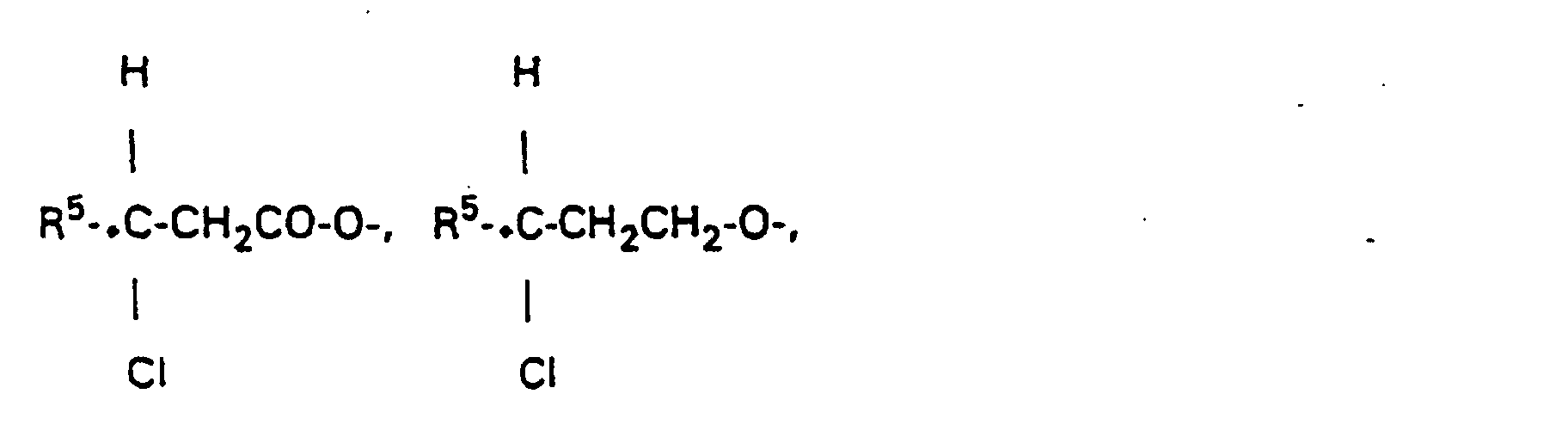
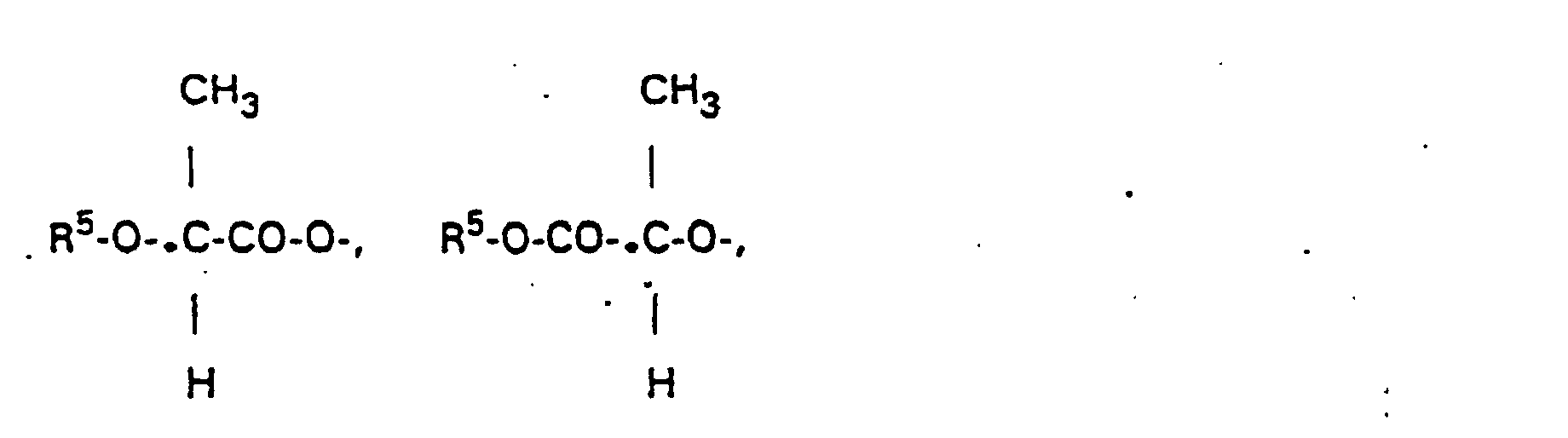

- R2, R3, R5, R6, R7, R8
- sont indépendamment les uns des autres H ou un groupe alkyle à chaíne linéaire ou ramifiée ayant de 1 à 16 atomes de carbone, R5 et R6 pouvant être ensemble aussi -(CH2)4- ou -(CH2)5- lorsqu'ils sont liés à un système dioxolane comme substituants,
- R4
- est un groupe alkyle à chaíne linéaire ou ramifiée ayant de 1 à 16 atomes de carbone,
- A1, A2, A3
- sont, identiques ou différents, un groupe 1,4-phénylène, pyrazin-2,5-diyle, pyridazin-3,6-diyle, pyridin-2,5-diyle, pyrimidin-2,5-diyle, trans-1,4-cyclohexylène, (1,3,4)-thiadiazol-2,5-diyle, 1,3-dioxan-2,5-diyle, naphtalèn-2,6-diyle, bicyclo[2.2.2]octan-1,4-diyle, A1 et A2 et A3 ne pouvant pas être en même temps un groupe 1,4-phénylène non substitué, lorsque M1 ou M2 est -COO-,
- M1, M2
- sont, identiques ou différents, -O-, -CO-, -CO-O-, -O-CO-, -CH2-O-, -O-CH2-, -CH2-CH2-, -CH=CH- ou -C≡C-,
- M3
- est -CH2-O-, -O-CH2-, -CO-O-, -O-CO- ou une liaison simple.
- Oxyde d'oxiranylméthyle chiral selon la revendication 1, caractérisé en ce que les symboles et indices de la formule générale (I) ont la signification suivante :
- R1
- est un groupe alkyle à chaíne linéaire ou ramifiée
ayant de 1 à 16 atomes de carbone (avec ou sans
atome de carbone asymétrique), dans lequel un ou
deux groupes -CH2- peuvent aussi être remplacés par
-O-, -CO-, -CO-O-, -O-CO-, -CH=CH-, ou Δ, ou un des
groupes chiraux suivants :
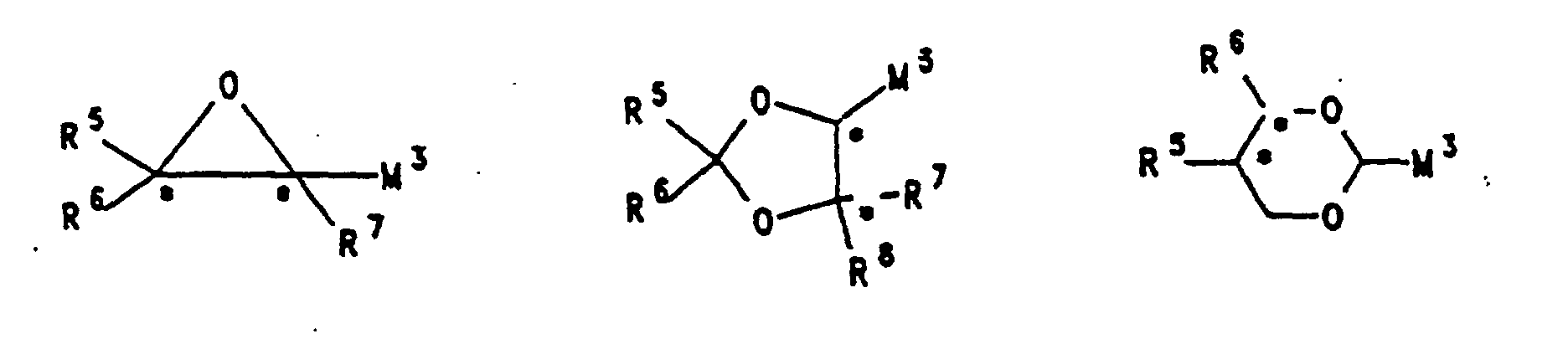


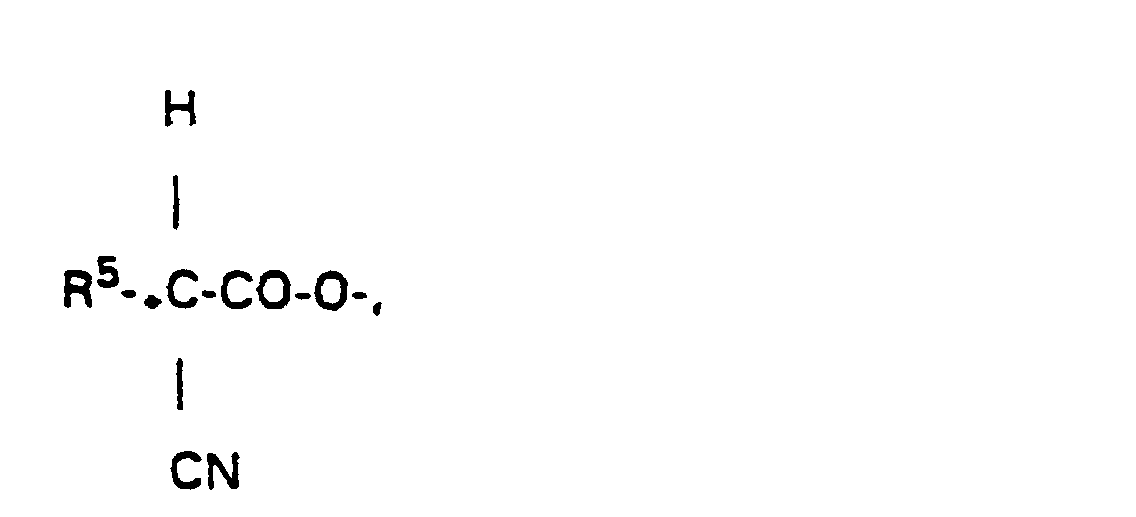
- R2, R3, R5, R6, R7, R8
- sont indépendamment les uns des autres H ou un groupe alkyle à chaíne linéaire ou ramifiée ayant de 1 à 16 atomes de carbone, R5 et R6 pouvant être ensemble également -(CH2)4- ou -(CH2)5- lorsqu'ils sont liés à un système dioxolane comme substituants,
- R4
- est un groupe alkyle à chaíne linéaire ou ramifiée ayant de 1 à 16 atomes de carbone,
- A1, A2, A3
- sont, identiques ou différents, un groupe 1,4-phénylène, pyrazin-2,5-diyle, pyridazin-3,6-diyle, pyridin-2,5-diyle, pyrimidin-2,5-diyle, trans-1,4-cyclohexylène, (1,3,4)-thiadiazol-2,5-diyle ou naphtalèn-2,6-diyle, A1 et A2 et A3 ne pouvant pas être en même temps un groupe 1,4-phénylène non substitué, lorsque M1 ou M2 est -COO-,
- M1, M2
- sont, identiques ou différents, -O-, -CO-O-, -O-CO-, -CH2-O-, -O-CH2-, -CH2-CH2-, -CH=CH- ou -C≡C-,
- M3
- est -CH2-O-, -O-CH2-, -CO-O-, -O-CO- ou une liaison simple.
- Oxyde d'oxiranylméthyle selon la revendication 1, caractérisé en ce que,
- R1
- est un groupe alkyle ayant de 1 à 16 atomes de
carbone, dans lequel un ou deux groupes -CH2- non
voisins peuvent être remplacés par -O-, ▵ ou
-CH=CH-, ou est le groupe chiral

- R2, R3, R5,R6,R7
- sont indépendamment les uns des autres H ou un groupe alkyle ayant de 1 à 16 atomes de carbone,
- R4
- est un groupe alkyle à chaíne linéaire ou ramifiée ayant de 1 à 16 atomes de carbone,
- M3
- est égal à -CH2-O- ou -CO-O-,











- Mélange de cristaux liquides caractérisé par une concentration de 0,01 à 60% en poids d'au moins un oxyde d'oxiraneméthyle de formule (I),dans laquelle les symboles et indices ont la signification suivante :

- *
- est un centre chiral
- R1
- est un groupe alkyle à chaíne linéaire ou ramifiée
ayant de 1 à 16 atomes de carbone (avec ou sans
atome de carbone asymétrique), dans lequel un ou
plusieurs groupes -CH2- non voisins peuvent aussi
être remplacés par -O-, -S-, -CO-, -CO-O-, -O-CO-,
-CO-S-, -S-CO-, -O-CO-O-, -CH=CH-, -C≡C-, ou Δ
et/ou un ou plusieurs atomes d'hydrogène du groupe
alkyle peuvent être substitués par F, Cl, Br ou CN,
ou un des groupes chiraux suivants :



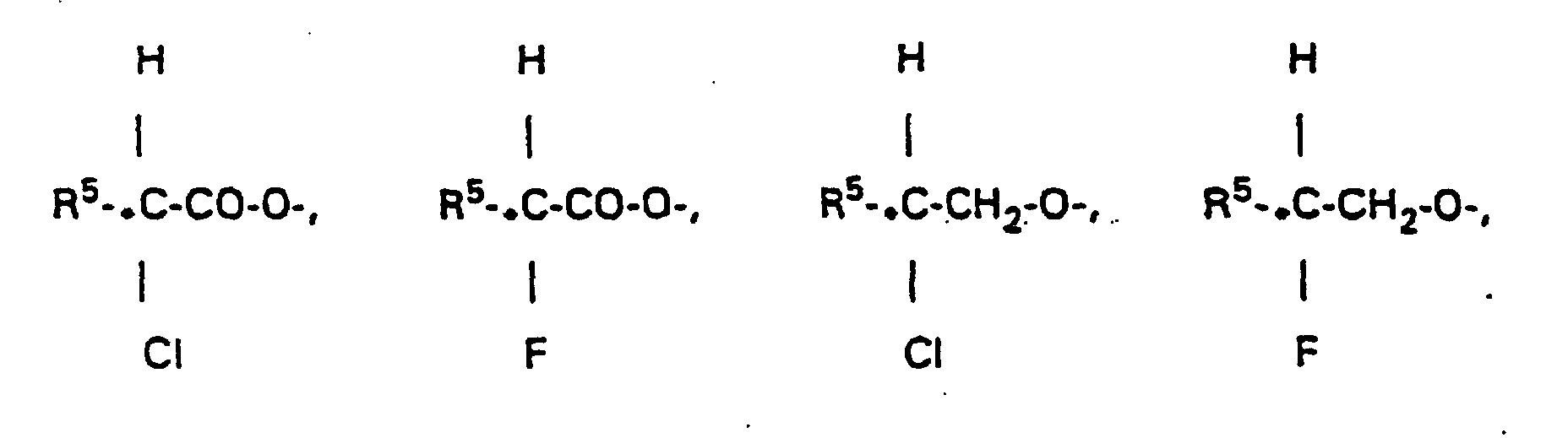


- R2, R3, R4, R5, R6, R7, R8
- sont indépendamment les uns des autres H ou un groupe alkyle à chaíne linéaire ou ramifiée ayant de 1 à 16 atomes de carbone, ou R5 et R6 peuvent être ensemble aussi -(CH2)4- ou -(CH2)5- lorsqu'ils sont liés à un système dioxolane comme substituants,
- A1, A2, A3
- sont, identiques ou différents, un groupe 1,4-phénylène, dans lequel un ou deux atomes H peuvent être remplacés par F, Cl et/ou CN, pyrazin-2,5-diyle, pyridazin-3,6-diyle, pyridin-2,5-diyle, pyrimidin-2,5-diyle, trans-1,4-cyclohexylène, dans lequel un ou deux atomes H peuvent être remplacés par CN et/ou CH3, (1,3,4)-thiadiazol-2,5-diyle, 1,3-dioxan-2,5-diyle, 1,3-dithian-2,5-diyle, 1,3-thiazol-2,4-diyle, 1,3-thiazol-2,5-diyle, thiophèn-2,4-diyle, thiophèn-2,5-diyle, pipérazin-1,4-diyle, pipérazin-2,5-diyle, naphtalèn-2,6-diyle, bicyclo-[2.2.2]octan-1,4-diyle ou 1,3-dioxaborinan-2,5-diyle, A1 et A2 et A3 ne pouvant pas être en même temps un groupe 1,4-phénylène non substitué, lorsque M1 ou M2 est -COO-,
- M1, M2
- sont, identiques ou différents, -O-, -S-, -CO-, -CO-O-, -O-CO-, -CO-S-, -S-CO-, -O-CO-O-, -CH2-O-, -O-CH2-, -CH2-CH2-, -CH=CH- ou -C≡C-,
- M3
- est -CH2-O-, -O-CH2-, -CO-O-, -O-CO- ou une liaison simple,
- a, b, c, d, e
- sont zéro ou un, à la condition que la somme a + b + e soit 1, 2 ou 3,



 dans lesquelles
- R9
- représente un groupe alcényle en C3 à C12 à chaíne linéaire ou ramifiée ayant une liaison double terminale, dans lequel un ou deux groupes CH2 non voisins peuvent être remplacés par des atomes O et/ou S,
- R10
- représente un groupe alkyle à chaíne linéaire ou ramifiée ayant de 1 à 12 atomes de carbone, dans lequel un ou deux groupes CH2 non voisins peuvent être remplacés par O et/ou S, et
- R11
- représente un groupe alcoxy ayant de 5 à 12 atomes de carbone
dans laquelle
- X
- représente un groupe alkylène à chaíne linéaire ou ramifiée ayant de 1 à 16 atomes de carbone, dans lequel un ou deux groupes -CH2- non voisins peuvent aussi être remplacés par -O-, -S-, -O-CO-, -CO-O-, CO ou -O-CO-O-.
- Mélanges de cristaux liquides, caractérisés par une concentration de 0,01 à 60% en poids d'au moins un oxyde d'oxiranylméthyle selon la revendication 1.
- Mélange ferroélectrique de cristaux liquides, caractérisé par une concentration comprise entre 0,01 et 60% en poids d'au moins un oxyde d'oxiranylméthyle selon la revendication 2.
- Mélange ferroélectrique de cristaux liquides, caractérisé par une concentration comprise entre 0,01 et 60% en poids d'au moins un oxyde d'oxiranylméthyle selon la revendication 3.
- Mélange ferroélectrique de cristaux liquides, caractérisé par une concentration comprise entre 0,01 et 60% en poids d'au moins un oxyde d'oxiranylméthyle selon la revendication 4.
- Composant électrooptiques ou entièrement optiques, qui contiennent un mélange de cristaux liquides selon la revendication 5, 6, 7 ou 8.
Applications Claiming Priority (3)
| Application Number | Priority Date | Filing Date | Title |
|---|---|---|---|
| DE4143139 | 1991-12-28 | ||
| DE4143139A DE4143139A1 (de) | 1991-12-28 | 1991-12-28 | Chirale oxiranylmethyl-ether und ihre verwendung als dotierstoffe in fluessigkristallmischungen |
| PCT/EP1992/002855 WO1993013093A1 (fr) | 1991-12-28 | 1992-12-10 | Oxirannylmethylethers et leur utilisation comme agents dopants dans des melanges de cristaux liquides |
Publications (2)
| Publication Number | Publication Date |
|---|---|
| EP0618914A1 EP0618914A1 (fr) | 1994-10-12 |
| EP0618914B1 true EP0618914B1 (fr) | 2001-10-17 |
Family
ID=6448217
Family Applications (1)
| Application Number | Title | Priority Date | Filing Date |
|---|---|---|---|
| EP92924707A Expired - Lifetime EP0618914B1 (fr) | 1991-12-28 | 1992-12-10 | Oxirannylmethylethers et leur utilisation comme agents dopants dans des melanges de cristaux liquides |
Country Status (5)
| Country | Link |
|---|---|
| US (1) | US5707545A (fr) |
| EP (1) | EP0618914B1 (fr) |
| JP (1) | JPH08822B2 (fr) |
| DE (2) | DE4143139A1 (fr) |
| WO (1) | WO1993013093A1 (fr) |
Families Citing this family (9)
| Publication number | Priority date | Publication date | Assignee | Title |
|---|---|---|---|---|
| DE4311968A1 (de) * | 1993-04-10 | 1994-10-20 | Hoechst Ag | Smektische Flüssigkristallmischung |
| DE4311967A1 (de) * | 1993-04-10 | 1994-10-13 | Hoechst Ag | Smektische Flüssigkristallmischung |
| ATE186725T1 (de) * | 1993-05-19 | 1999-12-15 | Basf Ag | Chirale verbindungen |
| US6133485A (en) * | 1998-04-15 | 2000-10-17 | Synphar Laboratories, Inc. | Asymmetric synthesis of 2-(2,4-difluorophenyl)-1-heterocycl-1-yl butan-2,3-diols |
| DE10013507A1 (de) * | 2000-03-20 | 2001-09-27 | Basf Ag | Chirale 1,3-Dioxanverbindungen |
| US6824707B2 (en) * | 2001-10-23 | 2004-11-30 | Clariant International Ltd. | Active matrix liquid crystal device and smectic liquid crystal mixture |
| JP4619770B2 (ja) * | 2003-12-24 | 2011-01-26 | 住友化学株式会社 | エポキシ化合物および該エポキシ化合物を硬化せしめてなるエポキシ樹脂硬化物 |
| US8940375B2 (en) * | 2007-07-30 | 2015-01-27 | Merck Patent Gmbh | Liquid-crystal display |
| JP5750861B2 (ja) * | 2009-12-17 | 2015-07-22 | Jnc株式会社 | オキシラニル基を有する重合性液晶化合物、重合性液晶組成物および重合体 |
Family Cites Families (8)
| Publication number | Priority date | Publication date | Assignee | Title |
|---|---|---|---|---|
| DE3633968A1 (de) * | 1986-10-06 | 1988-04-07 | Hoechst Ag | Chirale aryl-2,3-epoxyalkyl-ether und deren entsprechende thioverbindungen und ihre verwendung als dotierstoff in fluessigkristall-phasen |
| CA1320728C (fr) * | 1987-09-07 | 1993-07-27 | Kazuhiko Sakaguchi | Composes liquides cristallins et procede pour leur production |
| JPH068210B2 (ja) * | 1988-02-18 | 1994-02-02 | ソマール株式会社 | バリスタ材料及びその製法 |
| DE3909355A1 (de) * | 1989-03-22 | 1990-09-27 | Hoechst Ag | Ferroelektrische fluessigkristalline mischungen |
| US5061814A (en) * | 1989-06-01 | 1991-10-29 | Displaytech, Inc. | High tilt ferroelectric liquid crystal compounds and compositions |
| DE3920625A1 (de) * | 1989-06-23 | 1991-01-03 | Hoechst Ag | Ferroelektrische fluessigkristallelemente mit hoher spontaner polarisation und geringer helixganghoehe |
| WO1992011241A1 (fr) * | 1990-12-19 | 1992-07-09 | Hoechst Aktiengesellschaft | 2-fluoropyridine, son procede de production et son utilisation dans des melanges de cristaux liquides |
| US5443754A (en) * | 1991-01-24 | 1995-08-22 | Hoechst Aktiengesellschaft | Pyridylpyrimidines, a process for their preparation and their use in liquid-crystalline mixtures |
-
1991
- 1991-12-28 DE DE4143139A patent/DE4143139A1/de not_active Withdrawn
-
1992
- 1992-12-10 JP JP5511385A patent/JPH08822B2/ja not_active Expired - Lifetime
- 1992-12-10 DE DE59209924T patent/DE59209924D1/de not_active Expired - Lifetime
- 1992-12-10 EP EP92924707A patent/EP0618914B1/fr not_active Expired - Lifetime
- 1992-12-10 WO PCT/EP1992/002855 patent/WO1993013093A1/fr not_active Ceased
-
1994
- 1994-08-01 US US08/256,189 patent/US5707545A/en not_active Expired - Lifetime
Also Published As
| Publication number | Publication date |
|---|---|
| WO1993013093A1 (fr) | 1993-07-08 |
| EP0618914A1 (fr) | 1994-10-12 |
| US5707545A (en) | 1998-01-13 |
| DE4143139A1 (de) | 1993-07-01 |
| JPH06511254A (ja) | 1994-12-15 |
| JPH08822B2 (ja) | 1996-01-10 |
| DE59209924D1 (de) | 2001-11-22 |
Similar Documents
| Publication | Publication Date | Title |
|---|---|---|
| EP0318423B1 (fr) | Hétérocycles à substituant cyclopropyl-alkyl ou alkényl ayant des propriétés de cristaux liquides, leur procédé de préparation et leur utilisation dans des mélanges de cristaux liquides | |
| EP0541081B1 (fr) | Composés avec seulement une chaíne latéralle pour utilisation dans des mélanges de cristaux liquides | |
| DE69426358T2 (de) | Verbindungen zur verwendung in flüssigkristallzusammensetzungen | |
| EP0292954B1 (fr) | Utilisation d'esters d'acides oxirane-2-carboxyliques optiquement actifs comme dopants de mélanges liquides cristallins, mélanges liquides cristallins les contenant et esters d'acides oxirane-2-carboxyliques | |
| EP0578054B1 (fr) | Cyces aromatiques a six membres substitués en méta pour l'utilisation dans des mélanges de cristaux liquides | |
| DE3831226A1 (de) | Fluessigkristalline, insbesondere ferroelektrische fluessigkristalline mischungen | |
| EP0930301A1 (fr) | 2-Fluoropyridine, son procédé de production et son utilisation dans des mélanges de cristaux liquides | |
| WO1993013093A1 (fr) | Oxirannylmethylethers et leur utilisation comme agents dopants dans des melanges de cristaux liquides | |
| DE4030579A1 (de) | Cyclohexylphenylpyrimidine, verfahren zu ihrer herstellung und ihre verwendung in fluessigkristallinen mischungen | |
| EP0602596B1 (fr) | Composés du trifluorophénylène, procédé pour leur préparation et leur utilisation dans des mélanges de cristaux liquides | |
| EP0552658A1 (fr) | Dérivés de l'acide 3-cyclohexyl propionique et leur utilisation dans des mélanges de cristaux liquides ferroélectriques | |
| EP0532916B1 (fr) | 2-Fluoropyrazines, procédé pour leur préparation et leur utilisation dans des mélanges de cristaux liquides | |
| EP0464058B1 (fr) | Melanges ferroelectriques a cristaux liquides | |
| EP0475444B1 (fr) | Utilisation de derivés de fluoro-4-pyrimidines comme composants de mélanges ferroélectriques de cristaux liquides et procédé de synthèse de ces composés | |
| EP0639189A1 (fr) | Pyridylpyrimidines, procede de preparation et application dans des melanges a cristaux liquides | |
| EP0438811A2 (fr) | Esters des acides 2-méthylalkanecarboxyliques 3-halogéno- ou 3-cyano-substitués et leur application comme agents de dopage pour des compositions liquides-cristallines | |
| DE4240041A1 (de) | Neue Derivate des Naphthalins zur Verwendung in ferroelektrischen Flüssigkristallmischungen | |
| WO1991011441A1 (fr) | Composes gemines de dimethylalkyle, leur procede de production et leur utilisation dans des melanges de cristaux liquides | |
| DE19538404B4 (de) | Difluorchinolin-Derivate und diese enthaltenden Flüssigkristallmischungen sowie Schalt- und/oder Anzeigevorrichtung | |
| EP0462156B1 (fr) | Esters d'acide dioxolanylacrylique et dioxolanylpropionique optiquement actifs et porteurs d'un reste mesogene, leur procede de fabrication et leur utilisation comme agents dopants dans des melanges de cristaux liquides | |
| DE4211563A1 (de) | Chirale Oxiranderivate und ihre Verwendung als Dotierstoffe in Flüssigkristallmischungen | |
| DE4116751A1 (de) | Cyclohexylphenylpyrimidine, verfahren zu ihrer herstellung und ihre verwendung in fluessigkristallinen mischungen | |
| DE4211562A1 (de) | Chirale Oxiranderivate und ihre Verwendung als Dotierstoffe in Flüssigkristallmischungen | |
| EP0412409A2 (fr) | Mélanges liquides cristallins, en particulier mélanges liquides cristallins ferro-électriques et leur utilisation dans des dispositifs électro-optiques |
Legal Events
| Date | Code | Title | Description |
|---|---|---|---|
| PUAI | Public reference made under article 153(3) epc to a published international application that has entered the european phase |
Free format text: ORIGINAL CODE: 0009012 |
|
| 17P | Request for examination filed |
Effective date: 19940530 |
|
| AK | Designated contracting states |
Kind code of ref document: A1 Designated state(s): DE FR GB |
|
| 17Q | First examination report despatched |
Effective date: 19990119 |
|
| RAP1 | Party data changed (applicant data changed or rights of an application transferred) |
Owner name: AVENTIS RESEARCH & TECHNOLOGIES GMBH & CO. KG |
|
| GRAG | Despatch of communication of intention to grant |
Free format text: ORIGINAL CODE: EPIDOS AGRA |
|
| GRAG | Despatch of communication of intention to grant |
Free format text: ORIGINAL CODE: EPIDOS AGRA |
|
| GRAH | Despatch of communication of intention to grant a patent |
Free format text: ORIGINAL CODE: EPIDOS IGRA |
|
| GRAH | Despatch of communication of intention to grant a patent |
Free format text: ORIGINAL CODE: EPIDOS IGRA |
|
| GRAA | (expected) grant |
Free format text: ORIGINAL CODE: 0009210 |
|
| AK | Designated contracting states |
Kind code of ref document: B1 Designated state(s): DE FR GB |
|
| PG25 | Lapsed in a contracting state [announced via postgrant information from national office to epo] |
Ref country code: GB Free format text: LAPSE BECAUSE OF FAILURE TO SUBMIT A TRANSLATION OF THE DESCRIPTION OR TO PAY THE FEE WITHIN THE PRESCRIBED TIME-LIMIT Effective date: 20011017 Ref country code: FR Free format text: LAPSE BECAUSE OF FAILURE TO SUBMIT A TRANSLATION OF THE DESCRIPTION OR TO PAY THE FEE WITHIN THE PRESCRIBED TIME-LIMIT Effective date: 20011017 |
|
| REF | Corresponds to: |
Ref document number: 59209924 Country of ref document: DE Date of ref document: 20011122 |
|
| GBV | Gb: ep patent (uk) treated as always having been void in accordance with gb section 77(7)/1977 [no translation filed] |
Effective date: 20011017 |
|
| EN | Fr: translation not filed | ||
| PLBE | No opposition filed within time limit |
Free format text: ORIGINAL CODE: 0009261 |
|
| STAA | Information on the status of an ep patent application or granted ep patent |
Free format text: STATUS: NO OPPOSITION FILED WITHIN TIME LIMIT |
|
| 26N | No opposition filed | ||
| PGFP | Annual fee paid to national office [announced via postgrant information from national office to epo] |
Ref country code: DE Payment date: 20101208 Year of fee payment: 19 |
|
| REG | Reference to a national code |
Ref country code: DE Ref legal event code: R071 Ref document number: 59209924 Country of ref document: DE |
|
| REG | Reference to a national code |
Ref country code: DE Ref legal event code: R071 Ref document number: 59209924 Country of ref document: DE |