EP0623896A2 - Carte à puce et dispositif de lecture d'une carte à puce et récepteur de radiodiffussion - Google Patents
Carte à puce et dispositif de lecture d'une carte à puce et récepteur de radiodiffussion Download PDFInfo
- Publication number
- EP0623896A2 EP0623896A2 EP94105920A EP94105920A EP0623896A2 EP 0623896 A2 EP0623896 A2 EP 0623896A2 EP 94105920 A EP94105920 A EP 94105920A EP 94105920 A EP94105920 A EP 94105920A EP 0623896 A2 EP0623896 A2 EP 0623896A2
- Authority
- EP
- European Patent Office
- Prior art keywords
- chip card
- data
- memory
- compressed
- microcomputer
- Prior art date
- Legal status (The legal status is an assumption and is not a legal conclusion. Google has not performed a legal analysis and makes no representation as to the accuracy of the status listed.)
- Granted
Links
- 230000015654 memory Effects 0.000 claims abstract description 29
- 238000011156 evaluation Methods 0.000 claims description 2
- 230000005540 biological transmission Effects 0.000 description 10
- 238000000034 method Methods 0.000 description 8
- 230000008901 benefit Effects 0.000 description 5
- 230000008569 process Effects 0.000 description 5
- 230000006835 compression Effects 0.000 description 4
- 238000007906 compression Methods 0.000 description 4
- 230000004044 response Effects 0.000 description 4
- 238000010276 construction Methods 0.000 description 2
- 230000006837 decompression Effects 0.000 description 2
- 230000009467 reduction Effects 0.000 description 2
- 238000005452 bending Methods 0.000 description 1
- 230000015572 biosynthetic process Effects 0.000 description 1
- 238000006243 chemical reaction Methods 0.000 description 1
- 238000004891 communication Methods 0.000 description 1
- 238000013461 design Methods 0.000 description 1
- 238000011161 development Methods 0.000 description 1
- 230000018109 developmental process Effects 0.000 description 1
- 238000010586 diagram Methods 0.000 description 1
- 238000005516 engineering process Methods 0.000 description 1
- 230000003287 optical effect Effects 0.000 description 1
- 239000004065 semiconductor Substances 0.000 description 1
- 238000003786 synthesis reaction Methods 0.000 description 1
Images
Classifications
-
- H—ELECTRICITY
- H04—ELECTRIC COMMUNICATION TECHNIQUE
- H04H—BROADCAST COMMUNICATION
- H04H40/00—Arrangements specially adapted for receiving broadcast information
- H04H40/18—Arrangements characterised by circuits or components specially adapted for receiving
-
- H—ELECTRICITY
- H04—ELECTRIC COMMUNICATION TECHNIQUE
- H04H—BROADCAST COMMUNICATION
- H04H20/00—Arrangements for broadcast or for distribution combined with broadcast
- H04H20/53—Arrangements specially adapted for specific applications, e.g. for traffic information or for mobile receivers
- H04H20/55—Arrangements specially adapted for specific applications, e.g. for traffic information or for mobile receivers for traffic information
-
- H—ELECTRICITY
- H04—ELECTRIC COMMUNICATION TECHNIQUE
- H04H—BROADCAST COMMUNICATION
- H04H2201/00—Aspects of broadcast communication
- H04H2201/10—Aspects of broadcast communication characterised by the type of broadcast system
- H04H2201/13—Aspects of broadcast communication characterised by the type of broadcast system radio data system/radio broadcast data system [RDS/RBDS]
-
- H—ELECTRICITY
- H04—ELECTRIC COMMUNICATION TECHNIQUE
- H04H—BROADCAST COMMUNICATION
- H04H60/00—Arrangements for broadcast applications with a direct linking to broadcast information or broadcast space-time; Broadcast-related systems
- H04H60/76—Arrangements characterised by transmission systems other than for broadcast, e.g. the Internet
- H04H60/81—Arrangements characterised by transmission systems other than for broadcast, e.g. the Internet characterised by the transmission system itself
- H04H60/98—Physical distribution of media, e.g. postcards, CDs or DVDs
Definitions
- Chip cards are already well known and are used in many applications. Due to the great use of chip cards, standards have been developed which define the dimensions of a chip card and mark the points at which the chip card is to be contacted in order to supply the chip card with voltage so that it can operate the memories and computers contained in the chip card. as well as exchange data.
- ISO 7816 This standard also specifies how the microprocessor of a chip card should be addressed by the reader. For this purpose, a reset signal and clock signals are transmitted to the chip card after the chip card has been inserted into the reader.
- the card responds to this with a so-called response to the reset, as prescribed in the standard. After the answer to the reset, data can be read from the chip card or, in turn, data can be written to the chip card. Because of The dimensions of the chip card, the bending stiffness required by the chip card and the areas provided for the chips limit the design of the data memory and the microprocessor. A limit will soon be reached, especially if a lot of data is to be put on the chip card. From DE-OS 41 12 828 a radio receiver has also become known, into which a chip card can be inserted, the chip card to be inserted containing a data memory and the data memory containing data relating to the vocabulary and the location code.
- the chip card according to the invention with the characterizing features of the main claim has the advantage that the density of the stored information is increased for a given storage space.
- the compressed storage of the data in the memory makes it possible to accommodate considerably more data in the memory, so that the application area of the chip card is expanded.
- the radio receiver it becomes possible to store a large number of location codes, so that the use of a radio receiver can be expanded spatially with the same chip card without having to deviate from a standardized chip card.
- the chip card contains the decoding tables and the microcomputer the Chip card is able to perform a decompression on the basis of the decoding table, the chip card according to the invention behaves exactly like a chip card known per se. Despite the increased storage options, this chip card can therefore be used like conventional, standardized chip cards.
- the reading device has the advantage that, in the case of chip cards with a compressed data record, it can be selected whether the data should be transmitted to the reading device in compressed form. While all the usual cards can be easily read by the reader, the delivery of a predetermined data word to the chip card ensures that the chip card does not decode the chip, but rather transmits the information to the reader in compressed form. In particular at high data rates, this measure considerably shortens the reading time from the chip card, so that the user of a corresponding chip card in connection with a suitable reading device, the waiting time is considerably shortened, since it is possible to use much more powerful computers in the reading device, so that slow data transmission from the chip card to the reader can be avoided.
- the reading device according to the invention therefore considerably shortens the data transmission, in particular also large amounts of data, from a chip card with compressed data to the reading device, thereby reducing the waiting time for the user.
- a radio receiver In a radio receiver according to claim 6, there is the advantage that the evaluation of digital information is now considerably accelerated. If the radio receiver only has a commercially available data reader, the compressed data of the chip card are stored on the card in a conventional manner decompressed and then transmitted to the radio receiver. If, on the other hand, the radio receiver has a card reader which is also able to process compressed data, the compressed data will be transmitted to the radio receiver after delivery of a predetermined data word by the radio receiver, decompressed there and further processed. The evaluated information is therefore available much faster.
- the decompression in the chip card can be prevented by the receipt of a certain data word, so that the compressed data can also be output in a manner which does not conform to the standards, so that the data flow is accelerated.
- the chip card is used to store data for decoding coded traffic reports in the memory of the chip card. It is also advantageous to store data for voice reproduction of digital information in the memory of the chip card.
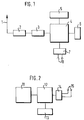
- FIG. 1 shows a radio receiver for use with the chip card according to the invention
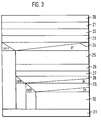
- FIG. 2 shows the chip card according to the invention
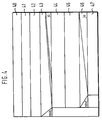
- FIG. 3 shows the mode of operation of the microprocessor of the reading device in a radio receiver
- FIG. 4 shows the mode of operation of the microprocessor in the chip card.
- FIG. 1 shows a radio receiver which has an antenna 1.
- the signal picked up by the antenna 1 is fed to a tuner 2, which selects the high-frequency signals in a known manner and brings a desired radio transmitter to the operator of the radio receiver.
- an RDS decoder 3 is provided, with which it is possible to decode digitally superimposed information on the radio program and to supply it to a microprocessor 4.
- the microprocessor 4 receives from the decoder 3, which is designed, for example, as an RDS decoder, RDS information or digitized traffic reports in a shortened form, as is described in more detail, for example, in DE-OS 35 36 820.
- the microprocessor calls up data via an input / output unit 7 via the connections 8, which make it possible to make the messages in short form understandable to the radio listener.
- the microprocessor 4 works in this radio receiver on the one hand as a reader of the chip card and on the other hand as an evaluator of the messages delivered by the decoder 3 to the microprocessor.
- decoding table 6 This decoding table 6 is only required if the microprocessor 4 is also to read compressed data.
- the decoding table contains the Information on how the compressed data can be decompressed. If compressed data is therefore read in via the connections 8 and the input / output unit 14, it is possible to decompress this data using the decoding table 6.
- the electronic components of the chip card are shown in FIG.
- the chip card has a memory 11, in which data are stored in compressed form or can be read in.
- the memory 11 is connected to a microcomputer 12 which can process the data in the memory 11 according to programs stored in the memory 11.
- a decoding table 13 is connected to the microcomputer 12.
- the decoding table 13 enables the microcomputer 12 to decompress the compressed data from the memory 11.
- the output of the microcomputer leads to an input / output unit 14, which controls the data traffic between the microprocessor 12 and the connection contacts 15.
- FIG. 3 shows the mode of operation of the microcomputer 4 insofar as it relates to the reading of the chip card according to FIG. 2.
- the microcomputer 4 As soon as the microcomputer 4 is supplied with current, for example by switching on the receiver, it is continuously checked at point 20 whether the contacts of a chip card are attacking at the connections 8. This can be achieved, for example, by pulling one of the lines 8 to another impedance by inserting the card and contacting it. If the microcomputer determines at point 21 that a card has been inserted has been, the supply voltage of the card is supplied via one of the lines 8, 15. The computer in the card is activated by supplying the supply voltage to the card. In the next step, the microcomputer 4 specifies a clock signal at the point 22, so that the synchronism of the mode of operation between the microcomputer 4 and the microprocessor 12 is ensured.
- the computer 4 gives the microprocessor 12 a reset pulse which causes the microprocessor 12 to reach a defined state.
- the microcomputer 4 now waits until after the microprocessor 12 has been initialized, it receives a message that the microprocessor 12 is now ready for operation.
- the microcomputer 4 now asks whether the inserted chip card is even suitable for the corresponding application.
- the chip card should contain data that defines the location code or contains information in different languages. The microcomputer can determine this at point 24 by whether the data words transmitted by the chip card at least partially match the data words that are stored in the computer 4 for a special application. If, for example, the chip card is suitable for traffic messages, it issues code 100.
- code 200 is issued, for example, and if a chip card is suitable for withdrawing cash from automated teller machines, code number 300 is issued.
- the microcomputer 4 determines that the inserted chip card is not suitable for its application, the microcomputer 4 issues a corresponding message and ends the contact with the chip card by ejecting the chip card again or in some other way the owner of the chip card prompts you to remove the chip card from the device.
- the computer determines that the chip card is suitable for its device, in the exemplary embodiment to evaluate traffic news, he jumps to position 25 and activates the desired application on the map.
- the chip card is suitable for several applications, for example not only to transmit data relating to traffic messages, but also for other purposes, for example as a telephone card.
- the microcomputer 4 now waits until the card has confirmed that the corresponding application is now activated, that is to say, for example, traffic information can be transmitted from the card to the microcomputer 4 in the form of data. With this, a connection to the chip card is now established in a conventional reading device, so that the radio receiver can cooperate with the inserted card at point 31.
- the microcomputer 4 calls up the information stored under this number from the memory 11 via the microprocessor 12 of the chip card. Under the coding specified in DE-OS 35 36 820, the text "1 km of traffic congestion due to construction work on the overtaking lane" is then output from the memory 11 via the microcomputer 12. This text can now be represented graphically or, if information in synthetic language was stored in the memory 11, this information can also be reproduced in the loudspeaker of the radio receiver.
- the connection to the point 27 is continued in the microcomputer 4.
- the microcomputer 4 inquires at the point 27 by means of a data word from the microprocessor 12 whether or not it has data in compressed form.
- the response of the microcomputer is now evaluated. If there is no answer, it is clear that this is a common one Chip card that does not contain compressed data or a transmission of compressed data is not provided. This is the case, for example, when it is to be expected that large amounts of the stored data will not have to be transferred. In this case, the process jumps to point 31, where data transmission can then be started.
- the microcomputer 4 receives the answer from the microprocessor 12 that the data is stored in compressed form, the question is asked at point 29 whether it is possible to transmit the data in compressed form in order to then carry it out using the decoding table 6 in the microcomputer 4. If this question is answered with yes, the microcomputer 4 of the reading device is set at point 30 so that it can decompress the compressed data. Depending on whether or not the decoding table is contained in the reading device of the receiver according to FIG. 1, it is therefore possible to switch between normal data transmission or fast data transmission if the special type of chip card permits this. Either way, the microcomputer 4 of the reader at point 31 is ready to start communication with the chip card, as has already been described above. This entire process is of course only necessary once, namely after the chip card has been inserted.
- the mode of operation of the microprocessor 12 of the chip card is shown in more detail in FIG. 4.
- the microprocessor 12 and the other components of the card are supplied with the supply voltage of the reading device by the connection contacts 15.
- the microprocessor 12 receives the clock signals from the computer 4 of the reading device and its reset pulse.
- the program stored in the microprocessor 12 now begins with the initialization of the microprocessor 12 and, at the end of this initialization phase, transmits at point 41 the response of the reset via the connections 15 to the computer 4 of the Reader.
- the microprocessor 12 now receives the query from the computer 4 of the reader as to whether, for example, traffic messages are stored on the chip card.
- the chip card If the chip card is only suitable for telephone calls, it answers no at point 43 and ends the data transmission with the reader. However, if the chip card has data from traffic messages, it answers yes and transmits the corresponding status to the computer 4 at point 44. If there is no further reaction on the part of the reading device, the decoding table 13 is activated by the microprocessor 12. If data is now requested from the reading device 4, the compressed data 11, which are desired by the reading device 4, are fetched into the microprocessor 12 and decompressed there using the decoding table 13. The decompressed data are then transmitted via the input-output unit 14 to the connections 15 and thus reach the computer of the reading device 4.
- the decoding table 13 is switched off and only the requested data is read out of the memory by means of the microprocessor 12 and transmitted via the data connections 15.
- the procedure is as if no response was received from the computer.
- the decoding table 13 is switched off at the point 47 and the microprocessor 12 retrieves the desired data from the memory and sends it to the reading computer 4 without decoding. The construction of the read / write process is hereby completed.
Landscapes
- Engineering & Computer Science (AREA)
- Signal Processing (AREA)
- Circuits Of Receivers In General (AREA)
Applications Claiming Priority (2)
| Application Number | Priority Date | Filing Date | Title |
|---|---|---|---|
| DE4314614A DE4314614C2 (de) | 1993-05-04 | 1993-05-04 | Chipkarte und Lesegerät für eine Chipkarte |
| DE4314614 | 1993-05-04 |
Publications (3)
| Publication Number | Publication Date |
|---|---|
| EP0623896A2 true EP0623896A2 (fr) | 1994-11-09 |
| EP0623896A3 EP0623896A3 (fr) | 1995-06-28 |
| EP0623896B1 EP0623896B1 (fr) | 2000-07-05 |
Family
ID=6487075
Family Applications (1)
| Application Number | Title | Priority Date | Filing Date |
|---|---|---|---|
| EP94105920A Expired - Lifetime EP0623896B1 (fr) | 1993-05-04 | 1994-04-16 | Carte à puce et dispositif de lecture d'une carte à puce |
Country Status (2)
| Country | Link |
|---|---|
| EP (1) | EP0623896B1 (fr) |
| DE (2) | DE4314614C2 (fr) |
Cited By (6)
| Publication number | Priority date | Publication date | Assignee | Title |
|---|---|---|---|---|
| EP0725505A1 (fr) * | 1995-02-03 | 1996-08-07 | Robert Bosch Gmbh | Récepteur de radiodiffusion pour la réception la gestion et l'affichage d'informations routières codées numériques |
| EP0725502A3 (fr) * | 1995-02-03 | 1997-01-15 | Bosch Gmbh Robert | Méthode pour le décodage et l'affichage des informations routières numériques radiodiffusées |
| EP0756257A1 (fr) * | 1995-07-26 | 1997-01-29 | Philips Patentverwaltung GmbH | Récepteur radio RDS-TMC |
| EP0757454A1 (fr) * | 1995-07-29 | 1997-02-05 | Philips Patentverwaltung GmbH | Récepteur de radiodiffusion avec réception des signaux RDS-TMC |
| GB2357667A (en) * | 1999-12-23 | 2001-06-27 | Motorola Ltd | Storage of traffic broadcasts in an RDS receiver |
| EP0925698B2 (fr) † | 1996-09-13 | 2013-10-16 | Orange | Carte a puce avec compression interne de donnees |
Families Citing this family (2)
| Publication number | Priority date | Publication date | Assignee | Title |
|---|---|---|---|---|
| DE19542910B4 (de) * | 1995-11-17 | 2005-01-05 | Deutsche Telekom Ag | Verfahren und Vorrichtung zum Schutz gespeicherter Daten |
| DE19939433A1 (de) * | 1999-08-20 | 2001-02-22 | Mannesmann Vdo Ag | Autoradio mit abnehmbarer Bedieneinheit |
Family Cites Families (6)
| Publication number | Priority date | Publication date | Assignee | Title |
|---|---|---|---|---|
| DE3536820A1 (de) * | 1985-10-16 | 1987-04-16 | Bosch Gmbh Robert | Verkehrfunk-decoder |
| JPS6314294A (ja) * | 1986-07-03 | 1988-01-21 | Nec Corp | アイシ−カ−ド |
| JPH01219981A (ja) * | 1988-02-29 | 1989-09-01 | Nec Corp | Icカード |
| JP2718129B2 (ja) * | 1989-01-09 | 1998-02-25 | 凸版印刷株式会社 | Icカード |
| DE4112828C2 (de) * | 1991-04-19 | 1999-01-28 | Bosch Gmbh Robert | Chipkarte für einen Rundfunkempfänger |
| DE4228692A1 (de) * | 1992-08-28 | 1993-01-21 | Siemens Ag | Chipkarte fuer audio- und videoinformationen |
-
1993
- 1993-05-04 DE DE4314614A patent/DE4314614C2/de not_active Revoked
-
1994
- 1994-04-16 DE DE59409415T patent/DE59409415D1/de not_active Expired - Lifetime
- 1994-04-16 EP EP94105920A patent/EP0623896B1/fr not_active Expired - Lifetime
Cited By (7)
| Publication number | Priority date | Publication date | Assignee | Title |
|---|---|---|---|---|
| EP0725505A1 (fr) * | 1995-02-03 | 1996-08-07 | Robert Bosch Gmbh | Récepteur de radiodiffusion pour la réception la gestion et l'affichage d'informations routières codées numériques |
| EP0725502A3 (fr) * | 1995-02-03 | 1997-01-15 | Bosch Gmbh Robert | Méthode pour le décodage et l'affichage des informations routières numériques radiodiffusées |
| EP0756257A1 (fr) * | 1995-07-26 | 1997-01-29 | Philips Patentverwaltung GmbH | Récepteur radio RDS-TMC |
| KR970009478A (ko) * | 1995-07-26 | 1997-02-24 | 요트.게.아. 롤페즈 | 방송 수신기, 모듈 및 칩 카드 |
| EP0757454A1 (fr) * | 1995-07-29 | 1997-02-05 | Philips Patentverwaltung GmbH | Récepteur de radiodiffusion avec réception des signaux RDS-TMC |
| EP0925698B2 (fr) † | 1996-09-13 | 2013-10-16 | Orange | Carte a puce avec compression interne de donnees |
| GB2357667A (en) * | 1999-12-23 | 2001-06-27 | Motorola Ltd | Storage of traffic broadcasts in an RDS receiver |
Also Published As
| Publication number | Publication date |
|---|---|
| DE4314614C2 (de) | 1997-04-24 |
| DE59409415D1 (de) | 2000-08-10 |
| DE4314614A1 (de) | 1994-11-10 |
| EP0623896B1 (fr) | 2000-07-05 |
| EP0623896A3 (fr) | 1995-06-28 |
Similar Documents
| Publication | Publication Date | Title |
|---|---|---|
| EP0580617B1 (fr) | Recepteur radio, en particulier recepteur radio de vehicule | |
| DE19856441C2 (de) | Verfahren zur Übertragung von Kurznachrichten | |
| DE68918460T2 (de) | Modifiziertes rds-funksystem. | |
| DE4313107C1 (de) | Verfahren und Anordnung zum Identifizieren eines Sendebeitrags | |
| EP0623896B1 (fr) | Carte à puce et dispositif de lecture d'une carte à puce | |
| EP0725500B1 (fr) | Dispositif de gestion des informations routières codées en numérique pour récepteur de radiodiffusion | |
| EP0725502B1 (fr) | Méthode pour le décodage et l'affichage des informations routières numériques radiodiffusées | |
| DE19503419A1 (de) | Verfahren und Einrichtung zur Ausgabe von digital codierten Verkehrsmeldungen mittels synthetisch erzeugter Sprache | |
| EP0818898A2 (fr) | Méthode et dispositif pour la sélection de messages routiers numériques | |
| EP1040585B1 (fr) | Recepteur radio a mode d'emploi incorpore | |
| DE19718132A1 (de) | RDS-TMC-Rundfunkempfänger mit einem Sprachsegmentspeicher | |
| EP0197277A2 (fr) | Dispositif pour la réception d'informations additionnelles en radiodiffusion | |
| DE60033100T2 (de) | Empfangseinrichtung zum empfangen von teletextinformationen mit mitteln zum selbständigen ermitteln eines geeigneten zeichensatzes | |
| DE4422235B4 (de) | Rundfunkempfänger | |
| EP0795974B1 (fr) | Méthode et récepteur pour la production de messages parlés et méthode pour la transmission de messages parlés | |
| DE10051552C2 (de) | Rundfunkempfänger und Chipkarte für einen Rundfunkempfänger | |
| DE69229138T2 (de) | Funkrufeinrichtung und Verfahren zum Einschreiben von Informationen in einem ROM der Funkrufeinrichtung | |
| DE3609197C2 (fr) | ||
| EP0836292B1 (fr) | Méthode et dispositif pour la présentation sélective, selon la région ou se trouve le récepteur, de messages codés numériques radiodiffusés | |
| EP1413074A2 (fr) | Systeme de radiodiffusion, procede et recepteur radio pour la reception de donnees d'emetteur ou de programme | |
| EP1303065A2 (fr) | Dispositif et procédé pour la mise à jour d'ensembles de données mémorisés, notamment de messages TMC | |
| WO2002003666A1 (fr) | Procede et dispositif de demande d'informations vocales contenues dans une boite aux lettres vocale centrale | |
| EP0798887A1 (fr) | Méthode pour la transmission de messages et récepteur pour la réception des messages | |
| DE19528804A1 (de) | Verfahren und Schaltungsanordnung zur Zeiterinnerung für Autoradios durch Auswertung des RDS-Signals | |
| CH687114A5 (de) | Verfahren und Schaltungsanordnung zum Austausch von Informationen zwischen einem Endgeraet und einer Zentralstation. |
Legal Events
| Date | Code | Title | Description |
|---|---|---|---|
| PUAI | Public reference made under article 153(3) epc to a published international application that has entered the european phase |
Free format text: ORIGINAL CODE: 0009012 |
|
| AK | Designated contracting states |
Kind code of ref document: A2 Designated state(s): CH DE FR GB IT LI SE |
|
| PUAL | Search report despatched |
Free format text: ORIGINAL CODE: 0009013 |
|
| AK | Designated contracting states |
Kind code of ref document: A3 Designated state(s): CH DE FR GB IT LI SE |
|
| 17P | Request for examination filed |
Effective date: 19951228 |
|
| 17Q | First examination report despatched |
Effective date: 19990422 |
|
| GRAG | Despatch of communication of intention to grant |
Free format text: ORIGINAL CODE: EPIDOS AGRA |
|
| RTI1 | Title (correction) |
Free format text: CHIP CARD AND CHIP CARD READING DEVICE |
|
| GRAG | Despatch of communication of intention to grant |
Free format text: ORIGINAL CODE: EPIDOS AGRA |
|
| GRAH | Despatch of communication of intention to grant a patent |
Free format text: ORIGINAL CODE: EPIDOS IGRA |
|
| GRAH | Despatch of communication of intention to grant a patent |
Free format text: ORIGINAL CODE: EPIDOS IGRA |
|
| GRAA | (expected) grant |
Free format text: ORIGINAL CODE: 0009210 |
|
| AK | Designated contracting states |
Kind code of ref document: B1 Designated state(s): CH DE FR GB IT LI SE |
|
| REG | Reference to a national code |
Ref country code: CH Ref legal event code: NV Representative=s name: SCINTILLA AG, DIREKTION Ref country code: CH Ref legal event code: EP |
|
| REF | Corresponds to: |
Ref document number: 59409415 Country of ref document: DE Date of ref document: 20000810 |
|
| ITF | It: translation for a ep patent filed | ||
| GBT | Gb: translation of ep patent filed (gb section 77(6)(a)/1977) |
Effective date: 20000906 |
|
| ET | Fr: translation filed | ||
| PLBE | No opposition filed within time limit |
Free format text: ORIGINAL CODE: 0009261 |
|
| STAA | Information on the status of an ep patent application or granted ep patent |
Free format text: STATUS: NO OPPOSITION FILED WITHIN TIME LIMIT |
|
| 26N | No opposition filed | ||
| REG | Reference to a national code |
Ref country code: GB Ref legal event code: IF02 |
|
| REG | Reference to a national code |
Ref country code: GB Ref legal event code: 732E |
|
| REG | Reference to a national code |
Ref country code: CH Ref legal event code: PUE Owner name: IPCOM GMBH & CO. KG Free format text: ROBERT BOSCH GMBH#POSTFACH 30 02 20#70442 STUTTGART (DE) -TRANSFER TO- IPCOM GMBH & CO. KG#ZUGSPITZSTRASSE 15#82049 PULLACH (DE) Ref country code: CH Ref legal event code: NV Representative=s name: HEPP, WENGER & RYFFEL AG |
|
| REG | Reference to a national code |
Ref country code: FR Ref legal event code: TP |
|
| PGFP | Annual fee paid to national office [announced via postgrant information from national office to epo] |
Ref country code: CH Payment date: 20130429 Year of fee payment: 20 Ref country code: SE Payment date: 20130426 Year of fee payment: 20 Ref country code: GB Payment date: 20130430 Year of fee payment: 20 Ref country code: DE Payment date: 20130430 Year of fee payment: 20 |
|
| PGFP | Annual fee paid to national office [announced via postgrant information from national office to epo] |
Ref country code: FR Payment date: 20130612 Year of fee payment: 20 Ref country code: IT Payment date: 20130420 Year of fee payment: 20 |
|
| REG | Reference to a national code |
Ref country code: DE Ref legal event code: R071 Ref document number: 59409415 Country of ref document: DE |
|
| REG | Reference to a national code |
Ref country code: CH Ref legal event code: PL |
|
| REG | Reference to a national code |
Ref country code: GB Ref legal event code: PE20 Expiry date: 20140415 |
|
| REG | Reference to a national code |
Ref country code: SE Ref legal event code: EUG |
|
| PG25 | Lapsed in a contracting state [announced via postgrant information from national office to epo] |
Ref country code: GB Free format text: LAPSE BECAUSE OF EXPIRATION OF PROTECTION Effective date: 20140415 |
|
| PG25 | Lapsed in a contracting state [announced via postgrant information from national office to epo] |
Ref country code: DE Free format text: LAPSE BECAUSE OF EXPIRATION OF PROTECTION Effective date: 20140417 |