EP0627726A1 - Système autodidactique sous structure en arbre utilisable pour des vecteurs en structure de référence ou pour "hidden MARKOV models" - Google Patents
Système autodidactique sous structure en arbre utilisable pour des vecteurs en structure de référence ou pour "hidden MARKOV models" Download PDFInfo
- Publication number
- EP0627726A1 EP0627726A1 EP94108456A EP94108456A EP0627726A1 EP 0627726 A1 EP0627726 A1 EP 0627726A1 EP 94108456 A EP94108456 A EP 94108456A EP 94108456 A EP94108456 A EP 94108456A EP 0627726 A1 EP0627726 A1 EP 0627726A1
- Authority
- EP
- European Patent Office
- Prior art keywords
- cluster
- nodes
- stage
- node
- pattern
- Prior art date
- Legal status (The legal status is an assumption and is not a legal conclusion. Google has not performed a legal analysis and makes no representation as to the accuracy of the status listed.)
- Granted
Links
- 239000013598 vector Substances 0.000 title claims abstract description 166
- 238000003909 pattern recognition Methods 0.000 title claims description 34
- 238000009826 distribution Methods 0.000 claims abstract description 123
- 238000000034 method Methods 0.000 claims description 40
- 238000011524 similarity measure Methods 0.000 claims description 29
- 239000000203 mixture Substances 0.000 claims description 14
- 238000012567 pattern recognition method Methods 0.000 claims description 8
- 238000004422 calculation algorithm Methods 0.000 description 15
- 238000004364 calculation method Methods 0.000 description 8
- 238000013139 quantization Methods 0.000 description 8
- 239000011159 matrix material Substances 0.000 description 5
- 238000010586 diagram Methods 0.000 description 4
- 230000007704 transition Effects 0.000 description 4
- 230000006870 function Effects 0.000 description 3
- 238000013507 mapping Methods 0.000 description 2
- 230000002411 adverse Effects 0.000 description 1
- 238000013528 artificial neural network Methods 0.000 description 1
- 238000004891 communication Methods 0.000 description 1
- 230000001186 cumulative effect Effects 0.000 description 1
Images


Classifications
-
- G—PHYSICS
- G10—MUSICAL INSTRUMENTS; ACOUSTICS
- G10L—SPEECH ANALYSIS TECHNIQUES OR SPEECH SYNTHESIS; SPEECH RECOGNITION; SPEECH OR VOICE PROCESSING TECHNIQUES; SPEECH OR AUDIO CODING OR DECODING
- G10L15/00—Speech recognition
- G10L15/08—Speech classification or search
-
- G—PHYSICS
- G10—MUSICAL INSTRUMENTS; ACOUSTICS
- G10L—SPEECH ANALYSIS TECHNIQUES OR SPEECH SYNTHESIS; SPEECH RECOGNITION; SPEECH OR VOICE PROCESSING TECHNIQUES; SPEECH OR AUDIO CODING OR DECODING
- G10L15/00—Speech recognition
- G10L15/08—Speech classification or search
- G10L15/10—Speech classification or search using distance or distortion measures between unknown speech and reference templates
-
- G—PHYSICS
- G10—MUSICAL INSTRUMENTS; ACOUSTICS
- G10L—SPEECH ANALYSIS TECHNIQUES OR SPEECH SYNTHESIS; SPEECH RECOGNITION; SPEECH OR VOICE PROCESSING TECHNIQUES; SPEECH OR AUDIO CODING OR DECODING
- G10L15/00—Speech recognition
- G10L15/02—Feature extraction for speech recognition; Selection of recognition unit
-
- G—PHYSICS
- G10—MUSICAL INSTRUMENTS; ACOUSTICS
- G10L—SPEECH ANALYSIS TECHNIQUES OR SPEECH SYNTHESIS; SPEECH RECOGNITION; SPEECH OR VOICE PROCESSING TECHNIQUES; SPEECH OR AUDIO CODING OR DECODING
- G10L15/00—Speech recognition
- G10L15/08—Speech classification or search
- G10L15/12—Speech classification or search using dynamic programming techniques, e.g. dynamic time warping [DTW]
-
- G—PHYSICS
- G10—MUSICAL INSTRUMENTS; ACOUSTICS
- G10L—SPEECH ANALYSIS TECHNIQUES OR SPEECH SYNTHESIS; SPEECH RECOGNITION; SPEECH OR VOICE PROCESSING TECHNIQUES; SPEECH OR AUDIO CODING OR DECODING
- G10L15/00—Speech recognition
- G10L15/08—Speech classification or search
- G10L15/14—Speech classification or search using statistical models, e.g. Hidden Markov Models [HMMs]
- G10L15/142—Hidden Markov Models [HMMs]
Definitions
- This invention relates to recognition of an input pattern which is typically representative of either discrete words or connected words. More particularly, this invention relates to a pattern recognition method and to a pattern recognition device.
- DP dynamic programming
- HMM continuous mixture density hidden Markov models
- best match is located in accordance with the dynamic programming algorithm between an input pattern represented by a time sequence of input pattern feature vectors and a plurality of reference patterns, each represented by a stored sequence of reference pattern feature vectors.
- the best match is decided by finding a shortest one of pattern distances or a greatest one of pattern similarities between the input pattern and the reference patterns.
- a time axis of the input pattern time sequence and each of similar axes of the reference pattern sequences are mapped each on another by a warping function.
- reference patterns In general, such reference patterns have different reference pattern lengths.
- the input pattern length is different from the reference pattern lengths.
- time correspondence In order to calculate the pattern distance between the input pattern and each reference pattern which is time sequentially used at consecutive reference pattern time instants, time correspondence must be established between the input and the reference pattern time instants.
- d(t, d) represents a vector distance between the input and the reference pattern feature vectors x t and b j .
- d(t, d) represents a vector distance between the input and the reference pattern feature vectors x t and b j .
- a Euclidean distance: ⁇ x t - b j ⁇ 2 (3) is used as the vector distance.
- g(t, j) is often called an accumulated distance.
- the reference pattern time instant is consecutively varied from 1 up to J for each input pattern time instant which is consecutively varied from 1 up to T.
- the minimum distance is given by an ultimate cumulative distance g(T, J).
- Various other recurrence formulae and manners of calculating such a recurrence formula are known.
- Each reference pattern represents a dictionary word, a phoneme, a part of a syllable, a concatenation of words, a concatenation of spoken letters or numerals, or the like.
- the vector distances are calculated a number of times given by a two-factor product of (the number of reference patterns) x (the reference pattern lengths).
- the hidden Markov models are described in the Nakagawa book, pages 40 to 46, 55 to 60, and 69 to 74 and are used to describe the reference patterns by introduction of a statistical idea in order to cope with various fluctuations in voice patterns.
- Parameters of the hidden Markov models are transition probability and output probability parameters.
- the transition probability parameters represent time sequential fluctuations of the voice patterns.
- the output probability parameters represent tone fluctuations of the voice patterns and are given by either a discrete probability distribution expression or a continuous probability distribution expression.
- the continuous probability distribution expression is superior to the discrete probability distribution expression. This is because the latter is adversely influenced by quantization errors.
- Equation (1) the output probability distribution expression is represented by the continuous mixture distributions.
- a transition probability by a ji where i and j represent states of the hidden Markov models
- a weight for mixture by ⁇ im where m represents an element number given to elements used in mixtures of the output probability distributions
- ⁇ im an average vector of each element Gaussian distribution by ⁇ im
- an ultimate forward probability ⁇ (I, T) gives a pattern likelihood P(x).
- a frame likelihood is given by calculating N[x; ⁇ im , ⁇ im ] in accordance with Equation (5) a number of times given by a three-factor product of (the number of hidden Markov models) x (the number of states of each hidden Markov model) x (the number of mixtures) .
- an amount of calculation increases in a conventional pattern recognition device with the number of reference patterns and in their pattern length when the dynamic programming algorithm is used without the vector quantization.
- the amount of calculation increases with an increase in the number of quantization when the vector quantization is resorted to.
- the number of calculation increases also in a conventional pattern recognition device wherein the hidden Markov models are used when the number of states of the hidden Markov models and the number of mixtures are increased. Due to the increase in the amount of calculation in either case, the conventional pattern recognition device has been bulky and expensive. If the amount of calculation is suppressed to a low value, the conventional pattern recognition device is not operable with satisfaction in its precision and accuracy.
- a pattern recognition method which is for locating an input pattern among a plurality of reference patterns represented by a set of characteristic data and comprises the steps of: (A) representing the input pattern by a time sequence of input pattern feature vectors; (B) representing the set of characteristic data as a tree structure comprising a root node representing on a root stage the set, a plurality of leaf nodes representing individually the characteristic data or a leaf stage farthest from the root stage, and a plurality of intermediate nodes representing subsets of the set on at least one intermediate stage between the root and the leaf stages, the subsets and the characteristic data represented by the leaf nodes being used as cluster data, respectively; (C) calculating cluster similarity measures between each input pattern feature vector and specific data represented among the cluster data by specified nodes specified among the intermediate and the leaf nodes on a single specified stage; (D) selecting at least one selected node among daughter nodes of a mother node, the selected node representing ones of the cluster data for which an extremum of
- the characteristic data are either reference pattern feature vectors for a dynamic programming algorithm or element distributions of continuous mixture density hidden Markov models.
- the cluster data are called cluster vectors.
- the cluster similarity measures are cluster distances.
- the specific data are specified vectors.
- the pattern similarity measures are pattern distances.
- the extremum is a shortest one.
- the cluster data are called cluster distributions.
- the cluster similarity measures are cluster likelihoods.
- the specific data are specified distributions.
- the pattern similarity measures are pattern likelihoods. The extremum is a greatest one.
- a pattern recognition device which is for locating an input pattern among a plurality of reference patterns represented by a set of reference pattern feature vectors and comprises: (A) an input pattern buffer for a time sequence of input pattern feature vectors representative of the input pattern; (B) reference pattern memory means for storing the reference pattern feature vectors in a tree structure comprising a root node representing on a root stage the set, a plurality of leaf nodes representing individually the reference pattern feature vectors on a leaf stage farthest from the root stage, and a plurality of intermediate nodes representing subsets of the set on at least one intermediate stage between the root and the leaf stages, with the subsets and the reference pattern feature vectors represented by said leaf nodes used as cluster vectors, respectively; (C) cluster distance calculating means for calculating cluster distances between each input pattern feature vector and specified vectors represented among the cluster vectors by specified nodes specified among the intermediate and the leaf nodes on a single specified stage; (D) selecting means for selecting at least
- a pattern recognition device which is for locating an input pattern among a plurality of reference patterns represented by a set of element distributions of continuous mixture density hidden Markov models and comprises: (A) an input pattern buffer for a time sequence of input pattern feature vectors representative of the input pattern; (B) reference pattern memory means for storing the element distributions in a tree structure comprising a root node representing on a root stage the set, a plurality of leaf nodes representing individually the element distributions on a leaf stage farthest from the root stage, and a plurality of intermediate nodes representing subset of the set on at least one intermediate stage between the root and the leaf stages, with the subsets and the element distributions represented by the leaf nodes used as cluster distributions; (C) cluster likelihood calculating means for calculating cluster likelihoods between each input pattern feature vector and specified distributions represented among the cluster distributions by specified nodes specified among the intermediate and the leaf nodes on a single specified stage; (D) selecting means for selecting at least one selected
- the pattern recognition device is for recognizing or locating an input pattern X among a plurality of reference patterns, which are either collectively or individually represented by a reference symbol B.
- the input pattern is represented by a time sequence of input pattern feature vectors x1, x2, ..., x t , ..., and x T in the manner exemplified by Equation (1), where t represents an input pattern time instant.
- Each reference pattern is represented by a stored sequence of reference pattern feature vectors b1, b2, ..., b j , ..., and b J as exemplified by Equation (2).
- the reference pattern feature vectors are time sequentially used for comparison with the time sequence of the input pattern with use of the warping or mapping function known in the art. Consequently, it is possible to understand that each reference pattern feature vector b j is used at a reference time instant j. In any event, the reference patterns are represented by a set of reference pattern feature vectors.
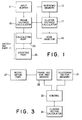
- an input pattern buffer 11 is for the time sequence of input pattern feature vectors.
- the input pattern buffer 11 is used in the manner known in the art and is briefly called an input buffer. Like naming will be used throughout the description.
- the set of reference pattern feature vectors is preliminarily stored in a reference pattern memory 13.
- the set of reference pattern feature vectors is converted with reference to a code book of Expression (4) into a set of frame vectors b(1), b(2), ..., b(k), ..., and b(K), where k represents a vector quantization code number as a frame number and is used in place of the reference pattern time instant.
- K represents a final frame number which corresponds to the above-mentioned pattern length J.
- a frame distance d(k) is typically calculated by a Euclidean distance: ⁇ x - b(k) ⁇ 2, where x is a simplified notation of each input pattern feature vector.
- This frame distance is used in place of the vector distance exemplified by Formula (3) and is used in the minimization problem described hereinabove.
- a tree structure is for use in the reference memory 13 in storing the set of frame vectors.
- the tree structure comprises a root node N1 on a root stage to represent the set of frame vectors.
- first through twenty-seventh leaf nodes F1, F2, ..., and F27 are on a leaf stage farthest from the root stage to individually represent the frame vectors.
- the tree structure is composed of such nodes arranged on first through fourth stages, among which the first through the fourth stages are the root and the leaf stages.
- first through third primary intermediate nodes N11, N12, and N13 are on the second stage to represent first through third primary subsets of the set.
- First through ninth secondary intermediate nodes N111, N112, N113, N121, ..., and N133 are on the third stage to represent secondary subsets of the first through the third primary subsets.
- the tree structure comprises a plurality of intermediate nodes, such as N11 and N111, on primary and secondary intermediate stages, namely, on at least one intermediate stages, between the root and the leaf stages.
- such subsets are represented by the intermediate nodes of the at least one intermediate stage.
- the intermediate nodes are given cluster vectors representative of the clusters.
- the frame vectors serve as cluster vectors per se.
- a frame distance calculator 15 successively reads the input pattern feature vectors and controls a cluster distance calculator 17 and a selected node selector 19.
- the cluster distance calculator 17 refers to the reference memory 13 to receive therefrom first the cluster vectors of one of the primary subsets, such as of the first primary subsets, and subsequently the cluster vectors of other primary subsets.
- the frame distance calculator 15 makes the cluster distance calculator 17 first use the root node N1 as a mother node and the first through the third primary intermediate nodes N11 to N13 as daughter nodes.
- the daughter nodes are related to the mother node either by a branch or by a twig of the tree structure and are on a stage next farther from the root stage than a stage on which the mother node is.
- the cluster distance calculator 17 calculates cluster distances between each input pattern feature vector and the cluster vectors of the first primary subset.
- the selected node selector 19 selects a prespecified number, such as two, of the daughter nodes as at least one selected node.
- this at least one selected node consists of first and second selected nodes.
- the selected nodes represent ones of the cluster vectors that give shorter cluster distances.
- One of the daughter nodes is first selected, for which a shortest one of the cluster distances is calculated.
- the frame distance calculator 15 specifies each of the first and the second primary intermediate nodes N11 and N12 afresh as the mother node.
- the first through the third secondary intermediate nodes N111 to N113 are used as the daughter nodes of the mother node N11.
- the fourth through the sixth secondary intermediate nodes N121 to N123 are the daughter nodes of the mother node N12.
- the cluster distance calculator 17 calculates cluster distances relative to the cluster vectors of the secondary subsets of the first primary subset and later relative to the cluster vectors of the secondary subsets of the second primary subset.
- the selected node selector 19 selects at least one selected node at a time from the first through the third secondary intermediate nodes N111 to N113 and from the fourth through the sixth secondary intermediate nodes N121 to N123.
- first and the second secondary intermediate nodes N111 and N112 are selected as the at least one selected node and that the fourth and the fifth secondary intermediate nodes N121 and N122 are selected.
- Each of these selected nodes N111 and N112 is used afresh as the mother node.
- the daughter nodes are now the first through the third leaf nodes F1 to F3 and the fourth through the sixth leaf nodes F4 to F6.
- the fourth and the fifth secondary intermediate nodes N121 and N122 are used afresh as the mother nodes, their daughter nodes are the tenth through the twelfth leaf nodes F10 to F12 and are the thirteenth through the fifteenth leaf nodes F13 to F15.
- the cluster distance calculator 17 calculates cluster distances e(F1) through e(F6) relative to the cluster or the frame vectors represented by the first through the sixth leaf nodes F1 to F6 and cluster distances e(F10) through e(F15) relative to the cluster vectors represented by the tenth through the fifteenth leaf nodes F10 to F15.
- the cluster distance calculator 17 does not calculate such cluster distances relative to the cluster vectors represented by each unselected node, such as N13, which the selected node selector 19 does not select as the at least one selected node from or among the primary intermediate nodes.
- cluster distance calculator 17 calculate the cluster distances relative to the cluster or the frame vectors represented by unselected nodes, such as N113, N123, F7 to F9, and F16 to F18, that are not selected as the at least one selected node from the intermediate nodes of additional intermediate stages and from the leaf nodes.
- the frame distance calculator 15 calculates the frame distance d(k)'s between each input pattern feature vector and the frame vectors b(k)'s as follows, where e(N11) and so forth represent the cluster distances calculated relative to the intermediate nodes N11 and so on.
- the frame distance calculator 15 calculates the frame distances in accordance with distance calculating procedures for each input pattern feature vector as follows.
- the reference memory 13 is preliminarily loaded with the frame vectors in a tree structure.
- a root node N1 represents the set of frame vectors.
- a plurality of leaf nodes such as F1 individually represent the frame vectors of the set.
- a plurality of intermediate nodes such as N11 and N111, represent subsets of the set, respectively.
- the at least one intermediate stage may comprise a primary stage and furthermore at least one additional stage. Such additional stage or stages may be called a secondary stage.
- Cluster vectors are given by the subsets and the leaf-stage frame vectors, respectively.
- the cluster distance calculator 17 calculates cluster distances between each input pattern feature vector and specified vectors represented among the cluster vectors by ones of the intermediate nodes that are specified on a single specified stage as specified nodes, such as N11 through N13.
- specified nodes such as N11 through N13.
- the selected node selector 19 selects at least one selected node from daughter nodes of a mother node, which is shortly become clear. In any event, the daughter nodes are on a stage next farther from the root stage than another stage on which the mother node is present. In order to select such selected node or nodes, attention is directed to the cluster distances calculated relative to the cluster vectors represented by the daughter nodes. The selected nodes are selected to a prespecified number starting from one of the daughter nodes for which a shortest one of the last-mentioned cluster distances is calculated.
- the frame distance calculator 15 controls the cluster distance calculator 17 to specify the specified stage consecutively towards the leaf stage from the primary stage, namely, a stage nearest to the root stage in the intermediate stage or stages. Specifying the specified stage, the frame distance calculator 15 makes the cluster distance calculator 17 use, as the specified nodes, first the daughter nodes N11 to N13 of the root node N1 and subsequently the daughter nodes N111 to N113 and N121 to N123 of each of the at least one selected node, such as N11 and N12. Furthermore, the frame distance calculator 15 controls the selected node selector 19 so as to select the selected node or nodes from the intermediate nodes.
- the frame distance calculator 15 controls the cluster distance calculator 17 and the selected node selector 19 to deal with the procedures (A1) through (A6) and to produce the frame distances d(1) to d(K).
- the frame distance calculator 15 calculates each frame distance by using the cluster distances along a path from each of the at least one selected node N11 or N12 selected with the root node N1 used as the mother node and along branches branched from the path to ones, such as F1 to F3 or F4 to F6, of the leaf nodes when these ones of leaf nodes are used as the daughter nodes of the at least one selected node, such as now N111 and N112 or N121 and N122, selected ultimately in each branch from the intermediate nodes.
- a matching part 21 calculates pattern distance between the input pattern and the reference patterns by solving the above-described minimization problem with use of the frame distances successively calculated by the frame distance calculator 15 typically between the time sequence of input pattern feature vectors and the set of frame vectors representative of the frame patterns.
- a calculating part 23 of the matching part 21 and the frame distance calculator 15 are operable collectively as a pattern distance calculating unit.
- this part 23 may be called a calculating unit for calculating the pattern differences by using the frame distances.
- a remaining part of the matching part 21 serves as a locating part 25 for locating the input pattern among the reference patterns by finding the best match between the time sequence and the stored sequences of reference pattern feature vectors which are used as the set of frame vectors.
- the remaining part 25 consequently serves as a locating unit for locating the input pattern as one of the reference patterns that minimizes the pattern distances.
- a recognition part 27 corresponds to a combination of the input buffer 11, the frame distance calculator 15, the cluster distance calculator 17, the selected node selector 19, and the matching part 21.
- a frame vector tree memory 29 of the reference memory 13 is loaded with the tree structure of the set of frame vectors.
- a clustering vector memory 31 is preliminarily loaded with the frame vectors of the set as lustering vectors.
- a controller 33 successively reads from the clustering vector memory 31 the clustering vector as read vectors and makes a cluster vector calculator or processor 35 execute clustering procedures as follows.
- the pattern recognition device of Fig. 4 is for locating an input pattern X exemplified by Equation (1) among reference patterns B of the type described.
- the reference patterns are represented by a set of element distributions of continuous mixture density or distribution hidden Markov models described heretobefore.
- the continuous mixture distributions are derived from a plurality of multi-dimensional or N-dimensional element Gaussian distribution, where N represents the number of dimensions.
- the code book of Equation (4) will again be used in converting a set of element distributions into a set of frame distributions of the frame number k variable between 1 and the final frame number K.
- a maximization problem is used wherein the minimum is changed to a maximum.
- likelihoods are substituted for the distances.
- the pattern recognition device comprises an input buffer 11 which is not different from that described in connection with Fig. 1.
- a reference memory 13 is similar to that of Fig. 1.
- the reference memory 13 is, however, preliminarily loaded with the set of frame distributions in a tree structure exemplified with reference to Fig. 2.
- the nodes N11 to N13, N111 to N133, and F1 to F27 represent the frame distributions.
- the subsets and the frame distributions represented by the leaf nodes F1 to F27 are called cluster distributions.
- a frame likelihood calculator 37 controls a cluster likelihood calculator 39 and a selected node selector which is very similar to the selected node selector 19 of Fig. 1 and is consequently designated by the reference numeral 19.
- the cluster likelihood calculator 39 refers to the reference memory 13 to receive therefrom first the cluster distribution of one of the primary subsets, such as the first primary subset represented by the first primary intermediate node N11, and subsequently the cluster distributions of other primary subsets represented by other primary intermediate nodes, such as N12 and N13.
- the frame likelihood calculator 37 makes the cluster likelihood calculator 39 first use the root node N1 as a mother node and the primary intermediate nodes N11 through N13 as daughter nodes.
- the cluster likelihood calculator 39 calculates cluster likelihoods between each input feature vector and the cluster distributions of the first primary subset.
- the selected node selector 19 selects a prespecified number, such as two, of the daughter nodes N11 to N13 as at least one selected node.
- this at least one selected node consists of first and second selected nodes.
- the selected nodes represent ones of the cluster likelihoods that now give greater cluster likelihoods.
- One of the daughter nodes is first selected, for which a greatest one of the cluster likelihoods is calculated.
- the frame likelihood calculator 37 specifies each of the first and the second primary intermediate nodes N11 and N12 afresh as the mother node.
- the first through the third secondary intermediate nodes N111 to N113 are used as the daughter nodes of the mother node N11.
- the fourth through the sixth secondary intermediate nodes N121 to N123 are the daughter nodes of the mother node N12.
- the cluster likelihood calculator 39 later calculates cluster likelihoods relative to the cluster distributions of the secondary subsets.
- the selected node selector 19 selects at least one selected node from the first through the third secondary intermediate nodes N111 to N123 and from the fourth through the sixth secondary intermediate nodes N121 to N123.
- first and the second secondary intermediate nodes N111 and N112 are selected as the at least one selected node and that the fourth and the fifth secondary intermediate nodes N121 and N122 are selected.
- Each of these selected nodes N111 and N112 is used afresh as the mother node.
- the daughter nodes are now the first through the third leaf nodes F1 to F3 and the fourth through the sixth leaf nodes F4 to F6.
- the fourth and the fifth secondary intermediate nodes N121 and N122 are used afresh as the mother nodes, their daughter nodes are the tenth through the fifteenth leaf nodes F10 to F15.
- the cluster likelihood calculator 39 calculates cluster likelihoods e(F1) through e(F6) relative to the clusters or the frame distributions represented by the first through the sixth leaf nodes F1 to F6 and cluster likelihoods e(F10) through e(F15) relative to the cluster distributions represented by the tenth through the fifteenth leaf nodes F10 to F15.
- the cluster likelihood calculator 39 does not calculate such cluster likelihoods relative to the cluster distributions represented by each unselected node, such as N13, which the selected node selector 19 does not select as the at least one selected node from the daughter nodes, such as N11 to N13, of the root node N1.
- cluster likelihood calculator 39 calculate the cluster likelihoods relative to the clusters or the frame distributions represented by unselected nodes, such as N113, N123, F7 to F9, and F16 to F18, that are not selected as the at least one selected node from the intermediate nodes of the secondary stage and from the leaf nodes.
- the frame likelihood calculator 37 calculates the frame likelihoods p(k)'s in the manner described above in connection with the frame distances d(k)'s.
- the frame likelihoods are consequently calculated in accordance with likelihood calculating procedures for each input pattern feature vector as follows.
- the reference memory 13 is preliminarily loaded with element distributions of a set representative of the continuous mixture density hidden Markov models which represent, in turn, a plurality of reference patterns.
- the element distributions are typically the frame distributions described above.
- a root node N1 On a root stage of the tree structure, a root node N1 represents the set of element distributions. On a leaf stage farthest from the root stage, a plurality of leaf nodes, such as F1, individually represent the element distributions of the set. On at least one intermediate stage between the root and the leaf stages, a plurality of intermediate nodes, such as N11 and N111, represent subsets of the set, respectively.
- the at least one intermediate stage may comprise a primary stage and furthermore at least one additional stage. Such additional stage or stages may be called a secondary stage. Cluster distributions are given by the subsets and the leaf-stage element distributions, respectively.
- the cluster likelihood calculator 39 calculates cluster likelihoods between each input pattern feature vector and specified distributions represented among the cluster distributions by ones of the intermediate nodes that are specified on a single specified stage as specified nodes, such as N11 through N13.
- specified nodes such as N11 through N13.
- the selected node selector 19 selects at least one selected node from daughter nodes of a mother node, which is shortly become clear. In any event, the daughter nodes are on a stage next farther from the root stage than another stage on which the mother node is present. In order to select such selected node or nodes, attention is directed to the cluster likelihoods calculated relative to the cluster distributions represented by the daughter nodes. The selected nodes are selected to a prespecified number starting from one of the daughter nodes for which a greatest one of the last-mentioned cluster likelihoods is calculated.
- the frame likelihood calculator 37 controls the cluster likelihood calculator 39 to specify the specified stage consecutively towards the leaf stage from the primary stage, namely, a stage nearest to the root stage in the intermediate stage or stages. Specifying the specified stage, the frame likelihood calculator 37 makes the cluster likelihood calculator 39 use, as the specified nodes, first the daughter nodes N11 to N13 of the root node N1 and subsequently the daughter nodes N111 to N113 and N121 to N123 of each of the at least one selected node, such as N11 and N12. Furthermore, the frame likelihood calculator 37 controls the selected node selector 19 so as to select the selected node or nodes from the intermediate nodes.
- the frame likelihood calculator 37 controls the cluster likelihood calculator 39 and the selected node selector 19 to deal with the procedures (B1) through (B6) and to produce the frame distributions b(1) to b(K).
- the frame likelihood calculator 37 calculates each frame likelihood by using the cluster likelihoods along a path from each of the at least one selected node N11 or N12 selected with the root node N1 used as the mother node and along branches branched from the path to ones, such as F1 to F3 or F4 to F6, of the leaf nodes when these ones of the leaf nodes are used as the daughter nodes of the at least one selected node, such as now N111 and N112 or N121 and N122, selected ultimately in each branch from the intermediate nodes.
- a pattern likelihood calculator 41 calculates pattern likelihoods between the input pattern and the reference patterns by solving the above-described maximization problem with one of the frame likelihoods successively calculated between the time sequence of the input pattern feature vectors and the set of frame distributions representative of the reference patterns.
- a locating unit is denoted by the reference numeral 25. Finding the best match between the input pattern among the reference patterns, the locating unit 25 locates the input pattern as one of the reference patterns that maximizes the pattern likelihoods.
- a recognition part corresponds to that described in connection with Fig. 3 and is therefore designated by the reference numeral 27. More specifically, this recognition part 27 serves as a combination of the input buffer 11, the frame likelihood calculator 37, the cluster distance calculator 39, the selected node selector 19, the pattern likelihood calculator 41, and the locating unit 25. Preliminarily before start of operation of the recognition part 27, a frame distribution tree memory 43 of the reference memory 13 is located with the tree structure of the set of element or frame distributions.
- a clustering distribution memory 45 is preliminarily loaded with the frame distributions or element distributions of the set as clustering distributions N j [x], where j represents a j-th element distribution and is variable between 1 and J, both inclusive.
- the set of element distributions corresponds to the reference patterns B.
- the indexes 1 to J of the reference pattern feature vectors are consequently used herein to identify the element distributions N j [x].
- a controller 47 successively reads from the clustering distribution memory 45 the clustering distributions as read distributions and makes a cluster distribution calculator or processor 49 execute clustering procedures as follows.
- the cluster distribution calculator 49 is operable in the manner described hereunder.
- an initial cluster center distribution is arbitrarily decided at a first step S1.
- This distribution consists of first through K-th initial cluster centers N01[x], N02[x], ..., N0 k [x], ..., and N0 K x .
- k represents a cluster number and will be used to furthermore identify a k-th cluster.
- a distribution code c(j) is decided by deciding therefor the cluster number which minimizes the distance for each element distribution. That is:
- a new cluster center distribution is decided by a distribution mean of element distributions belonging to each previously decided cluster center distribution.
- an i-th element of the distribution mean of the cluster centers of the cluster k will be designated by ⁇ i (k).
- an i-th element of the distribution mean of the element distributions will be denoted by ⁇ i (j).
- an i-th element of divergences of the element distributions will be represented by ⁇ i 2(j).
- This i-th element serves as an i-th element of the divergence of the cluster centers.
- condition equation is introduced as described in the following.
- check is carried out whether or not the clustering procedures result in convergence of the condition equation. If this equation converges, the clustering procedure comes to an end. Otherwise, the procedures are again followed from the second step S2 until the clustering procedures result in convergence.
- the condition equation is:
- the controller 47 makes the cluster distribution calculator 49 execute the clustering operation of the procedures (B11) to (B13) until the procedure (B14) results in convergence of the condition equation.
- the controller 47 stores a result of the clustering operation in the frame distribution tree memory 43.
- the reference memory 13 is loaded with the set of frame distribution.
- the set of frame vectors is similarly stored in the frame vector tree memory 29 and consequently in the reference memory 13.
- the nodes N11 through N133 may represent subsets of the reference pattern feature vectors with the leaf nodes F1 to F27 made to represent the respective reference pattern feature vectors as they stand.
- the primary subsets represent individual reference patterns.
- the number of stages may or may not differ from a primary subset to another primary subset.
- the number of daughter nodes of each mother node may depend on the circumstances.
- the prespecified number is specified in consideration of a speed which is desired in recognizing the input pattern.
- the number of repetitions of the (A2) through the (A4) procedures may depend on the primary subsets.
- the representative vector may either be an average vector of the frame vectors belonging to each cluster or be one of the frame vectors that is nearest to the average vector.
- the (A14) procedure it is possible to empirically determine the specified number of times.
Landscapes
- Engineering & Computer Science (AREA)
- Computational Linguistics (AREA)
- Health & Medical Sciences (AREA)
- Audiology, Speech & Language Pathology (AREA)
- Human Computer Interaction (AREA)
- Physics & Mathematics (AREA)
- Acoustics & Sound (AREA)
- Multimedia (AREA)
- Image Analysis (AREA)
Applications Claiming Priority (3)
| Application Number | Priority Date | Filing Date | Title |
|---|---|---|---|
| JP5133049A JP2522154B2 (ja) | 1993-06-03 | 1993-06-03 | 音声認識システム |
| JP133049/93 | 1993-06-03 | ||
| JP13304993 | 1993-06-03 |
Publications (2)
| Publication Number | Publication Date |
|---|---|
| EP0627726A1 true EP0627726A1 (fr) | 1994-12-07 |
| EP0627726B1 EP0627726B1 (fr) | 1999-09-29 |
Family
ID=15095626
Family Applications (1)
| Application Number | Title | Priority Date | Filing Date |
|---|---|---|---|
| EP94108456A Expired - Lifetime EP0627726B1 (fr) | 1993-06-03 | 1994-06-01 | Reconnaissance de formes avec structure en arbre utilisée pour les vecteurs caractéristiques de reférence ou pour les modéles de Markov cachés. |
Country Status (5)
| Country | Link |
|---|---|
| US (1) | US5912989A (fr) |
| EP (1) | EP0627726B1 (fr) |
| JP (1) | JP2522154B2 (fr) |
| CA (1) | CA2124906C (fr) |
| DE (1) | DE69420891T2 (fr) |
Cited By (9)
| Publication number | Priority date | Publication date | Assignee | Title |
|---|---|---|---|---|
| WO1997008686A3 (fr) * | 1995-08-28 | 1997-04-03 | Philips Electronics Nv | Procede et systeme de reconnaissance de formes d'apres des densites de probabilite organisees de maniere arborescente |
| WO1997008685A3 (fr) * | 1995-08-28 | 1997-04-03 | Philips Electronics Nv | Procede et systeme de reconnaissance de motifs bases sur la construction dynamique d'un sous-ensemble de vecteurs de reference |
| DE19723294A1 (de) * | 1997-06-04 | 1998-12-10 | Daimler Benz Ag | Mustererkennungsverfahren |
| EP0856835A3 (fr) * | 1997-01-30 | 1999-03-31 | Nec Corporation | Dispositif de reconnaissance vocale d'un locateur |
| EP0855700A3 (fr) * | 1997-01-28 | 1999-03-31 | Nec Corporation | Système de reconnaissance du locuteur capable de sélectionner des formes der référence inhibitantes à faible quantité de calcul |
| GB2331173A (en) * | 1997-10-23 | 1999-05-12 | Softsound Limited | Recognition |
| WO1999031605A1 (fr) * | 1997-12-18 | 1999-06-24 | Koninklijke Philips Electronics N.V. | Systeme de recherche d'images |
| GB2333172A (en) * | 1998-01-13 | 1999-07-14 | Softsound Limited | Recognition |
| US6499033B1 (en) * | 1998-05-09 | 2002-12-24 | Isc, Inc. | Database method and apparatus using hierarchical bit vector index structure |
Families Citing this family (31)
| Publication number | Priority date | Publication date | Assignee | Title |
|---|---|---|---|---|
| US6850252B1 (en) | 1999-10-05 | 2005-02-01 | Steven M. Hoffberg | Intelligent electronic appliance system and method |
| US7242988B1 (en) | 1991-12-23 | 2007-07-10 | Linda Irene Hoffberg | Adaptive pattern recognition based controller apparatus and method and human-factored interface therefore |
| US10361802B1 (en) | 1999-02-01 | 2019-07-23 | Blanding Hovenweep, Llc | Adaptive pattern recognition based control system and method |
| US8352400B2 (en) | 1991-12-23 | 2013-01-08 | Hoffberg Steven M | Adaptive pattern recognition based controller apparatus and method and human-factored interface therefore |
| US6400996B1 (en) | 1999-02-01 | 2002-06-04 | Steven M. Hoffberg | Adaptive pattern recognition based control system and method |
| US6418424B1 (en) | 1991-12-23 | 2002-07-09 | Steven M. Hoffberg | Ergonomic man-machine interface incorporating adaptive pattern recognition based control system |
| JPH08146988A (ja) * | 1994-11-21 | 1996-06-07 | N T T Data Tsushin Kk | 音声認識方法及び音声認識装置 |
| JP2751856B2 (ja) | 1995-02-03 | 1998-05-18 | 日本電気株式会社 | 木構造を用いたパターン適応化方式 |
| JP3092491B2 (ja) | 1995-08-30 | 2000-09-25 | 日本電気株式会社 | 記述長最小基準を用いたパターン適応化方式 |
| US6128587A (en) * | 1997-01-14 | 2000-10-03 | The Regents Of The University Of California | Method and apparatus using Bayesian subfamily identification for sequence analysis |
| JP3067683B2 (ja) * | 1997-04-01 | 2000-07-17 | 日本電気株式会社 | パターン認識装置および方法、情報記憶媒体 |
| US6151574A (en) * | 1997-12-05 | 2000-11-21 | Lucent Technologies Inc. | Technique for adaptation of hidden markov models for speech recognition |
| US6272250B1 (en) * | 1999-01-20 | 2001-08-07 | University Of Washington | Color clustering for scene change detection and object tracking in video sequences |
| US6721759B1 (en) * | 1998-12-24 | 2004-04-13 | Sony Corporation | Techniques for spatial representation of data and browsing based on similarity |
| US7966078B2 (en) | 1999-02-01 | 2011-06-21 | Steven Hoffberg | Network media appliance system and method |
| US6594392B2 (en) * | 1999-05-17 | 2003-07-15 | Intel Corporation | Pattern recognition based on piecewise linear probability density function |
| US6526379B1 (en) * | 1999-11-29 | 2003-02-25 | Matsushita Electric Industrial Co., Ltd. | Discriminative clustering methods for automatic speech recognition |
| US20040205035A1 (en) * | 2000-05-01 | 2004-10-14 | Norbert Rimoux | Method and system for adaptive learning and pattern recognition |
| US7454341B1 (en) * | 2000-09-30 | 2008-11-18 | Intel Corporation | Method, apparatus, and system for building a compact model for large vocabulary continuous speech recognition (LVCSR) system |
| US6978239B2 (en) * | 2000-12-04 | 2005-12-20 | Microsoft Corporation | Method and apparatus for speech synthesis without prosody modification |
| US7802236B2 (en) * | 2002-09-09 | 2010-09-21 | The Regents Of The University Of California | Method and apparatus for identifying similar regions of a program's execution |
| US7496498B2 (en) * | 2003-03-24 | 2009-02-24 | Microsoft Corporation | Front-end architecture for a multi-lingual text-to-speech system |
| US7542949B2 (en) * | 2004-05-12 | 2009-06-02 | Mitsubishi Electric Research Laboratories, Inc. | Determining temporal patterns in sensed data sequences by hierarchical decomposition of hidden Markov models |
| US7805301B2 (en) * | 2005-07-01 | 2010-09-28 | Microsoft Corporation | Covariance estimation for pattern recognition |
| US20100185672A1 (en) * | 2009-01-21 | 2010-07-22 | Rising Iii Hawley K | Techniques for spatial representation of data and browsing based on similarity |
| US20100239168A1 (en) * | 2009-03-20 | 2010-09-23 | Microsoft Corporation | Semi-tied covariance modelling for handwriting recognition |
| US20100246941A1 (en) * | 2009-03-24 | 2010-09-30 | Microsoft Corporation | Precision constrained gaussian model for handwriting recognition |
| US9336774B1 (en) * | 2012-04-20 | 2016-05-10 | Google Inc. | Pattern recognizing engine |
| CN110889438B (zh) * | 2019-11-08 | 2023-07-04 | 重庆金山医疗技术研究院有限公司 | 一种图像处理方法、装置、电子设备及存储介质 |
| WO2021202552A1 (fr) | 2020-03-30 | 2021-10-07 | Oracle International Corporation | Techniques améliorées pour la détection hors domaine (ood) |
| US11823478B2 (en) | 2022-04-06 | 2023-11-21 | Oracle International Corporation | Pseudo labelling for key-value extraction from documents |
Citations (3)
| Publication number | Priority date | Publication date | Assignee | Title |
|---|---|---|---|---|
| EP0349819A1 (fr) * | 1988-07-05 | 1990-01-10 | Siemens Aktiengesellschaft | Réseau neuronal numérique en forme de circuit intégré |
| US5060282A (en) * | 1990-03-26 | 1991-10-22 | The United States Of America As Represented By The United States Department Of Energy | Optical pattern recognition architecture implementing the mean-square error correlation algorithm |
| EP0572335A2 (fr) * | 1992-05-29 | 1993-12-01 | Eastman Kodak Company | Classification de caractéristiques avec reconnaissance de formes statistiques supervisées |
Family Cites Families (6)
| Publication number | Priority date | Publication date | Assignee | Title |
|---|---|---|---|---|
| JPS5525150A (en) * | 1978-08-10 | 1980-02-22 | Nec Corp | Pattern recognition unit |
| JPS55157799A (en) * | 1979-05-29 | 1980-12-08 | Nippon Electric Co | High efficiency pattern matching unit |
| JP2940933B2 (ja) * | 1989-05-20 | 1999-08-25 | 株式会社リコー | パターン認識方式 |
| JPH07104952B2 (ja) * | 1989-12-28 | 1995-11-13 | シャープ株式会社 | パターンマッチング装置 |
| US5276766A (en) * | 1991-07-16 | 1994-01-04 | International Business Machines Corporation | Fast algorithm for deriving acoustic prototypes for automatic speech recognition |
| JP3118725B2 (ja) * | 1991-09-11 | 2000-12-18 | 株式会社日立製作所 | 自動分類方法 |
-
1993
- 1993-06-03 JP JP5133049A patent/JP2522154B2/ja not_active Expired - Fee Related
-
1994
- 1994-06-01 CA CA002124906A patent/CA2124906C/fr not_active Expired - Fee Related
- 1994-06-01 EP EP94108456A patent/EP0627726B1/fr not_active Expired - Lifetime
- 1994-06-01 DE DE69420891T patent/DE69420891T2/de not_active Expired - Lifetime
-
1996
- 1996-06-06 US US08/659,557 patent/US5912989A/en not_active Expired - Lifetime
Patent Citations (3)
| Publication number | Priority date | Publication date | Assignee | Title |
|---|---|---|---|---|
| EP0349819A1 (fr) * | 1988-07-05 | 1990-01-10 | Siemens Aktiengesellschaft | Réseau neuronal numérique en forme de circuit intégré |
| US5060282A (en) * | 1990-03-26 | 1991-10-22 | The United States Of America As Represented By The United States Department Of Energy | Optical pattern recognition architecture implementing the mean-square error correlation algorithm |
| EP0572335A2 (fr) * | 1992-05-29 | 1993-12-01 | Eastman Kodak Company | Classification de caractéristiques avec reconnaissance de formes statistiques supervisées |
Cited By (15)
| Publication number | Priority date | Publication date | Assignee | Title |
|---|---|---|---|---|
| US5933806A (en) * | 1995-08-28 | 1999-08-03 | U.S. Philips Corporation | Method and system for pattern recognition based on dynamically constructing a subset of reference vectors |
| WO1997008686A3 (fr) * | 1995-08-28 | 1997-04-03 | Philips Electronics Nv | Procede et systeme de reconnaissance de formes d'apres des densites de probabilite organisees de maniere arborescente |
| US5857169A (en) * | 1995-08-28 | 1999-01-05 | U.S. Philips Corporation | Method and system for pattern recognition based on tree organized probability densities |
| WO1997008685A3 (fr) * | 1995-08-28 | 1997-04-03 | Philips Electronics Nv | Procede et systeme de reconnaissance de motifs bases sur la construction dynamique d'un sous-ensemble de vecteurs de reference |
| EP0855700A3 (fr) * | 1997-01-28 | 1999-03-31 | Nec Corporation | Système de reconnaissance du locuteur capable de sélectionner des formes der référence inhibitantes à faible quantité de calcul |
| EP0856835A3 (fr) * | 1997-01-30 | 1999-03-31 | Nec Corporation | Dispositif de reconnaissance vocale d'un locateur |
| DE19723294A1 (de) * | 1997-06-04 | 1998-12-10 | Daimler Benz Ag | Mustererkennungsverfahren |
| DE19723294C2 (de) * | 1997-06-04 | 2003-06-18 | Daimler Chrysler Ag | Mustererkennungsverfahren |
| US5983180A (en) * | 1997-10-23 | 1999-11-09 | Softsound Limited | Recognition of sequential data using finite state sequence models organized in a tree structure |
| GB2331173A (en) * | 1997-10-23 | 1999-05-12 | Softsound Limited | Recognition |
| GB2331173B (en) * | 1997-10-23 | 2001-10-24 | Softsound Ltd | Recognition apparatus and method |
| WO1999031605A1 (fr) * | 1997-12-18 | 1999-06-24 | Koninklijke Philips Electronics N.V. | Systeme de recherche d'images |
| US6163622A (en) * | 1997-12-18 | 2000-12-19 | U.S. Philips Corporation | Image retrieval system |
| GB2333172A (en) * | 1998-01-13 | 1999-07-14 | Softsound Limited | Recognition |
| US6499033B1 (en) * | 1998-05-09 | 2002-12-24 | Isc, Inc. | Database method and apparatus using hierarchical bit vector index structure |
Also Published As
| Publication number | Publication date |
|---|---|
| JP2522154B2 (ja) | 1996-08-07 |
| US5912989A (en) | 1999-06-15 |
| JPH06348292A (ja) | 1994-12-22 |
| CA2124906C (fr) | 1999-09-14 |
| DE69420891D1 (de) | 1999-11-04 |
| EP0627726B1 (fr) | 1999-09-29 |
| CA2124906A1 (fr) | 1994-12-04 |
| DE69420891T2 (de) | 2000-07-06 |
Similar Documents
| Publication | Publication Date | Title |
|---|---|---|
| US5912989A (en) | Pattern recognition with a tree structure used for reference pattern feature vectors or for HMM | |
| Liu et al. | Any-to-many voice conversion with location-relative sequence-to-sequence modeling | |
| US5933806A (en) | Method and system for pattern recognition based on dynamically constructing a subset of reference vectors | |
| JP3948747B2 (ja) | ツリー構成確率密度に基づくパターン認識の方法及びシステム | |
| Hifny et al. | Speech recognition using augmented conditional random fields | |
| JP2795058B2 (ja) | 時系列信号処理装置 | |
| Wilpon et al. | A modified K-means clustering algorithm for use in isolated work recognition | |
| AU751310B2 (en) | Speech recognition system employing discriminatively trained models | |
| Bilmes | Factored sparse inverse covariance matrices | |
| US6092042A (en) | Speech recognition method and apparatus | |
| EP0715298A1 (fr) | Réduction de l'espace de recherche dans la reconnaissance du langage sous utilisation des limites et classement du son | |
| US6023673A (en) | Hierarchical labeler in a speech recognition system | |
| WO1992014237A1 (fr) | Procede de reconnaissance de la parole au moyen de modeles de markov caches motives du point de vue linguistique | |
| US5825977A (en) | Word hypothesizer based on reliably detected phoneme similarity regions | |
| Lee et al. | Gaussian mixture selection using context-independent HMM | |
| CN1391211A (zh) | 对识别系统中的参数进行训练的方法和系统 | |
| US7454341B1 (en) | Method, apparatus, and system for building a compact model for large vocabulary continuous speech recognition (LVCSR) system | |
| Axelrod et al. | Subspace constrained Gaussian mixture models for speech recognition | |
| KR20120045582A (ko) | 음향 모델 생성 장치 및 방법 | |
| Kimber et al. | Speaker-independent vowel classification using hidden Markov models and LVQ2 | |
| Shen et al. | Automatic selection of phonetically distributed sentence sets for speaker adaptation with application to large vocabulary Mandarin speech recognition | |
| Neukirchen et al. | A continuous density interpretation of discrete HMM systems and MMI-neural networks | |
| JPH10149192A (ja) | パターン認識方法、装置およびその記憶媒体 | |
| Cheng et al. | Matrix updates for perceptron training of continuous density hidden markov models | |
| JP3249676B2 (ja) | パターン認識辞書作成方法 |
Legal Events
| Date | Code | Title | Description |
|---|---|---|---|
| PUAI | Public reference made under article 153(3) epc to a published international application that has entered the european phase |
Free format text: ORIGINAL CODE: 0009012 |
|
| 17P | Request for examination filed |
Effective date: 19940921 |
|
| AK | Designated contracting states |
Kind code of ref document: A1 Designated state(s): DE FR GB |
|
| 17Q | First examination report despatched |
Effective date: 19971119 |
|
| GRAG | Despatch of communication of intention to grant |
Free format text: ORIGINAL CODE: EPIDOS AGRA |
|
| GRAG | Despatch of communication of intention to grant |
Free format text: ORIGINAL CODE: EPIDOS AGRA |
|
| GRAG | Despatch of communication of intention to grant |
Free format text: ORIGINAL CODE: EPIDOS AGRA |
|
| GRAH | Despatch of communication of intention to grant a patent |
Free format text: ORIGINAL CODE: EPIDOS IGRA |
|
| GRAH | Despatch of communication of intention to grant a patent |
Free format text: ORIGINAL CODE: EPIDOS IGRA |
|
| GRAA | (expected) grant |
Free format text: ORIGINAL CODE: 0009210 |
|
| AK | Designated contracting states |
Kind code of ref document: B1 Designated state(s): DE FR GB |
|
| REF | Corresponds to: |
Ref document number: 69420891 Country of ref document: DE Date of ref document: 19991104 |
|
| ET | Fr: translation filed | ||
| PLBE | No opposition filed within time limit |
Free format text: ORIGINAL CODE: 0009261 |
|
| STAA | Information on the status of an ep patent application or granted ep patent |
Free format text: STATUS: NO OPPOSITION FILED WITHIN TIME LIMIT |
|
| 26N | No opposition filed | ||
| REG | Reference to a national code |
Ref country code: GB Ref legal event code: IF02 |
|
| PGFP | Annual fee paid to national office [announced via postgrant information from national office to epo] |
Ref country code: DE Payment date: 20130529 Year of fee payment: 20 Ref country code: GB Payment date: 20130529 Year of fee payment: 20 |
|
| PGFP | Annual fee paid to national office [announced via postgrant information from national office to epo] |
Ref country code: FR Payment date: 20130624 Year of fee payment: 20 |
|
| REG | Reference to a national code |
Ref country code: DE Ref legal event code: R071 Ref document number: 69420891 Country of ref document: DE |
|
| REG | Reference to a national code |
Ref country code: GB Ref legal event code: PE20 Expiry date: 20140531 |
|
| PG25 | Lapsed in a contracting state [announced via postgrant information from national office to epo] |
Ref country code: GB Free format text: LAPSE BECAUSE OF EXPIRATION OF PROTECTION Effective date: 20140531 |
|
| PG25 | Lapsed in a contracting state [announced via postgrant information from national office to epo] |
Ref country code: DE Free format text: LAPSE BECAUSE OF EXPIRATION OF PROTECTION Effective date: 20140603 |