EP0628568A2 - Procédé d'immobilsation d'acides nucléiques - Google Patents
Procédé d'immobilsation d'acides nucléiques Download PDFInfo
- Publication number
- EP0628568A2 EP0628568A2 EP94108442A EP94108442A EP0628568A2 EP 0628568 A2 EP0628568 A2 EP 0628568A2 EP 94108442 A EP94108442 A EP 94108442A EP 94108442 A EP94108442 A EP 94108442A EP 0628568 A2 EP0628568 A2 EP 0628568A2
- Authority
- EP
- European Patent Office
- Prior art keywords
- capture probe
- nucleic acids
- nucleic acid
- detection
- triphosphate
- Prior art date
- Legal status (The legal status is an assumption and is not a legal conclusion. Google has not performed a legal analysis and makes no representation as to the accuracy of the status listed.)
- Withdrawn
Links
- 0 **S[C@@](C1*)O[C@](CP)C1O Chemical compound **S[C@@](C1*)O[C@](CP)C1O 0.000 description 1
Images






Classifications
-
- C—CHEMISTRY; METALLURGY
- C12—BIOCHEMISTRY; BEER; SPIRITS; WINE; VINEGAR; MICROBIOLOGY; ENZYMOLOGY; MUTATION OR GENETIC ENGINEERING
- C12Q—MEASURING OR TESTING PROCESSES INVOLVING ENZYMES, NUCLEIC ACIDS OR MICROORGANISMS; COMPOSITIONS OR TEST PAPERS THEREFOR; PROCESSES OF PREPARING SUCH COMPOSITIONS; CONDITION-RESPONSIVE CONTROL IN MICROBIOLOGICAL OR ENZYMOLOGICAL PROCESSES
- C12Q1/00—Measuring or testing processes involving enzymes, nucleic acids or microorganisms; Compositions therefor; Processes of preparing such compositions
- C12Q1/68—Measuring or testing processes involving enzymes, nucleic acids or microorganisms; Compositions therefor; Processes of preparing such compositions involving nucleic acids
- C12Q1/6844—Nucleic acid amplification reactions
- C12Q1/6865—Promoter-based amplification, e.g. nucleic acid sequence amplification [NASBA], self-sustained sequence replication [3SR] or transcription-based amplification system [TAS]
-
- C—CHEMISTRY; METALLURGY
- C07—ORGANIC CHEMISTRY
- C07H—SUGARS; DERIVATIVES THEREOF; NUCLEOSIDES; NUCLEOTIDES; NUCLEIC ACIDS
- C07H19/00—Compounds containing a hetero ring sharing one ring hetero atom with a saccharide radical; Nucleosides; Mononucleotides; Anhydro-derivatives thereof
- C07H19/02—Compounds containing a hetero ring sharing one ring hetero atom with a saccharide radical; Nucleosides; Mononucleotides; Anhydro-derivatives thereof sharing nitrogen
- C07H19/04—Heterocyclic radicals containing only nitrogen atoms as ring hetero atom
-
- C—CHEMISTRY; METALLURGY
- C07—ORGANIC CHEMISTRY
- C07H—SUGARS; DERIVATIVES THEREOF; NUCLEOSIDES; NUCLEOTIDES; NUCLEIC ACIDS
- C07H19/00—Compounds containing a hetero ring sharing one ring hetero atom with a saccharide radical; Nucleosides; Mononucleotides; Anhydro-derivatives thereof
- C07H19/02—Compounds containing a hetero ring sharing one ring hetero atom with a saccharide radical; Nucleosides; Mononucleotides; Anhydro-derivatives thereof sharing nitrogen
- C07H19/04—Heterocyclic radicals containing only nitrogen atoms as ring hetero atom
- C07H19/06—Pyrimidine radicals
- C07H19/10—Pyrimidine radicals with the saccharide radical esterified by phosphoric or polyphosphoric acids
-
- C—CHEMISTRY; METALLURGY
- C07—ORGANIC CHEMISTRY
- C07H—SUGARS; DERIVATIVES THEREOF; NUCLEOSIDES; NUCLEOTIDES; NUCLEIC ACIDS
- C07H21/00—Compounds containing two or more mononucleotide units having separate phosphate or polyphosphate groups linked by saccharide radicals of nucleoside groups, e.g. nucleic acids
-
- C—CHEMISTRY; METALLURGY
- C12—BIOCHEMISTRY; BEER; SPIRITS; WINE; VINEGAR; MICROBIOLOGY; ENZYMOLOGY; MUTATION OR GENETIC ENGINEERING
- C12Q—MEASURING OR TESTING PROCESSES INVOLVING ENZYMES, NUCLEIC ACIDS OR MICROORGANISMS; COMPOSITIONS OR TEST PAPERS THEREFOR; PROCESSES OF PREPARING SUCH COMPOSITIONS; CONDITION-RESPONSIVE CONTROL IN MICROBIOLOGICAL OR ENZYMOLOGICAL PROCESSES
- C12Q1/00—Measuring or testing processes involving enzymes, nucleic acids or microorganisms; Compositions therefor; Processes of preparing such compositions
- C12Q1/68—Measuring or testing processes involving enzymes, nucleic acids or microorganisms; Compositions therefor; Processes of preparing such compositions involving nucleic acids
- C12Q1/6813—Hybridisation assays
-
- C—CHEMISTRY; METALLURGY
- C12—BIOCHEMISTRY; BEER; SPIRITS; WINE; VINEGAR; MICROBIOLOGY; ENZYMOLOGY; MUTATION OR GENETIC ENGINEERING
- C12Q—MEASURING OR TESTING PROCESSES INVOLVING ENZYMES, NUCLEIC ACIDS OR MICROORGANISMS; COMPOSITIONS OR TEST PAPERS THEREFOR; PROCESSES OF PREPARING SUCH COMPOSITIONS; CONDITION-RESPONSIVE CONTROL IN MICROBIOLOGICAL OR ENZYMOLOGICAL PROCESSES
- C12Q1/00—Measuring or testing processes involving enzymes, nucleic acids or microorganisms; Compositions therefor; Processes of preparing such compositions
- C12Q1/68—Measuring or testing processes involving enzymes, nucleic acids or microorganisms; Compositions therefor; Processes of preparing such compositions involving nucleic acids
- C12Q1/6813—Hybridisation assays
- C12Q1/6816—Hybridisation assays characterised by the detection means
- C12Q1/682—Signal amplification
-
- C—CHEMISTRY; METALLURGY
- C12—BIOCHEMISTRY; BEER; SPIRITS; WINE; VINEGAR; MICROBIOLOGY; ENZYMOLOGY; MUTATION OR GENETIC ENGINEERING
- C12Q—MEASURING OR TESTING PROCESSES INVOLVING ENZYMES, NUCLEIC ACIDS OR MICROORGANISMS; COMPOSITIONS OR TEST PAPERS THEREFOR; PROCESSES OF PREPARING SUCH COMPOSITIONS; CONDITION-RESPONSIVE CONTROL IN MICROBIOLOGICAL OR ENZYMOLOGICAL PROCESSES
- C12Q1/00—Measuring or testing processes involving enzymes, nucleic acids or microorganisms; Compositions therefor; Processes of preparing such compositions
- C12Q1/68—Measuring or testing processes involving enzymes, nucleic acids or microorganisms; Compositions therefor; Processes of preparing such compositions involving nucleic acids
- C12Q1/6813—Hybridisation assays
- C12Q1/6834—Enzymatic or biochemical coupling of nucleic acids to a solid phase
-
- C—CHEMISTRY; METALLURGY
- C12—BIOCHEMISTRY; BEER; SPIRITS; WINE; VINEGAR; MICROBIOLOGY; ENZYMOLOGY; MUTATION OR GENETIC ENGINEERING
- C12Q—MEASURING OR TESTING PROCESSES INVOLVING ENZYMES, NUCLEIC ACIDS OR MICROORGANISMS; COMPOSITIONS OR TEST PAPERS THEREFOR; PROCESSES OF PREPARING SUCH COMPOSITIONS; CONDITION-RESPONSIVE CONTROL IN MICROBIOLOGICAL OR ENZYMOLOGICAL PROCESSES
- C12Q1/00—Measuring or testing processes involving enzymes, nucleic acids or microorganisms; Compositions therefor; Processes of preparing such compositions
- C12Q1/68—Measuring or testing processes involving enzymes, nucleic acids or microorganisms; Compositions therefor; Processes of preparing such compositions involving nucleic acids
- C12Q1/6844—Nucleic acid amplification reactions
- C12Q1/686—Polymerase chain reaction [PCR]
Definitions
- the invention relates to methods for immobilizing nucleic acids, methods for the detection of nucleic acids including this immobilization, reagents for carrying out this method and corresponding reagent kits.
- nucleic acids When detecting nucleic acids, a distinction is made between homogeneous and heterogeneous procedures. While in the case of homogeneous methods, detection probes and nucleic acid to be detected are in solution during the measurement, heterogeneous methods run with immobilization of the nucleic acid to be detected. This can be done directly by covalently binding the nucleic acid to a solid phase or by coupling the nucleic acid to a partner of an affinity pair and binding the other partner of the affinity pair to a solid phase.
- a coupling possibility also exists by immobilizing the nucleic acid by hybridization with a so-called capture probe that is bound to the solid phase and at least partially complementary to the nucleic acid to be detected.
- the capture probe can be bound to a solid phase in any way.
- nucleic acids to be detected are immobilized via capture probes. It is characteristic of the procedures described there that the nucleic acids to be detected are hybridized with a detection probe, which can also hybridize with the nucleic acid to be detected, and the hybrid formed is detected after removal of excess detection probe on the solid phase via a labeling group of the detection probe.
- nucleic acid diagnostics made it possible to produce a large amount of nucleic acids from normally rare nucleic acids.
- a digoxigenin labeling group is also incorporated into the amplified nucleic acid, is described in WO 92/06216.
- PCT / US 92/01735 discloses a process for the preparation of 2'-substituted nucleic acids and their resistance to degradation by restriction enzymes. It is also known that 3'-deoxynucleotides act as chain termination reagents in the sequencing of nucleic acids and to prevent nucleic acid elongation in the 3 'direction.
- the object of the invention was to provide a particularly simple and efficient immobilization method.
- the invention relates to a method for immobilizing nucleic acids by hybridizing the nucleic acid with a capture probe, the capture probe being protected against enzymatic extension and / or enzymatic degradation of the DNA / RNA hybrid formed.
- a capture probe is a nucleic acid that can hybridize with another nucleic acid and that is either immobilized or immobilizable. Immobilization is a process of binding a nucleic acid to a solid phase. It can be done either directly (covalent binding of the capture probe to the surface of the solid phase) or indirectly (via ionic, adsorptive or biospecific binding). Preferred capture probes in the sense of the invention can be immobilized with a partner of a biospecific pair of labeled nucleic acids. Biospecific pairs are the pairs antigen / antibody, hapten / antibody, vitamin / receptor, hormones / receptor and sugar / lectin.
- Such labeled nucleic acids can e.g. B. by chemical oligonucleotide synthesis using appropriately labeled active mononucleoside derivatives or by enzymatic synthesis via incorporation of appropriately labeled mononucleoside triphosphates or chemical modification of already synthesized nucleic acids.
- Enzymatic elongation is a process that takes place in living cells or liquids derived from them that still contain active enzymes.
- Cause are nucleic acid-extending enzymes, such as. B. polymerases. These extension reactions can significantly interfere with the determination of nucleic acids, especially if enzymes have been added to the sample to carry out an amplification.
- the capture probe is protected against extension according to the invention. This can be done by attaching chemical residues that prevent the steric entry of the extension enzymes at the 3 'or 5' end. Since these residues sometimes hinder the hybridization of the capture probe with the nucleic acid to be immobilized or even make it impossible, it is preferred to replace the hydroxyl group on which the extension would take place with an inactive residue.
- Such residues are e.g. B. hydrogen or C1-C3 alkyl groups, hydrogen is preferred.
- the capture probes thus created therefore contain at the end a 3'- or 5'-deoxyribonucleoside residue or 2 ', 3'- or 2', 5'-dideoxy-ribonucleoside residue.
- the 3 'end of the capture probe is preferably protected.
- Enzymatic degradation is also a widespread phenomenon in biological sample liquids.
- the cause is endo- or exonucleases, such as DNAsen and RNAsen. Restriction enzymes are also included. If, for example, RNA is to be used as the nucleic acid to be immobilized, this RNA would be degraded by RNAseH as soon as a hybrid of DNA as a capture probe and the RNA is formed. The means that an immobilization process using unmodified DNA capture probes would be very inefficient or even impossible.
- the present invention combats the cause by modifying the capture probe so that the enzymes mentioned no longer recognize the hybrid of the capture probe and the nucleic acid to be detected as a substrate.
- nucleic acids can be effectively protected against enzymatic degradation of the RNA / DNA hybrid and enzymatic elongation by simultaneously taking the measures described.
- the modifications are chosen so that their effects do not adversely affect one another.
- Suitable capture probes are oligo- or polynucleotides, which can also be modified further, but not in such a way that hybridization by base pairing with the nucleic acid to be immobilized is made impossible.
- Immobilized capture probes are nucleic acids that are bound to a solid phase. Binding can be preferred covalently by forming chemical bonds or biospecifically via two partners of a biospecific bond (e.g. hapten / antibody, vitamin / receptor) Biotin / streptavidin) happen, whereby one of the partners is bound to the capture probe, the other, however, to the solid phase.
- a biospecific bond e.g. hapten / antibody, vitamin / receptor
- Immobilizable capture probes are nucleic acids that are not yet bound to a solid phase, but can be converted into the immobilized capture probes mentioned above.
- the immobilizable capture probes either contain a residue that is chemically reactive with the solid phase (e.g. photoactivatable residues) or a partner of a biospecific binding.
- cuvettes, microtiter plates or particles e.g. plastic-coated magnetic particles
- particles e.g. plastic-coated magnetic particles
- the capture probe is brought into contact with a sample which contains the nucleic acids to be immobilized.
- the hybridization takes place under conditions that depend on the length of the nucleic acid involved and the capture probe.
- the person skilled in the art is able to test these conditions by a few tests, e.g. B. by determining the melting temperature.
- they will generally not differ from the conditions that apply to nucleic acids of the same (unmodified) nucleotide sequence as that of the capture probe.
- the capture probe is an already immobilized nucleic acid
- the nucleic acid is immobilized simultaneously with the hybridization of the capture probe with the nucleic acid.
- the hybrid formed with the solid phase can now be separated from the liquid in which the nucleic acid was contained will.
- the hybrid bound to the solid phase can then be washed and is optionally available for further reactions.
- the liquid containing the hybrid is brought into contact with a solid phase, which can immobilize the capture probe.
- the solid phase preferably contains a binding partner of the group with which the capture probe is modified.
- the nucleic acid to be immobilized can be of any type and origin. It can be nucleic acids such as those found in natural samples, e.g. B. body fluids or culture samples, but also occur in samples produced by process steps from natural samples. They can therefore be modified or unmodified. The modifications can relate to the sequence, the length, and / or also the chemical structure of the nucleic acids.
- the nucleic acids are copies of a nucleic acid or nucleic acid sequence originally contained in the sample. The copies are further preferably amplified products which have arisen in an in vitro amplification reaction of part of an original nucleic acid. Particularly preferred are amplificates which were formed as a template by enzymatic extension of nucleic acids on the original nucleic acid. Examples of such in vitro amplification reactions are PCR, LCR or promoter-controlled amplifications.
- the nucleic acids are modified by incorporating detectable groups.
- This incorporation can be done by enzyme reaction or chemical reaction.
- the enzyme reaction as it occurs during the amplification as described above is particularly preferred.
- it has proven to be particularly expedient to use detectably modified mononucleoside triphosphates for the extension. Detectable residues which have not been incorporated are then preferably separated off. If the nucleic acid to be immobilized is detectably modified, it can of course be detected in the immobilized state on the solid phase in a known manner. A detection step can therefore follow the immobilization process.
- the invention also relates to a method for the detection of nucleic acids using the immobilization method according to the invention with subsequent detection of the immobilized hybrids. Detection by determining detectable groups on the immobilized nucleic acid is particularly preferred.
- Detectable groups are directly or indirectly detectable groups.
- Directly detectable groups are, for example, radioactive (32 P), colored or fluorescent groups or metal atoms.
- Indirectly detectable groups are, for example, immunologically or enzymatically active compounds such as antibodies, antigens, haptens or enzymes or enzymatically active partial enzymes. These are detected in a subsequent reaction or reaction sequence.
- Haptens are particularly preferred, since nucleoside triphosphates labeled with them can generally be used particularly well as substrates of polymerases and a subsequent one Reaction with a labeled antibody against the hapten or the haptenized nucleoside can be easily done.
- nucleoside triphosphates are, for example, bromine nucleoside triphosphates or digoxigenin, digoxin or fluorescein-coupled nucleoside triphosphates.
- the steroids mentioned in EP-A-0 324 474 and their detection have proven to be particularly suitable.
- the nucleic acid to be detected is detected via a detection probe hybridized to it.
- This detection probe has a nucleotide sequence that can hybridize to a different part of the nucleic acid to be detected than the capture probe.
- a so-called sandwich hybrid of a capture probe, the nucleic acid to be detected and the detection probe is therefore formed.
- the order of hybridization of these three nucleic acids is in principle arbitrary.
- the sandwich formation preferably takes place essentially simultaneously.
- the capture probe is added to the sample with the nucleic acid to be detected, then the nucleic acid to be detected or parts thereof are amplified and then the hybrids formed under hybridization conditions are detected using a detection probe. It is also possible to protect the detection probe against enzymatic extension / degradation in accordance with the capture probe and also to add it before or during the amplification.
- the nucleic acid to be detected is amplified in the presence of a capture probe immobilized on a solid phase with the enzymatic incorporation of detectably labeled nucleotides, especially mononucleotides. After any excess mononucleotides have been separated off, the nucleic acid immobilized on the solid phase is determined via the amount of detectable nucleotides incorporated.
- the method described in EP-A-0 329 822 has proven to be particularly preferred as amplification. It is particularly advantageous here if the capture probe is modified in such a way that it protects the RNA (transcripts) to be immobilized against degradation from the hybrid formed from capture probe and RNA.
- the nucleic acid to be detected is amplified in the presence of the immobilizable capture probe and detectably labeled mononucleotides. All amplification methods can be used.
- the polymerase chain reaction is preferred (EP-B-0 201 184) with thermocycles for denaturation between the cycles; the amplification can be carried out in any vessel.
- the reaction mixture is then transferred to a vessel, on the solid phase of which the immobilizable capture probe can be immobilized. Excess mononucleotides are preferably separated off and the marking on the solid phase is detected as a measure of the presence of the nucleic acid to be detected.
- the amplification already takes place in a vessel, on the inner wall of which the immobilizable nucleic acid can be bound. This has the advantage that decanting the Amplification approach can be omitted in another vessel. If thermocyclic amplifications, for example PCR or LCR, are carried out, the use of thermostable vessels and coatings is necessary for this purpose.
- reaction vessel is already suitable for the detection of the hybrids and direct markings are used, the reaction can be carried out from the start of the amplification to the end of the detection without the addition of reagents.
- the addition of the probes with the reagents for the amplification has the advantage that, firstly, fewer pipetting steps are required and secondly, opening the reaction vessel after the amplification and addition of reagents (eg the capture probe) can be omitted.
- This characteristic is particularly advantageous for methods with direct markings which do not require the addition of reagents to detect the mark.
- reagents can be added at any time.
- the invention further relates to nucleic acids which are modified both against enzymatic degradation of nucleic acids in hybrids from the nucleic acid and complementary nucleic acids, and also before enzymatic extension are protected and their use as capture probes for immobilizing nucleic acids.
- nucleic acids at the positions of the nucleobase capable of hydrogen bonding to complementary nucleic acids, in particular at the amino functions, are preferably not changed compared to the natural nucleobases.
- the invention also relates to a reagent kit containing a first container A with an enzyme for extending nucleic acids and a second container B with a capture probe according to the invention.
- These or other containers preferably contain all other reagents required for the immobilization or amplification or detection of nucleic acids, such as buffers, mononucleoside triphosphates, labeling reagents etc.).
- Container B also particularly preferably contains either a detectable detection probe, which is also modified according to the invention, or detectable mononucleoside triphosphates.
- container A can contain an enzyme which degrades nucleic acids, in particular an RNA in an RNA / DNA hybrid.
- the invention also relates to special electrochemiluminescence-labeled mononucleoside triphosphates.
- Residues which have electrochemiluminescent properties are known. They are called electrochemiluminescent group E in the following. Coordination complexes have proven particularly successful as electrochemiluminescent components of E. K with an atomic weight of more than 500 g / mol, preferably 550 to 2000 g / mol.
- Preferred metal ions are ions from subgroups VII and VIII of the periodic table, particularly preferably Ru, Os, Re, and very particularly preferred is ruthenium.
- Organic ligands or residues such as, for example, B. in WO 92/10267 or EP-A-0 340 605.
- Suitable organic ligands are hydrocarbons which contain atoms which are electron donors for the corresponding metal atom, e.g. B. nitrogen, oxygen or sulfur.
- the electron donors are arranged geometrically in a suitable manner so that complexation with the metal ion is possible.
- bipyridyl residues are preferred as ligands.
- One of the ligands also has a valence through which the complex is bound to a mononucleoside triphosphate.
- a spacing group A is preferably located between the coordination complex and the atoms of the nucleoside triphosphate.
- the spacing group preferably consists of an atom chain which is at least 3, preferably 5 to 15, particularly preferably 4 to 10 atoms, to which further radicals can be bound laterally.
- the atomic chain preferably contains a hydrocarbon chain which can be replaced by heteroatoms, e.g. B. -O- (oxygen) or the group-NR2-, in which N is nitrogen and R2 is hydrogen or a C1-C6 alkyl radical may be interrupted.
- the atom chain preferably contains at least once the component - (CR32-CR32-0) -, in which R3 is hydrogen or a C1-C6 alkyl radical.
- the spacer group preferably has a molecular weight of less than 1000 g / mol.
- the electrochemiluminescent group E is preferably covalently bound to an atom of the nucleobase N of the mononucleotide.
- Preferred linking sites are C5, C6, C4 or N4 for pyrimidines and C8 or N6 for purines and C7 for deazapurines.
- Triphosphate, sugar and nucleobase are the residues contained in naturally occurring mononucleoside triphosphates.
- Analogous residues are residues which do not substantially impede residues obtainable by replacing one or more atoms of these residues, but which nevertheless allow the compounds of the formula I to be incorporated into nucleic acids.
- Triphosphate analogs are e.g. B. residues in which one or more of the oxygen atoms are replaced by sulfur atoms.
- Sugar analogs are e.g. B. radicals in which the endocyclic oxygen atom is replaced by the group -CR42-, in which R4 is hydrogen or a C1-C3 alkyl group.
- Nucleobase analogs are, for example, deazapurines, preferably 7-deazapurines.
- the dynamic measuring range i. H. the ratio of the uppermost quantifiable amount of nucleic acids to be determined at a given predetermined mononucleoside triphosphate concentration to the lowest quantifiable amount is very high. It can be over 107.
- the labeled mononucleoside triphosphates can be incorporated in various ways.
- primers oligonucleotides hybridized to the nucleic acid to be detected.
- a polymerase preferably DNA polymerase
- a nucleic acid piece is attached to the 3 'end of the primer, which is essentially complementary to the corresponding piece of the nucleic acid to be detected.
- This procedure can be done at Use the extension products formed cyclically with the amplification of a portion of the nucleic acids present.
- a method is described, for example, in EP-A-0 201 184.
- nucleic acids which contain an origin of replication or a promoter.
- the nucleic acids are built up from mononucleotides only, without extending a primer. Examples are known from WO 91/03573 or WO 91/02818.
- At least one type of mononucleotide ((d) ATP, (d) CTP, (d) GTP or (d) UTP) in the reaction mixture is partially or completely replaced by the electrochemiluminescence-labeled mononucleoside triphosphate.
- a 10 to 50% of a mononucleoside triphosphate type (e.g. dUTP) is preferably replaced by the labeled analog (e.g. ruthenium complex-labeled dUTP).
- the concentration of the labeled mononucleoside triphosphate is preferably 20 to 70 ⁇ M, particularly preferably 25 to 40 ⁇ M.
- the other reaction conditions for the installation do not differ significantly from the reaction conditions described in the documents mentioned.
- the electrochemiluminescence-labeled mononucleoside triphosphates can be prepared in various ways, depending on the structure.
- an amino group of the natural bases with an electrophilic residue e.g. B. an activated ester group of the spacer group.
- Electrochemiluminescent compounds provided with a reactive group are available, for example, from IGEN.
- the formation of an amide proceeds essentially under conditions which are analogous to normal amide formations from activated esters and amines.
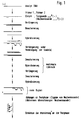
- FIG. 1 shows a diagram of a detection method according to the invention using PCR as an amplification method.
- the method according to the invention is shown in FIG. 2 using the example of NASBA amplification.
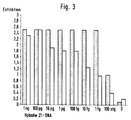
- FIG. 3 is the result of determinations of Hpbadw21-DNA according to the invention (PCR with probe) compared with PCR without probe (dark bars).
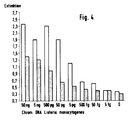
- FIG. 4 shows the same for a Listeria determination using NASBA (with probe: dark bars).
- FIG. 5 shows the result of a determination of HIV I using an electrochemiluminescent label in the presence of the capture probe with NASBA.
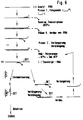
- FIG. 6 shows a reaction scheme for the amplification and detection of nucleic acids by means of NASBA, a digoxigenin-labeled mononucleoside being incorporated into the transcripts.
- FIG. 7 shows the structure of Ru (bpyr) 3-AA-dUTP.
- FIG. 8 shows the structure of Ru (bpyr) 3-DADOO-dUTP.
- FIG. 9 shows an agarose gel in which the differences in the molecular weight of the labeled nucleic acids become clear.
- FIG. 10 shows the detection of amplificates by hybridization with a ruthenium-labeled probe in the gel.
- FIG. 11 shows the influence of the denaturation type on the ECL intensities.
- FIG. 12 shows the dependence of the signal level on the amount of ruthenium-labeled mononucleotides used.
- FIG. 13 shows the quantity-dependent detection of nucleic acids when incorporating ruthenium labels.
- FIG. 14 shows a comparison between different embodiments of the invention.
- the vertically hatched bars mean the embodiment in which a second vessel is used which can specifically bind the capture probe, while the cross-hatched bars are one with amplification and wall binding in one refer to the single vessel working example.
- the dotted bars relate to an embodiment in which the reaction mixture for the detection of the color developed in the enzyme reaction is transferred to a detection vessel in solution.
- Hpbadw21 was used as a target for the polymerase chain reaction (EP-A-0 200 362) (PCR) in the concentrations of 1 ng to 100 atg per batch.
- the PCR batch volume was 100 ⁇ l.
- PCR batches were amplified in a Perkin Elmer Thermal Cycler with the following cycle conditions: 3'93 ° C; (1 '94 ° C, 1' 50 ° C, 2 '70 ° C) x 30; 5 '95 ° C, 37 ° C.
- the probe labeled with biotin was used in a concentration of 100 ng per batch.
- it was blocked at the 3 'end with Bio-16-ddUTP (Boehringer Mannheim, Order No. 1427, 598) (Lit .: Schmitz, GG et al. (1990) Anal. Biochem. 192, 222).
- Isolated chromosomal DNA from Listeria monocytogenes was used as analyte in concentrations of 50 ng to 5 fg per batch.
- NASBA is described in EP-A-0 329 822.
- NASBA is preceded by a reaction to convert the double-stranded analyte DNA into single-stranded DNA with the T7-RNA polymerase promoter sequence (PreNASBA). This is usually done with Sequenase®. In principle, however, any DNA polymerase is suitable.
- hybridization buffer 50 mM phosphate buffer, 750 mM NACl, 75 mM Na citrate, 0.05% RSA, pH 6.8 were added to 5 .mu.l of the hybridization mixture, the mixture was pipetted into a cavity of a microtiter plate and another hour Incubated at 37 ° C. After washing three times with 0.9% NaCl solution was with 200 ul 0.2 U / ml anti-digoxigenin-POD (Boehringer Mannheim) in conjugate buffer (100 mM Tris-HCl, 0.9% NaCl, 1% RSA, pH 7.5 ) incubated for 20 min at 37 ° C. After a further three washes, 200 ⁇ l ABTS (Boehringer Mannheim) (1.9 mmol / l) were added, and the absorbance was measured at Hg 405 nm.
- composition of the NASBA reaction corresponded to IIA.
- the capture probe was used in a concentration of 140 ng per batch directly during the amplification.
- HIV-1 was detected using the NASBA amplification system (EP-A-0 329 822).
- NASBA was carried out in the presence of the capture probe labeled with biotin and the amplificate was detected directly by the built-in label (UTP labeled with ruthenium).
- RNA was analogous to the guanidinium hot phenol method according to Maniatis et al. [Molecular Cloning: A Laboratory Manual (Cold Spring Harbor Lab., Cold Spring Harbor, NY) 194-195, 1982] isolated and the RNA solutions stored in 10 ul aliquots at -70 ° C. The RNA solutions were diluted 1:10, 1: 100, 1: 1000, 1: 10000 before the NASBA reaction and 2 ⁇ l were used in the NASBA reaction.
- Oligonucleotide OT 15 is again a 2'-O-allyl ribooligonucleotide which is blocked at the 3 'end (see Example 2 IIB) and is biotinylated at the 5' end.
- the beads were then suspended in 100 ul of the phosphate buffer just mentioned and 250 ul ECL assay buffer (0.2 M KH2PO4, 0.05 M NaCl, 0.1 M tripropylamine, pH 7.5; Lit .: JK Leland et al. J. Electrochem. Soc. 1990, 137, 3127-33). It was measured on an ECL analyzer (Origen 1.0; Igen Inc.) at a photomultiplier voltage of 940 V. The measurement time was 2 seconds with a ramp of 2 V per second. The entire measuring cycle per sample was 2 minutes.
- Origen R label (Igen Inc) [4- (N-succinimidyloxycarbonylpropyl) -4'-methyl-2,2'-bipyridine-bis (2,2'-bipyridine)] - ruthenium (II) dihexafluorophosphate
- AA-UTP 5- (3-aminoallyl) uridine triphosphate was analogous to Langer et al. [Proc. Natl. Acad. SCI. USA, 78, 6633-37, 1981].
- DMSO dimethyl sulfoxide 5.5 mg (0.01 mmol) AA-UTP (lithium salt) was dissolved in 2 ml 0.1 M sodium borate buffer (pH 8.5).
- PCR batch volume 100 ⁇ l (80 ⁇ l PCR mix, 20 ⁇ l sample).
- the concentration of Ru (bpyr) 3-AA-dUTP and Ru (bpyr) 3-DADOO-dUTP was varied from 66 ⁇ M, 30 ⁇ M, 10 ⁇ M, 1 ⁇ M, 0.1 ⁇ M to 0.01 ⁇ M, the concentration of dTTP increased accordingly, so that the total concentration of Ru (bpyr) 3dUTP / dTTP in the amplification mixture was 200 ⁇ M.
- Biotinylated capture probe d (AGA CCA CCA AAT GCC CCT AT) SEQ. ID. NO. 11 biotinylated with biotinamidite (Applied Biosystems), corresponds to item 2297-2316 of the HBV adw sequence; EMBL sequence database, lit .: Ono et al., Nucl. Acids Res. 11 (1983) 1747-1757.
- Hpbadw 21 with the following concentrations was again used as target: 1 ng; 10 pg; 100 fg; 1 fg; 200 ag.
- the amplification was carried out analogously to the conditions described in Example 2, once using 10 ⁇ M Ru (bpyr) 3-AA-dUTP / 190 ⁇ l dTTP and once using 30 ⁇ M Ru (bpyr) 3-AAdUTP / 170 ⁇ l dTTP final concentration in the PCR.
- the amplification product was, as described under 4.2, after hybridization with the biotinylated capture probe (Seq. Id. No. 3) and binding to SA magnetic beads in the "one-step test procedure" without "bound-free" separation in Origen®-1.0 - Analyzer measured.
- the photomultiplier voltage was 900 V, the other conditions were as described in Example 4.1.
- the PCR approach is carried out as described in Example 1. Only the batch volume was reduced to 50 ⁇ l and overlaid with 30 ⁇ l Sigma mineral oil (Sigma Mineral oil, light white oil M-3516). The primers used, biotinylated capture probe II and the template and its concentrations are identical.
- the PCR was carried out in Techne-MT plates (order no .: 140800) that had previously been used thermostable streptavidin (SA) were carried out.
- Amplification was carried out in a Techne cycler type MW-2. The cycle conditions were the same as described in Example 1. After the PCR, the mixture was left to stand at 37 ° C. for 30 min.
- Example 1 It was then washed three times (see Example 1) and the plate was incubated with 100 ⁇ l conjugate buffer (see Example 1) per well. After washing again three times, the reaction was carried out with 100 ⁇ l. ABTS solution (see example 1). The measured absorbance is shown in FIG. 14 shown as the right bar (SA-MTP PCR) for different concentrations.
- PCR cycler 9600 0.5 ml Perkin-Elmer Cups (order no .: N801.0537) were used for the PCR cycler 9600, which had been coated on the inside in accordance with EP-B-0 331 127 with thermostable streptavidin.
- the batch was carried out as in Example 10. However, the batch volume was 100 ⁇ l and the PCR was not covered with oil because of the heated lid of the Cycler 9600.
- Conjugate buffer and ABTS were added to each 200 ⁇ l per cup. After 15 minutes of incubation with ABTS, the mixture was transferred to a Nunc plate (order no .: 838713) and measured in the reader. The measured extinctions are shown in FIG. 14 (middle bar) is shown.
Landscapes
- Chemical & Material Sciences (AREA)
- Organic Chemistry (AREA)
- Life Sciences & Earth Sciences (AREA)
- Health & Medical Sciences (AREA)
- Engineering & Computer Science (AREA)
- Zoology (AREA)
- Wood Science & Technology (AREA)
- Proteomics, Peptides & Aminoacids (AREA)
- Molecular Biology (AREA)
- Biochemistry (AREA)
- Genetics & Genomics (AREA)
- General Health & Medical Sciences (AREA)
- Biotechnology (AREA)
- General Engineering & Computer Science (AREA)
- Physics & Mathematics (AREA)
- Analytical Chemistry (AREA)
- Bioinformatics & Cheminformatics (AREA)
- Biophysics (AREA)
- Microbiology (AREA)
- Immunology (AREA)
- Chemical Kinetics & Catalysis (AREA)
- Measuring Or Testing Involving Enzymes Or Micro-Organisms (AREA)
- Saccharide Compounds (AREA)
- Investigating Or Analysing Biological Materials (AREA)
Applications Claiming Priority (6)
| Application Number | Priority Date | Filing Date | Title |
|---|---|---|---|
| DE4319151 | 1993-06-09 | ||
| DE4319151 | 1993-06-09 | ||
| DE4339086 | 1993-11-16 | ||
| DE4339086 | 1993-11-16 | ||
| DE4344742A DE4344742A1 (de) | 1993-06-09 | 1993-12-28 | Verfahren zur Immobilisierung von Nukleinsäuren |
| DE4344742 | 1993-12-28 |
Publications (2)
| Publication Number | Publication Date |
|---|---|
| EP0628568A2 true EP0628568A2 (fr) | 1994-12-14 |
| EP0628568A3 EP0628568A3 (fr) | 1997-03-05 |
Family
ID=27205188
Family Applications (1)
| Application Number | Title | Priority Date | Filing Date |
|---|---|---|---|
| EP94108442A Withdrawn EP0628568A3 (fr) | 1993-06-09 | 1994-06-01 | Procédé d'immobilsation d'acides nucléiques. |
Country Status (4)
| Country | Link |
|---|---|
| US (2) | US5639609A (fr) |
| EP (1) | EP0628568A3 (fr) |
| JP (2) | JP3739423B2 (fr) |
| DE (1) | DE4344742A1 (fr) |
Cited By (10)
| Publication number | Priority date | Publication date | Assignee | Title |
|---|---|---|---|---|
| WO1996023807A1 (fr) * | 1995-01-31 | 1996-08-08 | Marek Kwiatkowski | Nouveaux agents terminateurs de chaines, leur utilisation pour le sequençage et la synthese d'acides nucleiques, et procede pour les preparer |
| WO1997007235A3 (fr) * | 1995-08-14 | 1997-03-20 | Abbott Lab | Methode integrale d'amplification d'acide nucleique |
| WO1997032044A1 (fr) * | 1996-03-01 | 1997-09-04 | E.I. Du Pont De Nemours And Company | Procede d'amplification et de detection d'un fragment d'acide nucleique d'interet |
| EP0722508A4 (fr) * | 1993-09-22 | 1999-08-11 | Igen Inc | Dosage d'acides nucleiques electrochimioluminescents par replication de sequences auto-entretenues |
| WO1999045155A3 (fr) * | 1998-03-04 | 2000-05-04 | Akzo Nobel Nv | Oligonucleotides destines a l'amplification et a la detection de l'acide nucleique du virus epstein-barr |
| WO2001034842A3 (fr) * | 1999-11-12 | 2002-03-21 | Univ Chicago | Amplification en chaine par polymerase (pcr) sur des microarrangements d'oligonucleotides immobilises par un gel |
| EP1310565A1 (fr) * | 2001-11-09 | 2003-05-14 | Hong Kong DNA Chips Limited | Procédé pour détecter des molécules d'acides nucléiques cibles utilisant un test de capture de sonde liée à une enzyme et kit pour sa mise en oeuvre |
| US7297553B2 (en) | 2002-05-28 | 2007-11-20 | Nanosphere, Inc. | Method for attachment of silylated molecules to glass surfaces |
| EP0876510B1 (fr) * | 1995-12-22 | 2008-05-07 | Dade Behring Marburg GmbH | Amplification et detection homogenes des acides nucleiques |
| US7687437B2 (en) | 2001-07-13 | 2010-03-30 | Nanosphere, Inc. | Method for immobilizing molecules onto surfaces |
Families Citing this family (17)
| Publication number | Priority date | Publication date | Assignee | Title |
|---|---|---|---|---|
| DE4420732A1 (de) | 1994-06-15 | 1995-12-21 | Boehringer Mannheim Gmbh | Vorrichtung zur Behandlung von Nukleinsäuren aus einer Probe |
| JP3093116B2 (ja) * | 1994-09-30 | 2000-10-03 | 株式会社豊田中央研究所 | 核酸検出方法 |
| AU730154B2 (en) * | 1995-10-27 | 2001-03-01 | Elliot R. Ramberg | Methods and compositions for detection of specific nucleotide sequences |
| US20050069923A1 (en) * | 1996-07-08 | 2005-03-31 | Mullis Kary Banks | Dual bead assays using cleavable spacers and/or ligation to improve specificity and sensitivity including related methods and apparatus |
| US6338943B1 (en) * | 1996-10-08 | 2002-01-15 | Kreatech Biotechnology B.V. | Methods for labeling nucleotides, labeled nucleotides and useful intermediates |
| US6548733B2 (en) | 1998-12-21 | 2003-04-15 | The Genetics Company, Inc. | Function-based small molecular weight compound screening system in drosophila melanogaster |
| KR20010016720A (ko) * | 1999-08-02 | 2001-03-05 | 김희태 | 여러 종류의 디엔에이 프로브가 부착된 마이크로 웰 플레이트를 사용하여 핵산 시료내 특정 핵산을 검출하는 방법 |
| US6451588B1 (en) * | 2000-06-30 | 2002-09-17 | Pe Corporation (Ny) | Multipartite high-affinity nucleic acid probes |
| ATE435305T1 (de) * | 2000-10-05 | 2009-07-15 | Hai Kang Life Corp Ltd | Kit zum nachweis von nichtpathogenem oder pathogenem influenza-a-virus vom subtyp h5 |
| CA2471018A1 (fr) * | 2002-01-28 | 2003-08-07 | Burstein Technologies, Inc. | Procedes et appareil pour le declenchement logique |
| FI112093B (fi) * | 2002-01-30 | 2003-10-31 | Boreal Plant Breeding Ltd | Menetelmä ja testipakkaus geneettisen identiteetin osoittamiseksi |
| CN1625689A (zh) | 2002-01-31 | 2005-06-08 | 长冈实业株式会社 | 通过盘槽以及相关光分析盘触发的方法和系统 |
| US7582429B2 (en) | 2002-10-23 | 2009-09-01 | University Of Utah Research Foundation | Amplicon melting analysis with saturation dyes |
| WO2005001429A2 (fr) * | 2003-06-27 | 2005-01-06 | Nagaoka & Co., Ltd. | Circuits de fluides et procedes et appareil d'utilisation d'echantillons de sang entier dans des analyses colorimetriques |
| US9657347B2 (en) | 2004-04-20 | 2017-05-23 | University of Utah Research Foundation and BioFire Defense, LLC | Nucleic acid melting analysis with saturation dyes |
| US7387887B2 (en) * | 2004-04-20 | 2008-06-17 | University Of Utah Research Foundation | Nucleic acid melting analysis with saturation dyes |
| EP1766049B1 (fr) * | 2004-06-11 | 2011-10-19 | Evotec AG | Procede de detection d'analytes dans un echantillon |
Citations (1)
| Publication number | Priority date | Publication date | Assignee | Title |
|---|---|---|---|---|
| US4828979A (en) * | 1984-11-08 | 1989-05-09 | Life Technologies, Inc. | Nucleotide analogs for nucleic acid labeling and detection |
Family Cites Families (8)
| Publication number | Priority date | Publication date | Assignee | Title |
|---|---|---|---|---|
| FI63596C (fi) * | 1981-10-16 | 1983-07-11 | Orion Yhtymae Oy | Mikrobdiagnostiskt foerfarande som grundar sig pao skiktshybridisering av nukleinsyror och vid foerfarandet anvaenda kombinationer av reagenser |
| CA1272443A (fr) * | 1985-02-22 | 1990-08-07 | Nanibhushan Dattagupta | Essai de double hybridation en solution-phase pour deceler des sequences polynucleotidiques |
| US4683202A (en) * | 1985-03-28 | 1987-07-28 | Cetus Corporation | Process for amplifying nucleic acid sequences |
| CA1340807C (fr) * | 1988-02-24 | 1999-11-02 | Lawrence T. Malek | Procede d'amplification d'une sequence d'acide nucleique |
| AU622899B2 (en) * | 1988-05-04 | 1992-04-30 | F. Hoffmann-La Roche Ag | Rutheniumcomplex-compounds |
| US5210015A (en) * | 1990-08-06 | 1993-05-11 | Hoffman-La Roche Inc. | Homogeneous assay system using the nuclease activity of a nucleic acid polymerase |
| NZ240079A (en) * | 1990-10-09 | 1993-07-27 | Boehringer Mannheim Gmbh | Method for the detection of a nucleic acid or part thereof |
| DE4212555A1 (de) * | 1992-04-15 | 1993-10-21 | Boehringer Mannheim Gmbh | Verfahren zum Nachweis von Nukleinsäuren |
-
1993
- 1993-12-28 DE DE4344742A patent/DE4344742A1/de not_active Withdrawn
-
1994
- 1994-06-01 EP EP94108442A patent/EP0628568A3/fr not_active Withdrawn
- 1994-06-09 JP JP12741694A patent/JP3739423B2/ja not_active Expired - Fee Related
- 1994-06-09 US US08/257,778 patent/US5639609A/en not_active Expired - Lifetime
-
1996
- 1996-12-20 US US08/771,256 patent/US6027885A/en not_active Expired - Fee Related
-
2004
- 2004-11-17 JP JP2004333073A patent/JP2005097316A/ja active Pending
Patent Citations (1)
| Publication number | Priority date | Publication date | Assignee | Title |
|---|---|---|---|---|
| US4828979A (en) * | 1984-11-08 | 1989-05-09 | Life Technologies, Inc. | Nucleotide analogs for nucleic acid labeling and detection |
Non-Patent Citations (1)
| Title |
|---|
| INOUE H. ET AL.: "Sequence-dependent hydrolysis of RNA using modified oligonucleotide splints and RNaseH", FEBS LETTER, vol. 215, no. 2, pages 327 - 330, XP002910162 * |
Cited By (17)
| Publication number | Priority date | Publication date | Assignee | Title |
|---|---|---|---|---|
| EP0722508A4 (fr) * | 1993-09-22 | 1999-08-11 | Igen Inc | Dosage d'acides nucleiques electrochimioluminescents par replication de sequences auto-entretenues |
| WO1996023807A1 (fr) * | 1995-01-31 | 1996-08-08 | Marek Kwiatkowski | Nouveaux agents terminateurs de chaines, leur utilisation pour le sequençage et la synthese d'acides nucleiques, et procede pour les preparer |
| US6255475B1 (en) | 1995-01-31 | 2001-07-03 | Marek Kwiatkowski | Chain terminators, the use thereof for nucleic acid sequencing and synthesis and a method of their preparation |
| WO1997007235A3 (fr) * | 1995-08-14 | 1997-03-20 | Abbott Lab | Methode integrale d'amplification d'acide nucleique |
| EP0876510B1 (fr) * | 1995-12-22 | 2008-05-07 | Dade Behring Marburg GmbH | Amplification et detection homogenes des acides nucleiques |
| WO1997032044A1 (fr) * | 1996-03-01 | 1997-09-04 | E.I. Du Pont De Nemours And Company | Procede d'amplification et de detection d'un fragment d'acide nucleique d'interet |
| US7026112B1 (en) | 1998-03-04 | 2006-04-11 | Akzo Nobel N.V. | Oligonucleotides for the amplification and detection of Epstein Barr Virus (EBV) nucleic acid |
| KR100718028B1 (ko) * | 1998-03-04 | 2007-05-16 | 악조 노벨 엔.브이. | 엡스타인 바르 바이러스(ebv) 핵산의 증폭 및 검출용 올리고뉴클레오티드 |
| WO1999045155A3 (fr) * | 1998-03-04 | 2000-05-04 | Akzo Nobel Nv | Oligonucleotides destines a l'amplification et a la detection de l'acide nucleique du virus epstein-barr |
| WO2001034842A3 (fr) * | 1999-11-12 | 2002-03-21 | Univ Chicago | Amplification en chaine par polymerase (pcr) sur des microarrangements d'oligonucleotides immobilises par un gel |
| US7687437B2 (en) | 2001-07-13 | 2010-03-30 | Nanosphere, Inc. | Method for immobilizing molecules onto surfaces |
| EP1310565A1 (fr) * | 2001-11-09 | 2003-05-14 | Hong Kong DNA Chips Limited | Procédé pour détecter des molécules d'acides nucléiques cibles utilisant un test de capture de sonde liée à une enzyme et kit pour sa mise en oeuvre |
| US7297553B2 (en) | 2002-05-28 | 2007-11-20 | Nanosphere, Inc. | Method for attachment of silylated molecules to glass surfaces |
| US7476550B2 (en) | 2002-05-28 | 2009-01-13 | Nanosphere, Inc. | Method for attachment of silylated molecules to glass surfaces |
| US7482173B2 (en) | 2002-05-28 | 2009-01-27 | Nanosphere, Inc. | Method for attachment of silylated molecules to glass surfaces |
| US7485470B2 (en) | 2002-05-28 | 2009-02-03 | Nanosphere, Inc. | Method for attachment of silylated molecules to glass surfaces |
| US7485469B2 (en) | 2002-05-28 | 2009-02-03 | Nanosphere. Inc. | Method for attachment of silylated molecules to glass surfaces |
Also Published As
| Publication number | Publication date |
|---|---|
| DE4344742A1 (de) | 1994-12-15 |
| JP2005097316A (ja) | 2005-04-14 |
| US6027885A (en) | 2000-02-22 |
| JPH07184696A (ja) | 1995-07-25 |
| US5639609A (en) | 1997-06-17 |
| JP3739423B2 (ja) | 2006-01-25 |
| EP0628568A3 (fr) | 1997-03-05 |
Similar Documents
| Publication | Publication Date | Title |
|---|---|---|
| EP0324474B1 (fr) | Procédé pour détecter des acides nucléiques | |
| DE4344742A1 (de) | Verfahren zur Immobilisierung von Nukleinsäuren | |
| DE69432709T2 (de) | Nukleinsäure - Sandwichassay in Lösungsphase mit reduzierten Hintergrundsignalen | |
| EP0608737B1 (fr) | Nucléotides qui contiennent sulfocumarin et leur utilisation dans les méthodes de détection des acides nucléiques | |
| DE69132521T3 (de) | Homogenes testsystem | |
| DE69430665T2 (de) | Empfindlicher nukleinsäure-sandwichhybridisierungs-assay und kits | |
| DE69122457T2 (de) | Verfahren zur Herstellung eines Polynukleotides zur Verwendung bei Einzelprimeramplifikation | |
| DE3586629T2 (de) | Nukleotidanaloga zur markierung von nukleinsaeuren und nachweis. | |
| DE69130501T2 (de) | Polynukleotid-einfang-assay unter verwendung von in-vitro-amplifikation | |
| DE3486478T2 (de) | Zusammensetzung zur Anwendung in einem Bestimmungsverfahren unter Verwendung von Polynukleotidsequenzen | |
| DE68923603T2 (de) | Nukleotid Sonden. | |
| EP0669395A2 (fr) | 3'-RNA-marquage avec une transférase terminale | |
| EP0705905A2 (fr) | Procédé pour la détection sensible d'acides nucléiques | |
| DE3856224T2 (de) | Nachweis eines Polynukleotids durch Ersätzung einer Kette an einer Fangsonde | |
| DE60309817T2 (de) | Mehrzweck-Primer und -Sonden für verbesserte Hybridisierungsassays durch Zerstörung von Sekundärstrukturen | |
| DE69836395T2 (de) | Primern zum Nachweis von HIV-1 | |
| EP1029083A2 (fr) | Procede de mise en evidence de la presence d'acide nucleique, fonde sur la specificite et la sensibilite | |
| EP0547056A1 (fr) | Procede de determination de l'activite de polymerases. | |
| DE3486175T2 (de) | Reagenzsatz zur chemischen terminalen Markierung von DNS. | |
| EP0437774B1 (fr) | Procédé pour la préparation d'acides nucléiques modifiés | |
| EP0523557B1 (fr) | Immobilisation des acides nucléiques | |
| DE3486290T2 (de) | In vivo-Markierung von Polynucleotide-Sequenzen. | |
| EP0566050B2 (fr) | Procédé pour la détection d'acides nucléiques | |
| EP0780479A2 (fr) | Procédé pour la détermination quantitative des séquences d'acides nucléiques spécifiques | |
| EP0324468A2 (fr) | Une méthode pour la détection très spécifique d'acides nucléiques en solution |
Legal Events
| Date | Code | Title | Description |
|---|---|---|---|
| PUAI | Public reference made under article 153(3) epc to a published international application that has entered the european phase |
Free format text: ORIGINAL CODE: 0009012 |
|
| 17P | Request for examination filed |
Effective date: 19940601 |
|
| AK | Designated contracting states |
Kind code of ref document: A2 Designated state(s): AT BE CH DE DK ES FR GB IT LI NL SE |
|
| PUAL | Search report despatched |
Free format text: ORIGINAL CODE: 0009013 |
|
| AK | Designated contracting states |
Kind code of ref document: A3 Designated state(s): AT BE CH DE DK ES FR GB IT LI NL SE |
|
| 17Q | First examination report despatched |
Effective date: 19970908 |
|
| RAP3 | Party data changed (applicant data changed or rights of an application transferred) |
Owner name: ROCHE DIAGNOSTICS GMBH |
|
| STAA | Information on the status of an ep patent application or granted ep patent |
Free format text: STATUS: THE APPLICATION IS DEEMED TO BE WITHDRAWN |
|
| 18D | Application deemed to be withdrawn |
Effective date: 20081211 |