EP0629703A2 - Monoklonale Antikörper gegen Immunglobulin G Fc-Rezeptoren auf humanen mononuklearen Phagozyten; bifunktionelle Antikörper; ziel-spezifische Effektorzellen; gezielte Makrophagen und Immunoassays - Google Patents
Monoklonale Antikörper gegen Immunglobulin G Fc-Rezeptoren auf humanen mononuklearen Phagozyten; bifunktionelle Antikörper; ziel-spezifische Effektorzellen; gezielte Makrophagen und Immunoassays Download PDFInfo
- Publication number
- EP0629703A2 EP0629703A2 EP94202572A EP94202572A EP0629703A2 EP 0629703 A2 EP0629703 A2 EP 0629703A2 EP 94202572 A EP94202572 A EP 94202572A EP 94202572 A EP94202572 A EP 94202572A EP 0629703 A2 EP0629703 A2 EP 0629703A2
- Authority
- EP
- European Patent Office
- Prior art keywords
- receptor
- cells
- antibody
- cell
- mab
- Prior art date
- Legal status (The legal status is an assumption and is not a legal conclusion. Google has not performed a legal analysis and makes no representation as to the accuracy of the status listed.)
- Withdrawn
Links
Images


Classifications
-
- A—HUMAN NECESSITIES
- A61—MEDICAL OR VETERINARY SCIENCE; HYGIENE
- A61K—PREPARATIONS FOR MEDICAL, DENTAL OR TOILETRY PURPOSES
- A61K35/00—Medicinal preparations containing materials or reaction products thereof with undetermined constitution
- A61K35/12—Materials from mammals; Compositions comprising non-specified tissues or cells; Compositions comprising non-embryonic stem cells; Genetically modified cells
- A61K35/14—Blood; Artificial blood
- A61K35/15—Cells of the myeloid line, e.g. granulocytes, basophils, eosinophils, neutrophils, leucocytes, monocytes, macrophages or mast cells; Myeloid precursor cells; Antigen-presenting cells, e.g. dendritic cells
-
- C—CHEMISTRY; METALLURGY
- C07—ORGANIC CHEMISTRY
- C07K—PEPTIDES
- C07K16/00—Immunoglobulins [IG], e.g. monoclonal or polyclonal antibodies
- C07K16/18—Immunoglobulins [IG], e.g. monoclonal or polyclonal antibodies against material from animals or humans
- C07K16/28—Immunoglobulins [IG], e.g. monoclonal or polyclonal antibodies against material from animals or humans against receptors, cell surface antigens or cell surface determinants
- C07K16/2803—Immunoglobulins [IG], e.g. monoclonal or polyclonal antibodies against material from animals or humans against receptors, cell surface antigens or cell surface determinants against the immunoglobulin superfamily
- C07K16/283—Immunoglobulins [IG], e.g. monoclonal or polyclonal antibodies against material from animals or humans against receptors, cell surface antigens or cell surface determinants against the immunoglobulin superfamily against Fc-receptors, e.g. CD16, CD32, CD64
-
- C—CHEMISTRY; METALLURGY
- C07—ORGANIC CHEMISTRY
- C07K—PEPTIDES
- C07K16/00—Immunoglobulins [IG], e.g. monoclonal or polyclonal antibodies
- C07K16/18—Immunoglobulins [IG], e.g. monoclonal or polyclonal antibodies against material from animals or humans
- C07K16/28—Immunoglobulins [IG], e.g. monoclonal or polyclonal antibodies against material from animals or humans against receptors, cell surface antigens or cell surface determinants
- C07K16/30—Immunoglobulins [IG], e.g. monoclonal or polyclonal antibodies against material from animals or humans against receptors, cell surface antigens or cell surface determinants from tumour cells
- C07K16/3023—Lung
-
- C—CHEMISTRY; METALLURGY
- C07—ORGANIC CHEMISTRY
- C07K—PEPTIDES
- C07K16/00—Immunoglobulins [IG], e.g. monoclonal or polyclonal antibodies
- C07K16/46—Hybrid immunoglobulins
- C07K16/468—Immunoglobulins having two or more different antigen binding sites, e.g. multifunctional antibodies
-
- G—PHYSICS
- G01—MEASURING; TESTING
- G01N—INVESTIGATING OR ANALYSING MATERIALS BY DETERMINING THEIR CHEMICAL OR PHYSICAL PROPERTIES
- G01N33/00—Investigating or analysing materials by specific methods not covered by groups G01N1/00 - G01N31/00
- G01N33/48—Biological material, e.g. blood, urine; Haemocytometers
- G01N33/50—Chemical analysis of biological material, e.g. blood, urine; Testing involving biospecific ligand binding methods; Immunological testing
- G01N33/53—Immunoassay; Biospecific binding assay; Materials therefor
- G01N33/569—Immunoassay; Biospecific binding assay; Materials therefor for microorganisms, e.g. protozoa, bacteria, viruses
- G01N33/56966—Animal cells
- G01N33/56972—White blood cells
-
- A—HUMAN NECESSITIES
- A61—MEDICAL OR VETERINARY SCIENCE; HYGIENE
- A61K—PREPARATIONS FOR MEDICAL, DENTAL OR TOILETRY PURPOSES
- A61K39/00—Medicinal preparations containing antigens or antibodies
- A61K2039/505—Medicinal preparations containing antigens or antibodies comprising antibodies
-
- A—HUMAN NECESSITIES
- A61—MEDICAL OR VETERINARY SCIENCE; HYGIENE
- A61K—PREPARATIONS FOR MEDICAL, DENTAL OR TOILETRY PURPOSES
- A61K38/00—Medicinal preparations containing peptides
-
- C—CHEMISTRY; METALLURGY
- C07—ORGANIC CHEMISTRY
- C07K—PEPTIDES
- C07K2317/00—Immunoglobulins specific features
- C07K2317/30—Immunoglobulins specific features characterized by aspects of specificity or valency
- C07K2317/31—Immunoglobulins specific features characterized by aspects of specificity or valency multispecific
-
- C—CHEMISTRY; METALLURGY
- C07—ORGANIC CHEMISTRY
- C07K—PEPTIDES
- C07K2317/00—Immunoglobulins specific features
- C07K2317/50—Immunoglobulins specific features characterized by immunoglobulin fragments
- C07K2317/55—Fab or Fab'
-
- C—CHEMISTRY; METALLURGY
- C07—ORGANIC CHEMISTRY
- C07K—PEPTIDES
- C07K2317/00—Immunoglobulins specific features
- C07K2317/70—Immunoglobulins specific features characterized by effect upon binding to a cell or to an antigen
- C07K2317/73—Inducing cell death, e.g. apoptosis, necrosis or inhibition of cell proliferation
-
- C—CHEMISTRY; METALLURGY
- C07—ORGANIC CHEMISTRY
- C07K—PEPTIDES
- C07K2317/00—Immunoglobulins specific features
- C07K2317/70—Immunoglobulins specific features characterized by effect upon binding to a cell or to an antigen
- C07K2317/73—Inducing cell death, e.g. apoptosis, necrosis or inhibition of cell proliferation
- C07K2317/732—Antibody-dependent cellular cytotoxicity [ADCC]
-
- Y—GENERAL TAGGING OF NEW TECHNOLOGICAL DEVELOPMENTS; GENERAL TAGGING OF CROSS-SECTIONAL TECHNOLOGIES SPANNING OVER SEVERAL SECTIONS OF THE IPC; TECHNICAL SUBJECTS COVERED BY FORMER USPC CROSS-REFERENCE ART COLLECTIONS [XRACs] AND DIGESTS
- Y10—TECHNICAL SUBJECTS COVERED BY FORMER USPC
- Y10S—TECHNICAL SUBJECTS COVERED BY FORMER USPC CROSS-REFERENCE ART COLLECTIONS [XRACs] AND DIGESTS
- Y10S530/00—Chemistry: natural resins or derivatives; peptides or proteins; lignins or reaction products thereof
- Y10S530/806—Antigenic peptides or proteins
-
- Y—GENERAL TAGGING OF NEW TECHNOLOGICAL DEVELOPMENTS; GENERAL TAGGING OF CROSS-SECTIONAL TECHNOLOGIES SPANNING OVER SEVERAL SECTIONS OF THE IPC; TECHNICAL SUBJECTS COVERED BY FORMER USPC CROSS-REFERENCE ART COLLECTIONS [XRACs] AND DIGESTS
- Y10—TECHNICAL SUBJECTS COVERED BY FORMER USPC
- Y10S—TECHNICAL SUBJECTS COVERED BY FORMER USPC CROSS-REFERENCE ART COLLECTIONS [XRACs] AND DIGESTS
- Y10S530/00—Chemistry: natural resins or derivatives; peptides or proteins; lignins or reaction products thereof
- Y10S530/808—Materials and products related to genetic engineering or hybrid or fused cell technology, e.g. hybridoma, monoclonal products
- Y10S530/809—Fused cells, e.g. hybridoma
Definitions
- the present invention relates to monoclonal antibodies to Fc receptors for immunoglobulin G on human mononuclear phagocytes; bifunctional antibodies; target specific effector cells; targeted macrophages; and immunoassays.
- effector cells have surface receptors that bind the Fc portion of immunoglobulin (IgG).
- IgG immunoglobulin
- target cells that have been opsonized with IgG antibodies, they form conjugates with the target cells.
- the effector cells either lyse or phagocytose the target cells, depending upon the effector cell type, the target cell type and the specific Fc receptor type involved.
- FcR IgG Fc receptors
- the other receptor is a 40kDa molecule (p40) which shows relatively low affinity for monomeric IgG. Looney, et al ., supra ; Jones, D.H., et al . (1985) J. Immunol . 135 :33483353.
- P40 has been defined by its ability both to form rosettes with erythrocytes coated with murine IgG1 and to bind aggregated murine IgG2b at low ionic strength.
- a monoclonal antibody (IV3) has been prepared which binds to the 40kDa receptor and inhibits ligand binding. See Looney, R.J., et al ., supra . This receptor is present not only on mononuclear phagocytes but on human platelets, neutrophils and eosinophils. Rosenfeld, S.I., et al . (1985) J. Clin. Invest . 76 :2317-2322.
- target cell conjugation and lysis can also be induced by covalently cross-linked heteroantibody made up of both anti-Fc receptor antibody and antibody directed against a target cell epitope.
- effector cells bind such heteroaggregates to their Fc receptor, they can specifically bind and lyse target cells which have not been opsonized, but which express the appropriate target antigen.
- Segal et al . have recently reported cytolysis of tumor cells by mouse monocytes with an attached heteroantibody which joins the Fc receptor of the monocyte on one end with tumor cell epitopes on the other end.
- the targeting of effector cells with conventional heteroantibodies is likely to be only marginally effective in vivo because the binding of antibody to Fc receptors can be blocked by physiological concentrations of IgG.
- This invention pertains to monoclonal antibodies which are specific for the human high affinity Fc receptor of IgG, the P72 receptor, and which bind to the Fc receptor without being blocked bu human IgG.
- the antibodies bind specifically, through their antigen combining region and independent of their Fc portion, to human receptor for the Fc portion of IgG.
- the antibodies bind to a site on the Fc receptor distinct from the binding site for the Fc region of IgG (ligand) and the antibodies are capable of binding a ligand-occupied receptor.
- the anti-Fc receptor antibody of this invention can be made by monoclonal antibody producing techniques.
- Fc receptor protein can be obtained for immunization by preparing a cell fraction containing Fc receptor from a cell line that expresses Fc receptor (e.g. the U937 line, a human monocytic cell line that expresses Fc receptor for human IgG). The cells can be pretreated in culture with IFN-gamma to enhance the yield of Fc receptor protein.
- Fc receptor protein is purified by affinity purification from cell lysates. An animal is immunized with the purified receptor protein and antibody-producing cells are harvested from the animal and fused with a myeloma cell or other immortalizing cell to produce hybridomas. The hybridomas are cloned and clones are selected for production of antibody to Fc receptor which is not blocked by human IgG.
- the selection of antibody which binds to the Fc receptor through its antigen binding region is complicated by the fact that the Fc portion of IgG of the animal species may bind human Fc receptor.
- two of the four murine IgG subclasses - IgG2a and IgG3 - bind to the high affinity human Fc receptor via their Fc portion.
- selection can be facilitated as follows: After initial screening of hybridomas for production of Ig which binds the receptor, hybridomas which produce antibody of the subclass which is bound via its Fc region by the human Fc receptor, are eliminated from consideration. The remaining hybridomas are evaluated for production of antibody which binds Fc receptor independently of their Fc portion.
- the anti-Fc receptor antibody of this invention can be used to produce target-specific effector cells for treatment of cancer, allergies, and infectious and autoimmune diseases.
- Antibody specific for a target cell can be linked to the Fc receptor of effector cell through the Fc-specific antibody of this invention.
- the linkage mediated by this anti-Fc receptor antibody is not disruptable by IgG because binding to the receptor does not involve the Fc portion of the antibody.
- a bifunctional antibody used herein to mean a single antibody or antibody fragment with a dual binding specificity
- a heteroantibody used herein to mean an aggregate of two or more antibodies (or antibody fragments) each antibody having a different specificity
- the bifunctional antibody or heterantibody comprises:
- the binding of bifunctional or heteroantibody to the effector cell results in a targeted effector cell i.e., an effector cell with attached bifunctional or heteroantibody containing antigen binding regions which are specific for a desired target cell.
- the targeted effector cells can be used to bring about antibody dependent cell mediated cytolysis (ADCC) of the target cells in vivo .
- ADCC antibody dependent cell mediated cytolysis
- the target cell can be a cancer cell or other cell whose elimination would be beneficial to the host, for example, an auto-antibody producing cell found in autoimmune diseases, or an IgE producing cell found in allergies.
- the target cell specificity of the bifunctional antibody or the heteroantibody is derived from a targeting antibody i.e., an antibody specific for a target cell-associated or target cell-specific antigen.
- the use of the Fc specific antibody of this invention provides for attachment of the targeting antibody to monocyte effector cells by a linkage which is not disrupted by physiological levels of immunoglobulin G encountered in vivo .
- the targeted effector cells can be given in vivo without loss of effector cell specificity due to IgG competition for Fc receptor sites.
- the anti-FcRI antibody of this invention has other therapuetic applications as well as several diagnostic applications.
- the antibody can be used as a targeting antibody to target FcRI-bearing cells.
- the antibody can also be used to induce capping and removal of Fc receptors on monocyte or other cells. Diagnostic applications of the antibodies include their use in assays for FcRI receptor levels and assays for substances that influence FcRI receptor levels.
- the antibody of this invention binds the high affinity (p72) Fc receptor (FcRI) for human IgG without being blocked by human IgG.
- FcRI Fc receptor
- Preferred anti-FcRI receptor antibody has the following characteristics:
- the monoclonal anti-Fc receptor antibody of this invention can be produced by conventional monoclonal antibody methodology e.g., the standard somatic cell hybridization technique of Kohler and Milstein, Nature 256: 495 (1975). Although somatic cell hybridization procedures are preferred, in principle, other techniques for producing monoclonal antibody can be employed e.g., viral or oncogenic transformation of B lymphocytes.
- Fc receptor for immunization of an animal can be prepared from lysates of human cells which express the receptor.
- a preferred receptor-bearing cell line is the human monocytic cell line U937; however, other monocytic cells such as HL-60 cells or freshly isolated monocytes can be used. Because interferon-gamma enhances Fc receptor expression, the cells can be cultured in the presence of interferon-gamma (e.g. 100 IU/ml) before receptor preparation to enhance the yield of receptor protein.
- a partially purified preparation of the receptor can be made by lysing receptor-bearing cells and then purifying the receptor by immunoadsorbant chromatography.
- Cells can be lysed in a buffer containing a detergent such as NP40.
- the immunoadsorbent can be prepared by attaching human IgG to a water-insoluble material such as an activated SepharoseTM resin.
- the Sepharose resin with attached human IgG is poured into a column.
- the cell lysate is passed through the column under conditions which permit adsorbtion of the cellular Fc receptor protein by the IgG coupled to the resin.
- the adsorbed Fc receptor protein can be eluted with a mildly acidic elution buffer.
- the purified receptor can then be used for immunization of an animal to produce anti-receptor monoclonal antibody.
- whole FcRI-bearing cells can be used as immunogen.
- whole interferon-gamma treated U937 cells can be used to elicit anti-FcRI antibody.
- hybridomas The preferred animal system for preparing hybridomas is the murine system.
- Hybridoma production in the mouse is a very well-established procedure. Immunization protocols and techniques for isolation of immunized splenocytes for fusion are well known in the art. Fusion partners (e.g., murine myeloma cells) and fusion procedures are also well-known.
- the antibodies are designated mab 22, mab 32, mab 44, mab 62 and mab 197. Each of the antibodies exhibit the preferred characteristics set forth above.
- the anti-Fc receptor antibody of this invention can be used to produce target-specific effector cells i.e. effector cells which are capable of recognizing and binding to a target cell and exerting their effector function. It provides a means for attaching to an effector cell an antibody or antibody-binding fragment directed against a target cell. The attachment is not disruptable by physiological concentrations of IgG because the anti-Fc antibody which mediates the attachment binds the receptor through its antigen-binding region. Effector cells, such as macrophages, targeted in this way can be employed to bring about antibody-dependent cell-mediated killing of target cells.
- bifunctional antibodies or heteroantibodies are employed. These antibodies have dual antigen binding specificity - one specificity for the Fc receptor (preferably the high affinity Fc receptor) and one specificity for an epitope of the target cell.
- the Fc receptor specificity mediates linkage to the effector cell through a known cytotoxic trigger molecule.
- the target cell specificity provides for recognition and binding to the target cell.
- Bifunctional antibodies are single, divalent antibodies which have two different antigen binding sites.
- Bifunctional antibodies for targeting have one binding site for Fc receptor and one binding site for a target cell epitope.
- Hetereoantibodies are two or more antibodies or antibody binding fragments (Fab) linked together, each antibody or fragment having a different specificity.
- Heteroantibodies for targeting comprise an antibody (or antigen binding fragment specific for Fc receptor, coupled to an antibody (or antigen binding fragment thereof) specific for a target cell epitope.
- Bifunctional antibodies can be produced by chemical techniques (see e.g., D. M. Kranz et al., Proc . Natl . Acad . Sci . USA 78,5807 (1981)) by "polydoma” techniques (See U.S. Patent 4,474,893, to Reading) or by recombinant DNA techniques.
- Heteroantibodies can be prepared by conjugating Fc receptor antibody with antibody specific for an epitope of a target cell.
- a variety of coupling or crosslinking agents can be used to conjugate the antibodies. Examples are protein A, carboiimide, and N-succinimidyl-3-(2-pyridyldithio) propionate (SPDP).
- SPDP is the preferred agent; procedures for crosslinking antibodies with this agent are known in the art. See e.g., Karpovsky et al ., (1984) J . Exp . Med . 160 :1686; Liu, M.A. et al ., (1985) Proc . Natl . Acad . Sci USA 82 :8648.
- Target cells are cells whose elimination would be beneficial to the host.
- One important type of cell is a tumor cell.
- Effector cells can be targeted with bifunctional or heteroantibody having specificity for FcRI and specificity for a tumor associated or tumor specific antigen.
- Antibodies with a desired tumor specificity for production of bifunctional antibody or heteroantibody can be produced or can be selected from available sources.
- Monoclonal antibodies against tumor-associated antigens can be made by the methods of Koprowski et al ., U.S. Patent 4,172,124. Many suitable anti-cancer antibodies are presently available.
- the effector cell can be targeted against auto-antibody producing lymphocyte for treatment of autoimmune disease or an IgE-producing lymphocyte for treatment of allergy.
- the target can also be microorganism (bacterium or virus) or a soluble antigen (such as rheumatoid factor or other auto-antibodies).
- Effector cells for targeting are human leukocytes, preferably macrophages. Other cells would include monocytes, IFN-gamma activated neutrophils, and possibly IFN-gamma activated natural killer (NK) cells and eosinophils. Macrophages can be treated with IFN-gamma before targeting, to increase the number of Fc receptors for attachment of the targeting antibody or heteroantibody.
- the effector cells may also be activated before targeting by other cytokines such as tumor necrosis factor, lymphotoxin, colony stimulating factor, and interleukin-2. If desired, effector cells for targeting can be obtained from the host to be treated.
- the targeted effector cells can be administered as a suspension of cells in a physiologically acceptable solution.
- the number of cells administered can be in the order of 108-109 but will vary depending on the therapeutic purpose. In general, the amount will be sufficient to obtain localization at the target cell and to effect target cell killing by antibody dependent mediated cytolysis (ADCC). Routes of administration can also vary.
- ADCC antibody dependent mediated cytolysis
- the targeted effector cells could be administered intravenously, or directly into tumor sites; as for example, directly into the peritoneal cavity in the case of ovarian carcinoma.
- Anti-tumor therapy with effector cells armed with FcRI/anti-tumor antibody can be used in conjunction with surgery, chemotherapy or radiotherapy.
- combination immunotherapy may be used to direct two distinct cytotoxic effector populations toward tumor cell rejection.
- anti-tumor antibodies linked to anti-T3 that will trigger cytolytic T lymphocytes to lyse tumor cells may be used in conjunction with anti-RcRI antitumor heteroantibodies. Protocols based on these concepts may be especially effective in removing residual tumor cells in patients induced into remission by chemotherapy and irradiation.
- the anti-Fc receptor antibody of this invention has additional utility in therapy and diagnosis.
- the Fc receptor antibody itself can be a targeting antibody (i.e., to target for cells bearing FcRI receptor).
- the antibody can be used to target lipid vesicles containing anticancer drugs for treatment of certain hematological cancers (e.g. acute myeloid leukemia), or to target lipid vesicles containing factors (such as gamma-IFN) which activate monocytes.
- the antibody if of the appropriate murine IgG subclass (e.g., IgG2a), can be used directly in vivo to eliminate Fc receptor bearing cells (e.g., myeloid leukemia cells) via natural complement or ADCC mechanisms.
- the antibody can be employed to modulate Fc receptor levels on monocytic cells.
- the antibody in auto-immune diseases (such as rheumatoid arthritis) the antibody can be administered in a form that induces "capping" and elimination of Fc receptors on the cell surface.
- the reduction of Fc receptors can interfere with monocyte clearance of antibody coated self-cells in patients.
- Mixtures of anti-Fc receptors can also be used for this purpose.
- Diagnostic applications of the anti-FcR antibody of the invention can be based on the use of the antibody to quantify the distribution or number of Fc receptors on cells.
- the antibody can be employed in assays for agents which influence receptor expression (e.g., interferon-gamma, which enhances Fc receptor expression).
- agents which influence receptor expression e.g., interferon-gamma, which enhances Fc receptor expression.
- interferon-gamma which enhances Fc receptor expression
- the anti-FcRI antibody labeled can be used to quantify FcRI levels on cells exposed to a test sample. Receptor levels will be related to the amount of interferon-gamma in the sample.
- the antibody can also be used to subclassify patients with rheumatologic disorders which are related to Fc receptor levels or to the ability of a patient's cells to respond to interferon by enhanced expansion of Fc receptors.
- Cytochrome c Type VI superoxide dismutase, pepstatin, chymostatin, leupeptin, antipain, rabbit muscle actin and phenylmethylsulfonylfluoride (PMSF) were purchased from Sigma Chemical Co., St.
- NP40 lysis buffer contained 1% NP40, 110mM NaCl, 10mM EDTA, 2mM PMSF, 10ug/ml pepstatin, 10ug/ml chymostatin, 10ug/ml leupeptin and 10ug/ml antipain in 20 mM Tris buffer, pH 7.1.
- Krebs Ringer phosphate buffer with glucose (KRPglu) consisted of 135mM NaCl, 5mM KCl, 1.2mM MgSO4, 1mM CaCl2, 4.3mM glucose in 10mM sodium phosphate buffer, pH 7.4.
- Phosphate buffered saline (PBS) was 145mM NaCl in 20mM phosphate buffer, pH 7.0.
- PBS-K contained 130mM NaCl and 5mM KCl in 10mM phosphate buffer, pH 7.4.
- the monoclonal antibody against the high affinity FcR (herein designated mab 32 and when subcloned, 32.2), was prepared as follows: A partially purified detergent lysate of the high affinity FcR from U937 cells was obtained in a manner similar to a published method (See Anderson, C.K., et al ., (1984) J. Immunol . 134 :465-470). U937 cells were lysed in 1% NP40 and the lysate was allowed to incubate with Sepharose hIgG for 8 hours. The adsorbent was washed thoroughly and was eluted with 0.5M acetic acid in 30mM octylglucoside.
- the eluate was promptly neutralized with 2M Tris and the amount of protein eluted was determined by a Folin assay (Peterson, G.L. (1977) Anal. Biochem . 85 : 346-356).
- the tubes containing the bulk of the protein were pooled, concentrated by vacuum dialysis using an Amicon YM-10 filter and a Minicon apparatus to 0.5ml and emulsified with an equal volume of Freund's adjuvant, either complete for the first injection or incomplete for subsequent ones.
- a mouse was immunized intraperitoneally 4 times at roughly 4 week intervals, the last 2 immunizations using antigen derived from U937 cells cultured 72 hours in IFN-gamma, 100 IRU/ml, to increase the yield of FcR (Guyre, P.M., et al . (1983) J. Clin. Invest . 72 :393-397).
- the splenocytes were fused with cells of the NSI myeloma line by standard techniques (Kohler, G. and Milstein, C. (1975) Nature, 256:495; Ball, E.D., et al ., (1982) PNAS 79 :5374-5378).
- High performance ion exchange chromatography was carried out on a semi-preparative PROTEIN-PAK-5PW (Waters, Milford, MA) column.
- the initial eluting buffer was 20mM Tris, pH 8.6 delivered by pump A.
- 20mM Tris, 0.3M NaCl, pH 8.6 was delivered by pump B.
- a sixty minute linear gradient, 0-100% B, at a flow rate of 8 ml/min was used for elution.
- the main peak corresponding to IgG was pooled.
- the purified IgG was passed over a SepharoseProtein A column to remove traces of IgG2a to less than 0.005%.
- F(ab')2 was purified by high performance gel filtration chromatography using a TSK 250 column (Biorad).
- Fab' was made from F(ab')2 by reducing with 1mM dithiothreitol for 1 hr at room temperature and alkylating with an excess of iodoacetamide. The Fab' was purified by HPLC using the TSK 250 column.
- mab 22, mab 44, mab 62 and mab 197 were as above, except that for mabs 22, 44 and 197 the immunogen was IFN-gamma- and dexamethasone activated U937 cells. All procedures and preparations were the same as for mab 32.
- IgG or IgM fractions of murine monoclonal antibodies or myeloma proteins MOPC 141 (IgG2b), anti-Vk3b (IgG2b), P3 (IgG1), AML-2-23 (IgG2b), MY23 (IgG1), RPC5 (IgG2a) and MMA (IgM) were purified from ascites fluids by ion exchange chromatography unless otherwise indicated. In some cases, the supernatant fluid of cloned hybridoma cells was used. Gap8.3 ascites fluid was donated by Dr. Christopher Frantz, Department of Pediatrics, University of Rochester. MY7 was purchased from Coulter, Hialeah, FL. Leu-M3, an anti-monocyte monoclonal antibody, was obtained from Becton-Dickinson, Mountain View, CA.
- Immune complexes containing human IgG were prepared by incubating tetanus toxin (200Lf/ml) with Hyper-TetTM antibody (200Lf/ml) for 1 hr at 37°C. Insoluble complexes were pelleted by centrifugation at 13,000 x g for 1 min, washed once with PBS-K, and resuspended in the original volume of PBS-K. Protein concentration was determined by adding 0.1 M NaOH and measuring absorbance at 280 nm, assuming an extinction coefficient (1%) of 14. Pooled human IgG purified by ion exchange chromatography was covalently linked to Sepharose 4B by a modification of the cyanogen bromide technique (March, S.C.
- Human granulocytes were obtained from the peripheral blood of normal donors by separation from mononuclear cells on Ficoll-Hypaque, sedimentation of erythrocytes using 3% dextran in PBS, and finally hypotonic lysis of residual erythrocytes. Preparations were 98% granulocytes.
- Nononuclear cells were obtained by Ficoll-Hypaque separation (Boyum, A. (1968) Scand. J. Clin. Lab. Invest. 21 :77-83 (Supple. 77)).
- Cells of the U937, HL60, K562, Daudi, Raji, Molt4, Jurkat and J774 lines were maintained in continuous culture as described. Many of the cell lines used were obtained from the American Type Culture Collection. All cells were washed x3 in PBS prior to use and were 95% viable when tested by trypan blue exclusion.
- Sepharose-anti-mIg (25ul) was sensitized with monoclonal antibodies by incubating for 3 hrs at 4°C with 100ul supernatant fluid or Ig purified from ascites fluid (10ug/ml) and the unbound material washed away x4 with 0.75ml BSA/PBS. Portions of labeled cell lysate (50ul) were incubated for 2 to 12 hr at 0°C with 25ul antibody-sensitized Sepharose-anti-mIg. Separate 50ul portions of lysate were incubated with 25ul Sepharose-hIgG.
- Sepharose conjugates were washed x7 with 0.75ml 1% NP40/PBS/KI and in preparation for sizing gel electrophoresis were incubated for 2 min in a boiling water bath with 80ul Laemmli sample buffer containing 20mM dithiothrietol instead of 2-mercaptoethanol. The supernatant was acetylated by adding 5ul 1M iodoacetamide and was analyzed by SDS-PAGE and autoradiography as described: Anderson, C. L. (1982) J . Exp . Med . 156 :1794-1805.
- the molecular weight markers included in all gels were 125I-bovine serum albumin, 125I-rabbit muscle actin, phosphorylase B, ovalbumin, carbonic anhydrase, soybean trypsin inhibitor, and lysozyme.
- the washed adsorbants were incubated for 15 min with 80ul of the urea-containing O'Farrell sample buffer and the eluates were electrophoresed on a vertical slab gel prepared as described for the first dimension of the O'Farrell procedure. See O'Farrell, P. H. (1975) J . Biol . Chem . 250 :4007-4021.
- the pH gradient was determined by cutting the lateral lanes of the gel into 1cm sections and incubating each section overnight in 1ml H2O.
- the gels were stained and dried, and autoradiographs were prepared using prefogged x-ray film and enhancers at -70°C as described. See Anderson, C. L. Supra . Densitometric tracings of the p72 band appearing on autoradiographs were enlarged 157% using a photocopier and were cut out with scissors and weighed.
- a human IgG1 myeloma protein (Arr) and the IgG fraction of mab 32 were radioiodinated by the chloroglycouril method to a specific activity of 1-5uCi/ug.
- Preliminary experiments established that equilibrium and saturation were achieved with 4 x 10⁷ U937 cells/ml after 2hr at 0°C at 0.3 ug/ml for mab 32 and 1.5ug/ml for hIgG1.
- One million cells were incubated for 2 hr at 4°C in 50ul of antibody (either mab 32 or IV3 supernatant or 10ug/ml solutions of purified IgG fractions of ascites fluid) diluted in RPMI 1640 growth medium containing 4mg/ml hIgG to block nonspecific binding.
- the cells were washed x3 in PBS containing 0.1% NaN3, were resuspended and incubated for 2 hr at 4°C in 50ul FITC anti-mIgG (TAGO, Burlingame, CA, or Boehringer- Mannheim, Indianapolis, IN), and were washed a final 3 times.
- Twenty-nine supernatants from the partially purified FcR immunization contained Ig capable of binding U937 cells. Of these, 12 were of the IgG2a subclass, 1 was IgG3, 7 were IgG1, 2 were IgM, and 7 were either of mixed subclass or could not be typed. The supernatants of the cultures of cloned cells were then evaluated for their ability to bind to a 72kDa cell surface molecule by an affinity adsorption assay.
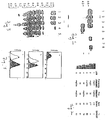
- Detergent lysates of U937 cells radioiodinated by the chloroglycouril method were incubated, (shown in Figure 1) from left to right, with Sepharose-anti-mIg sensitized with purified murine IgG2a myeloma protein RPC5 (lane 1) or with mab 32 (lane 3); with Sepharose-human IgG (lane 4); or with Sepharose-anti-mIg sensitized with mab IV3 (lane 5).
- the three samples analyzed in the right hand panel were eluted from Sepharose-anti-mIg sensitized with either intact IgG of mab 32 (lane 6), with Fab fragments of pooled human IgG (lane 7), or with Fab' fragments of mab 32 (lane 8).
- the immunoadsorbants were washed free of unbound radioactivity and the bound material was eluted in an SDS-containing sample buffer and analyzed by electrophoresis on an SDS-polyacrylamide gel followed by autoradiography. Adjacent lanes not shown but marked on the lateral margins of the autoradiograph contained radioiodinated bovine albumin (68kDa) and rabbit muscle actin (43kDa).
- Lane 2 contains a mab of the IgG2a subclass.
- FIG. 1 summarizes these observations.
- the autoradiograph shows the 72kDa molecule purified from detergent lysates of radioiodinated U937 cells with mab 32 (lane 3).
- the molecular weight of this molecule as determined on SDS-polyacrylamide gels is indistinguishable from the 72kDa FcR affinity adsorbed by Sepharose conjugated with ligand capable of interacting with the receptor.
- Sepharose-anti-mIg bearing RPC5, a murine IgG2a (lane 1), or Sepharose-human IgG (lane 4) both purify a 72kDa molecule that has been shown to be the high affinity FcR of U937 cells and human monocytes (See Anderson, C.L., (1982) J.
- mab 32 bound the 72 kDa molecule as an antibody by the Fab portion of the antibody molecule rather than as a ligand by the Fc portion. To confirm this supposition, Fab' fragments of mab 32 were prepared and were tested for their ability to precipitate p72.
- Lane 8 of Figure 1 indicates that Sepharose-anti-mIg sensitized with these Fab' fragments of mab 32 purifies the receptor, the Fab fragments of pooled human IgG, do not (lane 7).
- the 72kDa molecule purified by the intact IgG of mab 32 is shown in lane 6 for reference.
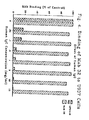
- Portions of a lysate of radioiodinated U937 cells were incubated with Sepharose-anti-mIg sensitized with several mabs designated as "preclearing adsorbants" in Figure 2.
- the affinity adsorbants were centrifuged out of suspension and the supernatants were incubated with a second set of affinity adsorbants designated "final adsorbants”.
- the eluates from the washed set of final adsorbants were processed as described for Figure 1.
- a photograph of the set of 72kDa bands, the only bands appearing on the autoradiograph, is displayed vertically. Densitometric tracings on paper of the autoradiograph bands were cut out and weighed; band density is expressed as mg per band. Percent depletion of p72 by the preclearing adsorbant was calculated by comparing lanes 2 and 3, 1 and 4, 2 and 5, and 1 and 6.
- mab 32 precleared 73% of the p72 subsequently purified by mIgG2a.
- Control experiments were performed in which the same reagent (mab or ligand) was used both for preclearing and for subsequent purification. These showed the efficiency of preclearing to range from 81% when mab 32 was used (lanes 2 and 5) to 93% when mIgG2a was used (lanes 1 and 6). We conclude, therefore, that mab 32 binds to the same high affinity 72kDa FcR purified by ligand affinity adsorption.
- a detergent lysate of radioiodinated U937 cells was incubated with Sepharose-anti-mIg sensitized with either murine IgG2a myeloma RPC5 (lane 1) or mab 32 (lane 3); with Sepharose-human IgG (lane 4); or with Sepharose-anti-mIg sensitized with mab IV3 (lane 5).
- the radioactivity bound to the washed immunoadsorbants was eluted with urea-containing sample buffer and was analyzed by isoelectric focusing and autoradiography. The pH gradient is shown in the left margin. Lane 2 analyzed a mab still under investigation.
- IFN-gamma enhances the expression of the high affinity FcR
- Table 1 shows a 3-fold increment in binding of both mab 32 and a murine IgG2a myeloma protein to IFN-gamma-induced U937 cells.
- hIgG interferes with the binding of mab 32 to the FcR of U937 cells. As seen in Table 1, hIgG significantly blocked the binding of mIgG2a to the FcR of U937 while the binding of mab 32 was unaffected.
- Replicate mixtures contained 4 mg/ml hIgG to block the FcR binding site.
- Nonspecific binding measured in the presence of a great excess (100 fold) of unlabeled antibody was subtracted from total binding to give specific binding. Percent inhibition, calculated as described in Materials and Methods, was plotted versus the concentration of inhibitor protein. Nonspecific binding was 6-8% of total binding.
- human IgG at concentrations found in human serum (10-15 mg/ml) does not inhibit the binding of mab 32 to Fc receptors on U937 cells.
- serum levels of IgG inhibit the binding by more than 95%.
- the mouse myeloma IgG 2a designated UPC-10 was used as the ligand.
- Identical inhibition by human IgG has also been demonstrated in experiments using human IgG1 as the ligand.
- mab 32 The types of cells which bear the epitope recognized by mab 32 were evaluated by indirect immunofluorescence and flow cytometry and data are presented in Table 2. It is apparent that mab 32 binds to those cells which are known to bear the high affinity IgG FcR, namely U937, HL60, and monocytes. Lymphocytes were negative as were the B cell lines Raji and Daudi, and the T cell lines Molt4 and Jurkat. Some samples of neutrophils showed low level binding of mab 32.
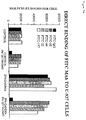
- Figure 5 shows the fluorescence intensity of cells stained with mab 32. Each panel displays histograms of fluorescence intensity vs cell number for cells stained with mab 32 (shaded area) and murine monoclonal IgG2b control (solid line).
- Nonocytes and lymphocytes from a single suspension of blood mononuclear cells were identified by gating on forward and 90° light scatter.
- Panels a and b are 64 channel histograms (20,000 cells counted). The fluorescence detection gain was set at 1500 to bring the lymphocytes on scale.
- Panel c is a 256 channel histogram gated on forward angle light scatter (11,000 cells counted). The fluorescence detection gain was set at 1400. The scale of fluorescence intensity units was calibrated by fluorescent microspheres.
- peripheral blood mononuclear cells and purified granulocytes were incubated first with either Mab32 or mIgG2a and with control myeloma proteins of the mIgG1 subclass. The washed cells were then incubated with FITC anti-mIg, washed again, and analyzed for fluorescence intensity by flow cytometry. Results are expressed as mean fluorescence intensity (MFI) in arbitrary units ⁇ SD.
- MFI mean fluorescence intensity
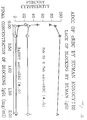
- the IgG1 monoclonal antibody 32.2 raised against the 72 kd monocyte high affinity Fc receptor was used to examine the role of this receptor in ADCC.
- Whole 32 or its Fab fragments were crosslinked to Fab fragments of rabbit anti-chicken red blood cells (cRBC) using the agent SPDP.
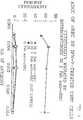
- the resulting heteroaggregates (32 x Fab anti cRBC) mediated monocyte and U937 cytotoxicity against cRBC. See Figure 6.
- the covalent association between the anti-Fc receptor and anti-target Fab was found necessary in order for ADCC to occur, since non-cross linked mixtures of 32 and Fab anti-cRBC did not promote ADCC. See Figure 6.
- hybridoma cells which produced antibody directed to various human monocyte surface molecules were selected for high expression of surface Ig and used directly as target cells.
- Hybridoma cells expressing surface Ig directed to the high-affinity FcgR were efficiently killed by human moncytes, whereas hybridoma cells expressing surface Ig directed to other molecules present on the monocyte membrane were not lysed.
- FcgRI when appropriately triggered, specifically initiates monocyte-mediated cytolysis of tumor target cells.
- IFN-gamma increases both the number of FcgRI molecules per monocyte and the ability of monocytes to mediate ADCC.
- treatment of monocytes with IFN-gamma did not consistently augment their ability to lyse a hybridoma cell (HC 32.2A) expressing high levels of surface Ig to FcgRI.
- HC 32.2A hybridoma cell
- HC 32.2C hybridomas bearing low
- Ig anti-FcgRI untreated monocytes were able to mediate lysis of both the high (HC 32.2A) and low (HC 32.2A) surface Ig-bearing cells.
- IFN-gamma treated monocytes lysed the two targets equally well.
- IFN-gamma enhances the capability of the monocyte to mediate antibody-dependent killing under conditions where limited antibody is available on the target.
- Cytotoxicity of the anti-FcgRI-bearing cell line HC 32.2C was inhibited by soluble 32.2 antibody but not by monomeric human IgG, the natural ligand for the receptor.
- MAb 32.2 binds to an epitope outside the binding site of FcgRI, it does demonstrate that the ligand binding site of FcgRI need not be occupied in order to trigger human monocytes to kill tumor cells.
- mab 32.2 and a second anti-mouse reagent we have shown that the release of superoxide anion from monocytes requires bridging of FcgRI, suggesting that crosslinking of receptors may also trigger tumor cell cytotoxicity by the monocyte.
- target cells coated with antibody and, in the present studies hybridoma cells expressing multiple anti-FcgRI antibodies per cell would create extensive receptor cross-linking on the monocyte cell surface.
- mab 32.2 may be directed to the surface of other types of tumor cells by linking it to an anti-tumor-specific antibody.
- the resulting heteroantibody could link tumor cells to monocytes by way of the FcgRI and may trigger lysis of the tumor cell.
- These reagents would be attractive therapeutic agents, because they would activate and use normal cytotoxic mechanisms present in the host.
- mab 32.2 binds to a region of the FcgRI outside the normal Fc binding site, human IgG or immune complexes would not interfere with its binding in vivo.
- reagents composed of the Fab' of mab 32.2 and the Fab' of rabbit anti-chick erythrocyte (CE) antibody mediated killing of CE by monocytes and by IFN-gamma-treated U937 cells. This killing was not blocked by human IgG1.
- heteroantibodies composed of Fab fragments of W6/32 and anti-CE antibodies did not mediate killing of CE by monocytes, again suggesting the specificity of FcgRI in triggering cytotoxicity.
- heteroantibodies composed of mab 32.2 and anti-tumor antibodies may be enhanced by the use of physiological mediators such as IFN-gamma or calcitrol.
- the invention relates to human Fc receptor-specific monoclonal antibody, the binding of which to Fc receptor is not blocked by human immunoglobulin G, to a monoclonal antibody which binds, through its antigen binding region, specifically to the high affinity Fc receptor for IgG on human monocytes, the antibody binding site on the receptor being distinct from the ligand binding site for Fc, to a monoclonal antibody which: (a) binds specifically to an epitope of the high affinity Fc receptor for IgG on human monocytes, the epitope being distinct from the ligand binding site for Fc of the receptor; (b) is capable of binding to IgG- occupied Fc receptor; and (c) is not blocked from binding to the receptor by human IgG, to a monoclonal anti-FcRI antibodies selected from the group consisting of mab 32, mab 22, mab 44, mab 62 and mab 197.
- the invention also relates to a bifunctional antibody or heteroantibody, comprising:(a) at least one antigen binding region derived from an anti-Fc receptor antibody, the binding of which to human Fc receptor is not blocked by human immunoglobulin G; and (b) at least one antigen binding region specific for a target epitope.
- the bifunctional antibody or heteroantibody according to the invention may comprise an anti[Fc receptor antibody which is specific for the high affinity Fc receptor for human Ig.
- the anti-Fc receptor antibody may be selected from the group consisting of mab 32, mab 22, mab 44, mab 62, mab 197 and anti-FcRI antibody 62.
- the target epitope may be that of a cancer cell, that of an infectious agent, or that of an antibody-producing cell.
- the invention also relates to a bifunctional antibody or heteroantibody, comprising: (a) at least one antigen binding region derived from an antibody which (i) binds specifically to an epitope of the high affinity Fc receptor for IgG on human monocytes, the epitope being distinct from the ligand binding site for Fc of the receptor; (ii) is capable of binding to IgG-occupied Fc receptor; and (iii) is not blocked from binding to the receptor by human IgG; and (b) at least one antigen binding region specific for a target cell.
- the target cell may be selected from the group consisting of a cancer cell, an infectious agent, an IgE-producing cell and an autoimmune cell.
- the invention also relates to a heteroantibody comprising: (a) an antibody or antibody binding fragment specific for Fc receptor for IgG on human monocytes, the binding of which to the human Fc receptor is not blocked by human immunoglobulin G; (b) an antibody or antibody binding fragment specific for a target cell.
- the antibody or antibody binding fragment for Fc receptor may be specific for the high affinity Fc receptor, and the target cell may be selected from the group consisting of a cancer cell, an infectious agent, an IgE producing cell and an autoimmune cell.
- the anti-Fc receptor antibody may be selected from the group consisting of mab 32, mab 22, mab 44, mab 62 and mab 197.
- the invention also covers a bifunctional antibody or heteroantibody comprising: (a) at least one antigen binding region derived from mab 32; and (b) at least one antigen binding region derived from an antibody specific for a target cell, said cell for example being a cancer cell, and a target-specific effector cell, comprising: (a) an effector cell which expresses receptor for the Fc portion of IgG; and (b) a bifunctional antibody or heteroantibody which comprises (1) at least one antigen binding region derived from an anti-Fc receptor antibody, the binding of which to human Fc receptor is not blocked by human immunoglobulin G; and (2) at least one antigen binding region specific for a target cell, the bifunctional antibody or heteroantibody being bound to the Fc receptor of the effector cell.
- the target-specific effector cell may be pretreated with IFN-gamma, and may be a human monocyte or macrophage, or an activated macrophage.
- the Fc receptor may be the high affinity Fc receptor for human Ig, and may be derived from monoclonal antibody 32.
- the target cell may be selected from the group consisting of a cancer cell, an infectious agent, an IgE producing cell or an autoimmune cell,or is an antibody producing cell.
- the invention also relates to a target macrophage, comprising a macrophage having bound to its surface Fc receptors a heteroantibody comprising: (a) at least one antigen binding region derived from an anti-Fc receptor antibody, the binding of which to human Fc receptor is not blocked by human immunoglobulin G; and (b) at least one antigen binding region specific for a targt cell, the bifunctional antibody or heteroantibody being bound to the Fc receptor of the effector cell, the macrophage OPTIONALLY having been treated with IFN-gamma before targeting.
- a target macrophage comprising a macrophage having bound to its surface Fc receptors a heteroantibody comprising: (a) at least one antigen binding region derived from an anti-Fc receptor antibody, the binding of which to human Fc receptor is not blocked by human immunoglobulin G; and (b) at least one antigen binding region specific for a targt cell, the bifunctional antibody or heteroantibody being bound to the Fc receptor of the effector
- the heteroantibody may comprise: (a) an antibody or antibody binding fragment specific for Fc receptor for IgG on human monocytes, the binding of which to the human Fc receptor is not blocked by human immunoglobulin G; (b) an antibody or antibody binding fragment specific for a target cell.
- the invention also relates to targeted effector cells, each comprising: (a) an effector cell expressing receptor for the Fc portion of IgG; (b) at least one antigen binding region derived from an anti-Fc receptor antibody, the binding of which to human Fc receptor is not blocked by human immunoglobulin G; and (c) at least one antigen binding region specific for a tumor cell, the bifunctional antibody or heteroantibody being bound to the Fc receptor of the effector cell, for use in diagnosis or therapy, e.g. of cancers, allergies, infectious or immune diseases.
- the invention also embraces the use of targeted effector cells for the manufacture of a diagnostic agent or a medicament for therapy e.g. of cancers, allergies, infectiousor immune diseases, said cells each comprising:(a) an effector cell expressing receptor for the Fc portion of IgG; (b) at least one antigen binding region derived from an anti-Fc receptor antibody, the binding of which to humana Fc receptor is not blocked by human immunoglobulin G; and (c) at least one antigen binding region specific for a tumor cell, the bifunctional antibody or heteroantibody being bound to the Fc receptor of the effector cell.
- the cells may comprise an anti-Fcreceptor antibody selected from the group consisting of mab 22, mab 32, mab 44, mab 62 and mab 197, and may be pretreated with interferon-gamma before targeting, said cells optionally being human monocytes or macrophages.
- the invention also covers an immunoassay for the level of human FcRI of a cell employing a monoclonal anti-Fc receptor antibody which:(a) binds specifically to an epitope of the high affinity Fc receptor for IgG on human monocytes, the epitope being distinct from the ligand being site for Fc of the receptor; (b) is capable of binding to IgG-occupied Fc receptor; and (c) is not blocked from binding to the receptor by human IgG, as well as an immunoassay for quantifying interferon-gamma in a sample, comprising: (a) contacting the sample to be tested with human cells that increase FcRI expression upon potentiallymulation with interferon-gamma; and (b) measuring the FcRI level of the cells as an indication of the amount of interferon-gamma in sample.
- a monoclonal anti-Fc receptor antibody which:(a) binds specifically to an epitope of the high affinity Fc receptor for IgG on human monocytes,
- the immunoassay of the invention may comprise measuring the FcRI level by employing an anti-FcRImonoclonal antibody which binds FcRI through its antigen binding region.
- the anti-FcRI antibody may be selected fromthe group consisting of mab 22, mab 32, mab 44, mab 62 and mab 197.
- the invention also embraces the antibody or heteroantibody for use as diagnostic agents or therapeutic agents, and also covers methods of making the antibody or heteroantibody as substantially as described in the accompanying specification.
- the invention also covers a method of targeting a human effector cell, for example a human macrophage which expresses Fc receptor to produce a target-specific effector cell comprising linking an antigen binding region of an antibody specific for a target cell to the effector cell through an antigen binding region derived from an anti-Fc receptor antibody, which binds Fc receptor without being blocked by human IgG, the anti-Fc receptor antibody optionally being selected from mab 32, mab 22, mab 44, mab 62 and mab 197, and the target cell for example being a cancer cell, an infectious agent, an IgE-producing cell or an autoimmune cell.
Landscapes
- Health & Medical Sciences (AREA)
- Immunology (AREA)
- Life Sciences & Earth Sciences (AREA)
- Chemical & Material Sciences (AREA)
- Organic Chemistry (AREA)
- Medicinal Chemistry (AREA)
- Cell Biology (AREA)
- Molecular Biology (AREA)
- Hematology (AREA)
- General Health & Medical Sciences (AREA)
- Engineering & Computer Science (AREA)
- Biochemistry (AREA)
- Biomedical Technology (AREA)
- Proteomics, Peptides & Aminoacids (AREA)
- Genetics & Genomics (AREA)
- Biophysics (AREA)
- Urology & Nephrology (AREA)
- Biotechnology (AREA)
- Virology (AREA)
- Zoology (AREA)
- Food Science & Technology (AREA)
- Physics & Mathematics (AREA)
- Animal Behavior & Ethology (AREA)
- Veterinary Medicine (AREA)
- Developmental Biology & Embryology (AREA)
- Tropical Medicine & Parasitology (AREA)
- Microbiology (AREA)
- Public Health (AREA)
- Pharmacology & Pharmacy (AREA)
- Analytical Chemistry (AREA)
- Epidemiology (AREA)
- General Physics & Mathematics (AREA)
- Pathology (AREA)
- Peptides Or Proteins (AREA)
- Medicines Containing Antibodies Or Antigens For Use As Internal Diagnostic Agents (AREA)
- Preparation Of Compounds By Using Micro-Organisms (AREA)
- Micro-Organisms Or Cultivation Processes Thereof (AREA)
Applications Claiming Priority (5)
| Application Number | Priority Date | Filing Date | Title |
|---|---|---|---|
| US88218186A | 1986-07-07 | 1986-07-07 | |
| US882181 | 1986-07-07 | ||
| US69412 | 1987-07-01 | ||
| US07/069,412 US4954617A (en) | 1986-07-07 | 1987-07-01 | Monoclonal antibodies to FC receptors for immunoglobulin G on human mononuclear phagocytes |
| EP87305998A EP0255249B1 (de) | 1986-07-07 | 1987-07-07 | Monoklonale Antikörper gegen Immunglobulin G Fc-Rezeptoren auf humane mononukleare Phagozyten; bifunktionelle Antikörper; ziel-spezifische Effektorzellen; gezielte Makrophagen und Immunoassays |
Related Parent Applications (1)
| Application Number | Title | Priority Date | Filing Date |
|---|---|---|---|
| EP87305998.4 Division | 1987-07-07 |
Publications (2)
| Publication Number | Publication Date |
|---|---|
| EP0629703A2 true EP0629703A2 (de) | 1994-12-21 |
| EP0629703A3 EP0629703A3 (de) | 1995-03-22 |
Family
ID=26750030
Family Applications (2)
| Application Number | Title | Priority Date | Filing Date |
|---|---|---|---|
| EP87305998A Expired - Lifetime EP0255249B1 (de) | 1986-07-07 | 1987-07-07 | Monoklonale Antikörper gegen Immunglobulin G Fc-Rezeptoren auf humane mononukleare Phagozyten; bifunktionelle Antikörper; ziel-spezifische Effektorzellen; gezielte Makrophagen und Immunoassays |
| EP94202572A Withdrawn EP0629703A3 (de) | 1986-07-07 | 1987-07-07 | Monoklonale Antikörper gegen Immunglobulin G Fc-Rezeptoren auf humanen mononuklearen Phagozyten; bifunktionelle Antikörper; ziel-spezifische Effektorzellen; gezielte Makrophagen und Immunoassays. |
Family Applications Before (1)
| Application Number | Title | Priority Date | Filing Date |
|---|---|---|---|
| EP87305998A Expired - Lifetime EP0255249B1 (de) | 1986-07-07 | 1987-07-07 | Monoklonale Antikörper gegen Immunglobulin G Fc-Rezeptoren auf humane mononukleare Phagozyten; bifunktionelle Antikörper; ziel-spezifische Effektorzellen; gezielte Makrophagen und Immunoassays |
Country Status (10)
| Country | Link |
|---|---|
| US (1) | US4954617A (de) |
| EP (2) | EP0255249B1 (de) |
| AT (1) | ATE120802T1 (de) |
| AU (1) | AU605771B2 (de) |
| CA (1) | CA1319899C (de) |
| DE (1) | DE3751214T2 (de) |
| ES (1) | ES2072851T3 (de) |
| IL (2) | IL83113A (de) |
| NZ (1) | NZ220973A (de) |
| WO (1) | WO1988000052A1 (de) |
Cited By (24)
| Publication number | Priority date | Publication date | Assignee | Title |
|---|---|---|---|---|
| WO1996032645A1 (en) * | 1995-04-12 | 1996-10-17 | Oy Aboatech Ab | Method for detecting allergy |
| WO1998009647A3 (en) * | 1996-09-06 | 1998-05-14 | Medarex Inc | Cyanidin compositions and therapeutic and diagnostic uses therefor |
| WO1998030706A1 (en) * | 1997-01-07 | 1998-07-16 | The University Of Tennessee Research Corporation | Compounds, compositions and methods for the endocytic presentation of immunosuppressive factors |
| EP1534335A4 (de) * | 2002-08-14 | 2006-07-05 | Macrogenics Inc | Fcgammariib-spezifische antikörper und verfahren zur verwendung davon |
| US7521542B2 (en) | 2004-05-10 | 2009-04-21 | Macrogenics, Inc. | Humanized FcγRIIB-specific antibodies and methods of use thereof |
| US7786270B2 (en) | 2006-05-26 | 2010-08-31 | Macrogenics, Inc. | Humanized FcγRIIB-specific antibodies and methods of use thereof |
| US7960512B2 (en) | 2003-01-09 | 2011-06-14 | Macrogenics, Inc. | Identification and engineering of antibodies with variant Fc regions and methods of using same |
| US8003774B2 (en) | 2003-01-09 | 2011-08-23 | Macrogenics, Inc. | Identification and engineering of antibodies with variant Fc regions and methods of using same |
| US8044180B2 (en) | 2002-08-14 | 2011-10-25 | Macrogenics, Inc. | FcγRIIB specific antibodies and methods of use thereof |
| US8187593B2 (en) | 2002-08-14 | 2012-05-29 | Macrogenics, Inc. | FcγRIIB specific antibodies and methods of use thereof |
| US8193318B2 (en) | 2002-08-14 | 2012-06-05 | Macrogenics, Inc. | FcγRIIB specific antibodies and methods of use thereof |
| US8216574B2 (en) | 2004-11-10 | 2012-07-10 | Macrogenics, Inc. | Engineering Fc antibody regions to confer effector function |
| US8217147B2 (en) | 2005-08-10 | 2012-07-10 | Macrogenics, Inc. | Identification and engineering of antibodies with variant Fc regions and methods of using same |
| US8530627B2 (en) | 2002-08-14 | 2013-09-10 | Macrogenics, Inc. | FcγRIIB specific antibodies and methods of use thereof |
| US8652466B2 (en) | 2006-12-08 | 2014-02-18 | Macrogenics, Inc. | Methods for the treatment of disease using immunoglobulins having Fc regions with altered affinities for FcγRactivating and FcγRinhibiting |
| US8778339B2 (en) | 2006-06-26 | 2014-07-15 | Macrogenics, Inc. | Combination of FcγRIIB-specific antibodies and CD20-specific antibodies and methods of use thereof |
| US8785599B2 (en) | 2006-06-26 | 2014-07-22 | Macrogenics, Inc. | FcγRIIB—specific antibodies and methods of use thereof |
| US8946387B2 (en) | 2002-08-14 | 2015-02-03 | Macrogenics, Inc. | FcγRIIB specific antibodies and methods of use thereof |
| US8968730B2 (en) | 2002-08-14 | 2015-03-03 | Macrogenics Inc. | FcγRIIB specific antibodies and methods of use thereof |
| US9695236B2 (en) | 2008-04-02 | 2017-07-04 | Macrogenics, Inc. | BCR-complex-specific antibodies and methods of using same |
| US9714296B2 (en) | 2010-03-04 | 2017-07-25 | Macrogenics, Inc. | Antibodies reactive with B7-H3, immunologically active fragments thereof and uses thereof |
| US9896508B2 (en) | 2010-03-04 | 2018-02-20 | Macrogenics, Inc. | Antibodies reactive with B7-H3 and uses thereof |
| US10131713B2 (en) | 2008-04-02 | 2018-11-20 | Macrogenics, Inc. | HER2/neu-specific antibodies and methods of using same |
| US10961311B2 (en) | 2016-04-15 | 2021-03-30 | Macrogenics, Inc. | B7-H3 binding molecules, antibody drug conjugates thereof and methods of use thereof |
Families Citing this family (134)
| Publication number | Priority date | Publication date | Assignee | Title |
|---|---|---|---|---|
| US6071517A (en) * | 1986-07-07 | 2000-06-06 | Medarex, Inc. | Bispecific heteroantibodies with dual effector functions |
| US5635600A (en) * | 1986-07-07 | 1997-06-03 | Trustees Of Dartmouth College | Bifunctional and heteroantibodies specific for the high affinity Fc receptor for immunoglobulin G on human mononuclear phagocytes |
| DE3850542T2 (de) * | 1987-09-23 | 1994-11-24 | Bristol Myers Squibb Co | Antikörper-Heterokonjugate zur Töting von HIV-infizierten Zellen. |
| EP0415929A1 (de) * | 1988-01-15 | 1991-03-13 | Centocor, Inc. | Hetero-unterbindende antikörper und ihre therapeutische benutzung |
| ES2096590T3 (es) * | 1989-06-29 | 1997-03-16 | Medarex Inc | Reactivos biespecificos para la terapia del sida. |
| US5897861A (en) * | 1989-06-29 | 1999-04-27 | Medarex, Inc. | Bispecific reagents for AIDS therapy |
| FR2653561A1 (fr) * | 1989-10-19 | 1991-04-26 | Fondation Nale Transfusion San | Hetero-anticorps anti-rhd et composition pharmaceutique les contenant. |
| DK0496818T3 (da) * | 1989-10-20 | 1999-11-22 | Dartmouth College | IgA-receptor-specifikt monoklonalt antistof |
| ES2133139T3 (es) | 1989-10-20 | 1999-09-01 | Medarex Inc | Hetero anticuerpos biespecificos con funciones efectoras dobles. |
| US6018031A (en) * | 1989-10-20 | 2000-01-25 | Trustees Of Dartmouth College | Binding agents specific for IgA receptor |
| US6248332B1 (en) | 1990-10-05 | 2001-06-19 | Medarex, Inc. | Targeted immunostimulation with bispecific reagents |
| DK0553244T4 (da) * | 1990-10-05 | 2005-08-01 | Celldex Therapeutics Inc | Målrettet immunostimulering med bispecifikke reagenser |
| US5650150A (en) * | 1990-11-09 | 1997-07-22 | Gillies; Stephen D. | Recombinant antibody cytokine fusion proteins |
| EP0495376B1 (de) * | 1991-01-15 | 1997-05-28 | Bayer Corporation | Ergänzung von Oberflächenrezeptoren |
| US5965709A (en) * | 1991-08-14 | 1999-10-12 | Genentech, Inc. | IgE antagonists |
| US5994514A (en) * | 1991-08-14 | 1999-11-30 | Genentech, Inc. | Immunoglobulin variants |
| ES2193136T3 (es) * | 1991-08-14 | 2003-11-01 | Genentech Inc | Variantes de inmunoglubina para receptores especificos de fc epsilon. |
| US6685939B2 (en) | 1991-08-14 | 2004-02-03 | Genentech, Inc. | Method of preventing the onset of allergic disorders |
| US6329509B1 (en) | 1991-08-14 | 2001-12-11 | Genentech, Inc. | Anti-IgE antibodies |
| WO1994008038A1 (en) * | 1992-10-02 | 1994-04-14 | Trustees Of Dartmouth College | Bispecific reagents for redirected targeting of low density lipoprotein |
| GB9223377D0 (en) * | 1992-11-04 | 1992-12-23 | Medarex Inc | Humanized antibodies to fc receptors for immunoglobulin on human mononuclear phagocytes |
| US5487975A (en) * | 1993-11-15 | 1996-01-30 | Ventana Medical Systems, Inc. | Biotin/avidin formulation |
| AU692239B2 (en) * | 1994-03-07 | 1998-06-04 | Medarex, Inc. | Bispecific molecules having clinical utilities |
| US6111166A (en) * | 1994-09-19 | 2000-08-29 | Medarex, Incorporated | Transgenic mice expressing human Fcα and β receptors |
| US20040258688A1 (en) * | 1995-01-31 | 2004-12-23 | Daniel Hawiger | Enhanced antigen delivery and modulation of the immune response therefrom |
| US20020187131A1 (en) * | 1995-01-31 | 2002-12-12 | Daniel Hawiger | Enhanced antigen delivery and modulation of the immune response therefrom |
| US6037453A (en) * | 1995-03-15 | 2000-03-14 | Genentech, Inc. | Immunoglobulin variants |
| US20030144483A1 (en) * | 1995-05-04 | 2003-07-31 | Medarex, Inc. | Humanized antibodies to Fc receptors for immunoglobulin G on human mononuclear phagocytes |
| GB9509620D0 (en) * | 1995-05-12 | 1995-07-05 | Nat Blood Authority | Transepithelial transport of molecular species |
| CA2220952A1 (en) * | 1995-06-07 | 1996-12-19 | Paul M. Guyre | Anti-allergy bispecific molecules |
| US6410690B1 (en) | 1995-06-07 | 2002-06-25 | Medarex, Inc. | Therapeutic compounds comprised of anti-Fc receptor antibodies |
| US6267958B1 (en) | 1995-07-27 | 2001-07-31 | Genentech, Inc. | Protein formulation |
| US6685940B2 (en) | 1995-07-27 | 2004-02-03 | Genentech, Inc. | Protein formulation |
| US5783186A (en) * | 1995-12-05 | 1998-07-21 | Amgen Inc. | Antibody-induced apoptosis |
| US5922845A (en) | 1996-07-11 | 1999-07-13 | Medarex, Inc. | Therapeutic multispecific compounds comprised of anti-Fcα receptor antibodies |
| EP0826696B1 (de) | 1996-09-03 | 2002-05-29 | GSF-Forschungszentrum für Umwelt und Gesundheit GmbH | Verwendung bi-und trispezifischer Antikörper zur Induktion einer Tumorimmunität |
| US6682928B2 (en) | 1997-12-02 | 2004-01-27 | Medarex, Inc. | Cells expressing anti-Fc receptor binding components |
| ES2590912T3 (es) | 1997-12-08 | 2016-11-24 | Merck Patent Gmbh | Proteínas de fusión heterodiméricas útiles para inmunoterapia dirigida y estimulación general del sistema inmunitario |
| KR20010041010A (ko) * | 1998-02-17 | 2001-05-15 | 메다렉스, 인코포레이티드 | Fc 수용체 리간드를 사용하여 마크로파지 매개 질환을치료하고 진단하는 방법 |
| US7067110B1 (en) | 1999-07-21 | 2006-06-27 | Emd Lexigen Research Center Corp. | Fc fusion proteins for enhancing the immunogenicity of protein and peptide antigens |
| MXPA02001417A (es) | 1999-08-09 | 2002-08-12 | Lexigen Pharm Corp | Complejos multiples de citosina-anticuerpo. |
| EP1212422B1 (de) | 1999-08-24 | 2007-02-21 | Medarex, Inc. | Humane antikörper gegen ctla-4 und deren verwendungen |
| CA2391080A1 (en) | 1999-11-12 | 2001-05-25 | Merck Patent Gesellschaft Mit Beschraenkter Haftung | Erythropoietin forms with improved properties |
| HUP0204475A2 (en) | 2000-02-11 | 2003-04-28 | Merck Patent Gmbh | Enhancing the circulating half-life of antibody-based fusion proteins |
| US20010051147A1 (en) * | 2000-03-27 | 2001-12-13 | Van De Winkel Jan G.J. | Methods for immunostimulation using binding agents for the Fc receptor of immunoglobulin A |
| KR100881471B1 (ko) * | 2000-05-08 | 2009-02-05 | 셀덱스 쎄라퓨틱스, 인크. | 수상세포에 대한 인간 모노클로날 항체 |
| US7560534B2 (en) | 2000-05-08 | 2009-07-14 | Celldex Research Corporation | Molecular conjugates comprising human monoclonal antibodies to dendritic cells |
| KR20030064275A (ko) | 2000-06-29 | 2003-07-31 | 메르크 파텐트 게엠베하 | 면역싸이토카인 흡수 증강제와의 조합 치료에 의한항체-싸이토카인 융합 단백질 매개 면역 반응 증강 |
| RU2003129528A (ru) | 2001-03-07 | 2005-04-10 | Мерк Патент ГмбХ (DE) | Способ экспрессии белков, содержащих в качестве компонента гибридный изотип антитела |
| WO2002079415A2 (en) | 2001-03-30 | 2002-10-10 | Lexigen Pharmaceuticals Corp. | Reducing the immunogenicity of fusion proteins |
| EP1383785B1 (de) | 2001-05-03 | 2011-03-16 | Merck Patent GmbH | Rekombinanter, tumorspezifischer antikörper und dessen verwendung |
| CA2450285C (en) * | 2001-06-13 | 2016-08-02 | Genmab A/S | Human monoclonal antibodies to epidermal growth factor receptor (egfr) |
| US7595378B2 (en) * | 2001-06-13 | 2009-09-29 | Genmab A/S | Human monoclonal antibodies to epidermal growth factor receptor (EGFR) |
| CA2462883A1 (en) * | 2001-10-12 | 2003-04-17 | Schering Corporation | Use of bispecific antibodies to regulate immune responses |
| DK1454138T3 (da) | 2001-12-04 | 2012-02-13 | Merck Patent Gmbh | Immunocytokiner med moduleret selektivitet |
| BRPI0315295C1 (pt) | 2002-10-17 | 2021-05-25 | Genmab As | anticorpo monoclonal humano isolado, célula hospedeira procariótica, composição farmacêutica, molécula biespecífica, usos de um anticorpo, métodos in vitro de detectar a presença de antígeno de cd20 ou uma célula que expressa cd20 em uma amostra, kit, e, vetor de expressão |
| DE10254601A1 (de) | 2002-11-22 | 2004-06-03 | Ganymed Pharmaceuticals Ag | Differentiell in Tumoren exprimierte Genprodukte und deren Verwendung |
| WO2004055056A1 (en) | 2002-12-17 | 2004-07-01 | Merck Patent Gmbh | Humanized antibody (h14.18) of the mouse 14.18 antibody binding to gd2 and its fusion with il-2 |
| ATE552860T1 (de) * | 2003-01-31 | 2012-04-15 | Celldex Res Corp | Antikörper-vakzine-konjugate und ihre verwendungen |
| US9259459B2 (en) * | 2003-01-31 | 2016-02-16 | Celldex Therapeutics Inc. | Antibody vaccine conjugates and uses therefor |
| KR101225299B1 (ko) | 2003-12-10 | 2013-01-24 | 메다렉스, 인코포레이티드 | 인터페론 알파 항체 및 그의 용도 |
| PL1691837T3 (pl) | 2003-12-10 | 2012-11-30 | Squibb & Sons Llc | IP-10 przeciwciała i ich zastosowanie |
| ES2305886T3 (es) | 2003-12-30 | 2008-11-01 | Merck Patent Gmbh | Proteinas de fusion de il-7 con porciones de anticuerpo, su preparacion y su empleo. |
| RU2370276C2 (ru) | 2003-12-31 | 2009-10-20 | Мерк Патент Гмбх | Fc-ЭРИТРОПОЭТИН СЛИТЫЙ БЕЛОК С УЛУЧШЕННОЙ ФАРМАКОКИНЕТИКОЙ |
| EP1702069A2 (de) | 2004-01-05 | 2006-09-20 | EMD Lexigen Research Center Corp. | Auf onkofötales fibronectin gerichtetes interleukin-12 |
| EP1713900A4 (de) * | 2004-01-27 | 2009-06-17 | Compugen Ltd | Verfahren und systeme zur kommentierung biomolekularer sequenzen |
| DE102004024617A1 (de) | 2004-05-18 | 2005-12-29 | Ganymed Pharmaceuticals Ag | Differentiell in Tumoren exprimierte Genprodukte und deren Verwendung |
| US7662381B2 (en) | 2004-06-21 | 2010-02-16 | Medarex, Inc. | Interferon alpha receptor 1 antibodies and their uses |
| RU2437893C2 (ru) | 2004-12-09 | 2011-12-27 | Мерк Патент Гмбх | Варианты il-7 со сниженной иммуногенностью |
| WO2006073921A2 (en) * | 2004-12-30 | 2006-07-13 | The Rockefeller University | Compositions and methods for enhanced dendritic cell maturation and function |
| JP5225069B2 (ja) | 2005-03-23 | 2013-07-03 | ゲンマブ エー/エス | 多発性骨髄腫の治療のためのcd38に対する抗体 |
| DK2439273T3 (da) | 2005-05-09 | 2019-06-03 | Ono Pharmaceutical Co | Humane monoklonale antistoffer til programmeret død-1(pd-1) og fremgangsmåder til behandling af cancer ved anvendelse af anti-pd-1- antistoffer alene eller i kombination med andre immunterapeutika |
| CA2611814A1 (en) | 2005-06-20 | 2007-01-04 | Medarex, Inc. | Cd19 antibodies and their uses |
| PT1907424E (pt) | 2005-07-01 | 2015-10-09 | Squibb & Sons Llc | Anticorpos monoclonais humanos para o ligando 1 de morte programada (pd-l1) |
| EP1762575A1 (de) * | 2005-09-12 | 2007-03-14 | Ganymed Pharmaceuticals AG | Identifizierung Tumor-assoziierter Antigene für Diagnoseund Therapie |
| WO2007045477A2 (en) | 2005-10-21 | 2007-04-26 | Novartis Ag | Human antibodies against il-13 and therapeutic uses |
| US20070099246A1 (en) * | 2005-11-03 | 2007-05-03 | Sandy John D | Antibodies, assays and kits to quantitate cartilage destruction |
| EP1790664A1 (de) | 2005-11-24 | 2007-05-30 | Ganymed Pharmaceuticals AG | Monoklonale Antikörper gegen Claudin-18 zur Behandlung von Krebs |
| US8383118B2 (en) | 2005-12-08 | 2013-02-26 | Medarex, Inc. | Human monoclonal antibodies to fucosyl-GM1 and methods for using anti-fucosyl-GM1 |
| CA2662350A1 (en) | 2006-09-05 | 2008-03-13 | Medarex, Inc. | Antibodies to bone morphogenic proteins and receptors therefor and methods for their use |
| WO2008037257A2 (en) | 2006-09-26 | 2008-04-03 | Genmab A/S | Anti-cd38 plus corticosteroids plus a non-corticosteroid chemotherapeutic for treating tumors |
| MX2009003306A (es) | 2006-10-02 | 2009-04-23 | Medarex Inc | Anticuerpos humanos que se unen a cxcr4 y sus usos. |
| US8618248B2 (en) | 2006-10-31 | 2013-12-31 | President And Fellows Of Harvard College | Phosphopeptide compositions and anti-phosphopeptide antibody compositions and methods of detecting phosphorylated peptides |
| EP2097447A4 (de) | 2006-11-15 | 2010-12-29 | Medarex Inc | Monoklonale menschliche antikörper gegen btla und verfahren zu ihrer verwendung |
| US8481683B2 (en) | 2006-12-01 | 2013-07-09 | Medarex, Inc. | Human antibodies that bind CD22 and uses thereof |
| CL2007003622A1 (es) | 2006-12-13 | 2009-08-07 | Medarex Inc | Anticuerpo monoclonal humano anti-cd19; composicion que lo comprende; y metodo de inhibicion del crecimiento de celulas tumorales. |
| MX2009006277A (es) | 2006-12-14 | 2009-07-24 | Medarex Inc | Anticuerpos humanos que se enlazan a cd70 y usos de los mismos. |
| EP1970384A1 (de) | 2007-03-14 | 2008-09-17 | Ganymed Pharmaceuticals AG | Monoklonale Antikörper zur Krebsbehandlung |
| EP1997832A1 (de) | 2007-05-29 | 2008-12-03 | Ganymed Pharmaceuticals AG | Monoklonale Antikörper gegen Claudin-18 zur Behandlung von Krebs |
| US20100322939A1 (en) * | 2007-06-21 | 2010-12-23 | Genmab A/S | Novel methods for treating egfr-associated tumors |
| JP5607530B2 (ja) | 2007-09-04 | 2014-10-15 | コンピュゲン エルティーディー. | ポリペプチド並びにポリヌクレオチド、並びに薬剤および生物製剤生産のための薬剤標的としてのその利用 |
| CN101888856B (zh) | 2007-11-07 | 2014-08-27 | 塞尔德克斯医疗公司 | 结合人树突和上皮细胞205(dec-205)的抗体 |
| KR101720760B1 (ko) * | 2008-01-25 | 2017-03-28 | 오르후스 우니베르시테트 | Igfbp-4에 대한 papp-a 활성의 선택적 엑소사이트 억제 |
| AU2009208607B2 (en) * | 2008-01-31 | 2013-08-01 | Compugen Ltd. | Polypeptides and polynucleotides, and uses thereof as a drug target for producing drugs and biologics |
| EP2650017A3 (de) | 2008-02-05 | 2014-01-22 | Bristol-Myers Squibb Company | Alpha-5-beta-1-Antikörper und deren Verwendungen |
| EP2307042B1 (de) | 2008-06-25 | 2014-03-26 | H. Lundbeck A/S | Modulierung des trpv : vps10p domänen-rezeptorsystems zur behandlung von schmerzen |
| EP2166021A1 (de) * | 2008-09-16 | 2010-03-24 | Ganymed Pharmaceuticals AG | Monoklonale Antikörper zur Krebsbehandlung |
| US20110311450A1 (en) | 2008-12-08 | 2011-12-22 | Zurit Levine | Polypeptides and polynucleotides, and uses thereof as a drug target for producing drugs and biologics |
| EP3165537A1 (de) | 2008-12-19 | 2017-05-10 | H. Lundbeck A/S | Modulation der vps-10-domänen-rezeptor-familie für die behandlung von psychischen und verhaltensstörungen |
| CN102341412B (zh) | 2009-03-05 | 2018-01-05 | 梅达雷克斯有限责任公司 | 特异于cadm1 的全人抗体 |
| DK2421898T3 (en) | 2009-04-20 | 2016-05-30 | Oxford Biotherapeutics Ltd | Cadherin-17 SPECIFIC ANTIBODIES |
| SG175233A1 (en) | 2009-04-22 | 2011-11-28 | Merck Patent Gmbh | Antibody fusion proteins with modified fcrn binding sites |
| WO2011021146A1 (en) | 2009-08-20 | 2011-02-24 | Pfizer Inc. | Osteopontin antibodies |
| JP5898082B2 (ja) | 2009-10-07 | 2016-04-06 | マクロジェニクス,インコーポレーテッド | フコシル化程度の変更により改良されたエフェクター機能を示すFc領域含有ポリペプチドおよびその使用法 |
| EP2470569A1 (de) | 2009-10-13 | 2012-07-04 | Oxford Biotherapeutics Ltd. | Antikörper gegen epha10 |
| US9588121B2 (en) | 2009-11-06 | 2017-03-07 | Go Therapeutics, Inc. | Method for early detection of cancer |
| EP2507265B1 (de) | 2009-12-01 | 2016-05-11 | Compugen Ltd. | Heparanase Spice-Variante T5 spezifischer Antikörper und dessen Verwendung. |
| EP2371864A1 (de) | 2010-03-23 | 2011-10-05 | Ganymed Pharmaceuticals AG | Monoklonale Antikörper zur Krebsbehandlung |
| US20150231215A1 (en) | 2012-06-22 | 2015-08-20 | Randolph J. Noelle | VISTA Antagonist and Methods of Use |
| MX374075B (es) | 2010-03-26 | 2025-03-05 | Dartmouth College | Proteina mediadora de celula t regulatoria vista, agentes de enlace de vista y uso de los mismos. |
| US10745467B2 (en) | 2010-03-26 | 2020-08-18 | The Trustees Of Dartmouth College | VISTA-Ig for treatment of autoimmune, allergic and inflammatory disorders |
| WO2012035518A1 (en) | 2010-09-17 | 2012-03-22 | Compugen Ltd. | Compositions and methods for treatment of drug resistant multiple myeloma |
| NZ713461A (en) | 2011-04-15 | 2017-02-24 | Compugen Ltd | Polypeptides and polynucleotides, and uses thereof for treatment of immune related disorders and cancer |
| PL2726508T3 (pl) | 2011-06-28 | 2017-12-29 | Oxford Biotherapeutics Ltd | Przeciwciała przeciwko cyklazie ADP-rybozylowej 2 |
| US9428574B2 (en) | 2011-06-30 | 2016-08-30 | Compugen Ltd. | Polypeptides and uses thereof for treatment of autoimmune disorders and infection |
| CA2848985A1 (en) | 2012-02-01 | 2013-08-08 | Compugen Ltd. | C10rf32 antibodies, and uses thereof for treatment of cancer |
| WO2013167153A1 (en) | 2012-05-09 | 2013-11-14 | Ganymed Pharmaceuticals Ag | Antibodies useful in cancer diagnosis |
| US9890215B2 (en) | 2012-06-22 | 2018-02-13 | King's College London | Vista modulators for diagnosis and treatment of cancer |
| JP6285923B2 (ja) | 2012-06-22 | 2018-02-28 | トラスティーズ・オブ・ダートマス・カレッジ | 新規VISTA−Igコンストラクト及び自己免疫、アレルギー性及び炎症性障害の処置のためのVISTA−Igの使用 |
| US9381244B2 (en) | 2012-09-07 | 2016-07-05 | King's College London | VISTA modulators for diagnosis and treatment of cancer |
| US9487587B2 (en) | 2013-03-05 | 2016-11-08 | Macrogenics, Inc. | Bispecific molecules that are immunoreactive with immune effector cells of a companion animal that express an activating receptor and cells that express B7-H3 and uses thereof |
| CN105745224B (zh) | 2013-10-11 | 2019-11-05 | 牛津生物疗法有限公司 | 用于治疗癌症的针对ly75的偶联抗体 |
| WO2015097536A2 (en) | 2013-12-24 | 2015-07-02 | Janssen Pharmaceutical Nv | Anti-vista antibodies and fragments |
| US11014987B2 (en) | 2013-12-24 | 2021-05-25 | Janssen Pharmaceutics Nv | Anti-vista antibodies and fragments, uses thereof, and methods of identifying same |
| US11123426B2 (en) | 2014-06-11 | 2021-09-21 | The Trustees Of Dartmouth College | Use of vista agonists and antagonists to suppress or enhance humoral immunity |
| CA2969730A1 (en) | 2014-12-05 | 2016-06-09 | Immunext, Inc. | Identification of vsig8 as the putative vista receptor and its use thereof to produce vista/vsig8 modulators |
| CA2990360C (en) | 2015-06-24 | 2024-02-13 | Janssen Pharmaceutica Nv | Anti-vista antibodies and fragments |
| RU2638457C2 (ru) | 2015-09-28 | 2017-12-13 | Общество С Ограниченной Ответственностью "Онкомакс" | Антитела, специфически связывающие рецептор 1 типа фактора роста фибробластов, применение антител для лечения онкологического заболевания, способ получения антител |
| ITUB20155272A1 (it) | 2015-11-02 | 2017-05-02 | Scuola Normale Superiore | Intracellular antibody |
| WO2017137830A1 (en) | 2016-02-12 | 2017-08-17 | Janssen Pharmaceutica Nv | Anti-vista (b7h5) antibodies |
| KR20230119259A (ko) | 2016-04-15 | 2023-08-16 | 이뮤넥스트, 인크. | 항-인간 vista 항체 및 이의 용도 |
| EP4092045A1 (de) | 2016-05-16 | 2022-11-23 | Checkmab S.R.L. | Selektiv deregulierte markermolekülen in tumor-infiltrierenden regulierende t-zellen |
| EP3584258A1 (de) | 2018-06-19 | 2019-12-25 | IEO - Istituto Europeo di Oncologia Srl | Antikörper gegen tumorassoziierte antigene und verfahren zur gewinnung davon |
| US20220229062A1 (en) * | 2021-01-21 | 2022-07-21 | Diagnostic Biosystems | Method for rapid immunohistochemical detection of an antigen from a biological sample |
Family Cites Families (15)
| Publication number | Priority date | Publication date | Assignee | Title |
|---|---|---|---|---|
| DE2322533C2 (de) * | 1972-11-06 | 1986-08-28 | Pharmacia AB, Uppsala | Verfahren zum Binden von Immunoglobulin und Hilfsmittel zur Durchführung des Verfahrens |
| IL57108A (en) * | 1979-04-22 | 1981-12-31 | Yeda Res & Dev | Assay for the quantitative determination of interferon and a kit therefor |
| WO1982001773A1 (en) * | 1980-11-07 | 1982-05-27 | Secher David S | Assay for interferon |
| US4481298A (en) * | 1981-04-13 | 1984-11-06 | Amf Incorporated | Pre-precipitated double antibody immunoassay method |
| US4474893A (en) * | 1981-07-01 | 1984-10-02 | The University of Texas System Cancer Center | Recombinant monoclonal antibodies |
| CA1194415A (en) * | 1982-05-05 | 1985-10-01 | E. I. Du Pont De Nemours And Company | Immunoglobulin half-molecules and process for producing hybrid antibodies |
| US4479895A (en) * | 1982-05-05 | 1984-10-30 | E. I. Du Pont De Nemours And Company | Immunoglobulin half-molecules and process for producing hybrid antibodies |
| US4470925A (en) * | 1982-05-05 | 1984-09-11 | E. I. Du Pont De Nemours And Company | Immunoglobulin half-molecules and process for producing hybrid antibodies |
| EP0094463A3 (de) * | 1982-05-17 | 1985-08-21 | Beta Instrument Company Limited | Optischer Messapparat |
| US4579840A (en) * | 1983-08-12 | 1986-04-01 | Immunetech Pharmaceuticals | Method of blocking immune complex binding to immunoglobulin Fc receptors |
| DE3404302C1 (de) * | 1984-02-08 | 1985-06-05 | Hermann Hemscheidt Maschinenfabrik Gmbh & Co, 5600 Wuppertal | Steuervorrichtung fuer ein hydraulisches Schreitausbaugestell |
| JPH0736016B2 (ja) * | 1984-05-11 | 1995-04-19 | 和光純薬工業株式会社 | 免疫グロブリンの定量方法 |
| JPS6147500A (ja) * | 1984-08-15 | 1986-03-07 | Res Dev Corp Of Japan | キメラモノクロ−ナル抗体及びその製造法 |
| GB8422238D0 (en) * | 1984-09-03 | 1984-10-10 | Neuberger M S | Chimeric proteins |
| EP0259585B1 (de) * | 1986-07-29 | 1993-06-09 | Kishimoto, Tadamitsu, Prof. | Monoklonale Antikörper gegen oberflächlichen IgE-Rezeptor, sowie Hybrid-Zellinien zu deren Herstellung und Verwendung |
-
1987
- 1987-07-01 US US07/069,412 patent/US4954617A/en not_active Expired - Lifetime
- 1987-07-06 WO PCT/US1987/001648 patent/WO1988000052A1/en not_active Ceased
- 1987-07-06 AU AU75271/87A patent/AU605771B2/en not_active Expired
- 1987-07-07 ES ES87305998T patent/ES2072851T3/es not_active Expired - Lifetime
- 1987-07-07 IL IL8783113Q patent/IL83113A/xx not_active IP Right Cessation
- 1987-07-07 EP EP87305998A patent/EP0255249B1/de not_active Expired - Lifetime
- 1987-07-07 IL IL8783113A patent/IL83113A0/xx not_active IP Right Cessation
- 1987-07-07 AT AT87305998T patent/ATE120802T1/de not_active IP Right Cessation
- 1987-07-07 DE DE3751214T patent/DE3751214T2/de not_active Expired - Lifetime
- 1987-07-07 NZ NZ220973A patent/NZ220973A/xx unknown
- 1987-07-07 CA CA000541502A patent/CA1319899C/en not_active Expired - Fee Related
- 1987-07-07 EP EP94202572A patent/EP0629703A3/de not_active Withdrawn
Cited By (50)
| Publication number | Priority date | Publication date | Assignee | Title |
|---|---|---|---|---|
| WO1996032645A1 (en) * | 1995-04-12 | 1996-10-17 | Oy Aboatech Ab | Method for detecting allergy |
| US5858690A (en) * | 1995-04-12 | 1999-01-12 | Oy Aboatech Ab | Method for detecting allergy |
| WO1998009647A3 (en) * | 1996-09-06 | 1998-05-14 | Medarex Inc | Cyanidin compositions and therapeutic and diagnostic uses therefor |
| US6146837A (en) * | 1996-09-06 | 2000-11-14 | Medarex, Inc. | Cyanidin compositions and therapeutic and diagnostic uses therefor |
| US6540977B1 (en) | 1996-09-06 | 2003-04-01 | Medarex, Inc. | Cyanidin compositions and therapeutic and diagnostic uses therefor |
| WO1998030706A1 (en) * | 1997-01-07 | 1998-07-16 | The University Of Tennessee Research Corporation | Compounds, compositions and methods for the endocytic presentation of immunosuppressive factors |
| US6737057B1 (en) | 1997-01-07 | 2004-05-18 | The University Of Tennessee Research Corporation | Compounds, compositions and methods for the endocytic presentation of immunosuppressive factors |
| US8044180B2 (en) | 2002-08-14 | 2011-10-25 | Macrogenics, Inc. | FcγRIIB specific antibodies and methods of use thereof |
| US8530627B2 (en) | 2002-08-14 | 2013-09-10 | Macrogenics, Inc. | FcγRIIB specific antibodies and methods of use thereof |
| US7425619B2 (en) | 2002-08-14 | 2008-09-16 | Macrogenics, Inc. | FcγRIIB specific antibodies and methods of use thereof |
| US8946387B2 (en) | 2002-08-14 | 2015-02-03 | Macrogenics, Inc. | FcγRIIB specific antibodies and methods of use thereof |
| US8968730B2 (en) | 2002-08-14 | 2015-03-03 | Macrogenics Inc. | FcγRIIB specific antibodies and methods of use thereof |
| EP1534335A4 (de) * | 2002-08-14 | 2006-07-05 | Macrogenics Inc | Fcgammariib-spezifische antikörper und verfahren zur verwendung davon |
| US7425620B2 (en) | 2002-08-14 | 2008-09-16 | Scott Koenig | FcγRIIB-specific antibodies and methods of use thereof |
| US8193318B2 (en) | 2002-08-14 | 2012-06-05 | Macrogenics, Inc. | FcγRIIB specific antibodies and methods of use thereof |
| US8187593B2 (en) | 2002-08-14 | 2012-05-29 | Macrogenics, Inc. | FcγRIIB specific antibodies and methods of use thereof |
| EP2371389A3 (de) * | 2002-08-14 | 2012-04-18 | MacroGenics, Inc. | FC-Gamma-RIIB-spezifische Antikörper und Verwendungsverfahren davon |
| US8951517B2 (en) | 2003-01-09 | 2015-02-10 | Macrogenics, Inc. | Identification and engineering of antibodies with variant Fc regions and methods of using same |
| US8192737B2 (en) | 2003-01-09 | 2012-06-05 | Macrogenics, Inc. | Identification and engineering of antibodies with variant Fc regions and methods of using same |
| US8003774B2 (en) | 2003-01-09 | 2011-08-23 | Macrogenics, Inc. | Identification and engineering of antibodies with variant Fc regions and methods of using same |
| US9028815B2 (en) | 2003-01-09 | 2015-05-12 | Macrogenics, Inc. | Identification and engineering of antibodies with variant FC regions and methods of using same |
| US7960512B2 (en) | 2003-01-09 | 2011-06-14 | Macrogenics, Inc. | Identification and engineering of antibodies with variant Fc regions and methods of using same |
| US8133982B2 (en) | 2004-05-10 | 2012-03-13 | Macrogenics, Inc. | FcγRIIB specific antibodies and methods of use thereof |
| US8784808B2 (en) | 2004-05-10 | 2014-07-22 | Macrogenics, Inc. | FcγRIIB specific antibodies and methods of use thereof |
| US7521542B2 (en) | 2004-05-10 | 2009-04-21 | Macrogenics, Inc. | Humanized FcγRIIB-specific antibodies and methods of use thereof |
| US8216574B2 (en) | 2004-11-10 | 2012-07-10 | Macrogenics, Inc. | Engineering Fc antibody regions to confer effector function |
| US8217147B2 (en) | 2005-08-10 | 2012-07-10 | Macrogenics, Inc. | Identification and engineering of antibodies with variant Fc regions and methods of using same |
| US8216579B2 (en) | 2006-05-26 | 2012-07-10 | Macrogenics, Inc. | Humanized FcγRIIB-specific antibodies and methods of use thereof |
| US7786270B2 (en) | 2006-05-26 | 2010-08-31 | Macrogenics, Inc. | Humanized FcγRIIB-specific antibodies and methods of use thereof |
| US8778339B2 (en) | 2006-06-26 | 2014-07-15 | Macrogenics, Inc. | Combination of FcγRIIB-specific antibodies and CD20-specific antibodies and methods of use thereof |
| US10100116B2 (en) | 2006-06-26 | 2018-10-16 | Macrogenics, Inc. | FcγRIIB-specific antibodies and methods of use thereof |
| US11098125B2 (en) | 2006-06-26 | 2021-08-24 | Macrogenics, Inc. | FcγRIIB-specific antibodies and methods of use thereof |
| US8785599B2 (en) | 2006-06-26 | 2014-07-22 | Macrogenics, Inc. | FcγRIIB—specific antibodies and methods of use thereof |
| US9737599B2 (en) | 2006-06-26 | 2017-08-22 | Macrogenics, Inc. | Combination of FcγRIIB-specific antibodies and CD20-specific antibodies and methods of use thereof |
| US8652466B2 (en) | 2006-12-08 | 2014-02-18 | Macrogenics, Inc. | Methods for the treatment of disease using immunoglobulins having Fc regions with altered affinities for FcγRactivating and FcγRinhibiting |
| US11787871B2 (en) | 2006-12-08 | 2023-10-17 | Macrogenics, Inc. | Methods for the treatment of disease using immunoglobulins having fc regions with altered affinities for FcgammaRactivating and FegammaRinhibiting |
| US9708408B2 (en) | 2006-12-08 | 2017-07-18 | Macrogenics, Inc. | Methods for the treatment of disease using immunoglobulins having Fc Regions with altered affinities for FcγRactivating and FcγRinhibiting |
| US10711069B2 (en) | 2006-12-08 | 2020-07-14 | Macrogenics, Inc. | Methods for the treatment of disease using immunoglobulins having Fc regions with altered affinities for FcγRactivating and FcγRinhibiting |
| US11028183B2 (en) | 2008-04-02 | 2021-06-08 | Macrogenics, Inc. | HER2/neu-specific antibodies and methods of using same |
| US10131713B2 (en) | 2008-04-02 | 2018-11-20 | Macrogenics, Inc. | HER2/neu-specific antibodies and methods of using same |
| US10479831B2 (en) | 2008-04-02 | 2019-11-19 | Macrogenics, Inc | BCR-complex-specific antibodies and methods of using same |
| US9695236B2 (en) | 2008-04-02 | 2017-07-04 | Macrogenics, Inc. | BCR-complex-specific antibodies and methods of using same |
| US12024569B2 (en) | 2008-04-02 | 2024-07-02 | Macrogenics, Inc. | HER2/neu-specific antibodies and methods of using same |
| US10683364B2 (en) | 2010-03-04 | 2020-06-16 | Macrogenics, Inc. | Antibodies reactive with B7-H3, immunologically active fragments thereof and uses thereof |
| US9896508B2 (en) | 2010-03-04 | 2018-02-20 | Macrogenics, Inc. | Antibodies reactive with B7-H3 and uses thereof |
| US10730945B2 (en) | 2010-03-04 | 2020-08-04 | Macrogenics, Inc. | Antibodies reactive with B7-H3 and users thereof |
| US9714295B2 (en) | 2010-03-04 | 2017-07-25 | Macrogenics, Inc. | Antibodies reactive with B7-H3, immunologically active fragments thereof and uses thereof |
| US9714296B2 (en) | 2010-03-04 | 2017-07-25 | Macrogenics, Inc. | Antibodies reactive with B7-H3, immunologically active fragments thereof and uses thereof |
| US10961311B2 (en) | 2016-04-15 | 2021-03-30 | Macrogenics, Inc. | B7-H3 binding molecules, antibody drug conjugates thereof and methods of use thereof |
| US11591400B2 (en) | 2016-04-15 | 2023-02-28 | Macrogenics, Inc. | B7-H3 directed antibody drug conjugates |
Also Published As
| Publication number | Publication date |
|---|---|
| DE3751214D1 (de) | 1995-05-11 |
| NZ220973A (en) | 1989-11-28 |
| IL83113A0 (en) | 1987-12-31 |
| IL83113A (en) | 1992-11-15 |
| DE3751214T2 (de) | 1995-11-16 |
| EP0255249A3 (en) | 1990-03-07 |
| EP0629703A3 (de) | 1995-03-22 |
| ATE120802T1 (de) | 1995-04-15 |
| AU7527187A (en) | 1988-01-14 |
| ES2072851T3 (es) | 1995-08-01 |
| EP0255249A2 (de) | 1988-02-03 |
| CA1319899C (en) | 1993-07-06 |
| US4954617A (en) | 1990-09-04 |
| EP0255249B1 (de) | 1995-04-05 |
| WO1988000052A1 (en) | 1988-01-14 |
| AU605771B2 (en) | 1991-01-24 |
Similar Documents
| Publication | Publication Date | Title |
|---|---|---|
| EP0255249B1 (de) | Monoklonale Antikörper gegen Immunglobulin G Fc-Rezeptoren auf humane mononukleare Phagozyten; bifunktionelle Antikörper; ziel-spezifische Effektorzellen; gezielte Makrophagen und Immunoassays | |
| US5635600A (en) | Bifunctional and heteroantibodies specific for the high affinity Fc receptor for immunoglobulin G on human mononuclear phagocytes | |
| Anderson et al. | Monoclonal antibodies to Fc receptors for IgG on human mononuclear phagocytes. Antibody characterization and induction of superoxide production in a monocyte cell line. | |
| CA2069960C (en) | Bispecific heteroantibodies with dual effector functions | |
| Karpovsky et al. | Production of target-specific effector cells using hetero-cross-linked aggregates containing anti-target cell and anti-Fc gamma receptor antibodies. | |
| US6071517A (en) | Bispecific heteroantibodies with dual effector functions | |
| Shen et al. | Heteroantibody-mediated cytotoxicity: antibody to the high affinity Fc receptor for IgG mediates cytotoxicity by human monocytes that is enhanced by interferon-gamma and is not blocked by human IgG. | |
| Hombach et al. | A CD16/CD30 bispecific monoclonal antibody induces lysis of hodgkin's cells by unstimulated natural killer cells In AND In vivo | |
| Graziano et al. | Fc gamma RI and Fc gamma RII on monocytes and granulocytes are cytotoxic trigger molecules for tumor cells. | |
| Shen et al. | Polymorphonuclear leukocyte function triggered through the high affinity Fc receptor for monomeric IgG. | |
| US4676980A (en) | Target specific cross-linked heteroantibodies | |
| CA2067244C (en) | Monoclonal antibody specific for iga receptor | |
| Shen et al. | My 43, a monoclonal antibody that reacts with human myeloid cells inhibits monocyte IgA binding and triggers function. | |
| JPH07126300A (ja) | ヒトのb細胞受容体複合体の特異抗原を認識するモノクローナル抗体 | |
| US20100017898A1 (en) | Therapeutic applications of noncovalent dimerizing antibodies | |
| Garrido et al. | Targeting human T-lymphocytes with bispecific antibodies to react against human ovarian carcinoma cells growing in nu/nu mice | |
| US5077216A (en) | Monoclonal antibodies specific for a human mononculear phagocyte-specific antigen | |
| Heijnen et al. | Generation of HER-2/neu-specific cytotoxic neutrophils in vivo: efficient arming of neutrophils by combined administration of granulocyte colony-stimulating factor and Fcgamma receptor I bispecific antibodies | |
| US5578706A (en) | Methods and compositions concerning homogenous immunotoxin preparations | |
| EP0407399A1 (de) | Immunosuppression mit anti-pan-t-zellen-immunotoxin-zubereitungen | |
| US5441871A (en) | Monoclonal antibody reactive to human leukemia and lymphoma cells and methods of using same for diagnosis and treatment | |
| Antoun et al. | Comparison of the 40kDA hematopoietic cell antigens bound by monoclonal antibodies IV. 3, 41H. 16 and KB61 | |
| JP2648317B2 (ja) | Fcレセプターに対するモノクローナル抗体 | |
| IL101475A (en) | Monoclonal antibodies that respond with F receptors as the binding is not blocked by human GJI | |
| US5169775A (en) | Monoclonal antibodies against lymphoma-associated antigens, hybrid cell lines producing these antibodies |
Legal Events
| Date | Code | Title | Description |
|---|---|---|---|
| PUAI | Public reference made under article 153(3) epc to a published international application that has entered the european phase |
Free format text: ORIGINAL CODE: 0009012 |
|
| AC | Divisional application: reference to earlier application |
Ref document number: 255249 Country of ref document: EP |
|
| AK | Designated contracting states |
Kind code of ref document: A2 Designated state(s): AT BE CH DE ES FR GB GR IT LI LU NL SE |
|
| PUAL | Search report despatched |
Free format text: ORIGINAL CODE: 0009013 |
|
| AK | Designated contracting states |
Kind code of ref document: A3 Designated state(s): AT BE CH DE ES FR GB GR IT LI LU NL SE |
|
| 17P | Request for examination filed |
Effective date: 19950911 |
|
| 17Q | First examination report despatched |
Effective date: 19990322 |
|
| STAA | Information on the status of an ep patent application or granted ep patent |
Free format text: STATUS: THE APPLICATION IS DEEMED TO BE WITHDRAWN |
|
| 18D | Application deemed to be withdrawn |
Effective date: 20001222 |