EP0635263A2 - Antagonistes de l'angiotensine II (AII) comme inhibiteurs de la croissance du tissu adipeux - Google Patents
Antagonistes de l'angiotensine II (AII) comme inhibiteurs de la croissance du tissu adipeux Download PDFInfo
- Publication number
- EP0635263A2 EP0635263A2 EP94108298A EP94108298A EP0635263A2 EP 0635263 A2 EP0635263 A2 EP 0635263A2 EP 94108298 A EP94108298 A EP 94108298A EP 94108298 A EP94108298 A EP 94108298A EP 0635263 A2 EP0635263 A2 EP 0635263A2
- Authority
- EP
- European Patent Office
- Prior art keywords
- carbon atoms
- lower alkyl
- alkyl
- phenyl
- nitro
- Prior art date
- Legal status (The legal status is an assumption and is not a legal conclusion. Google has not performed a legal analysis and makes no representation as to the accuracy of the status listed.)
- Withdrawn
Links
- 0 C[C@@](CC([C@]1(C)C(N2*)=O)=*)N(*)N(C)[C@@]1(*)C2=O Chemical compound C[C@@](CC([C@]1(C)C(N2*)=O)=*)N(*)N(C)[C@@]1(*)C2=O 0.000 description 2
Images

Classifications
-
- A—HUMAN NECESSITIES
- A61—MEDICAL OR VETERINARY SCIENCE; HYGIENE
- A61K—PREPARATIONS FOR MEDICAL, DENTAL OR TOILETRY PURPOSES
- A61K31/00—Medicinal preparations containing organic active ingredients
- A61K31/33—Heterocyclic compounds
- A61K31/395—Heterocyclic compounds having nitrogen as a ring hetero atom, e.g. guanethidine or rifamycins
- A61K31/495—Heterocyclic compounds having nitrogen as a ring hetero atom, e.g. guanethidine or rifamycins having six-membered rings with two or more nitrogen atoms as the only ring heteroatoms, e.g. piperazine or tetrazines
- A61K31/505—Pyrimidines; Hydrogenated pyrimidines, e.g. trimethoprim
- A61K31/517—Pyrimidines; Hydrogenated pyrimidines, e.g. trimethoprim ortho- or peri-condensed with carbocyclic ring systems, e.g. quinazoline, perimidine
-
- A—HUMAN NECESSITIES
- A61—MEDICAL OR VETERINARY SCIENCE; HYGIENE
- A61K—PREPARATIONS FOR MEDICAL, DENTAL OR TOILETRY PURPOSES
- A61K31/00—Medicinal preparations containing organic active ingredients
- A61K31/33—Heterocyclic compounds
- A61K31/395—Heterocyclic compounds having nitrogen as a ring hetero atom, e.g. guanethidine or rifamycins
- A61K31/495—Heterocyclic compounds having nitrogen as a ring hetero atom, e.g. guanethidine or rifamycins having six-membered rings with two or more nitrogen atoms as the only ring heteroatoms, e.g. piperazine or tetrazines
- A61K31/505—Pyrimidines; Hydrogenated pyrimidines, e.g. trimethoprim
-
- A—HUMAN NECESSITIES
- A61—MEDICAL OR VETERINARY SCIENCE; HYGIENE
- A61K—PREPARATIONS FOR MEDICAL, DENTAL OR TOILETRY PURPOSES
- A61K31/00—Medicinal preparations containing organic active ingredients
-
- A—HUMAN NECESSITIES
- A61—MEDICAL OR VETERINARY SCIENCE; HYGIENE
- A61K—PREPARATIONS FOR MEDICAL, DENTAL OR TOILETRY PURPOSES
- A61K31/00—Medicinal preparations containing organic active ingredients
- A61K31/33—Heterocyclic compounds
- A61K31/395—Heterocyclic compounds having nitrogen as a ring hetero atom, e.g. guanethidine or rifamycins
- A61K31/41—Heterocyclic compounds having nitrogen as a ring hetero atom, e.g. guanethidine or rifamycins having five-membered rings with two or more ring hetero atoms, at least one of which being nitrogen, e.g. tetrazole
-
- A—HUMAN NECESSITIES
- A61—MEDICAL OR VETERINARY SCIENCE; HYGIENE
- A61K—PREPARATIONS FOR MEDICAL, DENTAL OR TOILETRY PURPOSES
- A61K31/00—Medicinal preparations containing organic active ingredients
- A61K31/33—Heterocyclic compounds
- A61K31/395—Heterocyclic compounds having nitrogen as a ring hetero atom, e.g. guanethidine or rifamycins
- A61K31/41—Heterocyclic compounds having nitrogen as a ring hetero atom, e.g. guanethidine or rifamycins having five-membered rings with two or more ring hetero atoms, at least one of which being nitrogen, e.g. tetrazole
- A61K31/415—1,2-Diazoles
-
- A—HUMAN NECESSITIES
- A61—MEDICAL OR VETERINARY SCIENCE; HYGIENE
- A61K—PREPARATIONS FOR MEDICAL, DENTAL OR TOILETRY PURPOSES
- A61K31/00—Medicinal preparations containing organic active ingredients
- A61K31/33—Heterocyclic compounds
- A61K31/395—Heterocyclic compounds having nitrogen as a ring hetero atom, e.g. guanethidine or rifamycins
- A61K31/435—Heterocyclic compounds having nitrogen as a ring hetero atom, e.g. guanethidine or rifamycins having six-membered rings with one nitrogen as the only ring hetero atom
- A61K31/44—Non condensed pyridines; Hydrogenated derivatives thereof
-
- A—HUMAN NECESSITIES
- A61—MEDICAL OR VETERINARY SCIENCE; HYGIENE
- A61P—SPECIFIC THERAPEUTIC ACTIVITY OF CHEMICAL COMPOUNDS OR MEDICINAL PREPARATIONS
- A61P3/00—Drugs for disorders of the metabolism
- A61P3/04—Anorexiants; Antiobesity agents
-
- A—HUMAN NECESSITIES
- A61—MEDICAL OR VETERINARY SCIENCE; HYGIENE
- A61P—SPECIFIC THERAPEUTIC ACTIVITY OF CHEMICAL COMPOUNDS OR MEDICINAL PREPARATIONS
- A61P3/00—Drugs for disorders of the metabolism
- A61P3/08—Drugs for disorders of the metabolism for glucose homeostasis
-
- A—HUMAN NECESSITIES
- A61—MEDICAL OR VETERINARY SCIENCE; HYGIENE
- A61P—SPECIFIC THERAPEUTIC ACTIVITY OF CHEMICAL COMPOUNDS OR MEDICINAL PREPARATIONS
- A61P3/00—Drugs for disorders of the metabolism
- A61P3/08—Drugs for disorders of the metabolism for glucose homeostasis
- A61P3/10—Drugs for disorders of the metabolism for glucose homeostasis for hyperglycaemia, e.g. antidiabetics
Definitions
- the invention relates to the use of Angiotensin (AII) Antagonists as inhibitors of the growth of adipose tissue, reducing adipocyte growth and body weight gain.
- AII Angiotensin
- Angiotensin is a well characterized peptide involved in cardiovascular homeostasis.
- angiotensin has been known to be a potent vaso-constrictor with profound effects on blood pressure and electrolyte balance.
- the classic concept of control of angiotensin metabolism via renin release from the kidney has more recently been revised to include peripheral tissue sites.
- the observation of significant quantities of locally generated angiotensin II (AII) from peripheral tissues has also coincided with data indicating that AII can act as a growth factor in cell culture systems and stimulate angiogenesis in vivo.
- AII locally generated angiotensin II
- Membrane receptors for angiotensin II have been identified in many tissues from diverse species and the gene encoding the receptor protein has recently been cloned. Two subtypes of receptor have been observed, the high affinity AT1 subtype typically found in vascular cells, and the low affinity AT2 subtype found in nervous tissue.
- the angiotensinogen gene has been identified by in situ hybridization in brown adipose tissue and whole body autoradiographic techniques have indicated that AII receptors decrease in specific tissues during fetal development.
- AII has been characterized as both a potent vasoconstrictor, and an effector of growth and differentiation. To date, however, the functions of AII in addition to those producing cardiovascular effects have been proposed, but remain largely unresolved.
- Adipose tissue is highly vascularized, and is one of the few tissues that can continue to expand through most of adult life.
- Angiotensinogen mRNA has been observed in whole adipose tissue preparations containing vascular, connective and fat cells, and isolated adipocytes incubated in the presence of exogenous angiotensin II release prostacyclin in a dose-dependent manner.
- the receptor for AII in the rat fat cells has recently been identified, characterized in isolated adipocyte membranes and reported (D.L. Crandall et al., Metabolism, 42, 511-515(1993).
- the present invention relates to the identification of the AII receptor in adipocyte membranes and the use of angiotensin II receptor blocking agents to inhibit adipocyte AII receptors thereby reducing adipocyte growth and body weight gain. Accordingly, the invention also relates to the use of angiotensin II receptor blocking agents in treating diseases associated with adipocyte growth including obesity and non-insulin dependent diabetes mellitus.
- Suitable therapeutic agents for the practice of this invention are those compounds which are known to have activity as angiotensin II receptor blocking agents and include various compounds of Formula I: wherein: Ar is selected from the group consisting of R a and R e are each independently lower alkyl of 1 to 5 carbon atoms; R b is selected from :
- R is -CO2H, -NHSO2CF3 or X is straight or branched alkyl of 3 to 5 carbon atoms;
- R6 is selected from the following moieties:
- R59 is selected from the following moieties: wherein:
- Pharmaceutically acceptable salts include both the metallic (inorganic) salts and organic salts; a list of which is given in Remington's Pharmaceutical Sciences , 17th Edition, pg. 1418 (1985).
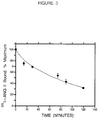
- Figure 1 shows the time course of 125I-AII association to epididymal adipocyte membranes.
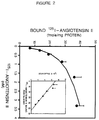
- Figure 2 shows the saturation of 125I-AII binding to adipocyte membranes.
- Adipose tissue possesses considerable growth potential, and has recently been described as a significant source of angiotensinogen, a precursor molecule for the growth promoting decapeptide angiotensin II. To determine whether angiotensin antagonists are involved in adipose tissue expansion, both in vitro and in vivo assays are performed.
- angiotensin II receptor binding assays are performed in rat adipocytes at different stages of growth. Fat cells are isolated by collagenase digestion, and plasma membranes prepared from either the epididymal or retroperitoneal fat depots of animals 40, 70 or 100 days of age. While epididymal depot weight is initially greater than retroperitoneal, during the course of the study epididymal mass increased 15 fold while retroperitoneal mass increased 25-fold. Morphologic analysis indicates that retroperitoneal adipocytes have greater volume at each age examined, and comparative differences to epididymal increased with age.
- Binding of 125I-[Sar1,Ile8]AII is rapid, saturable and specific in membranes for each site, identifying a receptor with a similar affinity of approximately 1.5nM in both depots, and at all ages examined. Significant differences in Bmax are observed, however, which varied with the depot and the age of the animal.
- Epididymal fat cell membranes exhibit consistently greater numbers of AII receptors when compared to retroperitoneal adipocytes when data is expressed as binding per unit of membrane protein. The number of receptor sites per cell remain constant in retroperitoneal adipocytes at each age, which is significantly less than epididymal as cells enlarge.
- Relative inhibitory constants for several peptide and non-peptide AII antagonists indicate significant differences between epididymal and retroperitoneal fat cells. These data indicate significant differences in several AII binding parameters in anatomically distinct adipose tissue depots exhibiting different patterns of growth.
- Measurement of the rate of association of 125I-AII to its binding site is used to calculate the time period required to achieve equilibrium. Approximately 35 ⁇ g membrane protein in 80 ⁇ L of diluted sample is placed in 96-well plates containing 10 ⁇ L BSA buffer or unlabeled AII (10 ⁇ mol/L) and 10 ⁇ L 1.0 mmol/L 125I-AII (300,000 cpm). The samples are then incubated at 22 o C for varying time periods (1, 5, 10, 15, 30, 45, and 60 minutes) in a shaking water bath. At the appropriate times, the incubations are terminated by placing the tubes in an ice bath. Each plate is then filtered according to the procedure used for the Scatchard analysis. Filters are placed into 12 x 75-mm glass tubes and radioactivity is measured.
- the dissociation of bound 125I-AII is measured by incubating 80 ⁇ L (35 ⁇ g) freshly prepared adipocyte membranes and 10 ⁇ L 125I-AII (1.0 nmol/L, 300,000 cpm) for 30 minutes at 22 o C in a shaking water bath. At the end of the preincubation period, 10 ⁇ L unlabeled AII (10 ⁇ mol/L) is added and the membranes are subjected to a second incubation at 22 o C with gentle shaking for increasing time periods (15, 30, 75, 90, and 120 minutes). At the appropriate time intervals, plates are removed and filtered with cold 0.9% saline as previously described. Percent of binding is calculated as counts per minute of radioactivity at the aforementioned time intervals divided by the amount bound before the addition of unlabeled AII.
- Binding of 125I-AII to adipocyte membranes is saturable, reversible, and displaced by known agonists and antagonists. At 22 o C, binding is rapid, reaching equilibrium in approximately 15 minutes, and remained stable throughout 1 hour ( Figure 1). Temperature dependency is assessed by determining binding in three preparations at 37 o C, during which specific binding reaches equilibrium in 7 to 10 minutes, a faster rate than that observed at 22 o C. Linearity of the binding to increasing amounts of membrane protein is assessed by determining specific binding between 5 and 50 ⁇ g protein at 5 ⁇ g intervals. Specific binding is linear in this range, and the midpoint of 25 to 35 ⁇ g is chosen to perform all subsequent binding experiments.
- Table 1 The experimental design for determining AII binding characteristics in adipocyte membranes from growing rats is shown in Table 1. Three different groups of rats are used exhibiting different ages, body weights and fat depot weights. Body weights are significantly different between groups. When comparing individual paired depot weights between small and large rats, epididymal weight increased from 0.82 g to 12.55 g (15x), and retroperitoneal weight increased from 0.57 to 13.72 g (25x). Table 2 contains the cellular composition of the two adipose tissue depots, indicating that at each stage of growth, retroperitoneal fat cells are significantly larger in volume than the epididymal cells, although the quantitative mean difference in the small rats is less than 20 pl. As the adipocytes enlarge the number of cells per mg of membrane protein necessarily decrease.
- the binding data is corrected for cell size, allowing estimation of binding sites per cell.
- epididymal fat cell binding increases significantly at 70 days of age to approximately 6400 receptor sites per cell.
- retroperitoneal cells exhibit minimal variability in the number of receptor sites, regardless of age or cell size. Again, retroperitoneal fat cells have significantly fewer binding sites for AII than the epididymal cells at 70 and 100 days of age.
- Relative affinities of the membrane receptors for different peptide and non-peptide antagonists is shown in Table 5.
- the rank order of potency for the antagonists assayed is [Sar1,Ala8]AII> 2-n-butyl-4-chloro-5-hydroxymethyl-1-[(2'-(1H-tetrazol-5-yl)biphenyl-4-yl)methyl]imidazole >((S)-)-[[4-(dimethylamino)-3-methylphenyl]methyl-5-(diphenylacetyl)-4,5,6,7-tetrahydro-1H-imidazo[4,5-c]-pyridine-6-carboxylic acid.
- Synthetic compounds which are known to possess angiotensin II(AII) receptor blocking activity are given to rats to determine the effects of AII antagonists on adipose tissue over a two week period.
- Male rats received either distilled water (control), 2-n-butyl-4-chloro-5-hydroxymethyl-1-[(2'-(1H-tetrazol-5-yl)biphenyl-4-yl)methyl]imidazole or cis-(+/-)-2-butyl-6-(hexahydro-2-methylpyrrolo[1,2-b]isoxazol-2-yl)-3-[[2'-(1H-tetrazol-5-yl)[1,1'-biphenyl]-4-yl]methyl-4(3H)-quinazolinone sodium salt (15 mg/kg each) formulated in distilled water once a day by gavage.
- Adipocyte membranes are prepared by collagenase digestion, homogenization and centrifugation. The cell volume is determined by sizing the diameter of 200 adipocytes and binding to the adipocyte AII receptor is determined using a radioligand binding assay. As shown in Table 6, those rats given the AII receptor antagonists exhibited both a lower final body weight and body weight gain. Of the organs sampled, the combined largest relative and quantitative change in weight was in the adipose tissue. Table 7 indicates that rats receiving orally the AII antagonists exhibited smaller epididymal cell volume and reduced capacity for binding.
- the experimental design involves determining the binding characteristics of adipocyte membranes harvested from two different anatomic sites at three different ages.
- Male Sprague-Dawley rats (Charles River Laboratories, Wilmington, MA) are used at 40, 70 and 100 days of age.
- Rats are killed by carbon dioxide inhalation on the morning of the experiment, and adipose tissue from the epididymal and retroperitoneal depots is quickly excised and placed in cold saline.
- the spermatic artery and vein are removed from the epididymal fat, and brown fat deposits are dissected away from the retroperitoneal depot.
- the adipose tissue is weighed, minced into small pieces, and approximately 10 g each transferred to a flask containing 25 ml of Krebs-Ringer-bicarbonate buffer (KRB), 6mM glucose and 50 mg of collagenase, pH 7.4.
- KRB Krebs-Ringer-bicarbonate buffer
- the flask containing the minced adipose tissue is shaken vigorously (150 strokes/min) for 30 minutes, followed by passing of the contents through 150 um nylon mesh. Intact adipocytes dissociated from the tissue pass freely into waiting tubes, while the undigested tissue is trapped on the screen.
- the tubes containing the adipocytes are washed an additional 4x with 20 ml each of cold Tris buffer (10mM Tris HCl, pH 8.0) by first allowing the adipocytes to separate from the digestion medium by flotation, removing the infranatant through polyethylene tubing attached to a syringe, resuspending the cells in the Tris buffer, and repeating this procedure.
- Adipocyte membranes used for binding studies are prepared as follows. Using a Brinkmann polytron with a small, blunt probe, adipocytes are homogenized for 20 second at a medium speed setting, and the resulting homogenate centrifuged at 40,000 x g for 35 minutes and 4 o C. Following centrifugation, the fat cake and supernatant are carefully removed, and the pellet resuspended in 1 ml of Tris buffer. Protein content of the high speed pellet is determined, the resuspended protein is either assayed immediately or stored at -75 o before binding assays are performed.
- Binding is initiated by suspending the adipocyte membranes in 0.25% BSA buffer (bovine serum albumin, 50 mM Tris HCl, 5 mM MgCl2,pH 7.4) to a final concentration of 5 ug protein/10 ul buffer.
- BSA buffer bovine serum albumin, 50 mM Tris HCl, 5 mM MgCl2,pH 7.4
- membranes are incubated with 12 different concentrations of 125I[Sar1,Ile8]AII(NEN, Boston, MA) ranging from 0.15 to 5.0 nM.
- a typical incubation tube contains 160 ul(80 ug) fat cell membrane protein, 20 ul of isotope and 20 ul of 1 uM 2-n-butyl-4-(chloro-5-hydroxymethyl-1-[(2'-(1H-tetrazol-5-yl)biphenyl-4-yl)methyl]imidazole as appropriately required for determination of nonspecific binding.
- the assay is initiated by the addition of the membrane protein, followed by incubation at 22 o C for 30 minutes in a slowly shaking water bath. Separation of bound from free radioactivity is achieved using any appropriate filtration apparatus.
- the relative affinities of different anatomically distinct adipocyte membranes for a variety of peptide and nonpeptide antagonists can also be determined.
- Fat cell membranes are incubated in the presence of 1nM125I-[Sar1,Ile8]AII together with varying concentrations of antagonists ranging from 10 ⁇ 6 to 10 ⁇ 13 M, and in increasing graduations of one-third log unit. Concentration ranges can be altered dependent upon the affinity of the particular antagonist for the fat cell membrane receptor.
- Relative inhibitory constants required to displace 50% of bound ligand (IC 50's ) are calculated based upon comparative specific binding of the radioligand in the presence of antagonists.
- the number of AII receptor binding sites per cell can be estimated by initially determining the amount of membrane protein and the number of adipocytes in each preparation. This information allows an estimate of the amount of membrane protein per cell, which together with B max expressed as fmole/mg protein, results in calculations of sites per cell.
- Human adipose tissue is obtained from surgical biopsy and placed immediately in cold saline. Within 1 hour of receiving the sample, it is weighed and minced into small pieces and placed into a solution of Krebs's Ringer bicarbonate buffer (pH 7.4), containing 6 mM glucose and collagenase at 2 mg/ml. The tissue is shaken at 150 strokes/min at 37 o C, and at 10 minute intervals the solution is passed through nylon mesh to separate the free adipocytes from the remainder of the tissue. The procedure differs from rat adipose tissue, as human cells are more fragile and require shorter periods of digestion before separation from the digestion medium.
- Krebs's Ringer bicarbonate buffer pH 7.4
- the undigested tissue is minced again before adding back to the collagenase-Krebs buffer, and digested at 10 minute intervals until completely digested.
- the adipocytes are rinsed with cold Tris buffer, and the procedure for membrane preparation, and determination of angiotensin II binding to the adipocyte membrane proceeds as with the rat adipocyte.
- Human adipocytes exhibit displacement of 125I-Sar Ile with high affinity by the AII antagonist 2-n-butyl-4-(chloro-5-hydroxymethyl-1-[(2'-(1H-tetrazol-5-yl)biphenyl-4-yl)methyl]imidazole (Table 9).
Landscapes
- Health & Medical Sciences (AREA)
- Medicinal Chemistry (AREA)
- Veterinary Medicine (AREA)
- Public Health (AREA)
- General Health & Medical Sciences (AREA)
- Animal Behavior & Ethology (AREA)
- Chemical & Material Sciences (AREA)
- Life Sciences & Earth Sciences (AREA)
- Pharmacology & Pharmacy (AREA)
- Epidemiology (AREA)
- Diabetes (AREA)
- Hematology (AREA)
- Nuclear Medicine, Radiotherapy & Molecular Imaging (AREA)
- Organic Chemistry (AREA)
- General Chemical & Material Sciences (AREA)
- Chemical Kinetics & Catalysis (AREA)
- Obesity (AREA)
- Bioinformatics & Cheminformatics (AREA)
- Engineering & Computer Science (AREA)
- Endocrinology (AREA)
- Emergency Medicine (AREA)
- Child & Adolescent Psychology (AREA)
- Pharmaceuticals Containing Other Organic And Inorganic Compounds (AREA)
- Plural Heterocyclic Compounds (AREA)
Applications Claiming Priority (2)
| Application Number | Priority Date | Filing Date | Title |
|---|---|---|---|
| US8256293A | 1993-06-28 | 1993-06-28 | |
| US82562 | 1993-06-28 |
Publications (2)
| Publication Number | Publication Date |
|---|---|
| EP0635263A2 true EP0635263A2 (fr) | 1995-01-25 |
| EP0635263A3 EP0635263A3 (fr) | 1995-09-27 |
Family
ID=22171969
Family Applications (1)
| Application Number | Title | Priority Date | Filing Date |
|---|---|---|---|
| EP94108298A Withdrawn EP0635263A3 (fr) | 1993-06-28 | 1994-05-30 | Antagonistes de l'angiotensine II (AII) comme inhibiteurs de la croissance du tissu adipeux. |
Country Status (6)
| Country | Link |
|---|---|
| US (1) | US5830909A (fr) |
| EP (1) | EP0635263A3 (fr) |
| JP (1) | JPH0717862A (fr) |
| KR (1) | KR950000147A (fr) |
| AU (1) | AU680659B2 (fr) |
| CA (1) | CA2126709A1 (fr) |
Cited By (6)
| Publication number | Priority date | Publication date | Assignee | Title |
|---|---|---|---|---|
| WO1999012534A1 (fr) * | 1997-09-10 | 1999-03-18 | Ono Pharmaceutical Co., Ltd. | Regulateurs des recepteurs actives par le proliferateur des peroxisomes |
| WO2001064178A1 (fr) * | 2000-03-03 | 2001-09-07 | Sederma Sa | Compositions cosmetiques ou dermopharmaceutiques contenant le dipeptide val-trp |
| WO2003013486A1 (fr) * | 2001-08-09 | 2003-02-20 | Ark Therapeutics Limited | Traitement de la lipodystrophie |
| EP1192951A3 (fr) * | 1996-04-05 | 2004-04-21 | Takeda Chemical Industries, Ltd. | Combinaison pharmaceutique comprenant un composé ayant une activité antagoniste de angiotensine II et un autre composé |
| WO2008130615A1 (fr) * | 2007-04-20 | 2008-10-30 | Schering Corporation | Dérivés de tétrahydropyrido[4,3-d] pyrimidinone et procédés pour leur utilisation |
| WO2008067378A3 (fr) * | 2006-11-28 | 2009-05-14 | Auspex Pharmaceuticals Inc | Préparation et utilité de phényltétrazoles substitués |
Families Citing this family (7)
| Publication number | Priority date | Publication date | Assignee | Title |
|---|---|---|---|---|
| DK0883401T3 (da) * | 1996-02-29 | 2003-05-05 | Novartis Ag | AT1-receptorantagonist til stimulering af apoptose |
| US7232828B2 (en) * | 2002-08-10 | 2007-06-19 | Bethesda Pharmaceuticals, Inc. | PPAR Ligands that do not cause fluid retention, edema or congestive heart failure |
| GB0223730D0 (en) * | 2002-10-11 | 2002-11-20 | Novartis Ag | Organic compounds |
| US7329664B2 (en) * | 2003-07-16 | 2008-02-12 | Neurogen Corporation | Substituted (7-pyridyl-4-phenylamino-quinazolin-2-yl)-methanol analogues |
| DE602005025755D1 (de) | 2004-06-04 | 2011-02-17 | Teva Pharma | Irbesartan enthaltende pharmazeutische zusammensetzung |
| GB0412769D0 (en) * | 2004-06-08 | 2004-07-07 | Novartis Ag | Organic compounds |
| WO2011111066A2 (fr) * | 2010-03-12 | 2011-09-15 | Connexios Life Sciences Pvt. Ltd. | Composition et ses utilisations |
Family Cites Families (9)
| Publication number | Priority date | Publication date | Assignee | Title |
|---|---|---|---|---|
| EP0315390B1 (fr) * | 1987-11-04 | 1994-07-20 | Beecham Group Plc | Composés nouveaux de 4-oxobenzotriazine et 4-oxoquinazoline |
| US5210079A (en) * | 1988-01-07 | 1993-05-11 | E. I. Du Pont De Nemours And Company | Treatment of chronic renal failure with imidazole angiotensin-II receptor antagonists |
| US5175164A (en) * | 1991-06-05 | 1992-12-29 | Merck & Co., Inc. | Angiotensin ii antagonists incorporating a substituted indole or dihydroindole |
| FR2677984B1 (fr) * | 1991-06-21 | 1994-02-25 | Elf Sanofi | Derives d'imidazoline n-substitues, leur preparation, les compositions pharmaceutiques en contenant. |
| US5260325A (en) * | 1991-08-19 | 1993-11-09 | E. I. Du Pont De Nemours And Company | Angiotensin II receptor blocking tertiary amides |
| US5326776A (en) * | 1992-03-02 | 1994-07-05 | Abbott Laboratories | Angiotensin II receptor antagonists |
| US5212195A (en) * | 1992-05-13 | 1993-05-18 | Syntex (U.S.A.) Inc. | Substituted indole antagonists derivatives which are angiotensin II |
| US5266583A (en) * | 1992-09-01 | 1993-11-30 | Merck & Co., Inc. | Angitotensin II antagonist |
| US5376666A (en) * | 1992-11-30 | 1994-12-27 | The Du Pont Merck Pharmaceutical Company | Angiotension-II receptor blocking, azacycloalkyl or azacycloalkenyl |
-
1994
- 1994-05-30 EP EP94108298A patent/EP0635263A3/fr not_active Withdrawn
- 1994-06-23 JP JP6164687A patent/JPH0717862A/ja active Pending
- 1994-06-24 CA CA002126709A patent/CA2126709A1/fr not_active Abandoned
- 1994-06-27 AU AU65991/94A patent/AU680659B2/en not_active Ceased
- 1994-06-27 KR KR1019940015112A patent/KR950000147A/ko not_active Ceased
-
1996
- 1996-07-19 US US08/684,609 patent/US5830909A/en not_active Expired - Lifetime
Cited By (8)
| Publication number | Priority date | Publication date | Assignee | Title |
|---|---|---|---|---|
| EP1192951A3 (fr) * | 1996-04-05 | 2004-04-21 | Takeda Chemical Industries, Ltd. | Combinaison pharmaceutique comprenant un composé ayant une activité antagoniste de angiotensine II et un autre composé |
| WO1999012534A1 (fr) * | 1997-09-10 | 1999-03-18 | Ono Pharmaceutical Co., Ltd. | Regulateurs des recepteurs actives par le proliferateur des peroxisomes |
| WO2001064178A1 (fr) * | 2000-03-03 | 2001-09-07 | Sederma Sa | Compositions cosmetiques ou dermopharmaceutiques contenant le dipeptide val-trp |
| FR2805744A1 (fr) * | 2000-03-03 | 2001-09-07 | Sederma Sa | Compositions cosmetiques ou dermopharmaceutiques contenant le dipeptide val-trp pour faciliter le drainage lymphatique et diminuer la masse adipeuse |
| WO2003013486A1 (fr) * | 2001-08-09 | 2003-02-20 | Ark Therapeutics Limited | Traitement de la lipodystrophie |
| US7022693B2 (en) | 2001-08-09 | 2006-04-04 | Ark Therapeutics Ltd. | Treatment of lipodystrophy |
| WO2008067378A3 (fr) * | 2006-11-28 | 2009-05-14 | Auspex Pharmaceuticals Inc | Préparation et utilité de phényltétrazoles substitués |
| WO2008130615A1 (fr) * | 2007-04-20 | 2008-10-30 | Schering Corporation | Dérivés de tétrahydropyrido[4,3-d] pyrimidinone et procédés pour leur utilisation |
Also Published As
| Publication number | Publication date |
|---|---|
| JPH0717862A (ja) | 1995-01-20 |
| US5830909A (en) | 1998-11-03 |
| AU6599194A (en) | 1995-01-05 |
| CA2126709A1 (fr) | 1994-12-29 |
| AU680659B2 (en) | 1997-08-07 |
| EP0635263A3 (fr) | 1995-09-27 |
| KR950000147A (ko) | 1995-01-03 |
Similar Documents
| Publication | Publication Date | Title |
|---|---|---|
| Tan et al. | LNK promotes granulosa cell apoptosis in PCOS via negatively regulating insulin-stimulated AKT-FOXO3 pathway | |
| EP0635263A2 (fr) | Antagonistes de l'angiotensine II (AII) comme inhibiteurs de la croissance du tissu adipeux | |
| Rogg et al. | Angiotensin II-receptor subtypes in human atria and evidence for alterations in patients with cardiac dysfunction | |
| US8927545B2 (en) | Inhibiting Eph B-3 kinase | |
| EP1379269B1 (fr) | Traitement de la maladie de parkinson par l'utilisation combinee d'un compose a activite neurotrope et d'un antagoniste du recepteur de l'adenosine a2a | |
| EA012600B1 (ru) | Применение антагониста рецептора ангиотензина ii телмисартана для повышения чувствительности к инсулину | |
| US20220105059A1 (en) | Method of treating or preventing neurodegeneration | |
| CZ93097A3 (en) | 5-ht1f mediated inhibition of neurogenic meningeal extravasate | |
| EP1676574A2 (fr) | Procédé favorisant la survie des tissus ou cellules griffées | |
| JP2002529421A (ja) | 血管過浸透性の阻害方法 | |
| JP2003516351A (ja) | コラーゲン誘導血小板凝集阻害剤 | |
| CA2513277A1 (fr) | Combinaison pharmaceutique pour prevenir ou soigner des maladies cardio-vasculaires, cardio-pulmonaires, pulmonaires ou renales | |
| AU2012340806B2 (en) | Pharmaceutical compositions comprising 4-[1-(2,3-dimethylphenyl)ethyl]-3H-imidazole derivatives for treating retinal diseases | |
| CA2513281C (fr) | Combinaison pharmaceutique pour prevenir ou soigner des maladies cardio-vasculaires, cardio-pulmonaires, pulmonaires ou renales | |
| JP2002526775A (ja) | GDNFについての新規Ret非依存性シグナリング経路 | |
| JPWO2003024446A1 (ja) | 酸化ストレス抑制剤および酸化ストレスの測定方法 | |
| EP4304597A1 (fr) | Compositions et méthodes de traitement de l'anémie associée à un trouble ribosomique | |
| JPH11505224A (ja) | 心臓血管系副作用を伴わないα▲下2▼アドレナリン作動剤として有用なアリール−イミダゾリンおよびアリール−イミダゾール | |
| EP1406615B1 (fr) | Inhibiteurs de kinase et leur utilisation | |
| US11130743B2 (en) | Heterocyclic ligands of PAR1 and methods of use | |
| WO2020172609A1 (fr) | Ligands hétérocycliques de par1 et procédés d'utilisation | |
| Gao et al. | Effects of the imidazoline binding site ligands, idazoxan and efaroxan, on the viability of insulin-secreting BRIN-BD11 cells | |
| HK40105830A (zh) | 用於治疗与核糖体障碍相关的贫血的组合物和方法 | |
| HK40112808A (zh) | 用於治疗与核糖体障碍相关的贫血的组合物和方法 | |
| CN118319914A (zh) | 用于治疗与核糖体障碍相关的贫血的组合物和方法 |
Legal Events
| Date | Code | Title | Description |
|---|---|---|---|
| PUAI | Public reference made under article 153(3) epc to a published international application that has entered the european phase |
Free format text: ORIGINAL CODE: 0009012 |
|
| AK | Designated contracting states |
Kind code of ref document: A2 Designated state(s): AT BE CH DE DK ES FR GB GR IE IT LI LU NL PT SE |
|
| RAX | Requested extension states of the european patent have changed |
Free format text: SI PAYMENT 940530 |
|
| PUAL | Search report despatched |
Free format text: ORIGINAL CODE: 0009013 |
|
| AK | Designated contracting states |
Kind code of ref document: A3 Designated state(s): AT BE CH DE DK ES FR GB GR IE IT LI LU NL PT SE |
|
| 17P | Request for examination filed |
Effective date: 19960322 |
|
| 17Q | First examination report despatched |
Effective date: 19960808 |
|
| STAA | Information on the status of an ep patent application or granted ep patent |
Free format text: STATUS: THE APPLICATION IS DEEMED TO BE WITHDRAWN |
|
| 18D | Application deemed to be withdrawn |
Effective date: 20010916 |