EP0636142B1 - Lactampeptide mit hfl inhibierender aktivität - Google Patents
Lactampeptide mit hfl inhibierender aktivität Download PDFInfo
- Publication number
- EP0636142B1 EP0636142B1 EP93910158A EP93910158A EP0636142B1 EP 0636142 B1 EP0636142 B1 EP 0636142B1 EP 93910158 A EP93910158 A EP 93910158A EP 93910158 A EP93910158 A EP 93910158A EP 0636142 B1 EP0636142 B1 EP 0636142B1
- Authority
- EP
- European Patent Office
- Prior art keywords
- formula
- group
- compound
- alkyl
- hydrogen
- Prior art date
- Legal status (The legal status is an assumption and is not a legal conclusion. Google has not performed a legal analysis and makes no representation as to the accuracy of the status listed.)
- Expired - Lifetime
Links
Classifications
-
- C—CHEMISTRY; METALLURGY
- C07—ORGANIC CHEMISTRY
- C07K—PEPTIDES
- C07K5/00—Peptides containing up to four amino acids in a fully defined sequence; Derivatives thereof
- C07K5/04—Peptides containing up to four amino acids in a fully defined sequence; Derivatives thereof containing only normal peptide links
- C07K5/06—Dipeptides
- C07K5/06191—Dipeptides containing heteroatoms different from O, S, or N
-
- A—HUMAN NECESSITIES
- A61—MEDICAL OR VETERINARY SCIENCE; HYGIENE
- A61P—SPECIFIC THERAPEUTIC ACTIVITY OF CHEMICAL COMPOUNDS OR MEDICINAL PREPARATIONS
- A61P11/00—Drugs for disorders of the respiratory system
-
- A—HUMAN NECESSITIES
- A61—MEDICAL OR VETERINARY SCIENCE; HYGIENE
- A61P—SPECIFIC THERAPEUTIC ACTIVITY OF CHEMICAL COMPOUNDS OR MEDICINAL PREPARATIONS
- A61P29/00—Non-central analgesic, antipyretic or antiinflammatory agents, e.g. antirheumatic agents; Non-steroidal antiinflammatory drugs [NSAID]
-
- A—HUMAN NECESSITIES
- A61—MEDICAL OR VETERINARY SCIENCE; HYGIENE
- A61P—SPECIFIC THERAPEUTIC ACTIVITY OF CHEMICAL COMPOUNDS OR MEDICINAL PREPARATIONS
- A61P7/00—Drugs for disorders of the blood or the extracellular fluid
- A61P7/02—Antithrombotic agents; Anticoagulants; Platelet aggregation inhibitors
-
- A—HUMAN NECESSITIES
- A61—MEDICAL OR VETERINARY SCIENCE; HYGIENE
- A61P—SPECIFIC THERAPEUTIC ACTIVITY OF CHEMICAL COMPOUNDS OR MEDICINAL PREPARATIONS
- A61P9/00—Drugs for disorders of the cardiovascular system
-
- A—HUMAN NECESSITIES
- A61—MEDICAL OR VETERINARY SCIENCE; HYGIENE
- A61P—SPECIFIC THERAPEUTIC ACTIVITY OF CHEMICAL COMPOUNDS OR MEDICINAL PREPARATIONS
- A61P9/00—Drugs for disorders of the cardiovascular system
- A61P9/08—Vasodilators for multiple indications
-
- A—HUMAN NECESSITIES
- A61—MEDICAL OR VETERINARY SCIENCE; HYGIENE
- A61P—SPECIFIC THERAPEUTIC ACTIVITY OF CHEMICAL COMPOUNDS OR MEDICINAL PREPARATIONS
- A61P9/00—Drugs for disorders of the cardiovascular system
- A61P9/10—Drugs for disorders of the cardiovascular system for treating ischaemic or atherosclerotic diseases, e.g. antianginal drugs, coronary vasodilators, drugs for myocardial infarction, retinopathy, cerebrovascula insufficiency, renal arteriosclerosis
-
- A—HUMAN NECESSITIES
- A61—MEDICAL OR VETERINARY SCIENCE; HYGIENE
- A61P—SPECIFIC THERAPEUTIC ACTIVITY OF CHEMICAL COMPOUNDS OR MEDICINAL PREPARATIONS
- A61P9/00—Drugs for disorders of the cardiovascular system
- A61P9/12—Antihypertensives
-
- C—CHEMISTRY; METALLURGY
- C07—ORGANIC CHEMISTRY
- C07K—PEPTIDES
- C07K5/00—Peptides containing up to four amino acids in a fully defined sequence; Derivatives thereof
- C07K5/02—Peptides containing up to four amino acids in a fully defined sequence; Derivatives thereof containing at least one abnormal peptide link
- C07K5/0205—Peptides containing up to four amino acids in a fully defined sequence; Derivatives thereof containing at least one abnormal peptide link containing the structure -NH-(X)3-C(=0)-, e.g. statine or derivatives thereof
-
- C—CHEMISTRY; METALLURGY
- C07—ORGANIC CHEMISTRY
- C07K—PEPTIDES
- C07K5/00—Peptides containing up to four amino acids in a fully defined sequence; Derivatives thereof
- C07K5/04—Peptides containing up to four amino acids in a fully defined sequence; Derivatives thereof containing only normal peptide links
- C07K5/06—Dipeptides
- C07K5/06139—Dipeptides with the first amino acid being heterocyclic
-
- A—HUMAN NECESSITIES
- A61—MEDICAL OR VETERINARY SCIENCE; HYGIENE
- A61K—PREPARATIONS FOR MEDICAL, DENTAL OR TOILETRY PURPOSES
- A61K38/00—Medicinal preparations containing peptides
Definitions
- the present invention relates to certain heterocyclic ketones, in particular, certain 1-pyridylacetamide compounds, which are inhibitors of human leukocyte elastase (HLE), also known as human neutrophil elastase (HNE), making them useful whenever such inhibition is desired, such as for research tools in pharmacological, diagnostic and related studies and in the treatment of diseases in mammals in which HLE is implicated.
- HLE has been implicated in the pathogenesis of acute respiratory distress syndrome (ARDS), rheumatoid arthritis, atherosclerosis, pulmonary emphysema, and other inflammatory disorders, including airway inflammatory diseases characterized by increased and abnormal airway secretion such as chronic bronchitis and cystic fibrosis.
- ARDS acute respiratory distress syndrome
- rheumatoid arthritis rheumatoid arthritis
- atherosclerosis CAD
- pulmonary emphysema pulmonary emphysema
- other inflammatory disorders
- HLE has been implicated in certain vascular diseases and related conditions (and their therapy) in which neutrophil participation is involved or implicated, for example, in hemorrhage associated with acute non-lymphocytic leukemia, as well as in reperfusion injury associated with, for example, myocardial ischaemia and related conditions associated with coronary artery disease such as angina and infarction, cerebrovascular ischaemia such as transient ischaemic attack and stroke, peripheral occlusive vascular disease such as intermittent claudication and critical limb ischaemia, venous insufficiency such as venous hypertension, varicose veins and venous ulceration, as well as impaired reperfusion states such as those associated with reconstructive vascular surgery, thrombolysis and angioplasty.
- the invention also includes intermediates useful in the synthesis of these heterocyclic ketones, processes for preparing the heterocyclic ketones, pharmaceutical compositions containing such heterocyclic ketones and methods for their use.
- the group A, D or G is (1-6C)alkyl, (3-6C)cycloalkyl, (3-6C)cycloalkyl-(1-3C)alkyl, aryl, aryl(1-3C)alkyl, heteroaryl or heteroaryl(1-3C)-alkyl wherein an aryl or heteroaryl moiety may bear one or more halogeno, nitro, methyl or trifluoromethyl groups and further wherein the group A, D or G may bear one or more substituents selected from a group consisting of hydroxy, lower alkoxy, lower acyloxy, COORa, CH 2 COORa, CONRbRc, CH 2 CONRbRc, COO(CH 2 ) 2 NReRf, cyano, SO 2 R 1 , CONRdSO 2 R 1 , NReRf, NRgCHO, NRgCOR 2 , NRgCOOR 2 , NRhCQNRiRj, NRkSO 2 R 3 , SO 2
- Halogeno is fluoro, chloro, bromo or iodo.
- Alkyl, alkoxy, etc. denote both straight and branched groups; but reference to an individual radical such "propyl” embraces only the straight chain ("normal") radical, a branched chain isomer such as "isopropyl” being specifically referred to.
- Lower alkyl and lower alkoxy refer to radicals containing one to about four carbon atoms.
- Lower acyloxy refers to a radical containing one to about five carbon atoms.
- Aryl denotes a phenyl radical or an ortho -fused bicyclic carbocyclic radical having about nine to ten ring atoms in which at least one ring is aromatic.
- Heteroaryl encompasses a radical attached via a ring carbon of a monocyclic aromatic ring containing five or six ring atoms consisting of carbon and one to four heteroatoms selected from the group consisting of oxygen, sulfur and nitrogen, as well as a radical of an ortho -fused bicyclic heterocycle of about eight to ten ring atoms derived therefrom, particularly a benz-derivative or one derived by fusing a propenylene, trimethylene or tetramethylene diradical thereto, as well as a stable N-oxide thereof.
- a compound of formula I may exist in, and be isolated in, optically active and racemic forms. If a compound of formula I contains an additional chiral element, such compound of formula I may exist in, and be isolated in, the form of a diastereomeric mixture or as a single diastereomer. It is to be understood that the present invention encompasses a compound of formula I as a mixture of diastereomers, as well as in the form of an individual diastereomer, and that the present invention encompasses a compound of formula I as a mixture of enantiomers, as well as in the form of an individual enantiomer.
- a compound of formula I When R 0 is isopropyl, a compound of formula I may be viewed as a valyl derivative.
- a compound of formula I having the ( S )-configuration at the chiral center indicated by "*", which corresponds to the L -alanyl configuration is preferred. Accordingly, it may be preferred to use the compound of formula I in a form which is characterized as containing, for example, at least 95%, 98% or 99% enantiomeric excess (ee) of the ( S )-form.
- a ketone of formula I can exist as a solvate, particularly a hydrate; and such a solvate of a compound of formula I is encompassed by the present invention.
- a compound of formula I may exhibit polymorphism.
- the compound may form solvates in addition to a ketone solvate mentioned above.
- a compound may exist in more than one tautomeric form. It is to be understood, therefore, that the present invention encompasses any racemic or optically-active form, any polymorphic form, any tautomer or any solvate, or any mixture thereof, which form possesses inhibitory properties against HLE, it being well known in the art how to prepare optically active forms (for example, by resolution of the racemic form or by synthesis from optically-active starting materials) and how to determine the inhibitory properties against HLE by the standard tests described hereinafter.
- radicals R A , R 0 , R, R 5 and R 6 not contain nor introduce an additional element of chirality into the molecule beyond the chiral center indicated by "*" in formula I.
- R 0 is ethyl or isopropyl.
- a particular value for W is a direct bond or imino.
- G is (1-3C)alkyl, aryl(1-C)alkyl or heteroaryl(1-2C)alkyl which may bear one or more substituents as defined above for G or a part thereof.
- a particular value of (1-6C)alkyl is methyl, ethyl, propyl, isopropyl, butyl, isobutyl, t -butyl, pentyl, 3-methylbutyl, 1-ethylpropyl, hexyl or 4-methylpentyl.
- a particular value of (3-6C)cycloalkyl is cyclopropyl, cyclopentyl or cyclohexyl.
- a particular value for the (1-3C)alkyl portion of (3-6C)cycloalkyl(1-3C)alkyl, aryl(1-3C)alkyl or heteroaryl(1-3C)alkyl is methylene, ethylene or trimethylene.
- a particular value for aryl is phenyl, indenyl, indanyl or naphthyl.
- a particular value for heteroaryl is furyl, imidazolyl, tetrazolyl, pyridyl (or its N-oxide), thienyl, pyrimidinyl (or its N-oxide), indolyl or quinolinyl (or its N-oxide).
- a particular value for lower alkyl is methyl, ethyl, propyl, isopropyl, butyl, isobutyl or t -butyl.
- a particular value for lower acyloxy is acetoxy.
- a particular value for lower alkoxy is methoxy, ethoxy, propoxy, isoproxy or t -butoxy.
- a particular value for halogeno is bromo, chloro or fluoro.
- a particular value for COORa is carboxy or methoxycarbonyl.
- a particular value for NRgCOR 2 is trifluoroacetylamino.
- a particular value of CONRdSO 2 R 1 is N -phenylsulfonylcarbamoyl or N -(4-chlorophenylsulfonyl)carbamoyl.
- a particular value for A.X-, taken together, is tris(hydroxymethyl)methylamino, tris(acetoxymethyl)methylamino or 2,2-bis(hydroxymethyl)propoxy.
- R 0 is isopropyl.
- a more particular value for J is oxygen.
- a more particular value for X is a direct bond, imino or oxy.
- a more particular value for A is methyl, ethyl, phenyl, benzyl, phenethyl, pyridyl, thienyl, 5-tetrazolyl, thiazolyl, pyridylmethyl, thenyl, 5-tetrazolylmethyl, 2-(pyridyl)ethyl, 2-(thienyl)ethyl or 2-(thiazolyl)ethyl wherein the phenyl or heteroaryl group may bear one or two halogeno or methyl groups and further wherein the group A may bear a substituent selected from hydroxy, methoxy, t -butoxy, acetoxy, pivaloyloxy, carboxy, methoxycarbonyl, ethoxycarbonyl, carbamoyl, dimethyl
- a more particular value for D is methyl, ethyl, isopropyl, tert -butyl, cyclohexyl, phenyl, benzyl, phenethyl, pyridyl, thienyl, 5-tetrazolyl, thiazolyl, quinolinyl, pyridylmethyl, thenyl, 5-tetrazolylmethyl, 2-(pyridyl)ethyl, 2-(thienyl)ethyl or 2-(thiazolyl)ethyl wherein the phenyl or heteroaryl group may bear one or two halogeno or methyl groups and further wherein the group D may bear a substituent selected from hydroxy, methoxy, t -butoxy, acetoxy, pivaloyloxy, carboxy, methoxycarbonyl, ethoxycarbonyl, carbamoyl, dimethylcarbamoyl, 2-(dimethylamino)
- a more particular value for G is methyl, ethyl, benzyl, phenethyl, pyridyl, pyridylmethyl, thenyl, 5-tetrazolylmethyl, or 2-(pyridyl)ethyl, wherein an alkyl carbon may bear an oxo group and wherein the phenyl or heteroaryl group may bear one or two halogeno or methyl groups and further wherein the group G may bear a substituent selected from hydroxy, methoxy, acetoxy, carboxy, methoxycarbonyl, ethoxycarbonyl, carbamoyl, dimethylcarbamoyl, phenylcarbamoyl, pyridylcarbamoyl, methylsulfonylamino, amino, dimethylamino, acetylamino, nicotinoylamino, or trifluoroacetylamino.
- R is, for example, hydrogen, trifluoroacetyl, hydroxyoxalyl, methoxycarbonyl, ethoxycarbonyl, isopropoxycarbonyl, 4-fluorophenoxycarbonyl, 4-bromophenoxycarbonyl, 4-methoxyphenoxycarbonyl, benzyloxycarbonyl, 4-fluorobenzyloxycarbonyl, 4-pyridylmethoxycarbonyl, 3-methylpyrid-4-ylmethoxycarbonyl, 2,6-dimethylpyrid-4-ylmethoxycarbonyl, 2-pyridylmethoxycarbonyl, 6-methylpyrid-2-ylmethoxycarbonyl, 2-dimethylaminoethoxycarbonyl, acetyl, carbamoylmethylaminocarbonyl, 4-(N-phenylsulfonylcarbamoyl)phenylacetyl, sulfo, aminosulfonyl,
- R A is, for example hydrogen, methyl, ethyl, propyl, 2-(3-6C)cycloalkylethyl, phenethyl, 2-(pyridyl)ethyl, (wherein the phenyl or pyridyl group may bear one or two halogeno or methyl groups and further wherein the group R A may bear a substituent selected from hydroxy, methoxy, carboxy, methoxycarbonyl, ethoxycarbonyl, carbamoyl, methylsulfonyl, N-methsulfonylcarbamoyl, N-phenylsulfonylcarbamoyl, amino, and dimethylamino) or 2-(dimethylamino)ethyl, 2-morpholinoethyl, 2-piperidinoethyl or 2-(4-methylpiperazin-1-yl)ethyl.
- R A , R 0 and R have any of the values defined above, R 5 is hydrogen and R 6 is hydrogen.
- R A , R 0 and R have any of the values defined above
- R 5 is benzyl, the phenyl ring of which may bear a 3-fluoro, 4-fluoro, 4-trifluoromethyl, 4-methoxycarbonyl, 3-acetoxy, 3-hydroxy, 3-pivaloyloxy, 4-hydroxy, 4-pivaloyloxy, 3-trifluoroacetylamino or 3-amino substituent
- R 6 is hydrogen.
- a further particular group of compounds of formula I is one in which R A , R 0 and R have any of the values defined above, R 5 is hydrogen, and R 6 is 2-furyl, 2-thienyl, 3-pyridyl or phenyl in which the phenyl may bear one or two halogeno, trifluoromethyl, methyl, hydroxy, methoxy, tert -butoxy, methoxycarbonyl or carboxy substituents; and, more particularly, R 6 is phenyl, 4-fluorophenyl or 2-thienyl.
- a pharmaceutically acceptable salt of an acidic compound of formula I is one made with a base which affords a pharmaceutically acceptable cation, which includes alkalai metal salts (especially lithium, sodium and potassium), alkaline earth metal salts (especially calcium and magnesium), aluminum salts and ammonium salts, as well as salts made from appropriate organic bases such as triethylamine, morpholine, piperidine and triethanol amine.
- a pharmaceutically acceptable salt of a basic compound of formula I includes an acid-addition salt made with an acid which provides a pharmaceutically acceptable anion, including for example, a strong acid such as hydrochloric, sulfuric or phosphoric acid.
- a compound of formula I may be made by processes which include processes known in the chemical art for the production of structurally analogous heterocyclic and peptidic compounds. Such processes and intermediates for the manufacture of a compound of formula I as defined above are provided as further features of the invention and are illustrated by the following procedures in which the meanings of generic radicals are as defined above:
- a pharmaceutically acceptable salt of an acidic or basic compound of formula I when required, it may be obtained by reacting the acidic or basic form of such a compound of formula I with a base or acid affording a physiologically acceptable counterion or by any other conventional procedure.
- the necessary starting materials for the above procedures may be made by procedures which are selected from standard techniques of heterocyclic chemistry and peptide chemistry, techniques which are analogous to the synthesis of known, structurally similar compounds, and techniques which are analogous to the above described procedures or the procedures described in the Examples.
- compounds herein are represented as the 2-pyridone, rather than the 2-hydroxypyridine, tautomers.
- a ketone of formula R 5 .CH 2 .CO.R 6 may be formylated, then cyclized with cyanoacetamide to afford a pyrid-2-one-3-carbonitrile of formula IV.
- the ketone may be formylated with dimethylformamide dimethyl acetal in acetonitrile, then the isolated intermediate cyclized with cyanoacetamide, using sodium methoxide in dimethylformamide.
- the ketone may be formylated using sodium methoxide and ethyl formate in tetrahydrofuran or ether, distilling the solvent, dissolving the resulting salt in water, adding acetic acid to pH 9, and heating with cyanoacetamide at 90 °C to achieve the cyclization.
- the salt resulting from formylation with sodium methoxide and ethyl formate, followed by removal of the solvent may be cyclized with cyanoacetamide by heating an aqueous solution with piperidine acetate as a catalyst.
- the product selectivity may be controlled by the cyclization (and formylation) method chosen.
- cyclization of phenylacetone by Cyclization Method A affords 6-methyl-5-phenyl-pyrid-2-one-3-carbonitrile; but cyclization of phenylacetone by Cyclization Method C affords 6-benzylpyrid-2-one3-carbonitrile.
- Hydrolysis of the cyano group of a compound of formula IV for example by heating with 48% hydrobromic acid in acetic acid (Hydrolysis Method A) or with sodium hydroxide solution in a pressure vessel (Hydrolysis Method B) affords a corresponding carboxy derivative of formula III.
- R 6 is B.Y- and Y is ethylene or trans -vinylene
- cyclization of a ketone of formula R 5 .CH 2 .CO.CH 3 affords a 6-methyl pyridone derivative of formula IVa, for example, cyclizing acetone by Cyclization Method C.
- Bis-metallation, followed by alkylation with a reagent of, for example, formula B.CH 2 .Br affords a corresponding nitrile of formula IV in which Y is ethylene.
- An acid of formula III may be converted into a corresponding isocyanate of formula VI by a conventional method, for example by using triethylamine and diphenylphosphoryl azide in an inert solvent, for example dioxane or toluene, at an elevated temperature.
- the isocyanate is not isolated, but is converted into a benzyl urethane of formula VII as also is shown in Scheme I.
- a pyridone of formula VII may be alkylated, for example with ethyl or t -butyl iodoacetate using sodium hydride in dimethylformamide, to afford a corresponding ester of formula XI, wherein Rq is a conveniently removable acid protecting group, for example ethyl or t -butyl.
- Rq is a conveniently removable acid protecting group, for example ethyl or t -butyl.
- R6 is subject to hindered rotation, for example when R 5 is methyl and R 6 is phenyl, or, for example, when R 5 is hydrogen and R 6 is 2-chlorophenyl, the ratio of N-alkylated product to O-alkylated product is increased.
- the intermediate amines of formulae A , B and C may be prepared as outlined in Scheme Ia using known or analogous methodology.
- Preparations of the intermediate of formula D wherein R 0 is isopropyl and corresponding intermediates of formulae E and B are also described in European Patent Application, Publication No. 397,427 A1, inter alia.
- hydroxy group of a compound of formula E may be protected by a conventional method to afford a corresponding compound of formula F , wherein Rp represents an alcohol protecting group, conveniently tert -butyldimethylsilyl.
- Rp represents an alcohol protecting group, conveniently tert -butyldimethylsilyl.
- an acid of formula XII may be coupled with an amine of formula A , B or C , for example as described in Example 1, part g, to afford a corresponding product of formula VIIIc, VIIIa or VIII, respectively.
- part a the hydroxy group of a compound of formula VIIIa may be protected to afford a corresponding compound of formula VIII. (Conversely, a compound of formula VIII may be deprotected to afford a compound of formula VIIIa.)
- the benzyloxycarbonyl group of a compound of formula VIII may be removed by a conventional method, for example by hydrogenolysis as described in Example 2, part b, to afford a corresponding 3-amino pyridone of formula IX.
- a 3-amino pyridone of formula IX may then be acylated, sulfonylated or be substituted with a group G by using a conventional method to afford a corresponding pyridone of formula X.
- Conventional acylation and sulfonylation methods and methods for introducing a group G include those described above in processes (C), (D) and (E) for substituting an amine of formula I wherein R is hydrogen.
- oxidation of an alcohol of formula VIIIa (which is a compound of formula II wherein R is benzyloxycarbonyl), using a method similar to one described in process (A) for oxidation of an alcohol of formula II, affords a corresponding ketone of formula I wherein R is benzyloxycarbonyl.
- a preferred method for introducing the substituent R when it is a group G, particularly when it is an alkyl or substituted alkyl group, is by the use of a corresponding compound in which the pyridone 3-amino substituent bears an activating/protecting group of formula Rx, for example, benzyloxycarbonyl or trifluoroacetyl.
- Rx an activating/protecting group of formula Rx
- acylation of a compound of formula I wherein R is hydrogen with trifluoroacetic anhydride affords a corresponding compound of formula Va in which Rx is trifluoroacetyl, which compound also may be prepared by an alternative order of steps via the corresponding compound of formula IX.
- a compound of formula VIIIb is, itself, a corresponding compound of formula Va in which Rx is benzyloxycarbonyl.
- each of a compound of formula Va in which Rx is benzyloxycarbonyl or trifluoroacetyl is also a compound of formula I in which R is an acyl group.
- Synthesis routes involving a cross coupling reaction to introduce a substituent R 5 into intermediate compounds are outlined in Scheme III. These routes may be preferred when R 5 has the value B.Y- and Y is methylene, ethylene or trans -vinylene.
- a pyridone of formula VII in which R 5 is hydrogen may be converted into a corresponding 5-iodo pyridone of formula XXI by treatment with an iodinating agent, for example N-iodosuccinimide.
- An appropriate halide for example a bromide of formula B.CH 2 .Br, may be converted into a corresponding organozinc reagent, for example B.CH 2 .Zn.Br, by treatment with zinc dust in tetrahydrofuran, and cross-coupled with an iodide of formula XXI using a palladium catalyst, such as dichloro[1,1'-bis(diphenylphosphino)ferrocene]palladium(II) to afford a corresponding compound of formula VII in which R 5 is B.Y- and Y is methylene.
- a palladium catalyst such as dichloro[1,1'-bis(diphenylphosphino)ferrocene]palladium(II)
- a similar cross coupling utilizing a bromide of formula B.Y.Br in which Y is trans -vinylene may be useful to convert an iodide of formula XXI into a corresponding compound of formula VII in which R 5 is B.Y- and Y is trans -vinylene.
- a compound in which R 5 is B.Y- and Y is trans -vinylene may be hydrogenated to afford a corresponding compound in which R 5 is B.Y- and Y is ethylene.
- an iodide of formula XXI may be converted into a corresponding iodide of formula XXII or XXIII which may be further cross coupled as described above to provide a corresponding compound of formula VIII or XI.
- a pyridone of formula VIIb which may be converted into a corresponding intermediate of formula II or formula Vb using a route similar to one outlined above for a compound of formula VII.
- the 3-nitro pyridone may be alkylated first to provide an ester of formula XXIV.
- the ester of formula XXIV may be converted into the corresponding acid of formula XXV.
- the acid of formula XXV also may be obtained by allylation of the starting 3-nitro pyridone, followed by oxidative cleavage of the 1-allyl group using potassium permanganate.
- an acid of formula XXV may be converted into a nitro alcohol of formula XXVI.
- a nitro alcohol of formula XXVI may be reduced to afford a corresponding 3-amino pyridone of formula XXVII.
- Substitution of a 3-amino pyridone of formula XXVII using a similar procedure to one described above affords a corresponding intermediate alcohol of formula II.
- a nitro alcohol of formula XXVI may be oxidized to a corresponding nitro ketone of formula XXVIII. Reduction of the nitro group of a nitro ketone of formula XXVIII affords an intermediate amine of formula I in which R is hydrogen.
- An analogous route from a nitro compound of formula XXIV involves first reducing the nitro group to afford a corresponding amino compound of formula XXIX. Sustitution of the amino group of a compound of formula XXIX using a method similar to one described above affords a compound of formula XIb, which may be further converted into a corresponding compound of formula II or formula Vb using a similar method to one described above for a compound of formula XI, that is, conversion into a corresponding acid of formula XIIb, followed by coupling with a requisite amino alcohol.
- a protecting group may be used during all or portions of the above described processes; the protecting group then may be removed when the final compound or a required starting material is to be formed.
- the order of steps in the sequences leading to the starting materials and products of the invention may be altered if appropriate considerations relative to coupling methods, racemization, deprotection methods, etc. are followed.
- Compound a compound of the invention or a pharmaceutically acceptable salt thereof (hereinafter, collectively referred to as a "Compound”) may be demonstrated by standard tests and clinical studies, including those described below.
- the potency of a Compound to act as an inhibitor of human leukocyte elastase (HLE) on the low molecular weight peptide substrate methoxy-succinyl-alanyl-alanyl-prolyl-valine-p-nitroanilide is determined as described in U.S. Patent 4,910,190.
- the potency of an inhibitor is evaluated by obtaining a kinetic determination of the dissociation constant, K i , of the complex formed from the interaction of the inhibitor with HLE. If a Compound is found to be a "slow-binding" inhibitor of HLE, special methods of analysis to accurately determine K i values for the inhibition of HLE are carried out as described in U.S. Patent 4,910,190.
- the K i values for Compounds of the invention which were tested are generally on the order of 10 -7 M or much less.
- Animal models of emphysema include intratracheal (i.t.) administration of an elastolytic protease to cause a slowly progressive, destructive lesion of the lung. These lesions are normally evaluated a few weeks to a few months after the initial insult. However, these proteases also induce a lesion that is evident in the first few hours. The early lesion is first hemorrhagic, progresses to an inflammatory lesion by the end of the first 24 hours and resolves in the first week post insult. To take advantage of this early lesion, the following model (described in Williams, et al., American Review of Respiratory Diseases (1991), 144 , 875-883) was used.
- Hamsters are first lightly anesthetized with Brevital. Phosphate buffered saline (PBS) pH 7.4, either alone or containing human leukocyte elastase (HLE), is then administered directly into the trachea. Twenty-four hours later the animals are killed and the lungs removed and carefully trimmed of extraneous tissue. Following determination of wet lung weight, the lungs are lavaged with PBS and total lavagable red and white cells recovered are determined. The values for wet lung weights, total lavagable red cells and total lavagable white cells are elevated in a dose-dependent manner following administration of HLE.
- PBS Phosphate buffered saline
- HLE human leukocyte elastase
- Compounds that are effective elastase inhibitors can prevent or diminish the severity of the enzyme-induced lesion resulting in lower wet lung weight and reduced values for total lavagable cells, both red and white, relative to administration of HLE alone.
- Compounds can be evaluated by administering them intratracheally as solutions or suspensions in PBS, either with or at various times prior to the HLE challenge (400 ⁇ g), or by dosing them intravenously or orally as solutions at various times prior to the HLE challenge (100 ⁇ g) to determine their utility in preventing an HLE lesion.
- a solution of a Compound is conveniently prepared using 10% polyethylene glycol 400/PBS or 10% polyethylene glycol 400/water.
- base e.g. sodium hydroxide solution
- acid e.g. hydrochloric acid
- HNE human neutrophil elastase
- the compounds are then dosed by mouth to male Syrian hamsters at a fixed time, such as 30 or 90 min, prior to intratracheal administration of 50 ⁇ g/animal of HNE in 300 ⁇ L phosphate buffered saline (PBS) pH 7.4.
- PBS phosphate buffered saline
- the animals are killed with an overdose of pentobarbital sodium, the thorax opened and the lungs and trachea removed.
- the excised lungs are lavaged with three changes of 2 mL normal saline via a tracheal cannula.
- the recovered lavages are pooled, the volumes (about 5 mL) are recorded and the lavages stored at 4 °C until assayed.
- the thawed lavages and a sample of whole hamster blood are sonicated to disrupt erythrocytes and appropriately diluted into individual wells of a 96-well microtiter plate.
- the optical densities (OD) of the disrupted lavages and blood samples are determined at 405 nm.
- the ( ⁇ L blood equivalents) / (mL lavage) are determined by comparing the OD of the test samples with the OD of the standard curve prepared from whole hamster blood.
- the total ⁇ L equivalents of blood recovered is determined by multiplying recovered lavage volume by the ( ⁇ L blood equivalents) / (mL lavage) for each sample. Results are reported as % inhibition of hemorrhage with respect to PBS treated controls when the test compound is given at a specified dose and time prior to administration of HNE.
- a pharmaceutical composition comprising a pharmaceutically effective amount of a Compound and a pharmaceutically acceptable diluent or carrier.
- another feature of the invention is a method of using a Compound of the invention in the treatment of a disease or condition in a mammal, especially a human, in which HLE is implicated.
- a Compound of the present invention may be administered to a warm-blooded animal, particularly a human, in need thereof for treatment of a disease in which HLE is implicated, in the form of a conventional pharmaceutical composition, for example as generally disclosed in U.S. Patent 4,910,190.
- the preferred mode of administration may be via a powdered or liquid aerosol.
- a Compound of the invention may be administered in the same manner as cromolyn sodium via a 'Spinhaler' (a trademark) turbo-inhaler device obtained from Fisons Corp. of Bedford, Massachusets at a rate of about 0.1 to 50 mg per capsule, 1 to 8 capsules being administered daily for an average human.
- Each capsule to be used in the turbo-inhaler contains the required amount of a Compound of the invention with the remainder of the 20 mg capsule being a pharmaceutically acceptable carrier such as lactose.
- a Compound of the invention may be administered using a nebulizer such as, for example, a 'Retec' (trademark) nebulizer, in which the solution is nebulized with compressed air.
- the aerosol may be administered, for example, at the rate of one to about eight times per day as follows: A nebulizer is filled with a solution of a Compound, for example 3.5 mL of solution containing 10 mg/mL; the solution in the nebulizer is nebulized with compressed air; and the patient breathes normally (tidal volume) for eight minutes with the nebulizer in his mouth.
- the mode of adminstration may be oral or parenteral, including subcutaneous deposit by means of an osmotic pump.
- a compound of the invention may be conventionally formulated in an oral or parenteral dosage form by compounding about 10 to 250 mg per unit of dosage with conventional vehicle, excipient, binder, preservative, stabilizer, flavor or the like as called for by accepted pharmaceutical practice, e.g. as described in U.S. Patent 3,755,340.
- a 1 to 10 mL intravenous, intramuscular or subcutaneous injection would be given containing about 0.02 mg to 10 mg/kg of body weight of a compound of the invention 3 or 4 times daily.
- the injection would contain a compound of the invention in an aqueous isotonic sterile solution or suspension optionally with a preservative such as phenol or a solubilizing agent such as ethylenediaminetetraacetic acid (EDTA).
- EDTA ethylenediaminetetraacetic acid
- an 10 mg/mL aqueous formulation of an acidic Compound may be prepared, for example by dissolving the Compound (10 mg), dibasic sodium phosphate heptahydrate, USP (11.97 mg), monobasic sodium phosphate, USP (0.74 mg), sodium chloride, USP (4.50 mg) and sufficient 1 N sodium hydroxide solution or 0.05 M monobasic sodium phosphate solution to achieve pH 7.0-7.5 in sufficient water for injection, USP to afford 1.0 mL (1.01 g), followed by aseptic filtration, and sterile storage using standard procedures.
- a Compound of the invention will be administered to humans at a daily dose in the range of, for example, 5 to 100 mg of the Compound by aerosol or 50 to 1000 mg intravenously, or a combination of the two.
- a daily dose in the range of, for example, 5 to 100 mg of the Compound by aerosol or 50 to 1000 mg intravenously, or a combination of the two.
- generally equivalent amounts of a pharmaceutically acceptable salt of the Compound also may be used.
- Protocols for the administration of an HLE inhibitor and evaluation of the patients are described in the European Patent Applications with Publication Numbers 458535, 458536, 458537, and 463811 for the treatment or prevention of cystic fibrosis, ARDS, bronchitis, and hemorrhage associated with acute non-lymphocytic leukemia or its therapy, respectively; and a Compound of the invention may be used similarly for the treatment of those diseases and conditions either alone or in combination with another therapeutic agent customarily indicated for the treatment of the particular condition.
- a Compound of the invention may conveniently be administered by a parenteral route, either alone or simultaneously or sequentially with other therapeutically active agents customarily administered for the condition.
- Example 1 2-(3-Amino-2-oxo-6-phenyl-1,2-dihydro-1-pyridyl)- N -[3,3-difluoro-1-isopropyl-2-oxo-3-( N -phenethylcarbamoyl)propyl]acetamide.
- the mixture was extracted with dichloromethane, and the extracts were washed (saturated sodium bicarbonate, brine), dried, and evaporated.
- the crude product was purified by chromatography, twice, with dichloromethane:methanol (first column: gradient, 99:1, 92:8; second column: gradient, 99:1, 92:8) as the eluent.
- N -[3,3-Difluoro-2-hydroxy-1-isopropyl-3-( N -phenethylcarbamoyl)propyl]-2-[3-(6-methylpyrid-2-ylmethoxycarbonylamino)-2-oxo-6-phenyl-1,2-dihydro-1-pyridyl]acetamide was oxidized using a procedure similar to that described in Example 1.i., but omitting the hydrochloric acid wash. The crude material was purified by chromatography, with methanol:chloroform (1:99) as the eluent.
- the starting material alcohol was prepared as follows.
- Example 16 2-(3-Trifluoroacetylamino-2-oxo-6-phenyl-1,2-dihydro-1-pyridyl)- N -[3,3-difluoro-1-isopropyl-3-[ N -(2-morpholinoethyl)carbamoyl]propyl]acetamide.
- the oil was purified by chromato-graphy, twice; (first column) with dichloromethane:methanol (gredient, 98:2, 97:3, 96:4) as the eluent and (second column) with ethyl acetate:ether (6:4) and chloroform:methanol (95:5) as the eluent.
- Example 19 2-(3-Acetylamino-2-oxo-6-phenyl-1,2-dihydro-1-pyridyl)- N -[3,3-difluoro-1-isopropyl-3-( N -propylcarbamoyl)-2-oxopropyl]acetamide.
- the starting material alcohol was prepared as follows:
- Example 20 N -[3,3-difluoro-1-isopropyl-3-( N -propylcarbamoyl)-2-oxopropyl]-2-[2-oxo-6-phenyl-3-(4-pyridylmethoxycarbonylamino-1,2-dihydro-1-pyridyl]acetamide.
- N -[3,3-difluoro-2-hydroxy-1-isopropyl-3-( N -propylcarbamoyl)propyl]-2-[2-oxo-6-phenyl-3-(4-pyridylmethoxycarbonylamino-1,2-dihydro-1-pyridyl]acetamide was oxidized.
- the starting alcohol was prepared as follows:
- Example 21 2-(3-Amino-2-oxo-6-phenyl-1,2-dihydro-1-pyridyl)- N [3,3-difluoro-1-isopropyl-3-[ N -[2-(4-methoxyphenyl)ethyl]carbamoyl]-2-oxopropyl]acetamide.
- the starting material urethane was prepared as follows.
- Example 22 2-(3-Acetylamino-2-oxo-6-phenyl-1,2-dihydro-1-pyridyl) N -[3,3-difluoro-1-isopropyl-3-( N -phenethylcarbamoyl)-2-oxopropyl]acetamide.
- the starting alcohol was prepared as follows.
- Example 23 N -[3,3-Difluoro-3-[ N -(4-fluorobenzyl)carbamoyl]-1-isopropyl-2-oxopropyl]-2-(3-methoxycarbonylamino-2-oxo-6-phenyl-1,2-dihydro-1-pyridyl)acetamide.
Landscapes
- Health & Medical Sciences (AREA)
- Chemical & Material Sciences (AREA)
- Organic Chemistry (AREA)
- Medicinal Chemistry (AREA)
- General Health & Medical Sciences (AREA)
- Life Sciences & Earth Sciences (AREA)
- Chemical Kinetics & Catalysis (AREA)
- General Chemical & Material Sciences (AREA)
- Public Health (AREA)
- Nuclear Medicine, Radiotherapy & Molecular Imaging (AREA)
- Veterinary Medicine (AREA)
- Pharmacology & Pharmacy (AREA)
- Bioinformatics & Cheminformatics (AREA)
- Animal Behavior & Ethology (AREA)
- Engineering & Computer Science (AREA)
- Molecular Biology (AREA)
- Biochemistry (AREA)
- Proteomics, Peptides & Aminoacids (AREA)
- Genetics & Genomics (AREA)
- Biophysics (AREA)
- Cardiology (AREA)
- Heart & Thoracic Surgery (AREA)
- Crystallography & Structural Chemistry (AREA)
- Pain & Pain Management (AREA)
- Pulmonology (AREA)
- Rheumatology (AREA)
- Hematology (AREA)
- Diabetes (AREA)
- Vascular Medicine (AREA)
- Urology & Nephrology (AREA)
- Plural Heterocyclic Compounds (AREA)
- Pharmaceuticals Containing Other Organic And Inorganic Compounds (AREA)
- Medicines That Contain Protein Lipid Enzymes And Other Medicines (AREA)
- Peptides Or Proteins (AREA)
- Other In-Based Heterocyclic Compounds (AREA)
- Hydrogenated Pyridines (AREA)
- Pyridine Compounds (AREA)
- Preparation Of Compounds By Using Micro-Organisms (AREA)
Claims (14)
- Verbindung der Formel I:worin:
 mit der Maßgabe, daß kein aliphatisches Kohlenstoffatom an mehr als ein Stickstoff- oder Sauerstoffatom gebunden ist außer als Teil eines cyclischen Ketals oder wo das Stickstoffatom eine Carbonyl-Gruppe trägt; oder,R0 (C1-5)Alkyl ist;R Wasserstoff ist, oderR eine Acyl-Gruppe mit der Formel A.X.CO- ist, worin A.X.- zusammengenommen Wasserstoff, Trifluormethyl, 2,2,2-Trifluorethoxy, Amino, Methoxyamino, 2,2,2-Trifluorethylamino, RbRcN.O-, RaOCONH-, R1SO2NH-, RaOCO-, RbRcNCO- oder RaCO- ist; oderR eine Acyl-Gruppe mit der Formel A.X.CJ- ist, worinJ Sauerstoff oder Schwefel ist;X eine Einfachbindung, Imino, Oxy oder Thio ist; undA wie nachstehend definiert ist oderA Tetrahydropyran-4-yl, 1-Methylpiperid-4-yl oder 5-Methyl-1,3-dioxacyclohex-5-ylmethyl ist; oderR eine Sulfonyl-Gruppe mit der Formel D.W.SO2- ist, worin D.W- zusammengenommen Hydroxy, Amino, Di(niederalkyl)amino, 2,2,2-Trifluorethylamino, 2,2,2-Trifluorethyl, 3,3,3-Trifluorpropyl oder Trifluormethyl ist; oderW eine Einfachbindung, Imino, Carbonylimino, Oxycarbonylimino oder Iminocarbonylimino ist; undD wie nachstehend definiert ist; oderR eine Gruppe G wie nachstehend definiert ist;die Gruppe A, D oder G ist (C1-6)Alkyl, (C3-6)Cycloalkyl, (C3-6)Cycloalkyl-(C1-3)alkyl, Aryl, Aryl-(C1-3)alkyl, Heteroaryl oder Heteroaryl(C1-3)alkyl, worin eine Aryl- oder Heteroaryl-Einheit eine oder mehrere Halogen-, Nitro-, Methyl- oder Trifluormethyl-Gruppen tragen kann und worin außerdem die Gruppe A, D oder G einen oder mehrere Substituenten enthalten kann, welche ausgewählt werden aus einer Gruppe bestehend aus Hydroxy, Niederalkoxy, Niederacyloxy, COORa, CH2COORa, CONRbRc, CH2CONRbRc, COO(CH2)2NReRf, Cyano, SO2R1, CONRdSO2R1, NReRf, NRgCHO, NRgCOR2, NRgCOOR2, NRhCQNRiRj, NRkSO2R3, SO2NRlRm, SO2NRnCOR4 und P(O) (ORa)2, worinQ Sauerstoff oder Schwefel ist;Ra-Rn unabhängig Wasserstoff, Benzyl oder Niederalkyl sind; oder unabhängig eine Gruppe NRbRc, NReRf, NRiRj oder NRlRm eine cyclische Gruppe ist, welche aus einer Gruppe bestehend aus 1-Pyrrolidinyl, Piperidino, Morpholino oder 1-Piperazinyl, das einen Niederalkyl-Substituenten an der 4-Position enthalten kann, ausgewählt wird; oder, unabhängig, eine Gruppe NReRf eine cyclische Gruppe ist, welche aus einer Gruppe bestehend aus 2-Pyrrolidinon-1-yl, Succinimido, Oxazolidin-2-on-3-yl, 2-Benzoxazolinon-3-yl, Phthalimido und cis-Hexahydrophthalimido ausgewählt wird; undR1-R4 sind unabhängig Trifluormethyl, (C1-6)Alkyl, (C3-6)Cycloalkyl, Aryl oder Heteroaryl, wobei die Aryl- oder Heteroaryl-Einheit einen oder mehrere Substituenten ausgewählt aus einer Gruppe bestehend aus Niederalkyl, Hydroxy, Niederalkoxy, Halogen oder Trifluormethyl tragen kann;R5 und R6 sind jeweils unabhängig Wasserstoff oder Niederalkyl; odereine Gruppe aus R5 und R6 ist Wasserstoff oder Methyl und der andere Substituent aus R5 und R6 ist eine Gruppe der Formel B.Y-, worinB ist Aryl oder Heteroaryl, wobei diese Aryl- oder Heteroaryl-Einheit unabhängig einen oder mehrere der Substituenten tragen kann, wie sie für A, D oder G definiert wurden, oder eine Aryl- oder Heteroaryl-Einheit davon;Y ist eine Einfachbindung, Methylen, Ethylen oder trans-Vinylen;RA ist Wasserstoff, (C1-6)Alkyl, (C3-6)Cycloalkyl, (C3-6)Cycloalkyl-(C1-3)alkyl, Aryl-(C1-3)alkyl oder Heteroaryl-(C1-3)alkyl, worin eine Aryl- oder Heteroaryl-Einheit eine oder mehrere Halogen-, Methyl- oder Trifluormethyl-Gruppen tragen kann und worin außerdem die Gruppe RA einen oder mehrere Substituenten ausgewählt aus einer Gruppe bestehend aus Hydroxy, Niederalkoxy, COORs, CONRtRu, SO2Rv, CONHSO2RV, NRtRu, NRsCHO, NRsCORv, NRsCOORv, NRsCONRtRu, NRsSO2Rv, SO2NRtRu, SO2NRsCORv und P(O) (ORv)2 enthalten kann, worin Rs-Ru unabhängig Wasserstoff, Benzyl oder Niederalkyl sind oder unabhängig eine Gruppe NRtRu eine cyclische Gruppe ausgewählt aus einer Gruppe bestehend aus 1-Pyrrolidinyl, Piperidino, Morpholino oder 1-Piperazinyl, das eine Niederalkyl-Gruppe in der 4-Position tragen kann, ist; und Rv Trifluormethyl, (C1-6)Alkyl, (C3-6)Cycloalkyl, Aryl oder Heteroaryl ist, wobei die Aryl- oder Heteroaryl-Einheit einen oder mehrere Substituenten ausgewählt aus einer Gruppe bestehend aus Niederalkyl, Hydroxy, Niederalkoxy, Halogen oder Trifluormethyl enthalten kann; und
für eine Verbindung der Formel I, die sauer oder basisch ist, ein pharmazeutisch akzeptables Salz davon. - Verbindung gemäß Anspruch 1, worin R0 Ethyl oder Isopropyl ist;W eine Einfachbindung oder Imino ist;G (C1-3)Alkyl, Aryl-(C1-)alkyl oder Heteroaryl(C1-2)alkyl ist, das einen oder mehrere Substituenten wie definiert in Anspruch 1 für G oder einen Teil davon tragen kann; (C1-6)Alkyl Methyl, Ethyl, Ethyl, Propyl, Isopropyl, Butyl, Isobutyl, t-Butyl, Pentyl, 3-Methylbutyl, 1-Ethylpropyl, Hexyl oder 4-Methylpentyl ist; (C3-6)Cycloalkyl Cyclopropyl, Cyclopentyl oder Cyclohexyl ist; der (C1-3)Alkyl-Teil von (C3-6)Cycloalkyl-(C1-3)alkyl, Aryl-(C1-3)alkyl oder Heteroaryl-(C1-3)alkyl Methylen, Ethylen oder Trimethylen ist; Aryl Phenyl, Indenyl, Indanyl oder Naphthyl ist; Heteroaryl Furyl, Imidazolyl, Tetrazolyl, Pyridyl (oder dessen N-Oxid), Thienyl, Pyrimidinyl (oder dessen N-Oxid), Indolyl oder Chinolinyl (oder dessen N-Oxid) ist; Niederalkyl Methyl, Ethyl, Propyl, Isopropyl, Butyl, Isobutyl oder t-Butyl ist; Niederacyloxy Acetoxy ist; Niederalkoxy Methoxy, Ethoxy, Propoxy, Isopropoxy oder t-Butoxy ist; Halogeno Brom, Chlor oder Fluor ist;COORa Carboxy oder Methoxycarbonyl ist; NRgCOR2 Trifluoracetylamino ist; CONRdSO2R1 N-Phenylsulfonylcarbamoyl oder N-(4-Chlorphenylsulfonyl)carbamoyl ist; A.X- zusammengenommen Tris(hydroxymethyl)methylamino, Tris(acetoxymethyl)methylamino oder 2,2-Bis(hydroxymethyl)propoxy ist; undRA Wasserstoff, Methyl, Ethyl, Propyl, 2-(C3-6)Cycloalkylethyl, Phenethyl, 2-(Pyridyl)ethyl (worin die Phenyl- oder Pyridyl-Gruppe ein oder zwei Halogen- oder Methyl-Gruppen enthält und worin außerdem die Gruppe RA einen Substituenten ausgewählt aus Hydroxy, Methoxy, Carboxy, Methoxycarbonyl, Ethoxycarbonyl, Carbamoyl, Methylsulfonyl, N-Methylsulfonylcarbamoyl, N-Phenylsulfonylcarbamoyl, Amino und Dimethylamino enthalten kann) oder 2-(Dimethylamino)ethyl, 2-Morpholinoethyl, 2-Piperidinoethyl oder 2-(4-Methylpiperazin-l-yl)ethyl ist.
- Verbindung gemäß Anspruch 1 oder 2, worin R0 Isopropyl ist; J Sauerstoff ist; X eine Einfachbindung, Imino oder Oxy ist; A Methyl, Ethyl, Phenyl, Benzyl, Phenethyl, Pyridyl, Thienyl, 5-Tetrazolyl, Thiazolyl, Pyridylmethyl, Thenyl, 5-Tetrazolylmethyl, 2-(Pyridyl)ethyl, 2-(Thienyl)ethyl oder 2-(Thiazolyl)ethyl ist, worin die Phenyl- oder Heteroaryl-Gruppe 1 oder 2 Halogen- oder Methyl-Gruppen enthalten kann und worin außerdem die Gruppe A einen Substituenten ausgewählt aus Hydroxy, Methoxy, t-Butoxy, Acetoxy, Pivaloyloxy, Carboxy, Methoxycarbonyl, Ethoxycarbonyl, Carbamoyl, Dimethylcarbamoyl, 2-(Dimethylamino)ethoxycarbonyl, Cyano, Methylsulfonyl, Phenylsulfonyl, N-Methylsulfonylcarbamoyl, N-Phenylsulfonylcarbamoyl, Amino, Dimethylamino, Oxazolidin-2-on-3-yl, Acetylamino, Trifluoracetylamino, Ureido, Methylsulfonyl, Sulfamoyl, Dimethylphosphoryl oder Diethylphosphoryl tragen kann; D Methyl, Ethyl, Isopropyl, tert-Butyl, Cyclohexyl, Phenyl, Benzyl, Phenethyl, Pyridyl, Thienyl, 5-Tetrazolyl, Thiazolyl, Chinolinyl, Pyridylmethyl, Thenyl, 5-Tetrazolylmethyl, 2-(Pyridyl)ethyl, 2-(Thienyl)ethyl oder 2-(Thiazolyl)ethyl ist, worin die Phenyl- oder Heteroaryl-Gruppe ein oder zwei Halogen- oder Methyl-Gruppen enthalten kann und worin ferner die Gruppe D einen Substituenten ausgewählt aus Hydroxy, Methoxy, t-Butoxy, Acetoxy, Pivaloyloxy, Carboxy, Methoxycarbonyl, Ethoxycarbonyl, Carbamoyl, Dimethylcarbamoyl, 2-(Dimethylamino)ethoxycarbonyl, Cyano, Methylsulfonyl, Phenylsulfonyl, N-Methylsulfonylcarbamoyl, N-Phenylsulfonylcarbamoyl, N-(4-Chlorphenylsulfonyl)carbamoyl, Methylsulfonylamino, Amino, Dimethylamino, Oxazolidin-2-on-3-yl, Acetylamino, Trifluoracetylamino, Ureido, Methylsulfonyl, Sulfamoyl, Dimethylphosphoryl oder Diethylphosphoryl enthalten kann; und G Methyl, Ethyl, Benzyl, Phenethyl, Pyridyl, Pyridylmethyl, Thenyl, 5-Tetrazolylmethyl oder 2-(Pyridyl)ethyl ist, wobei ein Alkylkohlenstoff eine Oxo-Gruppe enthalten kann und wobei die Phenyl- oder Heteroaryl-Gruppe 1 oder 2 Halogen- oder Methyl-Gruppen enthalten kann und worin ferner die Gruppe G einen Substituenten ausgewählt aus Hydroxy, Methoxy, Acetoxy, Carboxy, Methoxycarbonyl, Ethoxycarbonyl, Carbamoyl, Dimethylcarbamoyl, Phenylcarbamoyl, Pyridylcarbamoyl, Methylsulfonylamino, Amino, Dimethylamino, Acetylamino, Nicotinoylamino oder Trifluoracetylamino enthalten kann.
- Verbindung gemäß Anspruch 1, 2 oder 3, worin R Wasserstoff, Trifluoracetyl, Hydroxyoxalyl, Methoxycarbonyl, Ethoxycarbonyl, Isopropoxycarbonyl, 4-Fluorphenoxycarbonyl, 4-Bromphenoxycarbonyl, 4-Methoxyphenoxycarbonyl, Benzyloxycarbonyl, 4-Fluorbenzyloxycarbonyl, 4-Pyridylmethoxycarbonyl, 3-Methylpyrid-4-ylmethoxycarbonyl, 2,6-Dimethylpyrid-4-ylmethoxycarbonyl, 2-Pyridylmethoxycarbonyl, 6-Methylpyrid-2-ylmethoxycarbonyl, 2-Dimethylaminoethoxycarbonyl, Acetyl, Carbamoylmethylaminocarbonyl, 4-(N-Phenylsulfonylcarbamoyl)phenylacetyl, Sulfo, Aminosulfonyl, Dimethylaminosulfonyl, Trifluormethylsulfonyl, Methylsulfonyl (das einen Methoxycarbonyl-, Carboxy- oder Ethylsulfonyl-Substituenten enthalten kann), Methylaminosulfonyl, Isopropylaminosulfonyl, Butylsulfonyl, Butylaminosulfonyl, tert-Butylaminosulfonyl, Cyclohexylaminosulfonyl, Phenylsulfonyl (worin die Phenyl-Einheit einen Chlor-, Nitro-, Amino-, Acetylamino-, Trifluoracetylamino-, Methoxy-, Carboxy-, N-(4-Chlorphenylsulfonyl)carbamoyl- oder Methylsulfonylamino-Substituenten in der 3- oder 4-Position enthalten kann), Anilino, Pyridylsulfonyl, Chinolinylsulfonyl, Benzylsulfonyl (worin der Phenyl-Ring einen Nitro- oder Amino-Substituenten in der 3- oder 4-Position enthalten kann), Pyridylmethylsulfonyl, 2-(Pyridyl)ethylsulfonyl, Benzylaminosulfonyl, Methyl, Ethyl, Benzyl, Phenethyl oder Pyridylmethyl ist.
- Verbindung gemäß einem der Ansprüche 1 bis 4, worin R5 Wasserstoff und R6 Wasserstoff ist.
- Verbindung gemäß einem der Ansprüche 1 bis 4, worin R5 Benzyl ist, dessen Phenyl-Ring einen 3-Fluor-, 4-Fluor-, 4-Trifluormethyl-, 4-Methoxycarbonyl-, 3-Acetoxy-, 3-Hydroxy-, 3-Pivaloyloxy-, 4-Hydroxy-, 4-Pivaloyloxy-, 3-Trifluoracetylamino- oder 3-Amino-Substituenten tragen kann; und R6 Wasserstoff ist.
- Verbindung gemäß einem der Ansprüche 1 bis 4, worin R5 Wasserstoff ist und R6 2-Furyl, 2-Thienyl, 3-Pyridyl oder Phenyl ist, wobei die Phenyl-Einheit 1 oder 2 Halogen-, Trifluormethyl-, Methyl-, Hydroxy-, Methoxy-, tert-Butoxy-, Methoxycarbonyl- oder Carboxy-Substituenten tragen kann.
- Verbindung gemäß Anspruch 7, worin R6 Phenyl, 4-Fluorphenyl oder 2-Thienyl ist.
- Verbindung gemäß Anspruch 1, ausgewählt aus:oder einem pharmazeutisch akzeptablen Salz davon.N-[3,3-Difluor-1-isopropyl-2-oxo-3-(N-phenethylcarbamoyl)propyl]-2-[3-(6-methylpyrid-2-ylmethoxycarbonylamino)-2-oxo-6-phenyl-1,2-dihydro-1-pyridyl]acetamid und2-(3-Amino-2-oxo-6-phenyl-1,2-dihydro-1-pyridyl)-N-[3,3-difluor-1-isopropyl-2-oxo-3-(N-propylcarbamoyl)propyl]acetamid
- Salz gemäß Anspruch 1, ausgewählt aus(a) für eine saure Verbindung der Formel I, einem Alkalimetallsalz, einem Erdalkalimetallsalz, einem Aluminiumsalz, einem Ammoniumsalz oder einem Salz mit einer organischen Base, die ein pharmazeutisch akzeptables Kation liefert; und(b) für eine basische Verbindung der Formel I, einem Säureadditionssalz, das mit einer Säure, die ein pharmazeutisch akzeptables Anion zur Verfügung stellt, hergestellt wird.
- Verfahren zur Herstellung einer Verbindung der Formel I oder eines pharmazeutisch akzeptablen Salzes davon gemäß einem der Ansprüche 1 bis 10, das gekennzeichnet ist durch:danach für ein beliebiges der obigen Verfahren, wenn ein pharmazeutisch akzeptables Salz einer sauren oder basischen Verbindung der Formel I gewünscht wird, Umsetzung der sauren oder basischen Form einer solchen Verbindung der Formel I mit einer Base oder Säure, die ein physiologisch akzeptables Gegenion liefert, oder nach einem beliebigen anderen herkömmlichen Verfahren; und(A) Oxidation eines entsprechenden Alkohols der Formel II:
 (B) für eine Verbindung der Formel I, die einen N-H-Rest enthält, Entfernung unter Anwendung eines herkömmlichen Verfahrens der Stickstoff-Schutzgruppe einer entsprechenden Verbindung, die eine herkömmliche Stickstoff-Schutzgruppe enthält, so daß die Verbindung der Formel I bereitgestellt wird, die einen Amino-N-H-Rest aufweist, einschließlich für eine Verbindung der Formel I, worin R Wasserstoff ist, Entfernung einer Gruppe von einer entsprechenden Verbindung der Formel I oder für eine Verbindung der Formel I, in der R einen Wert für G hat, Entfernung einer aktivierenden/Schutzgruppe Rx von einer entsprechenden Verbindung der Formel Vb:
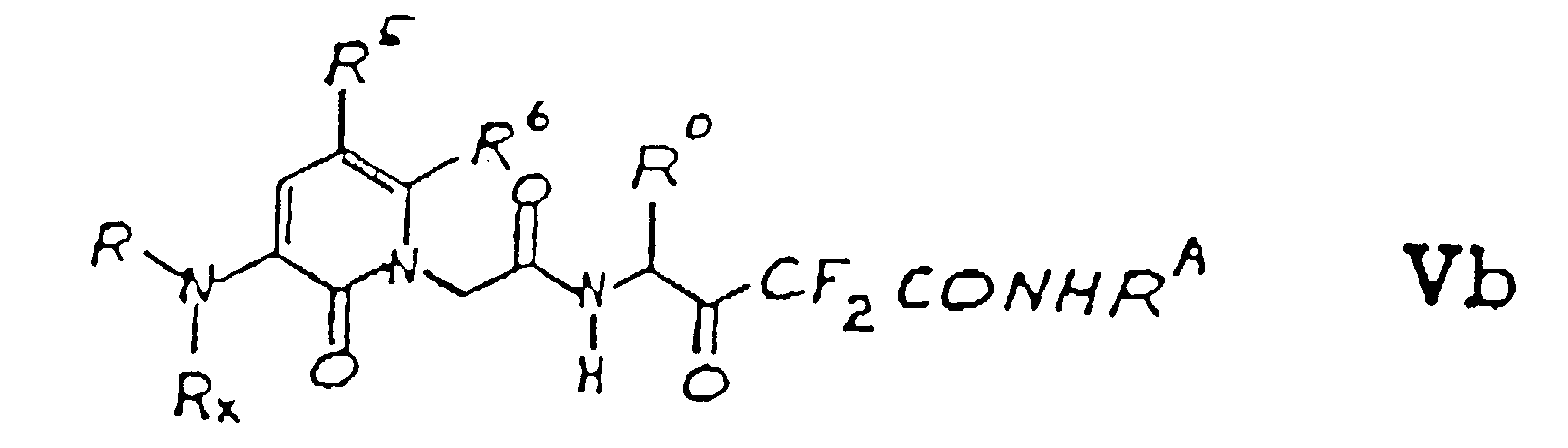 (C) für eine Verbindung der Formel I, worin R eine Acyl-Gruppe ist, Acylierung eines entsprechenden Amins der Formel I, worin R Wasserstoff ist;(D) für eine Verbindung der Formel I, worin R eine Sulfonyl-Gruppe ist, Sulfonylierung eines entsprechenden Amins der Formel I, worin R Wasserstoff ist, mit einer entsprechenden Sulfonsäure der Formel D.W.SO2.OH oder einem aktivierten Derivat davon;(E) für eine Verbindung der Formel I, worin R eine Gruppe G ist, Ersetzung der Gruppe L einer entsprechenden Verbindung der Formel G-L, worin L eine herkömmliche Abgangsgruppe ist, mit einem entsprechenden Amin der Formel I, worin R Wasserstoff ist, wobei gegebenenfalls ein herkömmlicher Katalysator verwendet wird;(F) für eine Verbindung der Formel I, die einen Hydroxy-Substituenten an einer Aryl- oder Heteroaryl-Gruppe trägt, Spaltung des Alkylethers oder Acyloxyesters einer entsprechenden Verbindung der Formel I, die einen Niederalkoxy- oder Niederacyloxy-Substituenten an einer Aryl- oder Heteroaryl-Gruppe trägt;(G) für eine Verbindung der Formel I, die eine Gruppe der Formel COORa oder COORs trägt, worin Ra oder Rs Wasserstoff sind (eine Carboxy-Gruppe), Zersetzung der Ester-Gruppe eines entsprechenden Esters, der mit einer herkömmlich entfernten Säure-Schutzgruppe hergestellt wurde, einschließlich einer entsprechenden Verbindung der Formel I, worin Ra oder Rs nicht Wasserstoff sind;(H) für eine Verbindung der Formel I, die eine Einheit der Formel COORa, CH2COORa, CONRbRc, CH2CONRbRc, COO(CH2)2NReRf oder CONRdSO2R1 trägt, Acylierung einer entsprechenden Verbindung der Formel HORa, HNRbRc, HO(CH2)2NReRf oder HNRdSO2R1 mit einer entsprechenden Säure der Formel I, die eine Einheit der Formel COORa trägt, wobei Ra Wasserstoff ist, oder einem aktivierten Derivat davon; oder entsprechend für eine Verbindung der Formel I, die eine Einheit der Formel COORs, CONRtRu oder CONHSO2Rv trägt, Acylierung einer entsprechenden Verbindung der Formel HORs, HNRtRu oder H2NSO2Rv mit einer entsprechenden Säure der Formel I, die eine Einheit der Formel COORs trägt, worin Rs Wasserstoff ist, oder einem aktivierten Derivat davon;(I) für eine Verbindung der Formel I, die eine Niederacyloxy-Gruppe oder Gruppe der Formel NRgCHO, NRgCOR2, NRgCOOR2, NRhCQNRiRj oder NRkSO2R3 trägt, Acylierung oder Sulfonylierung einer entsprechenden Verbindung der Formel I, die eine Hydroxy-Gruppe oder Amino-Gruppe der Formel NHRg, NHRh oder NHRk trägt (d.h. eine Amino-Gruppe der Formel NReRf, worin Re Wasserstoff ist und Rf Rg, Rh oder Rk ist) mit einem aktivierten Derivat der entsprechenden Säure der Formel HOCHO, HOCOR2, HOCOOR2, HOCQNRiRj (einschließlich einem Isocyanat oder Isothiocyanat) bzw. HOSO2R3 nach einem herkömmlichen Verfahren; oder entsprechend für eine Verbindung der Formel I mit einer Gruppe der Formel NRsCORv, NRsCOORv, NRsCONRtRu oder NRsSO2Rv, Acylierung oder Sulfonylierung einer entsprechenden Verbindung der Formel I mit einer Amino-Gruppe der Formel NRtRu, worin Rt einen Wert hat, wie er für Rs definiert wurde, und Ru Wasserstoff ist, mit einem aktivierten Derivat einer entsprechenden Säure der Formel HOCORv, HOCOORv, HOCONRtRu (einschließlich einem Isocyanat) bzw. HOSO2Rv nach einem herkömmlichen Verfahren;(J) für eine Verbindung der Formel I, die eine Heteroaryl-N-oxid-Gruppe trägt, Oxidation einer entsprechenden Verbindung der Formel I, die eine Heteroaryl-Gruppe trägt, mit einem herkömmlichen Oxidationsmittel;(K) für eine Verbindung der Formel I, die eine primäre Amino-Gruppe trägt, Reduktion einer entsprechenden Verbindung, die eine Nitro-Gruppe trägt, nach einem herkömmlichen Reduktions-Verfahren; und
worin jeder der Reste RA, R, R0, R5, R6, D, W, G, Ra-Rn, Rs-Rv, R1-R3 und Q, außer wo genauer beschrieben, die Bedeutung gemäß einem der Ansprüche 1 bis 10 hat. - Pharmazeutische Zusammensetzung, umfassend eine Verbindung gemäß Anspruch 1 oder ein pharmazeutisch akzeptables Salz davon und ein pharmazeutisch akzeptables Verdünnungsmittel oder Träger.
- Verbindung der Formel II:worin RA, R0, R5 und R6 wie in Anspruch 1 definiert sind, oder ein Salz davon.

- Verbindung der Formel Vb:worin R einen Wert wie definiert für G in Anspruch 1 hat, R0, R5 und R6 wie in Anspruch 1 definiert sind und Rx eine Gruppe ist, die eine primäre Amino-Gruppe für die Substitution schützt und aktiviert, oder ein Salz davon.

Applications Claiming Priority (5)
| Application Number | Priority Date | Filing Date | Title |
|---|---|---|---|
| GB9208385 | 1992-04-16 | ||
| GB929208385A GB9208385D0 (en) | 1992-04-16 | 1992-04-16 | Heterocyclic ketones |
| GB929217365A GB9217365D0 (en) | 1992-08-14 | 1992-08-14 | Heterocyclic ketones |
| GB9217365 | 1992-08-14 | ||
| PCT/GB1993/000795 WO1993021209A1 (en) | 1992-04-16 | 1993-04-15 | Lactam peptides having hle inhibiting activity |
Publications (2)
| Publication Number | Publication Date |
|---|---|
| EP0636142A1 EP0636142A1 (de) | 1995-02-01 |
| EP0636142B1 true EP0636142B1 (de) | 1998-06-17 |
Family
ID=26300737
Family Applications (1)
| Application Number | Title | Priority Date | Filing Date |
|---|---|---|---|
| EP93910158A Expired - Lifetime EP0636142B1 (de) | 1992-04-16 | 1993-04-15 | Lactampeptide mit hfl inhibierender aktivität |
Country Status (13)
| Country | Link |
|---|---|
| US (2) | US5486529A (de) |
| EP (1) | EP0636142B1 (de) |
| JP (1) | JP3415151B2 (de) |
| AT (1) | ATE167481T1 (de) |
| AU (1) | AU4077093A (de) |
| CA (1) | CA2118250A1 (de) |
| DE (1) | DE69319238T2 (de) |
| FI (1) | FI944803L (de) |
| HU (1) | HUT67877A (de) |
| IL (1) | IL105425A0 (de) |
| MX (1) | MX9302219A (de) |
| NO (1) | NO943910L (de) |
| WO (1) | WO1993021209A1 (de) |
Families Citing this family (81)
| Publication number | Priority date | Publication date | Assignee | Title |
|---|---|---|---|---|
| AU1090795A (en) * | 1993-11-12 | 1995-05-29 | Cell Therapeutics, Inc. | Method for preventing tissue injury from hypoxia |
| US5948785A (en) * | 1995-04-27 | 1999-09-07 | The Green Cross Corporation | Heterocyclic amide compounds and pharmaceutical use of the same |
| JP4199309B2 (ja) * | 1996-09-06 | 2008-12-17 | 日本化薬株式会社 | 新規アセトアミド誘導体およびプロテアーゼ阻害 |
| US6375926B1 (en) | 1996-09-16 | 2002-04-23 | Amersham International Plc | Labelled elastase inhibitors |
| US6754815B1 (en) | 2000-03-31 | 2004-06-22 | Intel Corporation | Method and system for scrubbing an isolated area of memory after reset of a processor operating in isolated execution mode if a cleanup flag is set |
| US7089418B1 (en) | 2000-03-31 | 2006-08-08 | Intel Corporation | Managing accesses in a processor for isolated execution |
| US7013481B1 (en) | 2000-03-31 | 2006-03-14 | Intel Corporation | Attestation key memory device and bus |
| US7111176B1 (en) | 2000-03-31 | 2006-09-19 | Intel Corporation | Generating isolated bus cycles for isolated execution |
| US7013484B1 (en) | 2000-03-31 | 2006-03-14 | Intel Corporation | Managing a secure environment using a chipset in isolated execution mode |
| US6934817B2 (en) * | 2000-03-31 | 2005-08-23 | Intel Corporation | Controlling access to multiple memory zones in an isolated execution environment |
| US6769058B1 (en) | 2000-03-31 | 2004-07-27 | Intel Corporation | Resetting a processor in an isolated execution environment |
| US6760441B1 (en) | 2000-03-31 | 2004-07-06 | Intel Corporation | Generating a key hieararchy for use in an isolated execution environment |
| US7356817B1 (en) | 2000-03-31 | 2008-04-08 | Intel Corporation | Real-time scheduling of virtual machines |
| US7194634B2 (en) * | 2000-03-31 | 2007-03-20 | Intel Corporation | Attestation key memory device and bus |
| US6976162B1 (en) * | 2000-06-28 | 2005-12-13 | Intel Corporation | Platform and method for establishing provable identities while maintaining privacy |
| US7389427B1 (en) | 2000-09-28 | 2008-06-17 | Intel Corporation | Mechanism to secure computer output from software attack using isolated execution |
| US7793111B1 (en) * | 2000-09-28 | 2010-09-07 | Intel Corporation | Mechanism to handle events in a machine with isolated execution |
| US7215781B2 (en) * | 2000-12-22 | 2007-05-08 | Intel Corporation | Creation and distribution of a secret value between two devices |
| US7035963B2 (en) * | 2000-12-27 | 2006-04-25 | Intel Corporation | Method for resolving address space conflicts between a virtual machine monitor and a guest operating system |
| US7225441B2 (en) * | 2000-12-27 | 2007-05-29 | Intel Corporation | Mechanism for providing power management through virtualization |
| US6907600B2 (en) | 2000-12-27 | 2005-06-14 | Intel Corporation | Virtual translation lookaside buffer |
| US7818808B1 (en) | 2000-12-27 | 2010-10-19 | Intel Corporation | Processor mode for limiting the operation of guest software running on a virtual machine supported by a virtual machine monitor |
| US7117376B2 (en) * | 2000-12-28 | 2006-10-03 | Intel Corporation | Platform and method of creating a secure boot that enforces proper user authentication and enforces hardware configurations |
| US7272831B2 (en) | 2001-03-30 | 2007-09-18 | Intel Corporation | Method and apparatus for constructing host processor soft devices independent of the host processor operating system |
| US7191440B2 (en) | 2001-08-15 | 2007-03-13 | Intel Corporation | Tracking operating system process and thread execution and virtual machine execution in hardware or in a virtual machine monitor |
| US7024555B2 (en) | 2001-11-01 | 2006-04-04 | Intel Corporation | Apparatus and method for unilaterally loading a secure operating system within a multiprocessor environment |
| US7103771B2 (en) * | 2001-12-17 | 2006-09-05 | Intel Corporation | Connecting a virtual token to a physical token |
| US20030126453A1 (en) * | 2001-12-31 | 2003-07-03 | Glew Andrew F. | Processor supporting execution of an authenticated code instruction |
| US7308576B2 (en) | 2001-12-31 | 2007-12-11 | Intel Corporation | Authenticated code module |
| US7480806B2 (en) * | 2002-02-22 | 2009-01-20 | Intel Corporation | Multi-token seal and unseal |
| US7631196B2 (en) * | 2002-02-25 | 2009-12-08 | Intel Corporation | Method and apparatus for loading a trustable operating system |
| US7124273B2 (en) * | 2002-02-25 | 2006-10-17 | Intel Corporation | Method and apparatus for translating guest physical addresses in a virtual machine environment |
| US7028149B2 (en) | 2002-03-29 | 2006-04-11 | Intel Corporation | System and method for resetting a platform configuration register |
| US7069442B2 (en) | 2002-03-29 | 2006-06-27 | Intel Corporation | System and method for execution of a secured environment initialization instruction |
| US20030196096A1 (en) * | 2002-04-12 | 2003-10-16 | Sutton James A. | Microcode patch authentication |
| US20030196100A1 (en) * | 2002-04-15 | 2003-10-16 | Grawrock David W. | Protection against memory attacks following reset |
| US7127548B2 (en) | 2002-04-16 | 2006-10-24 | Intel Corporation | Control register access virtualization performance improvement in the virtual-machine architecture |
| US20030229794A1 (en) * | 2002-06-07 | 2003-12-11 | Sutton James A. | System and method for protection against untrusted system management code by redirecting a system management interrupt and creating a virtual machine container |
| US7142674B2 (en) * | 2002-06-18 | 2006-11-28 | Intel Corporation | Method of confirming a secure key exchange |
| US20040003321A1 (en) * | 2002-06-27 | 2004-01-01 | Glew Andrew F. | Initialization of protected system |
| US6996748B2 (en) | 2002-06-29 | 2006-02-07 | Intel Corporation | Handling faults associated with operation of guest software in the virtual-machine architecture |
| US7124327B2 (en) | 2002-06-29 | 2006-10-17 | Intel Corporation | Control over faults occurring during the operation of guest software in the virtual-machine architecture |
| US7296267B2 (en) * | 2002-07-12 | 2007-11-13 | Intel Corporation | System and method for binding virtual machines to hardware contexts |
| US7165181B2 (en) * | 2002-11-27 | 2007-01-16 | Intel Corporation | System and method for establishing trust without revealing identity |
| US20040117532A1 (en) * | 2002-12-11 | 2004-06-17 | Bennett Steven M. | Mechanism for controlling external interrupts in a virtual machine system |
| US7073042B2 (en) | 2002-12-12 | 2006-07-04 | Intel Corporation | Reclaiming existing fields in address translation data structures to extend control over memory accesses |
| US20040128345A1 (en) * | 2002-12-27 | 2004-07-01 | Robinson Scott H. | Dynamic service registry |
| US7900017B2 (en) * | 2002-12-27 | 2011-03-01 | Intel Corporation | Mechanism for remapping post virtual machine memory pages |
| US20040128465A1 (en) * | 2002-12-30 | 2004-07-01 | Lee Micheil J. | Configurable memory bus width |
| US7415708B2 (en) * | 2003-06-26 | 2008-08-19 | Intel Corporation | Virtual machine management using processor state information |
| US20050044292A1 (en) * | 2003-08-19 | 2005-02-24 | Mckeen Francis X. | Method and apparatus to retain system control when a buffer overflow attack occurs |
| US7287197B2 (en) * | 2003-09-15 | 2007-10-23 | Intel Corporation | Vectoring an interrupt or exception upon resuming operation of a virtual machine |
| US7424709B2 (en) | 2003-09-15 | 2008-09-09 | Intel Corporation | Use of multiple virtual machine monitors to handle privileged events |
| US7739521B2 (en) * | 2003-09-18 | 2010-06-15 | Intel Corporation | Method of obscuring cryptographic computations |
| US7610611B2 (en) * | 2003-09-19 | 2009-10-27 | Moran Douglas R | Prioritized address decoder |
| US20050080934A1 (en) | 2003-09-30 | 2005-04-14 | Cota-Robles Erik C. | Invalidating translation lookaside buffer entries in a virtual machine (VM) system |
| US7177967B2 (en) * | 2003-09-30 | 2007-02-13 | Intel Corporation | Chipset support for managing hardware interrupts in a virtual machine system |
| US7237051B2 (en) | 2003-09-30 | 2007-06-26 | Intel Corporation | Mechanism to control hardware interrupt acknowledgement in a virtual machine system |
| US7366305B2 (en) * | 2003-09-30 | 2008-04-29 | Intel Corporation | Platform and method for establishing trust without revealing identity |
| US7636844B2 (en) * | 2003-11-17 | 2009-12-22 | Intel Corporation | Method and system to provide a trusted channel within a computer system for a SIM device |
| US20050108171A1 (en) * | 2003-11-19 | 2005-05-19 | Bajikar Sundeep M. | Method and apparatus for implementing subscriber identity module (SIM) capabilities in an open platform |
| US20050108534A1 (en) * | 2003-11-19 | 2005-05-19 | Bajikar Sundeep M. | Providing services to an open platform implementing subscriber identity module (SIM) capabilities |
| US8156343B2 (en) | 2003-11-26 | 2012-04-10 | Intel Corporation | Accessing private data about the state of a data processing machine from storage that is publicly accessible |
| US8037314B2 (en) * | 2003-12-22 | 2011-10-11 | Intel Corporation | Replacing blinded authentication authority |
| US20050152539A1 (en) * | 2004-01-12 | 2005-07-14 | Brickell Ernie F. | Method of protecting cryptographic operations from side channel attacks |
| US7802085B2 (en) | 2004-02-18 | 2010-09-21 | Intel Corporation | Apparatus and method for distributing private keys to an entity with minimal secret, unique information |
| US20050216920A1 (en) * | 2004-03-24 | 2005-09-29 | Vijay Tewari | Use of a virtual machine to emulate a hardware device |
| US7356735B2 (en) * | 2004-03-30 | 2008-04-08 | Intel Corporation | Providing support for single stepping a virtual machine in a virtual machine environment |
| US7620949B2 (en) * | 2004-03-31 | 2009-11-17 | Intel Corporation | Method and apparatus for facilitating recognition of an open event window during operation of guest software in a virtual machine environment |
| US7490070B2 (en) | 2004-06-10 | 2009-02-10 | Intel Corporation | Apparatus and method for proving the denial of a direct proof signature |
| US20050288056A1 (en) * | 2004-06-29 | 2005-12-29 | Bajikar Sundeep M | System including a wireless wide area network (WWAN) module with an external identity module reader and approach for certifying the WWAN module |
| US7305592B2 (en) * | 2004-06-30 | 2007-12-04 | Intel Corporation | Support for nested fault in a virtual machine environment |
| US7840962B2 (en) * | 2004-09-30 | 2010-11-23 | Intel Corporation | System and method for controlling switching between VMM and VM using enabling value of VMM timer indicator and VMM timer value having a specified time |
| US8146078B2 (en) | 2004-10-29 | 2012-03-27 | Intel Corporation | Timer offsetting mechanism in a virtual machine environment |
| US8924728B2 (en) * | 2004-11-30 | 2014-12-30 | Intel Corporation | Apparatus and method for establishing a secure session with a device without exposing privacy-sensitive information |
| US8533777B2 (en) | 2004-12-29 | 2013-09-10 | Intel Corporation | Mechanism to determine trust of out-of-band management agents |
| US7395405B2 (en) * | 2005-01-28 | 2008-07-01 | Intel Corporation | Method and apparatus for supporting address translation in a virtual machine environment |
| US8014530B2 (en) | 2006-03-22 | 2011-09-06 | Intel Corporation | Method and apparatus for authenticated, recoverable key distribution with no database secrets |
| WO2021053058A1 (en) | 2019-09-17 | 2021-03-25 | Mereo Biopharma 4 Limited | Alvelestat for use in the treatment of graft rejection, bronchiolitis obliterans syndrome and graft versus host disease |
| LT4106757T (lt) | 2020-04-16 | 2023-11-10 | Mereo Biopharma 4 Limited | Neutrofilų elastazės inhibitoriaus alvelestato panaudojimas kvėpavimo sistemos ligų, nulemtų alfa-1 antitripsino nepakankamumo, gydymui |
| JP2024540952A (ja) | 2021-10-20 | 2024-11-06 | メレオ バイオファーマ 4 リミテッド | 線維化の治療における使用のための好中球エラスターゼ阻害剤 |
Family Cites Families (8)
| Publication number | Priority date | Publication date | Assignee | Title |
|---|---|---|---|---|
| DE3235189A1 (de) * | 1982-09-23 | 1984-03-29 | Hoechst Ag, 6230 Frankfurt | Polymer-granulat, verfahren zu seiner herstellung und seine verwendung |
| GB8600263D0 (en) * | 1985-01-22 | 1986-02-12 | Ici America Inc | Peptide derivatives |
| ZA86746B (en) * | 1985-02-04 | 1986-09-24 | Merrell Dow Pharma | Novel peptidase inhibitors |
| EP0204571B1 (de) * | 1985-06-07 | 1992-01-22 | Ici Americas Inc. | Selektionierte Difluorverbindungen |
| GB8711748D0 (en) * | 1986-06-05 | 1987-06-24 | Ici America Inc | Difluoro keto compounds |
| GB8910547D0 (en) * | 1989-05-08 | 1989-06-21 | Ici America Inc | Substituted ketones |
| GB9207145D0 (en) * | 1991-04-18 | 1992-05-13 | Ici Plc | Heterocyclic amides |
| GB9216272D0 (en) * | 1991-08-15 | 1992-09-09 | Ici Plc | Substituted heterocycles |
-
1993
- 1993-04-08 US US08/045,496 patent/US5486529A/en not_active Expired - Fee Related
- 1993-04-15 HU HU9402970A patent/HUT67877A/hu unknown
- 1993-04-15 AU AU40770/93A patent/AU4077093A/en not_active Abandoned
- 1993-04-15 WO PCT/GB1993/000795 patent/WO1993021209A1/en not_active Ceased
- 1993-04-15 DE DE69319238T patent/DE69319238T2/de not_active Expired - Fee Related
- 1993-04-15 CA CA002118250A patent/CA2118250A1/en not_active Abandoned
- 1993-04-15 FI FI944803A patent/FI944803L/fi not_active Application Discontinuation
- 1993-04-15 JP JP51813893A patent/JP3415151B2/ja not_active Expired - Fee Related
- 1993-04-15 EP EP93910158A patent/EP0636142B1/de not_active Expired - Lifetime
- 1993-04-15 AT AT93910158T patent/ATE167481T1/de not_active IP Right Cessation
- 1993-04-16 MX MX9302219A patent/MX9302219A/es unknown
- 1993-04-16 IL IL105425A patent/IL105425A0/xx unknown
-
1994
- 1994-10-14 NO NO943910A patent/NO943910L/no unknown
-
1995
- 1995-08-25 US US08/519,651 patent/US5721222A/en not_active Expired - Fee Related
Also Published As
| Publication number | Publication date |
|---|---|
| JPH07505874A (ja) | 1995-06-29 |
| HU9402970D0 (en) | 1995-02-28 |
| FI944803A0 (fi) | 1994-10-12 |
| MX9302219A (es) | 1994-08-31 |
| JP3415151B2 (ja) | 2003-06-09 |
| DE69319238D1 (de) | 1998-07-23 |
| DE69319238T2 (de) | 1998-10-22 |
| WO1993021209A1 (en) | 1993-10-28 |
| NO943910D0 (no) | 1994-10-14 |
| IL105425A0 (en) | 1993-08-18 |
| AU4077093A (en) | 1993-11-18 |
| EP0636142A1 (de) | 1995-02-01 |
| NO943910L (no) | 1994-12-15 |
| ATE167481T1 (de) | 1998-07-15 |
| FI944803A7 (fi) | 1994-10-12 |
| US5486529A (en) | 1996-01-23 |
| HUT67877A (en) | 1995-05-29 |
| FI944803L (fi) | 1994-10-12 |
| US5721222A (en) | 1998-02-24 |
| CA2118250A1 (en) | 1993-10-28 |
Similar Documents
| Publication | Publication Date | Title |
|---|---|---|
| US5721222A (en) | Heterocyclic ketones | |
| EP0636141B1 (de) | Pyrimidinyl acetamide als elastasehemmer | |
| EP0509769B1 (de) | HLE-inhibierende heterozyklische Amide | |
| US5521179A (en) | Heterocyclic amides | |
| EP0636143B1 (de) | Peptide mit eine alphaaminoboronaire gruppe and ihre verwendung als elastasehemmer | |
| EP0528633B1 (de) | Pyrimidinyl-Essigsäureamide als Elastase Inhibitoren | |
| EP0630382B1 (de) | Lactam Dipeptide mit HLE inhibierende Aktivität. | |
| WO1993021213A1 (en) | Alpha-aminoboronic acid peptides and their use as elastase inhibitors | |
| AU692515B2 (en) | Diastereomeric pure trifluoromethyl ketone peptide derivatives as inhibitors of human leukocyte elastase | |
| US5532366A (en) | Heterocyclic amides | |
| US5405852A (en) | Amide derivatives | |
| AU658426B2 (en) | Substituted heterocycles |
Legal Events
| Date | Code | Title | Description |
|---|---|---|---|
| PUAI | Public reference made under article 153(3) epc to a published international application that has entered the european phase |
Free format text: ORIGINAL CODE: 0009012 |
|
| 17P | Request for examination filed |
Effective date: 19940916 |
|
| AK | Designated contracting states |
Kind code of ref document: A1 Designated state(s): AT BE CH DE DK ES FR GB GR IE IT LI LU MC NL PT SE |
|
| 17Q | First examination report despatched |
Effective date: 19960520 |
|
| GRAG | Despatch of communication of intention to grant |
Free format text: ORIGINAL CODE: EPIDOS AGRA |
|
| GRAG | Despatch of communication of intention to grant |
Free format text: ORIGINAL CODE: EPIDOS AGRA |
|
| GRAH | Despatch of communication of intention to grant a patent |
Free format text: ORIGINAL CODE: EPIDOS IGRA |
|
| GRAH | Despatch of communication of intention to grant a patent |
Free format text: ORIGINAL CODE: EPIDOS IGRA |
|
| GRAA | (expected) grant |
Free format text: ORIGINAL CODE: 0009210 |
|
| ITF | It: translation for a ep patent filed | ||
| AK | Designated contracting states |
Kind code of ref document: B1 Designated state(s): AT BE CH DE DK ES FR GB GR IE IT LI LU MC NL PT SE |
|
| PG25 | Lapsed in a contracting state [announced via postgrant information from national office to epo] |
Ref country code: NL Free format text: LAPSE BECAUSE OF FAILURE TO SUBMIT A TRANSLATION OF THE DESCRIPTION OR TO PAY THE FEE WITHIN THE PRESCRIBED TIME-LIMIT Effective date: 19980617 Ref country code: GR Free format text: LAPSE BECAUSE OF NON-PAYMENT OF DUE FEES Effective date: 19980617 Ref country code: ES Free format text: THE PATENT HAS BEEN ANNULLED BY A DECISION OF A NATIONAL AUTHORITY Effective date: 19980617 Ref country code: BE Free format text: LAPSE BECAUSE OF FAILURE TO SUBMIT A TRANSLATION OF THE DESCRIPTION OR TO PAY THE FEE WITHIN THE PRESCRIBED TIME-LIMIT Effective date: 19980617 Ref country code: AT Free format text: LAPSE BECAUSE OF FAILURE TO SUBMIT A TRANSLATION OF THE DESCRIPTION OR TO PAY THE FEE WITHIN THE PRESCRIBED TIME-LIMIT Effective date: 19980617 |
|
| REF | Corresponds to: |
Ref document number: 167481 Country of ref document: AT Date of ref document: 19980715 Kind code of ref document: T |
|
| REG | Reference to a national code |
Ref country code: CH Ref legal event code: NV Representative=s name: A. BRAUN, BRAUN, HERITIER, ESCHMANN AG PATENTANWAE Ref country code: CH Ref legal event code: EP |
|
| REF | Corresponds to: |
Ref document number: 69319238 Country of ref document: DE Date of ref document: 19980723 |
|
| ET | Fr: translation filed | ||
| PG25 | Lapsed in a contracting state [announced via postgrant information from national office to epo] |
Ref country code: SE Free format text: LAPSE BECAUSE OF FAILURE TO SUBMIT A TRANSLATION OF THE DESCRIPTION OR TO PAY THE FEE WITHIN THE PRESCRIBED TIME-LIMIT Effective date: 19980917 Ref country code: PT Free format text: LAPSE BECAUSE OF FAILURE TO SUBMIT A TRANSLATION OF THE DESCRIPTION OR TO PAY THE FEE WITHIN THE PRESCRIBED TIME-LIMIT Effective date: 19980917 Ref country code: DK Free format text: LAPSE BECAUSE OF FAILURE TO SUBMIT A TRANSLATION OF THE DESCRIPTION OR TO PAY THE FEE WITHIN THE PRESCRIBED TIME-LIMIT Effective date: 19980917 |
|
| REG | Reference to a national code |
Ref country code: IE Ref legal event code: FG4D |
|
| NLV1 | Nl: lapsed or annulled due to failure to fulfill the requirements of art. 29p and 29m of the patents act | ||
| PG25 | Lapsed in a contracting state [announced via postgrant information from national office to epo] |
Ref country code: LU Free format text: LAPSE BECAUSE OF NON-PAYMENT OF DUE FEES Effective date: 19990415 Ref country code: IE Free format text: LAPSE BECAUSE OF NON-PAYMENT OF DUE FEES Effective date: 19990415 |
|
| PLBE | No opposition filed within time limit |
Free format text: ORIGINAL CODE: 0009261 |
|
| STAA | Information on the status of an ep patent application or granted ep patent |
Free format text: STATUS: NO OPPOSITION FILED WITHIN TIME LIMIT |
|
| 26N | No opposition filed | ||
| PG25 | Lapsed in a contracting state [announced via postgrant information from national office to epo] |
Ref country code: MC Free format text: LAPSE BECAUSE OF NON-PAYMENT OF DUE FEES Effective date: 19991031 |
|
| REG | Reference to a national code |
Ref country code: IE Ref legal event code: MM4A |
|
| REG | Reference to a national code |
Ref country code: GB Ref legal event code: 732E |
|
| REG | Reference to a national code |
Ref country code: CH Ref legal event code: PUE Owner name: ZENECA LIMITED TRANSFER- ASTRAZENECA AB |
|
| REG | Reference to a national code |
Ref country code: GB Ref legal event code: IF02 |
|
| PGFP | Annual fee paid to national office [announced via postgrant information from national office to epo] |
Ref country code: GB Payment date: 20050314 Year of fee payment: 13 |
|
| PGFP | Annual fee paid to national office [announced via postgrant information from national office to epo] |
Ref country code: FR Payment date: 20050401 Year of fee payment: 13 |
|
| PGFP | Annual fee paid to national office [announced via postgrant information from national office to epo] |
Ref country code: DE Payment date: 20050429 Year of fee payment: 13 |
|
| PGFP | Annual fee paid to national office [announced via postgrant information from national office to epo] |
Ref country code: CH Payment date: 20050613 Year of fee payment: 13 |
|
| REG | Reference to a national code |
Ref country code: FR Ref legal event code: TP Ref country code: FR Ref legal event code: CD |
|
| PG25 | Lapsed in a contracting state [announced via postgrant information from national office to epo] |
Ref country code: GB Free format text: LAPSE BECAUSE OF NON-PAYMENT OF DUE FEES Effective date: 20060415 |
|
| PG25 | Lapsed in a contracting state [announced via postgrant information from national office to epo] |
Ref country code: LI Free format text: LAPSE BECAUSE OF NON-PAYMENT OF DUE FEES Effective date: 20060430 Ref country code: CH Free format text: LAPSE BECAUSE OF NON-PAYMENT OF DUE FEES Effective date: 20060430 |
|
| PGFP | Annual fee paid to national office [announced via postgrant information from national office to epo] |
Ref country code: IT Payment date: 20060430 Year of fee payment: 14 |
|
| PG25 | Lapsed in a contracting state [announced via postgrant information from national office to epo] |
Ref country code: DE Free format text: LAPSE BECAUSE OF NON-PAYMENT OF DUE FEES Effective date: 20061101 |
|
| REG | Reference to a national code |
Ref country code: CH Ref legal event code: PL |
|
| GBPC | Gb: european patent ceased through non-payment of renewal fee |
Effective date: 20060415 |
|
| REG | Reference to a national code |
Ref country code: FR Ref legal event code: ST Effective date: 20061230 |
|
| PG25 | Lapsed in a contracting state [announced via postgrant information from national office to epo] |
Ref country code: FR Free format text: LAPSE BECAUSE OF NON-PAYMENT OF DUE FEES Effective date: 20060502 |
|
| PG25 | Lapsed in a contracting state [announced via postgrant information from national office to epo] |
Ref country code: IT Free format text: LAPSE BECAUSE OF NON-PAYMENT OF DUE FEES Effective date: 20070415 |